
An accent wall is the boldest change a single can of paint can make — one wall, one afternoon, and a plain room suddenly has a point of view. Add a stencil and that same gallon stretches into patterns that look like wallpaper, tile, or custom plasterwork for a fraction of the cost. These ten ideas range from a simple half wall to a hand-stenciled motif that covers the whole room, and every one of them is renter-considerate, beginner-friendly, and easy to paint over when you change your mind. Save your favorites, pick the wall your eye lands on first, and let color do the heavy lifting.
In This Article
- 1. Paint a Half Wall in Warm Clay for Instant Architecture
- 2. Try a Limewashed Finish for a Soft, Cloudy Wall
- 3. Color-Block an Arch Behind the Bed or Sofa
- 4. Stencil a Faux Tile Pattern You Can Read as Real
- 5. Paint Wide, Soft Stripes for a Calm Classic Look
- 6. Repeat One Small Stencil Motif for a Wallpaper Effect
- 7. Fake a Chair Rail with a Two-Tone Paint Line
- 8. Add a Stenciled Border Where Molding Would Go
- 9. Paint Faux Panel Molding Rectangles with a Brush
- 10. Sponge On a Subtle Linen-Look Texture
1. Paint a Half Wall in Warm Clay for Instant Architecture
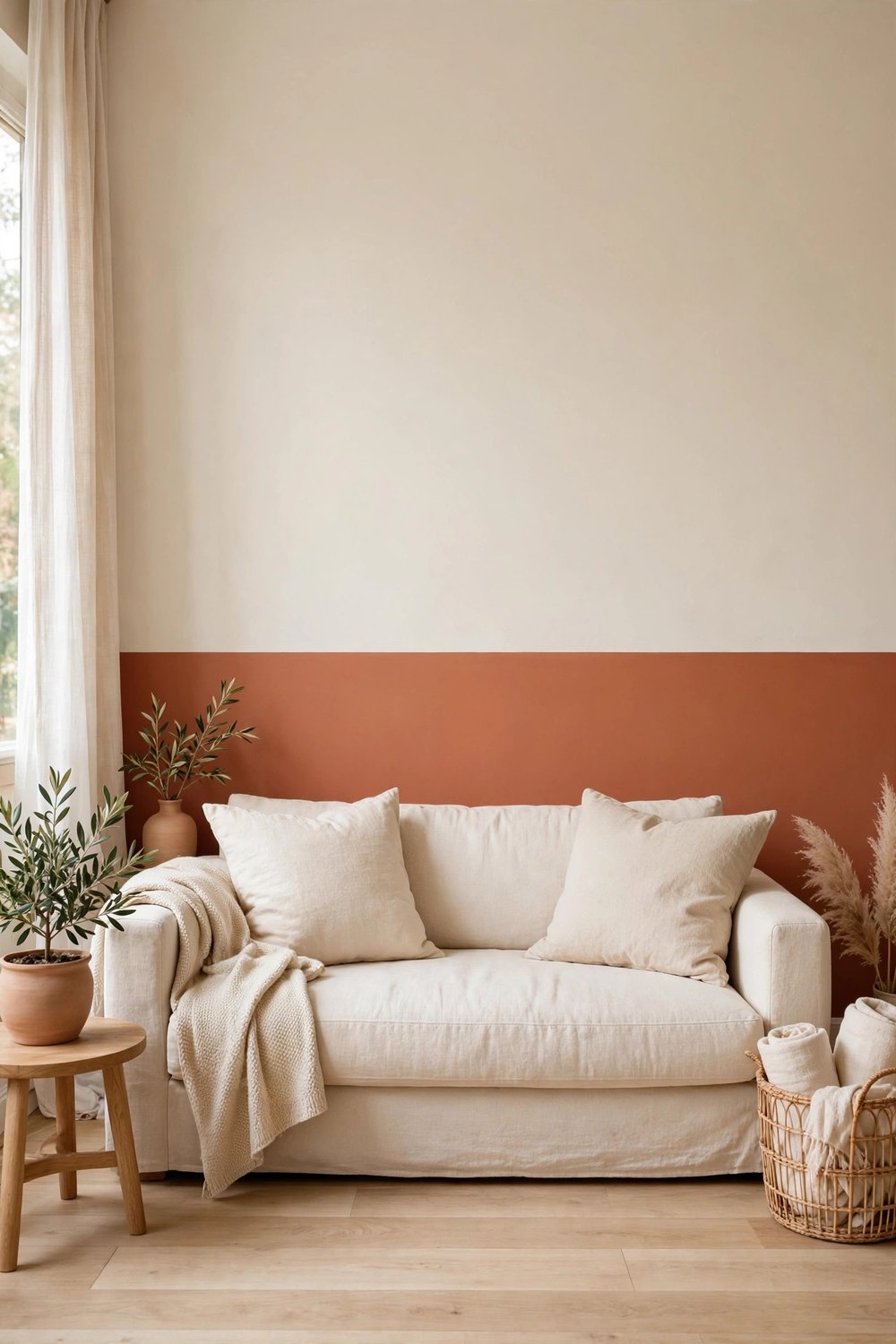
A half wall of color gives a room the structure of wainscoting without a single board. Measure up about a third of the wall, run a level line of painter’s tape all the way across, and roll on a warm clay, soft terracotta, or deep sage below the line. Peel the tape while the second coat is still slightly wet for the crispest edge. One small can of paint covers most half walls, and the room gains a grounded, designed feeling for under twenty dollars.
2. Try a Limewashed Finish for a Soft, Cloudy Wall
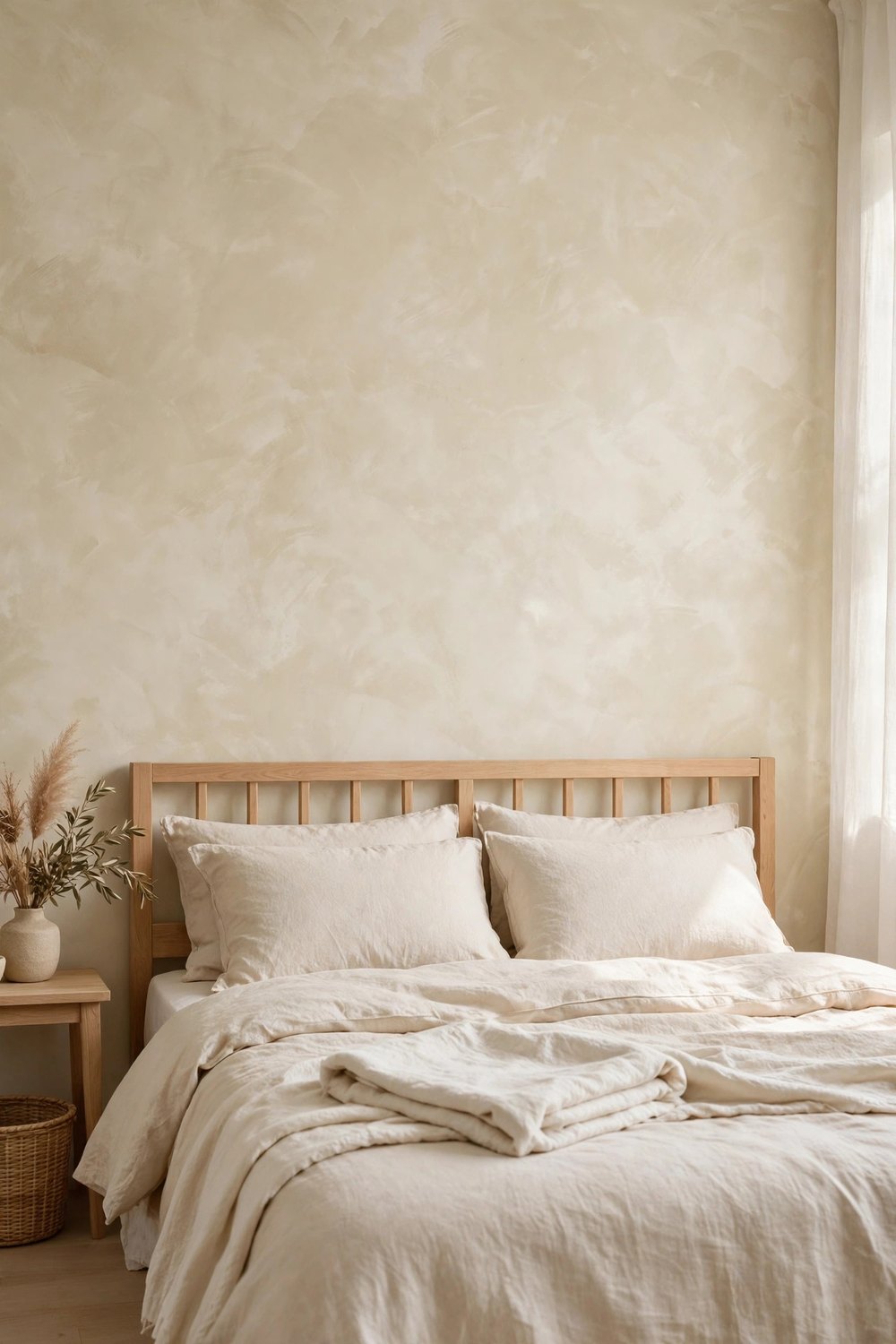
Limewash gives walls that misty, sun-worn finish you see in old Mediterranean houses. You can buy real limewash paint, or thin ordinary matte paint with water and brush it on in loose, crisscross strokes, letting the marks show instead of rolling them smooth. Work in small sections and keep a wet edge so the clouds blend naturally. The supplies cost little more than a regular repaint, and the uneven, chalky depth makes even plain drywall look handmade.
3. Color-Block an Arch Behind the Bed or Sofa
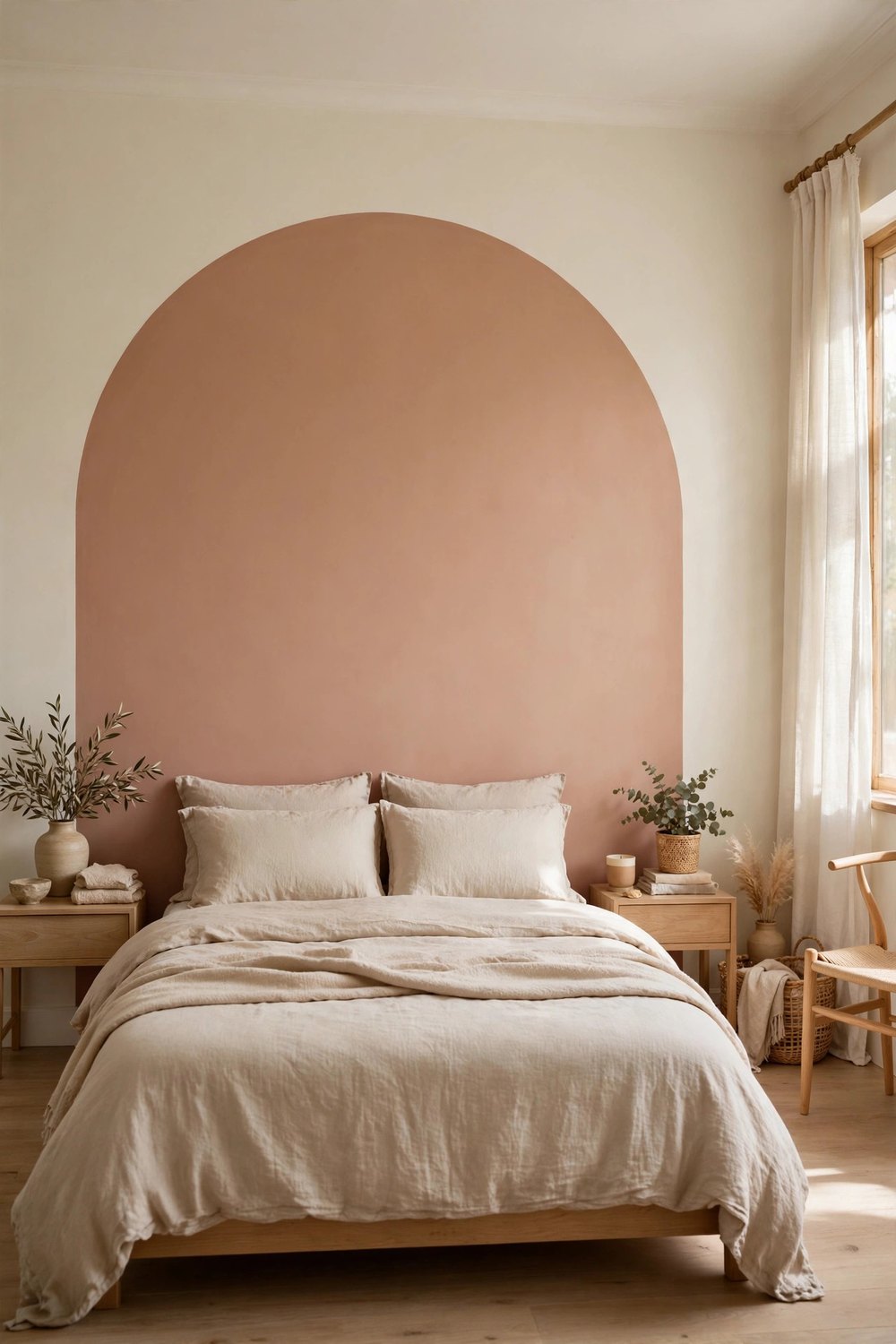
A painted arch is the friendliest piece of architecture you will ever add — it is just a curve and a straight edge. Mark the arch with a pencil tied to a string pinned at the center point, trace the curve, tape the vertical sides, and fill it in with two coats of a warm, muddy tone. Center it behind a bed, sofa, or desk and it frames the furniture like a headboard or an alcove. Leftover sample pots are often enough for one arch, so this statement wall can cost almost nothing.
4. Stencil a Faux Tile Pattern You Can Read as Real
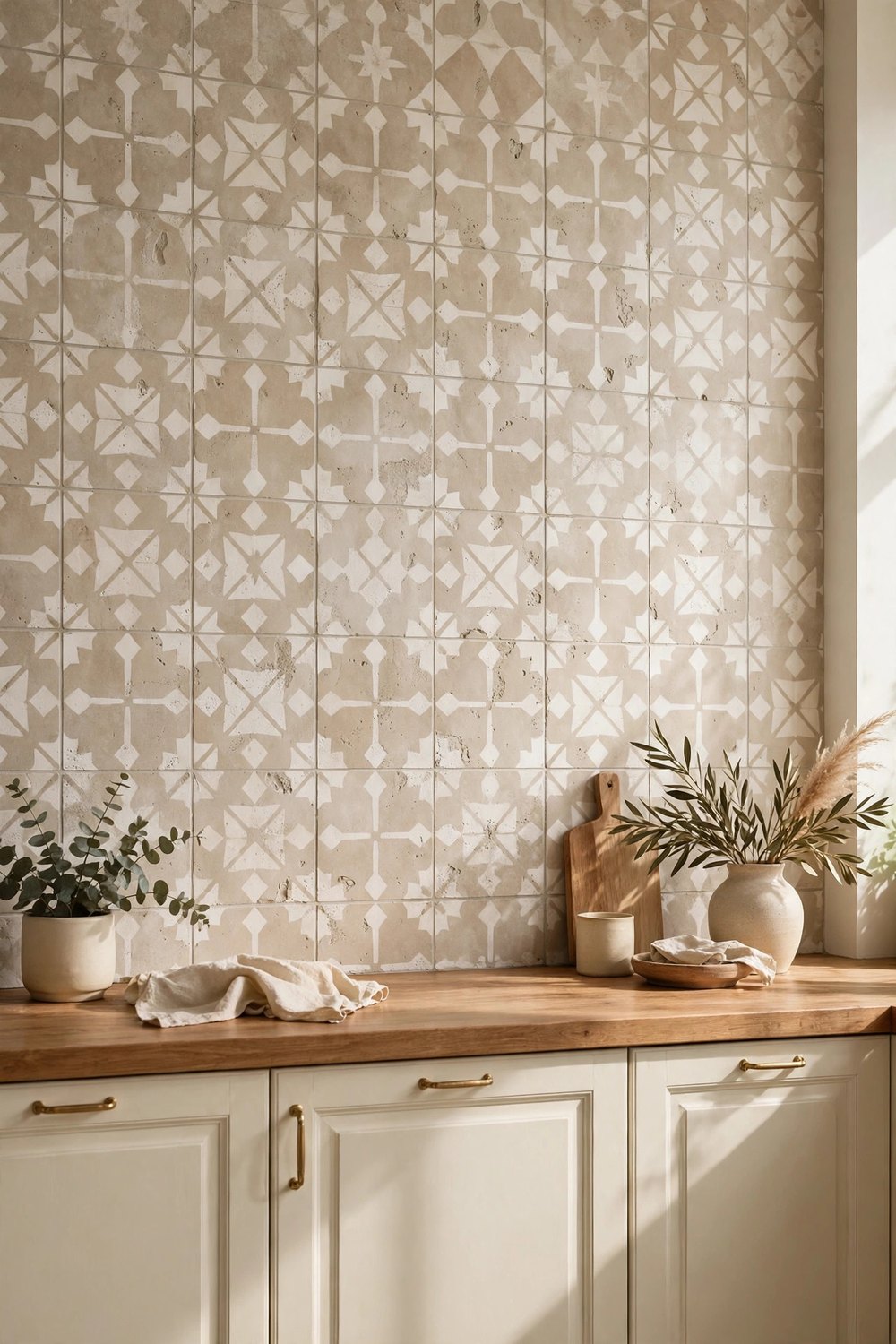
A repeating tile stencil turns a blank wall — or a tired kitchen backsplash zone — into patterned “tile” for the price of paint. Tape the stencil level, load a foam roller or stencil brush with very little paint, and dab or roll lightly so nothing bleeds under the edges. Align each repeat using the registration marks and step back often to check the grid. Choose soft, stone-like tones and the wall reads as handmade cement tile; the whole project usually comes in under the cost of two real tiles.
5. Paint Wide, Soft Stripes for a Calm Classic Look
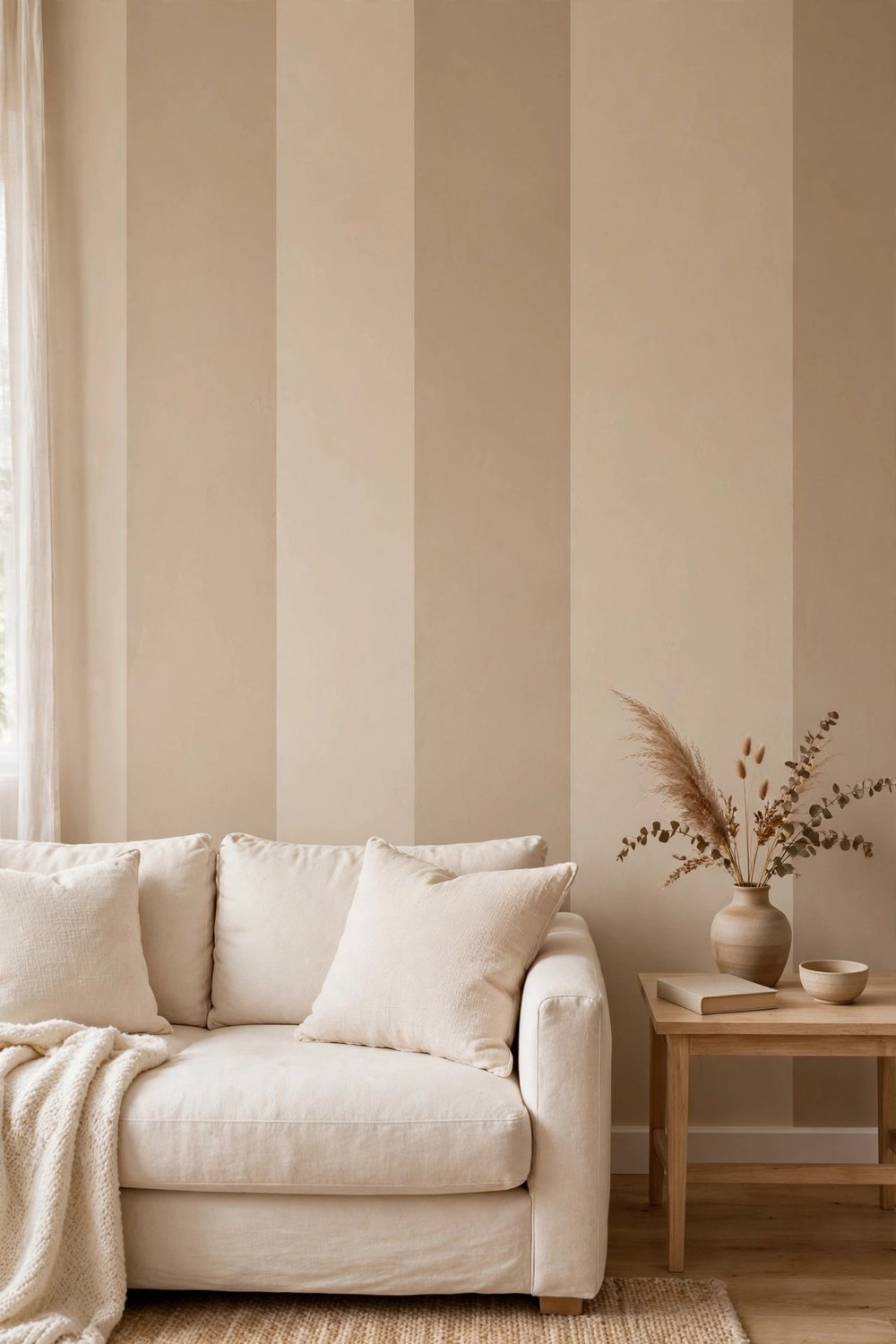
Wide stripes add pattern without noise, and they are pure tape-and-paint. Mark vertical stripes about a foot wide with a level and painter’s tape, then alternate a slightly deeper shade of your wall color with the original tone — tone-on-tone keeps it calm and expensive-looking. Seal the tape edges with a dab of the base color first so the lines come out razor sharp. Two close shades mean one can of tinted paint often does the whole wall, and the finished effect feels like a boutique hotel.
6. Repeat One Small Stencil Motif for a Wallpaper Effect
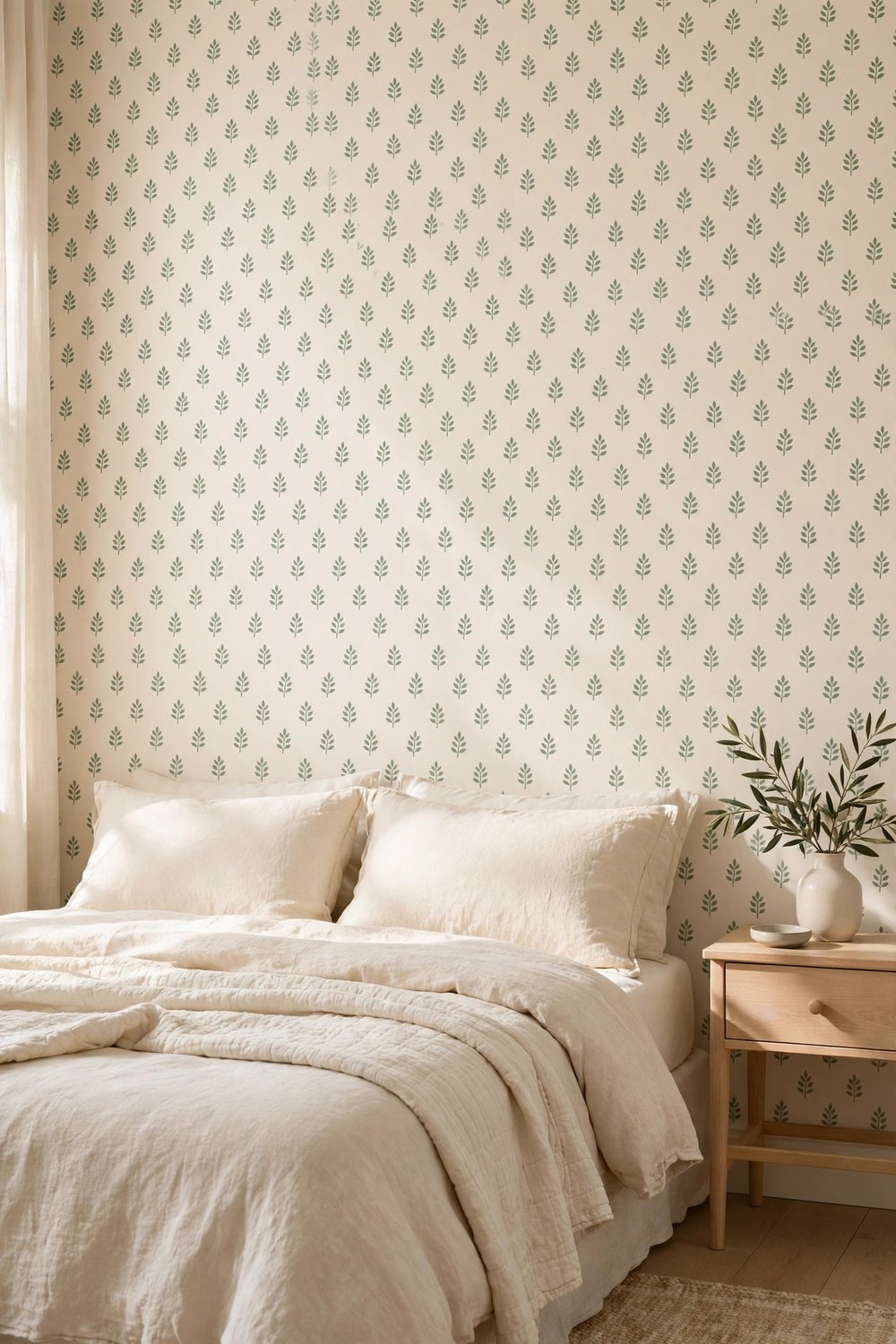
A single small stencil — a sprig, a dot cluster, a tiny folk flower — repeated in a loose grid gives you the charm of wallpaper with none of the paste or price. Use a level line and light pencil ticks to keep the spacing even, and stamp with a nearly dry brush so each motif stays delicate. Scattered, slightly imperfect placement looks more like real printed paper than a perfect grid does. One stencil sheet and a sample pot can transform a whole wall for less than a single roll of wallpaper.
7. Fake a Chair Rail with a Two-Tone Paint Line
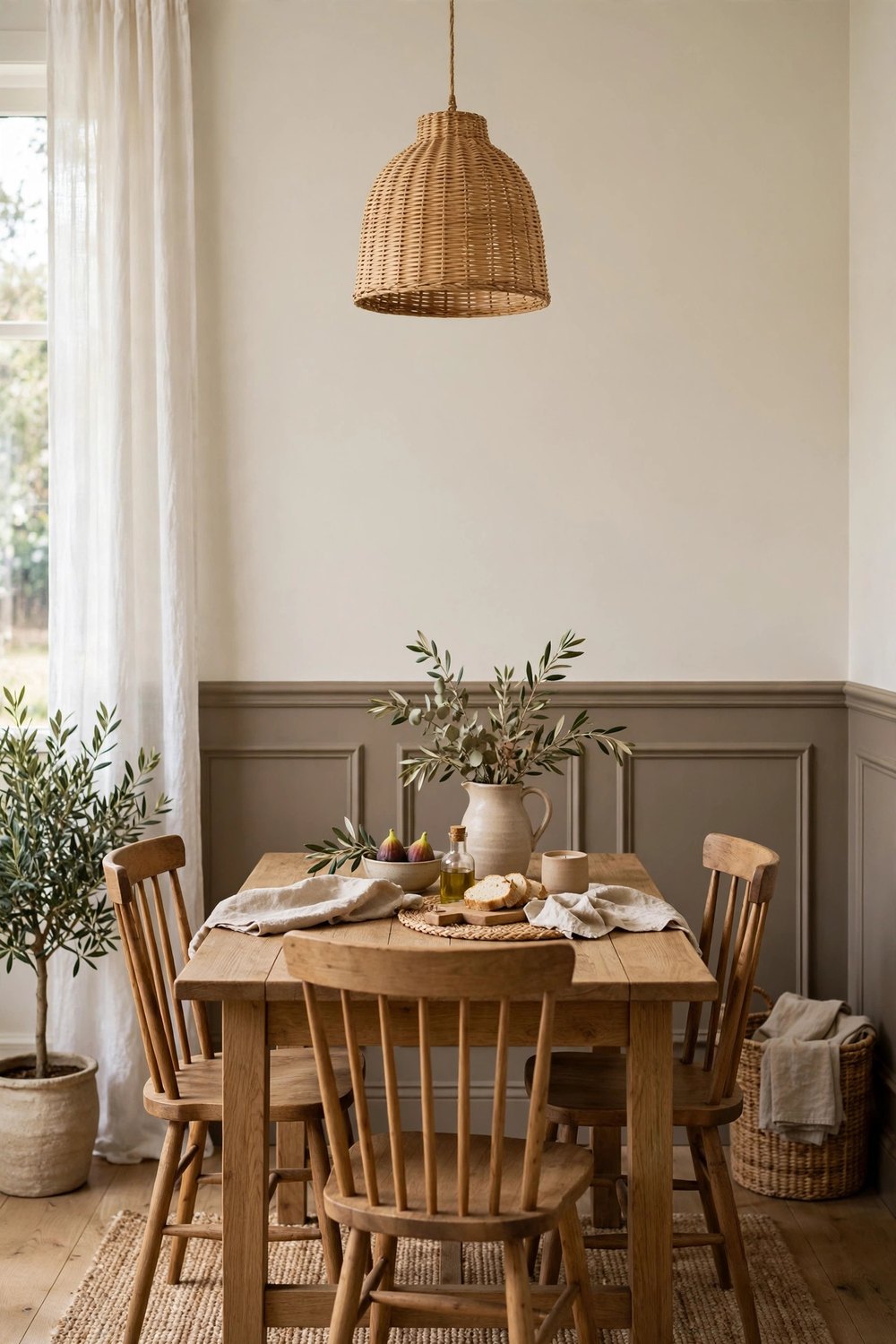
Rooms without molding can borrow its structure from paint alone. Tape a clean horizontal line at chair-rail height, paint the lower section a few shades deeper than the upper wall, and the two-tone split makes ceilings look taller and furniture look more settled. A thin painted pinstripe in a third tone along the tape line sells the illusion of real trim. It is one of the cheapest ideas here — often just a quart of the deeper shade — and it suits dining rooms and hallways beautifully.
8. Add a Stenciled Border Where Molding Would Go
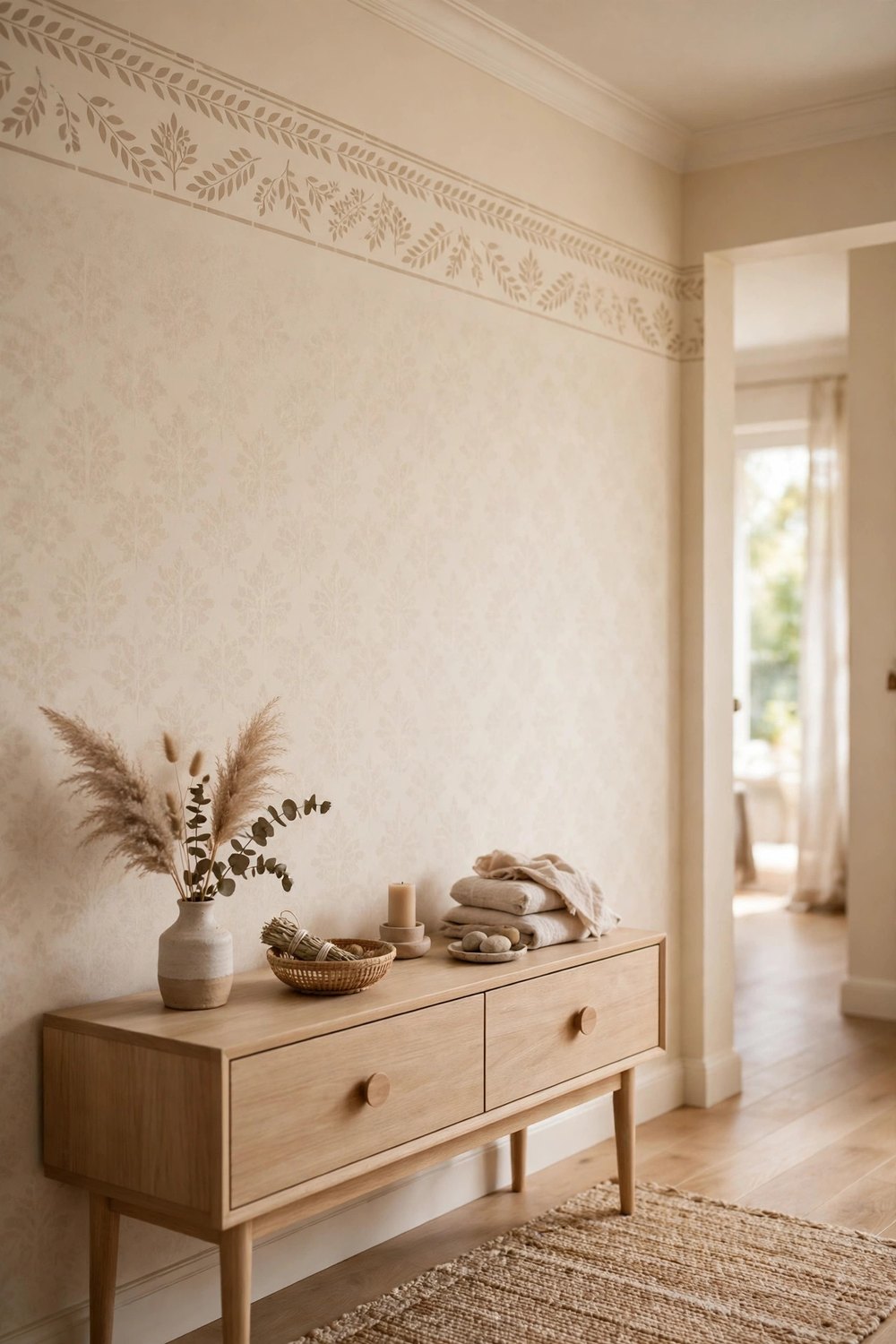
If a full patterned wall feels like too much, a stenciled border delivers the detail in one elegant band. Run it just below the ceiling like a crown-molding substitute, or at picture-rail height above a two-tone wall, using a simple repeating leaf, braid, or geometric stencil. Keep the paint soft and close in tone to the wall so the border whispers rather than shouts. A border uses barely any paint, takes a single afternoon on a step stool, and gives plain rental walls a finished, custom edge.
9. Paint Faux Panel Molding Rectangles with a Brush
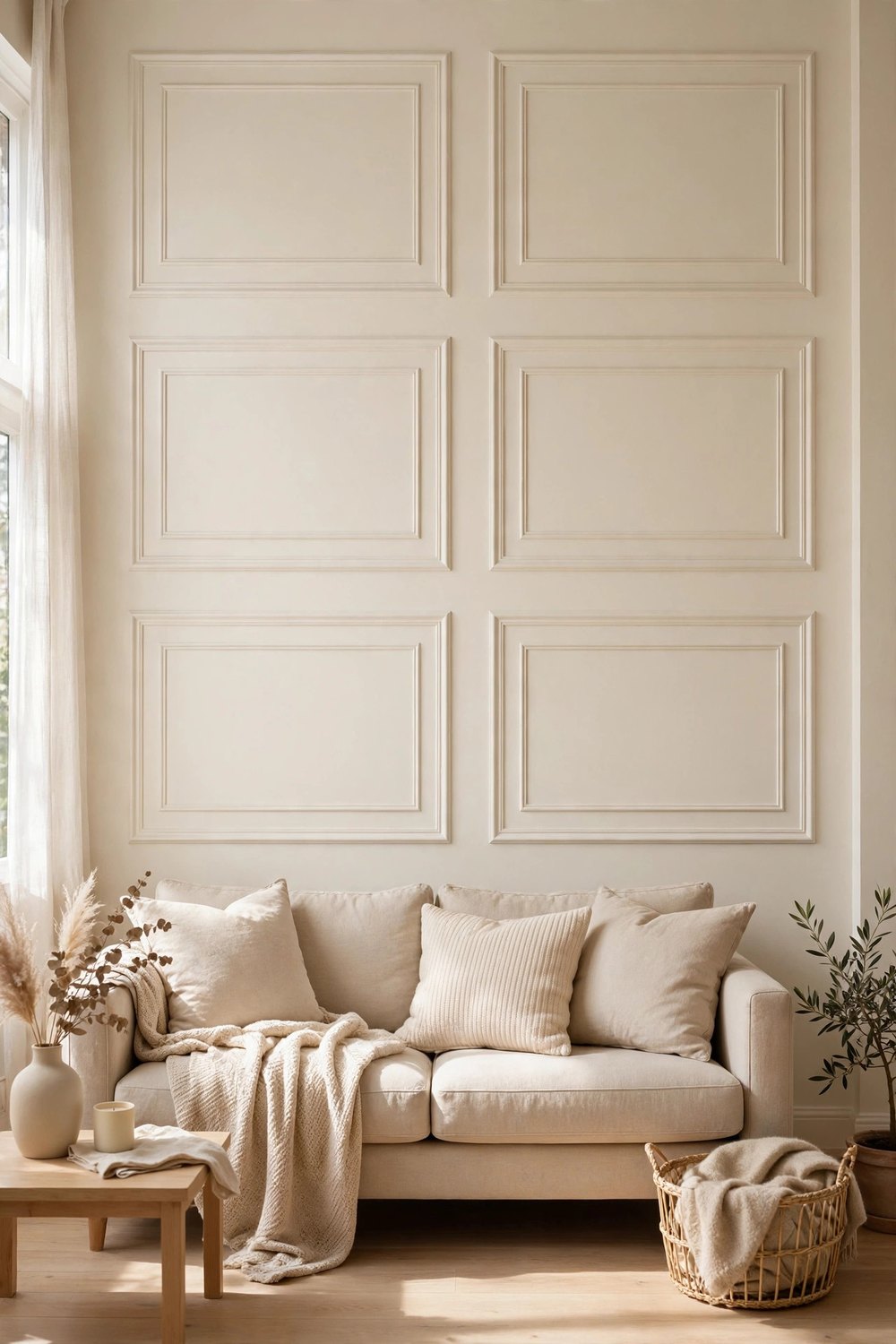
The panel-molding look that fills expensive renovations can be drawn on with paint and a steady hand. Mark out generous rectangles with a level and pencil, tape inside and outside the lines, and paint a slim double frame — a slightly darker outline with a soft shadow line beside it — so the eye reads real depth. Keep the rectangles evenly spaced and aligned with doors and furniture. It costs one can of paint and a roll of tape, yet guests will run a hand along the wall expecting to feel the trim.
10. Sponge On a Subtle Linen-Look Texture
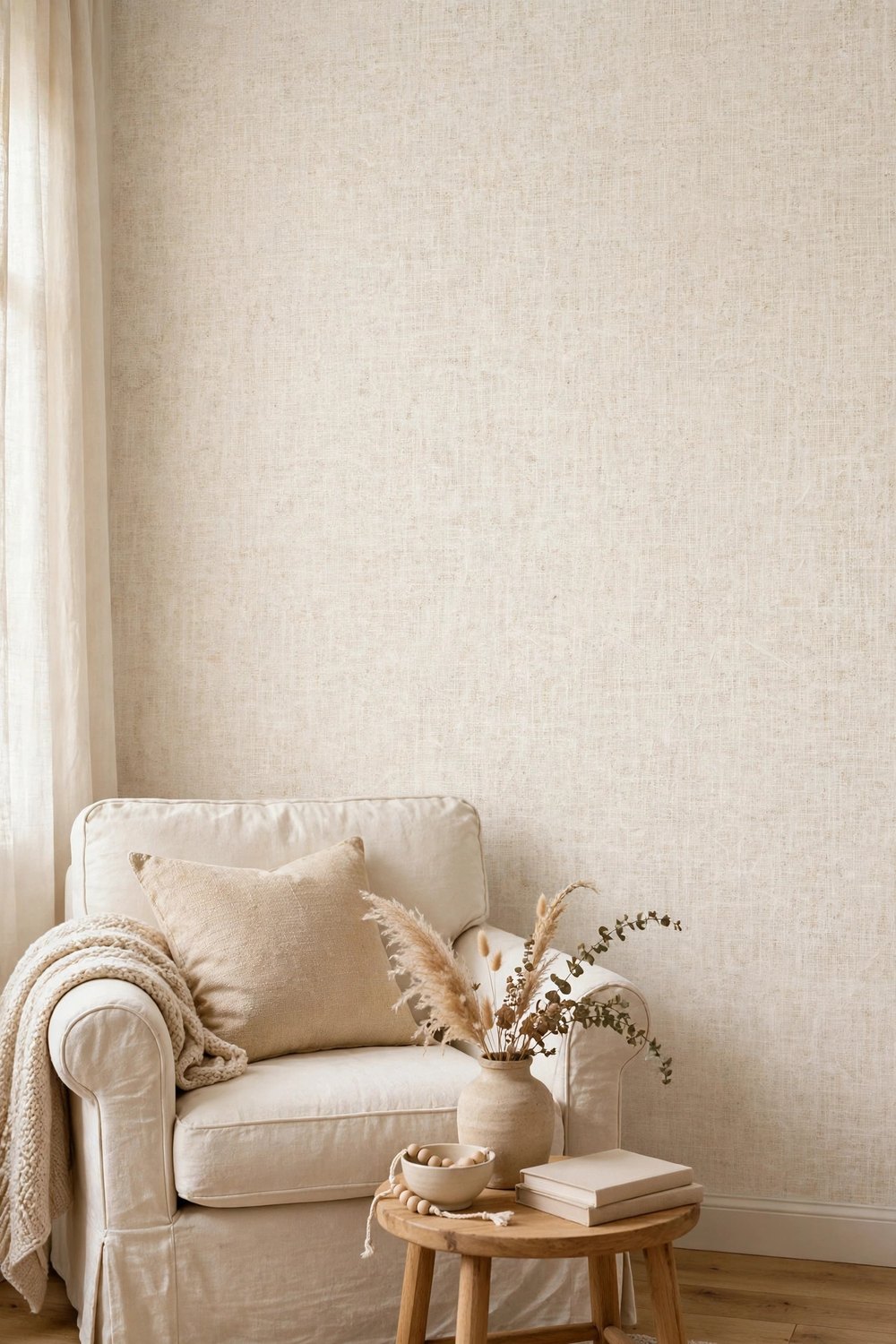
For walls that feel flat and lifeless, a ragged or sponged texture adds movement without pattern. Roll on your base coat, then while a second, slightly lighter glaze coat is wet, dab and drag a natural sponge or crumpled cloth across it in random directions so the surface shimmers like woven linen. Work in arm’s-length sections and soften any harsh marks by patting them while wet. The materials are just paint and a sponge, and the soft, textile-like finish hides a multitude of wall imperfections.
Paint is the most forgiving decor there is — if a wall does not thrill you, it is one more coat away from a different idea, which makes accent walls and stencils the perfect place to be brave. Start with the half wall or the arch, let one good result talk you into the stencil, and keep your sample pots for touch-ups and the next room. Save this list to your Pinterest board so it is ready before your next project weekend — and follow DecorNesti for a new cozy project list every week.


Leave a Reply