
Working from a small apartment usually starts at the dining table and slowly spreads — laptop on the sofa, papers on the bed, calls taken from the one chair that does not squeak. The fix is not a spare room; it is one honest corner that belongs to work and only work, even if it is barely wider than the desk itself. A corner with its own light, its own chair, and a way to close the day away makes the whole apartment feel bigger, because the rest of it gets to be home again. These ten ideas find that corner in windows, closets, alcoves, and the dead space you have been walking past for months. Save your favorites to Pinterest, measure your smallest corner, and give your workday a proper address.
In This Article
- 1. Claim the Brightest Corner by the Window
- 2. Turn a Spare Closet into a Cloffice
- 3. Float a Slim Desk to Keep the Floor Open
- 4. Fold the Workday Away with a Drop-Leaf Desk
- 5. Work Behind the Sofa in an Open Studio
- 6. Share the Dining Table with a Rolling Work Basket
- 7. Build a Nook in an Alcove or Under the Stairs
- 8. Let a Bookshelf Divider Be Your Office Wall
- 9. Keep a Bedroom Corner Calm and Work-Only
- 10. Fit a Corner Desk into Truly Dead Space
1. Claim the Brightest Corner by the Window
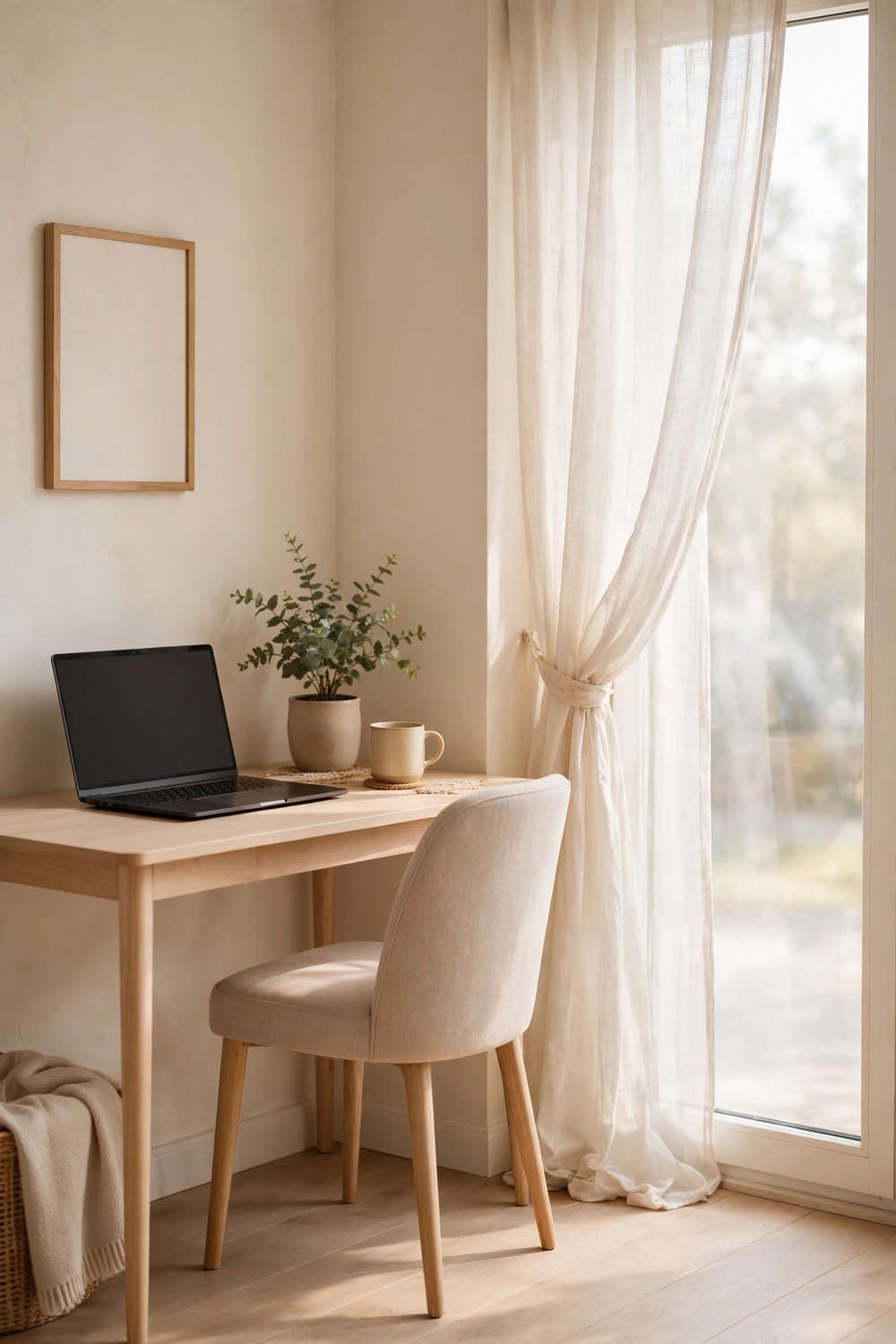
The corner beside the window is prime real estate, and work deserves it more than the plant does. Angle a slim desk into the corner so daylight falls across your keyboard instead of your screen, and video calls get the soft, flattering light everyone else is faking with filters. A small chair that tucks fully under the desk keeps the corner open when the day ends. It becomes the seat you choose even on weekends, which is how you know the corner is right.
2. Turn a Spare Closet into a Cloffice
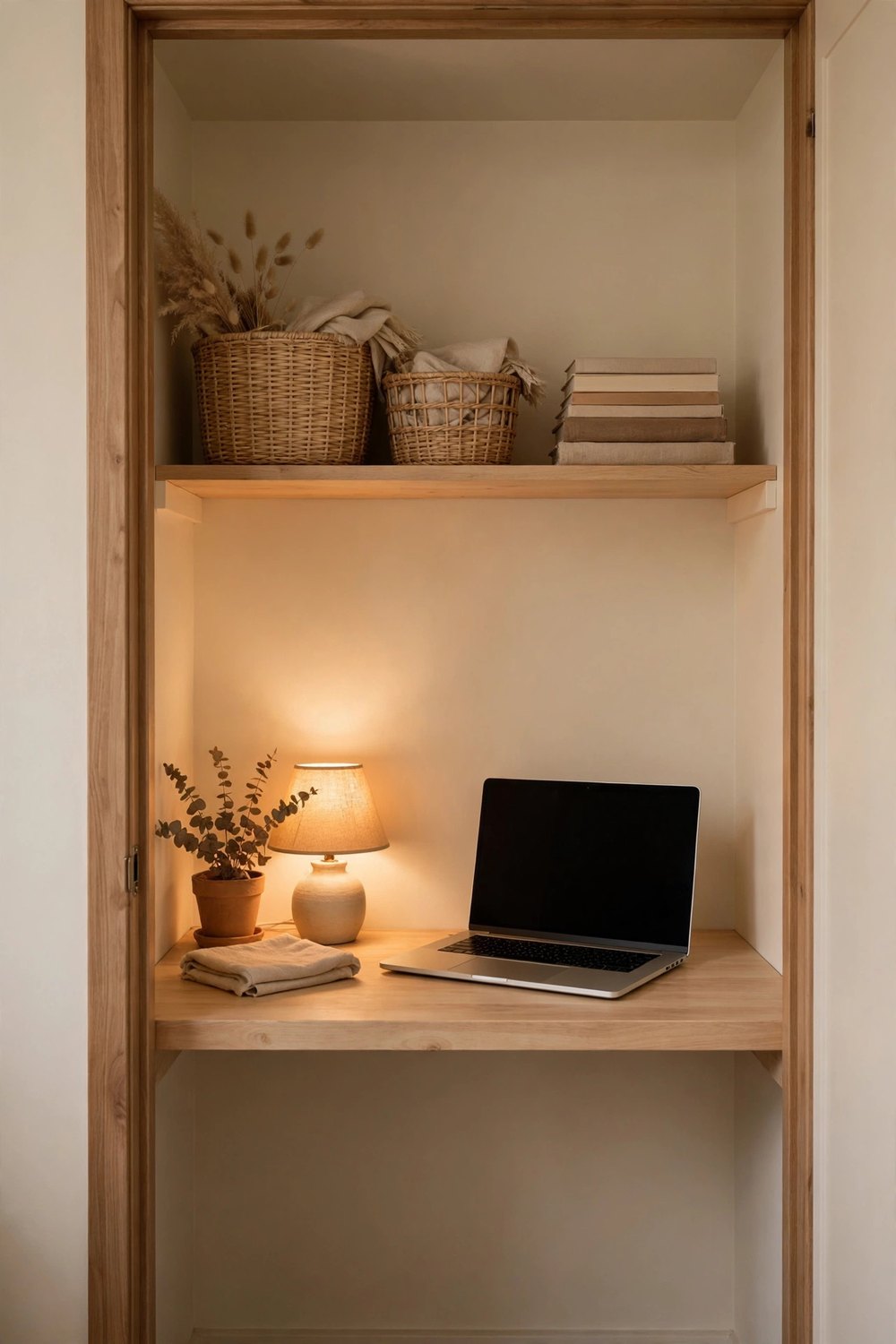
A closet with the door removed — or simply left open — is a ready-made office with walls, a defined edge, and the loveliest trick of all: it closes. Fit a desktop across the width at sitting height, add one shelf above for supplies and a small lamp, and hang a pegboard or pinboard inside for notes. When the workday ends, the door shuts and the office disappears from your home entirely. Renters can do the whole thing with a tension-mounted shelf and removable hooks, so the closet returns to wardrobe duty when you move.
3. Float a Slim Desk to Keep the Floor Open
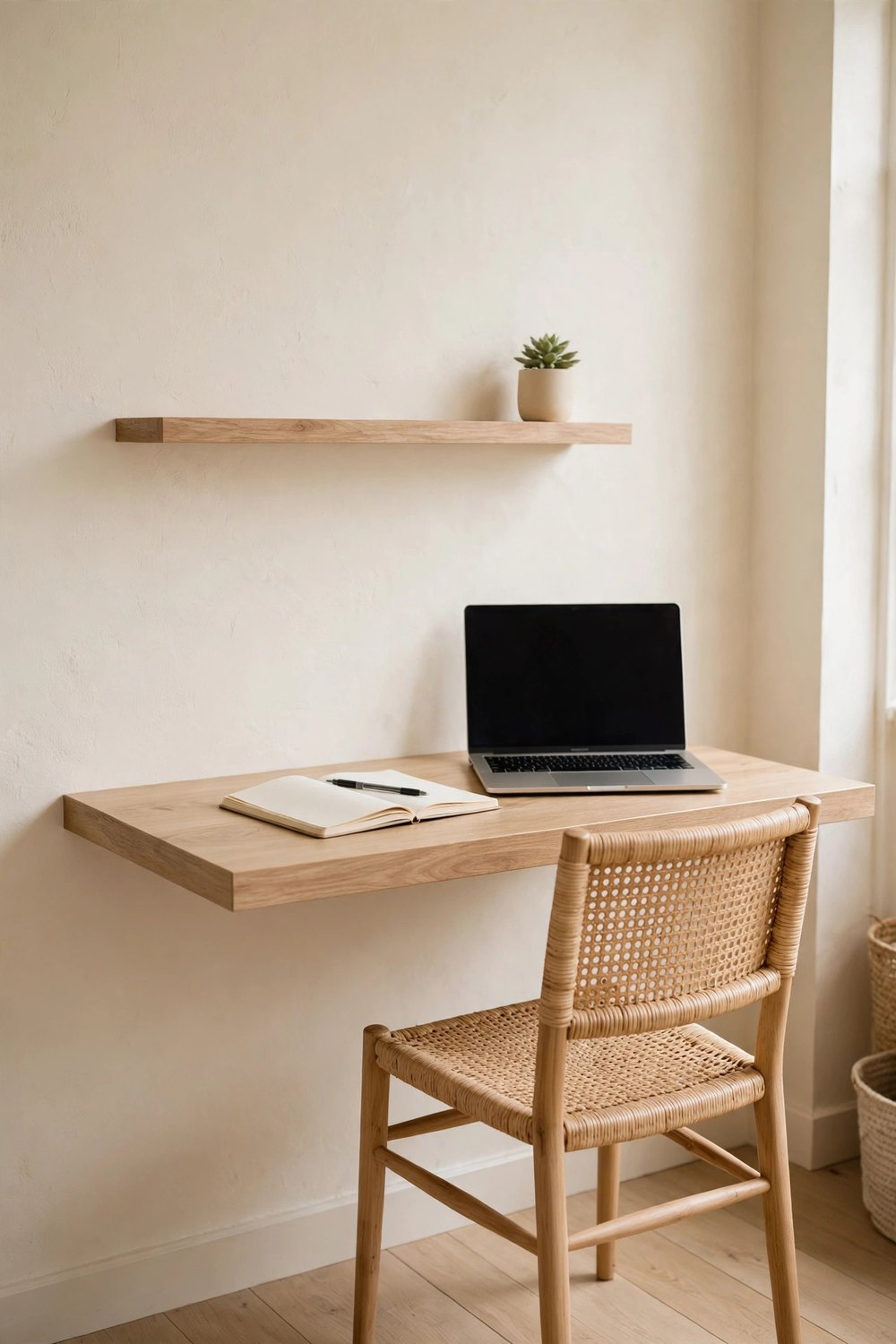
A wall-mounted floating desk gives you a real work surface with zero legs and zero floor footprint, which matters more in a small apartment than almost anything. Mount it at a quiet stretch of wall — beside the sofa, along the bedroom’s spare wall — and the visible floor running underneath keeps the room feeling open and easy to clean. Choose a depth just wide enough for a laptop and a notebook, and pair it with a chair borrowed from the dining set. Add one small shelf above for the printer or the plant, and the corner reads as intentional furniture, not a compromise.
4. Fold the Workday Away with a Drop-Leaf Desk
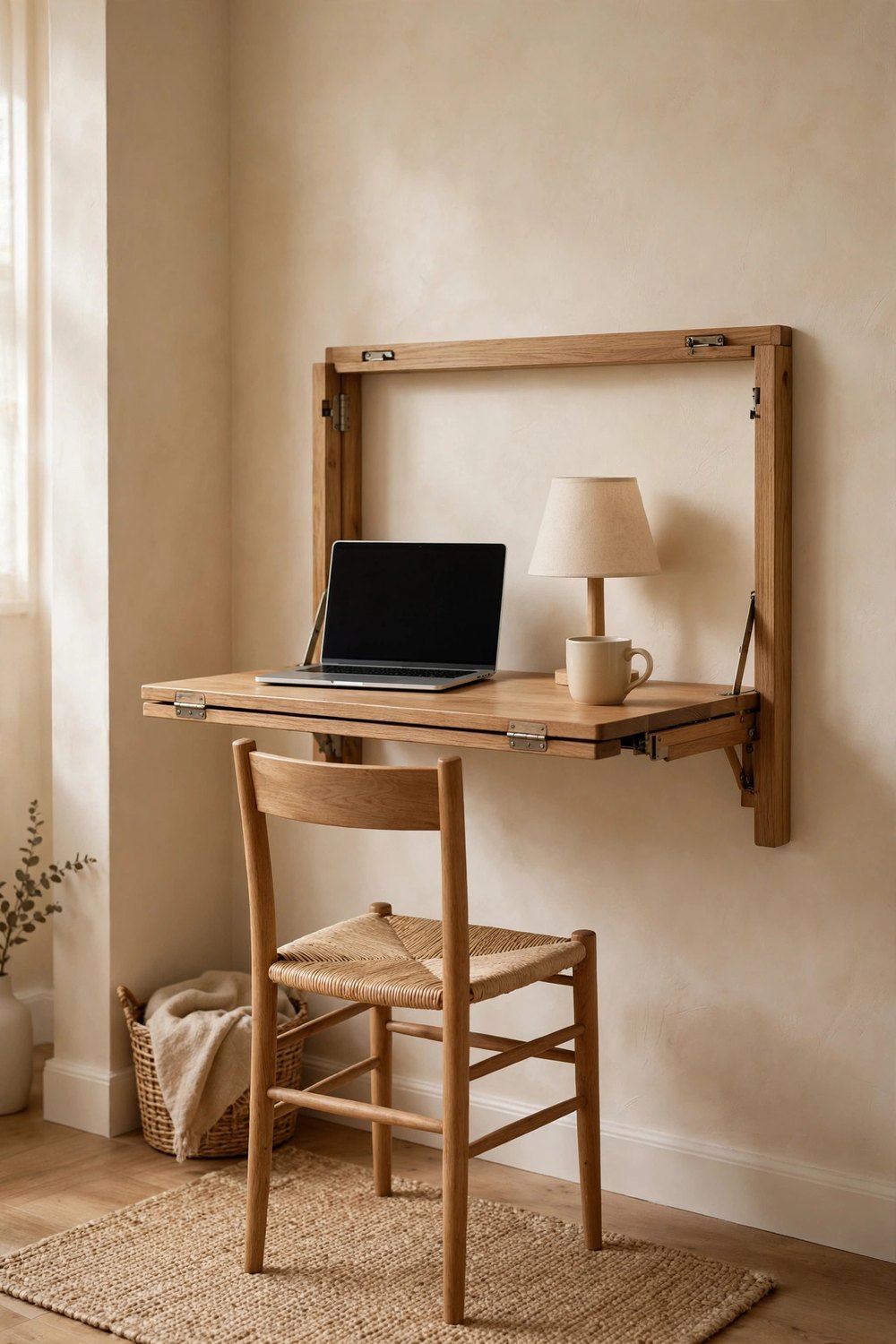
A wall-mounted drop-leaf desk is the small apartment’s magic trick: a proper desk at nine, a flat panel against the wall by six. The leaf folds down for work — laptop, lamp, notebook, coffee — and folds up the moment you finish, returning the floor and the view to your evening. It suits hallways, the foot of a bed, and the wall beside the kitchen where a permanent desk would block the flow. Many come with small cubbies inside the frame, so pens and chargers fold away with the leaf and the whole workday vanishes in one motion.
5. Work Behind the Sofa in an Open Studio
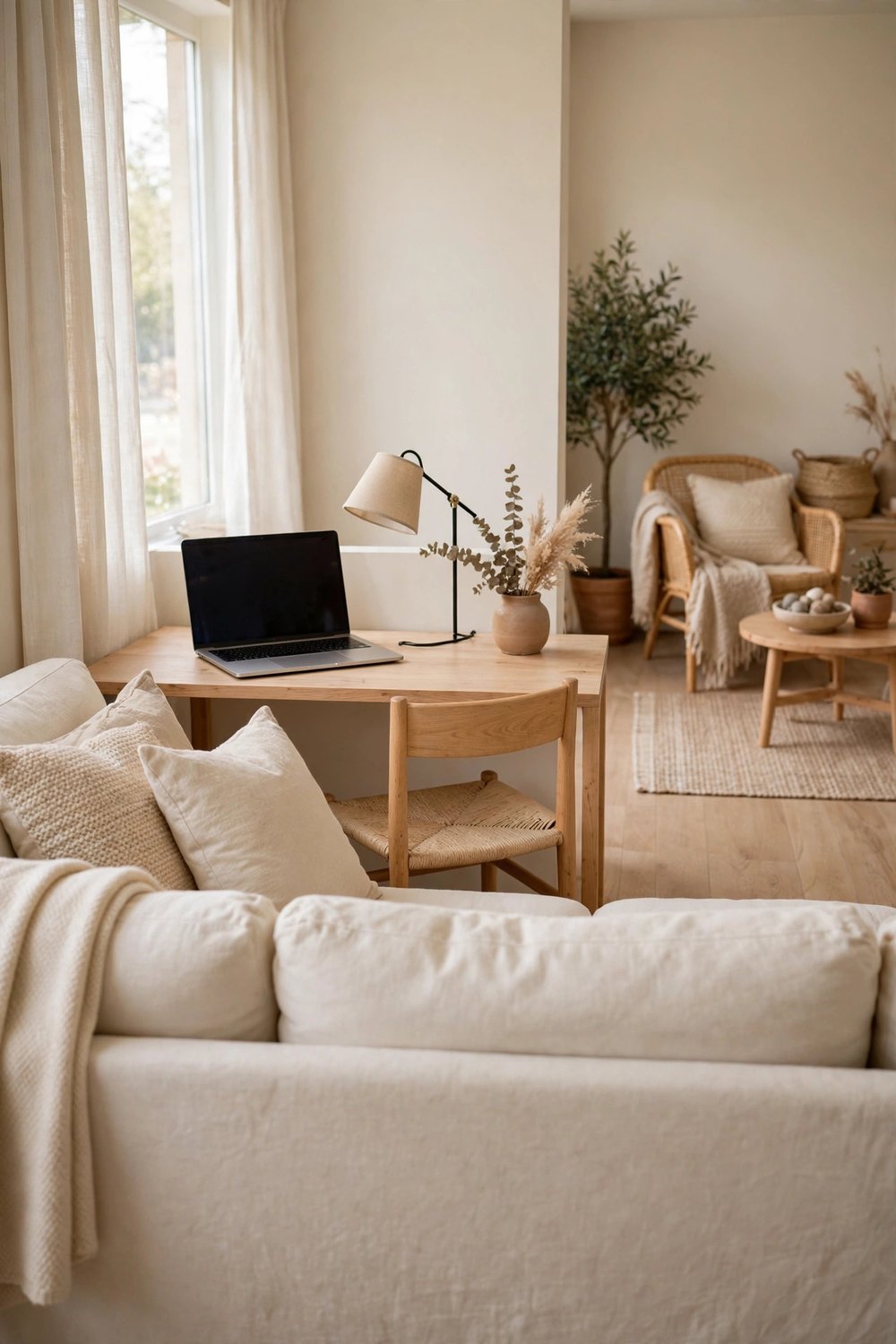
In a studio, the back of the sofa is a wall waiting to happen. Slide a narrow console-style desk behind it, facing into the room or toward the window, and you have a defined office zone that steals no floor from living or sleeping. A small lamp and a desk chair with a low profile keep the silhouette tidy, and sitting down to work while the sofa faces away gives the day a real beginning and end. It is the studio layout trick designers reach for first, because the furniture itself draws the boundary your walls cannot.
6. Share the Dining Table with a Rolling Work Basket
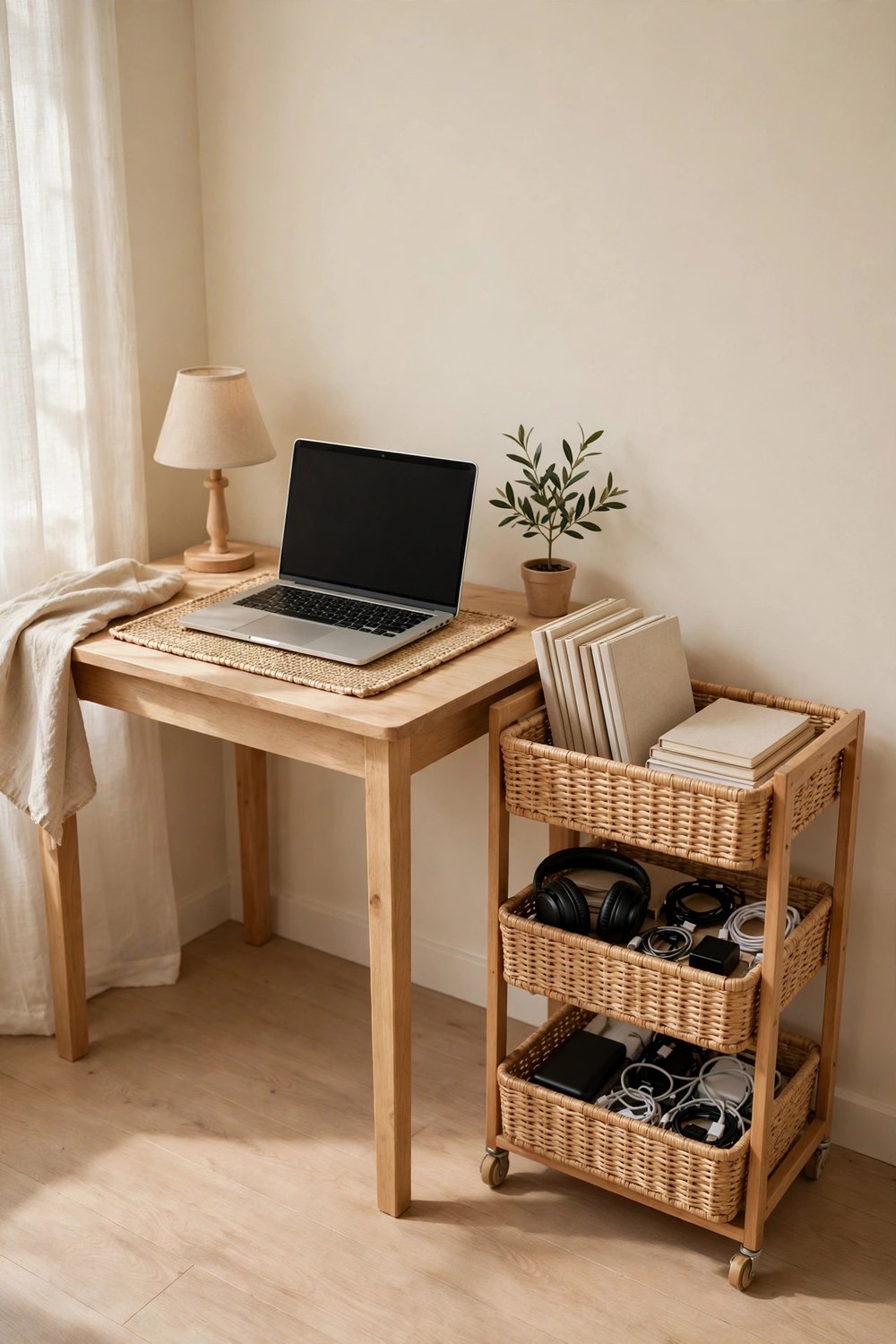
Sometimes the dining table genuinely is the only surface — so make the sharing civilized. Keep everything work-related in one rolling basket or a small wheeled cart: laptop, notebook, chargers, headphones, the good pen. Wheel it to the table in the morning, work from one defined end with a small lamp or a desk mat marking your territory, and wheel it all away before dinner so the table becomes a table again. The ritual takes two minutes each way, and it is the difference between living in an office and visiting one.
7. Build a Nook in an Alcove or Under the Stairs
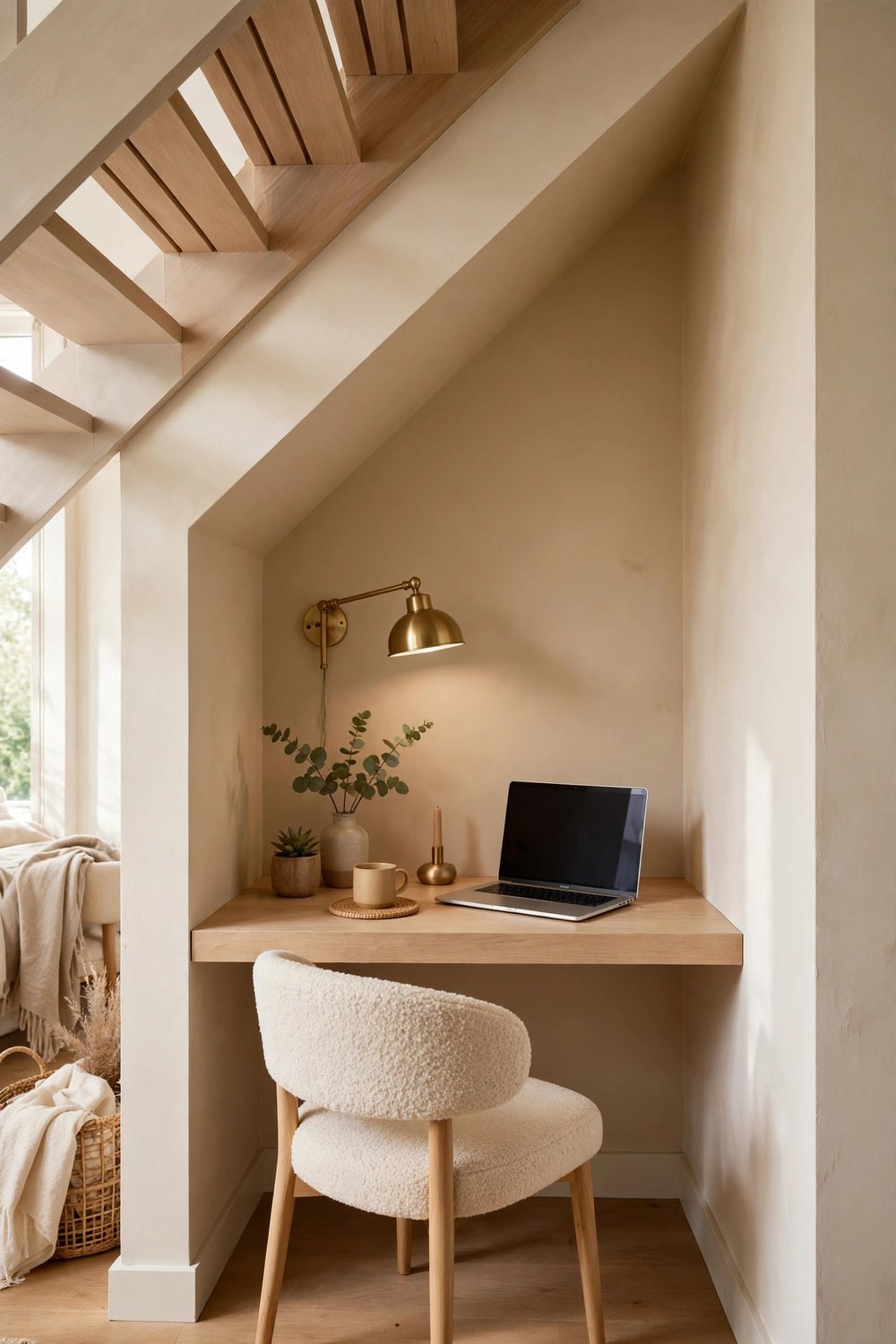
Alcoves, bay corners, and the space under a staircase are offices in disguise — bounded on two or three sides, naturally separate, and almost always underused. A desk cut or chosen to fit the exact width, a wall lamp that asks for no surface space, and a cushion on the chair turn the oddest footprint in the apartment into its most charming corner. Paint or paper the inside of the nook a shade deeper than the room if your lease allows it, and the little enclave feels designed rather than discovered. Small, enclosed, and entirely yours — many people find they do their best work in the nook.
8. Let a Bookshelf Divider Be Your Office Wall
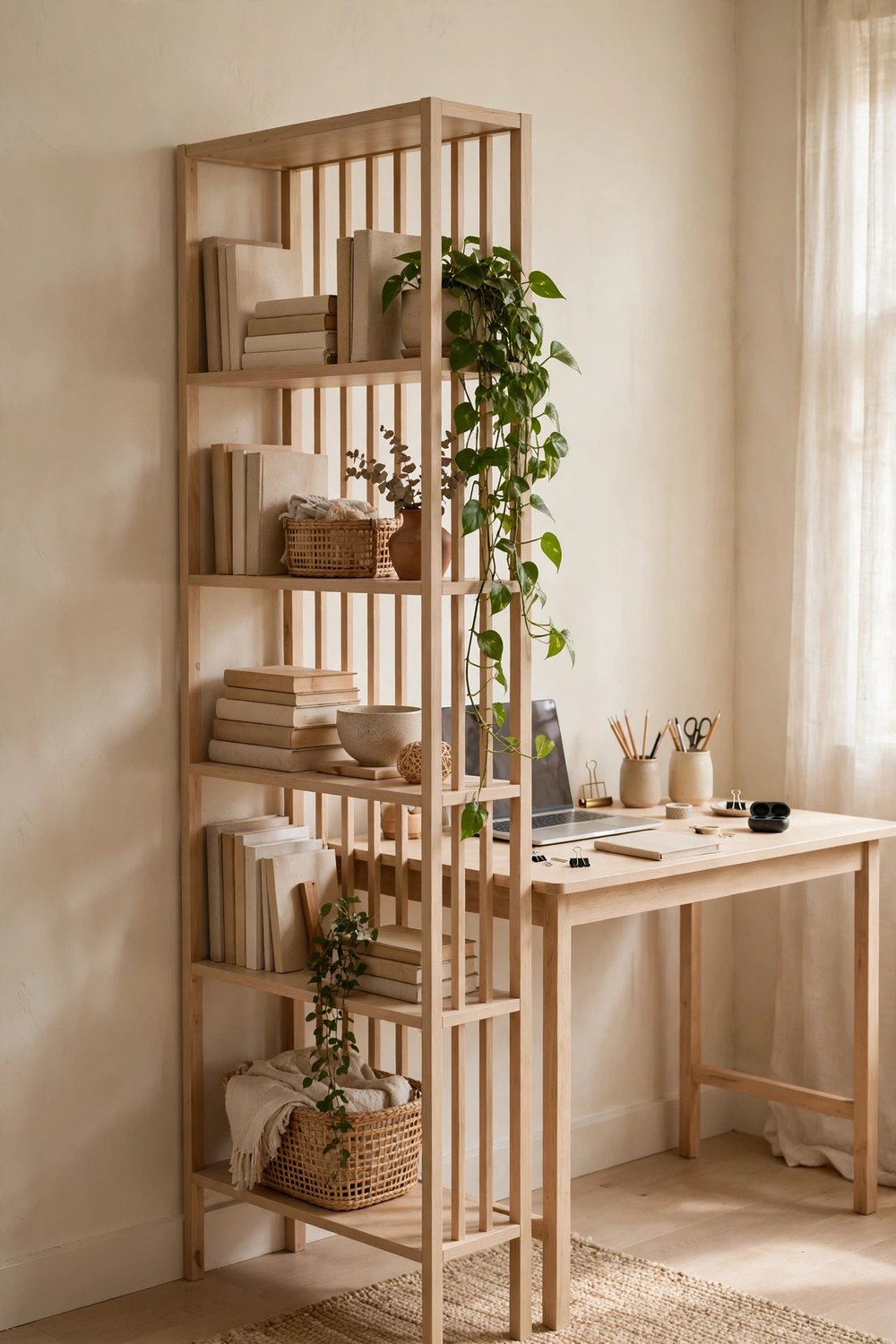
An open bookshelf placed back-to-back with your desk does three jobs at once: it divides the room, stores your work things, and gives your eyes a finished view instead of the back of a monitor. Set a slim desk against the shelf in the middle of a studio or along a long living room wall, style the shelf’s room-facing side with books and a plant, and keep the desk-facing side for supplies within arm’s reach. The zone reads as a small library with a desk in it, which is a far nicer place to spend a workday than a corner of the sofa.
9. Keep a Bedroom Corner Calm and Work-Only
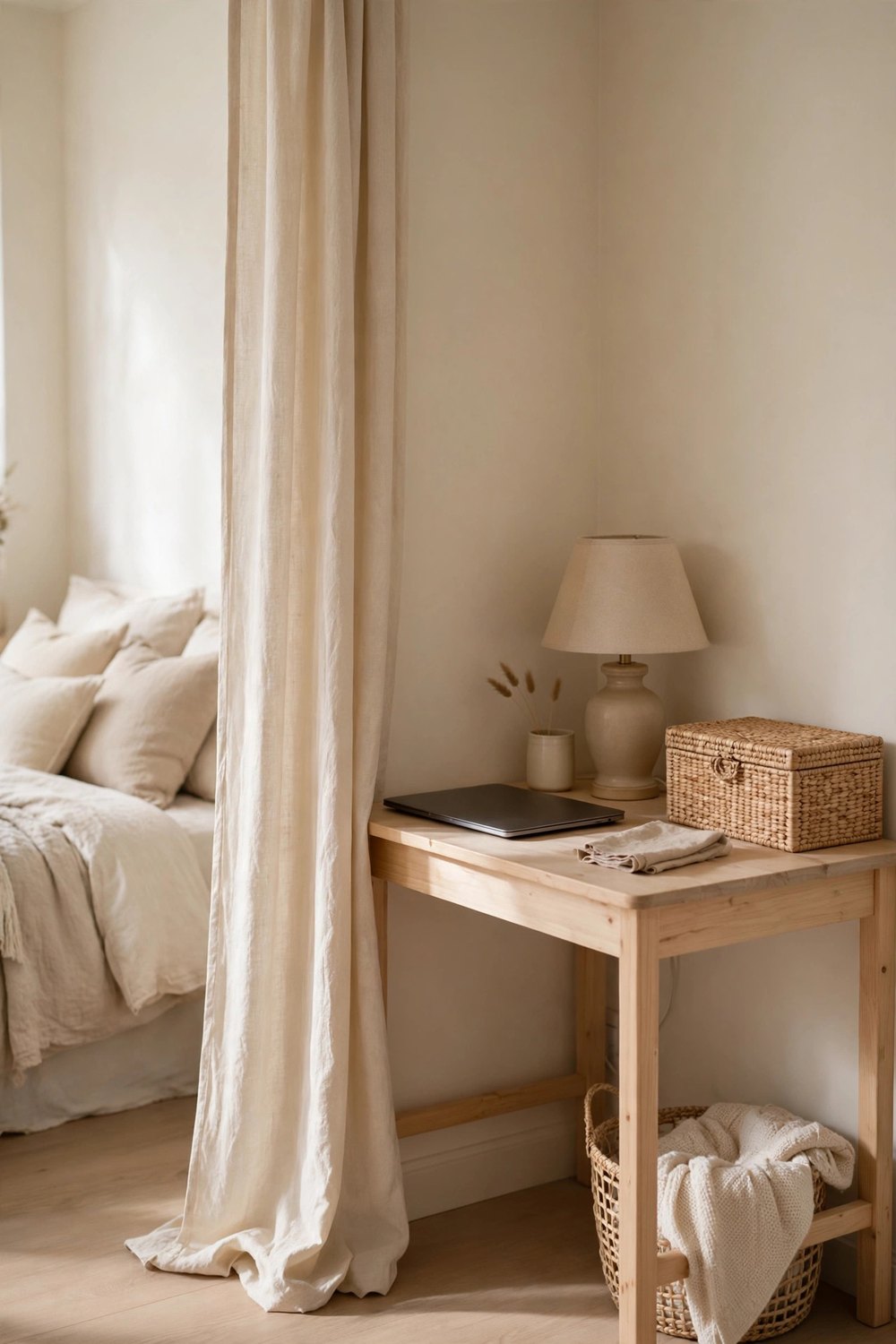
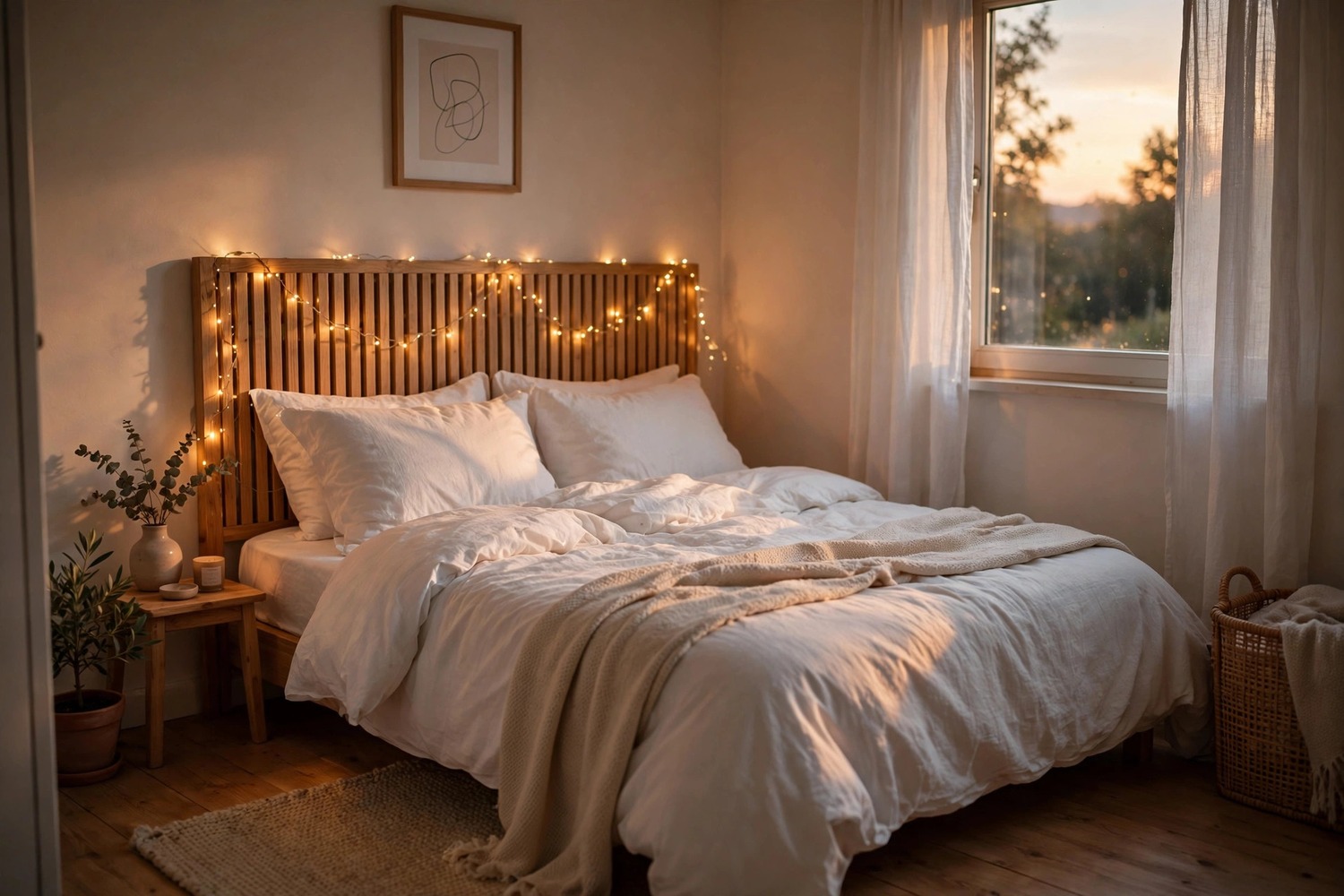
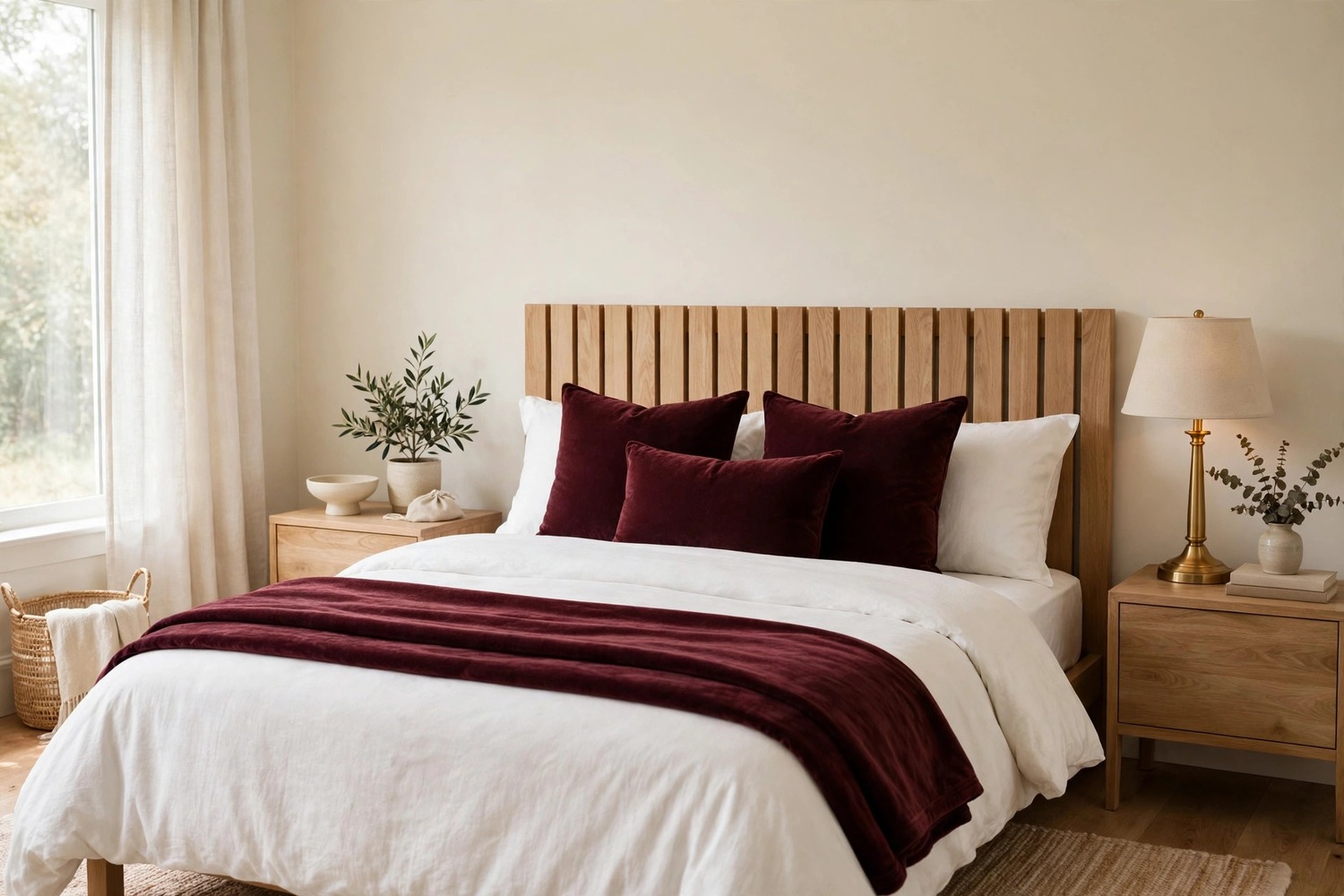
A bedroom office works when it borrows the bedroom’s calm instead of fighting it. Choose the corner farthest from the bed, keep the desk small and the palette soft — light wood, cream, linen — and let a screen, a curtain panel, or the open wardrobe door stand between work and sleep if you can. Cover or close the laptop at night, keep work papers in one closed box, and the room stays a place of rest that happens to host a desk. The rule that makes it bearable is simple: the corner is for work, the bed is never for work.
10. Fit a Corner Desk into Truly Dead Space
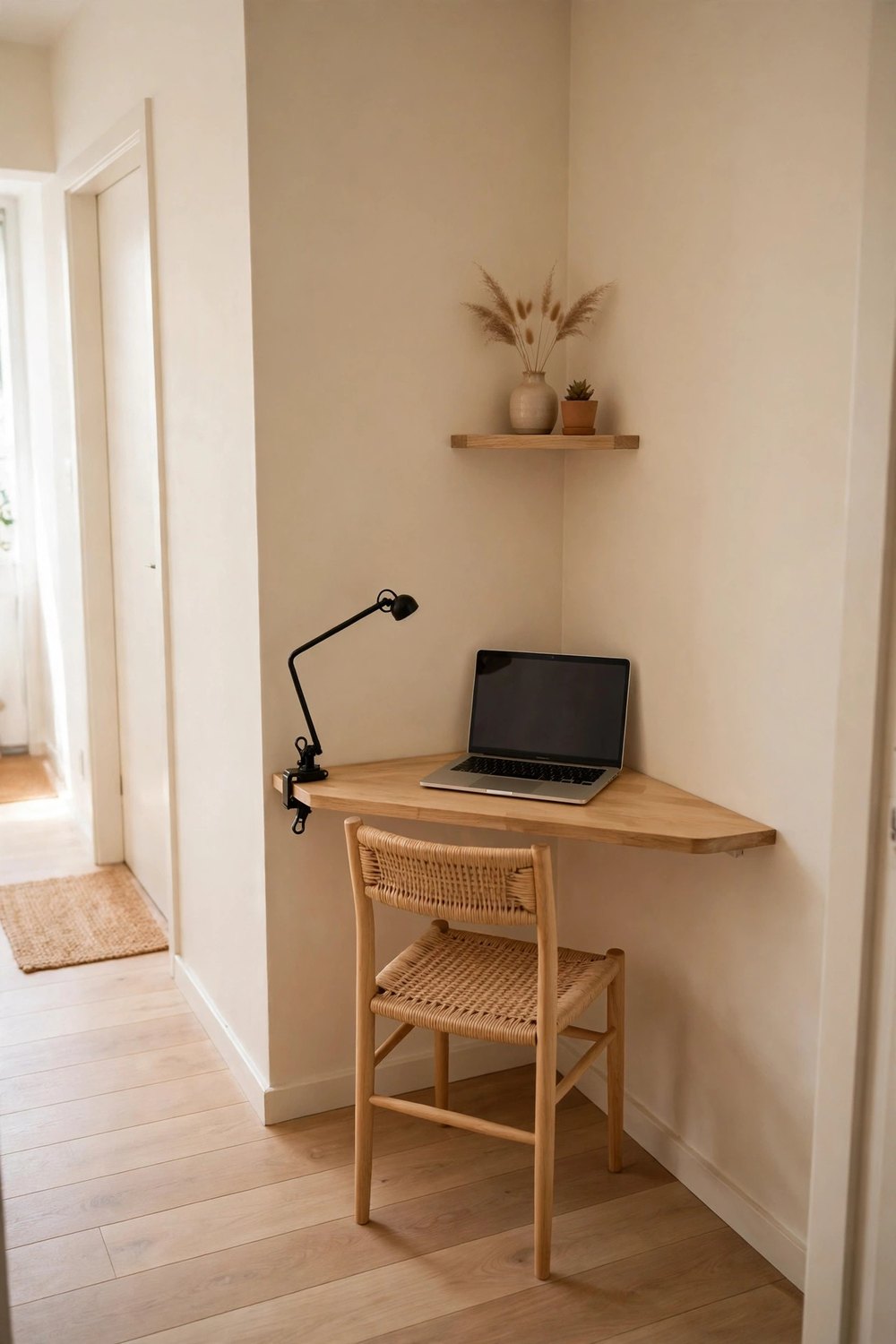
Every apartment has one triangular patch of nothing: the corner where the hallway turns, the wedge beside a wardrobe, the end of a wide landing. A corner desk — triangular or L-shaped — is made for exactly these spots, hugging both walls and turning dead geometry into the most efficient seat in the home. Add a small wall shelf in the angle above it and a lamp that clips to the desk edge, and no surface is wasted. Measure your dead corner before you shop; chances are it fits a desk better than it fits anything else you own.
A work-from-home corner does not need to be big — it needs to be yours, bounded, and possible to leave at the end of the day. Whether it folds away, closes behind a closet door, or simply lives in the angle beside the window, one dedicated corner gives the rest of your apartment back to your life. Save this list to your Pinterest board so it is handy before your next small-space refresh — and follow DecorNesti for a new cozy, space-smart list every week.

Leave a Reply