
A pantry can be small, deep, or just a couple of hard-working shelves — but when every jar matches and everything has a home, it stops feeling like storage and starts feeling like the calmest corner of the kitchen. The secret is not buying a whole new system; it is decanting the noisy packaging into quiet glass and stoneware, grouping like with like, and lifting the back row up so nothing hides and expires in the dark. These twelve ideas work in a walk-in pantry, a single cupboard, or an open shelf run alike. Save your favorites to Pinterest, empty one shelf completely, and rebuild it jar by beautiful jar.
In This Article
- 1. Decant Staples into Matching Glass Jars with Wooden Lids
- 2. Create a Spice Row in Uniform Small Jars
- 3. Add a Tiered Riser So Nothing Hides at the Back
- 4. Spin a Lazy Susan for Oils, Vinegars and Sauces
- 5. Corral Packets and Snacks in Woven Baskets
- 6. Hang a Rack on the Inside of the Pantry Door
- 7. Group a Baking Station on One Tray or Shelf
- 8. Line Open Shelves with a Calm Canister Row
- 9. Store Pasta and Grains in Tall Cylinders
- 10. Use Clear Pull-Out Bins for Produce and Bulky Items
- 11. Stack Wooden Crates for Flexible Overflow Storage
- 12. Finish with a Small Stool and a Pretty Top Shelf
1. Decant Staples into Matching Glass Jars with Wooden Lids
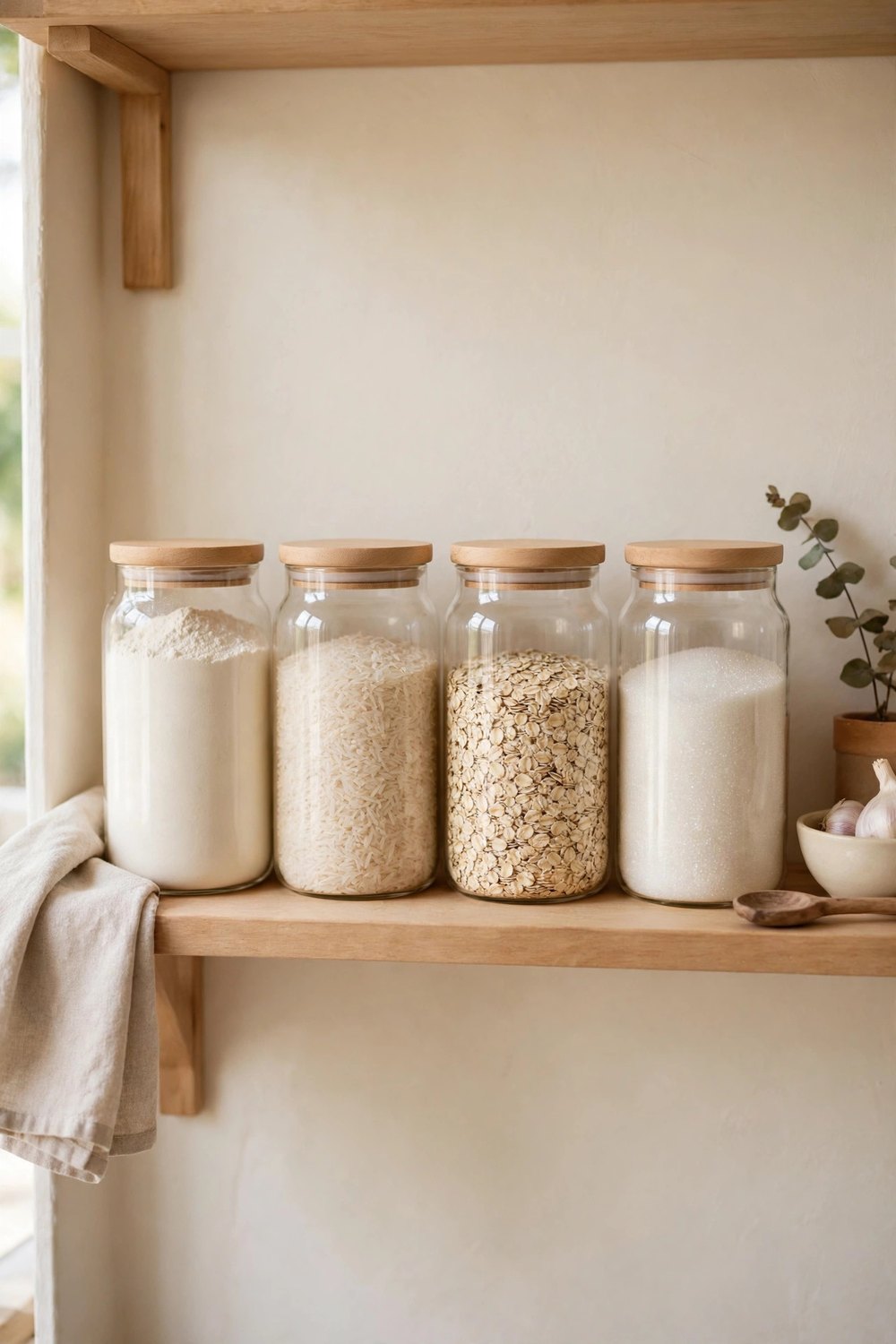
The single change that makes any pantry look instantly composed is decanting the staples — flour, sugar, rice, oats — out of their loud, half-torn bags and into matching glass jars with simple wooden lids. The contents become the color palette: warm creams, soft browns, pale golds. Line the jars in one row on your most-used shelf, largest at the back if the shelf is deep, and cooking suddenly feels calm because you can see exactly what you have and how much is left. Refills take a minute with a scoop, and nothing ever spills from a bag that would not reseal.
2. Create a Spice Row in Uniform Small Jars
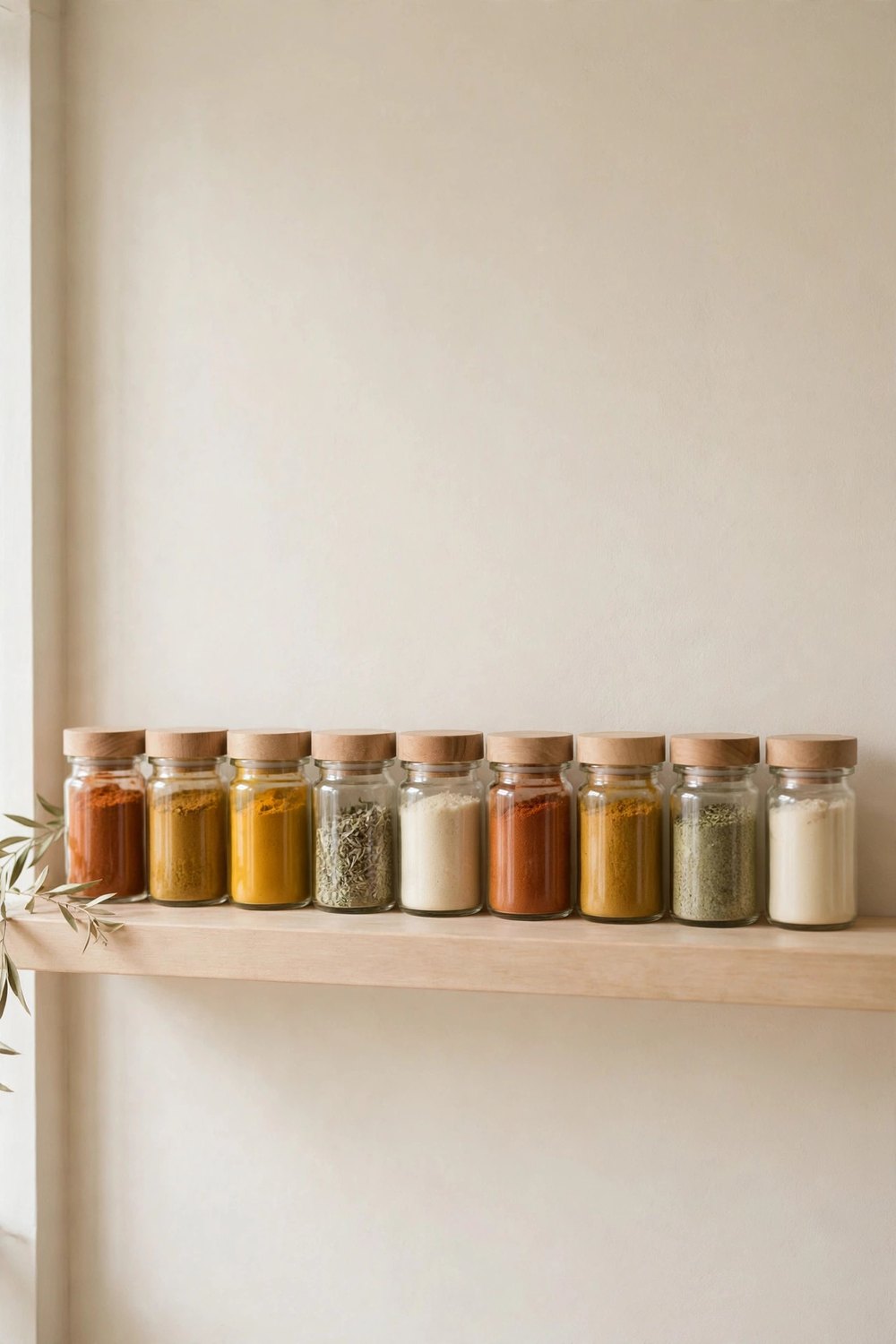
Spices arrive in a dozen mismatched tins and packets, and the jumble makes every recipe start with a rummage. Tipping them into one family of small uniform jars — glass with plain metal or wooden lids — turns the whole collection into a calm gradient of rust, gold, sage, and cream. Stand them in a single row on a narrow shelf or a shallow drawer, tallest at the back, and you can read the whole spice shelf at a glance. The jars are inexpensive in bulk packs, and the ten minutes it takes to fill them pays you back every single dinner.
3. Add a Tiered Riser So Nothing Hides at the Back
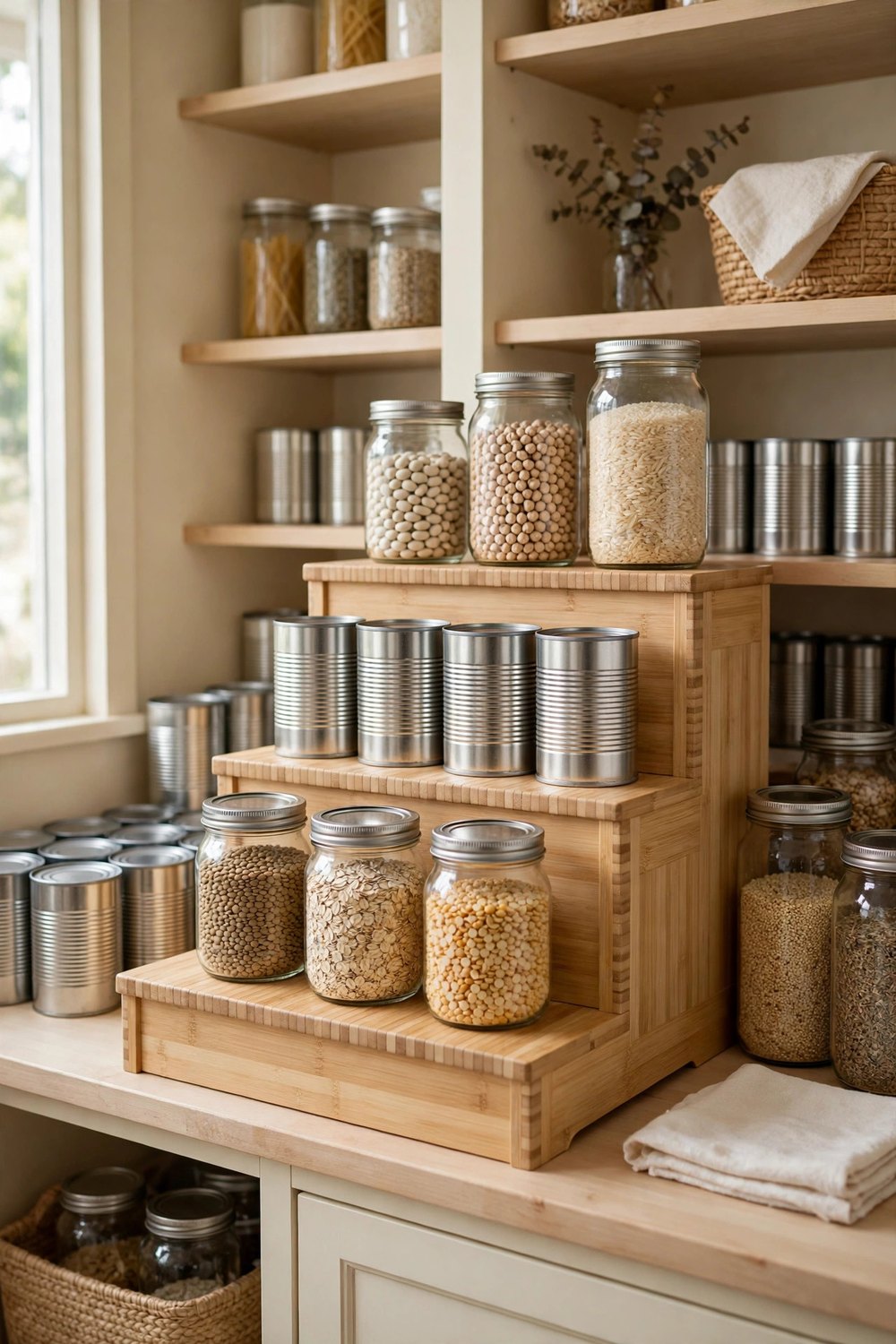
Deep shelves have a back row, and the back row is where good ingredients go to be forgotten. A simple tiered riser — like small stadium steps for your cans and jars — lifts everything behind the front row into plain sight, so the chickpeas stop hiding behind the tomatoes. Wooden and bamboo versions suit a warm kitchen best, and most fold or stack if you ever rearrange. Measure your shelf depth before you buy, leave a hand’s width at the front for grabbing, and the forgotten-back-row problem quietly ends.
4. Spin a Lazy Susan for Oils, Vinegars and Sauces
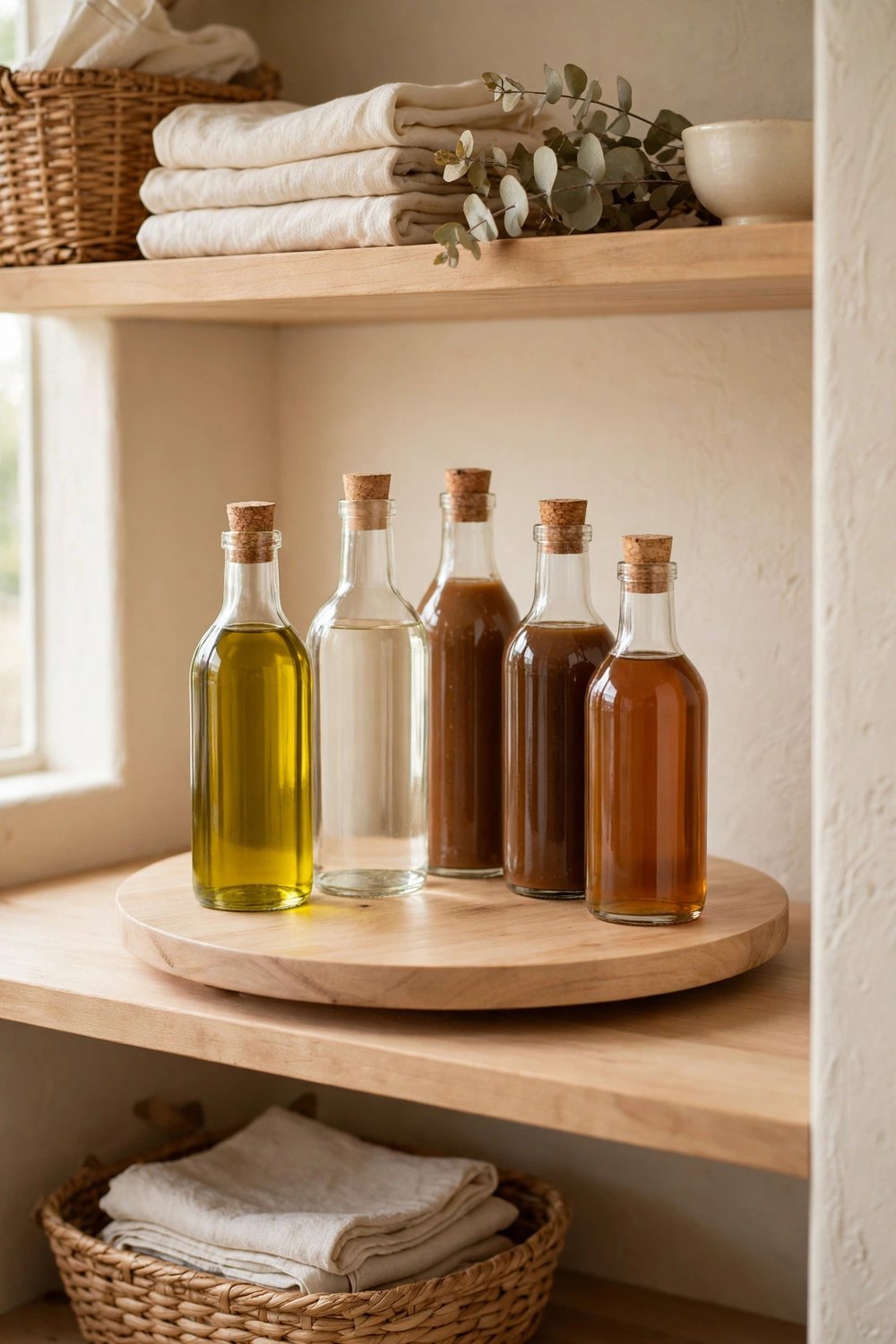
Oils, vinegars, and sauces are the bottles that cluster, topple, and leave rings on the shelf. Gather them onto one round wooden or marble lazy susan and the whole group becomes a single spinning station — one gentle turn brings the balsamic from the back to your hand. It suits a deep cupboard corner even better, since corners are exactly where bottles go to disappear. Keep only the bottles you reach for weekly on the turntable, and wipe the tray monthly; a crowded lazy susan is just a round traffic jam.
5. Corral Packets and Snacks in Woven Baskets
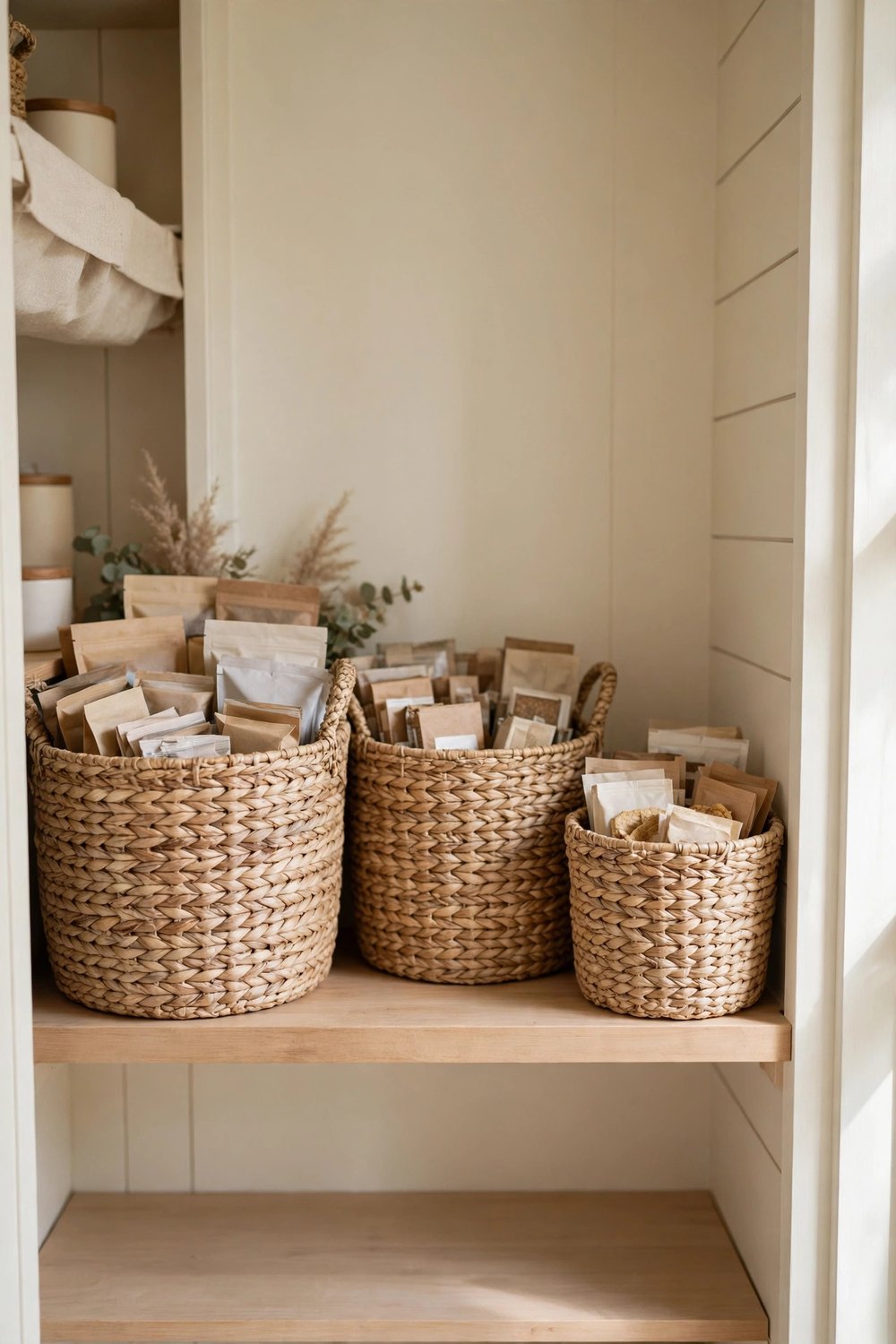
Not everything decants — seasoning packets, stock cubes, snack bars, and the children’s treats come in shapes no jar will tame. Corral each family into its own woven basket or simple open bin and the chaos becomes three calm, grabbable groups. Natural seagrass or rattan baskets soften all the glass and wood around them and hide the colorful packaging completely from view. Set them on the shelf you open most, at hand height, and restocking becomes a matter of dropping things in rather than arranging them.
6. Hang a Rack on the Inside of the Pantry Door
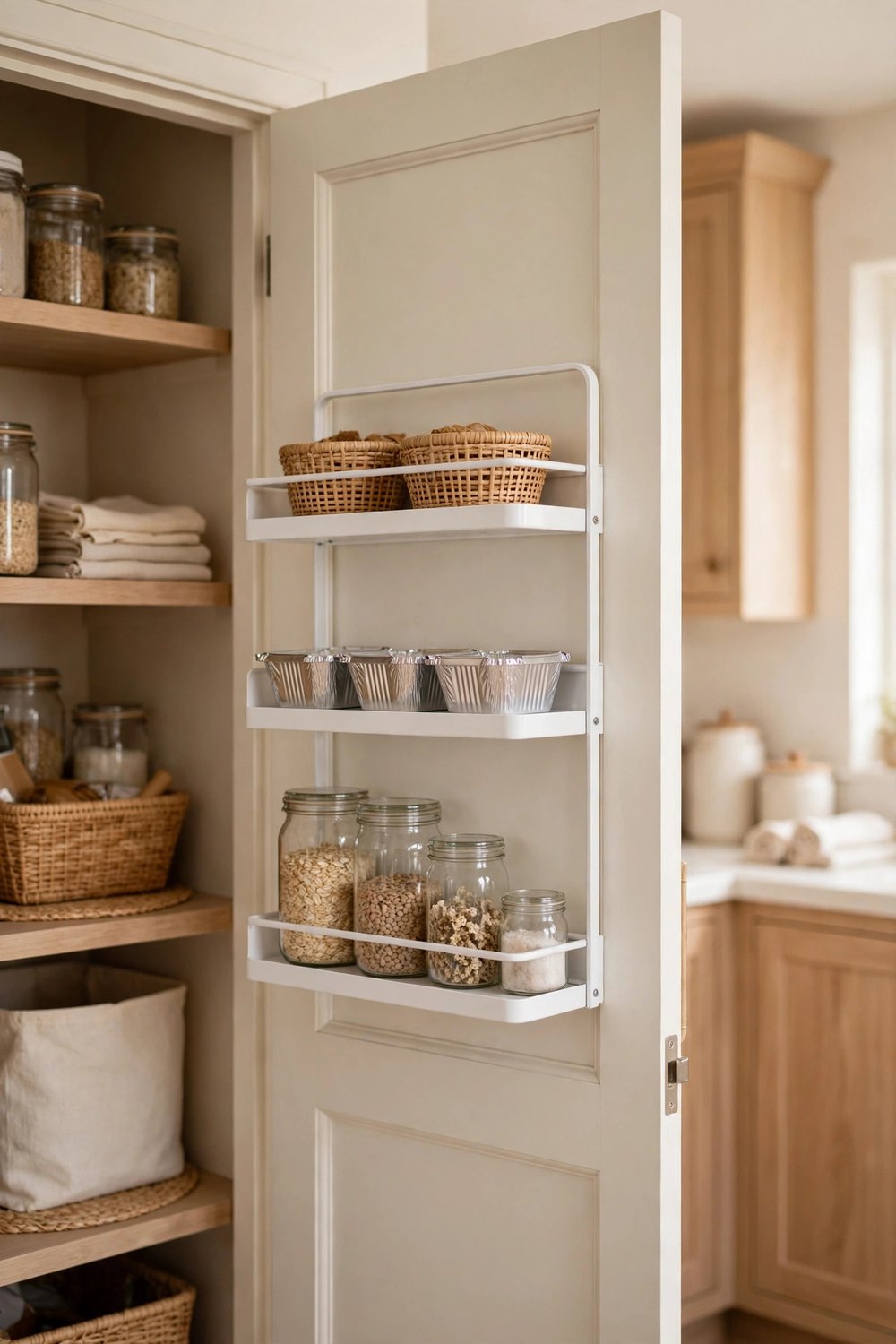
The inside of the pantry door is a whole extra shelving unit that most kitchens never use. A slim over-door rack or a few mounted rails with small baskets holds the light, flat things beautifully: spice packets, wraps and foils, measuring spoons, the shopping-list notebook. It keeps small items visible and off the main shelves, where they only get buried. Check the clearance so the door still closes softly, keep the rack’s load light, and in a rental choose an over-door version that lifts off without a single screw.
7. Group a Baking Station on One Tray or Shelf
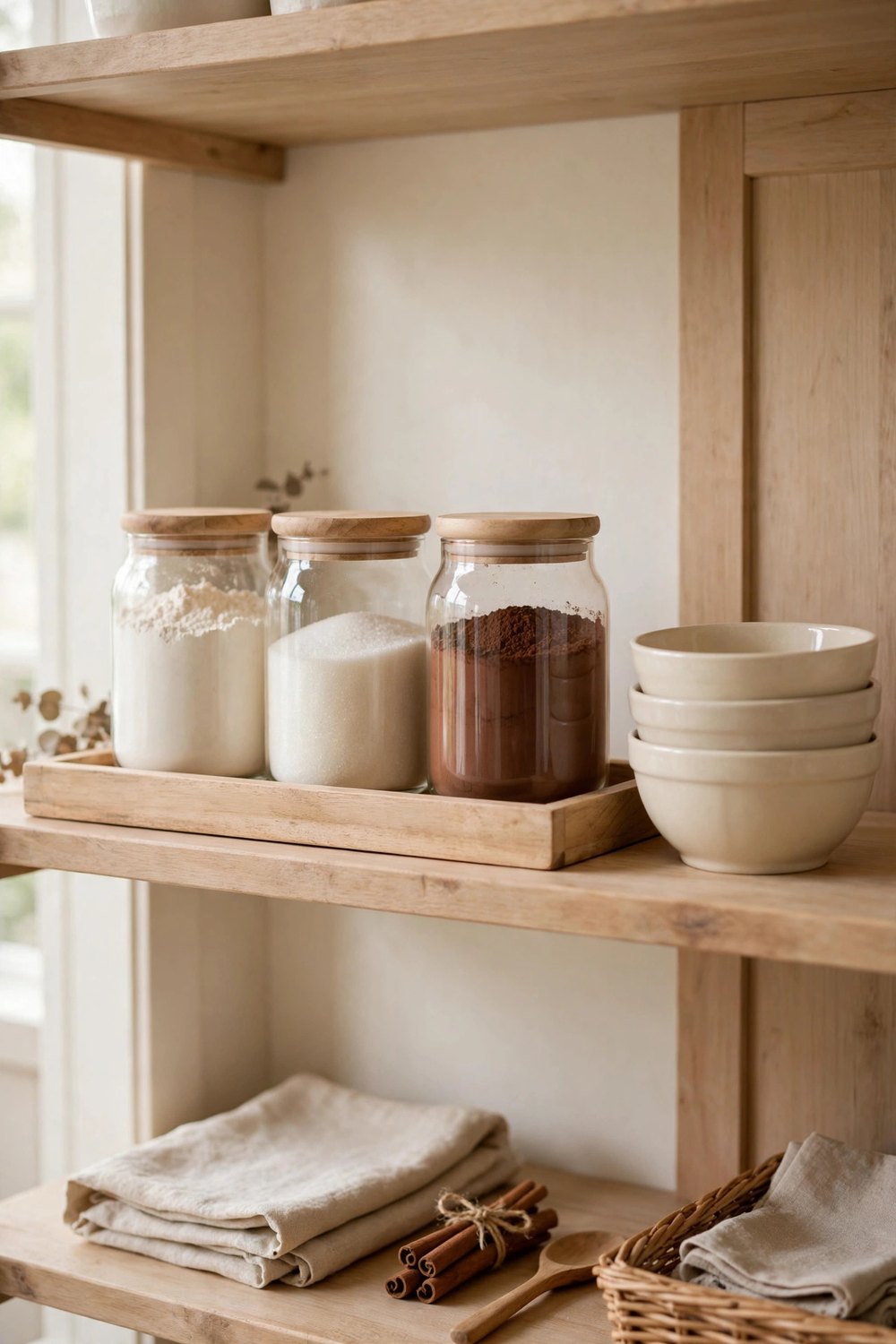
Baking goes better when its ingredients live together instead of scattered across three shelves. Gather the flour, sugars, baking powder, vanilla, and cocoa onto one tray or one dedicated shelf section, ideally with a small stack of mixing bowls nearby, and you have a baking station you can almost lift out in one piece. A wooden tray with low sides keeps jars from wandering and makes the group read as one styled vignette rather than six loose items. When a recipe calls, everything is already in conversation with everything else.
8. Line Open Shelves with a Calm Canister Row
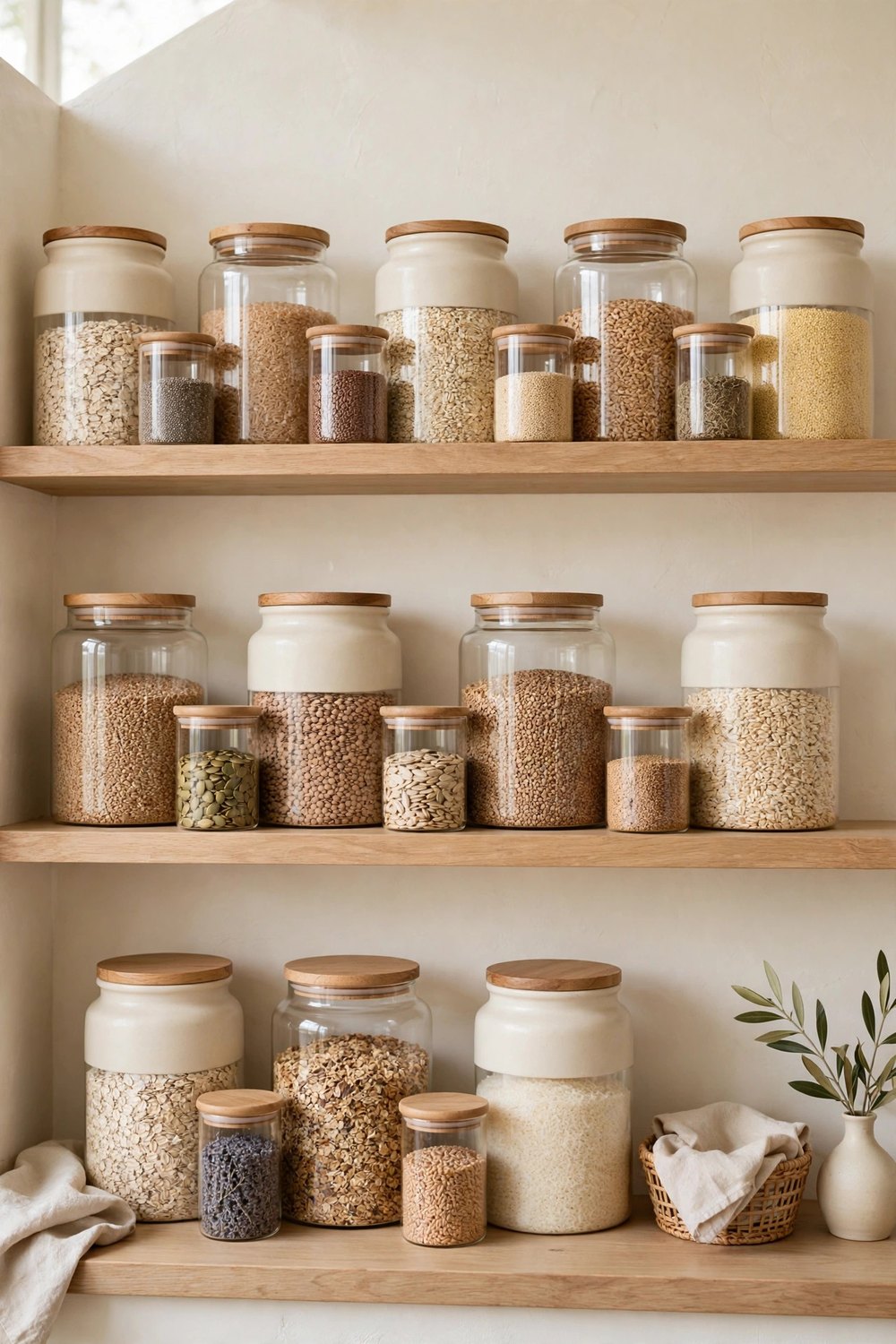
If your pantry is really a run of open shelves, treat it like a display and a store cupboard at once. A row of larger canisters — stoneware, glass, or matte ceramic in cream and soft grey — holding the everyday grains gives the shelf its calm backbone, while smaller jars and baskets fill the gaps. Keep the row’s spacing even and the lids in one material so the whole line reads deliberate. Open storage only works when it is edited, so let this row be the pretty face and keep the overflow behind a door or in crates below.
9. Store Pasta and Grains in Tall Cylinders
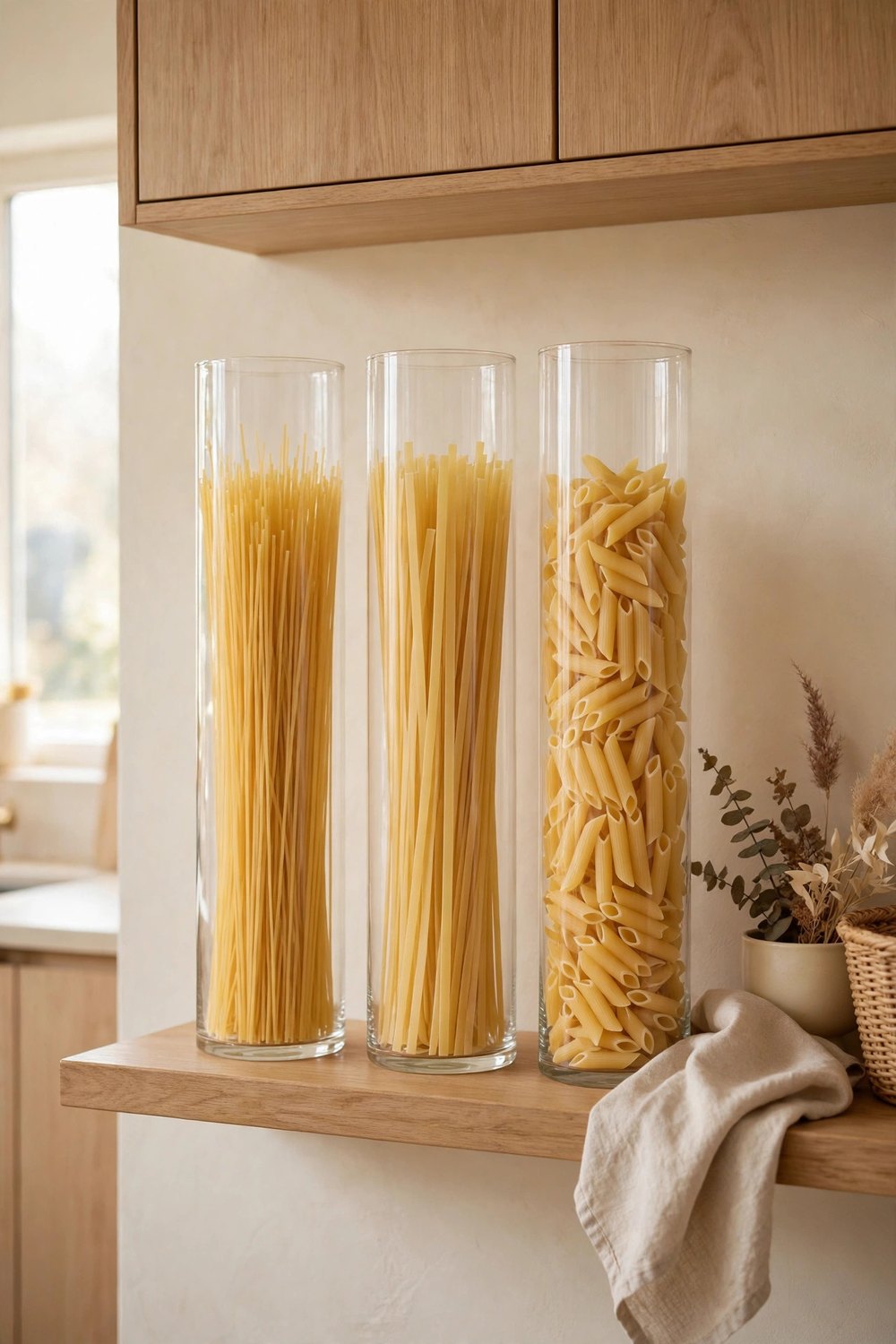
Tall, straight-sided glass cylinders were made for spaghetti, linguine, and long grains — the shapes that burst out of every bag and box. Standing upright in cylinders on a shelf, pasta becomes almost architectural: pale gold columns that look lovely and stay fresh, with the end of the packet problem gone for good. Leave one cylinder for the odds and ends — half a bag of penne, the last of the fusilli — so mixed shapes have an honest home too. Group the cylinders in threes and they read as styling, not storage.
10. Use Clear Pull-Out Bins for Produce and Bulky Items
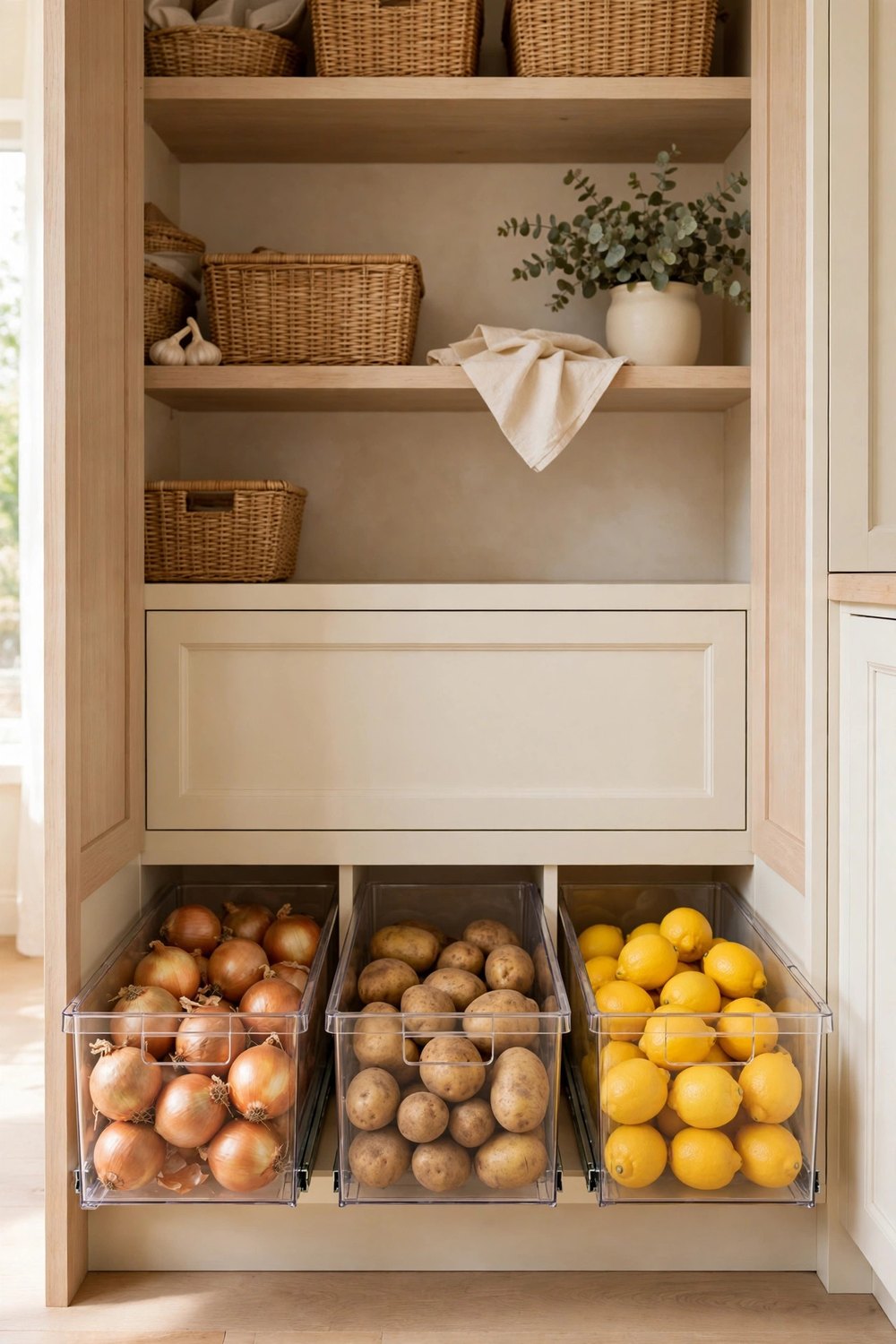
Onions, potatoes, big squash, spare lemons, and the bulky things that roll — these belong in clear pull-out bins or open crates at the pantry’s base, where air circulates and weight is no problem. Clear sides mean you can see the produce level at a glance, and pulling the whole bin forward beats excavating a dark cupboard corner. Wire or pale plastic bins keep it practical, while wooden crates make the same job feel farmhouse-pretty. Keep onions and potatoes in separate bins — they age each other faster when they share.
11. Stack Wooden Crates for Flexible Overflow Storage
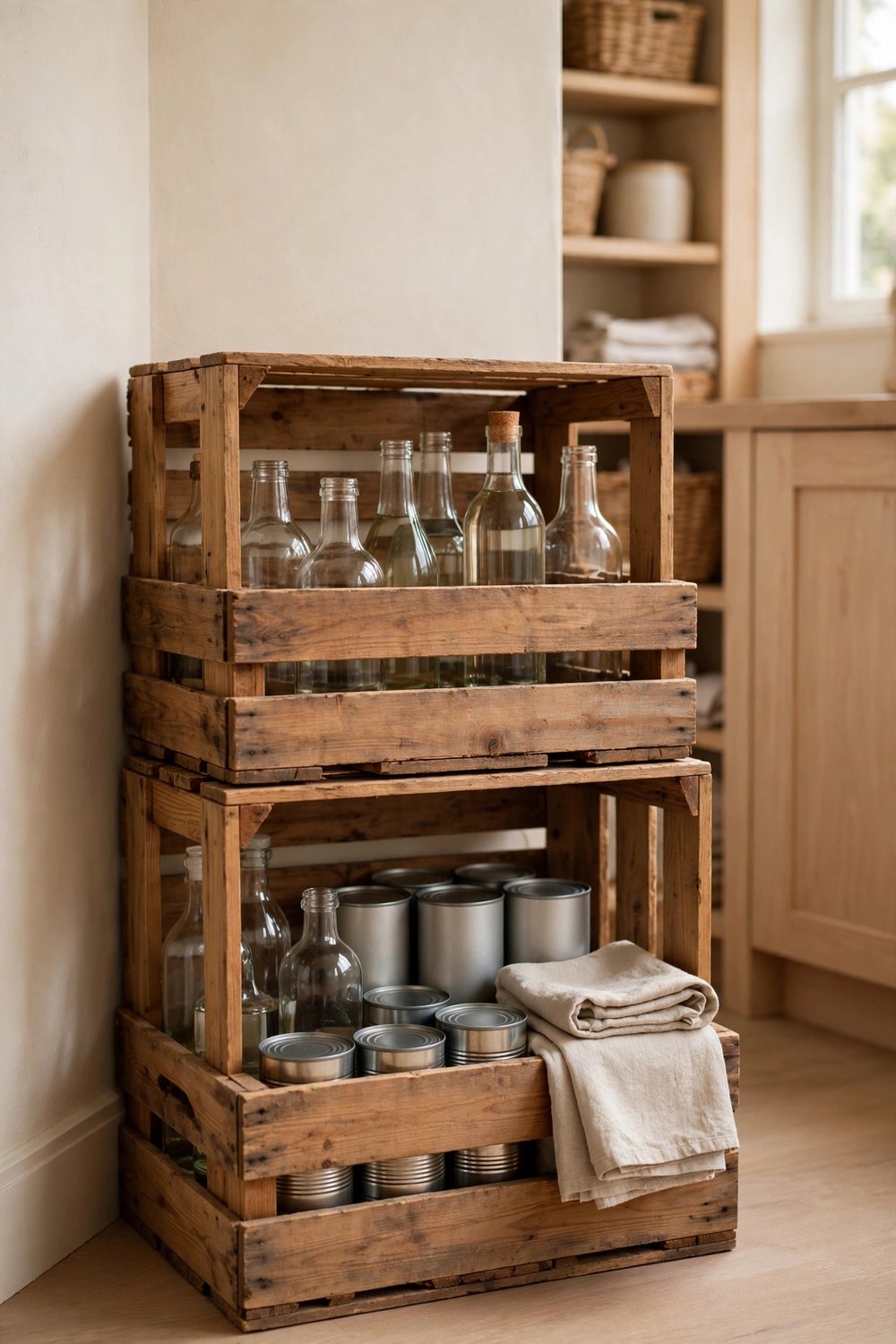
Every pantry needs an overflow plan for the good weeks — the market haul, the bake-sale ingredients, the extra tins. Two or three wooden crates stacked in the pantry’s corner or on the floor beneath the lowest shelf flex with whatever the season brings, and they look like a farmhouse still life while they do it. Turn one crate on its side as a cubby for bottles or cookbooks if the stack gets tall. Because crates are not fixed, the pantry can change shape whenever your cooking does, which is the real secret of storage that lasts.
12. Finish with a Small Stool and a Pretty Top Shelf
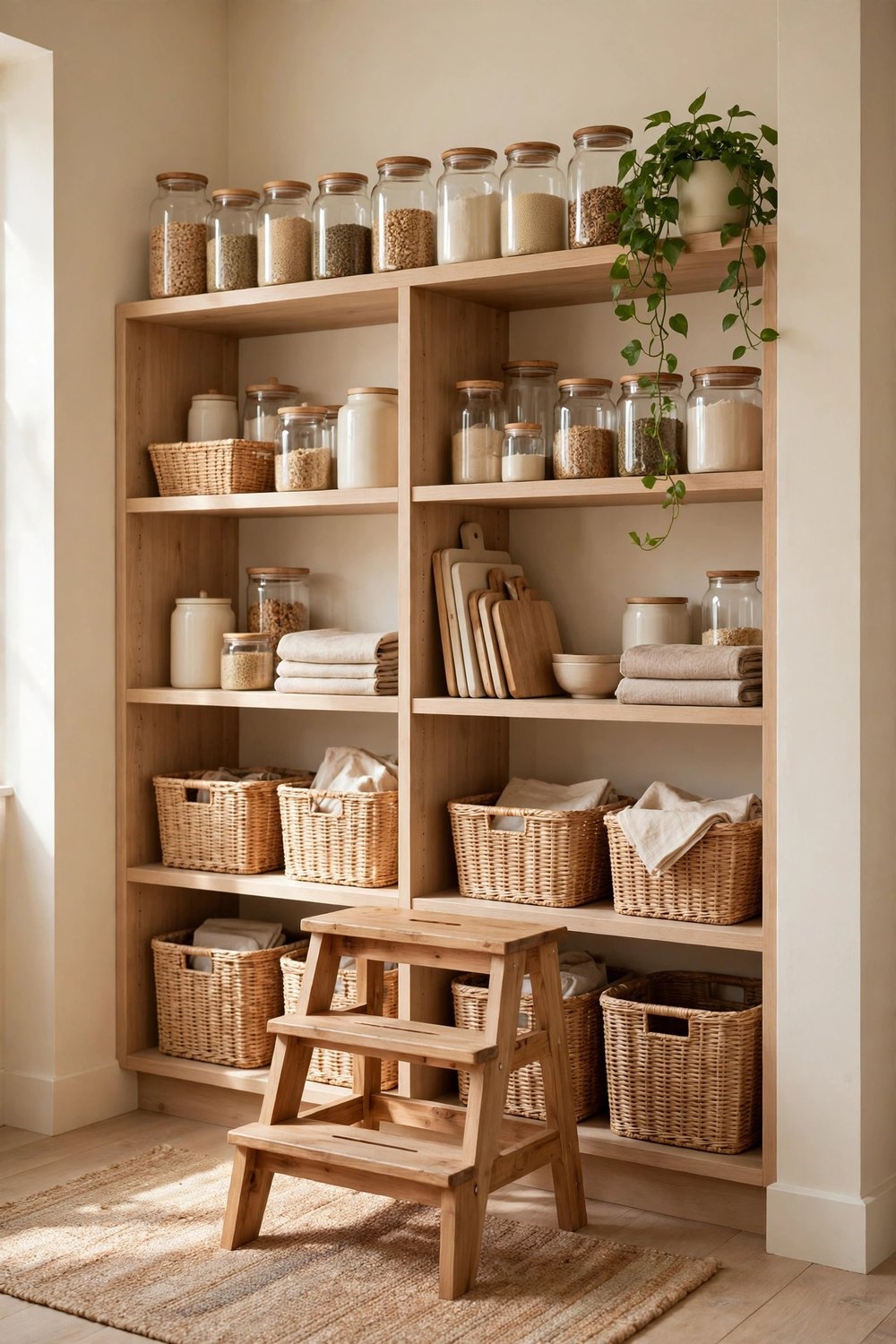
The top shelf of a pantry is either wasted or glorious, and the difference is a small, sturdy step stool kept right there in the pantry. With a stool in reach, the top shelf becomes real storage instead of a rumor: the tall cylinders, the special-occasion jars, the good olive oil. Style that top line a little — a row of your prettiest jars, perhaps a small trailing plant where light allows — because you see it every time the door opens. Organization that looks beautiful is organization you keep, and a pantry you enjoy opening is one that stays tidy all by itself.
A pretty pantry is not really about the jars — it is about being able to see what you have, reach it in one motion, and enjoy the small daily pleasure of a shelf that looks composed. Start with the staples row and one tiered riser, let the baskets and the door rack follow, and rebuild your pantry one calm shelf at a time. Save this list to your kitchen board on Pinterest so it is handy before your next organization weekend, and follow DecorNesti for a new cozy kitchen list every week.


Leave a Reply