
A gallery wall does not need a grand, empty stretch of wall to work — in a small apartment, the tiniest sliver of wall can carry more personality than a whole room of furniture. The trick is to think of every narrow strip, awkward corner, and forgotten patch beside a door as a frame waiting to happen. These twelve ideas are scaled for small walls: tight grids, single ledges, vertical columns, and pairs that make a modest wall feel curated instead of crowded. Save your favorites to Pinterest, measure the wall you have instead of wishing for a bigger one, and let your art finally climb.
In This Article
- 1. Start with One Small Grid of Four Matching Frames
- 2. Fill the Narrow Wall Beside the Door
- 3. Lean Art on a Picture Ledge Instead of Hanging a Dozen Frames
- 4. Build a Vertical Column Up a Slim Wall
- 5. Turn a Short Hallway into a Slow Gallery Walk
- 6. Mix One Big Print with a Cluster of Small Ones
- 7. Anchor a Tiny Wall with a Matched Pair and a Mirror
- 8. Use the Wall Above the Desk as a Working Gallery
- 9. Go Floor to Ceiling on One Skinny Stretch
- 10. Keep It Calm with One Color Family and Wide Mats
- 11. Float a Loose Salon Cluster Around One Anchor Piece
- 12. Swap the Art Seasonally on Removable Hooks
1. Start with One Small Grid of Four Matching Frames
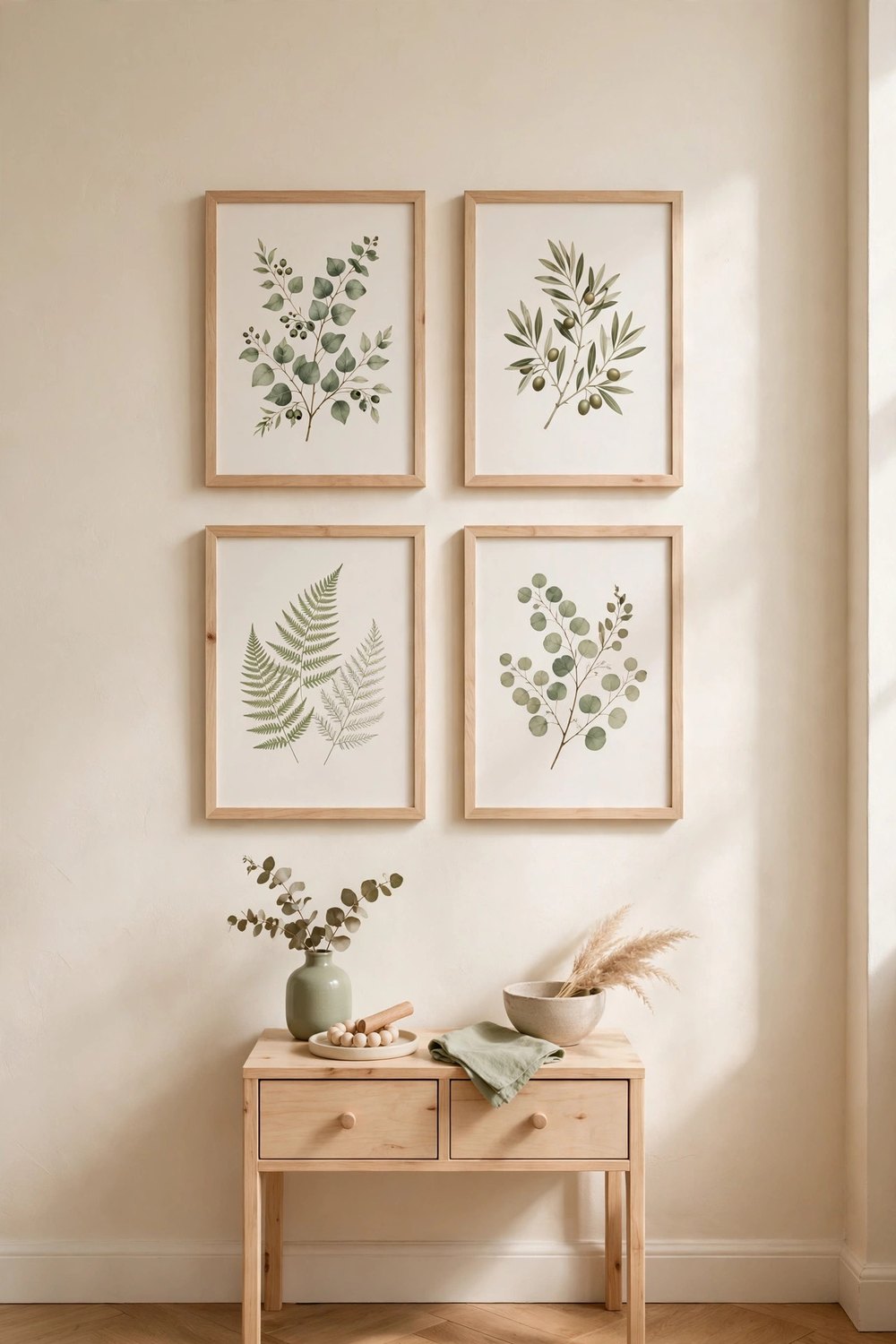
Four identical frames in a neat two-by-two grid is the friendliest first gallery wall there is — small enough for the wall above a side table, tidy enough for the most nervous beginner. Matching frames and even spacing do the styling work for you, so the art inside can be anything: four prints from one set, four photos from one trip, or four pages from a beloved book. Hang the grid so its center sits at eye level and leave the same slim gap between every frame. On a small wall, that order reads as calm confidence rather than clutter.
2. Fill the Narrow Wall Beside the Door
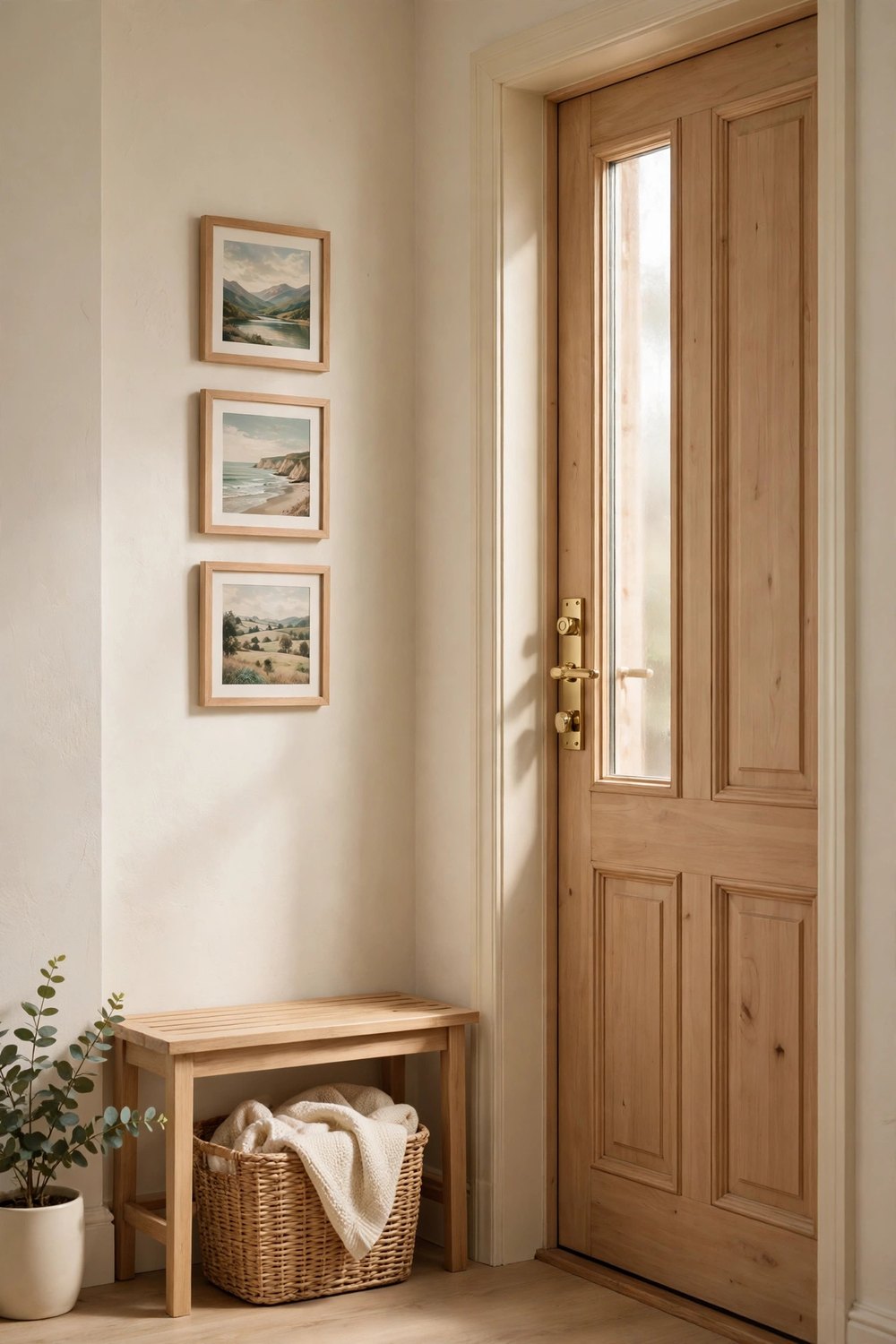
Every apartment has that awkward narrow strip beside the front door or between two doorways — too small for furniture, too visible to ignore. A slim vertical stack of two or three small frames turns it into the home’s welcome note. Choose pieces with a thread between them, like a tiny landscape series or a set of botanical prints, and keep the frames light in color so the narrow wall stays bright. It is often the first wall guests actually look at, and now it has something to say.
3. Lean Art on a Picture Ledge Instead of Hanging a Dozen Frames
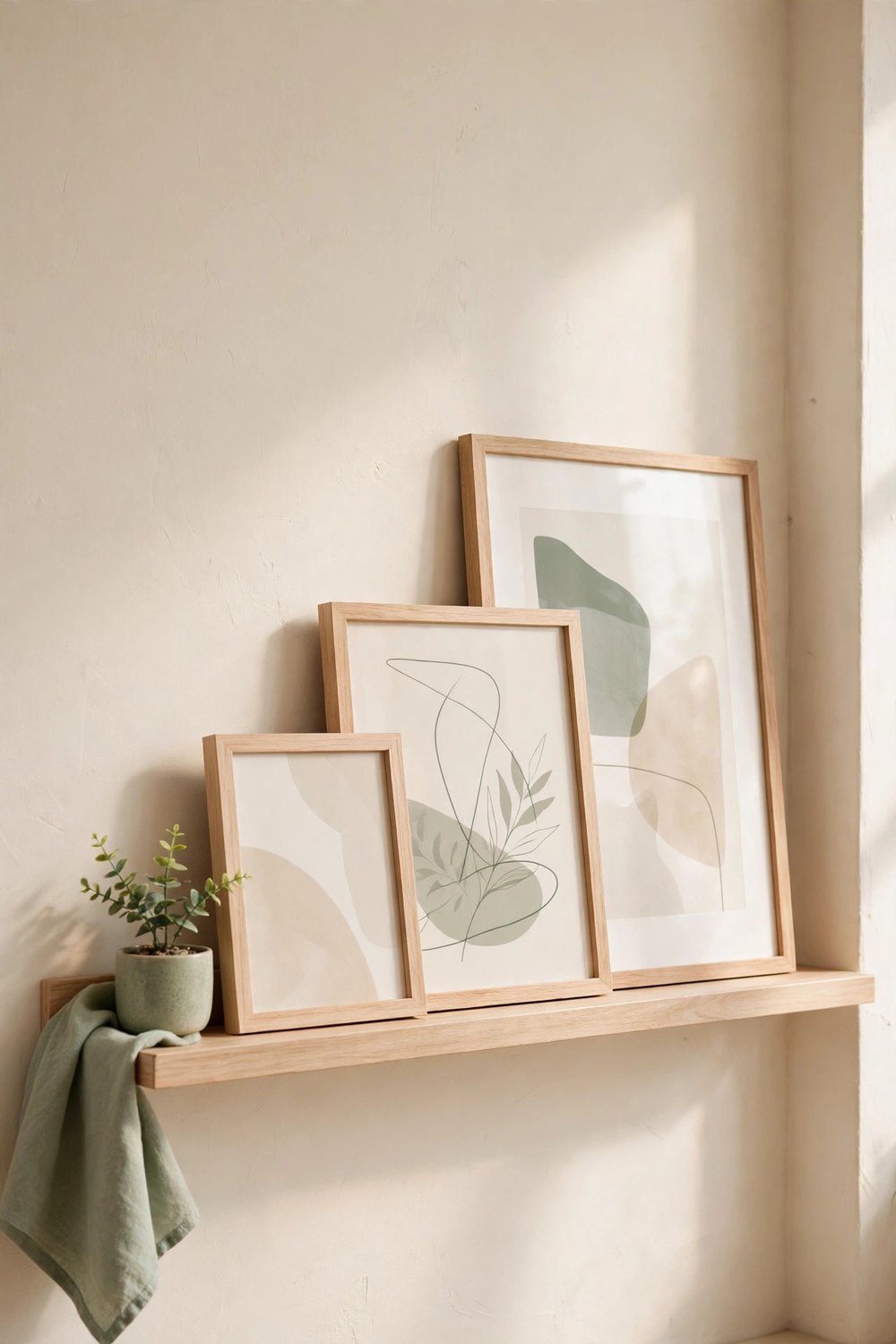
A single shallow picture ledge gives a small wall a whole gallery with only two screws. Lean frames of different heights along it, overlap them slightly, and tuck a small plant or a tiny stack of books at one end so the arrangement feels collected rather than lined up. The ledge holds postcards, prints, and photos in one easy row, and rearranging takes thirty seconds whenever the mood shifts. For renters, one ledge means one small repair at move-out instead of a wall full of holes.
4. Build a Vertical Column Up a Slim Wall
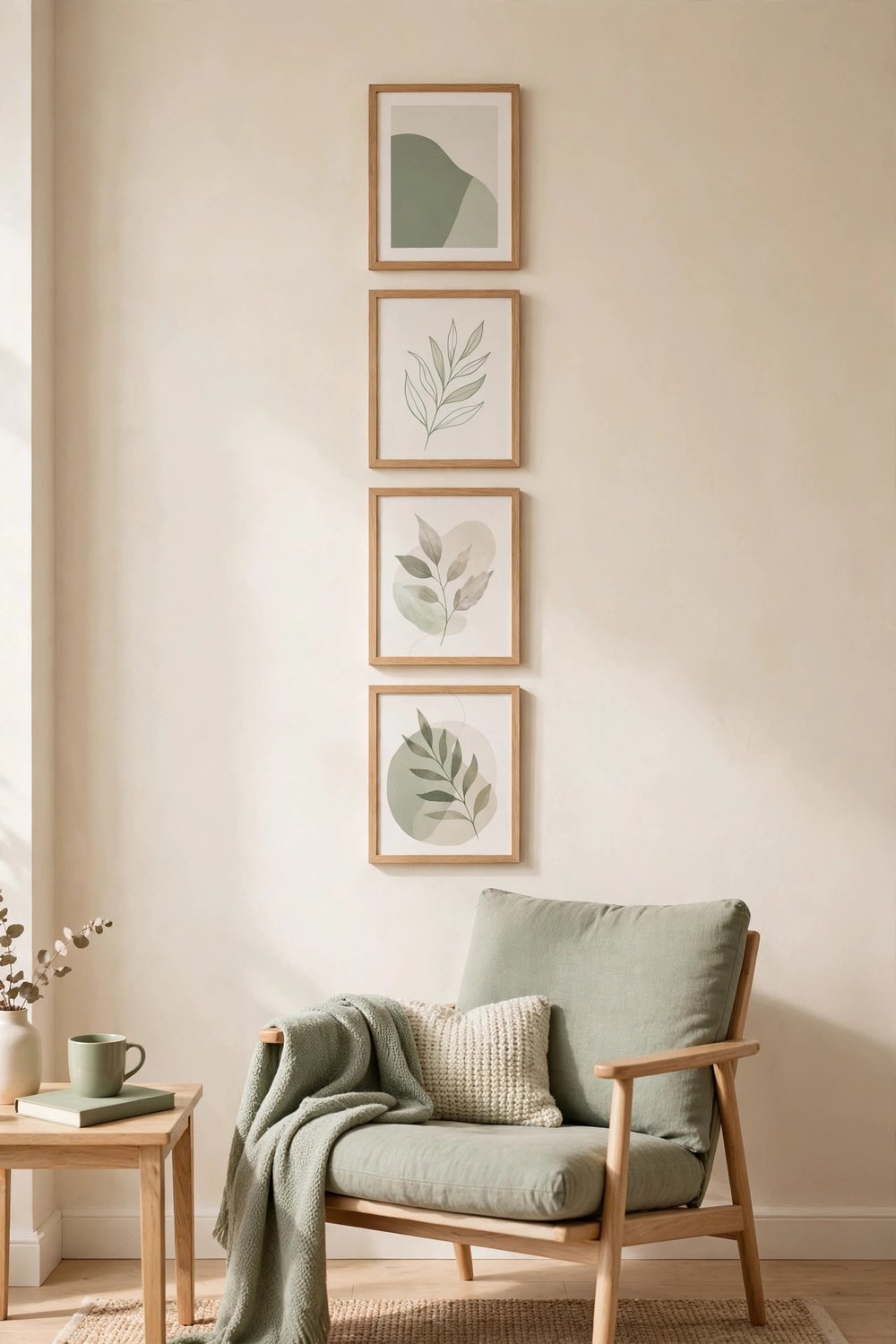
When wall width is scarce, go up. A single column of three or four frames stacked vertically — above a chair, beside a bookshelf, on the thin wall between windows — draws the eye upward and makes the ceiling feel higher. Keep the frames the same width so the column reads as one tall piece of art rather than separate pictures competing. This is the ideal treatment for the strip of wall everyone else leaves blank, and it costs nothing but the frames you already own.
5. Turn a Short Hallway into a Slow Gallery Walk
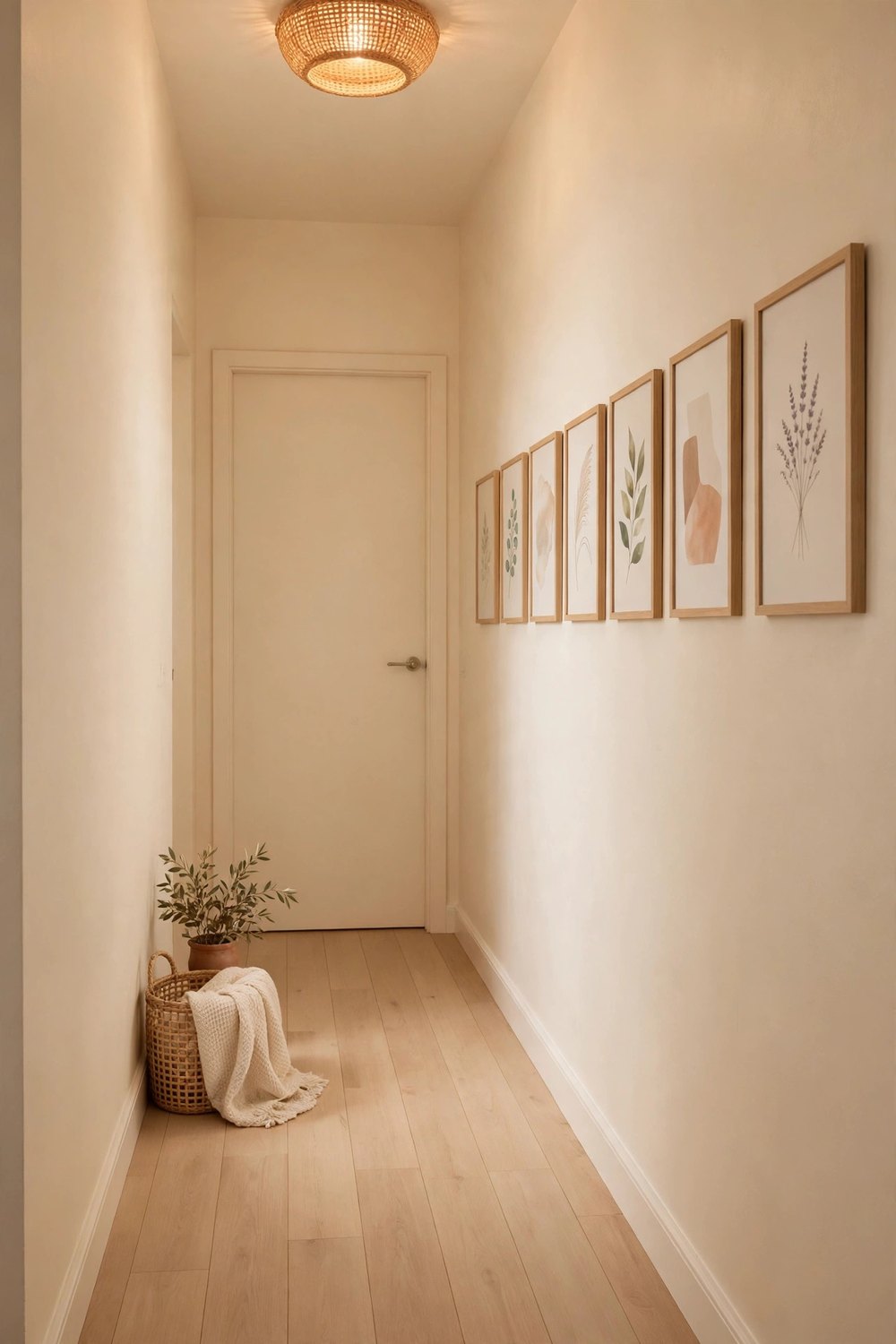
Apartment hallways are usually pure passage — a few meters of nothing between rooms. A loose row of frames along one side, hung at a consistent height, turns the walk to the kitchen into a tiny exhibition you pass a dozen times a day. Mix photographs and prints freely here; the hallway is a forgiving place for personal pieces that might feel busy in the living room. Keep frames slim and glass light-safe so the narrow space never feels closed in.
6. Mix One Big Print with a Cluster of Small Ones
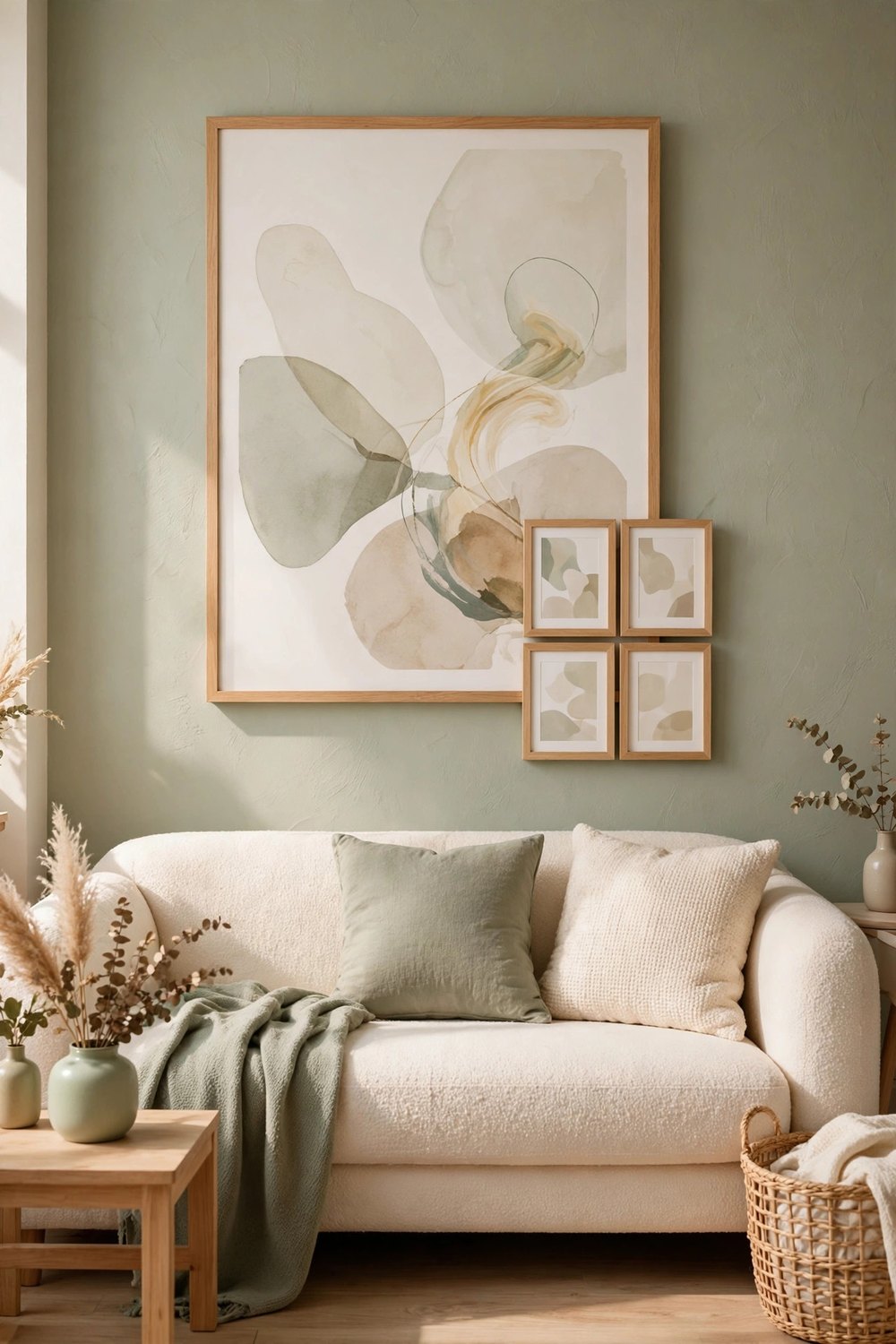
A small wall stays interesting when the scales argue a little. Anchor the arrangement with one larger print, then cluster three or four small frames around its lower corner, leaving breathing room between the group and the big piece. The contrast makes both sizes look deliberate — the large print gains presence, the small ones gain charm. Lay the whole arrangement out on the floor or tape paper templates to the wall first; on a small wall there is no spare space to hide a mistake.
7. Anchor a Tiny Wall with a Matched Pair and a Mirror
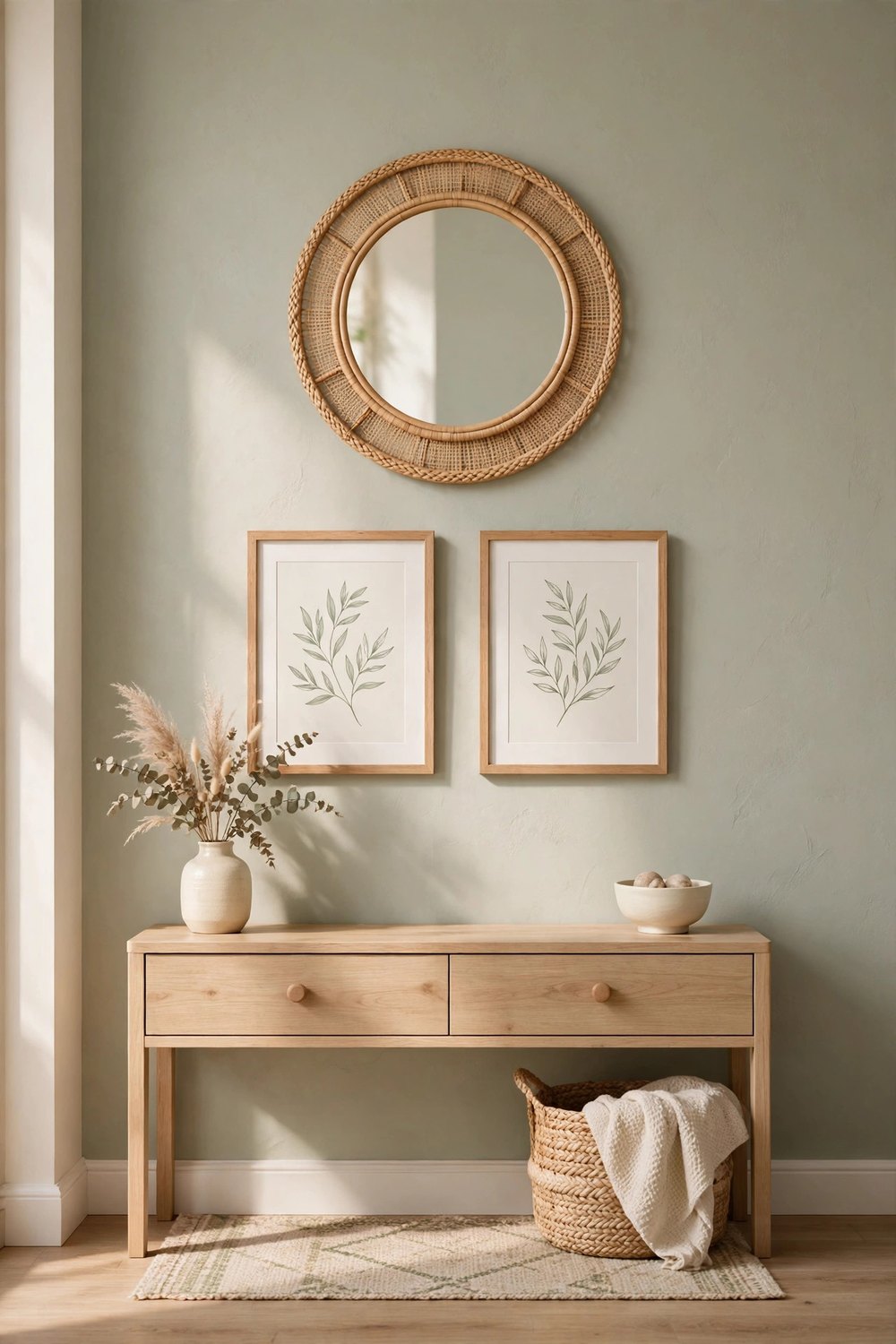
Two matching prints hung as a pair, with a round mirror centered above or between them, gives a small wall the symmetry of a much grander arrangement. The mirror doubles the light the wall receives and reflects the art back, so three pieces do the work of six. This trio is perfect above a console, a small dresser, or the entryway bench where a full gallery would overwhelm. Keep the pair identical in frame and mat so the mirror’s curve is the only surprise.
8. Use the Wall Above the Desk as a Working Gallery
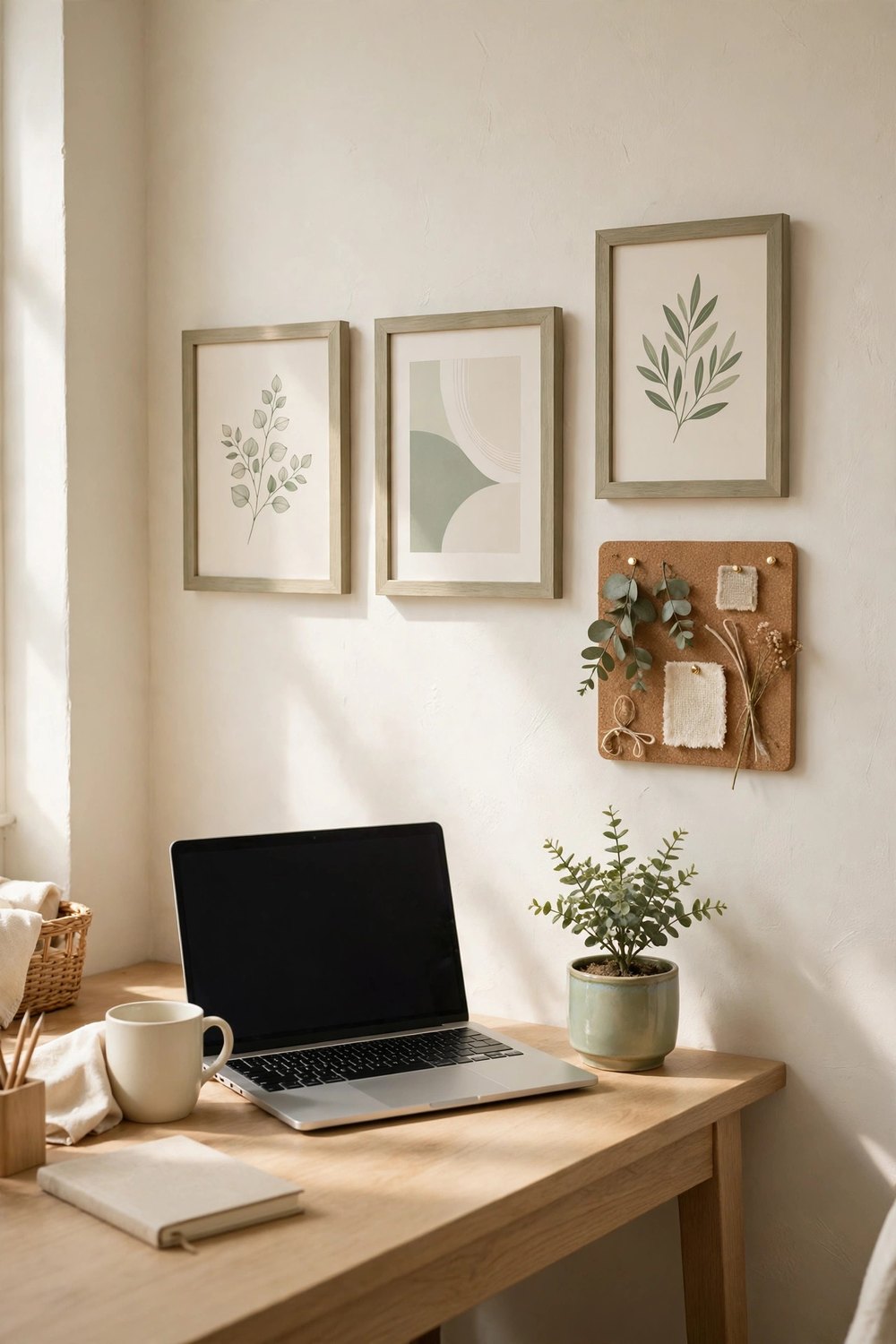
The wall above a desk is small, close, and looked at for hours — exactly where a personal gallery earns its keep. Mix two or three framed prints with a small pinboard, a calendar page, or a leaning frame on the desk itself, keeping everything inside one calm color family so it inspires instead of distracting. Because the wall is viewed from a chair, hang the pieces a little lower than the usual eye-level rule. It turns a work corner into the most personal square meter of the apartment.
9. Go Floor to Ceiling on One Skinny Stretch
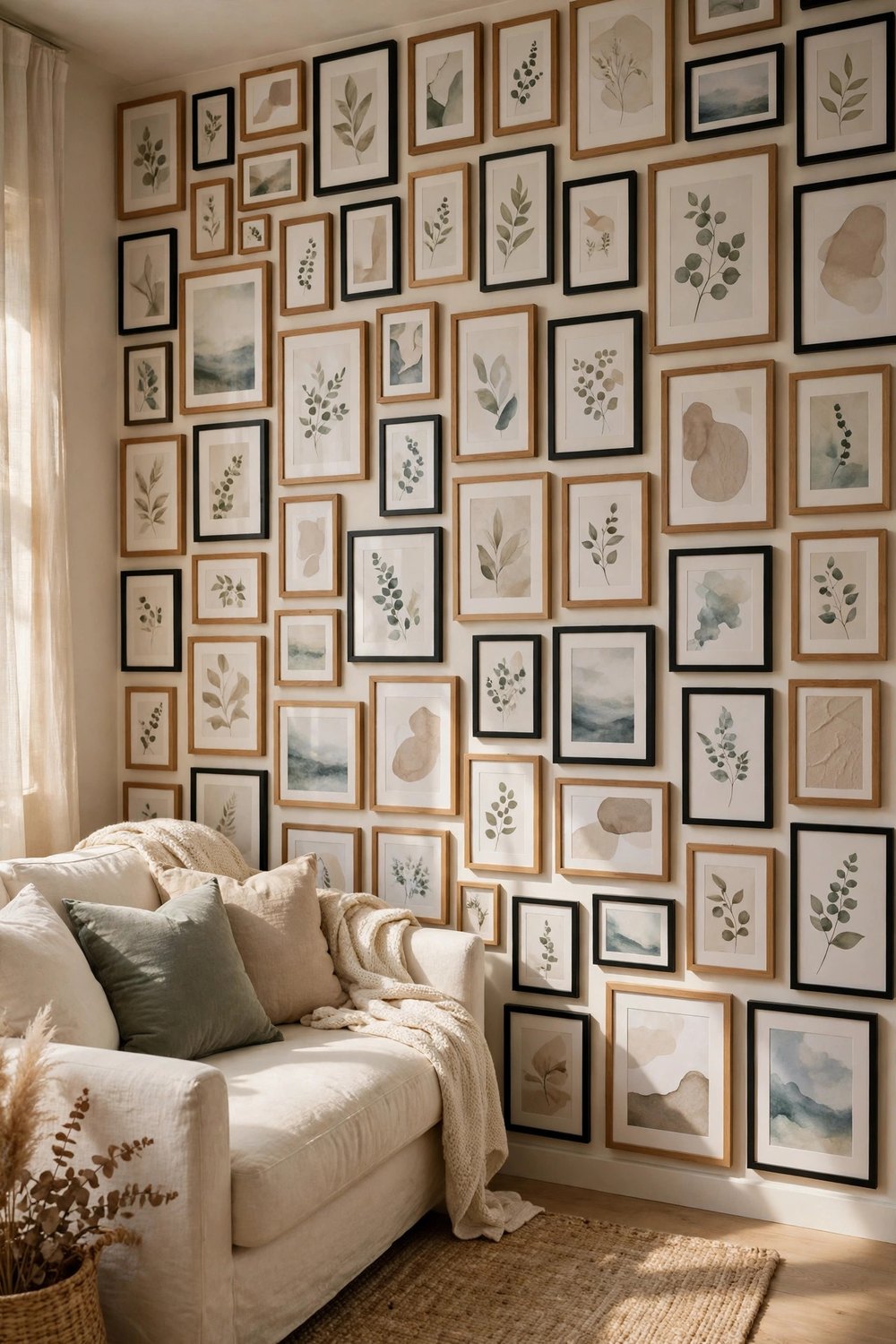
Counterintuitive but true: covering one narrow wall completely, frame edge to frame edge from skirting to ceiling, can make a small room feel bigger, because the wall stops reading as leftover space and becomes a feature. Keep the frames in one or two finishes and the art in a loose color story so the density feels rich rather than chaotic. Start the lowest frames just above the floor and let the column of art pull the whole wall tall. Choose the wall you see from the sofa, and the room gains a focal point it never had.
10. Keep It Calm with One Color Family and Wide Mats
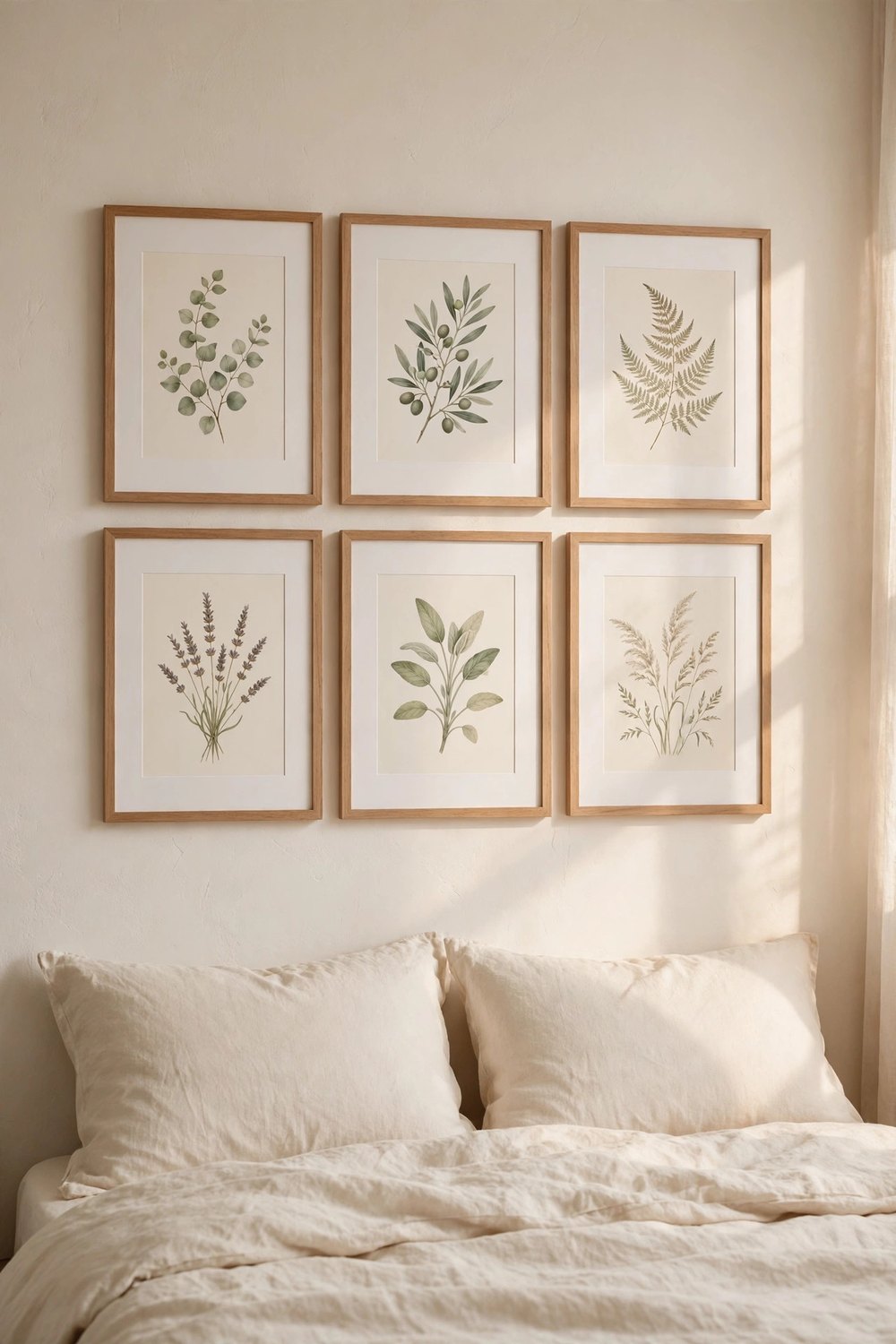
On a small wall, calm beats clever. Choose art in a single soft family — sage and cream botanicals, warm sepia photographs, pale abstracts — and give small pieces oversized white mats so each one has room to breathe inside its frame. Wide mats make inexpensive prints look gallery-serious and stop a cluster from feeling cramped. This is the version for bedrooms and reading corners, where the wall should lower your heart rate, not raise it.
11. Float a Loose Salon Cluster Around One Anchor Piece
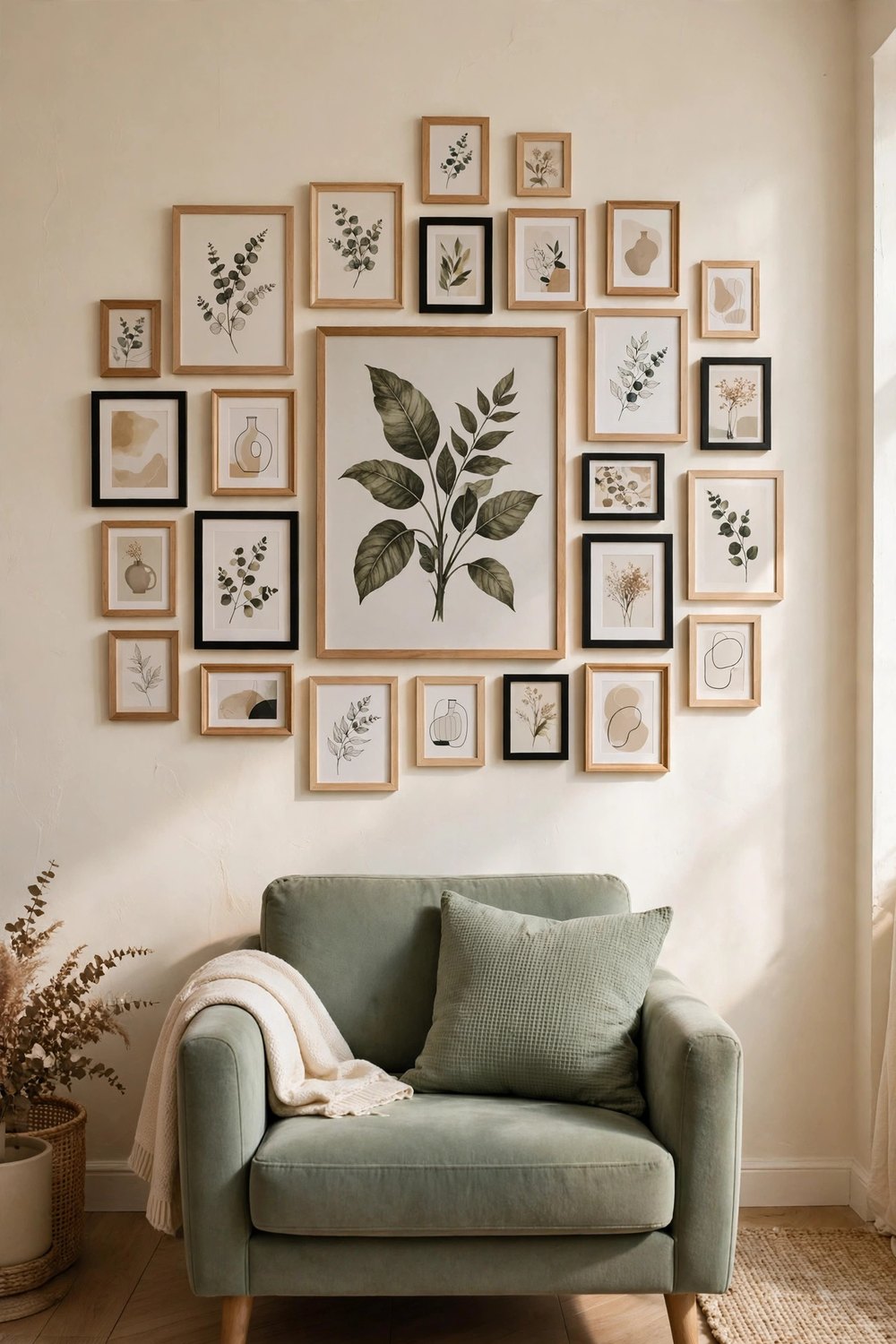
The salon style — frames of many sizes fitted together like a puzzle — works on small walls when you build it around one anchor piece at the center and grow outward in small steps. Keep gaps between frames roughly equal, echo one color from the anchor in the smaller pieces, and stop while there is still bare wall visible at the edges; that margin is what keeps a dense cluster feeling intentional. Paper templates taped up first let you live with the layout for a day before a single nail goes in.
12. Swap the Art Seasonally on Removable Hooks
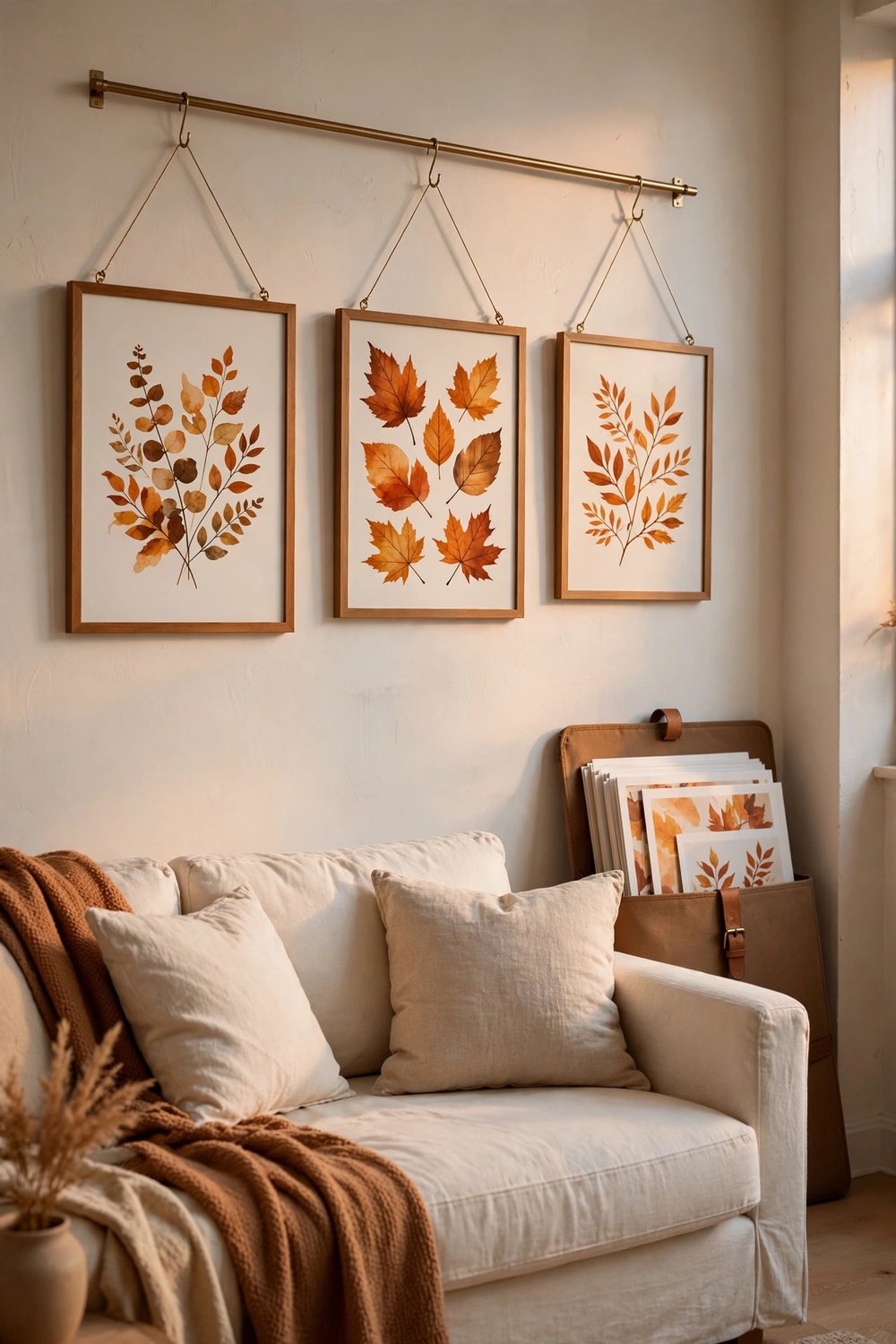
A small gallery wall stays fresh when changing it is effortless. Hang your frames on removable adhesive hooks or a single rail with hanging wires, then treat the wall as a rotating exhibition: breezy prints in spring, photographs after a trip, warm-toned art when autumn arrives. Store off-duty pieces flat in a portfolio behind the sofa so swapping takes minutes. Renters keep their deposit, commitment-shy decorators keep their options, and the smallest wall in the apartment becomes the one that never gets boring.
A small wall is not a limitation — it is an edit. Fewer frames, chosen well and hung with breathing room, will always beat a crowded wall of pieces nobody looks at anymore. Start with one grid, one ledge, or one slim column on the wall you pass most often, live with it for a week, and let the rest of your blank strips start asking for their turn. Save this list to your Pinterest board so it is handy for your next framing session — and follow DecorNesti for a new cozy, space-smart list every week.

Leave a Reply