
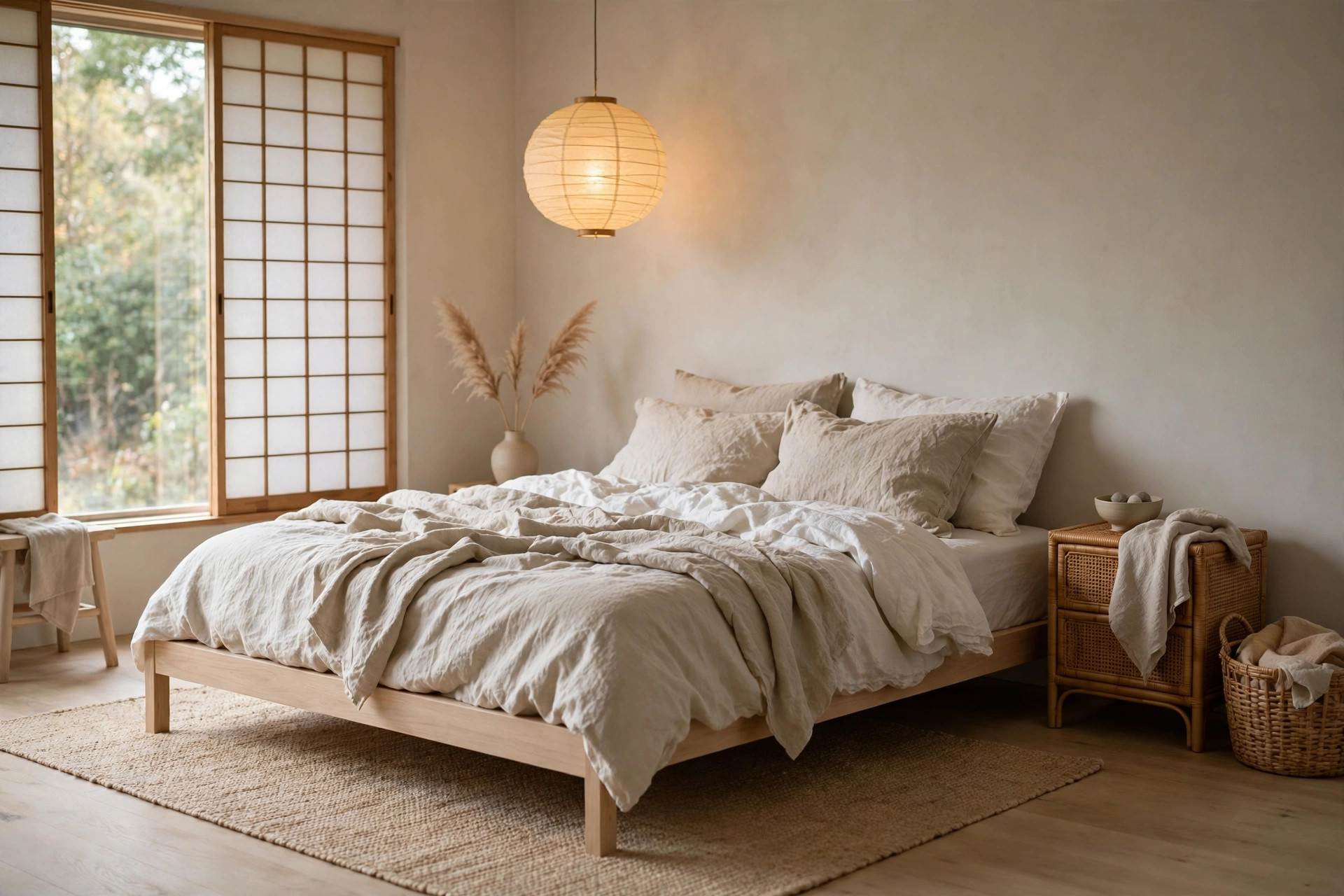
If your bedroom never quite feels restful, you are not alone. A lot of rooms look fine during the day but feel busy at night, with tall furniture, bright colors, and little bits of clutter pulling your eye everywhere. Japandi style usually fixes that by doing less, and doing it calmly.
Japandi blends Japanese simplicity with Scandinavian warmth, so you get clean lines and plenty of breathing room, plus soft textiles and pale wood that keep things cozy. It is not cold or stark when it is done well. It typically feels grounded and quiet, like the room itself is telling you to slow down.
Below are sixteen japandi bedroom ideas you can borrow step by step, starting with low furniture and open space and moving through materials, color, bedding, and decor. You do not need to change everything at once. Start with one corner, live with it for a bit, and you will usually notice how much calmer bedtime starts to feel.
Low Furniture and Open Space
Lowering the furniture and clearing the floor is usually the fastest way to make a bedroom feel quieter and more spacious. When everything sits lower, your eye travels calmly across the room instead of jumping from tall piece to tall piece.
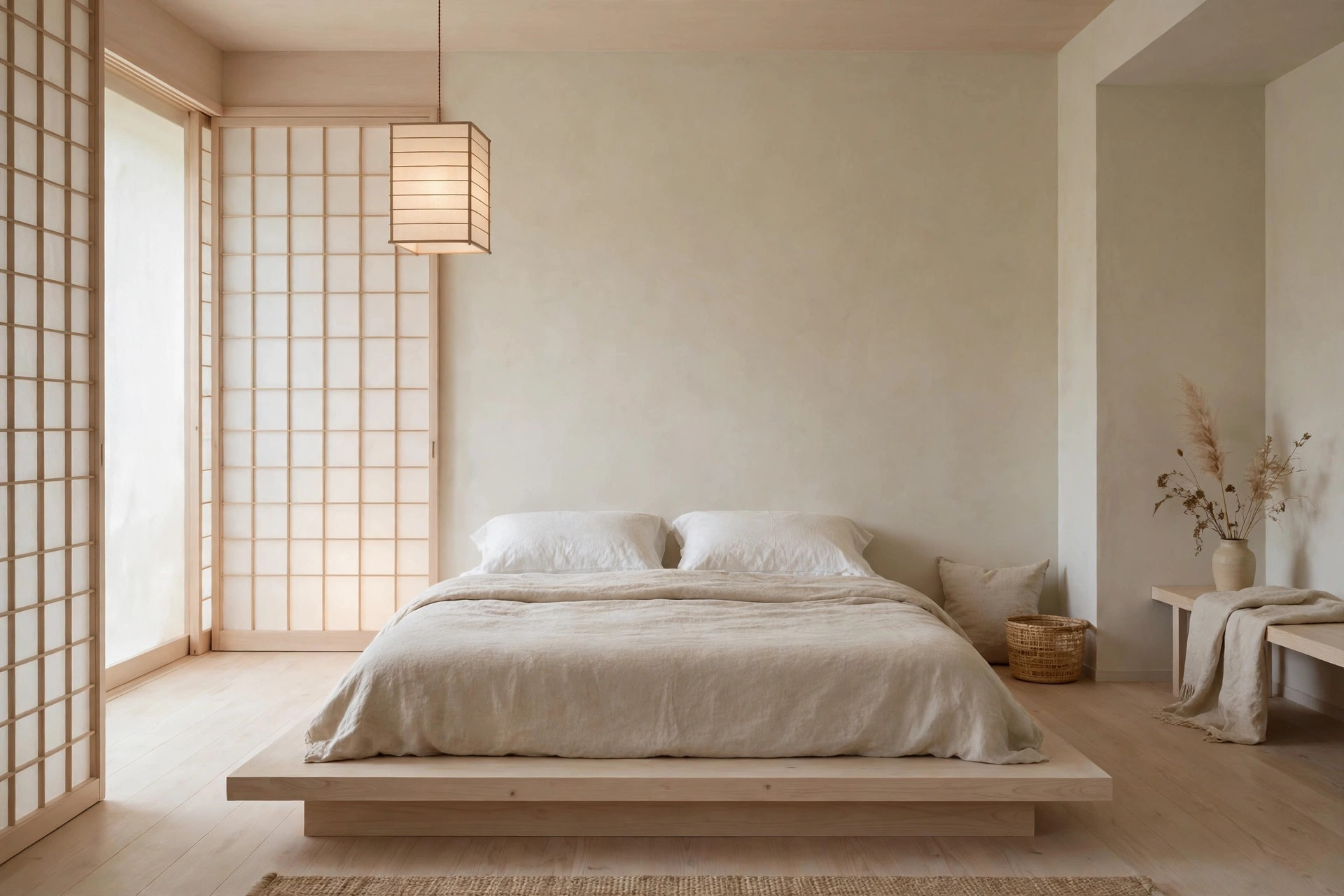
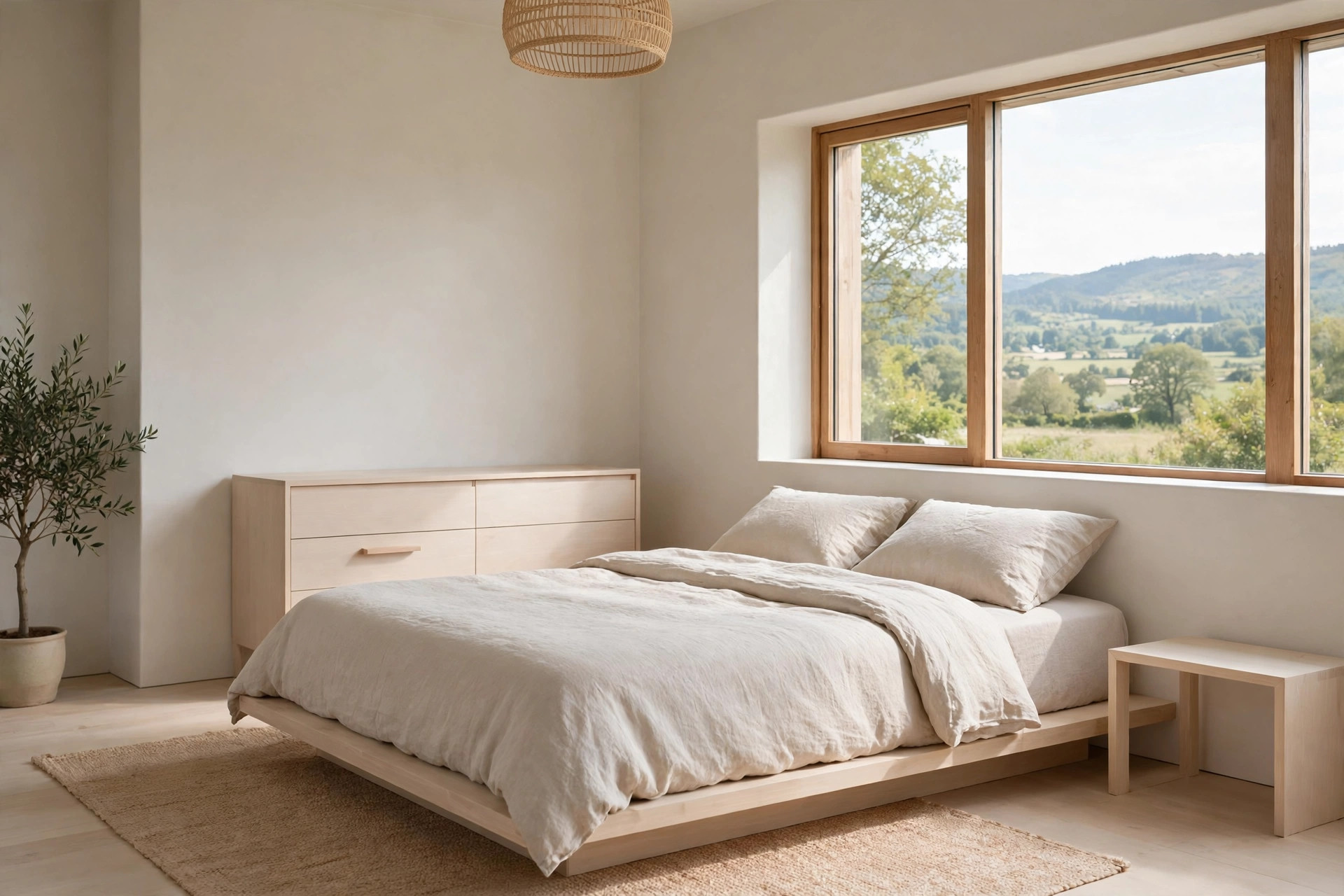
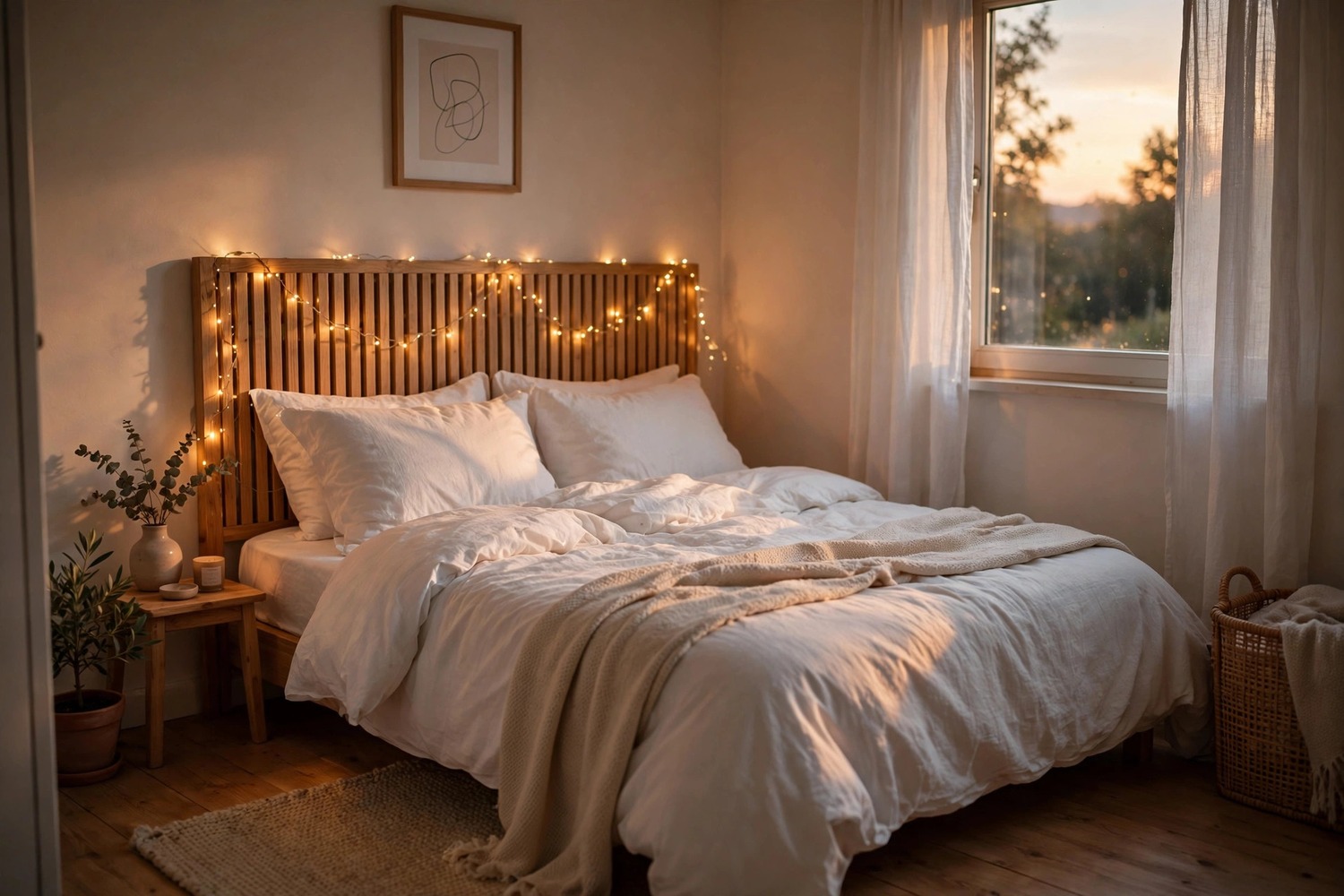
Choose a low platform bed and skip the tall frame. A bed that sits close to the floor typically makes the ceiling feel higher and the whole room feel calmer and more grounded. Pale wood keeps it warm rather than heavy, and simple lines mean it will not fight with anything else you own. You will probably find the room feels more settled the moment it goes in.
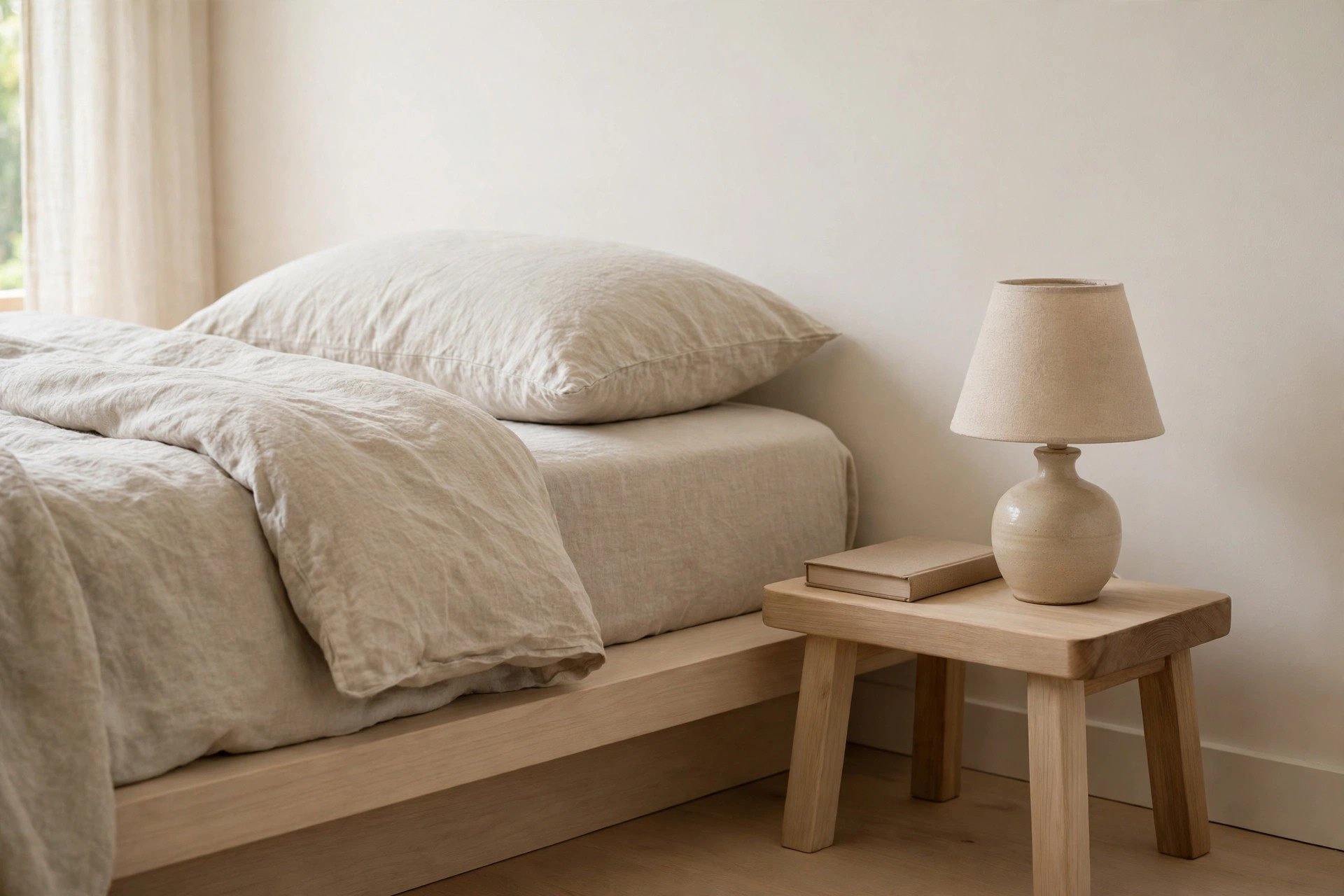
Keep nightstands low, light, and mostly clear. A small stool or a low wooden stand usually works better than a bulky cabinet that towers over the bed. Keep only what you actually use at night on top, like a lamp and a book, and tuck the rest away. That little bit of empty surface typically helps your mind switch off too.
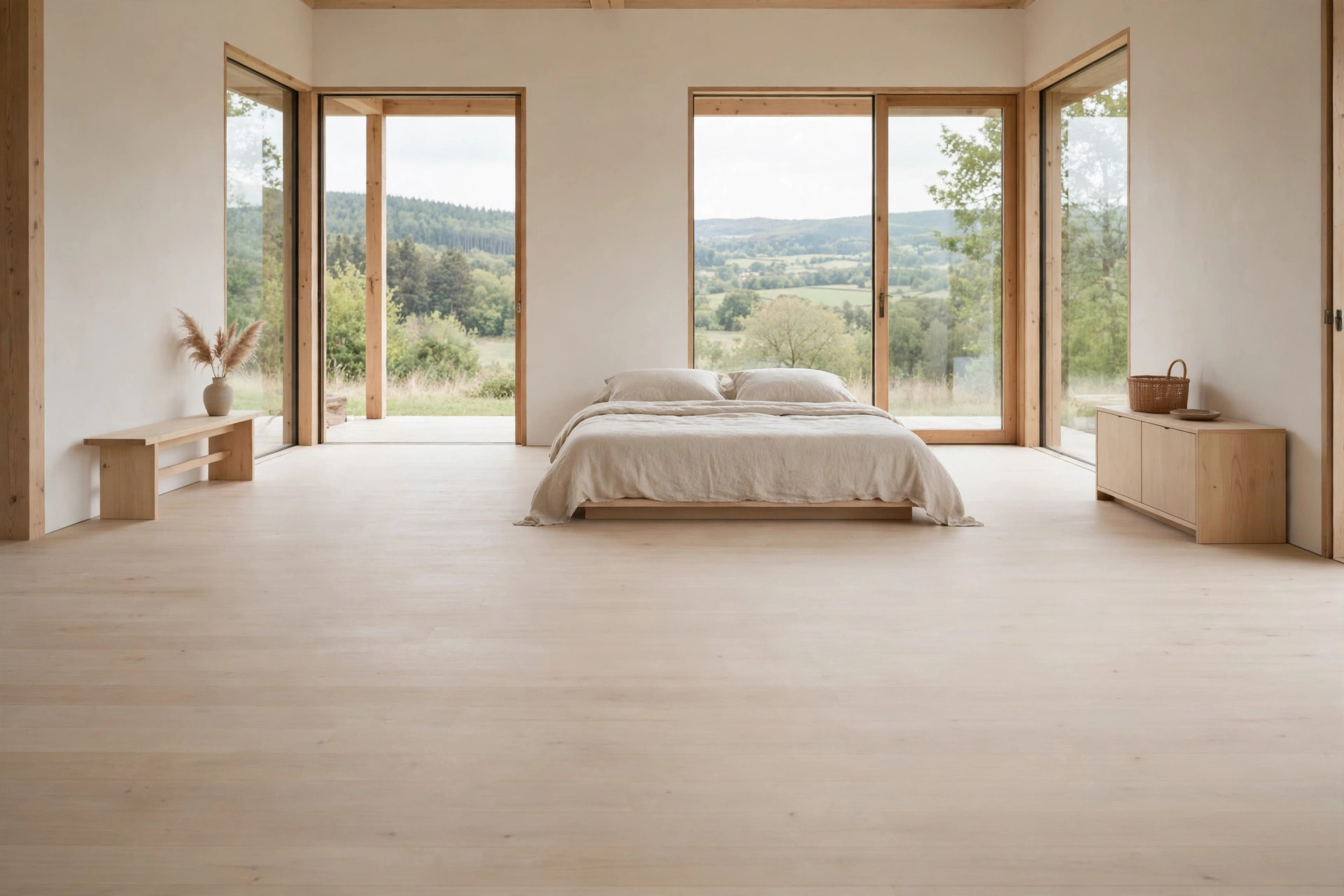
Leave a generous stretch of floor completely open. It sounds simple, but open floor usually matters more than another piece of furniture, especially in a smaller room. Push what you keep toward the walls and resist filling every gap, even when it feels tempting. Walking into uncluttered space at night is honestly one of the easiest ways to feel the day loosen its grip.
Natural Materials Only
When materials come from nature, a room usually feels warmer and more honest, even when the layout itself stays very simple. It is also a forgiving rule, because wood, paper, and woven fibers rarely clash with each other.
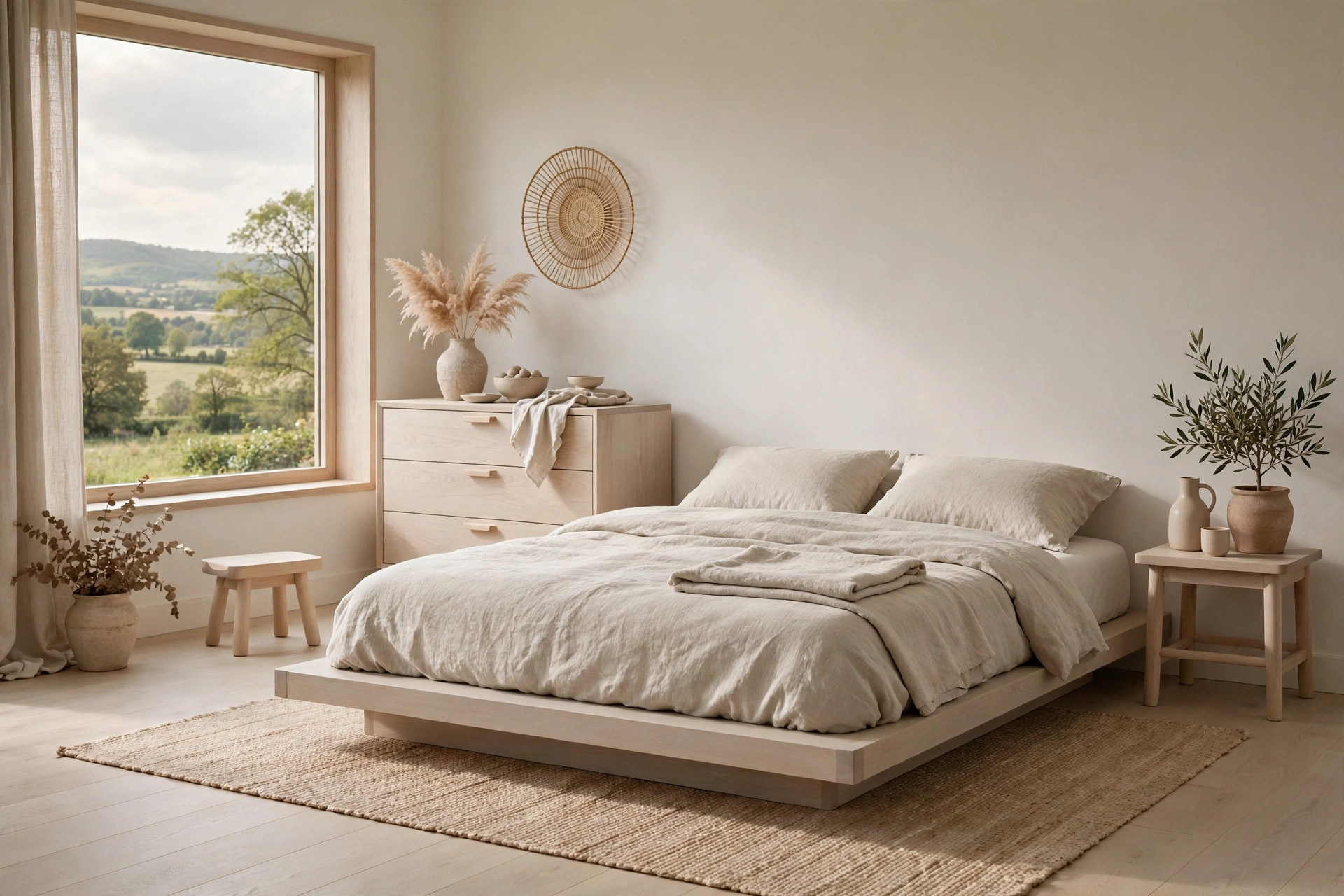
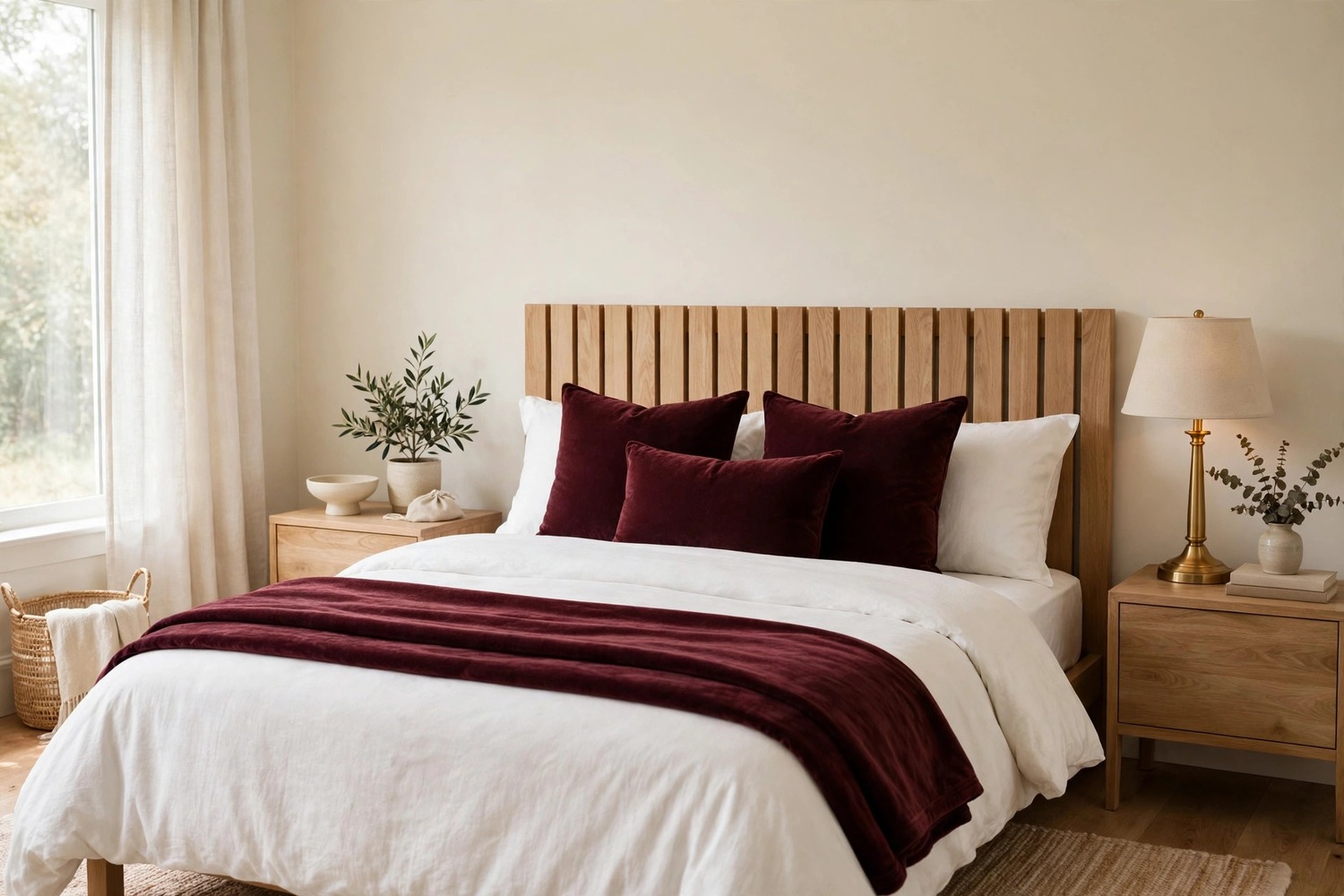
Let pale, honest wood lead the room. Light oak, ash, or pine with a matte finish typically brings that soft Japandi warmth without darkening the space. You do not need every piece to match exactly, since close tones usually sit happily together. Choose one or two woods and repeat them in small ways, and the room starts to feel quietly pulled together.
Paper, rattan and raw wood
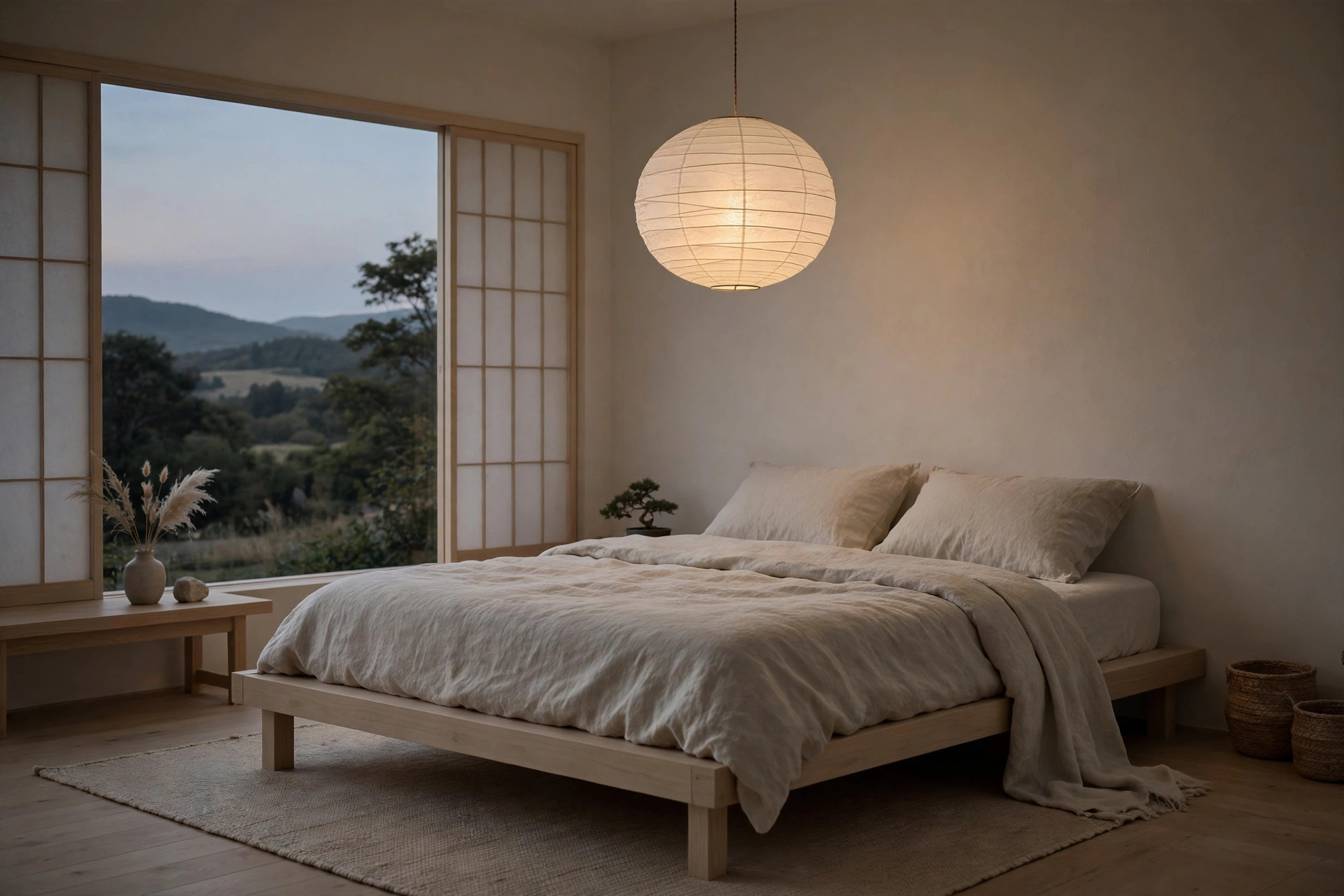
Add paper lighting for the softest glow. A paper pendant or a simple paper table lamp usually diffuses light so gently that harsh shadows all but disappear. That soft glow is especially kind in the evening, when you want the room to feel dim but not gloomy. Keep the shape simple and round, and it will typically blend in rather than shout for attention.
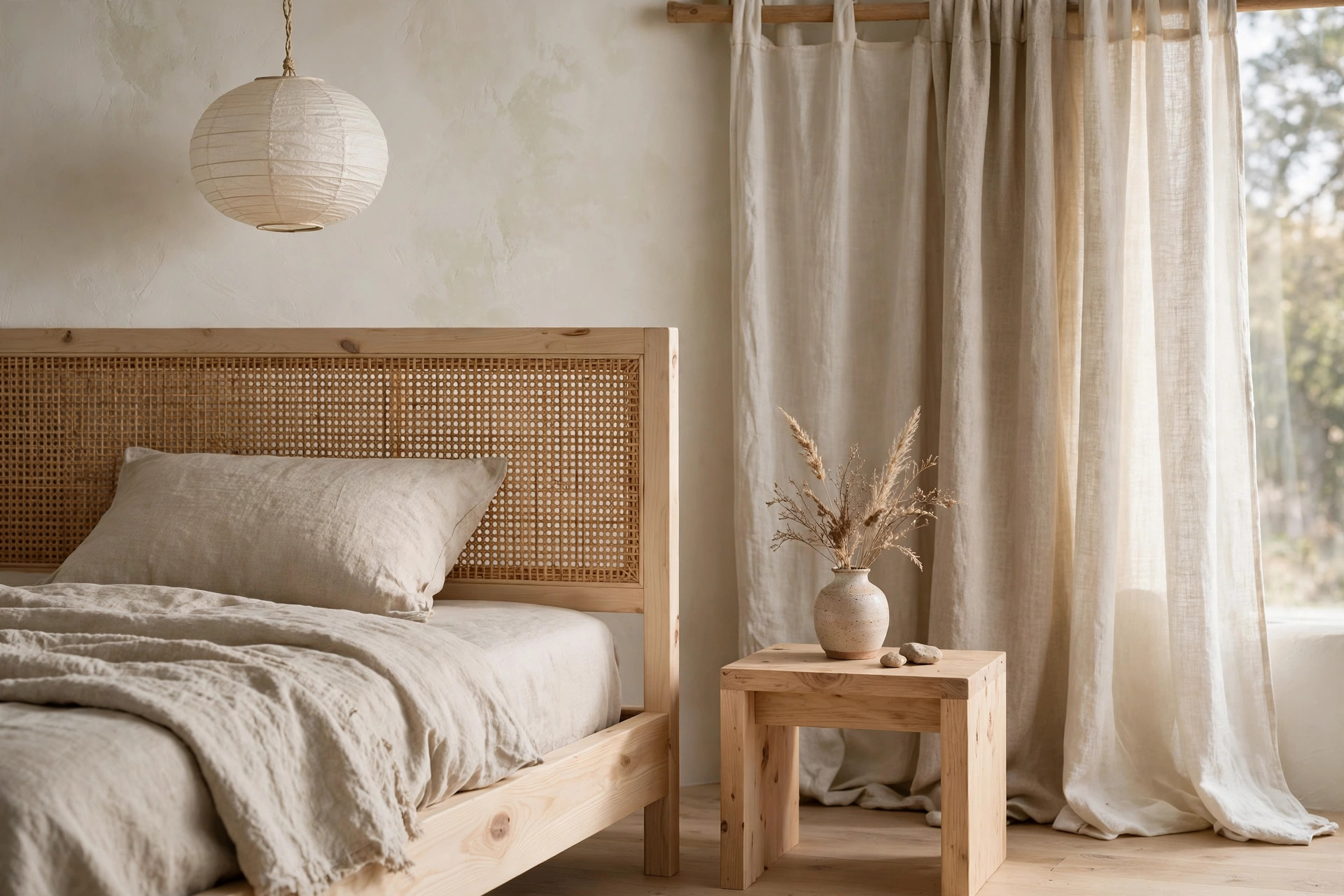
Bring in rattan or woven cane in just one or two places. A rattan headboard panel, a woven basket, or a cane front on a small cabinet usually adds texture without adding visual noise. Because the material is light and open, it does not weigh a calm room down the way solid dark pieces can. Used sparingly, it gives the eye something gentle to rest on.
The Japandi Palette
Color in a Japandi bedroom is usually soft and earthy, built from neutrals you would find on a quiet walk outdoors. You do not need much color at all, just enough warmth to keep the pale tones from feeling flat.
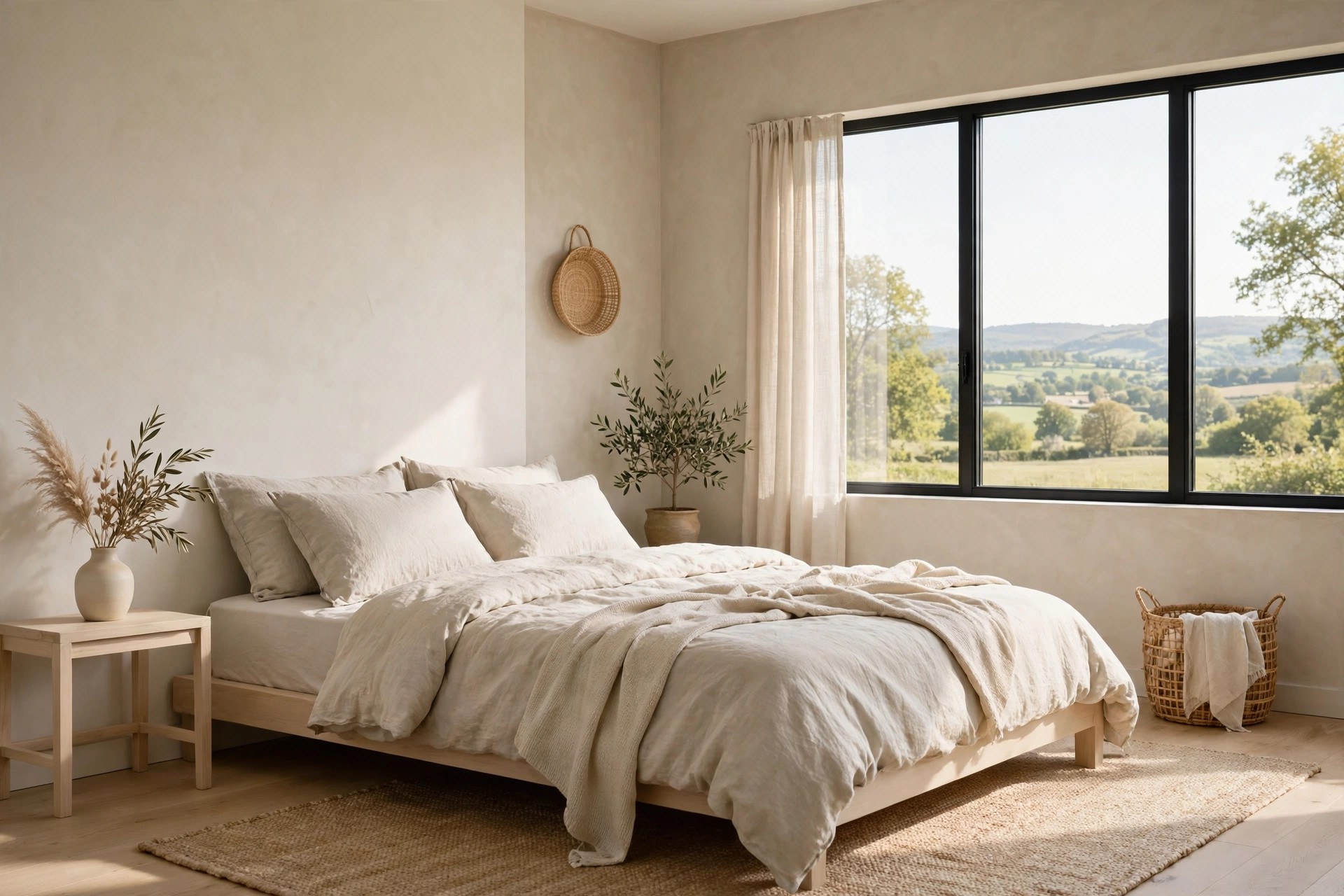
Start with warm white and soft greige on the walls. A warm, slightly creamy white typically keeps the room bright in daylight and cozy under lamplight at night. Greige, that mix of gray and beige, can add a touch more depth if your room gets plenty of sun. Test your choice first, because north facing light can pull these tones cooler than you expect.
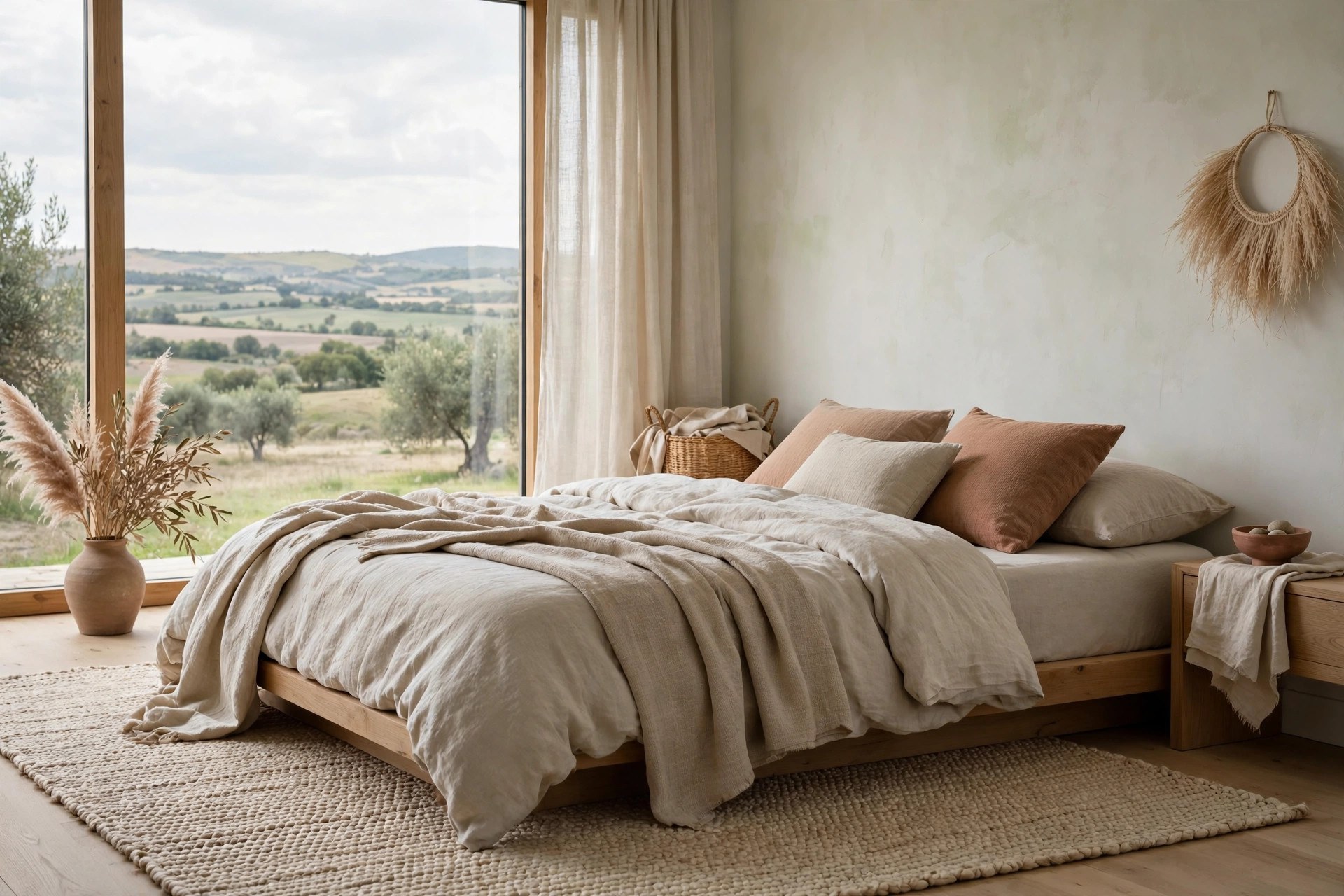
Layer oatmeal, sand, and clay in the textiles. When the walls stay pale, soft earthy layers in the rug, throw, and cushions usually stop the room feeling washed out. These tones sit close together, so mixing them feels forgiving and you cannot really go wrong. It is a palette that stays calm even when nothing matches perfectly, which is exactly the point.
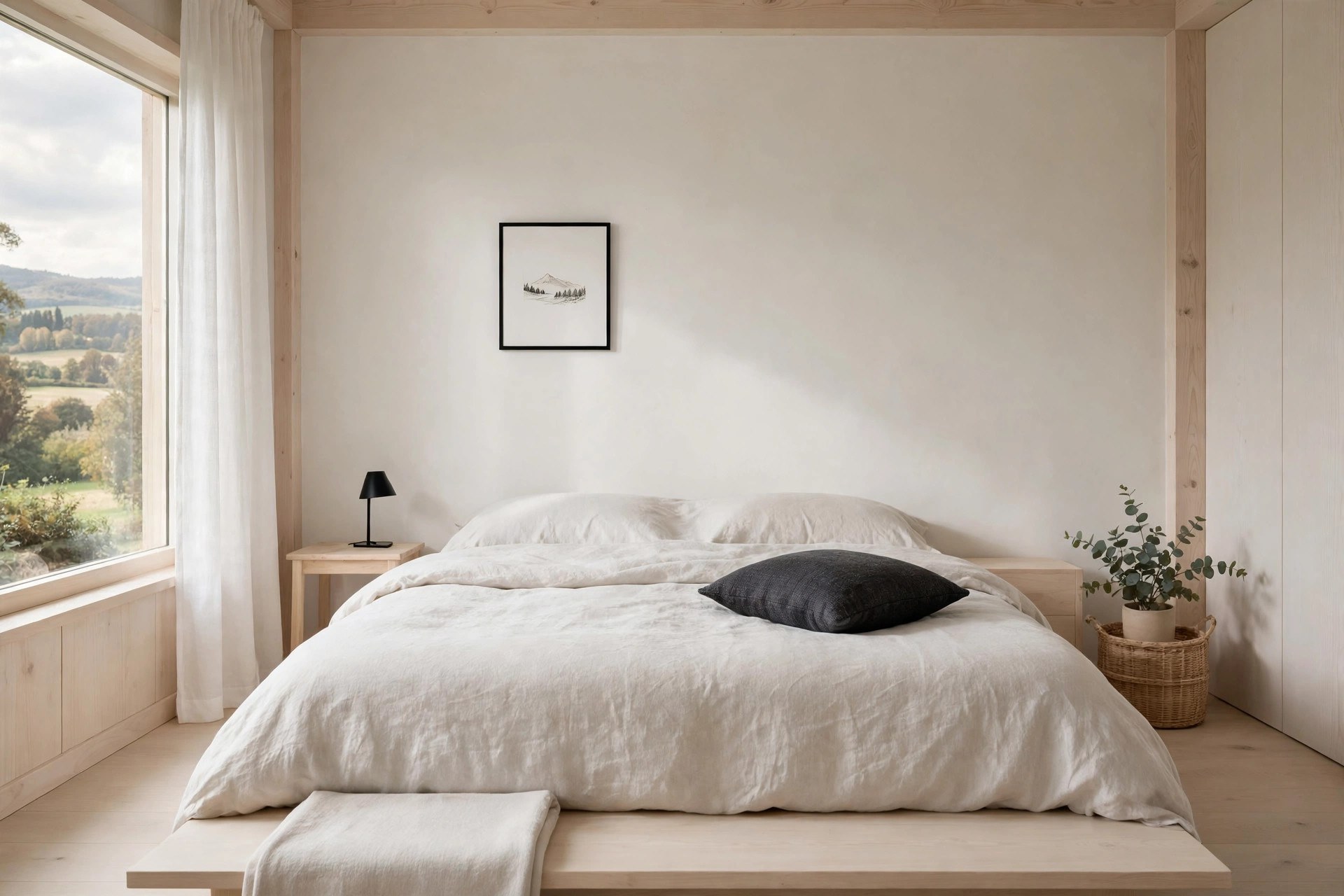
Use charcoal or soft black only as a quiet accent. A thin black frame, a small lamp base, or one dark cushion typically grounds the pale palette and stops it drifting into bland. Keep it to a few small touches, because too much contrast can sharpen a room that is meant to feel restful. Used lightly, it usually gives the neutrals something gentle to lean against.
Minimal Bedding, Maximum Texture
The bed is where Japandi calm becomes something you can actually feel, through simple layers with plenty of tactile variety. It is less about buying new sets and more about choosing a few good fabrics and using them well.

Dress the bed in plain linen in warm white or oatmeal. Linen usually looks best a little rumpled, so you do not have to smooth every crease or make the bed like a hotel would. Its soft, breathable feel typically suits year round comfort, and the natural slubs in the fabric add quiet texture. Stick to one or two close tones, and the bed stays restful to look at.

Add one textured throw instead of a pile of cushions. A waffle weave blanket or a loosely knit throw folded at the foot usually gives you all the layering you need. Too many cushions can make a low bed feel busy and they end up on the floor by bedtime anyway. One good layer is simpler to live with, and it typically looks calmer too.

Keep pillows simple and let the fabrics do the work. Two sleeping pillows and maybe one small lumbar cushion in a rougher weave are usually plenty for a quiet bed. Mixing linen with a touch of cotton or wool gives you contrast you can feel rather than see from across the room. It is a subtle approach, but your hands will notice the difference every night.
Wabi-Sabi Decor Moments
Wabi-sabi is the part of Japandi that welcomes imperfection, so a few handmade, slightly irregular pieces usually make the room feel human.
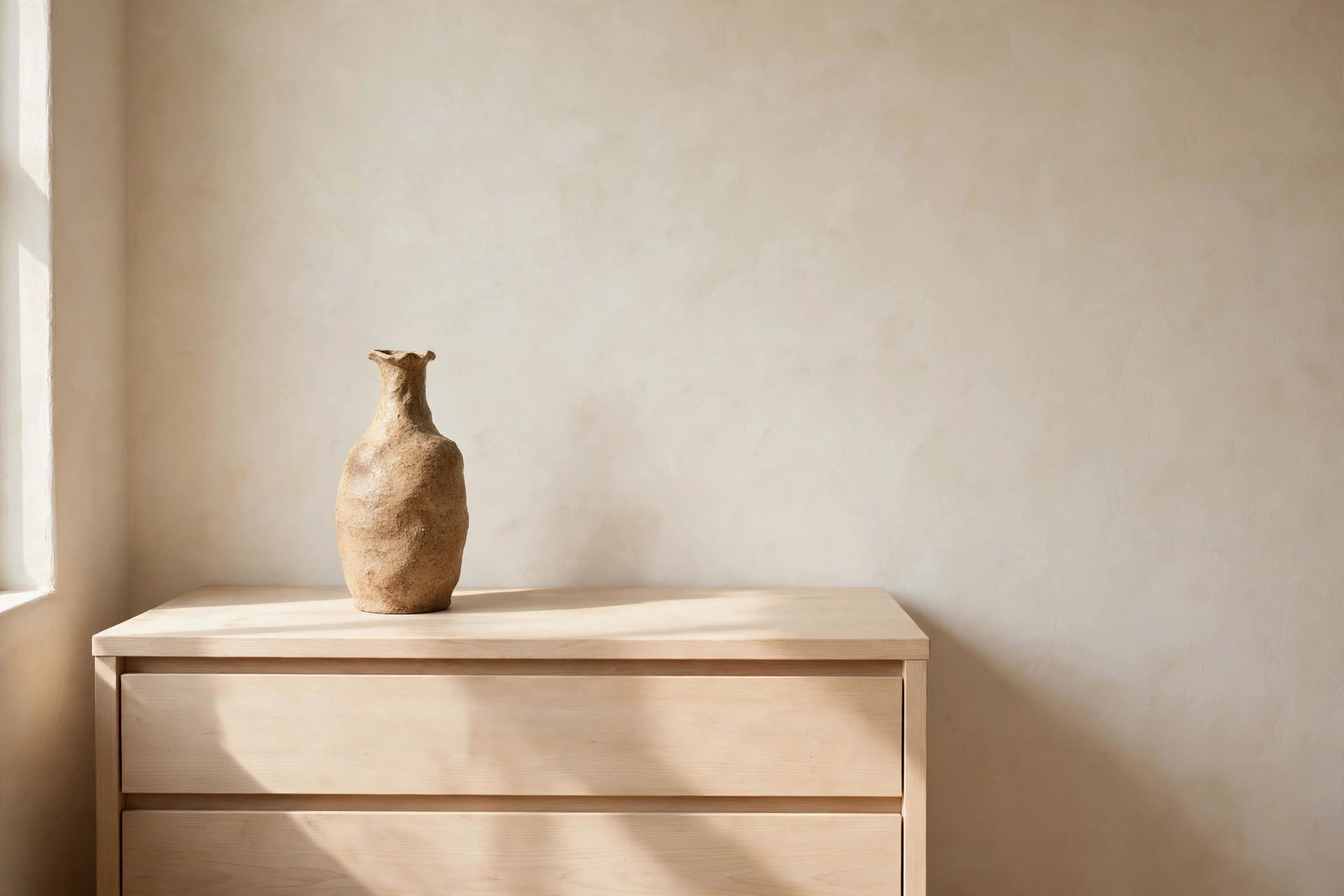
Choose one handmade ceramic piece and give it room. A slightly uneven vase, a small bowl on the nightstand, or a handmade cup for water typically carries more warmth than a perfect matching set. Because it is not flawless, it invites you to relax your own standards a little, which suits a sleep space well. Keep it on its own, with space around it, and it will usually feel like art.
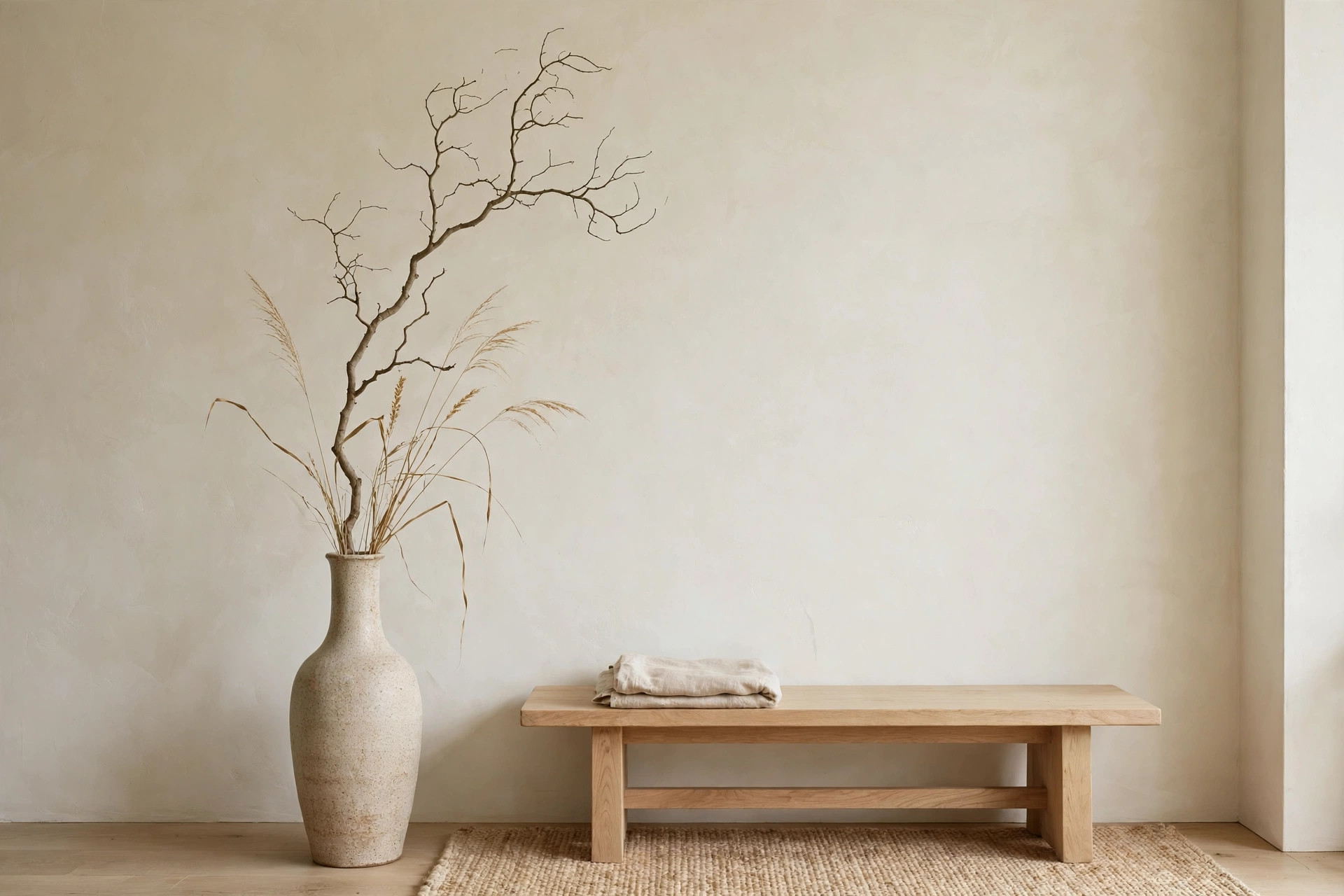
Add a single branch or a few dried stems instead of a big arrangement. One sculptural branch in a tall vase usually brings nature indoors without color or fuss, and dried grasses last without any upkeep. The spare shape leaves plenty of negative space, which is a big part of why Japandi rooms feel so calm. If it starts to look dusty or crowded, edit it back, since less typically works better here.
What to Remove: A Japandi Edit Checklist
Sometimes the most helpful Japandi move is not adding anything at all, it is calmly taking a few familiar things away.
Clear the surfaces and remove anything bright or busy. Start by taking everything off the nightstands and dresser, then put back only the pieces that are useful or genuinely loved. Bright plastics, loud patterns, and extra screens usually work against the quiet mood you are building, so they are good first candidates to go. You will typically be surprised how much lighter the room feels within an hour.
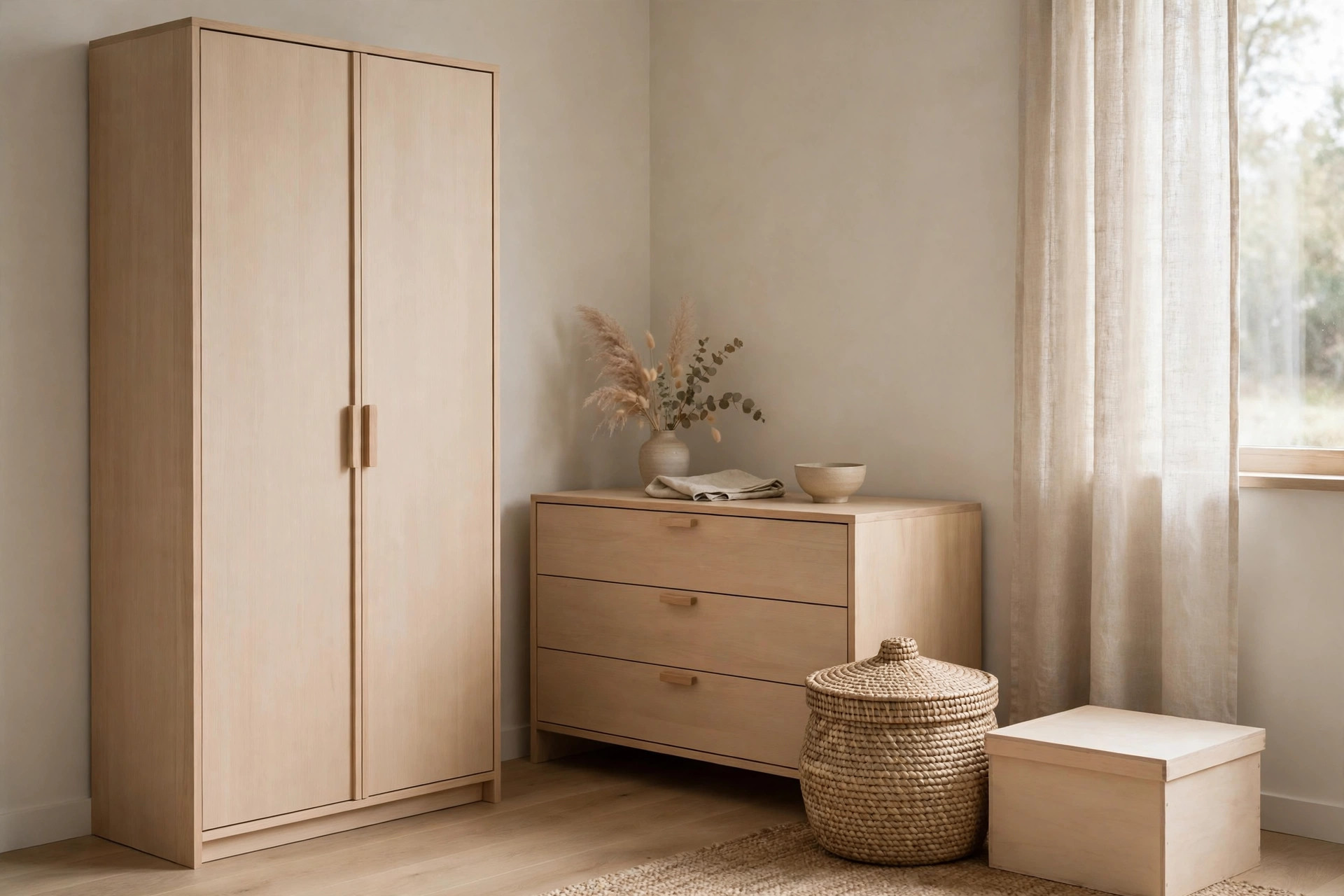
Hide the everyday clutter in closed, simple storage. Chargers, books you are not reading, and spare blankets do not need to live in plain sight while you are trying to wind down. A lidded basket, a drawer, or a plain wooden box usually keeps them close but out of view. When you cannot see the clutter, your brain usually stops cataloguing it, and sleep comes a little easier.
At the end of the day, a Japandi bedroom is not about copying a look perfectly, it is about building a room that asks very little of you at night. Low furniture, natural materials, a soft palette, and honest textures usually do most of the work, especially when you have edited out what you do not need. Change one thing at a time, trust what feels quieter, and let the room settle around you. That is typically how deep, quiet sleep starts to feel less like luck and more like a habit.


Leave a Reply