
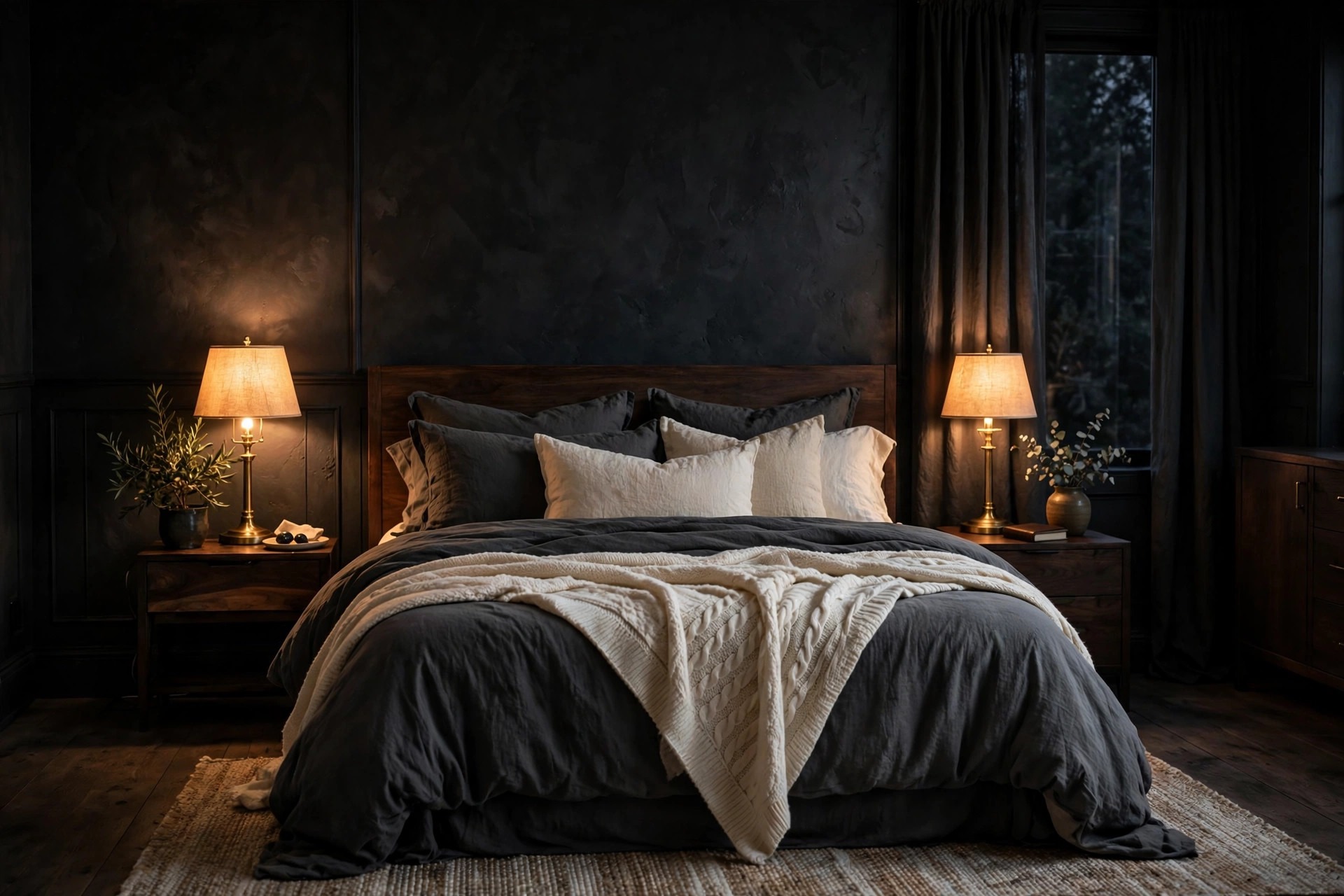
If you have ever walked into a dark bedroom at the end of a long day and felt your shoulders drop, you already get the appeal. Deep color can feel like a quiet hug, shutting out glare and noise and helping a room feel calm instead of bright and busy. The best moody bedroom ideas usually do not feel heavy at all, they feel soft, warm, and easy to rest in.
Look, going dark does not mean painting everything black and hoping for the best. It usually works because of balance, with warm light, touchable texture, and a few lighter layers to keep the depth from feeling flat. When those pieces are in place, a charcoal or forest wall typically reads as cozy rather than cave like, even in a smaller room. A small test patch and one evening with the lamps on will usually tell you more than any photo can.
Below are fifteen ideas you can borrow one by one, starting with choosing your shade and moving through lighting, bedding, warm accents, small rooms, and mornings. You do not need to do all of them at once. Start with the color you love, add good light, and let the rest grow around the way you actually sleep and wake up.
Choosing Your Dark: Charcoal, Forest, Navy or Plum
Your shade sets the whole mood, so it helps to pick a dark color with some softness in it rather than a flat, hard tone.
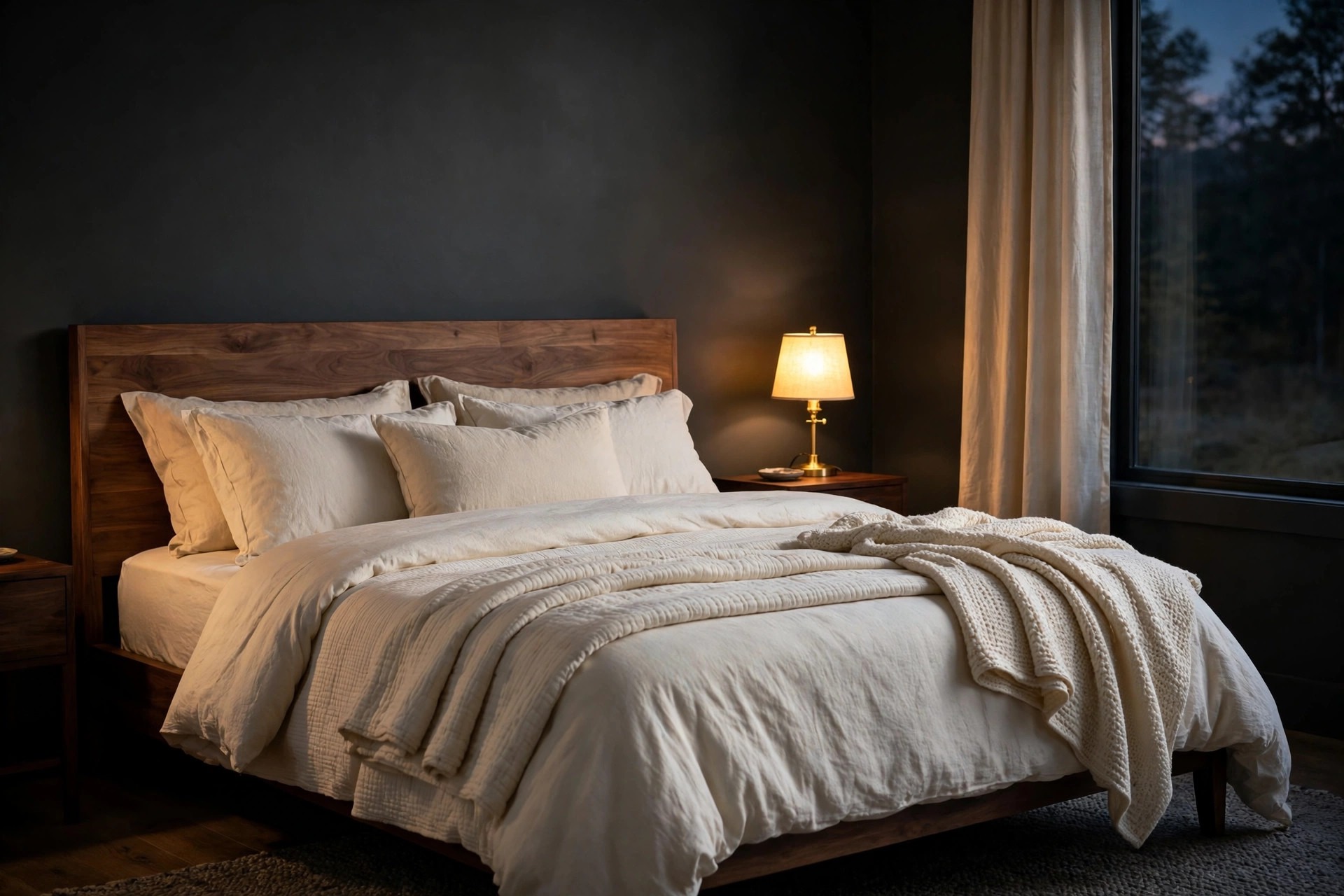
Try charcoal when you want dark but still neutral. Charcoal usually feels modern and calm without the starkness of true black, and it pairs easily with cream, warm wood, and brass. It is a forgiving first step too, because it sits happily behind almost any bedding color you already own. Test it in evening light first, since charcoal can look cooler in bright daylight.
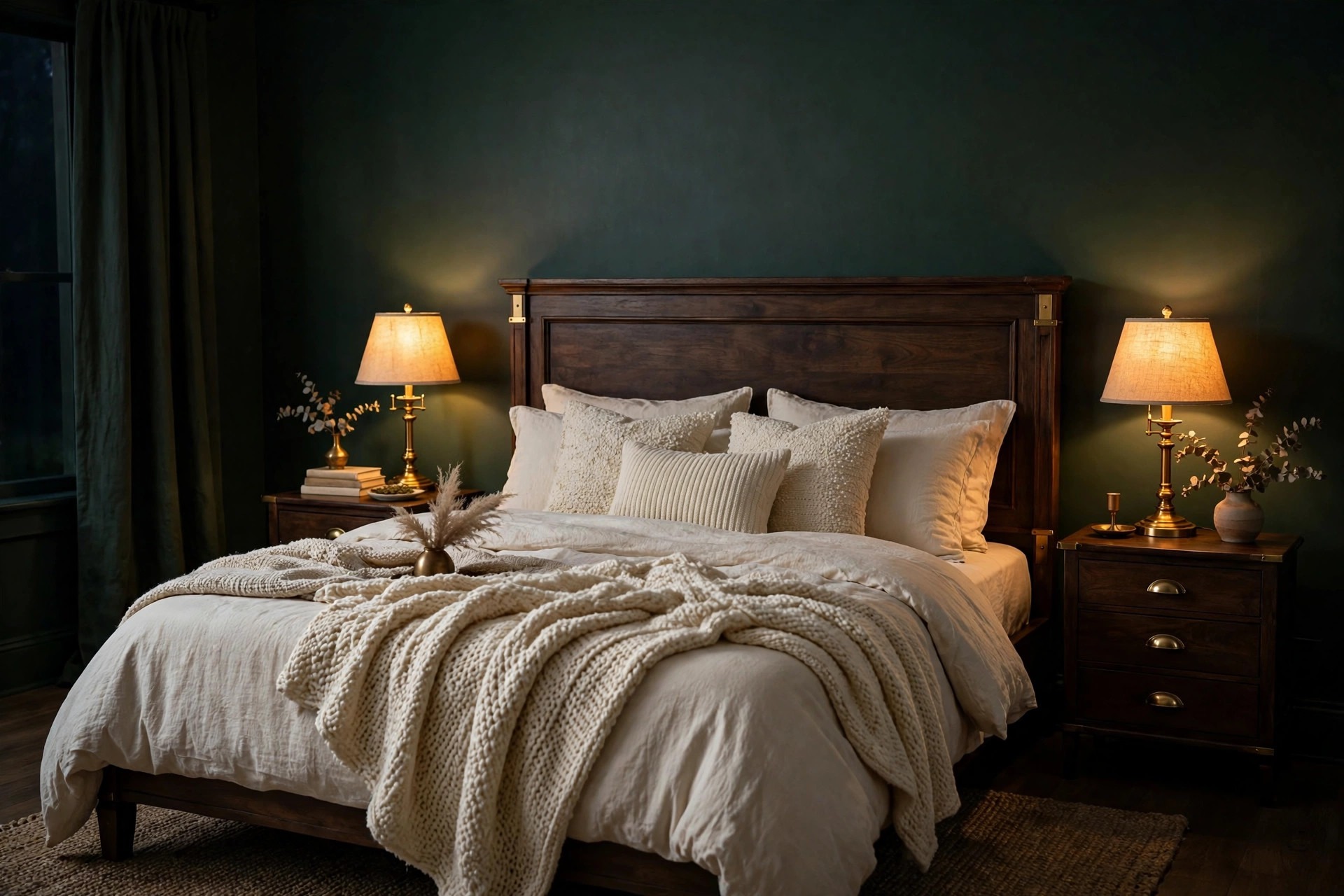
Choose forest green if you love a calm, natural feel. A deep, muted green typically feels restful in a way that is hard to explain, almost like shade under trees on a warm day. It loves warm wood, woven texture, and creamy textiles, so layering it usually comes pretty naturally. Keep the green dusty rather than bright, and it will stay soothing instead of lively.
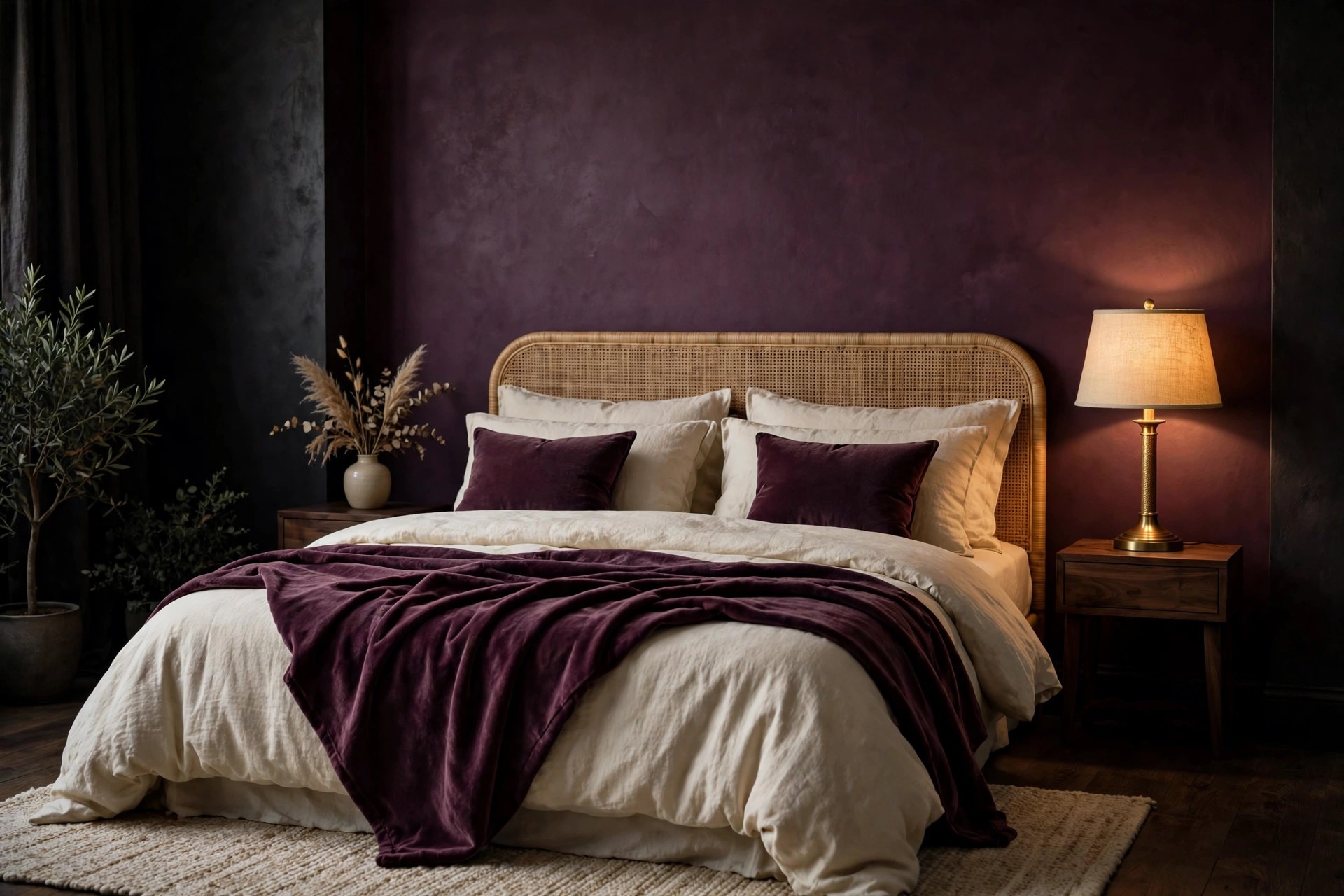
Go with navy or deep plum for a softer kind of drama. Navy usually feels classic and steady, while plum brings a gentle warmth that can feel especially cozy in lamplight. Both work beautifully when you repeat the color in a cushion or throw so the walls do not feel like a lone decision. If you are torn, try the moodier shade on one wall first and live with it for a bit.
Lighting a Dark Room Well
Dark walls soak up light, so your lighting plan usually matters more here than it would in a pale room.
Warm bulbs
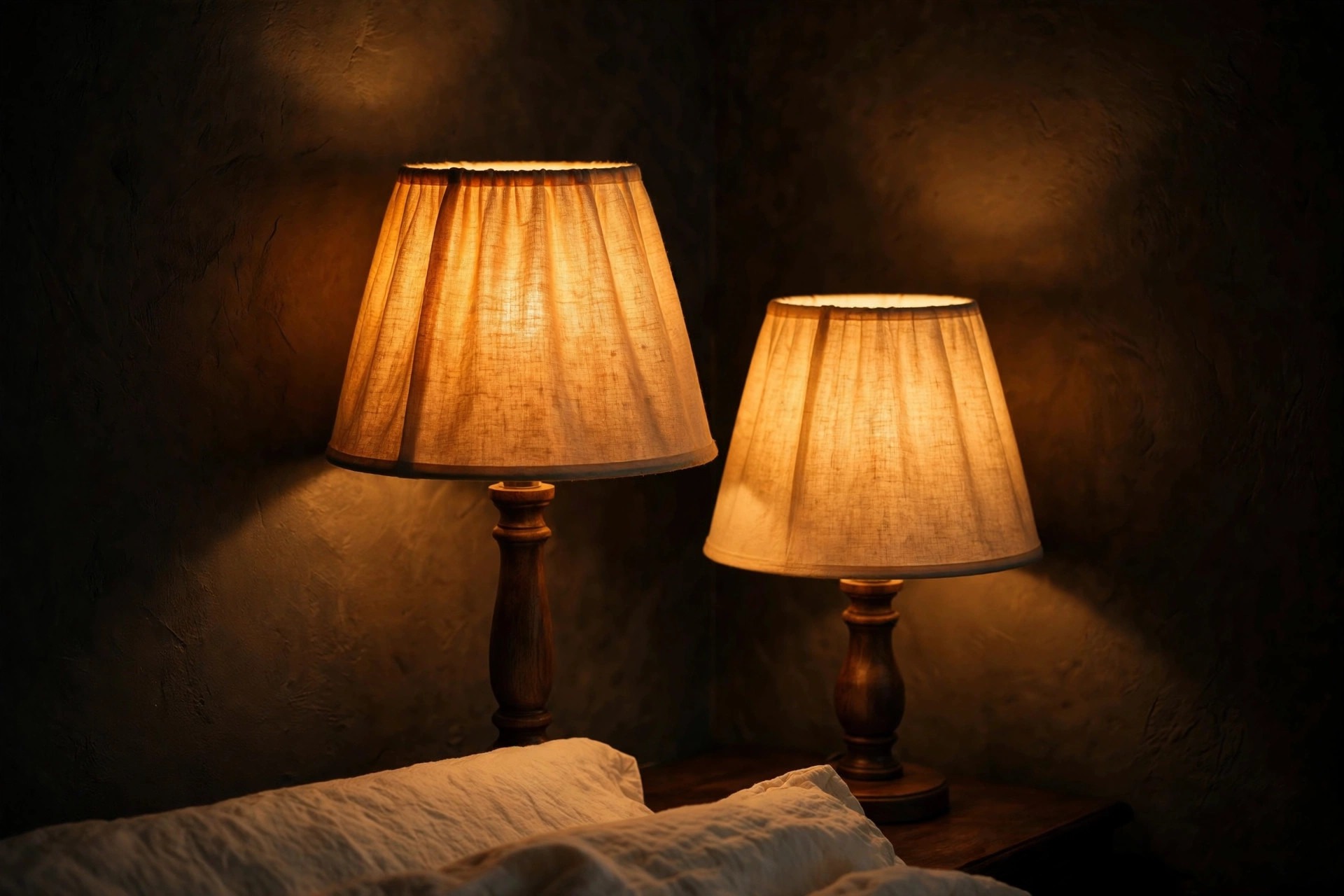
Pick warm bulbs for every lamp in the room. Warm light typically softens deep paint and makes skin, bedding, and wood all look kinder at night. Cool, bluish light can turn a lovely charcoal wall a bit flat and chilly, which is usually the opposite of restful. Check the warmth before you buy a pack, and keep a spare or two so replacements match.
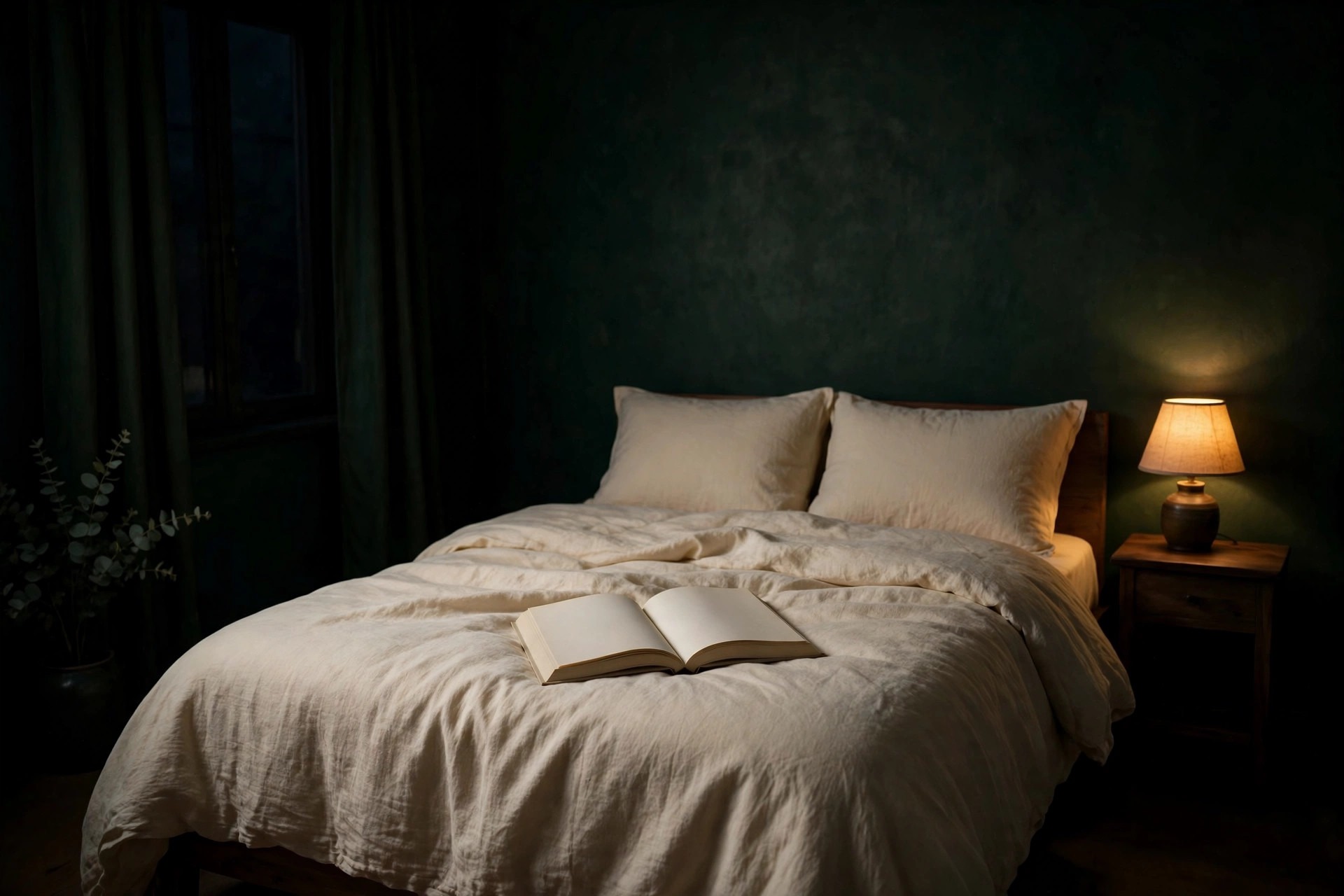
Add dimmers or low settings so light can wind down with you. Being able to drop the brightness in stages usually helps a dark room feel like evening instead of either fully on or fully off. It is especially handy for reading in bed, where you want a pool of light without lighting the whole room. If new switches feel like too much, a lamp with its own dimmer can do a similar job.
Layered lamps
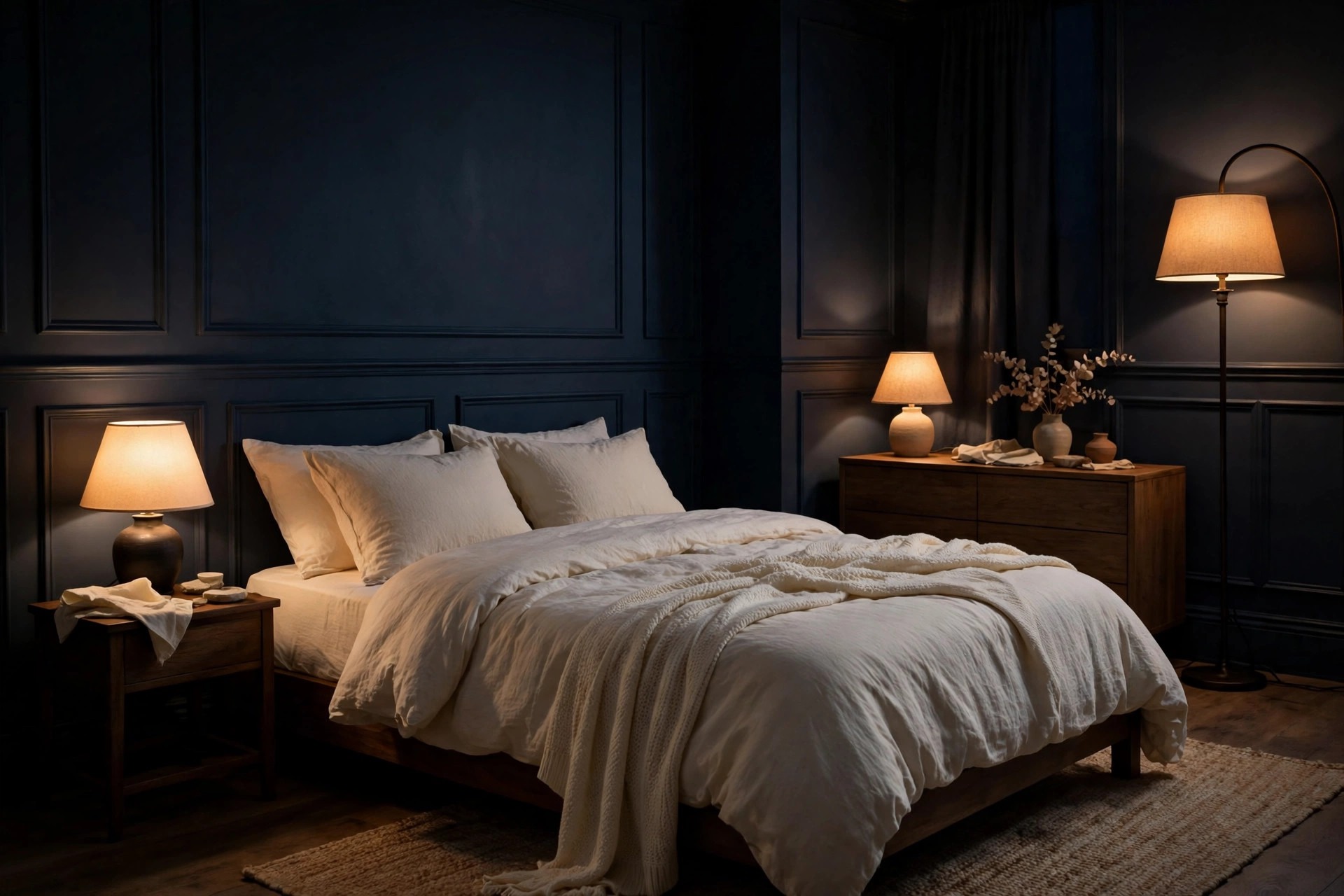
Layer lamps at different heights instead of relying on one overhead light. A bedside lamp, a low dresser lamp, and maybe a soft floor lamp in a corner usually spread a gentle glow that flatters dark walls. That layered light stops shadows pooling in the corners, which is often what makes a dark room feel heavy. Keep shades soft and warm toned, and the light stays diffused rather than harsh.
Bedding Contrast and Texture
Against dark walls, your bed is the main event, and a little contrast there usually keeps the whole room feeling awake and inviting.
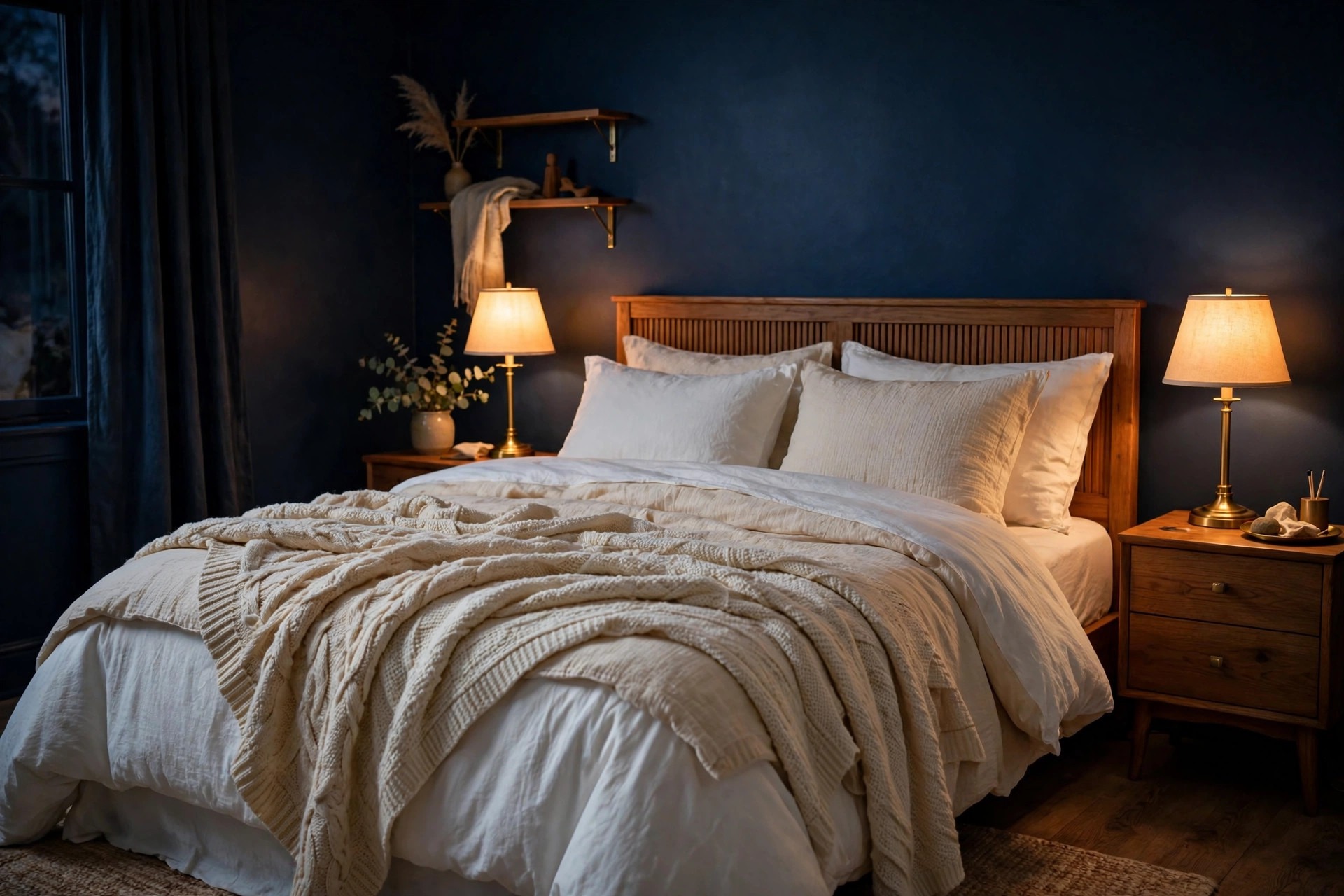
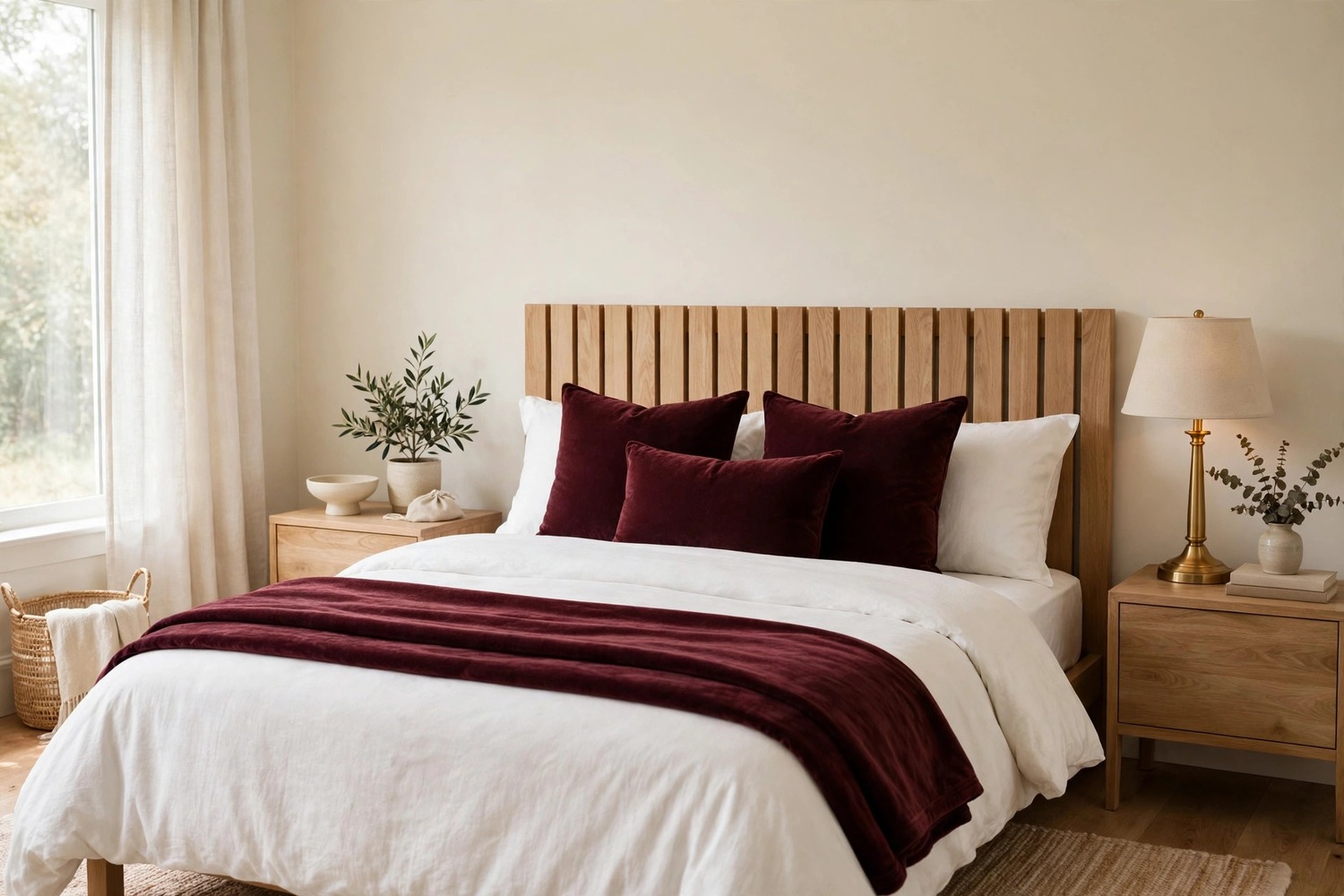
Use cream or warm white bedding as your restful contrast. Light bedding against a deep wall typically gives your eye a soft place to land, and it keeps the bed feeling fresh rather than swallowed by color. You do not need bright white either, since warm ivory and oatmeal often feel calmer in lamplight. Washable, simple layers make it easy to keep that contrast looking clean week after week.

Mix textures so a simple palette still feels rich. Linen, cotton, a knit throw, and a velvet cushion can all sit in similar tones and still feel layered and interesting. Texture is usually what stops a moody room from reading as flat, especially when the light is low. Run your hand across the bed, and if everything feels the same, it probably needs one rougher or softer piece.
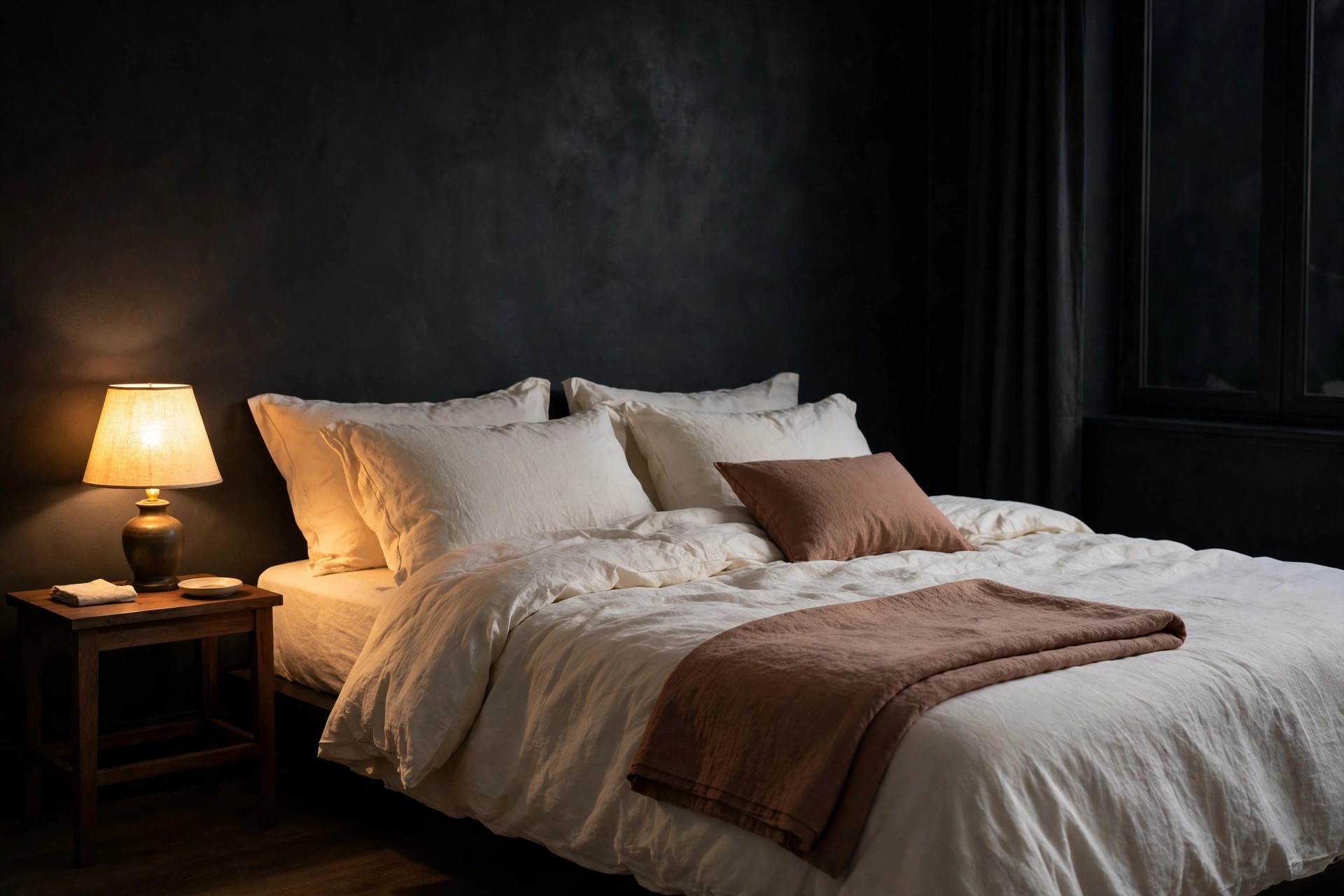
Add one muted accent in the bedding and repeat it once. A dusty clay, soft ochre, or muted sage cushion can warm up charcoal and navy without breaking the calm. Repeating that accent in a throw or a small piece of art typically makes it feel intentional rather than random. Keep it to one accent family, and the bed stays restful instead of busy.
Metallic and Wood Warm-Ups
Dark rooms usually need a little warmth built into the hard finishes, and that is where metal and wood quietly do the heavy lifting.
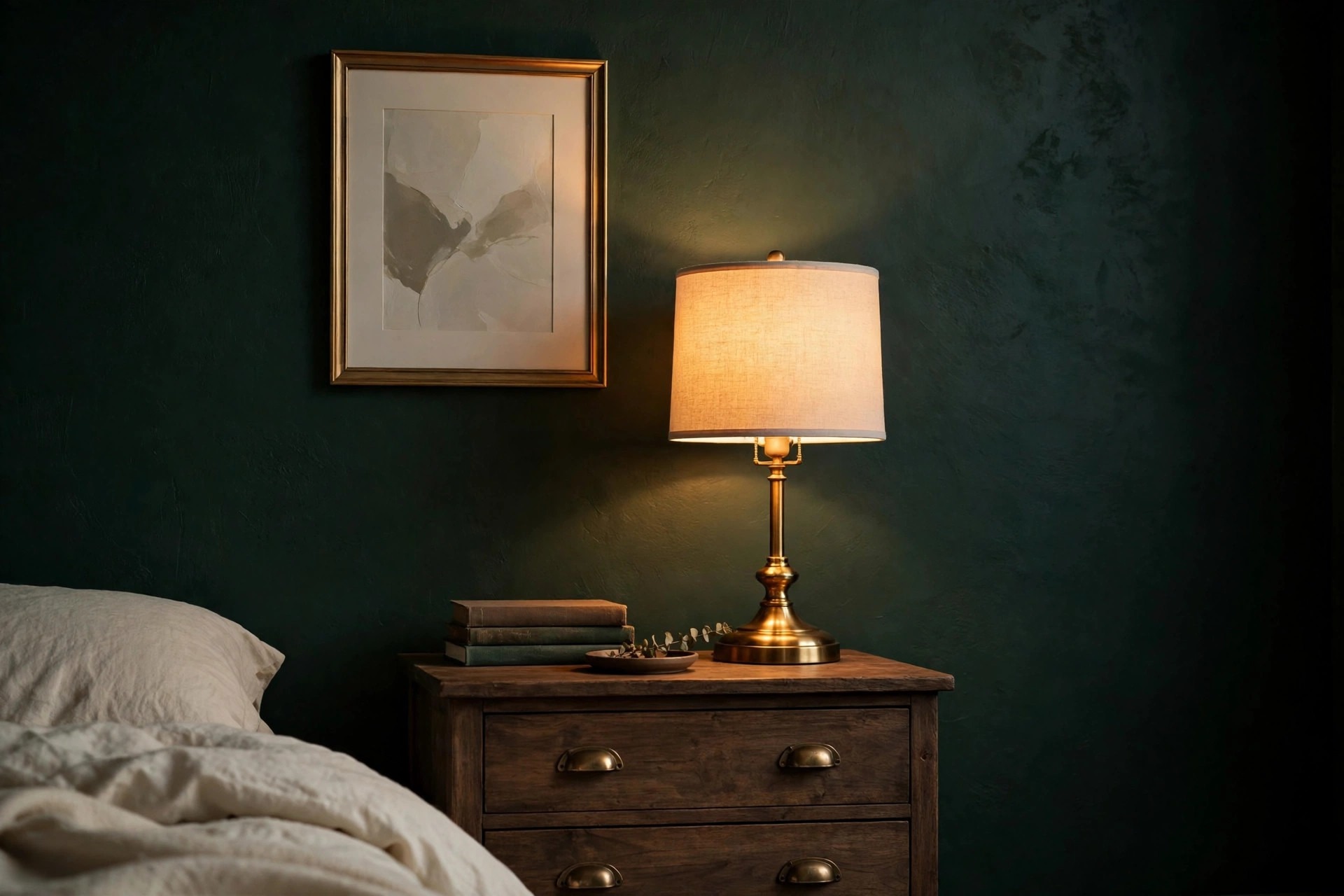
Bring in brass or warm gold in small, repeated touches. A lamp base, a drawer pull, and a simple frame in a similar warm metal can lift a dark wall without shouting for attention. Brass typically glows in warm evening light, which is exactly when you want this room to feel its best. You do not need much, just enough repeats that the warmth feels planned.
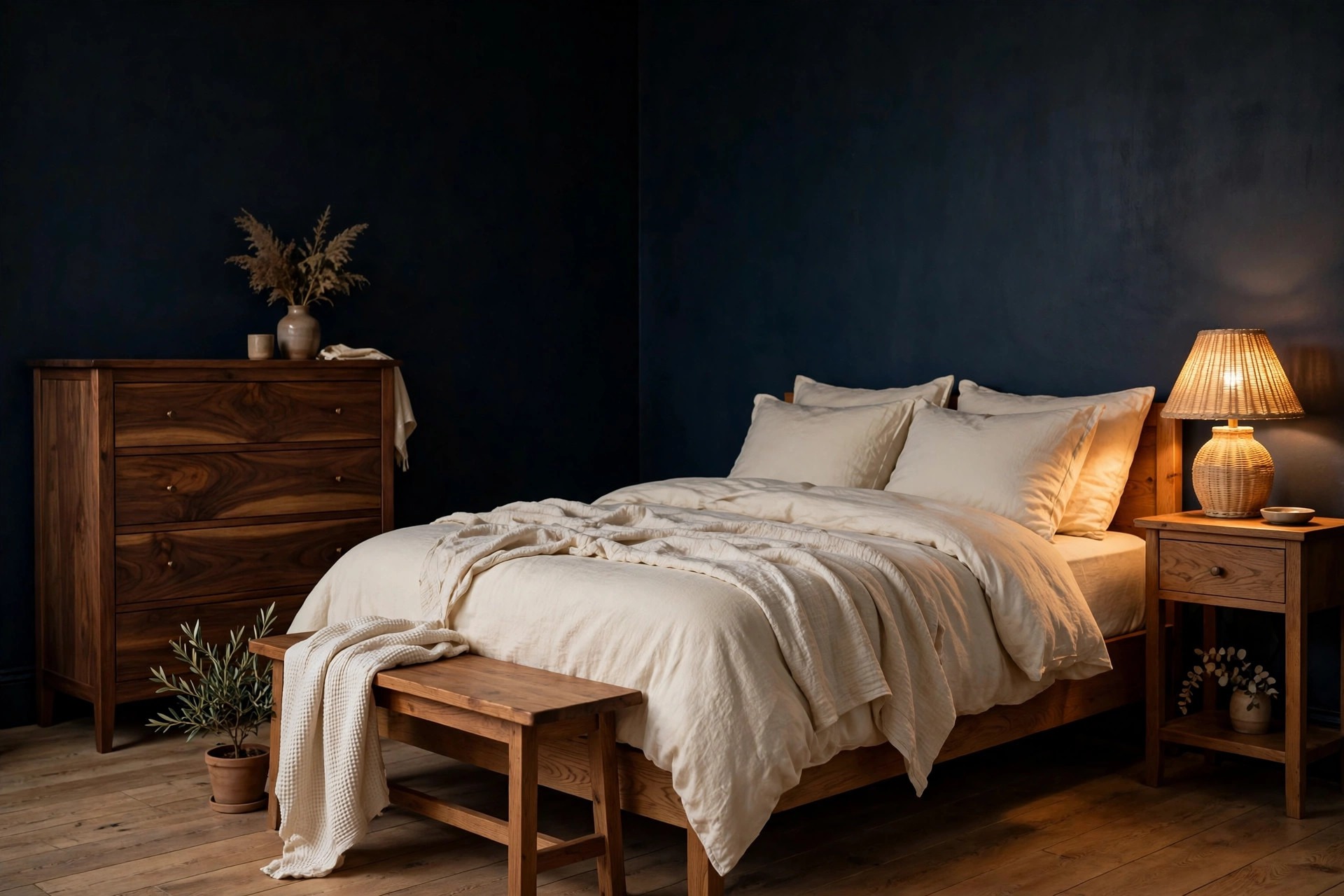
Lean on warm wood for the bigger pieces. A walnut toned dresser, a warm oak bedside table, or even a simple wood bench usually softens charcoal, forest, and navy in a lovely way. Wood keeps a moody room from feeling too sleek or cold, and it adds natural variation that paint cannot. If your pieces do not match perfectly, that is fine, since similar warmth matters more than an exact match.
Small Dark Bedrooms: Myths Busted
You have probably heard that dark paint makes a small room feel tiny, but in practice it is usually the clutter and the lighting that do that, not the color.
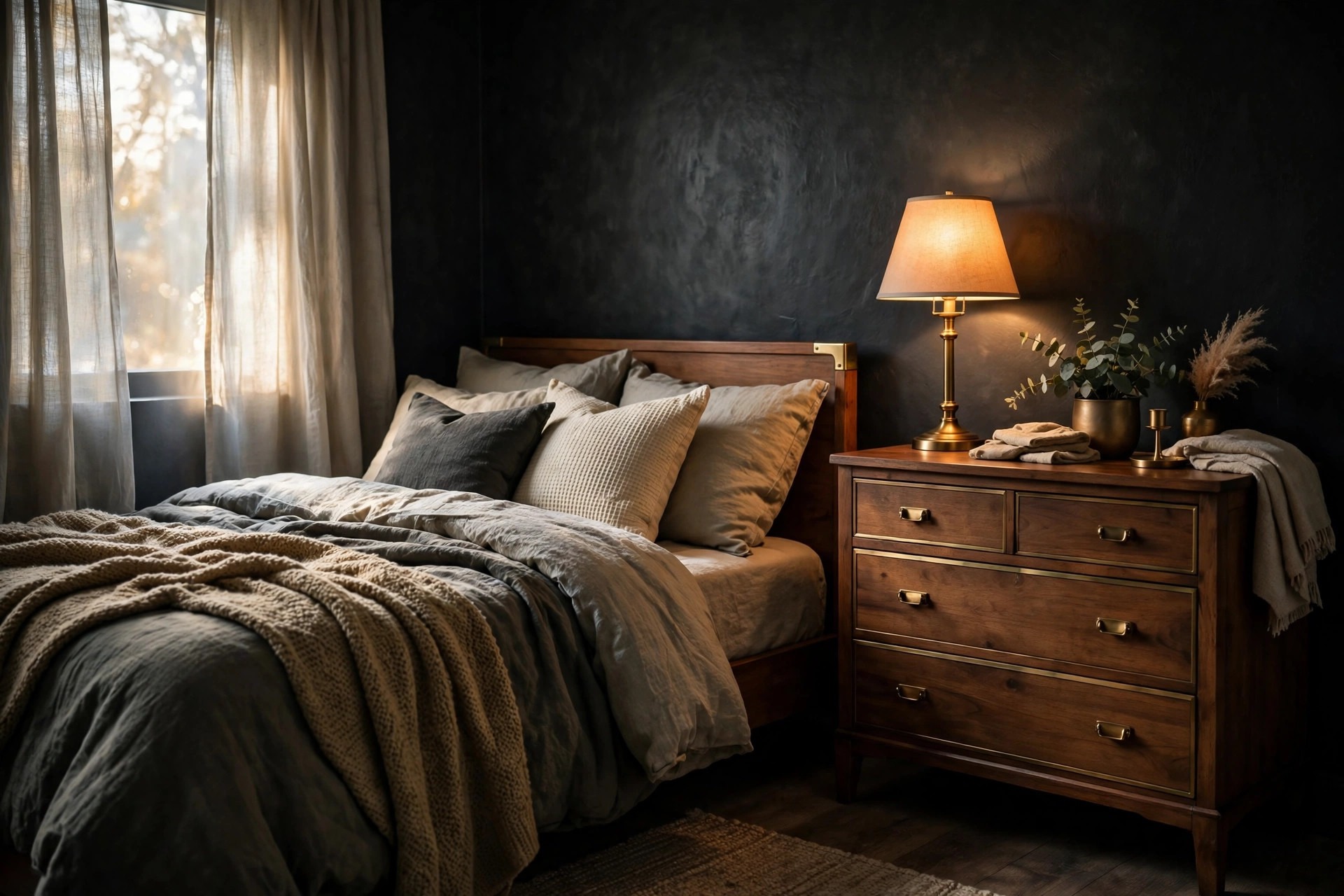
Let the dark color wrap the room instead of stopping at one wall. Painting all the walls, and sometimes even the ceiling, usually blurs the edges of a small room so it feels cocoon like rather than chopped up. A single dark wall can actually highlight how small the space is, which is the opposite of what most people expect. It is a braver choice, but in a bedroom it typically pays off at night.
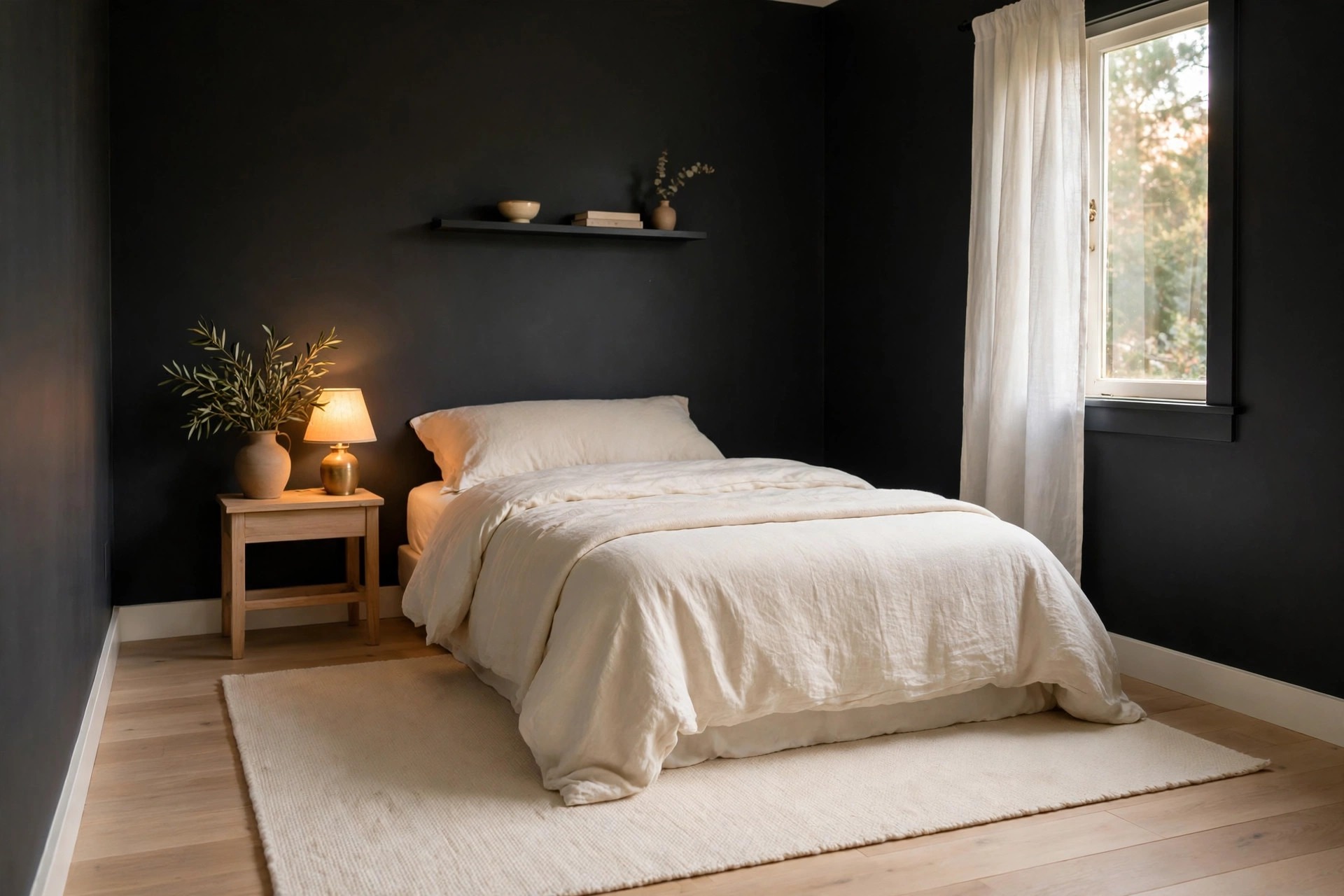
Keep the floor and bedding lighter to hold the balance. A pale rug, light bedding, and curtains that do not disappear into the wall usually stop a small dark room from feeling closed in. That contrast gives the room breathing space while the walls still do their cozy work. Keep surfaces fairly clear too, since a tidy small room almost always feels bigger than a messy pale one.
Moody but Morning-Friendly
A restful dark room still has to work at seven in the morning, so it helps to plan for daylight with the same care you gave to lamplight.
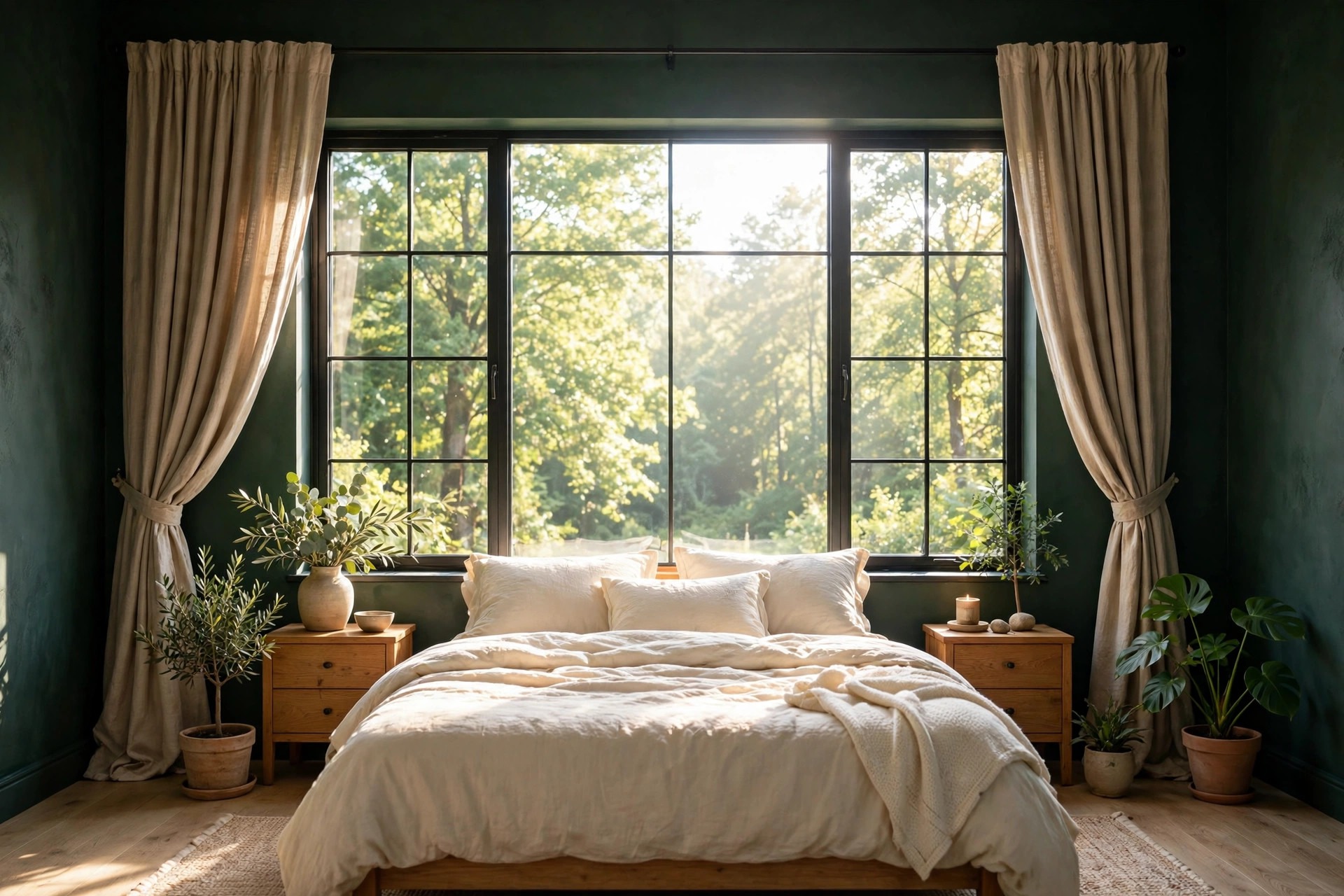
Choose curtains you can open fully and easily. Lined curtains in a warm neutral usually give you real darkness for sleep and then pull right back so morning light can flood in. That daily swing from dark to bright is part of what makes a moody room feel healthy rather than gloomy. If space is tight, a simple blind plus a soft sheer can give you a similar choice.
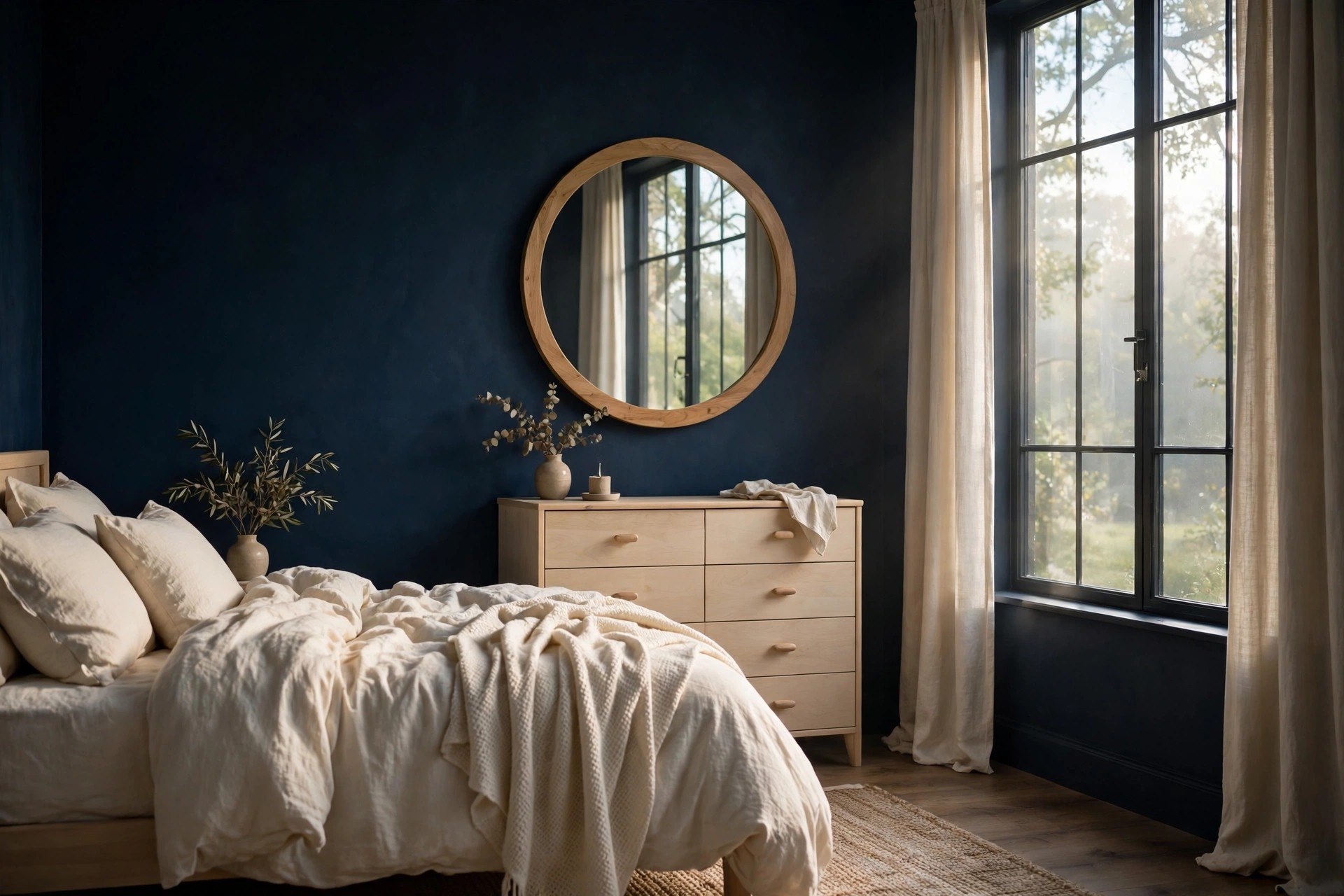
Place a mirror or a lighter piece where it catches morning light. A mirror across from a window, or a pale dresser on the sunniest wall, typically bounces a little daylight around without undoing your evening mood. It is a small move, but it can change how the room feels when you are getting ready. Keep the glass simple and the frame warm, and it blends right into the scheme.
At the end of the day, a dark bedroom works when it is not just dark, it is warm, layered, and easy to wake up in too. Choose a shade with softness in it, light it warmly and in layers, and let cream bedding and warm wood hold the balance. Do that, and your moody room will usually feel less like a bold statement and more like the calmest place in the house, which is really the whole point.

Leave a Reply