
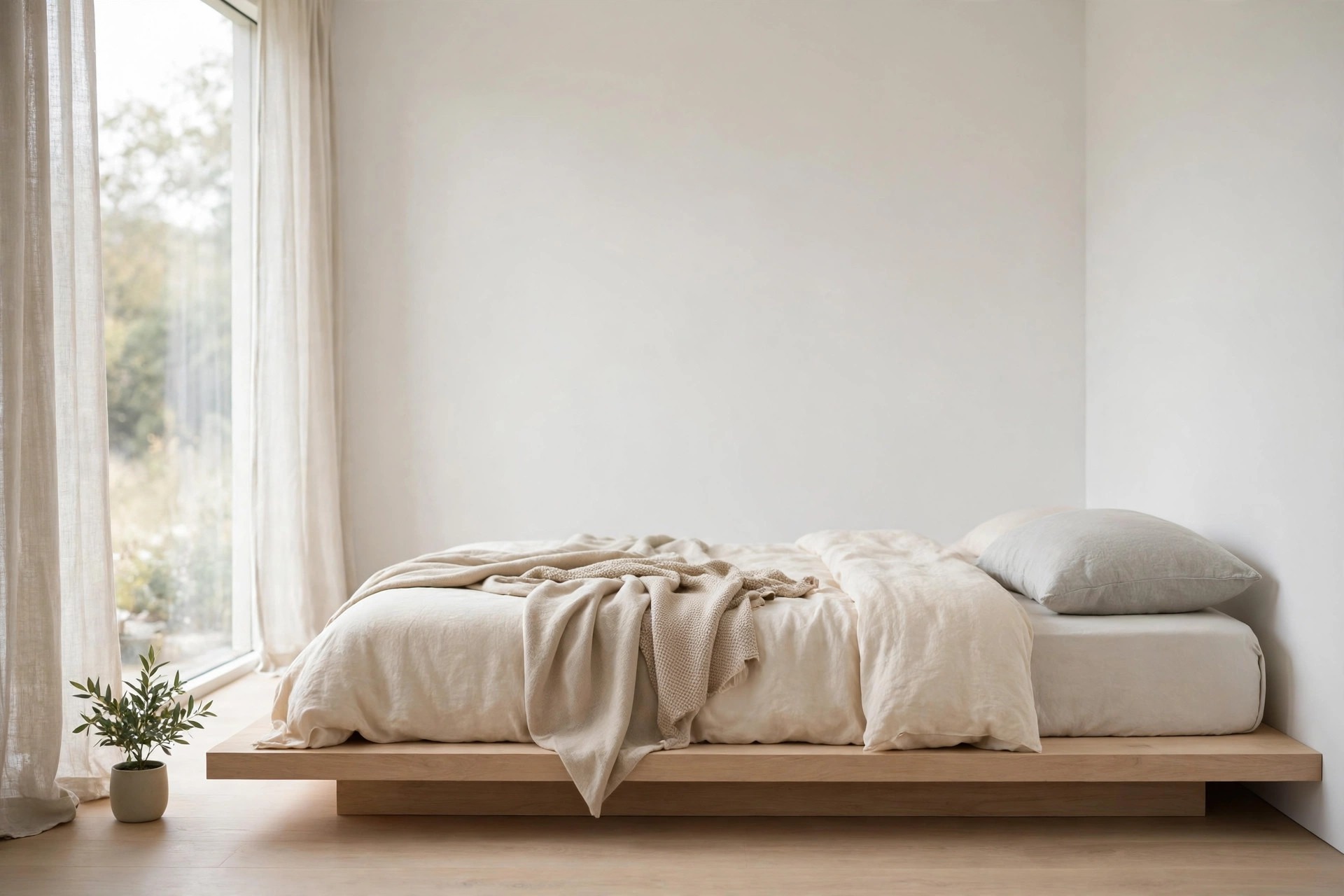
If your bedroom feels busy the moment you open your eyes, you are not alone, and you do not need a full makeover to fix it. The calmest minimalist bedroom ideas usually start with taking things away, not adding more, so the room can finally breathe a little. When there is less competing for your attention, your head typically feels clearer too.
Look, a minimalist bedroom is not a cold or empty room, and it definitely does not have to look like a showroom. It is simply a space where everything you keep has a reason to be there, and where soft color and clear surfaces do most of the work. White, warm ivory, light wood, soft beige, and pale grey usually make that job much easier. You can get there in a weekend of small, gentle edits, without buying matching furniture or starting again from scratch.
Below are fourteen ideas you can try in any order, starting with simple habits and moving through furniture, color, walls, bedside alternatives, and a quick reset routine. Take the ones that fit your room and your life, and leave the rest for later. You will probably find that two or three changes are enough to shift how the whole room feels.
The One-In, One-Out Rule
This simple habit usually keeps a calm room calm, because clutter rarely arrives all at once and usually creeps in one small thing at a time.
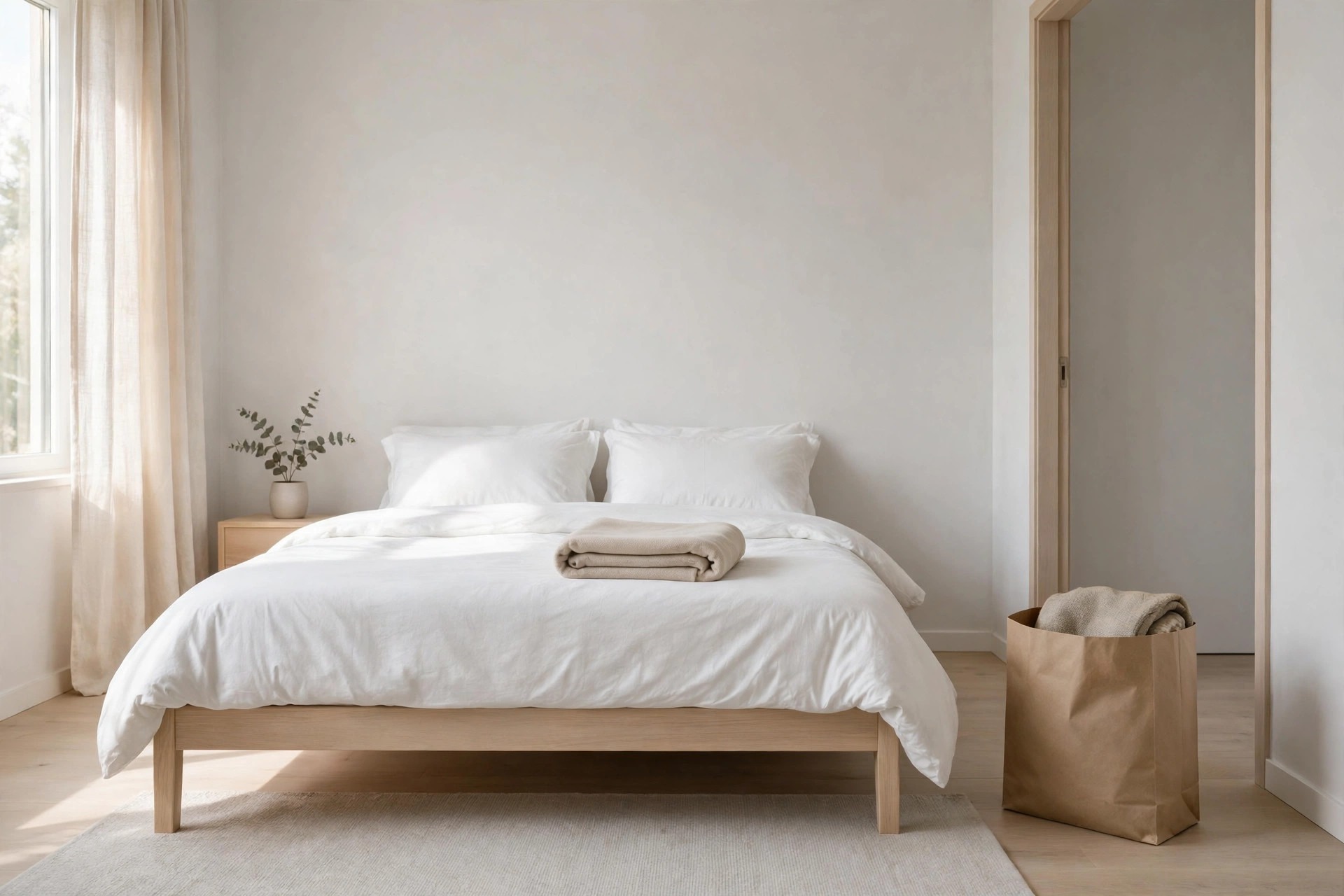
Let something leave whenever something new comes in. If a new throw arrives, an older one you do not reach for can move on to another room or a donation bag. That gentle balance typically stops drawers and corners quietly filling up again. You do not have to be strict about it either, just honest about what you actually use and love.
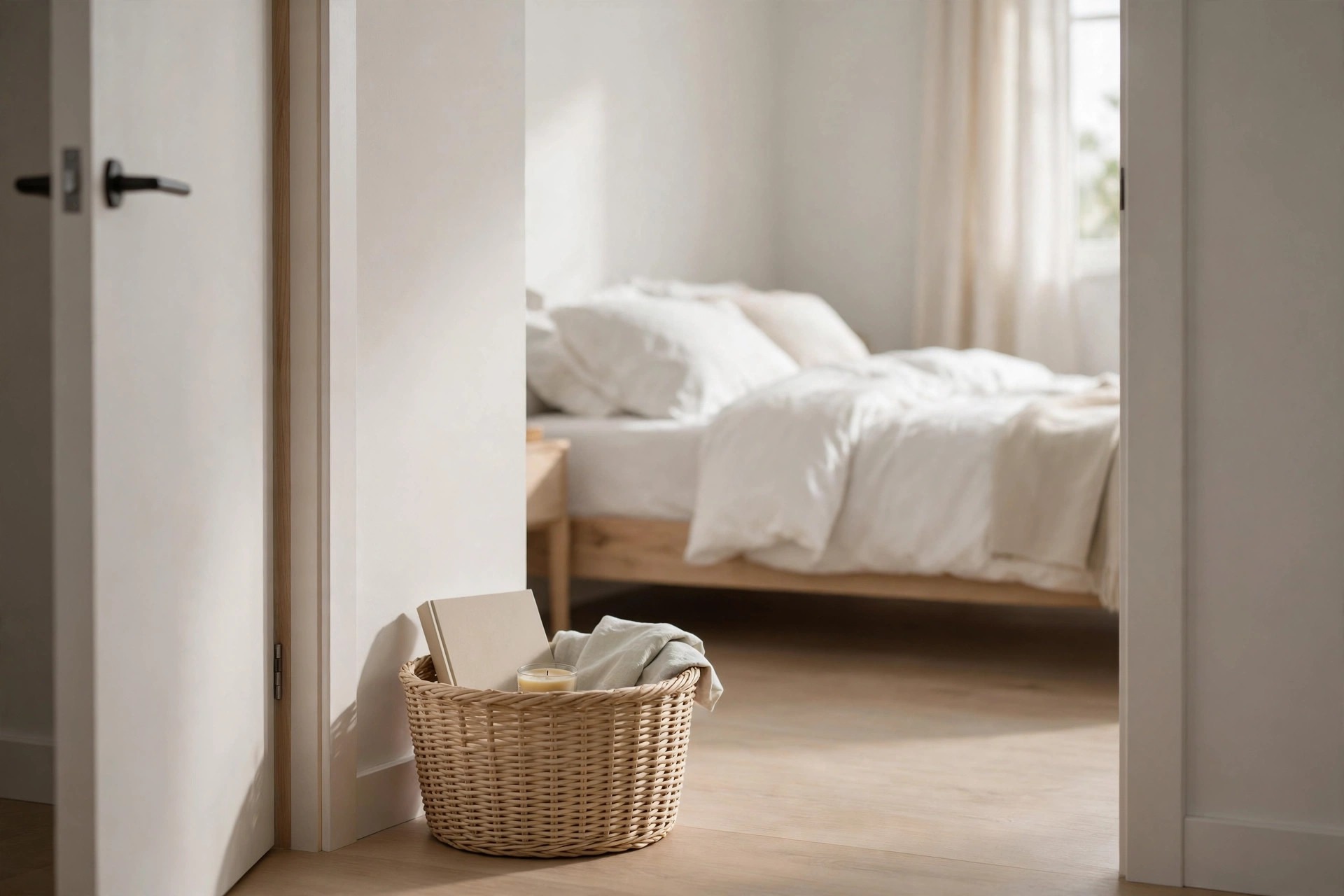
Keep a small exit basket by the door. A plain woven basket gives anything homeless a place to land instead of spreading across the bed or floor. When it fills up, you can sort it in a few quiet minutes, usually on a weekend morning. It sounds almost too simple, but that one basket often saves a room from slow, everyday drift.
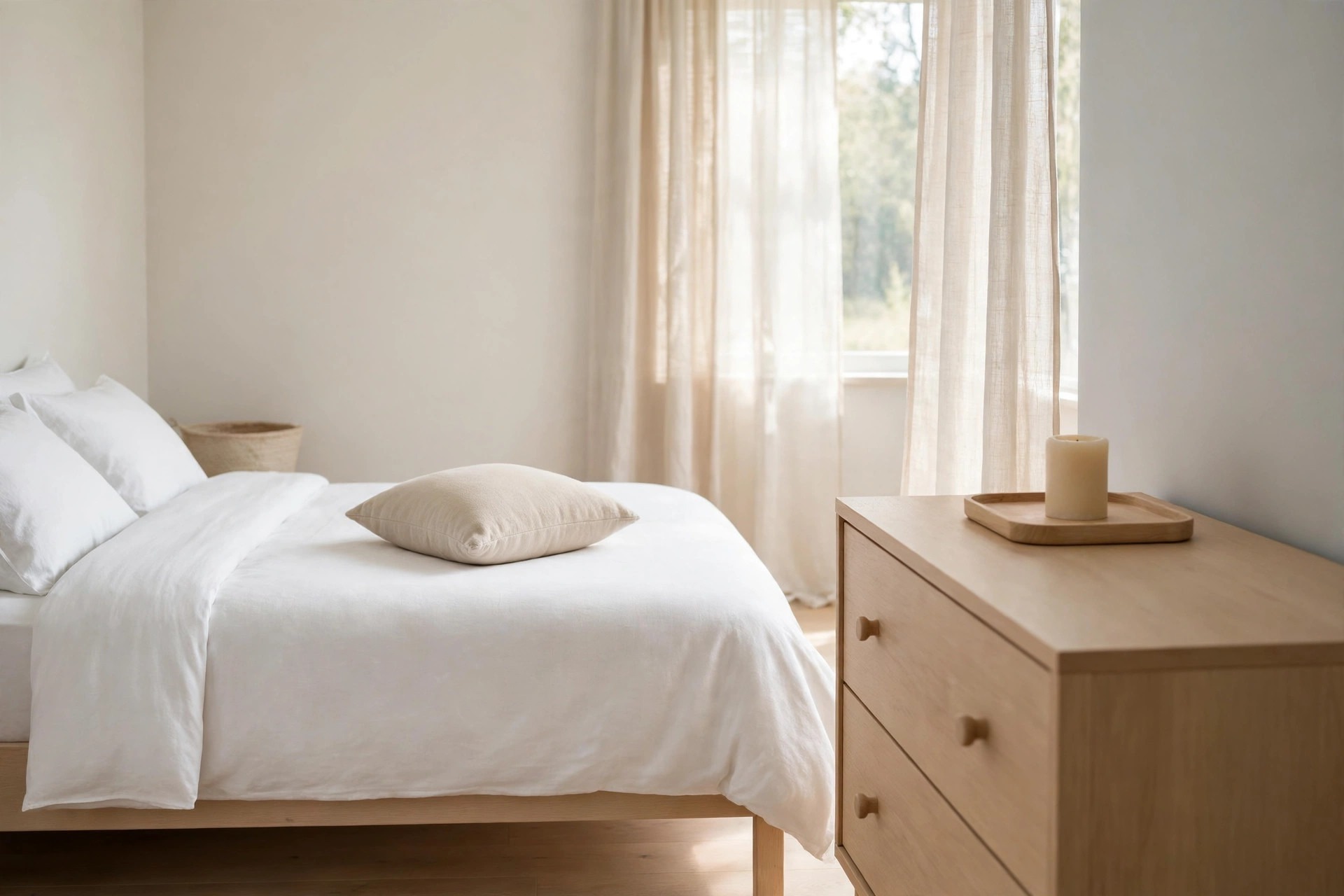
Give every new piece a home before it stays. Before you keep a cushion, a candle, or a framed print, decide exactly where it will live day to day. If there is no clear spot, it probably does not belong in the bedroom yet. This pause typically saves you from impulse clutter, and it keeps surfaces clear without much effort at all.
Furniture: Only What Earns Its Place
A minimalist room usually holds fewer, better chosen pieces, so each one has to earn its floor space by being useful, comfortable, or genuinely loved.
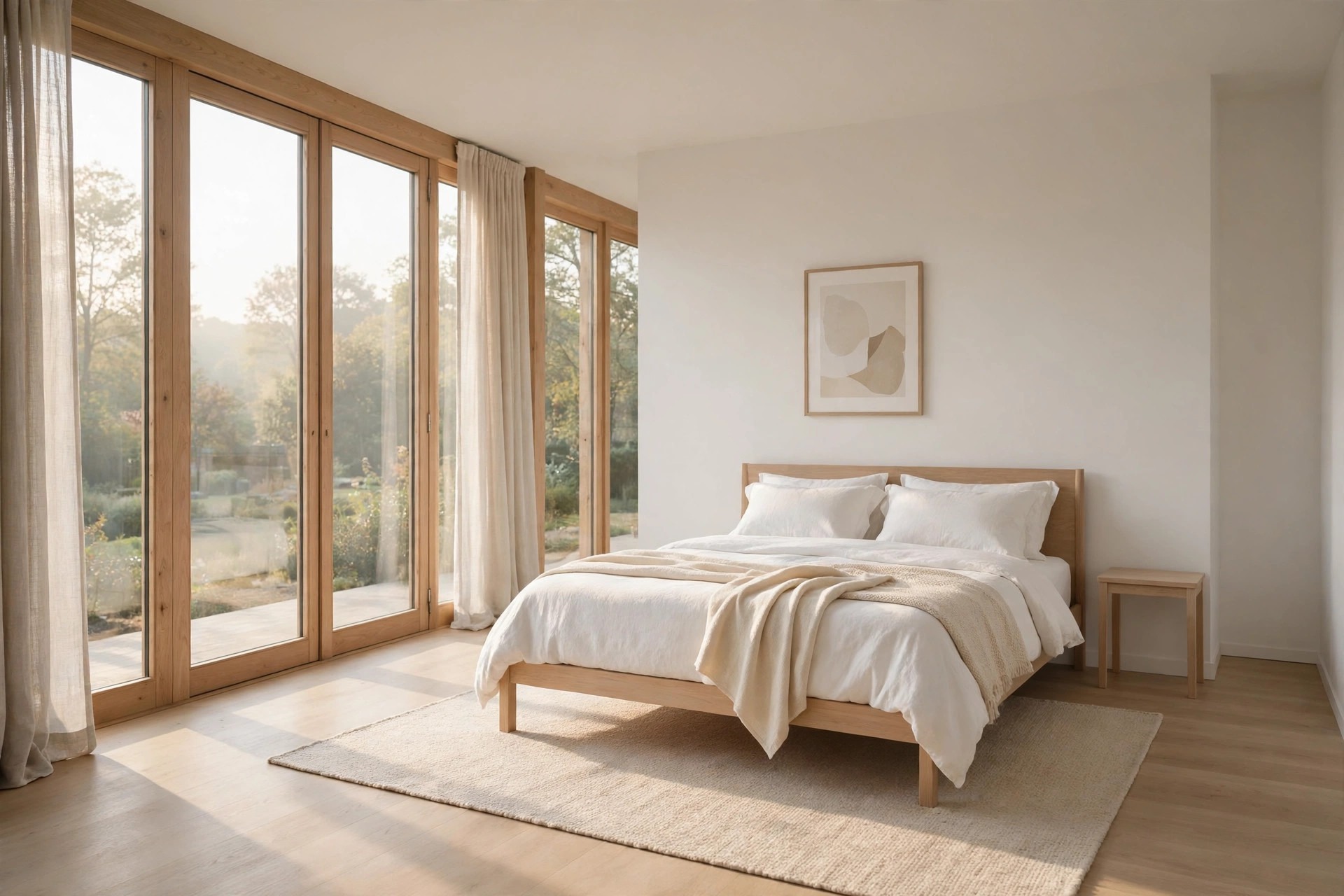
Choose a low, simple bed frame in light wood. Clean lines and a low profile typically make a small bedroom feel taller and calmer at the same time. Light wood adds warmth against white and warm ivory walls, so the room never feels chilly or bare. Skip the fussy headboard if you can, and let plain bedding become the soft focus instead.
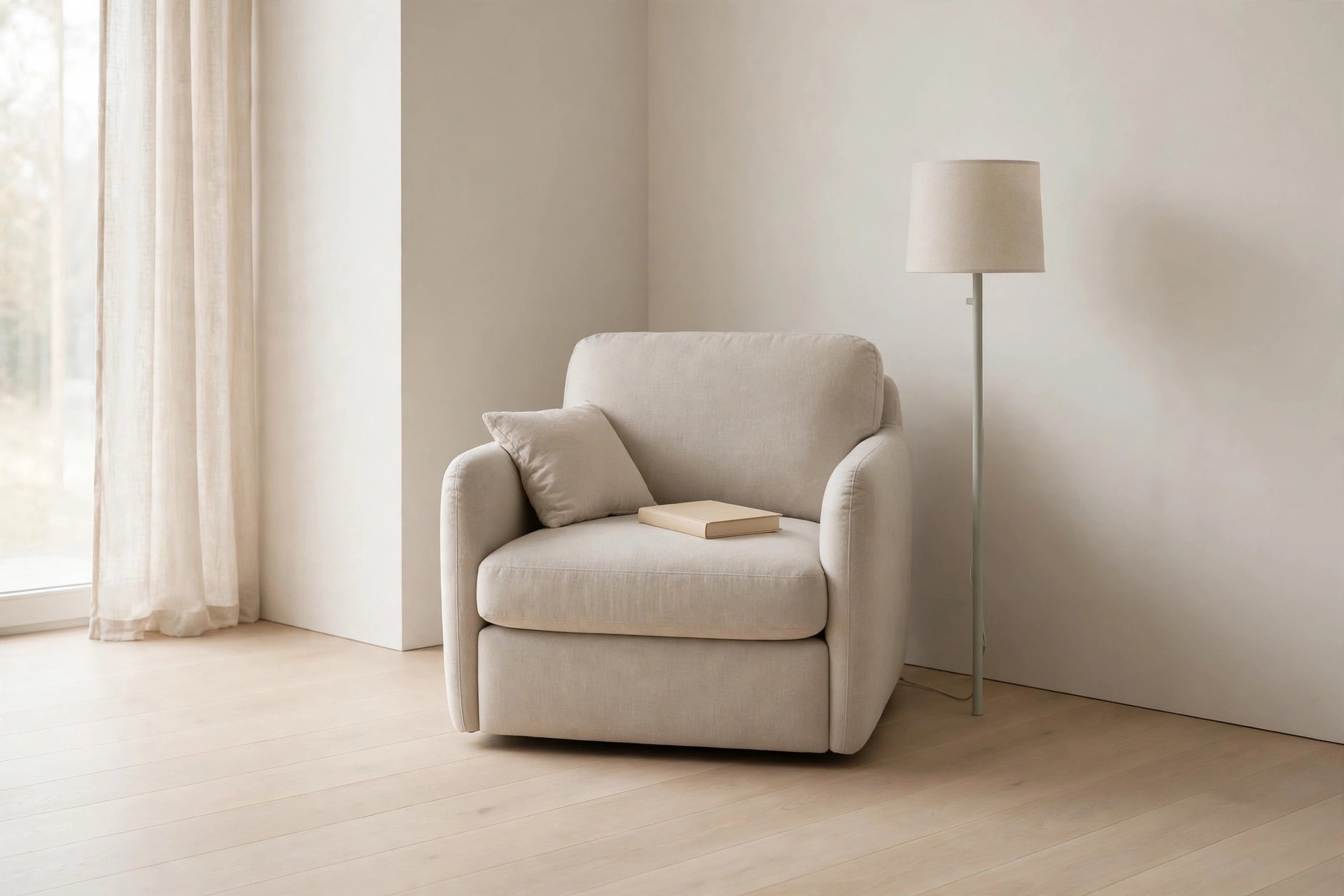
Keep only the seating you truly sit in. Many bedrooms hold a chair that has quietly become a clothes pile, and removing it usually feels like a relief. If you do read or dress in the room, one comfortable chair is plenty and it will stay clearer for it. Be honest here, because floor space you can see is floor space your mind can rest on.
Hidden storage pieces
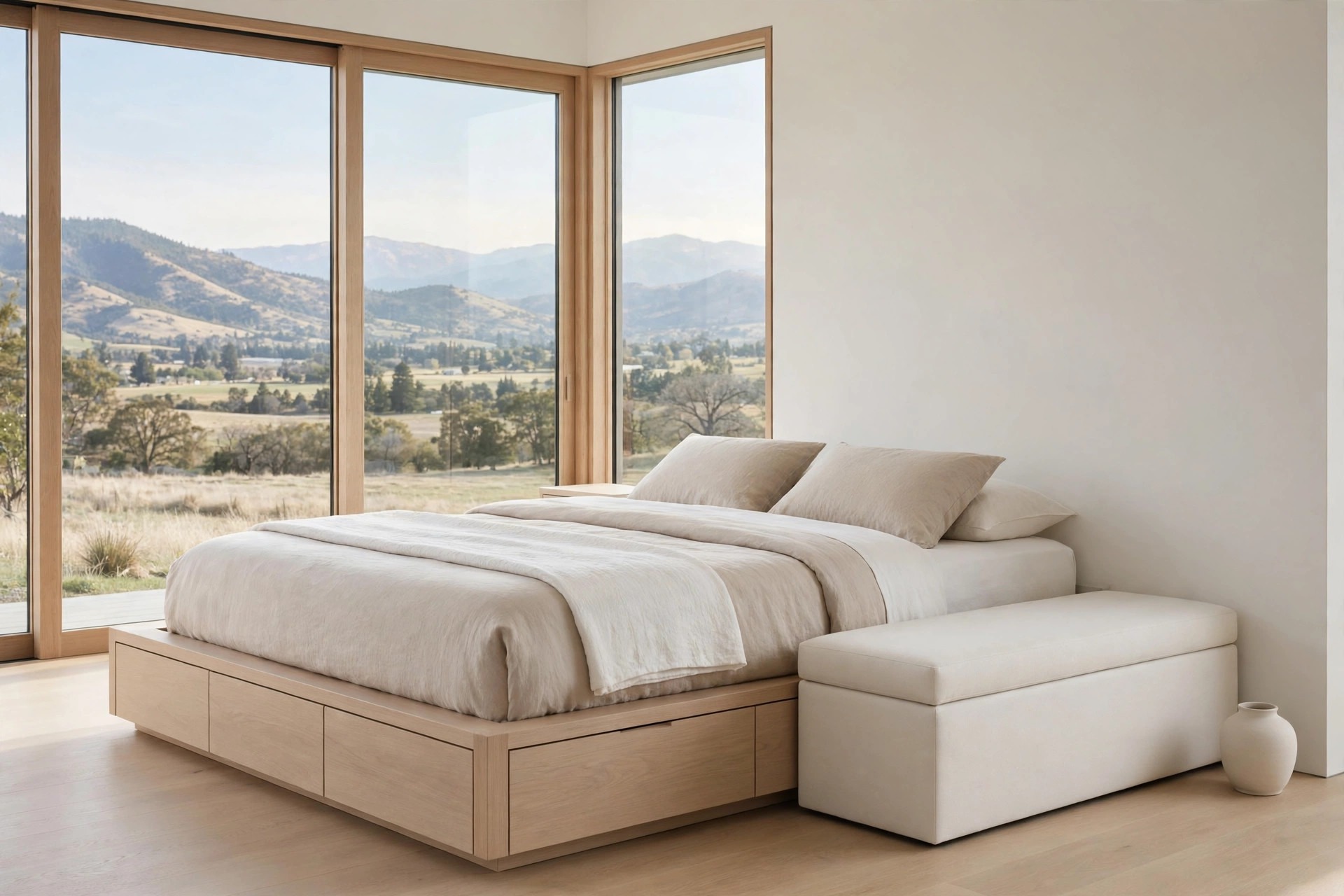
Pick storage that hides things completely behind closed doors and drawers. A simple light wood dresser with closed drawers usually looks calmer than open shelves full of everyday bits. Woven baskets tucked underneath or inside can corral the small stuff without showing it off. When you cannot see the clutter, your brain typically stops cataloguing it, and that is really the whole point.
A Two-Color Palette
Limiting your colors is often the fastest way to make a room feel pulled together, and two main tones plus one soft neutral is usually enough. It also makes everyday choices easier, because you are not wondering whether a new cushion or throw matches everything else in the room.
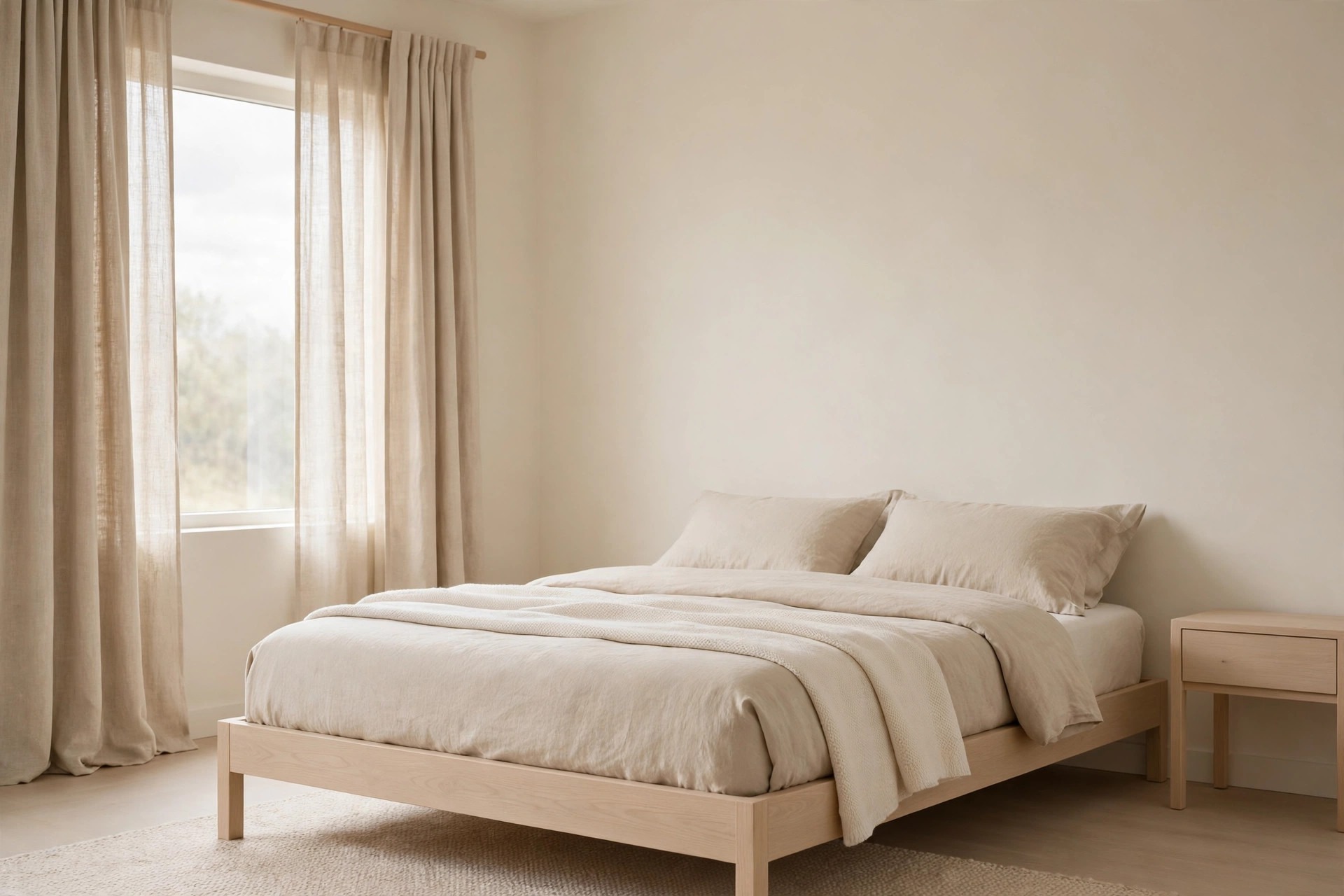
Pair white or warm ivory with soft beige across the whole room. When walls, bedding, and curtains sit in the same gentle family, the room typically feels larger and much quieter. Warm ivory keeps white from turning stark, while beige adds the depth that stops things looking flat. You can mix textures freely within those tones, and everything will still feel like it belongs together.
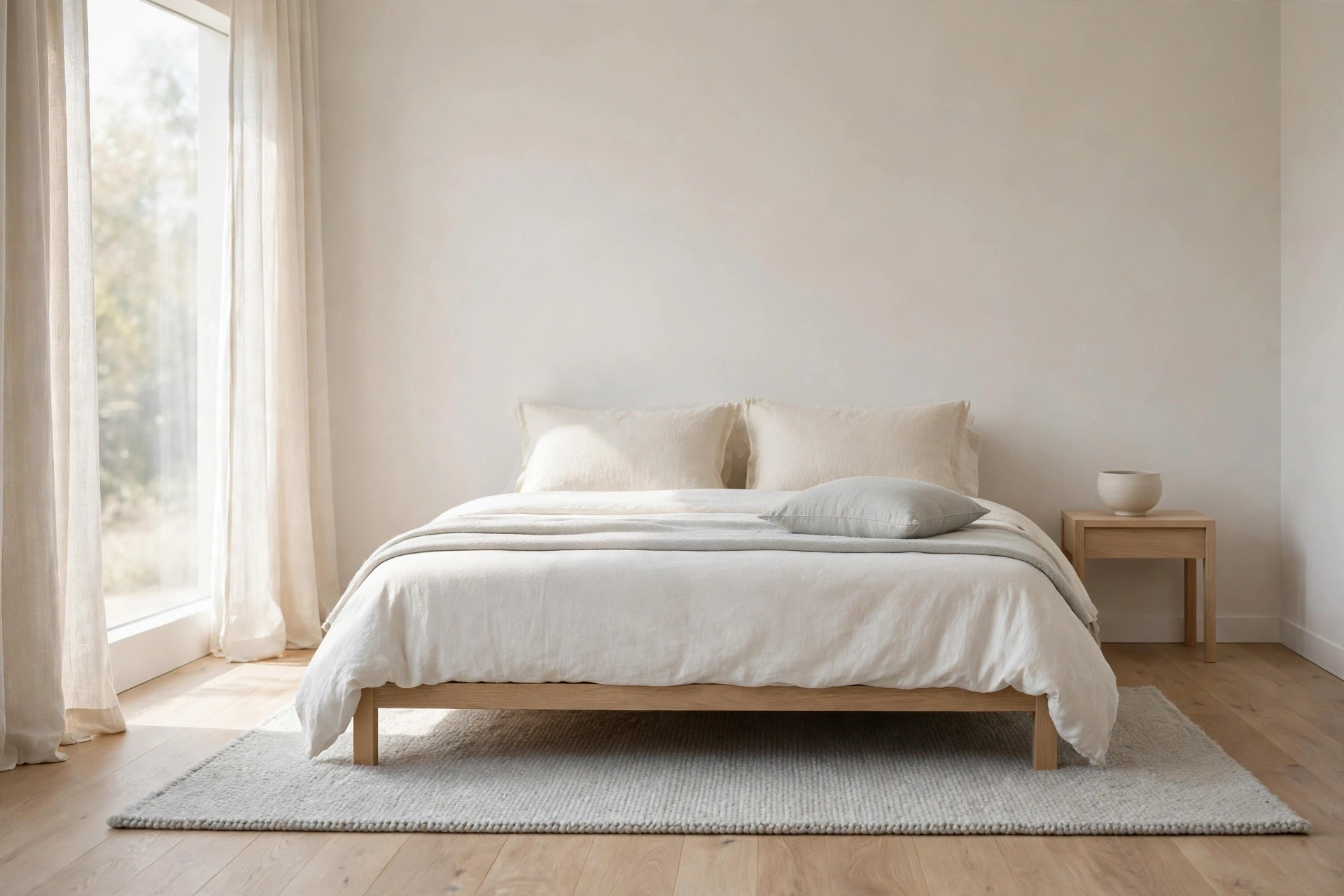
Use pale grey as your one grounding accent. A pale grey throw, cushion, or rug can anchor all that lightness without adding visual noise or a strong color story. It usually works best in one or two places rather than everywhere, so the room stays airy. If you ever tire of it, grey is easy to swap, and the calm base underneath does not change at all.
Bare Walls, One Beautiful Thing
Empty wall space is not wasted space in a minimalist bedroom, because it gives your eyes somewhere to rest and lets one loved piece truly stand out.
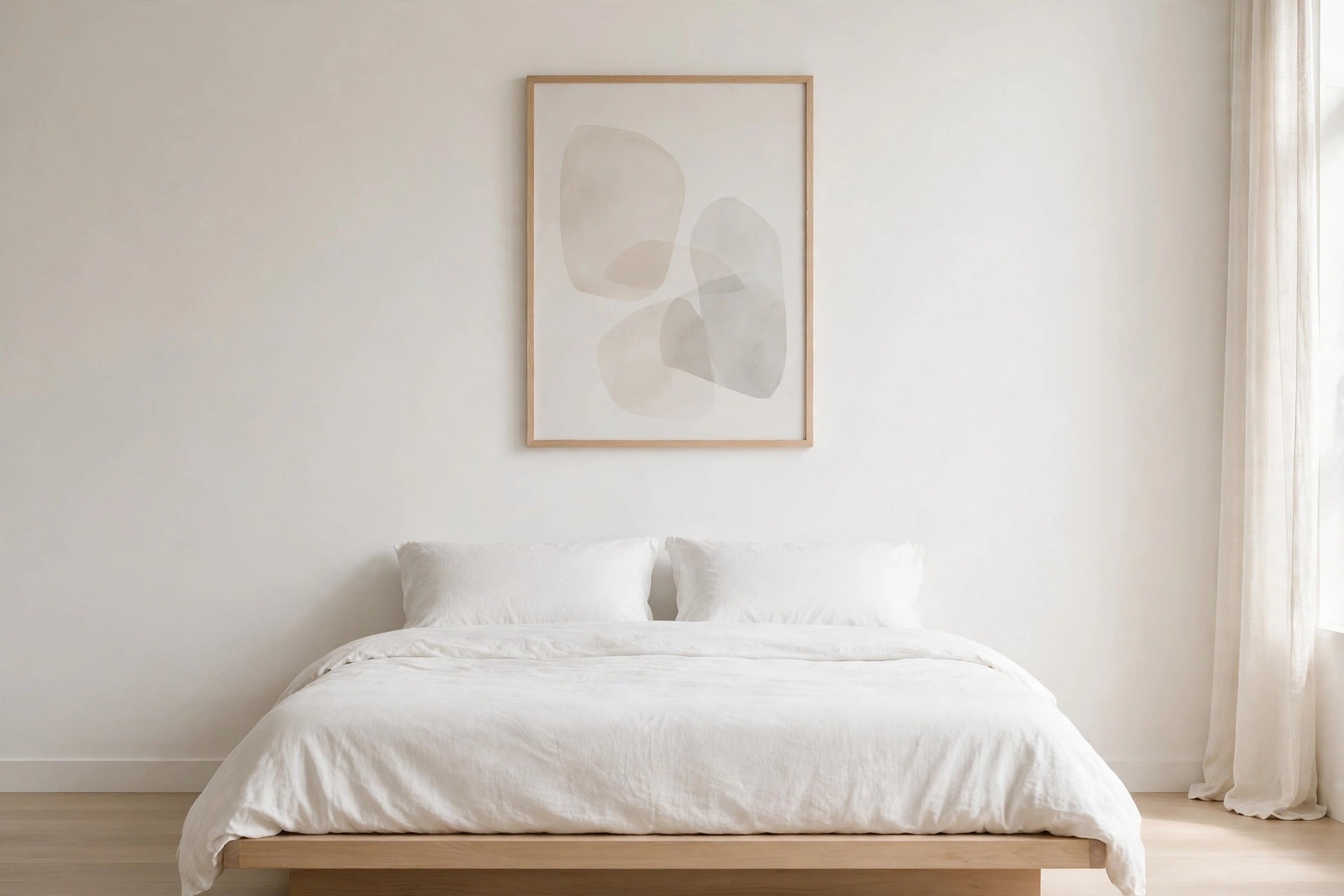
Hang a single framed print or textile above the bed. One larger piece in a light wood frame usually feels calmer than a busy gallery of small frames competing for attention. Choose a soft, simple image in beige, pale grey, or warm ivory tones, and it will sit quietly with the rest of the room. Leave generous white space around it, and the whole wall feels intentional.
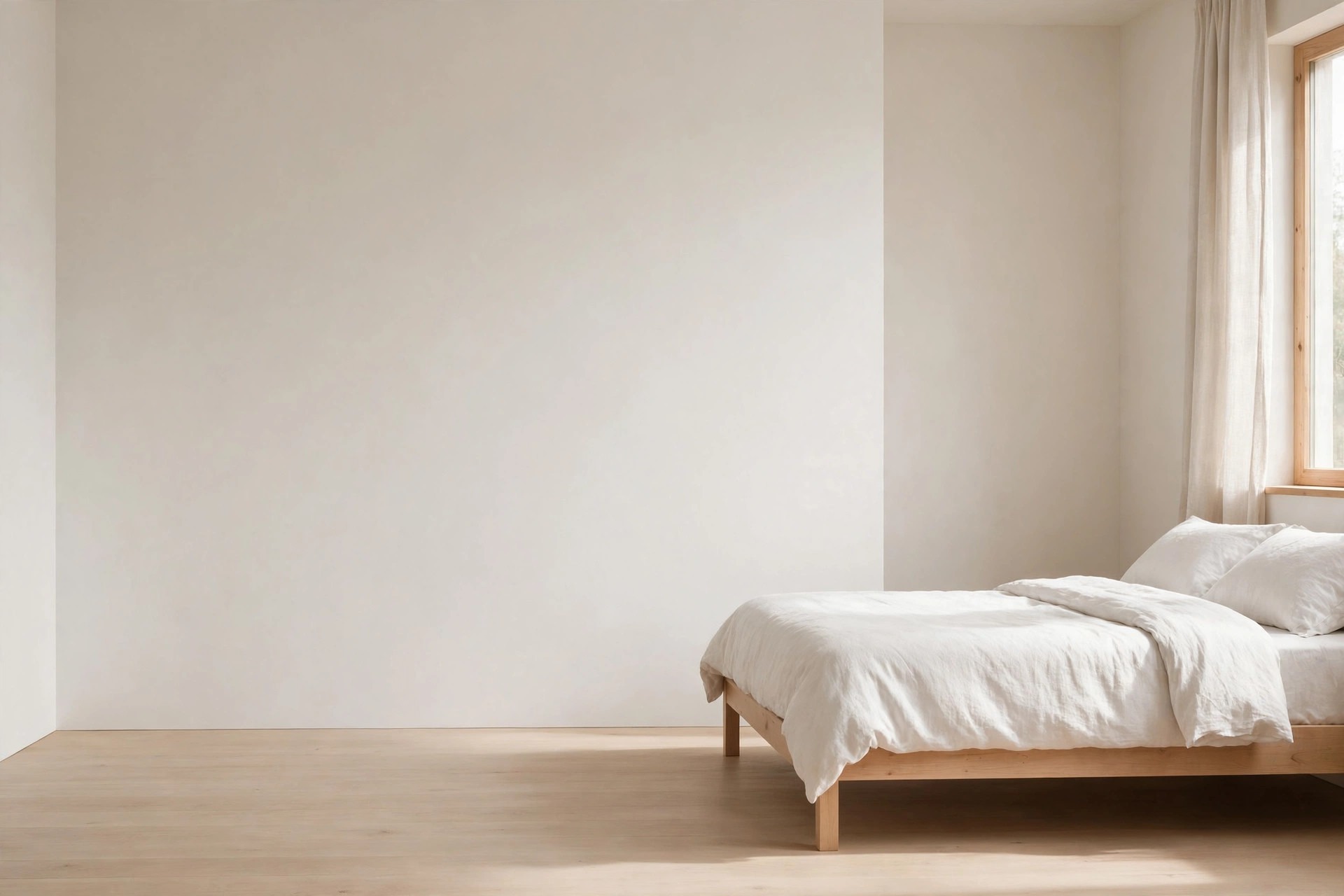
Leave at least one wall completely bare on purpose. It can feel strange at first, but a truly empty wall typically makes the room feel more spacious and restful by bedtime. It also gives you a visual pause between the bed, the window, and your one beautiful thing. You can always change your mind later, though most people find they do not actually want to fill it.
Nightstand Zero: Alternatives
Traditional nightstands often become tiny clutter magnets, so skipping them altogether can free up space and give the bed area a lighter, calmer feel.
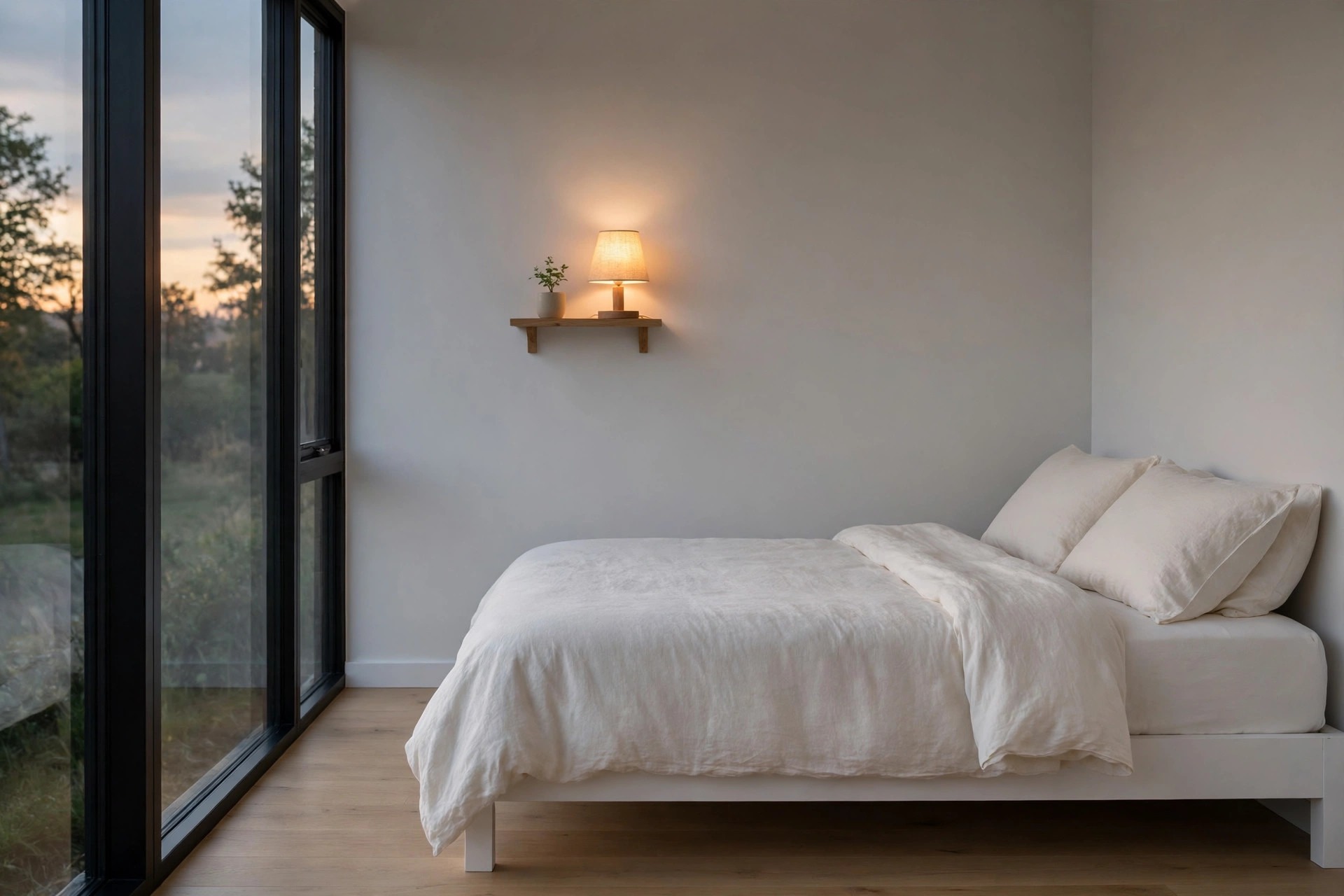
Try a small stool or a simple wall shelf instead. A light wood stool holds a lamp, a glass of water, and your phone, and not much else, which is usually exactly the point. A floating shelf works the same way if floor space is tight, and it keeps the area beside the bed easy to clean. Either option stops the drawer full of forgotten bits from forming in the first place.
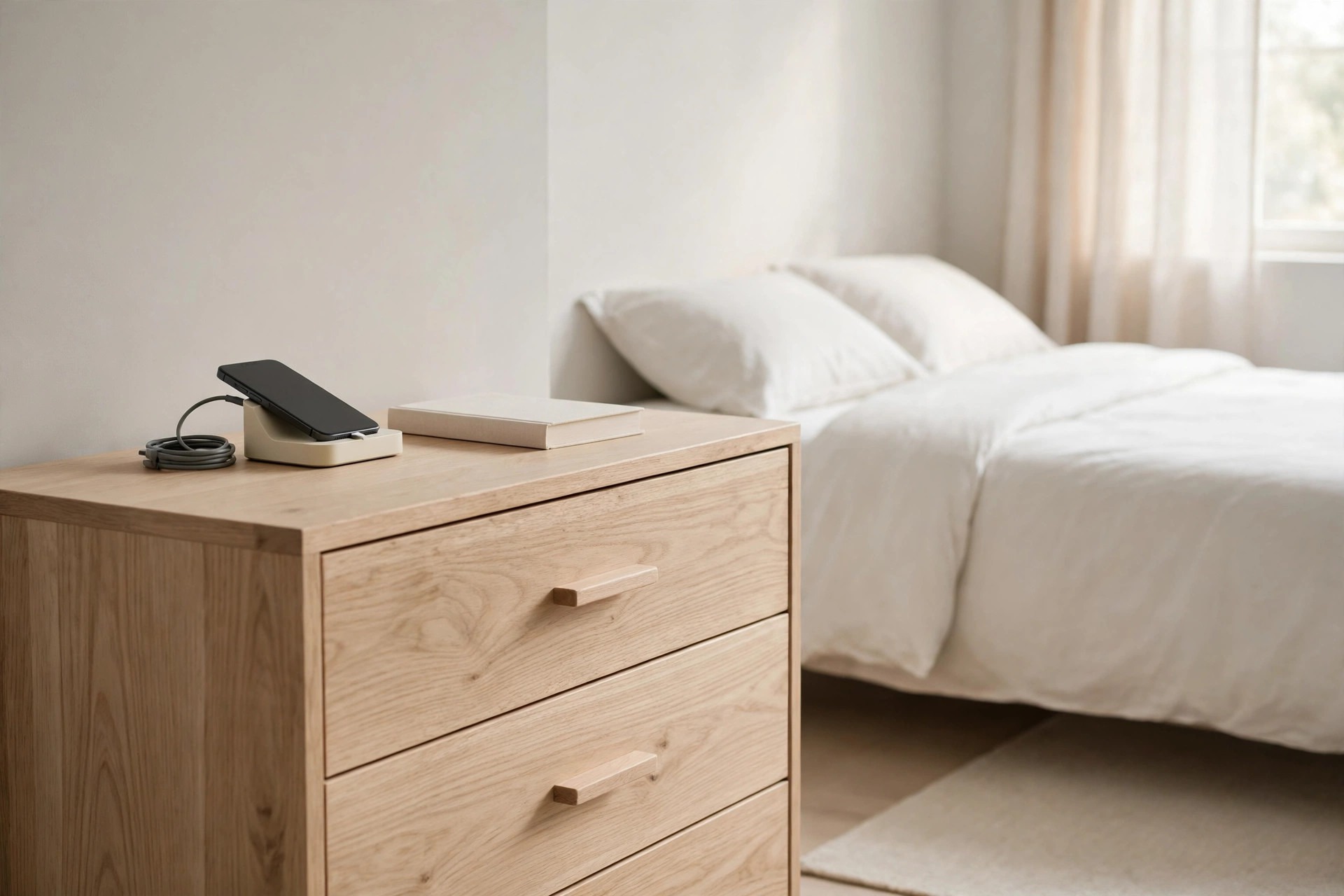
Move charging and reading bits off the bedside entirely. A small charging spot on a dresser or in a hallway nook typically keeps cords and clutter away from where you sleep. Your current book can live there too, and walk over with you at night like a little ritual. Waking up to a clear surface beside the bed usually starts the day feeling calmer than you would expect.
A 30-Minute Minimalist Reset Routine
Minimalism is less about one big clear out and more about a short, regular reset that keeps the room from drifting back into busyness again. Half an hour once a week is typically plenty once the room is already fairly clear, and most people find it gets quicker and easier every single time they do it. Small steps, done often, usually beat one big purge.
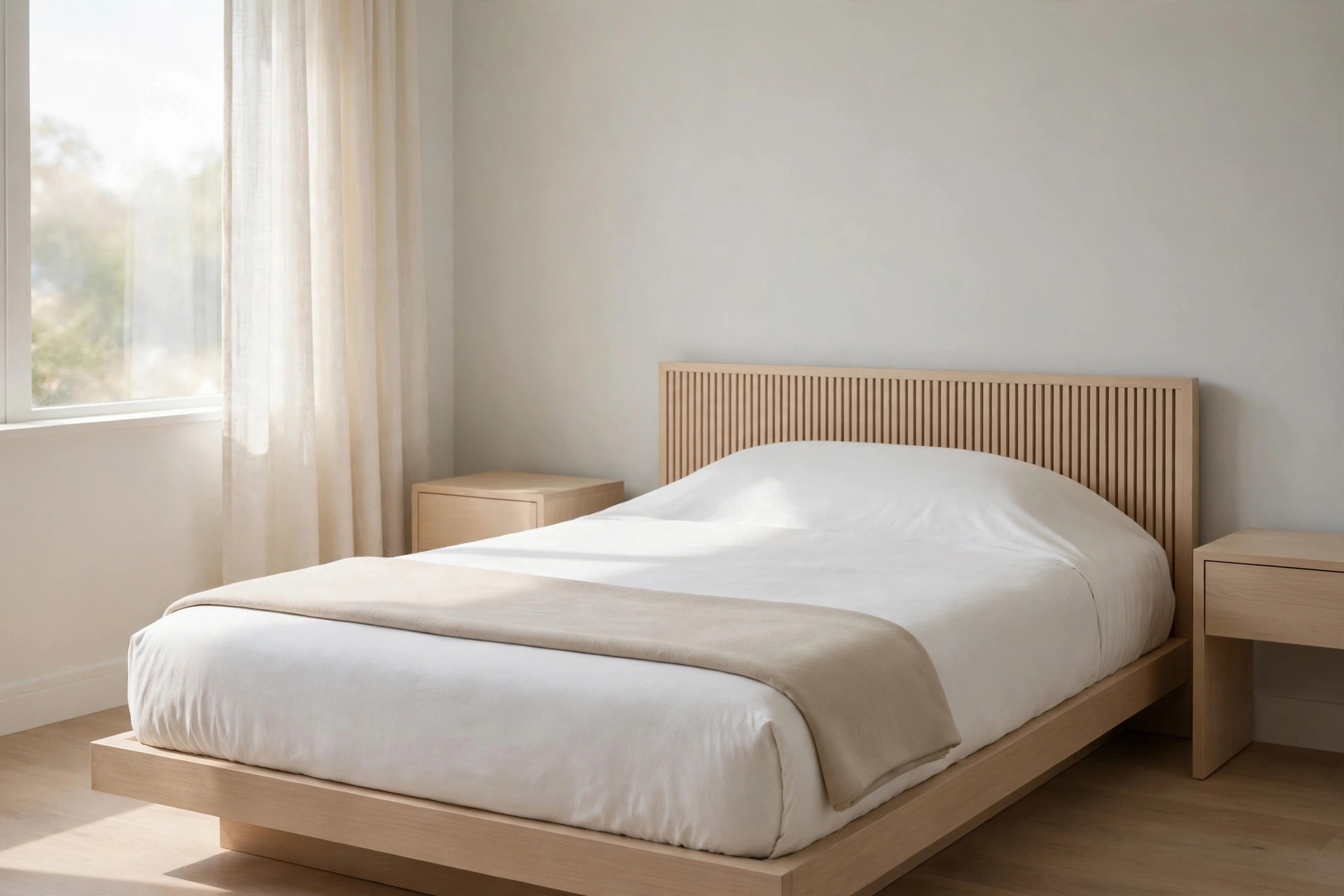
Do a quick surface sweep first, then reset the bed. Spend the first few minutes clearing every flat surface, returning stray items to their homes or to that exit basket. Then make the bed simply, with plain white or warm ivory bedding smoothed down and one beige throw folded at the foot. A made bed typically changes the whole room at once, even before you touch anything else.
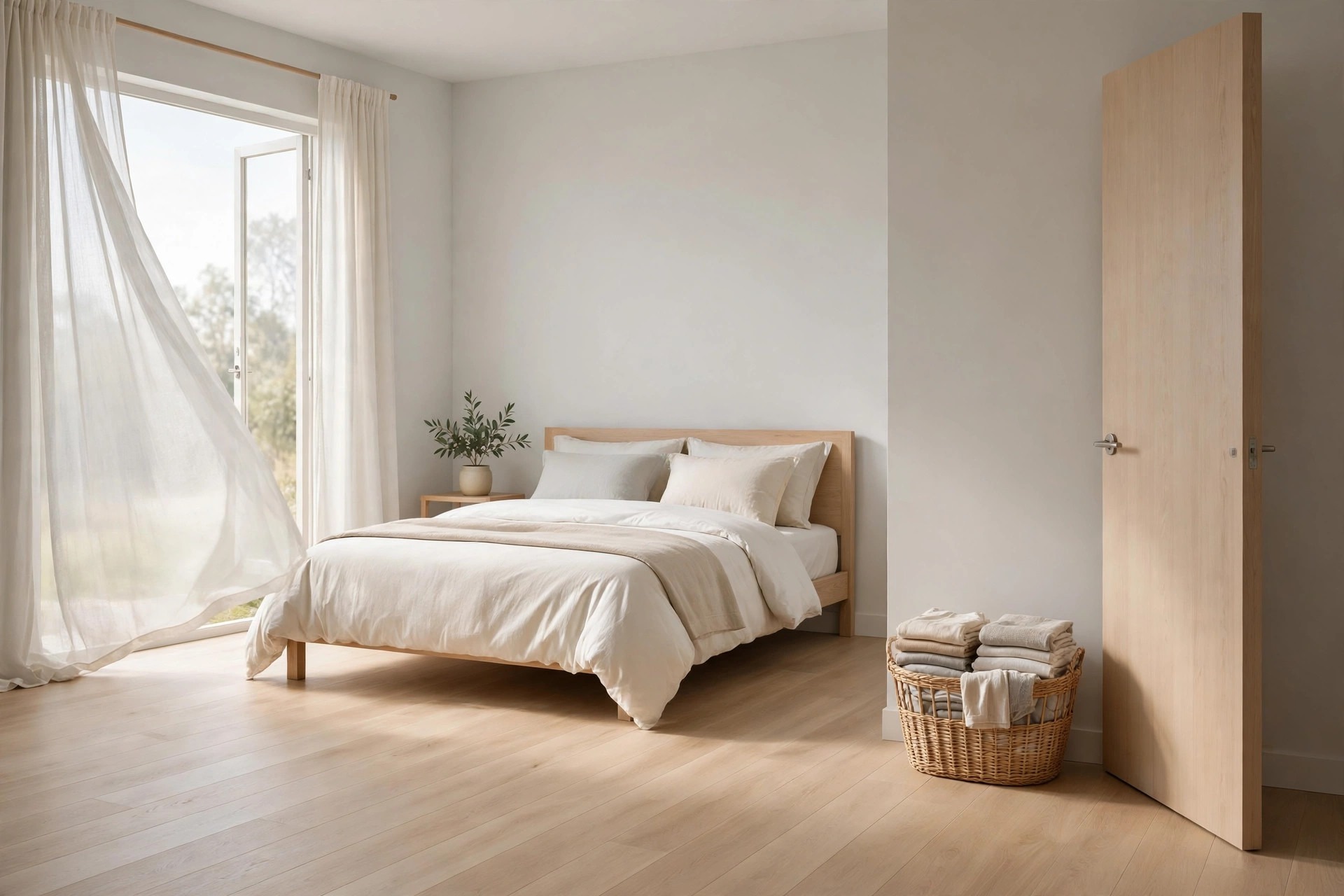
Finish with floors, laundry, and one small edit. Use the last stretch of your reset to gather laundry, sweep or vacuum the visible floor, and open a window if you can. Then choose just one thing to remove from the room entirely, however small it is. That tiny weekly edit usually keeps the space honest, and over time your bedroom stays the clear, quiet place you wanted.
At the end of the day, a minimalist bedroom is not really about owning less for its own sake, it is about waking up in a room that asks nothing of you. Start with one rule, one cleared surface, or one bare wall, and let the calm build slowly from there. Your head will usually feel clearer in a space like that, and sleep tends to come a little easier too.

Leave a Reply