
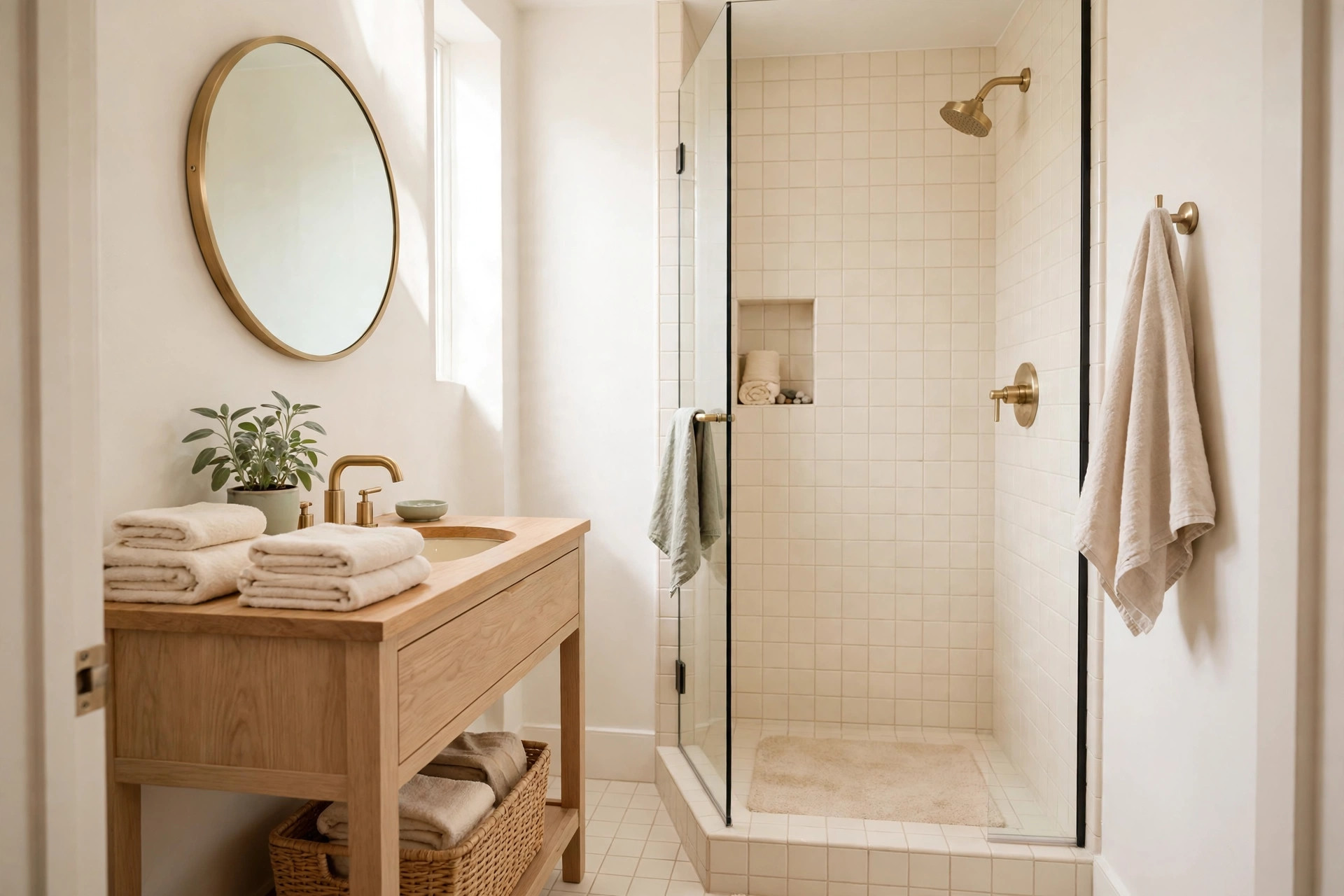
If your bathroom is tiny and your budget is very real, you are not alone, and you are not stuck either. The best small bathroom remodel ideas usually do not start with tearing anything out. They start with paint, simple swaps, and a few smart layers that make the little room you already have feel fresh, warm, and easier to use every day.
You also do not have to do it all in one exhausting weekend. A phased plan typically costs less than one big renovation because you keep the layout, keep the plumbing where it is, and only replace what is truly tired. That means less mess, fewer surprises, and a room that keeps working while you improve it bit by bit.
Below are seventeen ideas you can mix and match, starting with a simple plan and moving through peel and stick wins, fixture swaps, vanity upgrades, and lighting. Take the ones that fit your space first, and let the rest wait for a later phase. A tiny bathroom does not need a huge budget to feel cared for, it just needs changes in the right order.
Plan the Remodel in Phases
A little planning usually saves the most money of all, because it stops you from undoing work you just paid to finish.
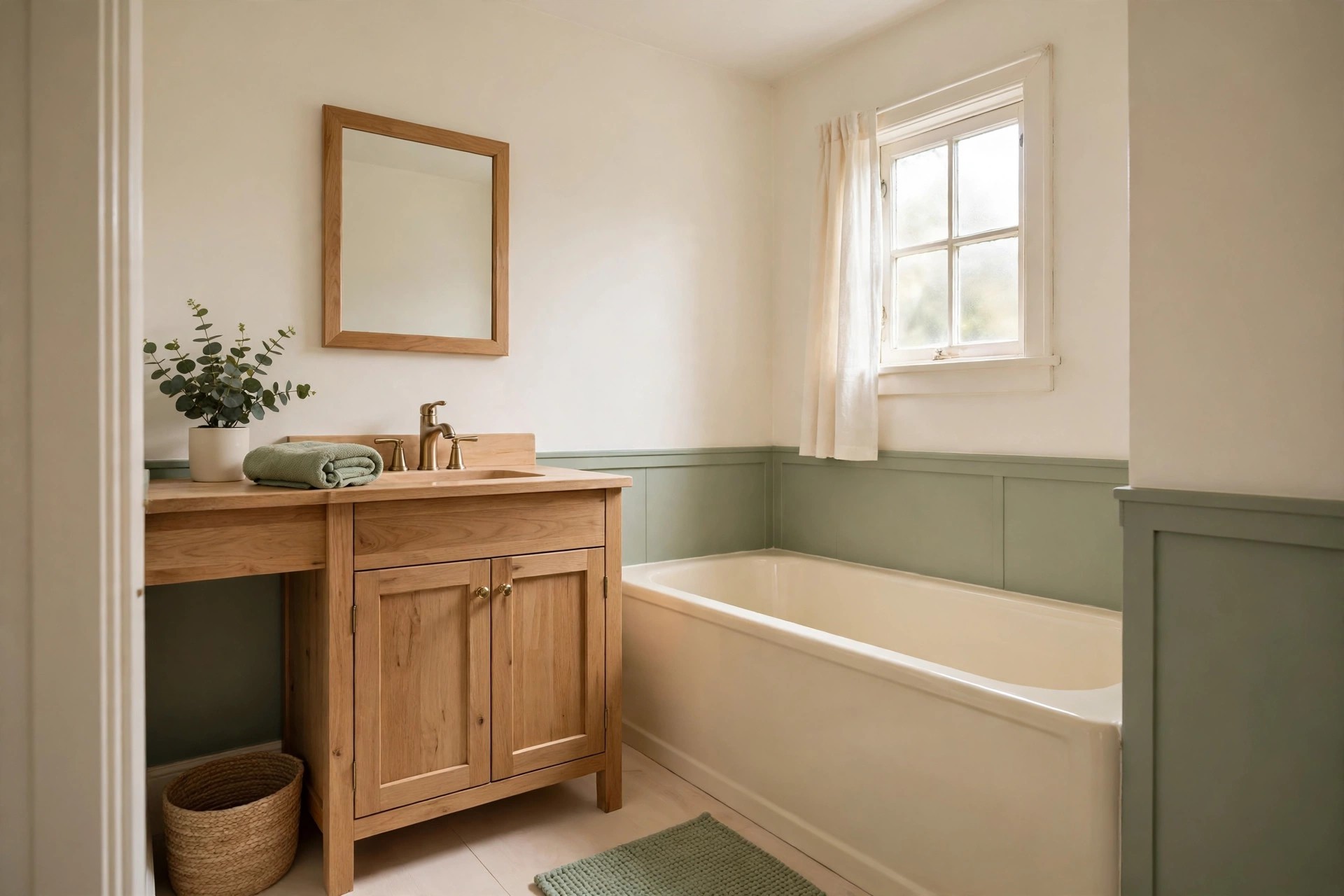
Start by listing what stays and what truly has to go. Walk in with fresh eyes and be honest about what is worn out and what is simply dated. A solid tub, a sound floor, and a sturdy vanity typically stay, even if their finishes are not your favorite. That one decision usually keeps the bigger share of your budget in your pocket from the very start.
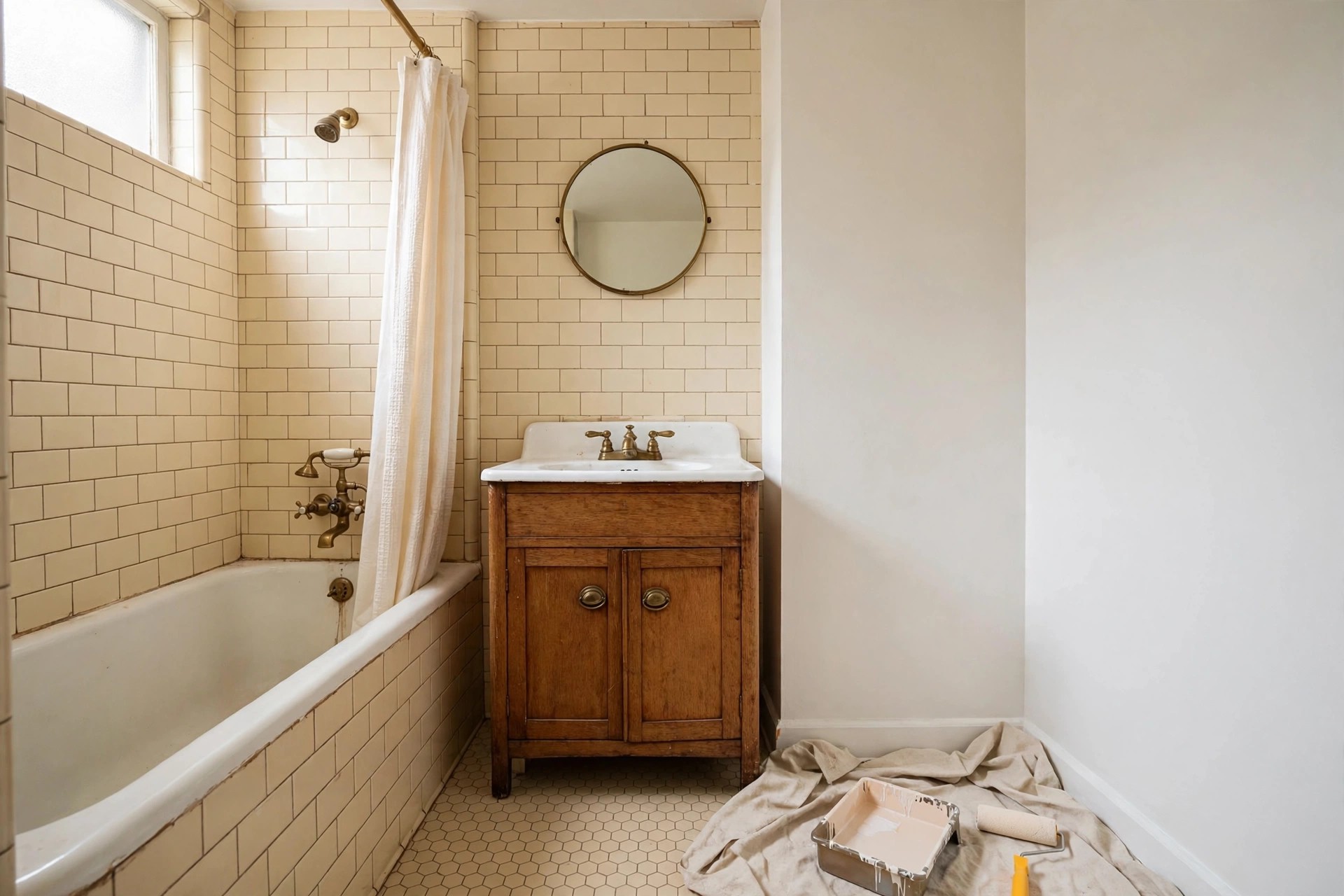
Break the work into small, weekend sized phases. Paint one month, flooring the next, and fixtures when you are ready usually feels far more manageable than one giant project. Phasing lets you spread the spending out too, which is kinder on a real life budget. It also means the bathroom is rarely out of use for long, and that matters in a small home.
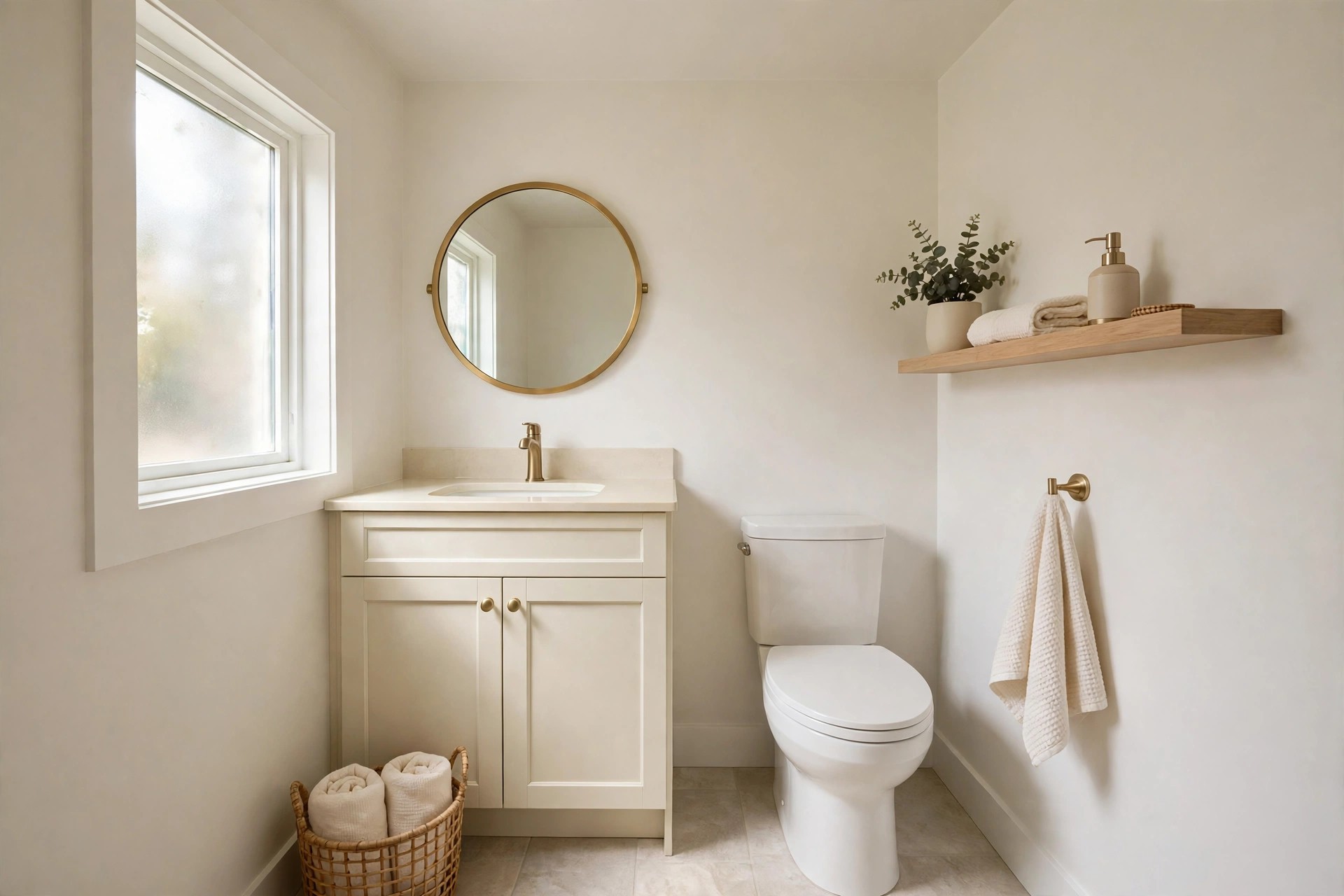
Pick your order so nothing gets done twice. Walls and ceiling paint usually come before flooring, and flooring comes before a vanity goes back in place. Fixtures and the mirror typically land last, because they are the finishing touches you see up close. A simple written order on your phone keeps you from repainting a wall you just finished last week.
Paint, Peel and Stick Wins
Paint and peel and stick products are usually the hardest working tools in a budget remodel, because they cover a lot of tired surface without any demolition.
Flooring overlays
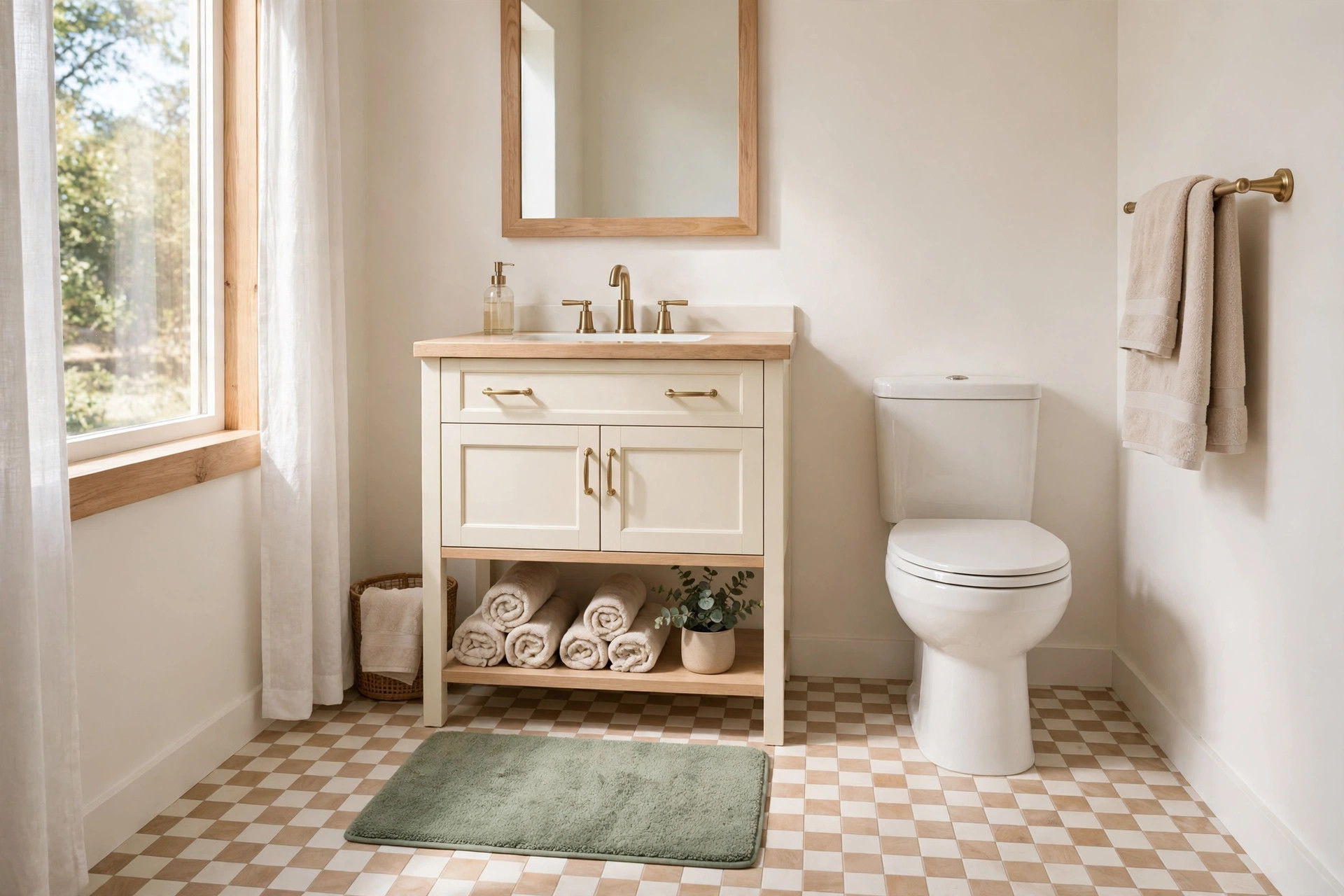
Lay peel and stick floor tiles over a sound, flat old floor. If the existing floor is firm and level, an overlay typically skips the mess and cost of pulling it all up. Warm checker patterns, soft stone looks, and pale wood styles can make a tiny floor feel intentional instead of forgotten. Clean and dry the surface really well first, because good prep is what helps the tiles stay put.
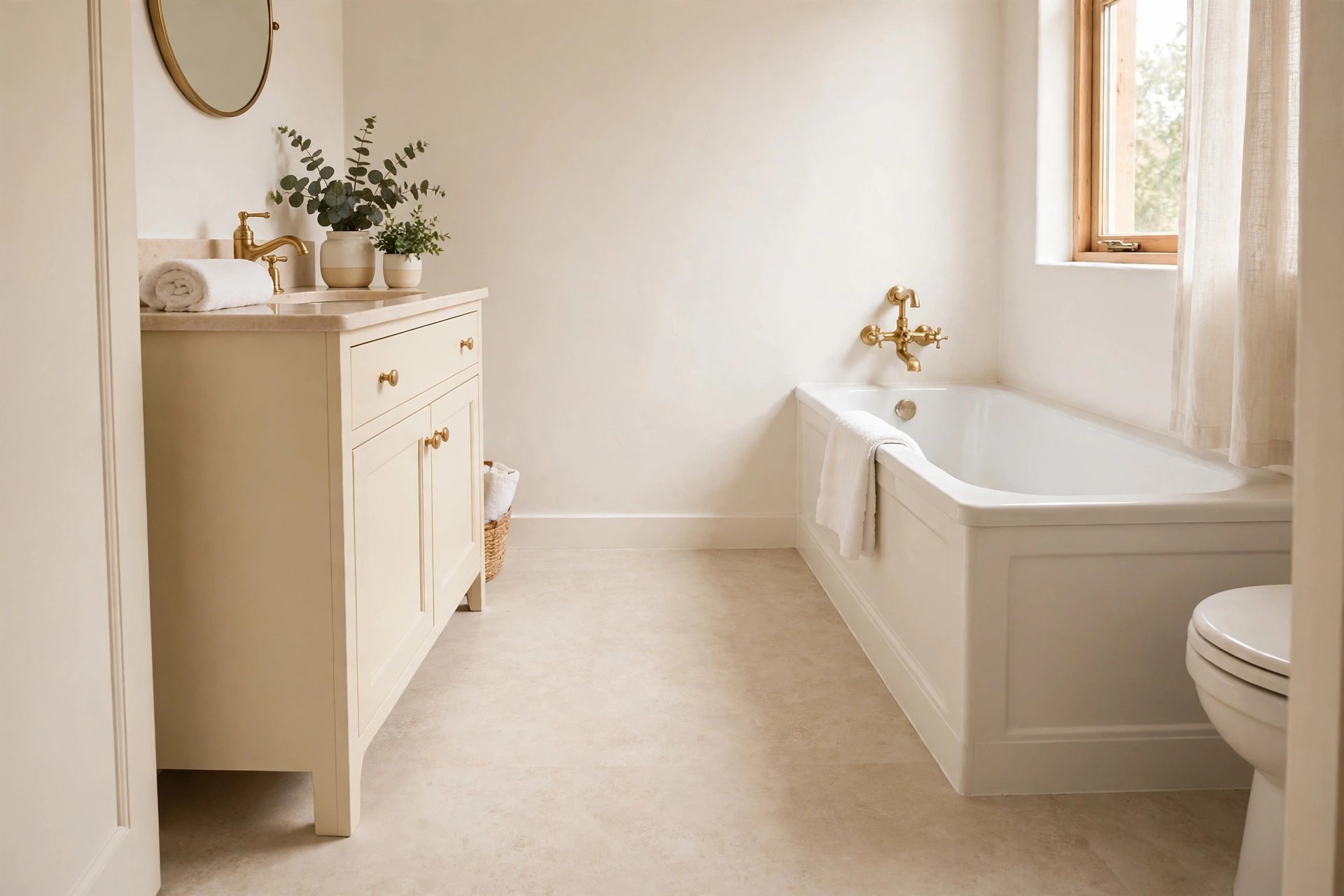
Roll out a cut to fit vinyl sheet overlay for a seamless look. A single sheet usually means fewer seams for water to sneak into, which is reassuring in a small, splashy room. It costs less than replacing the floor underneath, and you can trim it slowly with a sharp blade and a lot of patience. Choose a warm, light pattern and the whole room tends to feel bigger right away.
Wall panels
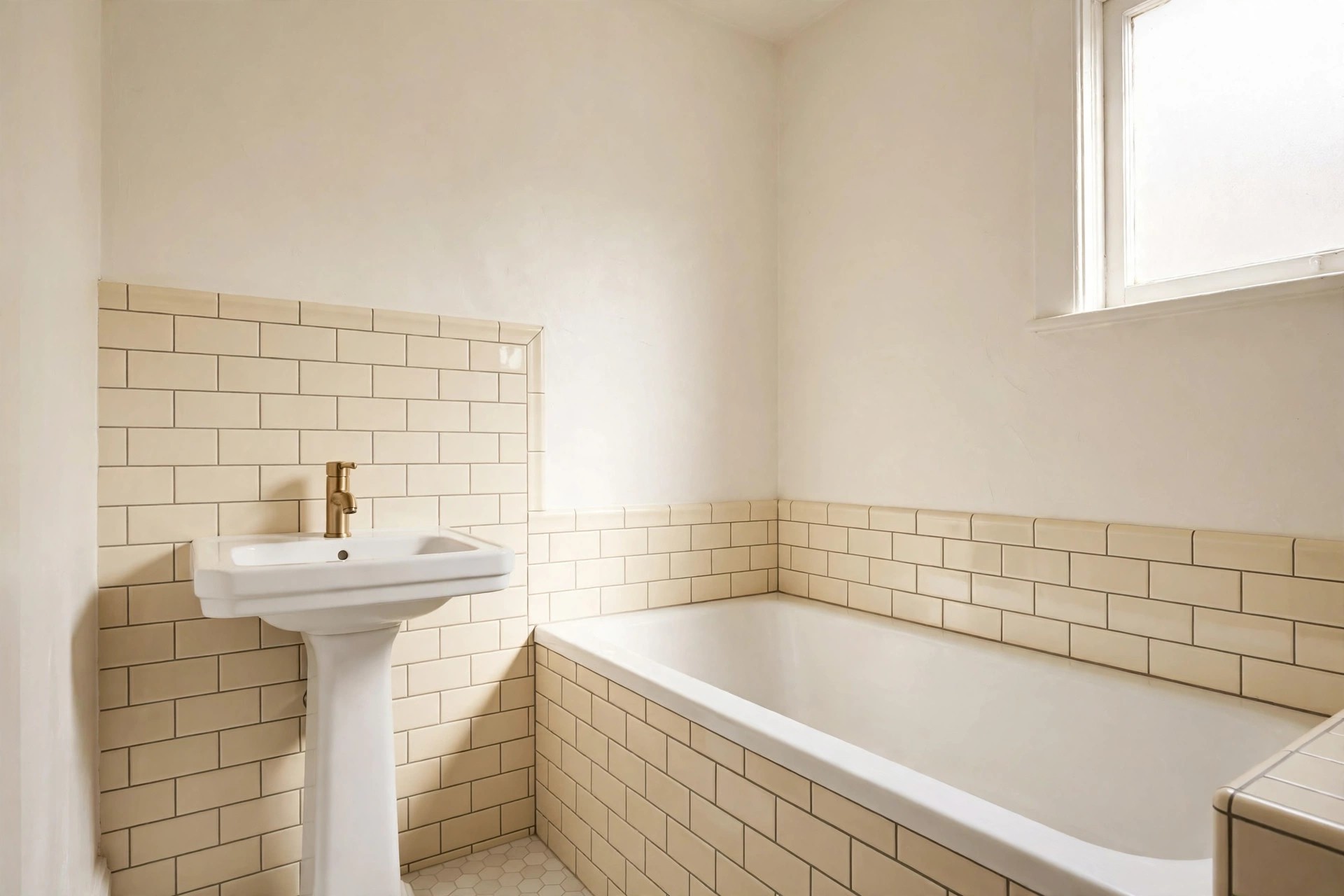
Add peel and stick wall panels behind the sink and tub edge. Panels give you that tiled look in the spots that get splashed most, without the work of setting real tile. Cream and warm white styles bounce light around nicely, which a tiny bathroom always appreciates. Follow the curing and sealing guidance on the packet, since steamy rooms ask a little more of sticky products.
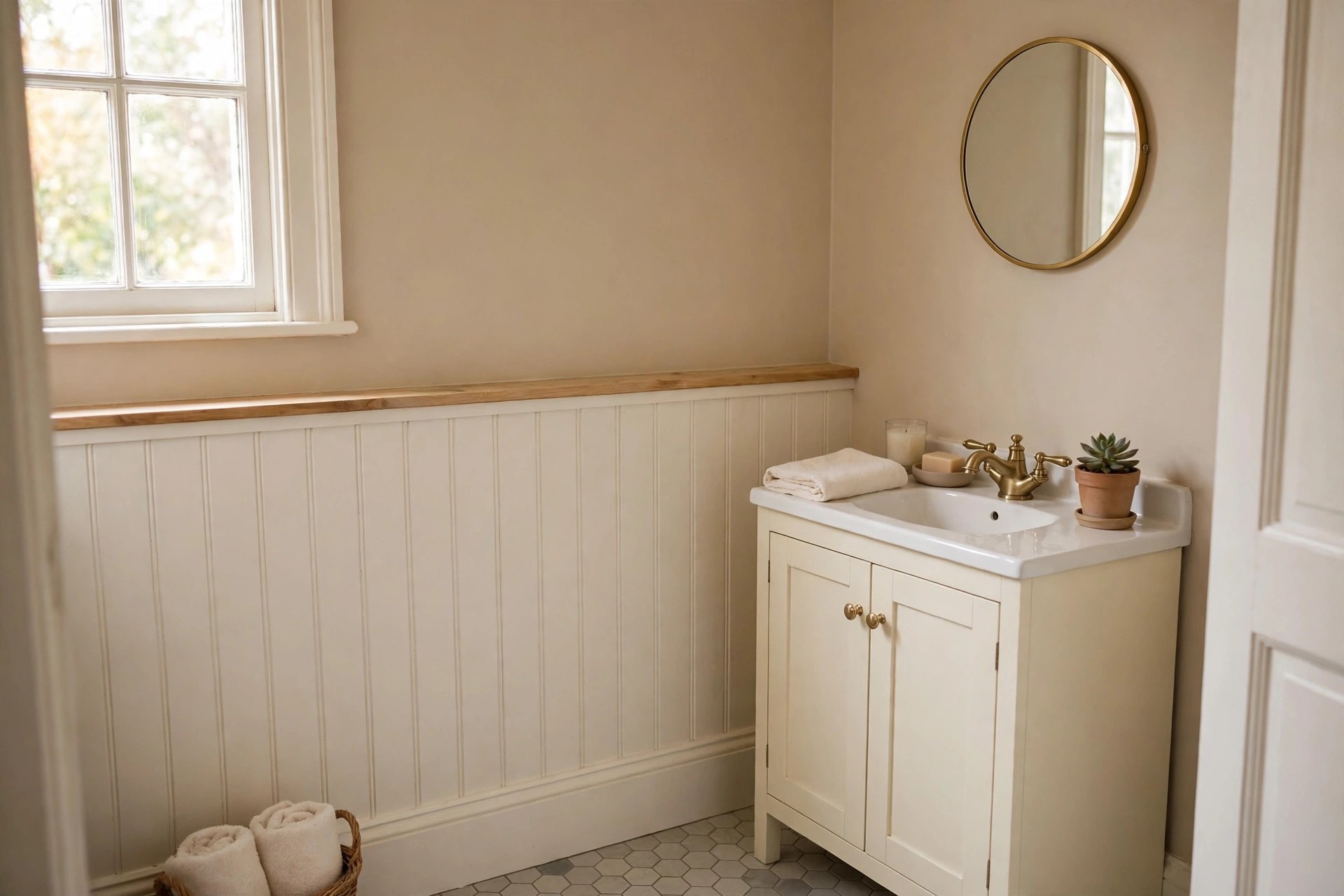
Put removable beadboard style panels on the lower half of one wall. A panelled lower wall typically adds charm and hides scuffs where bags, bins, and little elbows bump the paint. Painted warm white or soft beige, it looks classic and costs less than retiling a whole wall. Keep it to one or two walls so the small space still feels calm and open.
Swap, Don’t Renovate Fixtures
Most fixtures work fine long after they start looking dated, so swapping the visible parts usually gives you the new feeling for far less.
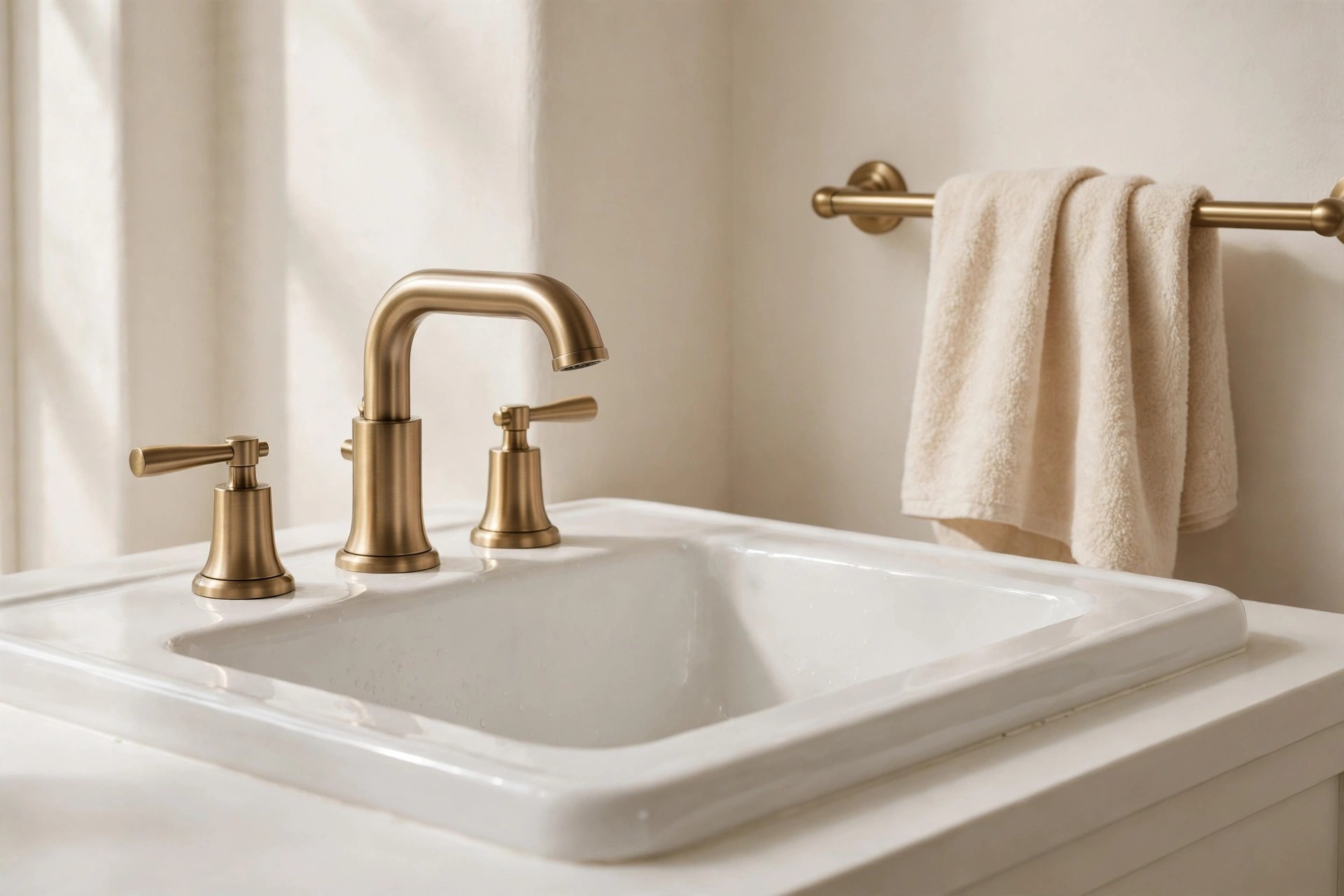
Swap the faucet and handles, and keep the sink you have. A fresh faucet in brushed brass instantly warms up a plain basin and makes the whole vanity look considered. It typically costs less than replacing the sink or the cabinet below it. Match the new finish to your towel bar and light, and the room suddenly looks like it was planned.
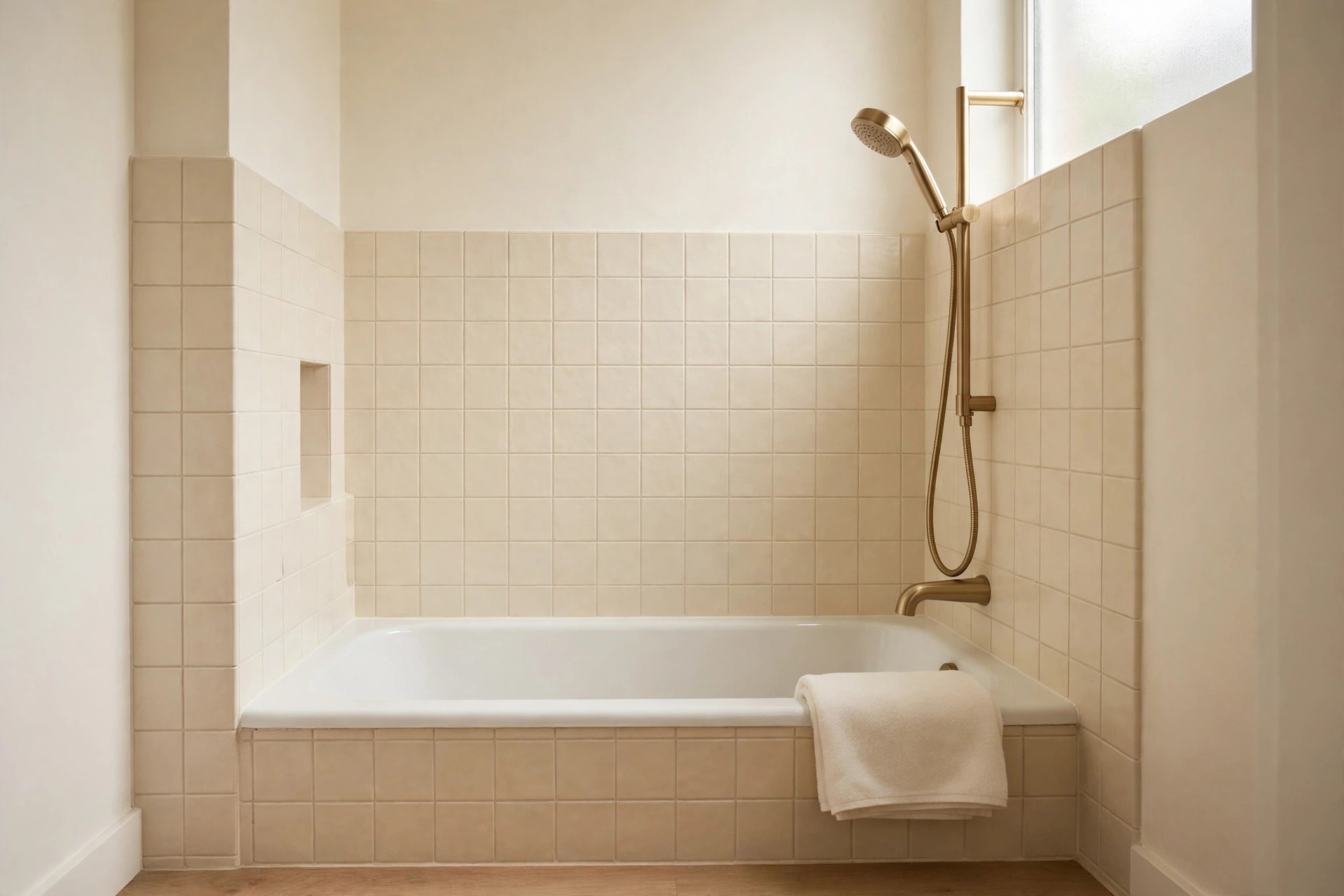
Change the showerhead and tub spout for a fresher shower. These are the parts you touch and see every single day, so they give you a lot of change for a modest outlay. A simple handheld showerhead is usually handy for rinsing the tub and washing hair over the side too. Wrap the threads carefully and test slowly, and most swaps stay a calm, dry job.
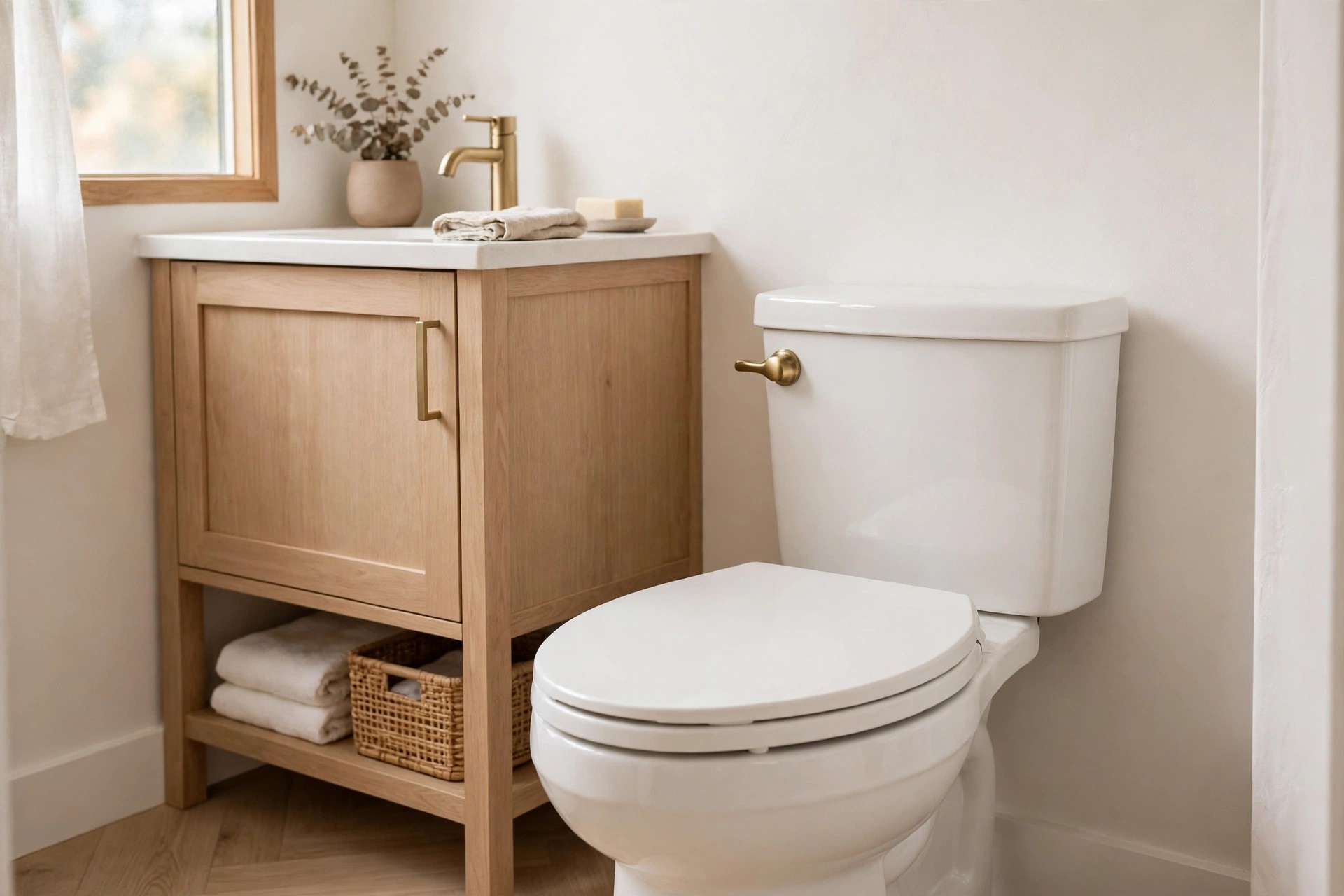
Keep the toilet and refresh its seat and flush handle. A new seat in a warm white finish makes an older toilet look clean and intentional again, which is honestly half the battle. A matching handle in brushed brass ties it quietly into the rest of your finishes. It all costs less than replacing the whole unit, and there is no plumbing to move at all.
Vanity and Mirror Upgrades
The vanity is usually the hardest working piece in a tiny bathroom, so small upgrades here tend to be the ones you notice most.
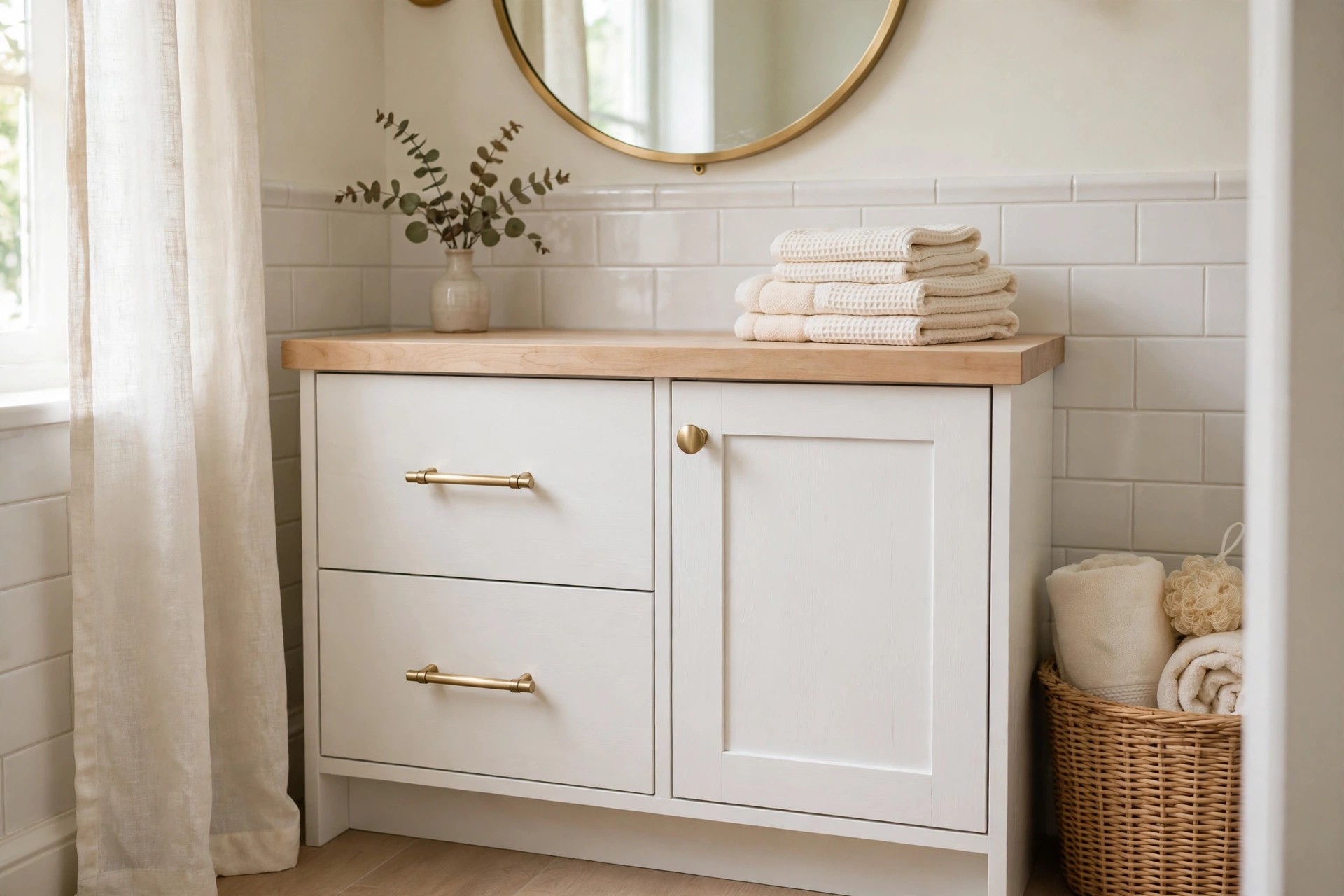
Paint the vanity you own and give it new hardware. A tired cabinet in warm white or a light wood tone can look completely different with careful prep and a couple of smooth coats. New pulls in brushed brass usually finish the job and make old drawers feel new again. It costs less than replacing the cabinet, and you keep storage that already fits your pipes.
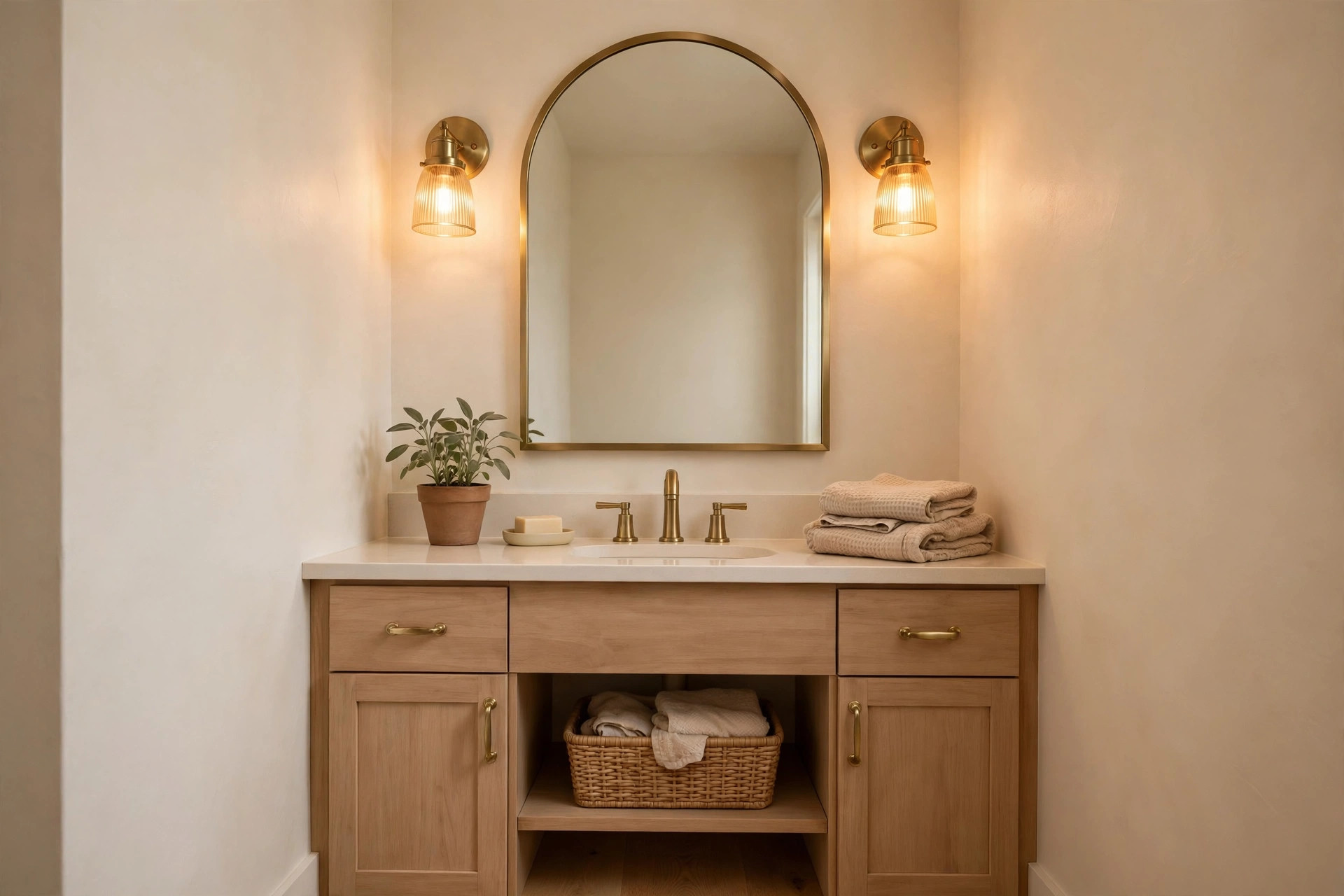
Hang a bigger mirror, or frame the plain one you have. A larger mirror typically bounces more light around and makes the wall above the sink feel generous instead of cramped. An arched or softly rounded shape in a brass or light wood frame warms up all those hard, shiny surfaces. If your current mirror is fine, a simple frame stuck or clipped around it gives a similar lift.
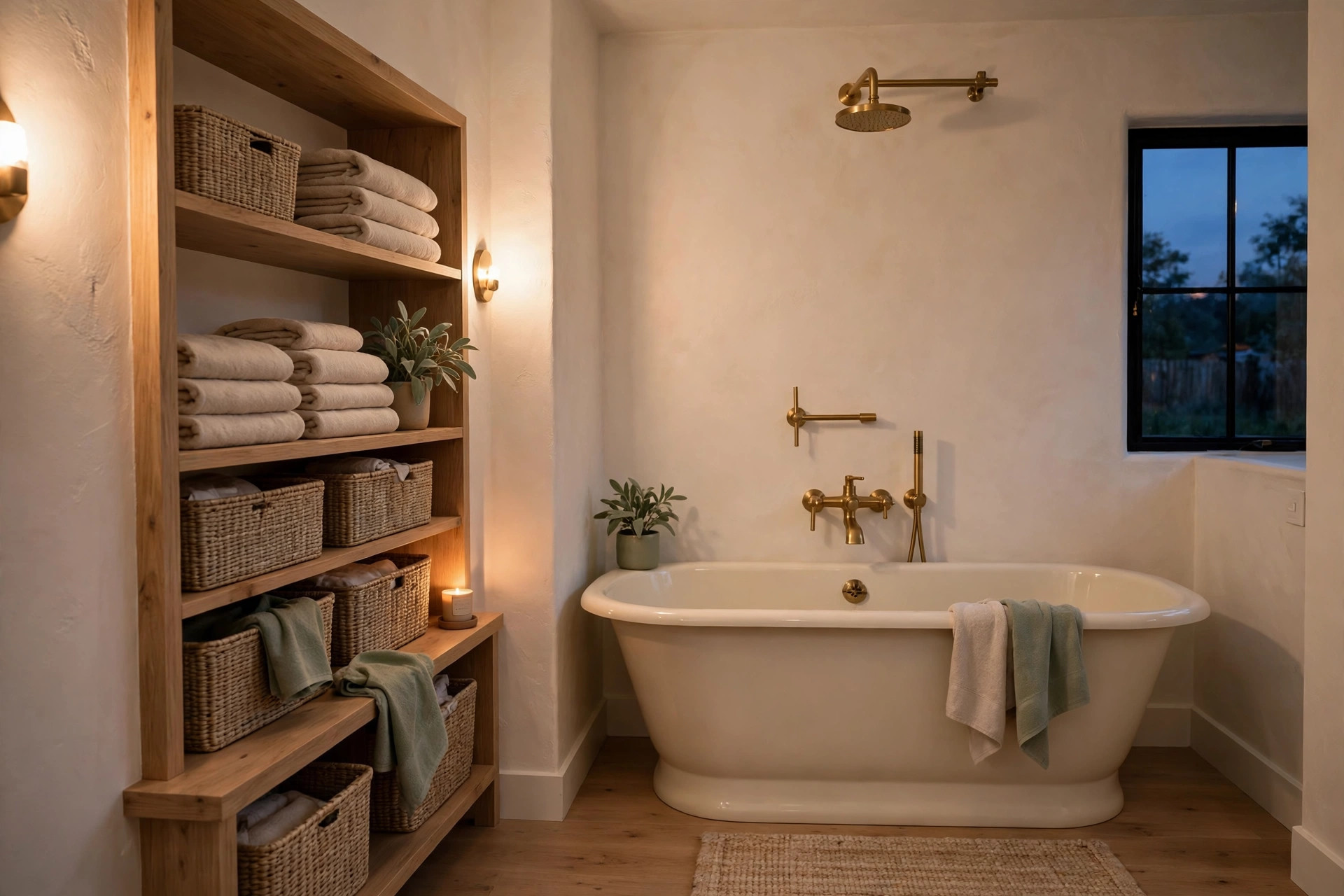
Add baskets and a small shelf so storage looks styled, not stuffed. Woven baskets under an open vanity or on a narrow shelf usually hide the spare rolls and bottles that make tiny rooms feel chaotic. Rolled cream towels on display double as soft decor, which is a lovely trick in a small space. Keep only daily things within reach, and the counter stays clear enough to clean in seconds.
Lighting That Changes Everything
Lighting is often the quiet reason a remodelled bathroom still feels flat, and happily it is one of the easier things to fix.
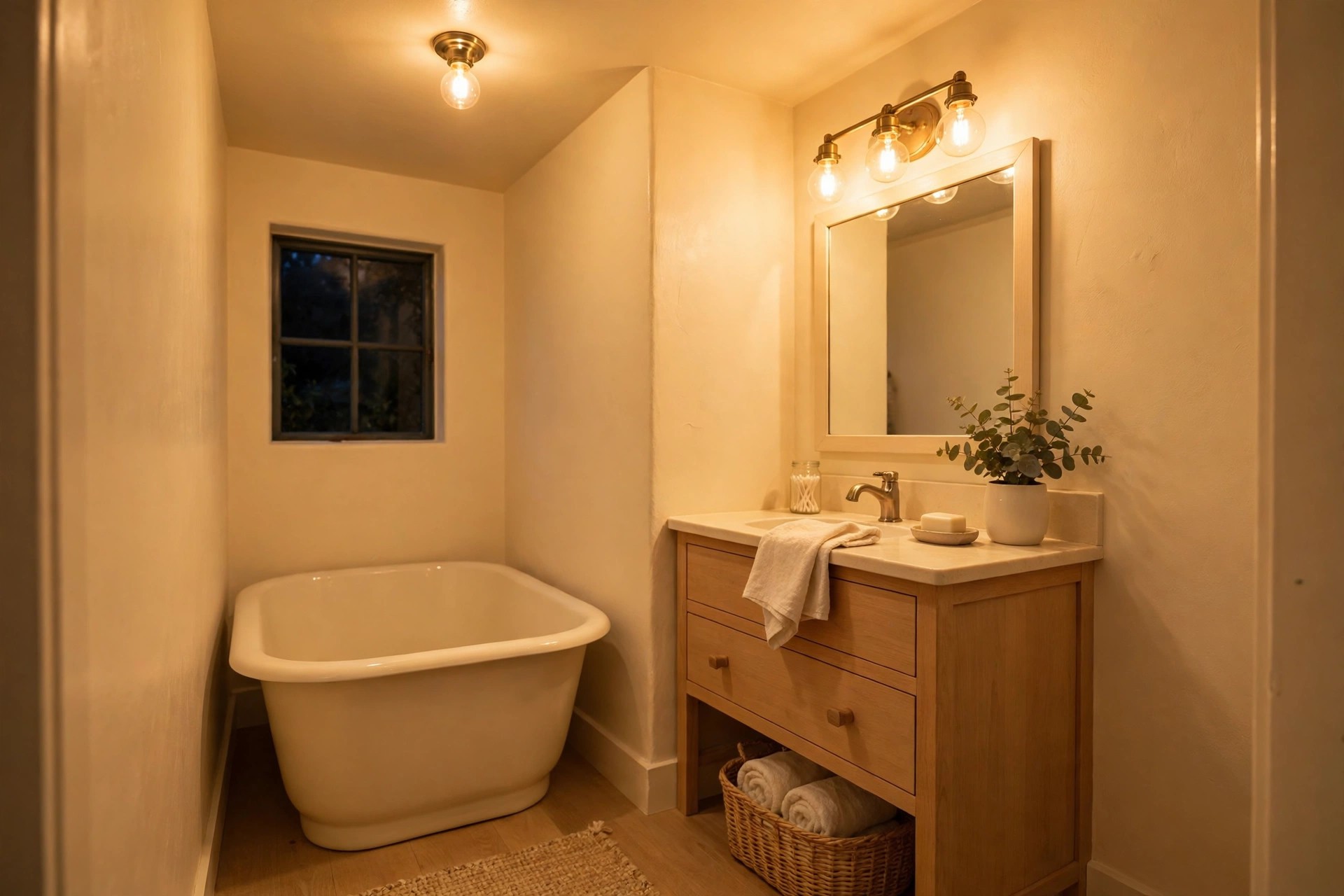
Choose warm bulbs in the same tone everywhere in the room. Mixed bulb colors typically make paint look patchy and skin look tired, even when everything else is new. One warm, consistent tone in the ceiling light and the vanity light usually makes cream walls and light wood glow. It costs less than replacing the fittings themselves, so it is a kind first step before you swap anything bigger.
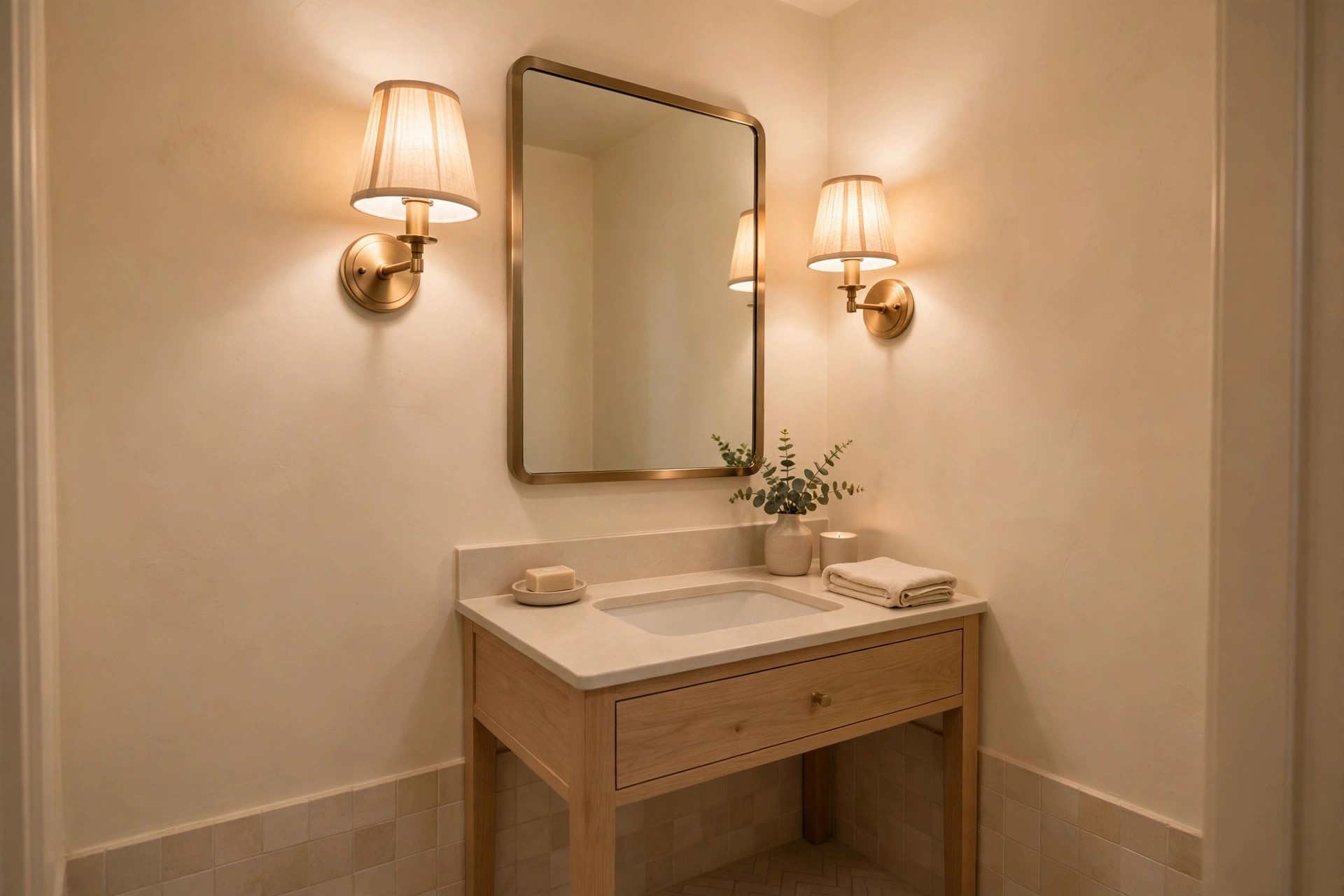
Add a vanity light or simple sconces at face level. Light beside or above the mirror typically flatters your face far more than a single bulb overhead, which tends to cast shadows. Brushed brass sconces with soft shades make a tiny vanity corner feel like a boutique hotel moment. If wiring feels like too much, plug in and battery styles can give you a gentler glow without opening walls.
Where to Spend and Where to Save
Knowing where your money actually shows usually matters more than how much of it you have to spend.
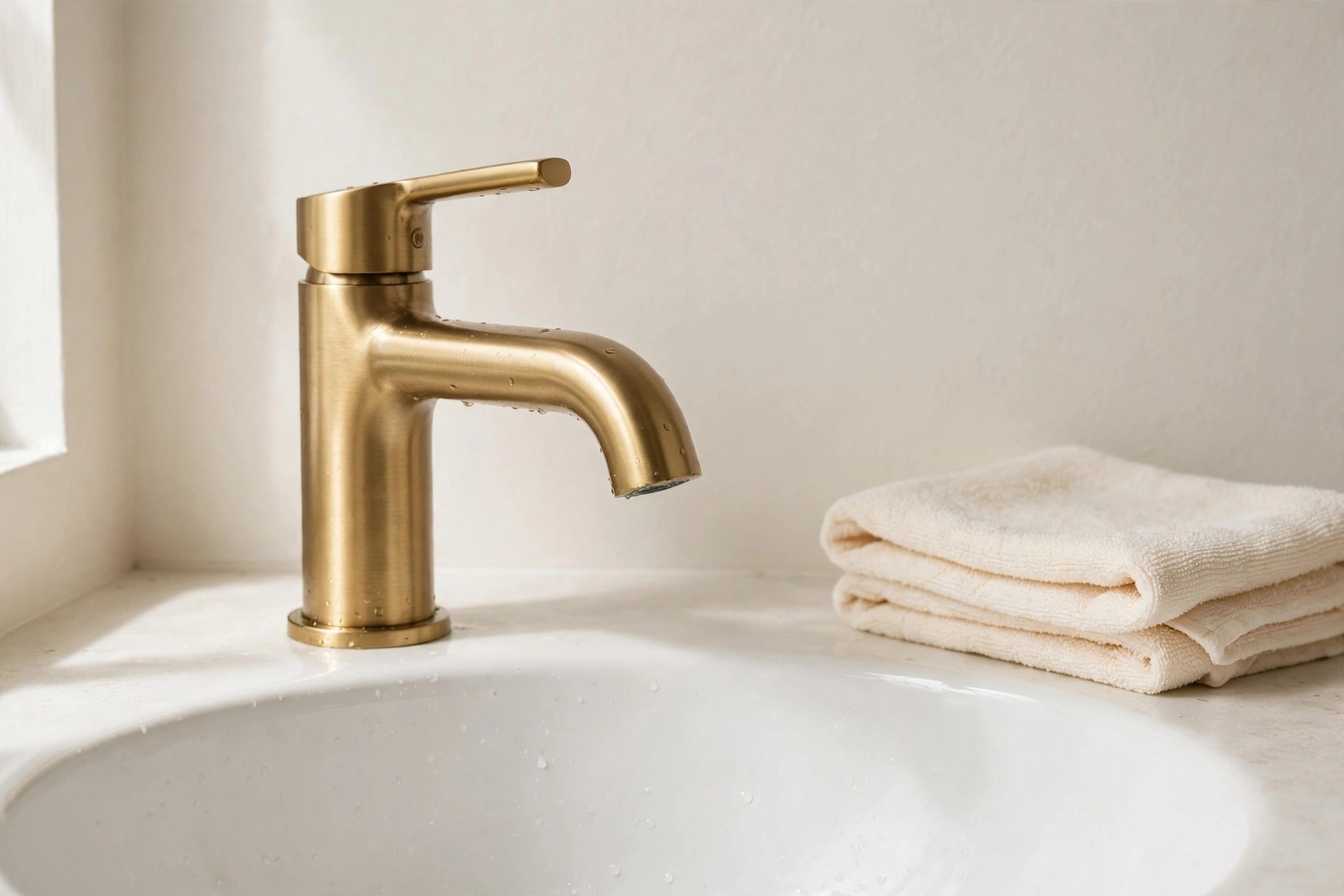
Put the bigger share toward what you touch every day. A faucet that feels solid, lighting that flatters you, and good paint with proper prep typically repay you every single morning. These are the pieces guests notice too, because they are right at eye and hand level. Spending a little more here and less on hidden changes usually gives the remodel its finished feeling.
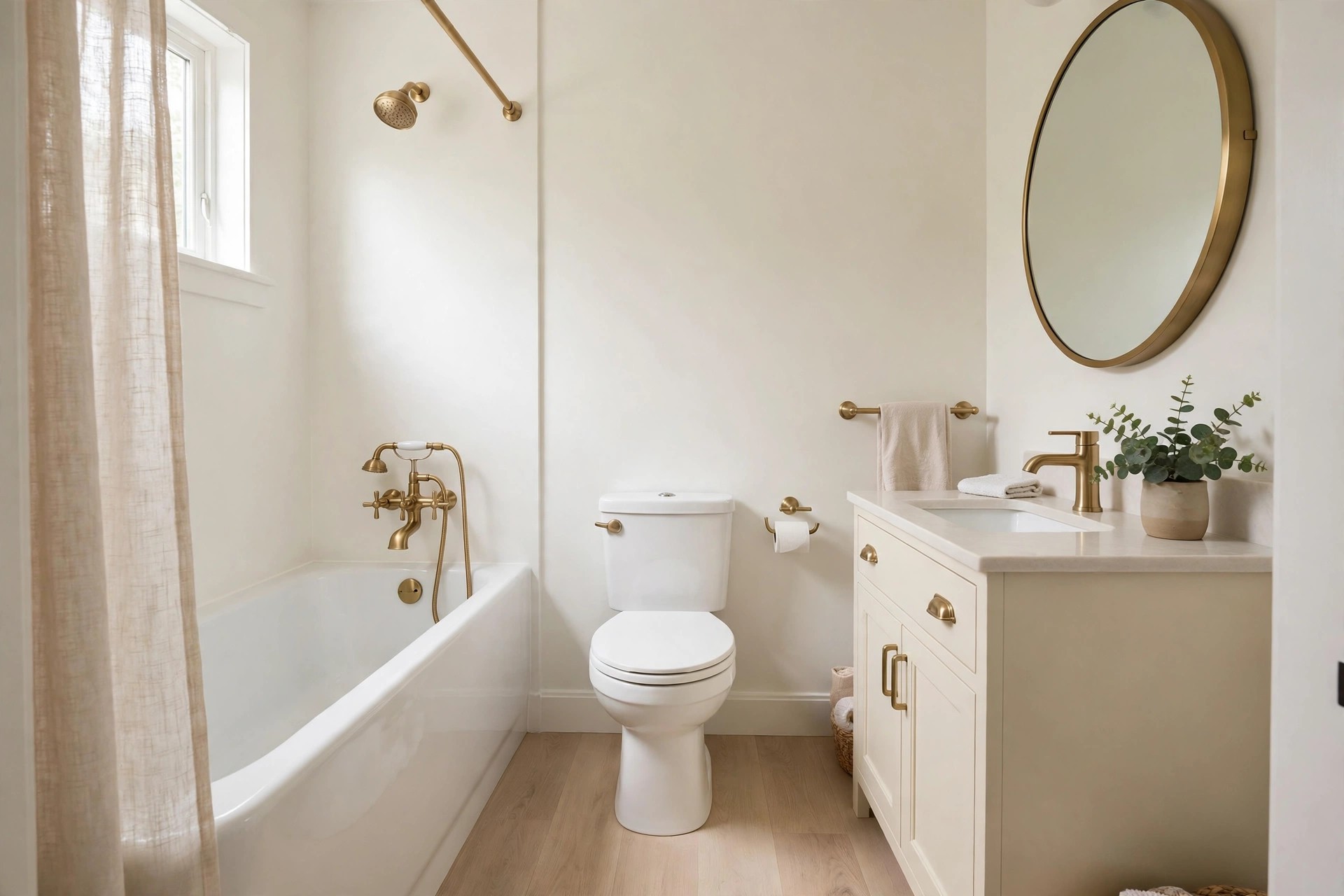
Save by keeping the layout and plumbing exactly where they are. Moving pipes and drains is typically where a small budget quietly disappears, and a tiny bathroom rarely needs it. Your tub, toilet, and sink can all stay put while everything around them gets fresher, warmer, and prettier. That one choice usually funds all the visible changes in this list, with room to breathe.
At the end of the day, a tiny bathroom remodel on a real life budget is not about doing less, it is about doing things in a kinder order. Plan it in phases, let paint and overlays do the heavy lifting, and swap the small things you touch every day. Your little room will not know it was a budget project, it will just feel warm, calm, and truly yours. And if you only pick three ideas this month, pick the warm bulbs, the fresh faucet, and one coat of warm white paint, because those three alone usually change how the room greets you.

Leave a Reply