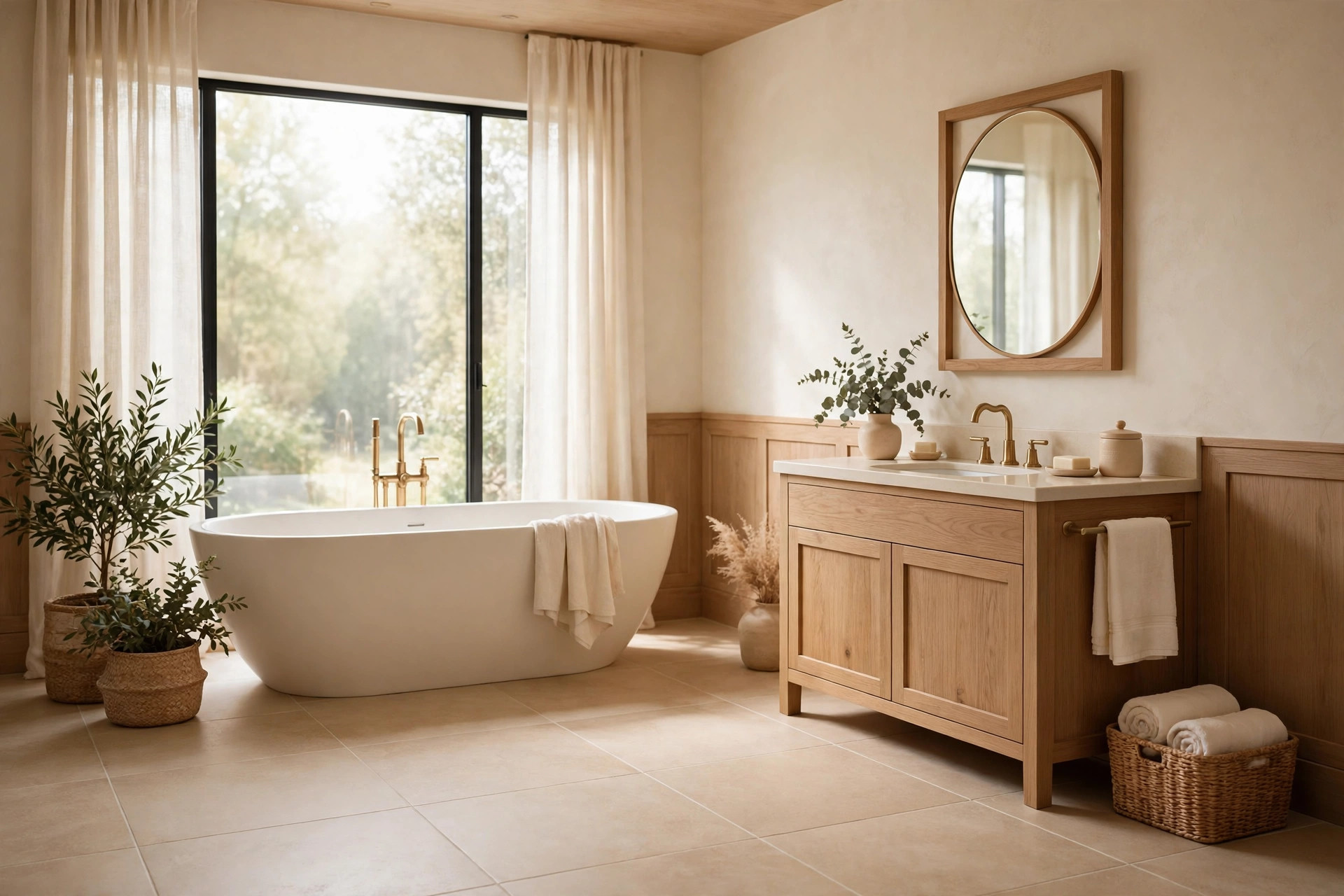
A bathroom floor has a harder job than almost any other floor in the house, because it deals with splashes, steam, and wet feet every single day. The good news is that bathroom flooring ideas have come a long way, and you do not have to choose between a floor that handles water and a floor that looks lovely. You can usually have both, as long as you pick a material that suits the way your household actually lives.
It helps to think about comfort as well as looks. A floor that feels kind under bare feet in the morning, that does not turn slippery after a shower, and that wipes clean without a fuss will typically make the whole room feel calmer.
Below are nineteen ideas to borrow, from hardworking porcelain and vinyl to stone looks, wood looks, pattern, and everyday care. Take the ones that fit your space and your routine, and leave the rest for another room or another season.
Porcelain and Ceramic Tile That Lasts
Porcelain and ceramic are usually the first materials people think of for a bathroom, and for good reason. They typically shrug off splashes, they come in almost every color and size, and they tend to stay looking good for a long time with simple care.
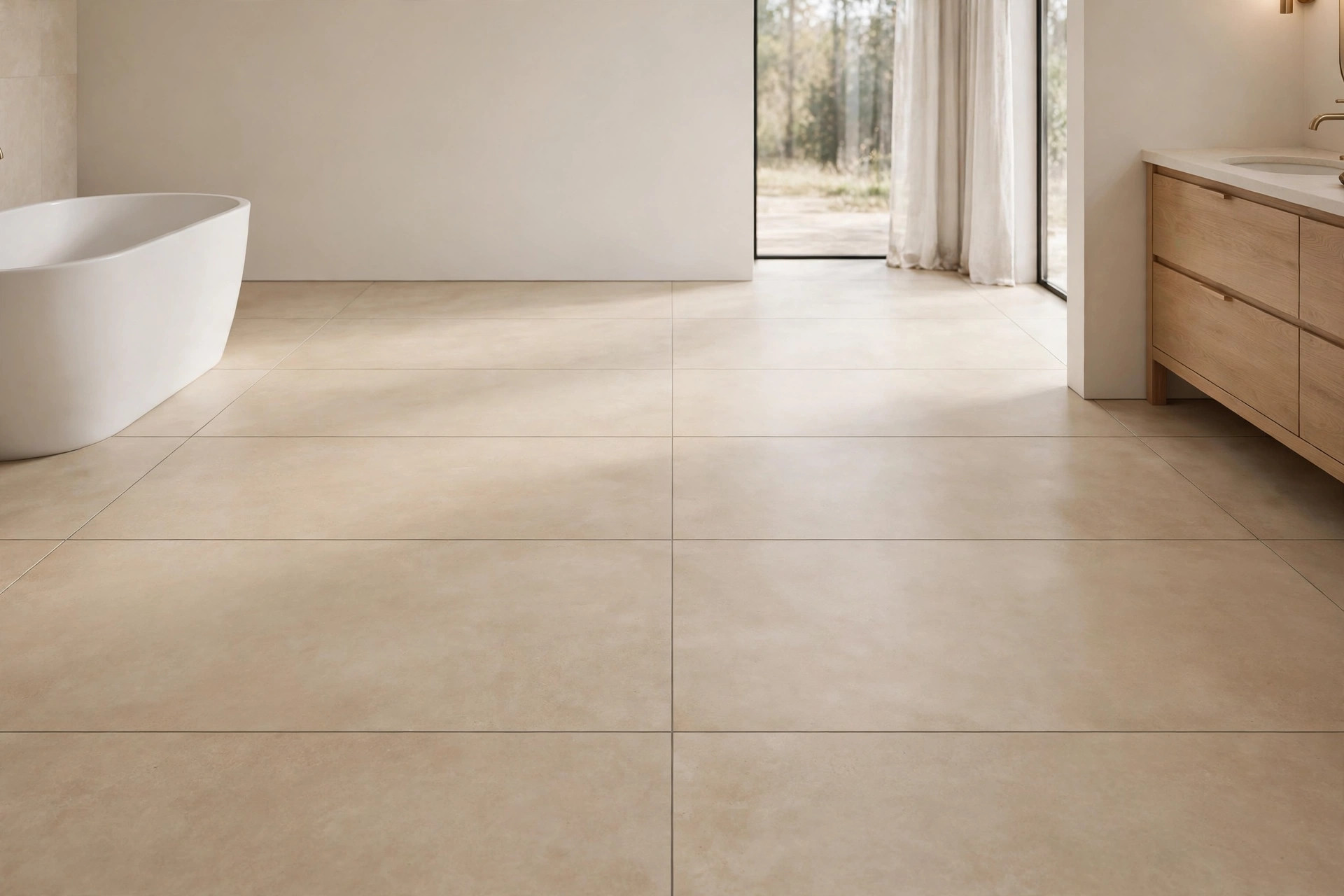
Start with large format porcelain for a calm, open feel. Bigger tiles usually mean fewer grout lines, and fewer lines can make a small bathroom feel wider and quieter. A warm beige or soft stone tone tends to hide everyday splashes kindly, too. Lay them straight and simple, and the room often feels more spacious without any extra fuss.
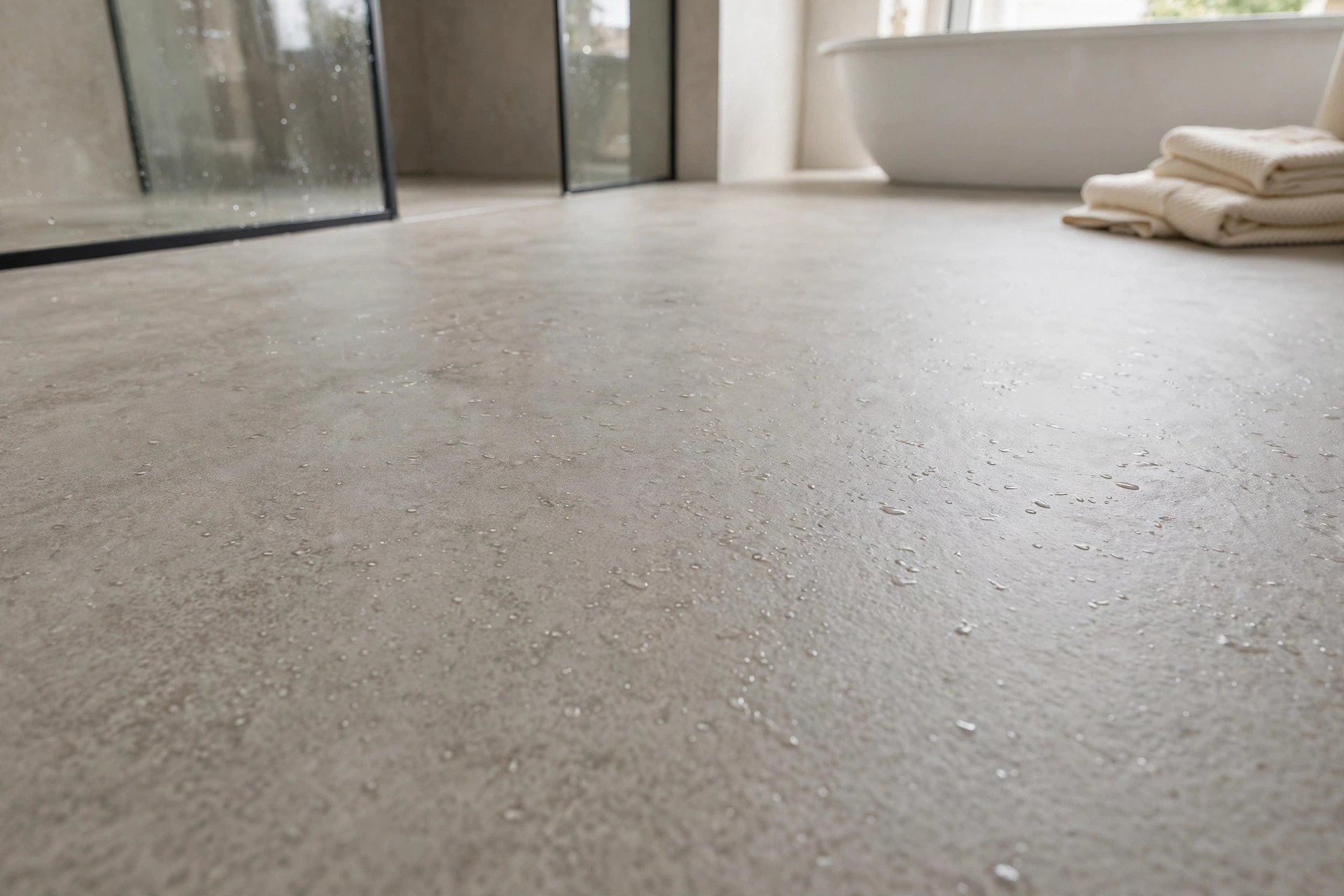
Choose a matte finish if you worry about slippery floors. A matte or lightly textured surface typically gives bare feet a little more grip, especially near the tub or shower. It also tends to show water spots less than a high shine finish does. Try standing on a sample with damp feet at home if you can, because that small test usually tells you more than a label.
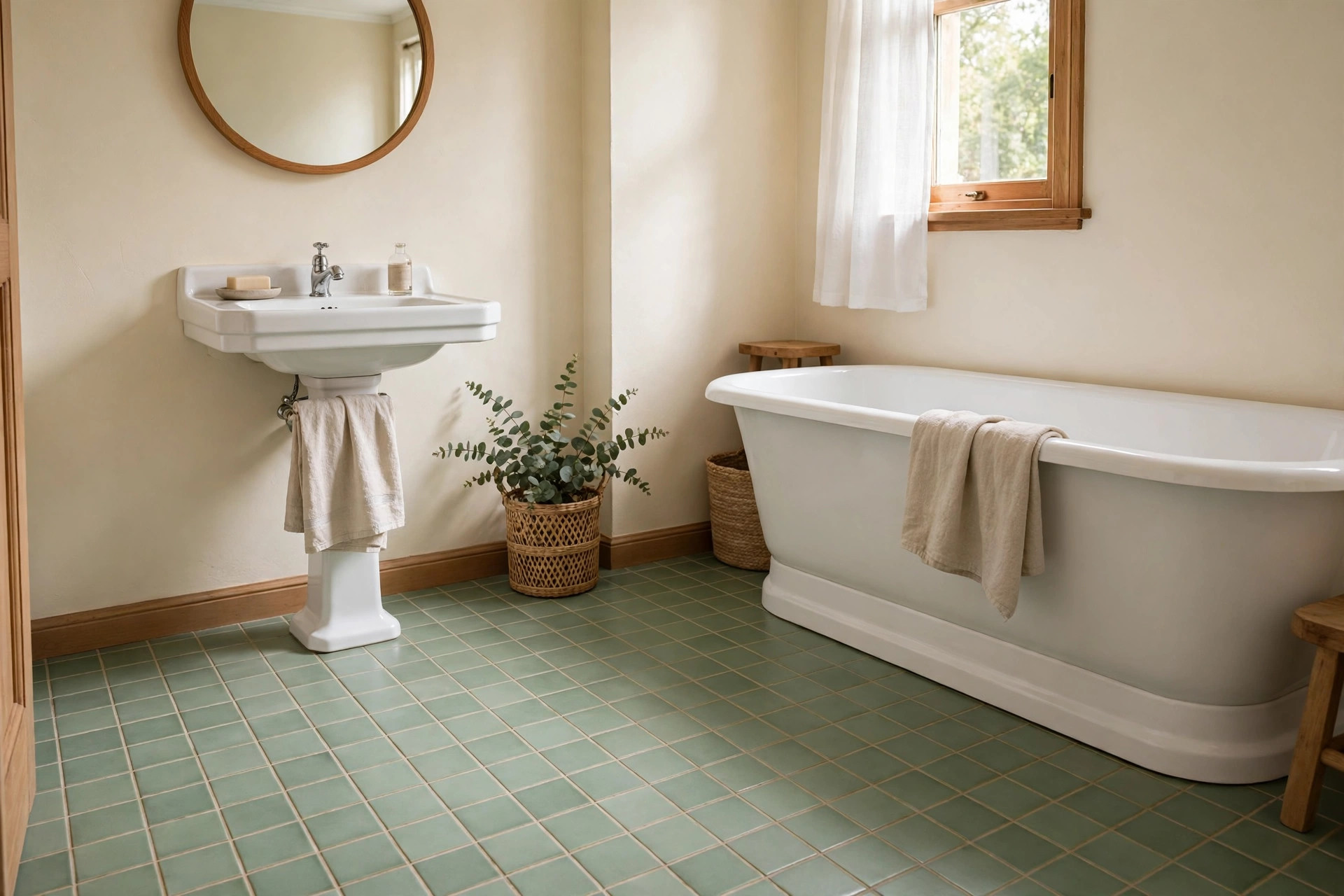
Try ceramic tile when you want color and charm. Ceramic is often a friendly choice for walls and floors in smaller bathrooms, and it comes in gentle colors that suit a cozy space. Soft sage, warm cream, and pale clay tones usually feel calm rather than cold. Keep the shapes simple if the color is doing the talking, and the room tends to stay restful.
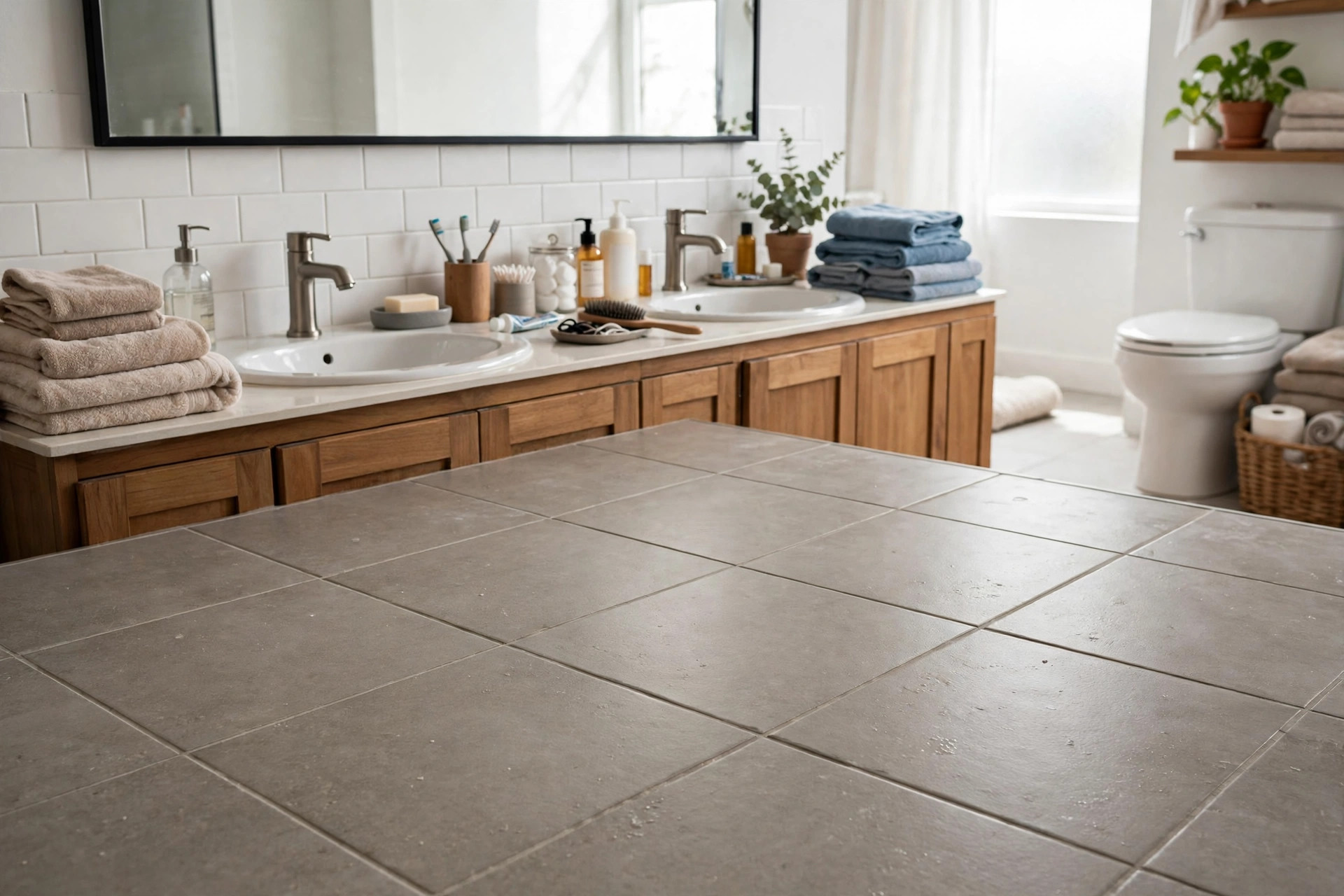
Use porcelain in a busy family bathroom without worry. Porcelain is typically dense and hardwearing, so it usually handles dropped bottles, busy mornings, and lots of foot traffic with ease. It tends to suit homes where the bathroom never really gets a quiet day. Pair it with warm towels and wood accents, and it will not feel stark or chilly.
Luxury Vinyl for Warmth Underfoot
Luxury vinyl has become a quiet favorite, especially if you like the look of wood but need something that handles splashes. It usually feels softer and warmer than tile, and it is often kinder on tired feet first thing in the morning.
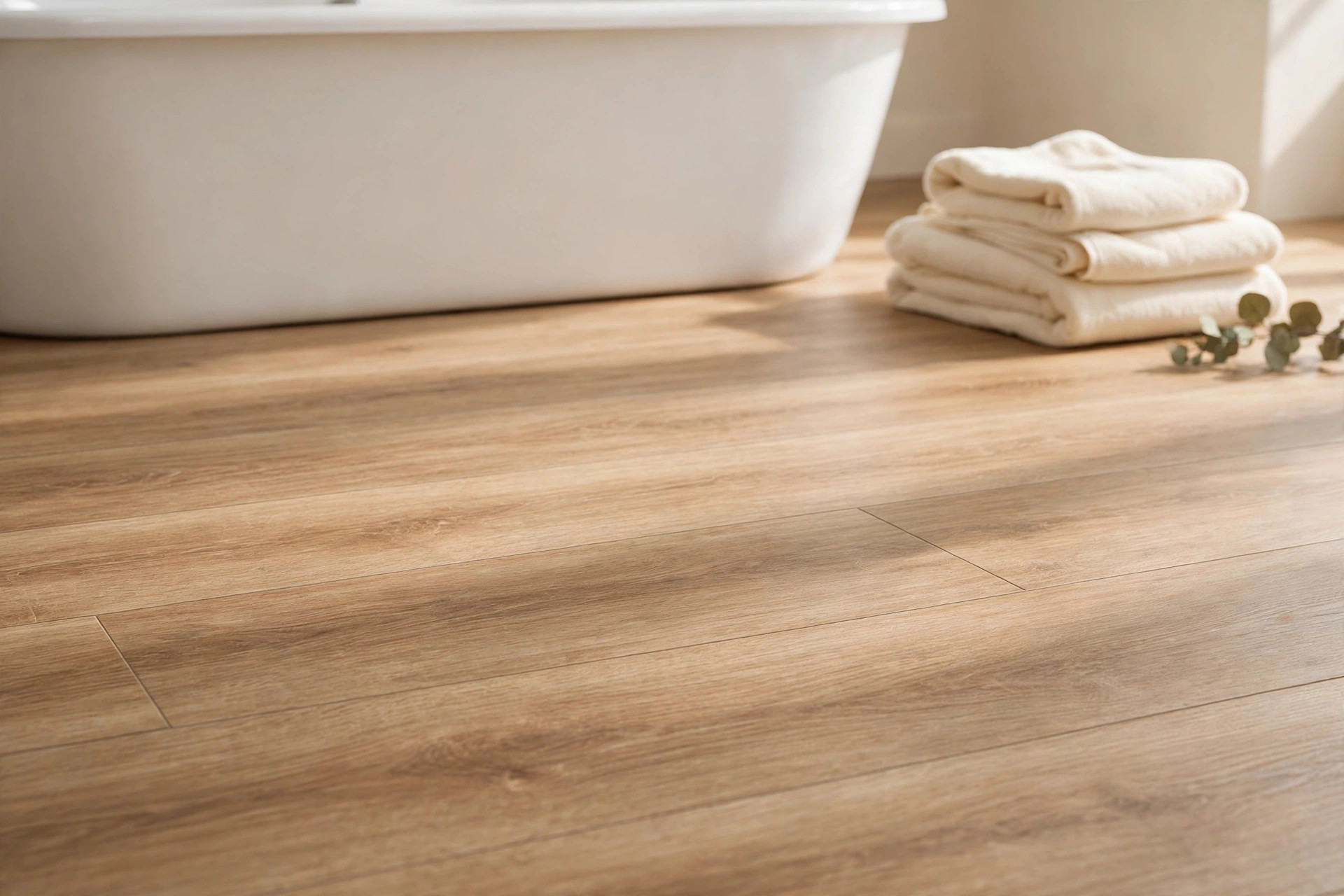
Pick luxury vinyl planks for a wood look that handles splashes. Plank styles typically copy grain and tone surprisingly well, so you get that warm, homey feel without worrying over every drip. They usually suit a main bathroom where people come and go all day. Wipe up standing water as you would anywhere, and the floor tends to stay happy.
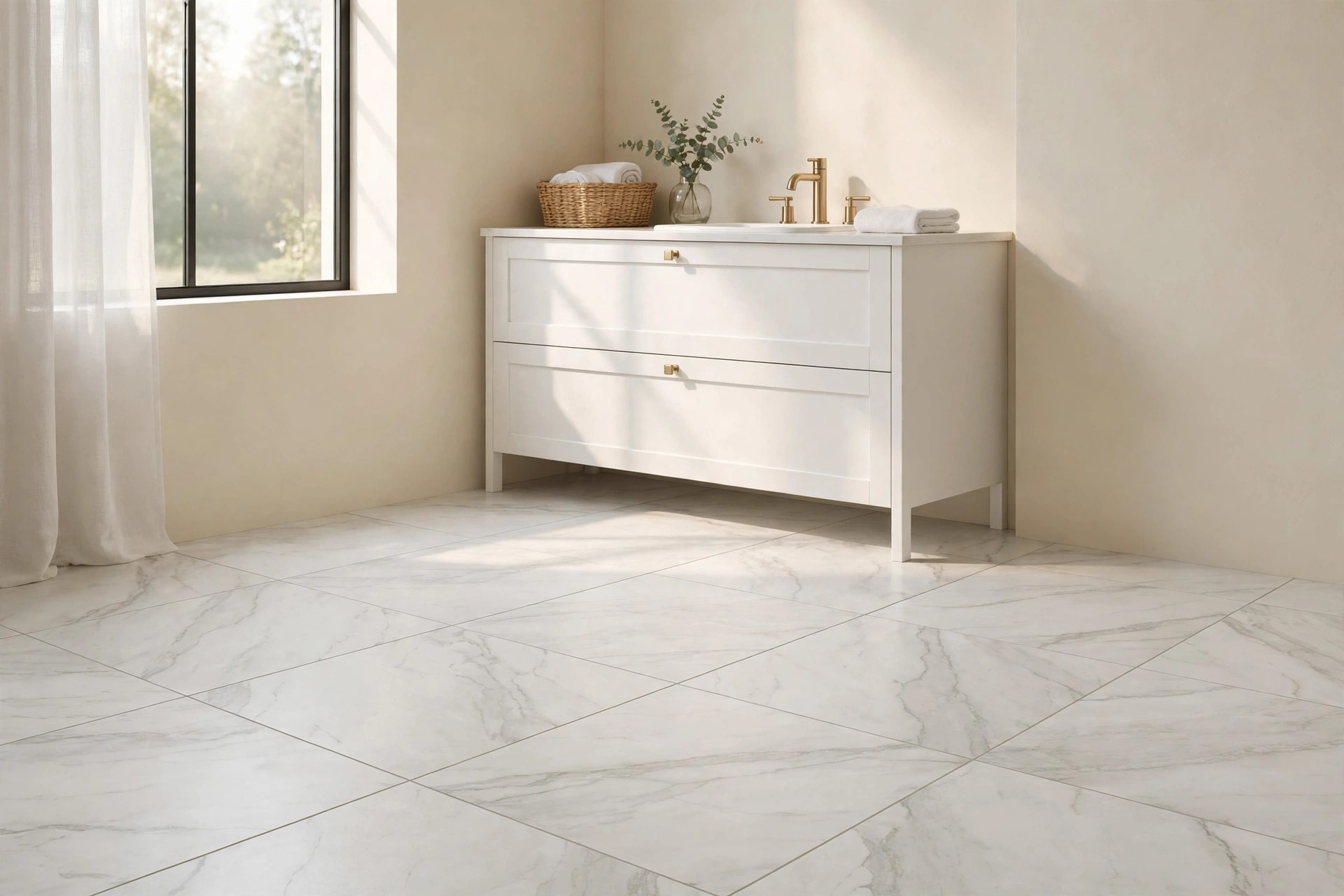
Try luxury vinyl tile when you prefer a stone look. Square vinyl tiles can copy marble, slate, or soft limestone in a way that feels gentle and calm. They are usually warmer to stand on than real stone, which matters on cold mornings. A pale stone tone with cream walls typically keeps a small room feeling light and open.
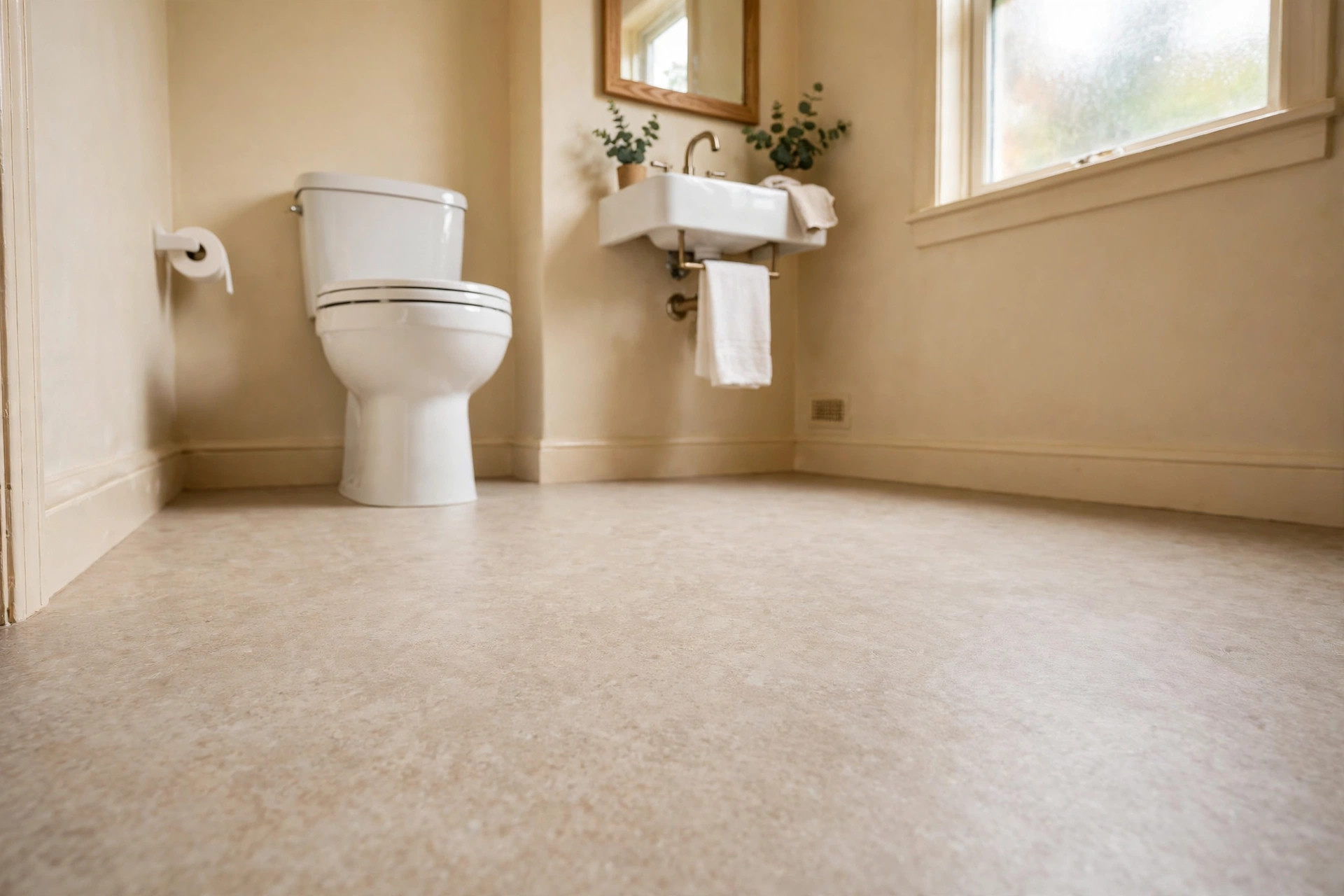
Consider sheet vinyl for a simple, seamless finish. A single sheet usually means very few seams, so there are fewer places for water to sit and worry about. Modern patterns have come a long way, and soft stone or subtle pattern looks can feel surprisingly pretty. It is often a practical pick for a small guest bathroom or a rental refresh.
Natural Stone and Its Lookalikes
Real stone brings a depth and variation that many people love, and its lookalikes now copy that feeling with far less fuss. This is a good place to slow down and think about care, because stone usually asks for a little more attention than tile.
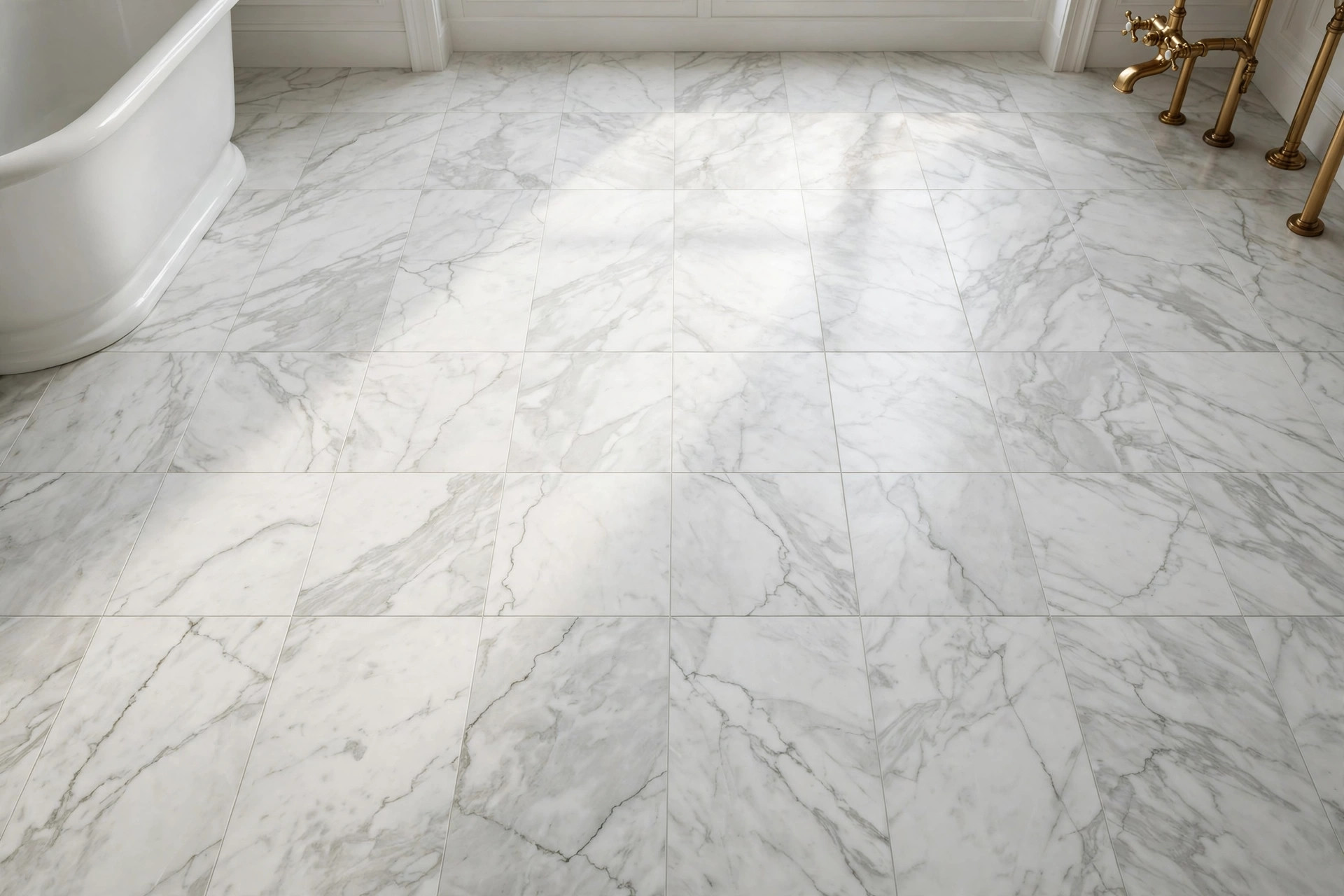
Choose real marble only if you enjoy a little upkeep. Marble typically feels cool and elegant, and every piece looks slightly different, which is part of its charm. It usually needs sealing now and then, and it can mark if spills sit for a while. If you love the look and do not mind the routine, it can feel truly special underfoot.
Marble Look Porcelain Without the Fuss
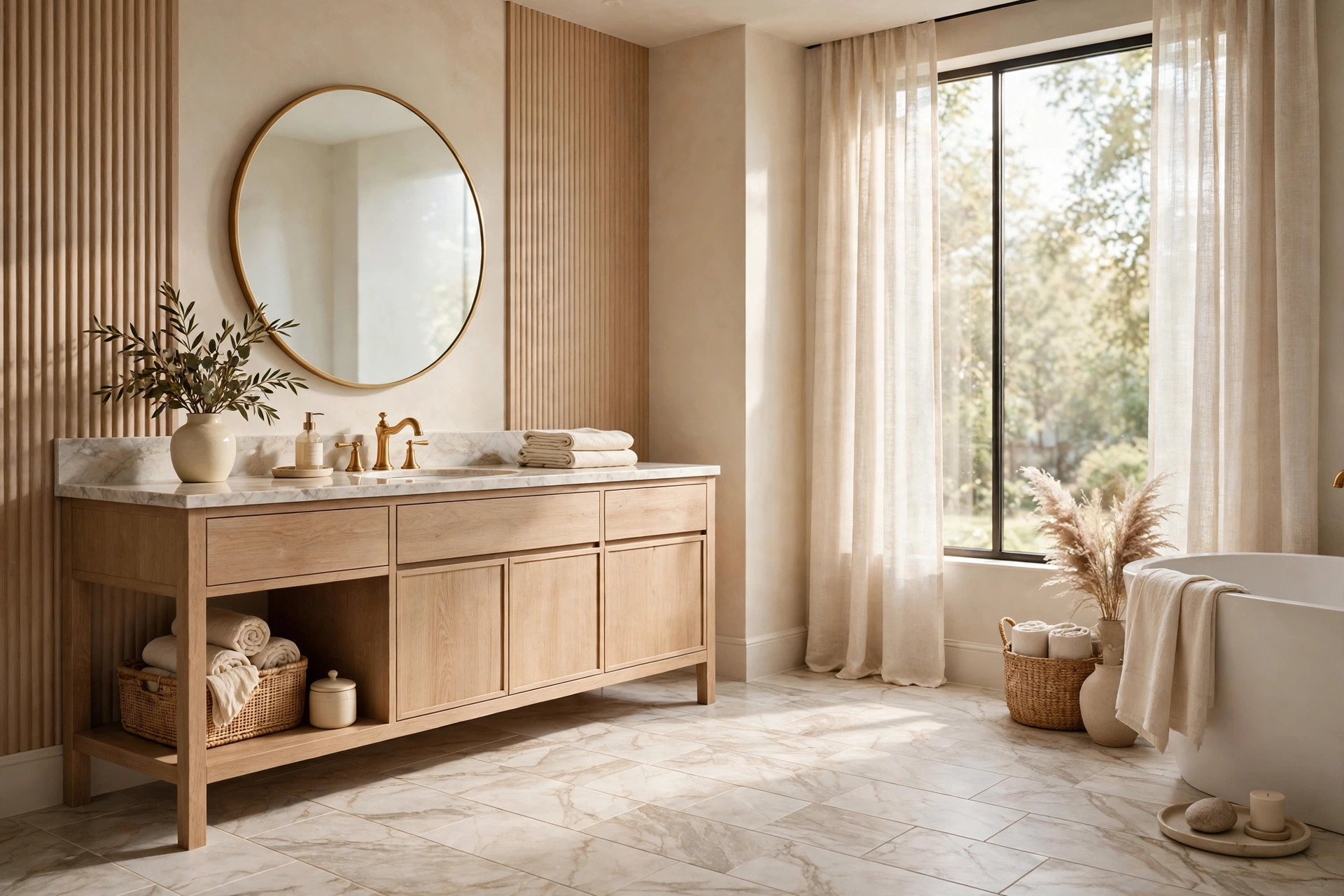
Get the marble look with porcelain that wipes clean easily. Marble look porcelain usually gives you soft veining and a pale, calm backdrop without the sealing routine. It tends to suit a master bathroom where you want a quiet, hotel like calm at home. Pair it with warm brass and cream towels, and the cool tones usually feel balanced rather than cold.
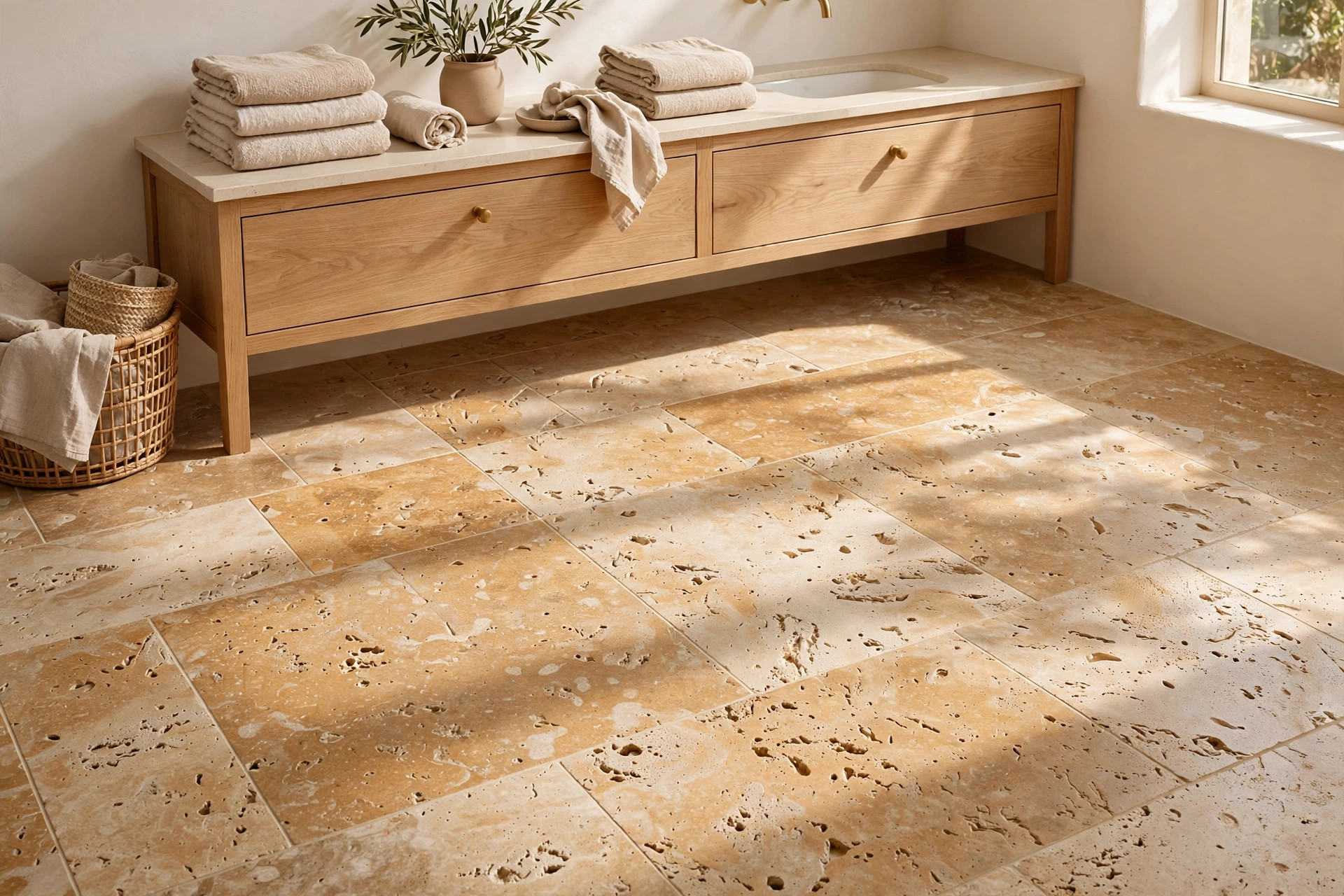
Try a travertine or limestone look for softer warmth. These lookalikes typically skip the dramatic veining and lean into warm beige, honey, and cream tones instead. That softness usually suits a bathroom with oak, linen, and warm white walls very well. The floor tends to feel calm and sunlit, even when the weather outside is not cooperating.
Wood Look and Engineered Wood Options
Wood brings instant warmth to a bathroom, but real boards and water need careful thought. The safer route is usually a lookalike, or an engineered option made with bathrooms in mind, always checked against the maker guidance for wet rooms.
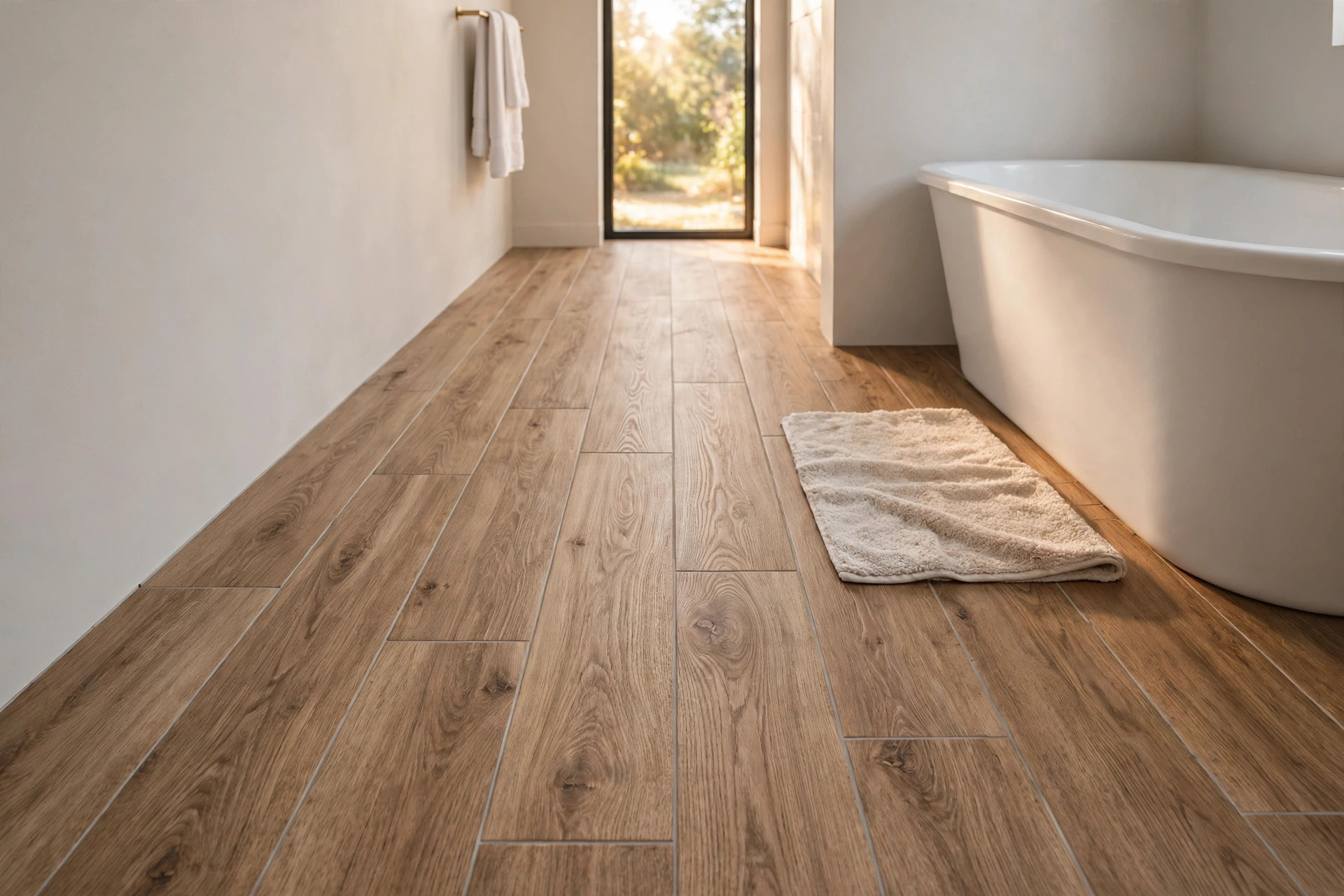
Use wood look porcelain when you want grain without worry. Porcelain planks typically copy wood tone and texture while still behaving like tile around splashes and steam. You can run them the length of the room to make it feel longer, which usually helps a narrow bathroom. Add a soft bath mat by the tub, and the whole space tends to feel warm and settled.
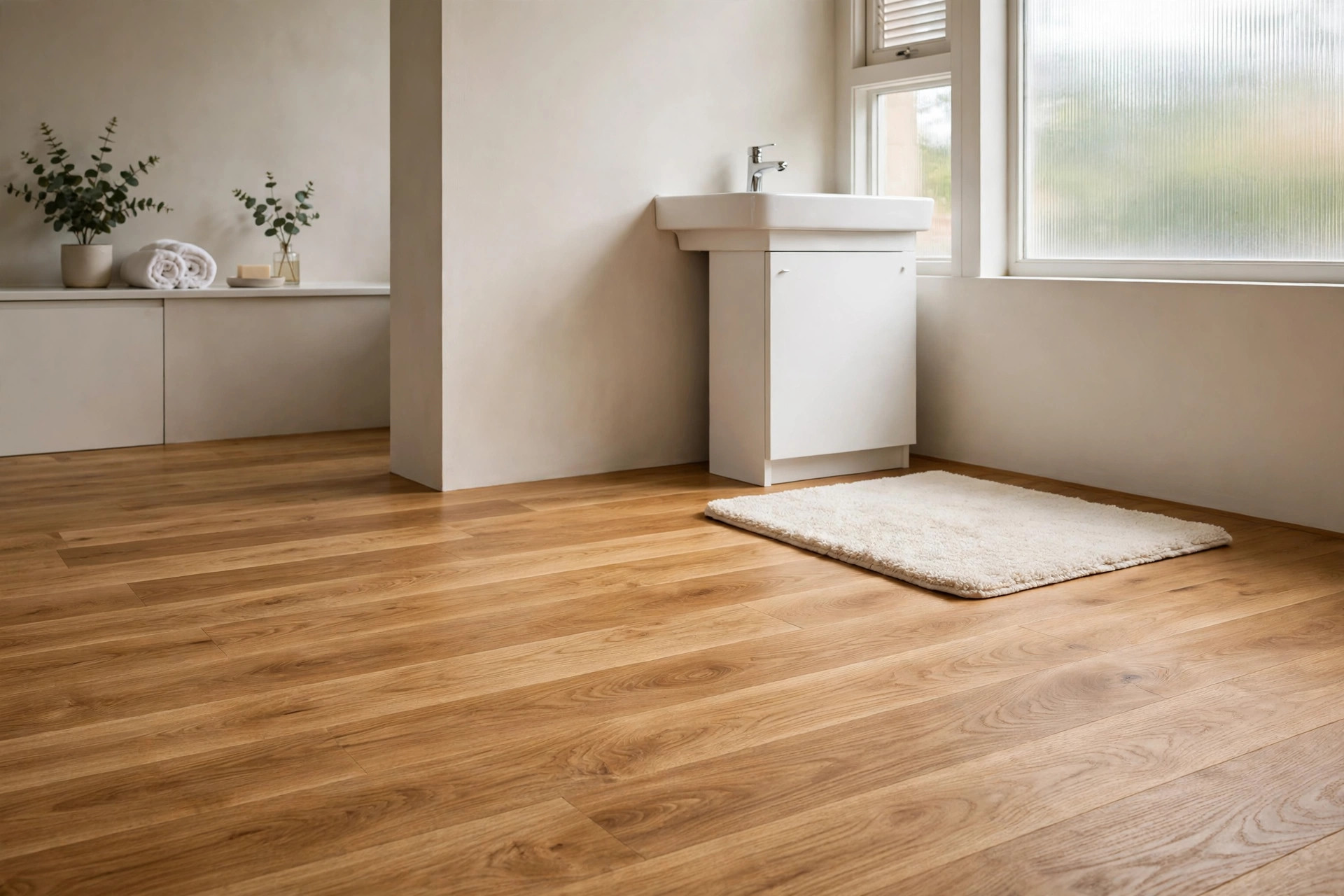
Look at engineered wood only where splashes stay light. Engineered boards usually feel warm and real underfoot, and they can suit a calm ensuite where showers are gentle and ventilation is good. They typically do not love standing water, so mats and quick wipe ups matter here. If your bathroom gets soaked daily, a lookalike is usually the calmer choice.
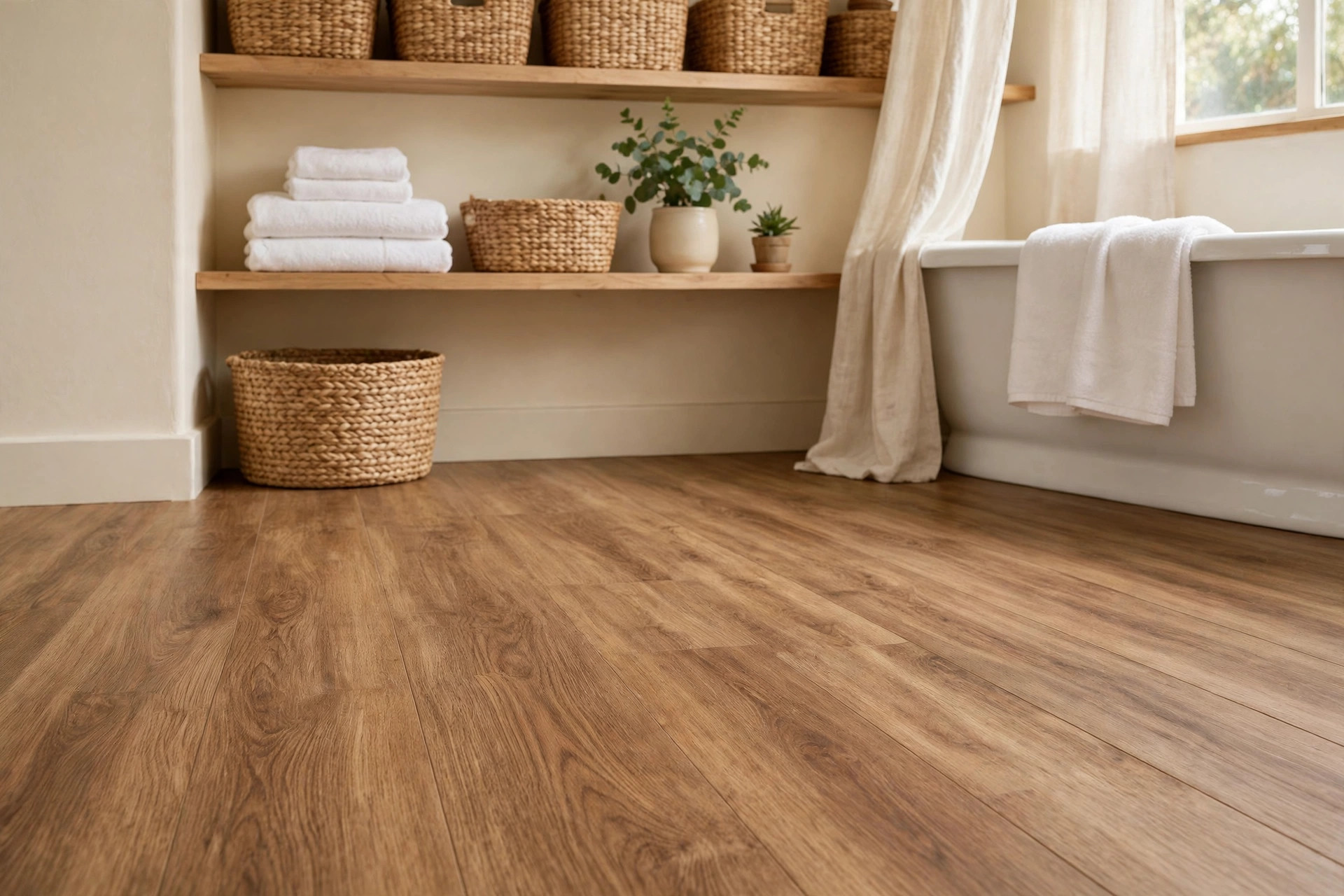
Warm up a wood look floor with cream and natural texture. Whatever wood style you choose, the styling around it makes a big difference to how it reads. Cream walls, woven baskets, and soft cotton towels usually keep the tones feeling cozy rather than heavy. A little greenery on a shelf tends to lift the browns and make the room feel fresh.
Pattern, Layout and Grout Choices
Once the material is settled, layout and grout quietly decide how the floor feels day to day. A simple change in direction or grout tone can make the same tile look calm, playful, or classic, so these choices are worth a slow look.
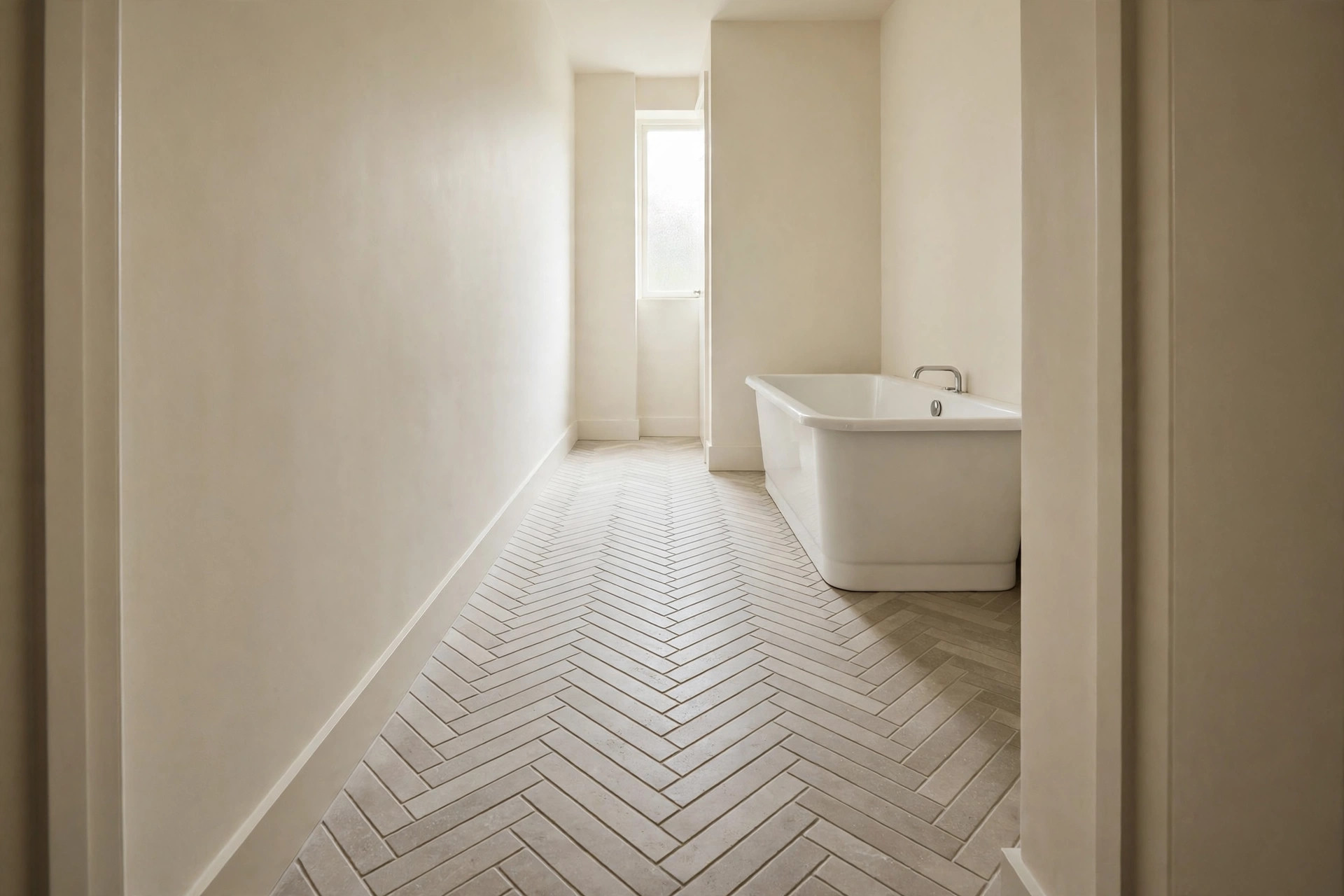
Lay tiles in a herringbone pattern for gentle movement. Herringbone usually adds interest without needing bold color, and it tends to suit long, narrow bathrooms especially well. Wood look planks and soft stone tones both work nicely in this layout. Keep the rest of the room simple, and the floor pattern typically becomes a quiet feature rather than a shout.
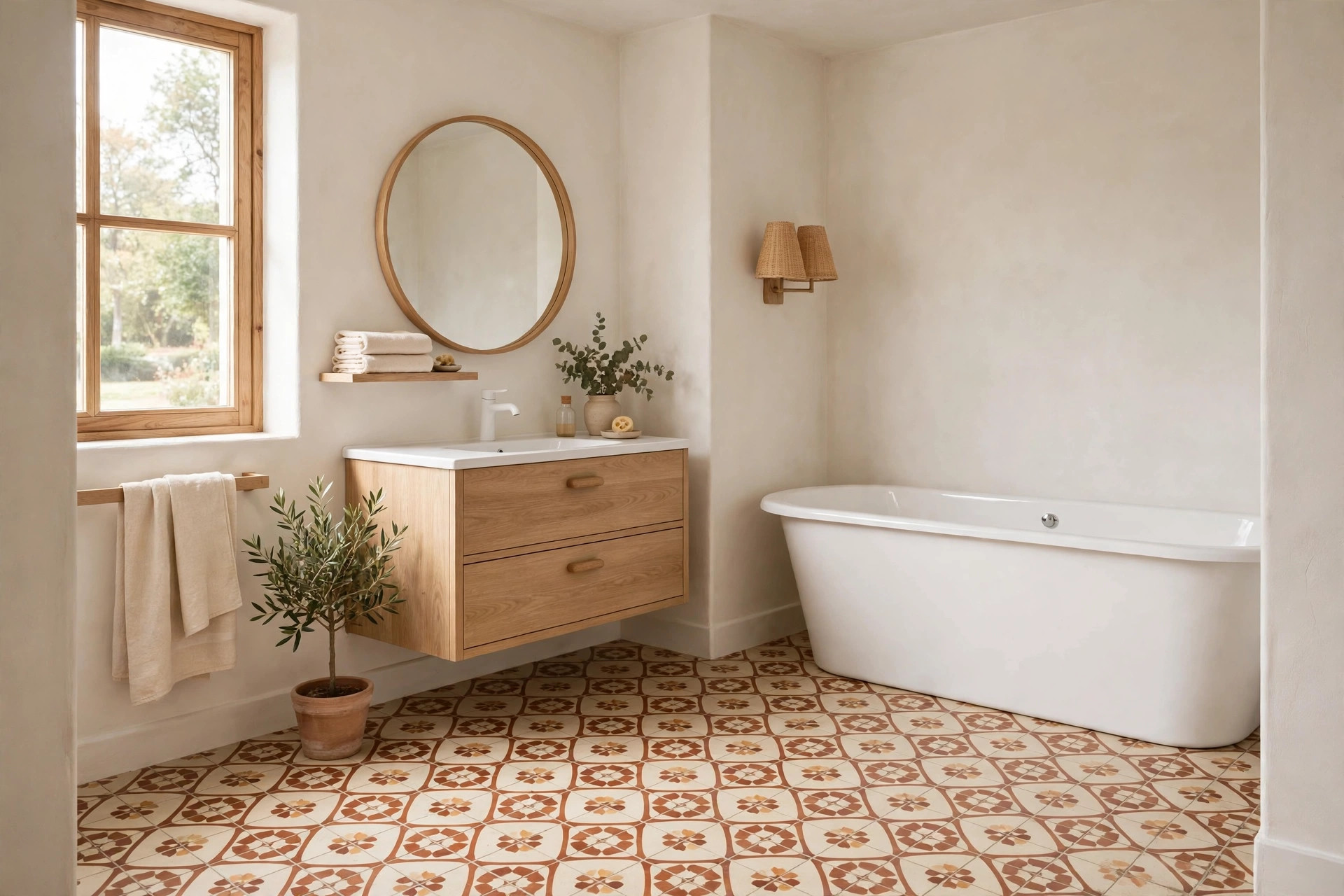
Try a patterned floor when the rest of the room stays plain. Encaustic look tiles in warm cream and terracotta can give a white bathroom a friendly, welcoming heart. The pattern usually hides everyday dust and splashes kindly, which is a small daily gift. Let white fixtures and plain walls balance it, and the room tends to feel cheerful but not busy.
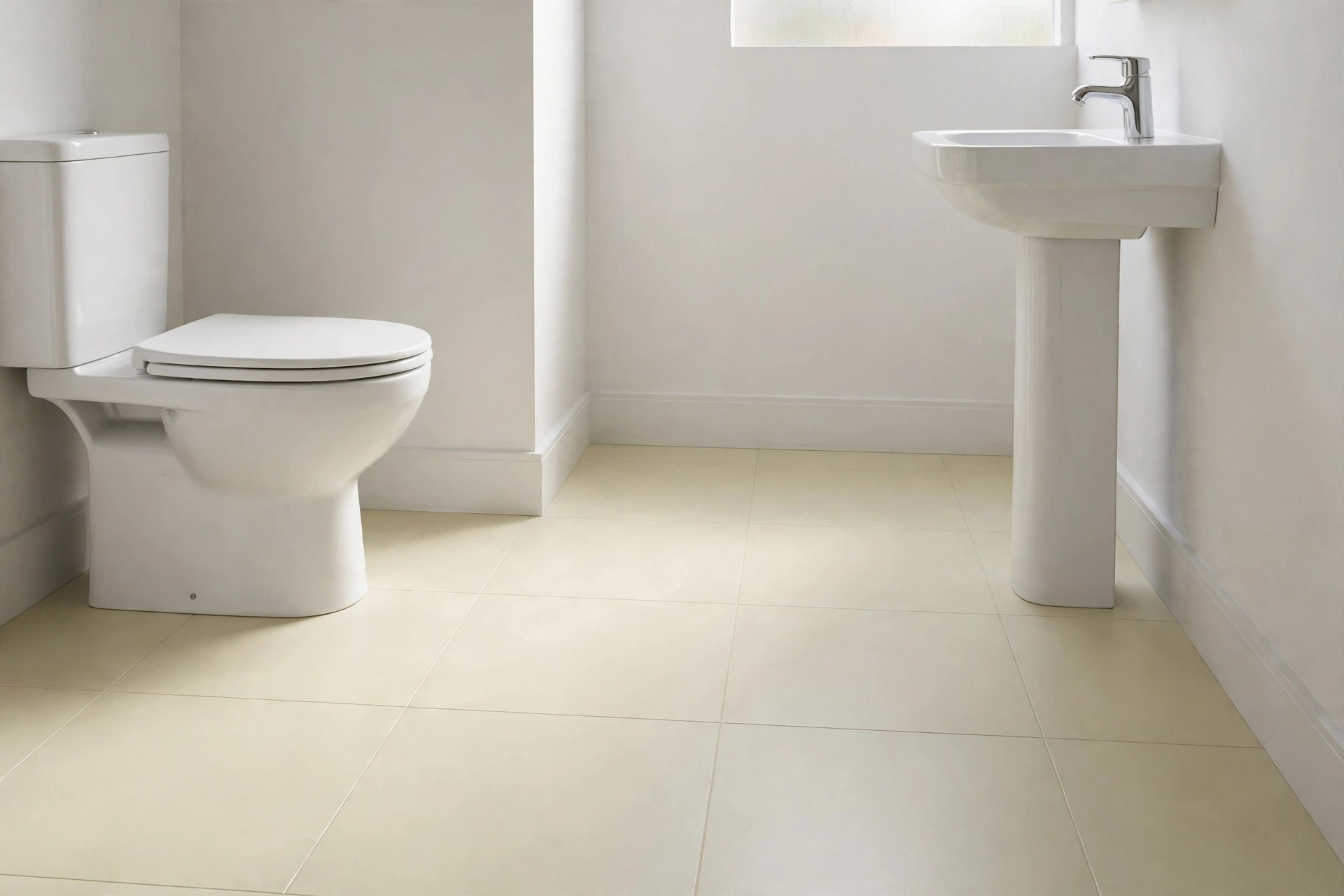
Match your grout tone closely for a seamless, calm look. Grout that sits close to the tile color usually makes the floor read as one soft surface, which helps a small room feel bigger. A contrasting grout does the opposite, and it highlights every shape, so use it only when you want that graphic feel. Either way, grout usually needs a little care now and then to stay looking fresh.
Comfort and Everyday Care
The prettiest floor still has to work on a busy Tuesday morning, so comfort and care deserve a spot on your list. A few gentle habits usually keep most bathroom floors looking good.
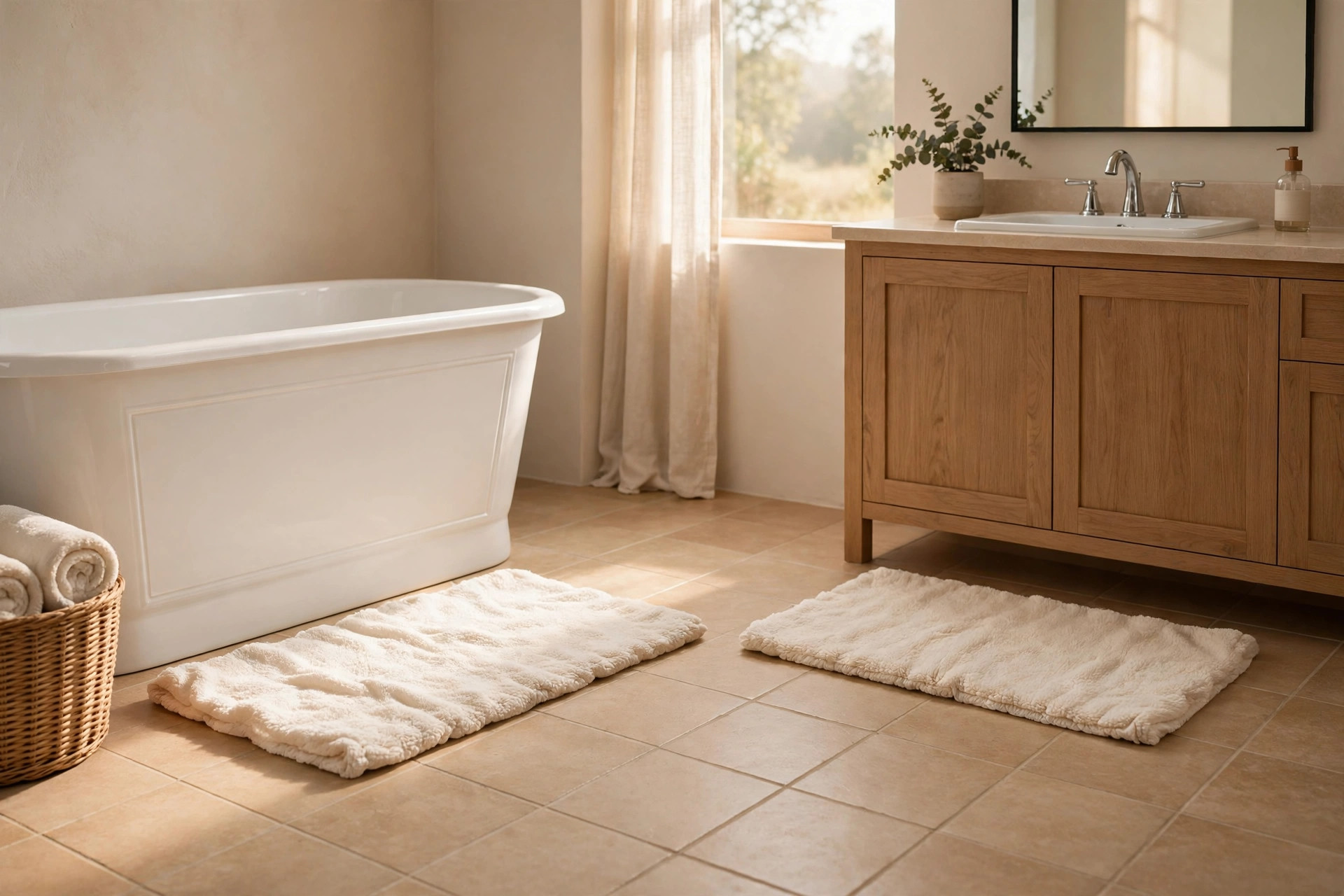
Add a washable bath mat where feet land most. A soft mat by the tub and another by the sink typically catch most splashes before they sit on the floor. Cotton or washable weaves usually feel kind underfoot and are easy to freshen in the laundry. Pick warm cream or a tone from your floor, and it tends to blend in calmly.
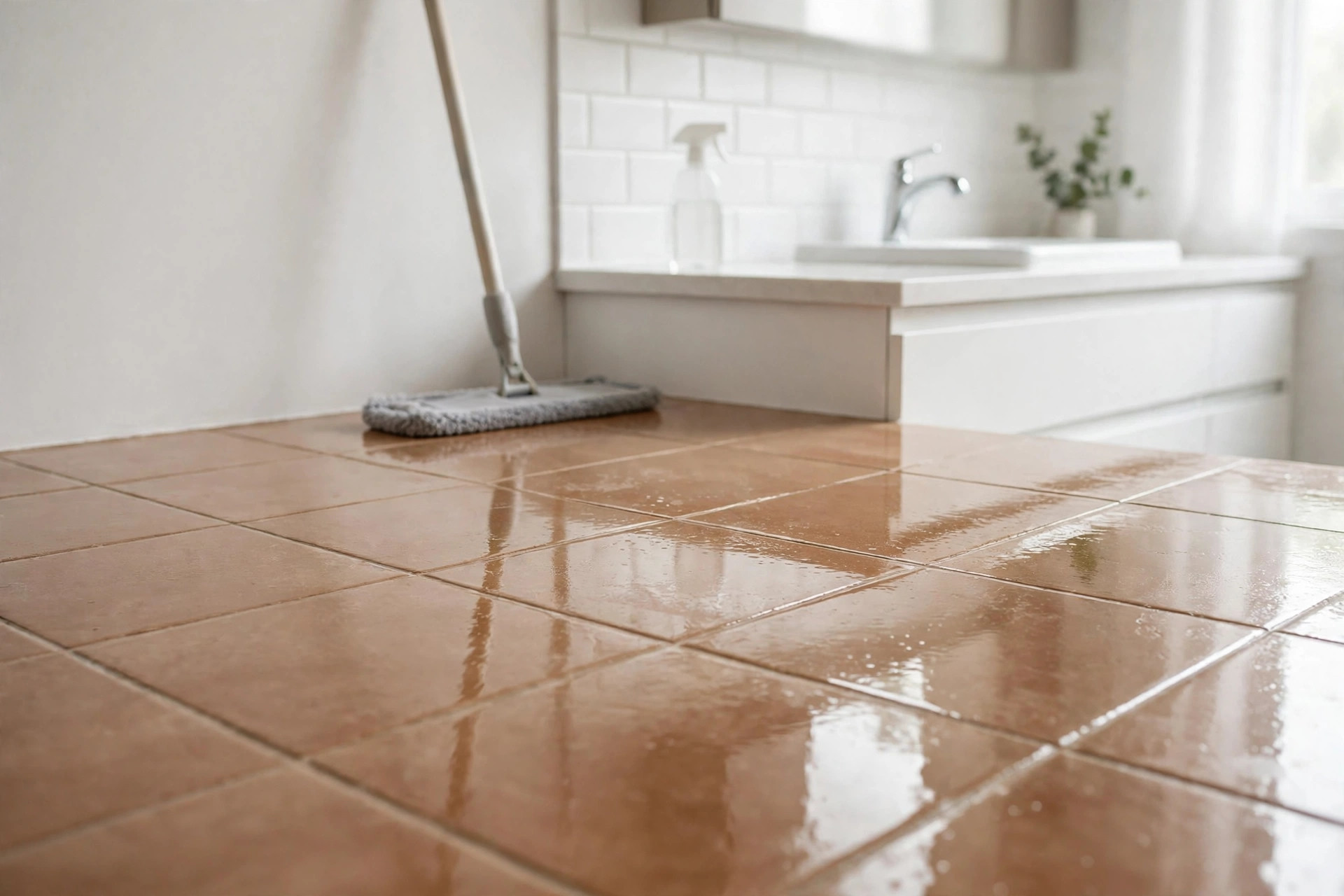
Keep cleaning simple with mild products and a soft mop. Most bathroom floors usually do best with warm water, a mild cleaner, and a quick wipe rather than harsh scrubbing. Strong products can dull some finishes over time, so it is kinder to start gentle and stay gentle. A small weekly routine typically stops grout and corners from looking tired.
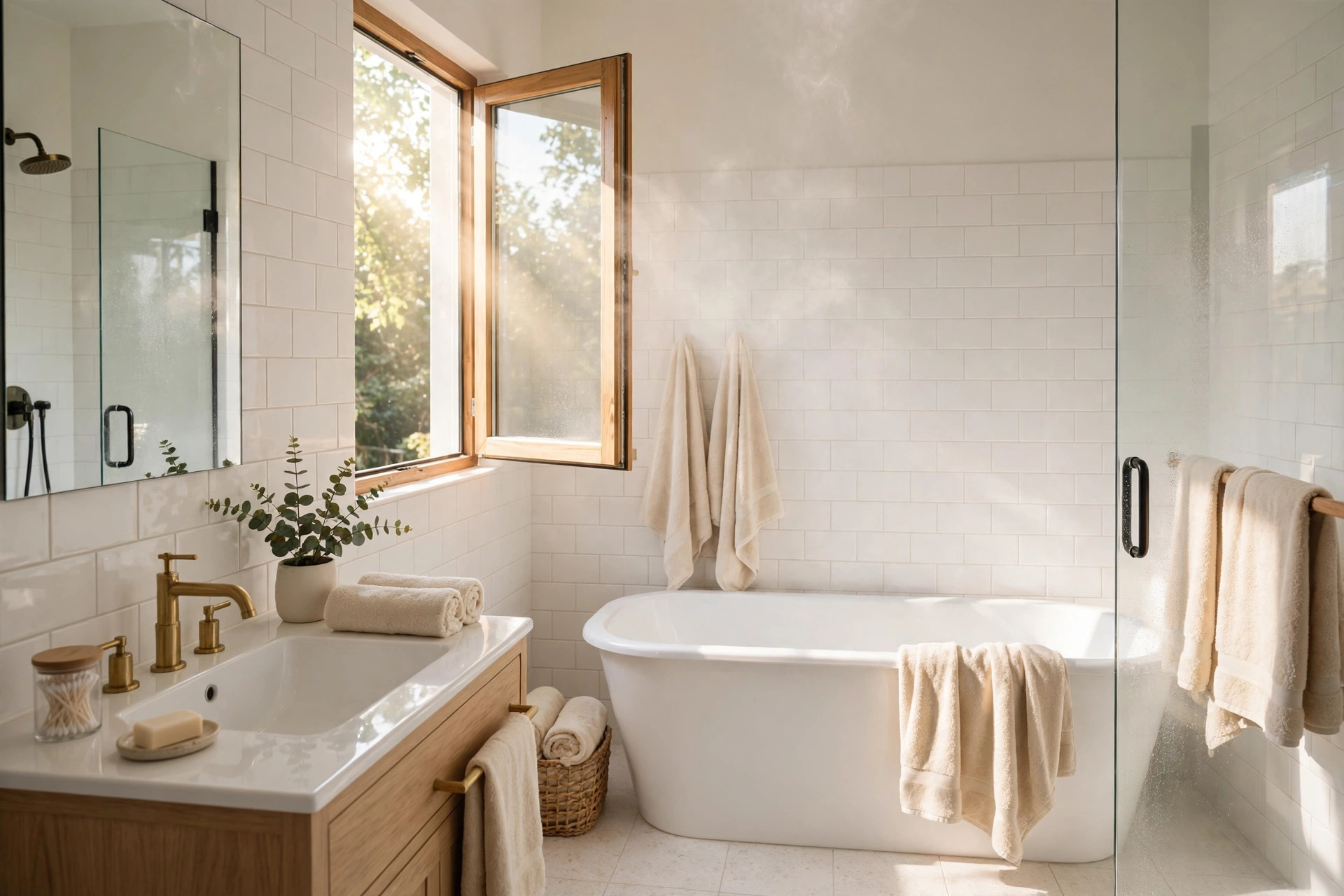
Ventilate well so floors dry faster after showers. A fan or a cracked window usually helps steam clear, and a drier room is kinder to every material, from grout to vinyl seams. Wipe up puddles by the tub when you spot them, because that tiny habit tends to prevent most worries. Good airflow also keeps the room smelling fresh, which makes the whole space nicer to use.
At the end of the day, the best bathroom flooring ideas are the ones that handle your real life, with its splashes and busy mornings, while still making you smile when you walk in barefoot. Start with a material you trust, warm it up with tone and texture, and keep your care routine simple. A floor chosen that way usually settles in quietly and serves the room well for a long time.

Leave a Reply