
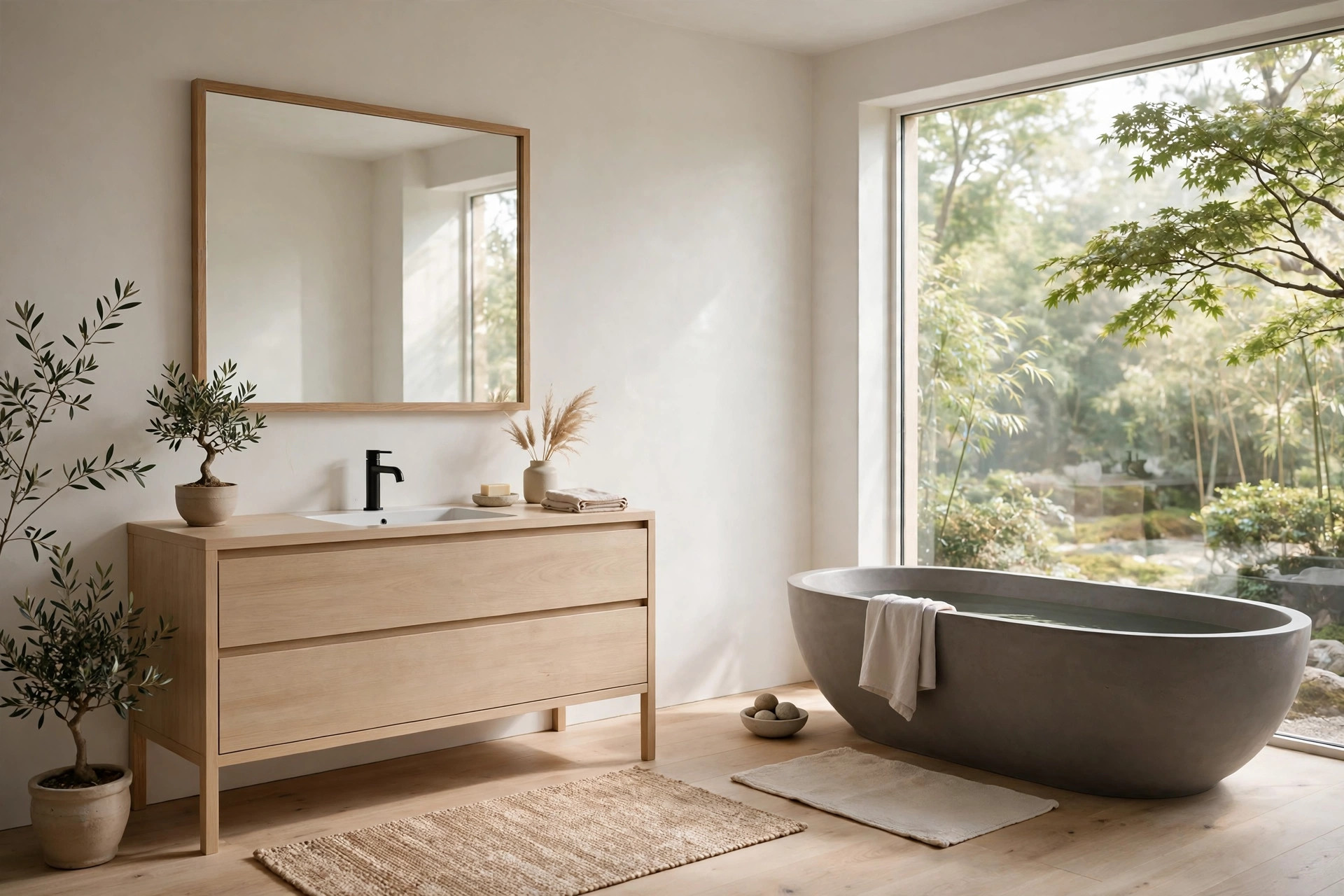
If your bathroom always feels a little busy, even right after you have tidied it, japandi bathroom ideas might be the calm reset you have been looking for. Japandi blends the warmth of Scandinavian comfort with the quiet simplicity of Japanese design, and the result is a room that asks very little of you. You do not need a full remodel to feel it either, because small, thoughtful choices usually do most of the work.
Think pale wood, soft stone, and warm white walls, with plenty of empty space left between things on purpose. Nothing shouts, nothing sparkles too hard, and every item you keep has a reason to be there. It is a forgiving style for real life too, since natural materials tend to look better, not worse, as they soften with daily use.
Below are seventeen ideas to borrow, starting with the palette and the tub, then moving through fixtures, storage, texture, and the little rituals that keep the calm going. Take the ones that fit your room and your routine, and leave the rest for later.
The Japandi Palette: Pale Wood, Stone and Warm White
Color does the heavy lifting in a Japandi room, but it works quietly. When the background stays pale and warm, the whole bathroom usually feels larger and softer, even on a gray morning.
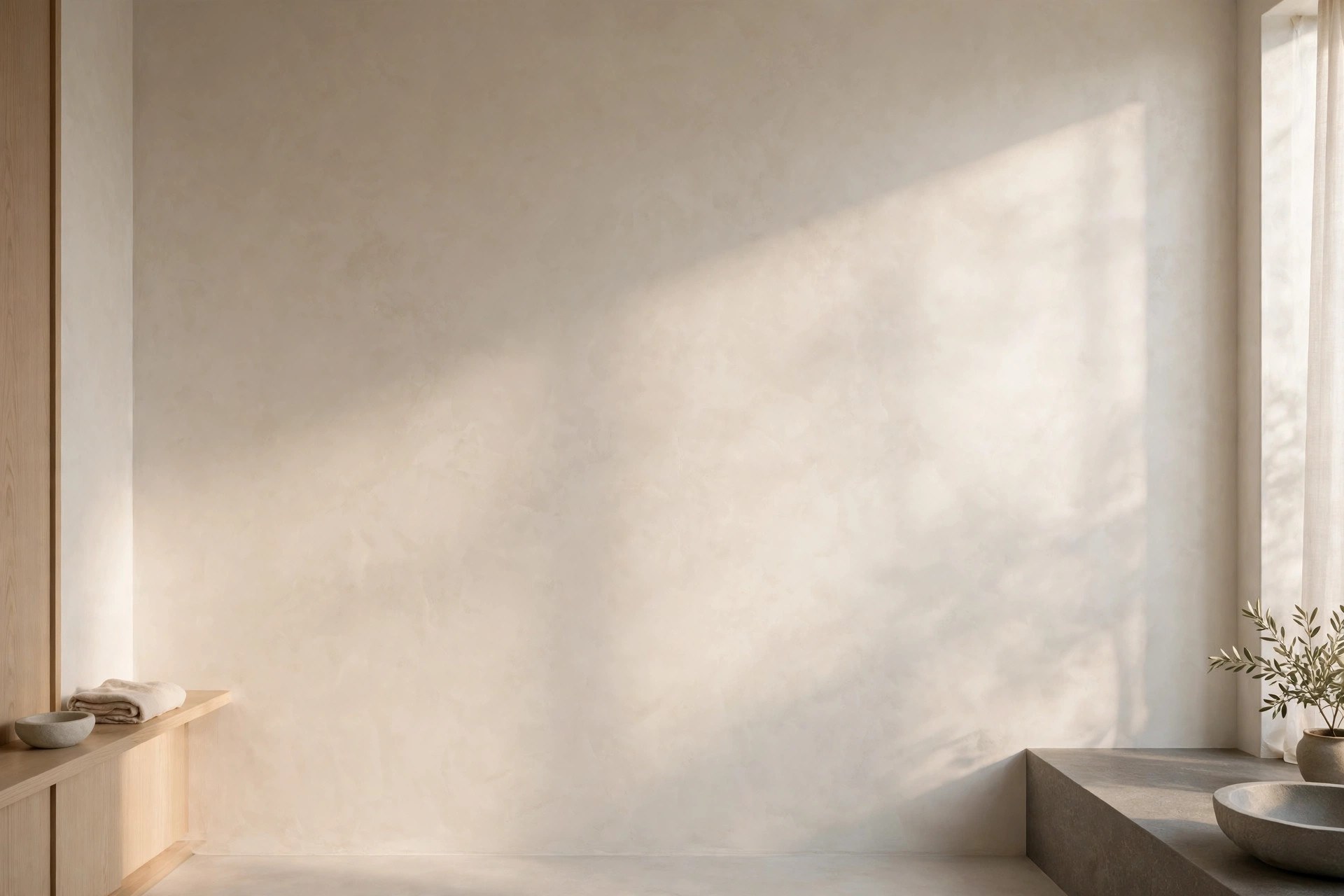
Start with warm white walls that soften the light. A warm white usually feels gentler than a bright, blue toned white, especially beside wood. It gives you that clean look without the chilly edge, and it typically flatters skin tones in the mirror too. Test a patch first, because the same paint can read quite differently in morning and evening light.
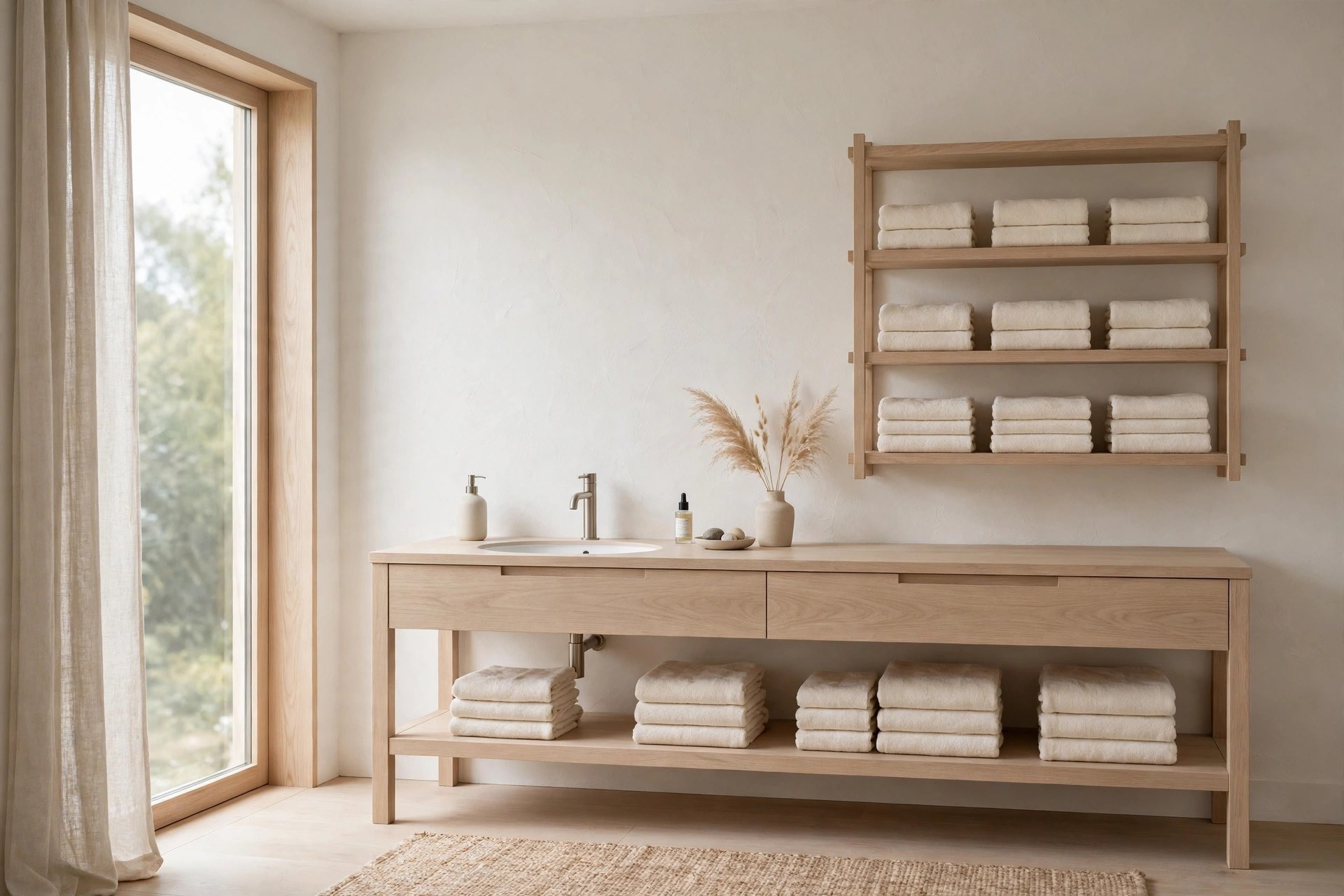
Bring in pale wood for warmth without heaviness. Light oak, ash, and similar pale woods add warmth while keeping the room feeling open and airy. You will usually see them on vanities, stools, and simple shelving rather than everywhere at once. A little wood goes a long way here, and repeating it in two or three places typically feels calm and deliberate.
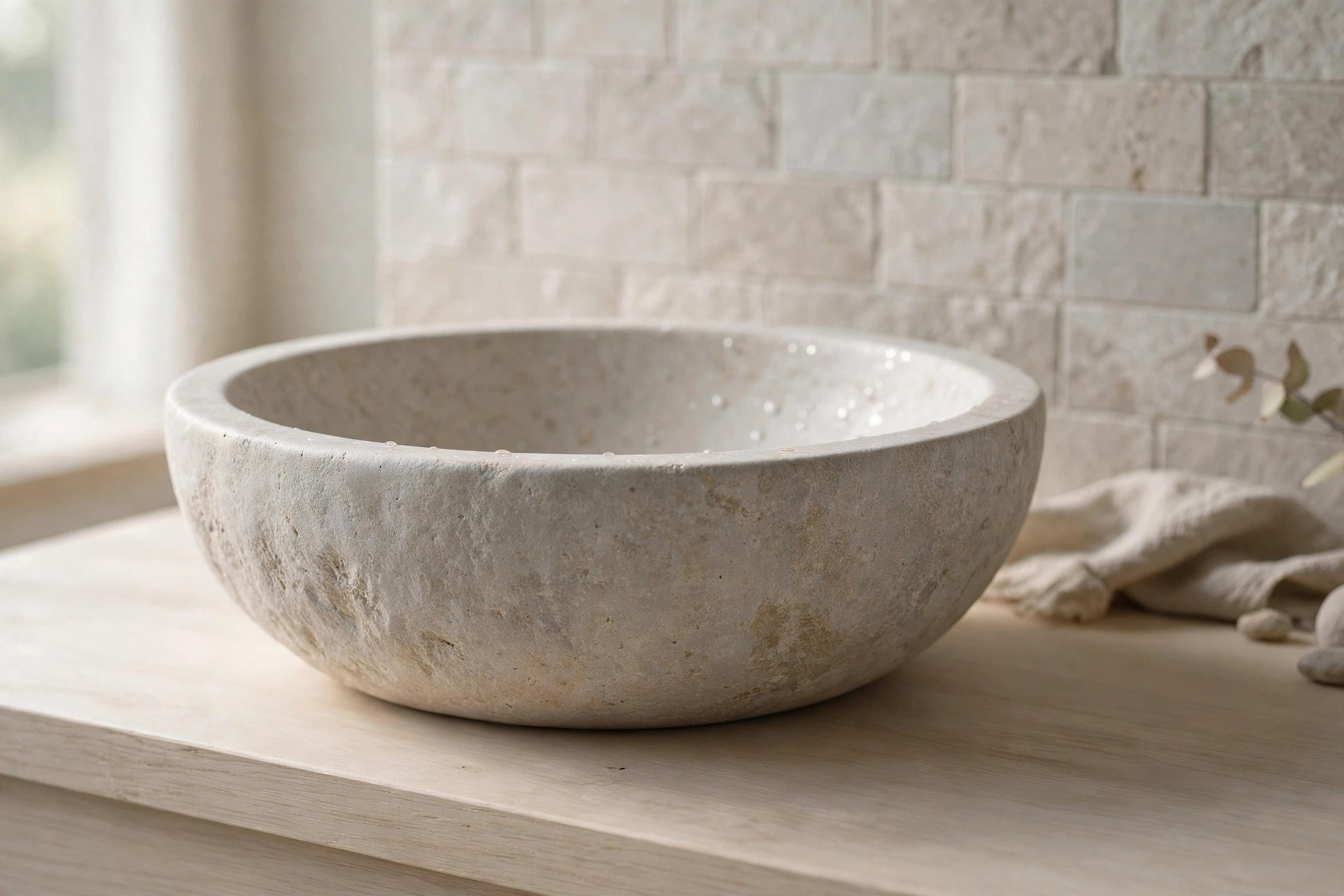
Use real stone or a stone look finish for quiet depth. A matte stone sink, tray, or floor tile adds gentle variation that plain white surfaces cannot quite give you. The subtle movement in stone usually keeps a pale palette from feeling flat or dull. Keep the finish honed rather than glossy, because a soft sheen tends to suit this style far better.
A Soaking Tub as the Quiet Centerpiece
In a Japandi bathroom, the tub is not squeezed in as an afterthought. It is usually the calm center of the room, with a little breathing space around it so a soak feels like a small event.
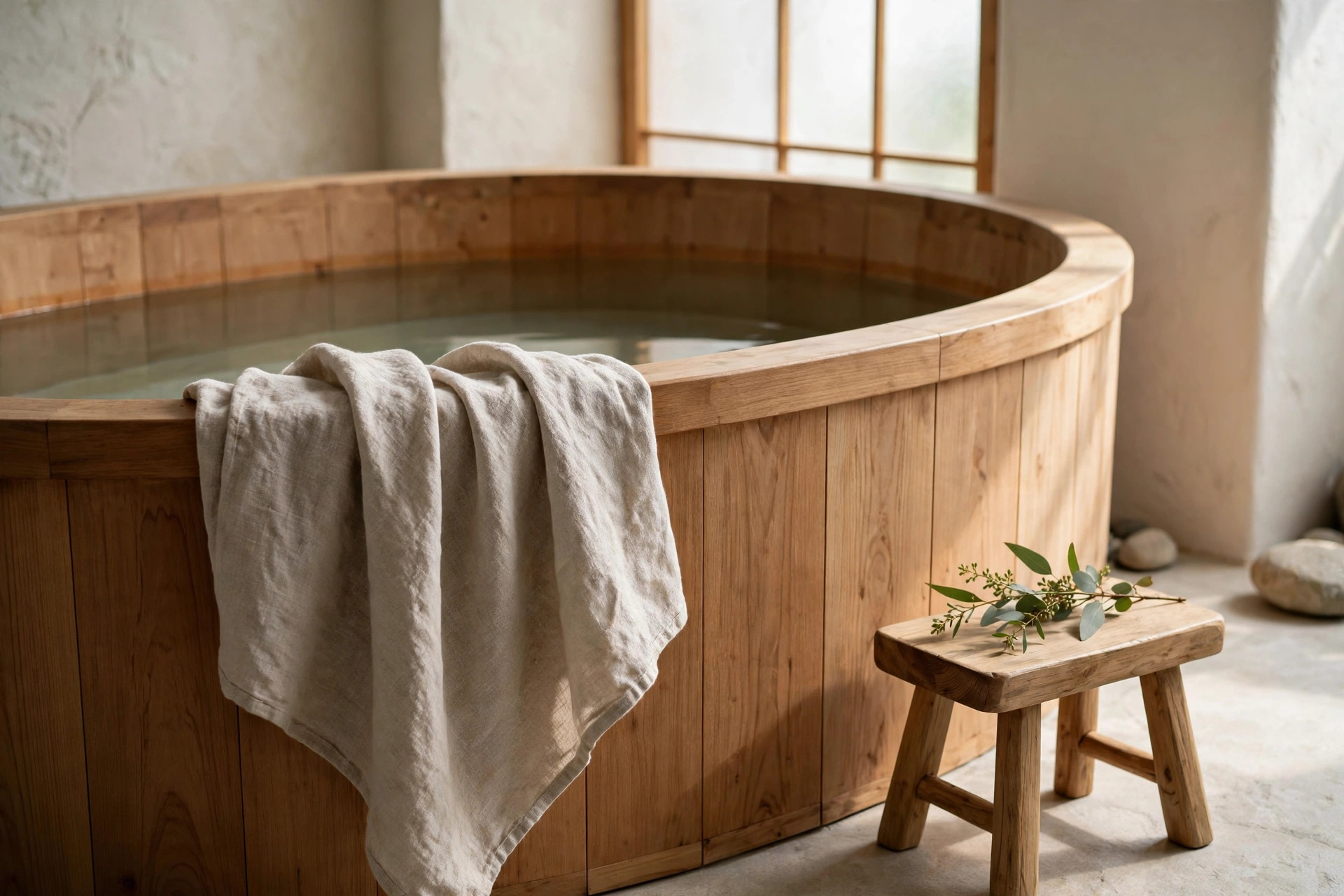
Choose a deep, simple tub and give it room to breathe. A deep soaking shape lets you settle in properly, and a plain outline without fussy detailing keeps the mood restful. If you can, leave a little clear floor around it rather than crowding it with extras. That empty space is not wasted, because it is typically what makes the tub feel special.
Wood, Stone and Linen Details Around the Tub
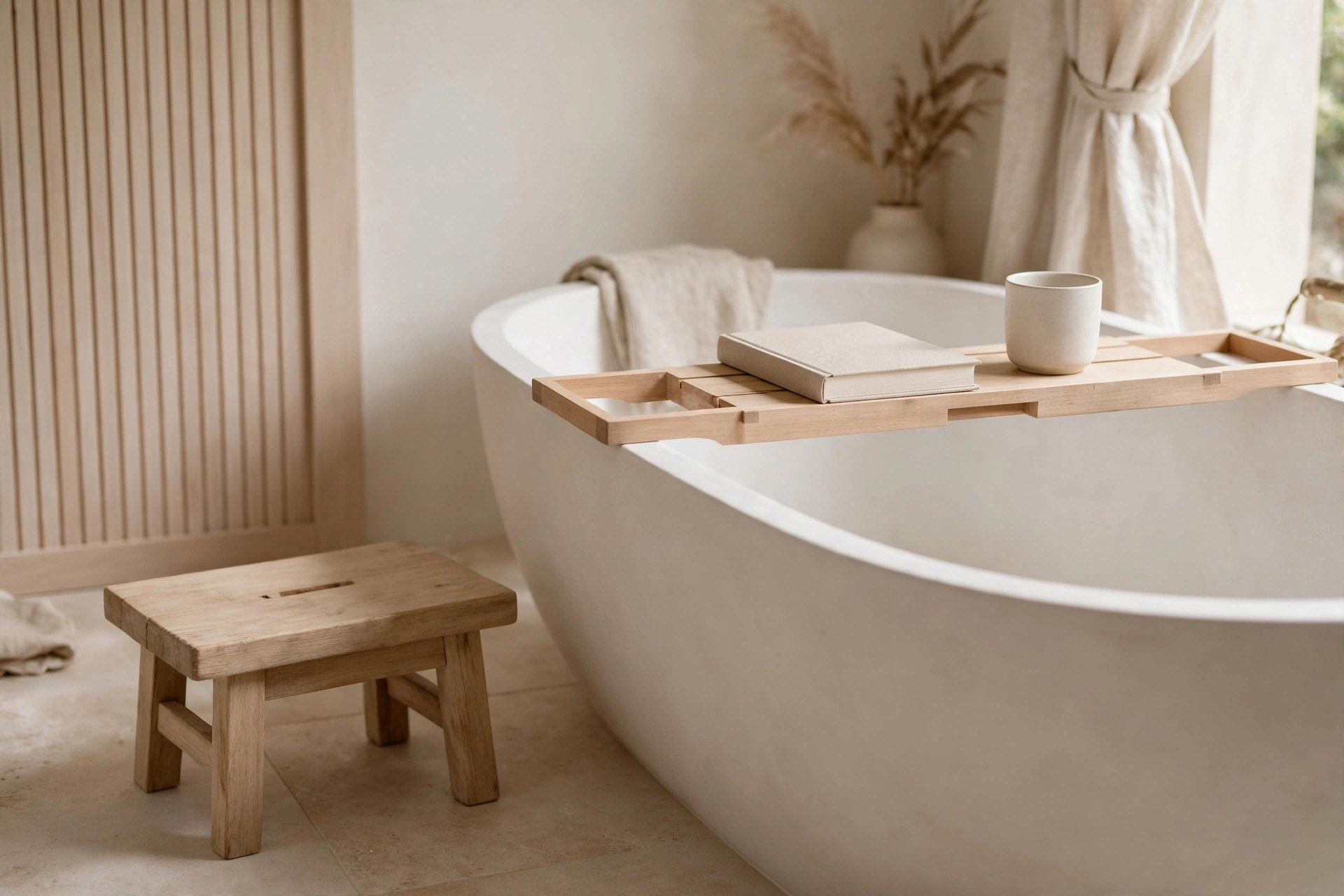
Set a small wooden stool or bath caddy beside the tub. A low stool gives you a handy spot for a towel, a book, or a cup of tea while you soak. Wood beside water usually feels warm and welcoming, and a simple shape keeps it from looking cluttered. Wipe it dry after use, and it typically stays looking lovely for a long time.
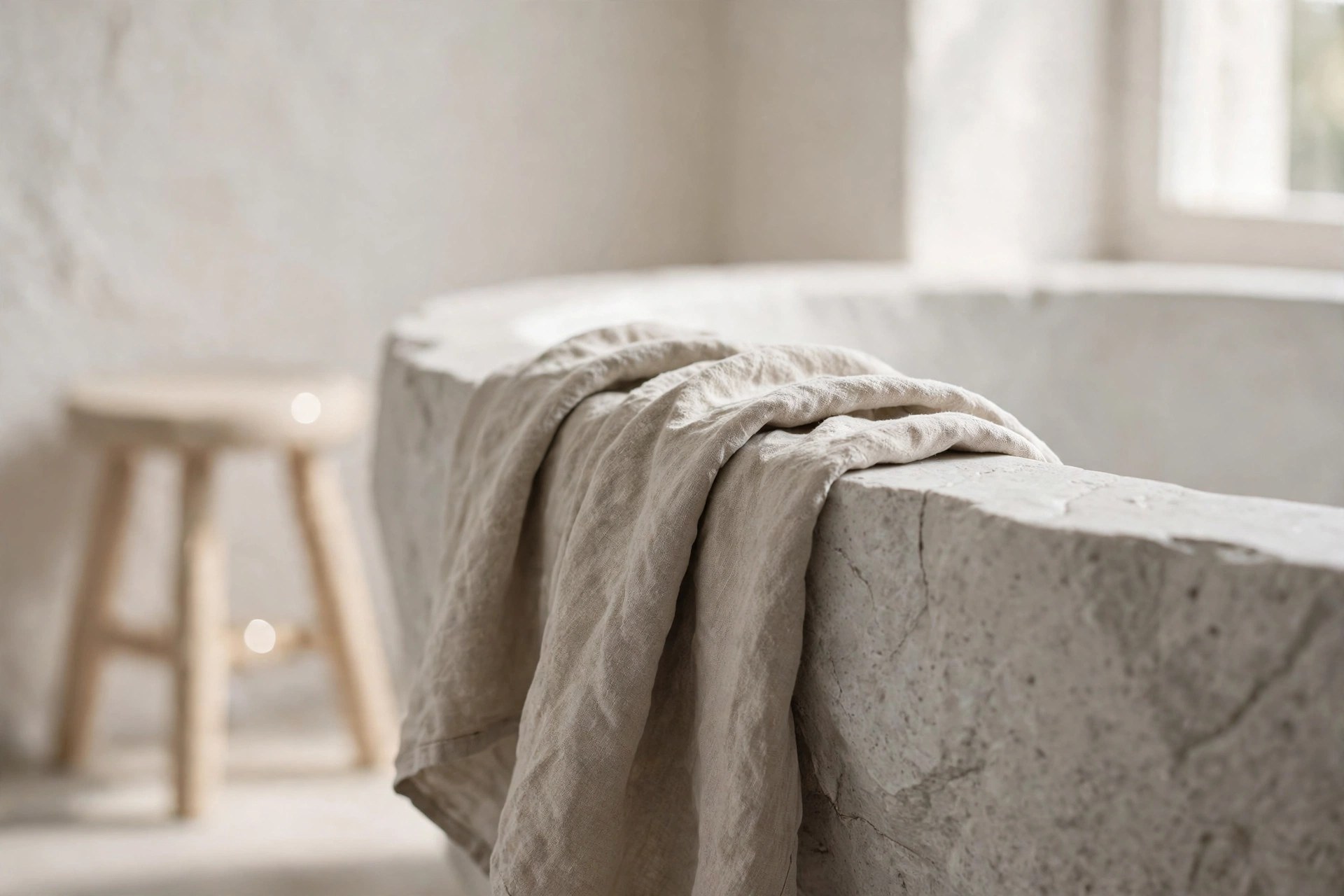
Keep a folded linen towel within easy reach. Linen has a soft, slightly rumpled texture that suits this style perfectly, and it usually dries quickly too. Drape one towel over the edge of the tub or the stool, and let the rest stay stored away out of sight. One beautiful towel on show typically looks calmer than a whole rail of them.
Simple Fixtures and Clean Lines
Fixtures in this style are quiet on purpose. When every line is simple and every surface is easy to wipe, the room tends to stay calm without much effort from you.
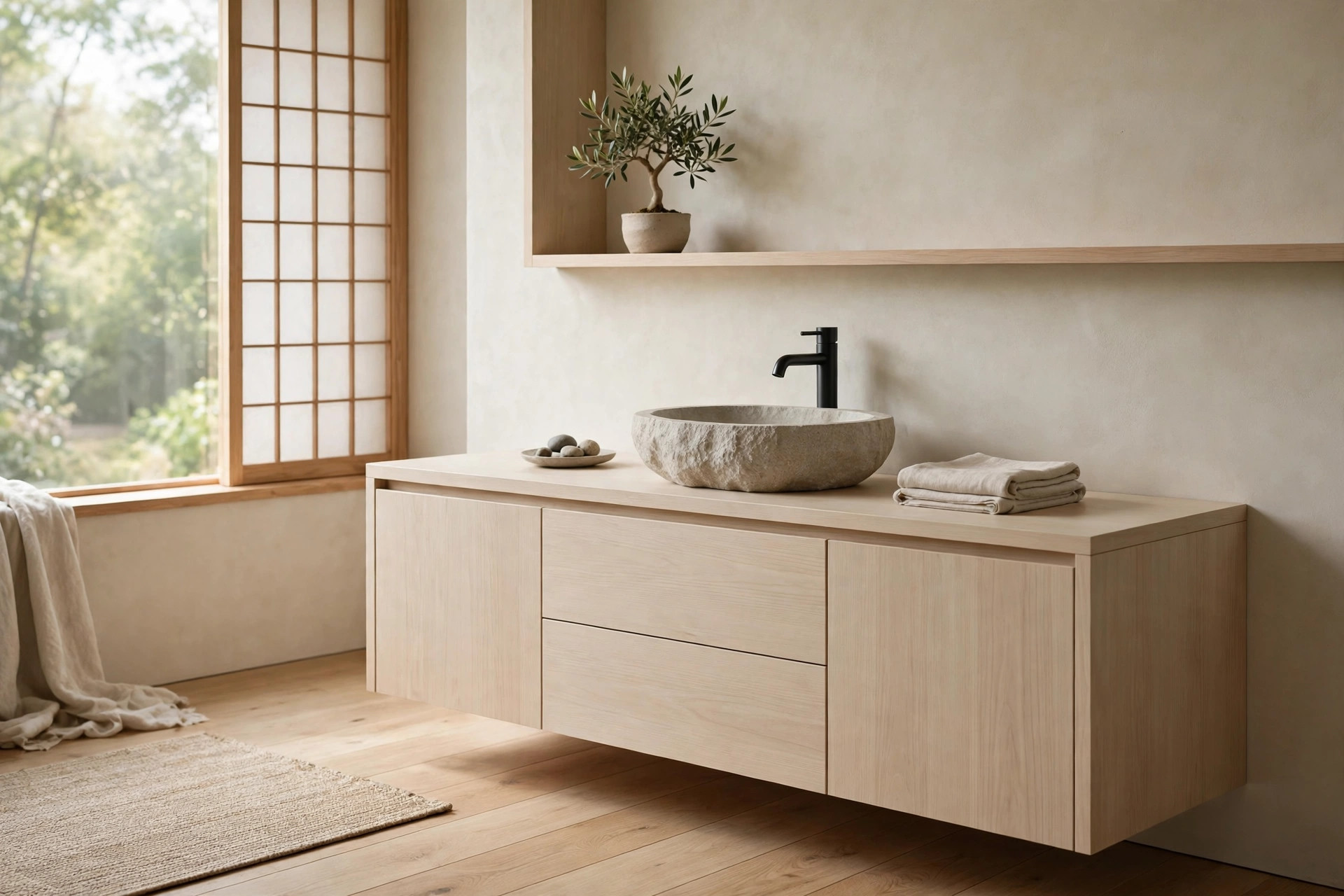
Pick one simple faucet and repeat its finish. A single lever faucet in a soft matte finish usually looks clean and feels easy to use with wet hands. Repeating that same finish on the shower and the towel hook typically pulls the room together without any fuss. Avoid mixing too many metals here, because restraint is what keeps the look serene.
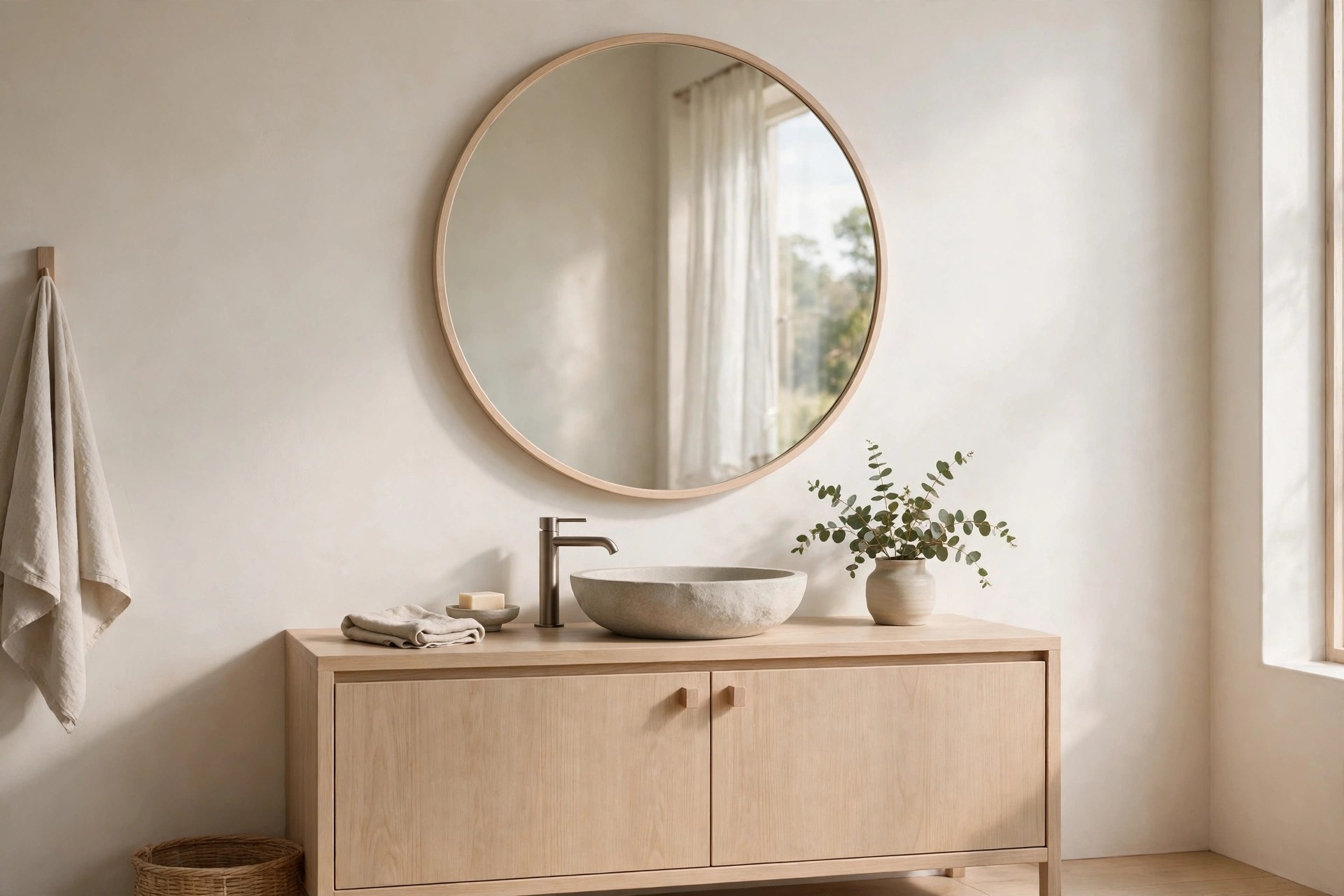
Choose a plain mirror with a slim or wooden frame. A round or softly rectangular mirror softens all the straight lines in a bathroom and reflects light gently around the room. A thin pale wood frame usually ties in beautifully with the vanity below it. Keep the glass generous if you can, since a bigger mirror typically makes a small room feel calmer and brighter.
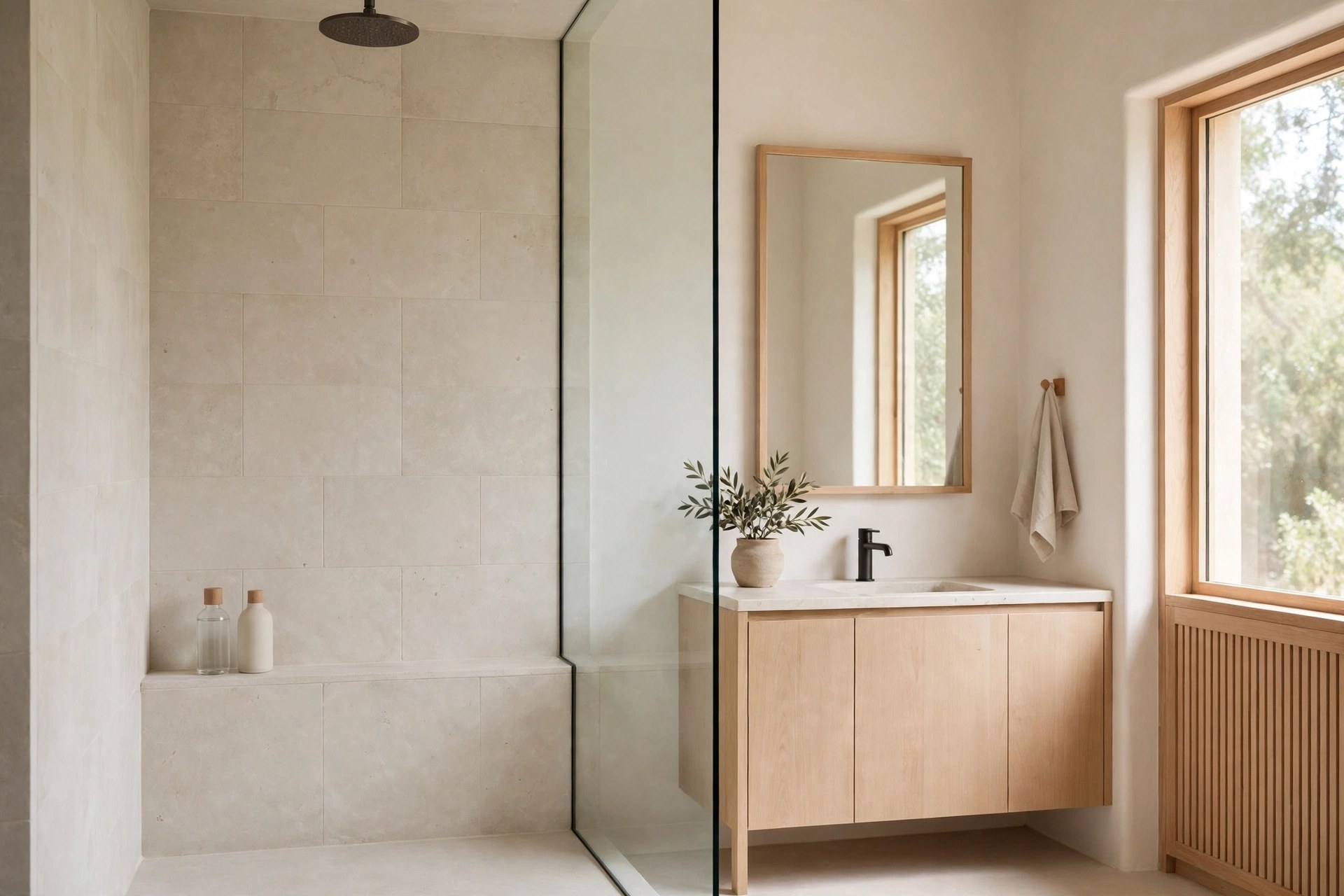
Let the shower stay open and uncluttered. A simple glass panel or a walk in layout keeps the sight lines clear, so the whole room reads as one peaceful space. Inside, one rainfall head or a plain handheld shower is usually plenty, and fewer controls mean fewer visual distractions. Keep bottles on a single low shelf, and the area tends to stay tidy almost on its own.
Storage That Hides the Everyday
Calm is hard to keep when counters are covered in bottles, so storage matters more here than almost any pretty detail. The goal is simple, really, with everything everyday tucked away and only a few lovely things left out.
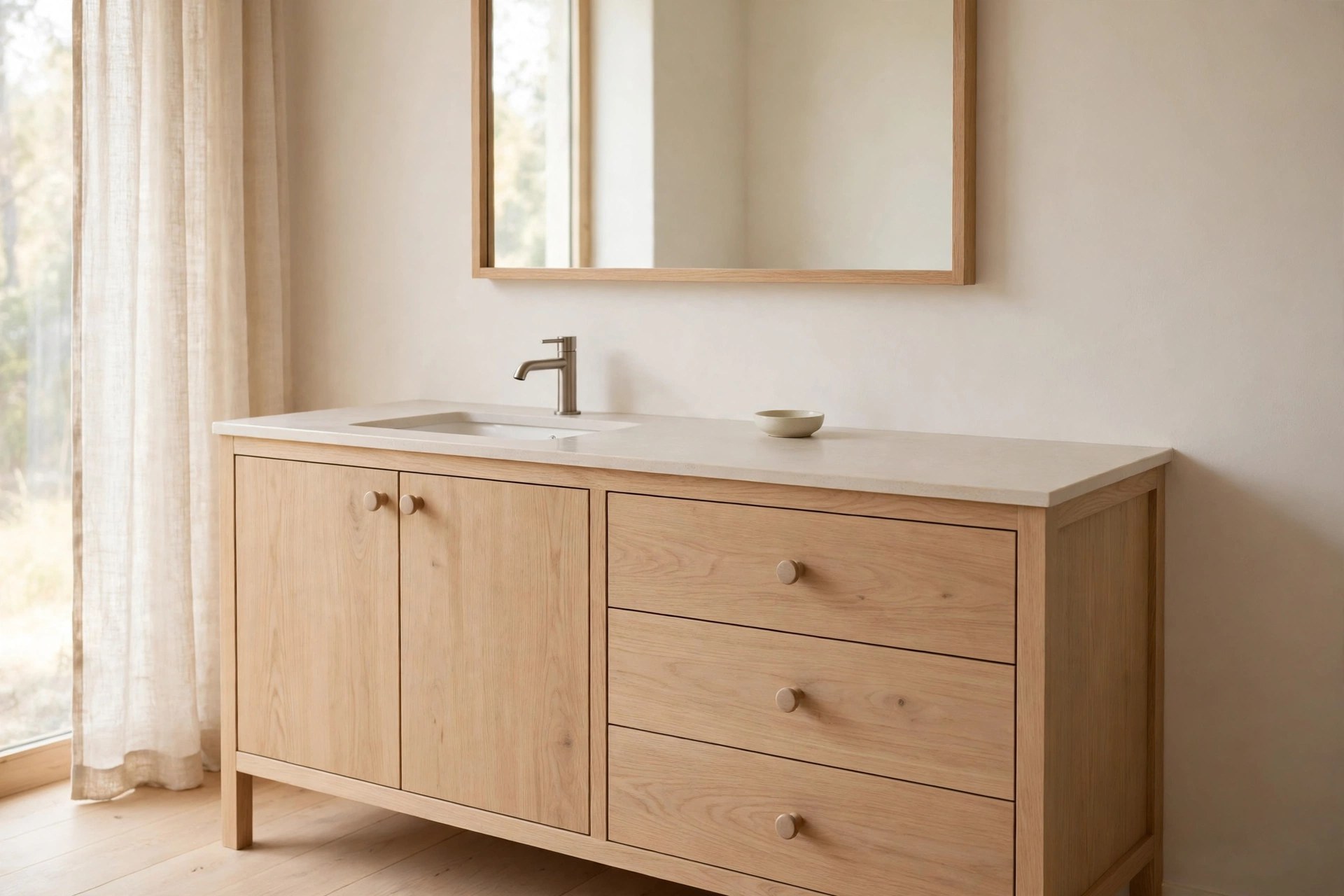
Hide daily essentials behind closed vanity doors. A vanity with doors or deep drawers swallows the toothpaste, the spare bottles, and all the little bits that gather by the sink. When those things disappear, the counter usually looks calm in seconds, even on a rushed morning. Give each person a drawer or a basket inside, and tidying typically takes almost no thought at all.
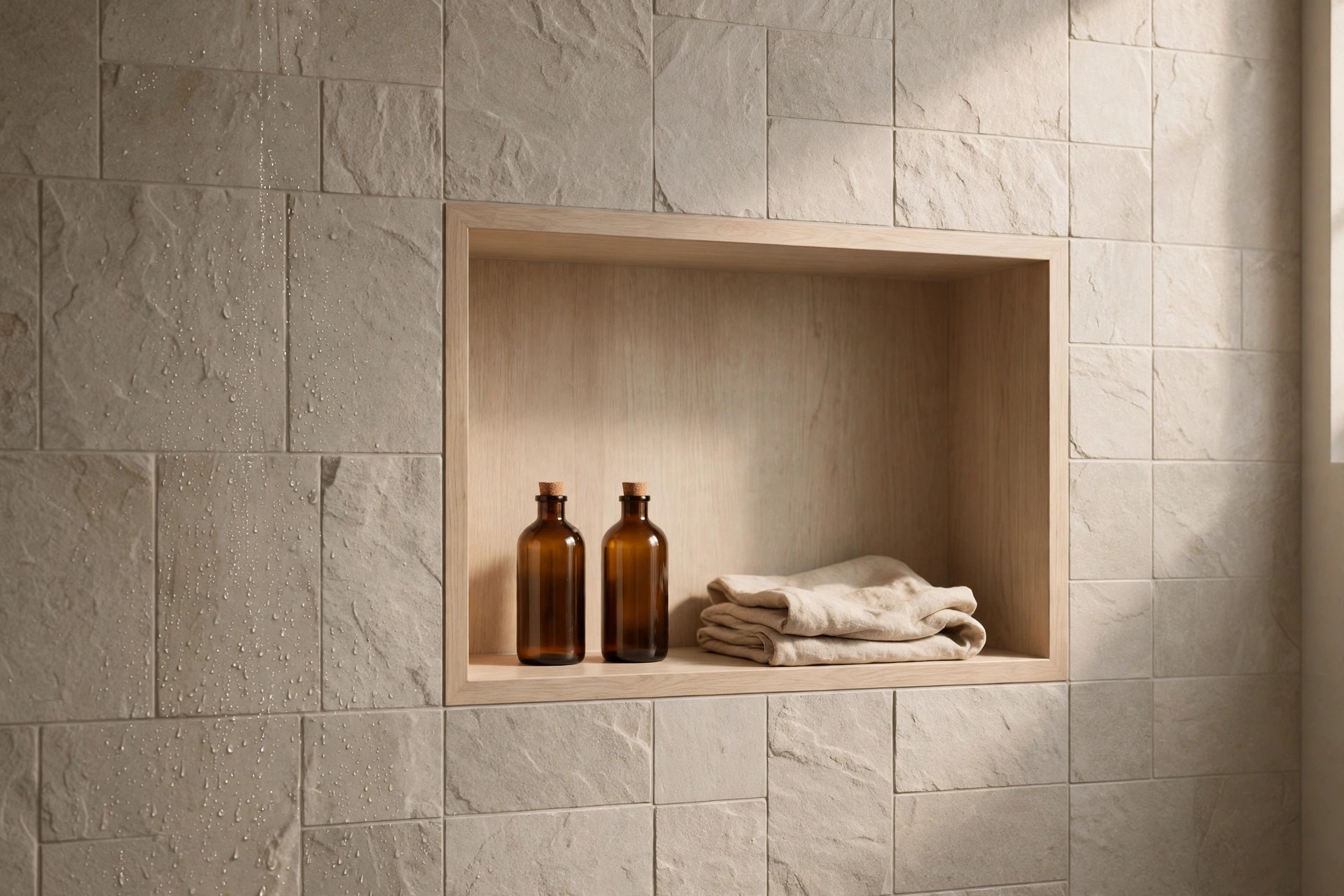
Add one recessed niche or a shallow wall cabinet. A niche in the shower or beside the mirror keeps what you need close without adding bulky furniture to the room. Shallow storage usually works best, because things cannot get lost at the back of a deep shelf. Line it in pale wood or stone to match the room, and it tends to disappear in the nicest way.
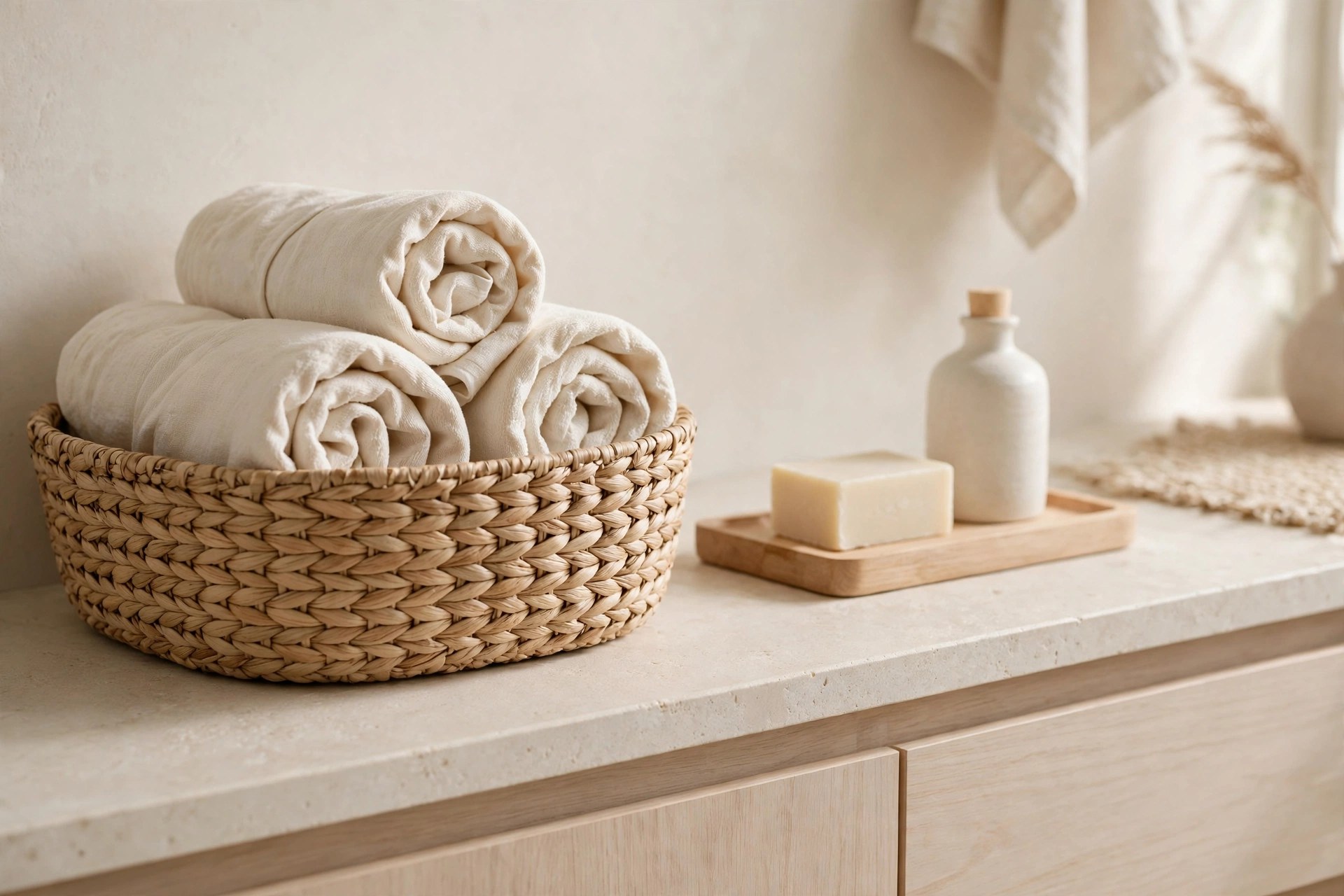
Use small baskets and trays to group what stays out. A woven basket for rolled towels or a simple tray under your soap keeps loose items looking intentional rather than scattered. Grouping things usually tricks the eye into seeing one calm cluster instead of five separate objects. Choose natural fibers and plain shapes, and even your everyday bits start to feel like part of the decor.
Natural Texture: Towels, Mats and Greenery
With such a pale palette, texture is what stops the room from feeling plain. Soft, rough, woven, and smooth surfaces side by side usually give you all the interest you need.
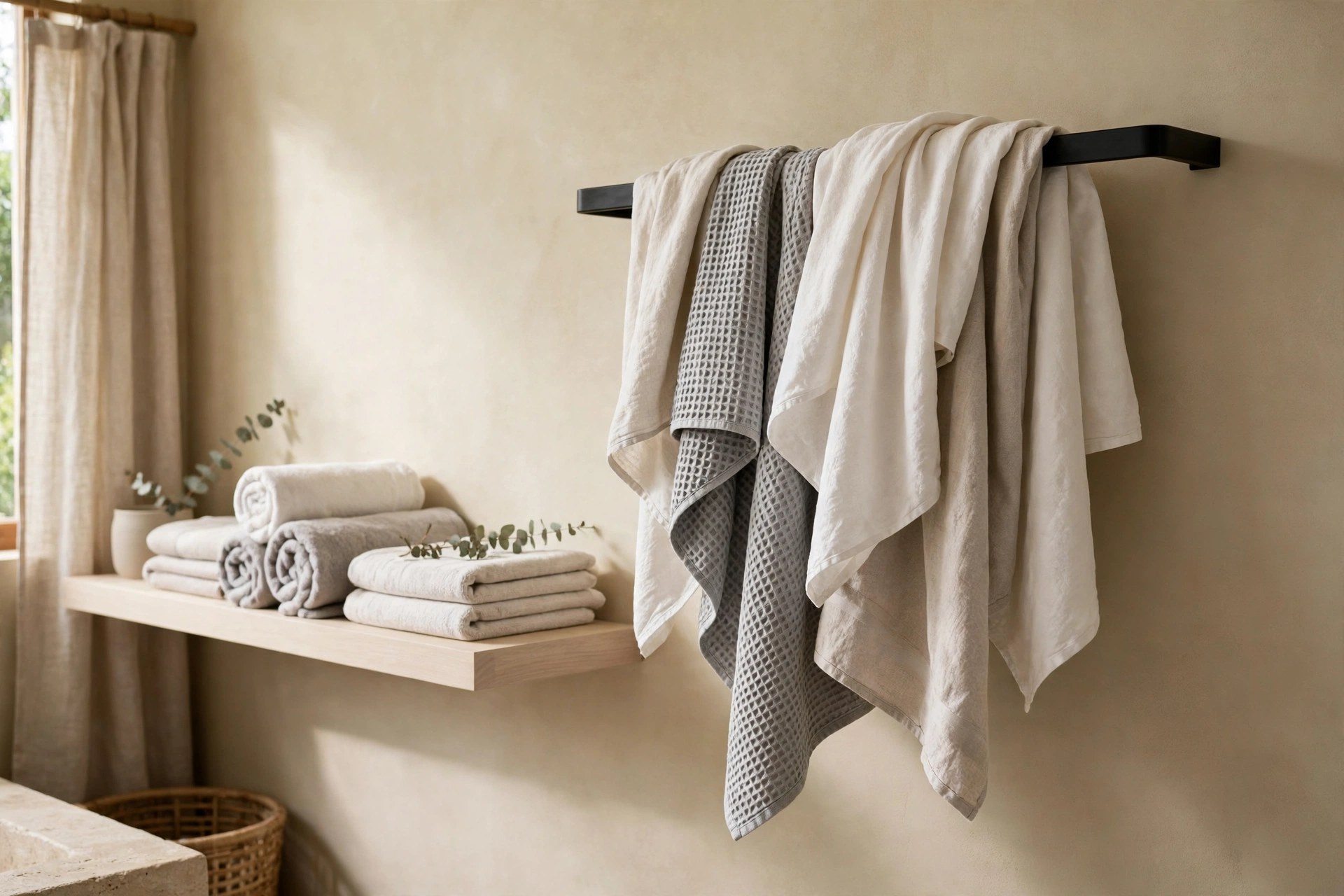
Layer soft linen and cotton towels in quiet tones. Towels in warm white, oatmeal, and soft gray add comfort without bringing in loud color or pattern. A mix of one smooth towel and one waffle weave typically feels lovely and looks gently varied on the rail. Fold or roll them the same way each time, and even laundry day tends to look serene.
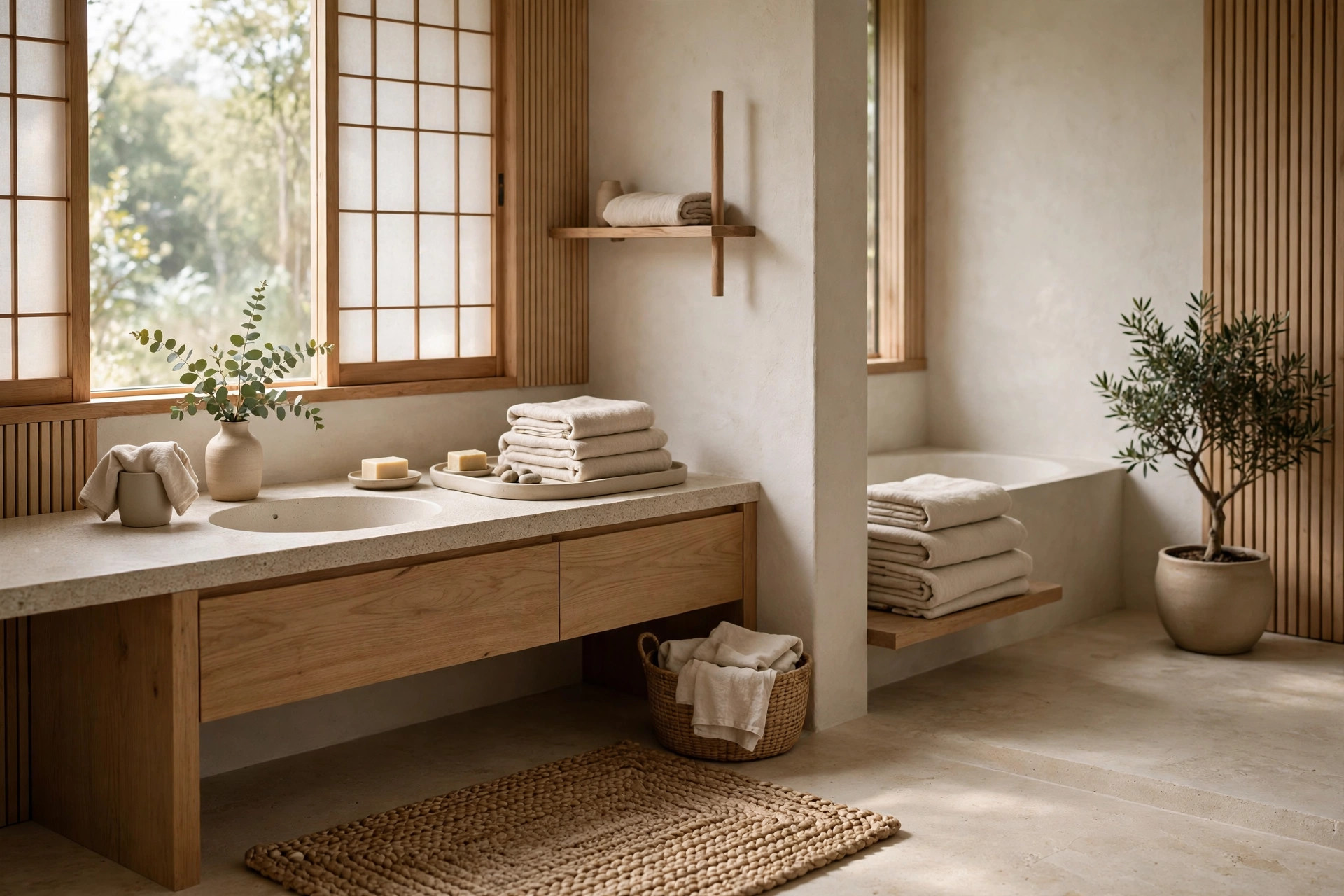
Put a woven or wooden mat underfoot. A woven cotton mat or a slatted wooden mat gives you a warm, dry place to step after a bath or shower. Wood especially suits this style, because it echoes the bath stools and caddies you often see in Japanese bathrooms. Shake it out and air it often, and it usually stays fresh without much fuss at all.
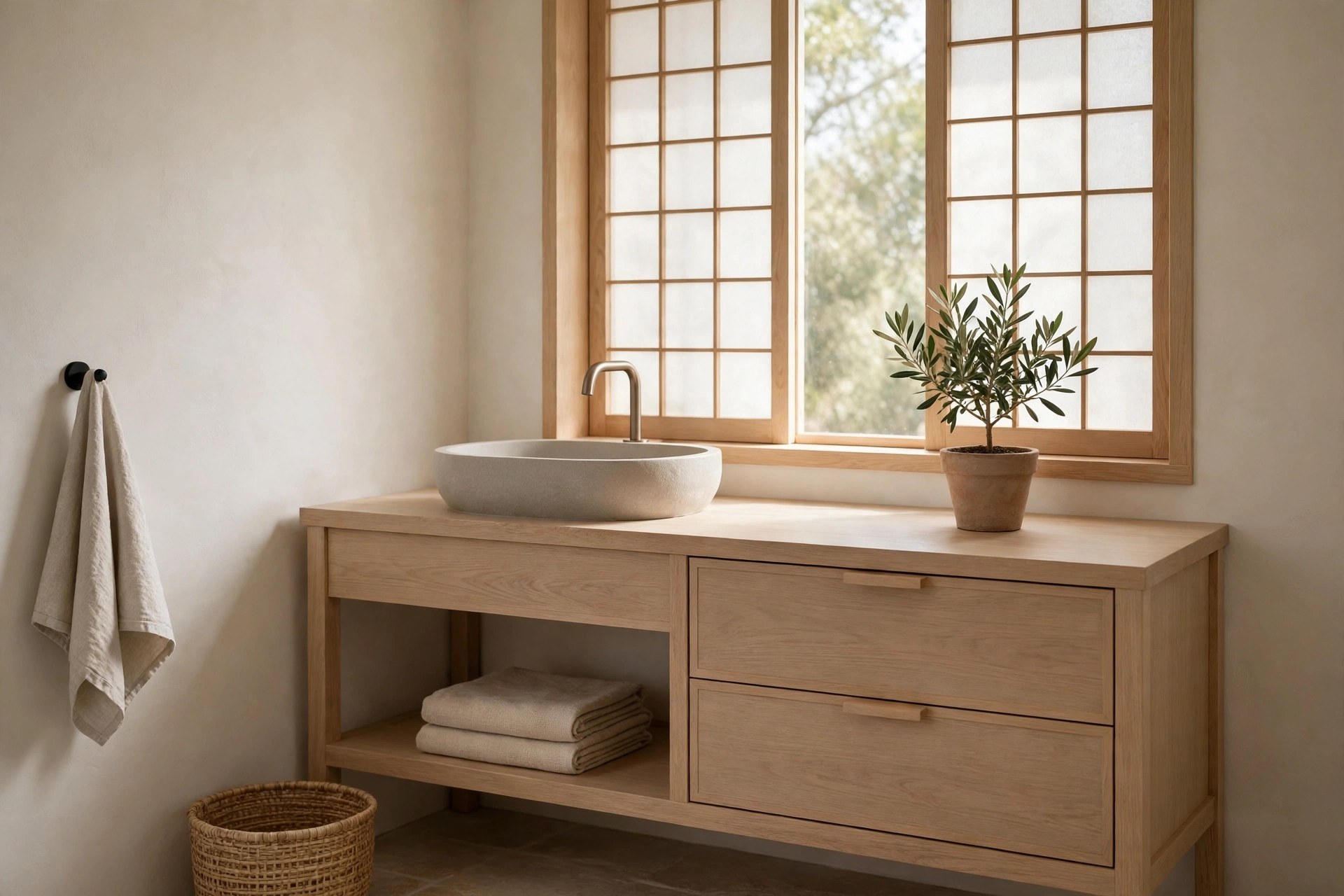
Add one plant for a touch of living green. A single plant on the vanity, the stool, or a high shelf brings life to all that pale wood and stone. Choose something that typically enjoys humidity, and keep the pot plain ceramic or clay so it blends in quietly. One plant is usually enough here, since a whole collection can start to feel busy very quickly.
Keeping the Calm: Light, Scent and Ritual
The prettiest Japandi bathroom still needs the right light and a few small habits to hold its mood through busy weeks. These last touches are inexpensive, and they are usually the ones you end up loving most.
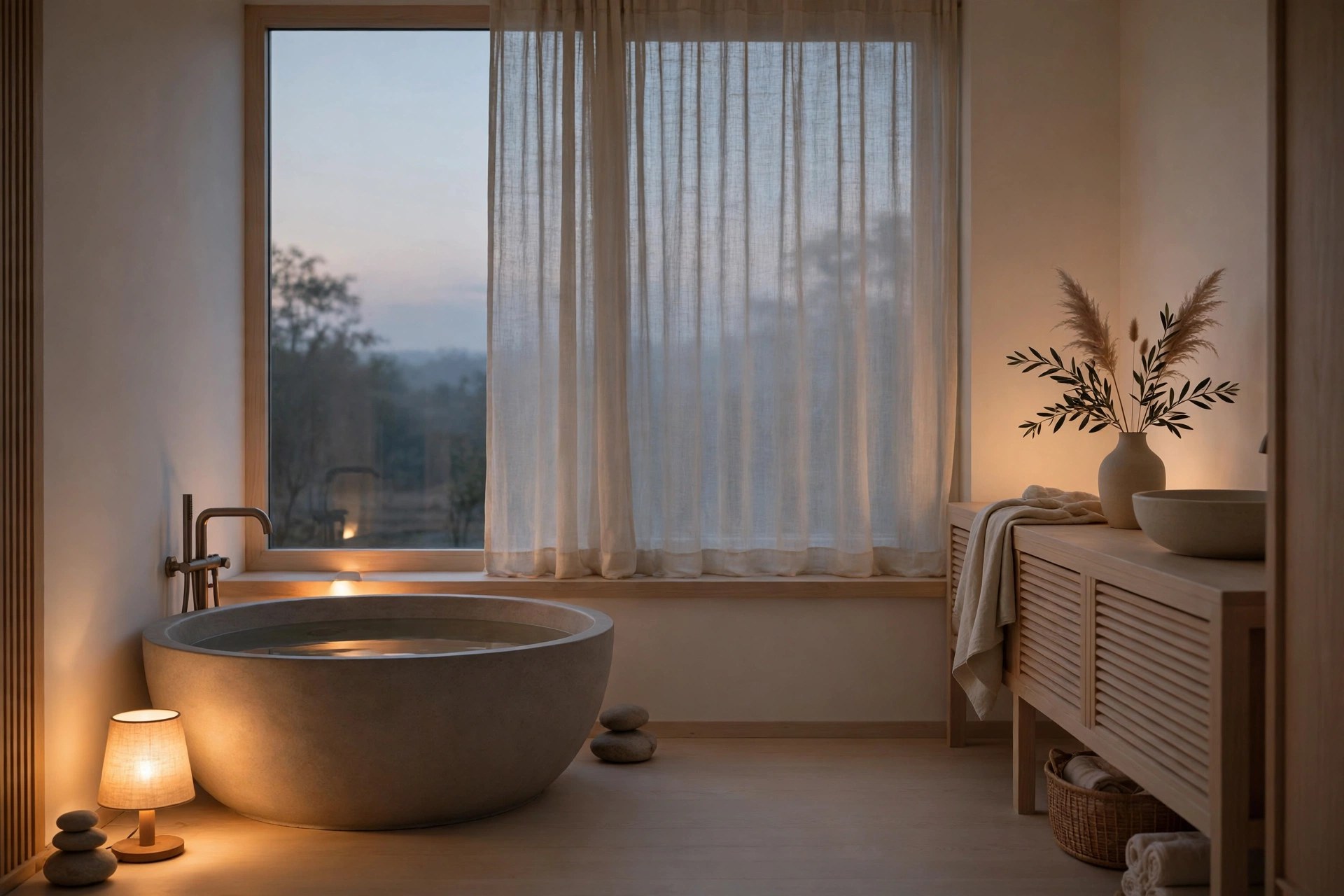
Soften the light with warm bulbs and one low lamp glow. Bright overhead light can undo all your calm work in a second, so warm, dimmable lighting usually serves this style far better. A small lamp effect near the tub, or candles used safely for an evening soak, gives the room a gentle evening glow. During the day, sheer coverings typically soften daylight without shutting it out completely.
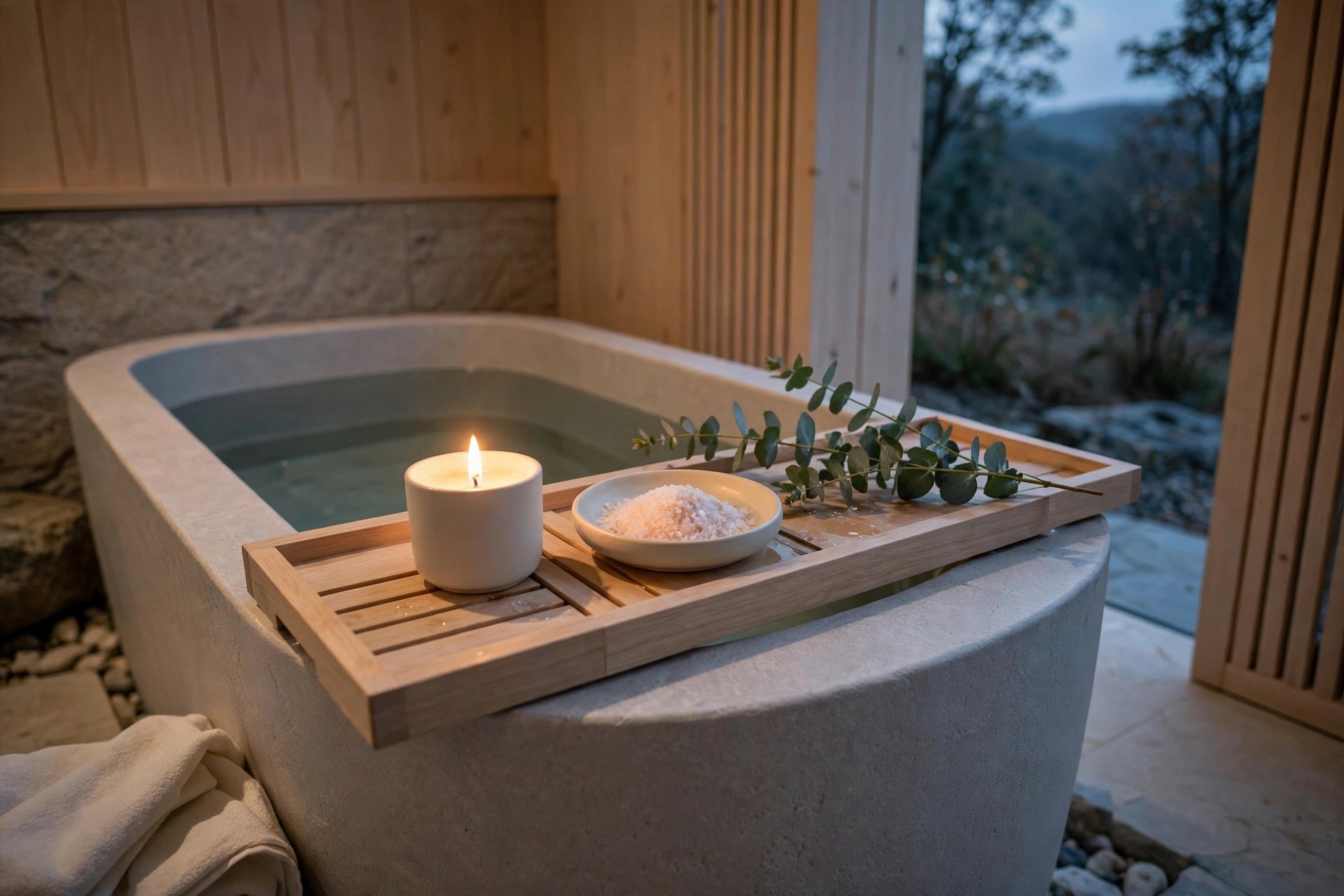
Keep one gentle scent and a simple evening ritual. A single candle, a small dish of bath salts, or a sprig of eucalyptus near the shower is usually plenty, because strong competing scents can feel restless. Pair it with a tiny ritual, like running the bath slowly and putting your phone in another room. Those few quiet minutes typically reset the whole evening, and the bathroom starts to feel like a retreat.
At the end of the day, japandi bathroom ideas are less about buying a whole new room and more about choosing less, and choosing it kindly. Start with the palette, clear the counters, and give your tub a little space to shine. Add texture and soft light as you go, and your bathroom can become the calmest corner of your home, one quiet soak at a time.

Leave a Reply