
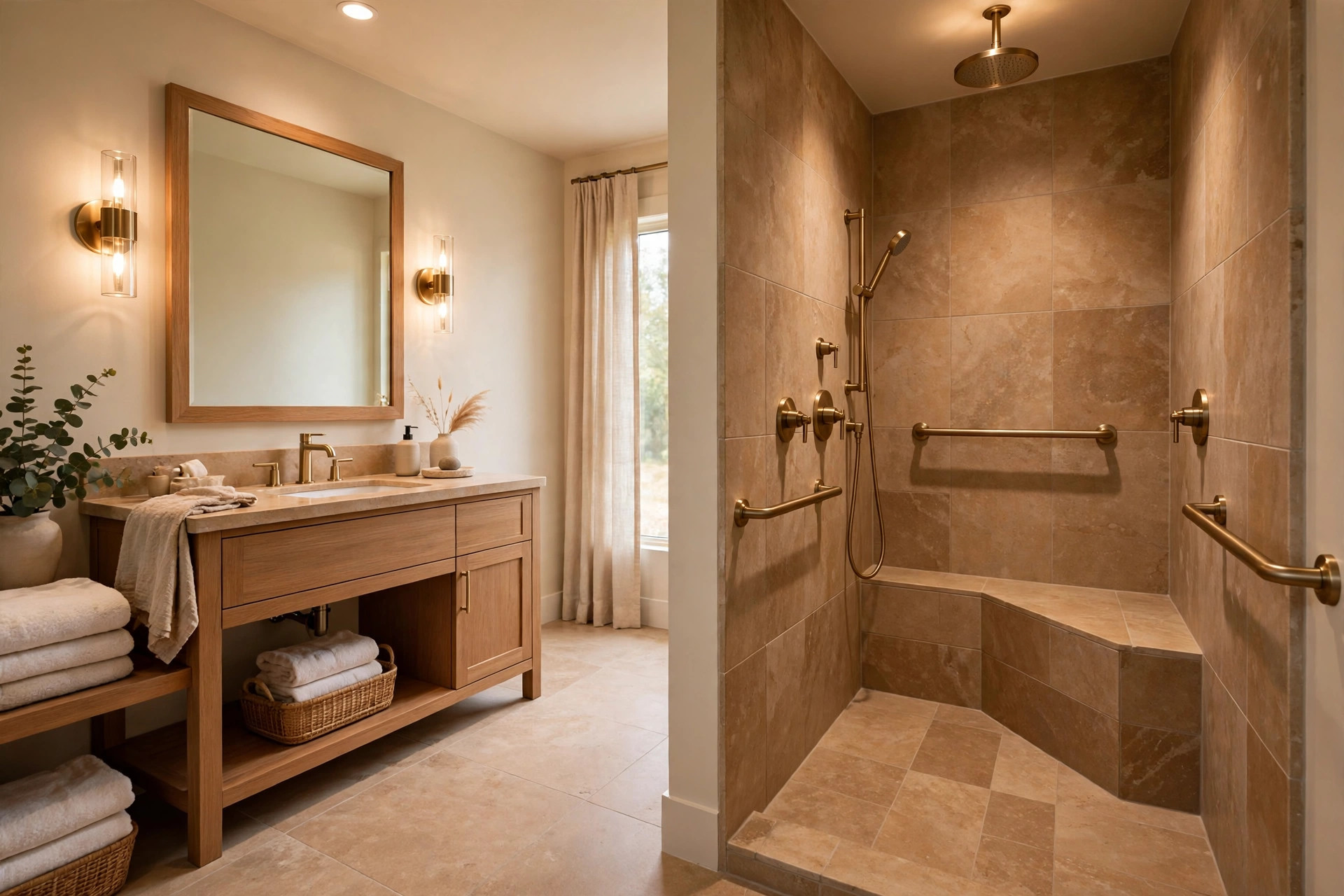
If you have ever looked at accessible bathroom ideas and felt a little deflated by all the plain white plastic and hospital vibes, you are not alone. A bathroom that is easy to use does not have to feel cold or borrowed from somewhere else. With warm finishes and thoughtful layout, it can simply feel like a lovely bathroom that works beautifully for everyone.
The trick is usually to think about comfort first and looks right alongside it, not as an afterthought. A curbless shower can read as a spa detail, a grab bar can match your faucets, and a wider doorway can make the room feel more generous. That quiet confidence is typically what makes the space feel stylish rather than clinical.
Below are fifteen ideas to borrow, starting with layout and moving through the shower, fixtures, storage, and styling. Take the ones that fit your room and your routine, and leave the rest for later.
Start With a Layout That Gives You Room to Move
Good looks usually start with space, because a bathroom that feels open and unhurried already feels more luxurious. You do not always need a bigger room, because clearing the middle often does most of the work.
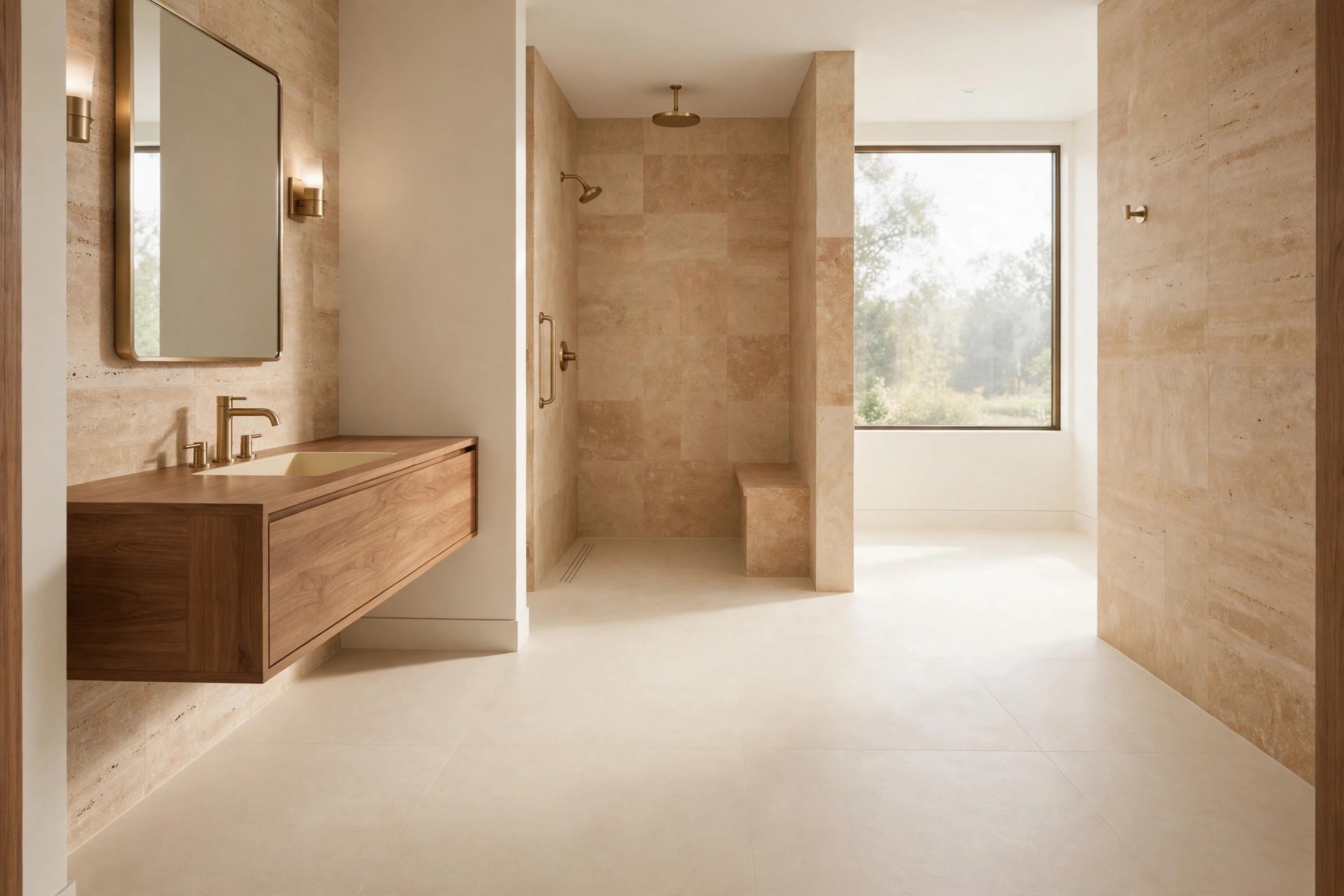
Keep a wide, clear stretch of floor in the middle of the room. An open center usually makes everything feel easier, whether you are turning around, helping a little one, or just carrying a laundry basket through. It typically helps to keep the floor free of bins, scales, and spare stools that creep into the walking path. That breathing room also tends to make the space look calmer and bigger.
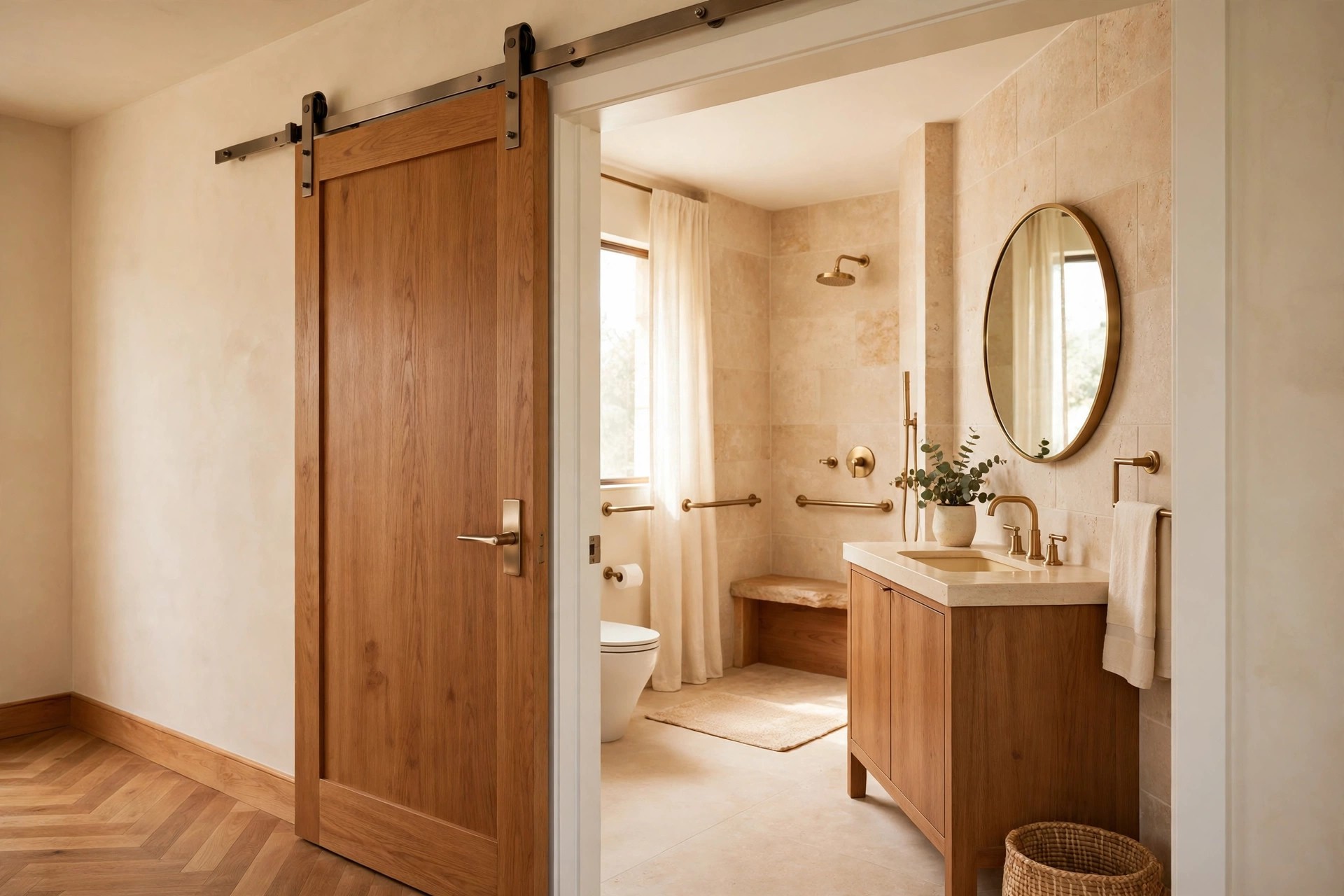
Choose a door that opens easily and gives you a generous way in. A wider doorway, or a door that swings out or slides along the wall, usually feels simpler to use when your hands are full or you are moving slowly. A lever handle is typically easier to turn than a round knob, and it looks smart too. Sort the door early if you are redoing the room, while the layout is still flexible.
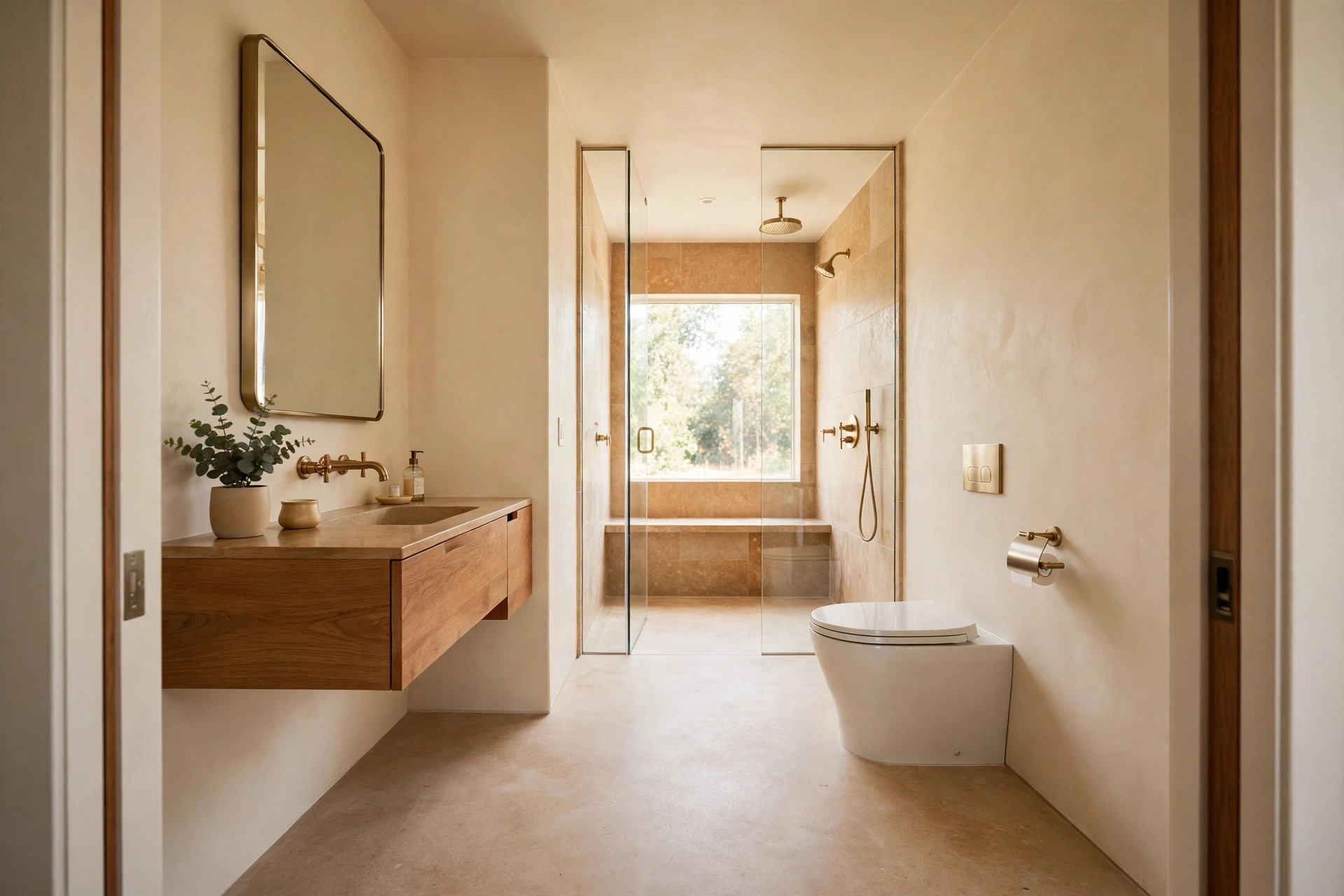
Plan one easy route from the door to the shower, sink, and toilet. Think of it as a gentle path with nothing awkward to step around, because the route you use half asleep in the morning should be the simplest one in the room. Keeping that line clear usually means placing tall storage against a wall rather than in the middle of things. A clear route tends to make the whole bathroom feel more relaxed.
A Shower That Feels Like a Spa
The shower is where accessible bathroom ideas really get to show off, because so many practical choices here are the same ones you would see in a boutique hotel.
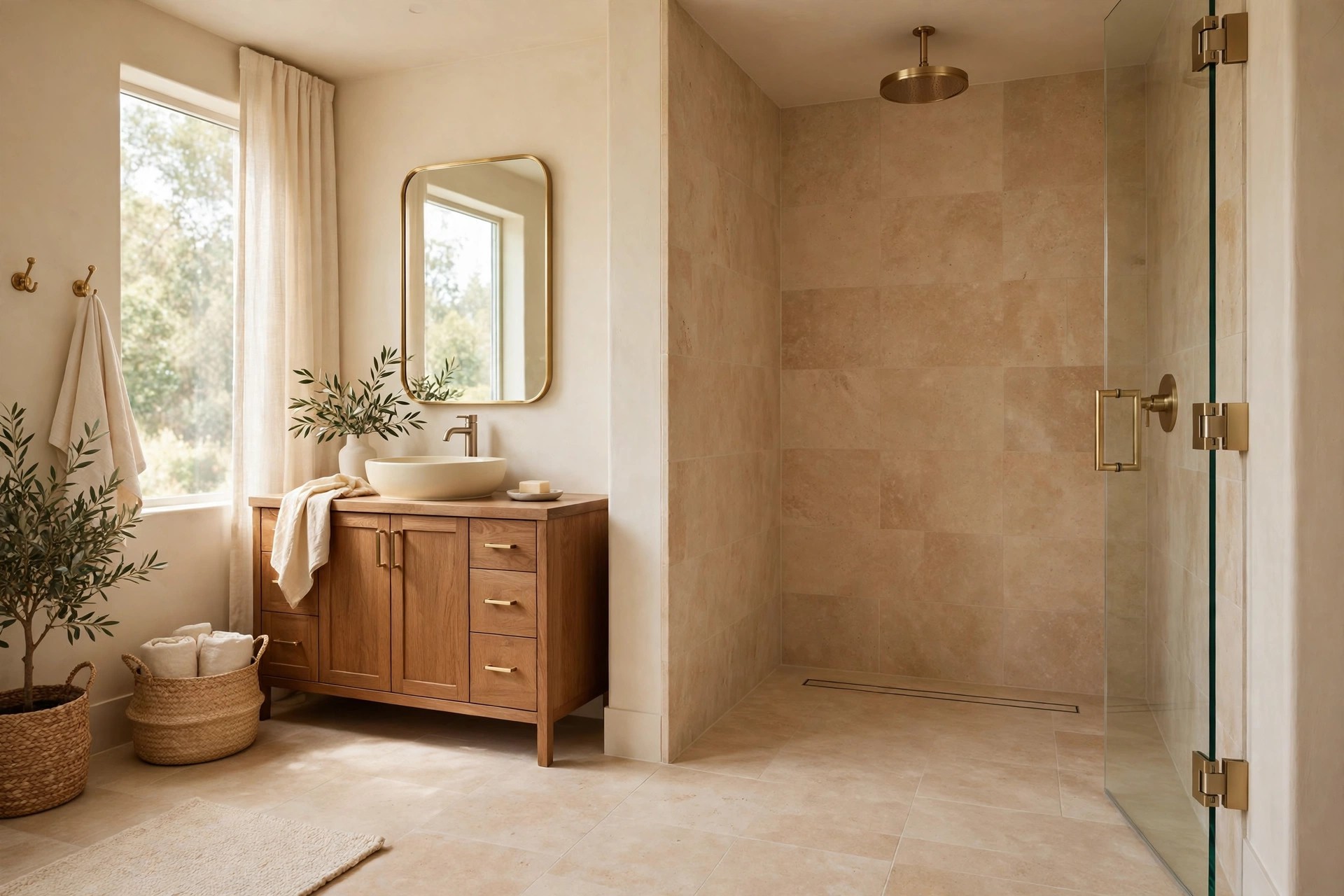
Go curbless so you can simply walk straight in. A shower floor that flows on from the bathroom floor, with just a gentle slope toward the drain, usually feels open and elegant. There is no little step to negotiate, so the room tends to look bigger too. Large tiles or a neat linear drain typically keep the look clean and calm.
Controls, Niches and Details Within Easy Reach
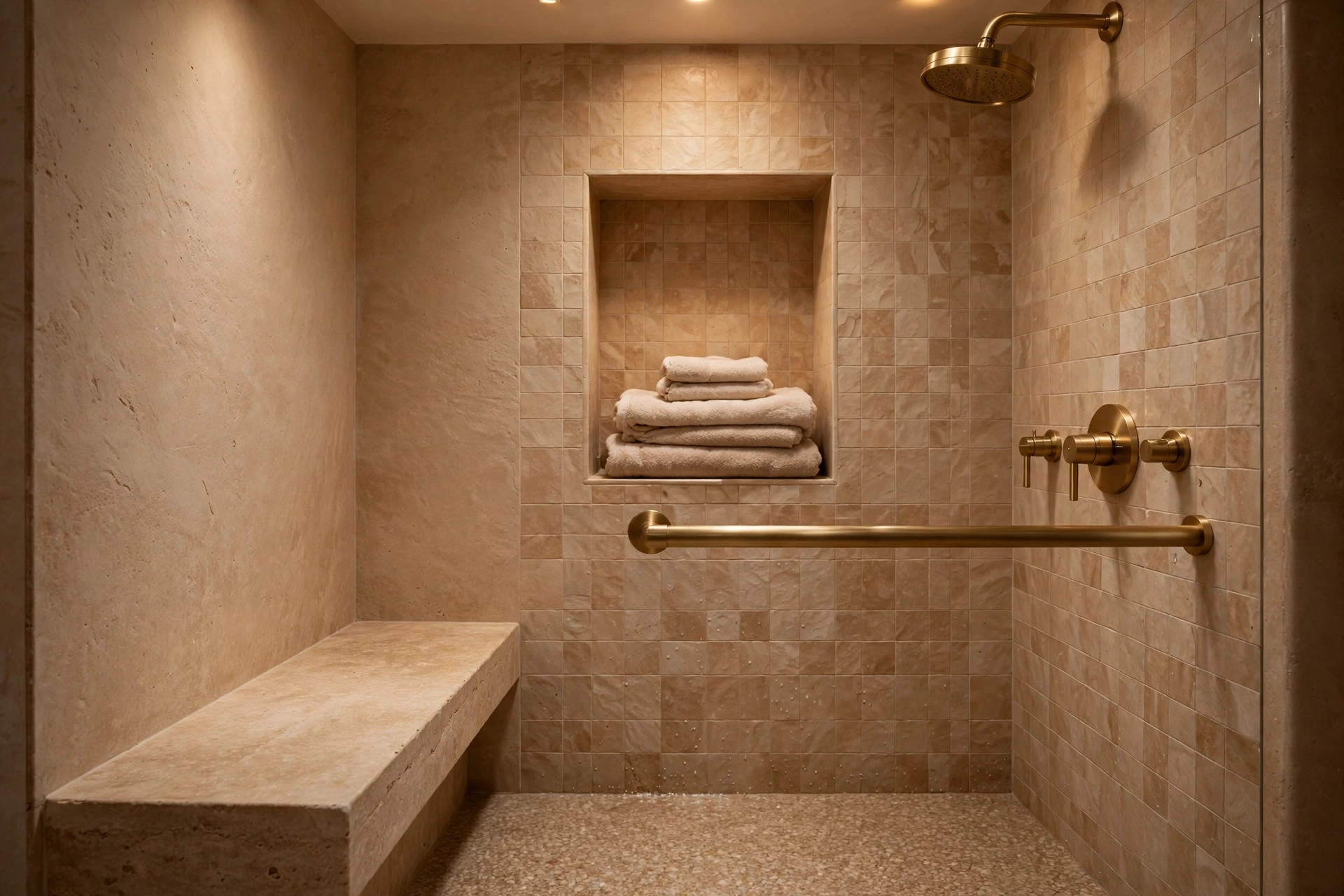
Build in a bench that looks like part of the architecture. A tiled bench along one wall of the shower gives you a comfortable place to sit, rest a foot, or set down bottles while you wash. When it is finished in the same tile as the walls, it usually blends right in and reads as a design feature. Add a handheld shower head nearby and the setup typically feels thoughtful and unhurried.
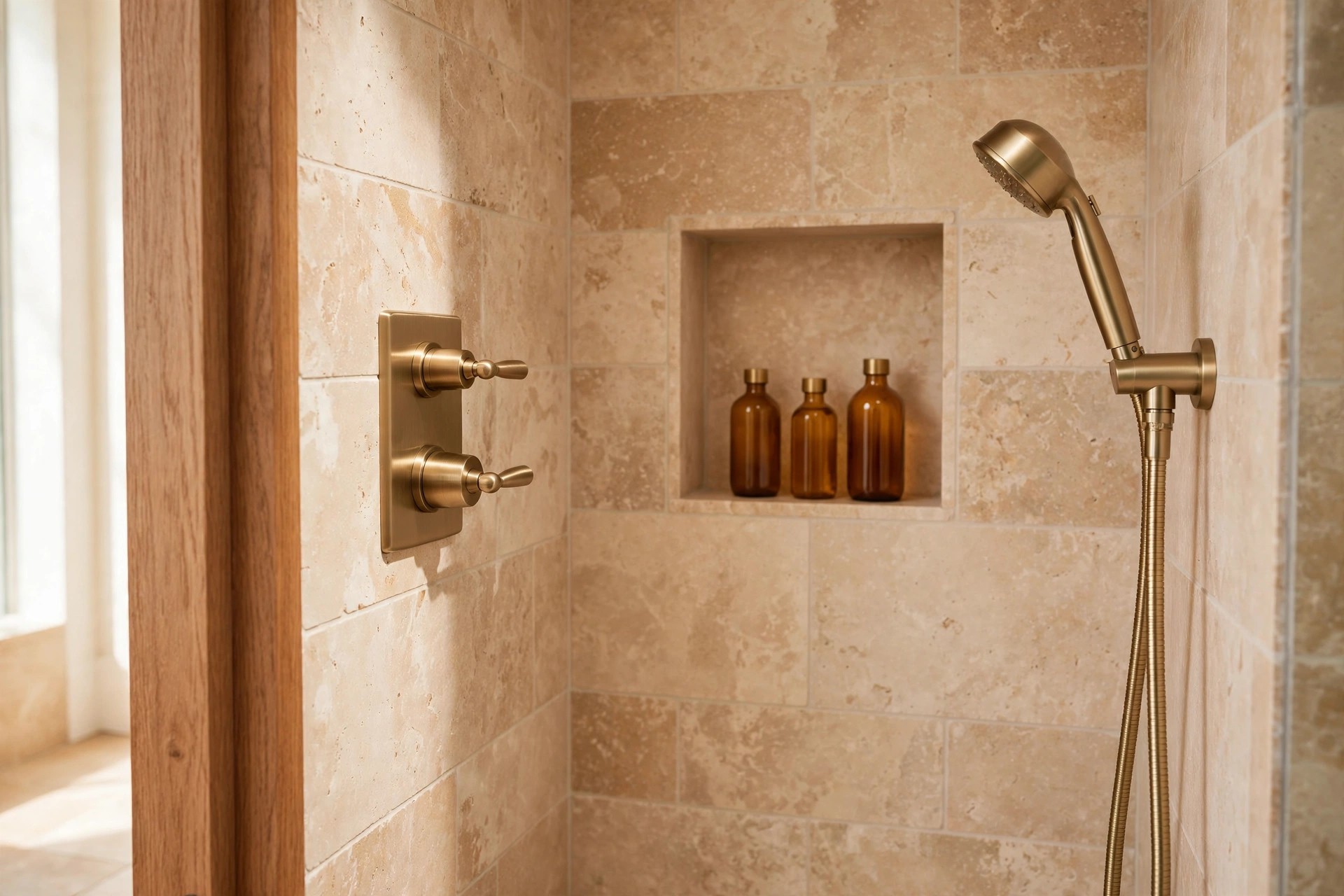
Place the controls and storage where you can reach them comfortably. Controls set near the entrance of the shower mean you can usually turn the water on and get the temperature right before you step under it. A recessed niche at a comfortable height keeps shampoo and soap tidy without a caddy hanging in your way. Thoughtful placement like this tends to disappear into daily life.
Grab Bars and Fixtures That Look Like Design Choices
Support does not have to look like equipment. When a bar shares a finish and a shape with everything else in the room, your eye usually just reads it as part of the scheme.
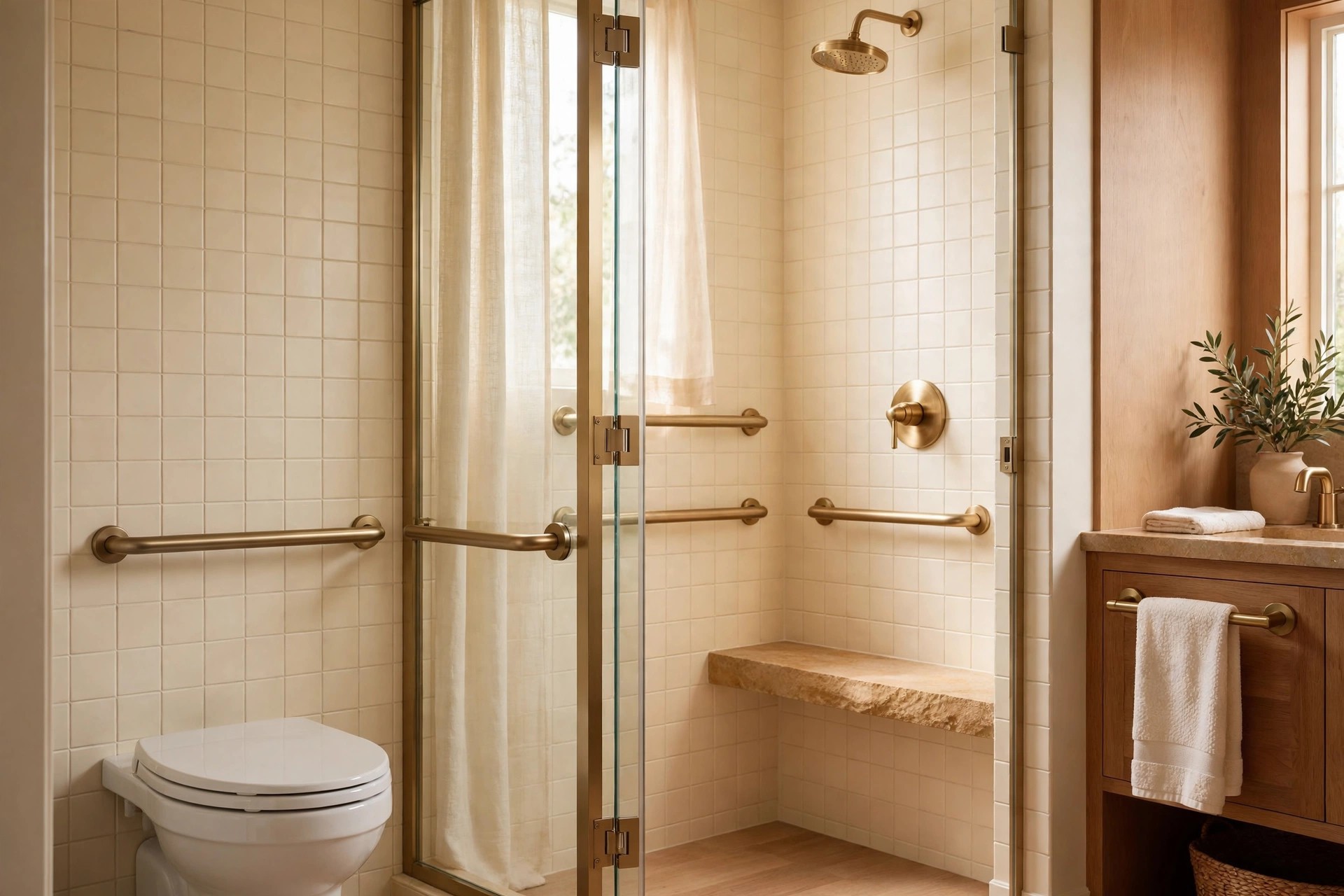
Match your grab bars to your faucets and towel bars. If your taps and shower fittings are brushed brass, choose bars in the same warm finish and they will typically look like a matched set you picked on purpose. Place them where a hand naturally reaches, by the shower entrance, beside the toilet, and along the bench wall. Fitted securely, they feel solid and quiet, and the room keeps its polished look.
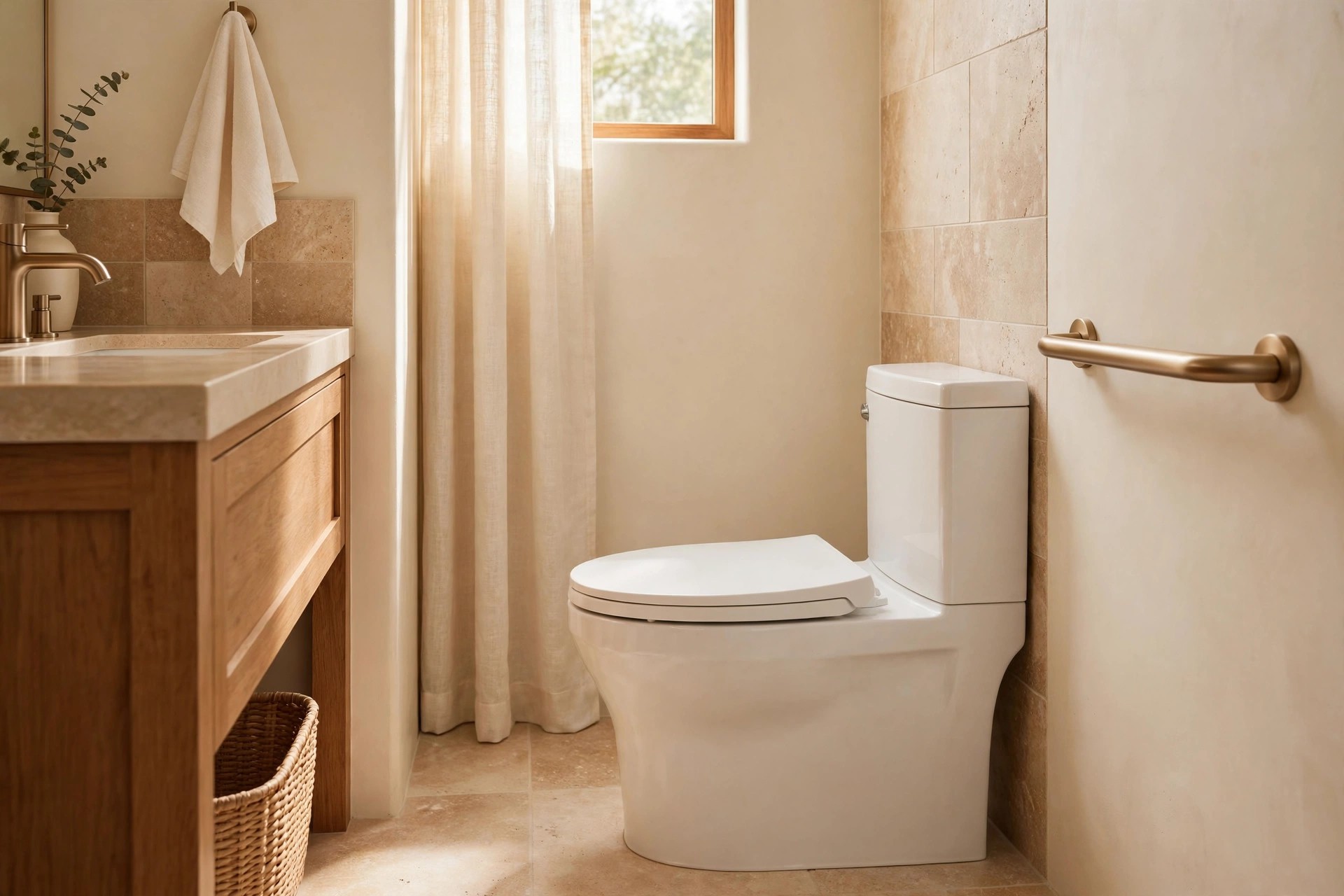
Pick a comfort height toilet with a clean, modern profile. A slightly taller toilet is usually a little easier to sit down on and stand up from, and plenty of the sleek, skirted styles you see in design shops come at that height as standard. A smooth sided base is typically quicker to clean around too. Pair it with a soft close seat and it feels like a true upgrade.
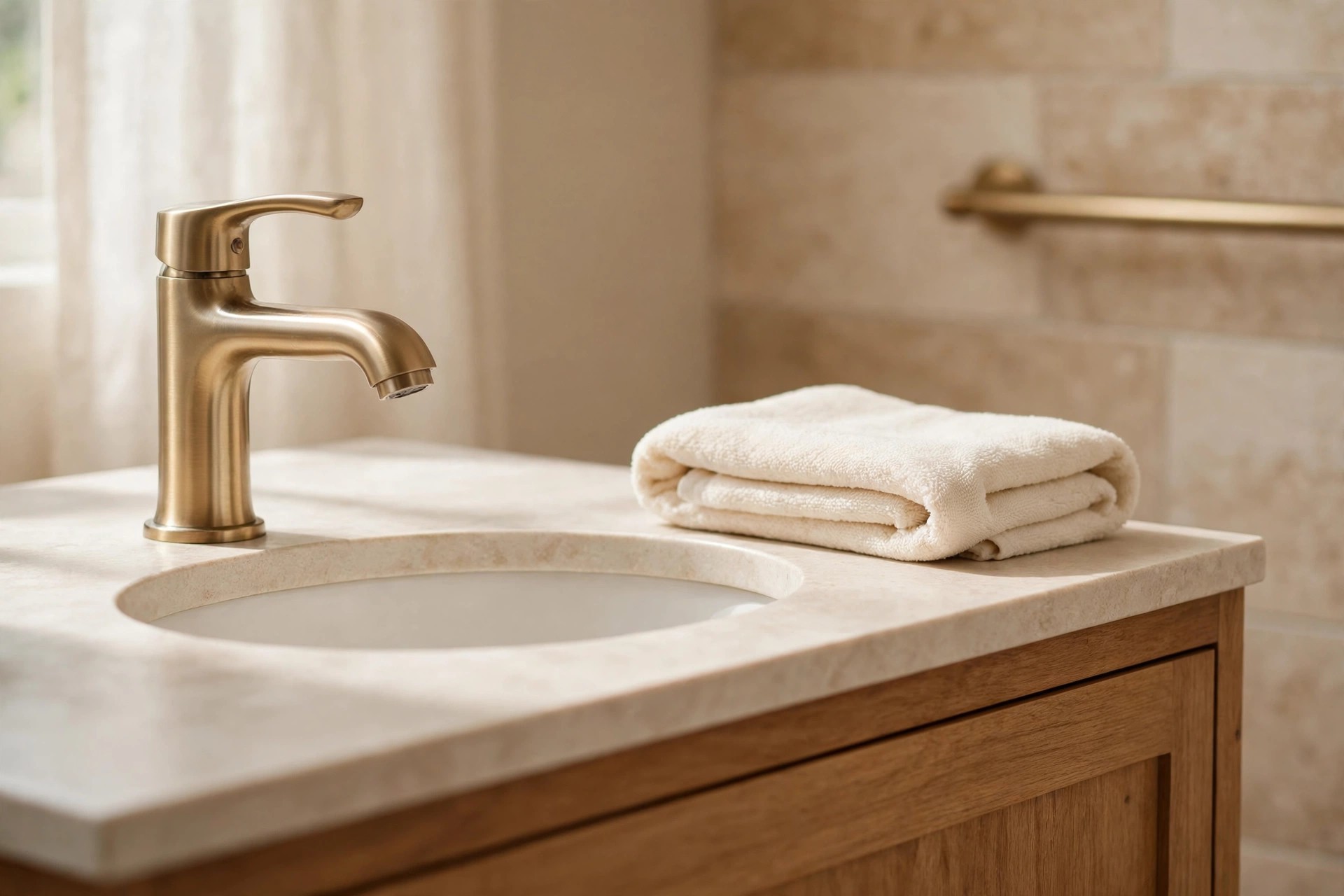
Choose lever handles and simple, easy to use faucets. A single lever faucet usually asks less of your hands than two separate taps you have to grip and turn, and it looks streamlined on the vanity. The same goes for lever door handles and easy shower controls with clear, simple shapes. When every handle feels comfortable, the bathroom tends to feel welcoming.
Vanities and Storage Without the Stretch
Storage is where a bathroom either helps you or quietly fights you every morning. The goal is usually simple, with everyday things close and nothing balanced on the edge of the sink.
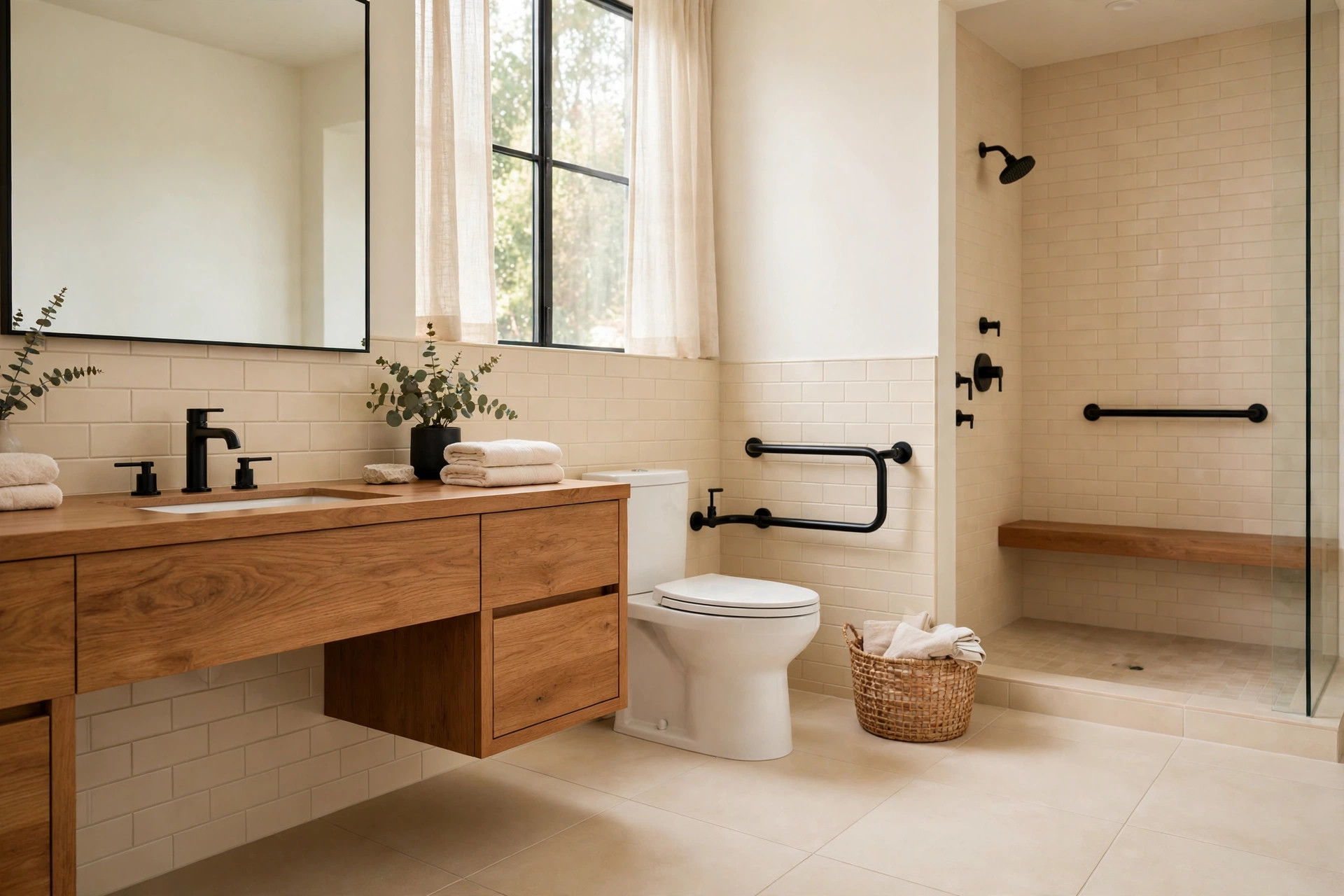
Float the vanity or leave open space beneath the sink. A wall mounted vanity with clear space underneath usually lets you get comfortably close to the basin, and it makes the floor look lighter and easier to clean too. Warm wood fronts keep the look soft and furniture like, so it never feels stark.
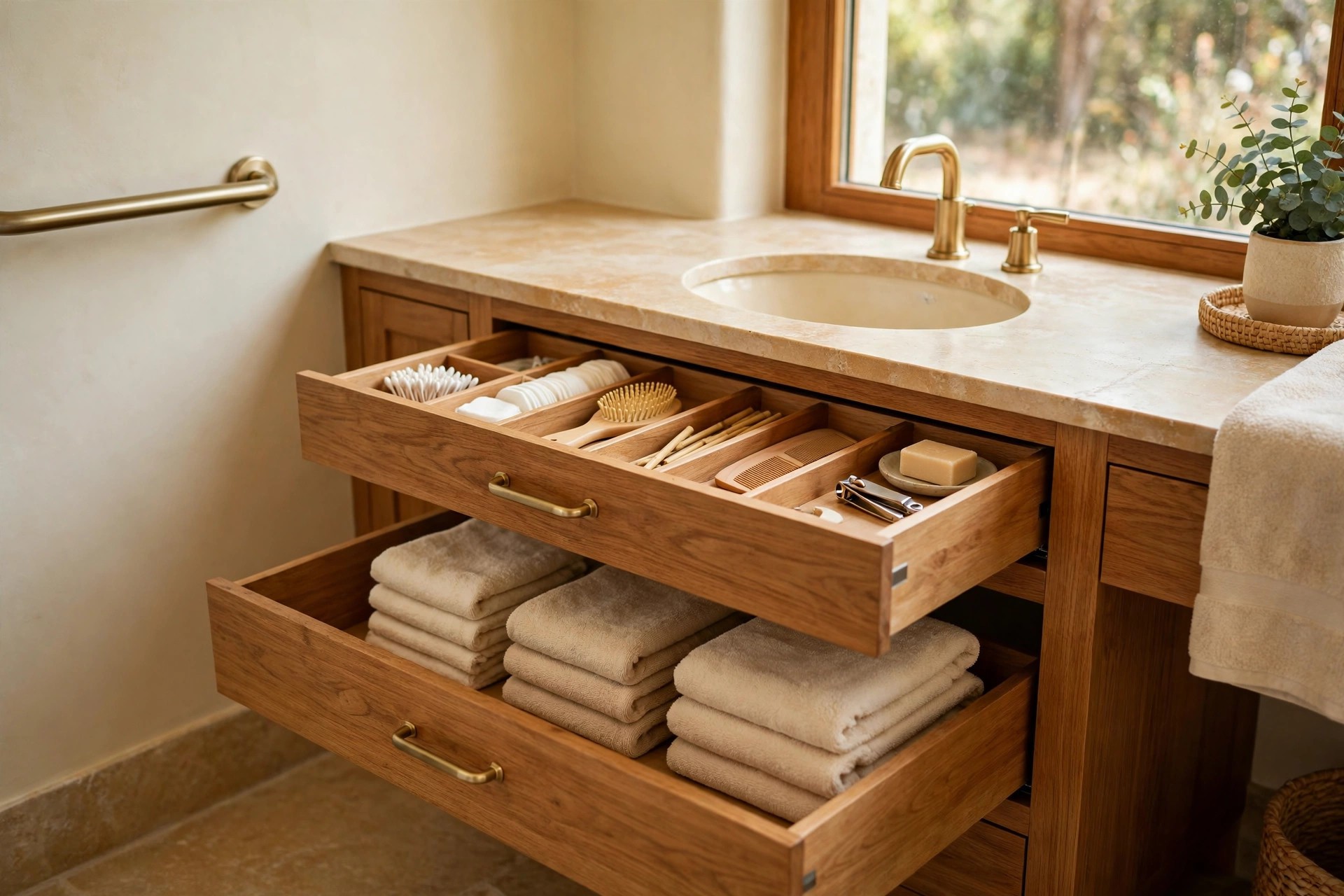
Swap deep cupboards for drawers and pull out storage. Drawers typically bring everything toward you, so you are not on your knees hunting for a hairdryer at the back of a dark cupboard. Shallow top drawers suit makeup and toothbrushes, while a deeper one below handles towels and bottles nicely. Simple dividers usually keep it all calm, and a calm drawer makes mornings feel smoother.
Floors, Lighting and Warm Finishes
Finishes are what separate a welcoming bathroom from one that feels like a waiting room. Warmth usually comes from texture, tone, and light working together.
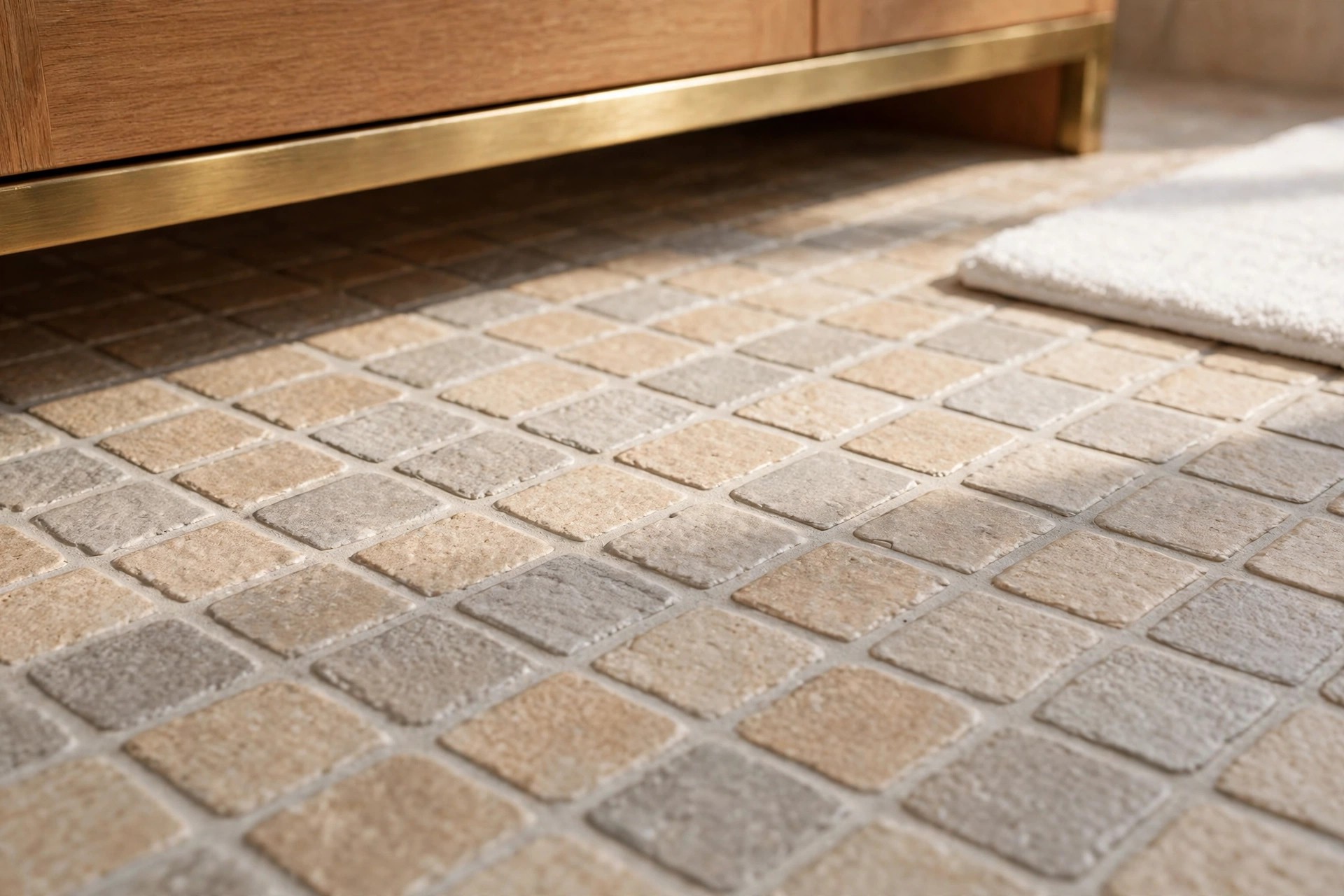
Choose matte, textured floor tiles that feel steady underfoot. Smaller tiles with more grout lines, or a softly textured stone look finish, typically give your feet more to connect with, especially when the floor is wet. A warm gray, sand, or soft terracotta tone keeps things feeling cozy rather than stark white. Try a sample on the floor and walk on it before you decide.
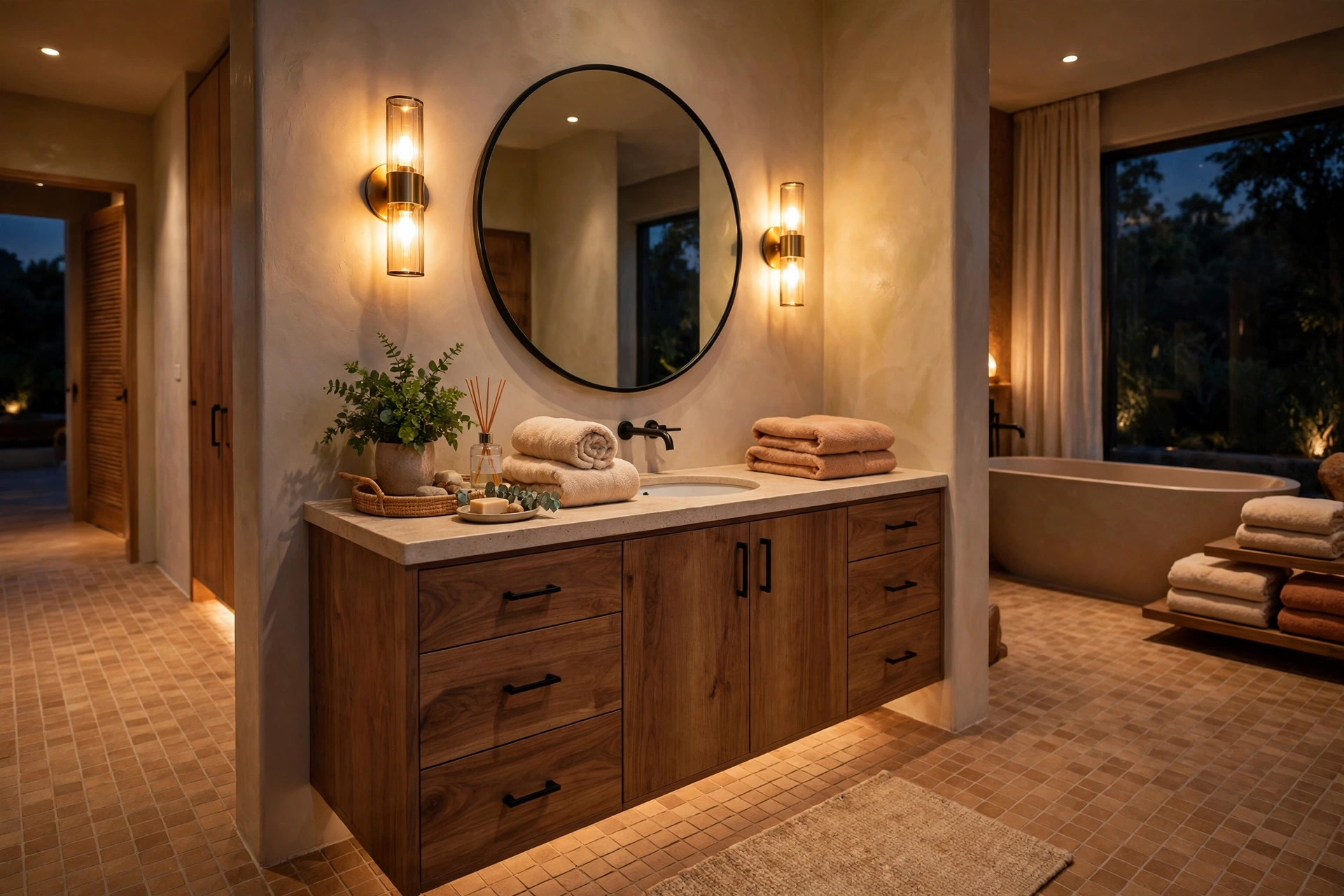
Layer your lighting so the room works at every hour. Soft light at face height on both sides of the mirror usually flatters more and casts fewer shadows than a single bright light overhead. Add a gentle low level light for nighttime visits, so you are not blinking under full glare at two in the morning. Warm toned bulbs throughout typically tie the whole scheme together and make tile and wood look richer.
Styling Details That Keep It Personal
Once the practical bones are in place, styling is what makes the room unmistakably yours. These are the touches that stop a practical bathroom from ever feeling plain.
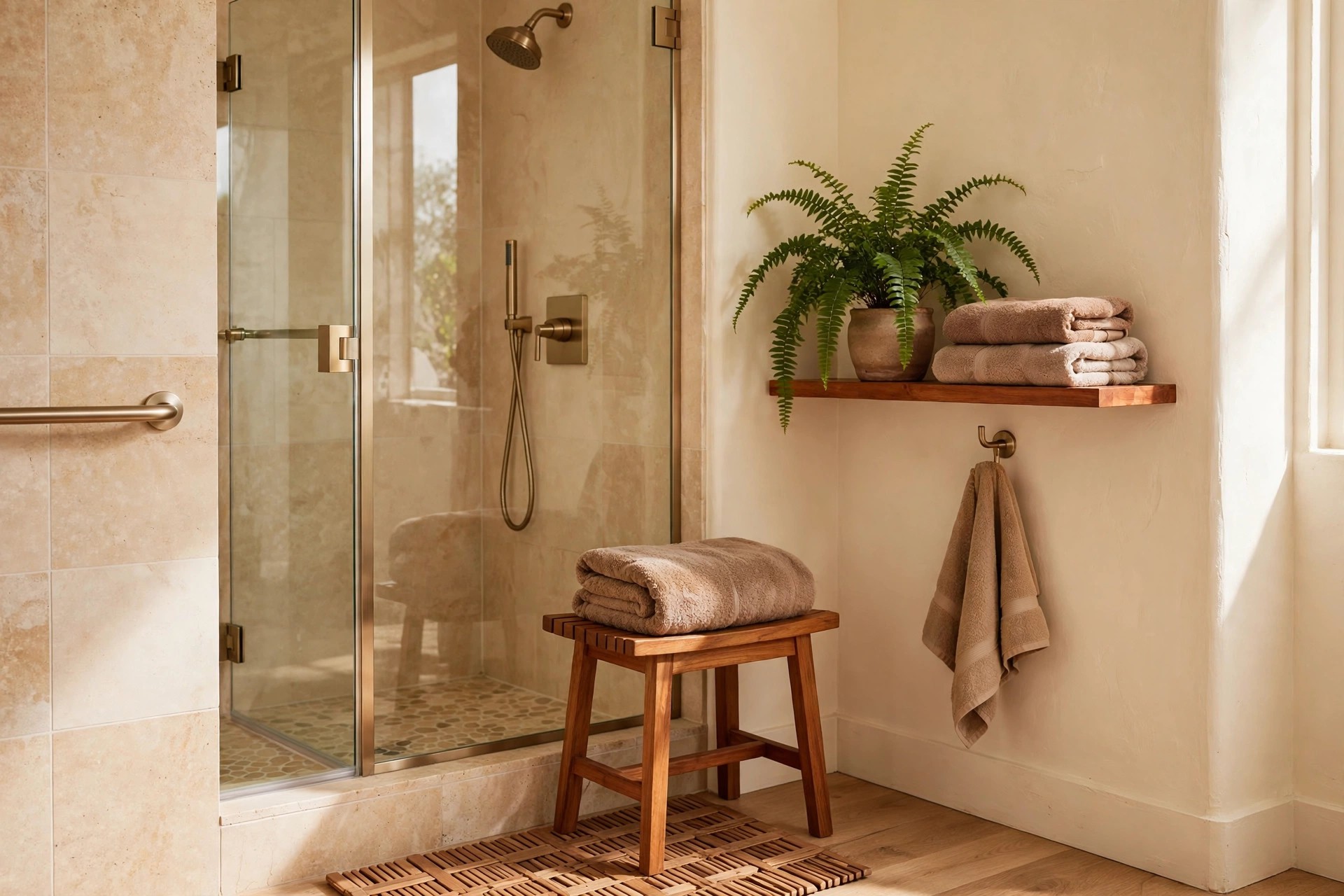
Bring in warm wood, soft textiles, and a little greenery. A teak stool, a wooden bath mat, or a simple stool by the shower adds warmth and a place to set a towel or a book. Plush towels in a warm, earthy palette soften all the hard surfaces, and a plant that enjoys humidity usually thrives happily on a shelf. These layers tend to make the room feel lived in and loved.
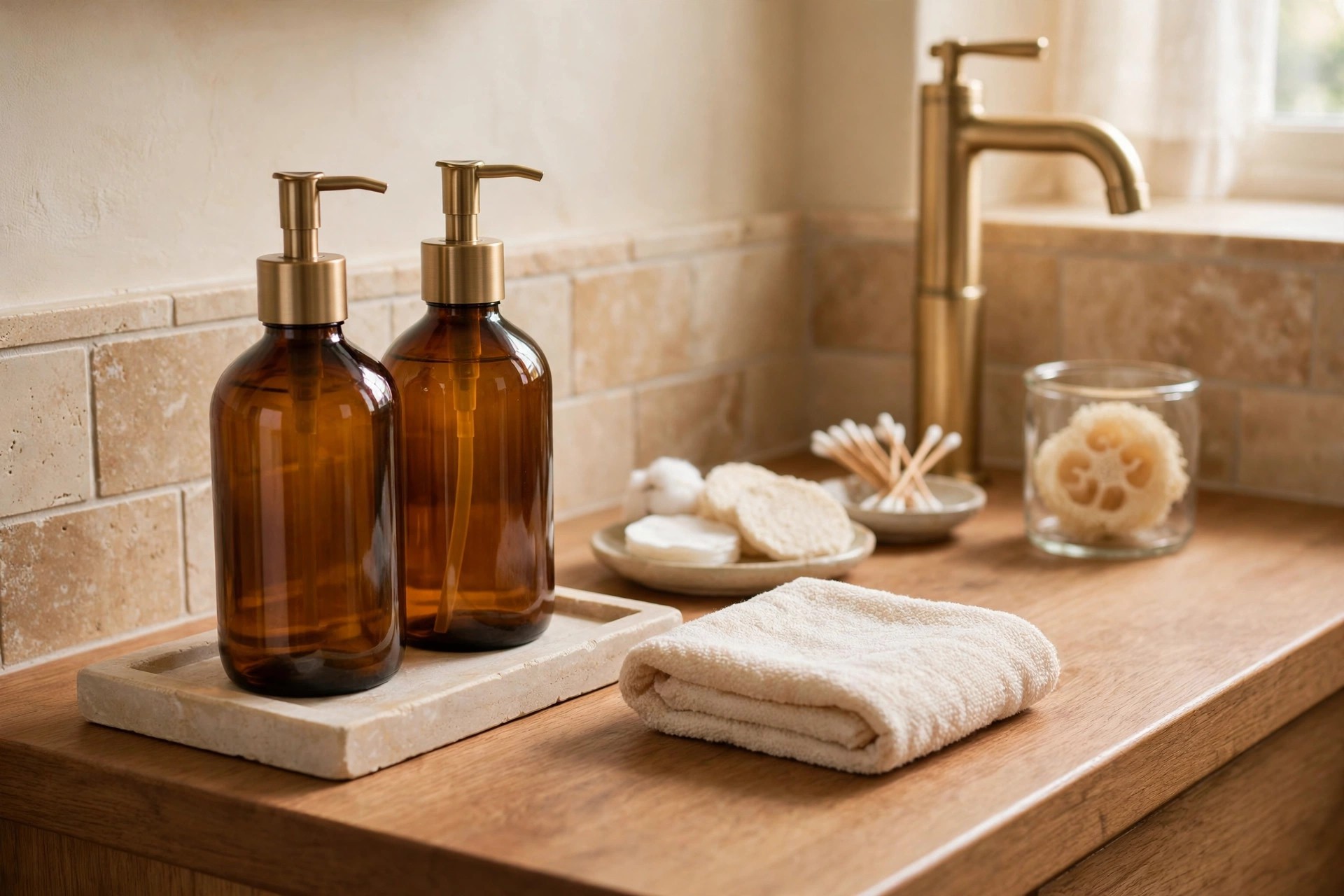
Keep everyday essentials pretty, reachable, and corralled on a tray. Decanting soap and lotion into simple matching bottles, and grouping them on a small tray, usually keeps the counter tidy and easy to wipe. Keep daily things at the front and at a comfortable height, and let the rarely used bits live further back. A clear, pretty counter tends to make the whole room feel calmer.
At the end of the day, the best accessible bathroom ideas are the ones that make your routine easier while still feeling like you. Start with the layout, choose fixtures you genuinely love, and let warm finishes do the rest.

Leave a Reply