
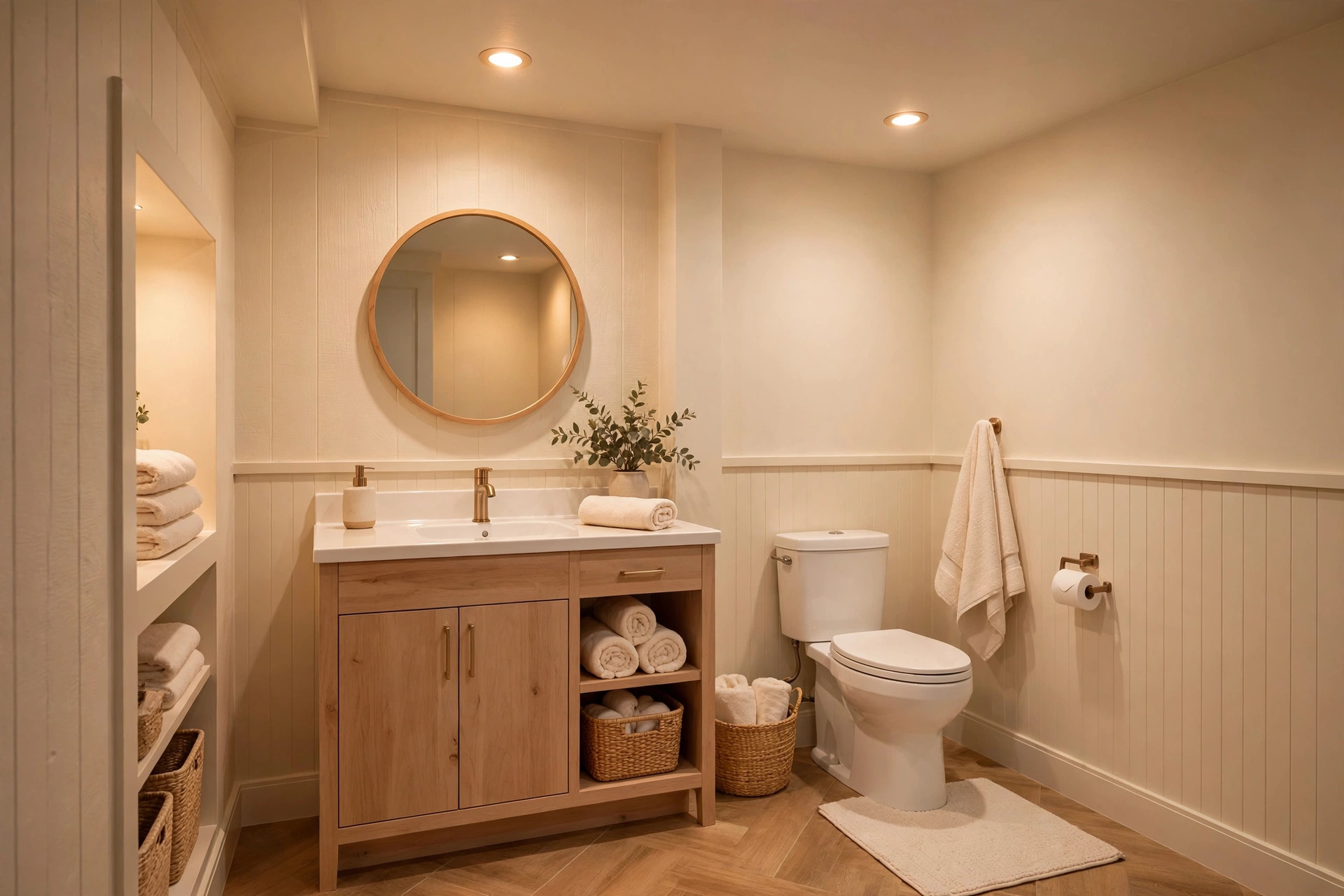
If you have an awkward corner in the basement or a little cupboard space tucked under the stairs, you have probably wondered whether it could ever become a proper bathroom. The good news is that it usually can, and these small rooms often turn out to be the most useful ones in the house. They do not need to be big to feel calm and welcoming.
You do not need a perfect rectangle or a tall ceiling to make it work either. A basement bathroom or a tiny under stairs powder room typically asks for a bit of honest measuring, compact fixtures, and finishes that bounce light around instead of soaking it up. When those basics are right, even a sloping ceiling starts to feel like character rather than a compromise.
Below are sixteen ideas you can mix and match, starting with planning around low ceilings and sloping walls, then moving through fixtures, light finishes, moisture habits, storage in awkward nooks, and warm finishing touches. Take what fits your space and your routine, and leave the rest. A plumber can advise on drainage options early on, and that conversation usually saves a lot of second guessing later.
Planning Around Low Ceilings and Sloping Walls
Start by working with the shape you have rather than fighting it, because these rooms usually reward a little patience at the planning stage.
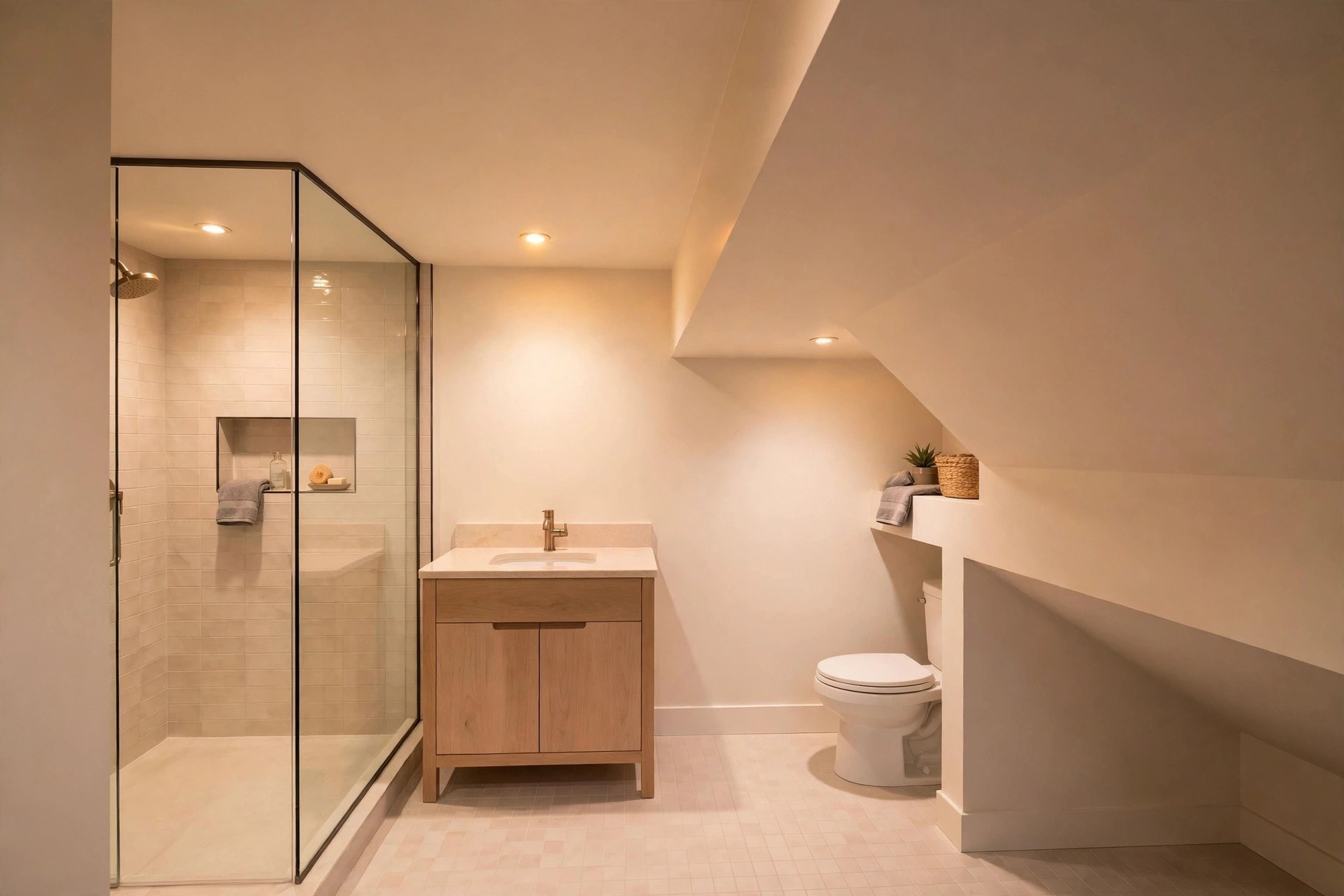
Measure the headroom honestly and put tall tasks in the tallest spot. Standing room matters most at the sink and in a shower area, so those spots typically belong where the ceiling sits highest. A sloping or lower section can still work well over a toilet or a low vanity, where you are seated or leaning slightly. Mark the heights in pencil first, and the layout usually becomes clearer.
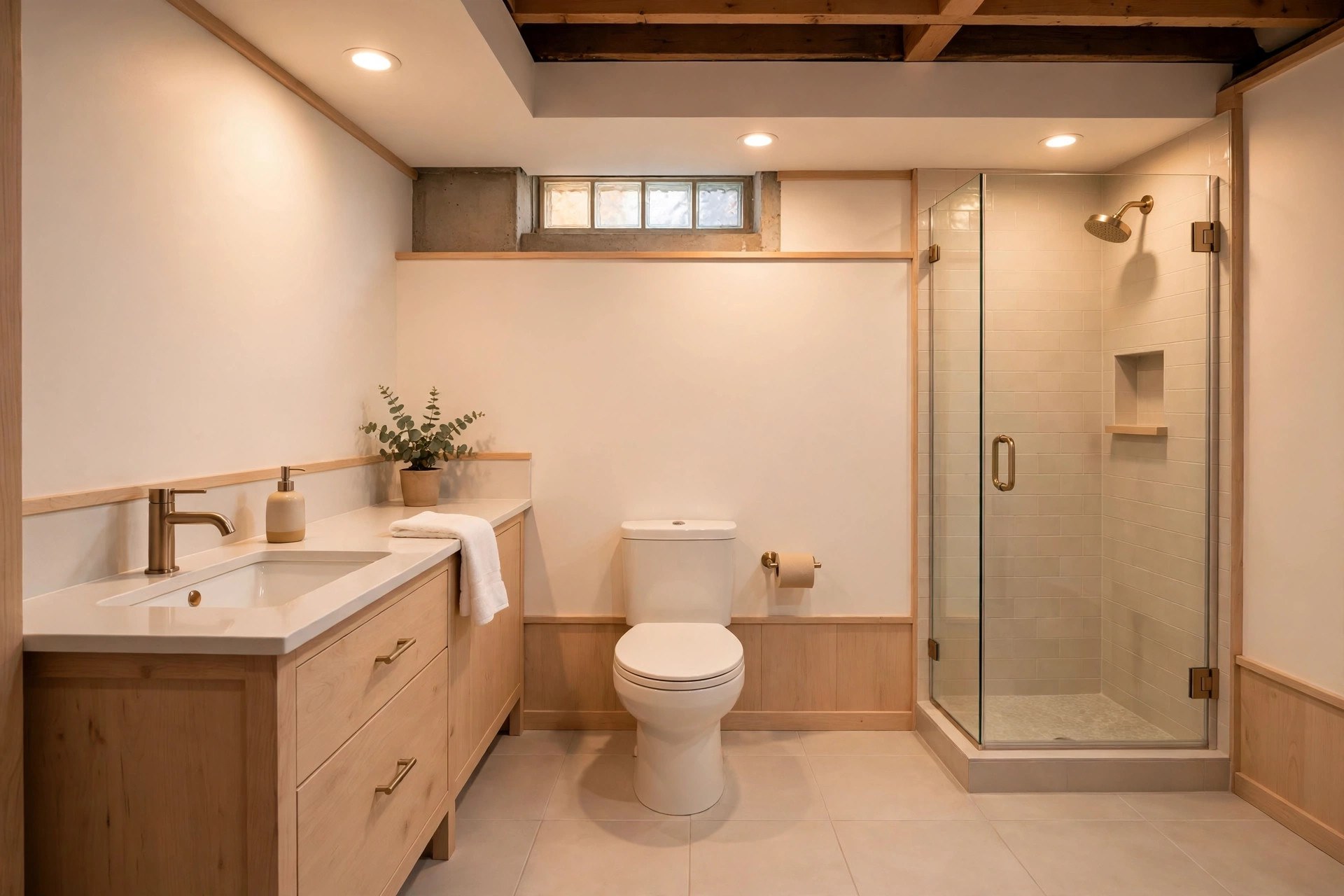
Keep the layout simple and leave plumbing decisions to a professional. A straightforward arrangement, with fixtures grouped along one wall where possible, usually feels less cramped and is easier to plan around existing services. Drainage and ventilation can be handled in different ways, and a plumber can advise on drainage options that suit your home. Getting that advice before you order anything typically prevents expensive changes.
Working with the slope
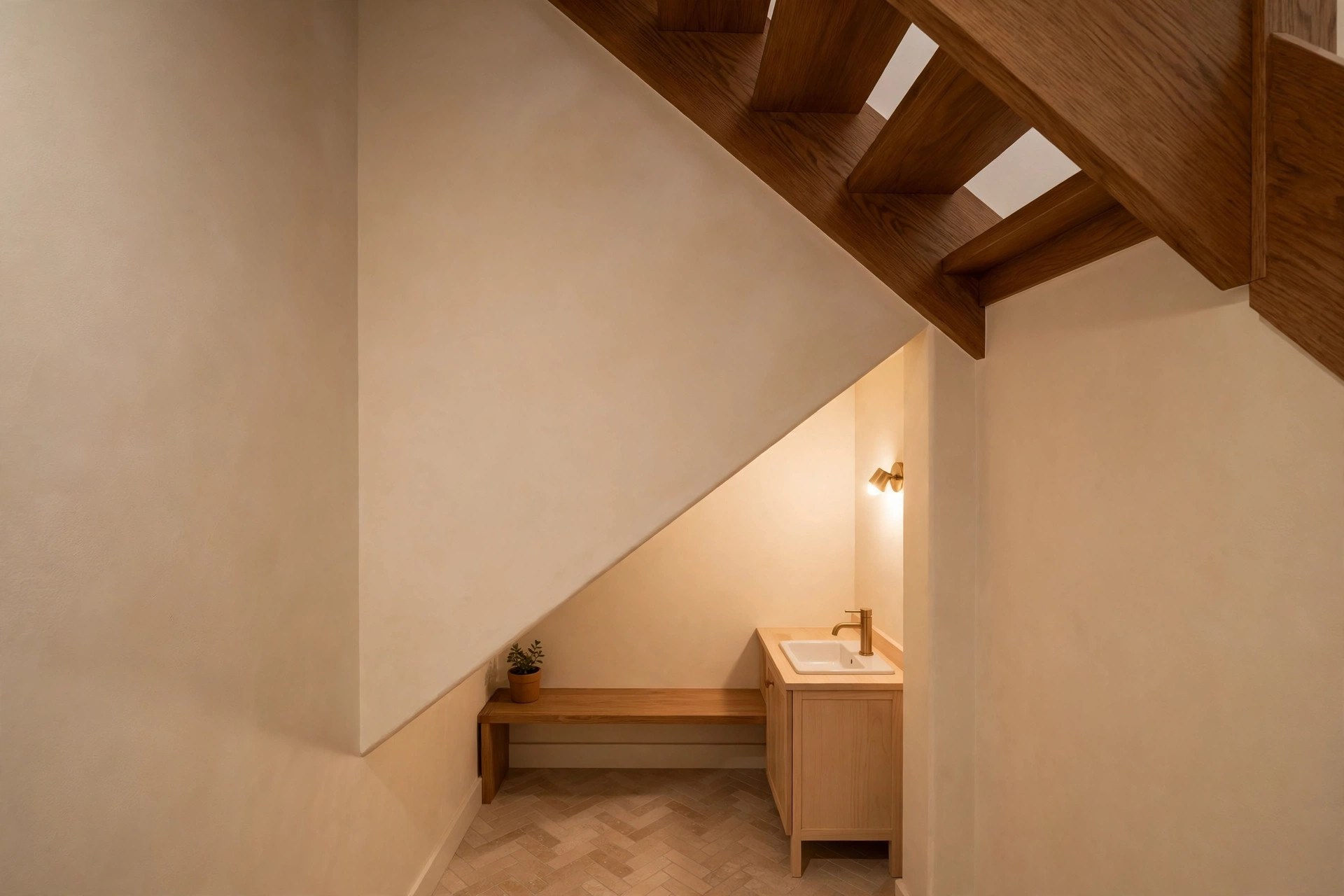
Let the sloping wall become a feature instead of hiding it. Painting the slope in the same warm white as the rest of the room usually makes it feel intentional and calm rather than leftover. You can also lean into it with a low bench, a small stool, or a plant tucked underneath where headroom is limited anyway. When the eye reads the slope as part of the design, the whole room feels more settled.
Compact Fixtures for Tight Footprints
Once the layout makes sense, choosing fixtures that respect the footprint is what stops a small room feeling squeezed.
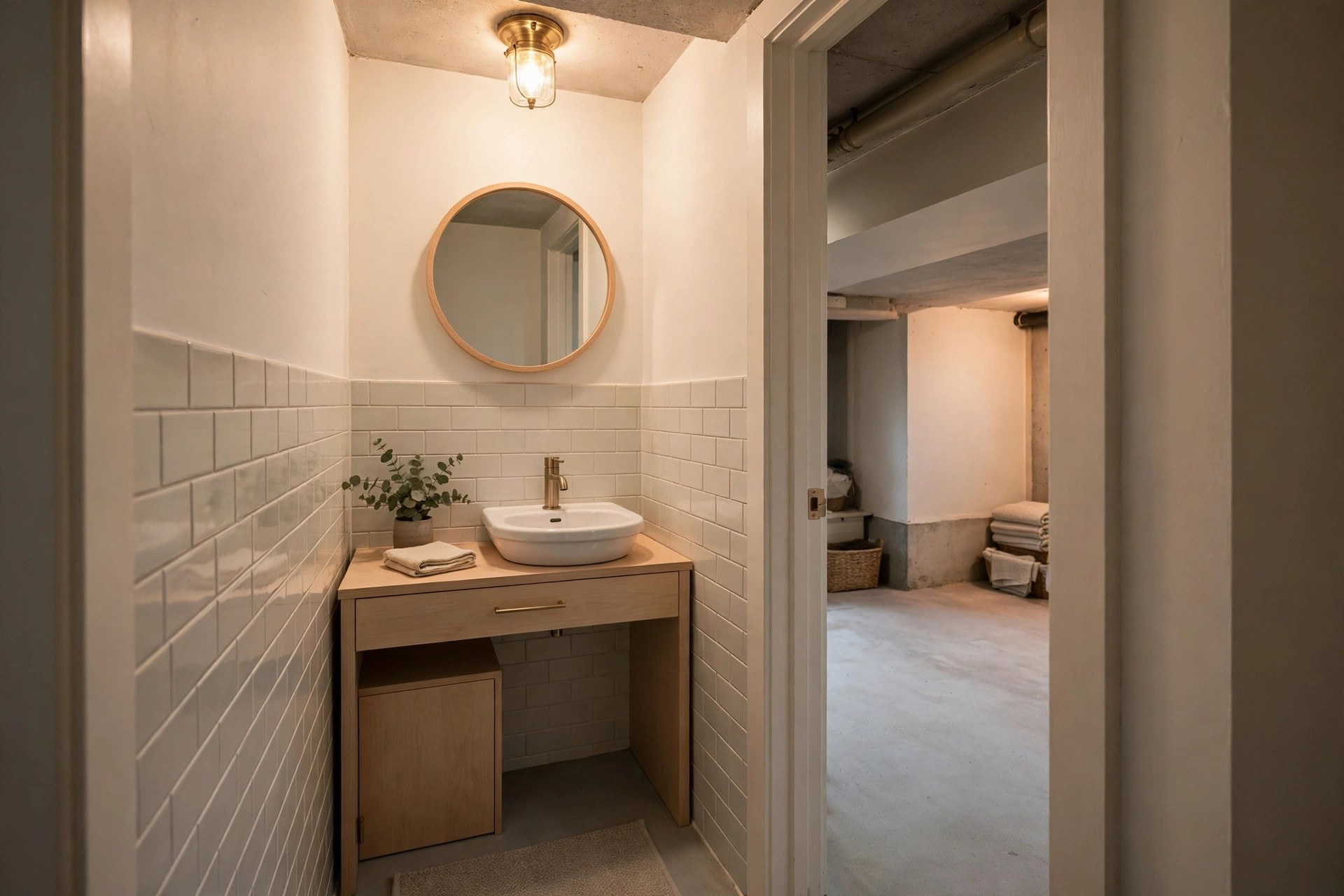
Choose a narrow vanity or a small wall mounted sink. A slim vanity typically gives you a little storage without blocking the walkway, while a wall mounted sink opens up floor space and makes the room feel lighter. Rounded corners can be kinder in tight spots where you turn and move in a small area. Either option usually looks neater than a standard unit forced into a gap that is too small.
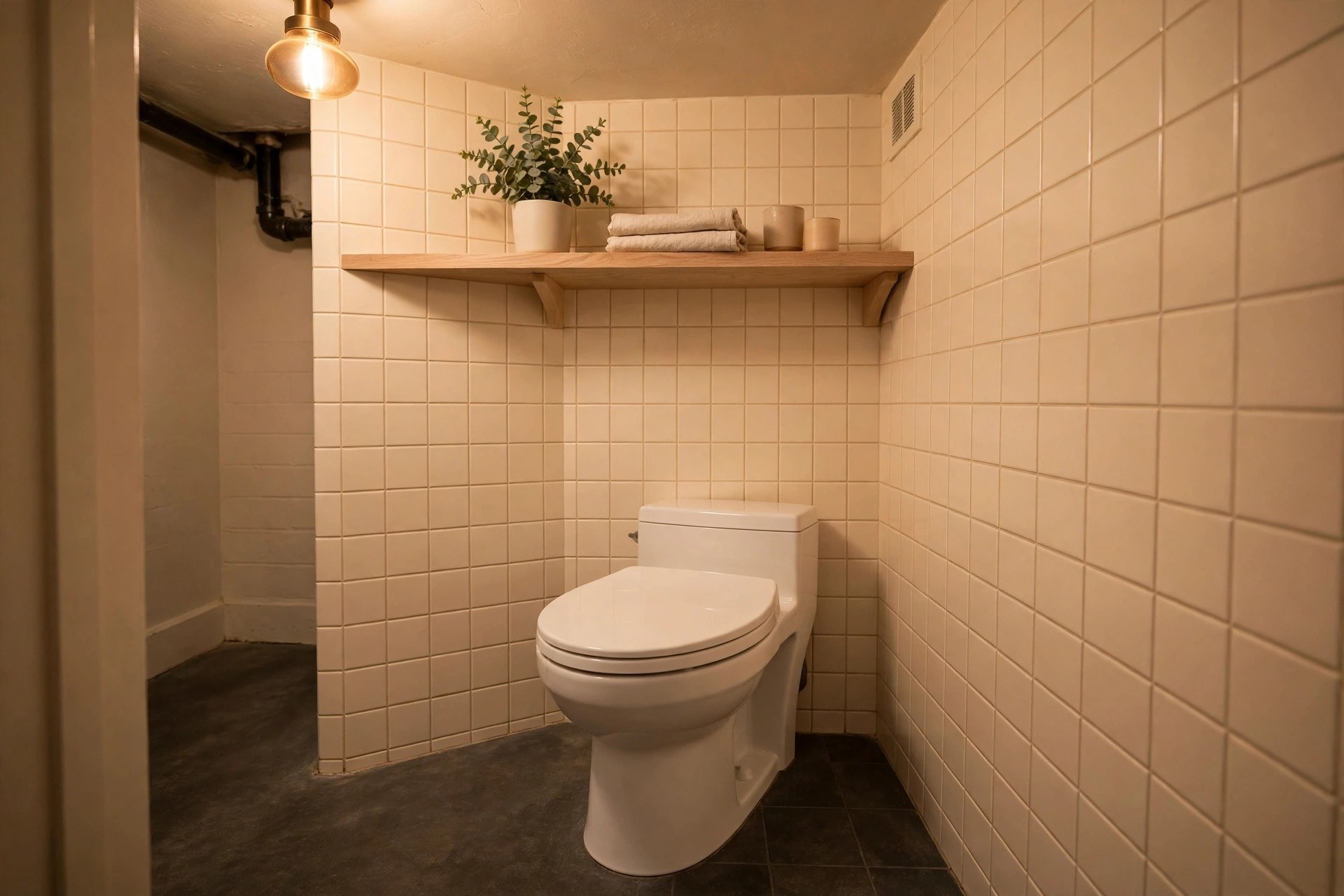
Pick a compact toilet with a clean, simple profile. A shorter projection toilet usually leaves more leg room and makes cleaning around the base much easier in a snug corner. Wall hung styles can save a little more space, though they need the right support and professional fitting. Keep the shape plain and light, and it will blend quietly instead of dominating the room.
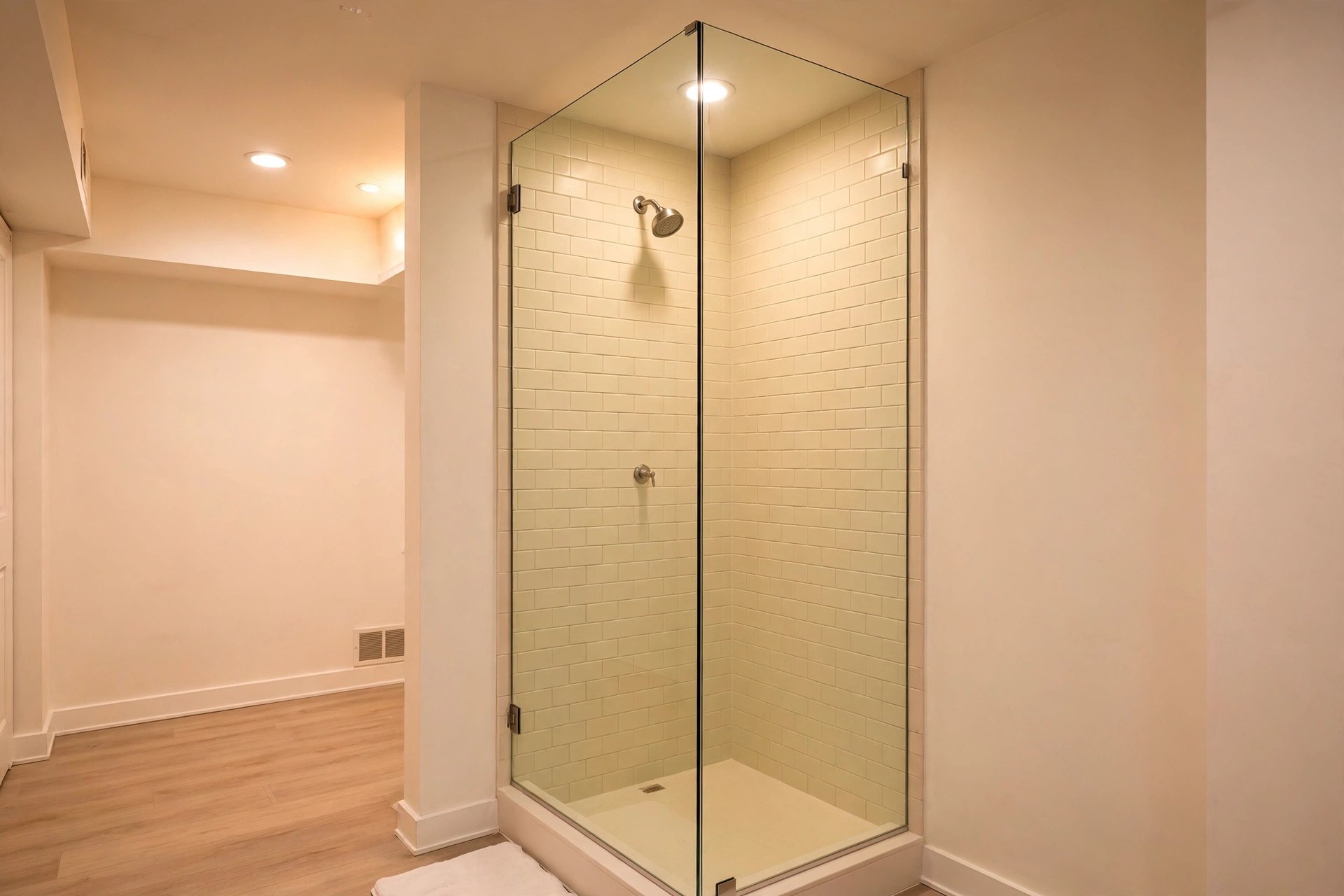
Use a small shower with clear glass if your basement room includes one. A corner shower with clear panels typically keeps sight lines open, so the room does not feel chopped into tiny pieces. If there is no shower, a simple half bath layout under the stairs is often plenty for guests and busy mornings. Either way, keeping fixtures visually light usually matters more than adding an extra feature.
Light and Bright Finishes for Windowless Rooms
Most basement and under stairs bathrooms have little or no natural light, so your finishes and lighting have to do that work together.
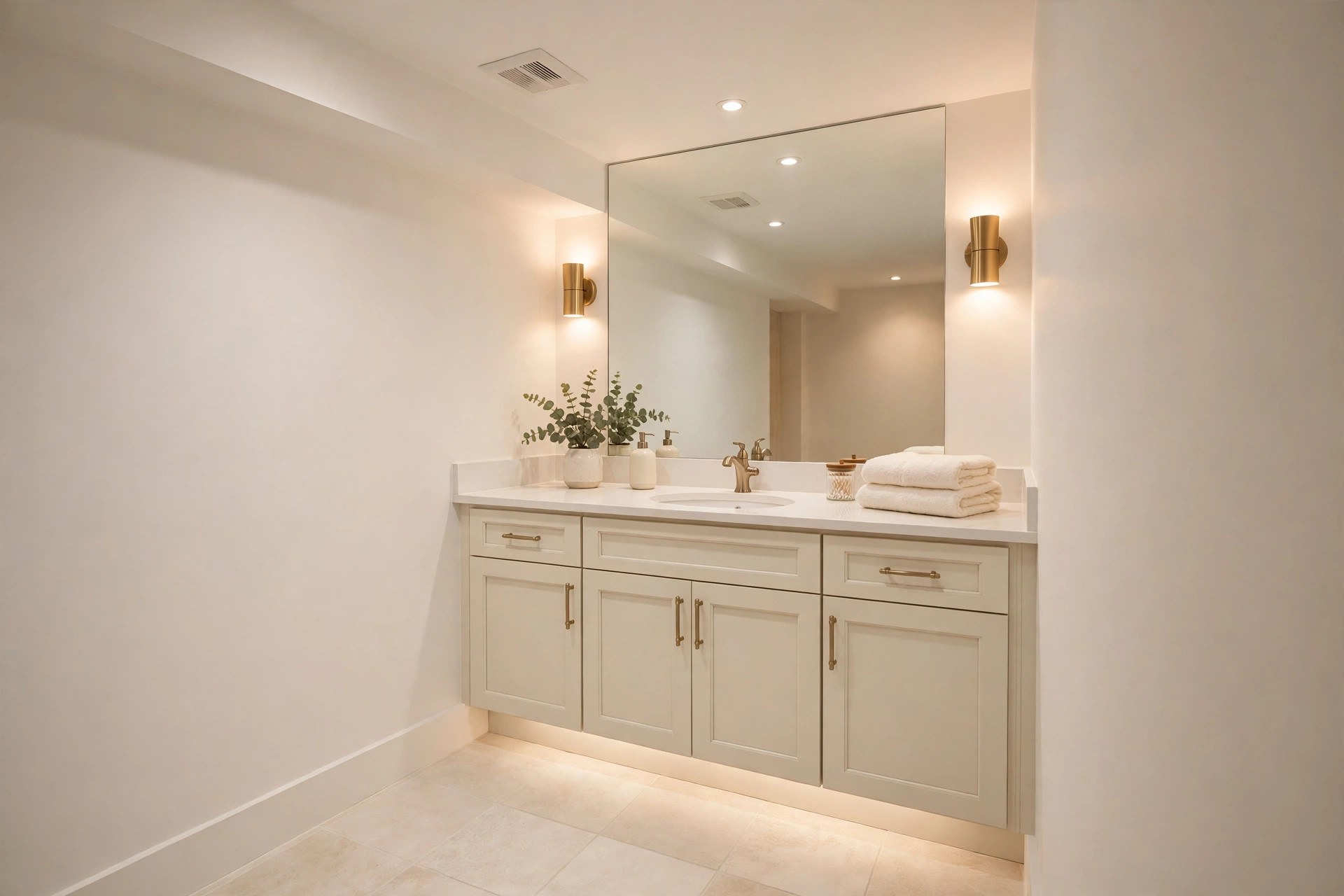
Paint the walls and ceiling in the same warm white or soft cream. Using one light tone across both surfaces usually softens low ceilings and sloping joins, because there is no harsh line where the wall stops. Warm whites typically feel cozy rather than cold, even without a window to warm the room. Test the shade under your actual lighting first, since bulbs can shift a cream toward yellow or gray.
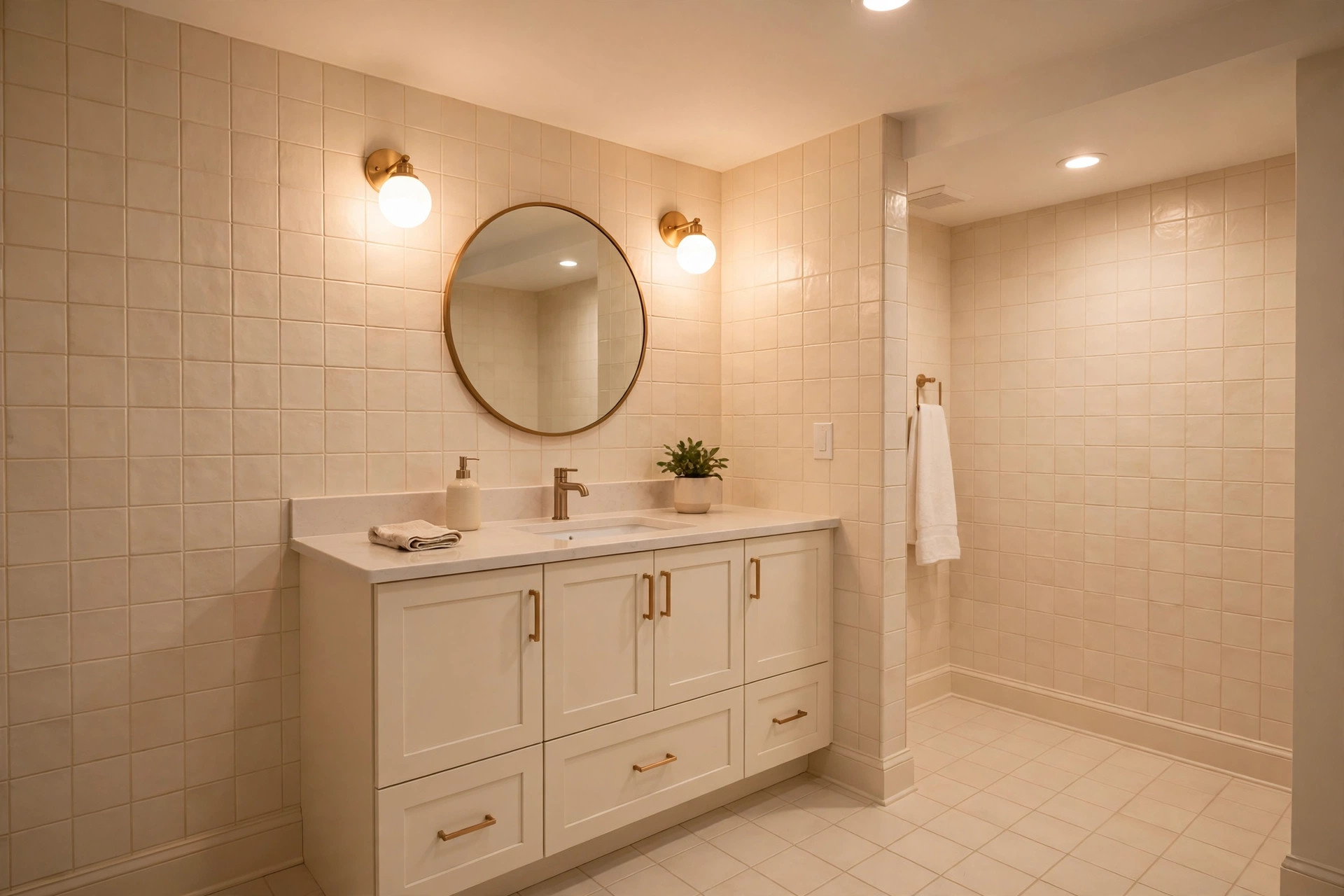
Choose large, pale tiles or simple panels for the floor and splash zones. Pale surfaces bounce artificial light around more kindly, and larger pieces usually mean fewer grout lines breaking up a tiny floor. A light wood look floor can add warmth if you prefer something softer underfoot than tile. Keep patterns small and quiet, or skip pattern altogether, and the room will typically feel calmer and a bit bigger.
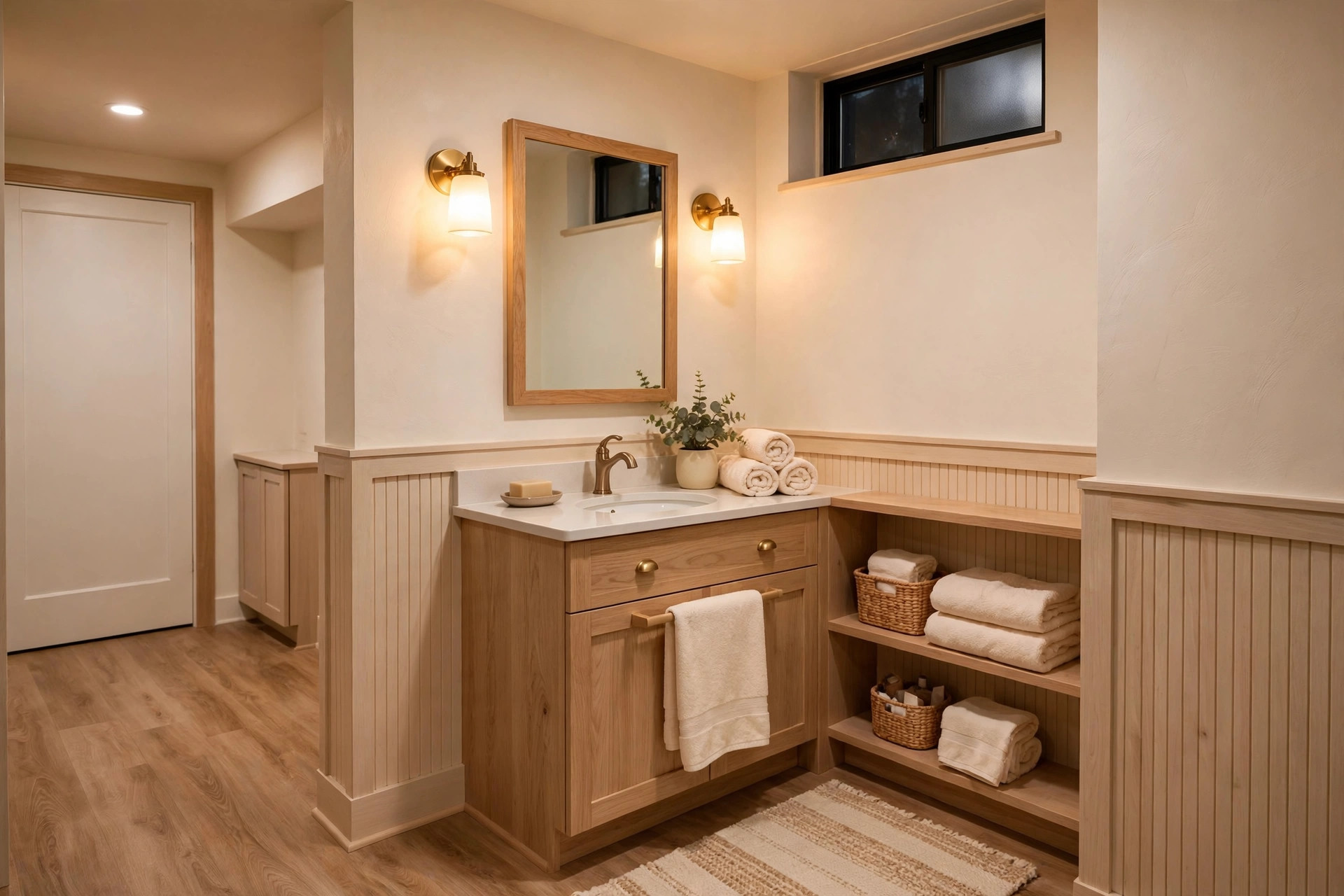
Layer warm lighting at mirror height and overhead. One harsh ceiling light usually leaves shadows exactly where you need to see your face, so a soft light beside or above the mirror helps a lot. Warm toned bulbs typically flatter skin and make cream finishes glow. If you can, put the mirror light and the ceiling light on separate switches, and the room becomes easier to adjust at night.
Moisture and Ventilation Habits That Keep It Fresh
Basements and enclosed under stairs spaces can hold damp air, so a few steady habits usually matter more than any single product.
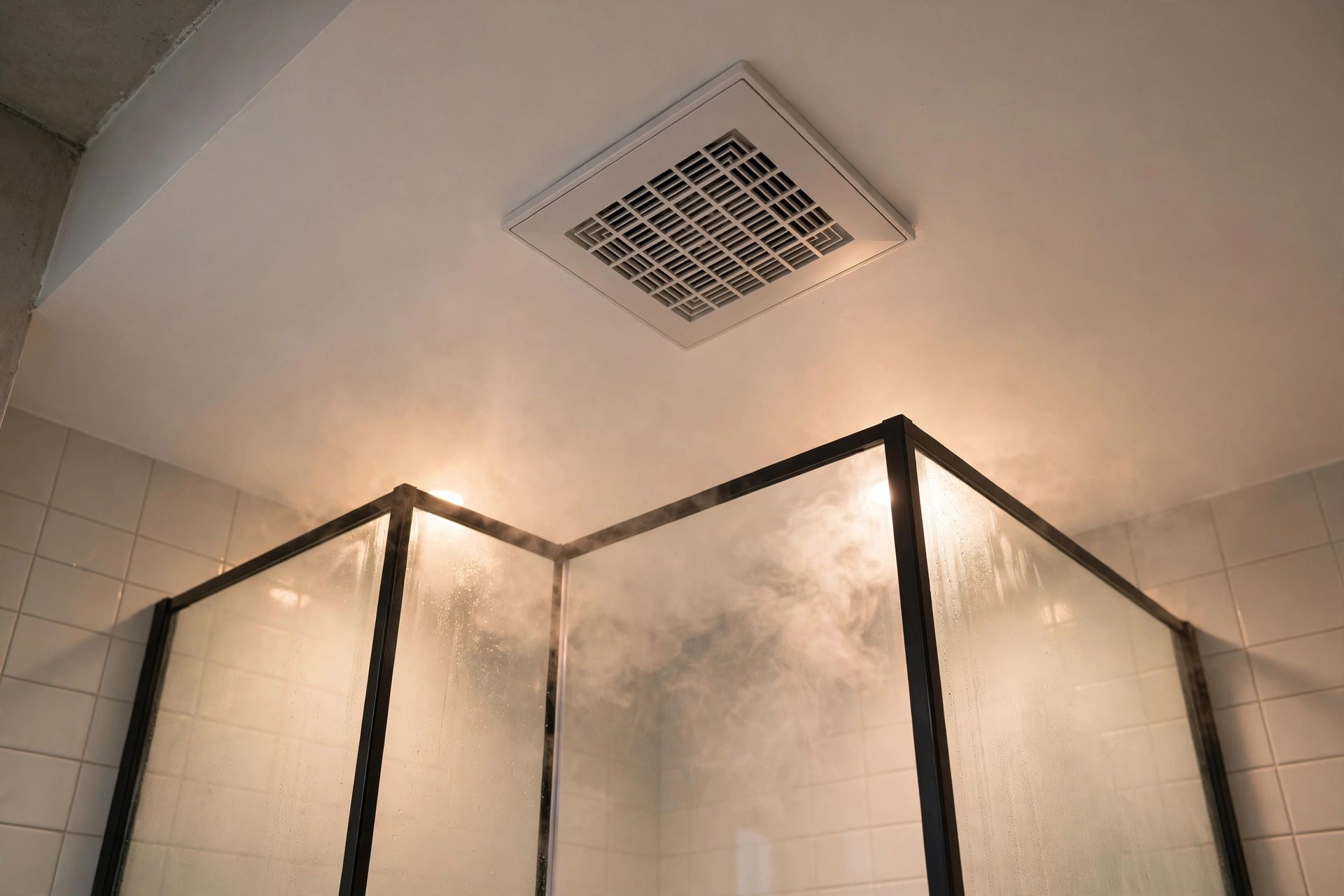
Run ventilation during and after showers and check what your room needs. Moving moist air out promptly typically helps walls, paint, and grout stay in better shape over time. If your space has no fan, a professional can advise on ventilation options that fit the layout and local rules. Even in a powder room without a shower, simply airing the space regularly can stop it feeling stuffy and closed in.
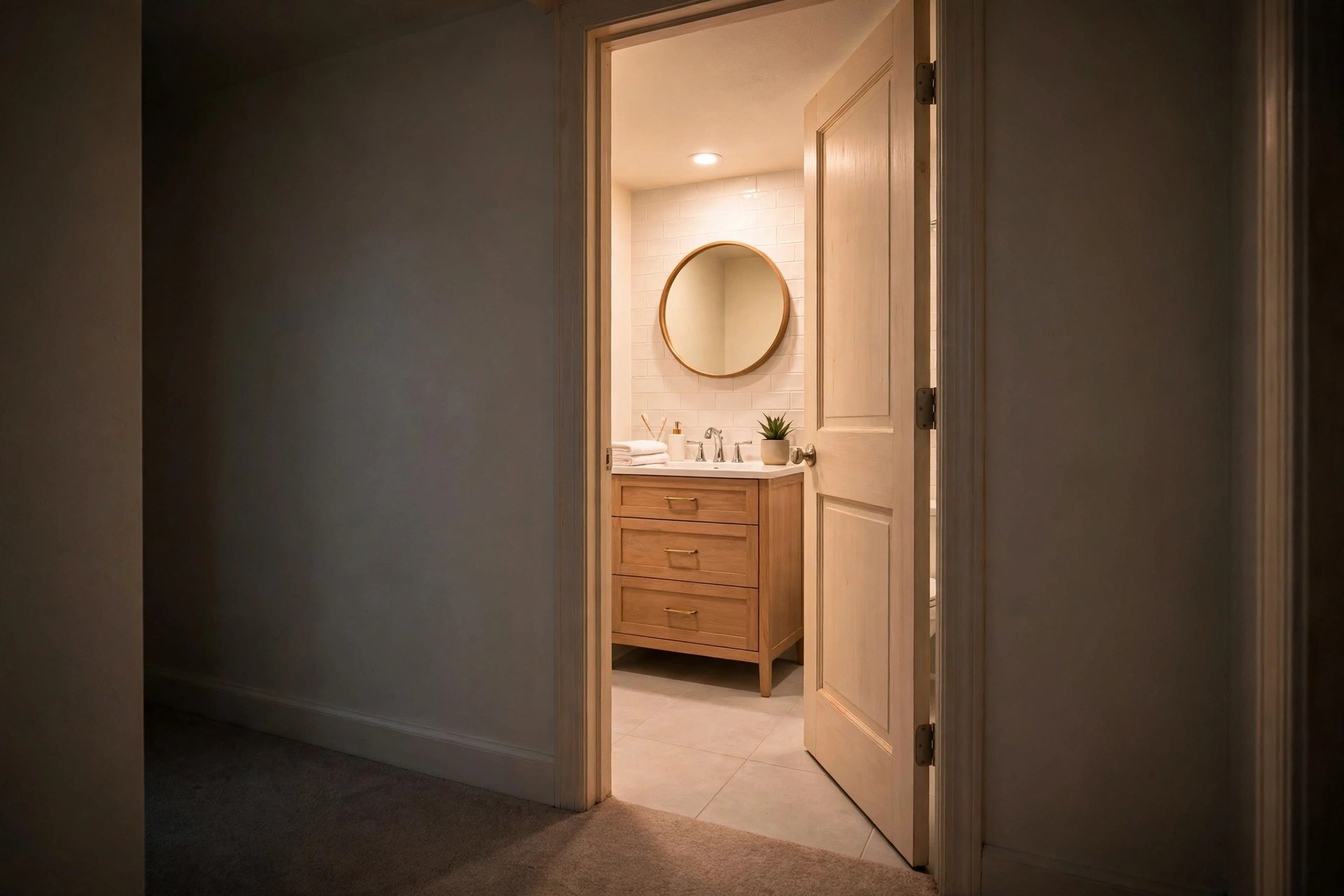
Wipe splash zones and leave the door ajar after busy use. A quick wipe around the sink and floor edges usually stops standing moisture from sitting in corners where air barely moves. Leaving the door open for a while after guests or showers lets the room dry out naturally between uses. These small habits sound almost too simple, but they typically keep paint and sealant looking fresher for longer.
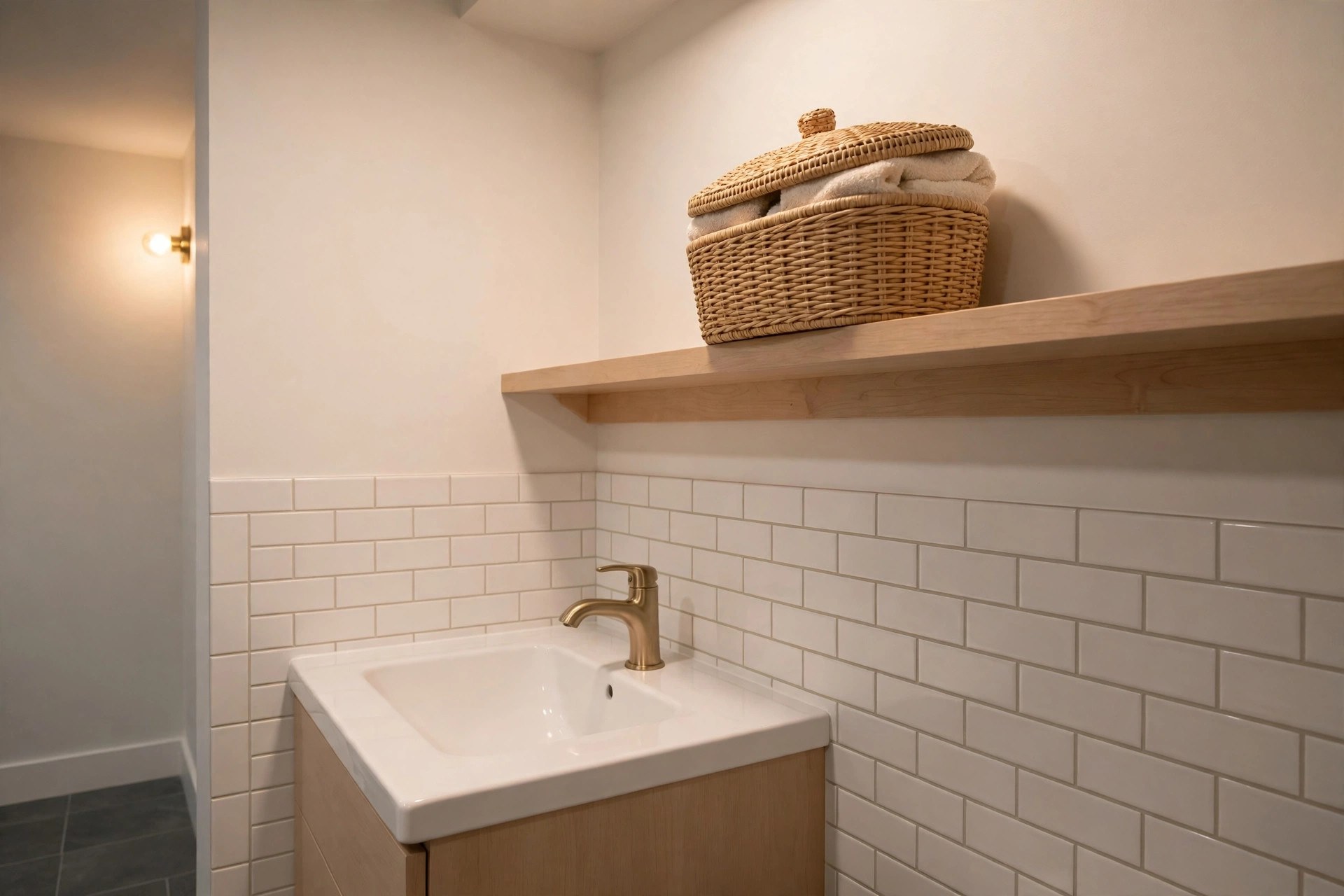
Choose finishes that cope well with a humid little room. Bathroom suitable paint, well sealed grout, and washable surfaces around the sink usually handle splashes and steam more gracefully than delicate finishes. Avoid storing spare towels or paper goods directly on a basement floor, where cool surfaces can feel damp. A small lidded basket or a raised shelf keeps everyday items cleaner and drier without any fuss at all.
Storage in Awkward Nooks
The odd corners that make these rooms tricky are often the same corners that can quietly solve your storage.
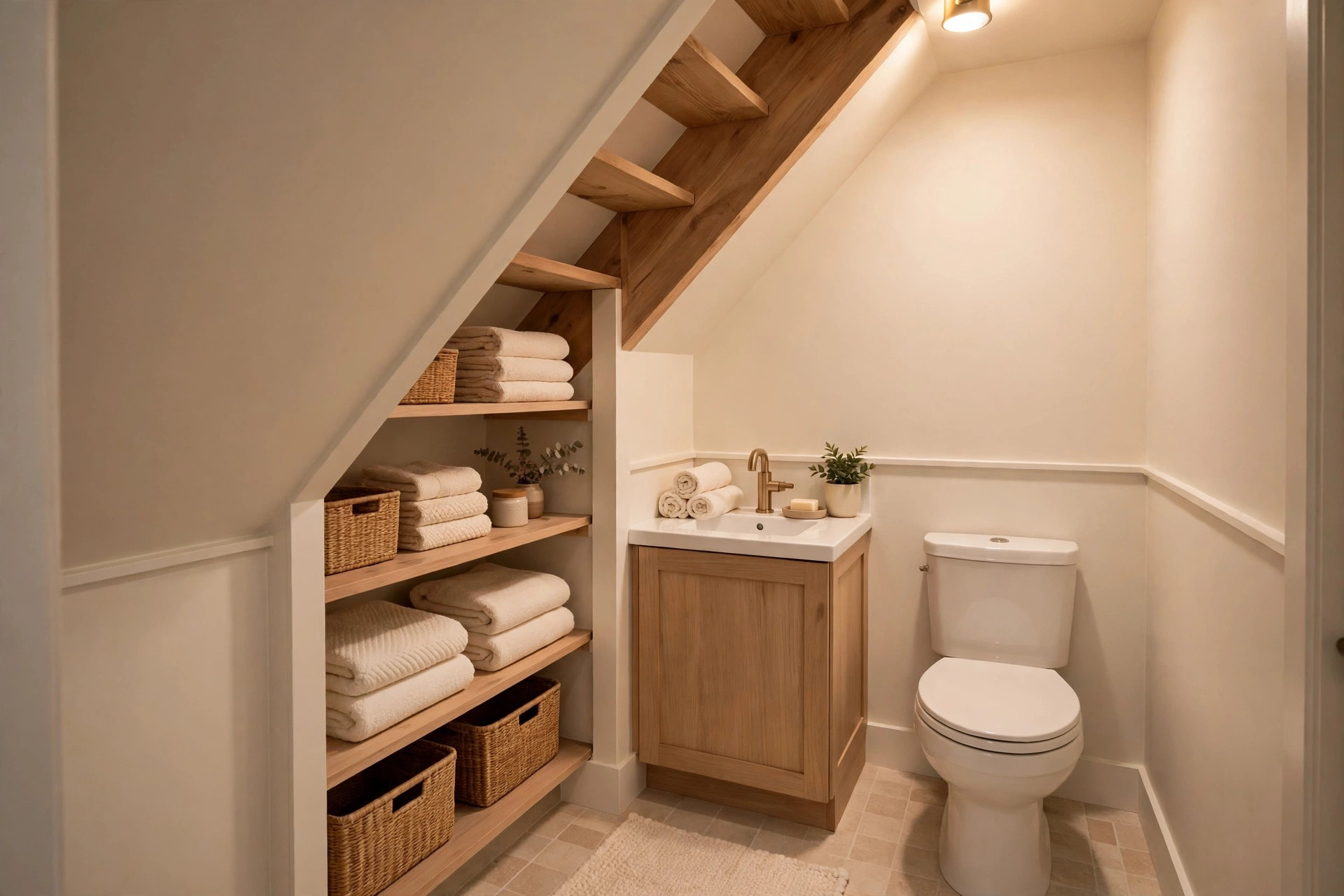
Build shallow storage into the lowest part of the slope. The area where you cannot stand comfortably can still hold spare towels, cleaning supplies, or extra toilet paper in low drawers or a simple cupboard. Shallow shelves typically work better than deep ones here, because nothing gets lost at the back in the dark. Labeling is not necessary if you keep categories simple, and the nook suddenly earns its place in the room.
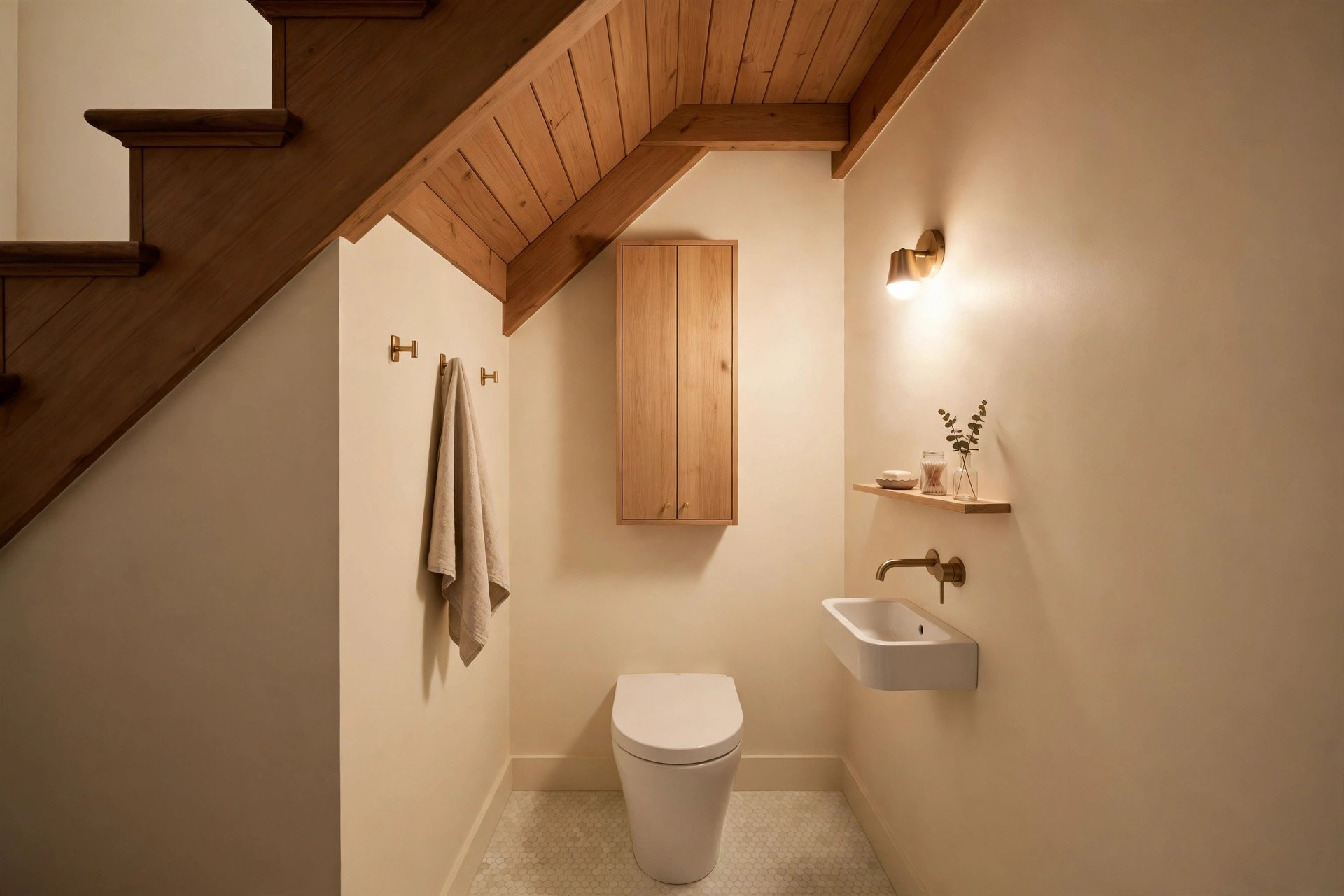
Hang storage on the wall instead of filling the floor. A slim cabinet above the toilet, hooks behind the door, or a narrow shelf over the sink usually keeps essentials close without crowding your feet. In an under stairs powder room, that vertical thinking is often the difference between calm and cluttered. Keep only daily items on display, and tuck backups away, so the small space still breathes easily.
Warm Finishing Touches That Stop It Feeling Like an Afterthought
Finally, it is the small warm details that convince you and your guests that this little room was always meant to be here.
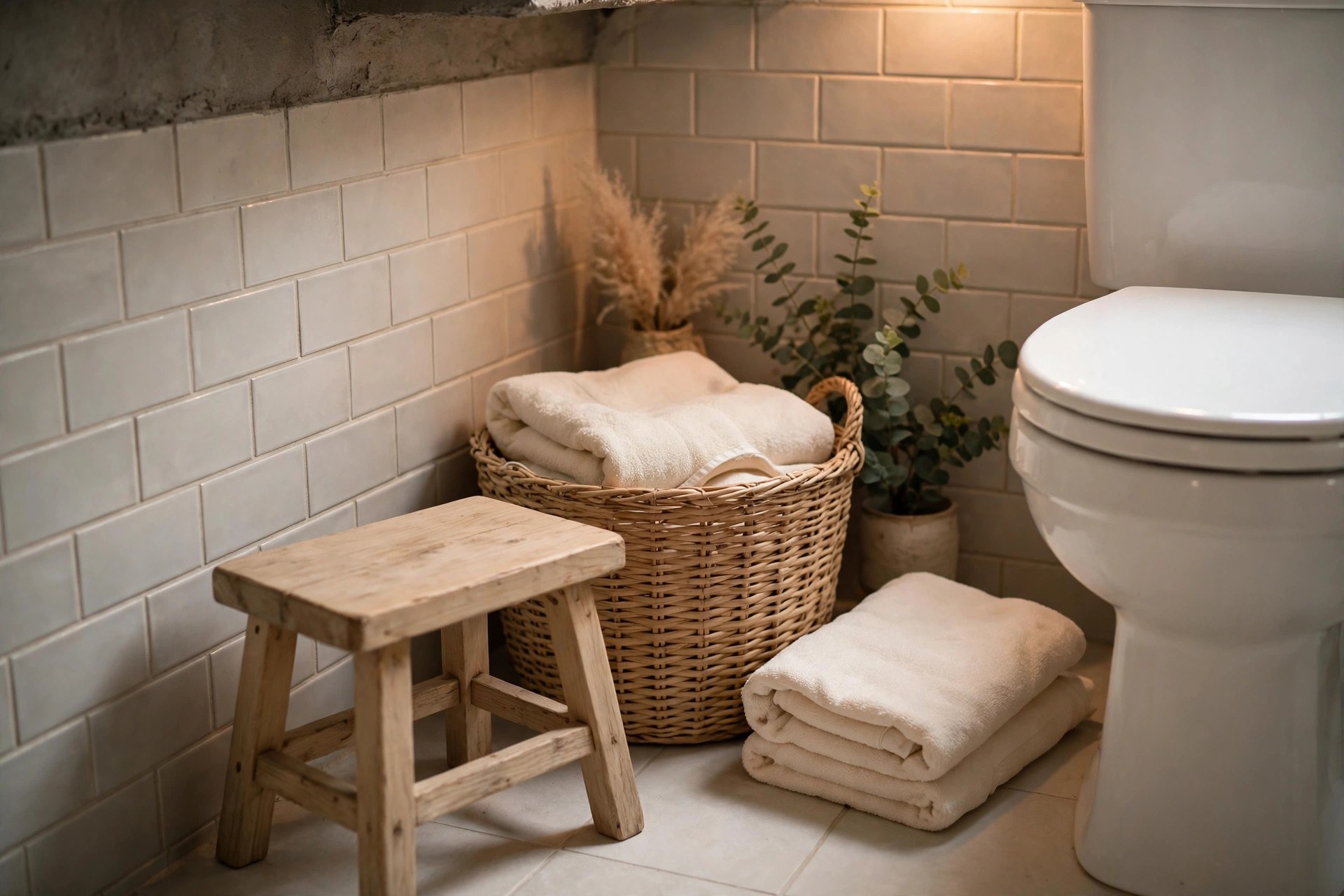
Add light wood, woven texture, and one soft textile. A small wooden stool, a woven basket, or a folded cream hand towel usually warms up pale tile and white fixtures in seconds. These touches typically cost little and can move in and out as seasons or routines change. Stick to one or two natural materials, and the room will feel coordinated rather than busy or over styled.
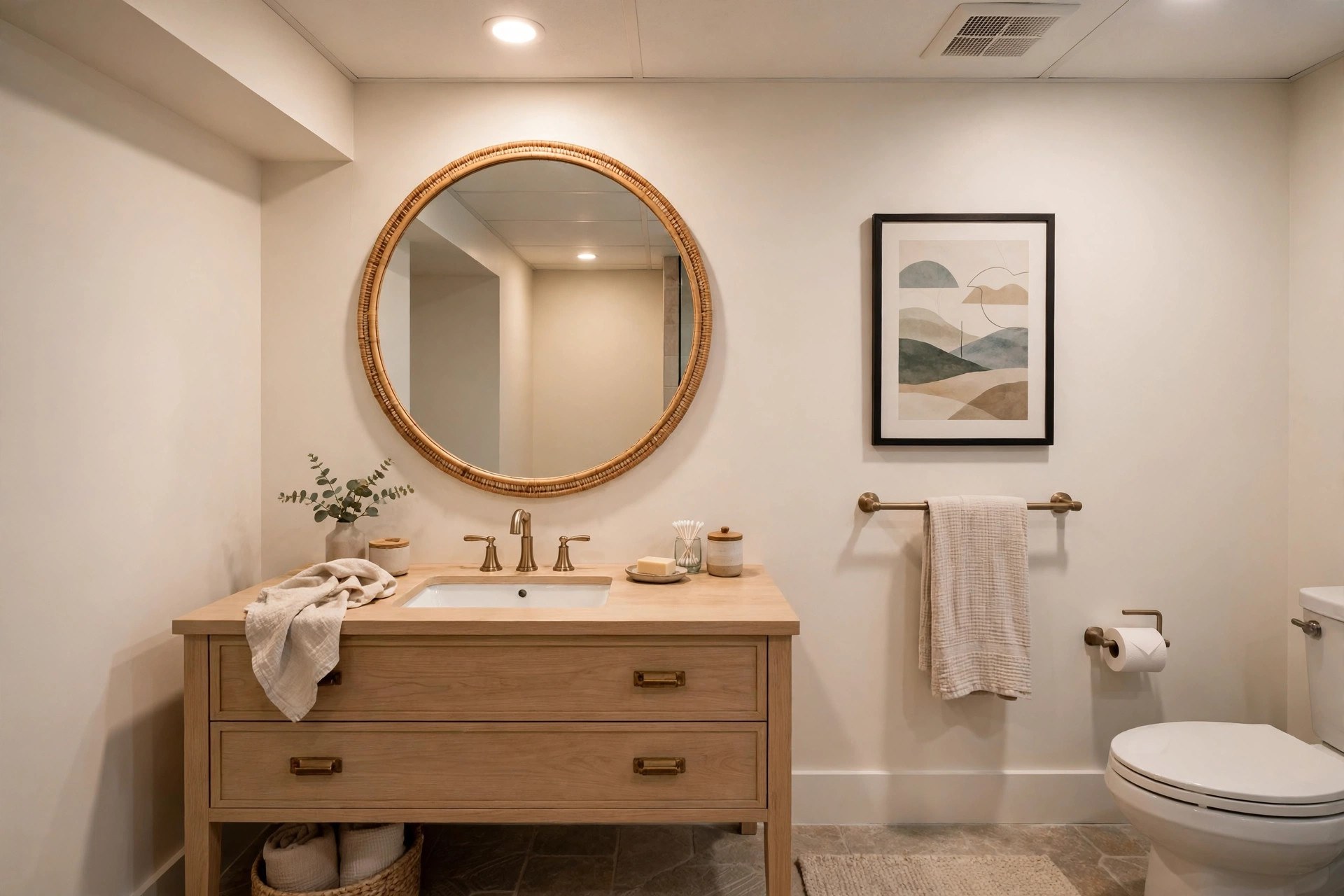
Hang a generous mirror and one simple piece of art. A larger mirror usually earns its wall space by reflecting light and making a windowless room feel less boxed in. One framed print or a small calm picture gives guests something pleasant to look at and signals that the room was finished with care. Keep frames light in tone, hang them securely, and avoid crowding a tiny wall with lots of small pieces.
At the end of the day, a basement bathroom or an under stairs powder room does not need to be big to be lovely. Plan around the height you have, choose fixtures that fit without a fight, and keep finishes light, airy, and easy to care for. Add storage where the awkward corners offer it, finish with a little warmth, and that forgotten space usually becomes one of the most appreciated rooms in your home.

Leave a Reply