
24 Classic Christmas Tree Ideas That Never Go Out of Style
Some trees follow the trend of the year, and some trees just feel like Christmas the moment the lights go on. A classic tree usually belongs to the second kind. It leans on deep green branches, warm light, red and gold touches, and ornaments that look like they have been loved for a long time, even if a few of them are brand new.
The nice thing about this style is that it does not ask you to buy everything again each December. You can build it slowly, keep the pieces that work, and swap one ribbon or one box of baubles at a time. It suits a big family room and a small corner in much the same way, because the colors and shapes are familiar and calm.
Here are 24 classic Christmas tree ideas, grouped into timeless color schemes, heirloom ornaments and traditional shapes, and the finishing touches that pull the whole tree together. Start with the colors, add the pieces with a story, then finish the top, the base and the light.
In This Article
- Stick with red and gold baubles on deep green branches
- Build a mostly red tree and let the green branches contrast
- Layer cream, ivory and soft gold for a gentler classic
- Weave tartan ribbon through the branches in loose loops
- Pair cranberry red with antique gold and warm cream
- Mix deep green ornaments with brass and pinecones
- Keep silver and white crisp against the dark green tree
- Add burgundy touches for a deeper, richer red family
- Hang glass heirloom ornaments where the light can find them
- String a popcorn and cranberry garland the slow way
- Hang painted wooden nutcracker ornaments among the baubles
- Add glass icicles and long teardrop finials for shape
- Tuck in dried orange slices and cinnamon sticks
- Clip small brass bells and red berry picks into the gaps
- Hang straw stars and woven ornaments for handmade charm
- Give handmade ornaments from past years the best branches
- Choose warm white lights only and space them evenly
- Clip on candle style lights for an old fashioned glow
- Top the tree with a classic gold star
- Let a simple angel topper finish the tree instead
- Anchor the base with a red plaid tree skirt
- Stand wooden nutcrackers at the base like guards
- Hide the stand with a woven wicker tree collar
- Pile wrapped gifts in red, cream and brown paper underneath
Timeless Color Schemes That Always Work
Classic trees start with colors that have sat happily together for generations. Red, gold, cream and green do most of the work, and small shifts in shade are usually enough to make the same palette feel fresh in your own room.
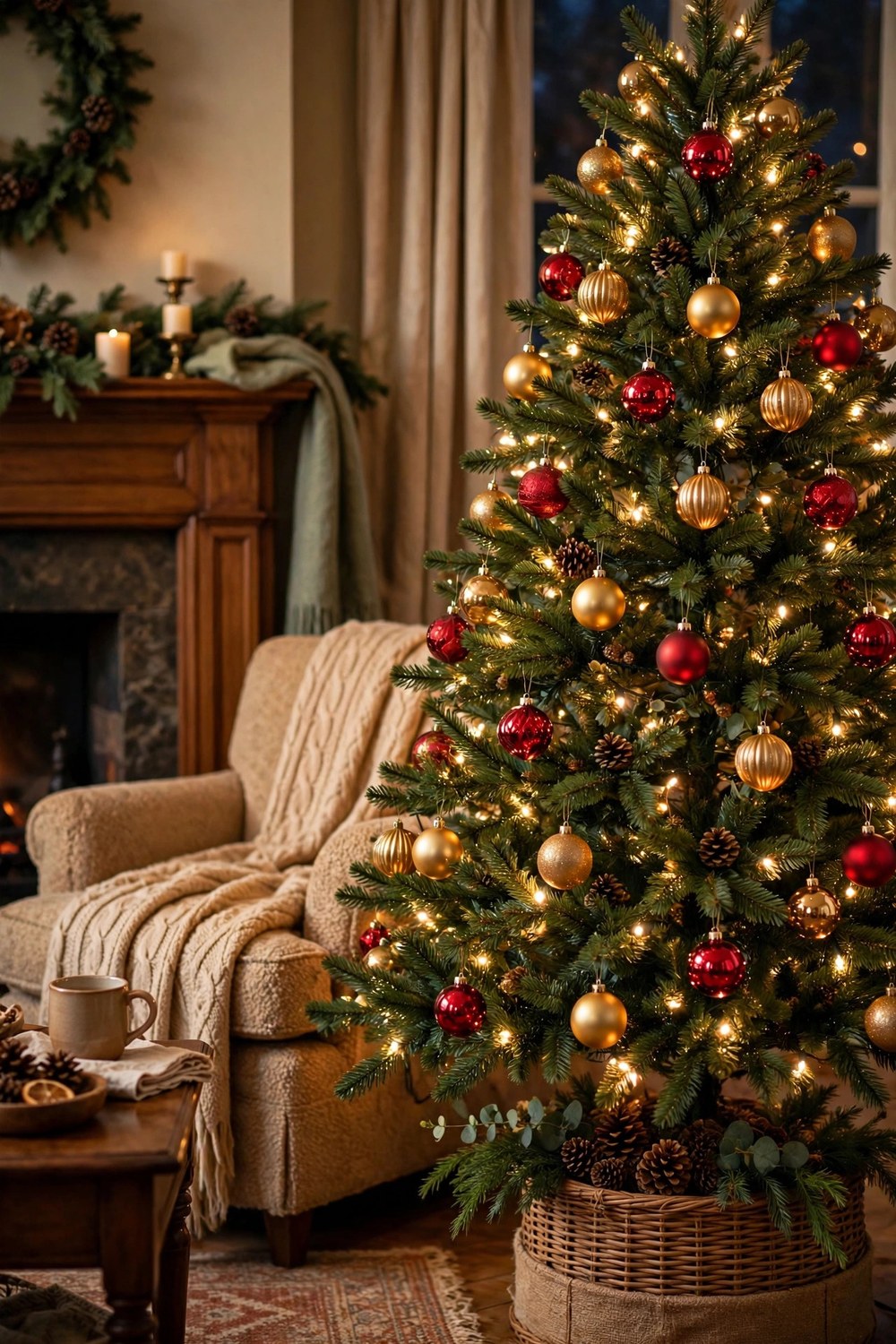
1. Stick with red and gold baubles on deep green branches
Red and gold on green is the combination most of us picture first, and it has stayed popular because it simply works. The red brings the cheer, the gold brings the glow, and the dark branches hold both colors without letting them shout. Try mixing shiny, matte and lightly glittered finishes so the tree catches light at different depths. Push a few larger baubles deeper inside, then let smaller ones sit near the tips. A rough balance of more red than gold usually feels warmest, especially once the warm lights come on in the evening.
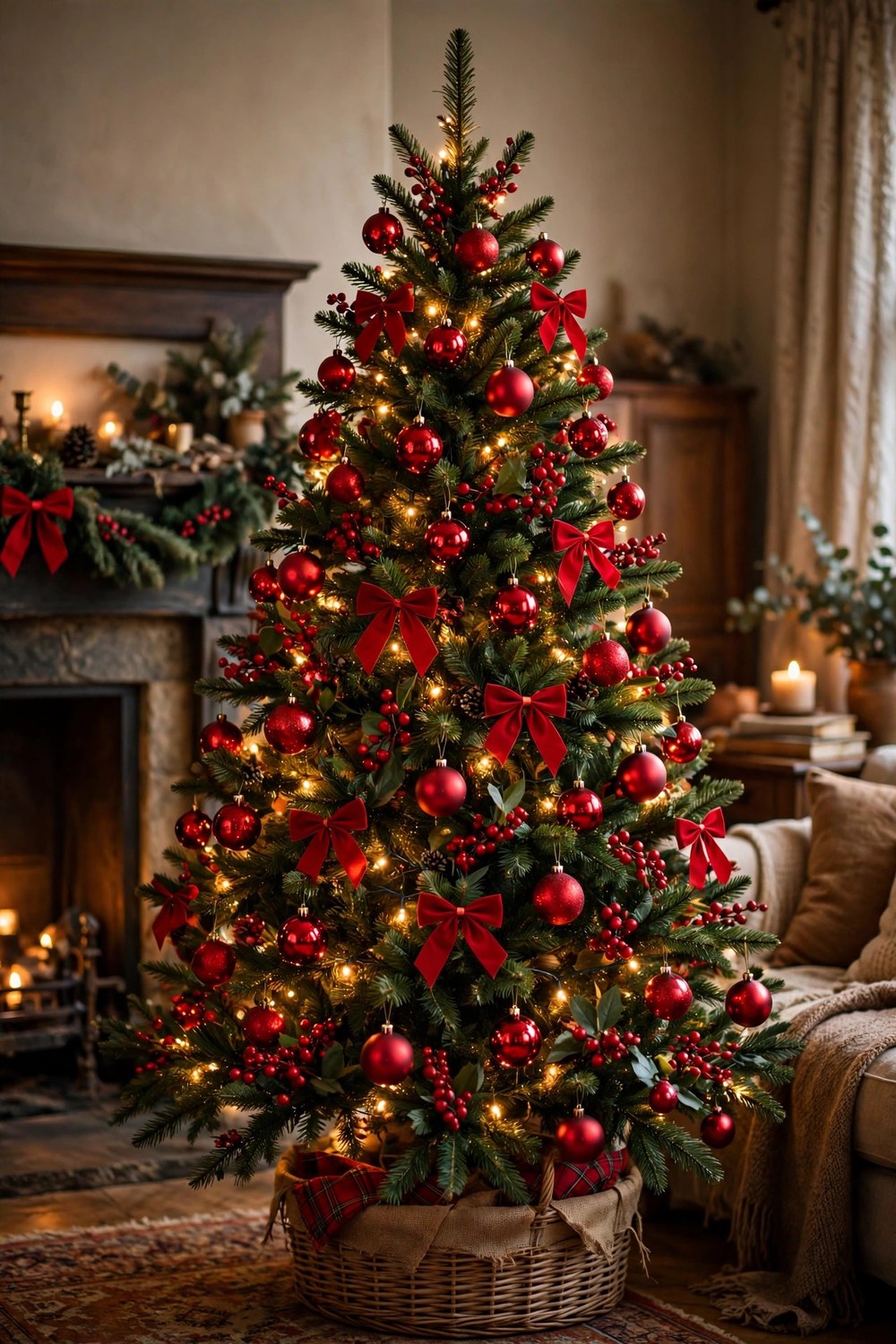
2. Build a mostly red tree and let the green branches contrast
A tree dressed mostly in red sounds bold, but the green branches do so much of the balancing that it usually looks traditional rather than loud. Use several shades of red together, from bright holly berry to a deeper cranberry, so the color has movement instead of one flat note. Add red ribbon, red berries and a few red patterned baubles to stretch the color beyond plain balls. Keep everything else quiet, warm lights, a simple topper and a plain skirt, and the red gets to be the whole story.
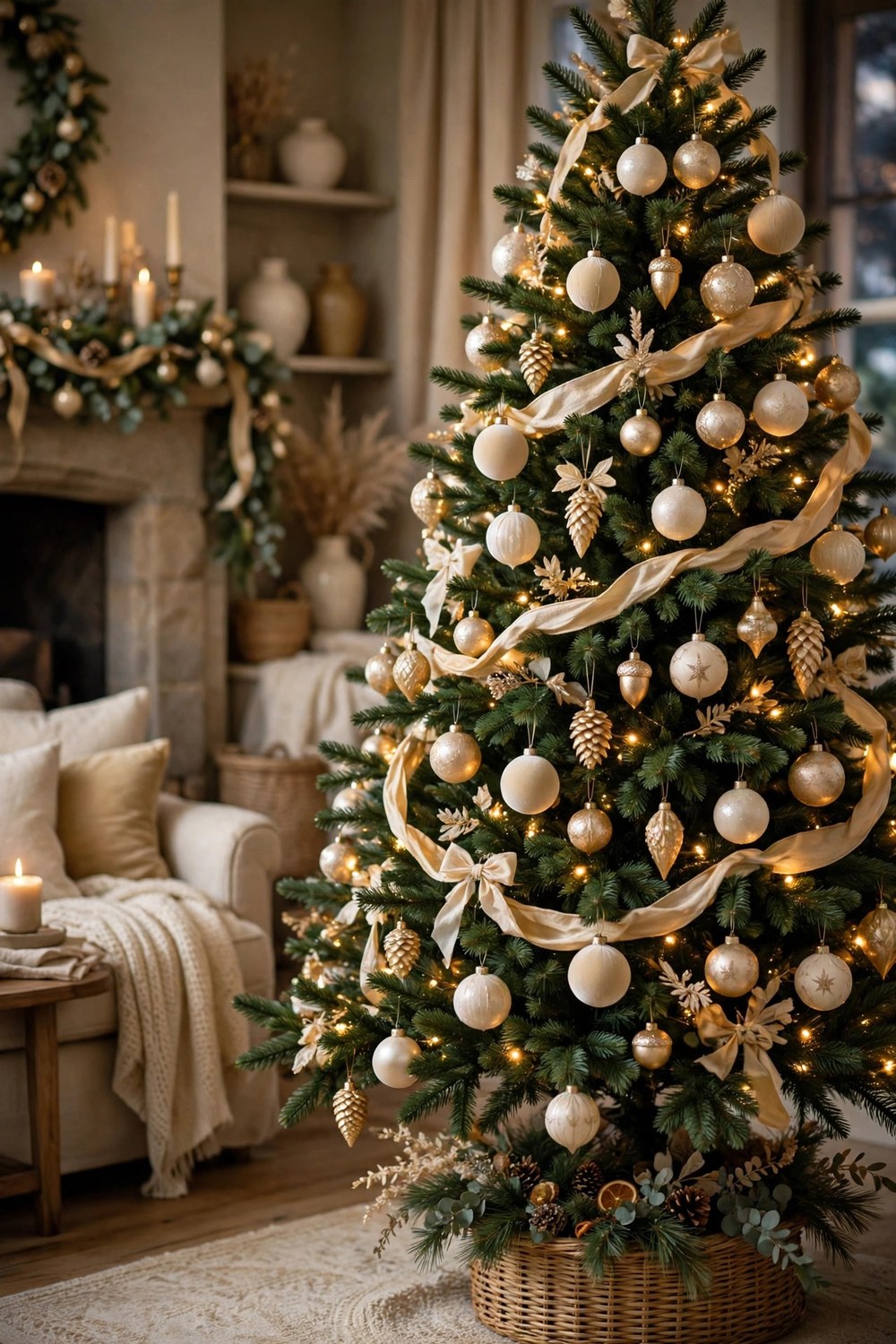
3. Layer cream, ivory and soft gold for a gentler classic
If red feels like too much for your room, cream and soft gold give you the same classic shape in a quieter voice. Ivory baubles, pearl toned drops and pale gold ribbon look especially pretty against dark green, and they suit rooms with cream sofas or light walls very well. Keep the gold brushed or champagne rather than bright yellow, because softer metal tones tend to look calmer. Add a few clear glass pieces for sparkle without color. This is typically the scheme that photographs best in daylight, and in soft lamplight, too.
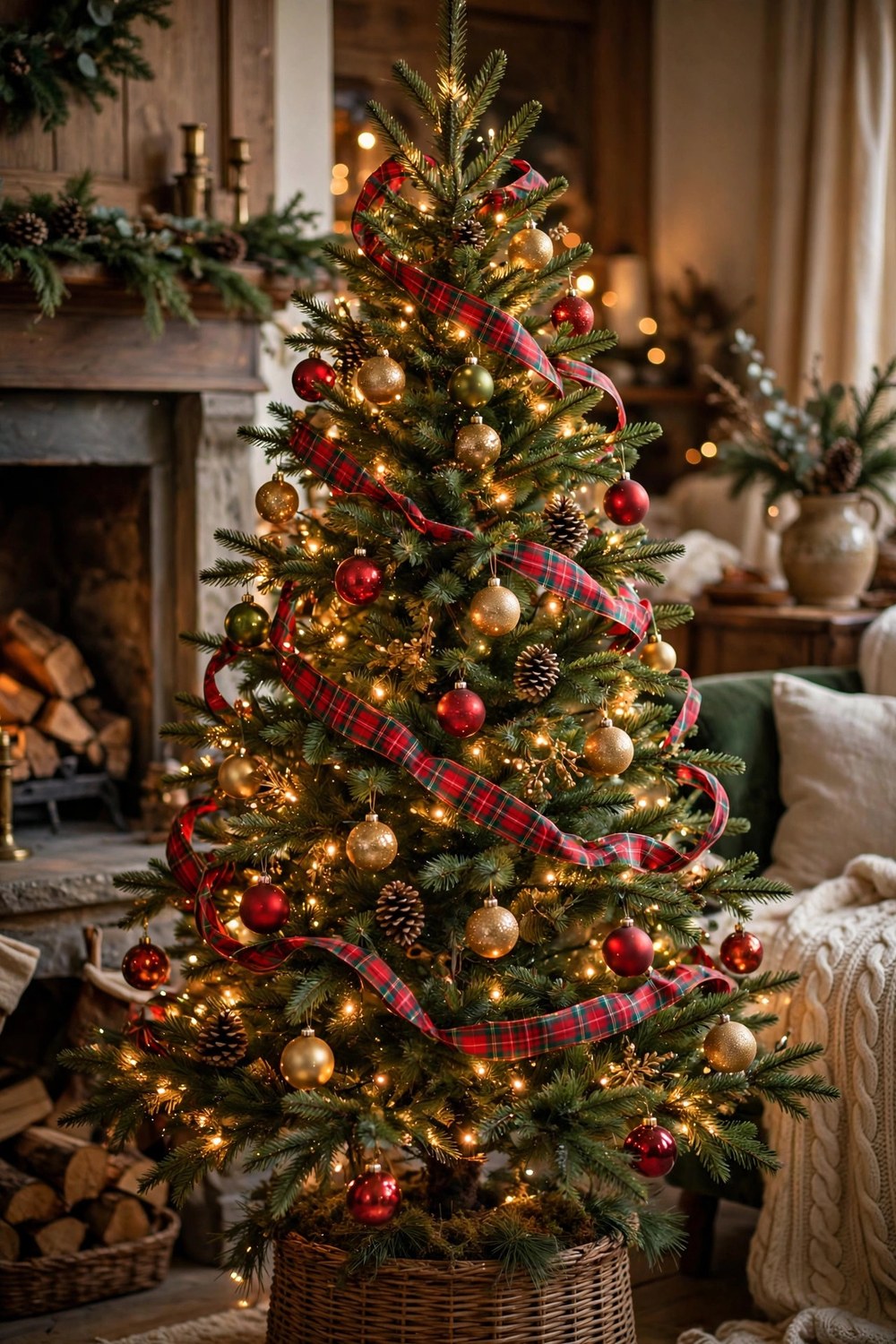
4. Weave tartan ribbon through the branches in loose loops
Tartan ribbon brings pattern to a classic tree without bringing in a new color, because a good plaid already holds red, green and a touch of gold in one strip. Choose a wired ribbon so the loops hold, then weave it in and out of the branches as you travel slowly down the tree. Let it dip in soft waves rather than wrapping it tightly like a bandage. Two passes are usually plenty on a full tree. Plain red and gold baubles tucked beside the ribbon finish the look without competing with it.
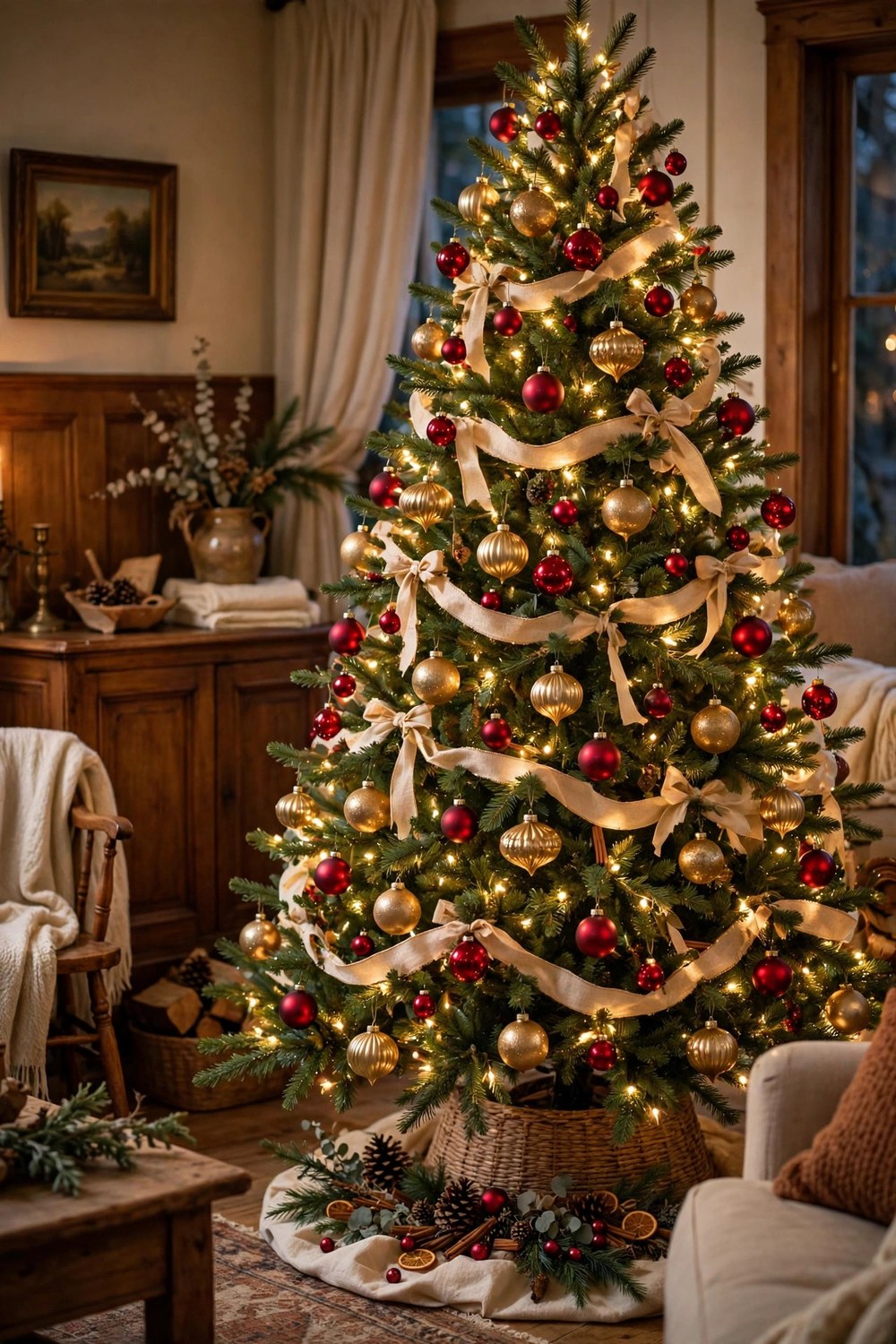
5. Pair cranberry red with antique gold and warm cream
Cranberry sits happily between bright red and burgundy, and it is a kind way to deepen a classic scheme without changing it completely. Pair it with antique gold, the slightly worn kind, and warm cream pieces to soften the edges. This palette looks lovely in rooms with wood furniture, leather chairs or a brick fireplace nearby, because all the tones share the same warmth. Keep the cranberry share at about half the ornaments, then split the rest between gold and cream. The result feels old in the best possible way.
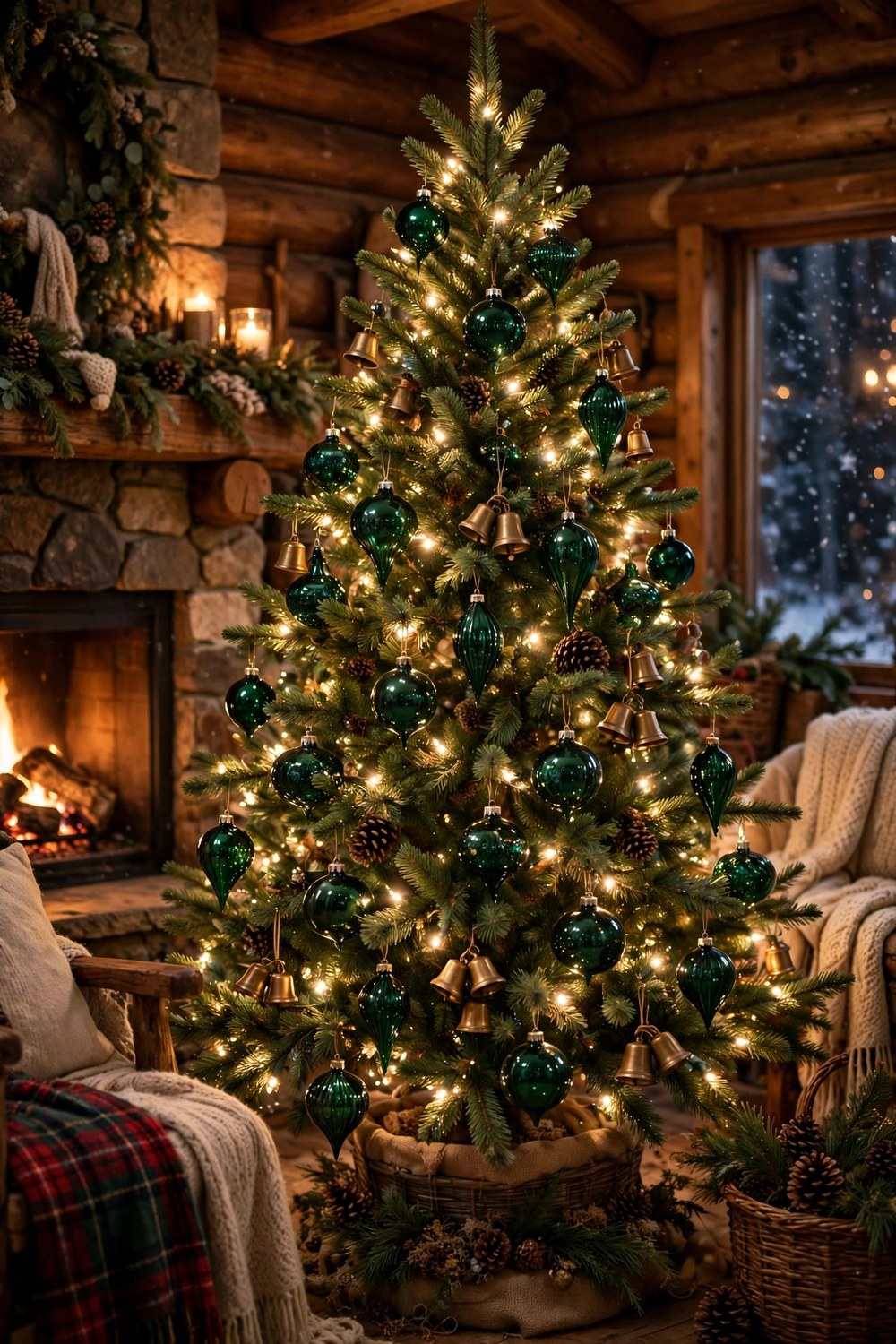
6. Mix deep green ornaments with brass and pinecones
Green on green might sound like it would disappear, but deep green glass against slightly darker real branches adds a rich, woodsy layer that guests notice up close. Brass bells, brass baubles and warm gold ribbon stop the scheme from going flat, and natural pinecones bring in a brown note that suits fireplaces and wood floors. Hang the green pieces a little further out on the branches, where the lights can outline them. This look is typically a good fit for a cabin feel, even in an ordinary city living room.
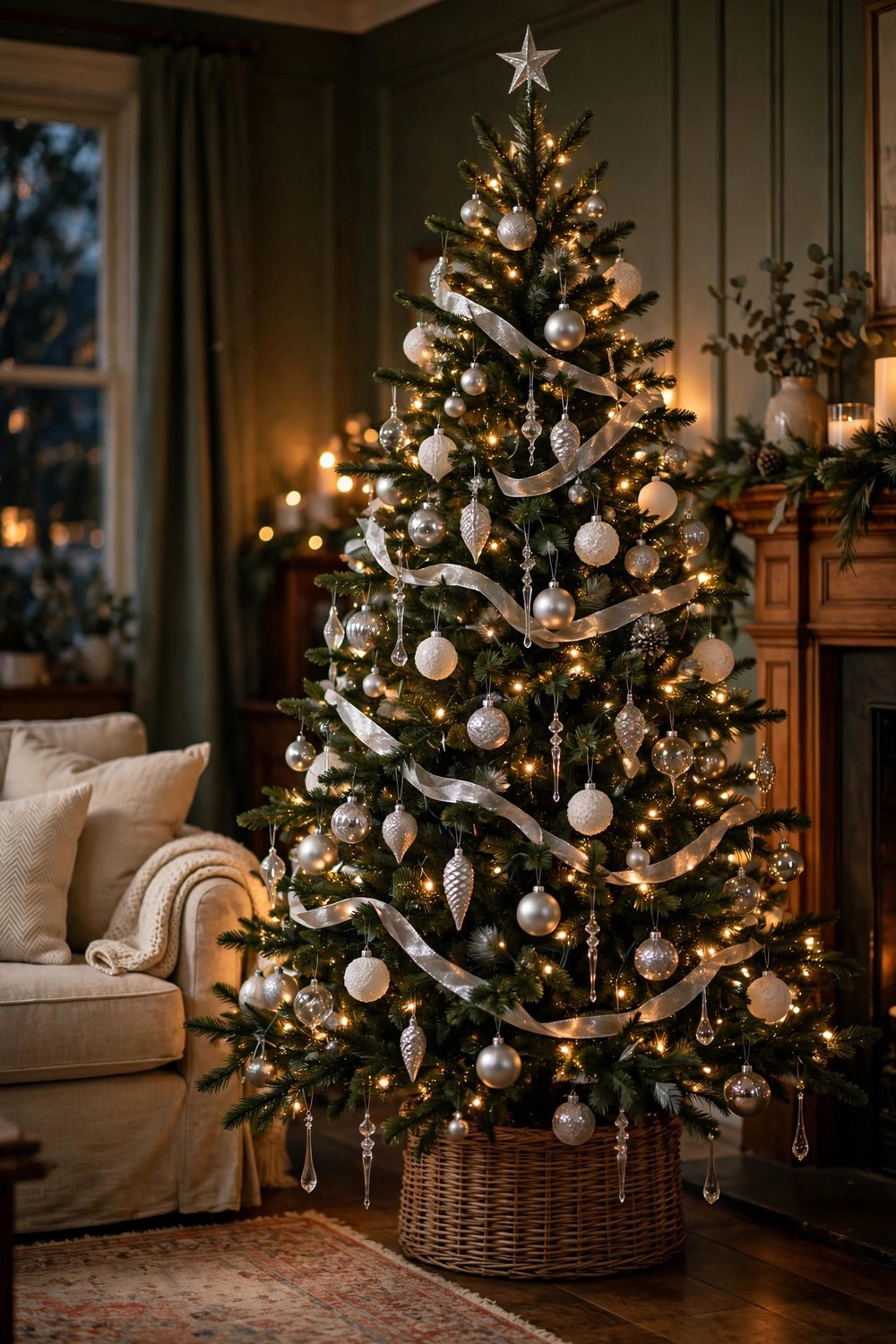
7. Keep silver and white crisp against the dark green tree
Silver and white is the cool, crisp branch of the classic family, and it has been dressing trees since long before gold took over. White baubles, silvered glass, clear drops and a little faux snow on the branch tips give the tree a frosty calm that suits blue grey rooms especially well. Warm white lights are still your friend here, because very blue light can make silver look cold and a bit stark. Add one or two silver ribbons rather than red, and let the tree feel like a quiet snowy evening outside.
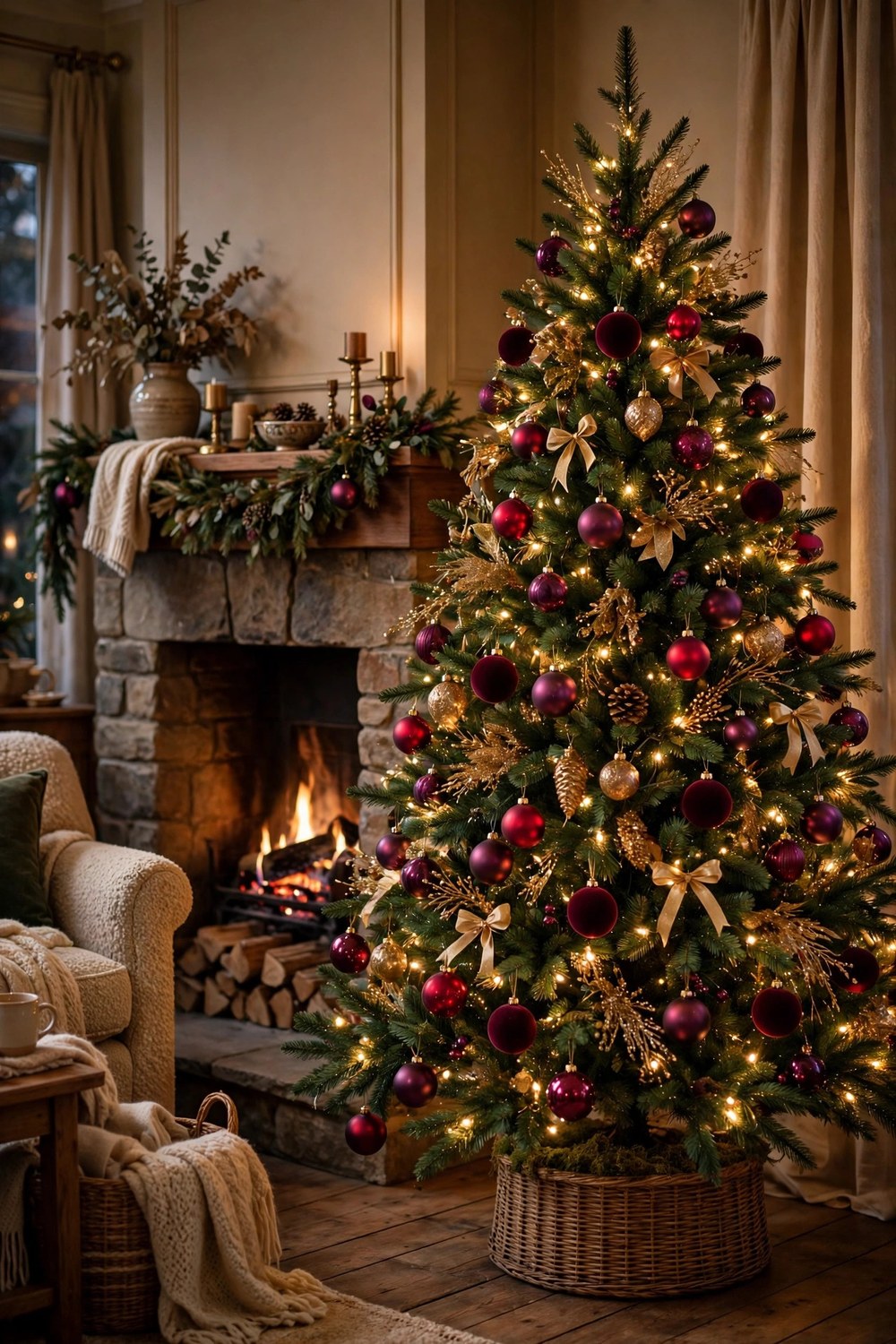
8. Add burgundy touches for a deeper, richer red family
You do not have to choose just one red. Layering bright red, cranberry, burgundy and a touch of plum gives a classic tree real depth, because the eye keeps finding a slightly different shade as it moves. Keep all the reds in the warm family so nothing turns pink or orange by mistake, and use gold as the thread that ties them together. Put the darkest burgundy pieces deeper inside the tree and the brightest reds near the outside. The effect is rich and cozy, especially beside a fire or a lamp with a warm shade.
Heirloom Ornaments and Traditional Shapes
Once the colors feel settled, the ornaments with a story do the rest. Glass, wood, straw and food based decorations have all hung on trees for generations, and mixing their shapes is what makes a classic tree feel collected slowly rather than bought in one afternoon.
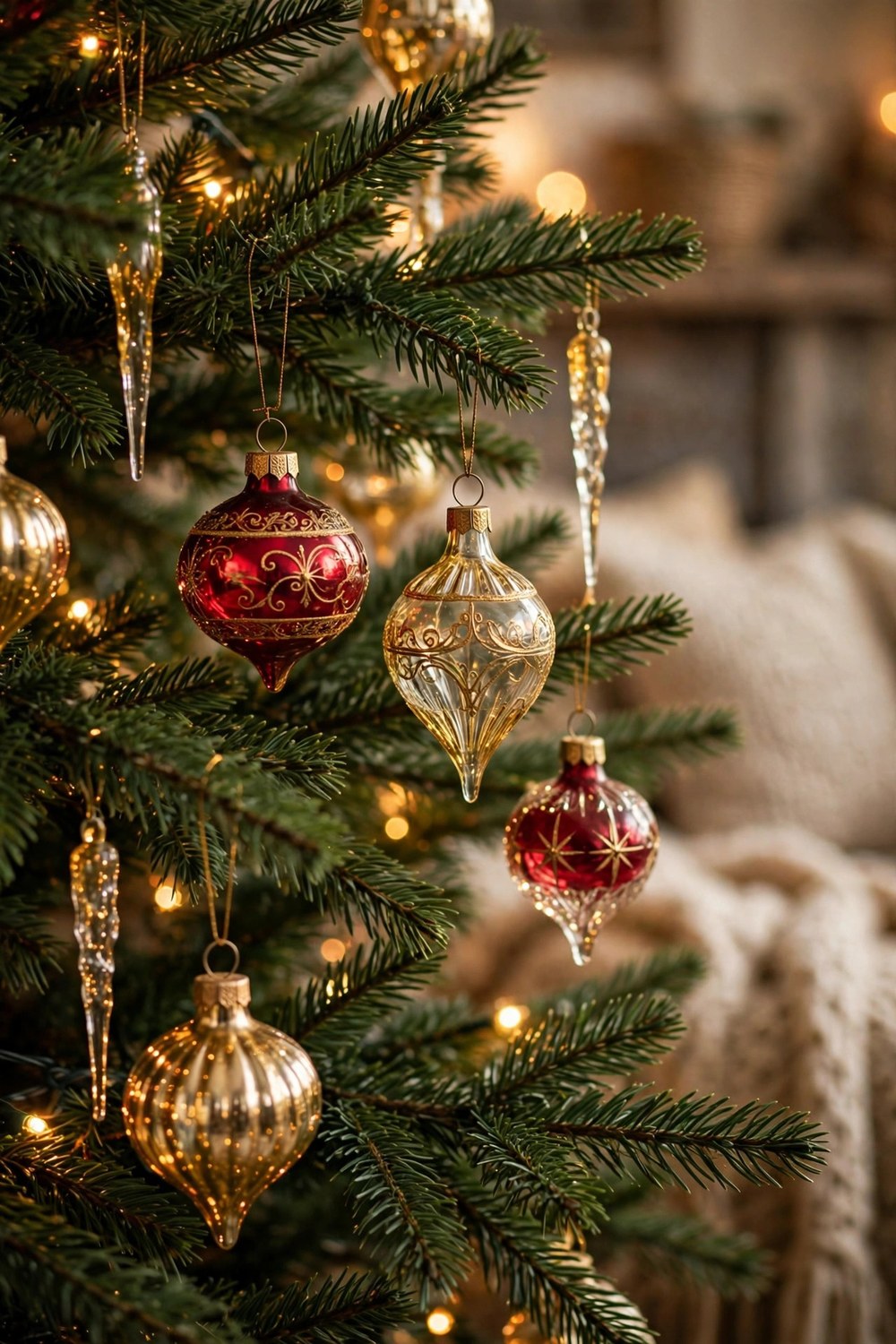
9. Hang glass heirloom ornaments where the light can find them
Every classic tree has a few ornaments that get unwrapped last and hung with extra care. Thin glass heirlooms, whether they came from a grandparent or a market stall years ago, belong on the outer branches where the lights can shine through them and where they have room to turn slowly. Space your special pieces apart so each one gets its own moment, then fill around them with plainer baubles. If one is very fragile, hang it higher, away from pets, children and the sweep of passing coats on busy evenings.
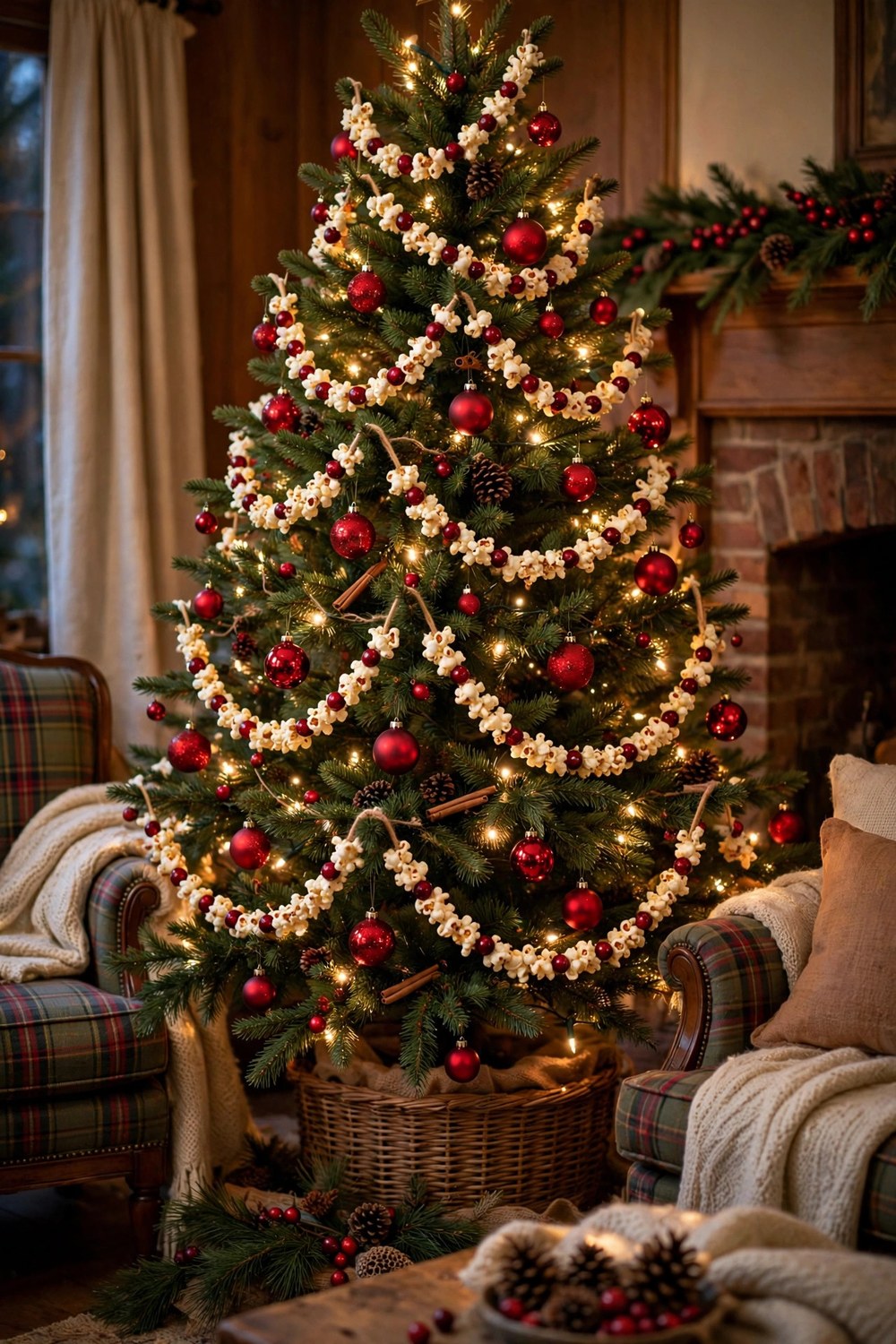
10. String a popcorn and cranberry garland the slow way
Popcorn and cranberry garlands are old fashioned in the nicest sense, and making one is half the pleasure. Thread plain popcorn with fresh cranberries on a long needle, taking breaks so it stays a cozy job rather than a chore. Drape the finished strand in gentle swags near the front of the tree, where the white and red can be seen against the green. It will not last forever, and that is part of its charm. Birds usually appreciate the leftover garland pieces outside on a cold morning once the season ends, too.
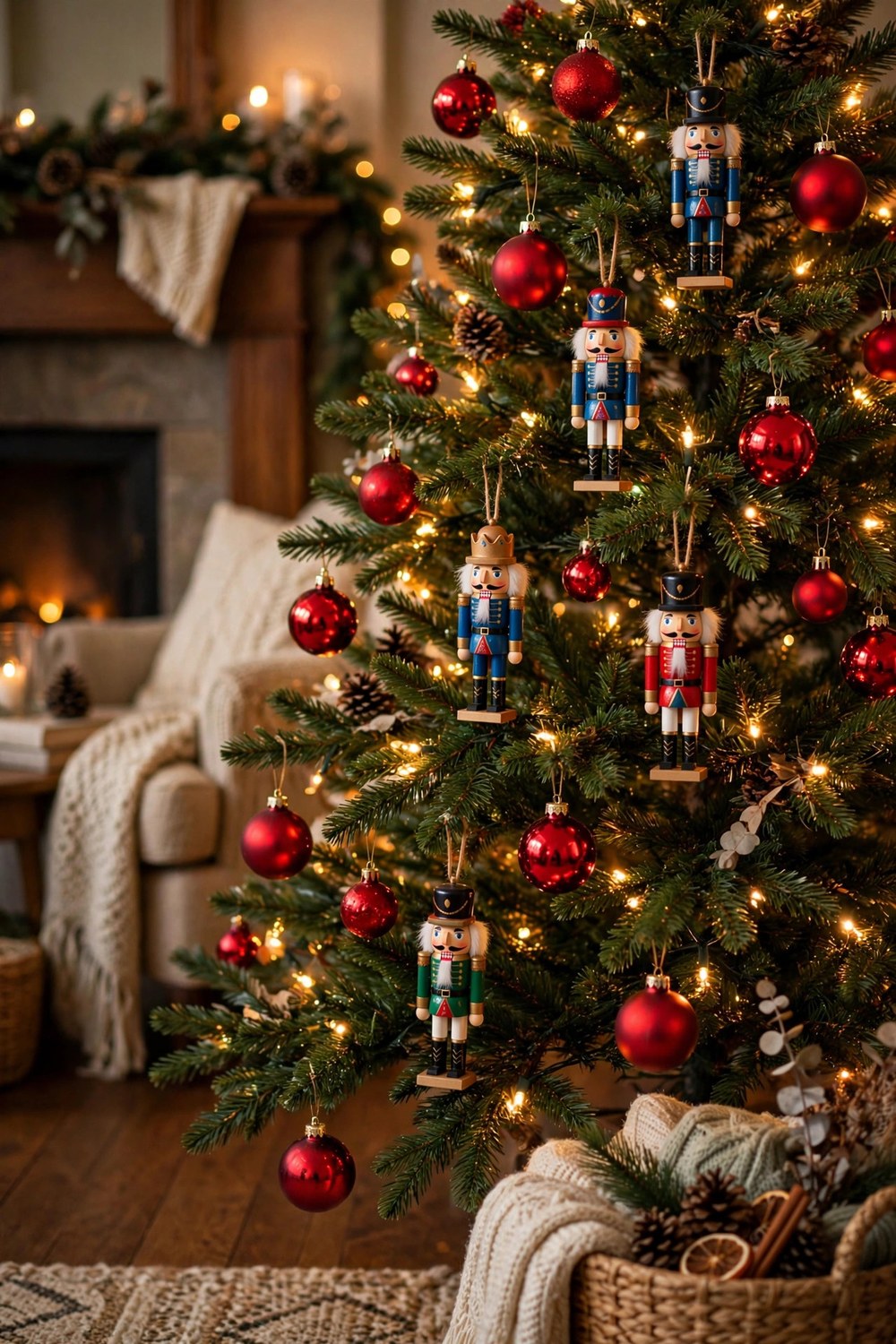
11. Hang painted wooden nutcracker ornaments among the baubles
Small wooden nutcrackers bring a storybook feel that plain baubles cannot manage on their own. Their painted uniforms add tiny hits of red, blue, black and gold, and their stiff little shapes look charming tucked between round ornaments. Hang them at eye level and a bit below, where children and guests will actually spot them, and keep them spaced out rather than gathered in one group. Six to eight is usually plenty on a family sized tree. Mixed with simple balls and warm light, they read as tradition rather than novelty.
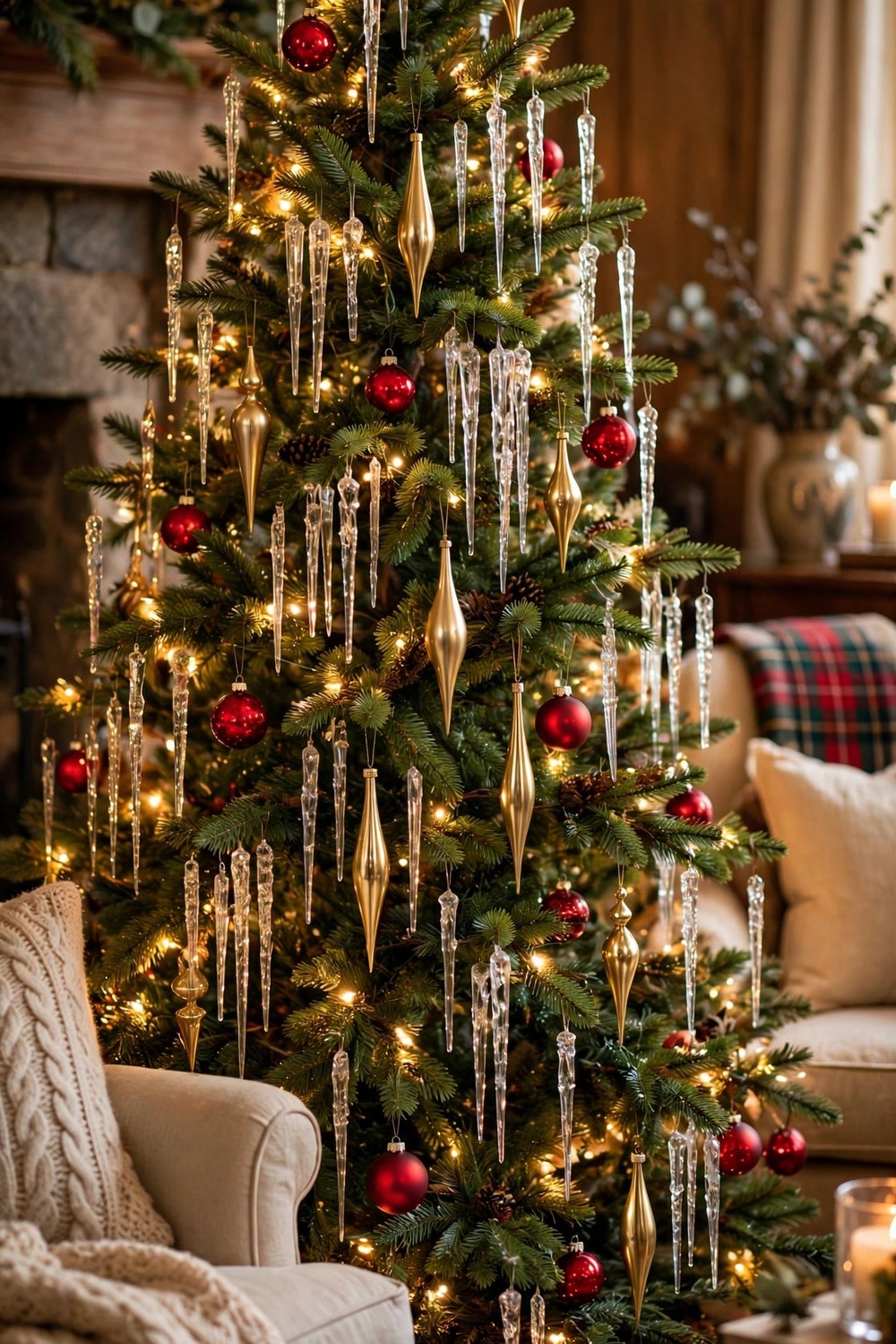
12. Add glass icicles and long teardrop finials for shape
A tree of only round baubles can start to look a little like a polka dot pattern, so long shapes matter more than people expect. Glass icicles and teardrop finials stretch the eye downward, catch light along their length, and fill the narrow gaps between branches very gracefully. Hang them where they can swing freely without knocking into other ornaments. Clear glass keeps things light, while gold or red finials add color in a slimmer form. Even a dozen long pieces, spaced thoughtfully all around, can change the whole silhouette of the tree.
13. Tuck in dried orange slices and cinnamon sticks
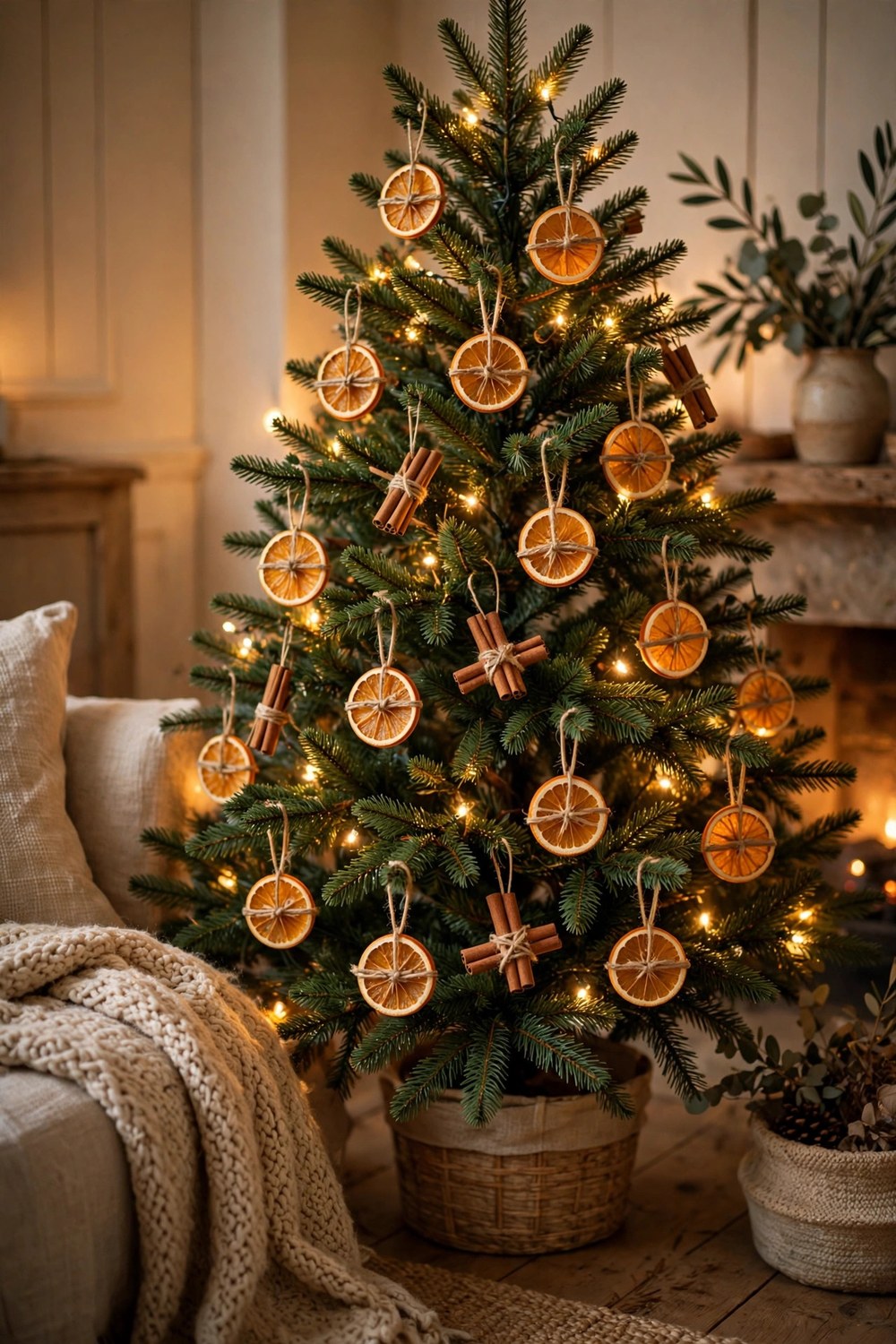
Dried orange slices glow like little stained glass windows when a warm light sits behind them, and cinnamon sticks tied with twine bring a quiet, spicy note that suits a traditional tree. Both have been used on trees long before plastic ornaments existed, which is why they settle in so easily beside glass and wood. Hang the orange near lights for the glow, and tuck cinnamon bundles slightly deeper in. The scent is gentle rather than strong, and typically strongest in the first few days after the tree goes up.
14. Clip small brass bells and red berry picks into the gaps
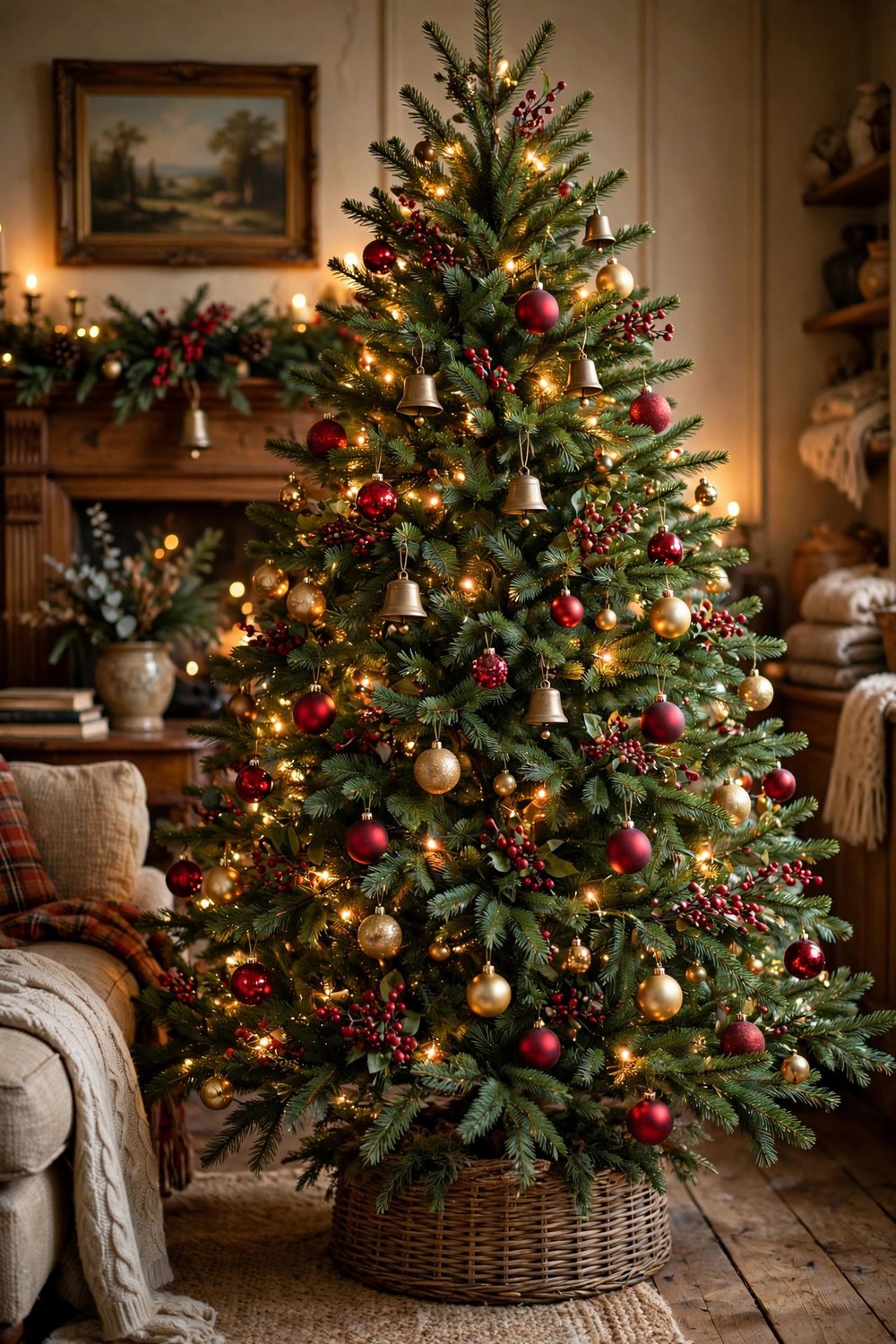
Every tree has a few bare spots that a bauble is too big to fix, and small pieces are the answer. Tiny brass bells add a soft shine, a hint of sound when the tree gets brushed, and a shape that feels properly old fashioned. Red berry picks fill the same gaps with color and a more natural outline. Bend each pick into a slight curve before tucking it in, so it follows the branch. Work slowly and step back often, because a handful placed well usually beats a bag placed all at once.
15. Hang straw stars and woven ornaments for handmade charm
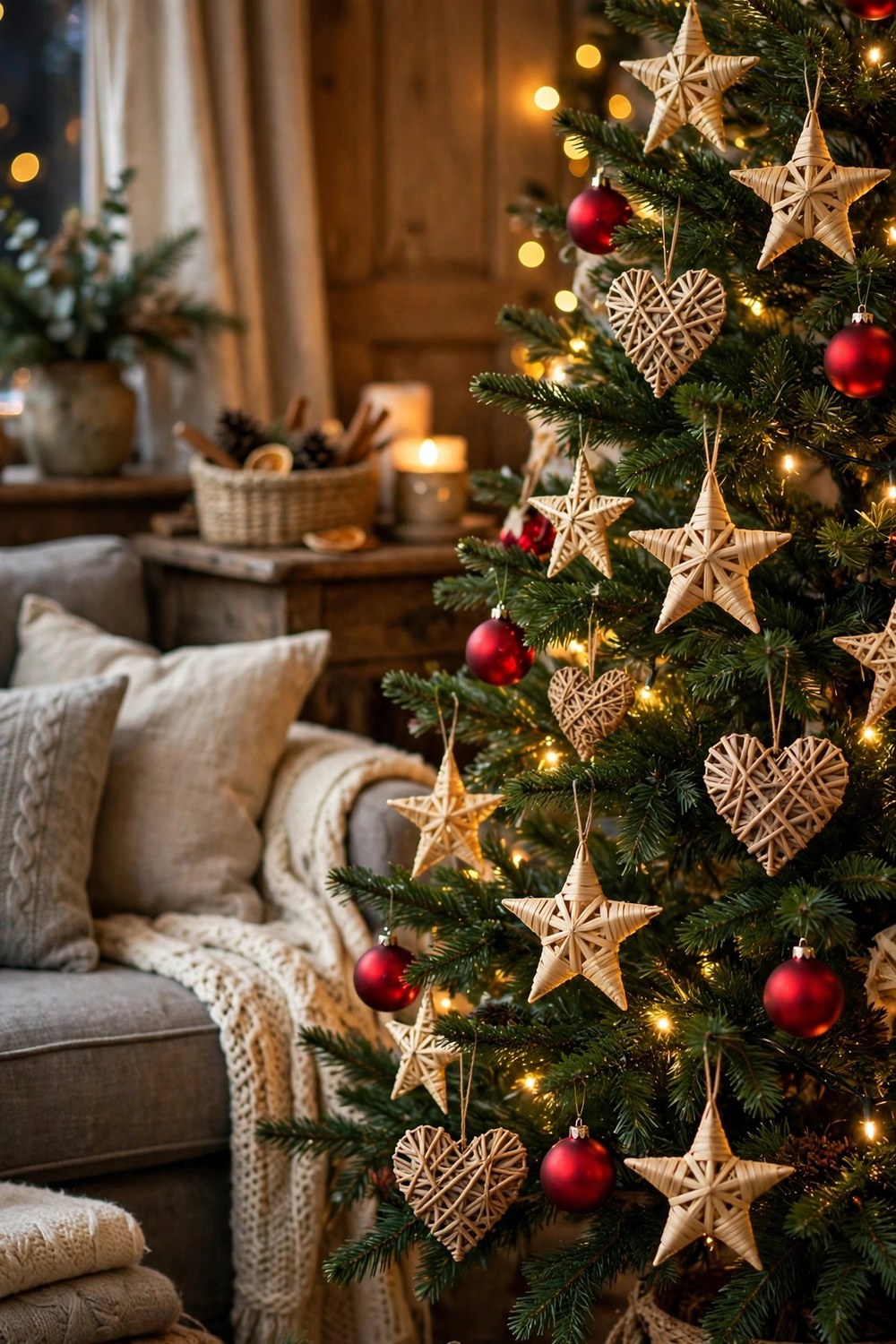
Straw stars and woven hearts have hung on trees in northern homes for a very long time, and their pale gold color sits beautifully beside red and deep green. They are light, so they can go on the thinner upper branches where glass feels too heavy, and they never shatter if one slips to the floor. Their handmade edges keep a dressed up tree from feeling too polished. Mix them with a few plain red baubles and let the textures do the talking, because this corner of the tree does not need sparkle to hold attention.
16. Give handmade ornaments from past years the best branches
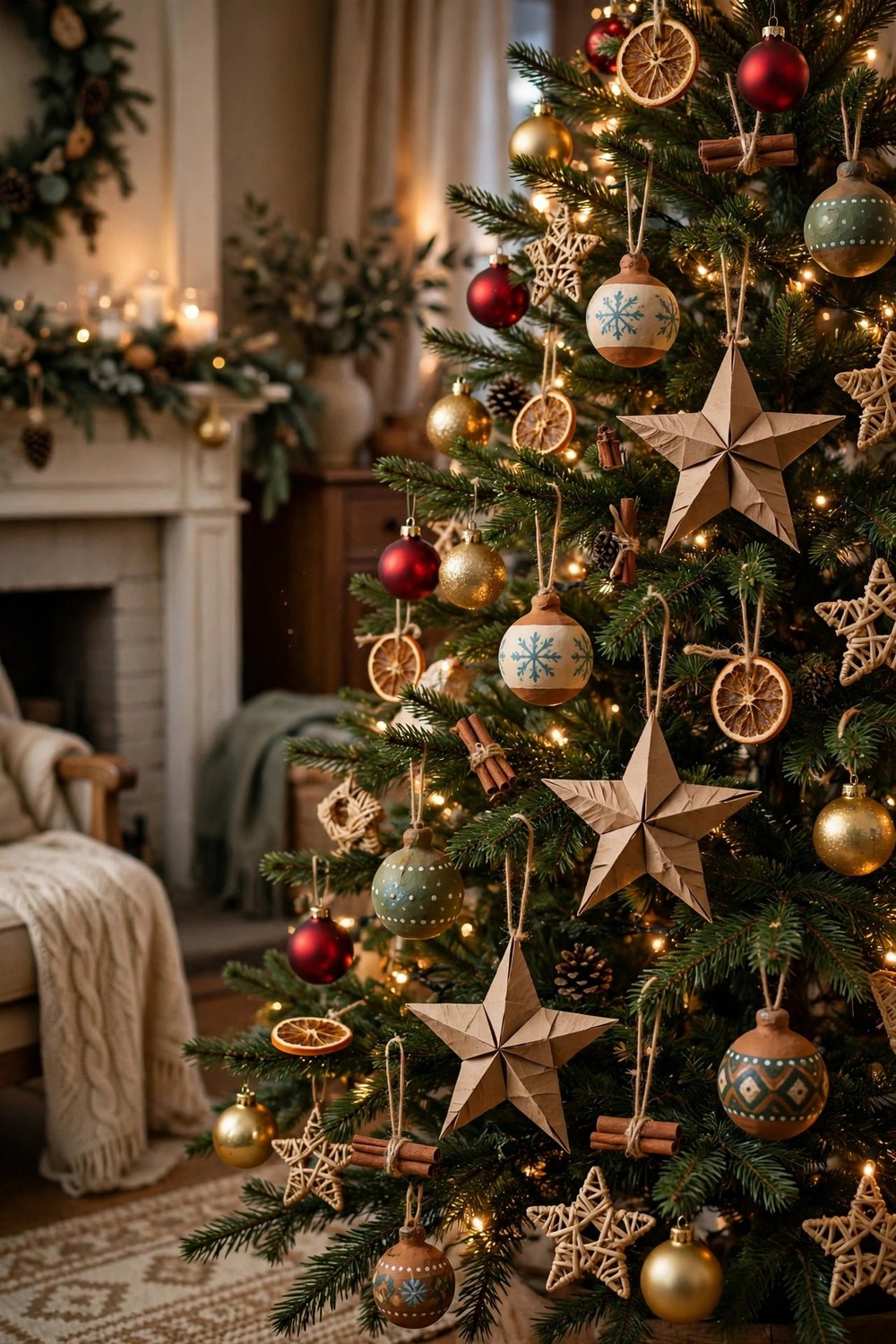
The slightly crooked paper star, the painted clay shape, the photo ornament from a school year, these are the pieces that make visitors stop and ask questions. Give them the front, eye level branches instead of hiding them at the back out of habit. A classic tree has room for them, because red and gold baubles frame almost anything kindly. If a handmade piece is fading or fragile, hang it over a soft branch near the trunk. Years from now, these are typically the ornaments the family argues about keeping.
Finishing Touches, From Topper to Tree Skirt
The last layer decides whether a classic tree looks finished or nearly finished. Light comes first, then the topper, then everything at the base, where a good skirt, a few standing figures and neatly wrapped gifts close the scene.
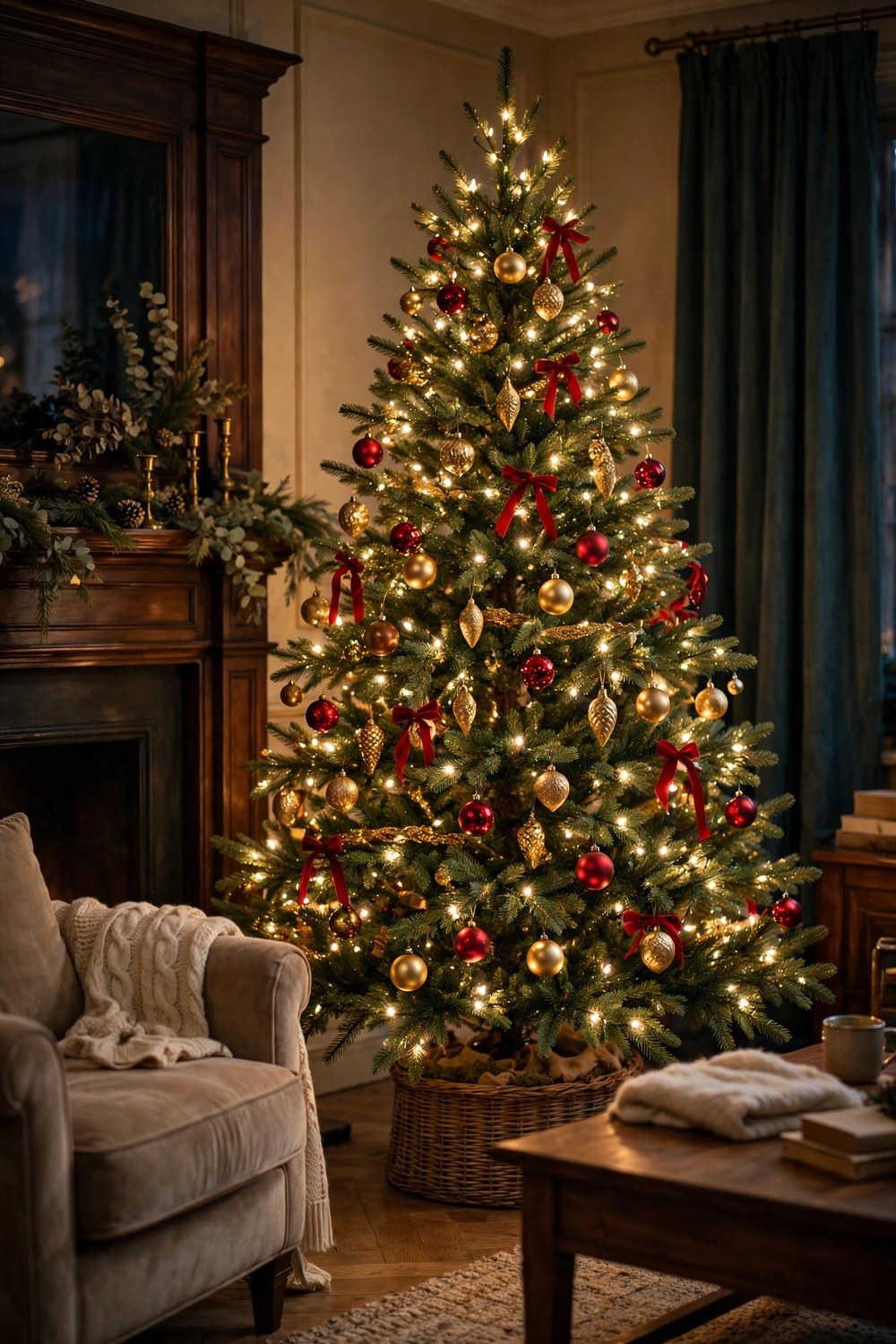
17. Choose warm white lights only and space them evenly
If you change only one thing on a classic tree, make it the lights. Warm white, and only warm white, gives red, gold and green the glow they were made for, while mixed colors can pull a traditional tree off course very quickly. Wind the strand deep into the branches as well as along the tips, so the light seems to come from inside the tree. Step back every few passes and squint a little to spot bright clumps and dark holes. Even, gentle light is usually what people mean when they call a tree cozy.
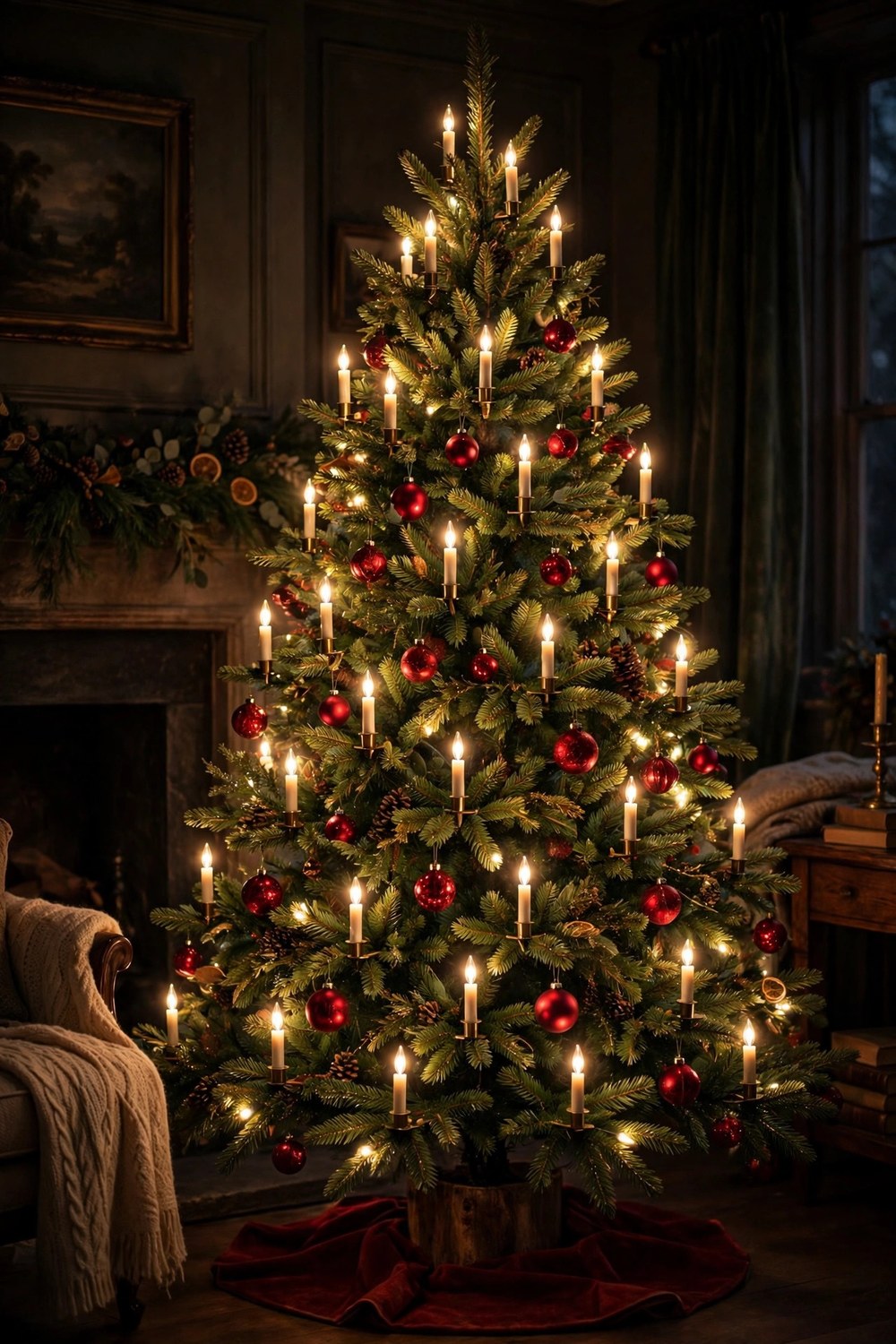
18. Clip on candle style lights for an old fashioned glow
Real candles left trees behind long ago for good reason, but clip on candle style lights bring the look back safely. Each small flame sits upright on its branch, spaced like candles once were, and the effect in a dim room is hard to beat. Use them alone on a smaller tree or layer them over a soft base of warm string lights on a larger one. Keep the clips straight and evenly spaced, because tidy rows are what sell the illusion. In the evening, this is typically the tree guests photograph first.
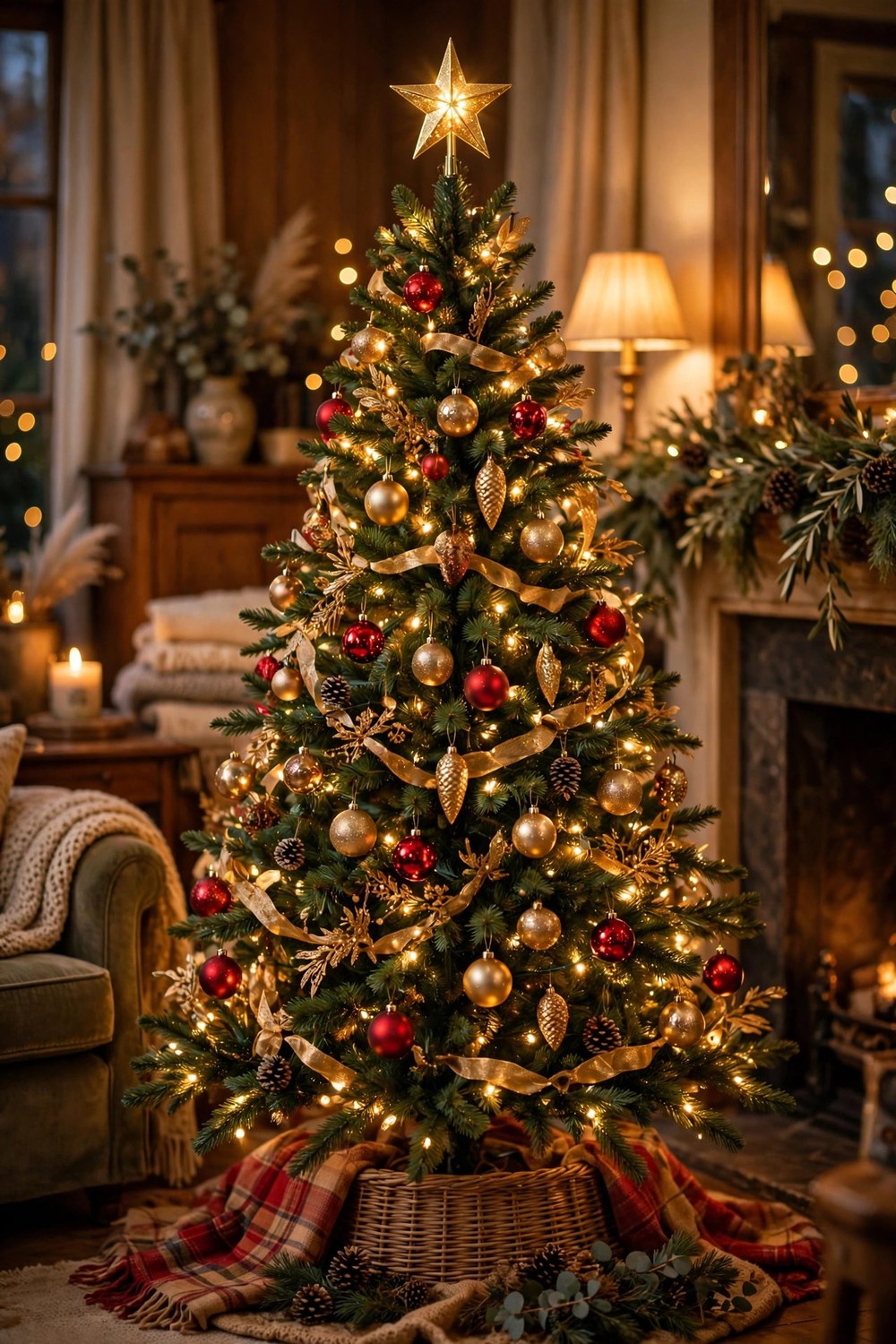
19. Top the tree with a classic gold star
A gold star is the topper most of us grew up under, and it still finishes a classic tree better than almost anything else. Choose one in proportion to your tree, big enough to notice from the doorway but not so large that it tips the top branch into a bend. A softly lit star adds a gentle halo, while an unlit metal one catches the tree lights on its own. Secure it firmly and step back to check it sits straight. That small lean to one side will catch your eye all season if you let it stay.
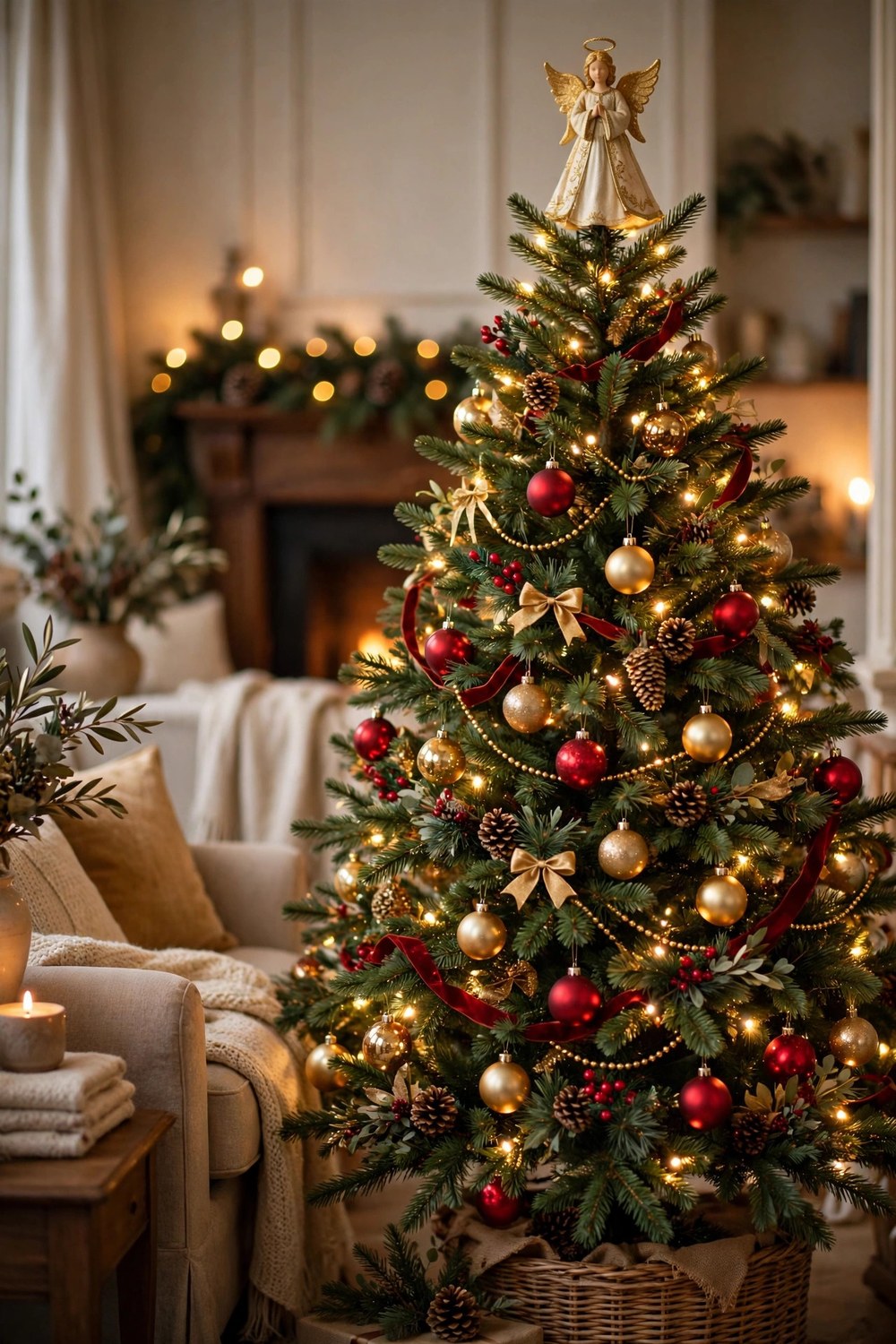
20. Let a simple angel topper finish the tree instead
For many families the angel is the tradition, brought down from the same box every year and placed last, sometimes by the same pair of hands. A simple angel in cream, white or soft gold suits a classic tree best, because busy colors at the very top can pull attention away from everything below. Make sure she sits securely and level on the top branch, with a few upper branches tucked gently behind her. If your angel is an old one, her slightly worn edges are part of the point.
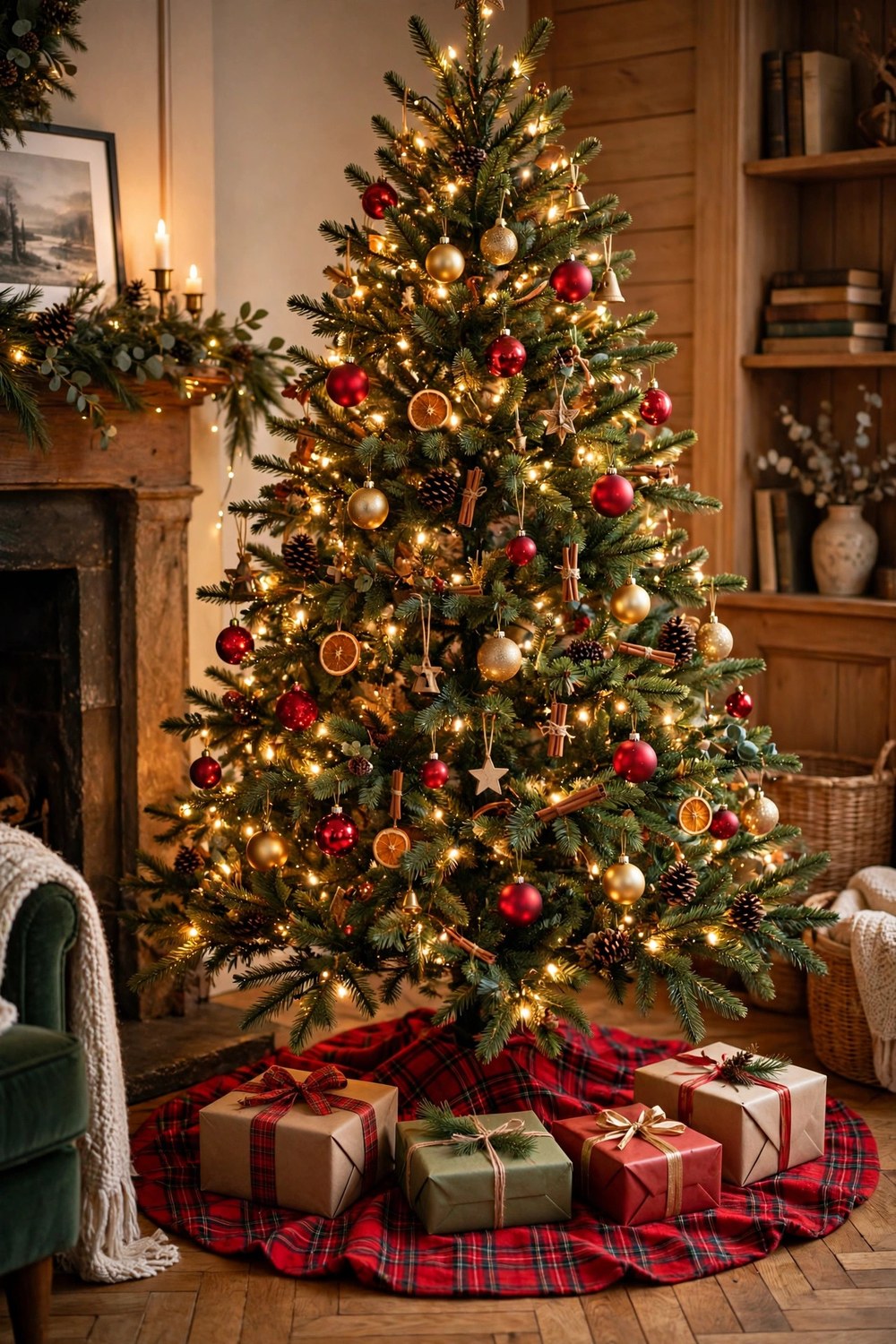
21. Anchor the base with a red plaid tree skirt
A plaid tree skirt does two useful jobs at once. It hides the stand and the tangle of cords, and it gives the whole tree a settled, grounded feeling, like a rug under a table. Red based plaid keeps the classic colors going right down to the floor and looks especially good against wood boards. Choose a skirt a little wider than the lowest branches if you have the room. Smooth it flat before the gifts arrive, because once parcels are piled on top, nobody really wants to rearrange it all.
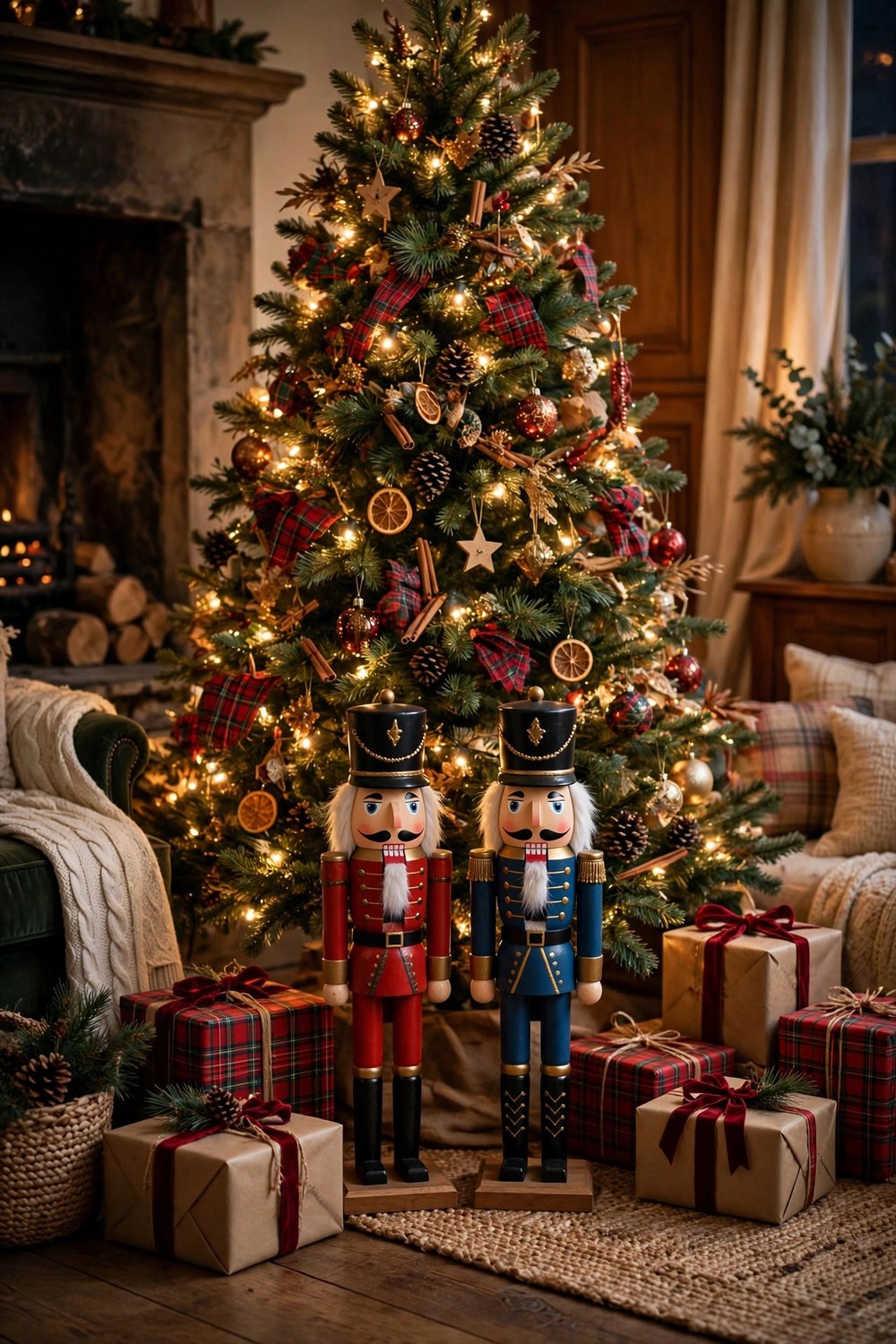
22. Stand wooden nutcrackers at the base like guards
Tall nutcrackers at the base give a classic tree a proper sense of ceremony. Stand one on each side of the trunk, or a small group of three at different heights, facing into the room like guards on duty. Their painted reds, blacks and golds usually echo the ornaments above without any effort from you. Keep them just outside the lowest branches so they do not crowd the skirt or hide the gifts. Children tend to adopt a favorite very quickly, which becomes its own small family tradition within a year or two.
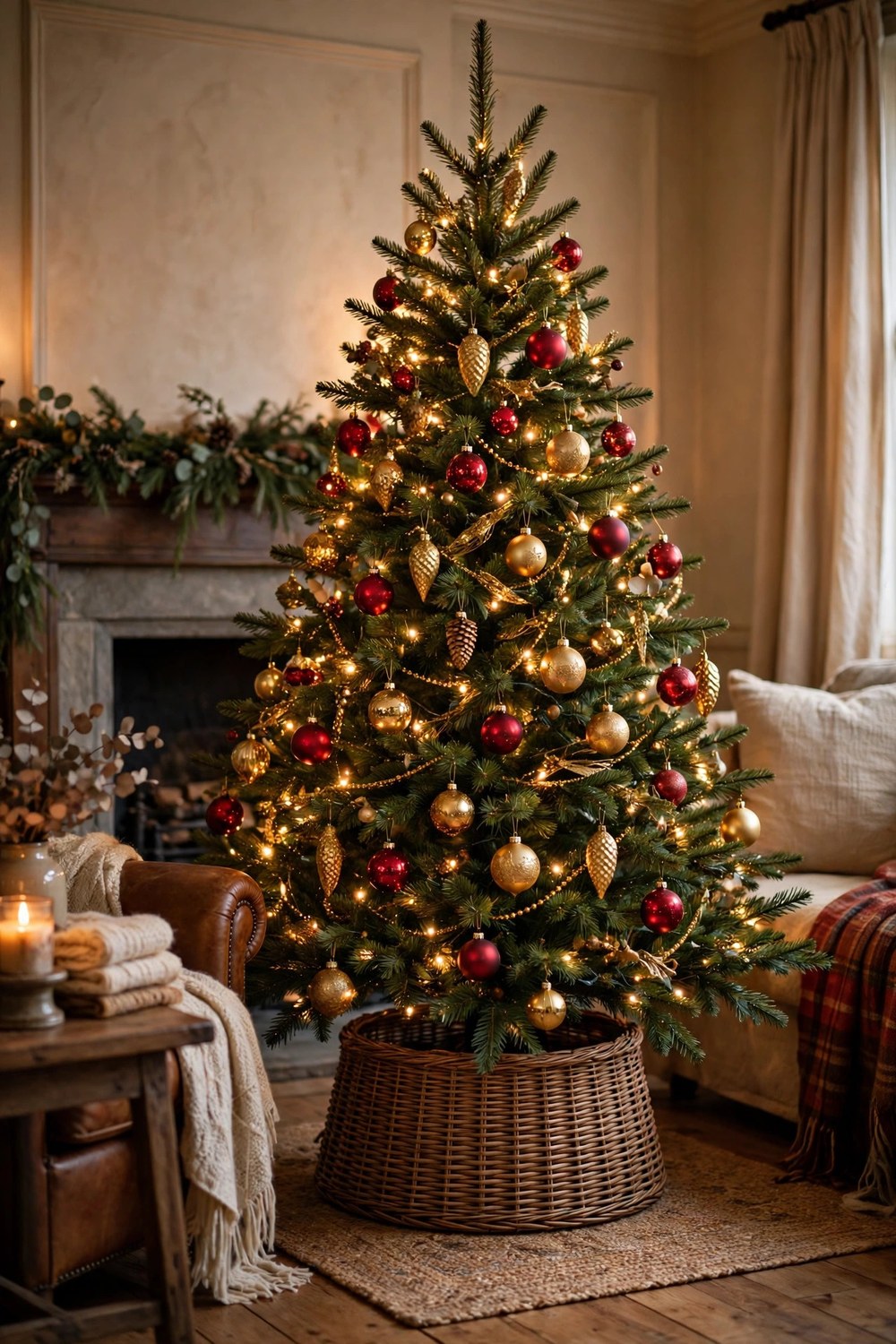
23. Hide the stand with a woven wicker tree collar
If skirts feel a bit fussy for your room, a woven wicker collar is the tidier classic option. It wraps the stand in a neat basket shape, adds warm natural texture at the base, and suits trees standing on bare floors especially well. Choose a tone close to your other wood and basket pieces so it blends rather than competes. Measure your stand before buying, because collars come in fixed sizes and a tight fit looks strained. You can still tuck a few wrapped gifts and a little greenery around it to soften the edge.
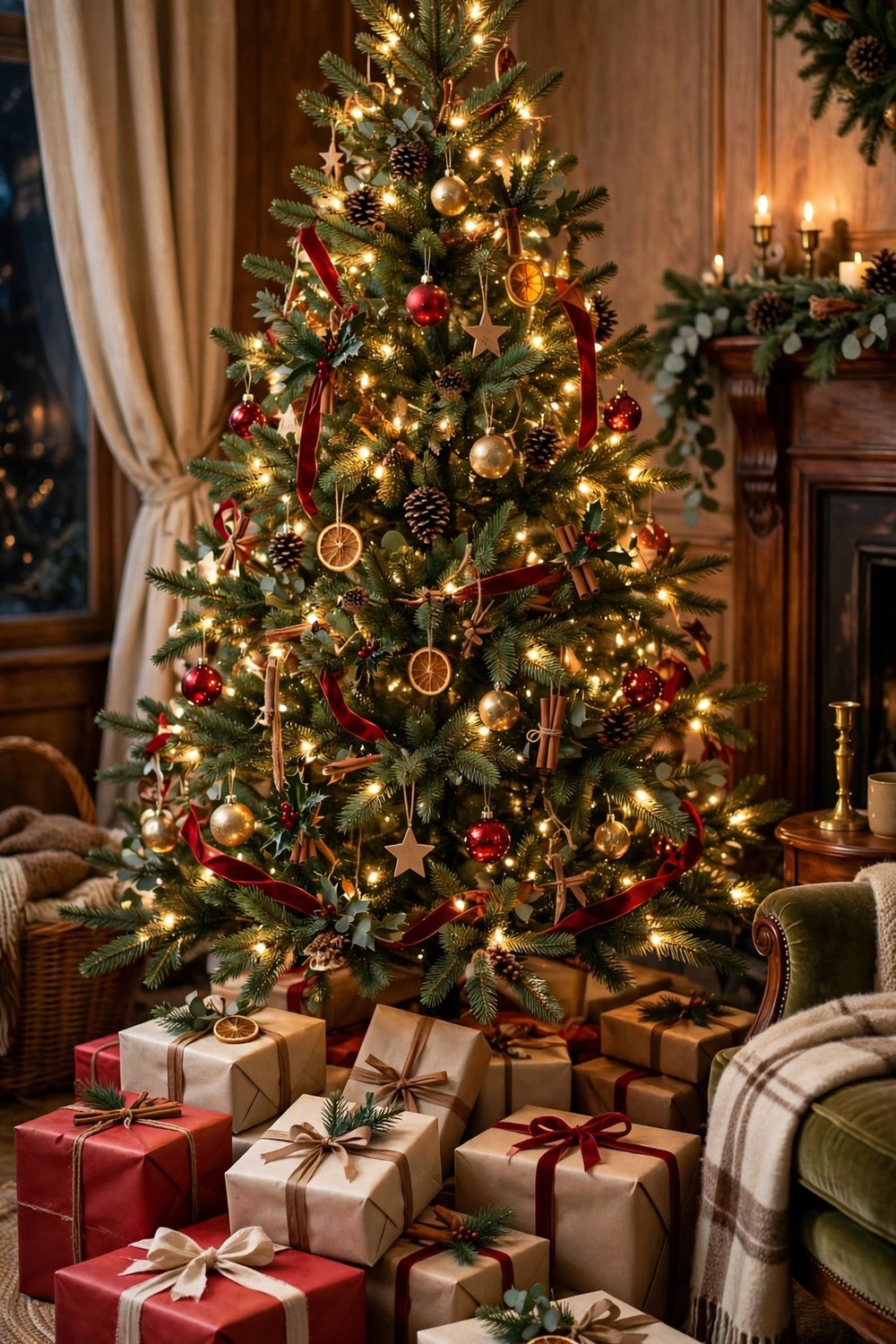
24. Pile wrapped gifts in red, cream and brown paper underneath
A classic tree is not really finished until the gifts go under it, and the wrapping can carry the scheme right to the floor. Red paper, cream paper and plain brown paper with red or gold ribbon look generous together without looking staged. Mix the sizes, stand a few tall boxes at the back, and let smaller ones spill toward the front. If presents arrive slowly in your house, a few empty wrapped boxes can hold the scene together in the meantime. It is the last layer, and honestly the one everyone looks at first.
A classic tree does not need all 24 ideas at once to feel right. Pick a color scheme you love, add the ornaments that mean something in your house, and finish the top and base with care, and the tree will already look like it belongs in your family photos.
Build it slowly over the years if you can. One box of good glass baubles this December, a better skirt the next, and lights you trust the year after that is usually how the trees people remember most were actually made.

Leave a Reply