
18 Orange Christmas Tree Ideas Bold Citrus and Cheerful
If you’re ready for a tree that feels sunny even in the middle of winter, orange might be exactly the color you’ve been missing. It brings warmth, energy, and a little bit of cheerful surprise to a room, and it usually works beautifully with the deep green branches you already love. You don’t have to go all in at once either. A few citrus touches here and a ribbon there can completely change the mood, making your tree feel fresh and personal instead of predictable. It’s a color that invites people closer, and that’s a lovely thing at Christmas.
Look, we get it, orange can feel like a bold choice if you’ve always stuck with red, gold, or silver. But orange is actually more flexible than you might think, and it typically sits comfortably beside cream, copper, wood tones, and plenty of greenery. You can lean rustic with dried fruit and linen, go glamorous with amber glass and velvet, or keep things playful with candy stripes and paper ornaments. Often the sweet spot is mixing a few shades together, like peach, tangerine, and burnt orange, so the tree feels layered rather than flat. That mix is what keeps it looking intentional.
In this guide, you’ll find eighteen different ways to bring orange onto your tree, from simple handmade ornaments to a full monochrome moment that really commits to the theme. Each idea is easy to adapt to a big tree or a small one, and most of them pair well with things you probably already own. Take the ideas that suit your home, skip the ones that don’t, and don’t worry about matching everything perfectly. A cheerful tree usually looks best when it feels gathered and lived in, not stiff. Let’s find the orange look that feels like yours.
In This Article
- 1. Dried Orange Slice Ornaments With Cinnamon Sticks
- 2. Burnt Orange Velvet Ribbon Cascades
- 3. Copper and Amber Glass Bauble Mix
- 4. Fresh Citrus and Eucalyptus Garland Swag
- 5. Orange Ombre Tree From Peach to Rust
- 6. Tangerine and Gold Tinsel Twist
- 7. Marmalade Check Bows and Plaid Ribbon
- 8. Orange Blossom and White Poinsettia Picks
- 9. Citrus Slice Tree Skirt in Warm Orange Linen
- 10. Amber Fairy Lights With Orange Lantern Ornaments
- 11. Blood Orange and Cranberry Cluster Picks
- 12. Terracotta Pot Ornaments and Rustic Orange Accents
- 13. Orange and Cream Candy Stripe Baubles
- 14. Sunset Gradient Ribbon Topper With Long Tails
- 15. Mini Orange Pomander Balls With Cloves
- 16. Peach and Coral Paper Honeycomb Ornaments
- 17. Orange Berry Branches and Faux Kumquat Stems
- 18. Bold All Orange Monochrome Tree With Mixed Textures
Classic Citrus and Natural Touches
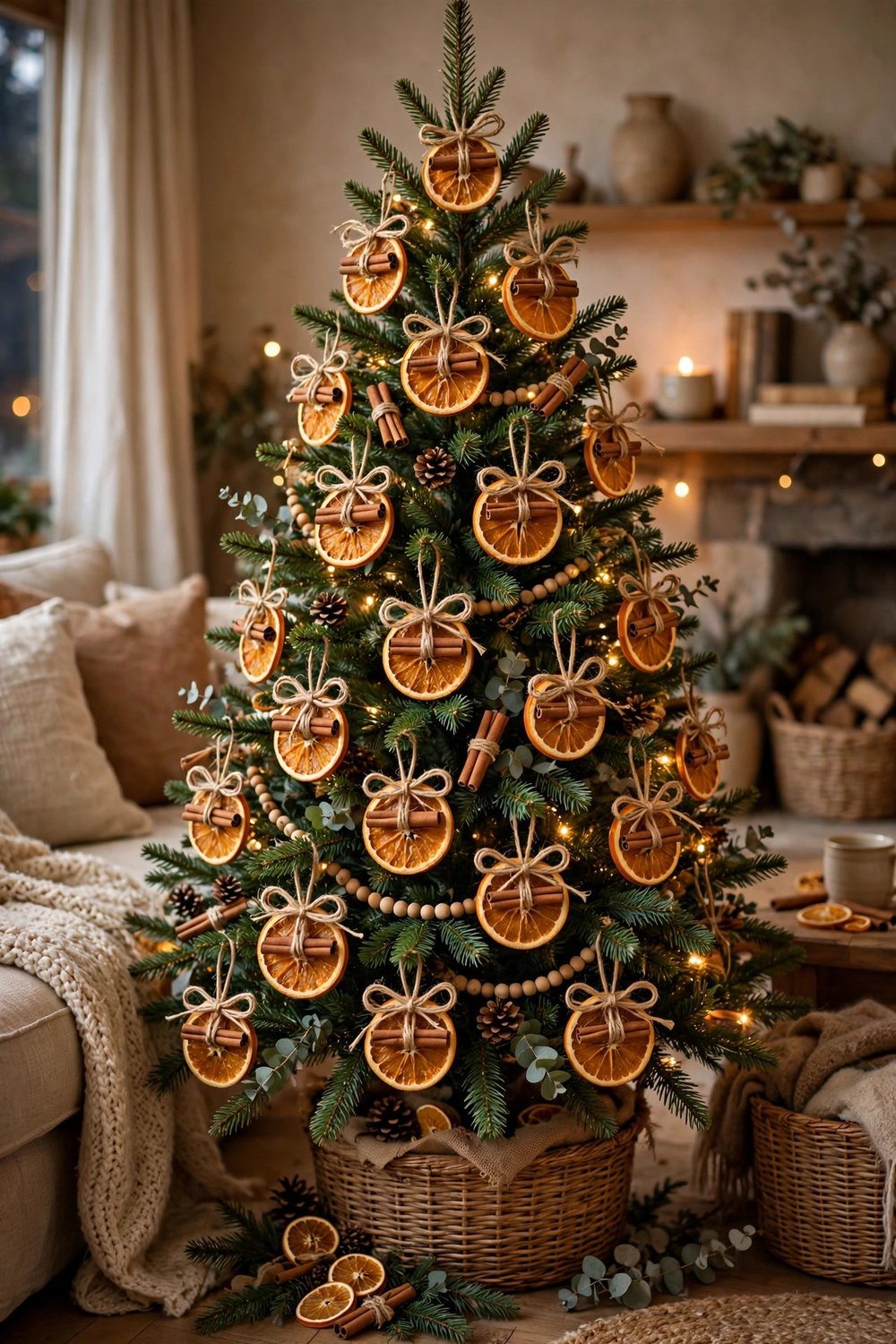
1. Dried Orange Slice Ornaments With Cinnamon Sticks
This is often the first orange idea people try, and it’s easy to see why it works so well. Thin slices of orange, dried until they’re translucent, catch the light in a way that feels almost like stained glass. Tie each slice with a short cinnamon stick and a loop of twine, and you’ve got an ornament that looks lovely and usually smells wonderful too. Hang them where the lights sit close behind them, because that’s when they really glow. You can space them evenly for a tidy look, or cluster a few together for something more relaxed. They typically pair beautifully with plain wood beads and simple greenery, and they bring a handmade warmth that store bought ornaments don’t always manage. If a few slices darken a little in the oven, don’t worry. That deeper color often adds to the rustic charm.
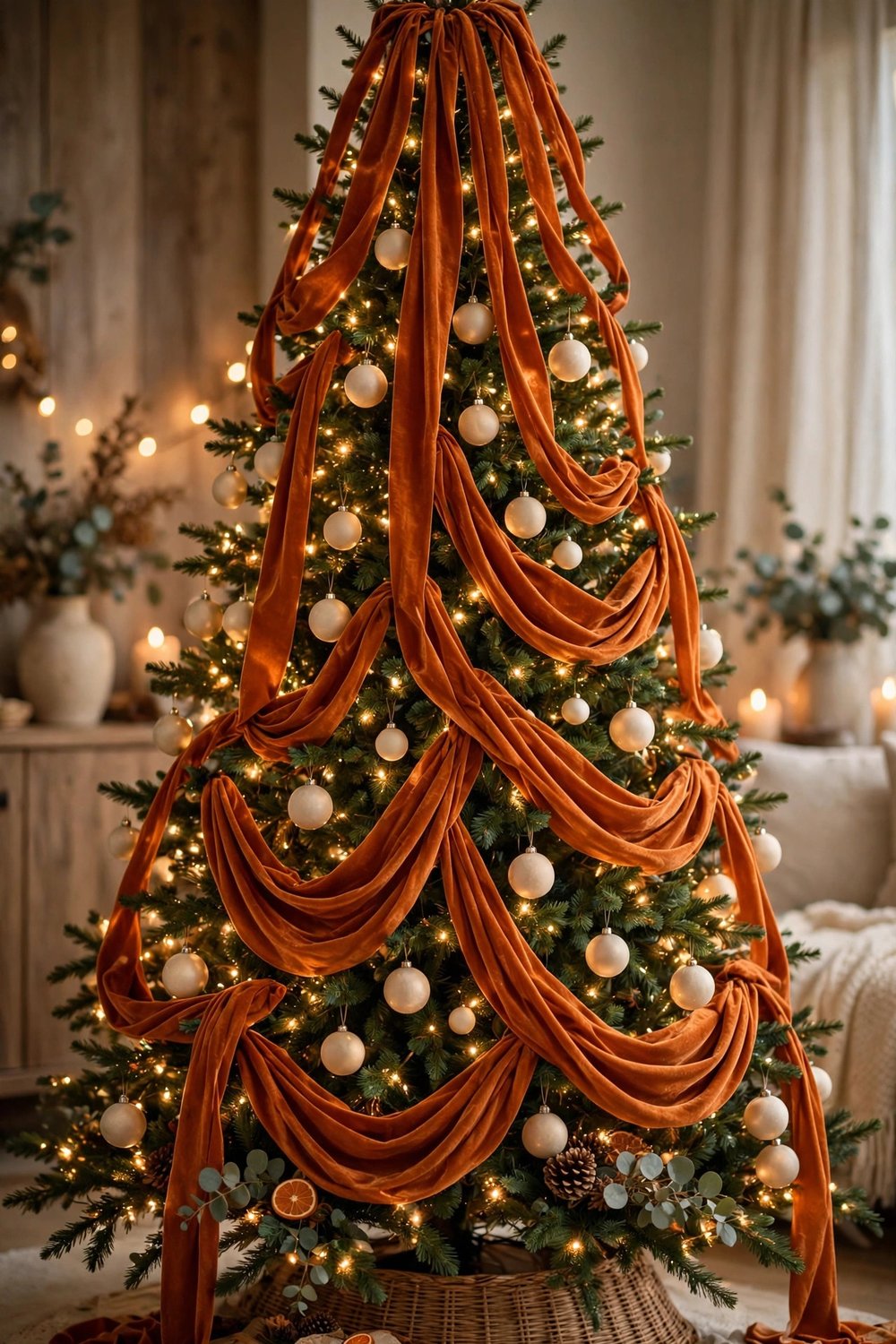
2. Burnt Orange Velvet Ribbon Cascades
If you want orange to feel rich and cozy rather than bright and playful, burnt orange velvet ribbon is a lovely place to start. Cut long lengths and let them cascade from near the top of the tree down through the branches, tucking them in and out so they don’t just sit on the surface. The velvet texture usually softens the whole tree and makes the color feel deeper, especially in evening light. You don’t need a lot of other orange with this look, because the ribbon does most of the talking. Pair it with cream baubles, warm white lights, and maybe a few copper accents if you’d like a little shine. It typically works best on a fuller tree where the ribbon can weave naturally. Take your time arranging it, step back often, and let a few tails hang a bit loose. That relaxed drape is what makes it feel elegant instead of stiff.
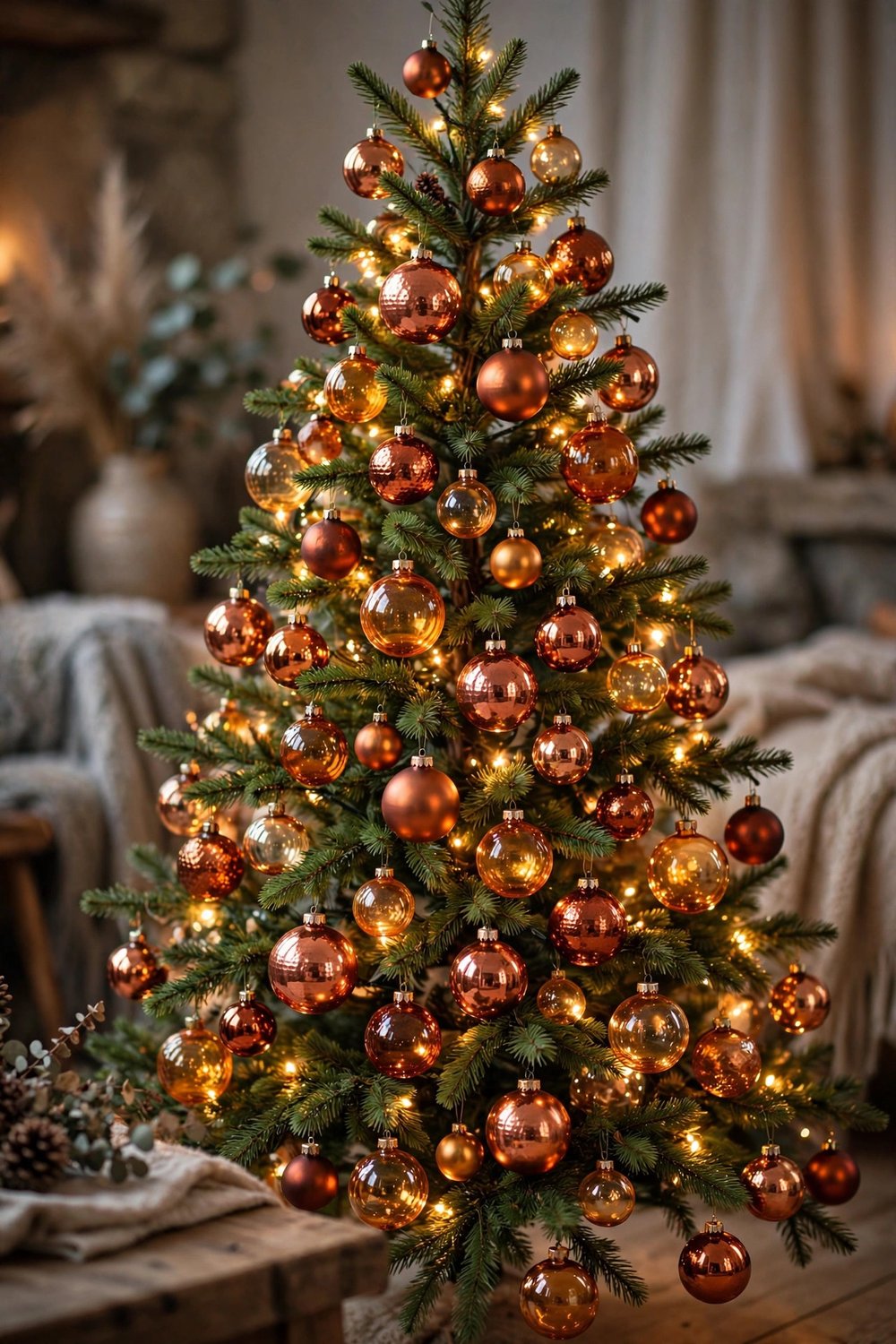
3. Copper and Amber Glass Bauble Mix
A mix of copper and amber glass baubles gives you an orange tree that feels warm, glowing, and just a little bit glamorous. The trick is usually to vary the finishes and sizes, so you’ve got shiny copper, soft amber, and a few deeper bronze tones all sitting together. That variety keeps the eye moving and stops the tree from looking flat. Start with the largest baubles tucked deeper into the branches, then layer the smaller ones toward the tips where they’ll catch the light. Amber glass often looks especially pretty near warm lights, because it seems to glow from within. You can keep everything else fairly simple, since this mix already brings plenty of richness. A plain tree skirt and a few cream ornaments can help balance it if it starts to feel busy. It’s a classic combination that typically suits both traditional and more modern rooms.
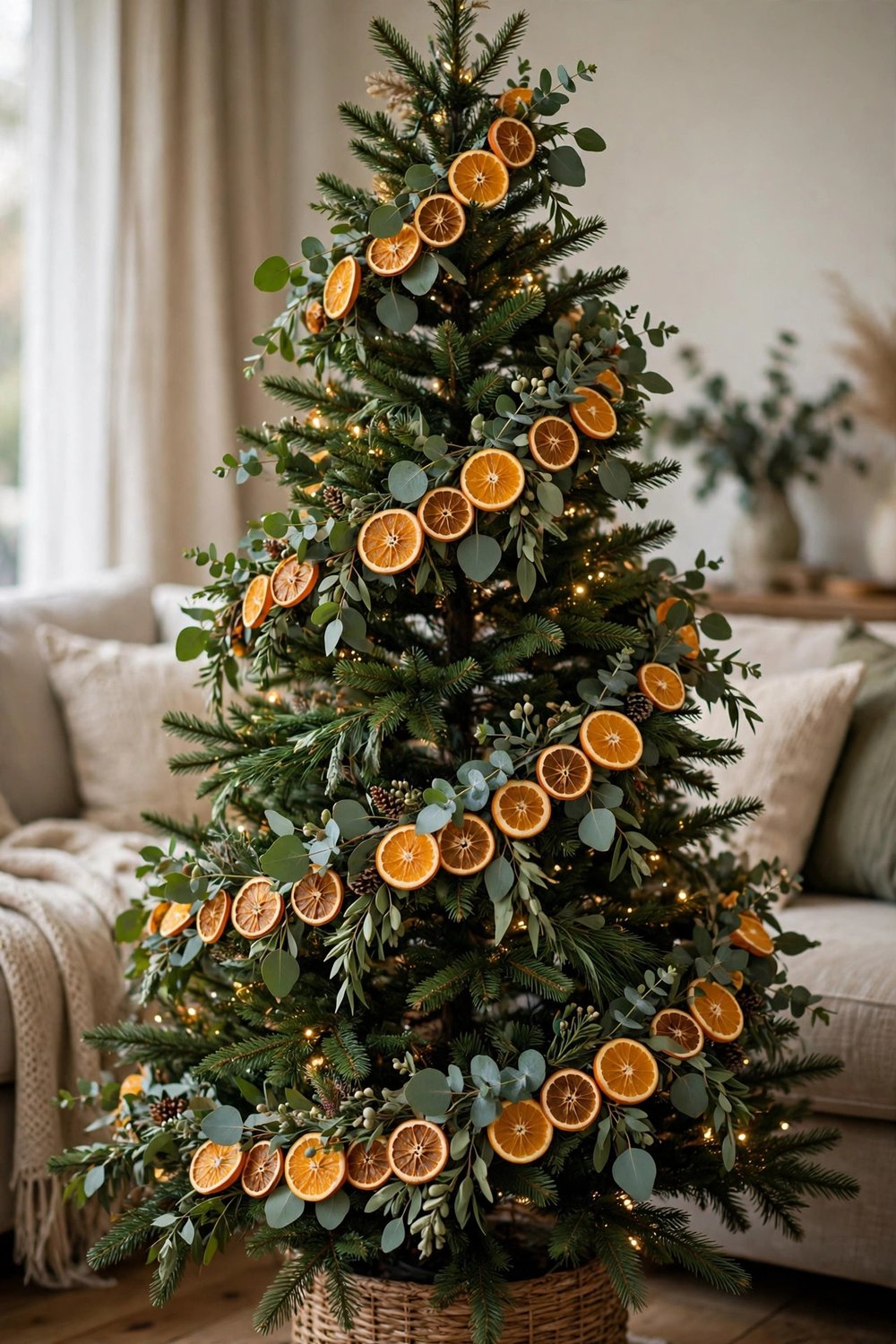
4. Fresh Citrus and Eucalyptus Garland Swag
A garland made from fresh citrus and eucalyptus brings color, texture, and a clean, lovely scent all at once. You can string halved clementines, kumquats, or thin orange rounds along a length of greenery, then drape it in soft swags around the tree rather than winding it tightly. The silvery green of eucalyptus usually cools the orange just enough, so the whole thing feels fresh instead of overly sweet. This look typically works best when you keep the rest of the decorating fairly light, with simple white or wood ornaments letting the garland stay the star. Because you’re using fresh elements, it’s often a good idea to add this garland closer to the day you want it to look its best. Let the swags hang a little unevenly, too. That gentle, gathered feel is part of what makes it so charming and relaxed.
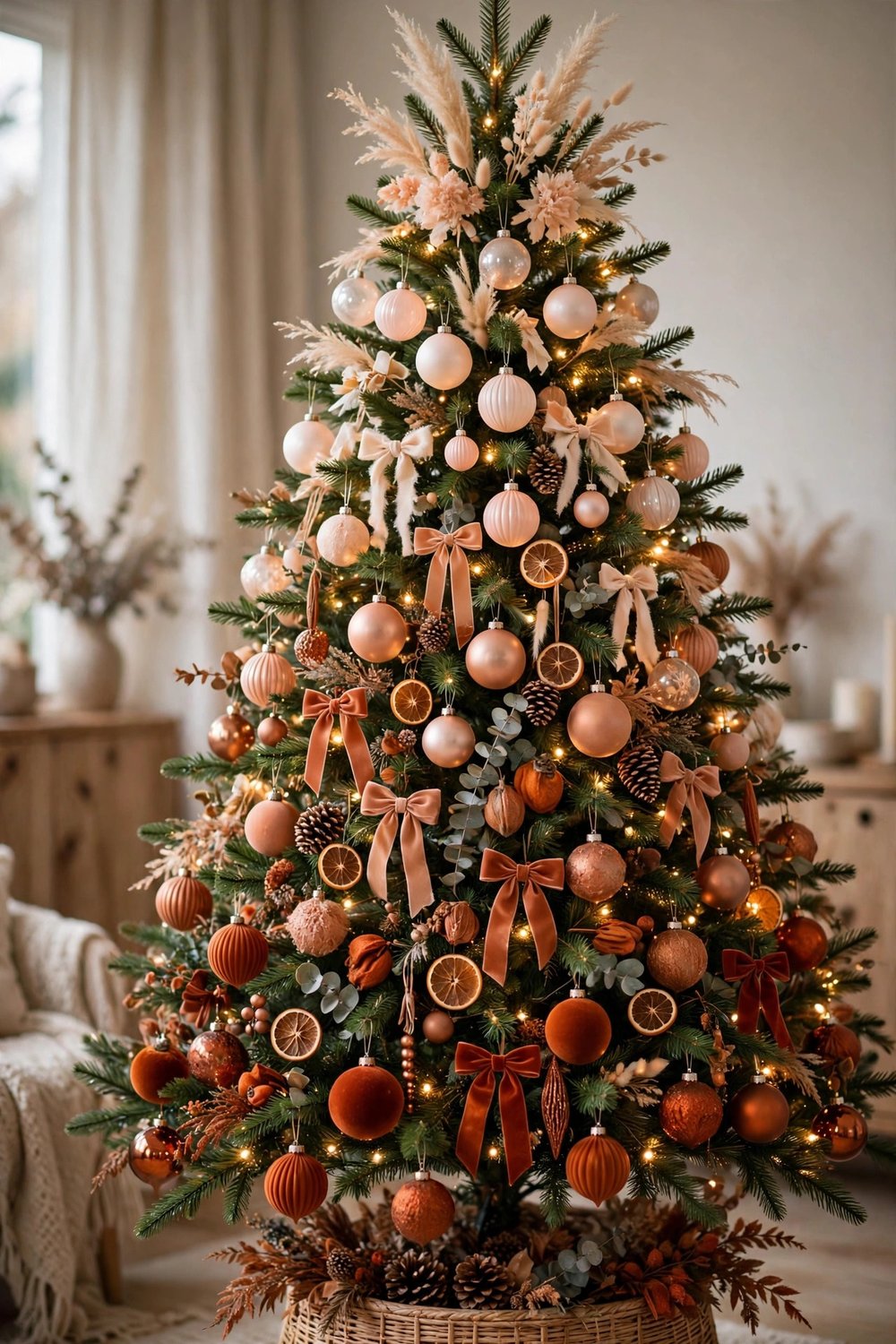
5. Orange Ombre Tree From Peach to Rust
An ombre tree is a clever way to use lots of orange shades without it feeling chaotic. Start with the palest peach ornaments near the top, move through apricot and tangerine in the middle, and finish with deep rust and burnt orange at the bottom. That gradual shift usually makes the tree look taller and more considered, and it’s satisfying to build as you go. You’ll want to sort your ornaments by shade before you start, because swapping them around on the branches can get fiddly. Ribbon can follow the same gradient if you’d like to strengthen the effect, though plain greenery often looks just as good. This idea typically suits a tree placed against a light wall, where the color change is easy to see. Don’t worry if the transition isn’t perfect. A soft, slightly blended middle section often looks more natural than a hard line.
Rich Ribbons, Bows and Warm Glow
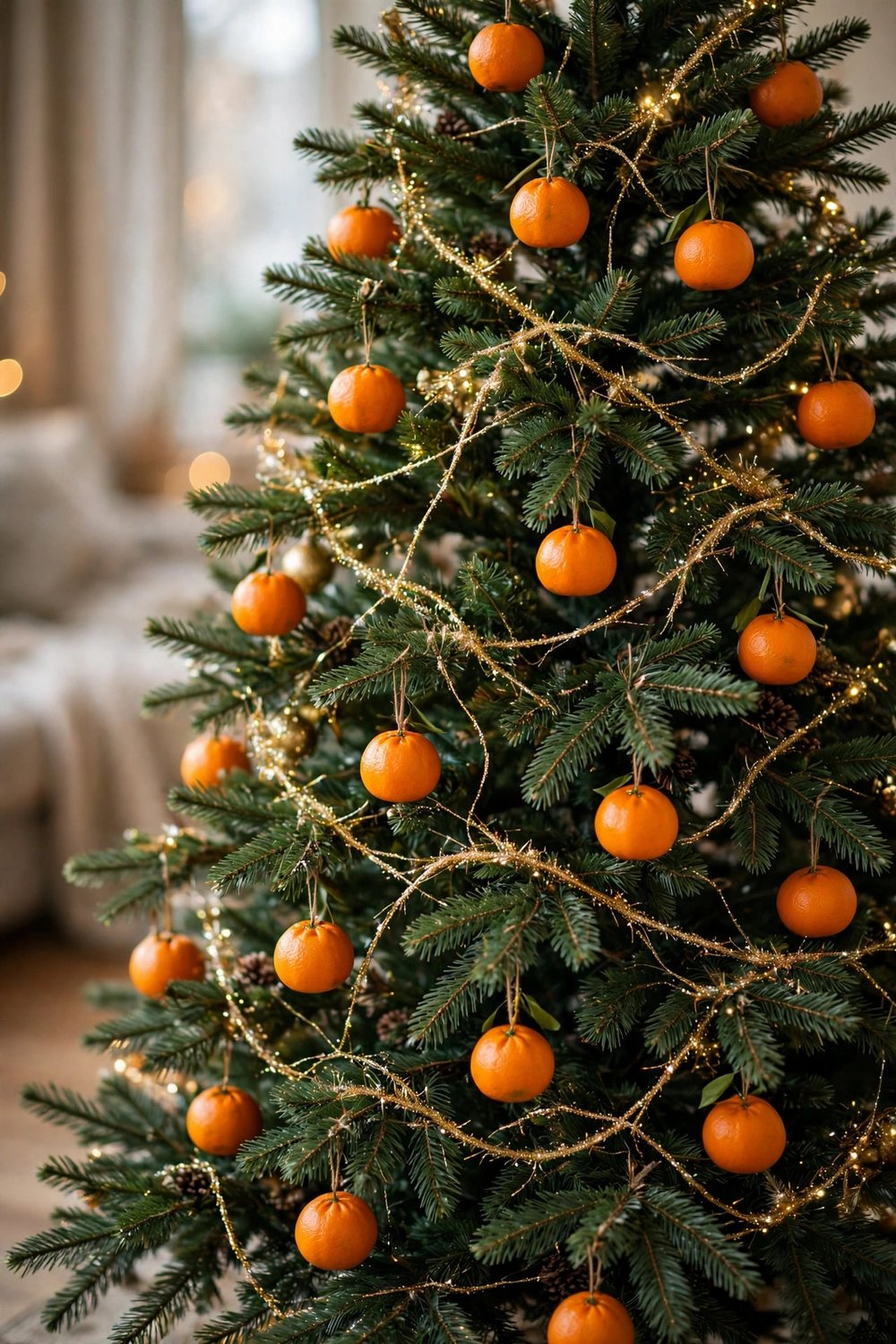
6. Tangerine and Gold Tinsel Twist
If you love a bit of sparkle, tangerine and gold is a cheerful pairing that usually feels festive without tipping into cold or formal. Use tangerine baubles as your main color, then twist fine gold tinsel or a delicate gold garland loosely through the branches to catch the light. The secret is often restraint, because a little tinsel goes a long way and too much can hide the ornaments you’ve chosen. Drape it in soft waves rather than tight circles, and let it dip and rise as it moves around the tree. Warm white lights typically make both colors glow, while gold beaded strands can add a finer detail if tinsel isn’t your thing. This look often suits a family living room where you want energy and warmth in equal measure. Step back in daylight and in the evening to check the balance, and adjust until it sparkles in both.
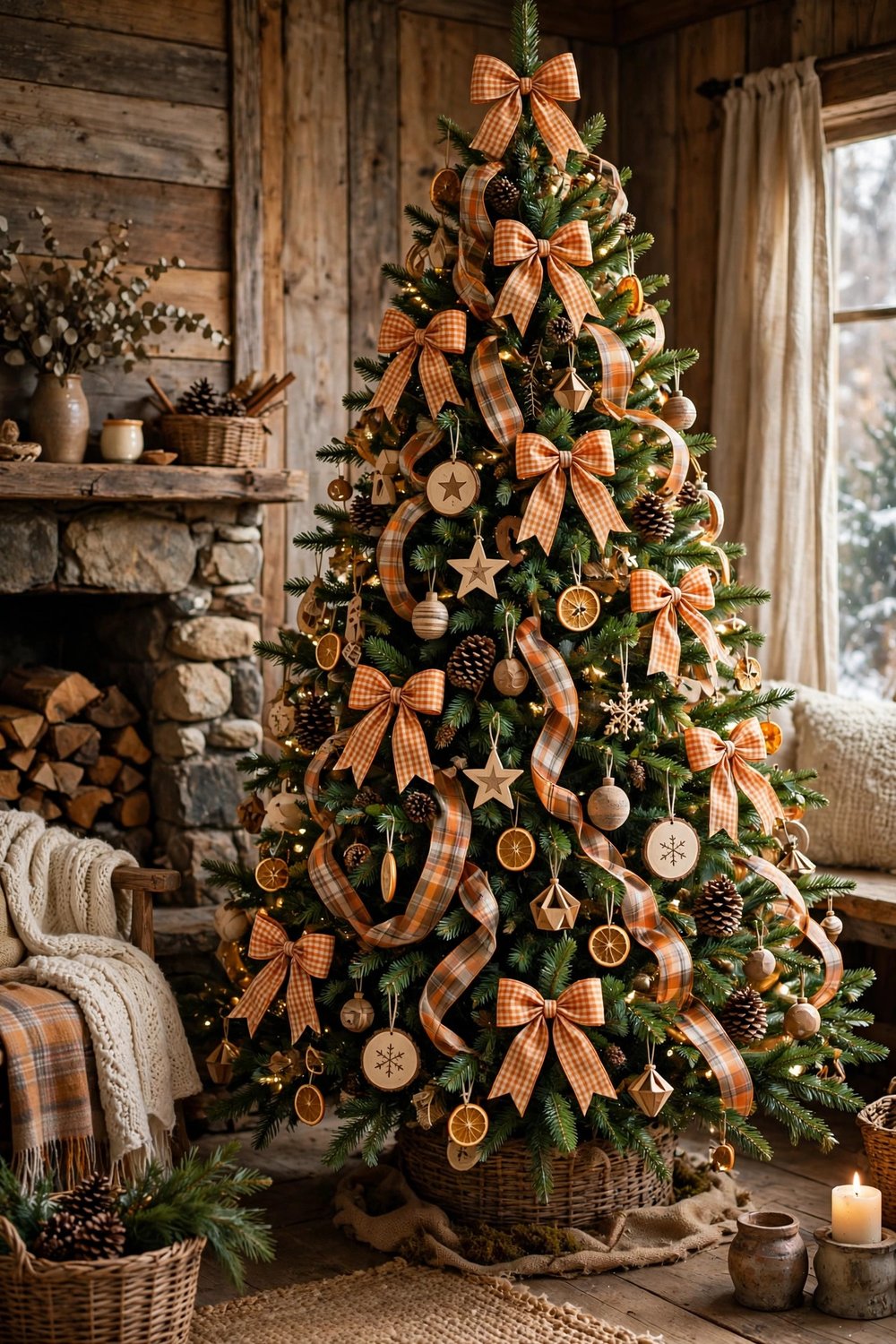
7. Marmalade Check Bows and Plaid Ribbon
Marmalade check bows bring a cozy, country kitchen feeling that suits orange especially well. Make simple bows from a plaid or checked ribbon in orange, cream, and a touch of brown, then wire them onto branch tips all around the tree. You don’t need dozens of them, because a bow usually carries more visual weight than a small bauble. Space them fairly evenly, then fill the gaps with plain cream or wooden ornaments so the pattern doesn’t get overwhelming. This style typically pairs nicely with dried orange slices, pinecones, and a woven tree skirt if you’d like to lean into the rustic mood. It’s also a forgiving look, since slightly uneven bows often just add to the handmade charm. If your ribbon is very bold, consider using it only for the bows rather than long garlands as well. That way the pattern stays cheerful instead of busy, and the tree still feels calm to look at.
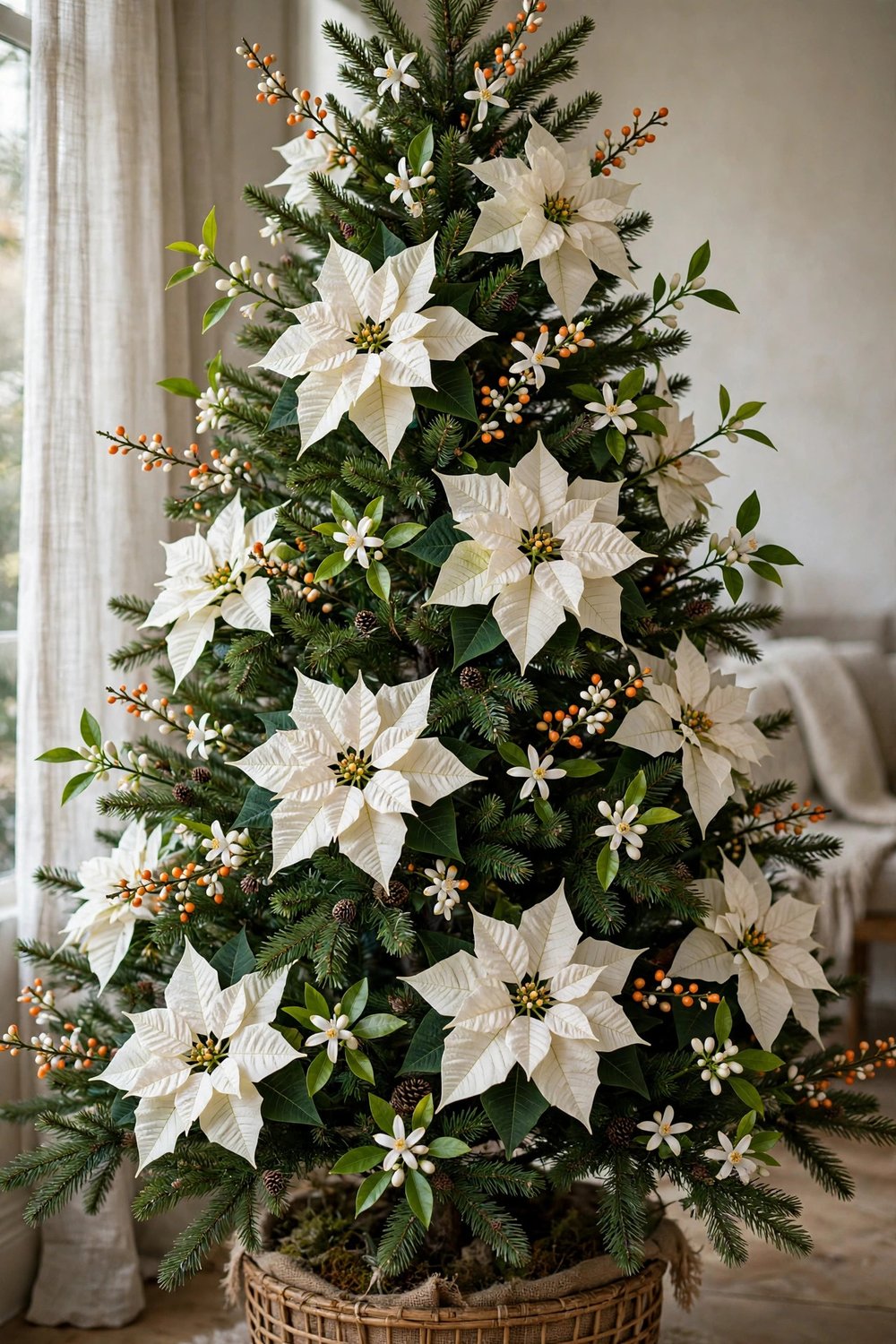
8. Orange Blossom and White Poinsettia Picks
Orange blossom and white poinsettias make a combination that feels fresh, pretty, and a little bit unexpected. Tuck floral picks of small orange blossoms in among the branches, then add larger white poinsettia blooms as soft focal points. The white usually gives the orange room to breathe, so the tree feels bright rather than heavy. You’ll typically want to place the biggest flowers first, fairly evenly, and then fill around them with the smaller blossom sprigs and a few plain ornaments. This look often works beautifully in a dining room or entryway where you’d like something elegant but not formal. Keep the ribbon minimal, or skip it altogether, because the flowers already bring plenty of shape and texture. If real blossom isn’t available, good faux picks work just as well and they’ll last the whole season without wilting. Finish with warm lights tucked behind the petals for a gentle glow.
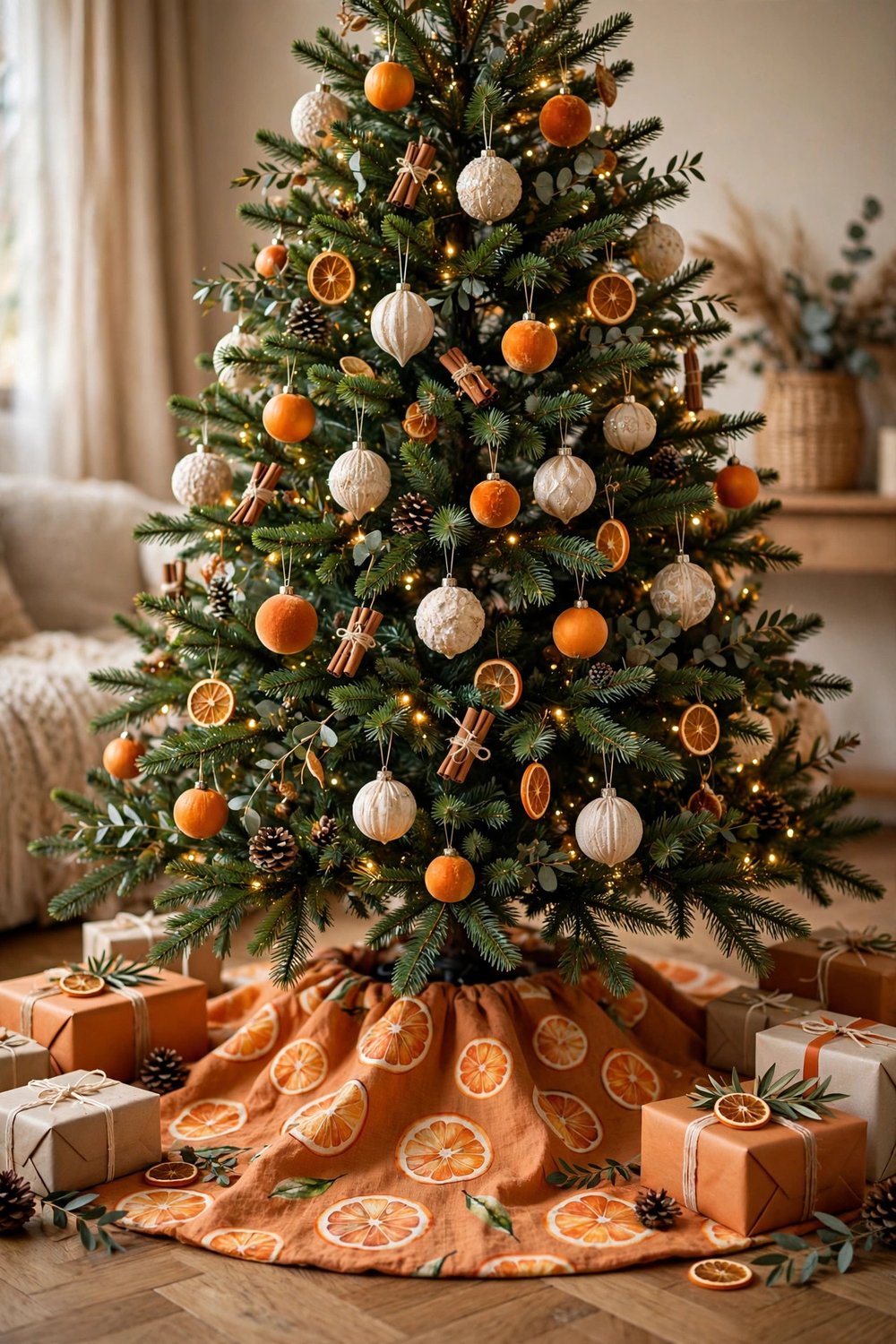
9. Citrus Slice Tree Skirt in Warm Orange Linen
Sometimes the easiest way to bring in orange is right at the base of the tree. A warm orange linen skirt, plain or patterned with simple citrus slices, grounds the whole display and gives your presents a cheerful backdrop. It usually works best when the tree itself is decorated more simply, perhaps with cream, wood, and a few orange ornaments that echo the skirt without matching it exactly. Linen has a soft, slightly rumpled texture that typically keeps a bold color from feeling too sharp, and that relaxed quality suits family homes well. If you can’t find a patterned skirt you like, a plain orange one layered over a natural woven mat often looks just as good. You can also scatter a few dried orange slices or faux citrus pieces on the skirt for a finishing touch. It’s a small change, but it often makes the whole corner feel pulled together.
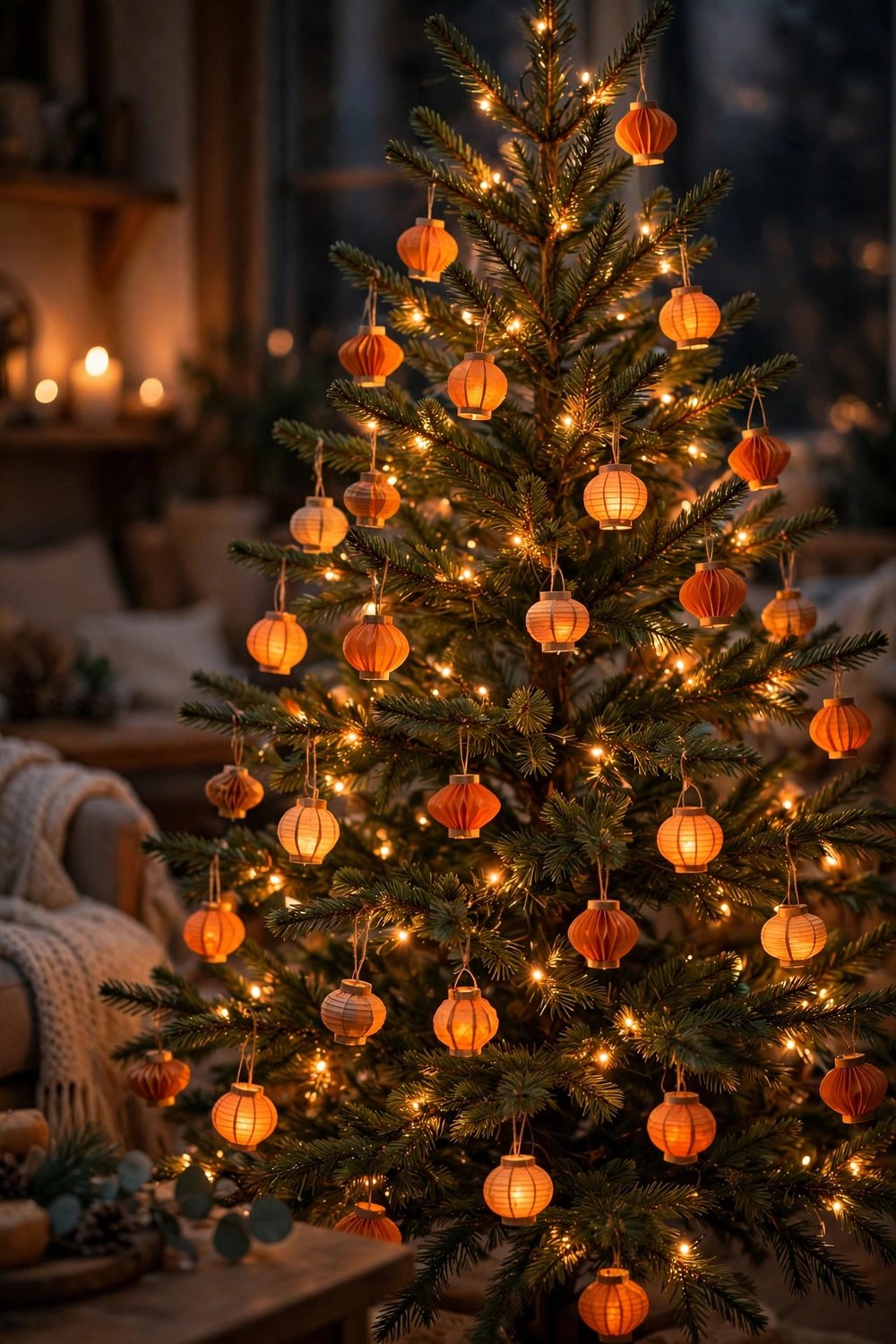
10. Amber Fairy Lights With Orange Lantern Ornaments
Amber fairy lights change the whole mood of a tree, wrapping it in a soft, honeyed glow that makes orange decorations feel even warmer. Wind the lights a little deeper into the branches than usual, so the light seems to come from inside the tree, then hang small orange lantern style ornaments toward the outer edges. The lantern shapes bring a playful, festive note, and they usually look especially pretty when they’re lit from nearby fairy lights. You can mix a few gold or cream lanterns in if you’d like a gentler effect, though all orange has its own cheerful charm. This idea typically suits an evening focused room, like a cozy sitting area where the tree is the main light after dark. Keep other lighting low nearby and let the tree do the work. It’s often the kind of tree people gather around without quite knowing why it feels so inviting.
Playful Color and Sweet Details
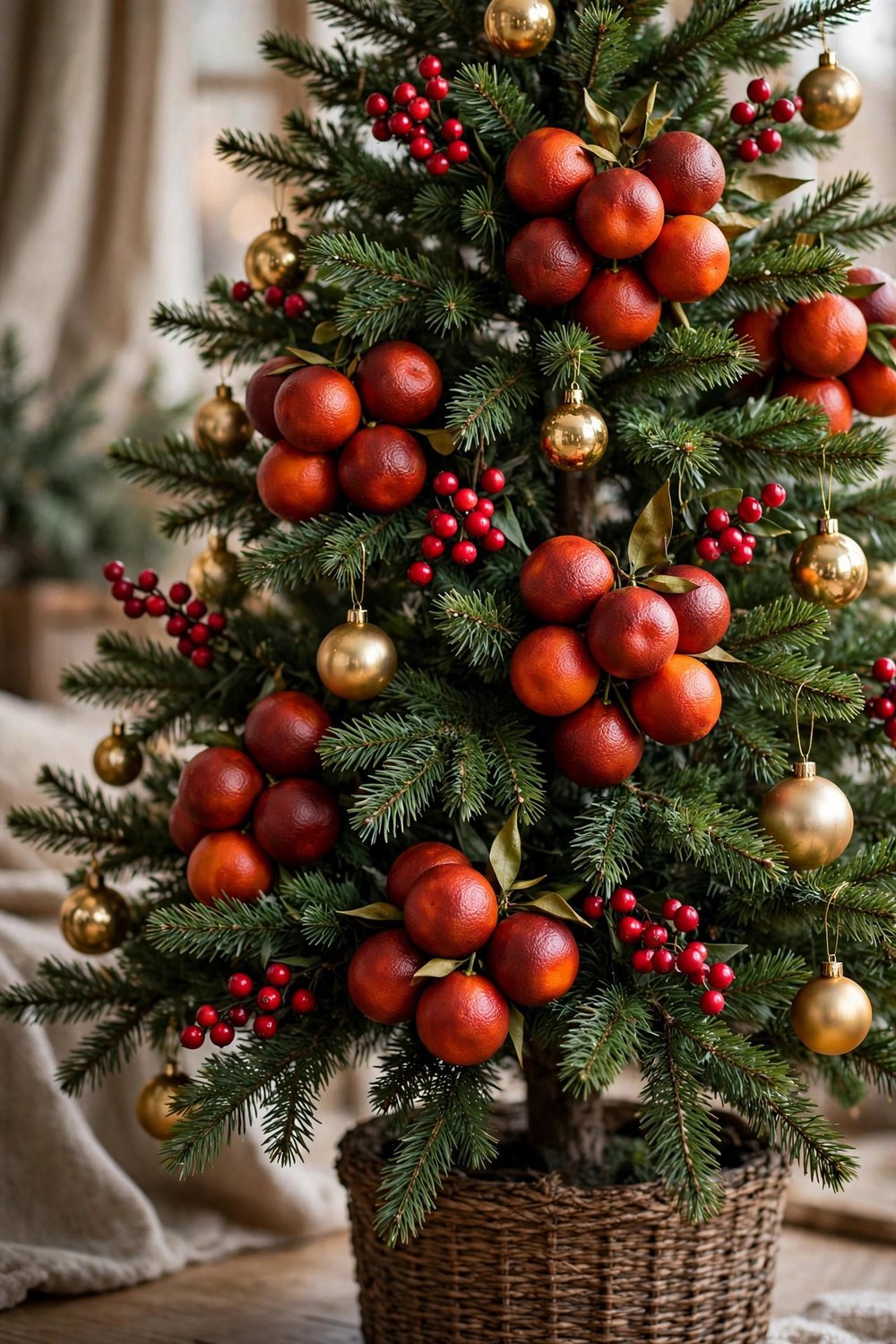
11. Blood Orange and Cranberry Cluster Picks
Blood orange and cranberry is a rich pairing for anyone who finds bright tangerine a little too sunny. The deeper orange tones sit beautifully beside cranberry red, and together they usually feel warm, seasonal, and slightly more grown up. Use cluster picks that combine faux berries, small orange pieces, and a bit of greenery, then push them into the tree at angles so they look like they’re growing there. Spacing them in loose groups of three often looks more natural than spreading them perfectly evenly. Plain gold or cream baubles can fill the quieter spaces without competing for attention. This style typically suits a traditional living room with wood furniture and warm lighting, where the deep colors can really settle in. Don’t be afraid to add a few dried orange slices too, since their lighter tone lifts the clusters. The result is often rich and welcoming, like a tree that belongs beside a bowl of real fruit.
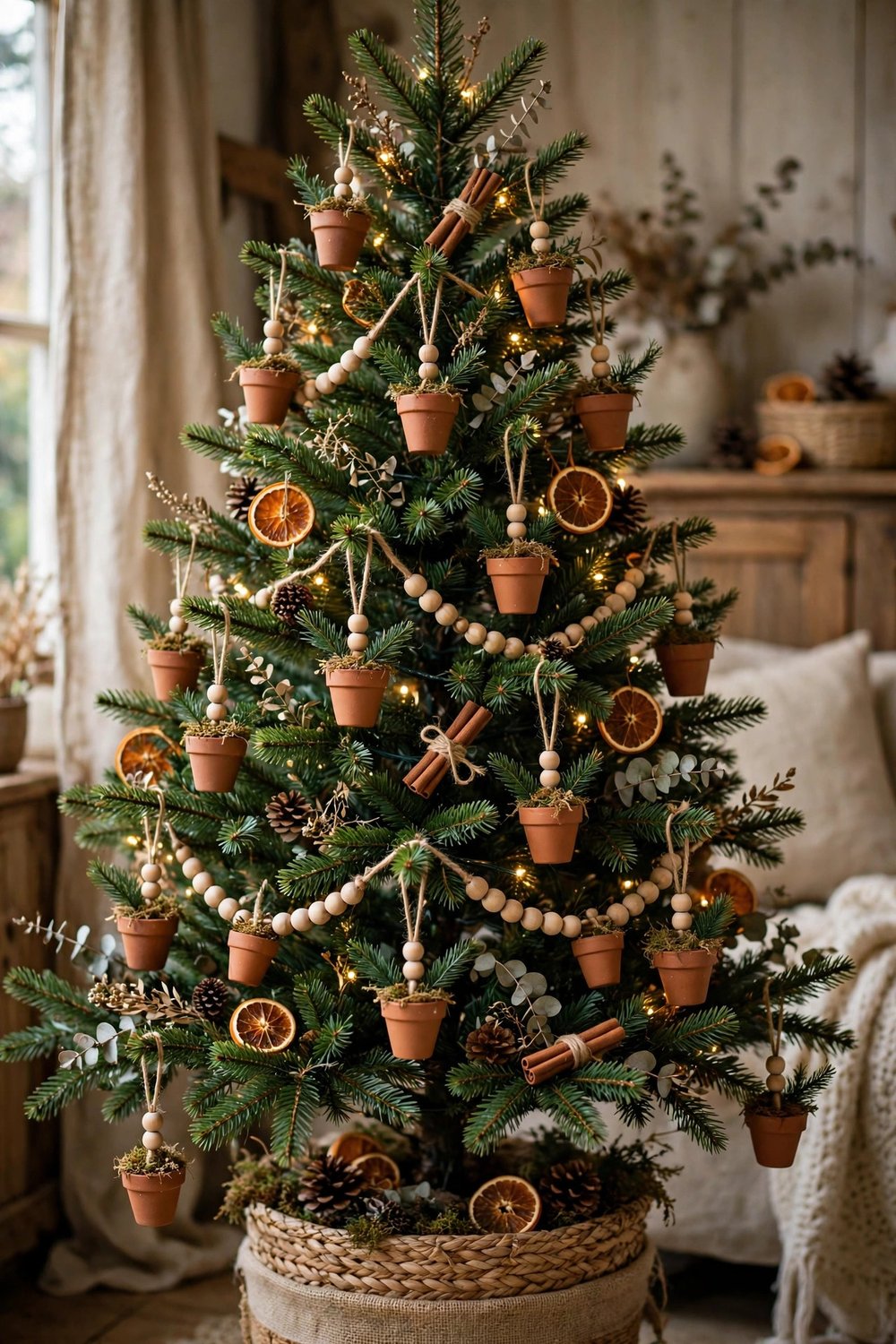
12. Terracotta Pot Ornaments and Rustic Orange Accents
Tiny terracotta pots make surprisingly sweet tree ornaments, and their earthy orange tone brings a rustic, garden inspired feel to Christmas. You can hang the smallest pots by jute twine, fill a few with a sprig of faux greenery, or tuck them onto sturdy branches like little planters. Paired with wooden beads, burlap ribbon, and dried flowers in rust and cream, they usually create a tree that feels handmade and relaxed. Terracotta often works well if you love orange but want it muted and natural rather than bright. Because the pots have a bit of weight, it’s typically best to hang them on stronger inner branches and balance them around the tree. A few orange baubles in a similar clay shade can help tie everything together. This is often a favorite for gardeners, and it brings a gentle reminder of the growing season into the middle of winter.
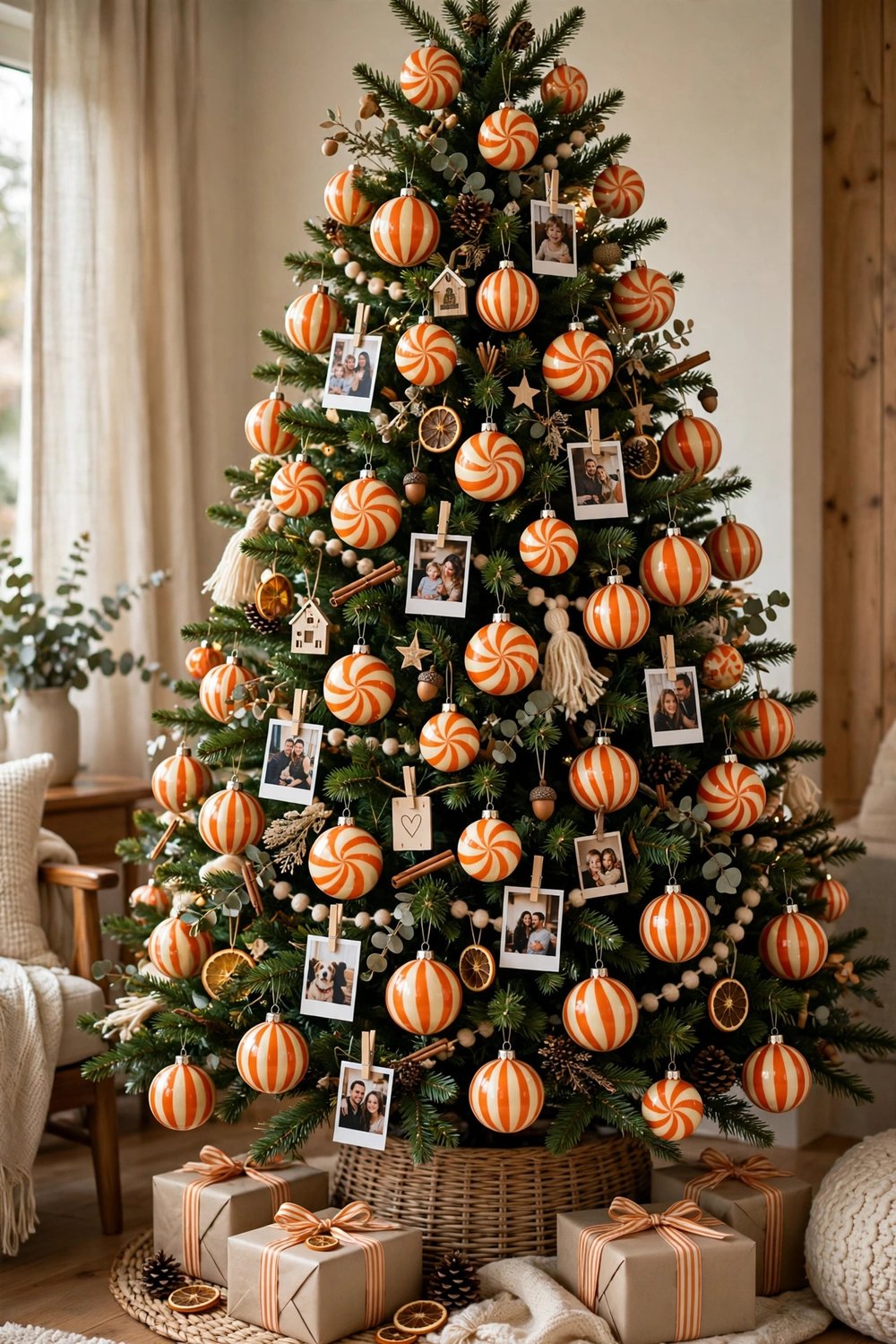
13. Orange and Cream Candy Stripe Baubles
Orange and cream candy stripe baubles bring instant playfulness, like sweets hanging on the branches. Their swirled stripes usually look best when you give them room, so mix them with plain cream ornaments and plenty of visible greenery rather than crowding every branch. A few striped ribbon bows in the same colors can echo the pattern without repeating it exactly. This look often delights children, and it typically suits a family tree where fun matters more than formality. You could add candy shaped ornaments or simple gingerbread tones if you’d like to lean into the sweet shop feeling, though the stripes alone are often enough. Warm lights keep the cream looking soft rather than stark white. If the pattern starts to feel busy from across the room, remove a few baubles and add plain ones in their place. A little breathing space usually makes the stripes look even more cheerful and intentional.
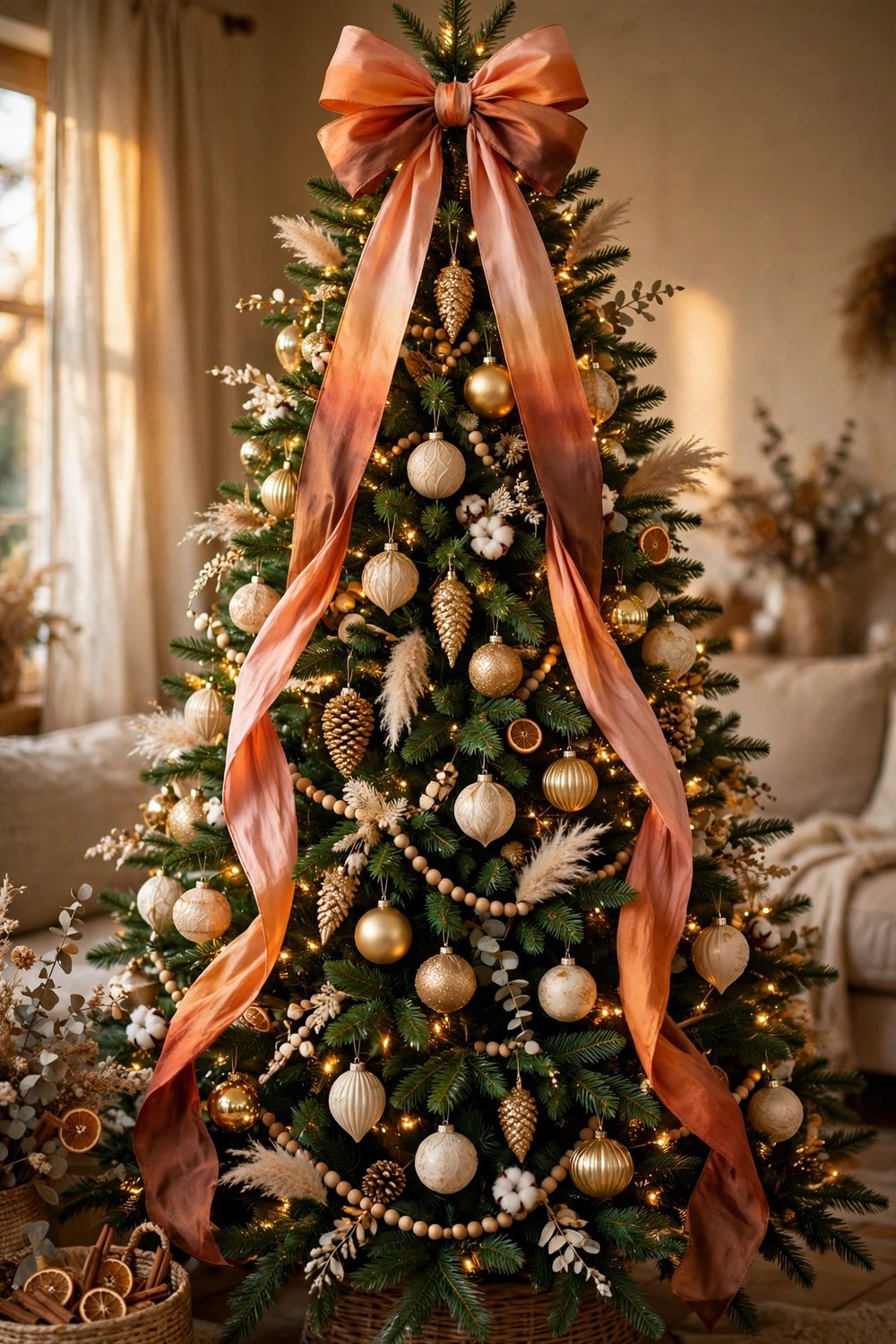
14. Sunset Gradient Ribbon Topper With Long Tails
If you’d rather make one big orange statement than scatter the color everywhere, a sunset gradient topper is a beautiful way to do it. Choose a wide ribbon that moves from peach through orange to rust, or layer a few ribbons in those shades together, and make a generous bow for the very top of the tree. Let two or three long tails flow down, weaving them gently through the upper branches so they feel part of the tree. The rest of your decorating can stay quite simple, with cream, gold, and clear glass ornaments letting the topper hold the attention. This idea usually works especially well on a tall tree, where the long tails have room to travel. It typically photographs beautifully too, because the eye goes straight to that warm burst of color at the top. Take a little extra time shaping the loops, since a full, soft bow often makes the whole tree feel finished.
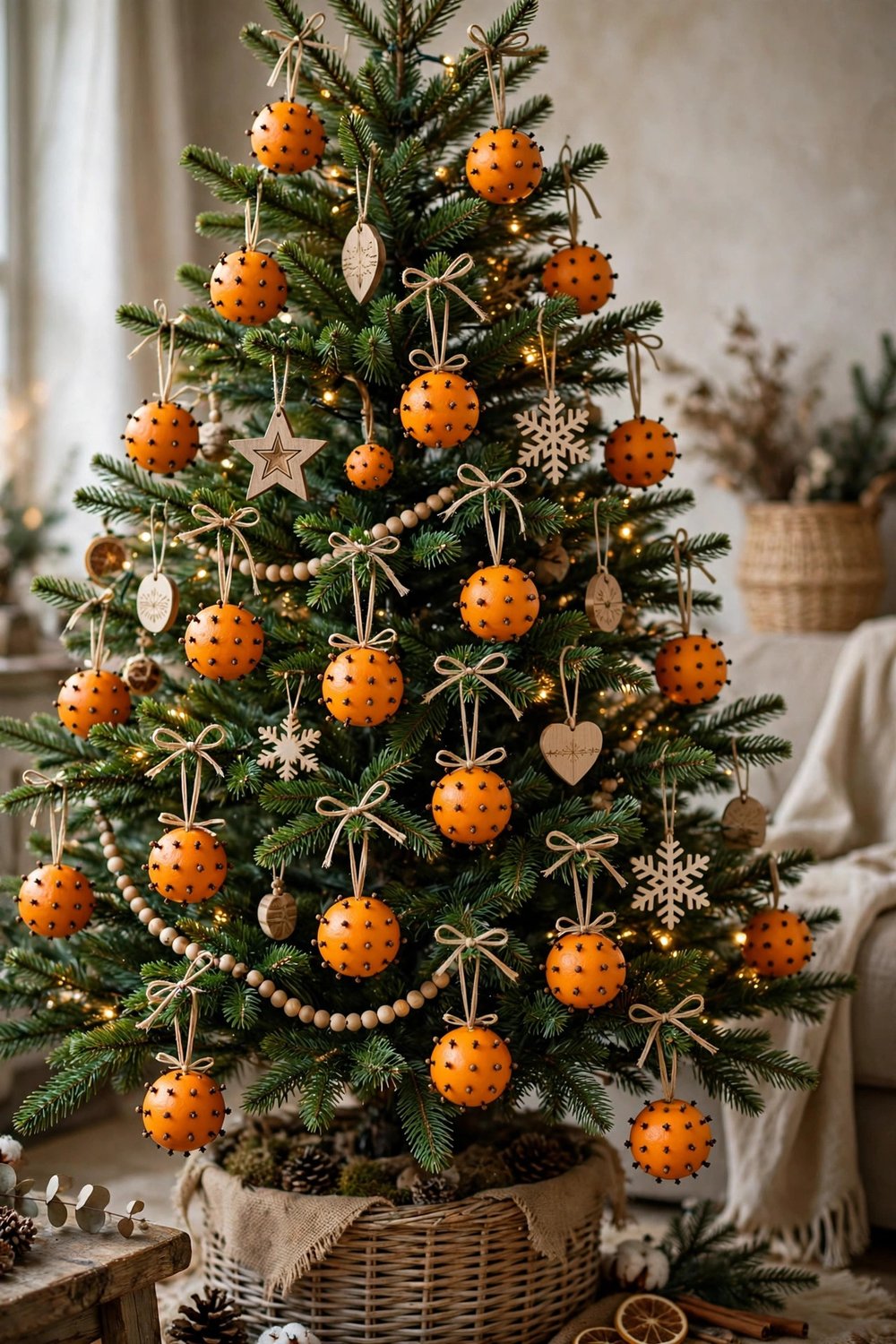
15. Mini Orange Pomander Balls With Cloves
Mini pomanders are a traditional touch that brings scent, texture, and a deep natural orange to your tree. They’re made by studding small oranges or faux orange balls with whole cloves, often in simple patterns like rings, dots, or a loose swirl. Tie each one with a narrow ribbon and hang them where people pass close by, because the warm, spiced scent is part of the pleasure. Real pomanders usually last well through the season in a cool room, and they typically deepen in color as they dry, which only adds to their charm. Mix them with simple greenery, wood ornaments, and a few cream baubles so the tree doesn’t feel too busy. This is often a lovely project to make with family, since even a simple clove pattern looks good. Just leave a little space between the cloves when you work, because the skin can split if they’re pushed too tightly together.
Bold Finishing Touches for a Showstopper Tree
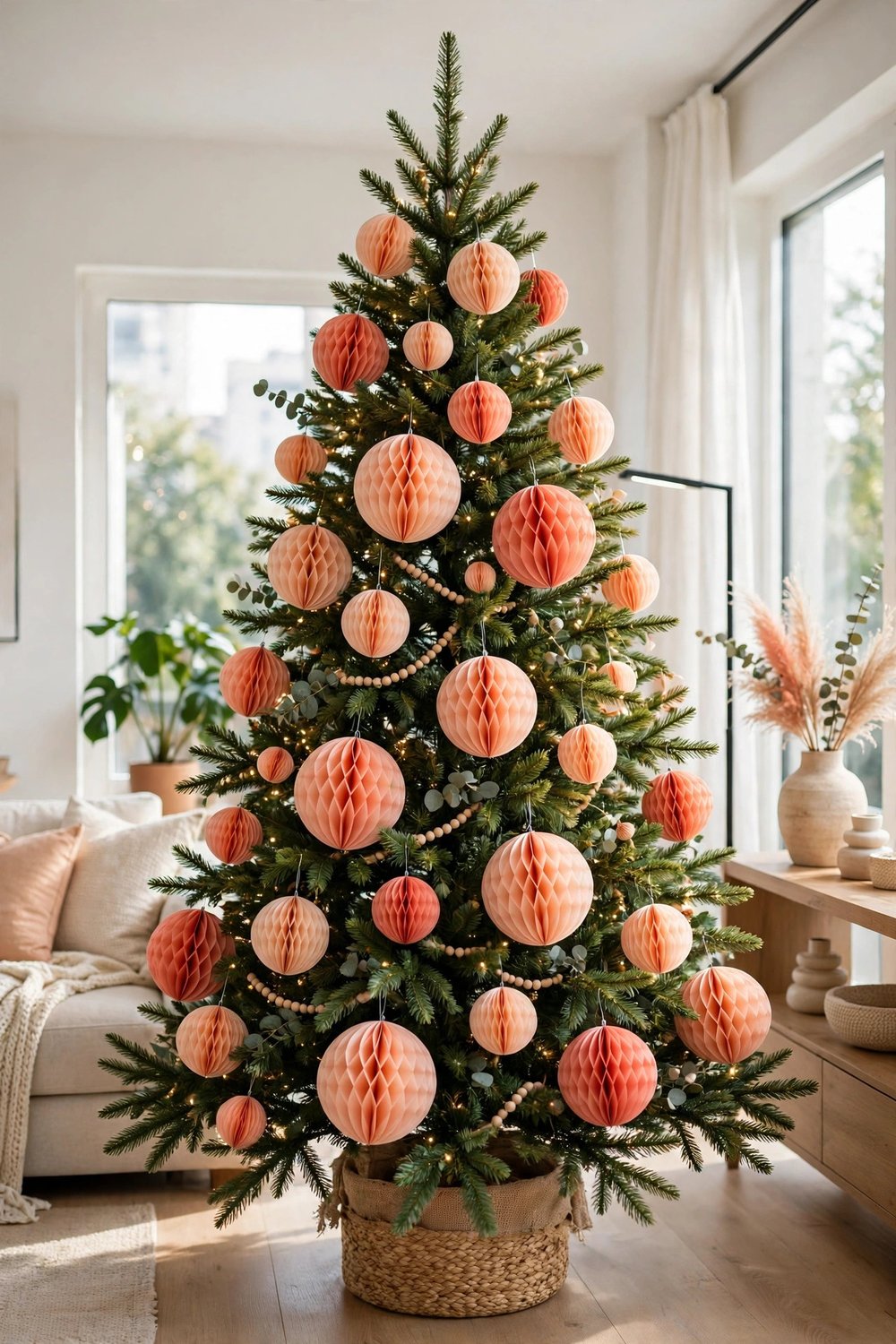
16. Peach and Coral Paper Honeycomb Ornaments
Peach and coral paper honeycomb ornaments give an orange tree a soft, modern softness that’s hard to resist. Their folded paper texture usually contrasts beautifully with glossy baubles and rough greenery, and their gentle shades keep the look light rather than heavy. Hang the largest honeycombs deeper in the tree where they can fill gaps, and let smaller ones sit nearer the tips. Because paper ornaments are light, they’re often a practical choice for the higher branches that don’t need extra weight. You can pair them with pale gold, cream, and a little blush if you’d like a softer palette, or keep strictly to peach and coral for a cleaner effect. This style typically suits a bright room with light wood and simple furniture. Handle them gently when you pack them away, and they’ll usually unfold again next year looking just as pretty. It’s a cheerful look that feels crafted, calm, and quietly joyful.
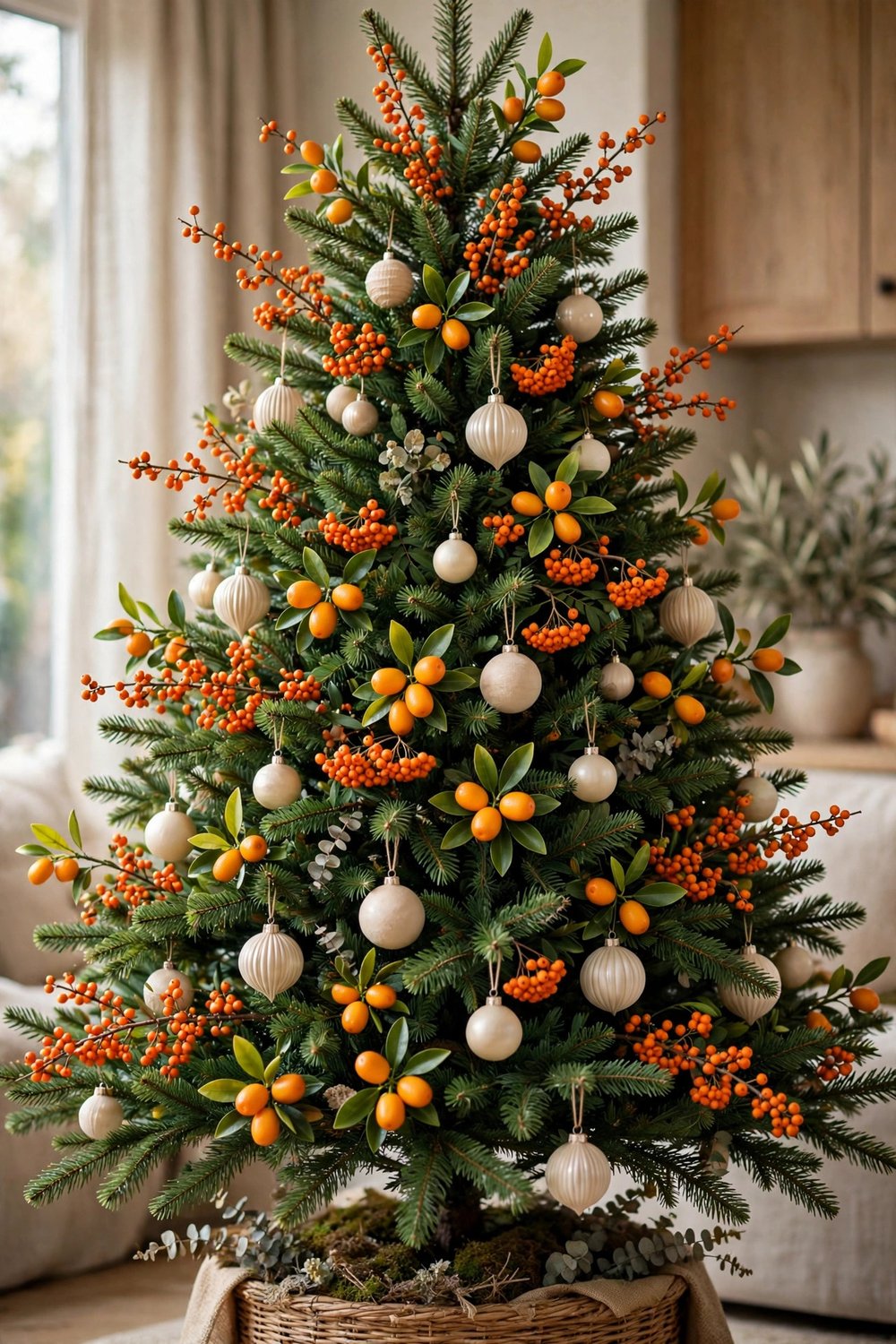
17. Orange Berry Branches and Faux Kumquat Stems
Orange berry branches and faux kumquat stems add height, movement, and a burst of natural looking color. Push the stems into the tree at different angles, letting a few reach upward from the top and others spill outward from the sides, so the silhouette feels alive rather than perfectly round. The small round fruits usually read clearly even from across the room, which makes this a good choice for a large tree in an open space. You can keep your ornaments fairly plain underneath, since the branches already bring plenty of detail and texture. Cream, wood, and clear glass typically work well and don’t compete with the fruit. This look often suits a tree placed near a window, where daylight can pick up the glossy orange skins. Don’t worry about making both sides identical, because a slightly wild arrangement often looks more convincing. It feels a bit like bringing a winter orchard indoors, in the best possible way.
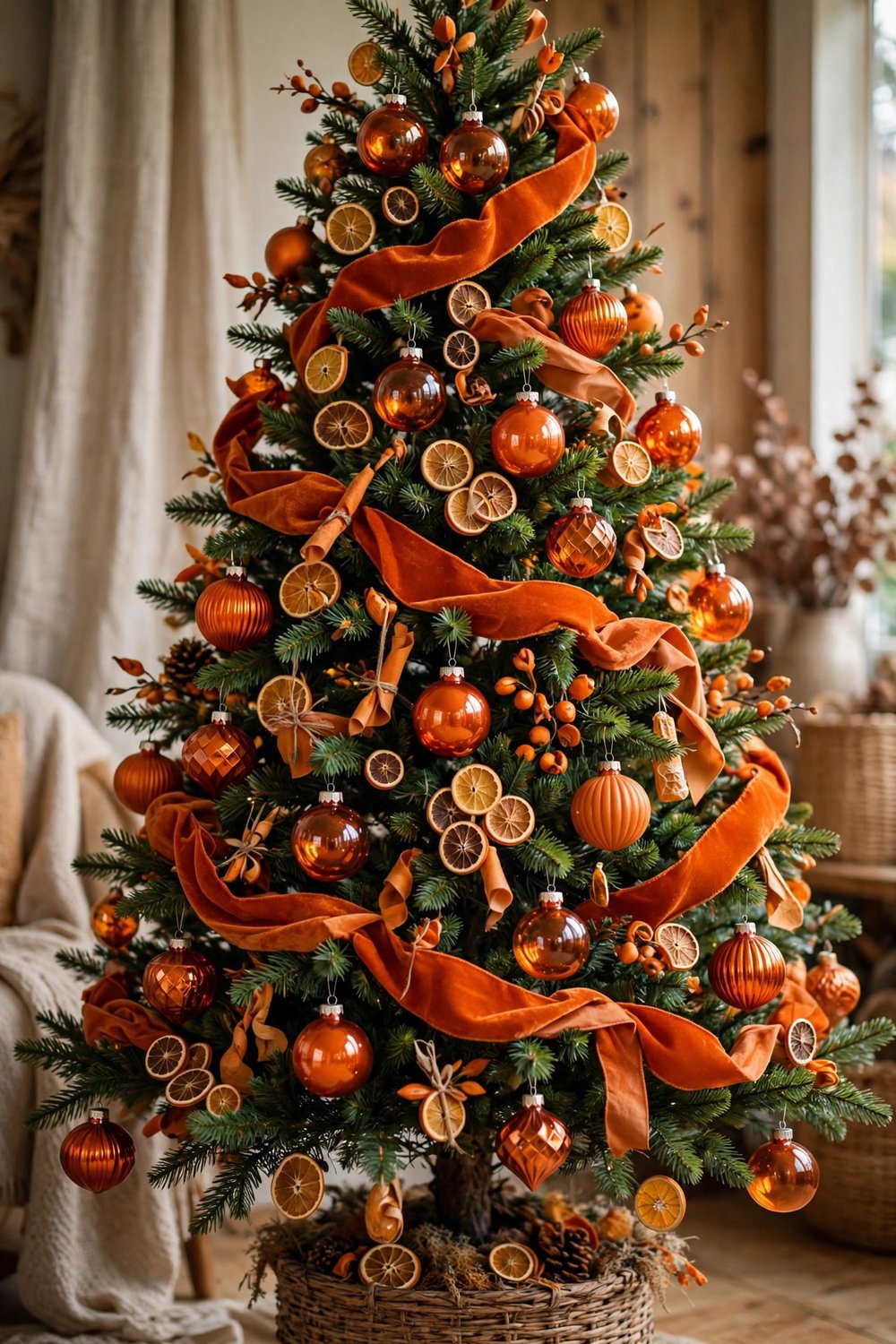
18. Bold All Orange Monochrome Tree With Mixed Textures
Sometimes the boldest choice is also the simplest to explain, a tree done entirely in orange. The key to making monochrome work is usually texture, because one color in one finish can fall flat very quickly. Mix velvet ribbon with glossy baubles, matte ornaments with dried citrus, and soft paper pieces with sparkling tinsel, then spread those textures evenly around the tree. Use several shades too, from pale peach to deep rust, so your eye can still find depth and shadow. Warm lights typically pull the whole palette together and keep it from feeling harsh. This look often becomes the talking point of the room, so you can keep the rest of your decorating nearby fairly quiet. It’s not a shy tree, and that’s exactly the point. If you’ve been curious about orange for a while, this is the version that commits fully, and it usually rewards that confidence with a display people remember long after the season ends.
Bringing Your Orange Tree Together
Whichever orange idea caught your eye, the most helpful habit is usually to build in layers and keep stepping back to look. Start with lights, add your ribbon or garland, place the largest ornaments first, and save the delicate or handmade pieces for last. That order typically keeps the tree balanced, and it makes adjusting much easier than trying to fix everything at the end. Don’t worry if your orange leans a little brighter or deeper than you first imagined, because living with it for an evening often settles the question. Trees usually look warmer once the room is lit for the night.
Most of all, let your orange tree feel like a celebration rather than a test you have to pass. Mix the shades you love, repeat a texture here and there, and leave a little space for the ornaments that carry your family’s stories, even if they don’t match perfectly. Orange is a generous color, and it typically makes room for cream, copper, wood, and plenty of green without any fuss. Whether you choose one citrus garland or go bold with a full monochrome tree, you’ll end up with something cheerful, warm, and wonderfully your own. That’s what a Christmas tree should be.

Leave a Reply