
22 Kids Bedroom Ideas That Spark Joy and Creativity
Look, we get it. A child’s bedroom has to work hard. It’s a sleep space, a play space, a reading corner, and usually the place where every toy you own somehow ends up by bedtime. You want it to feel joyful and a little bit magical, but you also need it to stay calm enough for sleep and tidy enough that you can walk across the floor without stepping on something small and painful.
That’s what this list is for. You’ll find cozy nooks, gentle color, playful storage, and small creative stations that invite your child to read, draw, dress up, and imagine. Some ideas take ten minutes, like hanging string lights or placing a few wall decals together. Others are weekend projects, like painting a soft mural or building a book nook. You don’t need to do all twenty two. Two or three that suit your child’s age and interests will usually change how the whole room feels.
Start with comfort if the room feels plain, then add the playful details that match what your child loves right now. Kids grow and change quickly, so the best rooms are the flexible ones, with pieces you can swap, move, or grow into over time. Take a photo before you begin, keep what already works, and remember that a room your child helps create is typically the one they’ll love spending time in most.
In This Article
- Build a Reading Tent Corner With Floor Cushions
- Hang a Canopy Over the Bed for Storybook Dreams
- Paint One Wall With a Soft Rainbow Mural
- Add a Low Art Gallery Wall at Their Eye Level
- Set Up a Dress-Up Corner With Hooks and a Mirror
- Use a Teepee as a Quiet-Time Hideaway
- Choose a Rug With Roads for Toy Car Adventures
- Add Glow-in-the-Dark Stars Above the Bed
- Create a Craft Table With Supply Caddies
- Hang String Lights for a Gentle Night Glow
- Use Colorful Bins for Toy Sorting Games
- Add a Growth Chart That Doubles as Decor
- Build a Book Nook With Forward-Facing Shelves
- Pick Bedding With Their Favorite Animals
- Add a Small Desk for Drawing and Homework
- Hang a Swing Chair for Wiggly Readers
- Use Wall Decals They Can Help Place
- Create a Puppet Theater From a Tension Rod
- Add Blackout Curtains With a Fun Print
- Set Up a Mini Kitchen or Play Shop Corner
- Use a Loft Bed to Free Up Floor Space
- Finish With a Name Sign Above the Bed
Start With Comfort, Color, and Little Worlds
Before you buy anything big, look at how the room feels at child height. A soft corner, a little color, and a place that feels like their very own world can matter more than matching furniture. These first six ideas build that sense of warmth and wonder, from reading tents and canopies to a gallery that celebrates what your child makes.
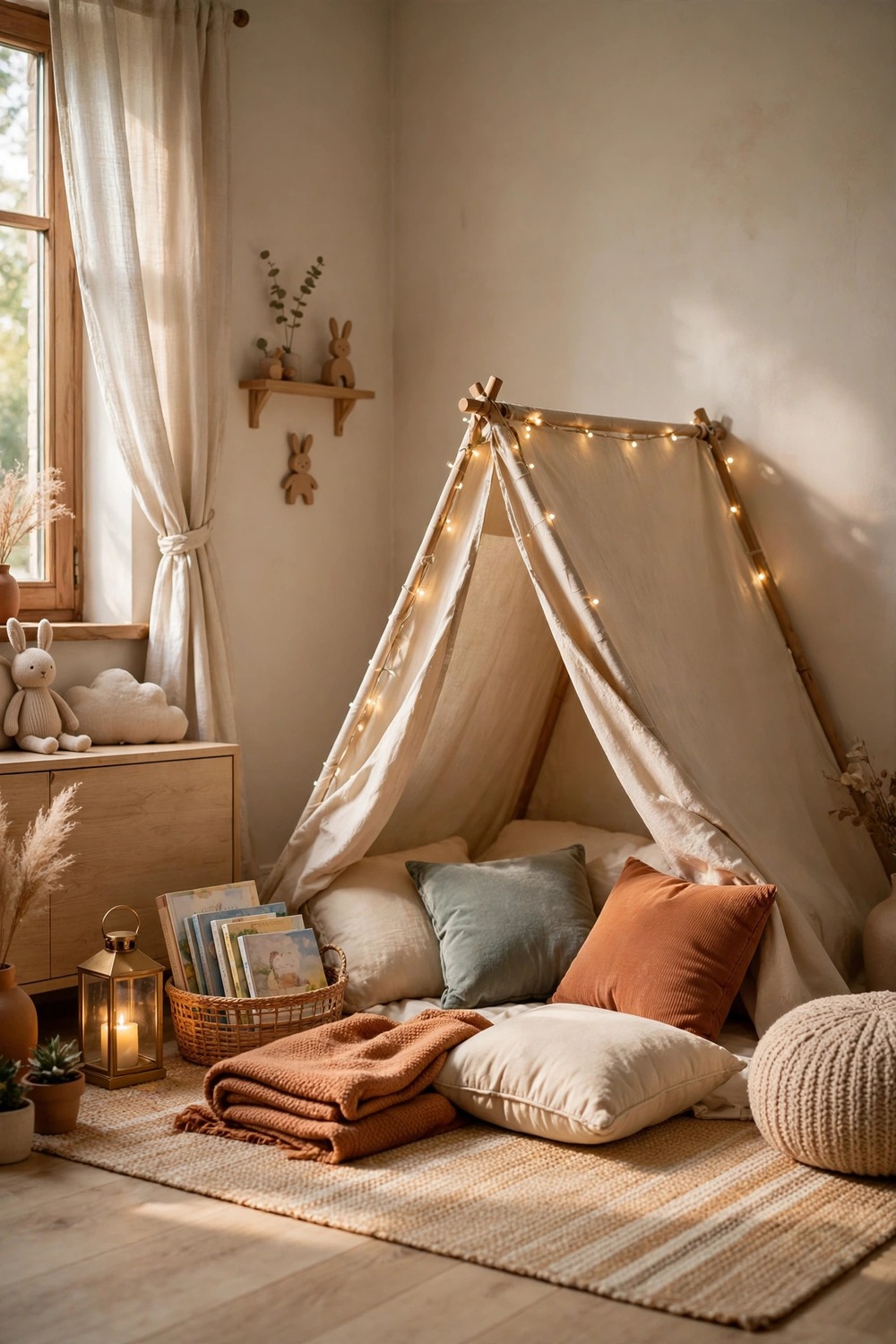
1. Build a Reading Tent Corner With Floor Cushions
A reading tent turns an empty corner into the most requested spot in the room. Drape a lightweight fabric canopy, a small pop up tent, or even a large sheet over a low frame in a quiet corner, then layer the floor inside with thick cushions, a folded throw, and a soft rug underneath. Add a small basket of picture books and a battery powered lantern so the space feels ready at any time of day. Keep the opening facing the room so your child feels tucked in rather than shut away. This kind of nook usually works because it gives reading a place, and children who have a special place to read typically reach for books more often without being asked.
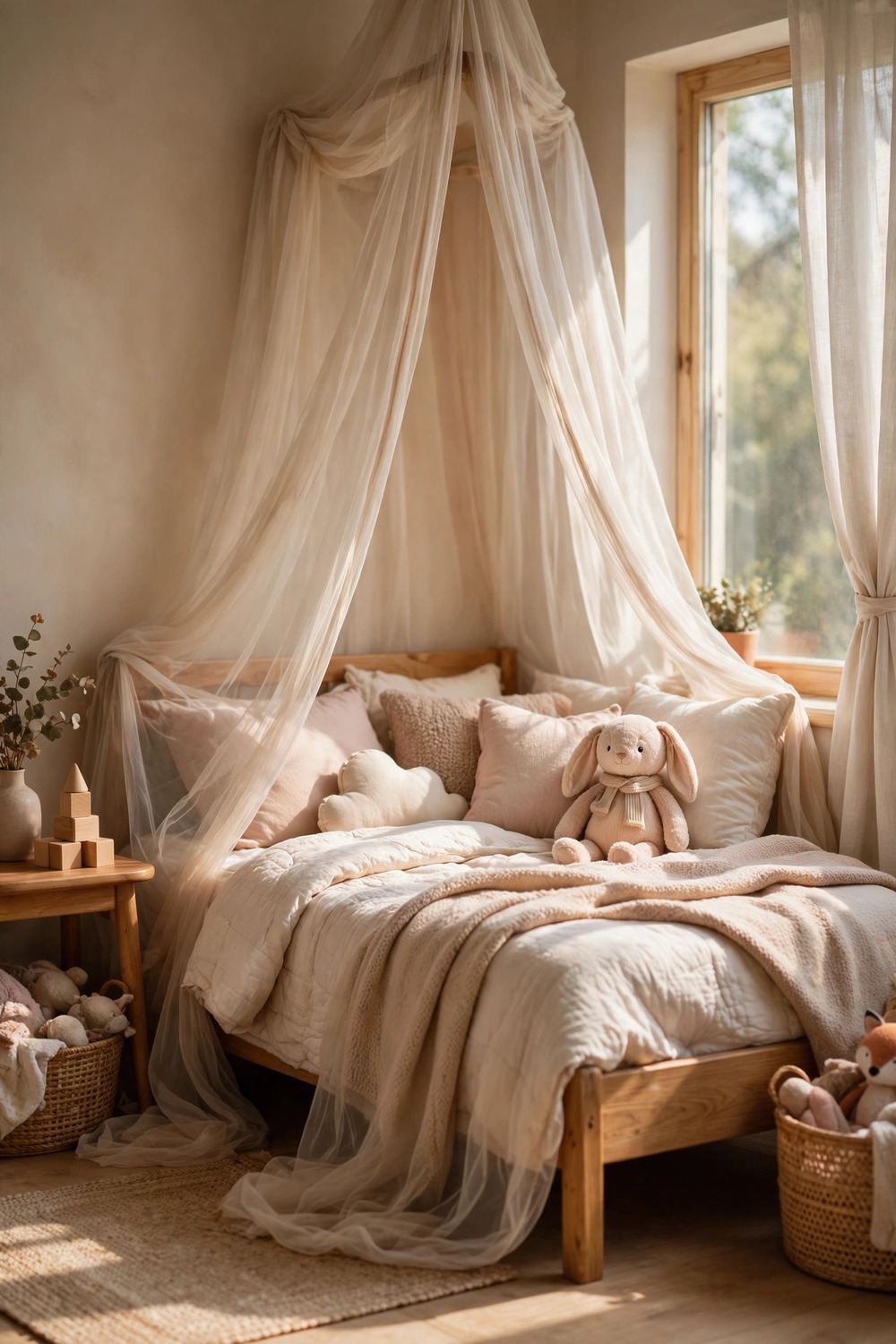
2. Hang a Canopy Over the Bed for Storybook Dreams
A canopy makes an ordinary bed feel like it belongs in a favorite story. Hang lightweight, breathable fabric from a ceiling hook or a hoop above the head of the bed, and let it fall softly on either side rather than closing the bed in completely. Pale cream, soft blush, or gentle sage usually keeps the look calm, while the movement of the fabric adds a little everyday magic. Make sure the mounting is secure and the fabric cannot be pulled down or tangled during sleep, and keep it away from heaters and lamps. Paired with a warm bedside light and a much loved stuffed animal, a canopy can turn the bedtime routine into something your child actually looks forward to.
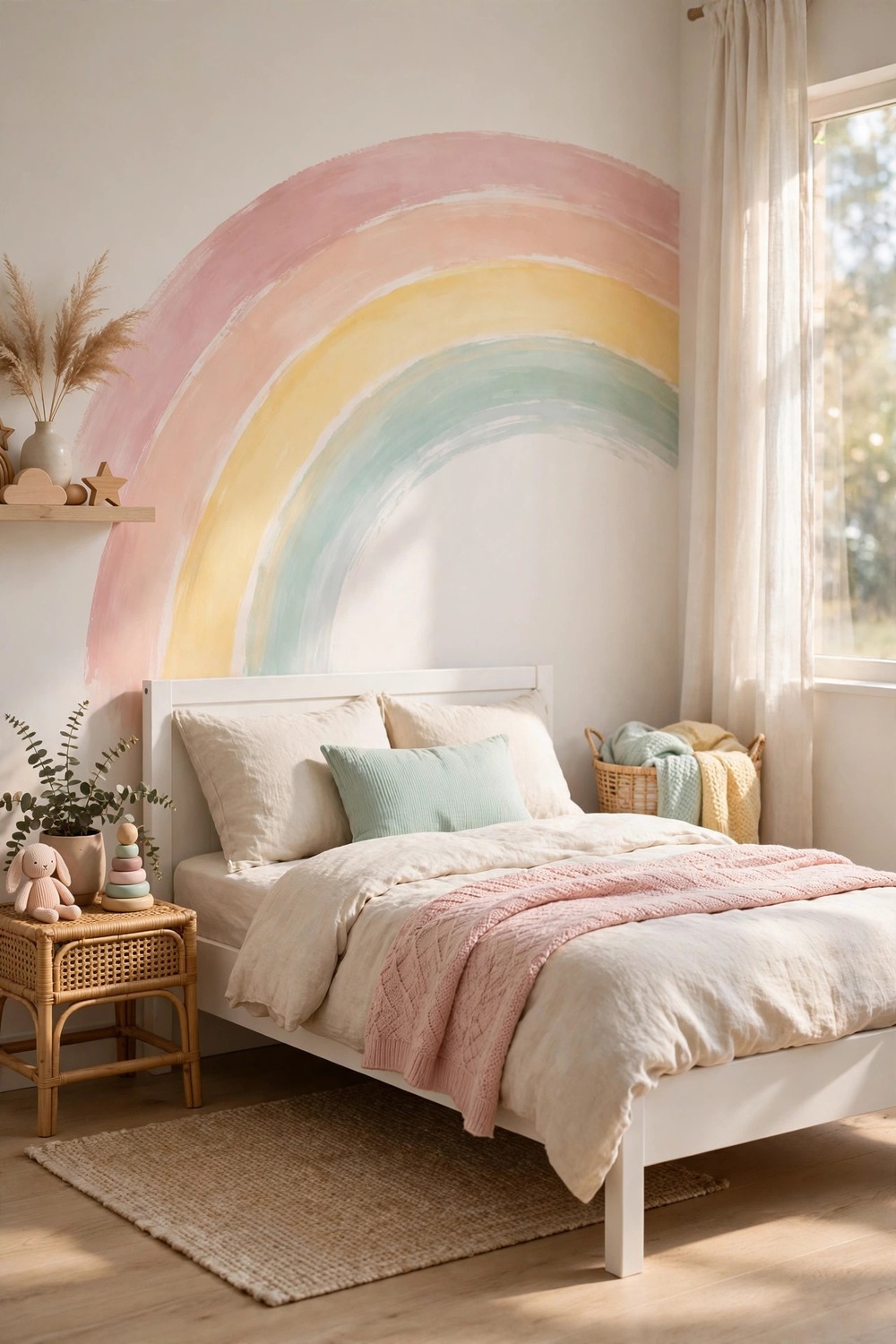
3. Paint One Wall With a Soft Rainbow Mural
A soft rainbow mural brings color into the room without overwhelming everything else. Choose the wall behind the bed, sketch wide, gentle arcs in pencil first, then fill them with muted shades like dusty pink, warm peach, butter yellow, and pale mint. Softer tones usually age better than very bright ones, and they sit happily beside white bedding and natural wood furniture. You don’t need to be an artist here, because slightly imperfect edges are part of the charm and a small brush fixes most wobbles. If painting feels like a big commitment, try a half rainbow that rises from behind the headboard instead. It gives you the same cheerful focal point with less wall to repaint when tastes change in a few years.
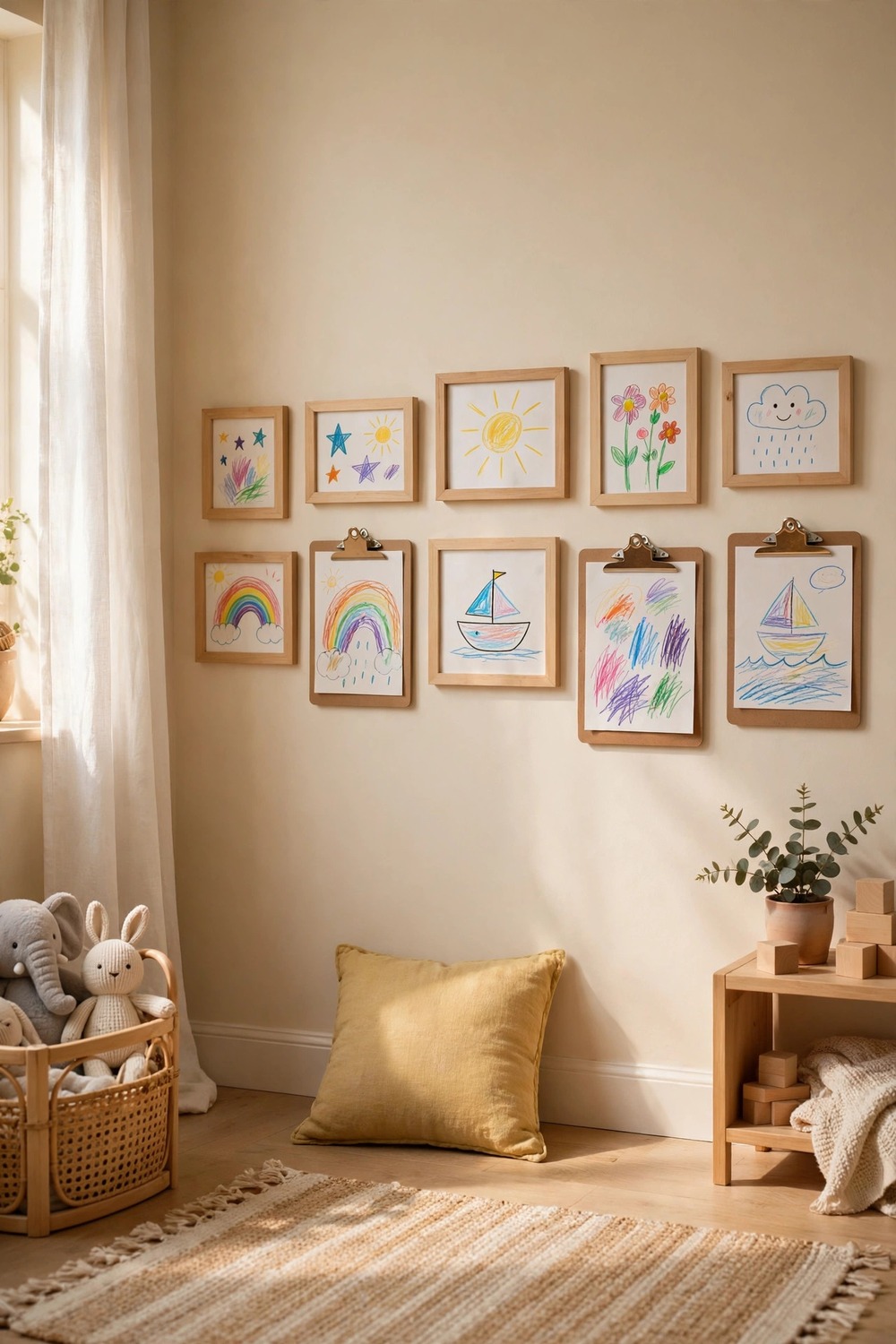
4. Add a Low Art Gallery Wall at Their Eye Level
Most gallery walls are hung for adults, so bring this one right down to your child’s eye level. Use lightweight frames, clipboards, or a simple picture ledge low on the wall, and fill it with their own drawings, paintings, and a few printed photos of family and pets. Seeing their work displayed properly, rather than stuck to the fridge for a week, tells a child that what they make matters. Rotate the pieces every month or so and let your child choose which new work goes up, because that choosing is half the fun. Keep frames light and fixings secure, and leave a little empty space on the ledge so there’s always room for the next masterpiece that comes home in a school bag.
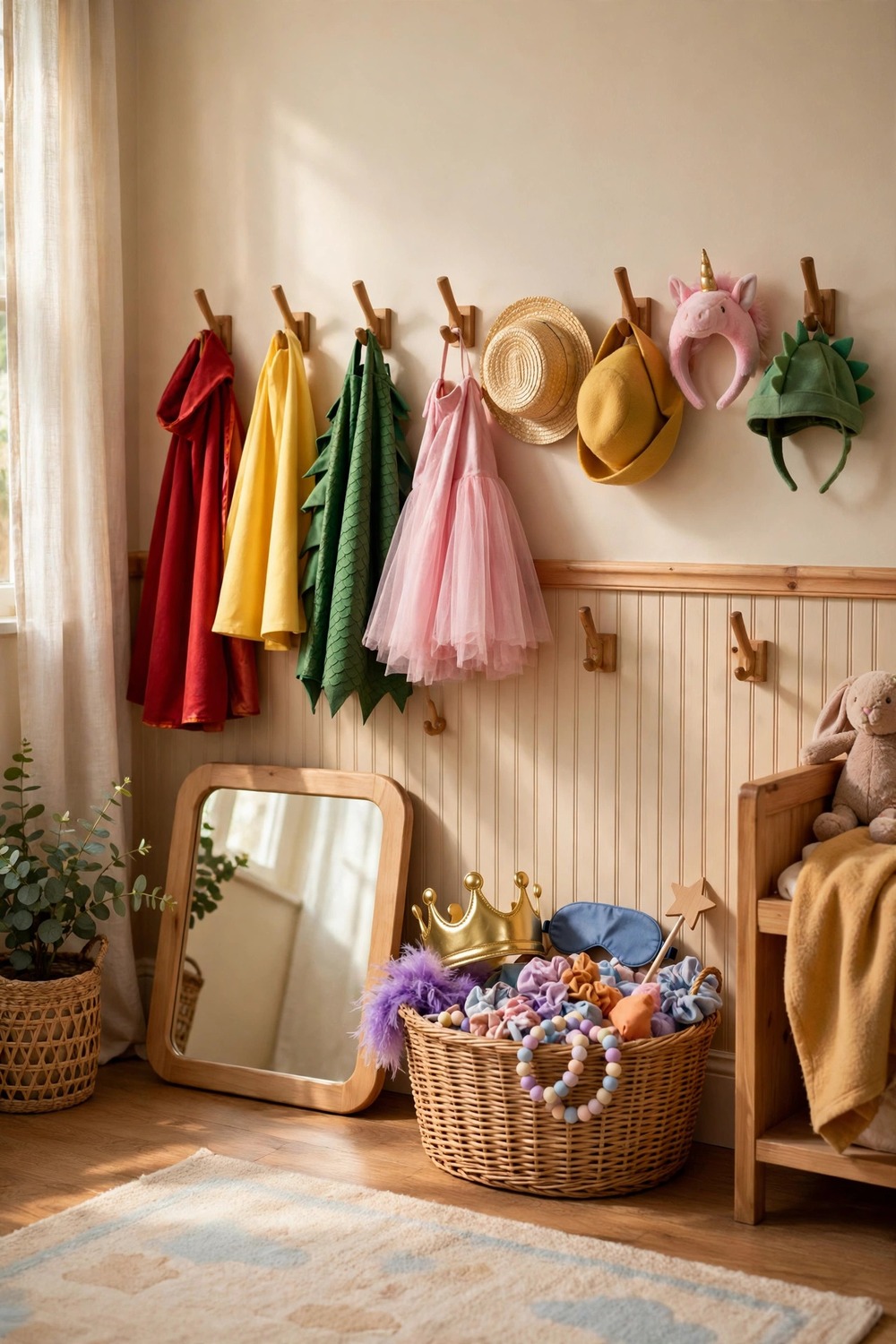
5. Set Up a Dress-Up Corner With Hooks and a Mirror
A dress-up corner invites the kind of imaginative play that can fill a whole afternoon. Fix a short row of sturdy hooks at your child’s height, hang up a small rotating collection of costumes, hats, capes, and scarves, and lean or mount a child safe mirror beside them so they can admire each transformation. A small basket on the floor catches crowns, wands, and other treasures that don’t hang well. You don’t need expensive costumes, because charity shop finds, old shirts, and a few simple props usually spark just as much storytelling. Keep the collection small and swap pieces in and out every few weeks. Fewer choices typically means deeper play, and tidying up takes minutes when everything has a hook to go back on.
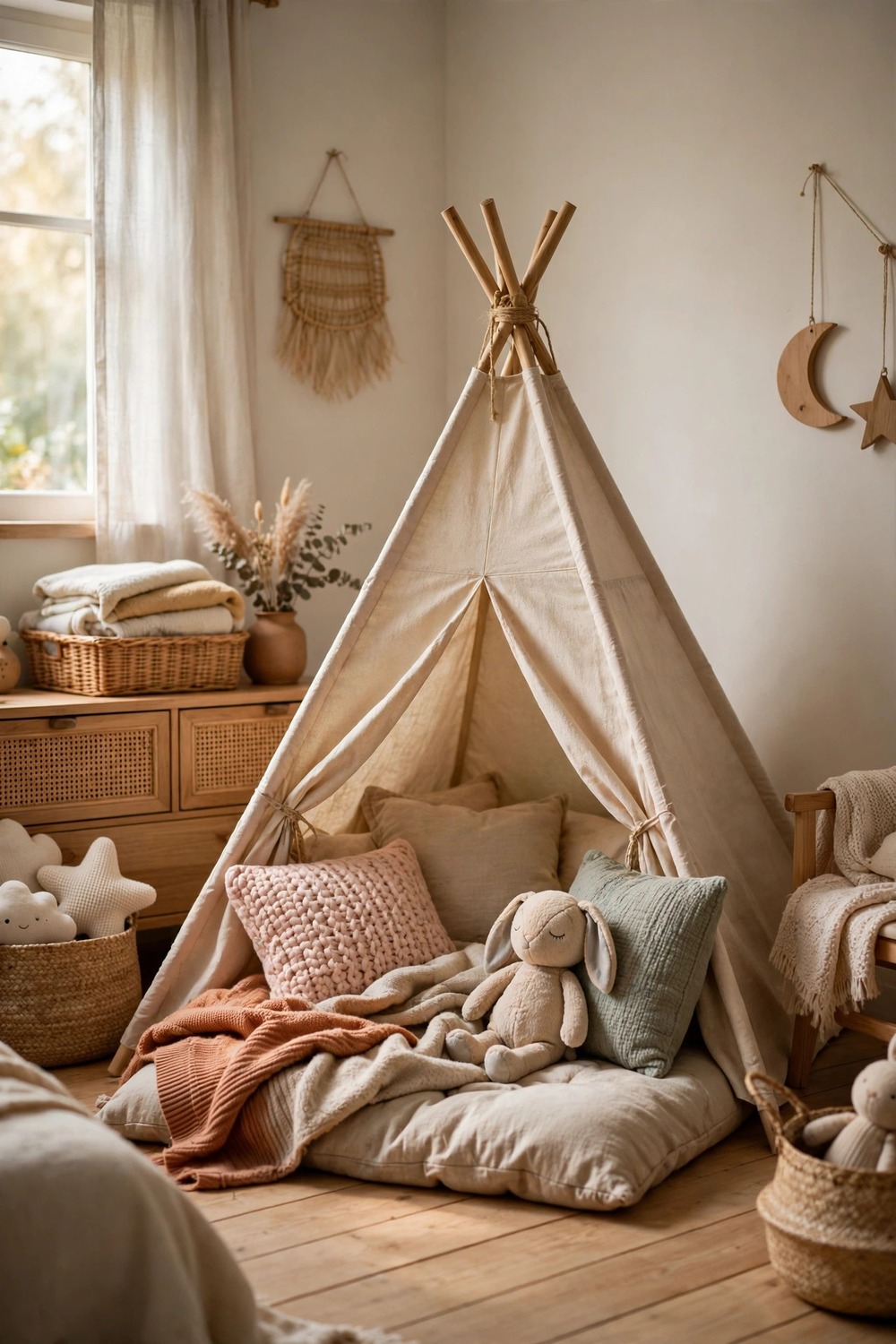
6. Use a Teepee as a Quiet-Time Hideaway
Every child needs a place to retreat when the day feels big, and a teepee makes a lovely one. Set it up in a corner away from the busiest part of the room, add a soft mat or sheepskin style rug inside, and keep a cushion, a blanket, and one or two calm activities in there, like a puzzle or a favorite soft toy. Agree as a family that the teepee is a quiet space, so when your child goes in, they get a few minutes of peace without questions. That simple rule usually helps children learn to calm themselves, which is a skill worth far more than the floor space it takes. Choose a design with a window flap or tie back opening so air flows through and you can peek in easily.
Add Playful Details That Spark Imagination
With the cozy base in place, it’s time for the details that get played with every day. Roads to drive on, stars to fall asleep under, and supplies that are easy to reach all invite independent play. These next seven ideas focus on fun that also works hard, keeping toys sorted, books visible, and creativity within easy reach.
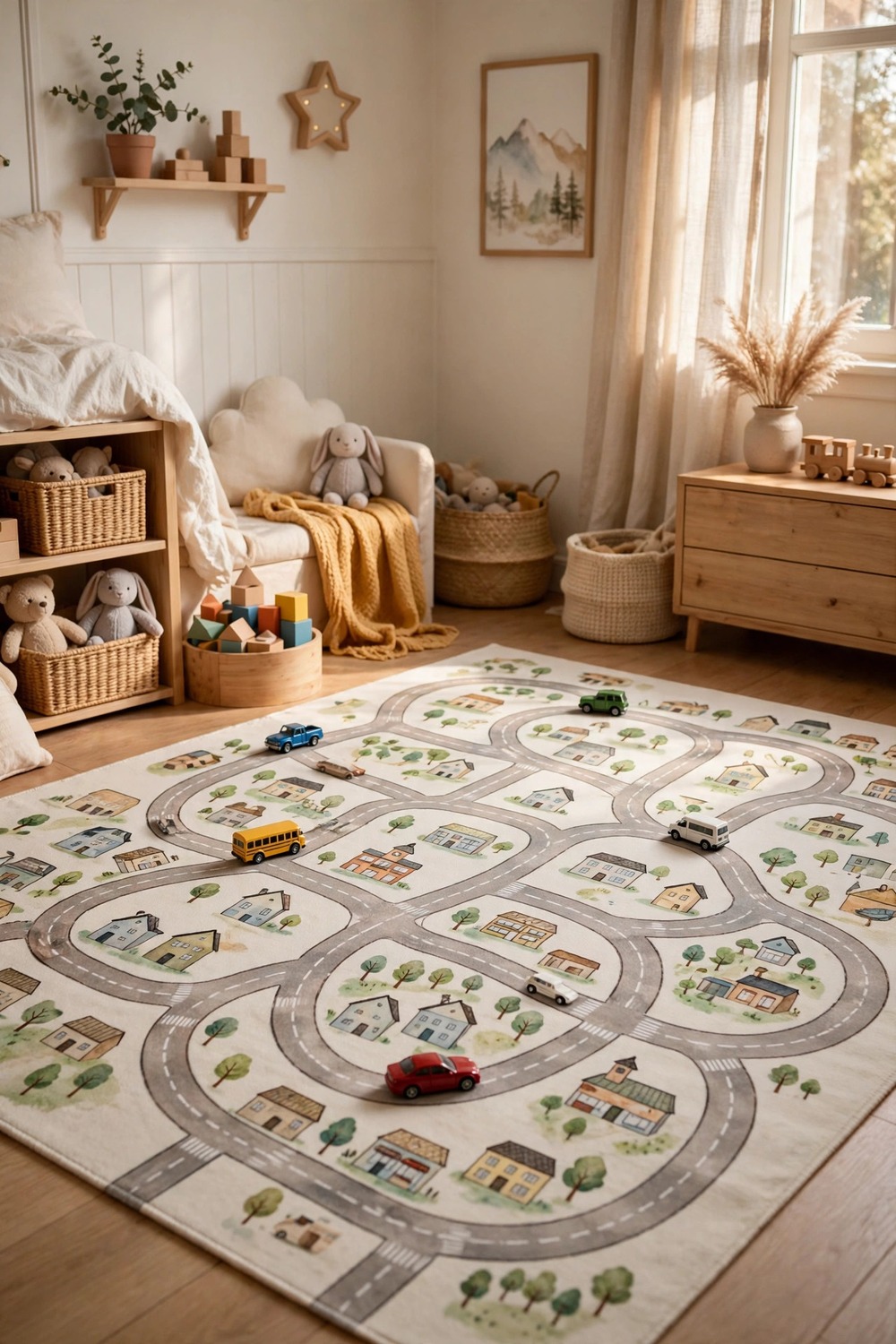
7. Choose a Rug With Roads for Toy Car Adventures
A road rug is a play space and a floor covering in one, and it can anchor the whole room. Choose a rug large enough for your child to sit on comfortably with room for the roads to wind around, and look for a low pile that’s easy to vacuum and kind to knees. Streets, roundabouts, and little buildings give toy cars a ready made world, and children will often add blocks, animals, and figures to build a whole town on top. Place the rug where there’s natural light and enough open floor around it for friends or siblings to join in. When play is finished, the cars can park in a small garage box at the edge of the rug, which makes tidying up feel like part of the game rather than the end of it.
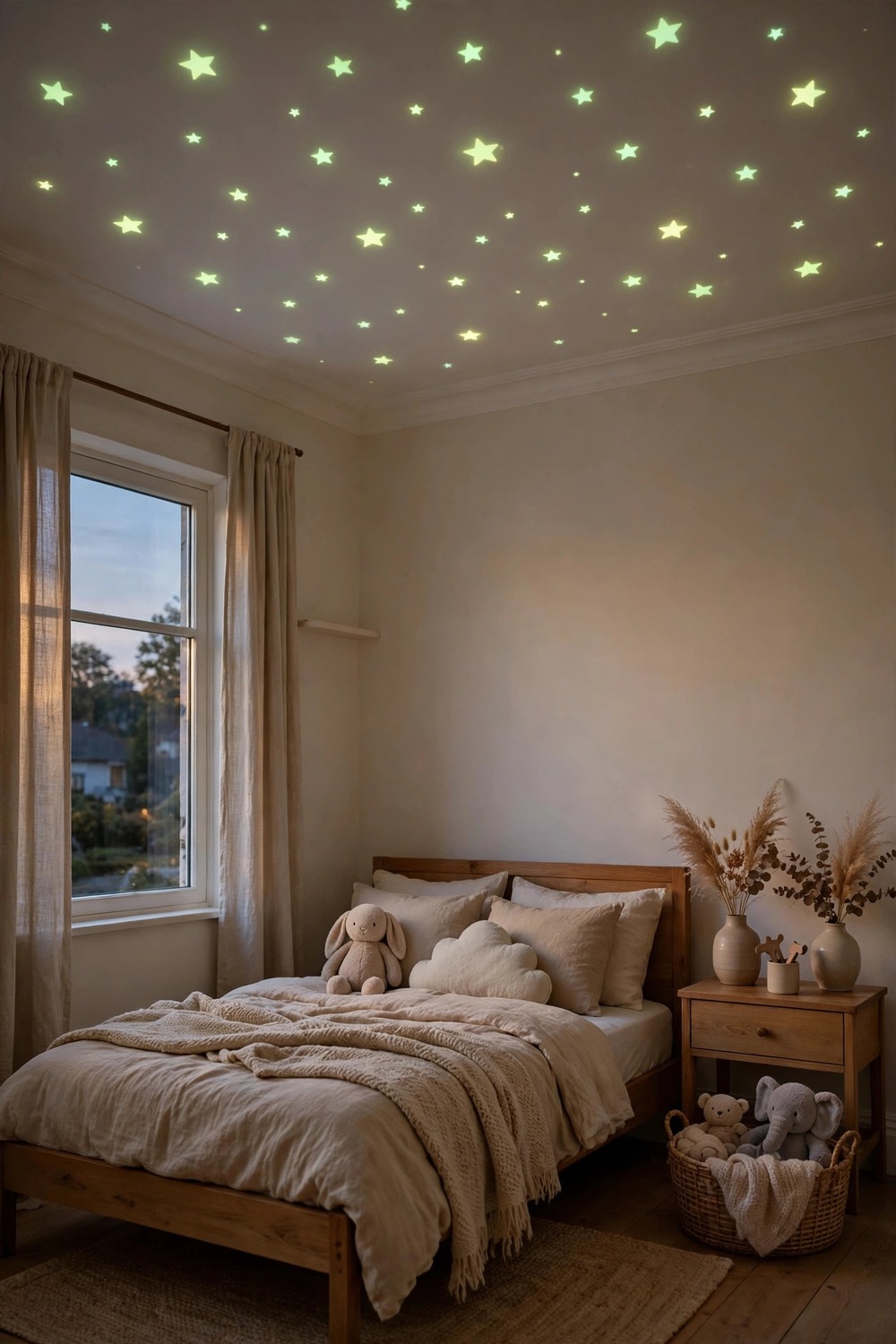
8. Add Glow-in-the-Dark Stars Above the Bed
Glow in the dark stars are a small touch that children remember for years. Stick them across the ceiling above the bed, or in a gentle arc on the wall behind the headboard, mixing sizes so the effect feels a bit like a real night sky. Arrange a few into simple constellations or let your child direct the pattern from below while you do the reaching, because helping design it makes bedtime feel personal. Most stars charge during the day and glow softly for a while after lights out, which can be a real comfort for a child who dislikes complete darkness. Use removable adhesive where you can, test one star first on painted walls, and keep a few spares ready for the night a favorite star inevitably falls down.
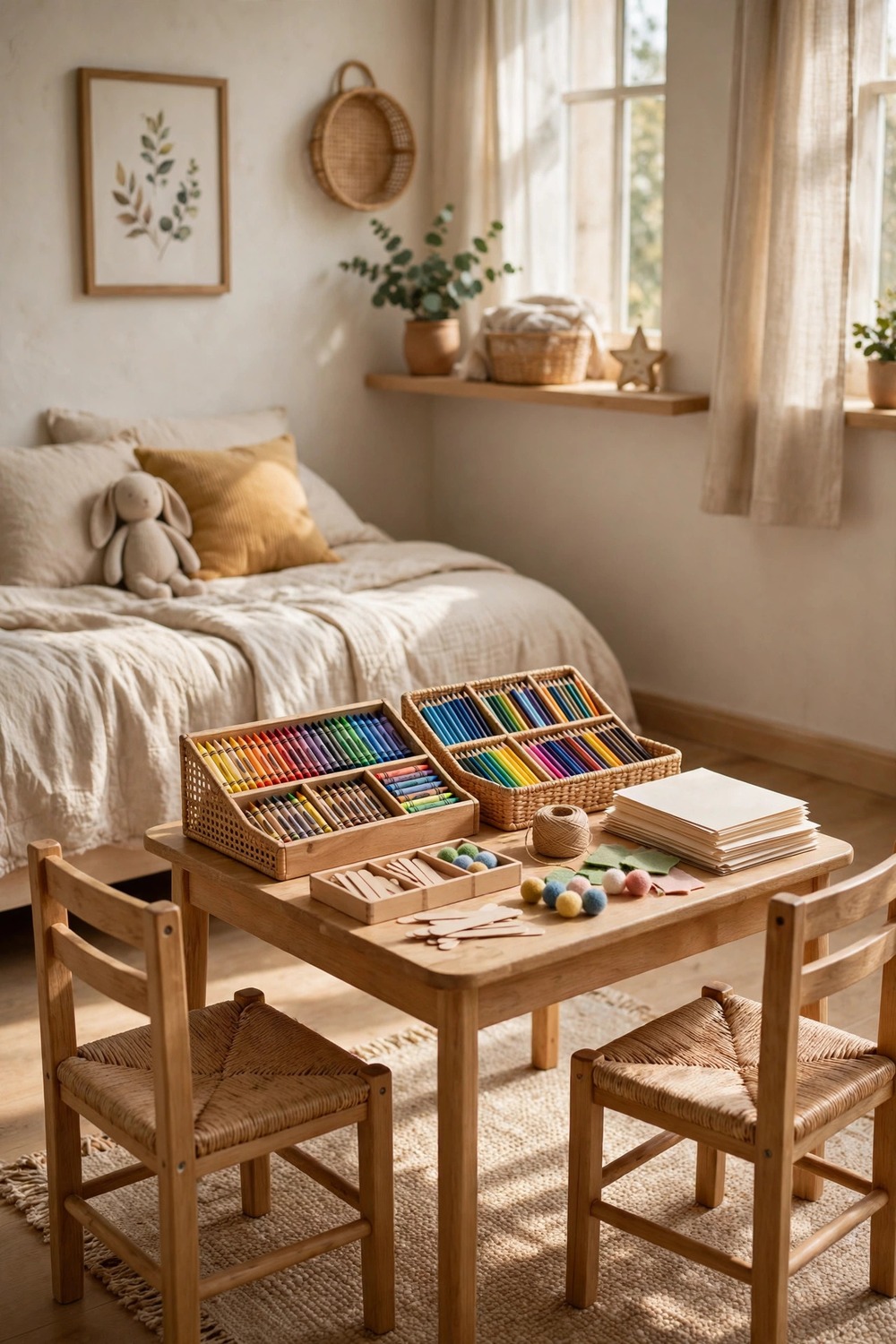
9. Create a Craft Table With Supply Caddies
A dedicated craft table tells your child that making things is an everyday activity, not a special occasion. A small, sturdy table with two chairs fits in most rooms, and washable paint or a wipe clean surface will save you a lot of worry. Keep supplies in open caddies or divided trays, with crayons, paper, scissors, glue, and stickers sorted so small hands can find and return things on their own. A paper roll mounted at one end is handy for big drawings, and a small tray underneath catches finished work. Place the table near natural light if you can, and add a washable mat underneath to protect the floor. When everything has a home, creative mess usually stays at the table instead of spreading across the whole room.
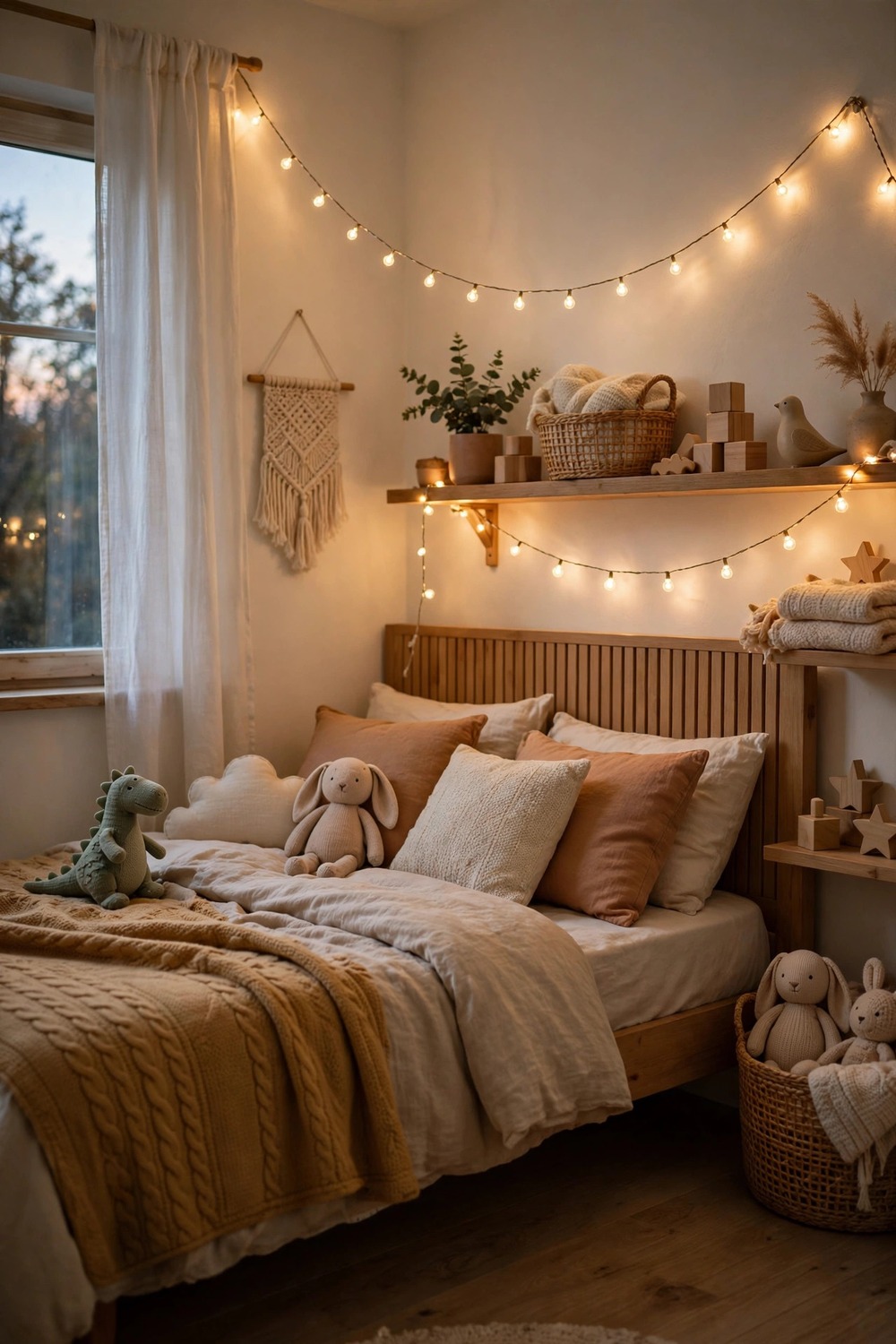
10. Hang String Lights for a Gentle Night Glow
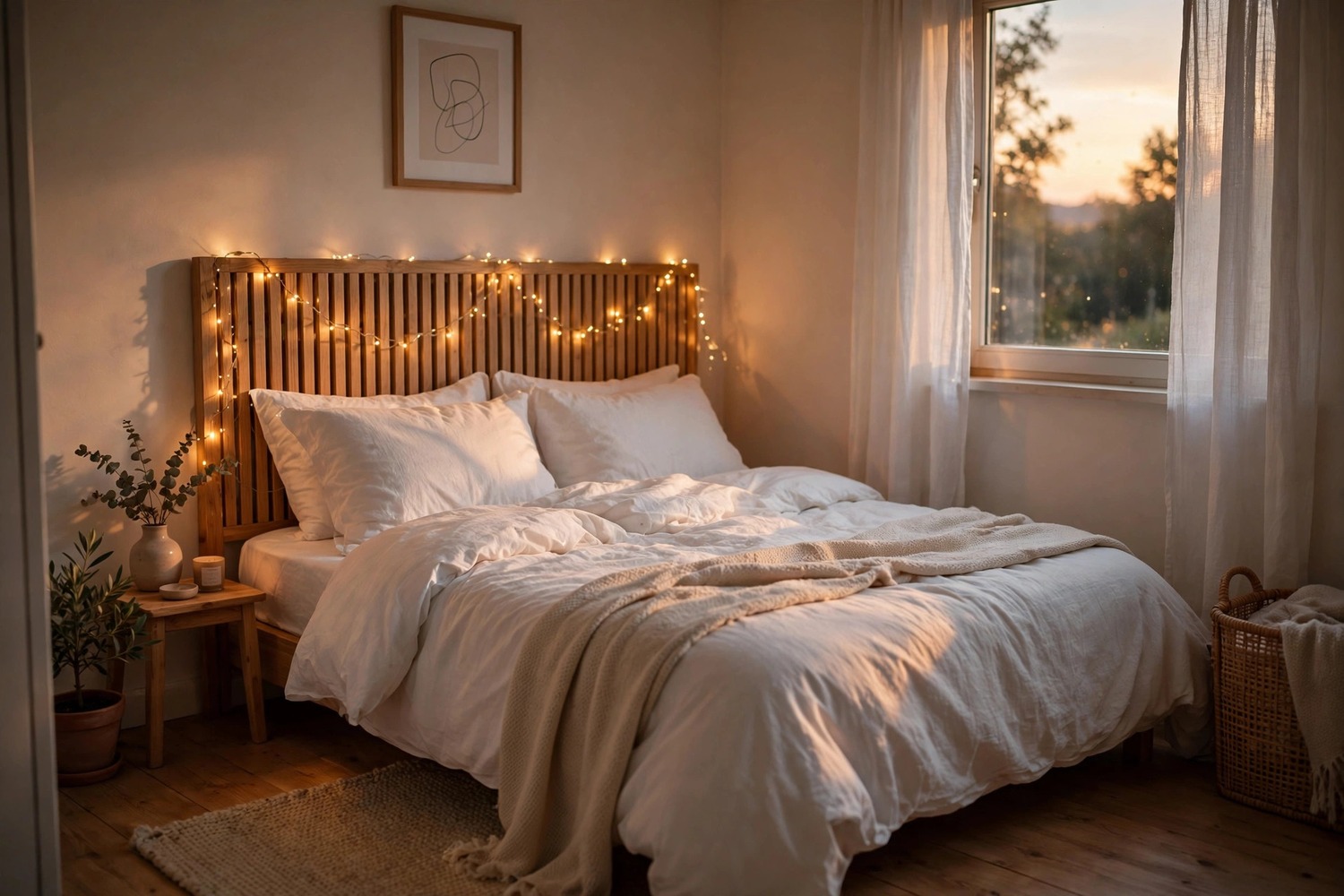
String lights bring the softest kind of glow, the kind that makes a room feel safe and a little bit enchanted. Drape them along a shelf edge, around the canopy hoop, or in a gentle swag above the bed, keeping cords neat and out of reach. Warm white lights usually feel calmest for sleep, while a few soft shapes like stars or clouds can add charm during the day. Battery powered sets with a timer are a practical choice, because they switch off on their own after your child falls asleep and there’s no cord near the bed. Check bulbs regularly, choose cool running LED sets, and treat the lights as decoration rather than a night light that stays on all night if your child prefers real darkness for deeper sleep.
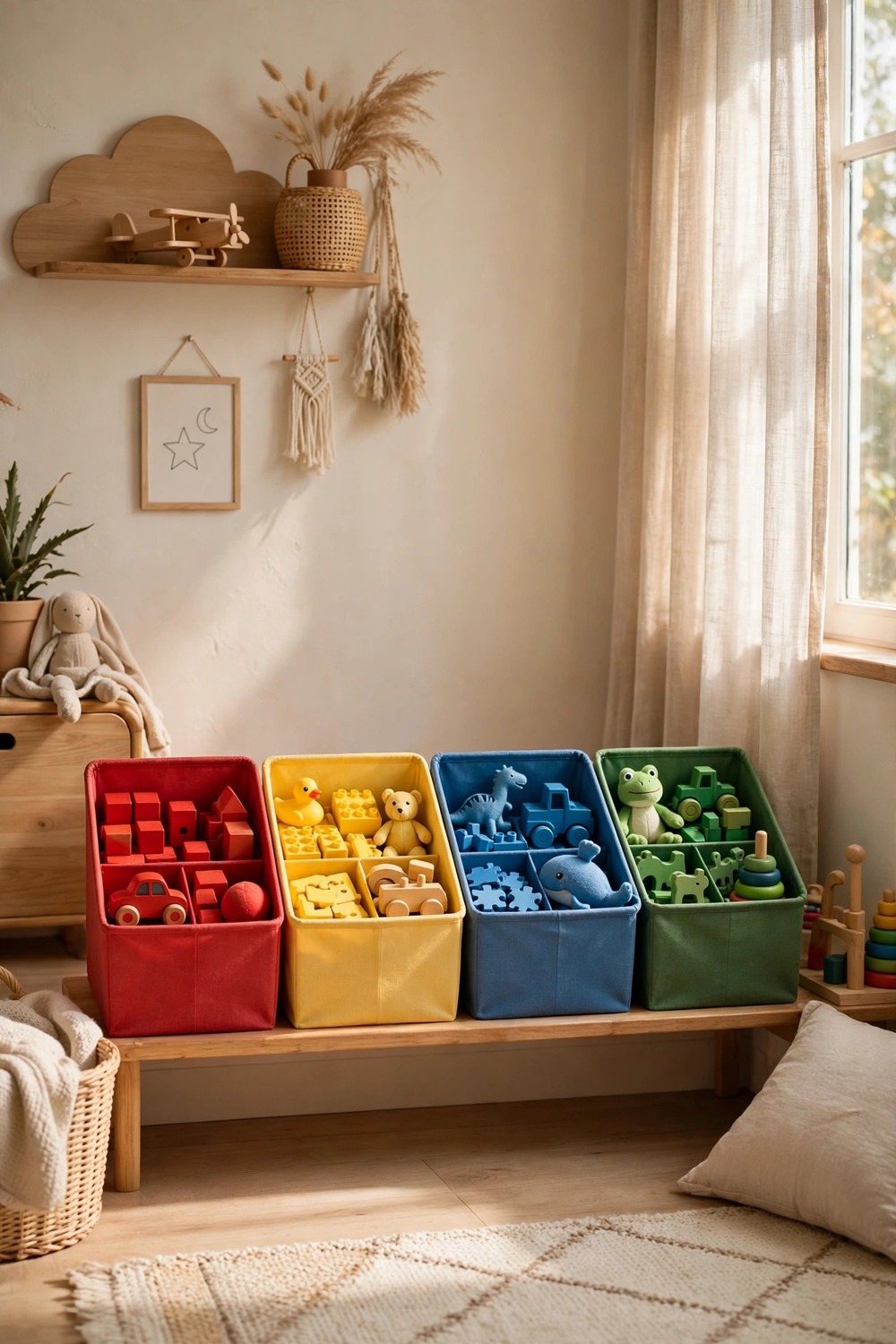
11. Use Colorful Bins for Toy Sorting Games
Colorful bins do double duty when you turn tidying into a sorting game. Line up open bins in bright, cheerful colors on a low shelf or along one wall, and give each one a simple job, like cars in the red bin, animals in the yellow one, and blocks in the blue one. Picture labels help younger children who aren’t reading yet, and the open tops mean toys can be tossed in quickly without lids slowing anyone down. At tidy up time, call out a color or a category and let your child race to fill the right bin. It sounds simple, but that small game usually gets the floor clear faster than any amount of asking. Rotate a few toys out every month or so, and the bins will feel fresh without buying anything new.
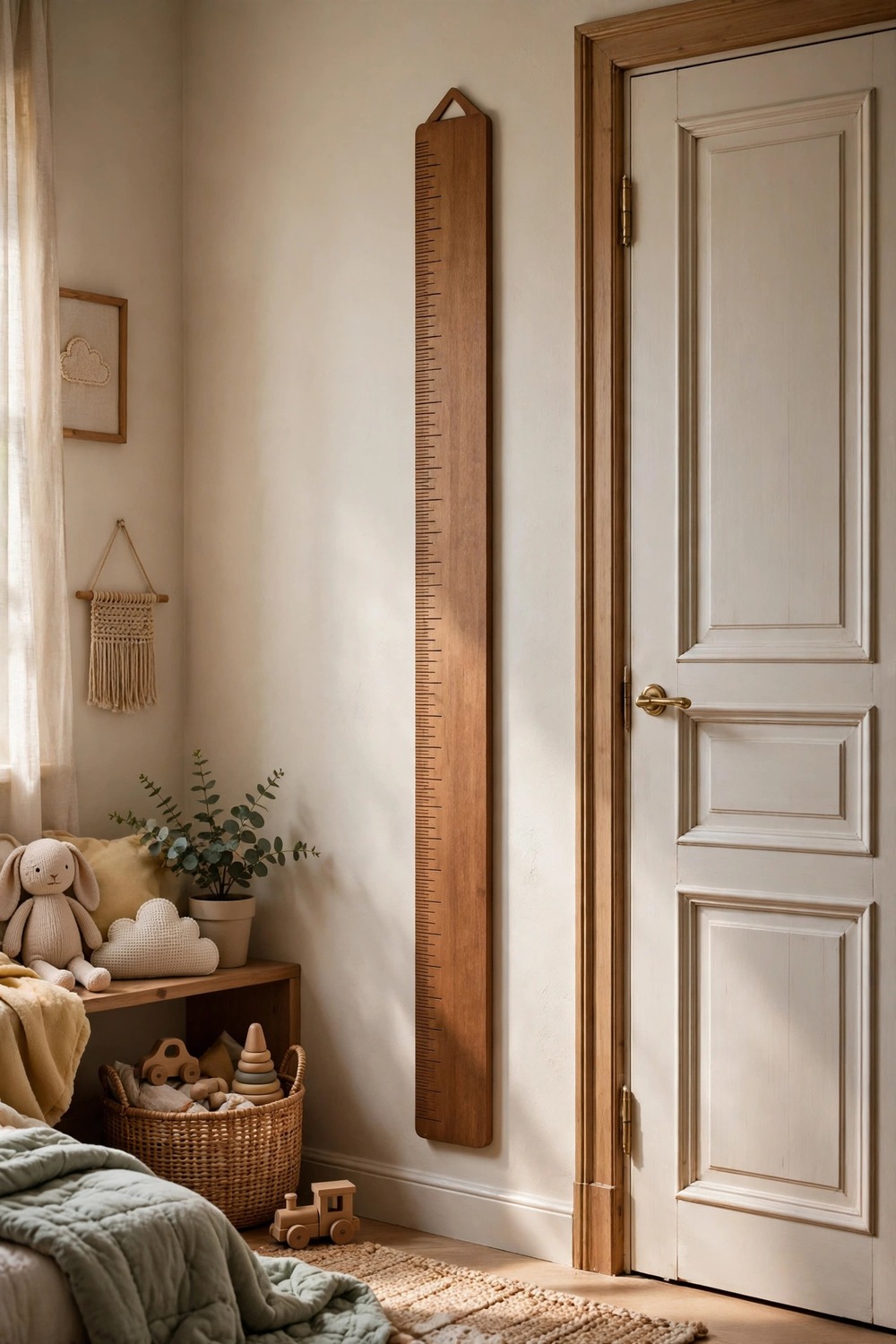
12. Add a Growth Chart That Doubles as Decor
A growth chart earns its wall space twice, once as decor and once as a family tradition in the making. A wooden ruler style chart, a canvas hanging chart, or a painted stripe beside the door frame can all blend with the room’s colors while quietly recording just how fast the years are moving. Mark heights with dates a couple of times a year, perhaps on birthdays and at the start of each school year, and let your child stand tall and proud for the measuring ritual. Hanging charts have one big advantage, because you can take them with you if you move house, unlike marks on a door frame. Choose a design without busy characters if you want it to suit the room for years, and it will typically still look right long after the toddler stage has passed.
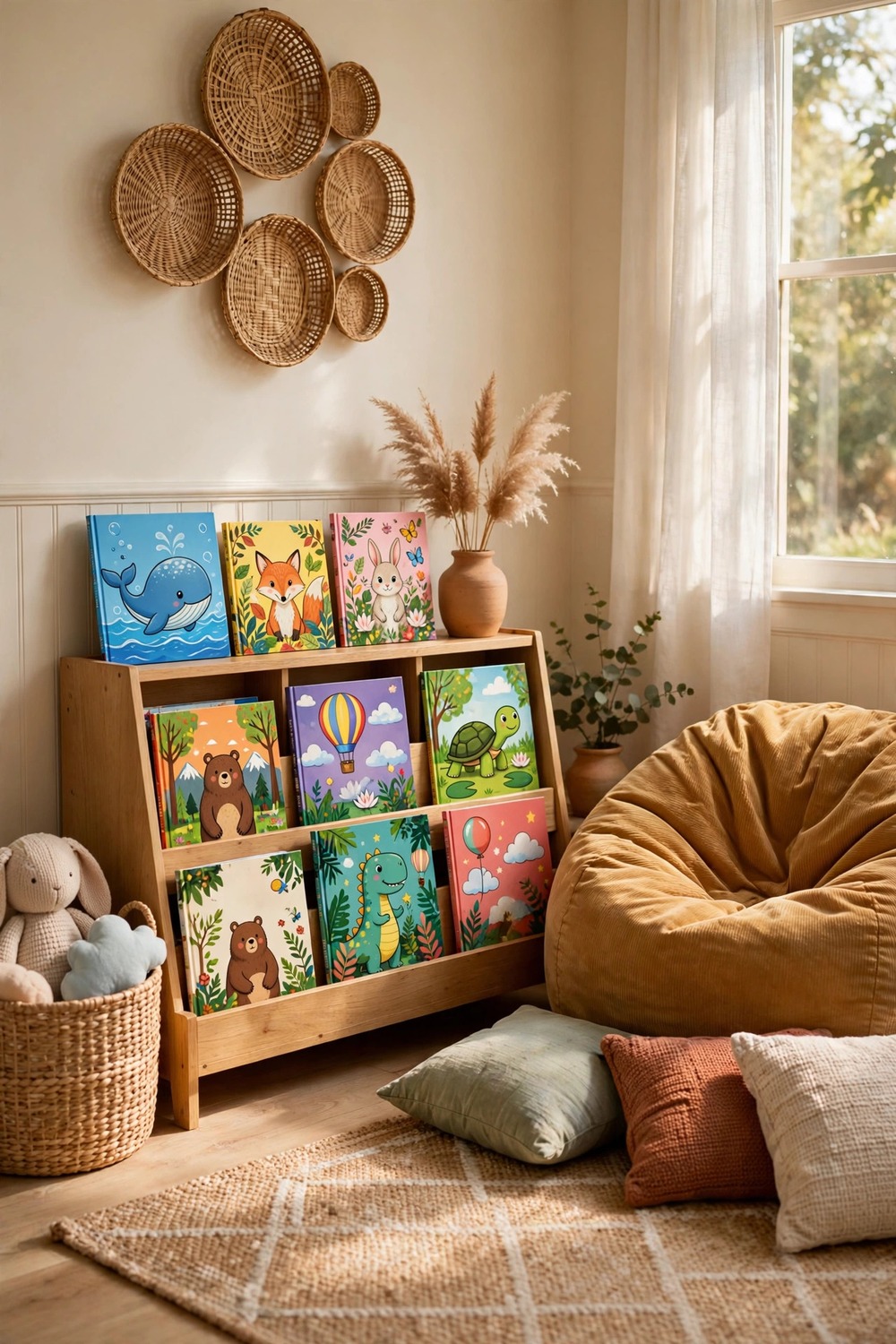
13. Build a Book Nook With Forward-Facing Shelves
Young children choose books by their covers, so forward facing shelves make a real difference. Mount a few shallow ledges or spice rack style shelves low on the wall, with the covers facing out like a little library display, then add a cushion, a beanbag, or a small chair right beside them. Keep only eight to twelve books on display at a time and rotate them from a bigger stash every week or two, because a small, changing selection usually gets far more attention than a packed shelf. This nook works beautifully near the reading tent or the bed, anywhere your child already likes to settle. Add a soft light within reach if the corner is dim, and you’ll typically find books being browsed at odd, quiet moments throughout the day.
Set Up Spaces for Learning and Pretend Play
As children grow, their rooms need gentle places to focus as well as places to play. A small desk, a special chair, and room for pretend worlds all support that next stage without making the bedroom feel like a classroom. These five ideas balance learning and imagination, with bedding and wall touches that keep the room feeling personal and fun.
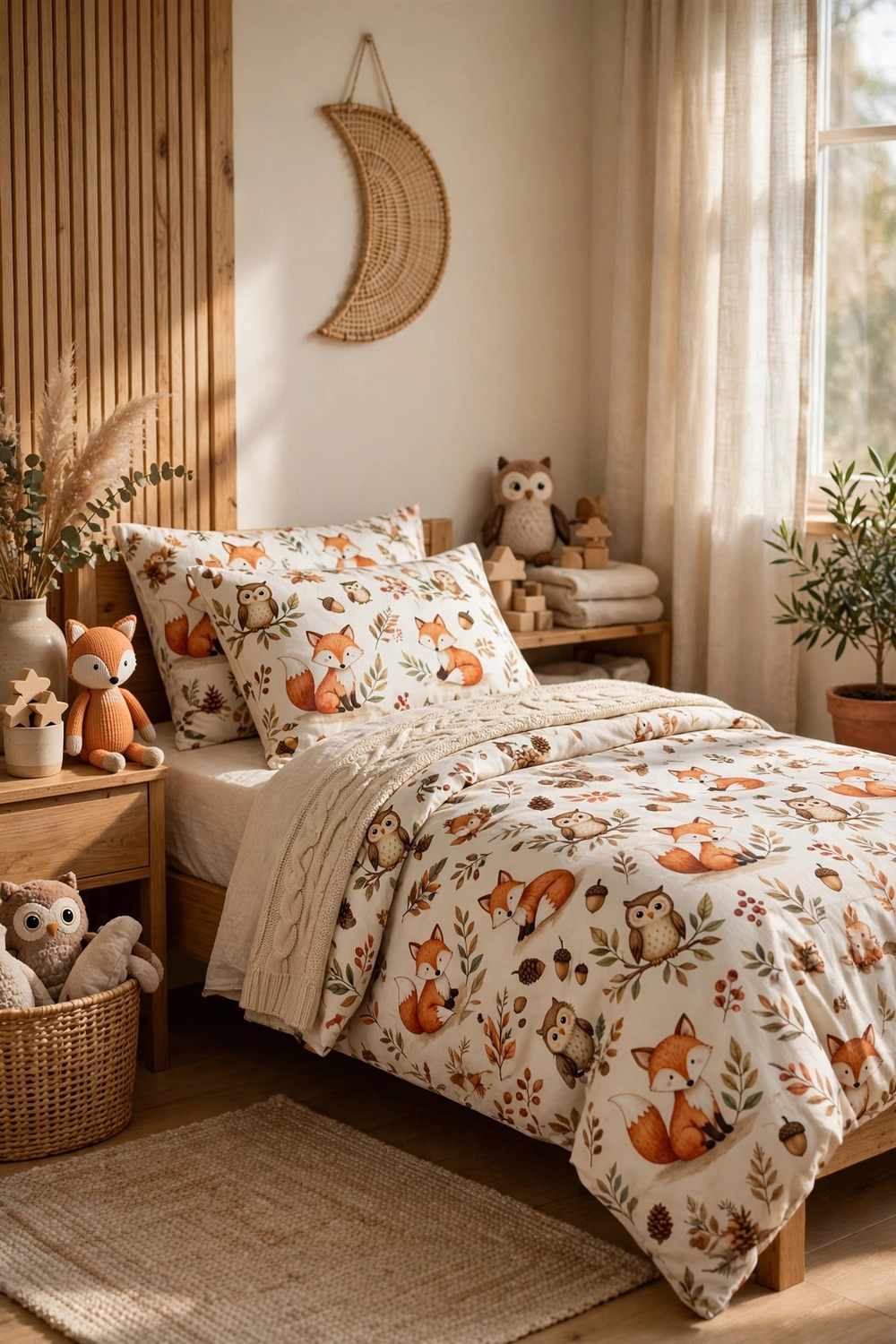
14. Pick Bedding With Their Favorite Animals
Bedding is the quickest way to bring a child’s current passion into the room, because it covers the biggest surface in it. If your child loves foxes, dinosaurs, farm animals, or sea creatures, a duvet set in that theme will make the bed feel like theirs in a way plain bedding never quite manages. Keep the rest of the room fairly simple in color so the bedding can be the star, and choose a spare set in a calmer pattern for laundry days or for when the obsession suddenly changes. Soft cotton usually washes well and feels kind against skin, and a reversible design gives you two looks for the price of one. Let your child help choose the set if they’re old enough, because a bed they picked themselves is typically a bed they’re happier to get into at night.
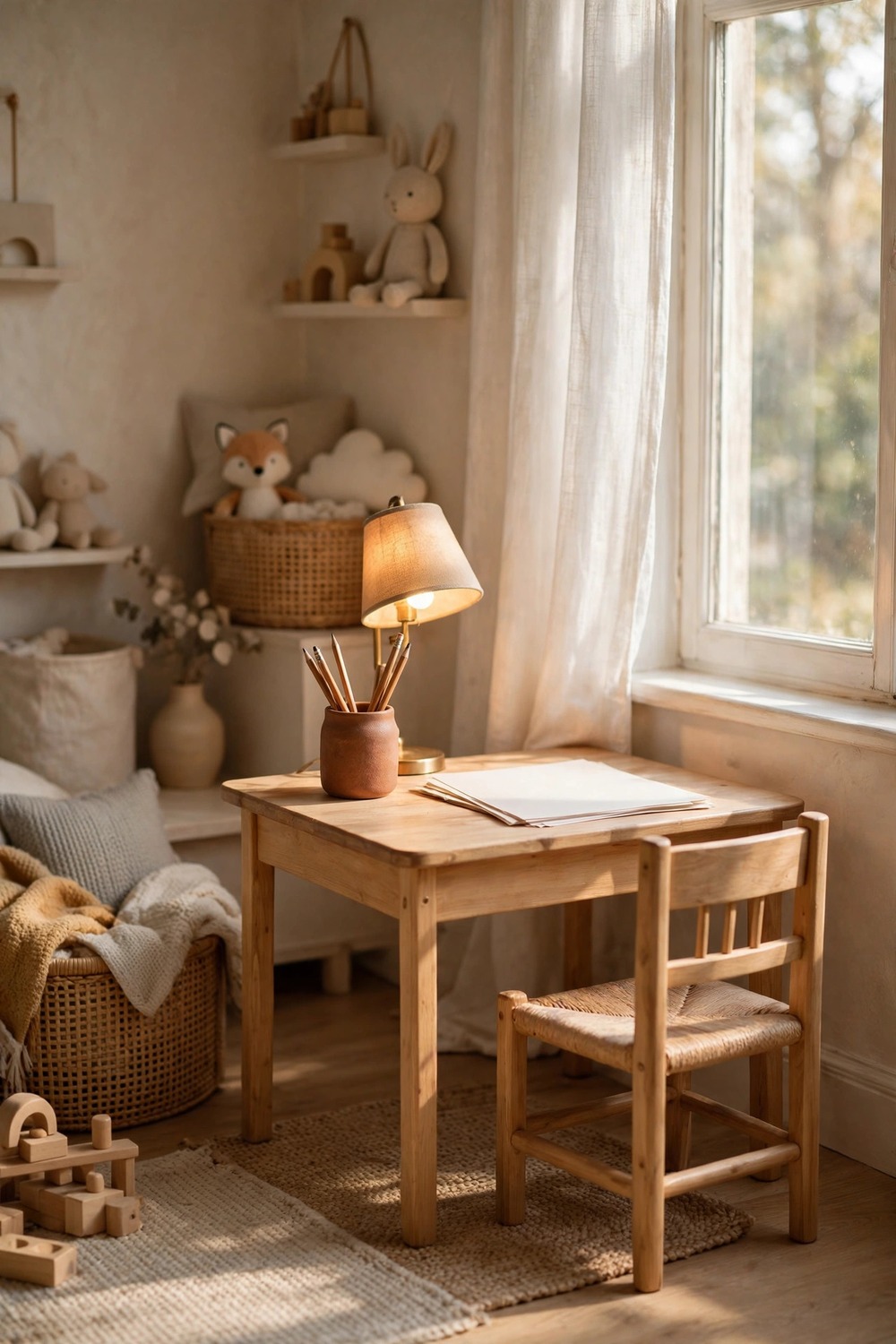
15. Add a Small Desk for Drawing and Homework
A small desk gives drawing, puzzles, and eventually homework a proper home that isn’t the bed or the floor. Choose a desk and chair sized for your child, with feet able to rest flat, and keep the surface mostly clear so there’s always room to start something. A desk lamp with warm light, a pot for pencils, and one drawer or tray for current projects are usually all the storage you need. Position the desk near a window if you can, but not facing a toy shelf if your child is easily distracted. A cork board or small shelf above the desk is a nice place for a timetable, a favorite drawing, or a photo. Even before school starts, a desk tends to get used daily for coloring and sticker books, so it earns its space early.
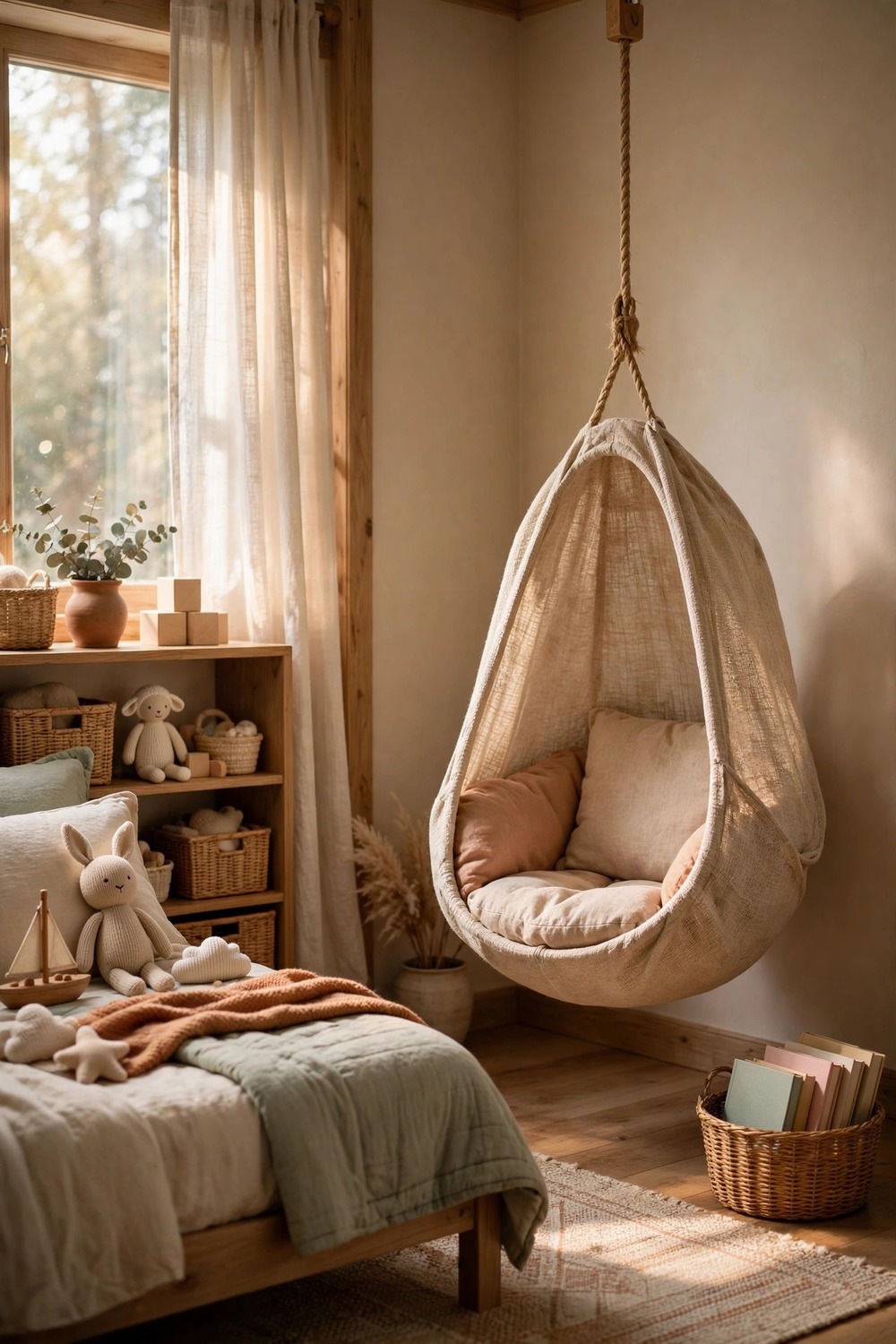
16. Hang a Swing Chair for Wiggly Readers
Some children think best while moving, and a hanging swing chair gives that wiggle a safe, happy place to go. A fabric pod or hammock style chair hung securely from a ceiling joist creates a cocoon like seat that’s perfect for reading, listening to stories, or simply swinging gently with a soft toy. Add a cushion inside and keep a small basket of books within reach on the floor. Professional or very careful installation matters here, because the fixing must go into solid structure and be checked regularly, and clear floor space around the swing keeps landings soft. Set simple rules about gentle swinging and one child at a time. Used calmly, a swing chair often becomes the seat children choose when they need to settle, focus, or reset after a busy day.
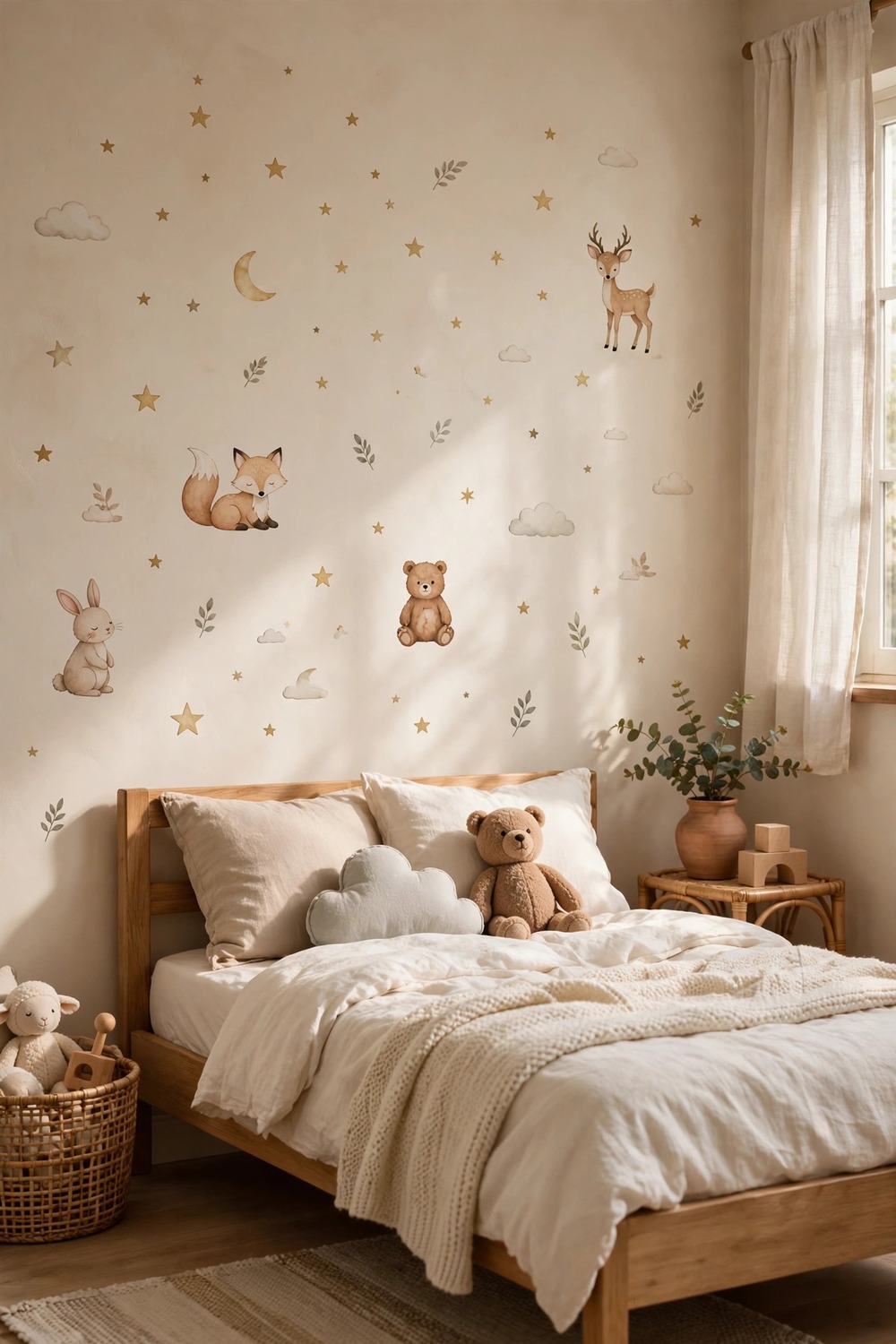
17. Use Wall Decals They Can Help Place
Wall decals are made for indecisive decorators and fast growing children alike. They’re removable, renter friendly, and easy to change when a dinosaur phase gives way to a space phase. The real joy, though, is placing them together. Let your child decide where the stars scatter, where the animals wander, or where the hot air balloons float, guiding the overall balance while they make the small choices. That shared decorating session usually makes a room feel like a joint project rather than something done to them. Smooth the decals onto clean, dry paint, keep spares from the pack for repairs, and photograph the finished wall. When it’s time for a change, peeling them off and starting again with a new theme can become a happy ritual of its own each year or two.
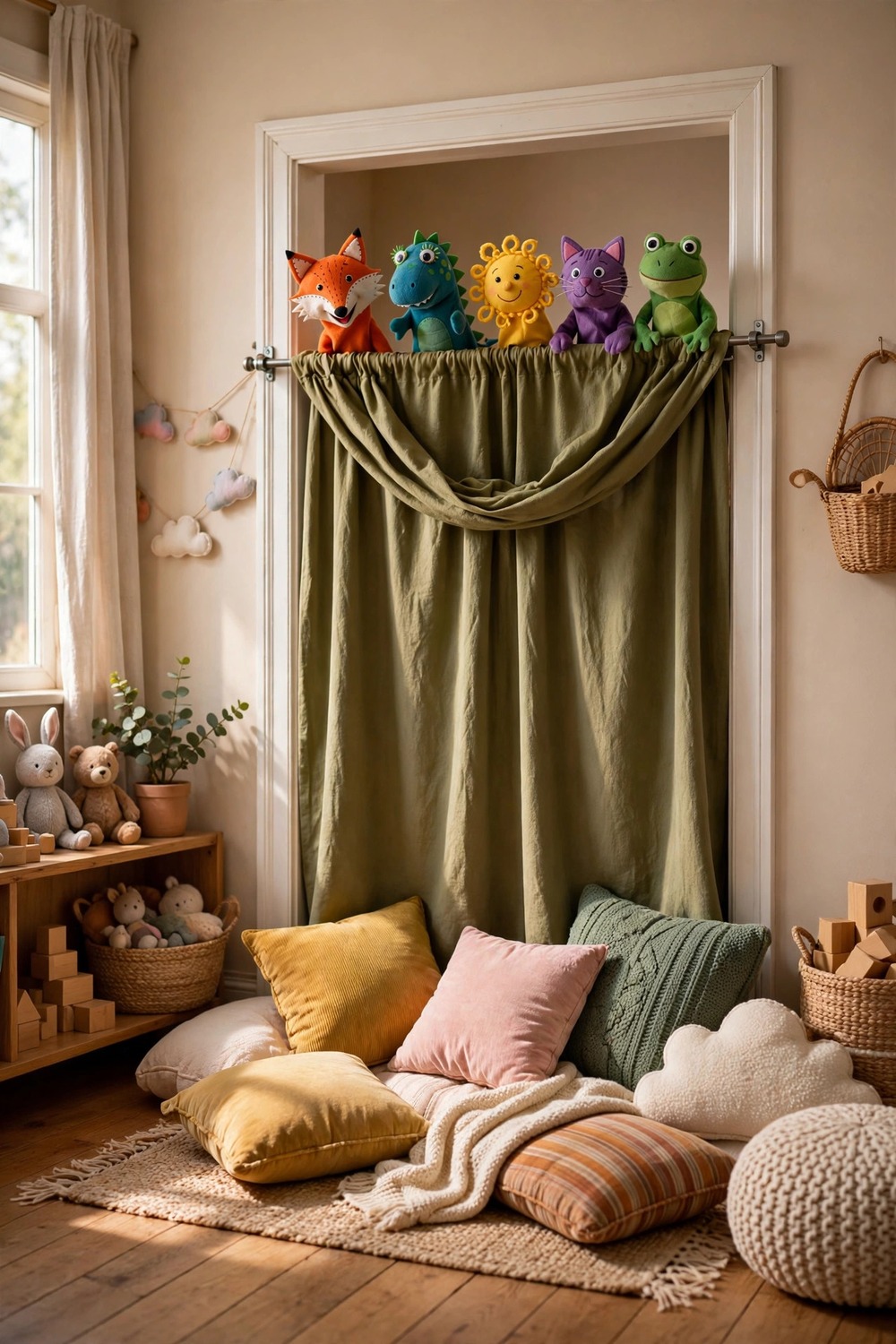
18. Create a Puppet Theater From a Tension Rod
A puppet theater sounds ambitious, but a tension rod and a curtain are honestly all you need. Fit the rod across a doorway, an alcove, or between two pieces of furniture at your child’s height, hang a curtain with a simple window cut into it, or drape fabric so puppets can appear over the top edge. Add a small basket of hand puppets behind the curtain and a couple of cushions in front for the audience. Children who might be shy speaking in a group often find their voice quickly when a puppet does the talking, which makes this a quietly powerful addition to the room. The whole theater packs away in minutes when you need the doorway back, and putting on a show for family typically becomes a weekend tradition faster than you’d expect.
Finish With Practical Touches and Room to Grow
The final ideas are the ones that make the room work beautifully day after day. Good sleep, clever use of floor space, and a corner for grown up style pretend play all matter more as your child gets older. Finish with a personal sign above the bed, and the room will feel complete in a way that is practical, playful, and unmistakably theirs.
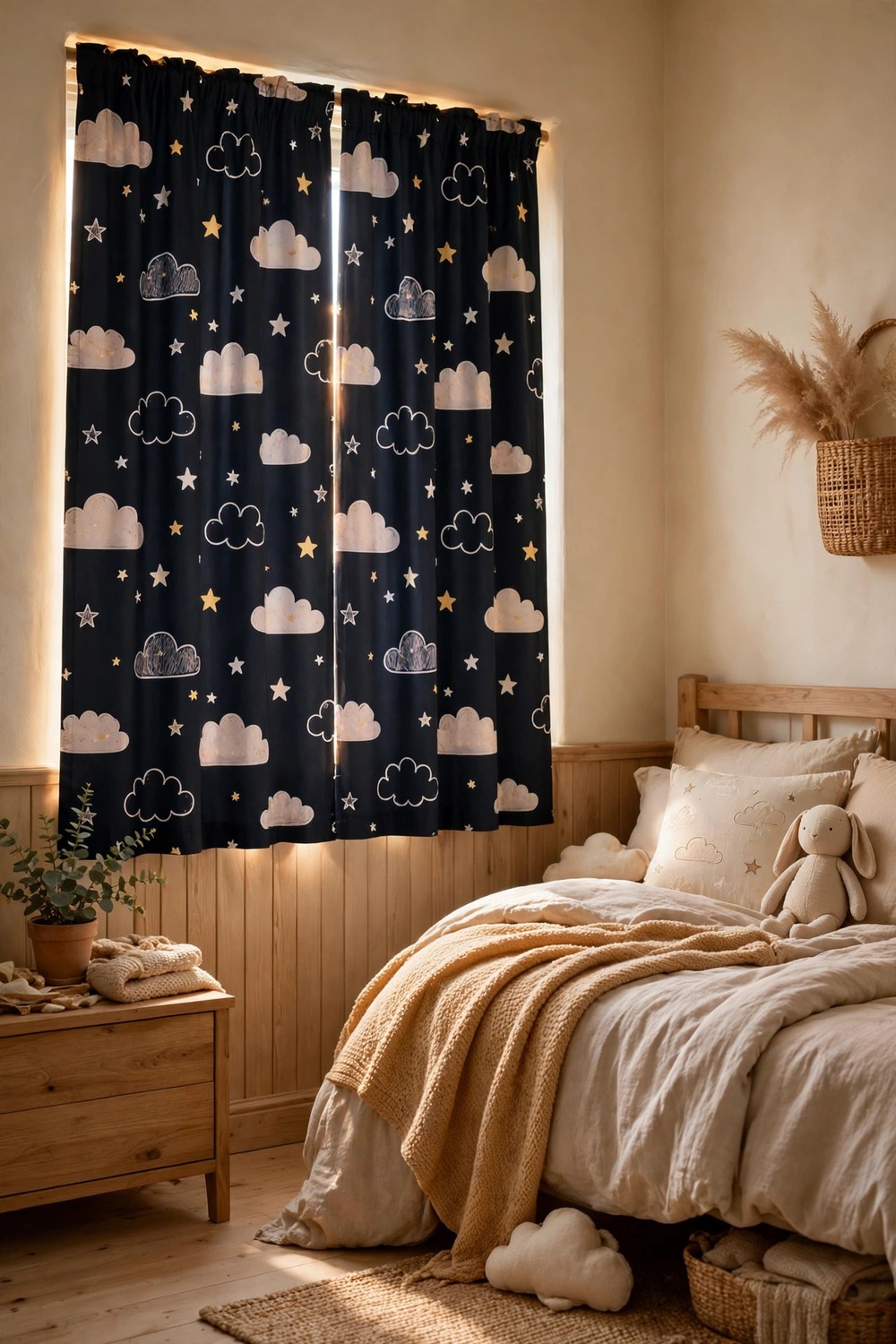
19. Add Blackout Curtains With a Fun Print
Blackout curtains are the practical hero of a child’s bedroom, especially in summer when bedtime arrives long before dark. A fun print, like stars, clouds, or a gentle woodland pattern, means they look playful during the day while doing serious work at night by keeping the room dark for longer, deeper sleep. Hang them wide and high so they cover the window edges fully, because light leaking around the sides is what usually wakes children early. Check that cords are secured well out of reach, or choose cordless styles for safety. Pair them with a lighter voile if the room feels too dark during the day. Good sleep affects everything from mood to appetite, so if you only make one practical upgrade from this list, this is typically the one worth making first.
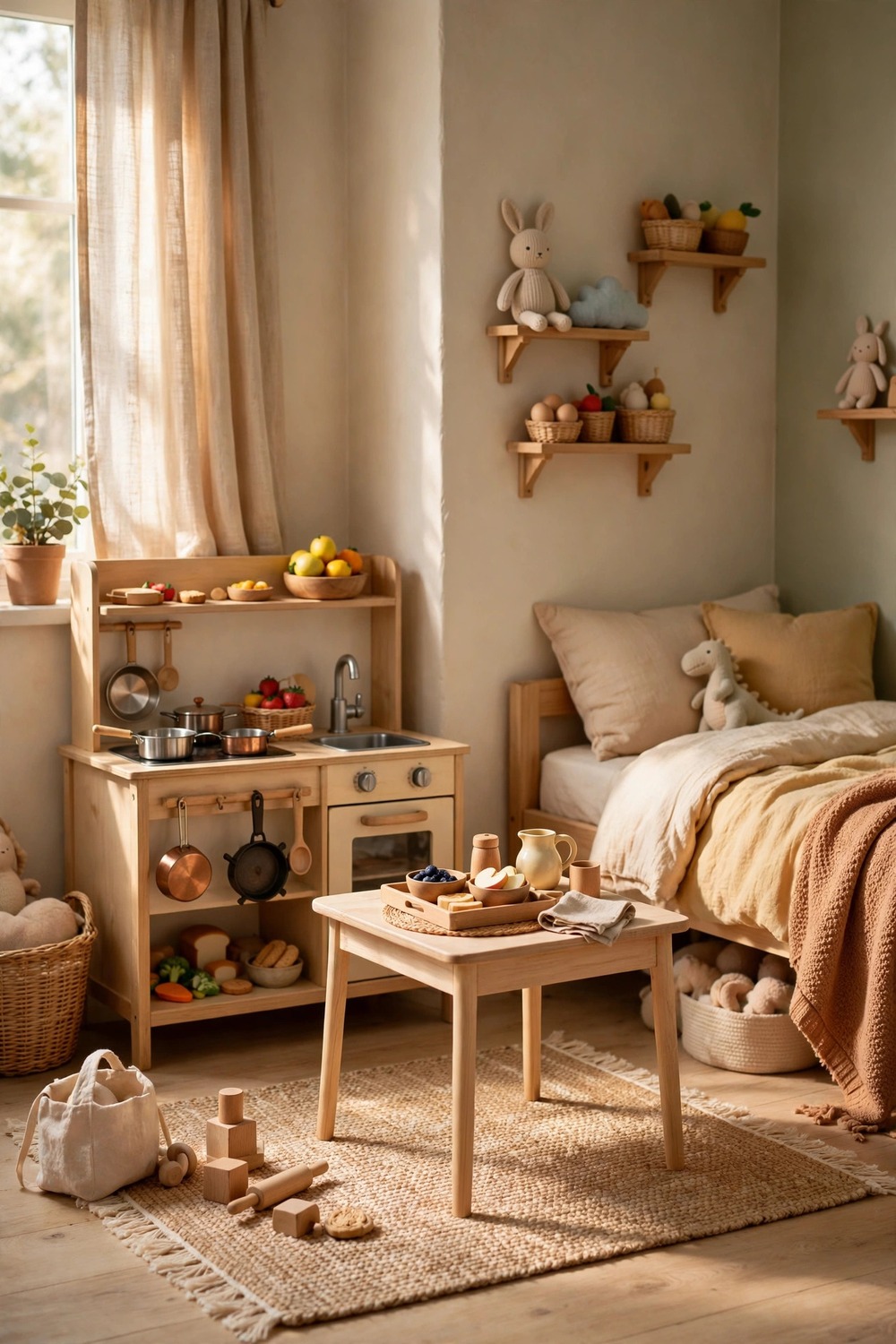
20. Set Up a Mini Kitchen or Play Shop Corner
Pretend kitchens and little shops are where children practice the whole grown up world in miniature. A compact play kitchen, or a small counter with crates for a shop, fits neatly into a corner and pairs well with a tiny table where customers can be served. Stock it with a small, rotating set of play food, a few utensils, and some shopping bags or a toy till, and let menus and price tags made from card become part of the craft table output. This kind of play builds language, counting, and turn taking without anyone noticing they’re learning. Keep the pieces contained with a basket or tray system so cleanup is quick, and join in as a customer now and then. Being served a plastic cup of tea by a proud small chef is one of the genuine pleasures of this stage.
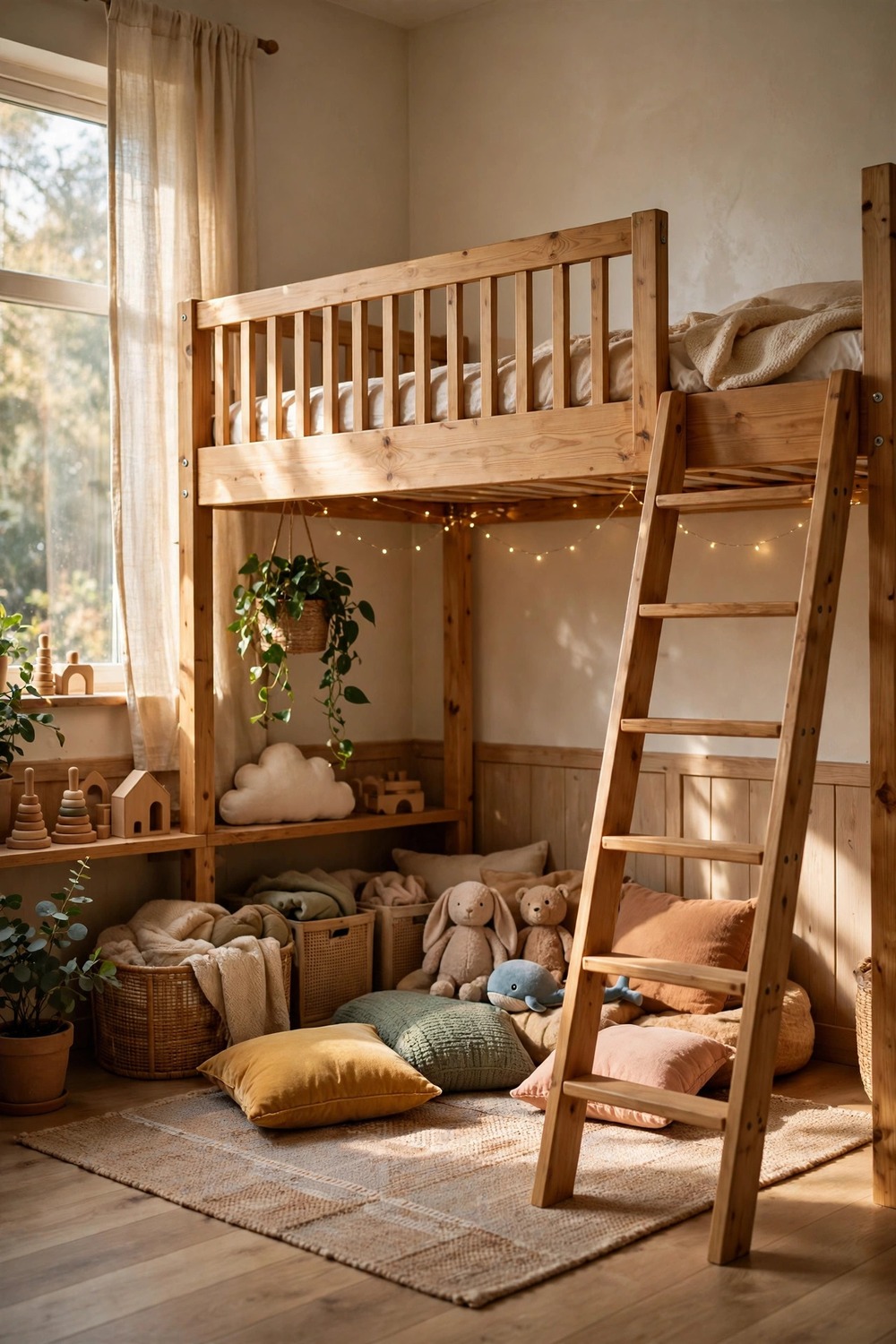
21. Use a Loft Bed to Free Up Floor Space
When floor space is tight, a loft bed gives you a whole extra zone without adding a single piece of furniture. Raising the bed creates room underneath for a desk, a reading nook, a dress-up rail, or simply open play space, which can transform a small bedroom completely. Follow the manufacturer’s age guidance carefully, use a guard rail and a mattress of the recommended depth, and make sure the ladder feels solid and easy for sleepy climbs. A small night light near the ladder helps with safe trips down in the dark. Underneath, define the space with a rug and a soft light so it feels like a den rather than a leftover gap. For older children especially, a loft bed usually feels like an adventure and a little independence, all in one piece of furniture.
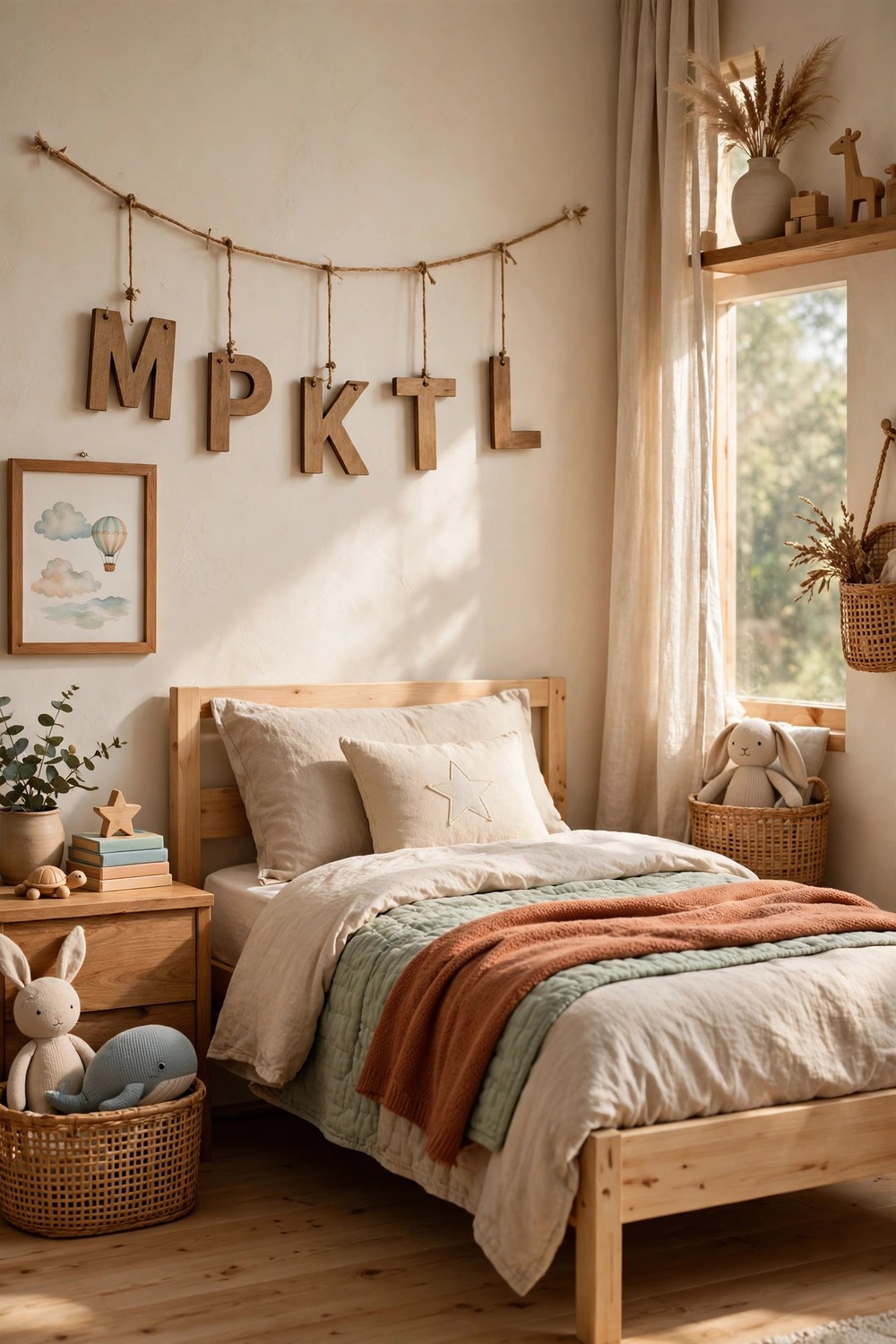
22. Finish With a Name Sign Above the Bed
A name sign above the bed is a small finishing touch that makes a child feel truly at home in their room. Wooden letters, a painted plaque, a fabric banner, or a simple framed print of their name can all work, and the style can grow with them if you choose classic materials over very babyish designs. Hang it securely above the headboard, centered with the bed, and echo one of its colors in a cushion or throw so the wall feels pulled together. Many children love helping to choose the colors or even paint a letter or two themselves. It is often the first thing they show visitors, because a room with your name on it feels official. After all the corners, colors, and clever storage, that simple sign quietly says this special place belongs to someone loved.
When you step back, a joyful child’s bedroom doesn’t need to be big, expensive, or perfectly matched. It needs a cozy place to sleep, corners that invite play and stories, and a few touches that reflect who your child is right now. If one area isn’t working, change only that area, live with it for a while, and adjust again. Children’s rooms are meant to evolve, and the small changes you make together over the years usually matter more than any single big makeover.
So start small this week. Pick the one idea your child would be most excited about, whether that’s a basket of books in a tent corner or a sky full of stars above the bed, and do just that one together. That first change will show you what the room can become, and the next idea will typically suggest itself. Before long, their bedroom won’t just be where they sleep. It’ll be the little world where they read, imagine, create, and grow.


Leave a Reply