
When your front door opens straight into the living room, there is no pause between “outside” and “home” — coats land on the sofa, shoes pile up by the couch, and the whole room feels like a hallway you happen to sit in. The good news is that an entryway is not a room, it is a set of signals: a rug, a hook, a place for keys, a light of its own. These twelve ideas carve a proper landing zone out of almost no space, so your living room gets to be a living room again. Pick the two or three that fit your layout, save your favorites to Pinterest, and give your door the welcome it deserves.
In This Article
- 1. Float a Slim Console Table Behind the Sofa
- 2. Roll Out a Runner to Fake a Hallway
- 3. Build a Bench-and-Hooks Corner by the Door
- 4. Line the Wall with a Peg Rail for Coats and Bags
- 5. Hang a Mirror by the Door for Light and Last Checks
- 6. Choose a Narrow Tilt-Out Shoe Cabinet
- 7. Make a Landing Strip with a Basket and a Key Tray
- 8. Divide the Zone with a Low Open Bookshelf
- 9. Define the Entry Wall with a Small Gallery
- 10. Give the Entry Its Own Light
- 11. Tuck a Coat Stand into the Corner
- 12. Mark the Spot with a Doormat and a Plant
1. Float a Slim Console Table Behind the Sofa
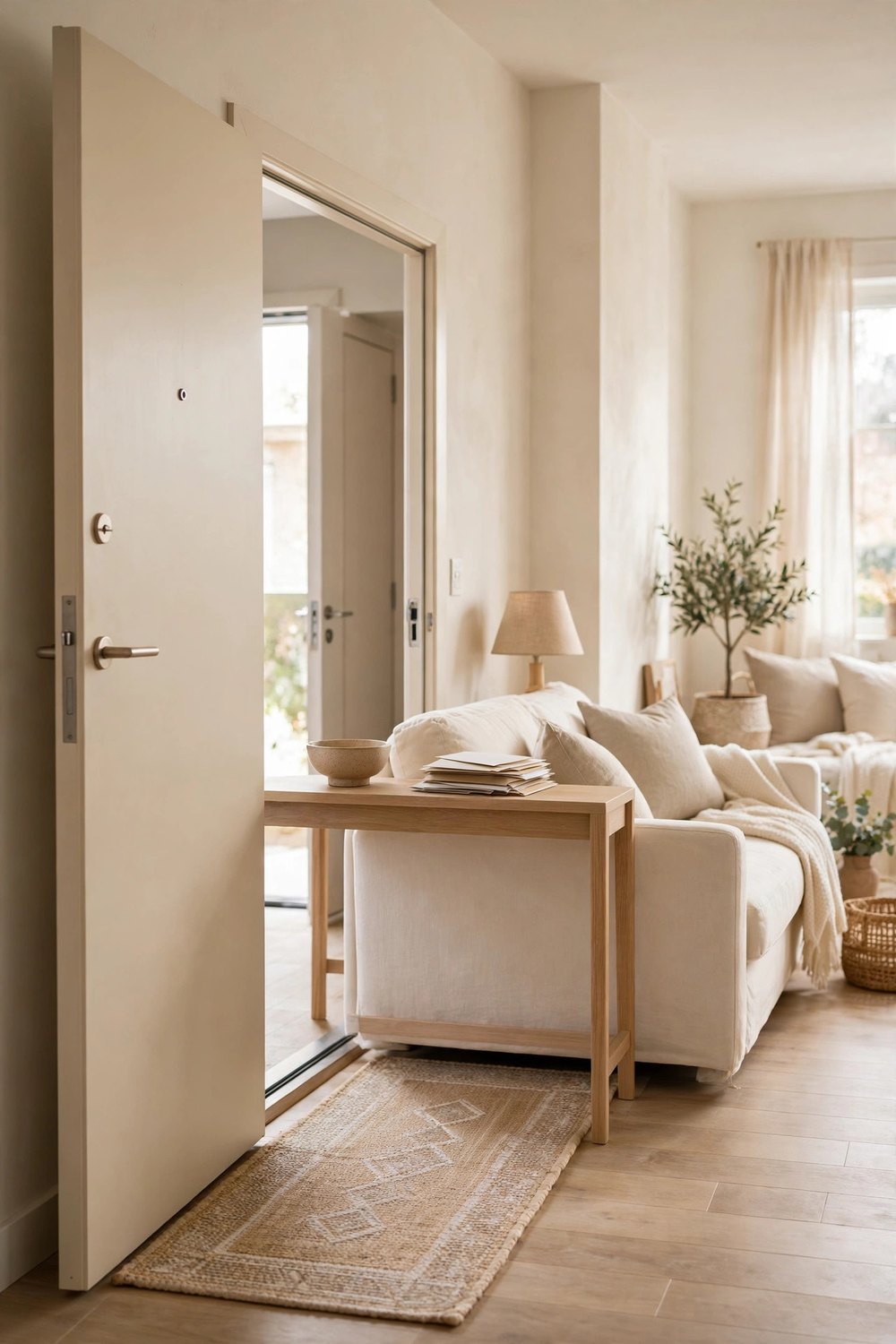
If your sofa faces into the room with its back near the door, you already own the makings of an entryway. Slide a narrow console table behind the sofa and that strip of floor instantly becomes the landing zone — keys, mail, and a small lamp live there instead of scattering across the cushions. The table also gives the sofa a finished back, so the arrangement looks deliberate from every angle. Choose a depth of about 25 to 30 centimeters and the walkway stays comfortable.
2. Roll Out a Runner to Fake a Hallway
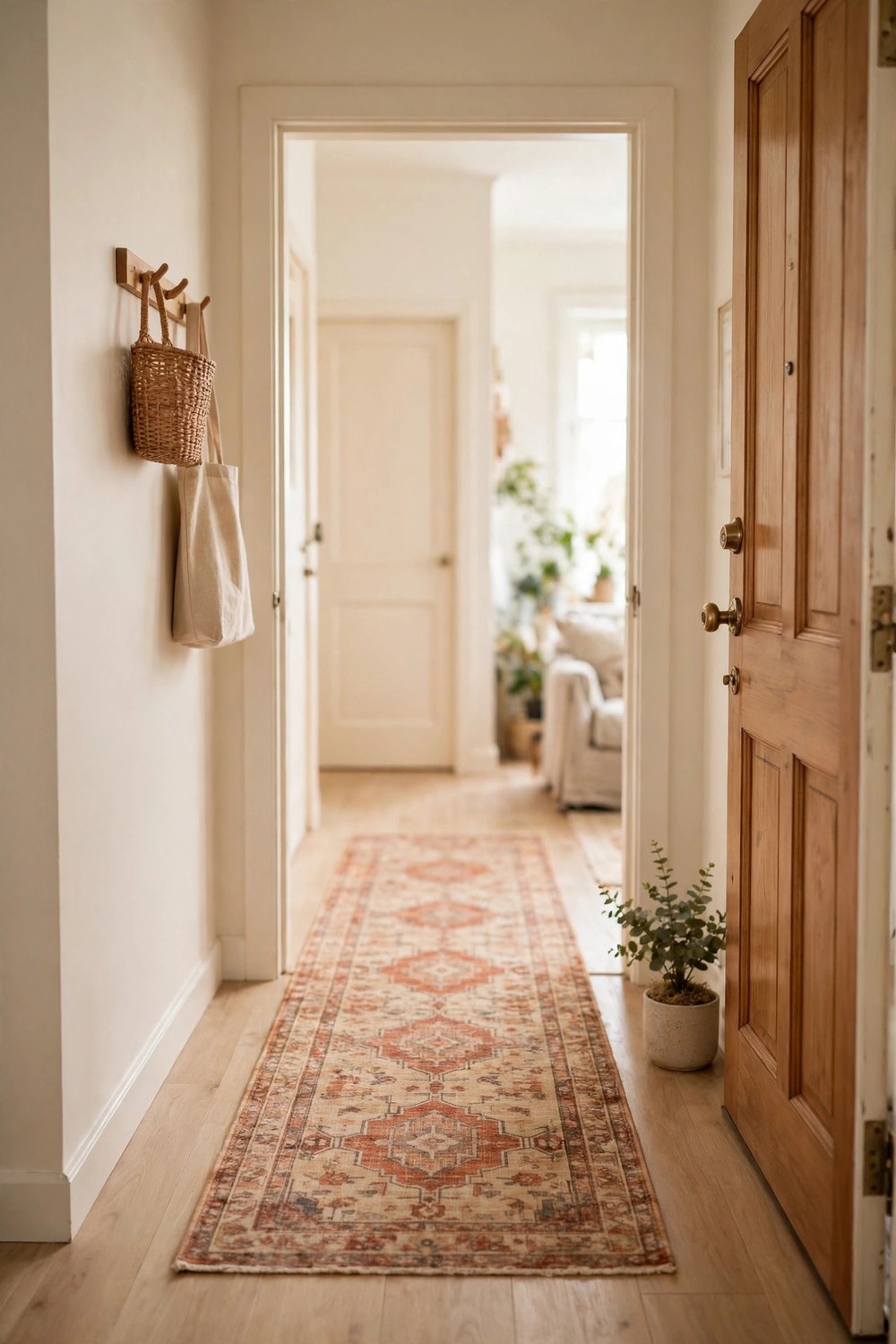
A runner rug is the cheapest hallway you will ever build. Lay one from the front door toward the room and the floor itself starts telling a story: this strip is for arriving, the rest is for living. A washable runner in a warm vintage-look pattern hides the heavy traffic this spot gets and catches the worst of the dirt before it reaches your main rug. Keep it flat-woven so the door swings clear and shoes do not trip on a pile.
3. Build a Bench-and-Hooks Corner by the Door
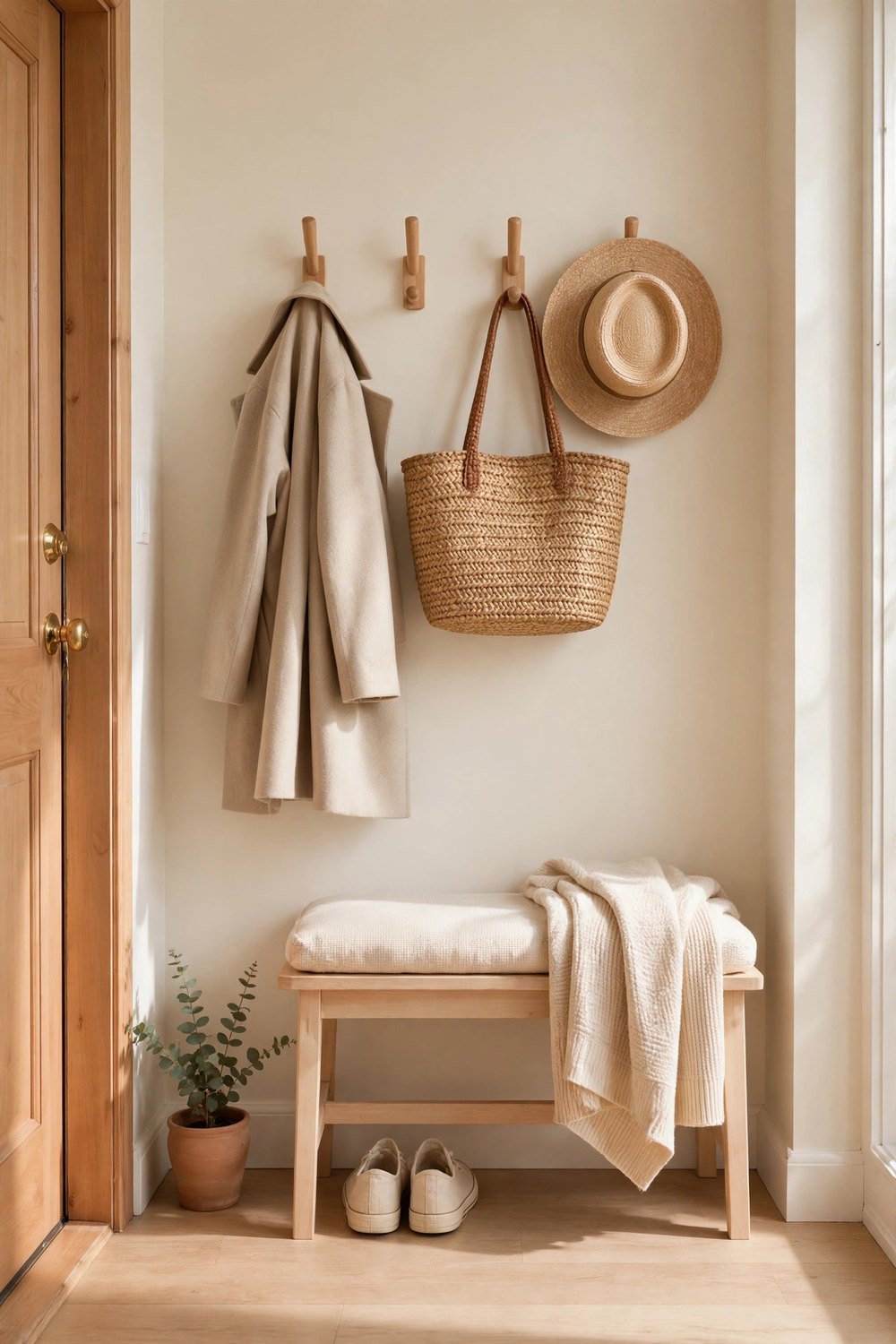
One small bench plus a row of hooks above it is a complete entryway in about a meter of wall. The bench gives you somewhere to sit while shoes go on and off, the hooks hold coats and bags at grab-and-go height, and shoes tuck neatly underneath. Add one cushion and a folded throw and it reads as a styled corner rather than storage. This is the setup guests understand instantly, which is exactly what an entry should be.
4. Line the Wall with a Peg Rail for Coats and Bags
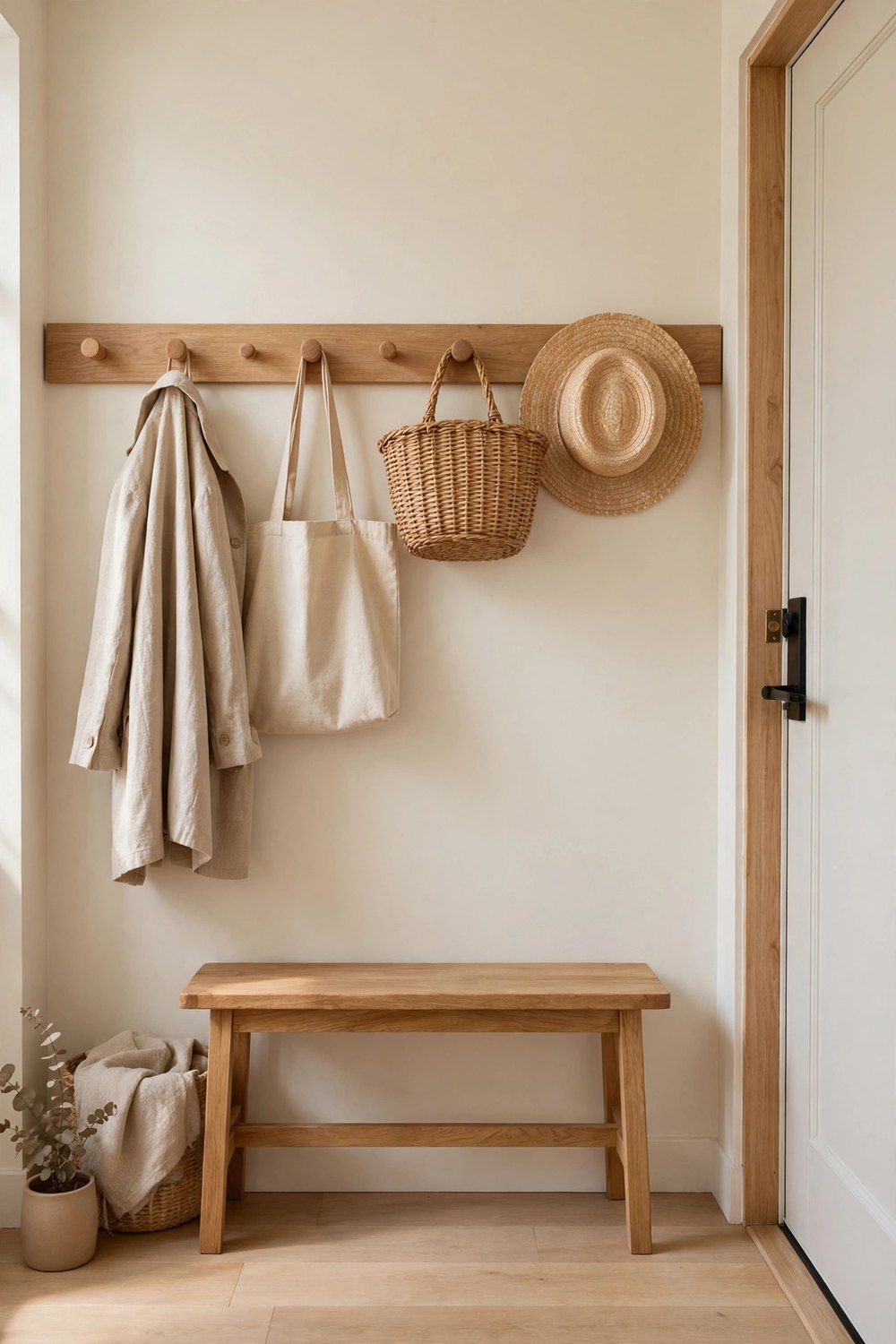
A peg rail is the renter-friendly classic: one slim board, a row of sturdy pegs, and every coat, hat, tote, and dog leash finally has an address. Mount it at shoulder height along the wall beside the door, or use removable hooks in the same neat row if drilling is off the table. Stagger what you hang — a coat, a basket, a hat — and it looks styled instead of crowded. Wood pegs in a warm finish suit a cozy apartment far better than chrome hardware.
5. Hang a Mirror by the Door for Light and Last Checks
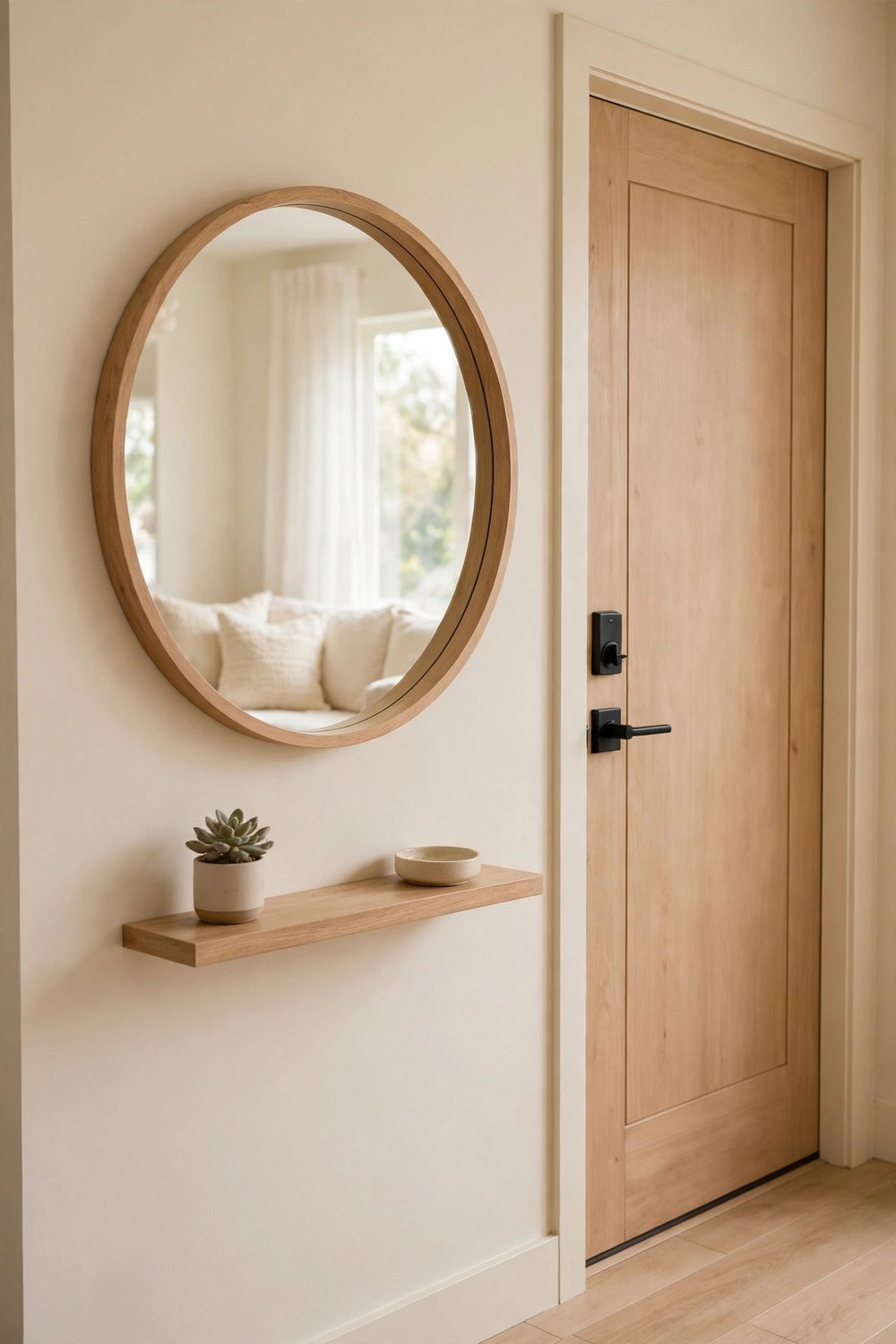
Every real entryway has a mirror, and a no-hallway apartment needs one even more. Hung beside the door, it gives you the last check on the way out and bounces daylight from the room back into the darkest corner of the apartment. A round or arched shape softens all the straight lines of doors and shelves, and a light wood or warm metal frame ties it to your other pieces. Lean a small one on the console if wall space is tighter than floor space.
6. Choose a Narrow Tilt-Out Shoe Cabinet
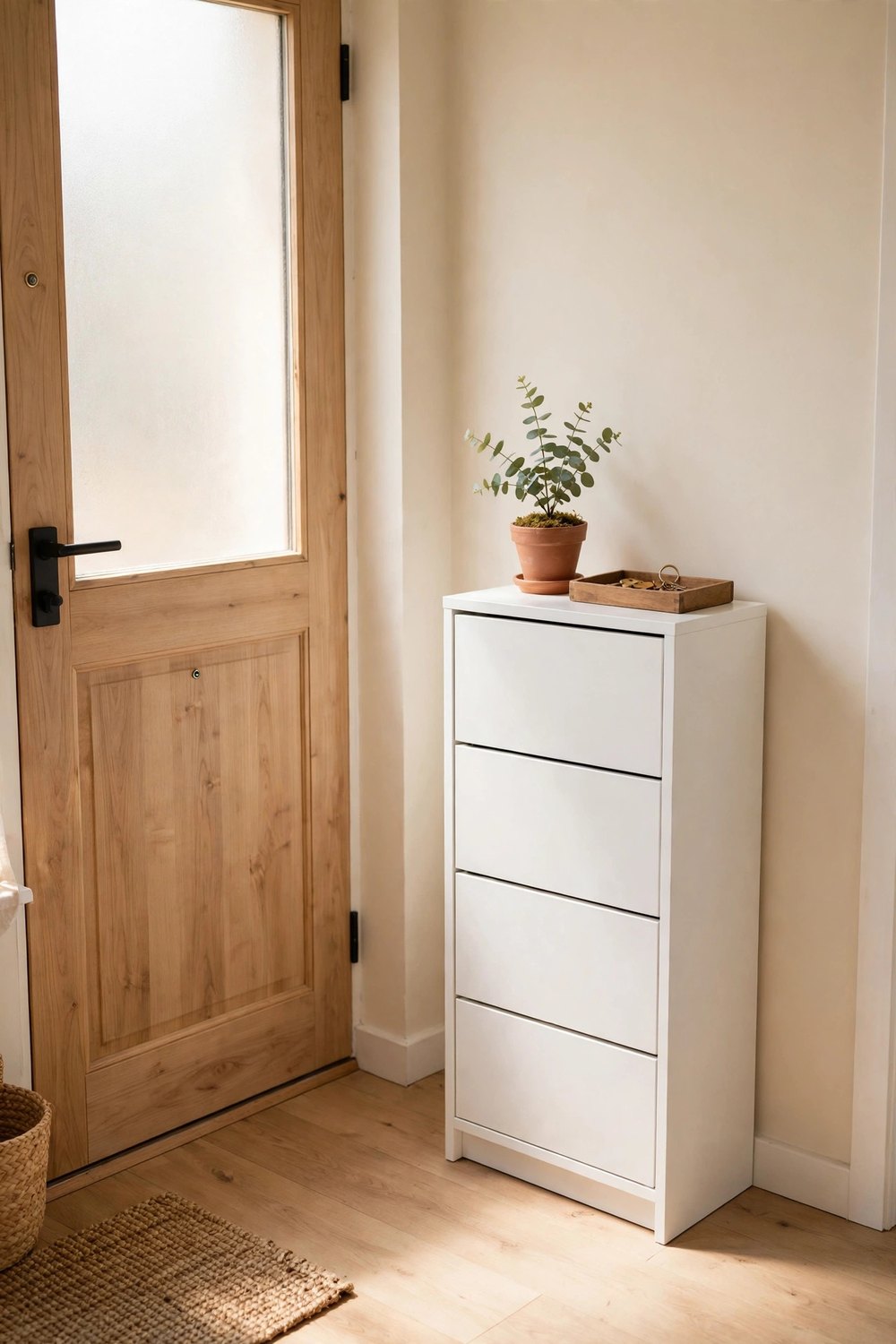
Shoes are the first thing to overrun a door that opens into the living room, and a tilt-out shoe cabinet is the slim answer. At only about 17 centimeters deep, it hugs the wall, hides six to ten pairs behind clean fronts, and gives you a narrow top surface for keys and a small plant. Closed, it looks like a simple sideboard; open, it swallows the whole shoe pile. Measure your door swing before you place it and the corner will work like it was built in.
7. Make a Landing Strip with a Basket and a Key Tray
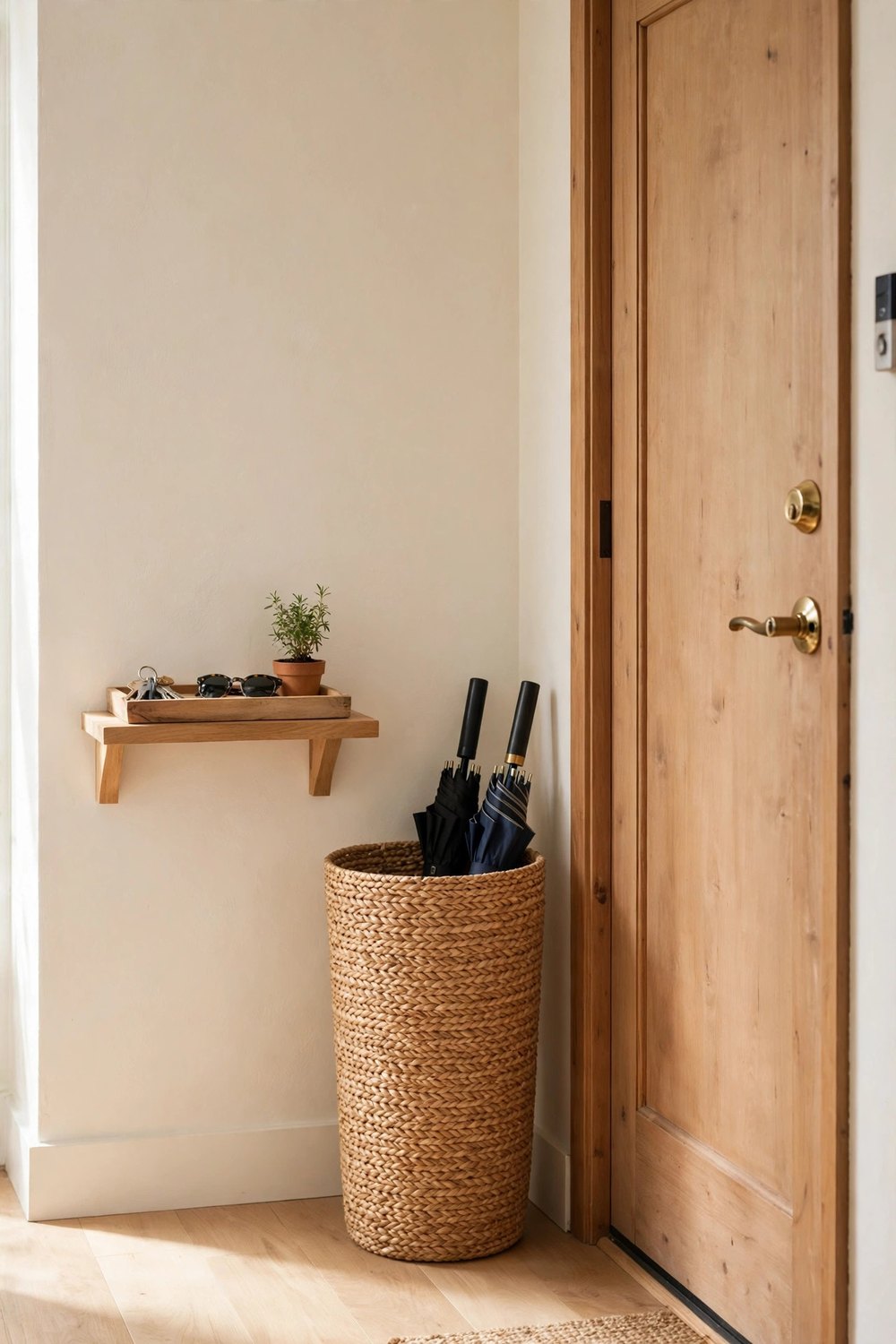
Keys, sunglasses, mail, and umbrellas need one small home or they colonize the whole room. A woven umbrella basket standing by the door plus a shallow tray on the nearest surface — the landing strip — catches all of it in the first thirty seconds after you walk in. The rule that makes it work: everything lands there, every time, no exceptions. It takes a week to become a habit and about a day to miss it if it is gone.
8. Divide the Zone with a Low Open Bookshelf
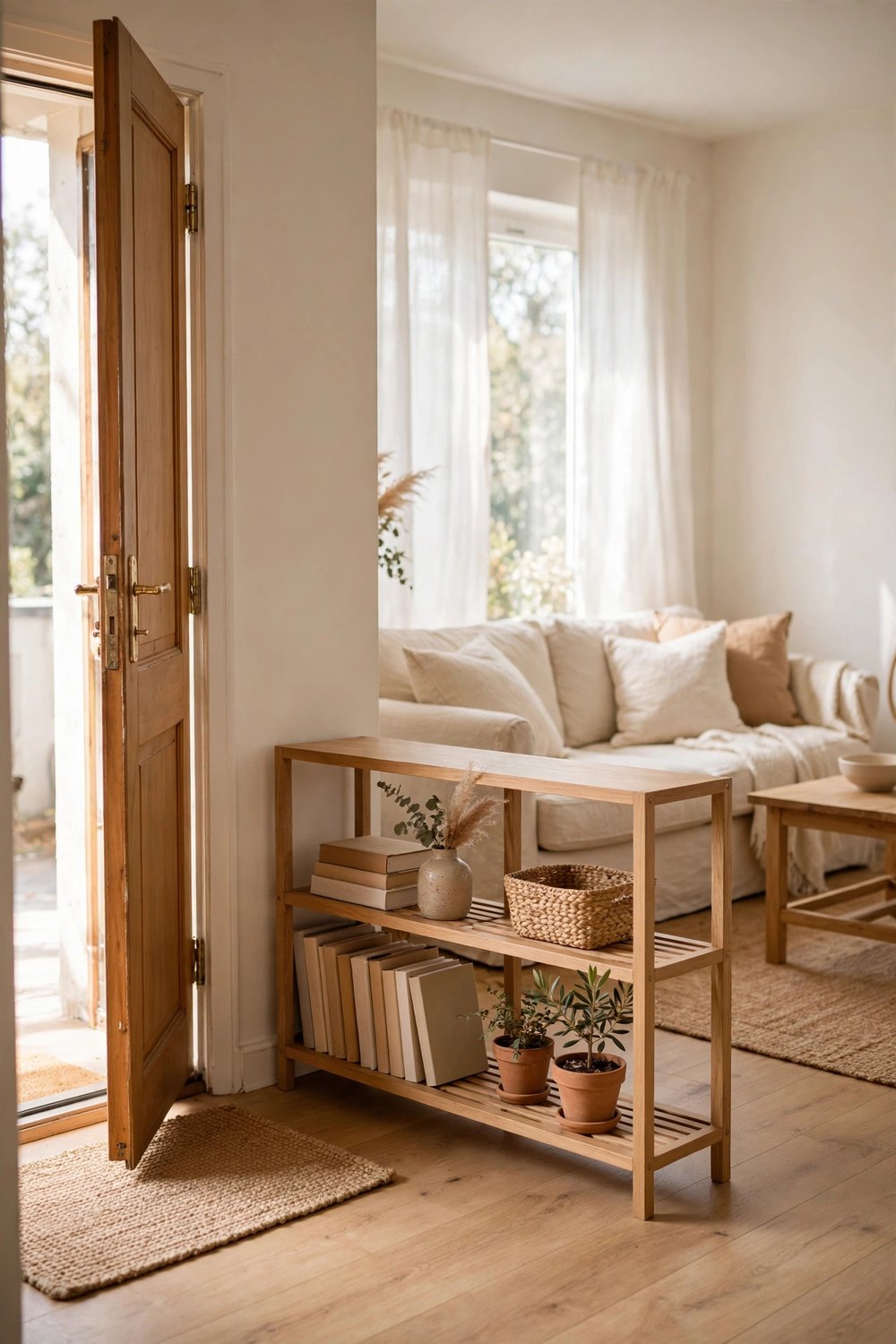
A low, open-backed bookshelf placed at a right angle to the door wall draws a line the eye believes in: entry on this side, living room on that. Because it is open on both sides, light keeps flowing and the room never feels cut in half. Style it lightly — books and a basket on the entry side, a plant and a vase toward the sofa — and keep the top clear enough to drop keys as you pass. It is a wall you can rearrange, which is the best kind in a rental.
9. Define the Entry Wall with a Small Gallery
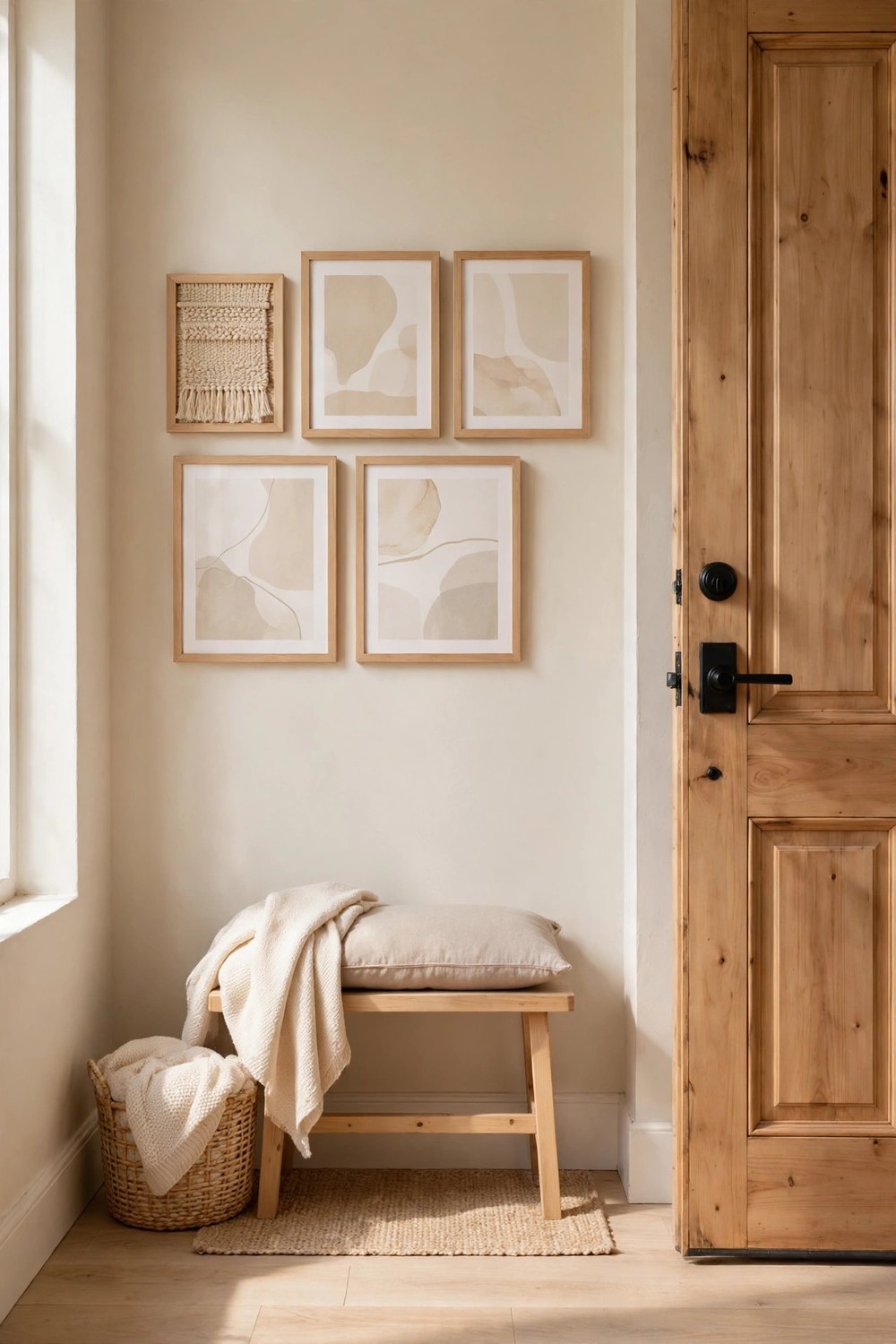
Walls speak, and a small gallery beside the door says “the home starts here.” Hang three to five framed prints, photos, or a woven piece in one tight grouping on the entry wall and that patch of room gains its own identity, separate from the living area behind you. Keep frames in one warm finish and the art in soft, calm tones so it welcomes rather than shouts. Removable strips make it a no-damage project, and you can grow the gallery as you collect.
10. Give the Entry Its Own Light
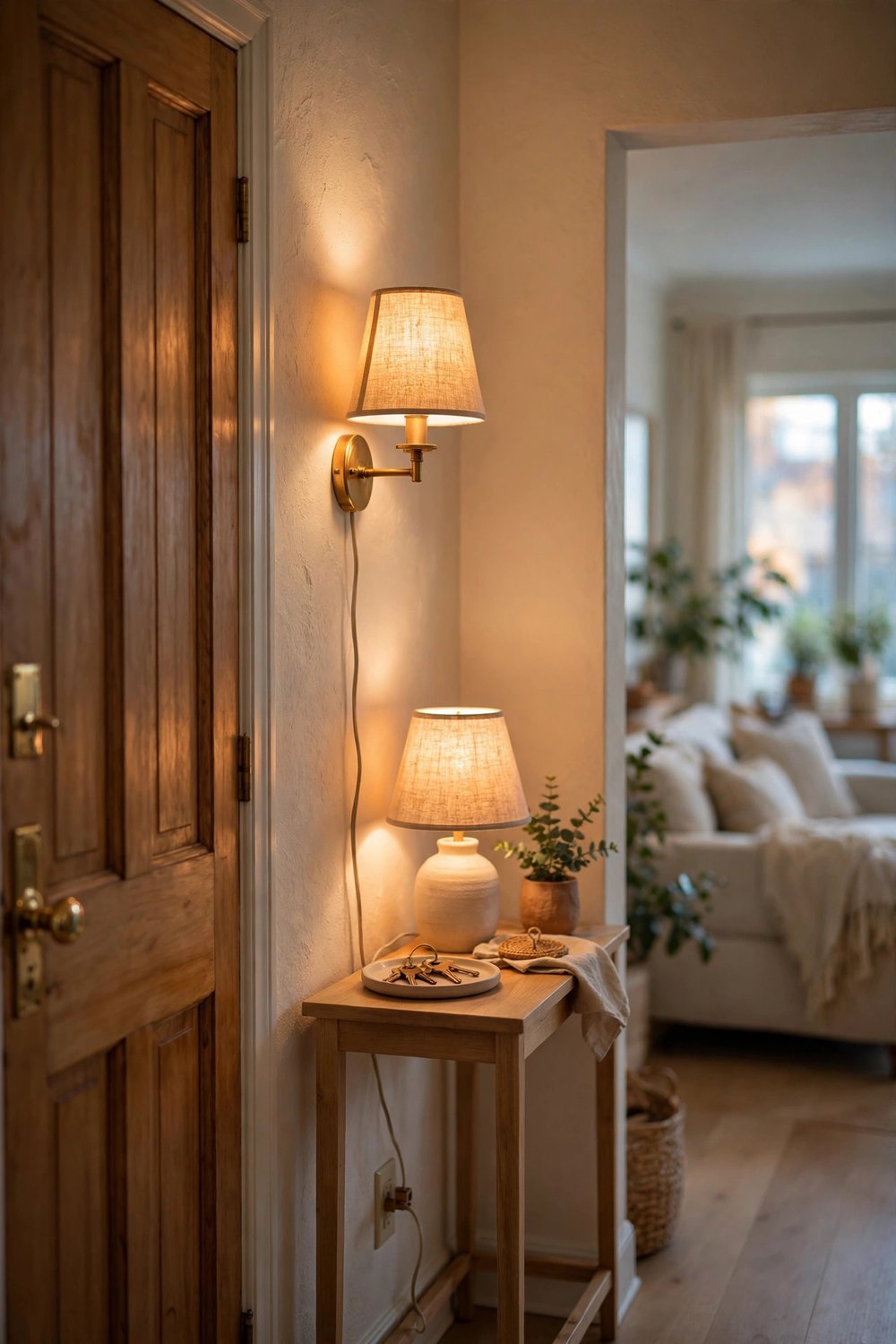
Nothing makes a corner feel like a room of its own like its own light source. A small lamp on the console, a plug-in wall sconce beside the door, or a pendant hung over the landing zone gives the entry a warm pool of light that says you have arrived somewhere. On a timer or a smart plug, it also means you never walk into a dark apartment. Choose a warm bulb and a soft shade, and even a half-meter of floor feels intentional at night.
11. Tuck a Coat Stand into the Corner
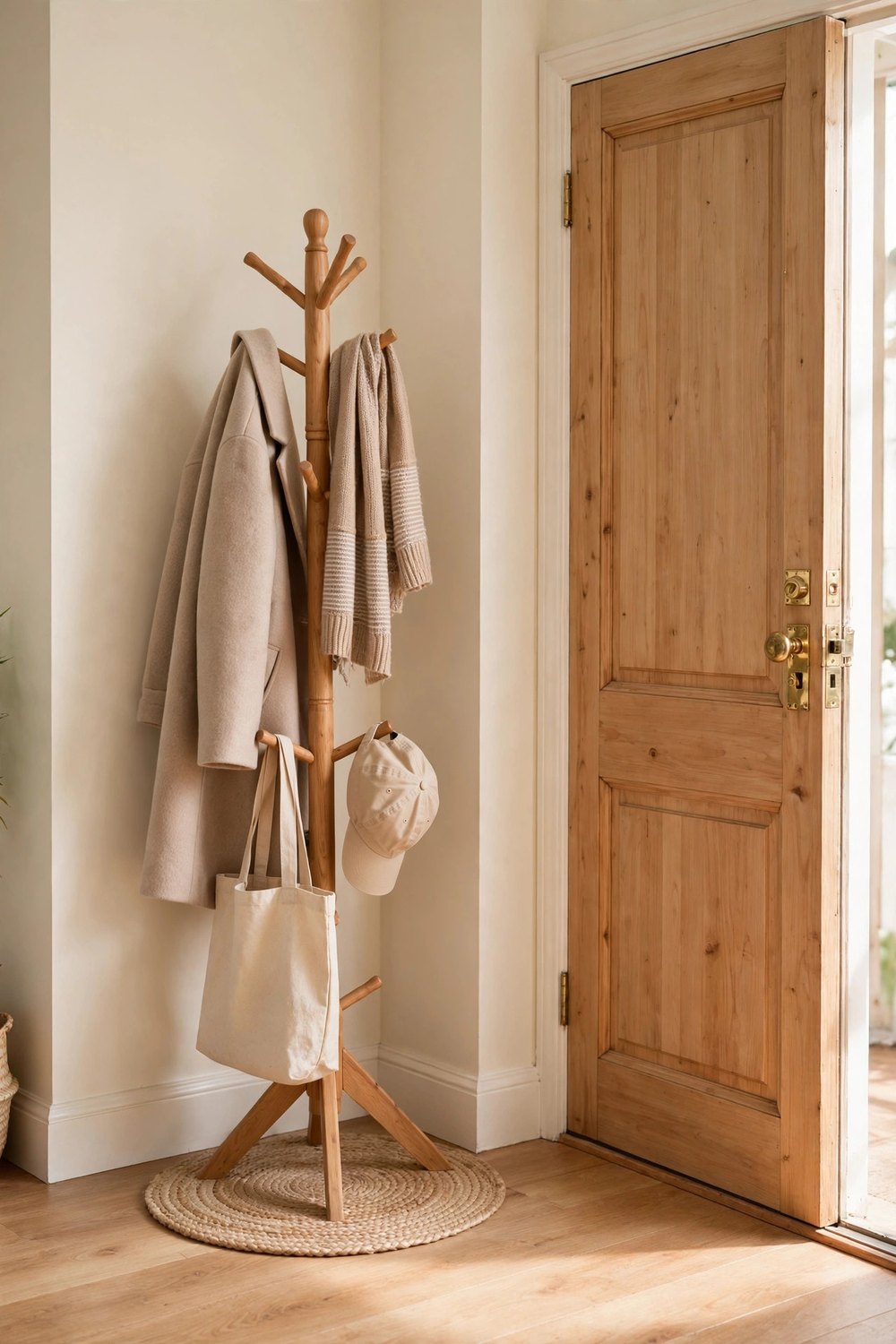
If wall space is truly zero, the corner by the door can still hold a classic coat stand. A wooden stand takes up about a dinner-plate of floor, holds coats, hats, and bags at every height, and turns the deadest corner in the apartment into the hardest-working one. It suits guests, too — no one has to ask where to put their coat. Choose a design with a heavy, stable base and pegs at two heights so kids and shorter guests are covered.
12. Mark the Spot with a Doormat and a Plant
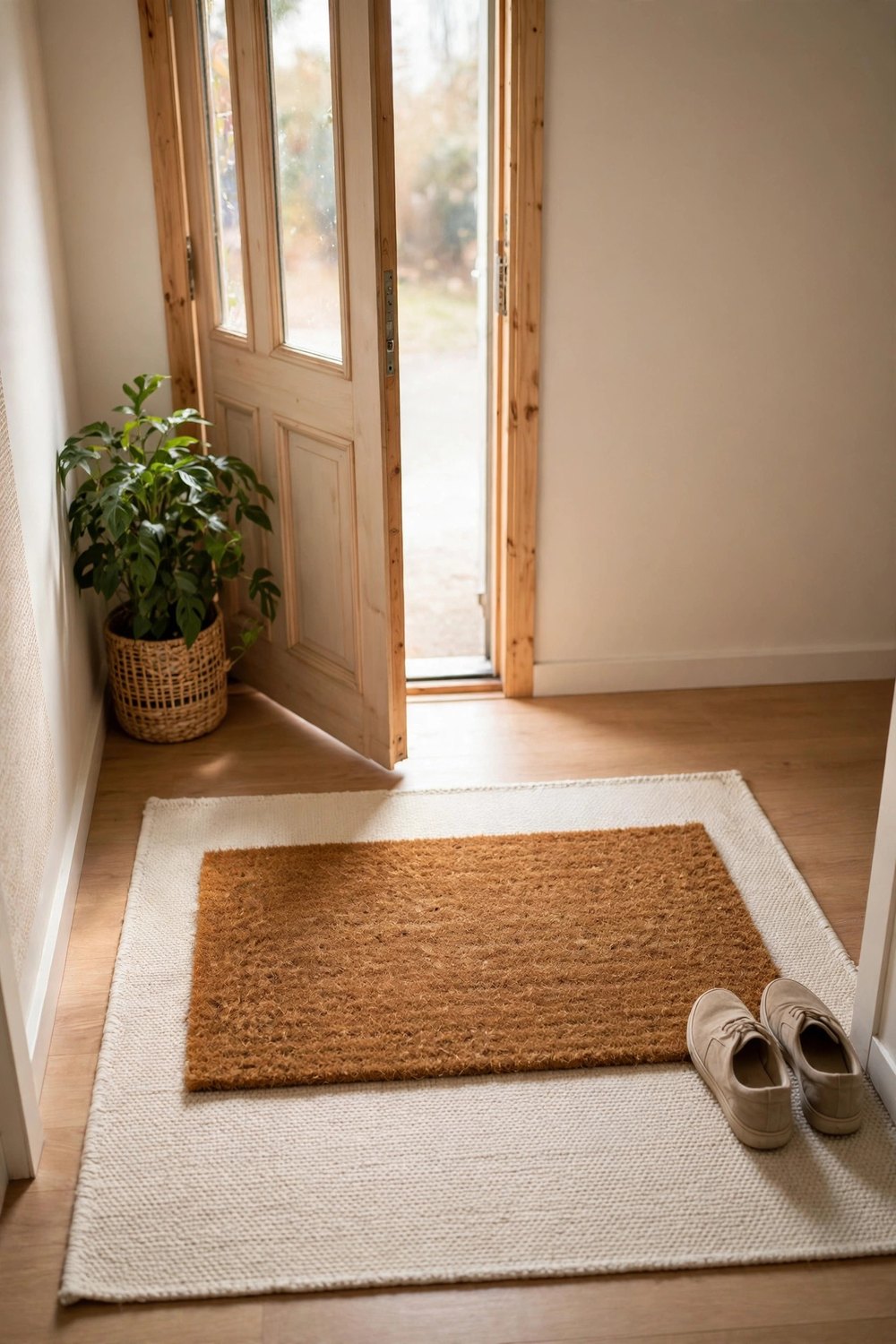
Sometimes the simplest signals are the strongest. A good doormat inside the door — layered over a larger washable rug if the floor is cold — draws a clear border around the landing zone, and a plant in the corner beside it softens the whole threshold into something green and welcoming. Together they tell your feet and your guests exactly where outside ends and home begins. It is a five-minute, two-item entryway, and it works better than it has any right to.
No hallway is not a flaw in your apartment — it is just an entryway that has not been claimed yet. Start with the signals: a rug underfoot, a hook at hand height, a tray for keys, and a light of its own, and the living room beyond them will instantly feel calmer and more like itself. Save this list to your Pinterest board so the next idea is ready when you are — and follow DecorNesti for a new cozy, space-smart list every week.

Leave a Reply