
18 Kitchen Window Ideas for Light Privacy and Style
Look, we get it. A kitchen window can feel like a tricky compromise, because you want all that lovely daylight while you cook and wash up, but you do not necessarily want neighbors or passersby watching dinner happen. If you have ever left a blind half closed all day just to feel comfortable, or lived with a bare window that felt a little exposed at night, you are definitely not alone. Most kitchens end up in that in between place by default.
That is exactly why the right window treatment matters so much here. Cafe curtains, sheer linen, woven shades, and frosted film can all give you privacy without stealing the light, and the frame, sill, and shelves around the glass can add style and storage at the same time. You will find ideas in this list that start with soft coverings, move through smart privacy options, and finish with ways to make the sill and frame work harder. Some are quick weekend swaps and some are bigger projects, and you usually do not need more than one or two.
Start by thinking about what your window really needs. If privacy is the main worry, look at the coverings and films first. If the window feels plain, the frame and styling ideas will typically help more. Take a photo in the morning and again after dark, because a kitchen window behaves very differently in both lights. Work slowly, live with one change for a few days, and let that tell you what to try next.
In This Article
- Hang Cafe Curtains at Half Height
- Layer Sheer Linen Panels for Soft Light
- Fit a Tailored Roman Shade
- Choose Woven Wood Shades for Texture
- Roll Down Bamboo Blinds When You Need Shade
- Apply Frosted Window Film for Easy Privacy
- Install Classic Plantation Shutters
- Add Stained Glass Accents for Gentle Color
- Try a Top Down Bottom Up Shade
- Use Reeded Glass Film for a Vintage Feel
- Grow a Fresh Herb Garden on the Sill
- Build Open Shelving in Front of the Glass
- Make a Deep Sill Work as Storage and Display
- Add a Garden Window for Extra Green Space
- Frame the Window in Bold Black
- Hang a Relaxed Valance for a Finished Top
- Style the Sill With Cookbooks and Ceramics
- Leave It Bare for Clean Maximum Light
Soft Coverings That Keep the Light
The easiest place to start is with fabric and natural fibers, because they soften a kitchen full of hard surfaces and they rarely block much daylight. These first five ideas cover the lower half, the whole window, or just the glare, depending on what you need. They are usually affordable, washable, and simple to change when your taste shifts.
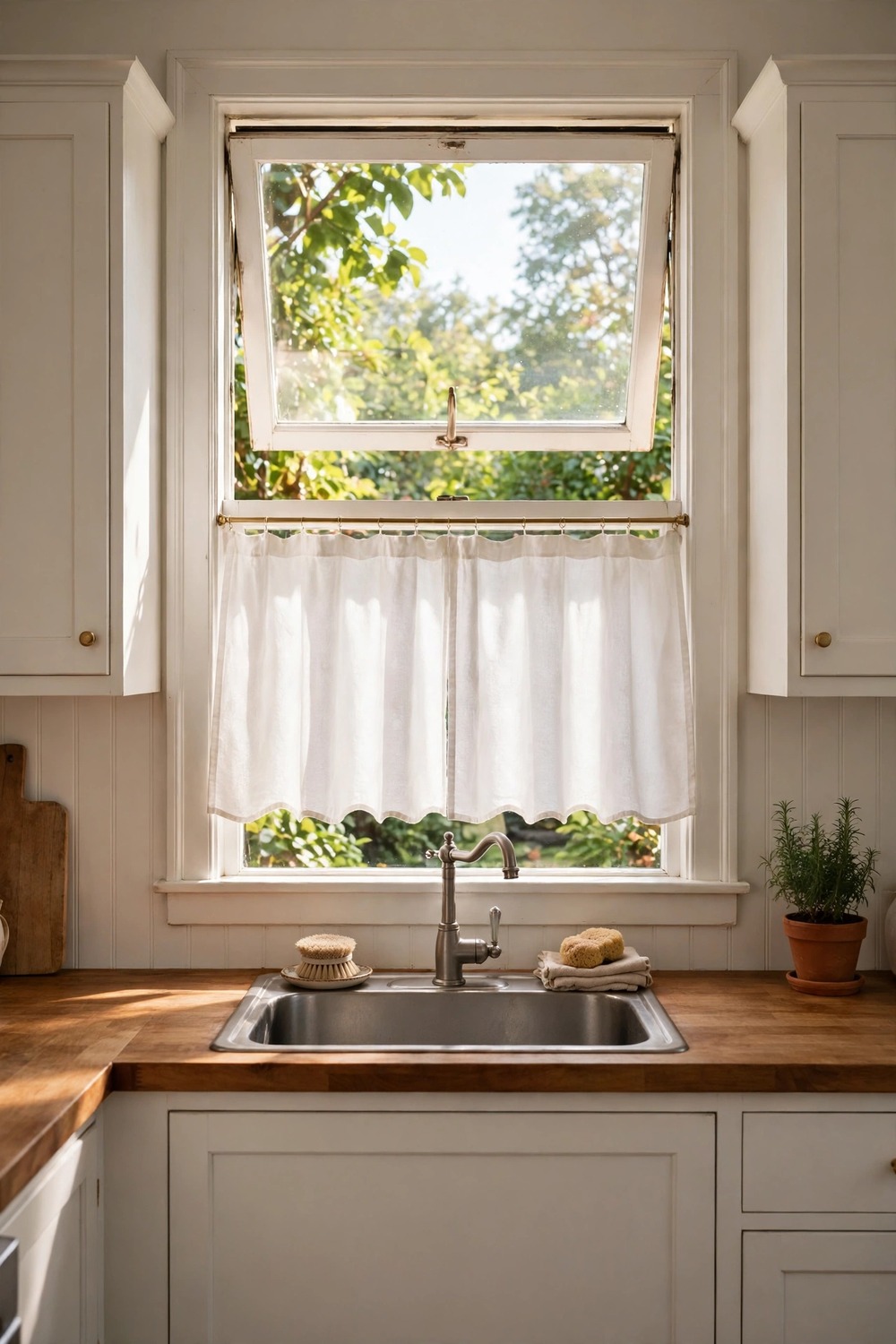
1. Hang Cafe Curtains at Half Height
Cafe curtains are usually the perfect answer for a kitchen window, because they cover the lower half where privacy matters most and leave the top open for daylight and a view of the sky. Hung on a slim rod across the middle of the frame, they feel cheerful and relaxed rather than formal, and they suit cottages, rentals, and modern kitchens equally well. Choose a light cotton, a soft linen blend, or a simple ticking stripe that you can toss in the wash, since kitchen fabric will typically catch splashes and cooking steam. Mount the rod inside the frame if you want a neat built in look, or just outside it if your window is shallow. A gentle gather looks fuller and gives better coverage than a panel pulled flat. If your sink sits right below the window, keep the hem a few inches above the sill so it stays dry and clean.
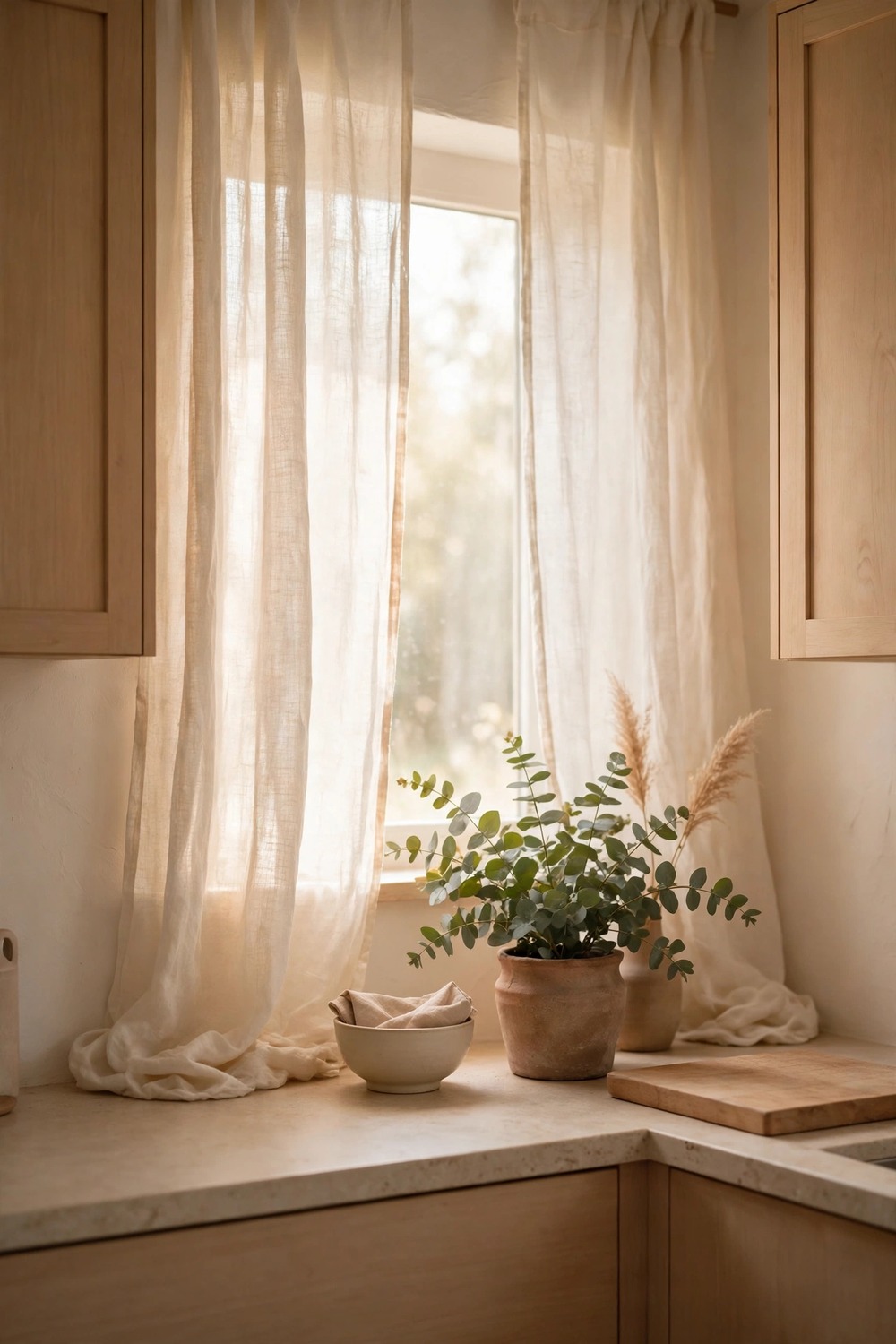
2. Layer Sheer Linen Panels for Soft Light
Sheer linen panels give you that soft, glowing light that makes a whole kitchen feel calmer, while still blurring the view in from outside during the day. The natural weave diffuses harsh sun, softens the edges of cabinets and counters, and adds a little movement when a breeze comes through an open window. Choose a warm white, a natural oat tone, or a pale stone color that works with your walls rather than fighting them. Hang the panels from the top of the frame or a little above it, which usually makes the window look taller and lets in more of that pretty filtered light at the top. Let them hang in easy folds instead of pulling them tight. At night sheers alone will not hide much once the lights are on, so pair them with a simple blind behind if you need evening privacy too. Wash them gently and hang them back up slightly damp for the softest drape.
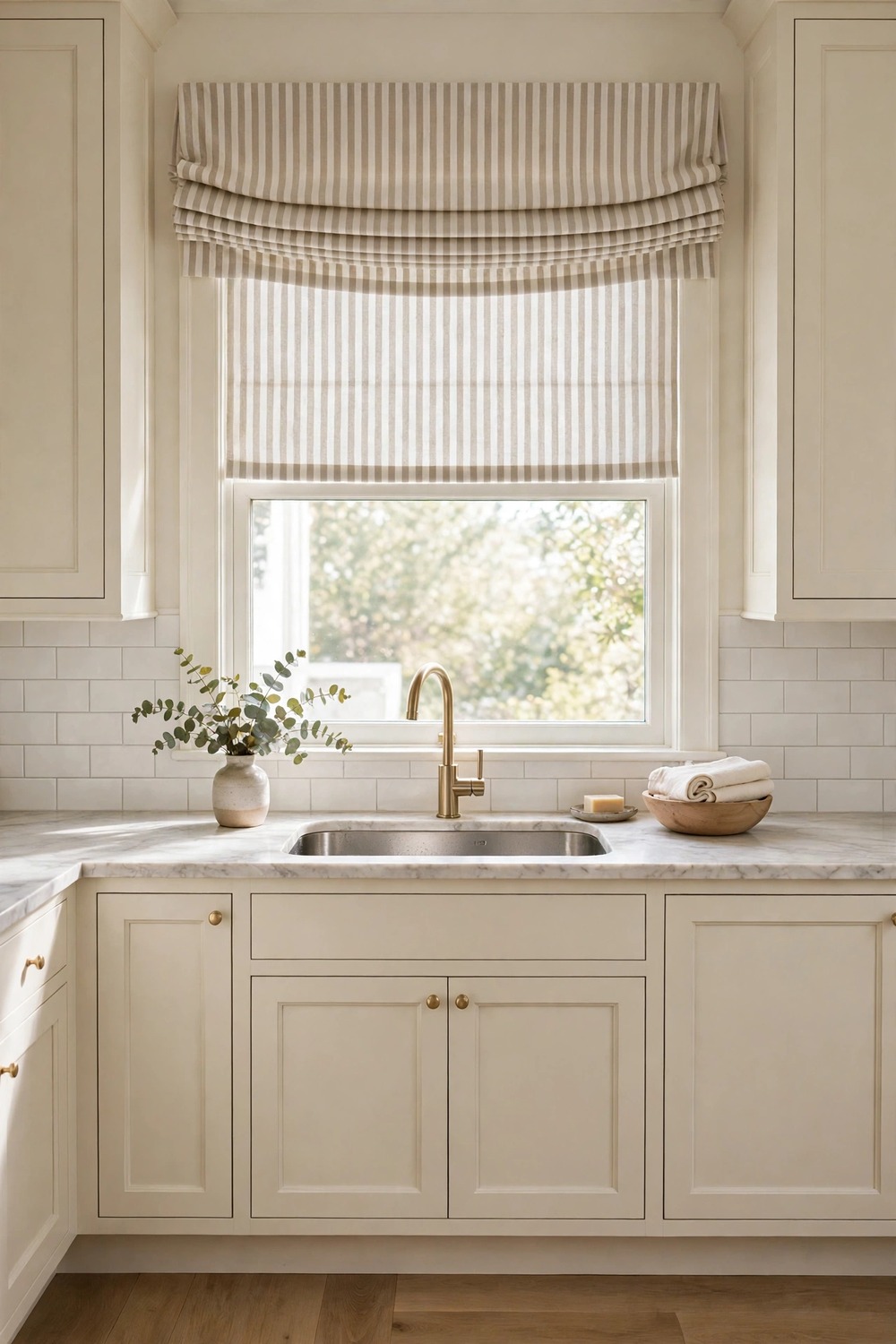
3. Fit a Tailored Roman Shade
A tailored Roman shade brings a clean, finished look to a kitchen window without the fuss of long curtains near counters and sinks. When it is raised, the fabric stacks into soft neat folds at the top and lets in nearly all your light. When you lower it, you get full coverage in one smooth panel, which is handy for bright afternoons and darker evenings alike. Choose a washable cotton or linen blend in a plain neutral, a small stripe, or a quiet check that picks up a color already in your room. An outside mount just above the frame typically makes a small window look bigger and avoids blocking glass when the shade is up. Keep cords tidy and consider a cordless style if little hands visit your kitchen often. Because the shade sits close to the glass, measure carefully and leave a little breathing room so it moves freely.
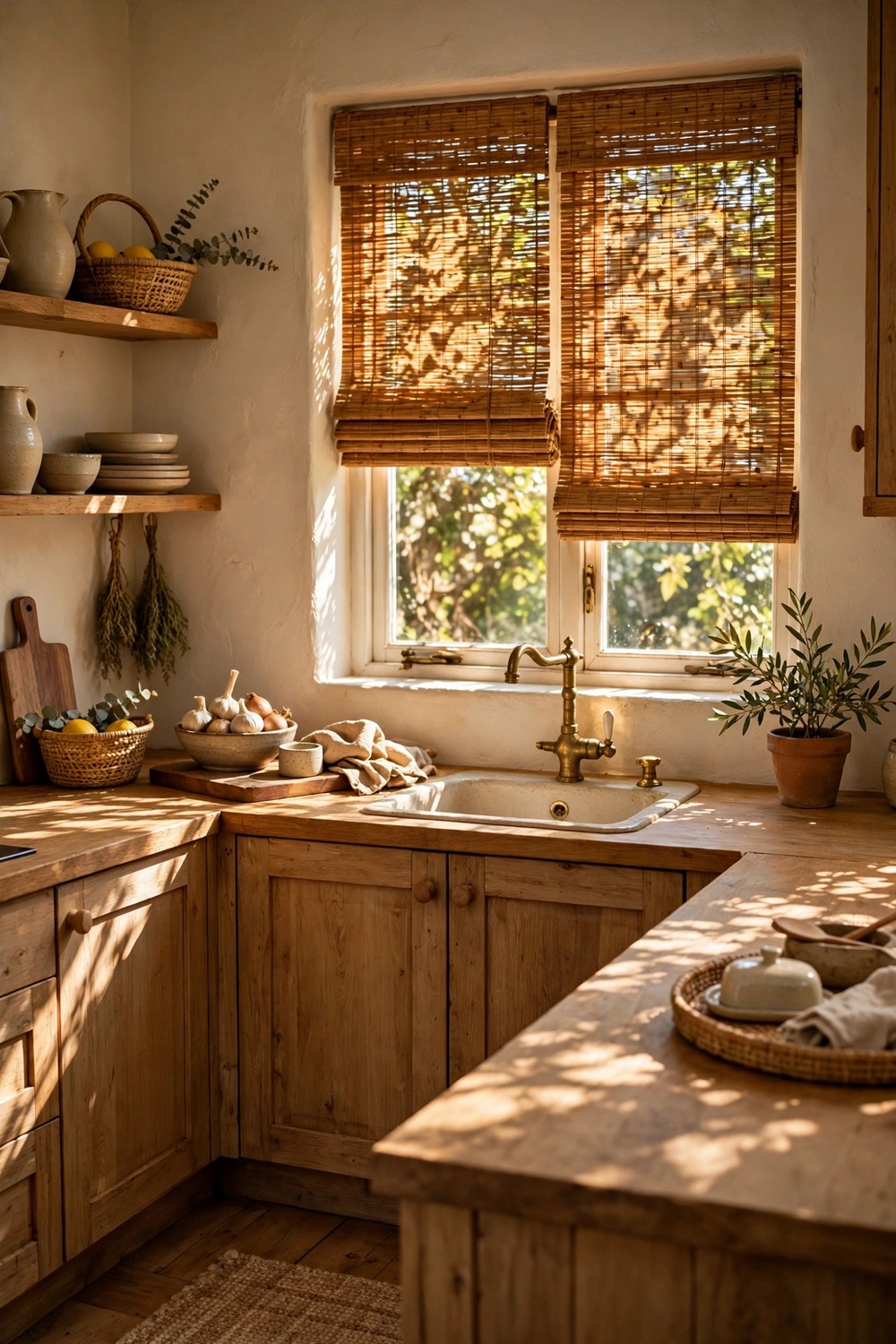
4. Choose Woven Wood Shades for Texture
Woven wood shades add warm natural texture to a kitchen that can otherwise feel a little flat with painted cabinets and smooth stone. Made from bamboo, grasses, and reeds woven together, they filter light into a gentle dappled glow and give you good daytime privacy while still letting the room breathe. The honey and wheat tones usually sit happily beside wood floors, open shelves, and brass or black hardware, so they rarely clash. If your kitchen faces a busy street, add a simple privacy liner on the back so shapes do not show through after dark. Raised during the day, the shade forms a chunky natural valance at the top of the window that looks intentional all on its own. Keep the weave tone close to another natural finish in the room, like a cutting board or a stool, and the whole space will feel more connected without much effort.
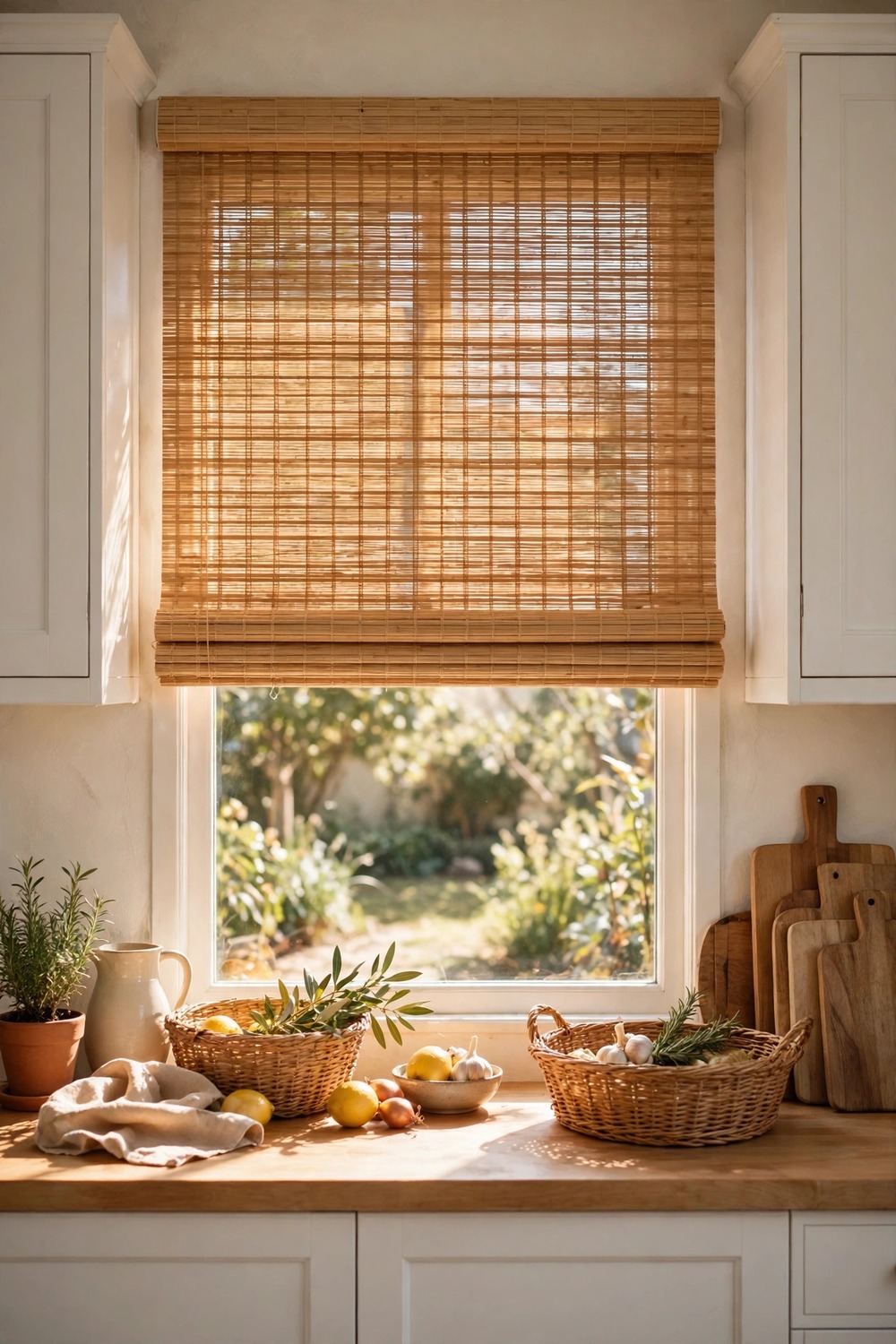
5. Roll Down Bamboo Blinds When You Need Shade
Bamboo roller blinds are the relaxed, budget friendly workhorse of kitchen windows, because you can roll them to exactly the height you need and roll them right away again when the sun moves. Half down, they block glare at counter height and give you privacy where it counts. Fully up, they almost disappear into a slim roll at the top of the frame. The light natural tone warms up white and gray kitchens and pairs well with plants, woven baskets, and wooden boards you probably already own. Most styles mount with just a couple of brackets, which makes them a kind option for renters and first projects alike. Wipe them down regularly with a dry or barely damp cloth, since kitchen air can leave a fine film on natural materials over time. If one blind looks a little plain, layer a short sheer panel in front for softness.
Privacy Options That Do Not Darken the Room
If soft fabric is not enough on its own, these next ideas build privacy right into the window itself. Film, shutters, and clever shade styles let light pour in while shapes and details stay blurred from outside. Most of them are especially helpful for street facing kitchens, close neighbors, and windows over a busy sink.
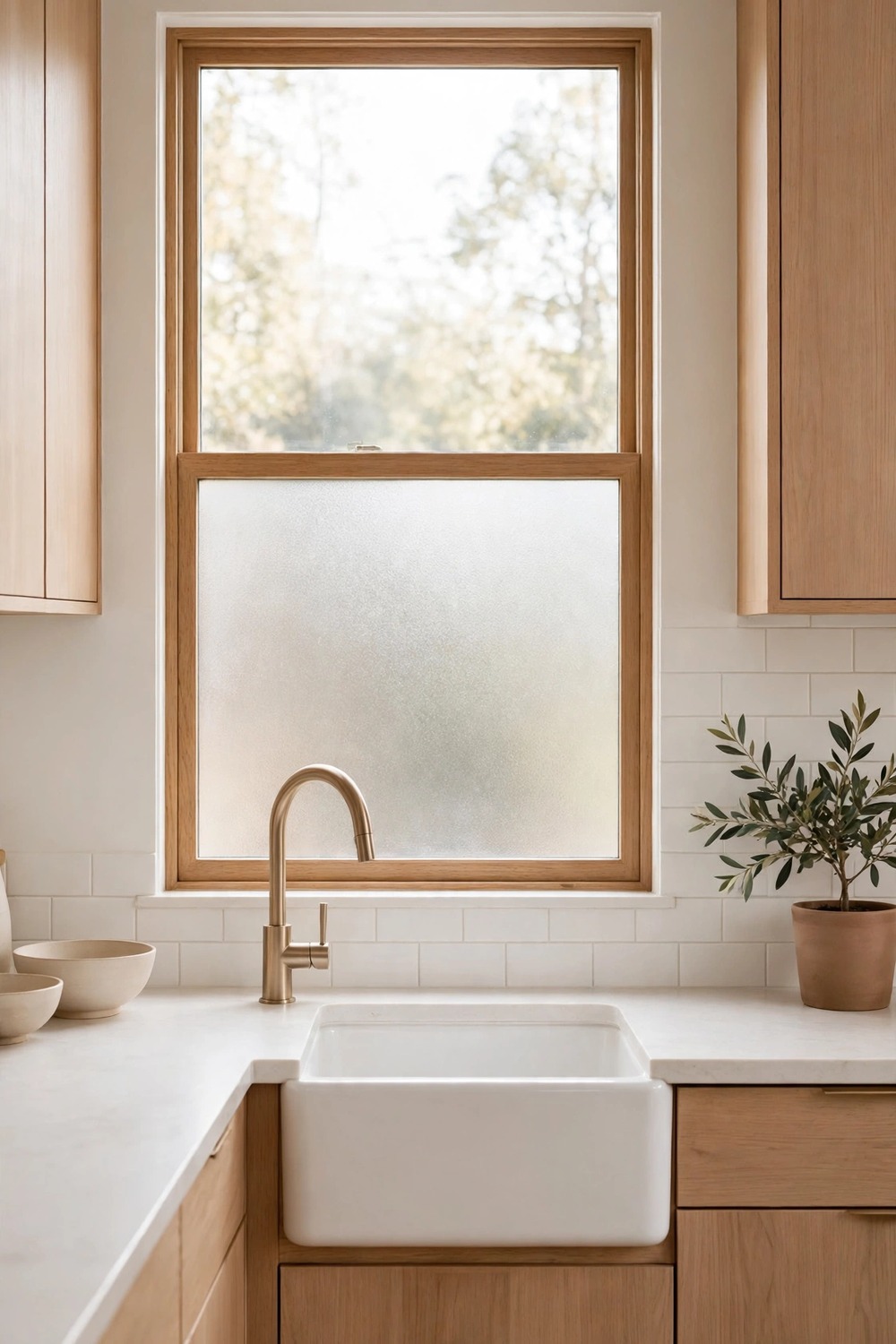
6. Apply Frosted Window Film for Easy Privacy
Frosted window film is often the simplest privacy fix you can try, because it sticks directly to the glass, blurs the view both ways in a soft even way, and still lets in a generous amount of daylight. You can cover the whole pane for maximum calm or just the lower half if you want to keep a clear view at the top, which usually works beautifully over a sink. Most films apply with water and a squeegee and can be removed later without damage, so they are a friendly choice for renters and cautious decorators. Take your time with measuring and keep a spray bottle handy while you work, because patience is what gives you a smooth bubble free finish. Clean the glass really well first, since any dust under the film will show. Once it is up, you can skip curtains altogether and enjoy how clean and bright the window feels.
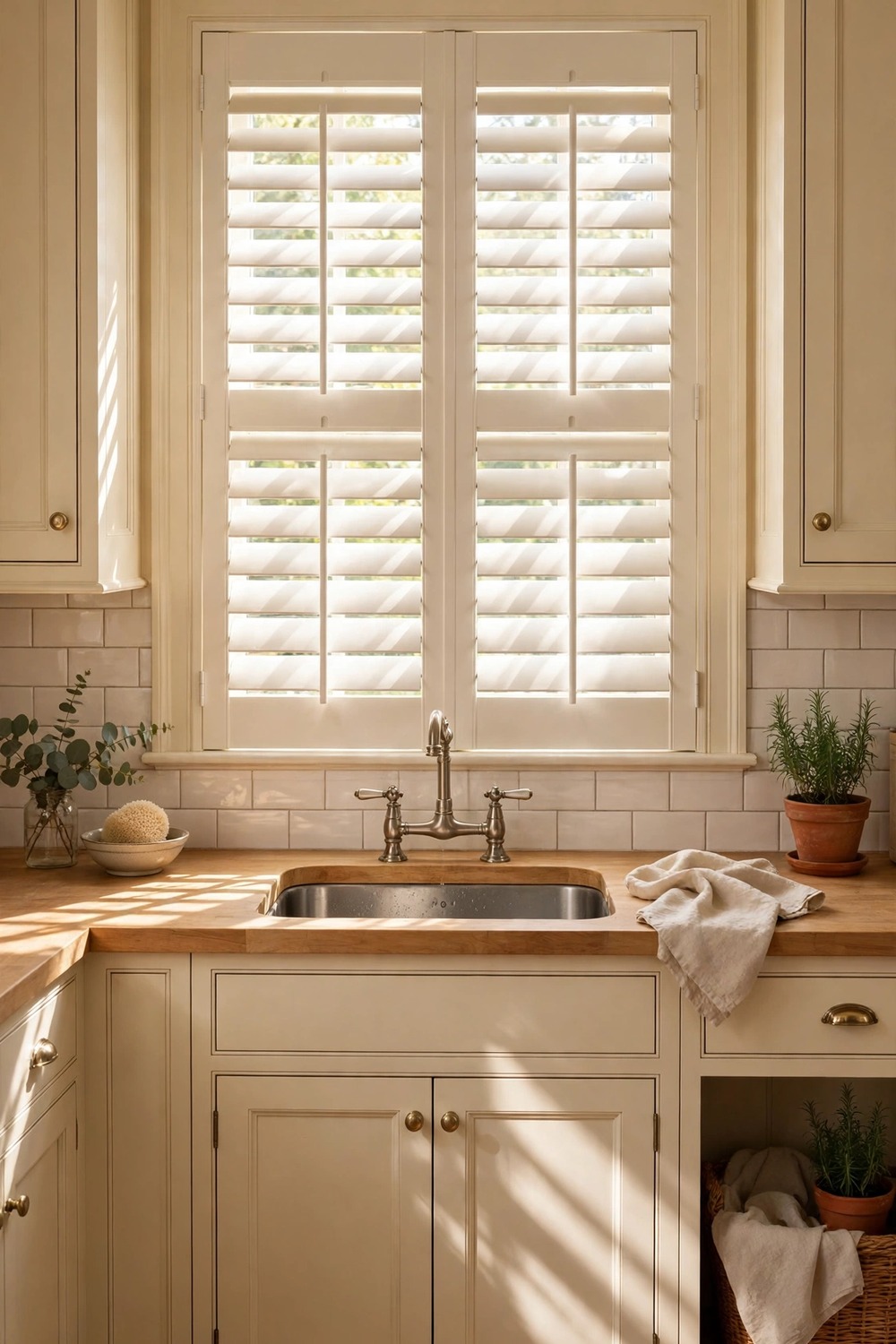
7. Install Classic Plantation Shutters
Plantation shutters give a kitchen window a crisp, built in look and put you properly in charge of light and privacy at the same time. You can tilt the louvers to bounce daylight up toward the ceiling, open the top half while the bottom stays angled, or close everything for a quiet evening. That flexibility is hard to beat in a room you use from early morning coffee to late night tidying. Painted white or a soft warm neutral, shutters suit almost every kitchen style and wipe clean with a cloth, which matters in a splash zone. They are a bigger investment than fabric, and they need accurate measuring to sit neatly inside the frame. Choose a moisture friendly material if your window sits right over the sink or near a steamy stove. Once they are in, most people find they stop thinking about the window altogether, and that is a good sign.
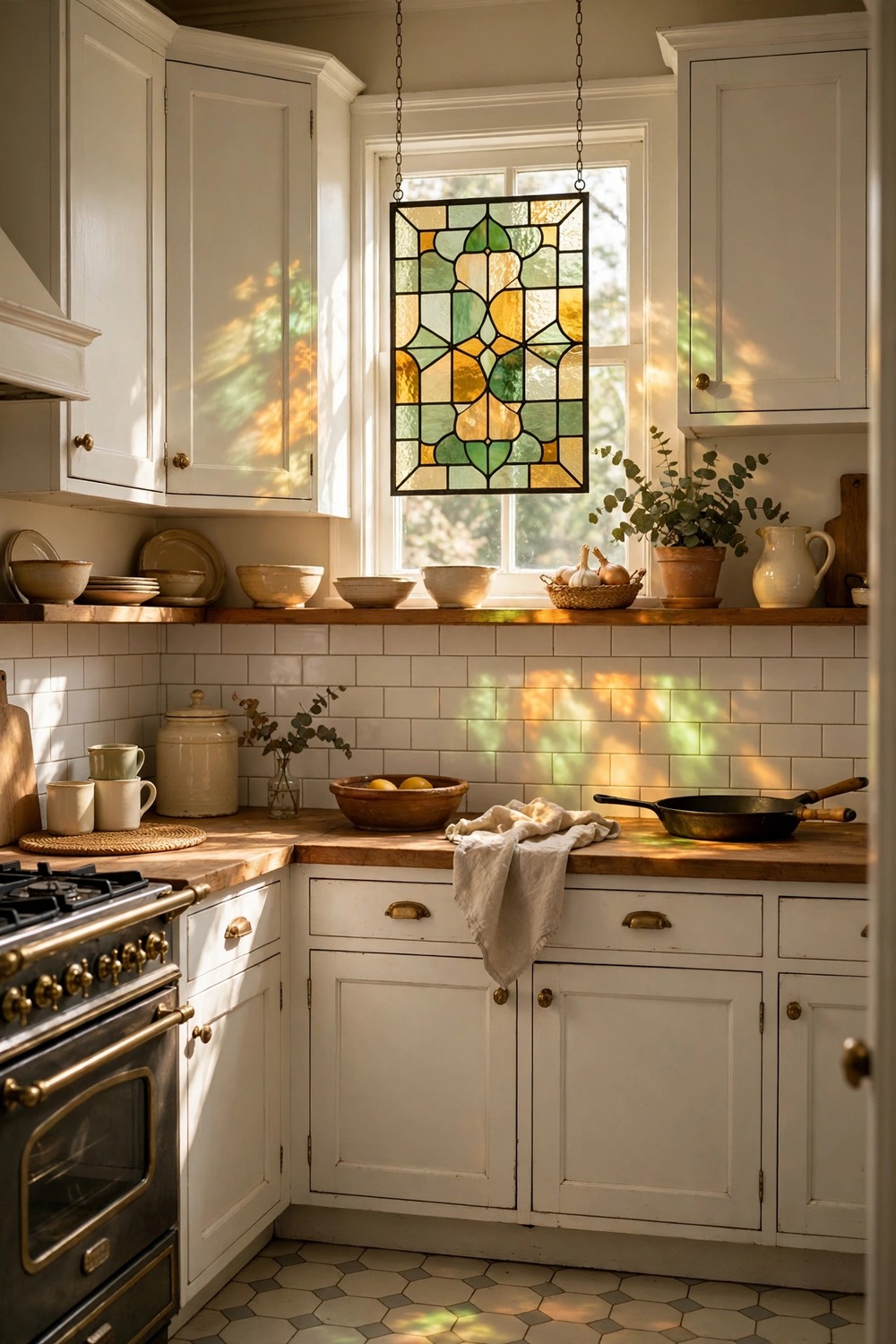
8. Add Stained Glass Accents for Gentle Color
A stained glass accent brings soft color and pattern to a kitchen window while quietly solving the privacy puzzle, because textured and colored glass blurs shapes without darkening the room. You do not need to replace a whole window to get the effect. A hanging panel in front of the upper pane, a small transom style insert, or a removable stained glass look film can all give you that gentle glow when the sun comes through. Keep the palette close to colors already in your kitchen, perhaps soft green, warm amber, and clear textured pieces, so it feels collected rather than busy. This idea works especially well in older homes and plain new builds that need a little character. Hang a panel securely with hooks rated for its weight and leave a small gap so air can move behind it. On a bright morning, the colored light on a counter is honestly lovely.
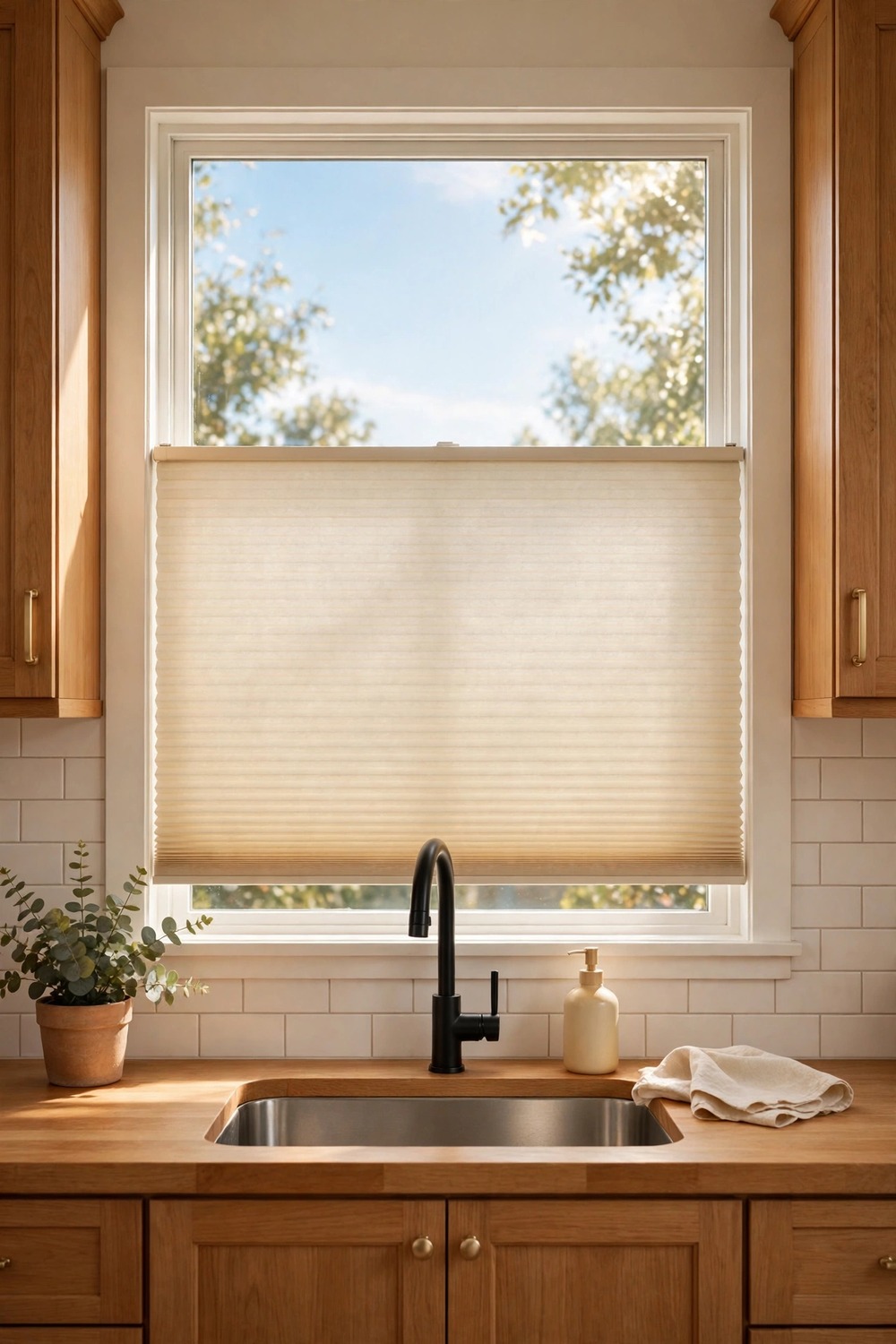
9. Try a Top Down Bottom Up Shade
A top down bottom up shade solves the kitchen window puzzle in a very literal way, because it lets you cover the bottom for privacy and drop the top for light and air, all in the same window. Lower it from the top while you are cooking and you keep a bright band of sky above eye level, while neighbors see only the covered lower glass. Choose a light filtering fabric in white, cream, or a soft neutral so the covered part still glows rather than going dull and gray. Cellular styles add a little insulation too, which can help if your window feels chilly in winter or hot on a summer afternoon. Measure the frame carefully and follow the mounting guide closely, since this style uses hardware at both ends. Once you live with the flexibility for a week, a regular shade will typically feel a little limited by comparison.
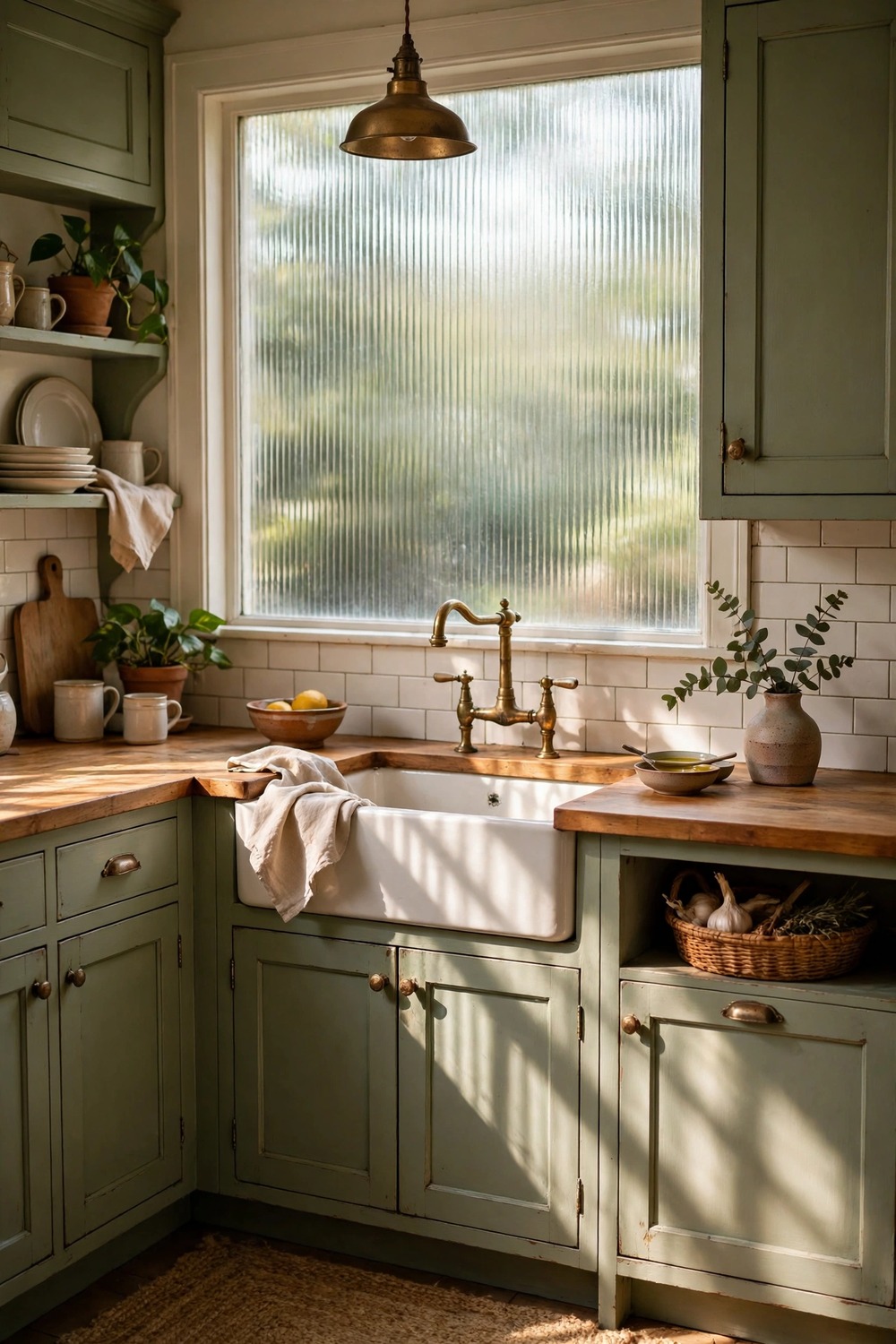
10. Use Reeded Glass Film for a Vintage Feel
Reeded glass film gives you the look of old fluted glass, with fine vertical lines that stretch and blur whatever is behind them, and it brings a quiet vintage charm to a kitchen window. Light still passes through easily, but details soften into gentle stripes, so you get privacy without that flat frosted look if you prefer a bit more character. It pairs beautifully with shaker cabinets, aged brass, and simple white tile, and it can make a plain builder window feel like it has always been there. Like other films, it applies with water, can be trimmed to fit odd sizes, and usually comes off cleanly when you want a change. Run the reeds vertically for a taller feel. Clean the film with a soft cloth and mild cleaner only, since rough pads can mark the texture. It is a small detail that visitors often notice and ask about.
Make the Sill and Frame Work Harder
A kitchen window is not just something to cover. The sill, the glass itself, and the frame can hold herbs, store everyday pieces, and shape how the whole wall looks. These five ideas treat the window as useful space, which is especially valuable in a smaller kitchen where every few inches typically count.
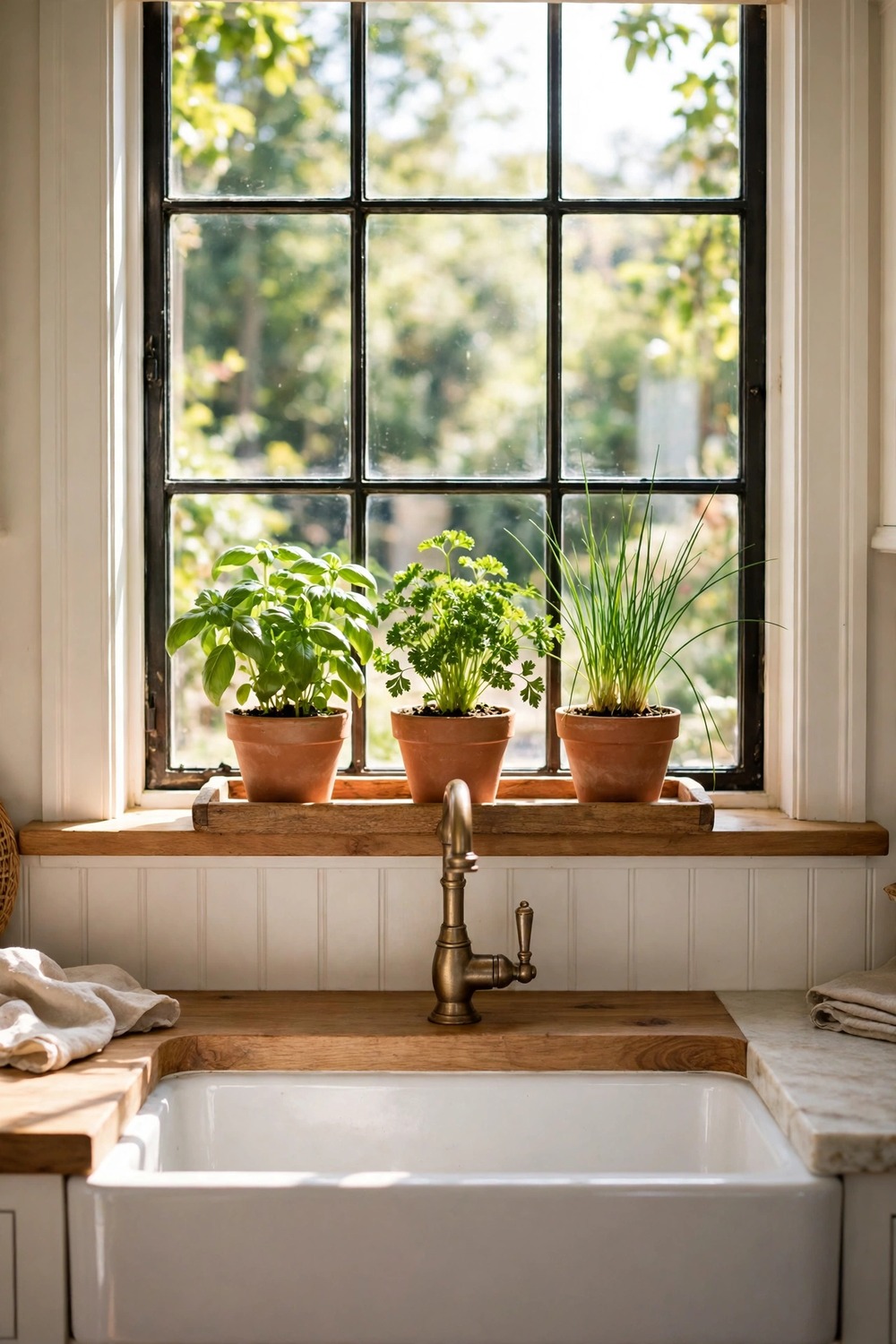
11. Grow a Fresh Herb Garden on the Sill
A row of fresh herbs on the kitchen sill is one of those ideas that looks charming and earns its place every single day, because the window gives herbs the bright light they usually crave and you get fresh leaves within reach of the cutting board. Start with two or three forgiving herbs like basil, mint in its own pot, and chives or parsley, rather than a whole crowded garden on day one. Small terracotta or simple ceramic pots on a narrow tray keep watering tidy and protect the sill from rings and spills. Turn the pots a quarter turn every few days so the plants grow evenly toward the light instead of leaning. If your sill is too narrow, a slim shelf just below the window does the same job. Snip little and often, because regular trimming typically keeps herbs bushy and productive rather than tall and tired.
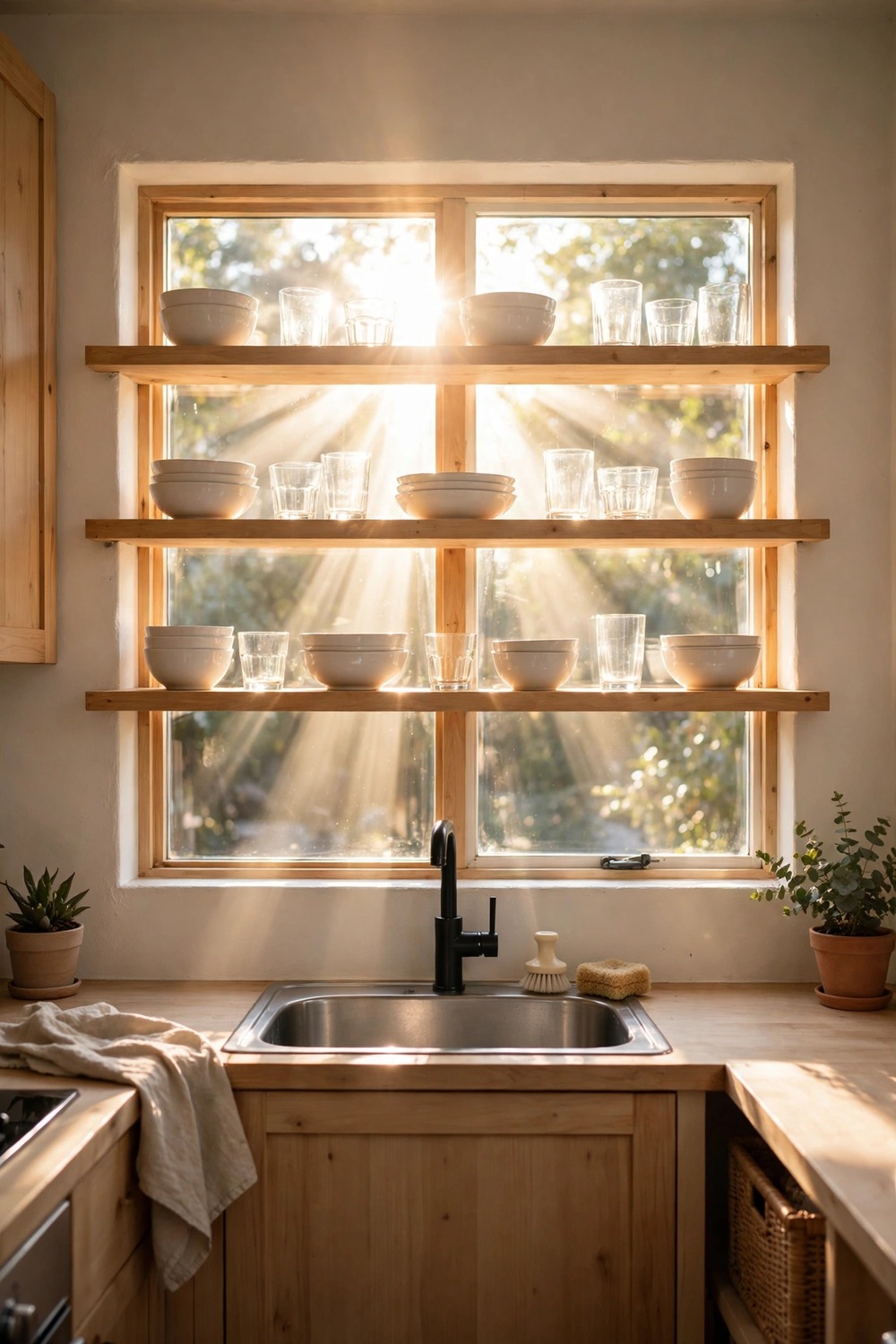
12. Build Open Shelving in Front of the Glass
Open shelving built across a kitchen window sounds bold, but it can be a brilliant use of space in a small room, because the shelves give you storage for everyday dishes while light still flows around and through them. Keep the shelves shallow and the contents light in color and weight, like white bowls, clear glasses, and a few everyday plates, so the window still feels open rather than blocked. Glass shelves almost disappear and let the most light through, while a light wood shelf adds warmth and echoes other finishes in the room. Secure everything properly to the frame or surrounding wall, since shelves over a sink need to be genuinely sturdy. Leave the middle of the window clearer and load the edges more, which usually keeps the view and the daylight balanced. You will reach for those glasses daily, so this is storage that truly works.
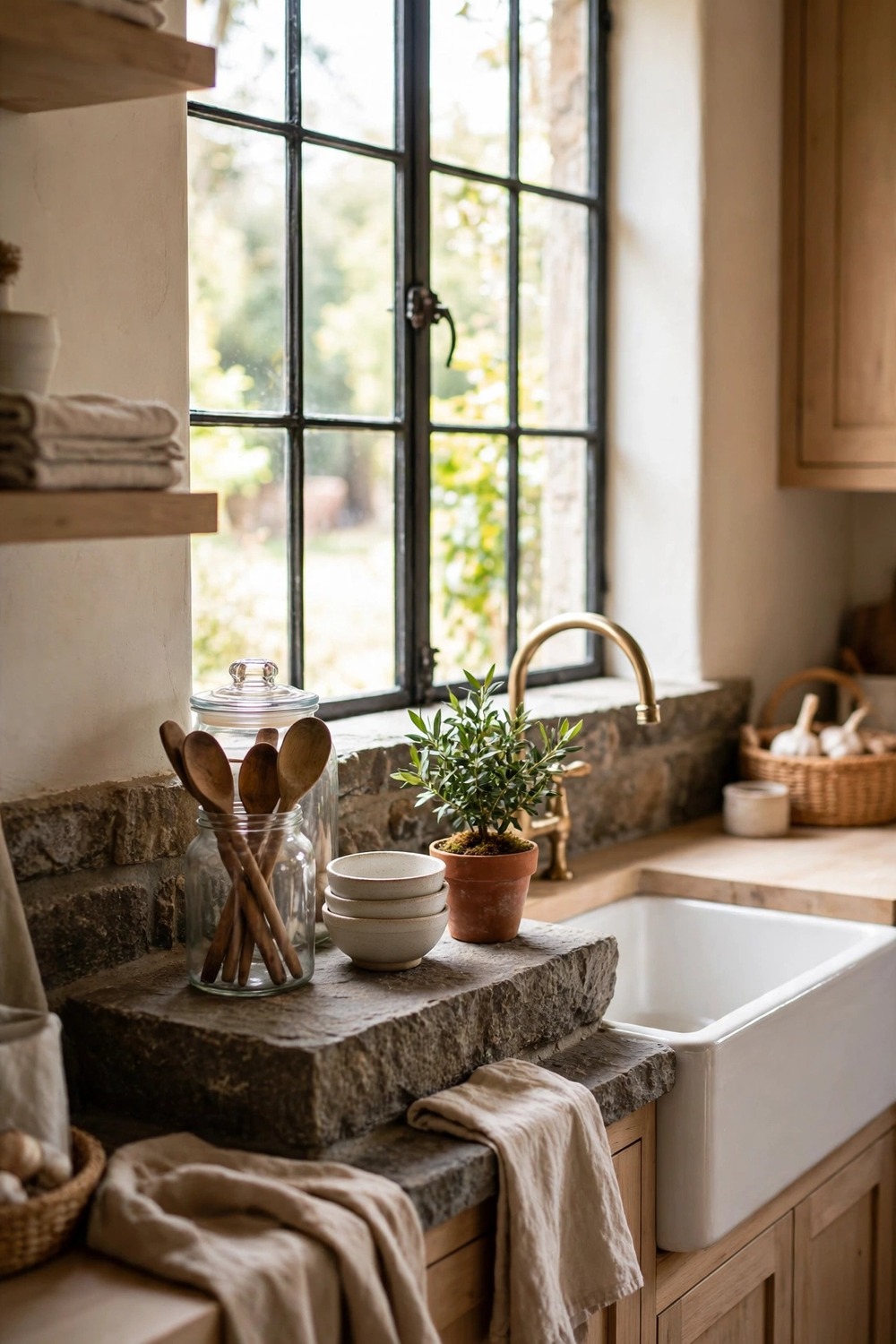
13. Make a Deep Sill Work as Storage and Display
A deep kitchen sill is a gift, so it is worth treating it like a real shelf instead of a dust collecting ledge. Line it with a few things you use and love, perhaps a jar of wooden spoons, a small stack of everyday bowls, a potted plant, and a candle for evenings at the sink. Keeping the group small and low means you still get nearly all your light and view, while the sill starts to feel styled rather than accidental. If you are renovating, asking for a slightly deeper sill in a durable material like stone or sealed wood can pay off for years, since it stands up to water and plant pots much better than a thin painted edge. Add a narrow tray under anything that gets wet. Rotate the display a little with the seasons, maybe citrus in winter and herbs in summer, and the window will keep feeling fresh.
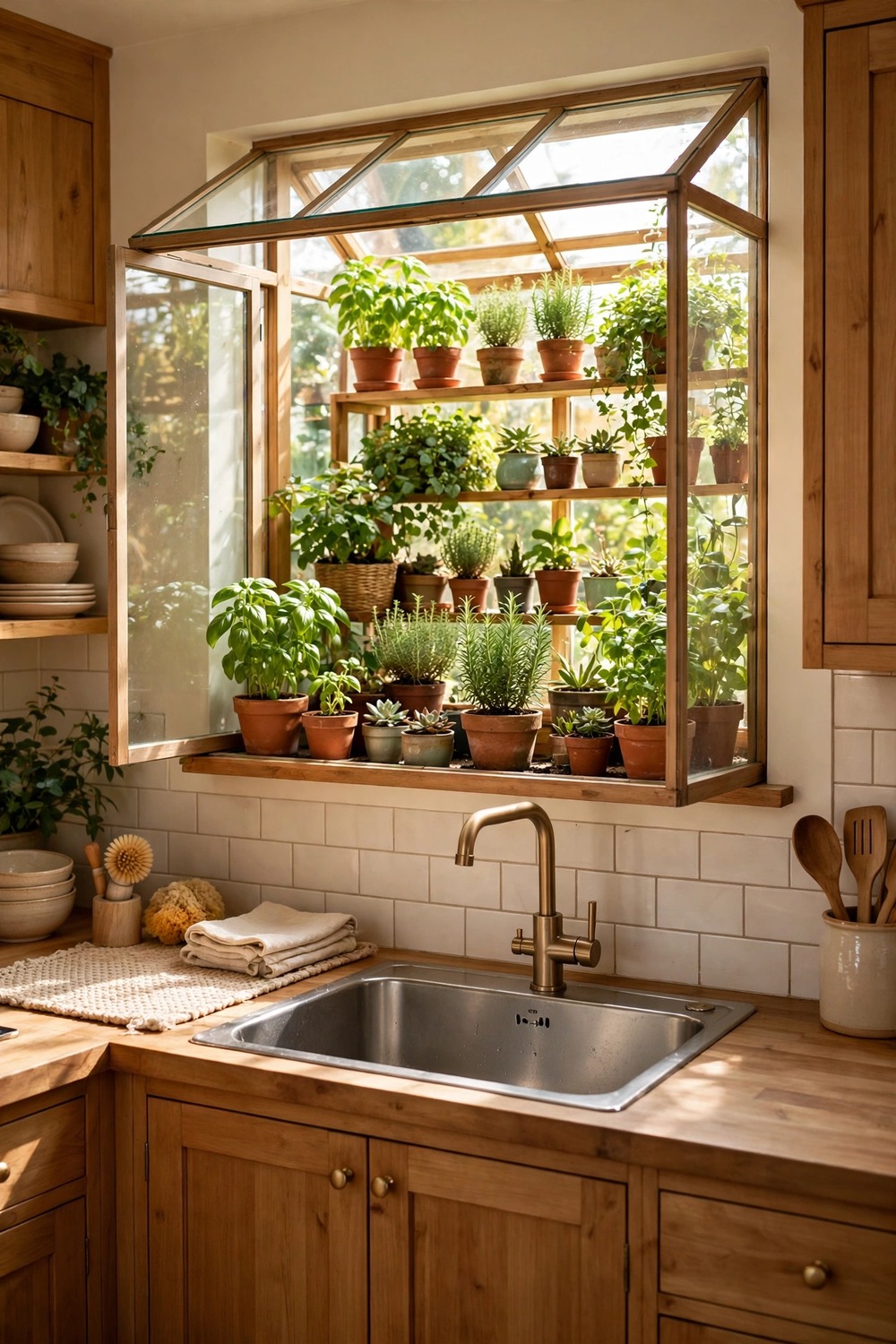
14. Add a Garden Window for Extra Green Space
A garden window projects out from the house like a tiny greenhouse, with glass on the top and sides that floods the sill area with light from several directions at once. It is a bigger project, but it can transform a plain sink window into the happiest spot in the kitchen, with room for herbs, small plants, and a few pretty objects that glow in the sun. Most garden windows include a shelf and vents you can open for fresh air, which plants and cooks both appreciate. Because it changes the exterior and the structure a little, it typically needs proper installation and a check on local rules before you commit. Choose frames that match your other windows so it looks like part of the house rather than an add on. If a full garden window is too much, a deep box style sill inside can hint at the same feeling for far less.
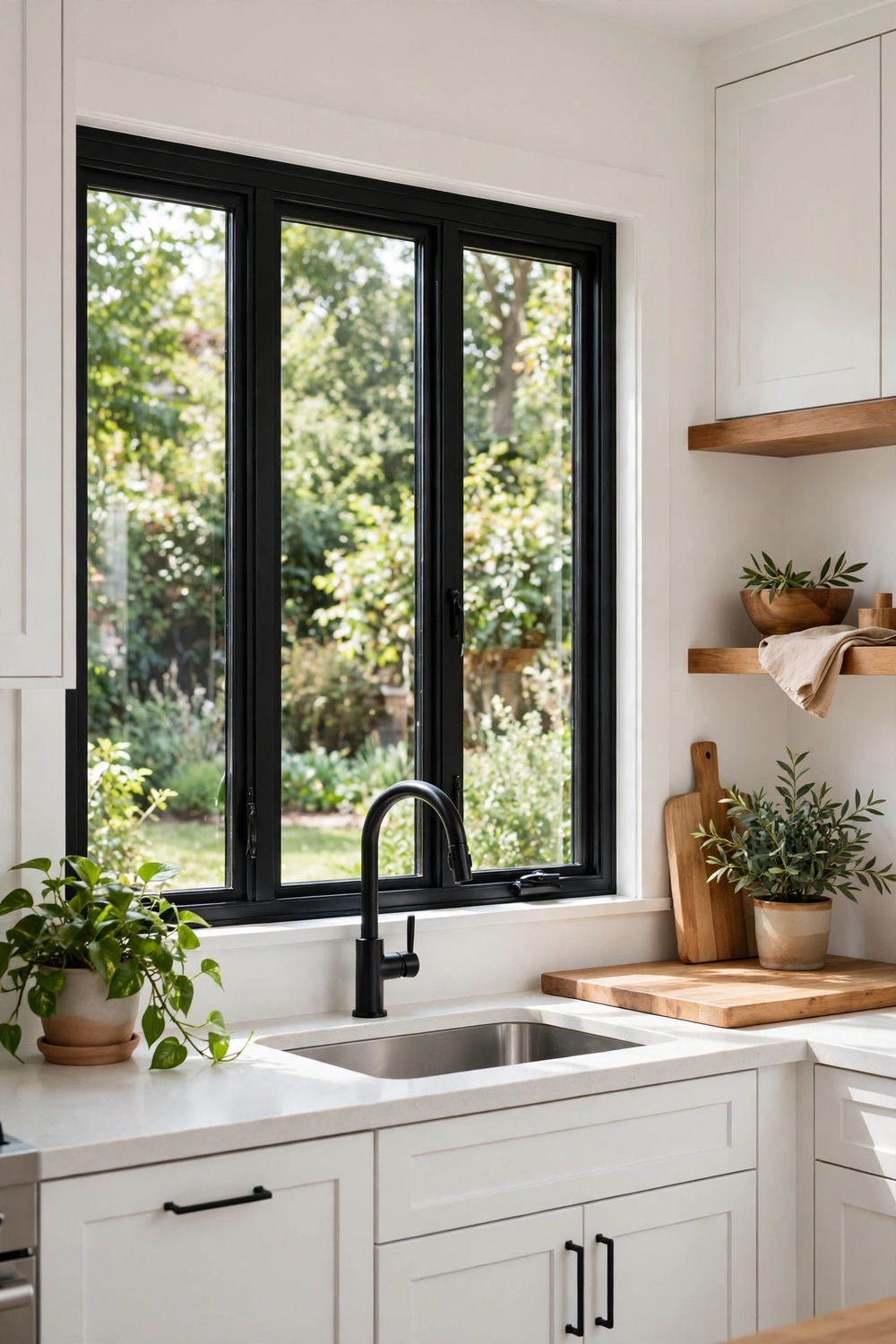
15. Frame the Window in Bold Black
Painting or choosing a kitchen window frame in bold black gives the whole wall instant definition, because that crisp dark outline turns a plain opening into a focal point and makes the green outside look richer by contrast. It works especially well in white and light neutral kitchens that feel a little washed out, and it ties in happily with black hardware, faucets, and light fixtures you may already have. You do not need black everywhere. One black framed window above the sink, with the rest of the trim kept simple, is usually plenty to get the effect. If you are painting an existing frame, clean and sand it well and use a durable finish that can handle condensation and wiping down. Keep curtains minimal or skip them on the top half so the frame stays visible. The look is modern, but with warm wood and plants nearby it never has to feel cold.
Finishing Touches That Add Style
Once privacy and light are sorted, the last layer is pure style. A soft valance, a thoughtfully styled sill, or even the confidence to leave a beautiful window completely bare can be the detail that makes the kitchen feel finished. These final three ideas are quick, personal, and easy to adjust as your taste changes.
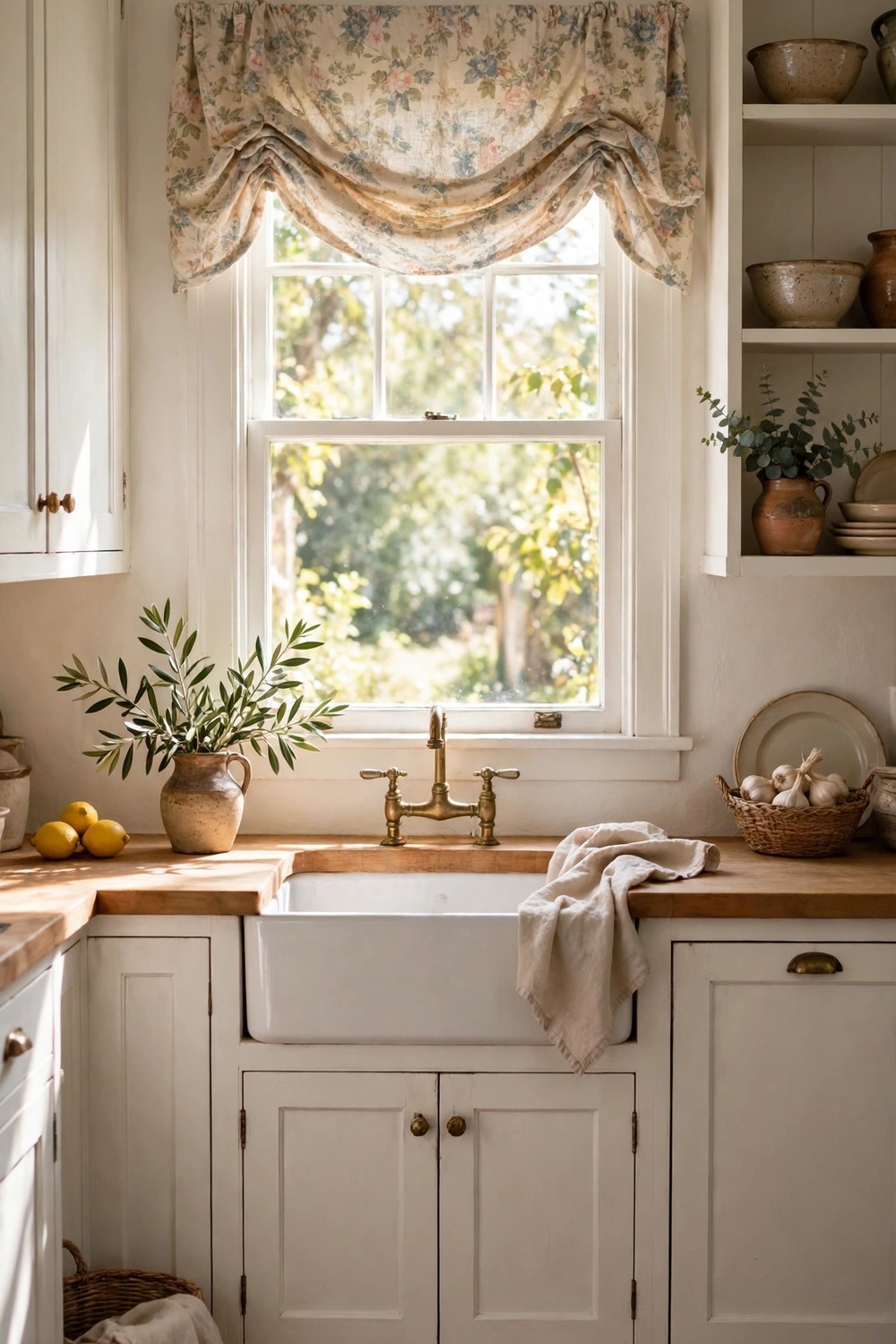
16. Hang a Relaxed Valance for a Finished Top
A relaxed valance is a short soft panel across the top of the window that finishes the frame without covering much glass at all, so you keep almost all your light and most of your view. It is a lovely way to add pattern or color to a kitchen in a small dose, perhaps a faded floral, a simple stripe, or a block print that would feel like too much across a full curtain. Let it drape in one gentle swag or hang it flat and tailored if your kitchen leans more modern. Because a valance sits high, it rarely gets splashed, and it pairs well with a plain blind or film below when you still need privacy at eye level. Mount the rod a little above the frame to make the window feel taller. Choose a fabric you can unhook and wash once or twice a year, since kitchen air is not kind to any textile over time.
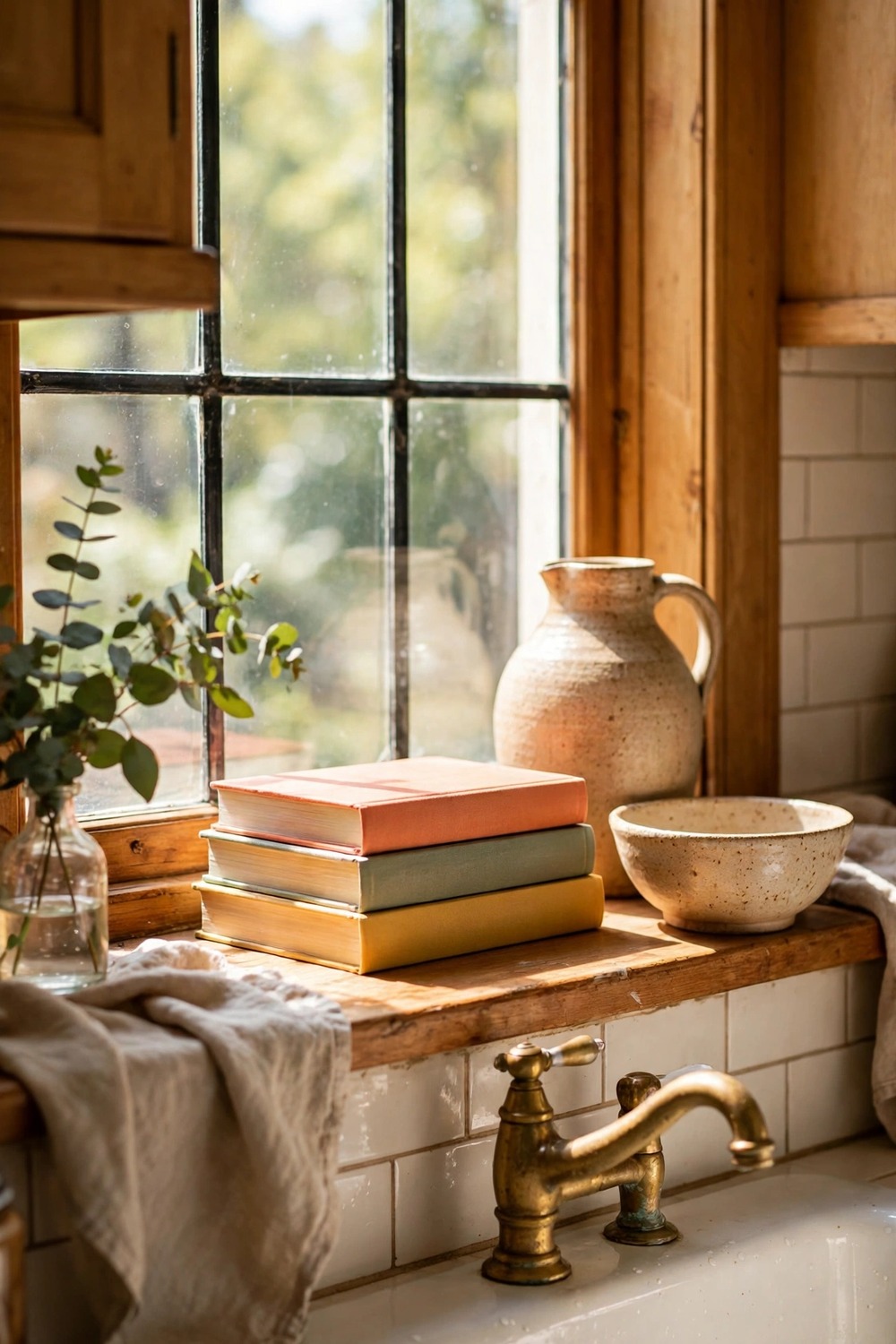
17. Style the Sill With Cookbooks and Ceramics
Styling the kitchen sill with a couple of cookbooks and a favorite ceramic piece turns a plain window into a little moment that reflects how you actually cook and live. Stand two or three books you reach for often at one end, lay a small handmade bowl or jug beside them, and stop there, because a sill usually looks best with breathing room around each thing. The books add color and height, the ceramics add shape, and the light coming through the glass does the rest. Keep anything precious or water sensitive away from the splash zone right behind the faucet, and use a bookend or the frame itself to keep books upright. Swap the stack when a new cookbook enters your rotation, so the display stays honest and useful rather than staged. Guests tend to notice this spot, perhaps because we all stand at the sink and look at it every day.
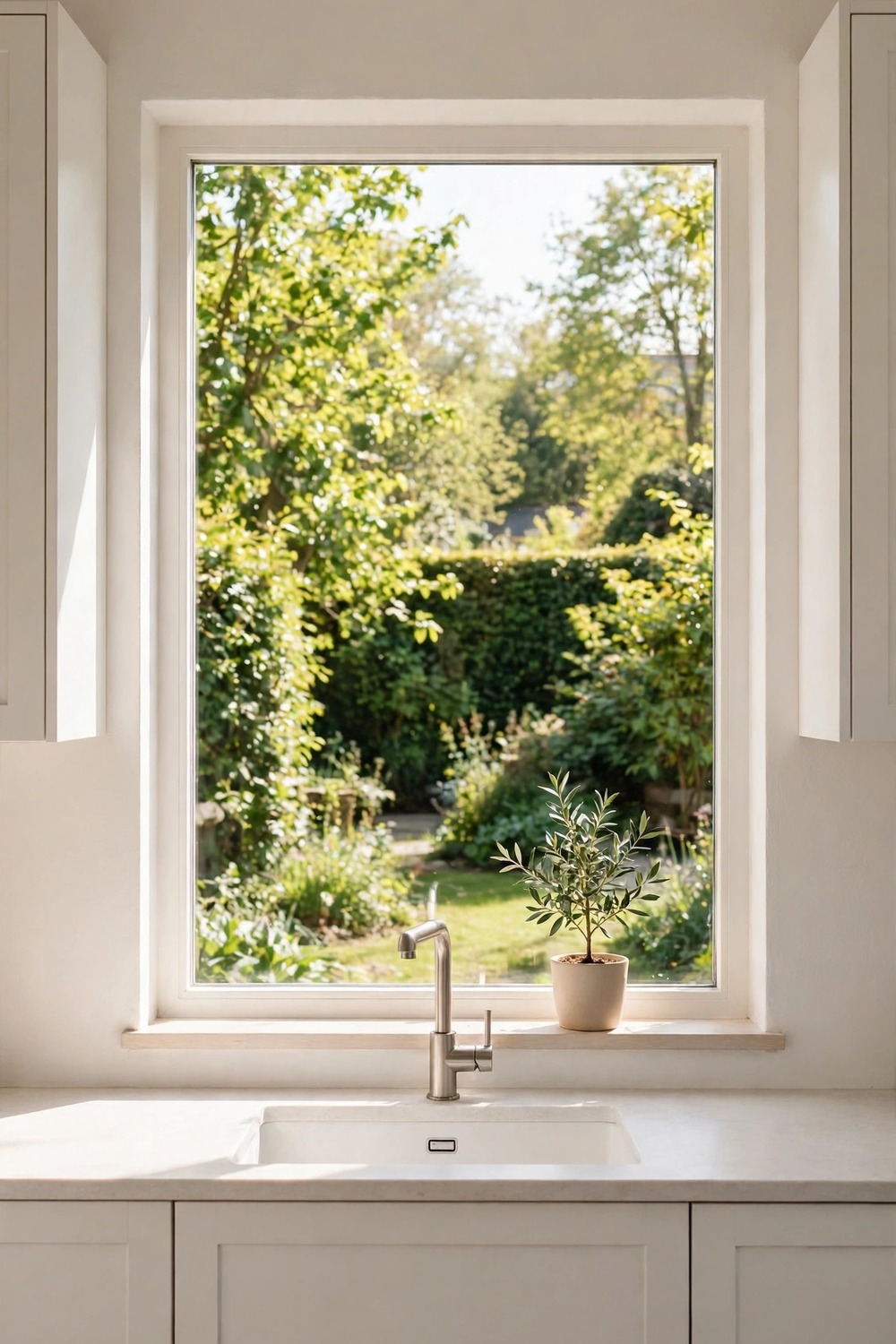
18. Leave It Bare for Clean Maximum Light
Sometimes the best kitchen window idea is no covering at all, because a clean bare window gives you maximum light, a full view, and that calm uncluttered feeling modern kitchens do so well. This works especially well if your window looks onto a private garden, a fenced yard, or open sky where nobody can really see in during the day. Keep the glass sparkling and the frame and sill neat, since with nothing to hide behind, those details become the whole show. A single plant on the sill or a simple pendant in front of the window adds just enough interest without crowding the light. If evenings feel a little exposed, a simple outside solution like a taller plant or a screen on the patio can help without touching the window itself. Try living with it bare for a week before you buy anything. You may find the room feels bigger and brighter than you expected.
Enjoy a Brighter Kitchen That Still Feels Private
When you step back, a good kitchen window does not ask you to choose between light and privacy at all. It gives you both, in whatever balance suits your street, your neighbors, and the way you cook. If one idea feels like too much on its own, pair a gentle one with a practical one, like a cafe curtain over frosted film, or a woven shade with a styled sill. Small combinations usually work better than one dramatic gesture, and they are much easier to adjust later.
So start with the window you use most, probably the one over the sink, and try just one change this week. Hang the curtain, roll the blind, or clear the sill for a little herb in a pretty pot. Notice how the light feels in the morning and how comfortable the room feels after dark. That small test will tell you exactly what your kitchen needs next, and before long the window will not be a compromise anymore. It will be one of your favorite things about the room.



Leave a Reply