
18 Outdoor Kitchen Ideas for Backyards Big and Small
Look, we get it. You love the idea of cooking outside, but every time you picture an outdoor kitchen you imagine a huge stone island, a contractor, and a backyard you just do not have. Meanwhile you are carrying plates through the house and wishing the grill had one flat spot for a tray. If that sounds familiar, you are not alone. Most of us start with a lonely grill in the corner.
That is why this list is built for real backyards, not show gardens. You will find tiny portable ideas, like rolling stations and potting bench conversions, then built in islands, pergolas, sinks, and pizza ovens for when you are ready to go bigger. Some take a single afternoon, while others are longer projects. You do not need all eighteen. Two or three done well will usually change how often you cook and eat outside.
Start by thinking about how you really use your yard. Do you grill for two on weeknights, host a crowd on weekends, or just want coffee outside on a quiet morning? Your answer points you to the right starting point, whether that is storage, shade, seating, or a better prep surface. Measure the space you have, and remember that an outdoor kitchen built slowly, one layer at a time, is typically easier to get right.
In This Article
- Start With a Rolling Grill Station
- Build a Simple L-Shaped Grill Island
- Add a Pergola Cover for Shade
- Install a Handy Outdoor Sink
- Try a Compact Pizza Oven Corner
- Create Bar Seating Along a Counter
- Hang String Lights for Evening Glow
- Layer Task Lighting Where You Cook
- Add Weatherproof Storage That Hides Clutter
- Tuck In a Mini Fridge and Ice Drawer
- Convert a Potting Bench Into a Prep Station
- Mount a Deck Rail Counter for Tiny Yards
- Cook Over a Fire Pit With a Grill Grate
- Set Up a Portable Kitchen Cart for Serving
- Grow Herbs Right Beside the Grill
- Lay an Outdoor Rug to Define the Zone
- Build a Full U-Shaped Island for Big Gatherings
- Finish With a Cozy Dining Nook Nearby
Start With the Cooking Core, Small or Built In
Every outdoor kitchen comes down to the same few jobs. You need a heat source, a flat spot to set things down, a little shade, and water nearby if possible. These first five ideas cover that core, from a rolling setup to a pizza corner, so you can pick the level that fits your yard and budget.
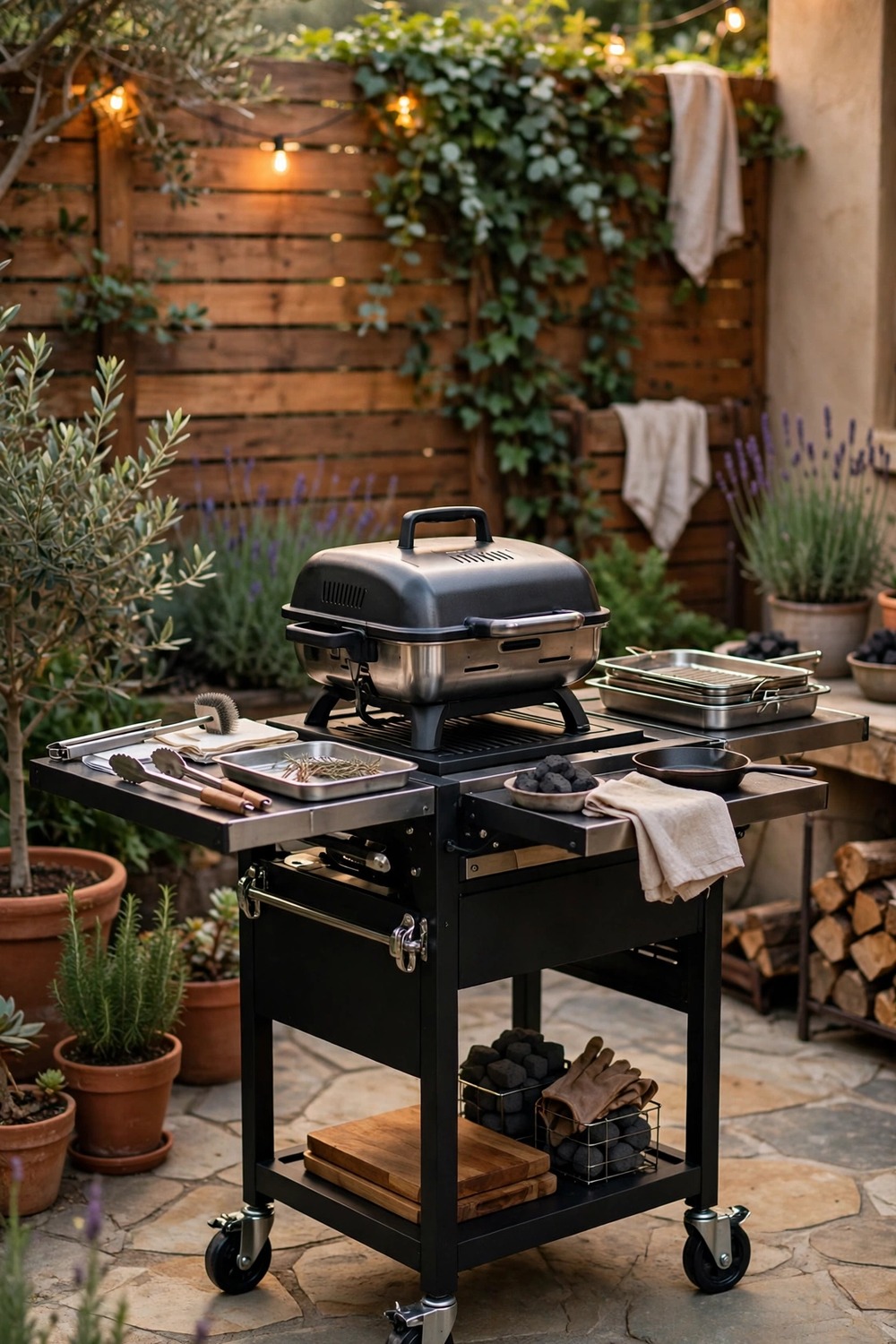
1. Start With a Rolling Grill Station
A rolling grill station is usually the kindest place to start, because it gives you a real outdoor kitchen feeling without any building work at all. Look for a sturdy cart or a grill with wide side shelves and wheels that lock, then set it up like a proper station with your tools on hooks, a tray for raw food, and a clean tray for cooked food. The wheels matter more than you might think, since you can chase the shade, tuck the station against a wall when you are done, or roll it closer to the door on a busy night. Keep a small bin underneath for charcoal, lighters, and a thermometer so everything lives in one place. A practical tip is to park the station on a flat, level patch of patio or deck, because a wobbling grill is annoying and not very safe. Once this one spot works well, you will know exactly what your yard is missing next.
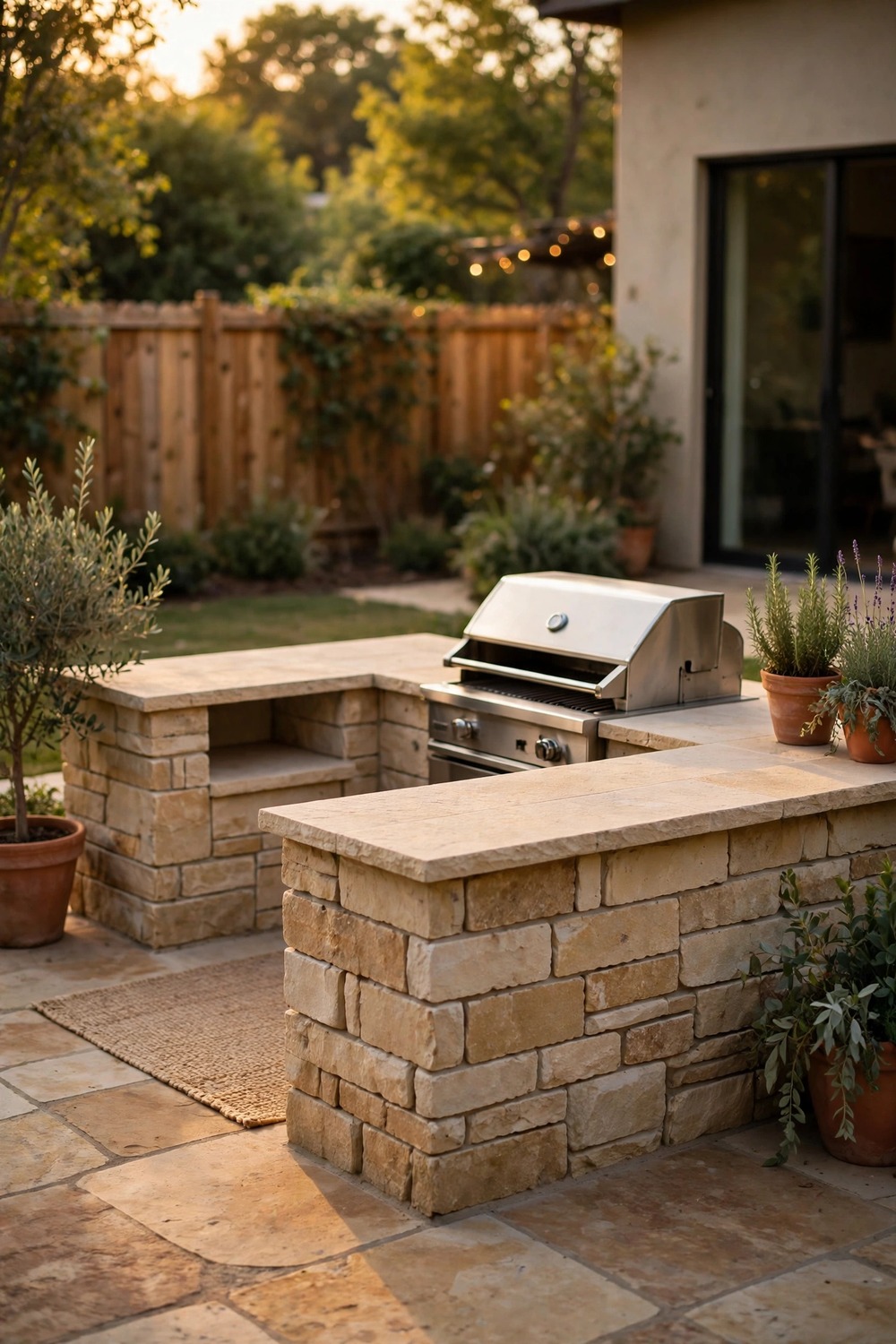
2. Build a Simple L-Shaped Grill Island
An L-shaped grill island is a lovely next step when you know outdoor cooking is here to stay, because that corner shape gives you counter space on two sides without eating up the whole patio. One leg holds the grill, and the shorter leg becomes your prep and serving counter, which means you are no longer balancing a cutting board on the grill shelf. You can build the frame from weather friendly materials like concrete block, stone veneer panels, or a ready made modular kit, depending on your skills and budget. Leave a little breathing room behind the grill for ventilation and heat, and plan the counter height to feel comfortable while you chop and plate. A helpful tip is to sketch the L on the ground with tape or chalk first and pretend to cook in it for an evening. If you keep bumping into the corner in your imagination, adjust the lengths before you build anything permanent.
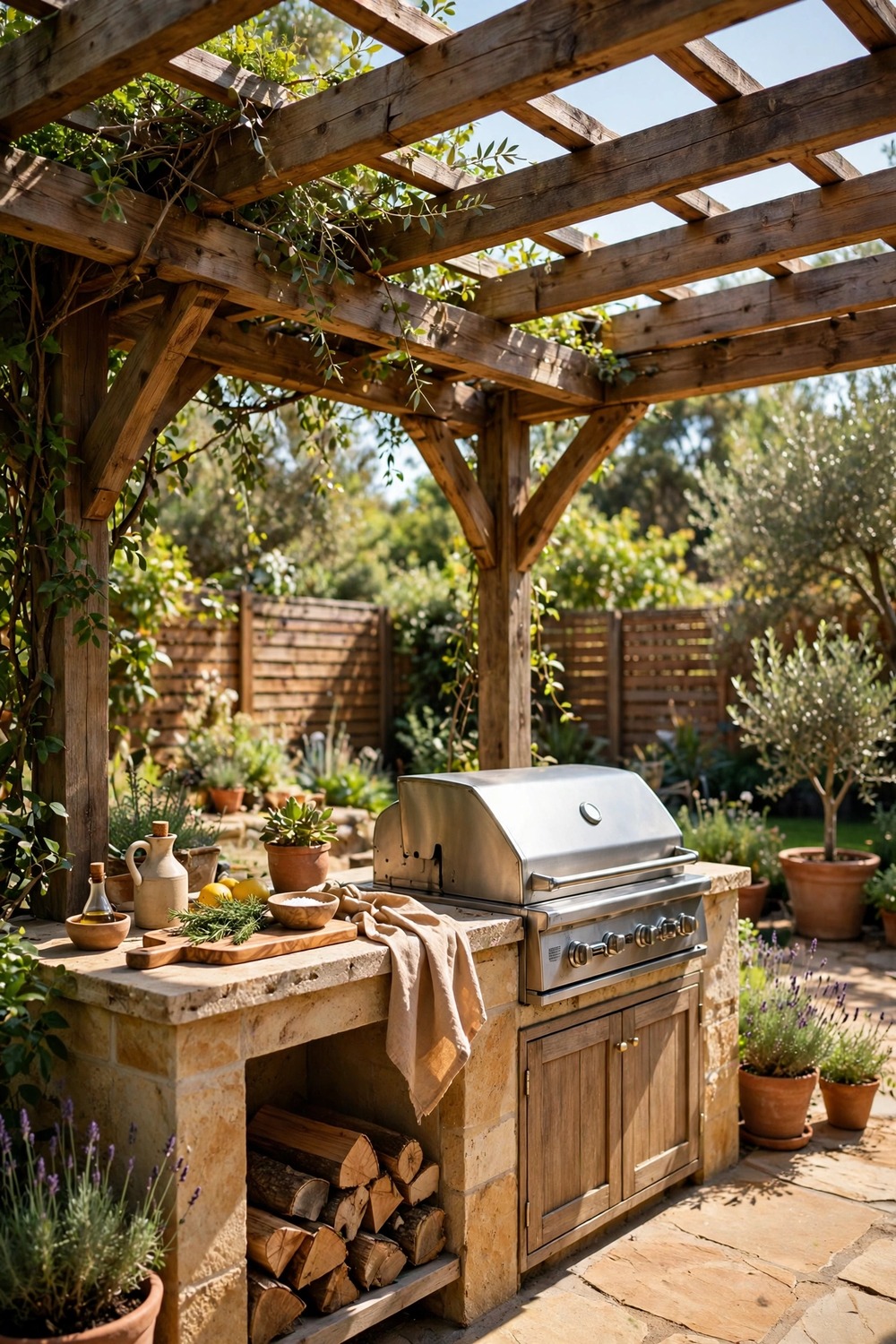
3. Add a Pergola Cover for Shade
A pergola over your cooking zone changes outdoor cooking from something you endure at noon to something you actually enjoy, because shade makes a bigger comfort difference than almost any appliance. An open slatted roof softens harsh sun while still letting smoke drift up and away, which is exactly what you want over a grill. You can grow a vine over it for dappled, leafy shade, stretch a shade cloth across the top for an easier seasonal fix, or leave it open and enjoy the structure alone. Place the posts carefully so they frame the kitchen without blocking your path between the grill and the door. If a full pergola feels like too much, a large cantilever umbrella angled over the prep area gives you a smaller taste of the same relief. Either way, cooking in comfortable shade typically means you will linger longer, cook slower, and use the space far more often through the warm months.
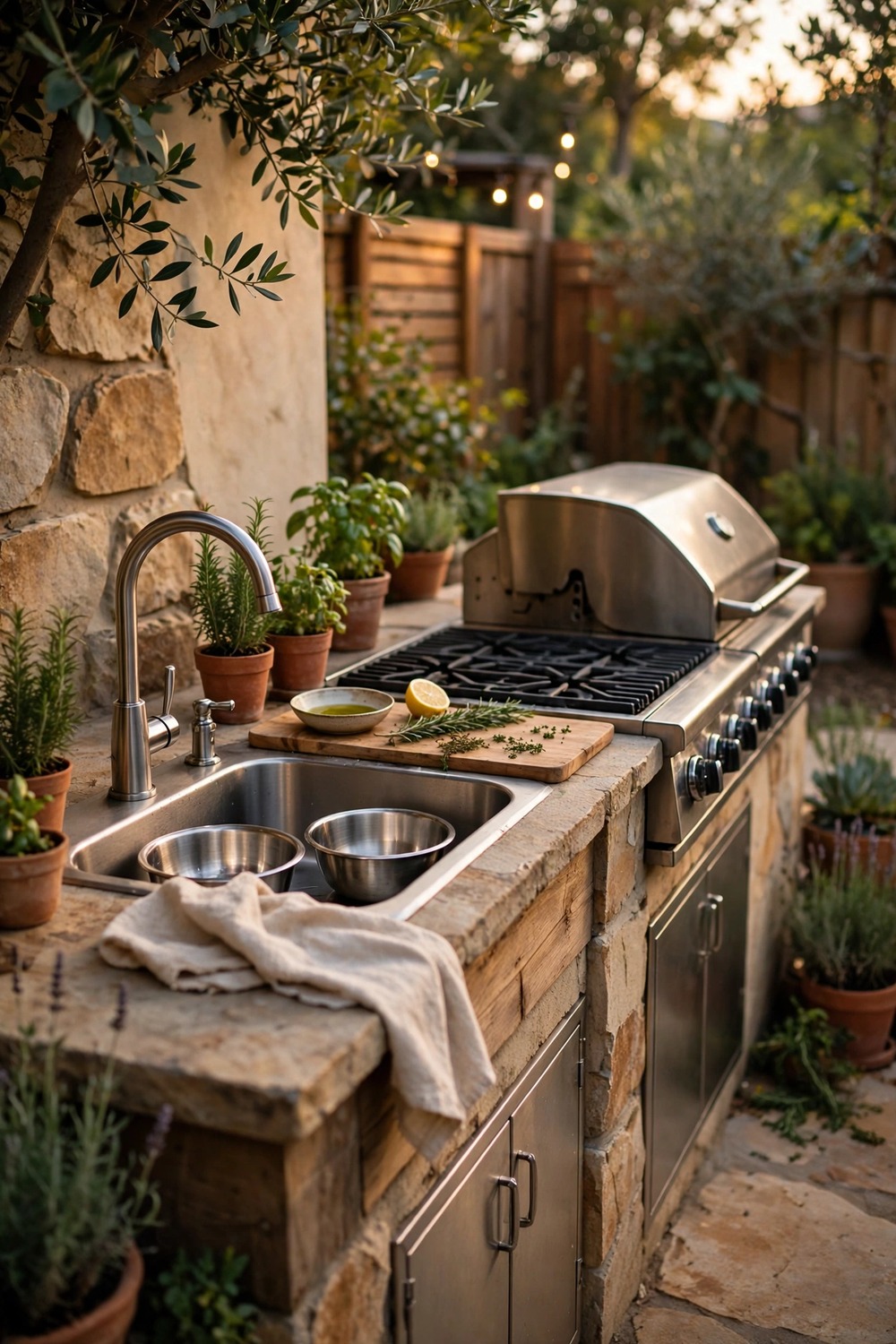
4. Install a Handy Outdoor Sink
An outdoor sink sounds like a luxury until you have lived with one, and then all those trips inside to rinse hands, wash herbs, or fill a pot start to feel very unnecessary. Even a simple cold water sink makes prep and cleanup calmer, because you can rinse as you go instead of carrying dripping things across the patio. Options range from a proper plumbed sink in an island to a utility style basin that connects to a garden hose with drainage into a bucket or a planted area, where local rules allow. Choose a deep basin if you can, since shallow sinks splash and do not hold a big bowl or a tray very well. Keep a small caddy nearby with soap, a brush, and a towel that can handle outdoor life. A practical tip is to place the sink between the grill and the prep counter if possible, so washing, chopping, and cooking flow in one easy line.
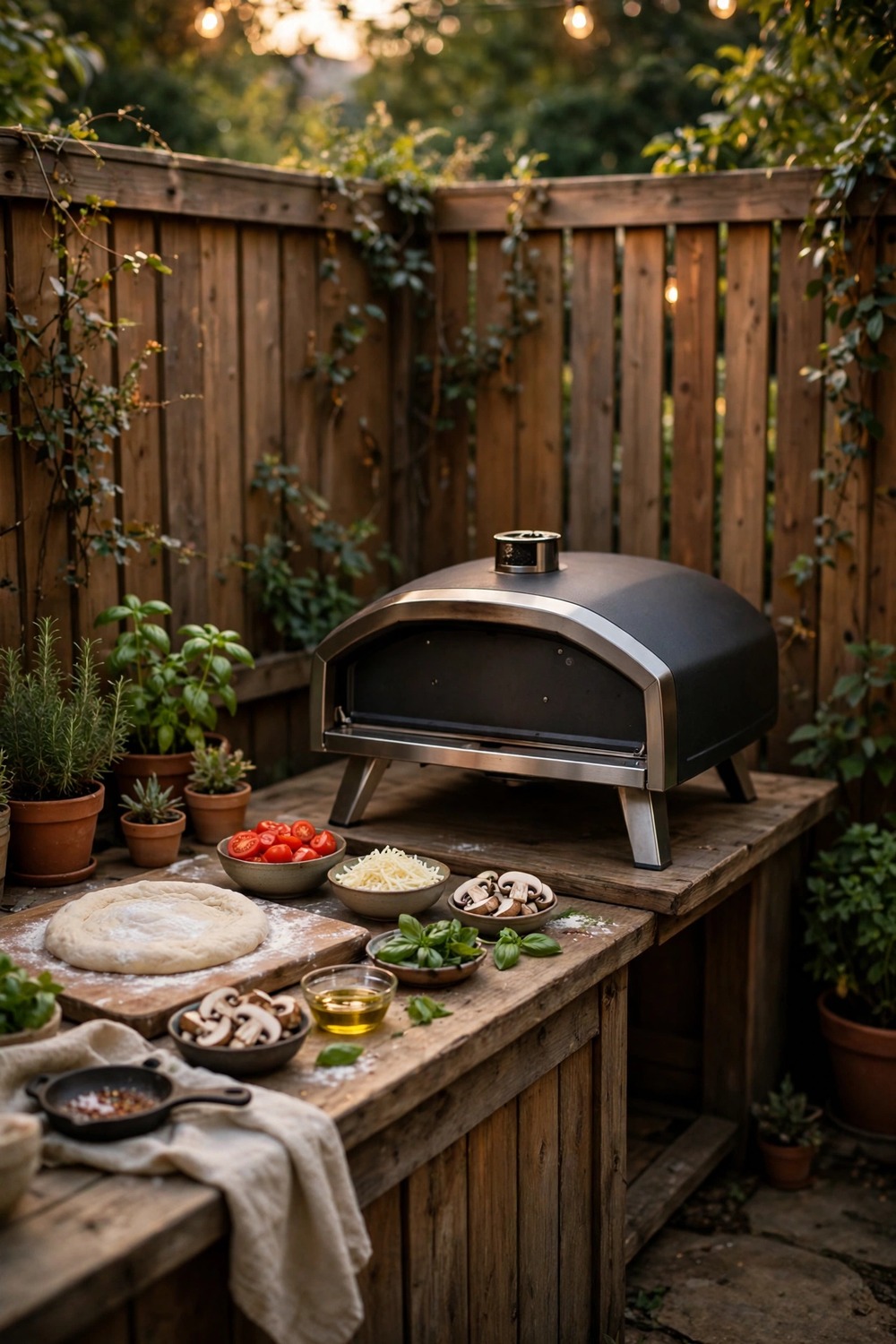
5. Try a Compact Pizza Oven Corner
A compact pizza oven turns an ordinary backyard corner into the place everyone wants to gather, and modern countertop models are small enough for modest patios and even some larger balconies. Set the oven on a sturdy, heat safe stand with a little counter beside it for stretching dough and lining up toppings, and you have a complete pizza night station in just a few square feet. Gas models are typically the easiest for beginners, while wood fired options give you that blistered, smoky crust if you enjoy tending a fire. Keep flour, a pizza peel, and toppings within arm’s reach so the cook is not running laps while the oven is hot. Pizzas cook fast at high heat, so a helpful tip is to prep every topping before you light the oven and let guests build their own in a row. It is relaxed, social cooking, and leftovers, if there ever are any, reheat beautifully the next day.
Make It Comfortable for Cooking and Gathering
Once the cooking core works, comfort turns a grill spot into a kitchen where people want to stay. Seating that keeps guests close, lighting for after sunset, storage that swallows clutter, and cold drinks within reach all belong in this layer.
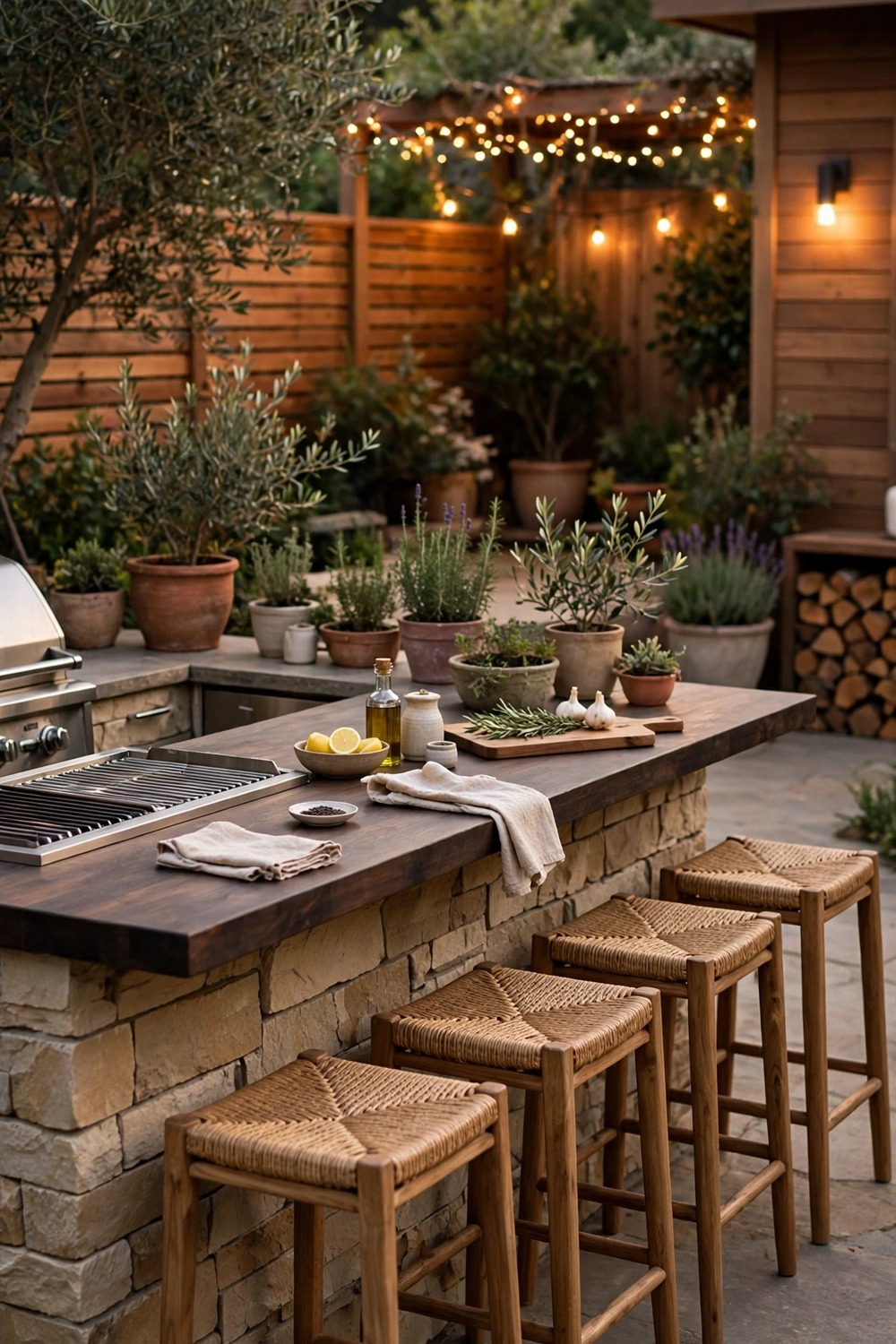
6. Create Bar Seating Along a Counter
Bar seating along a counter solves the oldest outdoor cooking problem there is, which is the cook standing alone at the grill while everyone else has fun somewhere else. A raised counter or the back side of an island with a few stools pulls guests right into the kitchen zone, where they can chat, snack, and help taste test without crowding your work space. Leave enough knee room under the overhang so stools feel comfortable, and choose stools that can handle weather, with wide feet that will not sink into grass or catch in deck gaps. Backless stools tuck fully under the counter when you need the floor clear, which is handy in a smaller yard. A practical tip is to keep the cooking side and the seating side clearly separate, with heat and sharp tools on your side and drinks and plates on theirs. That simple boundary keeps the gathering relaxed and the cooking calm, even on a busy night.
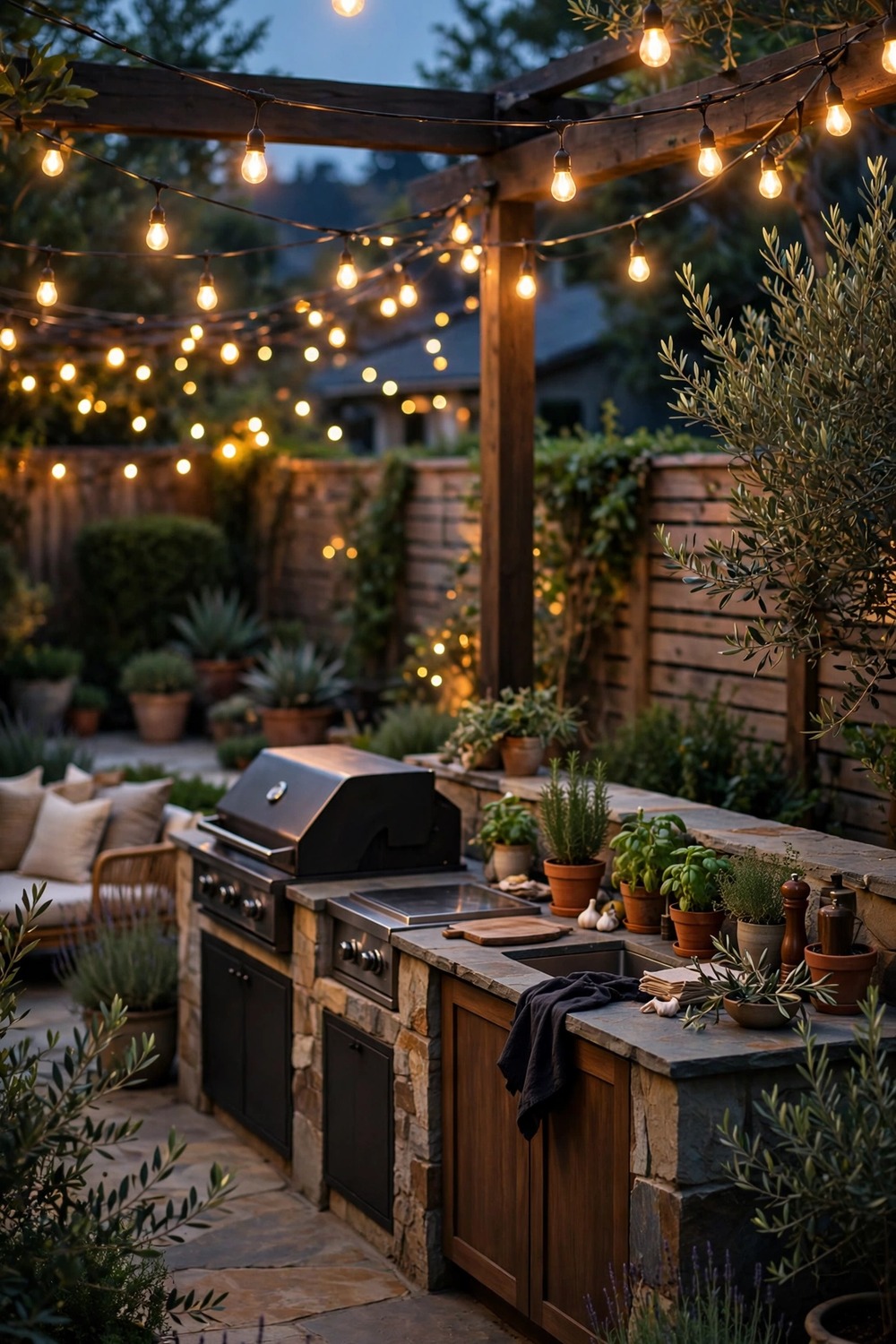
7. Hang String Lights for Evening Glow
String lights are the fastest way to make an outdoor kitchen feel finished after dark, because that warm overhead glow tells everyone the evening is not over just because the sun went down. Run them from the house to a pergola post, a fence, or a simple pole set in a planter, and let them cross gently over the cooking and seating area rather than hanging in one straight line. Choose outdoor rated bulbs and keep strands well clear of grill heat and rising smoke, which usually means hanging them to the sides or higher than you first imagine. Warm toned bulbs typically flatter food, faces, and wood tones far better than bright white ones. If outlets are scarce, solar or battery strands can work in a pinch, though wired lights tend to be brighter and more reliable. A helpful tip is to put the lights on a simple timer or a smart plug, so the yard glows welcomingly right when dinner starts.
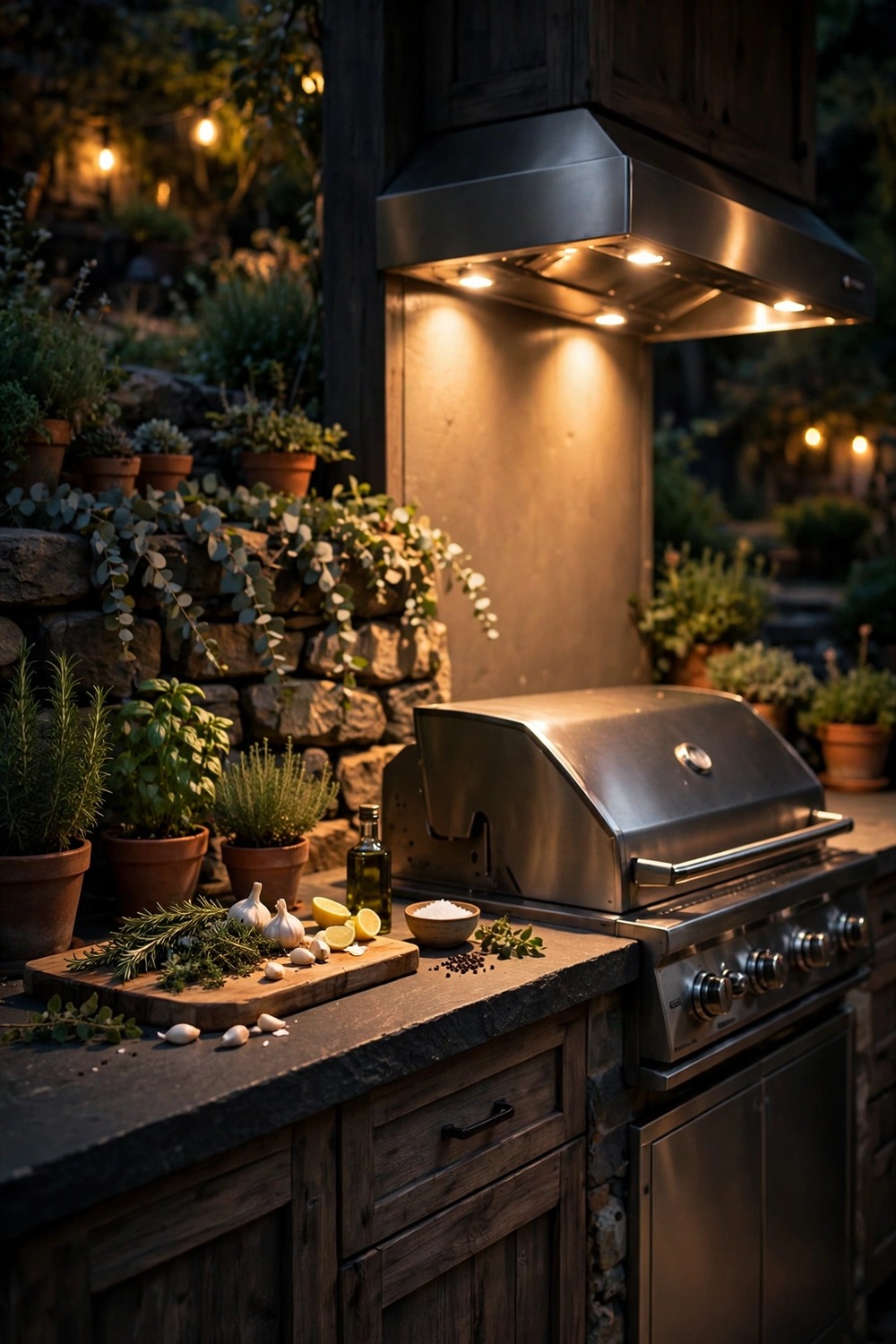
8. Layer Task Lighting Where You Cook
String lights set the mood, but task lighting is what lets you actually see whether the chicken is done, and that distinction matters for both flavor and safety. A focused light over the grill, a small lamp or strip light under a shelf or pergola beam, and a soft light over the prep counter give you clear working light without flattening the cozy mood everywhere else. Grill mounted lights that clamp to the handle are an easy starting point, since they shine right where you are looking and move with the lid. Keep bulbs warm in tone so the food still looks appetizing, and angle lights downward to avoid glare in your eyes or your guests’ eyes. Motion sensor lights near steps and the path to the door are a quiet bonus that everyone appreciates with full hands. Test your lighting on a real cooking night and adjust, because you will typically find one shadowy corner that needs a little help.
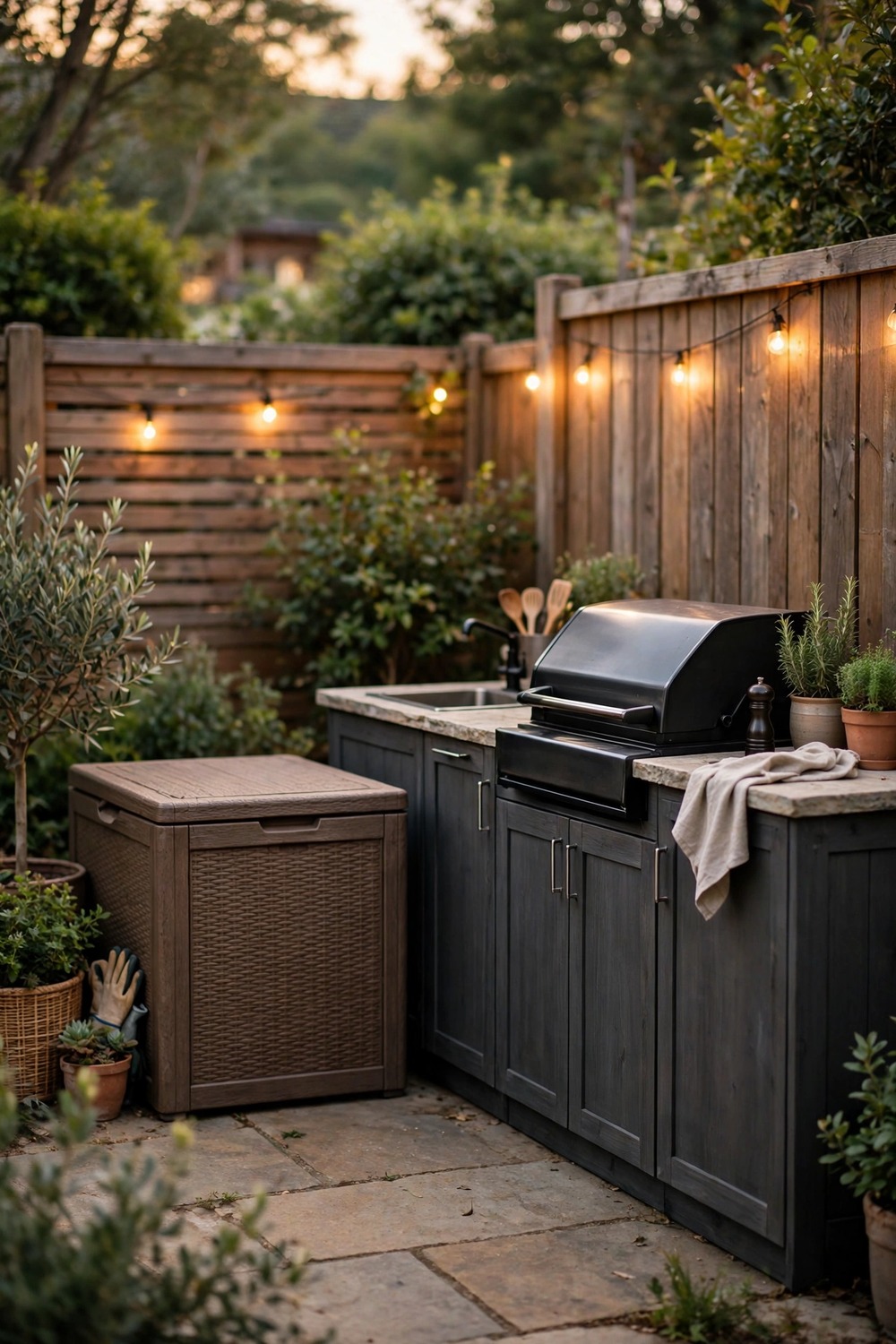
9. Add Weatherproof Storage That Hides Clutter
Weatherproof storage is the unglamorous idea that quietly makes every other idea work better, because an outdoor kitchen without storage slowly turns into a patio covered in tools, bags, and mystery containers. A deck box, a storage bench, or cabinets built into an island can hold cushions, grill tools, serving trays, and cleaning supplies right where you use them, safe from rain and sun. Look for lids that seal well and materials that will not rust, warp, or fade quickly in your climate. Inside, a few bins or baskets keep small things grouped, so you are not digging for the thermometer at the worst possible moment. Storage seating earns bonus points in a small yard, since a bench that hides blankets and also seats two people is doing double duty. A practical tip is to store everyday items at the front and seasonal things at the back, and to give everything a quick wipe before it goes away, so the box stays pleasant to open.
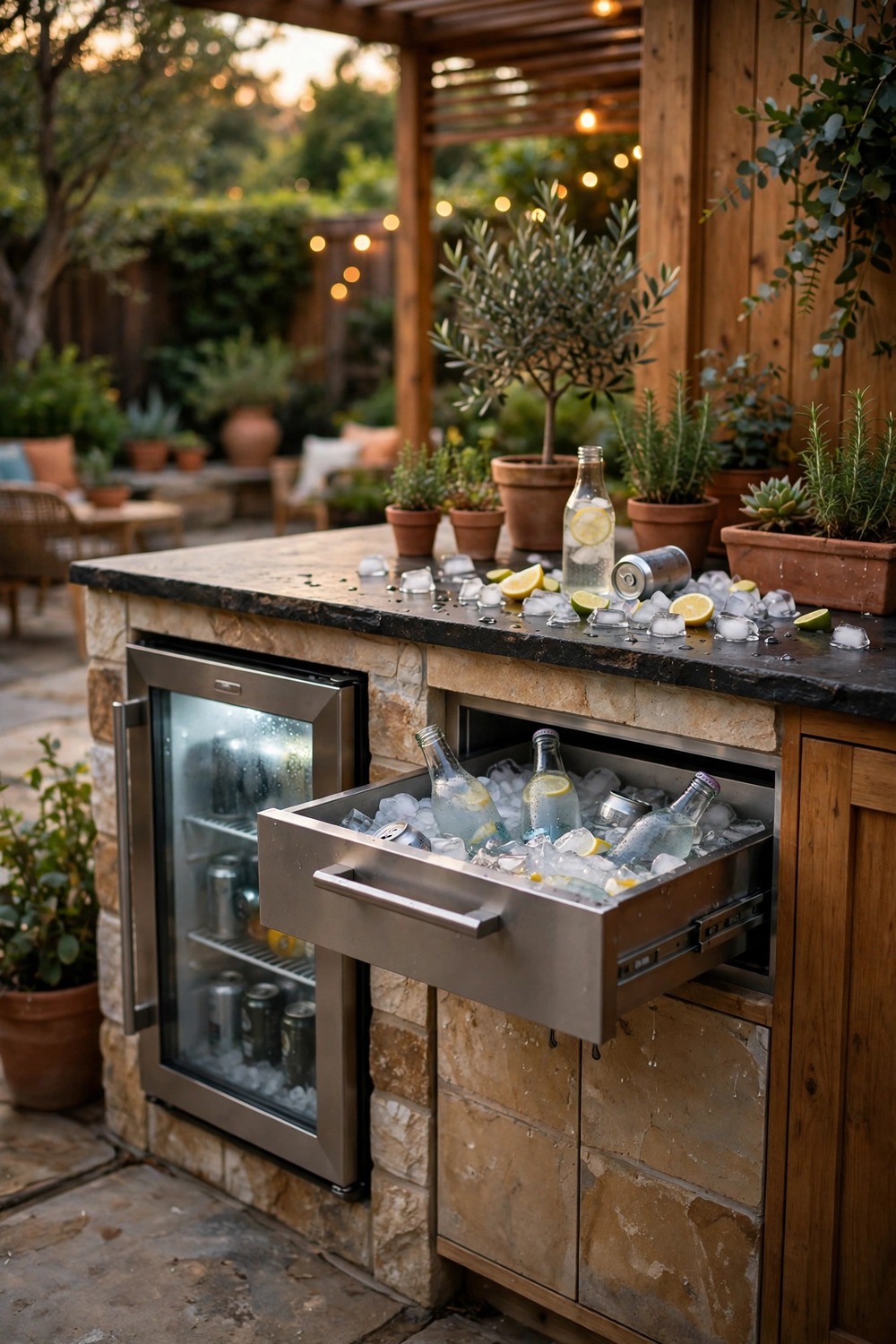
10. Tuck In a Mini Fridge and Ice Drawer
A mini fridge or a simple ice drawer tucked into your outdoor setup saves more steps than almost anything else, because cold drinks, marinades, salads, and desserts no longer need a trip through the house every few minutes. An outdoor rated fridge built into an island is the polished version, but a standard mini fridge under a covered counter or in a sheltered corner can work well in many climates if it stays dry and shaded. If a fridge feels like too much, a deep drawer or a handsome cooler filled with ice does the same job for an evening at a fraction of the cost. Keep raw meats on their own tray and well chilled, and group drinks separately so guests can help themselves without disturbing the cook’s ingredients. A helpful tip is to freeze a few water bottles to use as ice packs, since they keep things cold, do not make a puddle as they melt, and give you cold water later in the evening.
Steal These Clever Ideas for Small Yards
Small yards are where the cleverest outdoor kitchens happen, because every piece has to earn its place. A converted potting bench, a rail counter, fire pit cooking, and a cart that comes and goes all prove you do not need a big footprint to cook well outside.
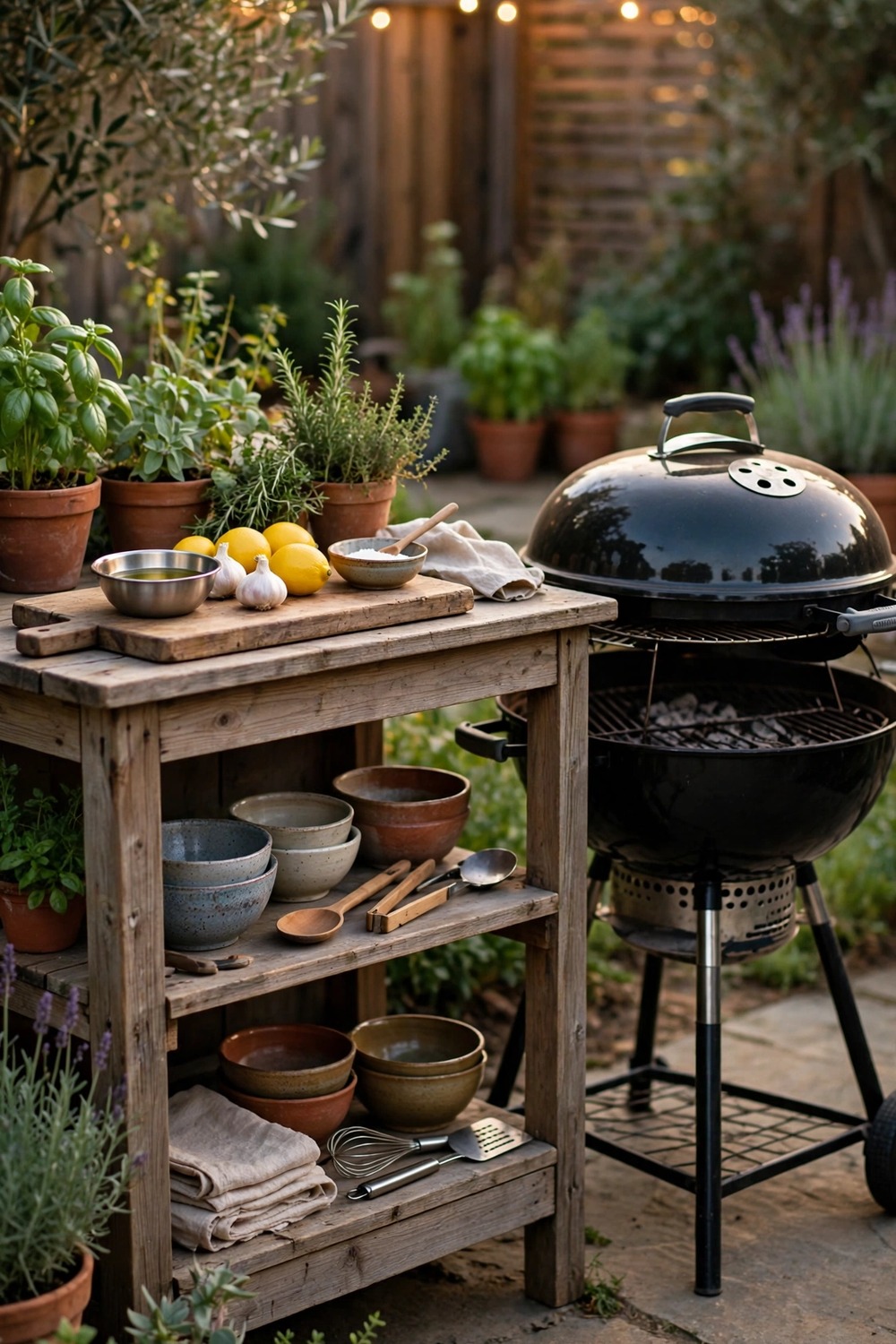
11. Convert a Potting Bench Into a Prep Station
A potting bench makes a surprisingly perfect outdoor prep station, because it already has the things a kitchen needs, like a work surface at a comfortable height, shelves above and below, and often a little slatted top that handles spills gracefully. Give it a good clean, sand any rough spots, and seal the wood if it will live outside, then set it beside your grill with your boards, bowls, and tools arranged like a real counter. The upper shelf is ideal for spices, oils, and a small plant, while the lower shelf holds trays, a bin, and extra supplies out of sight. If your bench has a soil sifter or an open grate section, a tray or a board laid over it becomes extra flat space in seconds. This is usually one of the most affordable routes to a proper prep area, especially if you find a bench secondhand. Paint it to match your fence or your house trim and it will look intentional, not improvised.
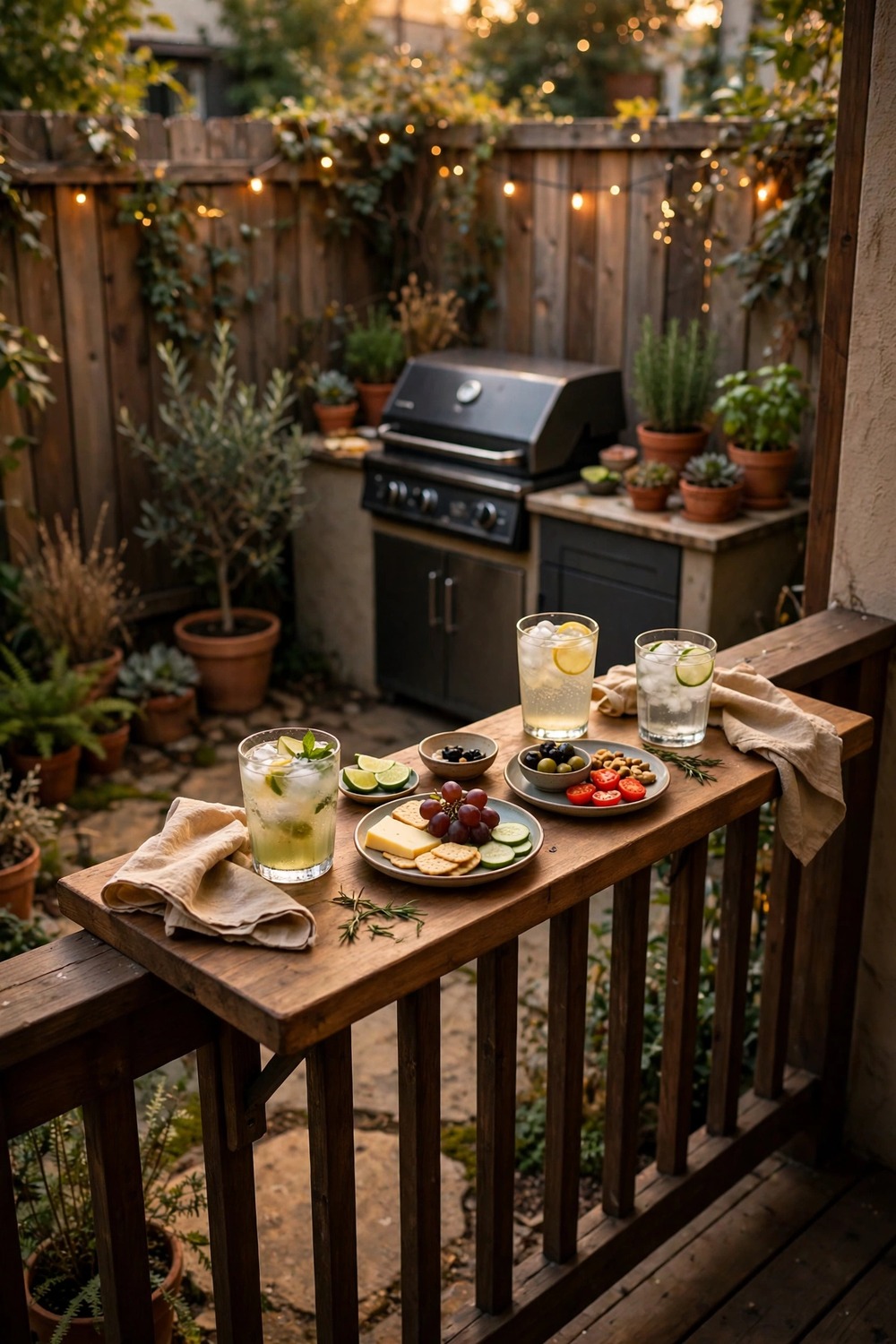
12. Mount a Deck Rail Counter for Tiny Yards
A deck rail counter is a small idea with an outsized payoff in a tiny yard, because it adds a real work and serving surface without using a single inch of floor space. A wide, sturdy board or a ready made rail table clamps or brackets onto your railing and instantly becomes a landing spot for drinks, plates, and the cook’s tray, or even a narrow eating counter for two with stools on the deck side. Choose weather resistant wood or composite, round the corners if you can, and make sure the fixings are solid, since a wobbly counter full of glasses helps nobody. Keep the surface clear of heavy items and check the brackets now and then through the season. In a rental, clamp on styles that leave no marks are usually the safest choice. A practical tip is to treat the rail counter as your serving line, with finished food landing there first, so your small prep area never gets buried under done dishes.
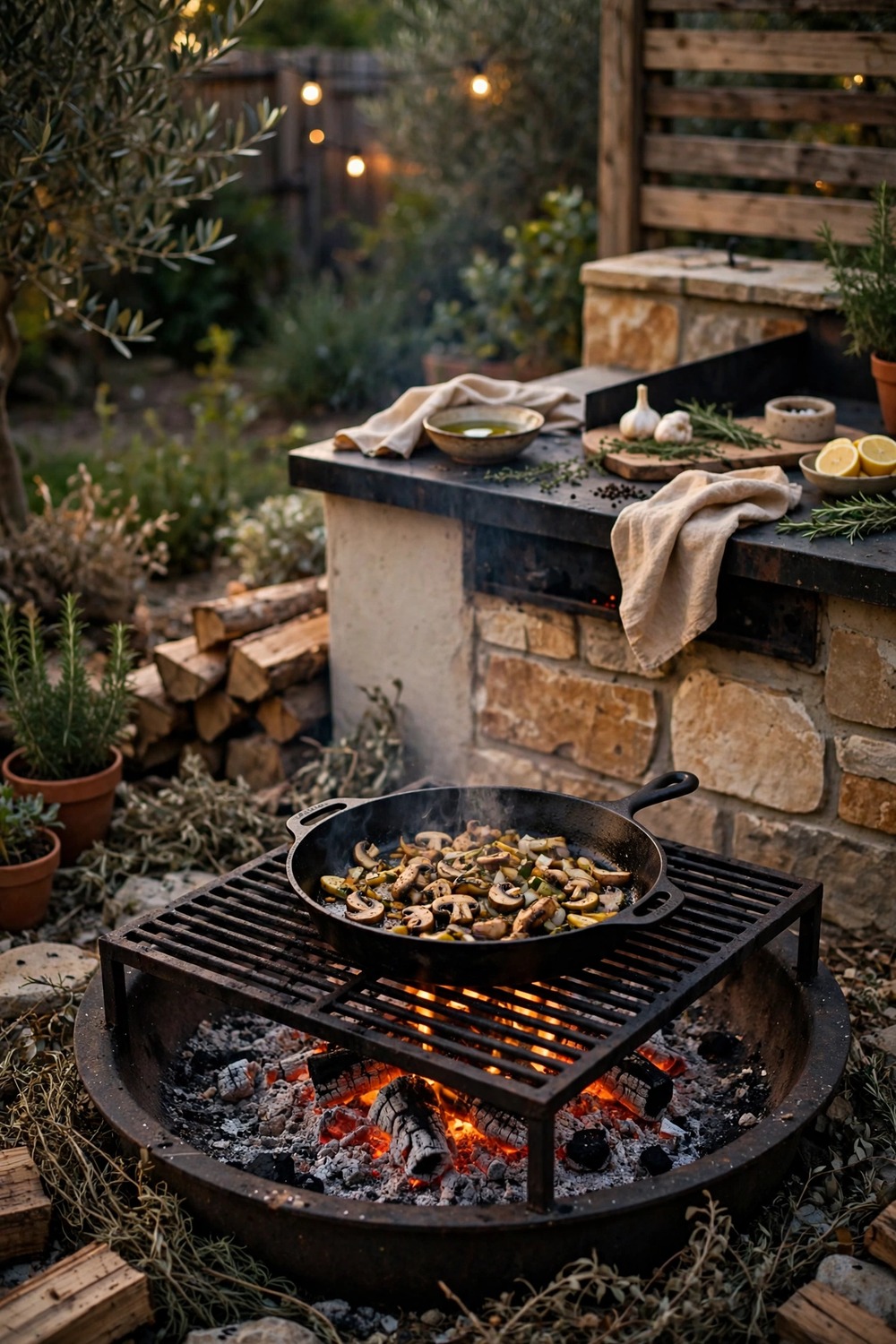
13. Cook Over a Fire Pit With a Grill Grate
Cooking over a fire pit with a grill grate brings a rustic, campfire feeling to the backyard that a standard grill just cannot copy, and it doubles your cooking space on nights when everyone is hungry at once. A sturdy grate that sits over the pit, or a swing away arm that lets you move food closer to or farther from the heat, gives you surprising control once you get a feel for the coals. Start the fire early and let it burn down to glowing embers, since flames look exciting but usually scorch the outside of food before the inside cooks. Cast iron pans, foil packets, kebabs, and thick vegetables all love this kind of heat. Keep long handled tools, heat safe gloves, and a bucket of water or sand nearby, and always follow your local rules about open fires. When dinner is done, the same pit becomes the evening’s gathering spot, which is a lovely two for one in any size yard.
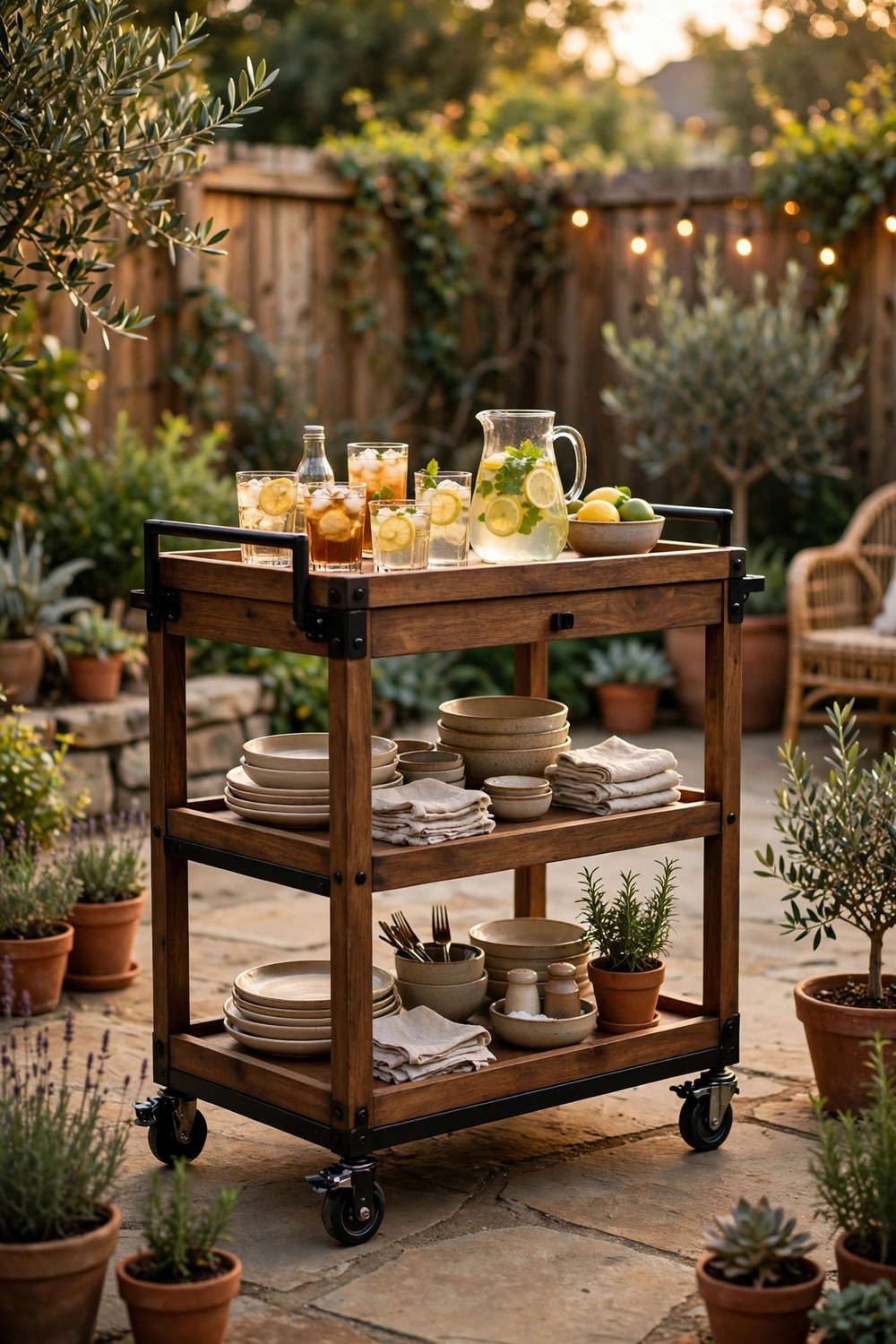
14. Set Up a Portable Kitchen Cart for Serving
A portable kitchen cart is the flexible friend every outdoor setup needs, because it can be a drinks station at one party, a dessert trolley at the next, and extra prep space on the nights the counter runs out. Look for a cart with two or three shelves, rails or edges that keep bottles and bowls from sliding, and wheels that roll happily over your patio or deck surface. Load it inside, where loading is easy, then roll the whole station out in one trip instead of carrying things piece by piece. Park it between the kitchen zone and the seating area so guests can reach drinks and snacks without crossing the cook’s path. When the evening ends, the cart rolls back in with the leftovers aboard. A helpful tip is to keep a small towel, a bottle opener, and a trash bag clipped to the cart at all times. Those three little things prevent a surprising number of extra trips back into the house.
Finish the Space So It Feels Like a Room
The last layer makes an outdoor kitchen feel like a real room instead of equipment parked outside. Fresh herbs, a rug that defines the zone, a generous island for homes that host often, and a dining nook close enough for food to arrive hot all pull the picture together.
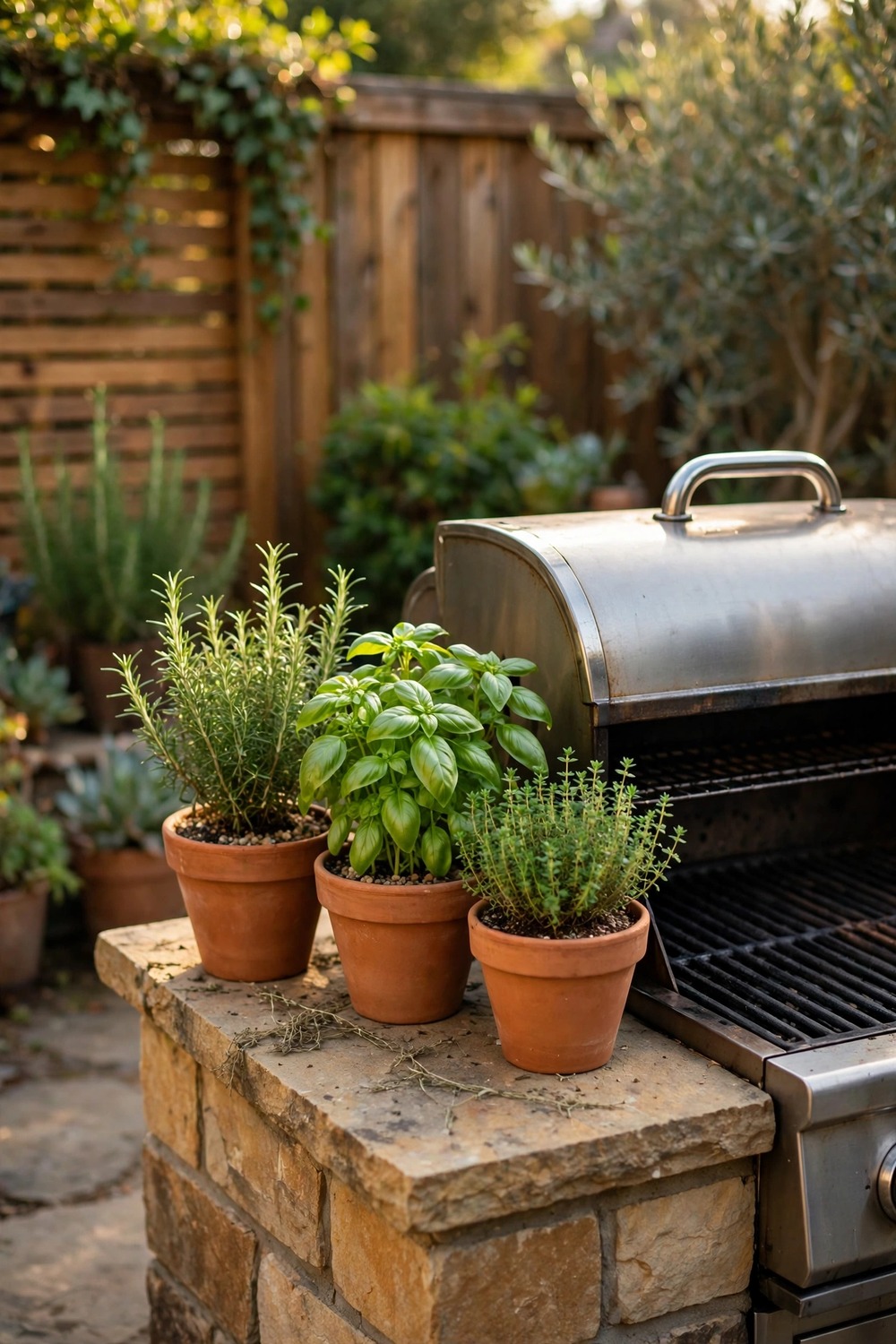
15. Grow Herbs Right Beside the Grill
Herbs growing right beside the grill are equal parts pretty and practical, because fresh rosemary, thyme, basil, and mint genuinely make grilled food taste better, and snipping them to order feels like a small luxury every single time. A row of pots along the counter edge, a rail planter, or a small raised bed at the end of the island all work, as long as the plants get good sun and sit within easy reach of the cook. Group pots on a tray so watering is quick and the counter stays tidy, and choose sturdy herbs that forgive a little neglect during busy weeks. Rosemary sprigs can even go straight onto the coals or the grill for a burst of fragrant smoke. Label the pots if you share cooking duties, so helpers can tell the thyme from the oregano at a glance. A practical tip is to keep scissors or snips hanging by the pots, because the easier the harvest is, the more often you will actually do it.
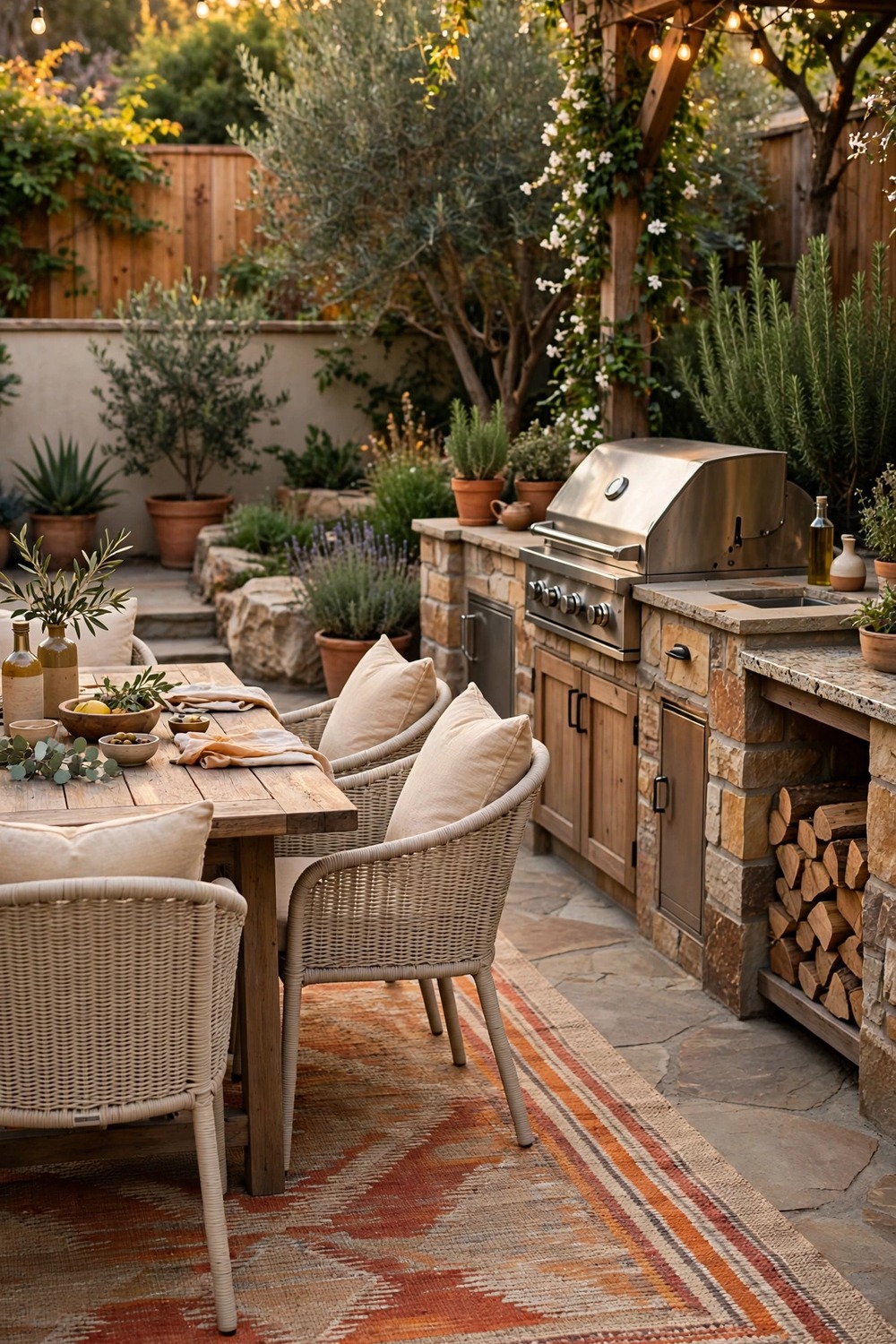
16. Lay an Outdoor Rug to Define the Zone
An outdoor rug under your kitchen or dining zone does the quiet magic of turning a patch of patio into a room, because your eye reads that rectangle as a place with a purpose. It softens the space visually, feels kinder underfoot during long cooking sessions, and helps keep seating and tables grouped in a way that looks deliberate. Choose a rug made for outdoor life that can be hosed down, and think carefully about placement near the grill, since grease splashes and hot sparks are hard on any fabric. Many cooks prefer the rug under the dining or seating side and keep the immediate grill area bare for safety and easy sweeping. Flat weave styles usually stay calmer under chair legs and cart wheels than thick, plush ones. Pick a pattern that can hide a little everyday dust between cleanings, in colors that echo your cushions or your house. That small bit of ground definition pulls the whole setup together more than you might expect.
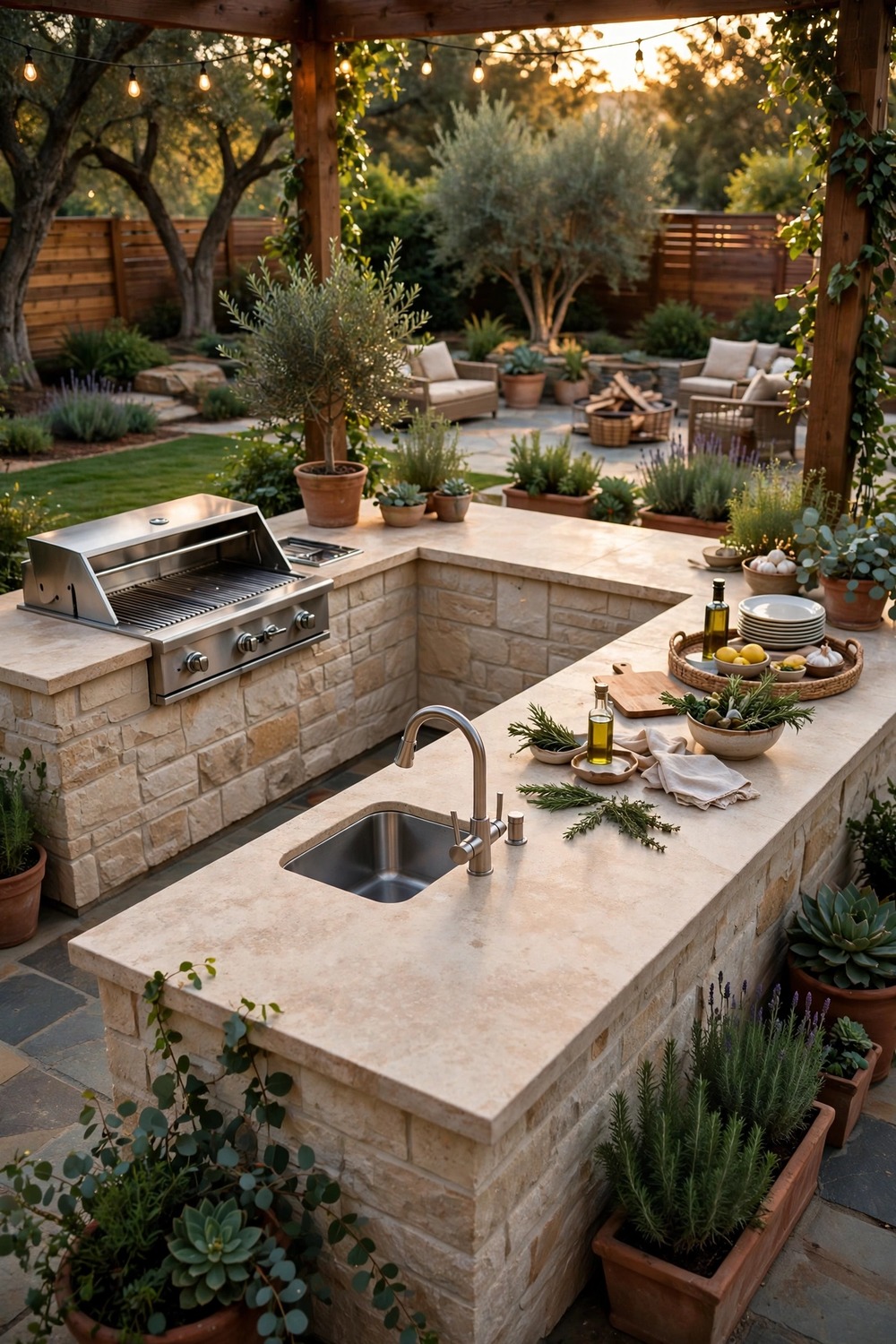
17. Build a Full U-Shaped Island for Big Gatherings
A full U-shaped island is the dream setup for backyards that host often, because it wraps the cook in counter space on three sides and creates a natural gathering bar along the outside. The center of the U usually holds the grill, one side becomes prep with a sink if you have one, and the other side handles serving, storage, and a fridge, so everything happens within a step or two. Guests settle along the open outer edge, close to the action but never in the way, which makes big family dinners and weekend gatherings feel easy instead of chaotic. This is a bigger investment of money and space, so plan utilities, ventilation, and walkways carefully, and leave generous room to move behind the cook. A helpful tip is to build in phases if you need to, starting with the grill run and adding the side counters in later seasons. A U that grows over time will typically fit your habits far better than one copied whole from a photo.
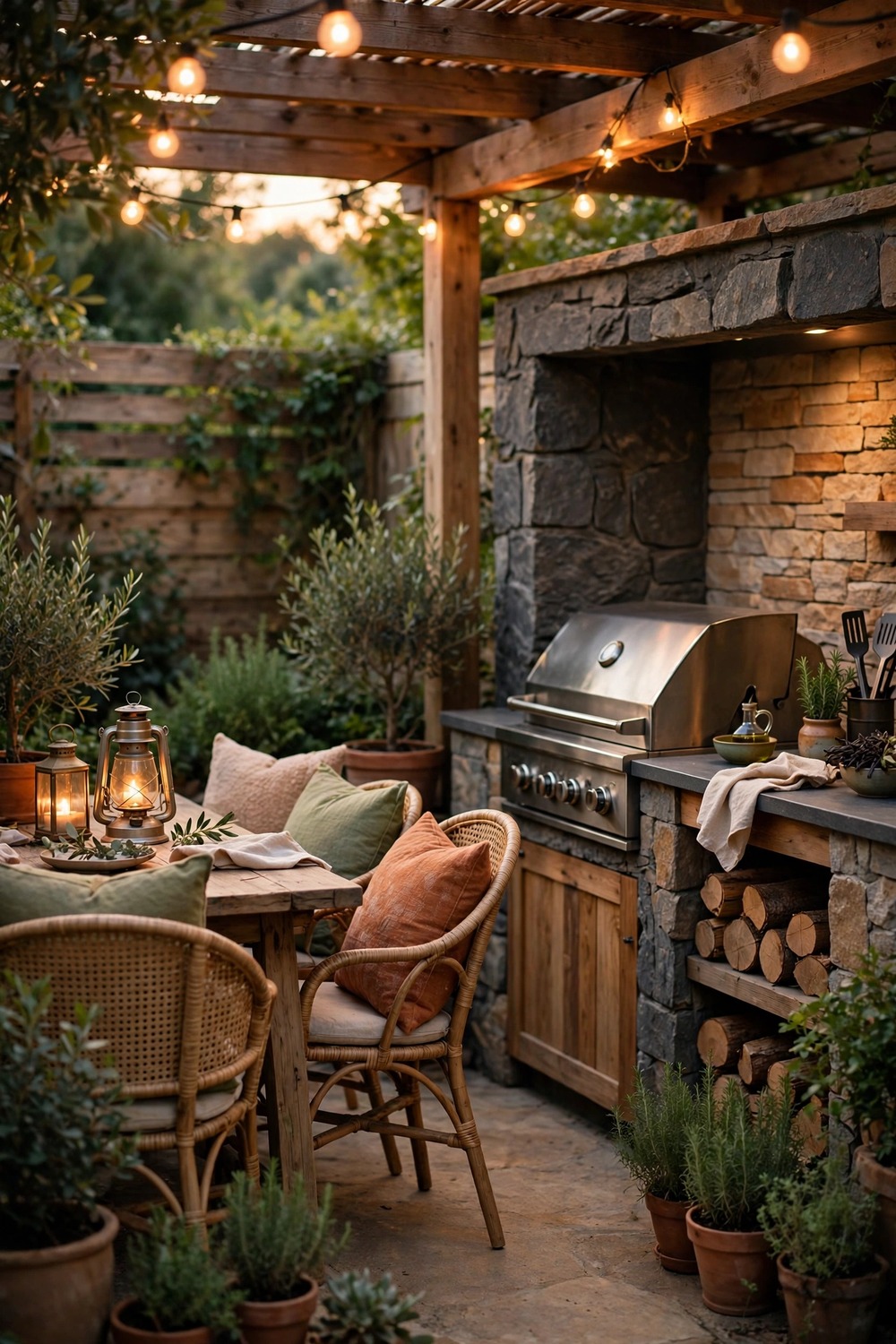
18. Finish With a Cozy Dining Nook Nearby
A cozy dining nook close to your outdoor kitchen is the finishing touch that makes the whole project worthwhile, because food cooked outside tastes best when it only travels a few steps to the table. Tuck a table and comfortable chairs into the nearest patch of shade, against a fence softened with plants, or under the pergola at the edge of the cooking zone, and keep the path from grill to table short and clear. Cushions that live in your weatherproof storage, a simple centerpiece like a lantern or a pot of herbs, and those string lights overhead turn an ordinary table into a nook people linger in long after dessert. If space is tight, a small bistro set for two is honestly enough to change your mornings and your weeknight dinners. A practical tip is to sit in the nook at different times of day before you commit, checking sun, breeze, and the view. The best outdoor meals usually happen in the spot that already felt good before the table arrived.
Your Best Outdoor Meals Are Closer Than You Think
When you step back, an outdoor kitchen is not really about stone, steel, or square footage. It is about how many ordinary evenings turn into dinner outside, how often friends stay a little longer, and how calm you feel while you cook. If your current setup frustrates you, pick the one idea that fixes the biggest annoyance first, whether that is a tray with nowhere to land, no shade at noon, or drinks that live too far away. Small, useful changes typically beat a perfect plan that never gets started.
So start this week with something you can finish. Roll a cart beside the grill, hang one strand of lights, or set a pot of rosemary where you can reach it. Cook one simple meal in your improved little setup and notice what works and what still feels missing. That honest test will point you to your next idea far better than any catalog could. Before long, your backyard, big or small, will not feel like a project anymore. It will feel like your favorite room of the house, just with better air and a much nicer ceiling.




Leave a Reply