
A kitchen runner does three jobs at once: it softens the hardest-working floor in the house, catches the drips and crumbs that live between the sink and the stove, and quietly pulls the whole room’s colors together. The right rug makes an all-white kitchen feel warm, a long galley feel designed, and tired floors feel new again — all without a single renovation. These ten ideas cover lengths, fibers, colors, and placements, so you can pick the one that suits your kitchen and your life. Save your favorites, measure your floor twice, and let your feet feel the difference.
In This Article
- 1. Run a Long Runner Along the Sink
- 2. Choose a Low-Pile Rug You Can Actually Wash
- 3. Soften the Stove Spot with a Cushioned Mat
- 4. Match the Runner to Your Cabinet Colors
- 5. Anchor the Island with a Runner Beside It
- 6. Break Up a Square Kitchen with a Round Rug
- 7. Settle the Back Door with a Small Rug
- 8. Bring Warmth In with a Natural Jute Runner
- 9. Get the Size Right Before You Buy
- 10. Ground a Breakfast Corner with a Rug Under the Table
1. Run a Long Runner Along the Sink
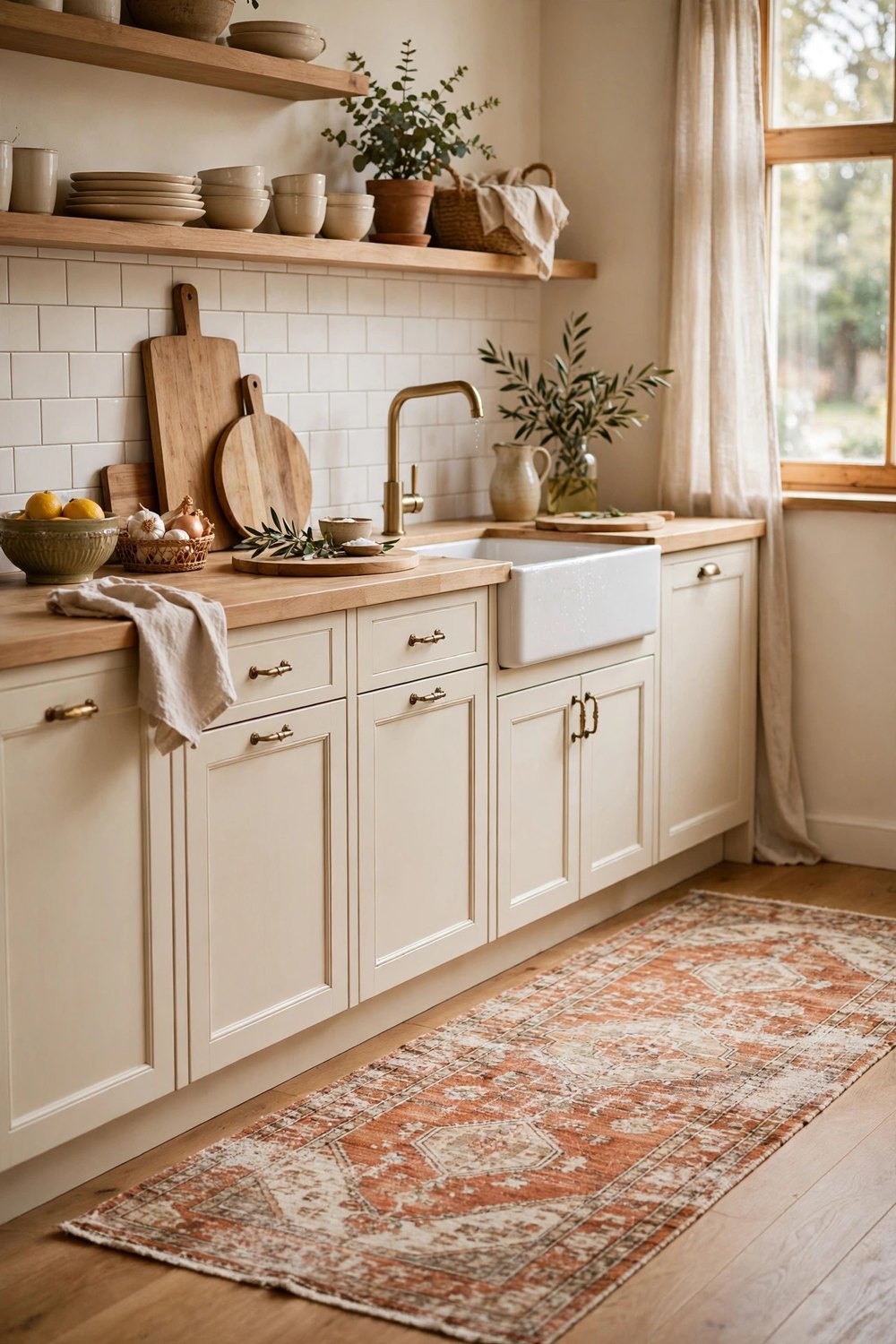
The classic kitchen rug is a long runner laid along the sink-and-stove run, and it works in almost every layout. It cushions the exact stretch of floor where you stand to wash, chop, and cook, and it draws the eye down the room so even a small kitchen feels longer. Choose a pattern with some movement — a faded vintage look hides a multitude of daily sins. Leave a hand’s width of bare floor on each side so the runner looks fitted, not lost.
2. Choose a Low-Pile Rug You Can Actually Wash
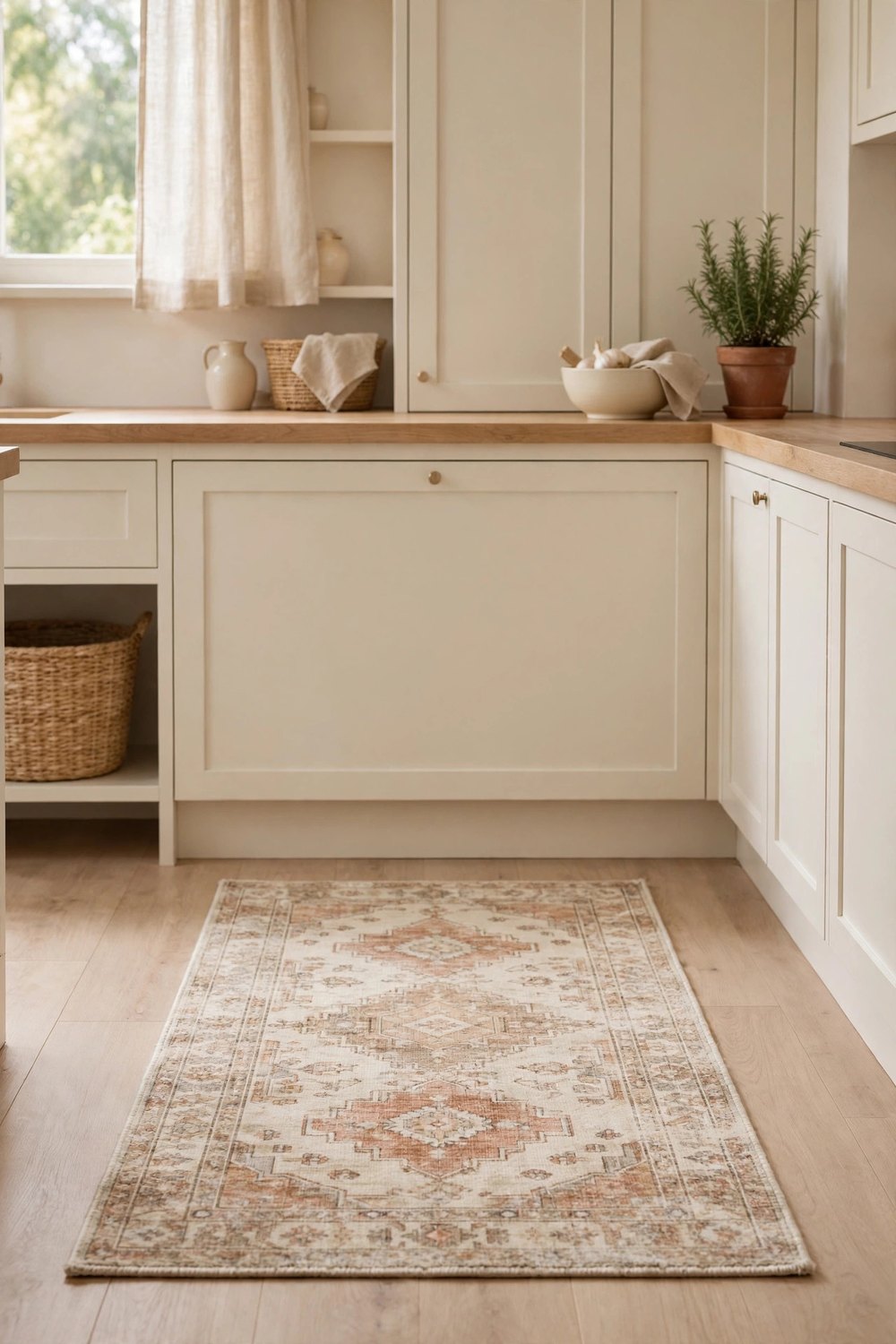
Kitchen rugs live hard lives, so practicality is a style choice too. A low-pile, machine-washable runner shakes out crumbs instead of trapping them, slides under doors without catching, and goes straight in the wash after the tomato sauce incident. Modern washable rugs come in beautifully muted, vintage-style prints that look anything but practical. Buy the one you can clean without thinking twice, and you will never resent it.
3. Soften the Stove Spot with a Cushioned Mat
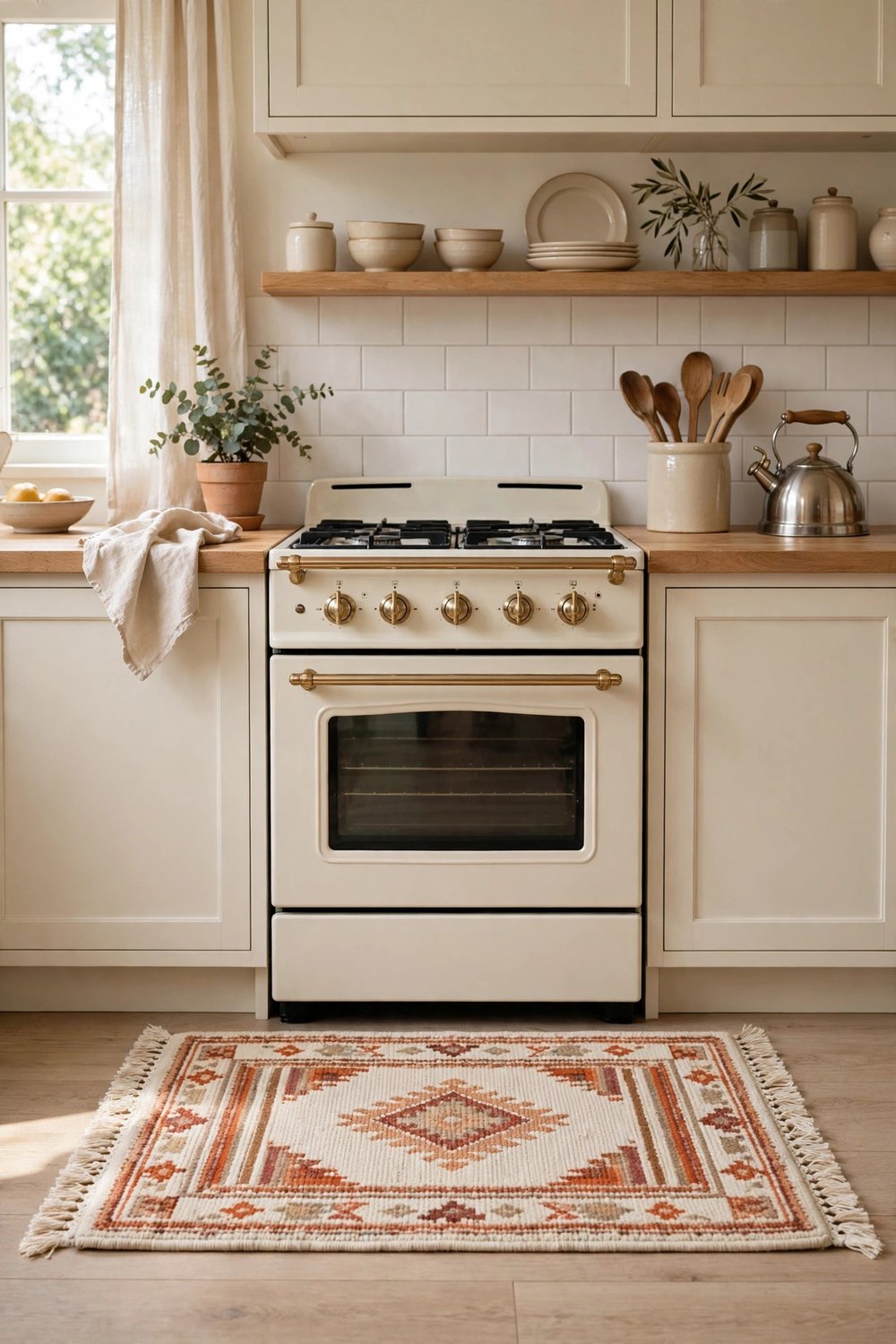
Where you stand longest deserves the softest landing. A cushioned anti-fatigue mat in front of the stove — the kind that looks like a woven rug or a vintage tile pattern — saves your feet and knees through long cooking sessions without reading as “kitchen equipment.” Keep it short and centered on the work zone, and coordinate its tones with your runner if you use both. Comfort you can see working is the best kind of styling.
4. Match the Runner to Your Cabinet Colors
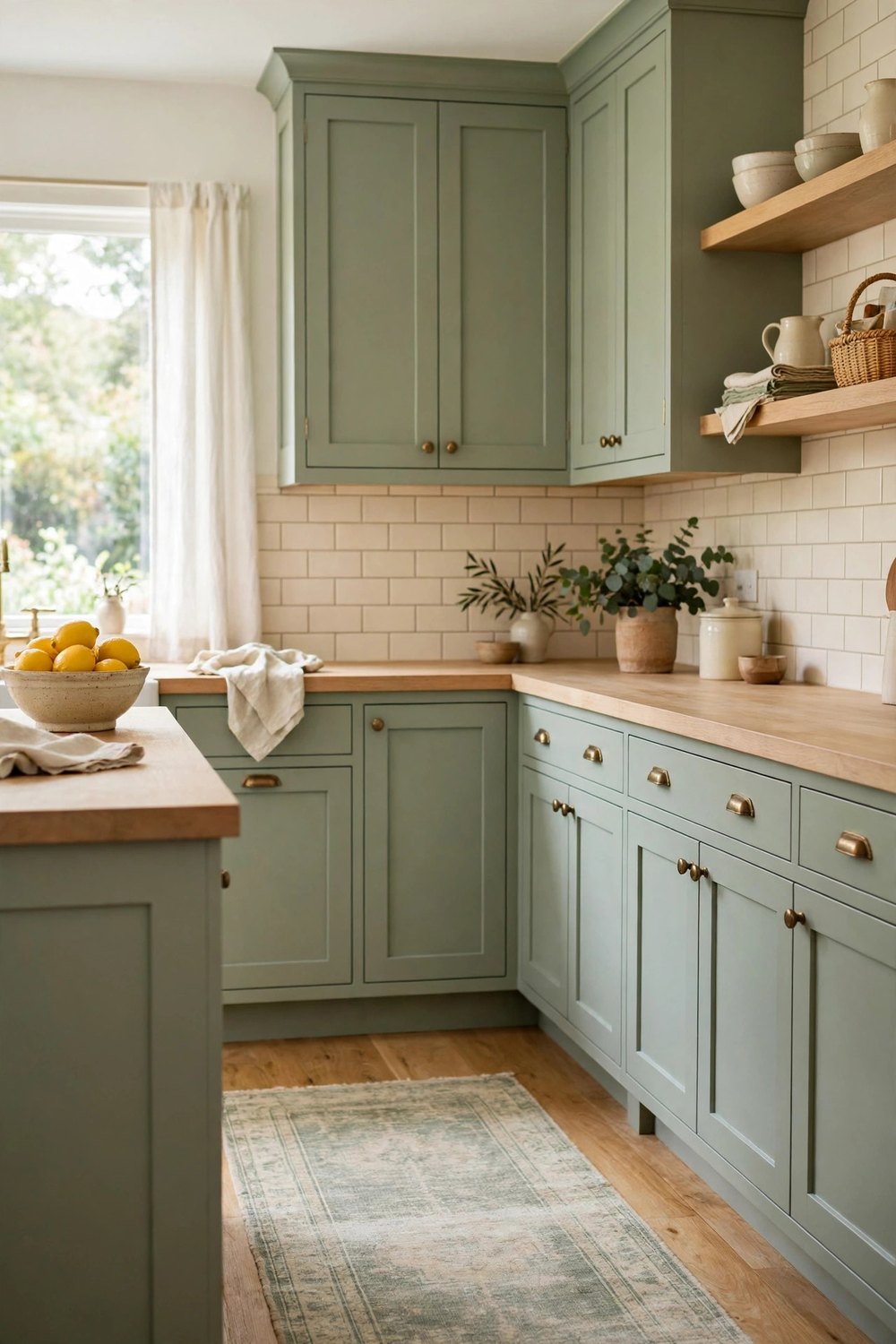
The fastest way to make a kitchen look designed is to let the runner repeat colors that already live there. Pull one tone from your cabinets and one from your counters or backsplash, and find a rug that carries both in a soft, faded way. A sage cabinet kitchen comes alive with a runner in washed sage and cream; warm wood cabinets love rust and beige threads. The rug becomes the thread that quietly ties the whole palette together.
5. Anchor the Island with a Runner Beside It
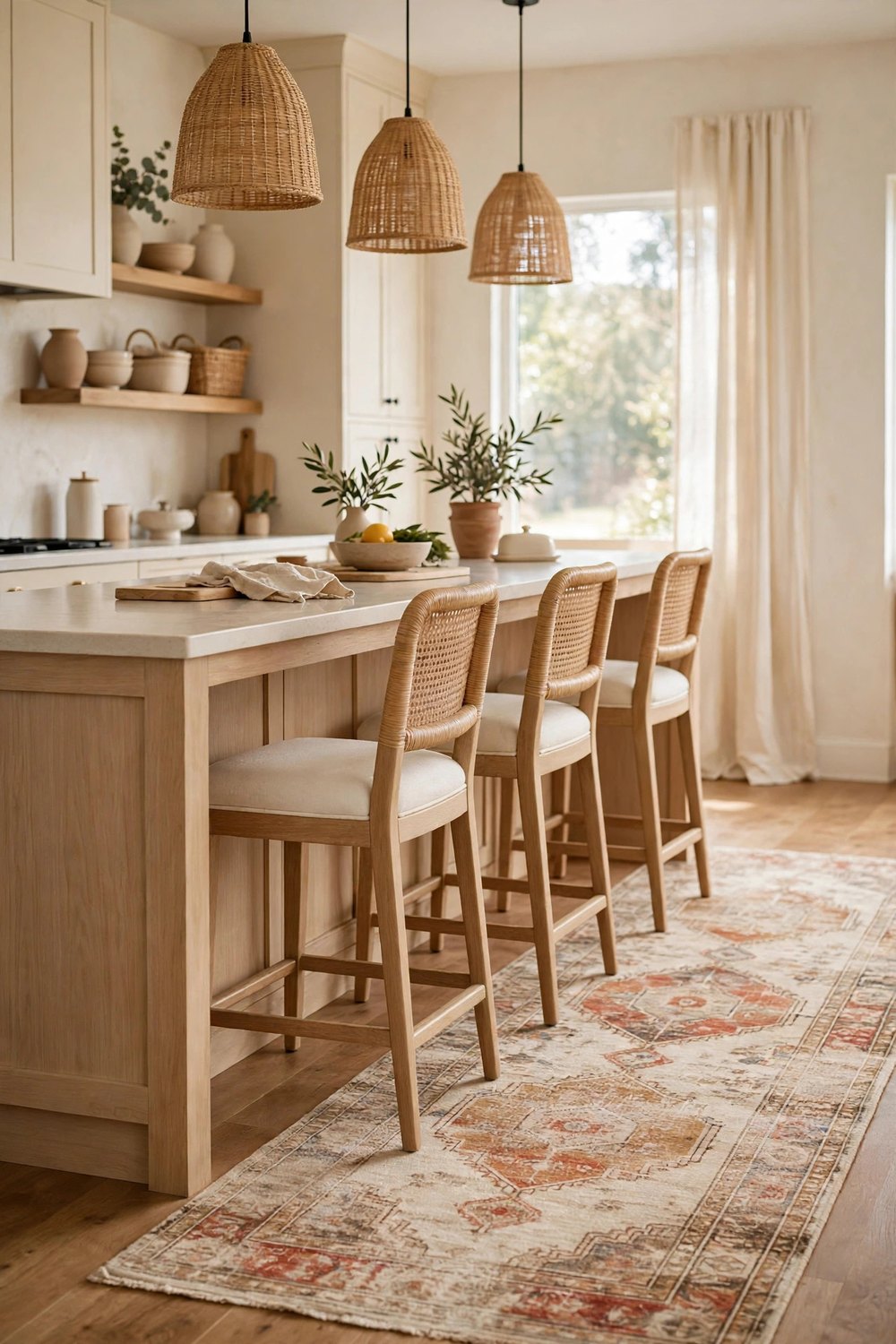
An island can float awkwardly in a big kitchen until a runner gives it a shoreline. Lay a long rug along the working side of the island, where the stools and the cooking happen, and the whole zone suddenly reads as one composed scene. It also catches the drips that travel between island and sink all day long. Keep the runner’s length close to the island’s length so the pairing looks deliberate.
6. Break Up a Square Kitchen with a Round Rug
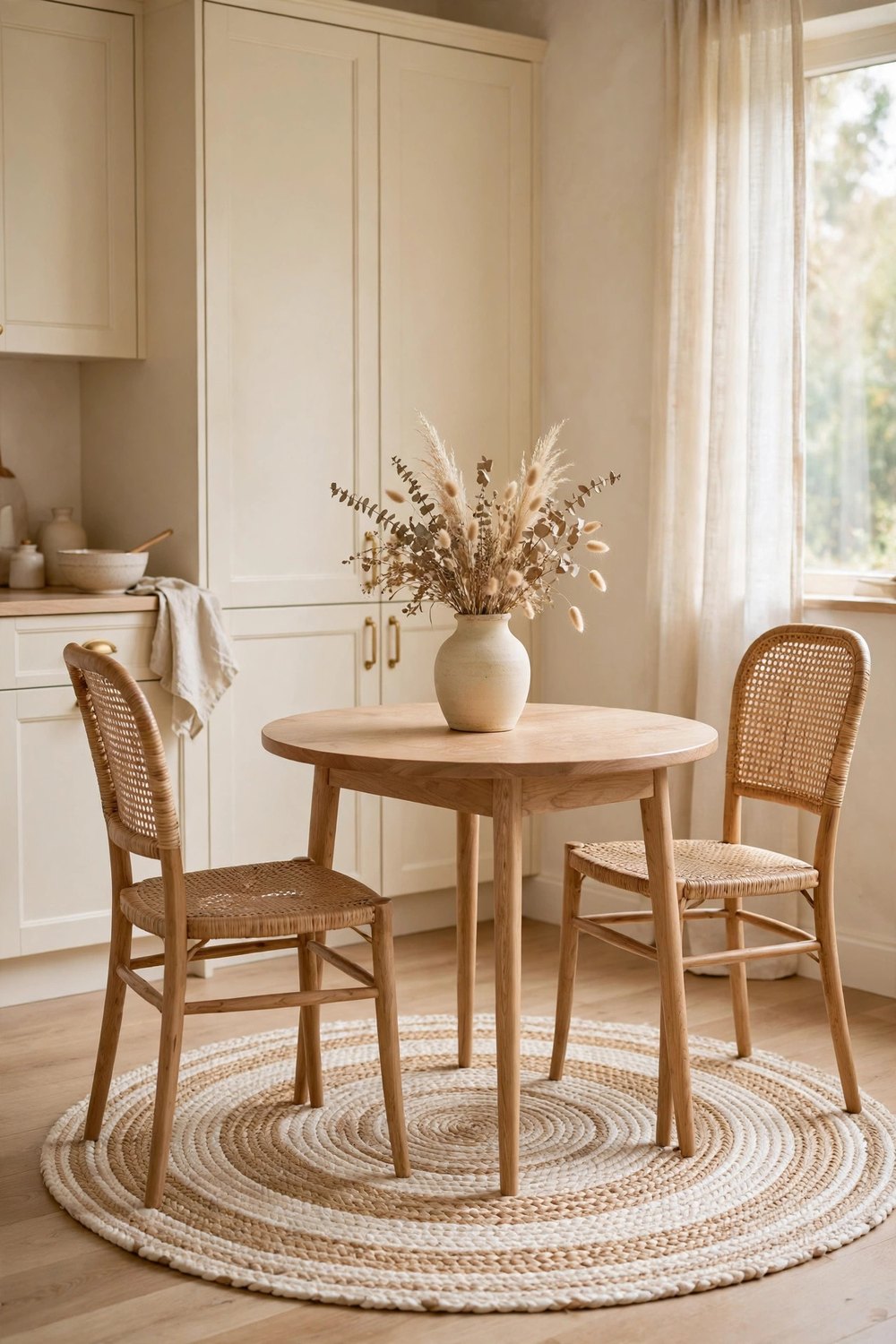
Square kitchens and boxy eat-in corners collect straight lines — cabinets, counters, table edges — and a round rug is the gentle interruption they need. Slip a round woven or patterned rug under a small table, beside an island, or in an open patch of floor, and the room instantly feels softer and more considered. Round rugs are also forgiving in awkward layouts where a runner would argue with the floor plan. Choose a size that tucks under at least the front legs of nearby furniture.
7. Settle the Back Door with a Small Rug
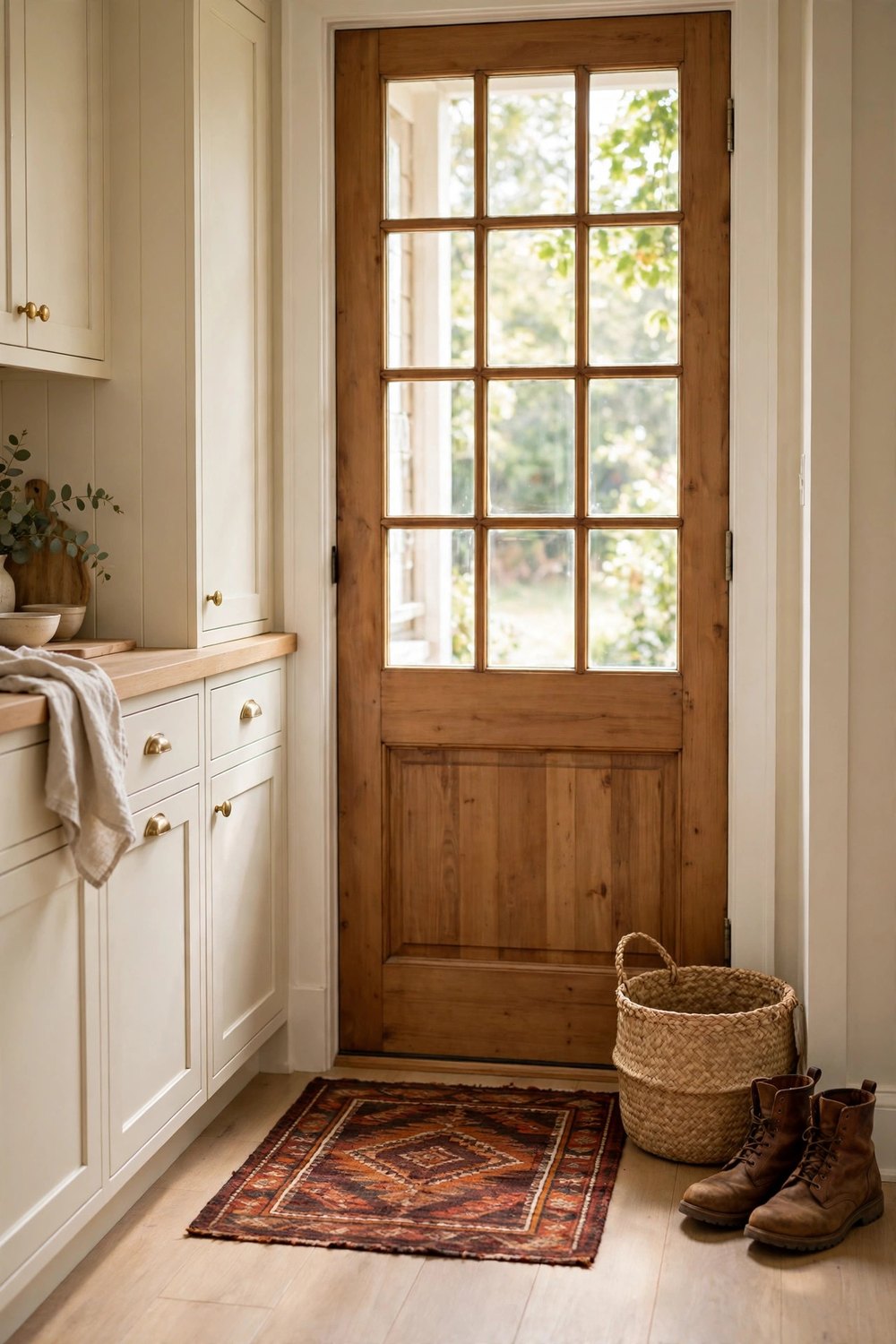
The spot inside the kitchen door is where outside tries to move in — wet shoes, muddy paws, the grocery bag drip trail. A small, sturdy rug or short runner there catches it all, and a warm pattern makes the entrance feel like part of the kitchen instead of a service hatch. Choose something flat, dark enough to be forgiving, and easy to shake out on the step. It is a small rug doing quiet, essential diplomacy.
8. Bring Warmth In with a Natural Jute Runner
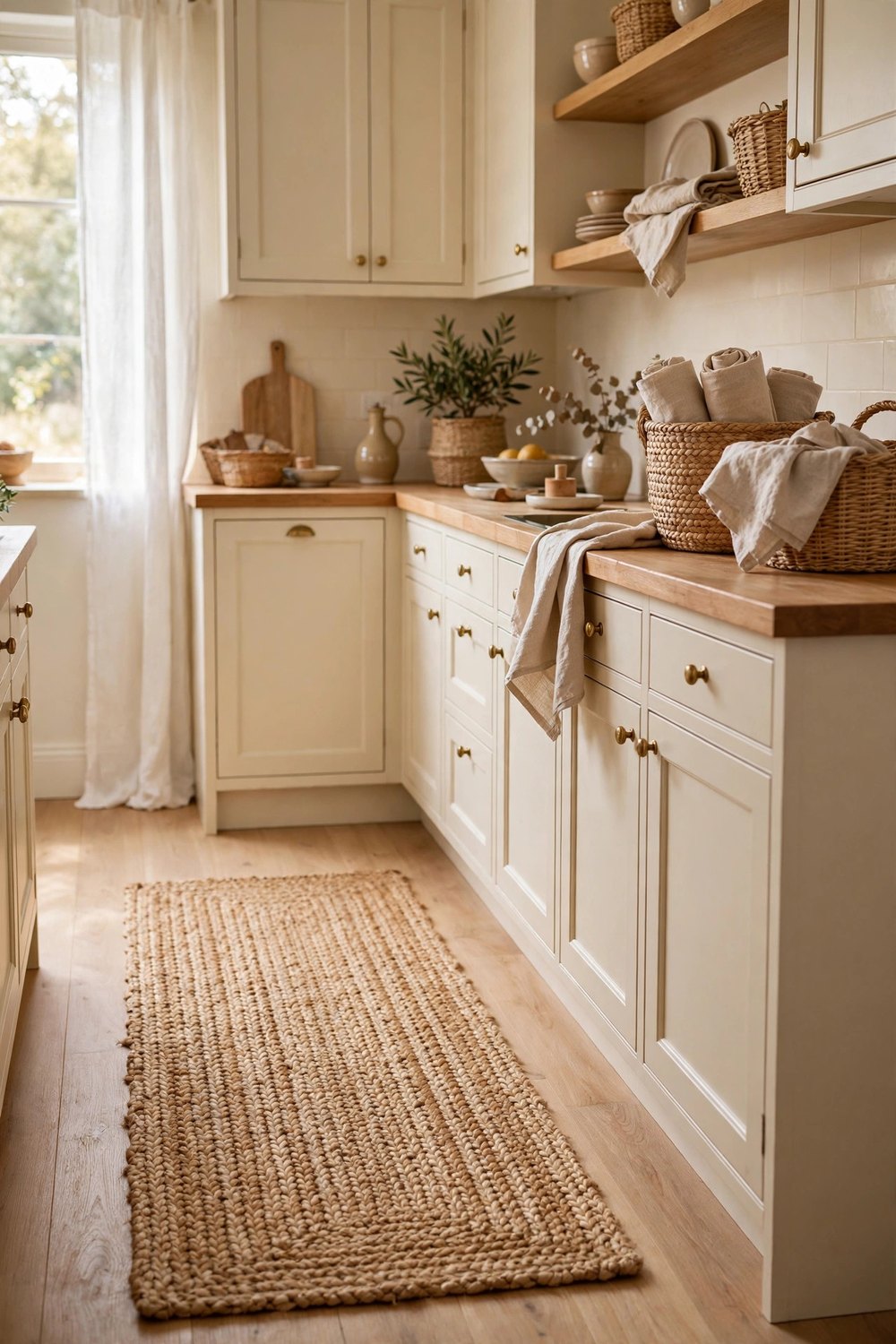
When your kitchen is full of hard, wipeable surfaces, natural fiber is the warmth it is missing. A jute or woven natural-fiber runner adds nubby texture, a sandy tone that suits every cabinet color, and a relaxed, collected feel that printed rugs sometimes miss. It pairs beautifully with wood boards, woven baskets, and linen towels already in the room. Vacuum it often, keep it out of the wettest splash zone, and it will mellow handsomely with age.
9. Get the Size Right Before You Buy
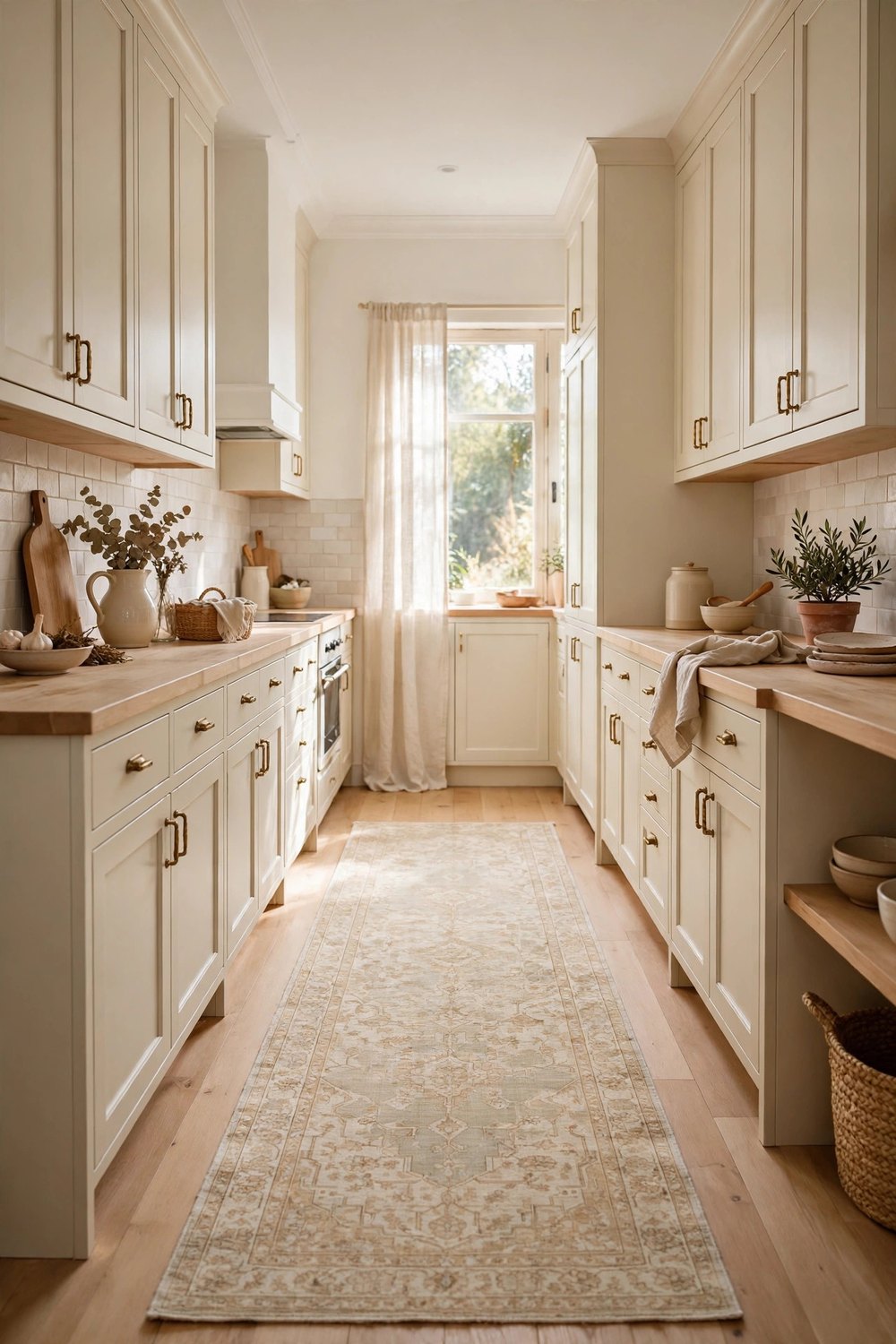
Most kitchen rugs disappoint for one simple reason: they are too small. A runner should cover most of the walkway it serves — aim for it to run at least two-thirds the length of your counter run, ending before doors and corners rather than colliding with them. Width matters too: you want floor showing on both sides, but not so much that the rug becomes a tightrope. Tape the outline on the floor with painter’s tape for a day before you order, and the size will never be a guess.
10. Ground a Breakfast Corner with a Rug Under the Table
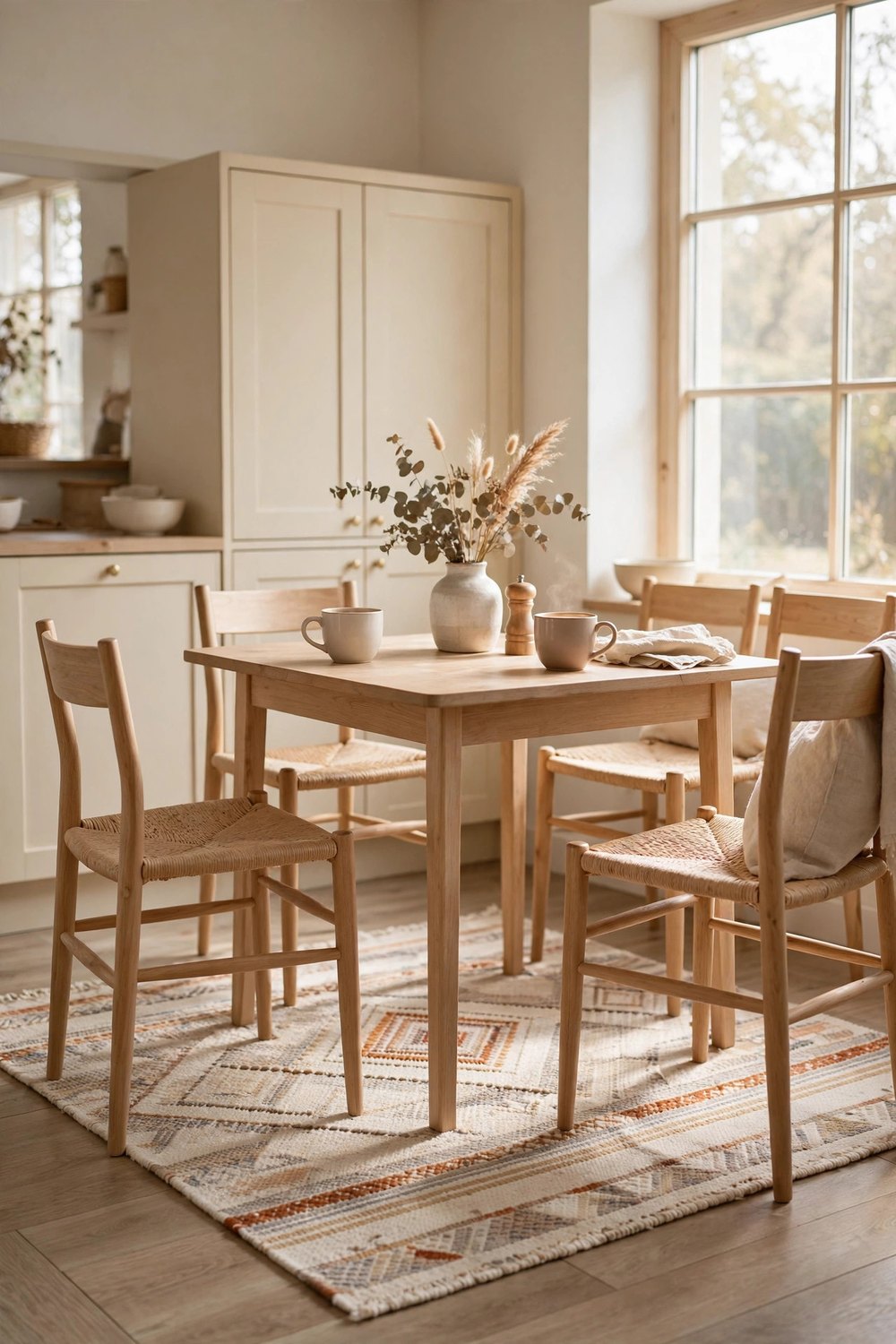
If your kitchen holds a small breakfast table, it deserves its own island of softness. A flat-weave rug under the table and chairs defines the eating corner as its own little room, muffles chair scrapes, and adds the color moment an all-purpose kitchen often lacks. Size it so chairs stay on the rug even when pulled out, and choose a pattern busy enough to forgive toast crumbs between vacuums. Morning coffee simply tastes better with your feet on something warm.
Measure your run, pick a fiber your real life can handle, and let one good rug do the quiet work of warming the whole kitchen. Start with the stretch of floor where you stand the most, live with it for a week, and add a second small rug only if the room asks for it. Save this list to your kitchen board on Pinterest so the measurements and ideas are together when you shop, and follow DecorNesti for a new cozy, space-smart list every week.


Leave a Reply