
A bedroom rug does its most important work in the first ten seconds of your day, when bare feet meet the floor — but where you place it changes how the whole room looks, not just how it feels. Slide it too far under the bed and it disappears; pull it too far out and the room feels off-balance. These ten placements cover everything from the classic three-quarter slide to a pair of slim runners, with the sizing rules that make each one work. Measure your bed before you shop, save the layouts that suit your floor space to Pinterest, and give your mornings a softer landing.
In This Article
- 1. Slide It Under the Lower Two-Thirds of the Bed
- 2. Go All In: Bed and Nightstands on One Big Rug
- 3. Run Two Slim Runners Down Each Side
- 4. Lay One Runner on the Side You Wake Up On
- 5. Layer a Patterned Rug Over a Big Neutral Base
- 6. Let a Round Rug Peek Out from One Corner
- 7. Anchor Just the Foot with a Square Rug
- 8. Fill the Room with One Oversized Rug
- 9. Lay a Runner Across the Foot of the Bed
- 10. Angle the Rug from One Corner in a Small Room
1. Slide It Under the Lower Two-Thirds of the Bed
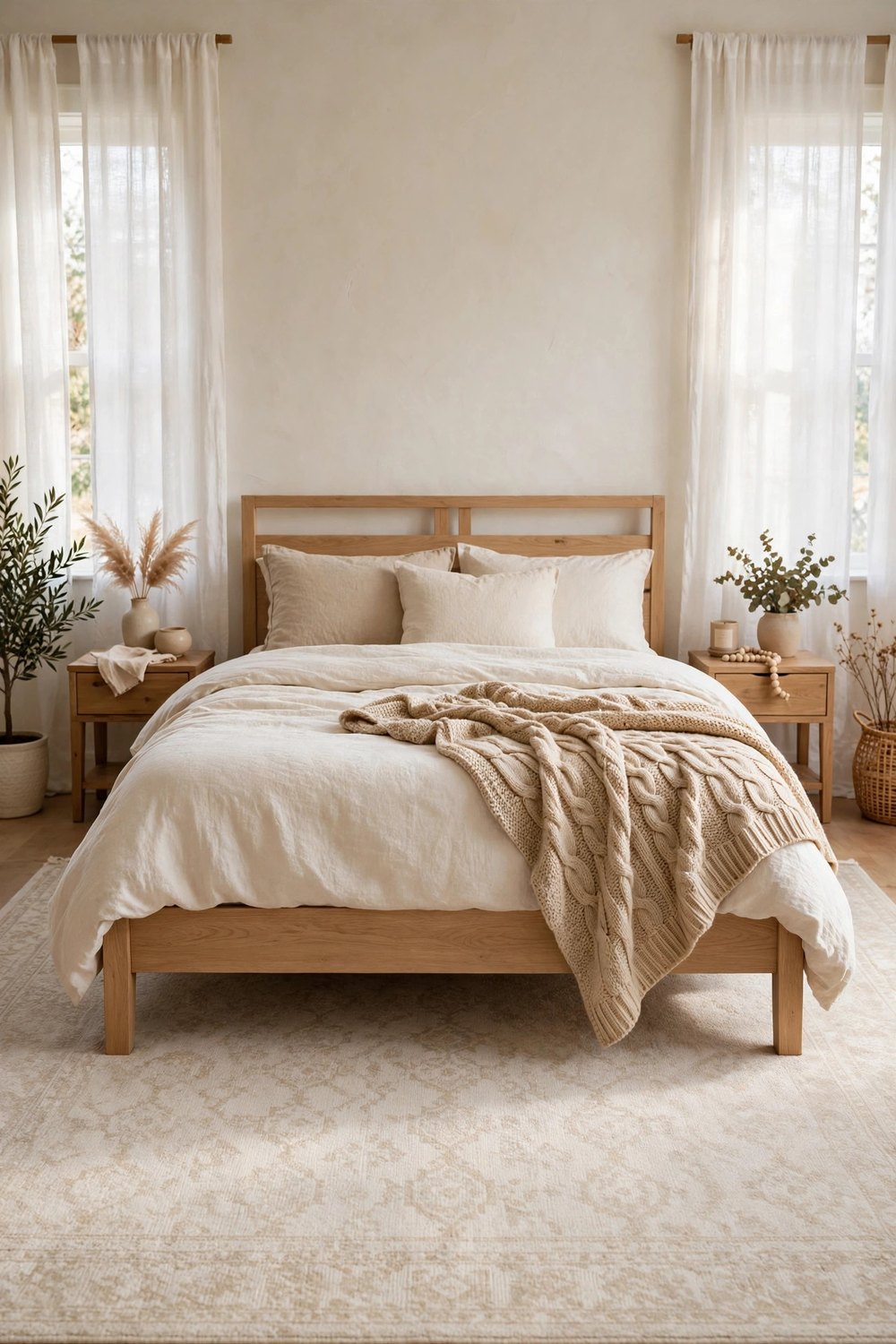
This is the placement designers reach for first, and it flatters almost every bedroom. The rug sits under the bottom two-thirds of the bed, starting just below the nightstands, and extends past the foot so your feet land on softness wherever you climb out. Aim for at least 45 to 60 centimeters of rug showing on both sides and at the foot. A 160 x 230 cm rug suits most double beds and gives the room a calm, anchored frame.
2. Go All In: Bed and Nightstands on One Big Rug
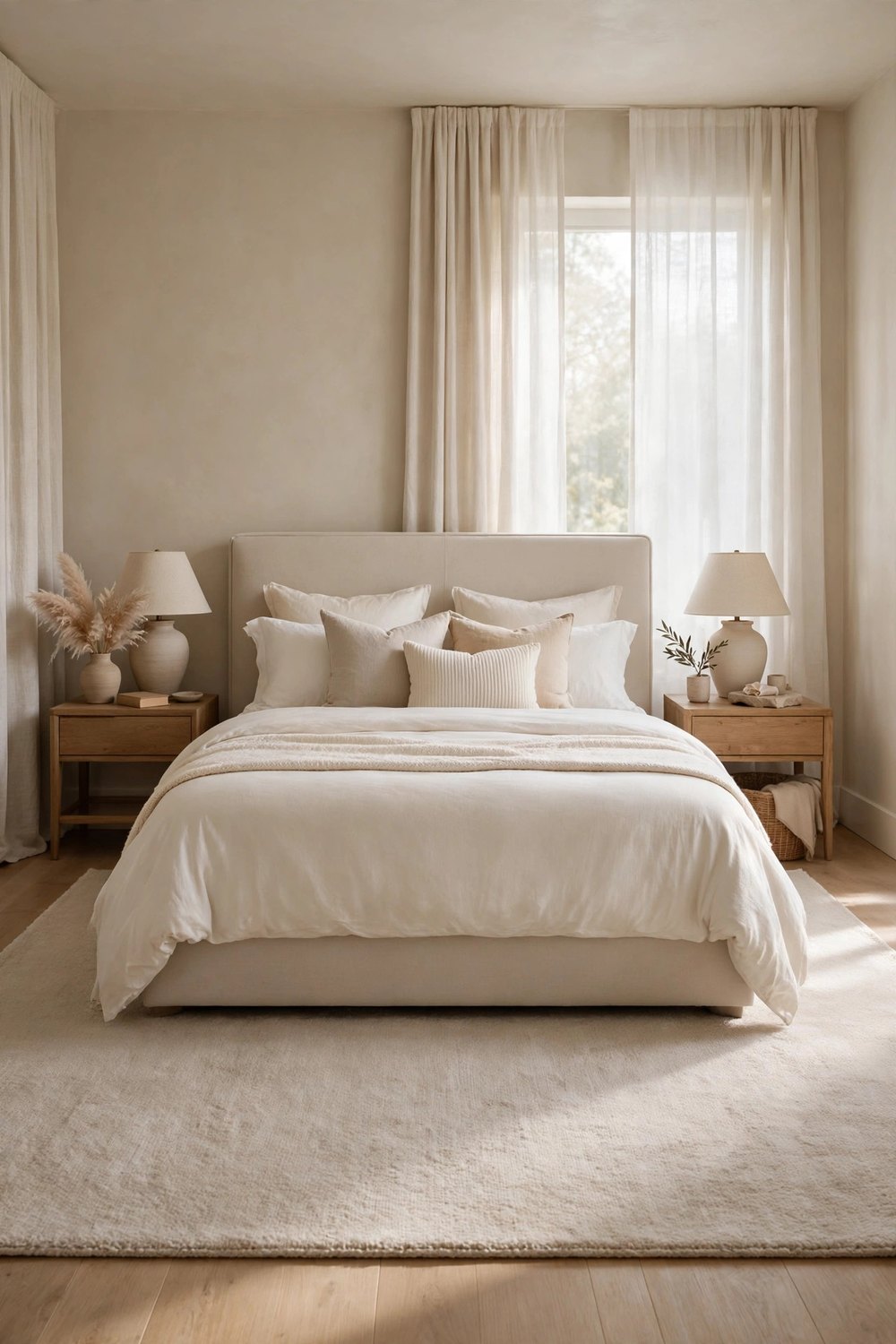
If you love a soft, hotel-like feeling, place the entire bed — headboard end and nightstands included — on one generously sized rug. The rug becomes a quiet island that holds the whole sleeping zone together, and nothing wobbles or sits half-in, half-out. You will need a big size, usually 200 x 300 cm or larger for a king bed, plus a helper to lift the furniture. The result feels calm, unified, and quietly luxurious.
3. Run Two Slim Runners Down Each Side
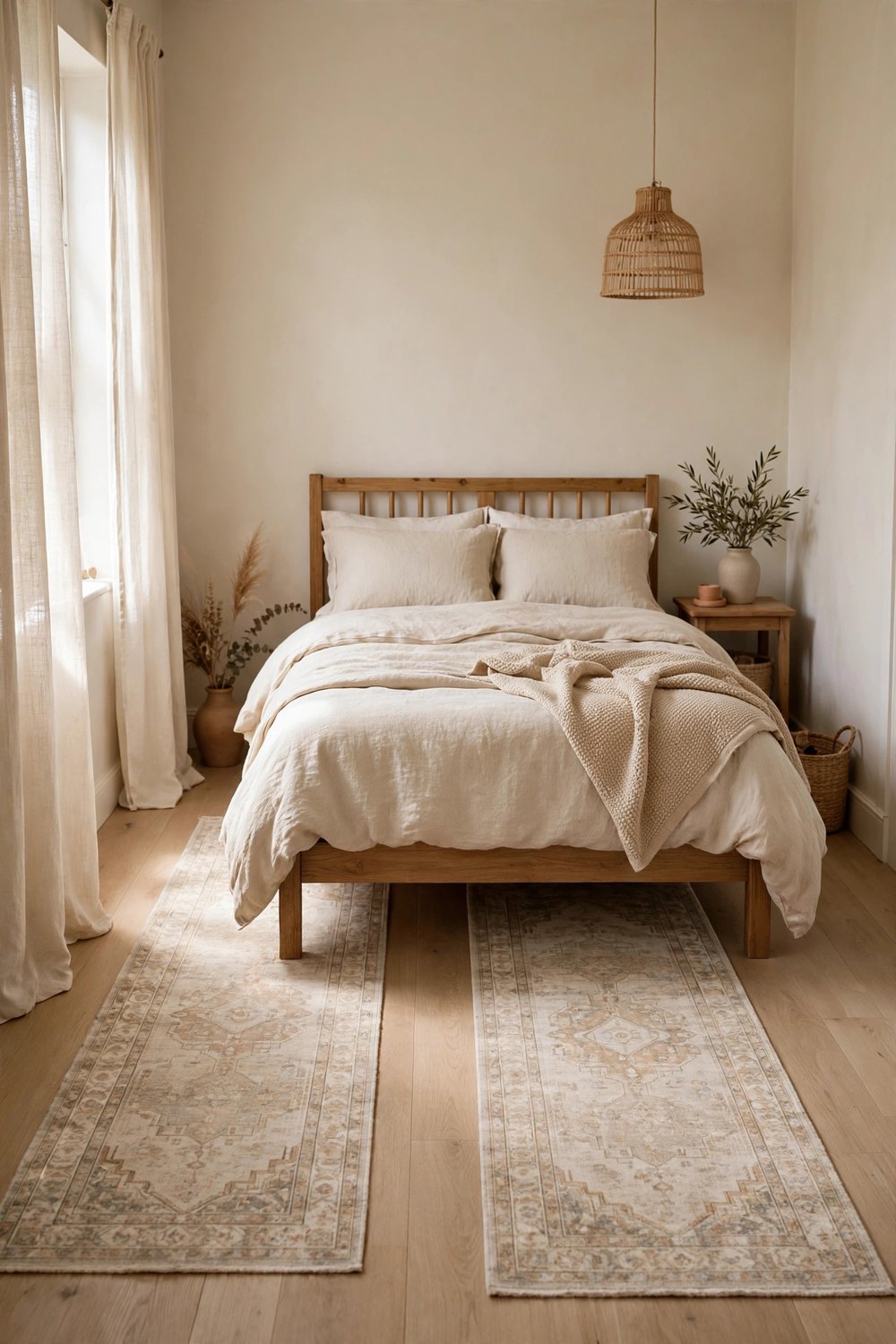
When one large rug is out of budget or the room is narrow, a matched pair of runners gives you softness exactly where feet land — and nowhere you do not need it. Choose runners the length of the bed, or a little longer, and lay them flush against each side. Matching patterns keep the look tailored; slightly faded vintage pairs feel collected and relaxed. As a bonus, two small rugs are far easier to shake out, wash, and rotate than one giant one.
4. Lay One Runner on the Side You Wake Up On
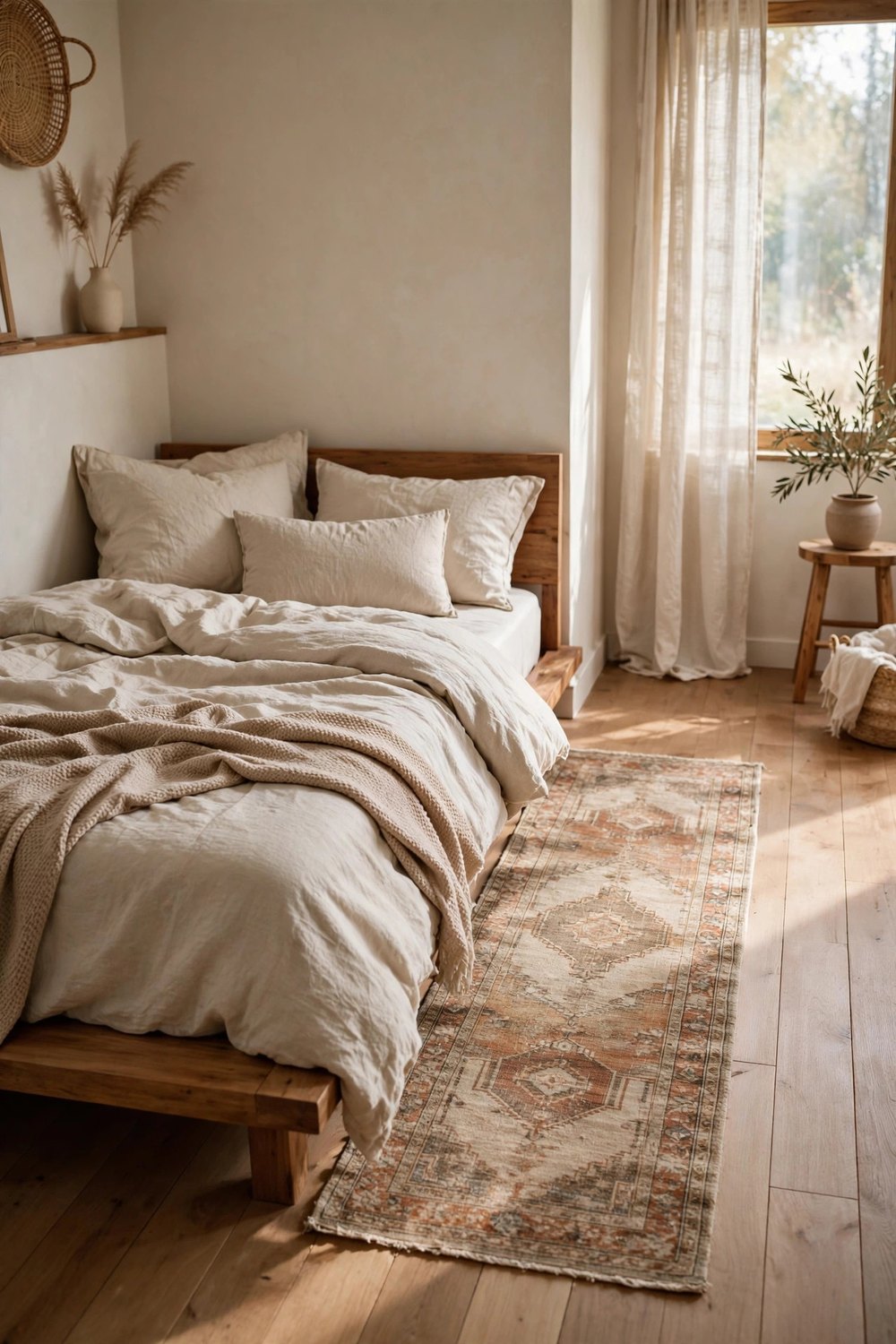
Shared bed, different habits? A single runner on your side of the bed is a perfectly valid design choice — the asymmetric placement actually looks intentional in modern, relaxed bedrooms. Pick a runner with real presence, like a textured weave or a washed vintage pattern, so it reads as a styling moment rather than a leftover. This is also the kindest option for tight budgets and for rooms where one side of the bed sits close to a wall. Softness where you need it, simplicity everywhere else.
5. Layer a Patterned Rug Over a Big Neutral Base
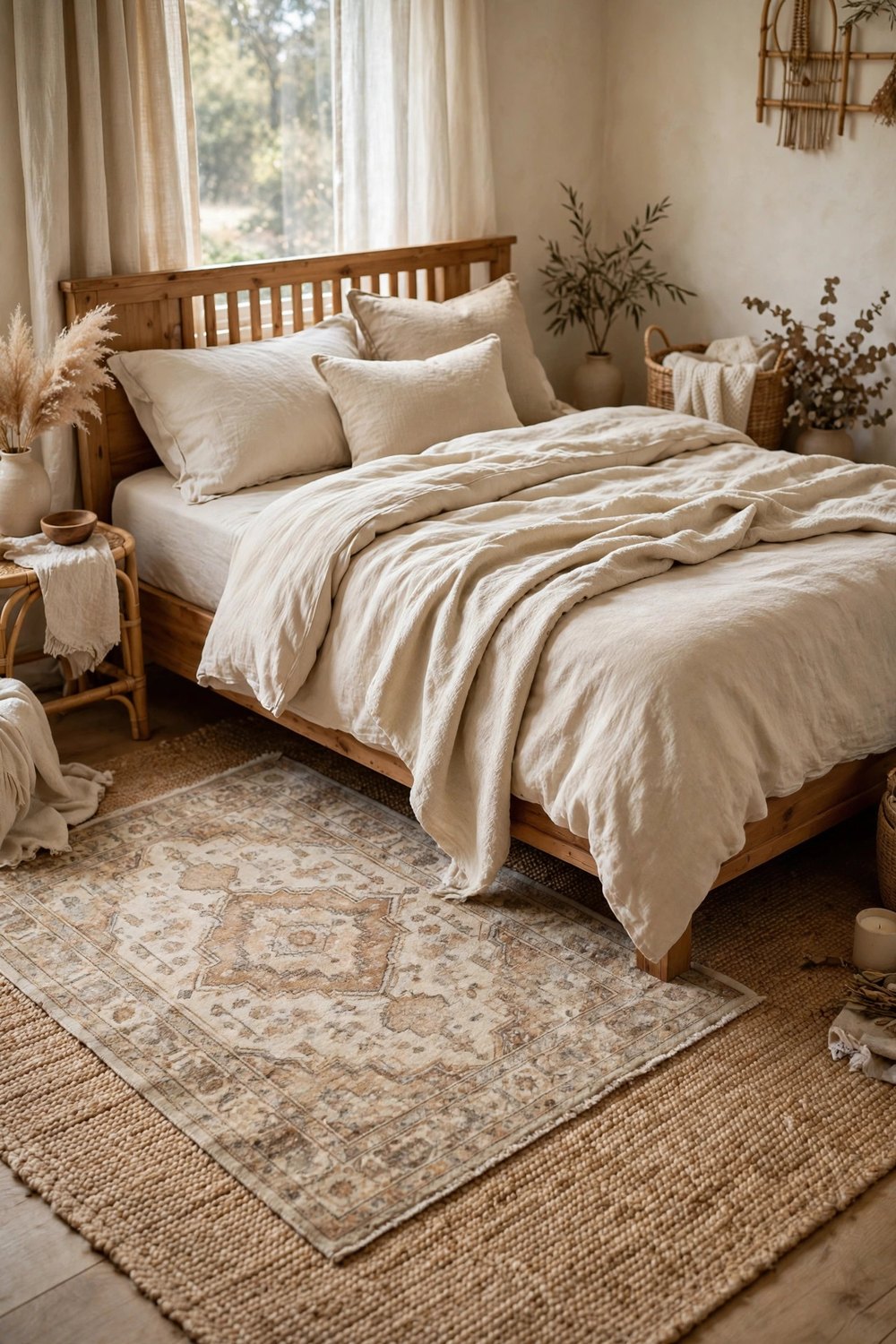
Layering solves the most common rug problem: the beautiful rug you love is slightly too small. Start with a large, inexpensive flatweave or jute rug placed under the lower two-thirds of the bed, then center a smaller patterned or high-pile rug on top where your feet land most. The base gives the scale, the top layer gives the softness and personality. Keep the base neutral and the border even on all sides, and the pairing looks deliberate rather than improvised.
6. Let a Round Rug Peek Out from One Corner
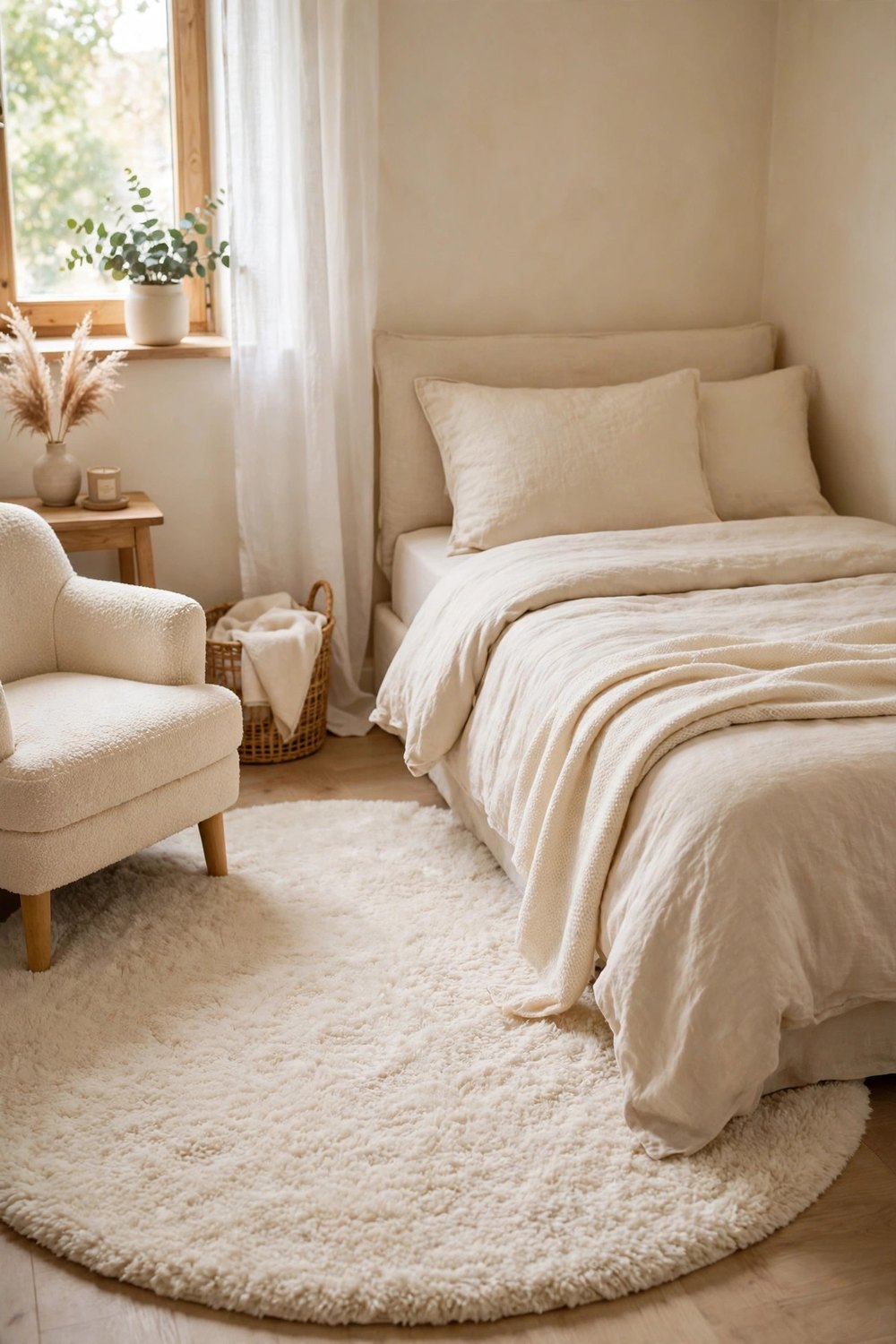
A round rug tucked partly under a front corner of the bed softens all the straight lines in a bedroom — the frame, the nightstands, the walls — in one easy move. Let about two-thirds of the circle show, on the side with the most open floor, and let a chair or plant overlap its edge if you like. Round rugs are especially kind in smaller rooms, where their curved edge seems to give the floor more room to breathe. Choose a plush texture; the shape invites bare feet.
7. Anchor Just the Foot with a Square Rug
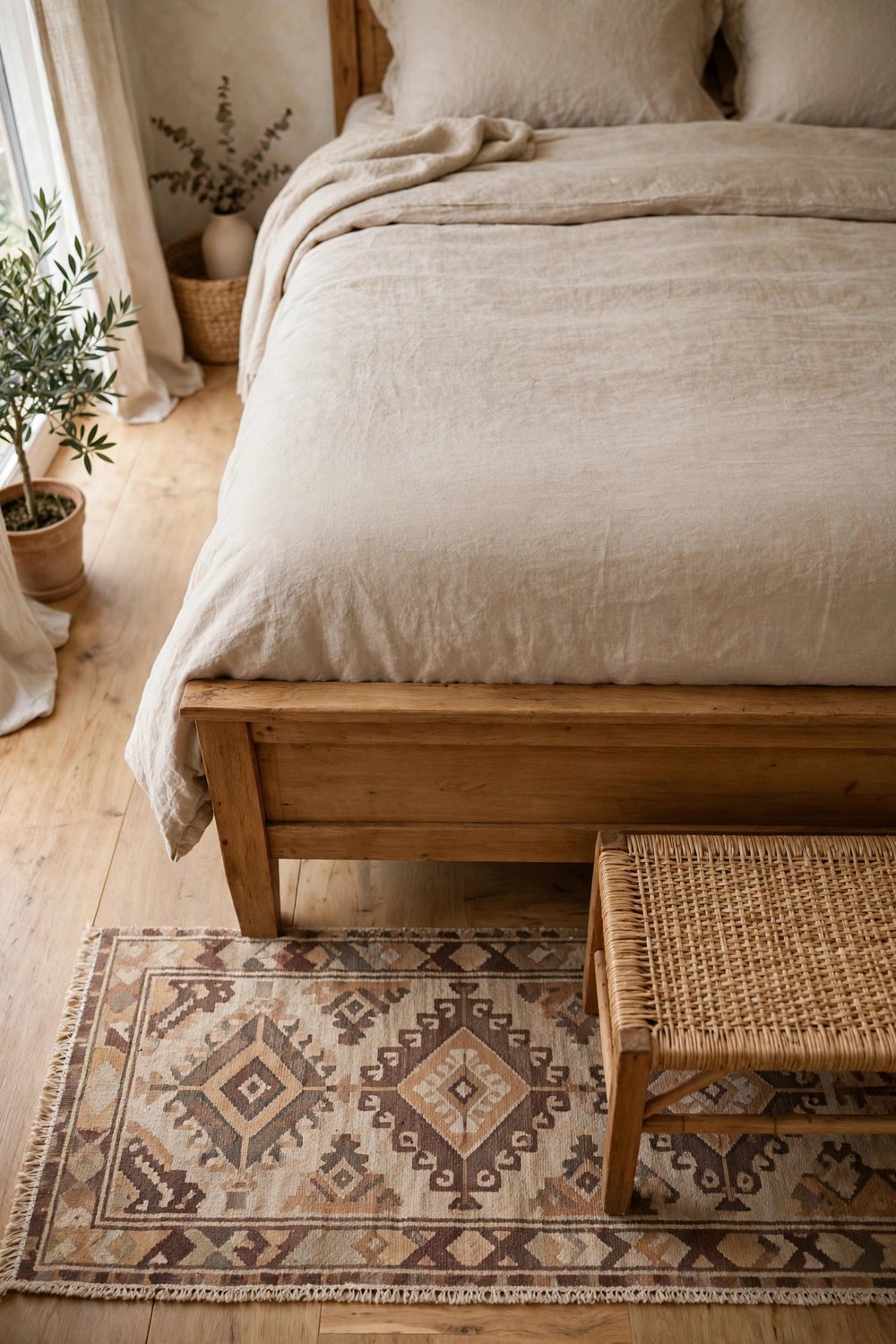
If your bed sides are tight but the foot of the bed opens into the room, place a square or rectangular rug across the foot only, like a welcome mat for the sleeping zone. It pairs beautifully with a bench or a pair of baskets sitting partly on its edge, and it defines the bed as the room’s focal point. Leave a small gap of bare floor between the rug and the bed frame so the placement looks chosen, not accidental. This is a lovely spot for your most patterned rug, since it shows in full.
8. Fill the Room with One Oversized Rug
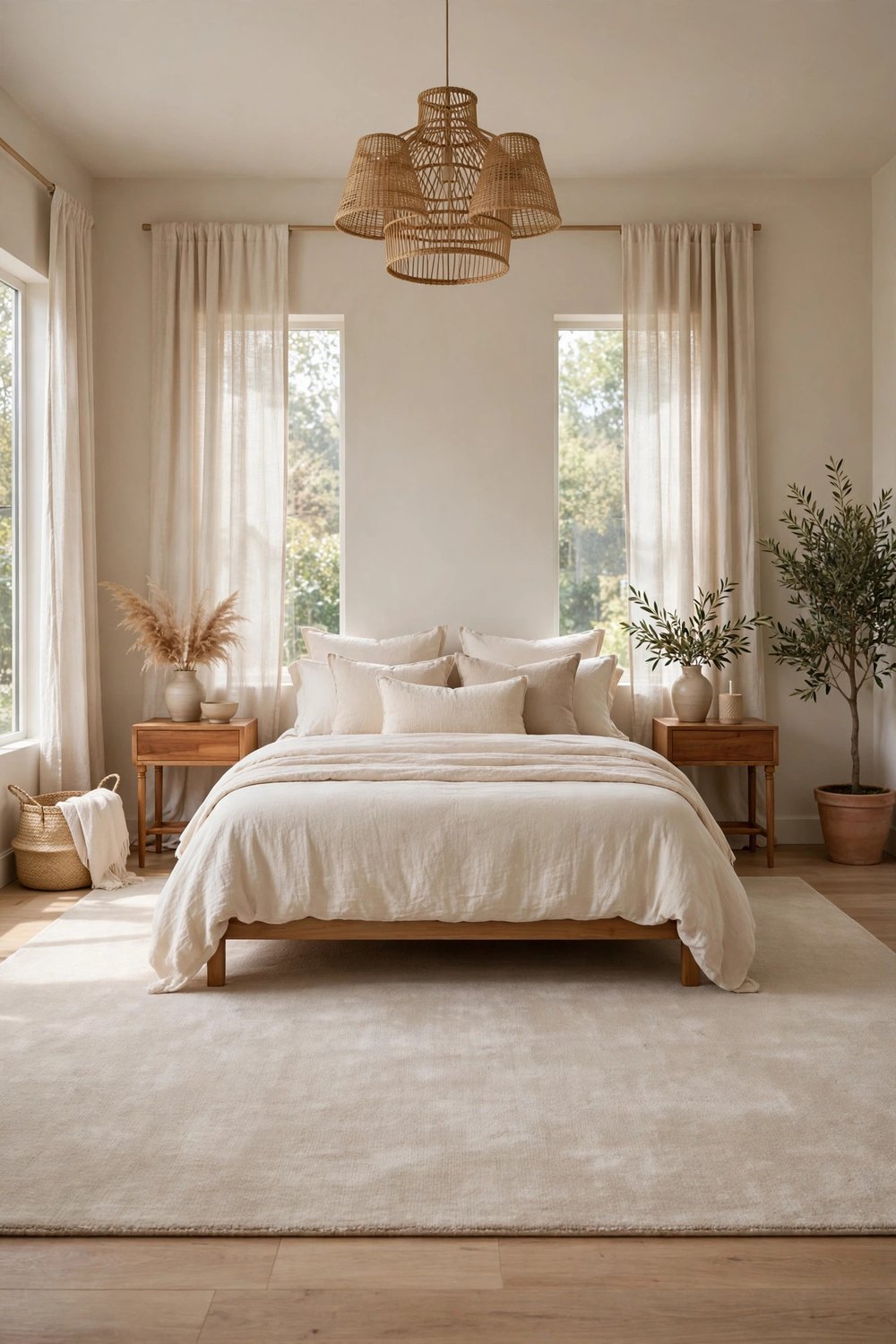
In a spacious bedroom, an oversized rug that stretches close to the walls gives you the calm of wall-to-wall carpet with the freedom to take it with you. Place the bed anywhere on it — centered is classic — and let every step in every direction stay soft. Keep at least 20 to 30 centimeters of floor visible around the edges so the rug reads as a choice, not a fitting mistake. Low-pile, tonal rugs work best at this scale; the texture whispers while the size does the talking.
9. Lay a Runner Across the Foot of the Bed
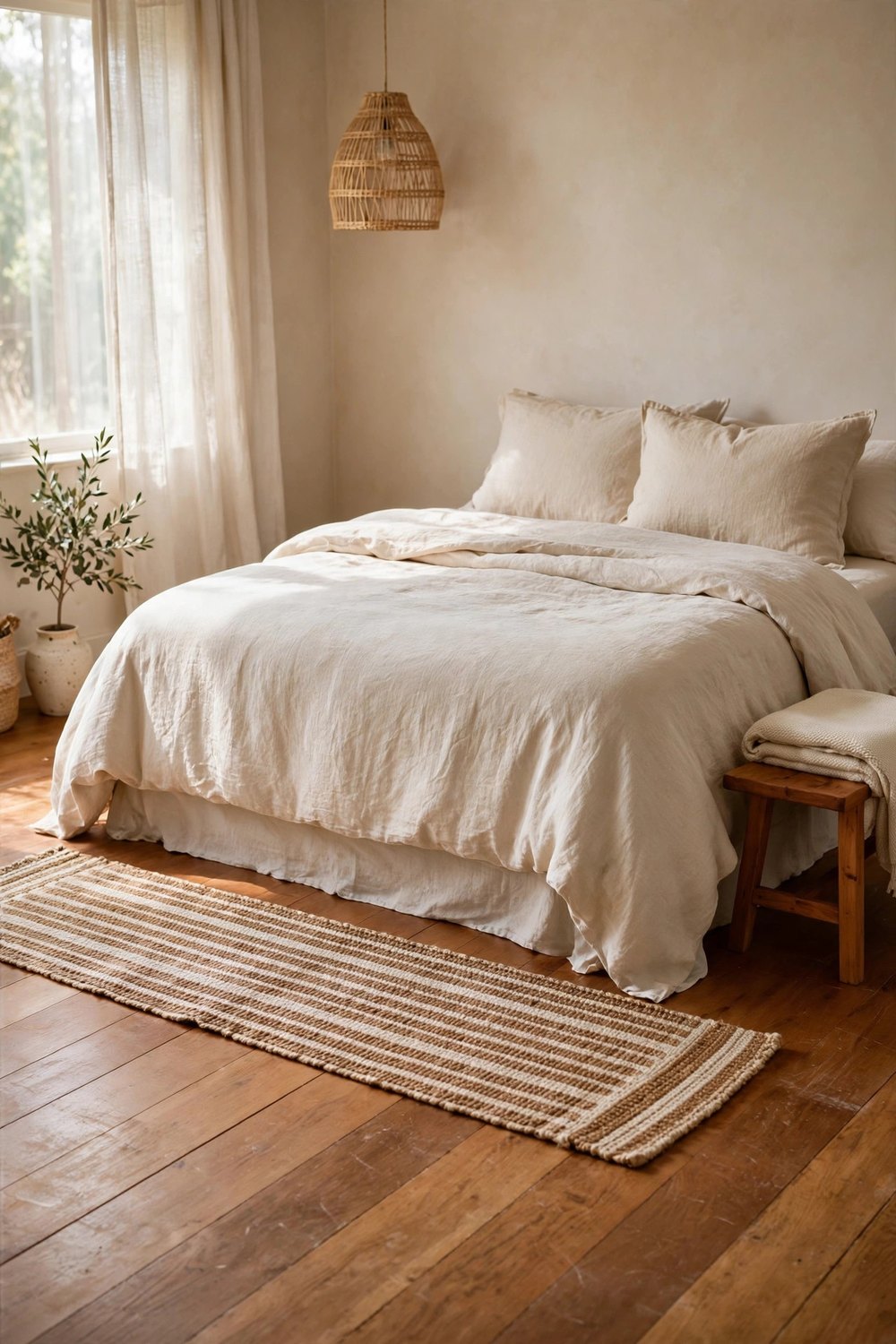
A single runner laid horizontally across the foot of the bed is the lightest-touch placement on this list, and one of the prettiest. It marks the boundary of the sleeping zone, warms the spot where you sit to put on shoes, and leaves the rest of the floor free — a kind arrangement for pretty timber or stone floors you do not want to hide. Use a runner as wide as the bed or a little shorter, centered. Fold the morning’s throw over the bench beside it and the whole foot of the bed becomes a styled moment.
10. Angle the Rug from One Corner in a Small Room
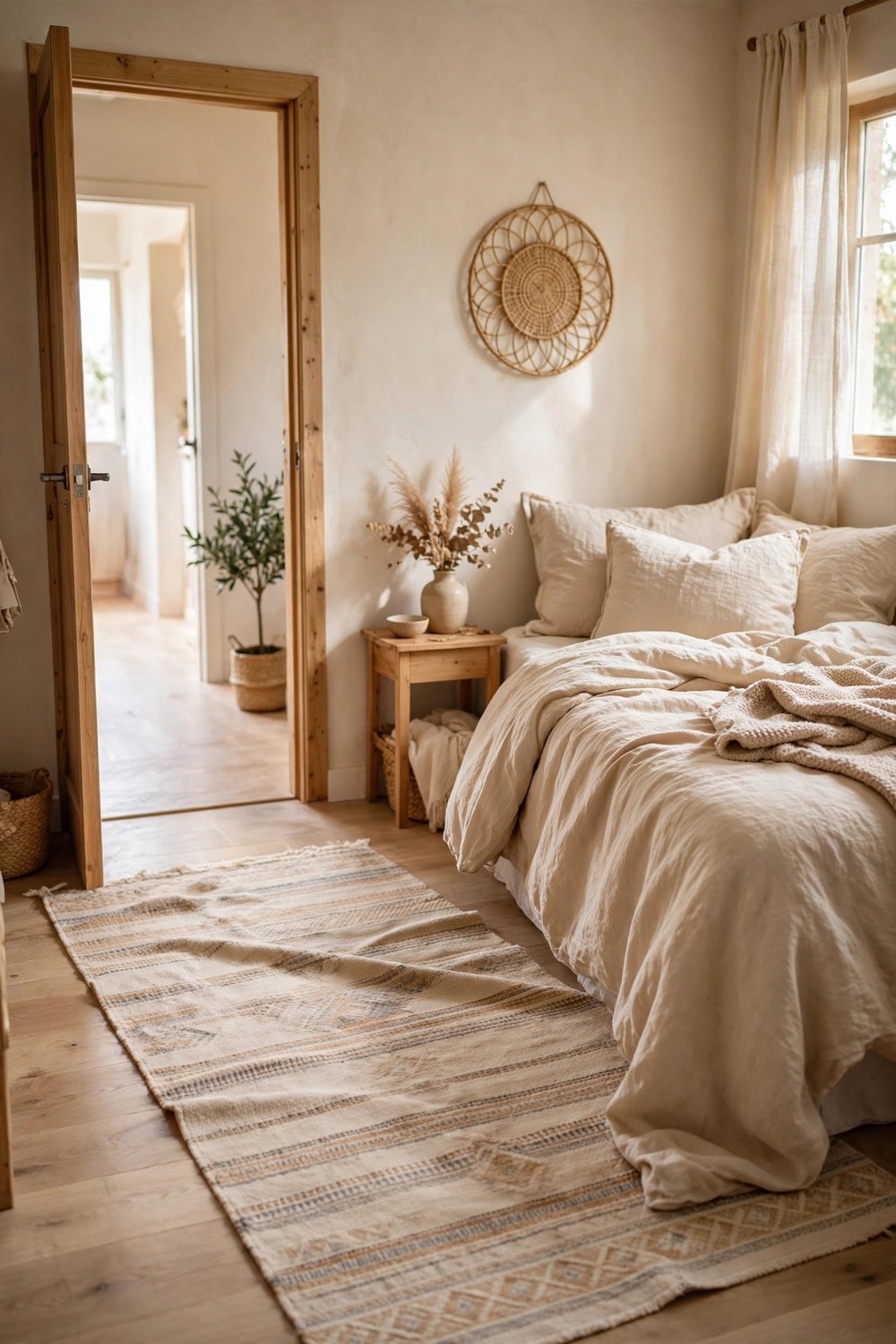
When a small bedroom makes every straight placement feel cramped, try turning the rug on a gentle diagonal from the bed’s front corner. The angle breaks up the boxiness of the room, guides the eye across the floor instead of into a wall, and often makes the space feel a few precious centimeters bigger. Keep the rotation modest — about 20 to 30 degrees — so it looks playful rather than messy. Let the exposed corner reach toward the door or a reading chair to connect the zones.
The right rug placement is the one that meets your feet in the morning and your eye all day — measure your bed, decide how much softness your floor plan can hold, and let the rug frame the bed rather than hide beneath it. Start with the classic two-thirds slide if you are unsure; it has never once looked wrong. Save this list to your bedroom board on Pinterest so the sizing rules are handy when you shop, and follow DecorNesti for a new cozy room list every week.



Leave a Reply