
A rug is the quiet foundation of every living room that feels “finished” — it gathers the sofa, chairs, and coffee table into one warm conversation instead of letting them float apart on bare floor. The right rug adds color, softness, and pattern all at once, and it decides where the room begins and ends more than any wall ever could. These ten ideas cover the placements, sizes, textures, and layering tricks that make a rug work hard, whether your room is a small apartment corner or a big open-plan space. Measure your seating area before you fall in love with anything, save your favorites to Pinterest, and let the floor do the pulling-together.
In This Article
- 1. Anchor the Seating Area with One Large Rug
- 2. Layer a Vintage Rug Over a Neutral Base
- 3. Try a Round Rug to Soften Straight Lines
- 4. Warm Up the Walkway with a Long Runner
- 5. Let a Warm Patterned Rug Be the Room’s Star
- 6. Go Plush with a High-Pile Rug for Cozy Evenings
- 7. Ground a Small Room with a Light, Low-Pile Rug
- 8. Define Two Zones with Two Rugs in an Open Plan
- 9. Lay a Natural Jute Rug for Easy Texture
- 10. Rest the Front Legs of Every Seat on the Rug
1. Anchor the Seating Area with One Large Rug
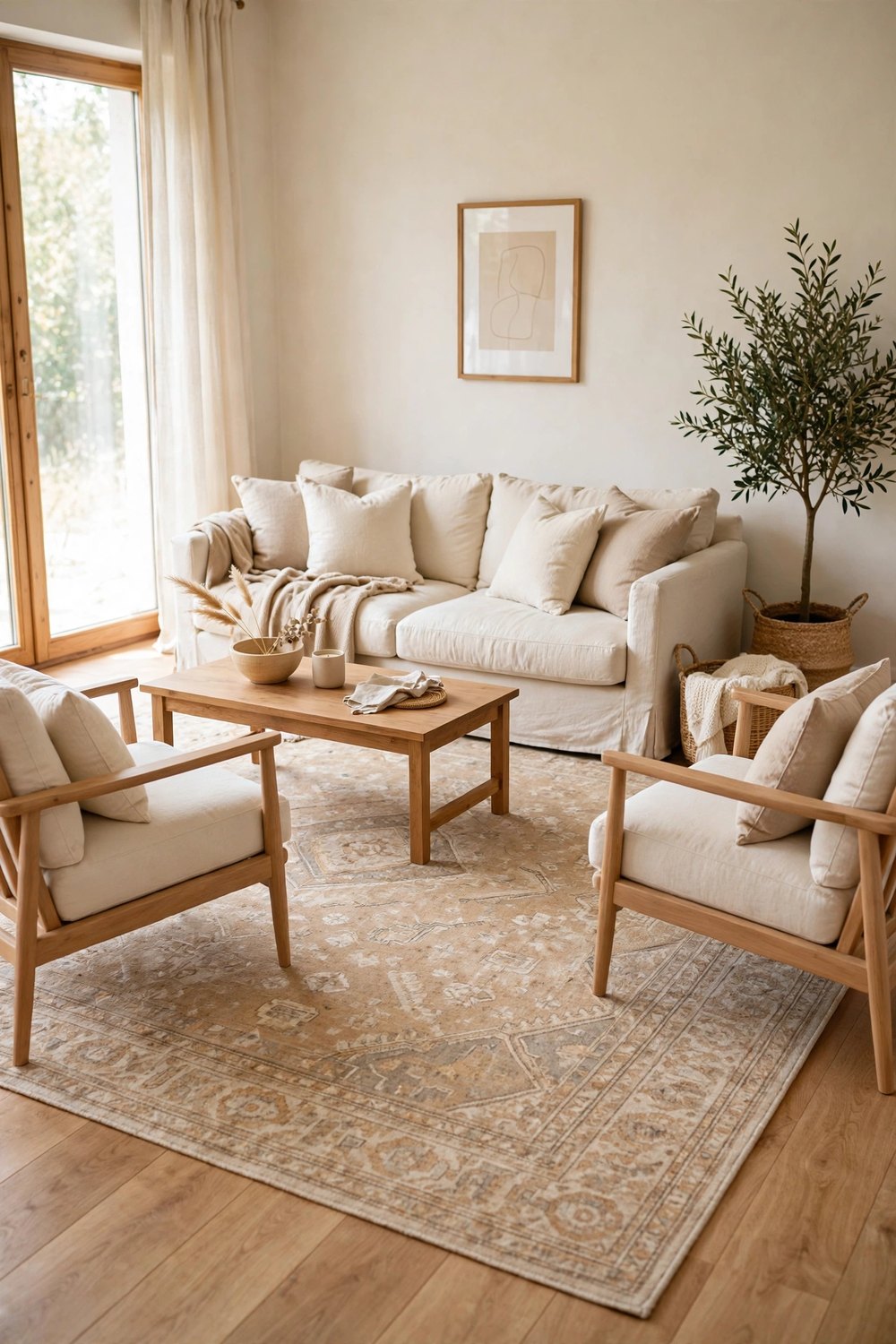
The single most reliable rug move is also the simplest: one generous rug under the whole seating group. When the sofa, armchairs, and coffee table all share one rug, the eye reads them as one calm island instead of scattered furniture, and the room instantly feels designed. Go bigger than feels safe — a rug that is slightly too large looks luxurious, while one that is slightly too small looks like a bath mat. Leave a border of bare floor around the edges so the rug reads as a chosen zone, not wall-to-wall carpet.
2. Layer a Vintage Rug Over a Neutral Base
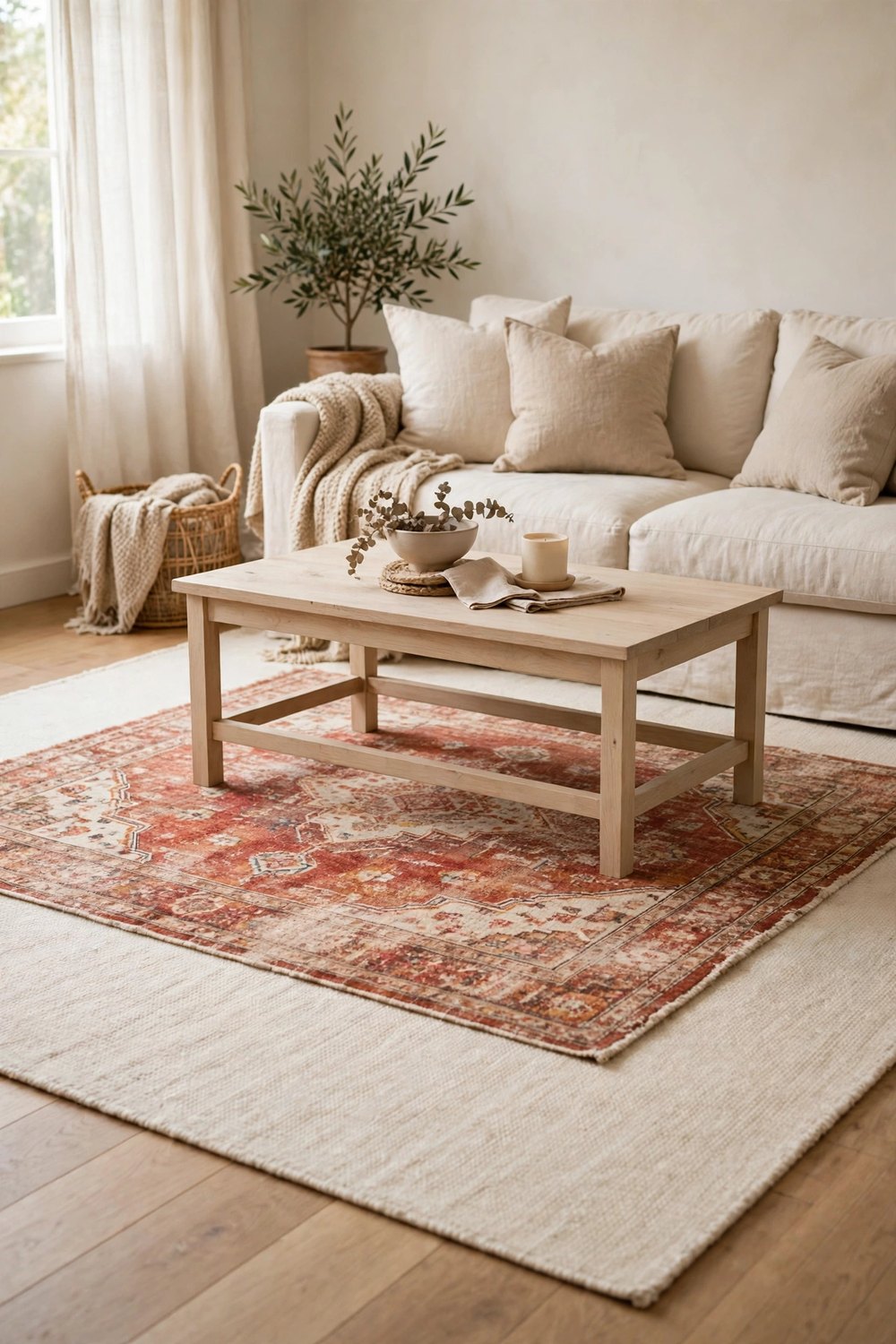
Layering solves the most common rug heartbreak: the gorgeous vintage rug you love is just a little too small. Start with a large, inexpensive flatweave in a warm neutral under the seating, then center the smaller patterned or vintage rug on top where feet and the coffee table actually land. The base gives you the scale, the top layer gives you the color and story, and the pairing looks collected rather than compromised. Keep the base plain and let the border show evenly on every side.
3. Try a Round Rug to Soften Straight Lines
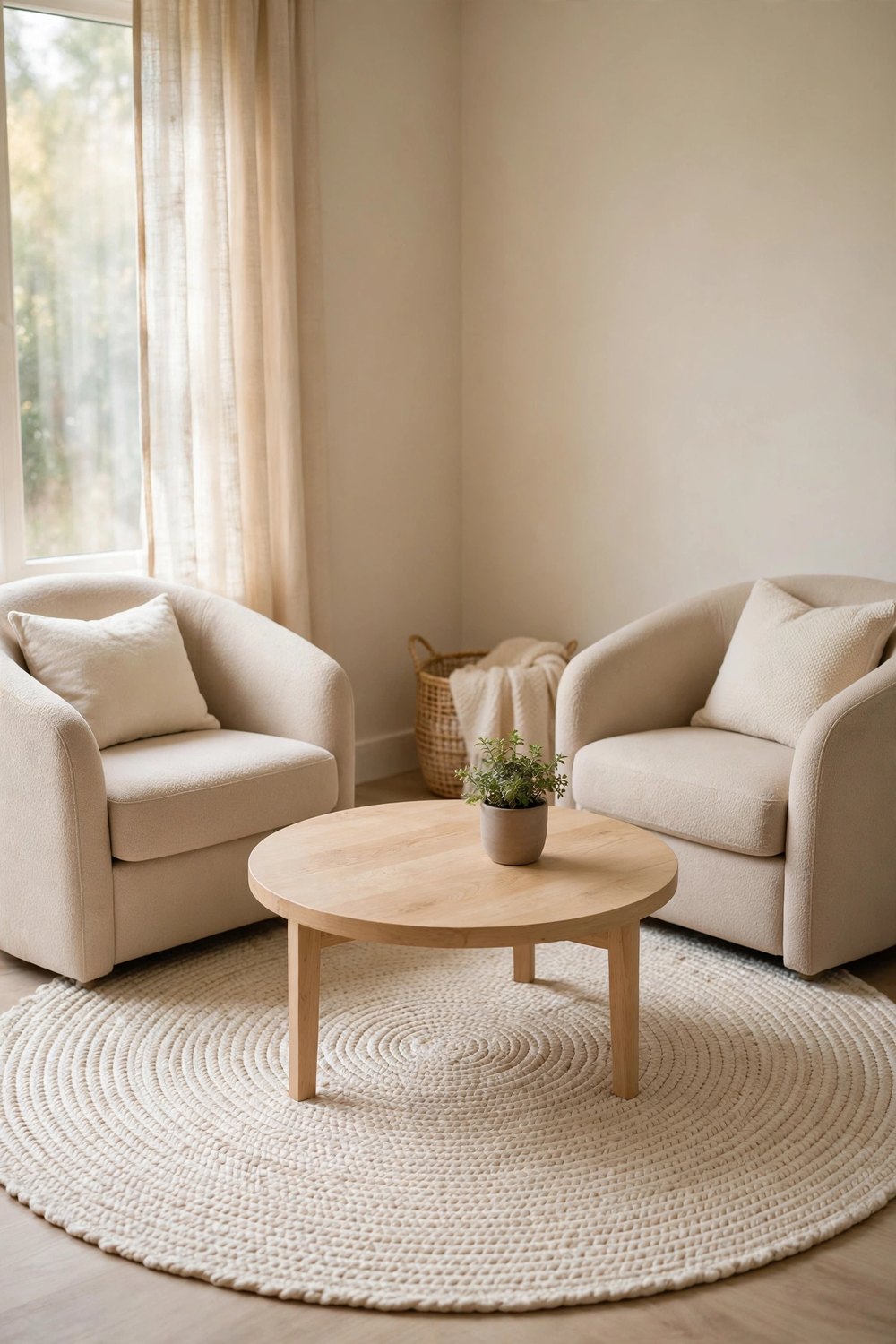
Living rooms are full of rectangles — the sofa, the rug, the coffee table, the TV — and a round rug breaks the grid in the gentlest way. A circle under a round or square coffee table, or centered in a conversation nook of armchairs, makes a small seating area feel intimate and deliberately arranged. Round rugs are also kind to awkward rooms, because there are no corners to line up with walls that are not quite square. Choose a diameter that lets at least the front legs of the surrounding seats rest on it.
4. Warm Up the Walkway with a Long Runner
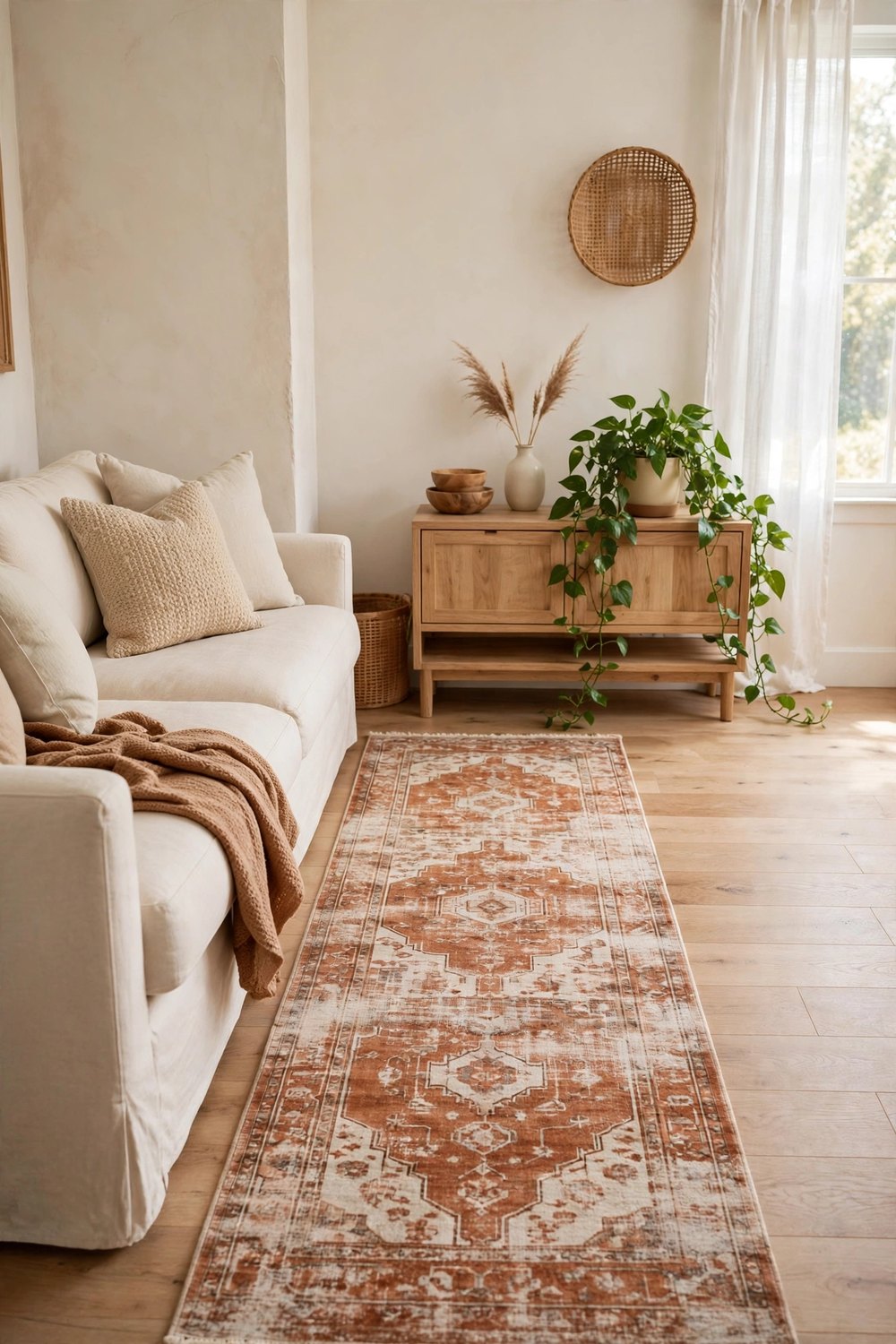
Not every rug needs furniture on it — a runner along the main walkway of the room warms the route you cross a hundred times a day. Run one beside the sofa, along the front of a media console, or through the natural path between door and seating, and the room gains color and softness without a single piece of furniture moving. Runners in faded vintage patterns hide foot traffic beautifully. Just add a non-slip pad underneath; a sliding runner is a cozy idea with a trip hazard attached.
5. Let a Warm Patterned Rug Be the Room’s Star
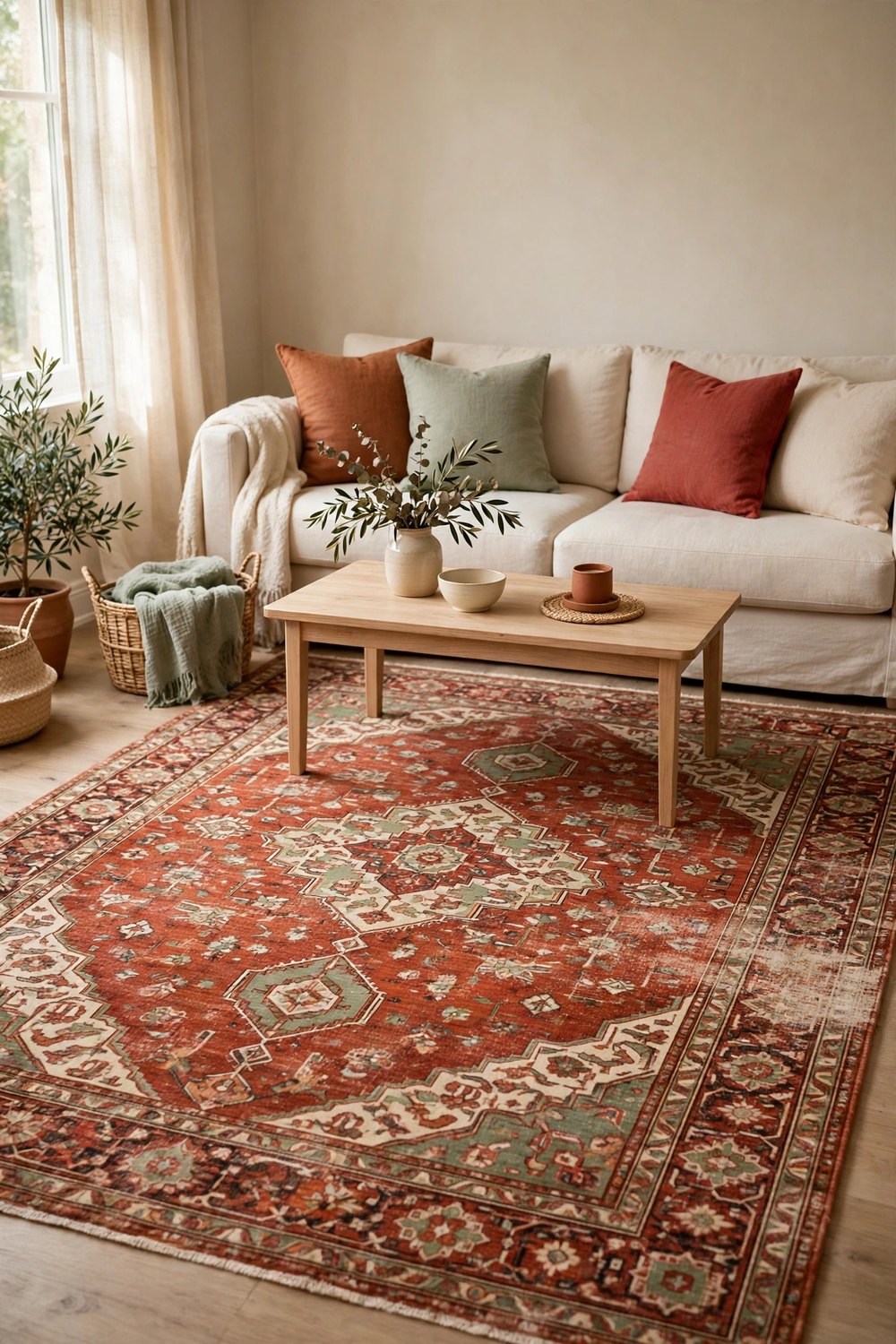
In a calm, neutral room, one patterned rug can carry the entire color story. A warm Persian-style or softly geometric rug in rust, cream, faded red, and sage gives pale sofas and light wood something to respond to, and every cushion and throw you add can borrow its colors. Keep the rest of the room quieter — plain cushions in the rug’s tones, simple art — so the pattern feels like a choice rather than a competition. This is the decorator’s shortcut: buy the rug first, decorate second.
6. Go Plush with a High-Pile Rug for Cozy Evenings
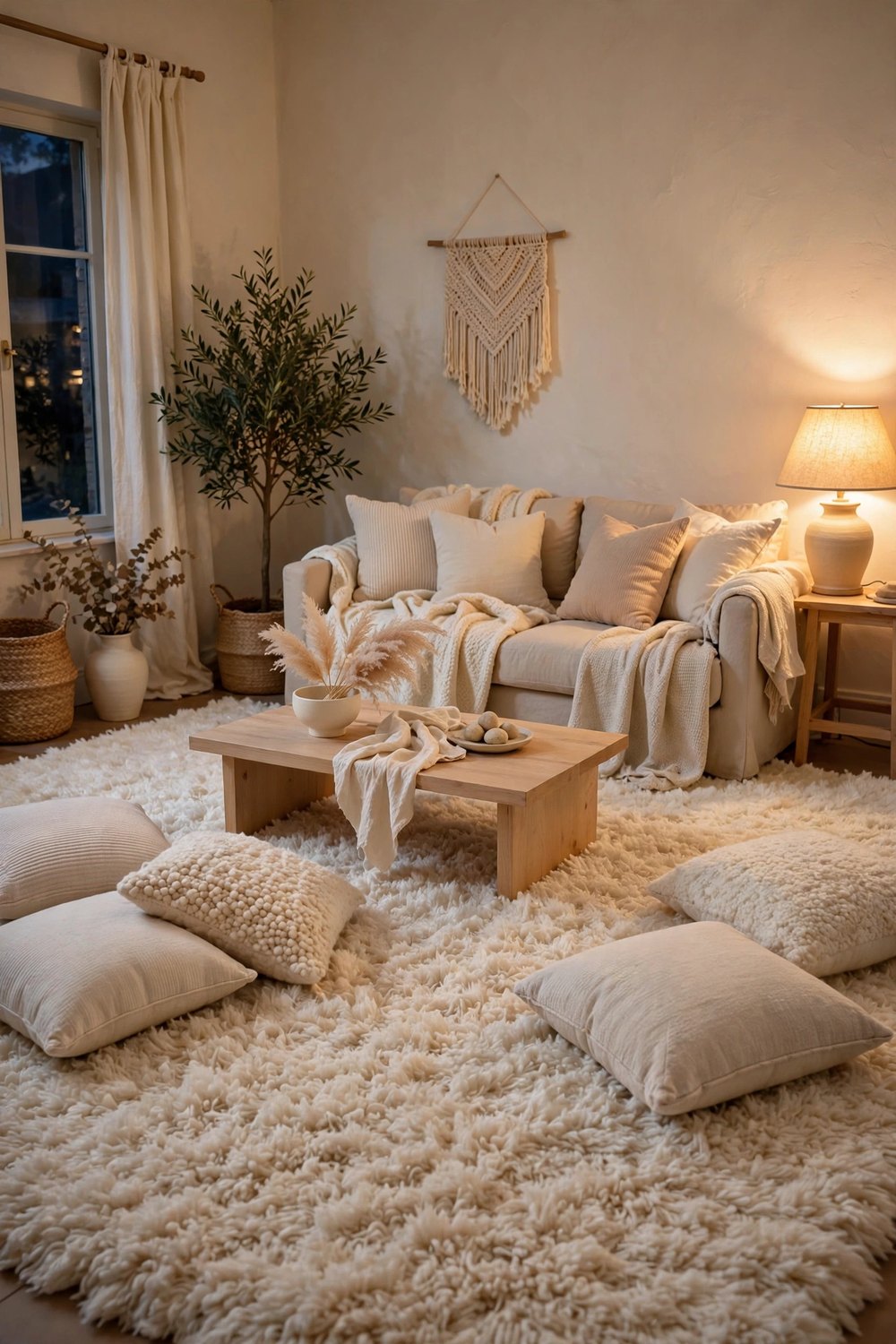
If your living room’s main job is movie nights, reading, and floor-level lounging, a high-pile rug earns its keep every single evening. Deep, soft pile in a warm cream or oatmeal tone turns the floor itself into seating, swallows sound so the room feels calmer, and makes winter evenings on the sofa feel properly cocooned. Keep the color light and plain so the texture does the talking, and vacuum with the beater bar off to keep the pile fluffy. A rug pad underneath makes it feel even more like a mattress.
7. Ground a Small Room with a Light, Low-Pile Rug
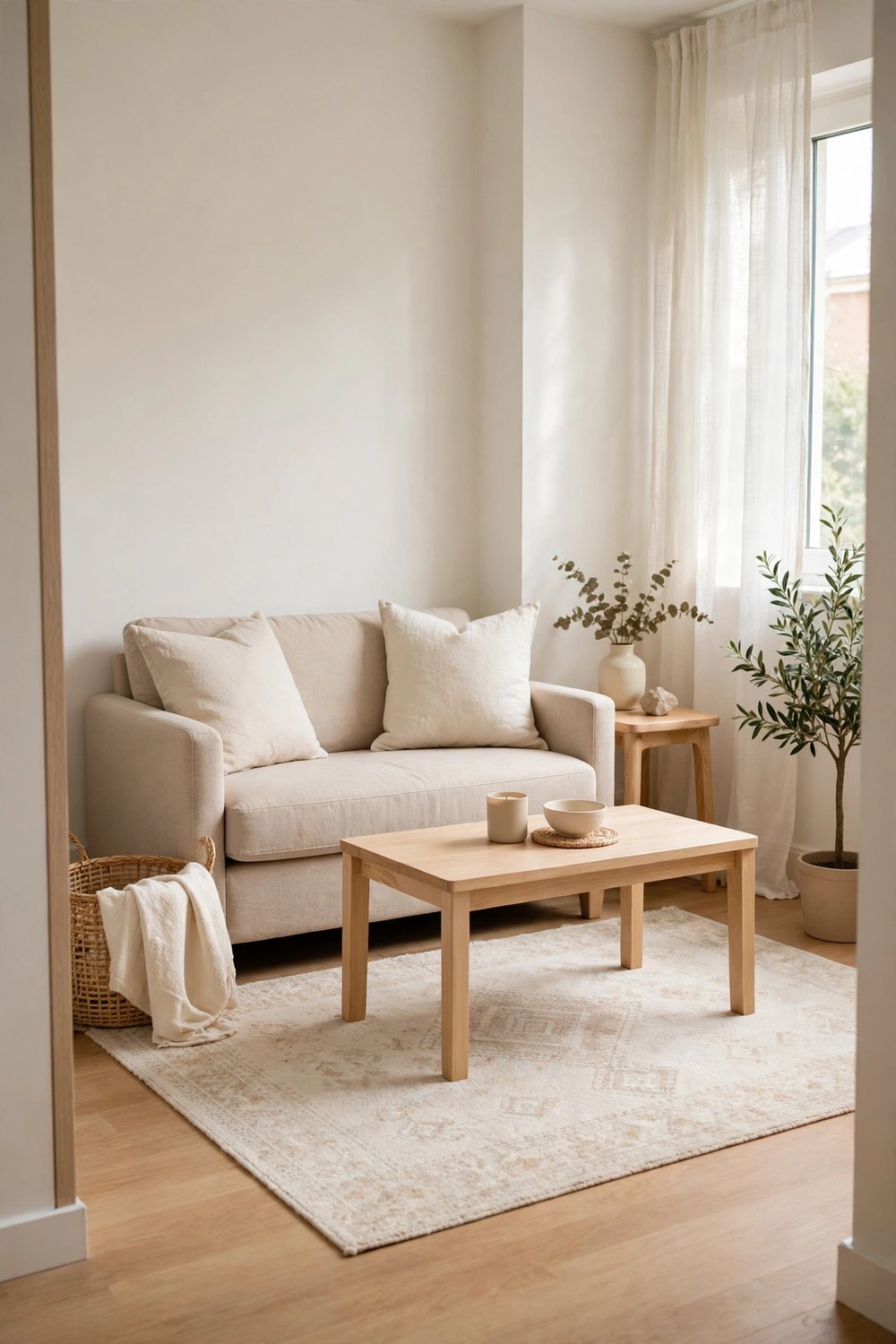
Small living rooms need rugs just as much as big ones — they just need the right kind. A light-colored, low-pile rug in a subtle tone-on-tone pattern makes a compact seating area feel defined without visually shrinking it, and low pile keeps doors swinging freely and furniture steady. Pale does not have to mean plain: a faint vintage wash or woven stripe adds interest that survives close viewing. Match the rug’s warmth to your floor tone and the whole room will feel a size bigger.
8. Define Two Zones with Two Rugs in an Open Plan
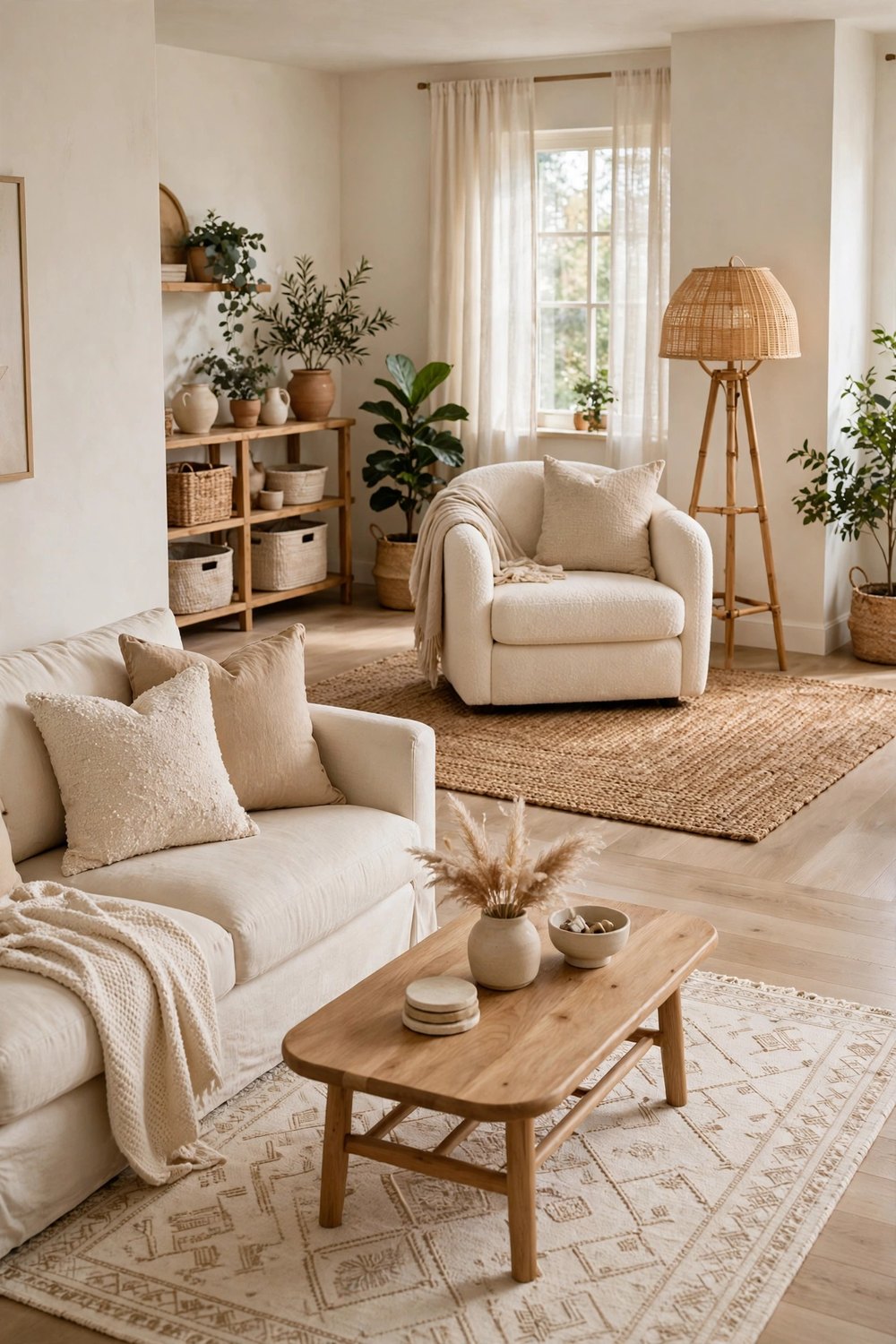
Open-plan rooms feel unfinished until the floor explains where one activity ends and another begins — and two rugs do that explaining without a single wall. One rug anchors the sofa group, a second defines the reading corner, dining end, or workspace, and suddenly the big open space has rooms inside it. Keep the two rugs in the same warm color family but different patterns or textures, so they feel related rather than matching. Similar pile heights keep the transition between zones feeling smooth.
9. Lay a Natural Jute Rug for Easy Texture
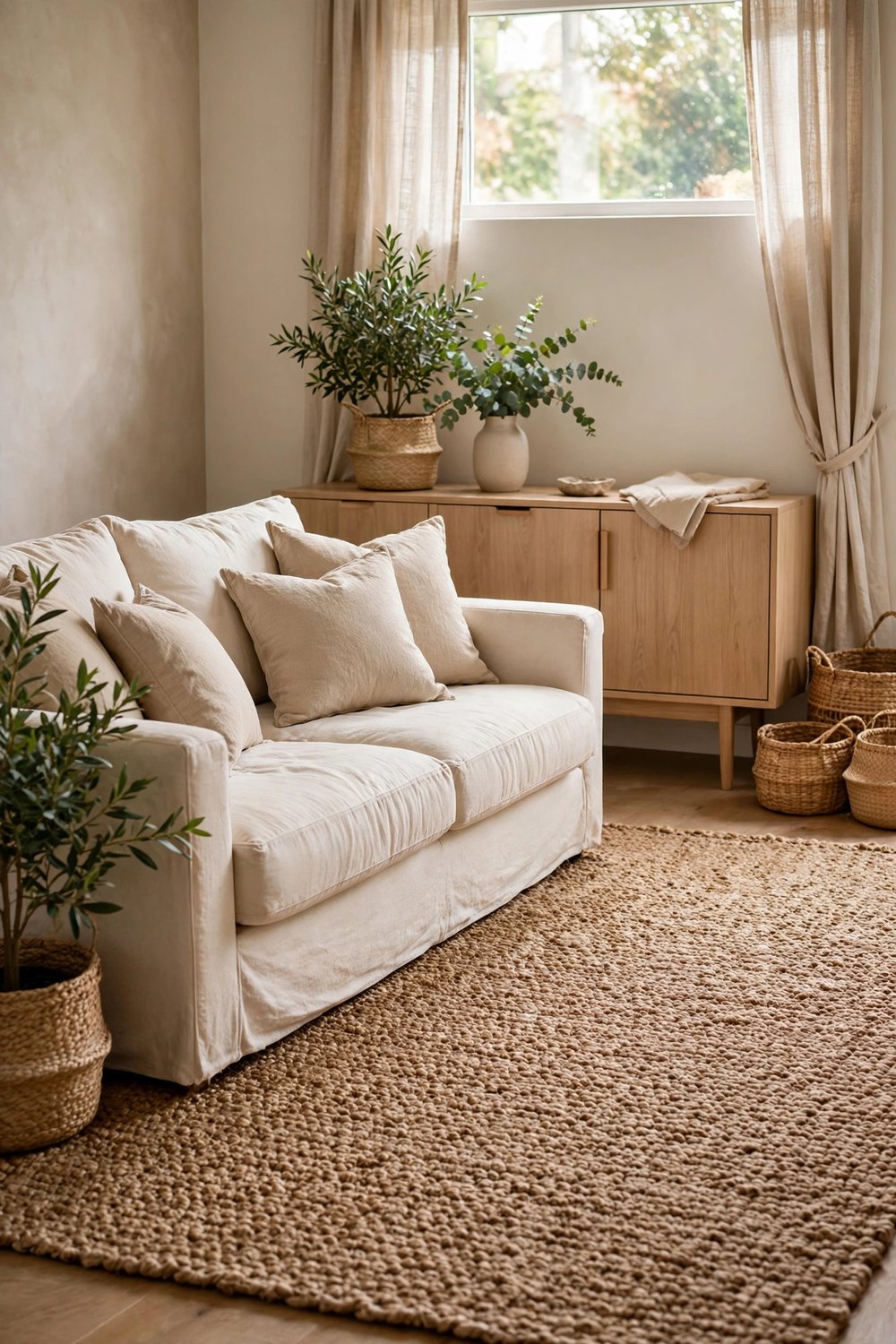
When a room feels flat but you cannot put your finger on why, it is usually texture that is missing — and a natural jute or sisal rug supplies it by the square meter. The woven, nubby surface warms up smooth sofas and sleek media consoles, suits almost every cushion color you own, and hides the evidence of daily life better than any other rug material. Jute is softest underfoot; sisal is the tougher cousin for busy households. Style it plain and let the weave be the pattern.
10. Rest the Front Legs of Every Seat on the Rug
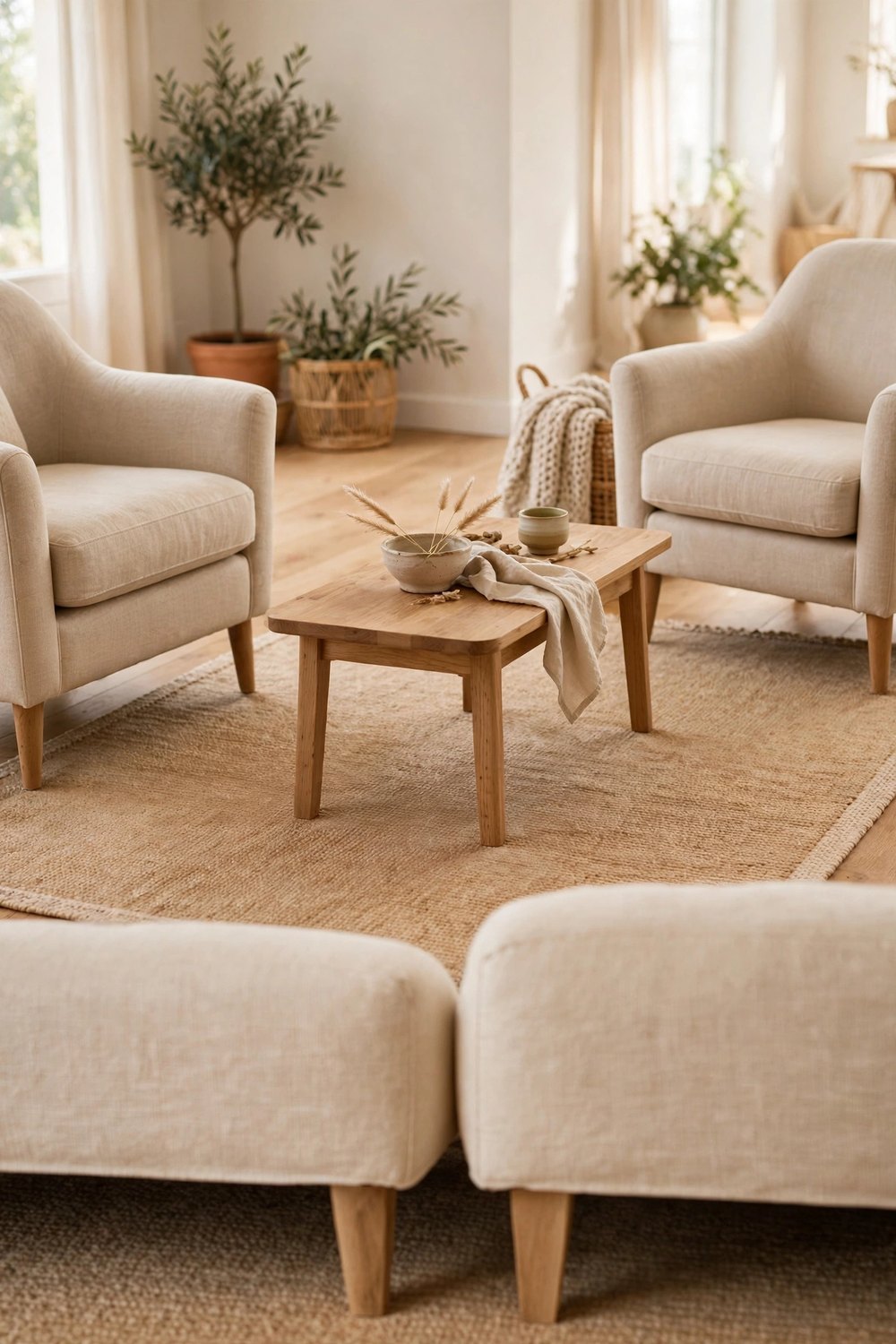
Here is the sizing rule that quietly fixes most living rooms: the front legs of the sofa and every armchair should rest on the rug, with the back legs on the floor. This half-on, half-off placement stitches the seating together into one group while leaving your rug budget intact, because you rarely need the giant size that puts all four legs on. If your current rug floats in the middle of the room touching nothing, pull the furniture in until every front leg lands — the room will tighten up like a belt. It costs nothing and changes everything.
A living room rarely needs more furniture — it needs its furniture connected, and a well-chosen rug is the thread that does it. Start with the size and placement rules, layer or pattern where your room asks for it, and let texture carry the calm rooms. Save this list to your Pinterest board so the measurements and tricks are handy before your next rug hunt — and follow DecorNesti for a new cozy room list every week.

Leave a Reply