
The wall above the sofa is the biggest blank canvas in most living rooms — and the one most of us leave empty the longest, because one wrong nail hole feels so permanent. A gallery wall solves that in the friendliest way: instead of one big decision, you make a few small ones, and the arrangement does the work. Whether you love a tidy grid or a collected, mix-everything wall, there is a layout here that fits your frames, your art, and your nerve. Plan it on paper first, save the layouts you love to Pinterest, and that long blank wall will finally start earning its keep.
In This Article
- 1. Hang a Classic Symmetric Grid of Six Matching Frames
- 2. Build an Eclectic Salon-Style Wall
- 3. Pair One Oversized Statement Piece with Two Small Companions
- 4. Layer Frames Along a Picture Ledge
- 5. Stretch a Long Two-Row Layout Across the Sofa
- 6. Line Up a Black-and-White Photo Grid in Warm Wood Frames
- 7. Mix Art, a Mirror and Woven Pieces on One Wall
- 8. Take a Narrow Wall from Floor to Ceiling
- 9. Wrap the Gallery Around a Corner
- 10. Keep It Calm with a Three-Piece Triptych Row
1. Hang a Classic Symmetric Grid of Six Matching Frames
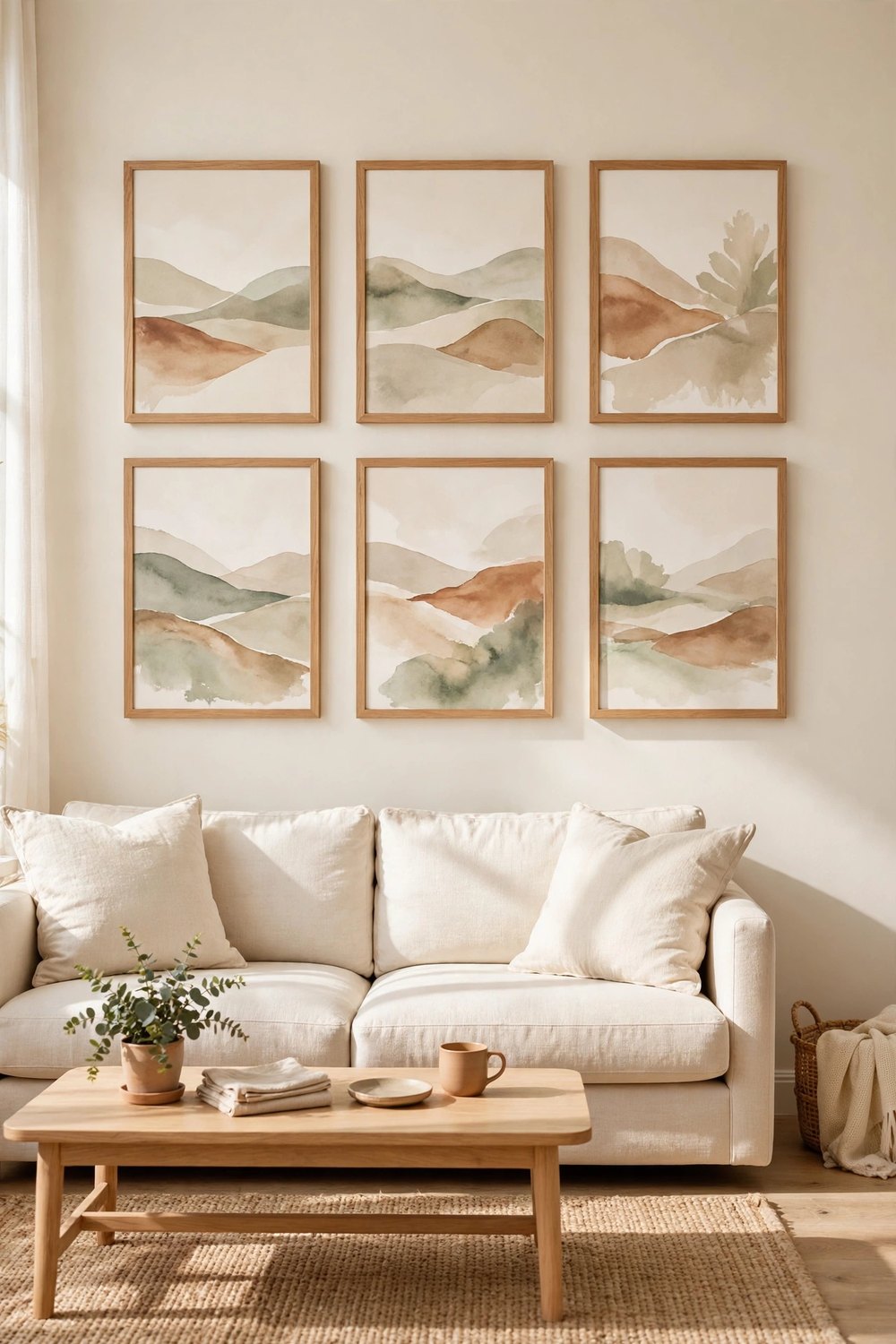
If gallery walls make you nervous, the symmetric grid is your safest first step: six identical frames in two neat rows of three, all holding art from the same family — botanical prints, soft landscapes, or one series split across the set. Matching frames and even spacing do all the tidying, so the wall looks designed even if the art is simple. Keep a consistent two to three inches between every frame, and hang the grid so its center sits at eye level, roughly 57 inches from the floor. Measure once, tape the outline on the wall, and the actual hanging takes minutes.
2. Build an Eclectic Salon-Style Wall
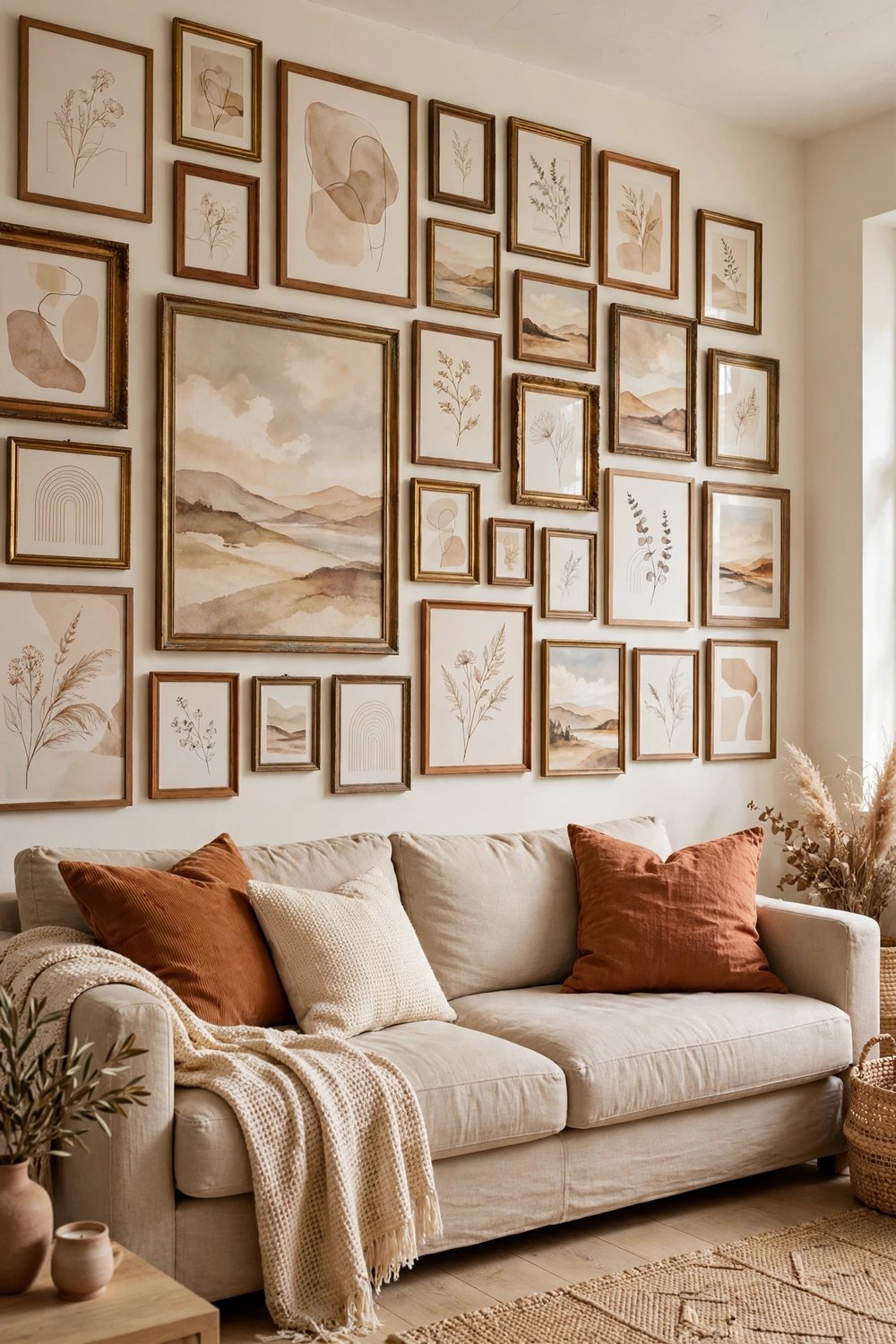
The salon wall is the grid’s free-spirited opposite: frames of different sizes, finishes, and eras mixed together, filled from near the ceiling down to just above the sofa back. Start with your largest piece slightly off-center, then fill around it with smaller frames, keeping the gaps between pieces roughly even — about two to three inches — so the mix reads as collected rather than chaotic. A shared thread holds it together: pick one and stick to it, whether that is warm wood tones, a soft color palette, or all-vintage art. This is the layout that grows happily, one thrifted frame at a time.
3. Pair One Oversized Statement Piece with Two Small Companions
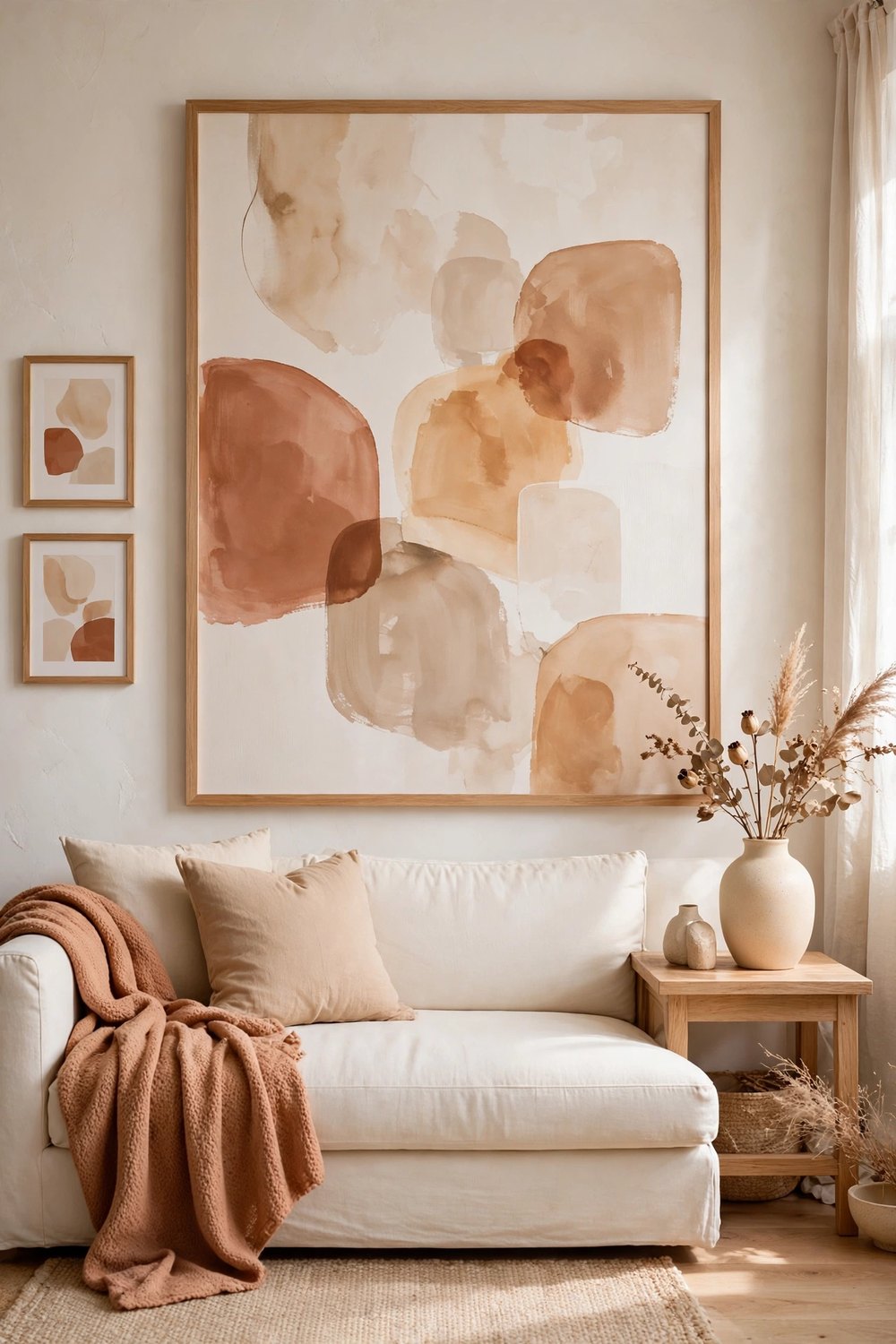
Sometimes a gallery does not need many pieces at all. One generous artwork — at least two-thirds the width of your sofa — flanked by two small framed pieces stacked or side by side makes a composed, gallery-like arrangement with only three nail holes. The big piece carries the color story; the little ones echo a tone or subject from it so the trio feels related. This layout suits calm rooms and anyone who rents their walls out to their art slowly, one piece at a time.
4. Layer Frames Along a Picture Ledge
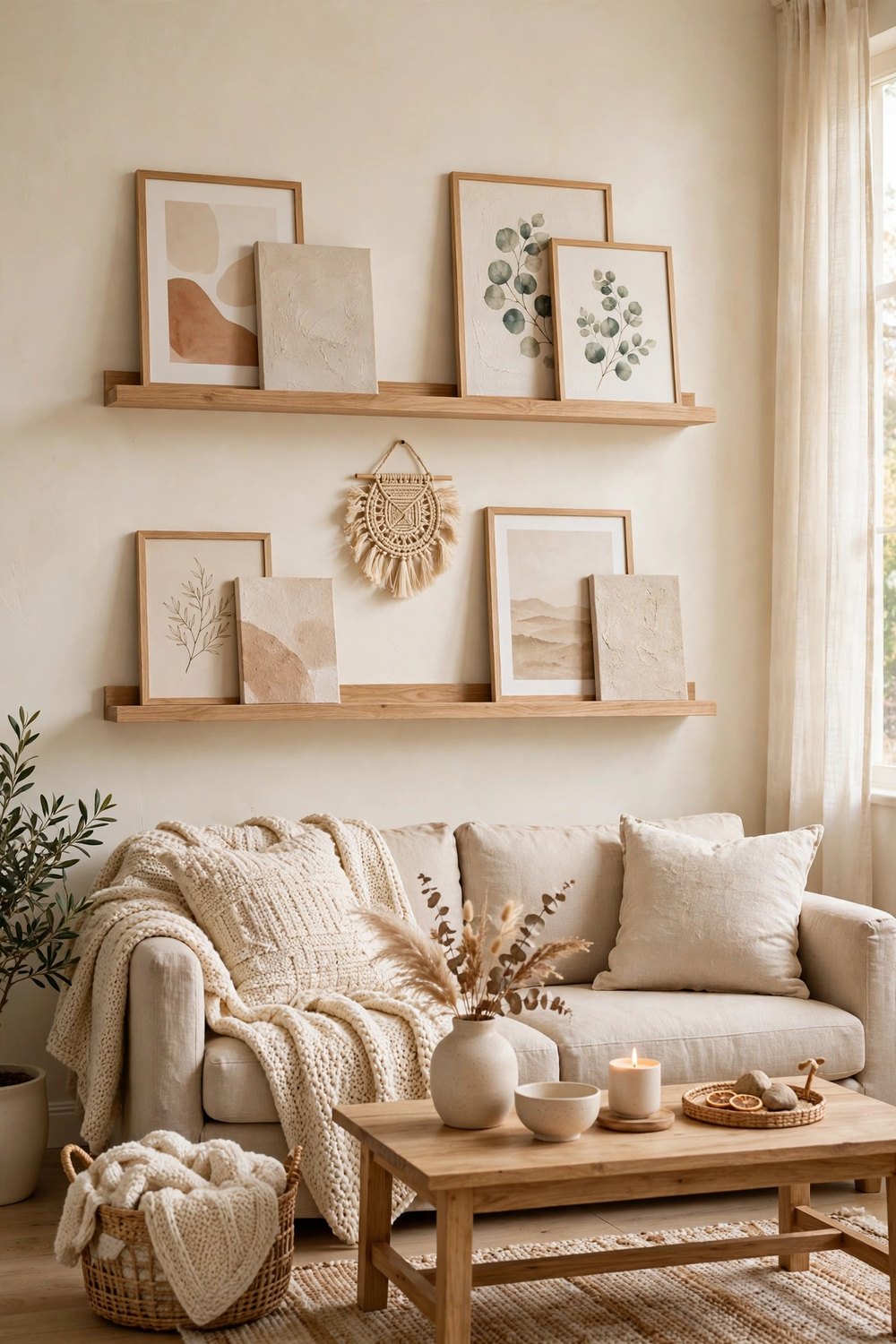
A picture ledge is the commitment-phobe’s gallery wall: one or two shallow shelves mounted above the sofa, with frames simply leaned and layered along them — no new holes when your taste changes. Overlap frames slightly, rest a small unframed canvas or a woven piece between them, and swap pieces in and out with the seasons. Keep the ledge itself about six to eight inches above the sofa back so heads clear it comfortably. Two ledges at different heights give you even more room to play.
5. Stretch a Long Two-Row Layout Across the Sofa
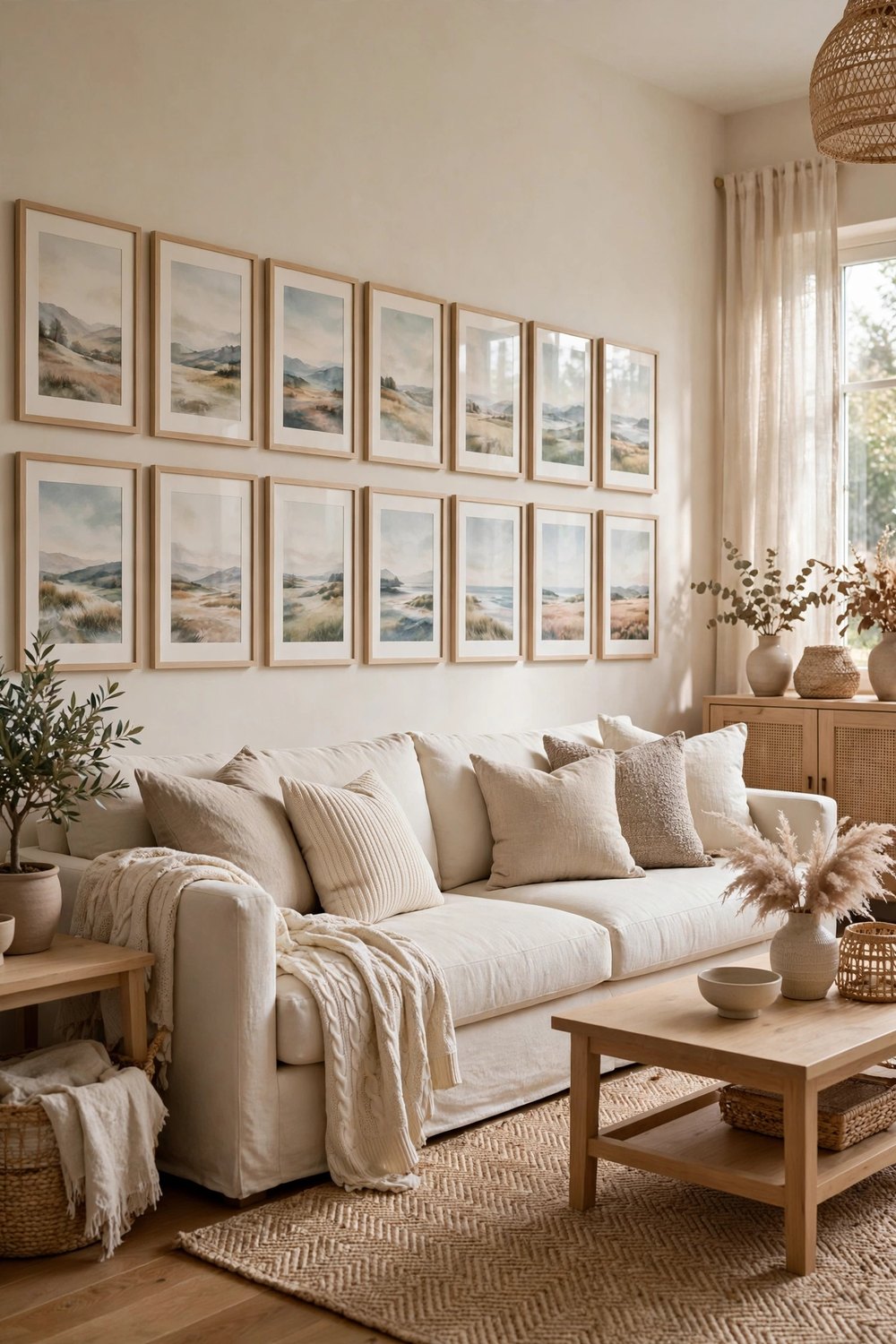
Wide sofas and low, sprawling rooms suit a layout that travels horizontally: two long rows of frames running most of the sofa’s length, like a quiet horizon line above it. Use frames of similar height within each row so the edges feel calm, and let the whole arrangement span about two-thirds to three-quarters of the sofa’s width so it anchors the seating instead of floating above it. This is a lovely home for a matched print series, a run of landscape photos from one trip, or black-and-white sketches in pale wood.
6. Line Up a Black-and-White Photo Grid in Warm Wood Frames
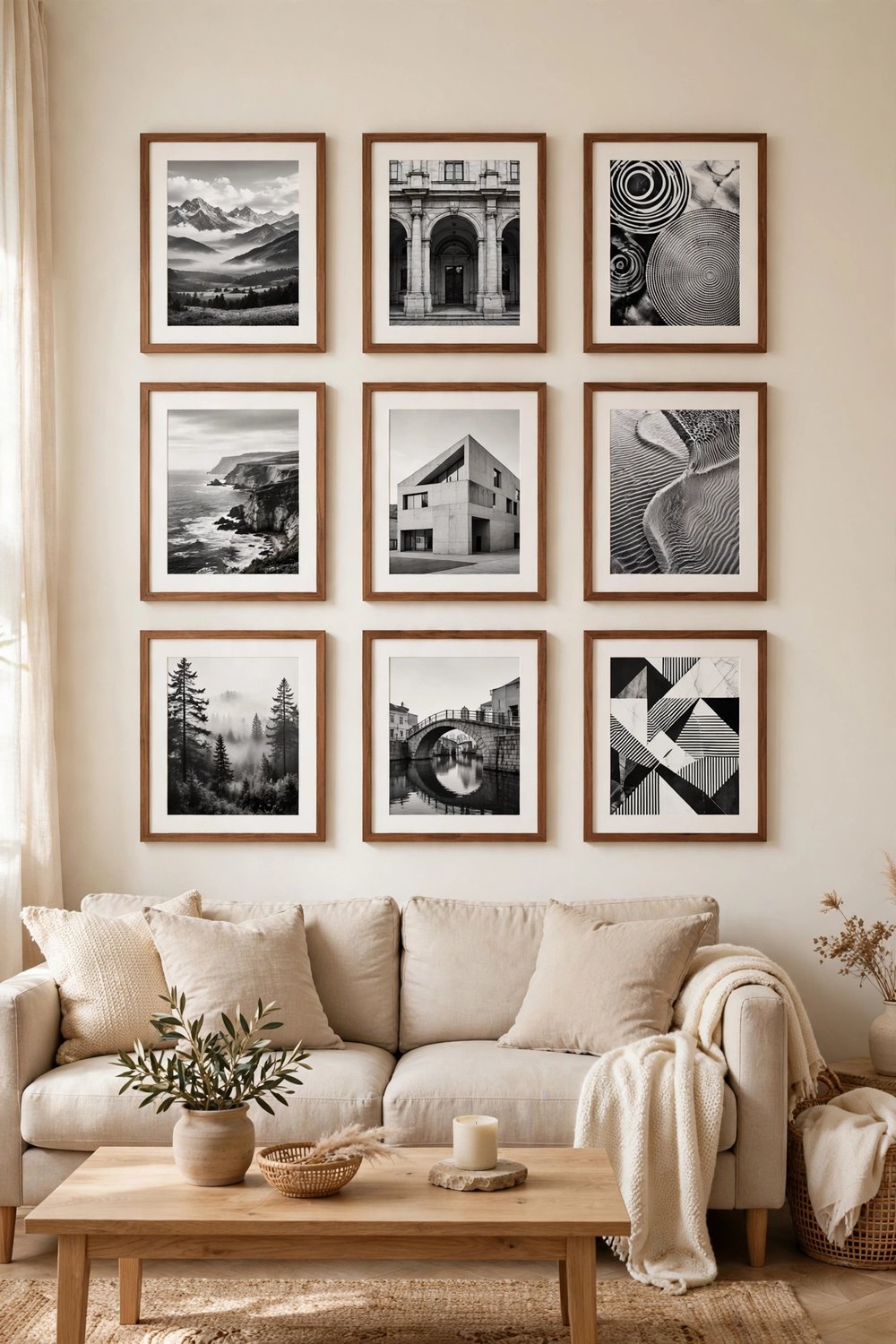
Family photos belong in the living room, and the way to keep them elegant is a strict format: every photo printed black and white, every frame the same warm wood, every gap the same width. The monochrome treatment turns snapshots from different years and cameras into one calm, cohesive artwork. A grid of eight or nine medium frames works beautifully above a sofa; print favorites slightly larger than you think you need, because photo walls always look better a touch bolder.
7. Mix Art, a Mirror and Woven Pieces on One Wall
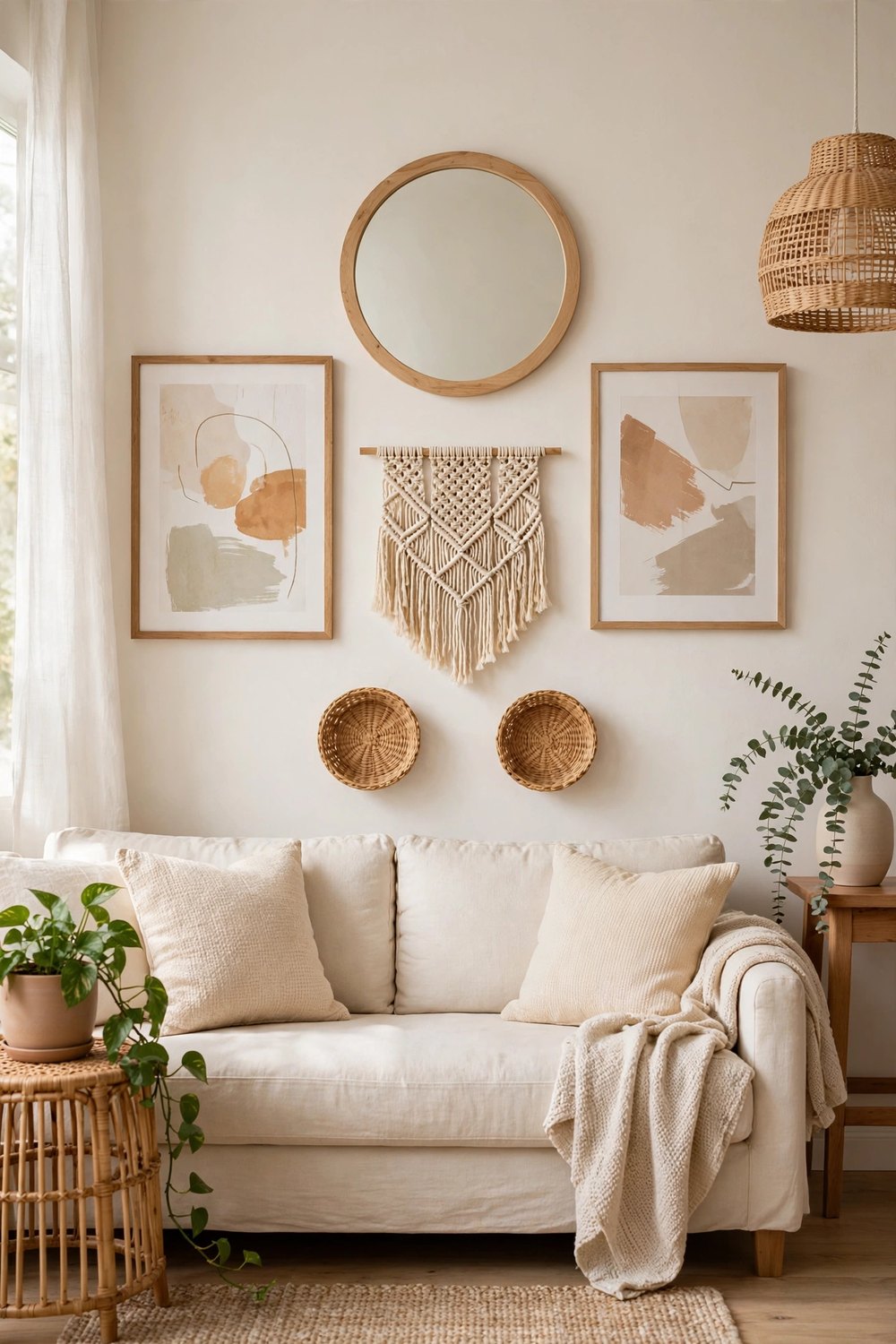
A mixed-media wall treats the gallery as texture, not just pictures: framed prints alongside a round mirror, a woven wall hanging, a small basket or two, maybe a tiny shelf with a trailing plant. The mirror earns its place by bouncing light into the room, and the woven pieces soften all the straight frame edges. Arrange them like a salon wall — largest piece first, even gaps — and repeat one material, such as natural wood or rattan, at least twice so the mix feels gathered on purpose.
8. Take a Narrow Wall from Floor to Ceiling
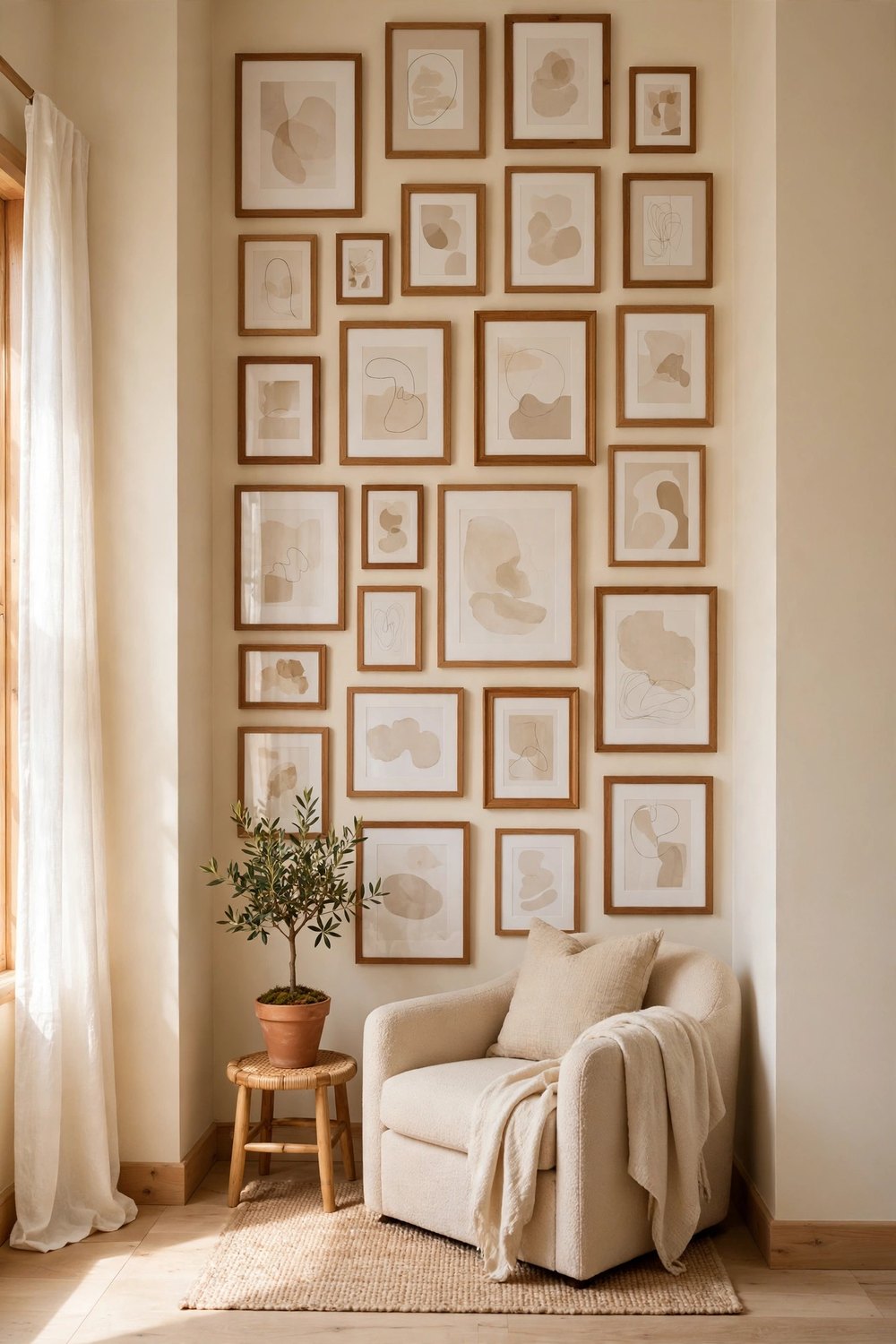
A slim wall beside the sofa — the awkward strip between two doors, or the end wall of a small room — becomes a feature when the gallery runs the full height of it. Fill it top to bottom with frames in varied sizes, keeping spacing tight and consistent, and let the bottom pieces start just above a small plant or stool rather than the floor itself. Full-height galleries make ceilings feel taller and turn forgotten wall space into the room’s most photographed corner. Paper templates earn their keep here: tape the whole plan up before a single nail goes in.
9. Wrap the Gallery Around a Corner
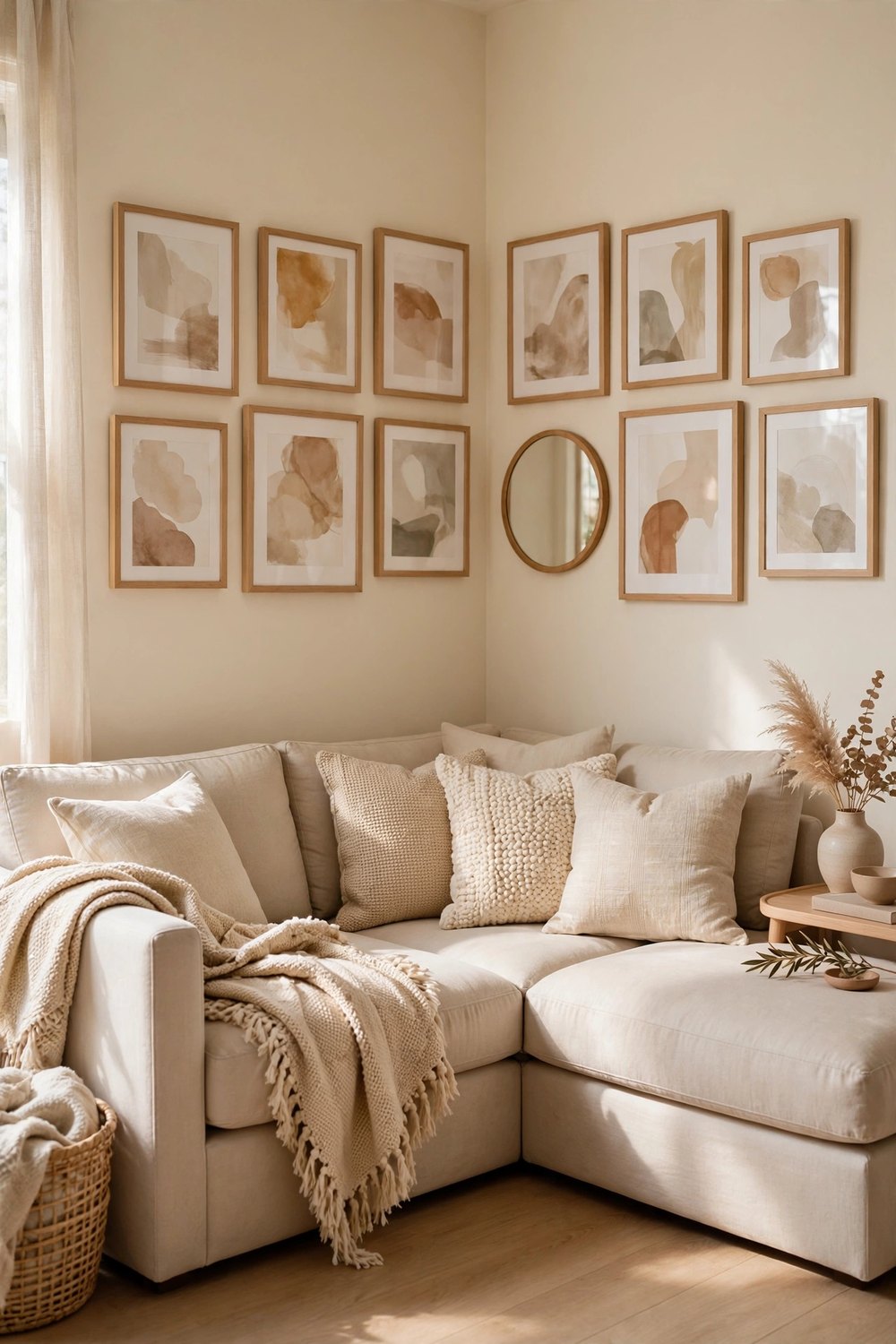
Corners usually end a gallery wall, but wrapping the arrangement around one makes the whole seating area feel embraced by the art. Carry the same frame family and spacing around the corner, keeping the corner piece itself small — a little frame or a mirror sits happily on the bend. It works especially well in an L-shaped seating nook, where the art follows the furniture instead of stopping where the wall does. Plan both walls on paper templates first, taped right around the corner, so the rhythm does not break at the turn.
10. Keep It Calm with a Three-Piece Triptych Row
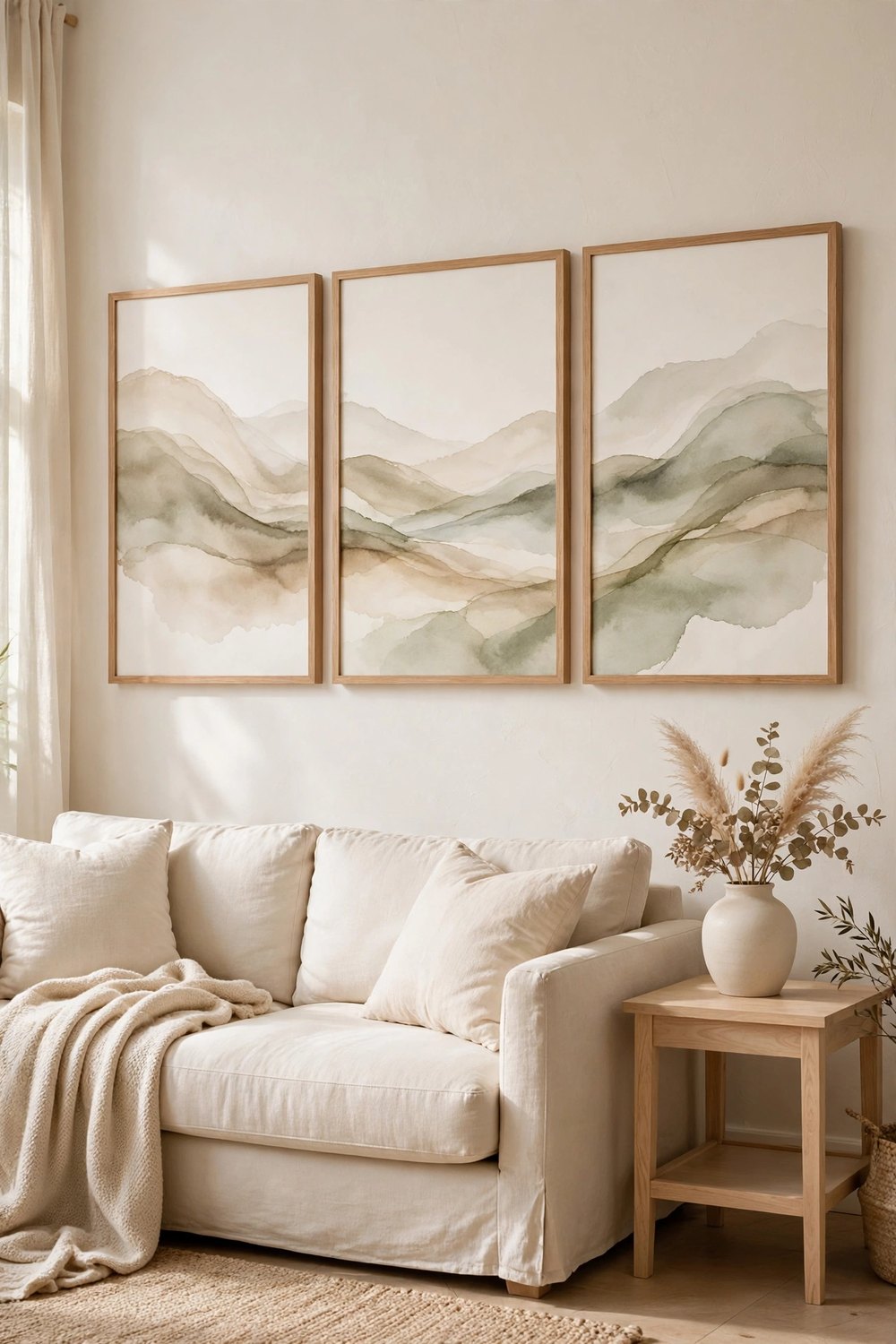
For serene rooms, three is the magic number: one artwork split across three equal frames, or three panels painted to flow into each other, hung in a single level row above the sofa. Hang them close — one to two inches apart — so the eye reads them as one wide piece, and center the row carefully on the sofa rather than the wall if the two do not line up. Soft landscapes, abstract washes, and line drawings all suit the format. It is the quietest layout on this list, and often the one that feels most expensive.
Every layout here runs on the same simple kit: frames you love, even spacing, and a paper template taped to the wall before the first nail. Start with the arrangement that matches the art you already own, and let it grow slowly — the best gallery walls are collected, not completed in a day. Save this list to your Pinterest board so the next frame you find has a home waiting — and follow DecorNesti for a new cozy room list every week.

Leave a Reply