
The mantel is the living room’s natural stage — the one surface everyone faces, at exactly the height the eye rests. The trouble is that most mantels are either crowded with everything or cleared in frustration and left bare. The answer is a simple formula that works in every season: one anchor piece in the middle, height at the sides, something green, something that glows, and breathing room between them all. These ten ideas build that formula piece by piece, with seasonal swaps noted as we go, so your mantel can be reset in fifteen minutes whenever the calendar turns. Save your favorites to Pinterest, clear the mantel completely, and rebuild it like you mean it.
In This Article
- 1. Lean a Large Mirror in the Center
- 2. Layer Smaller Frames in Front of It
- 3. Drape a Garland Asymmetrically
- 4. Set Brass Candlesticks at Both Ends
- 5. Place a Vase of Single Stems on One Side
- 6. Stack Two or Three Books as a Low Riser
- 7. Center One Large Piece of Art
- 8. Group Ceramic Vessels in Odd Numbers
- 9. Add Tall Branches for Drama
- 10. Keep One Section Completely Empty
1. Lean a Large Mirror in the Center
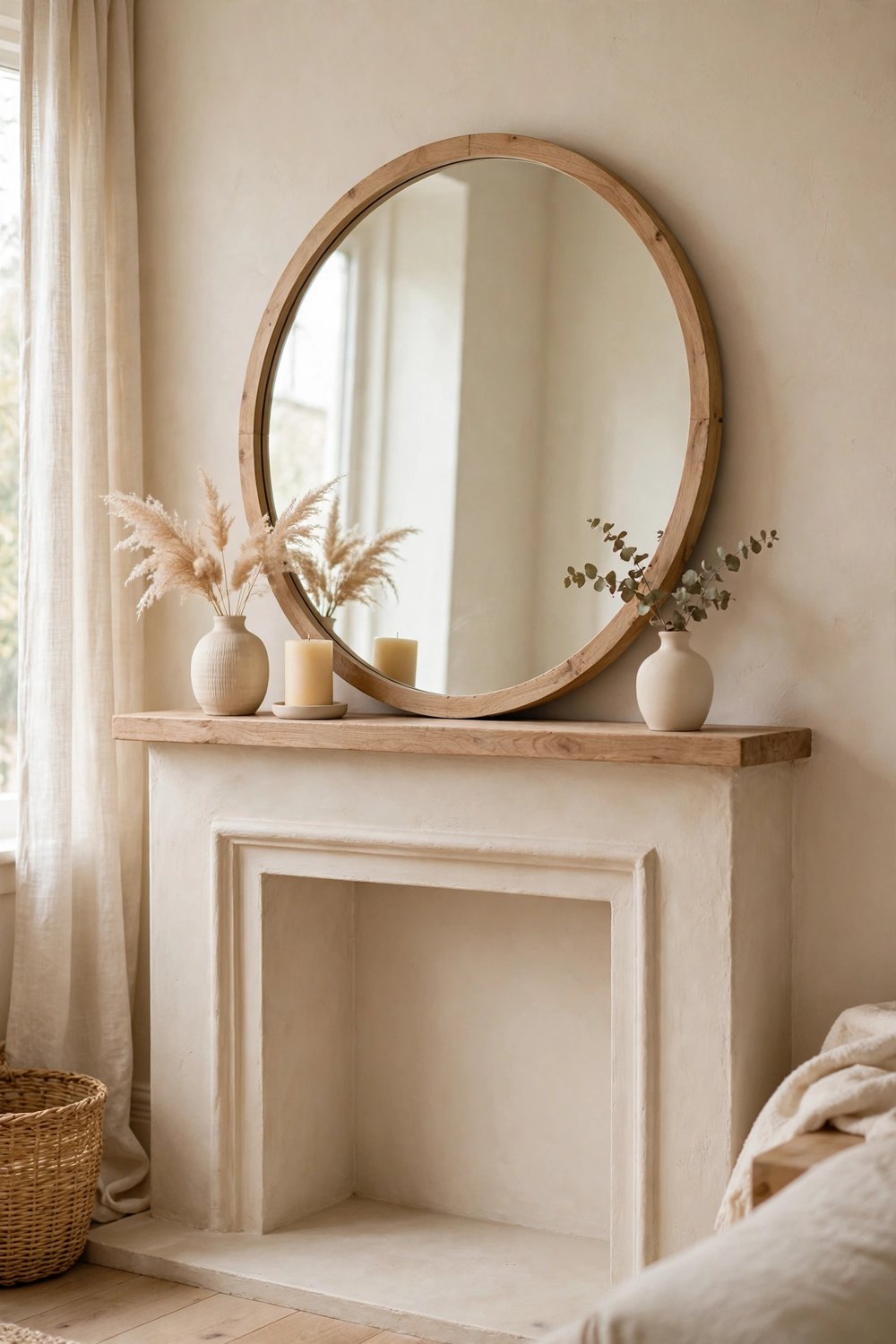
Start with the anchor: one generous mirror leaned against the wall in the center of the mantel. It reflects light and the room back at itself, which makes everything else you place in front of it look doubled and richer. An arched or round mirror softens the fireplace’s straight lines beautifully, while a simple rectangular frame in aged wood or brass keeps things classic. Leaning rather than hanging keeps the whole arrangement easy to change — and mantels are made for changing.
2. Layer Smaller Frames in Front of It
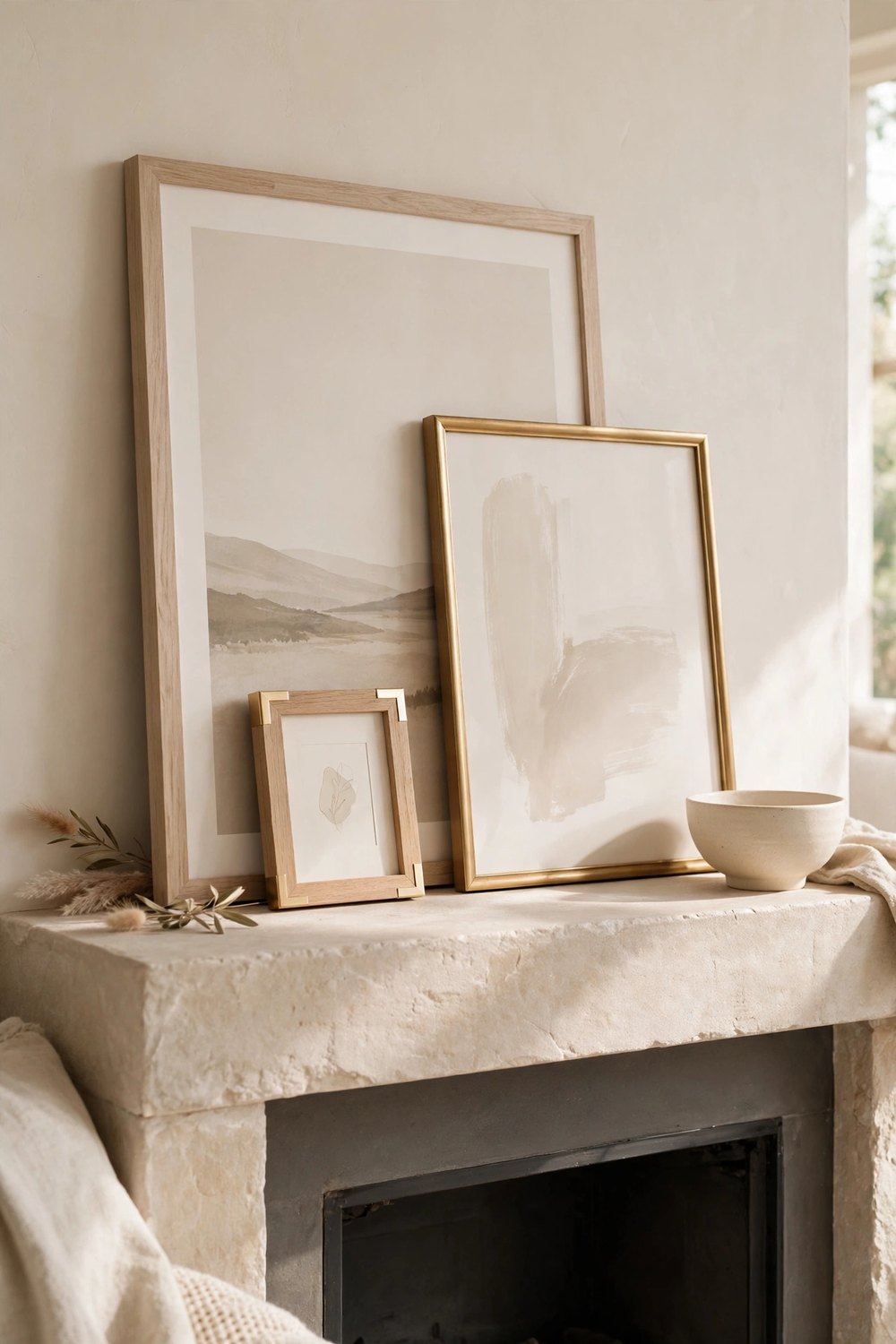
In front of the mirror, layer two or three smaller frames at slightly different heights — a print, a photograph, a pressed botanical — leaning casually against it. The overlap creates the depth that flat, evenly spaced arrangements never have, and the mirror’s edge peeking around the frames acts like extra matting. Keep the frames in one family (wood tones, or black with one brass) so the layering reads collected rather than cluttered. This is the stylist’s favorite mantel move, and it costs nothing but rearrangement.
3. Drape a Garland Asymmetrically
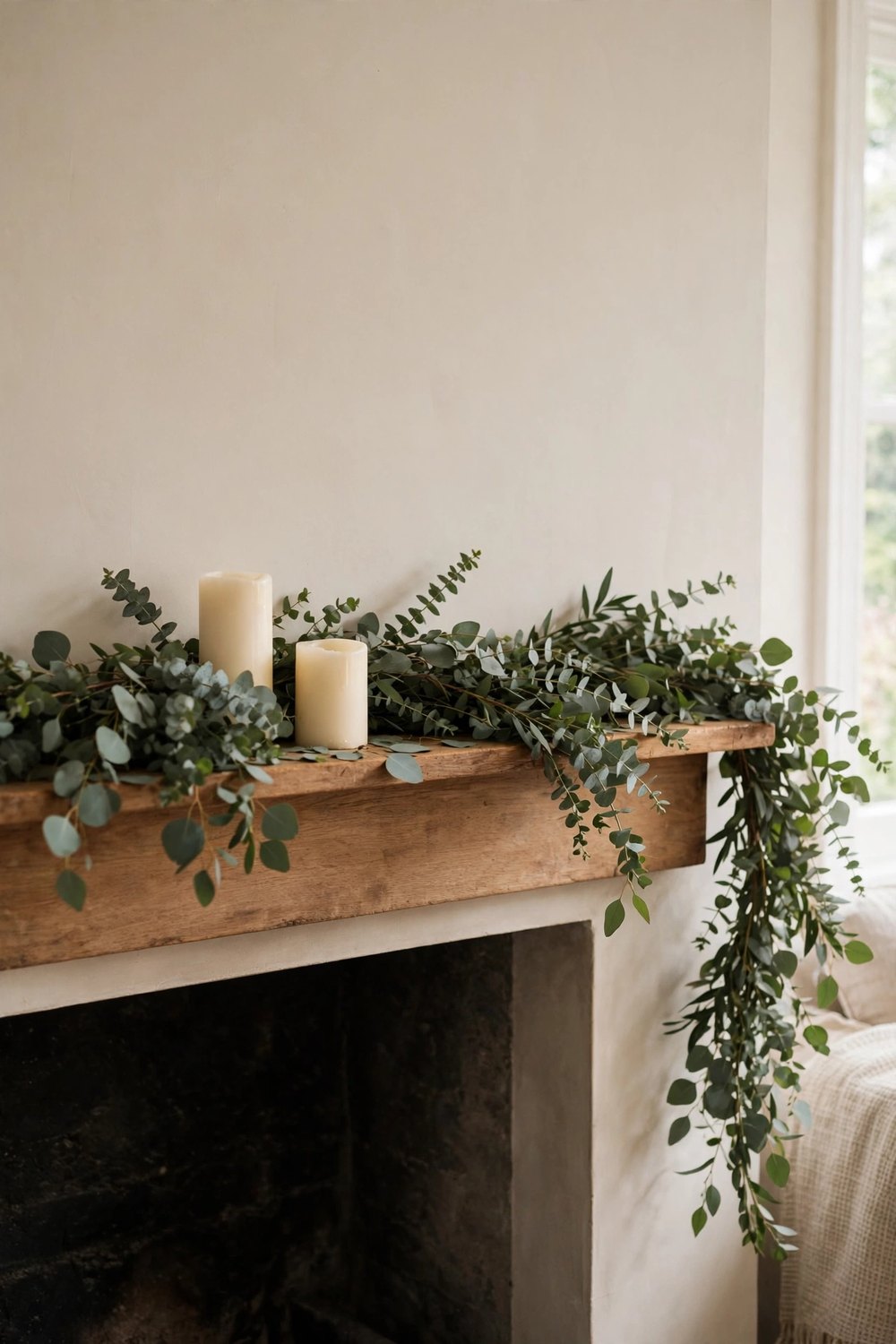
A garland looks most natural when it refuses to be symmetrical. Drape it so it swags deeper on one side and trails a little longer at one end, as if it settled there itself. Eucalyptus or olive in spring and summer, cedar and pine in winter, dried leaves and grasses in autumn — the base formula stays the same all year and only the greenery changes. Tuck the stems loosely rather than wiring them tight; a relaxed garland looks gathered, a tight one looks installed.
4. Set Brass Candlesticks at Both Ends
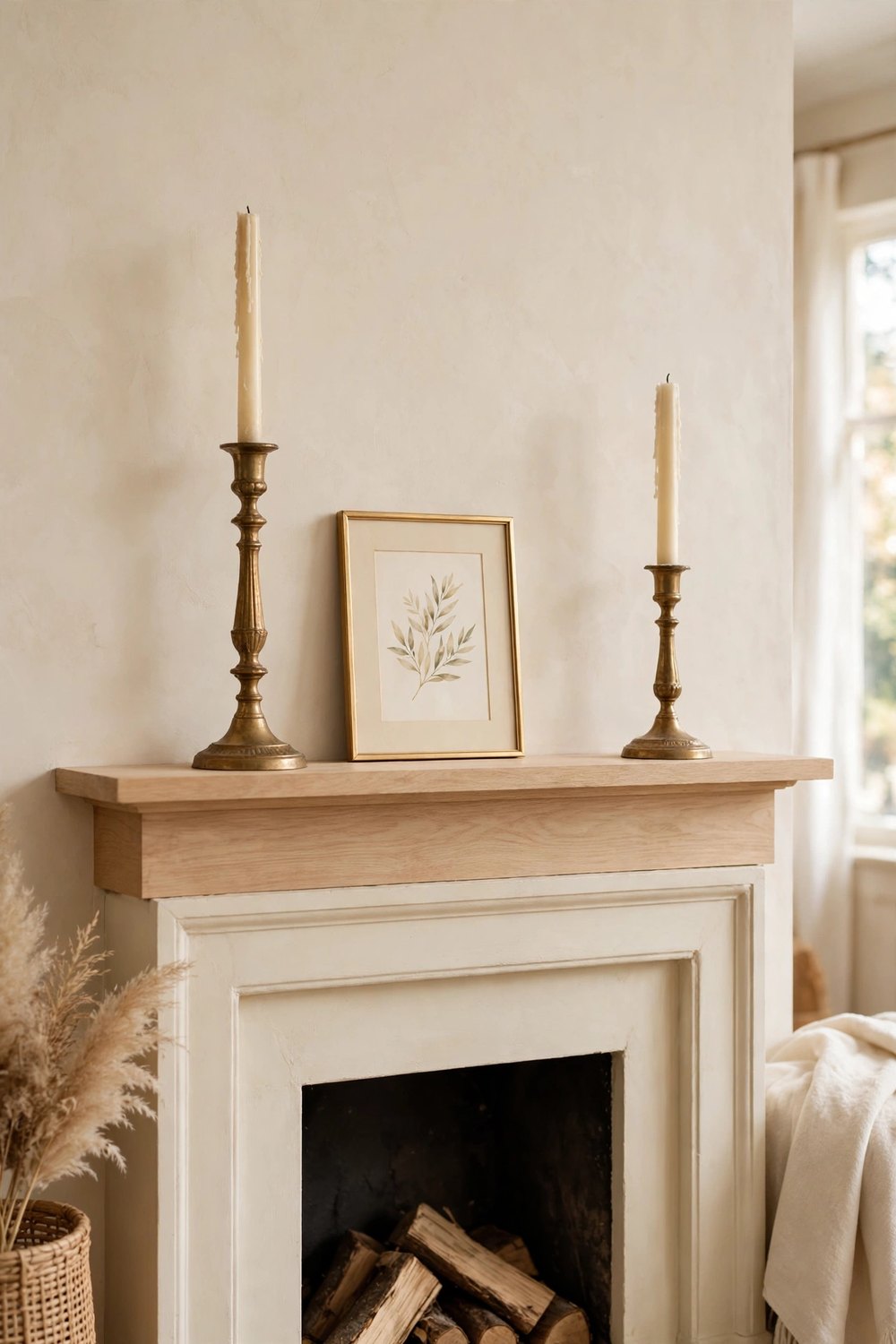
Every mantel needs its glow, and a pair of brass candlesticks standing at opposite ends gives the arrangement balance and evening light in one move. Mismatched vintage pairs look especially good — the slight difference in height and shape keeps the formality relaxed. Use cream tapers most of the year and swap to deep green, burgundy, or black when autumn and winter arrive. If real flames near garlands worry you, flameless tapers have become genuinely convincing and come with timers.
5. Place a Vase of Single Stems on One Side
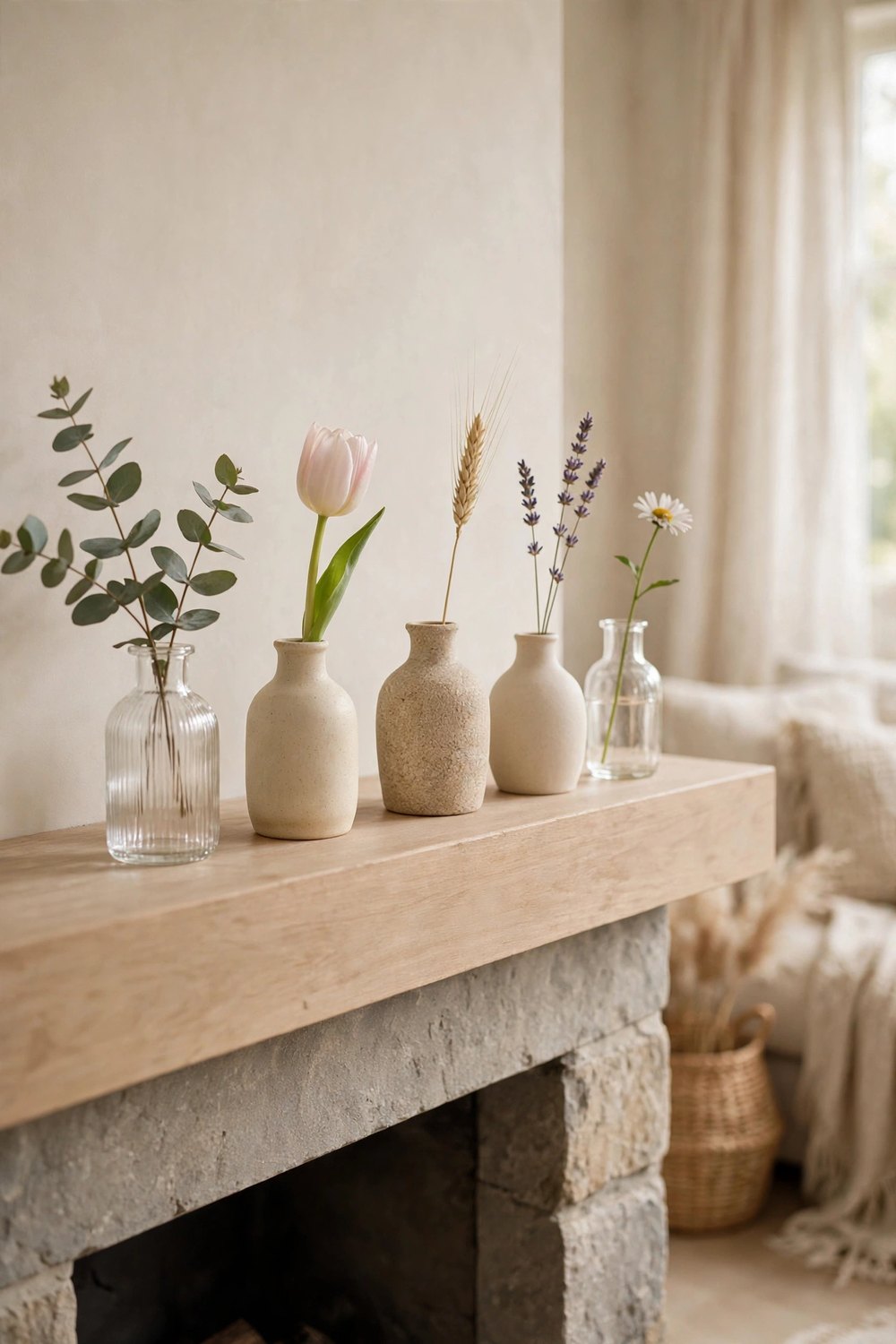
Against the symmetry of candlesticks, one vase of tall single stems on just one side keeps the composition from feeling staged. Three to five stems are enough: branches in spring, eucalyptus in summer, dried grasses in autumn, bare twigs with berries in winter. Choose a vase with some weight and texture — stoneware, aged glass, a simple ceramic — and let the stems be tall, at least a third higher than the mirror’s midpoint. The asymmetry is the style.
6. Stack Two or Three Books as a Low Riser
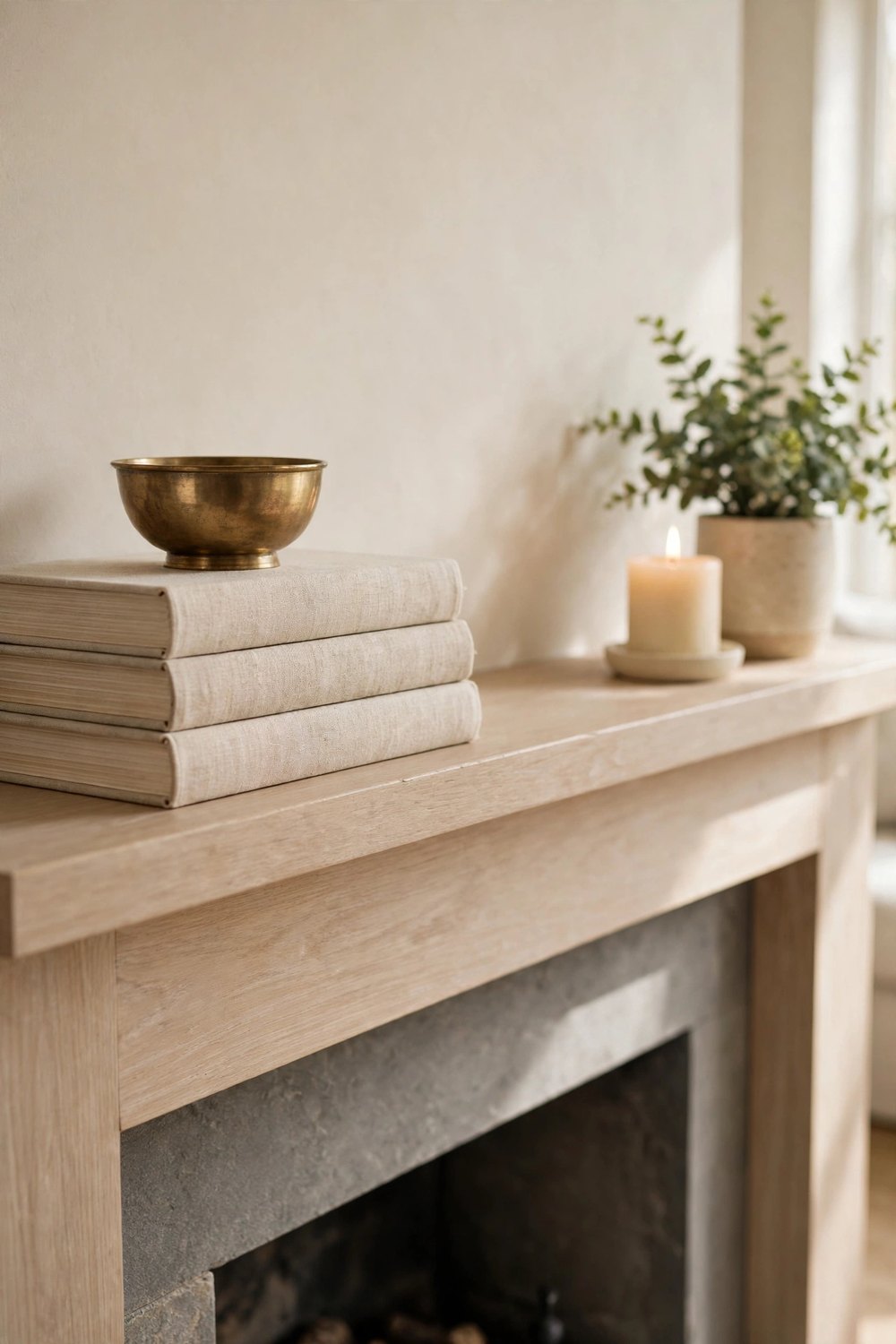
A short stack of books laid flat is the quiet workhorse of mantel styling: it lifts a small object to the right height and adds a calm horizontal line beneath all the verticals. Use large, neutral-covered books — turn patterned spines to the wall if they fight the palette — and crown the stack with one small thing: a candle, a tiny plant, a piece of pottery. One stack on one side only keeps the mantel from looking like a bookshelf. Change the crown object with the seasons and the whole mantel feels new.
7. Center One Large Piece of Art
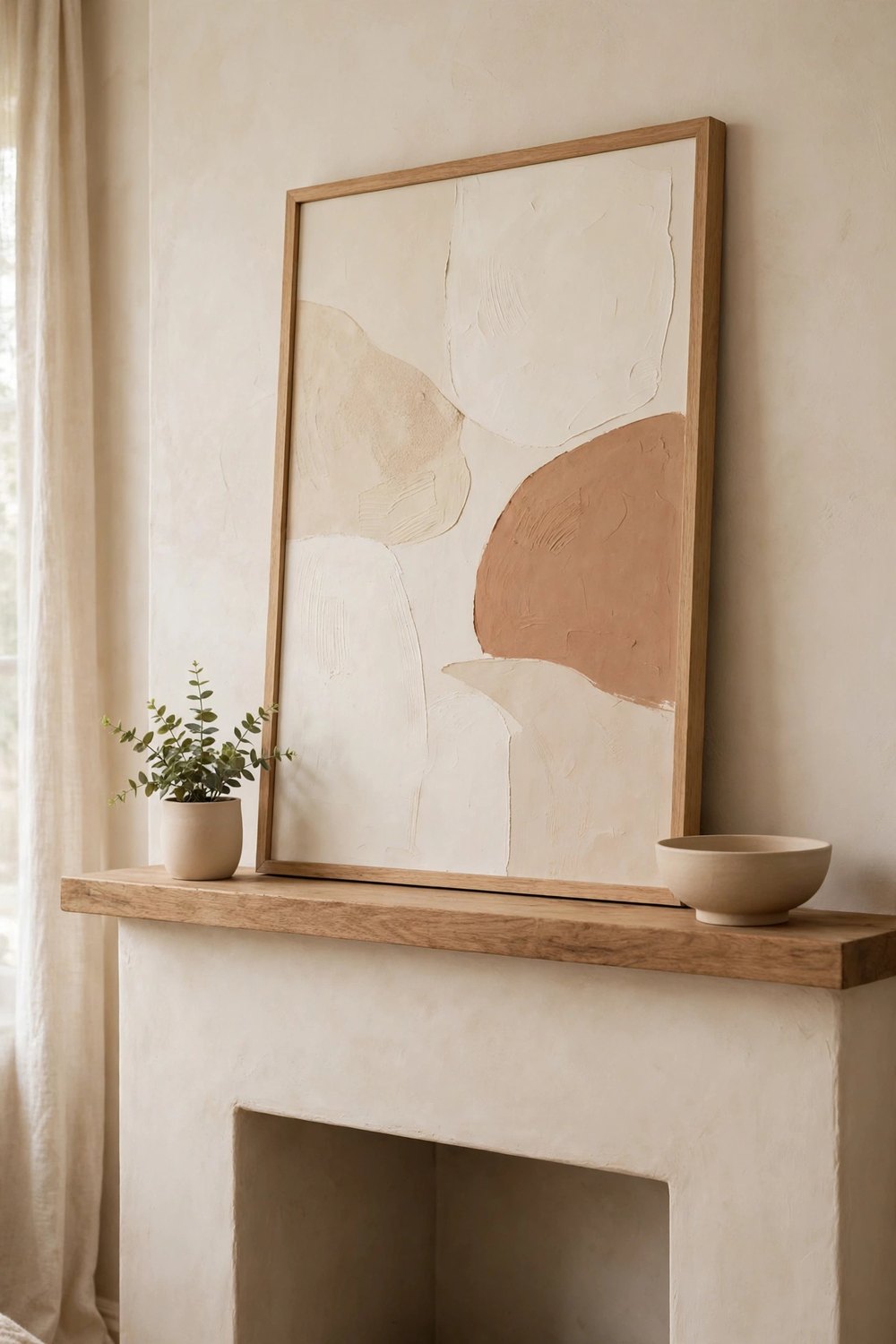
If mirrors are not your thing, one large piece of art hung or leaned dead-center does the same anchoring job with more personality. Landscapes, soft abstracts, and vintage-style prints in the room’s palette all work, sized to about two-thirds the mantel’s width so it holds the wall confidently. Keep everything else on the mantel lower than the art’s bottom edge, so the composition reads as one calm pyramid. Swap the art — or just its frame — when the season turns for the fastest full reset on this list.
8. Group Ceramic Vessels in Odd Numbers
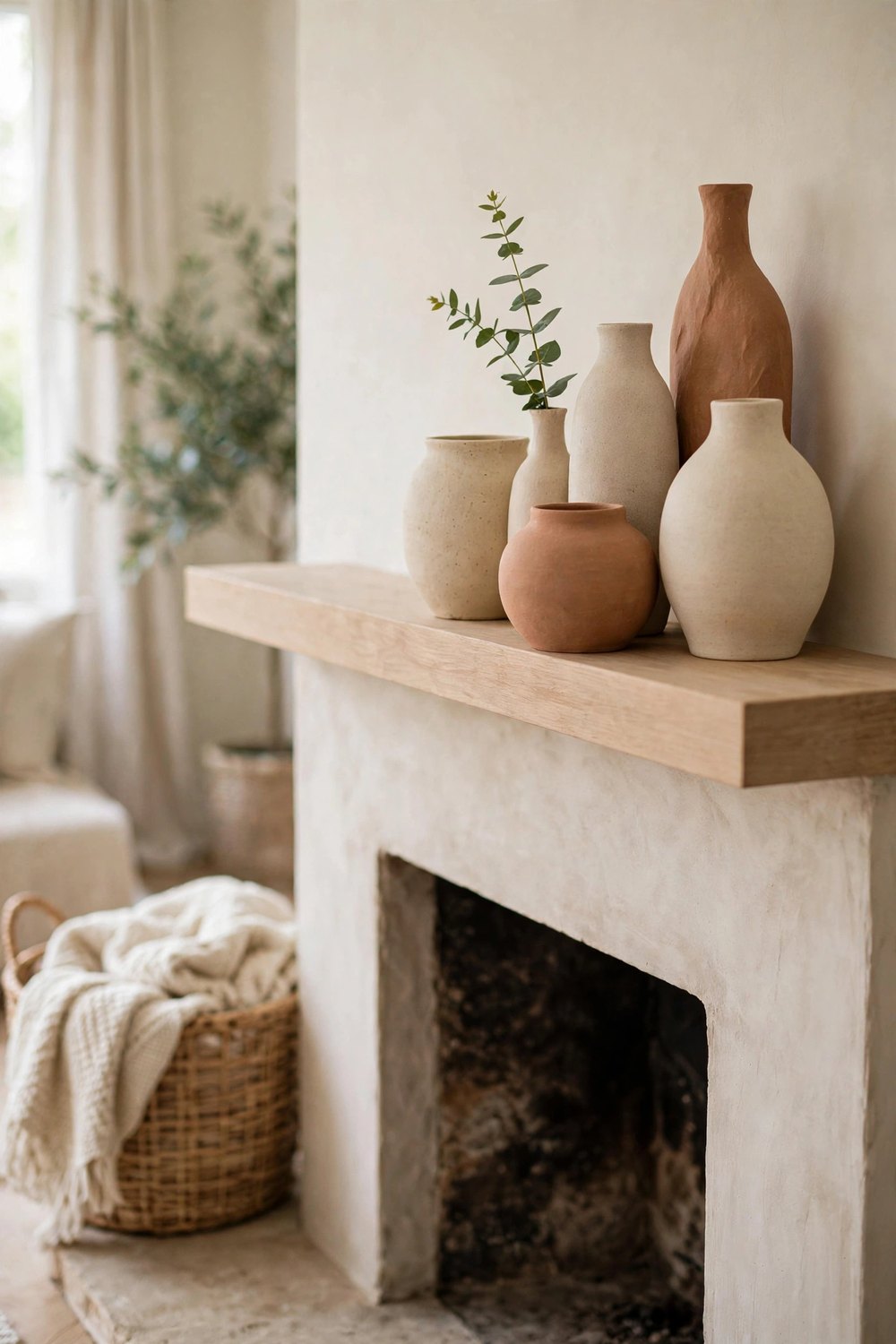
Three ceramic vessels of different heights, grouped on one side of the mantel, give you texture and shape with no arrangement anxiety. Empty or holding a few stems, matte stoneware in cream, clay, and soft grey tones looks quietly sculptural against a wall — and groups of three almost never miss. Keep the group’s total footprint modest so the mirror or art still leads. This is the idea to reach for when the mantel feels flat but you cannot name what is missing: it is usually height with softness.
9. Add Tall Branches for Drama
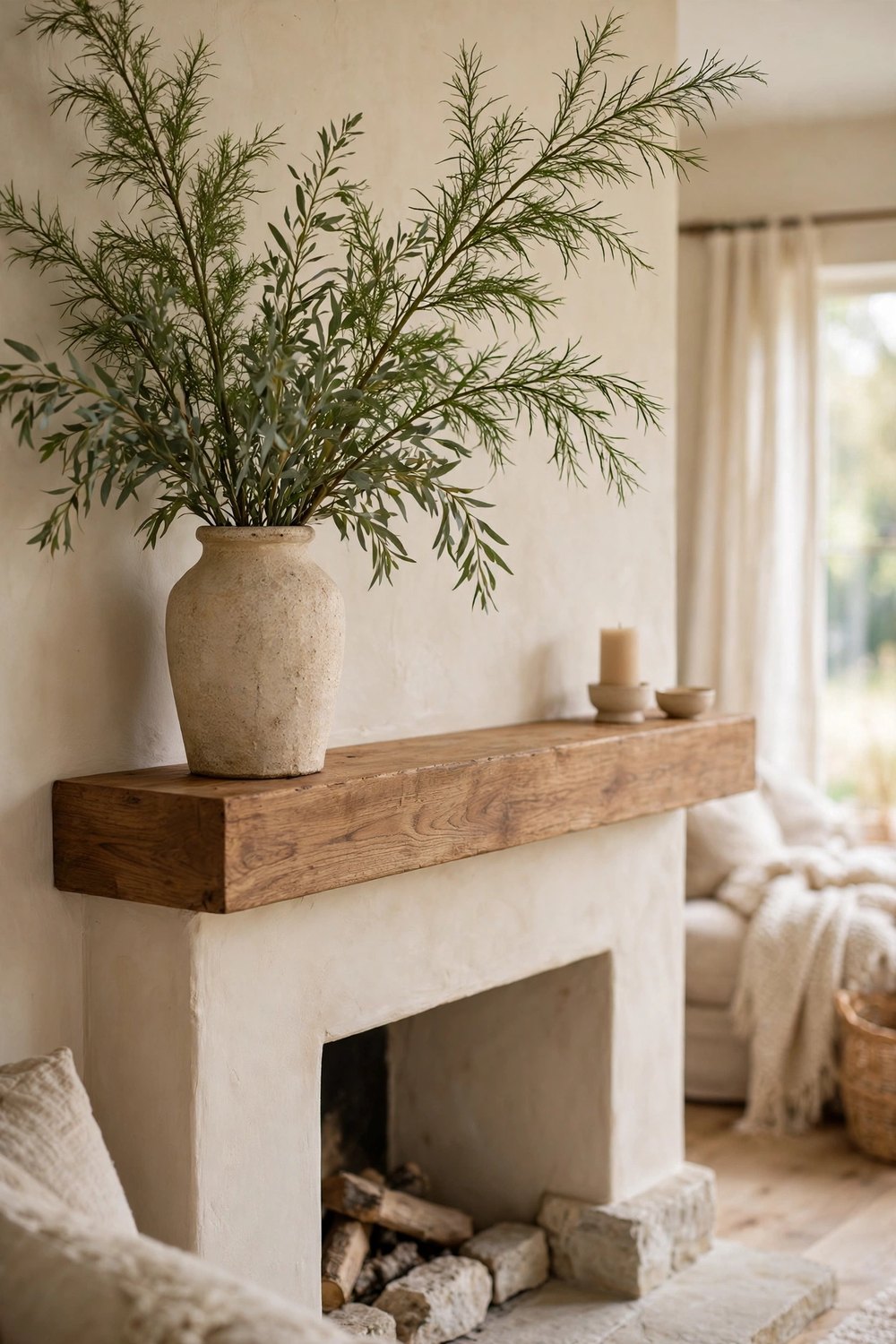
When a mantel needs presence, nothing delivers like height: a tall vase or urn on the floor beside the fireplace, or a generous vessel on the mantel itself, filled with branches that reach well above the mirror. Cherry blossom or forsythia in spring, olive or eucalyptus in summer, curly willow and dried grasses in autumn, and pine or bare branches in winter give you a year of drama from one big vessel. Keep the rest of the mantel quieter when the branches are out. Scale is the whole trick — go taller than feels safe, then stop.
10. Keep One Section Completely Empty
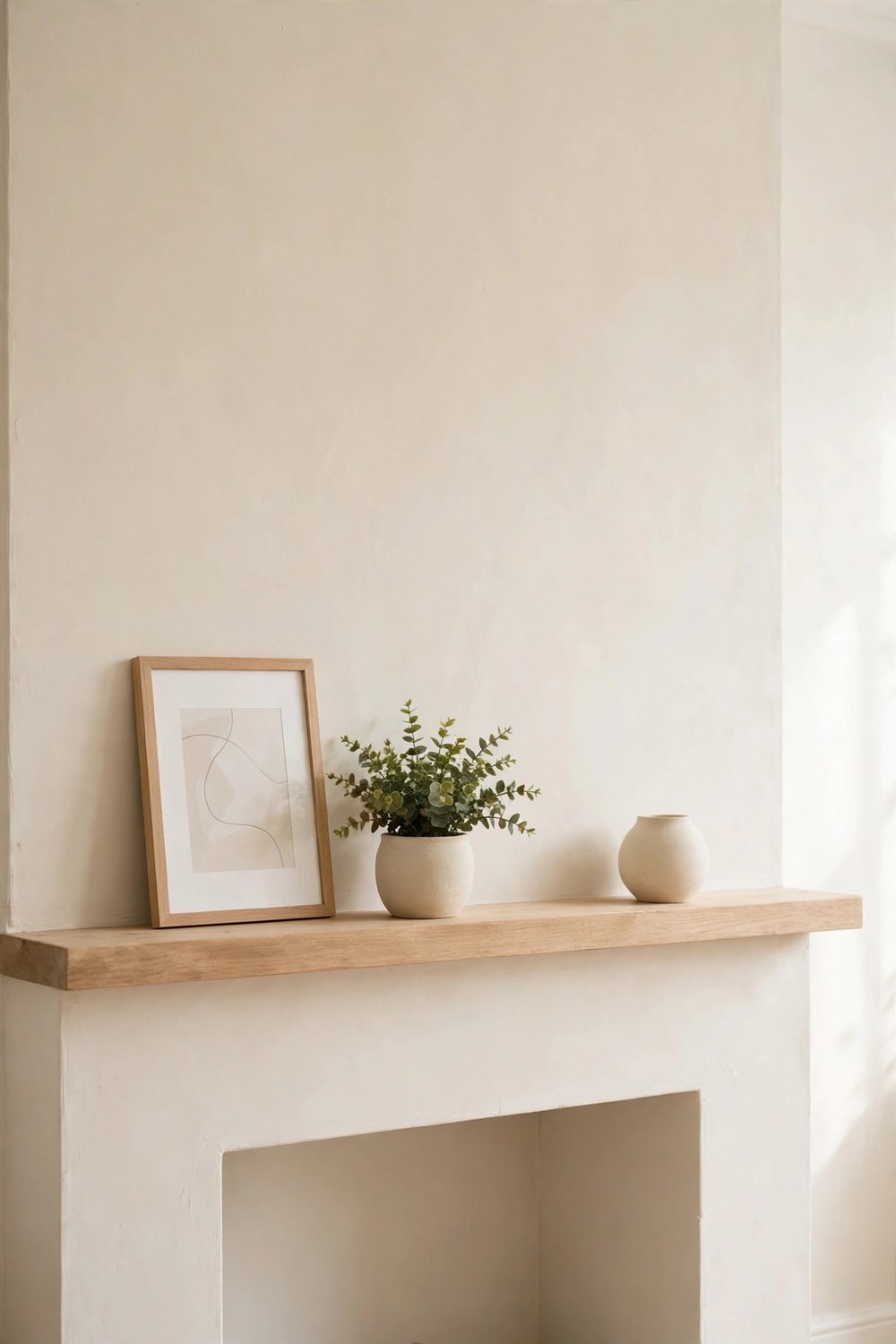
The final idea is an edit, not an addition: leave a stretch of mantel — a quarter to a third of its length — entirely bare. Empty space is what makes everything else look intentional, and it gives the eye a place to rest between the mirror, the candles, and the green. Most over-styled mantels do not need more objects; they need one removal. Step back, take one thing away, and notice how the whole arrangement exhales. Restraint is the difference between a decorated mantel and a styled one.
A mantel styled by formula — anchor, layers, glow, green, and air — takes fifteen minutes to reset and never really goes wrong, whatever the season brings. Build it once with the pieces you love most, then let the greenery, the candles, and one framed piece change with the calendar. Save this list to your living room board on Pinterest so the formula is handy at your next refresh — and follow DecorNesti for a new cozy room list every week.

Leave a Reply