
A beautifully styled bookshelf never looks like it was finished in one afternoon — it looks collected, as if every book, bowl, and little framed print arrived over years of slow, happy gathering. The good news is that the collected look is a method, not a shopping spree: a few anchor pieces, breathing room between groups, and a mix of the practical and the purely pretty. These twelve ideas will help you restyle the shelves you already have using mostly what you already own. Pull everything off, save your favorites to Pinterest, and rebuild your shelves one calm layer at a time.
In This Article
- 1. Mix Upright Books with Relaxed Horizontal Stacks
- 2. Leave Breathing Room Between Groups
- 3. Group Decor in Odd Numbers of Three
- 4. Let One Shelf Be Mostly Books
- 5. Layer Small Art and Photos in Front of Books
- 6. Add a Trailing Plant for Softness
- 7. Hide the Mess in Baskets and Lidded Boxes
- 8. Repeat a Simple Color Story Across Every Shelf
- 9. Place Your Biggest Anchor Pieces First
- 10. Mix Old and New for a Genuinely Collected Feel
- 11. Bring In Texture with Ceramics, Wood, and Woven Pieces
- 12. Style the Top of the Bookcase Like a Mantel
1. Mix Upright Books with Relaxed Horizontal Stacks
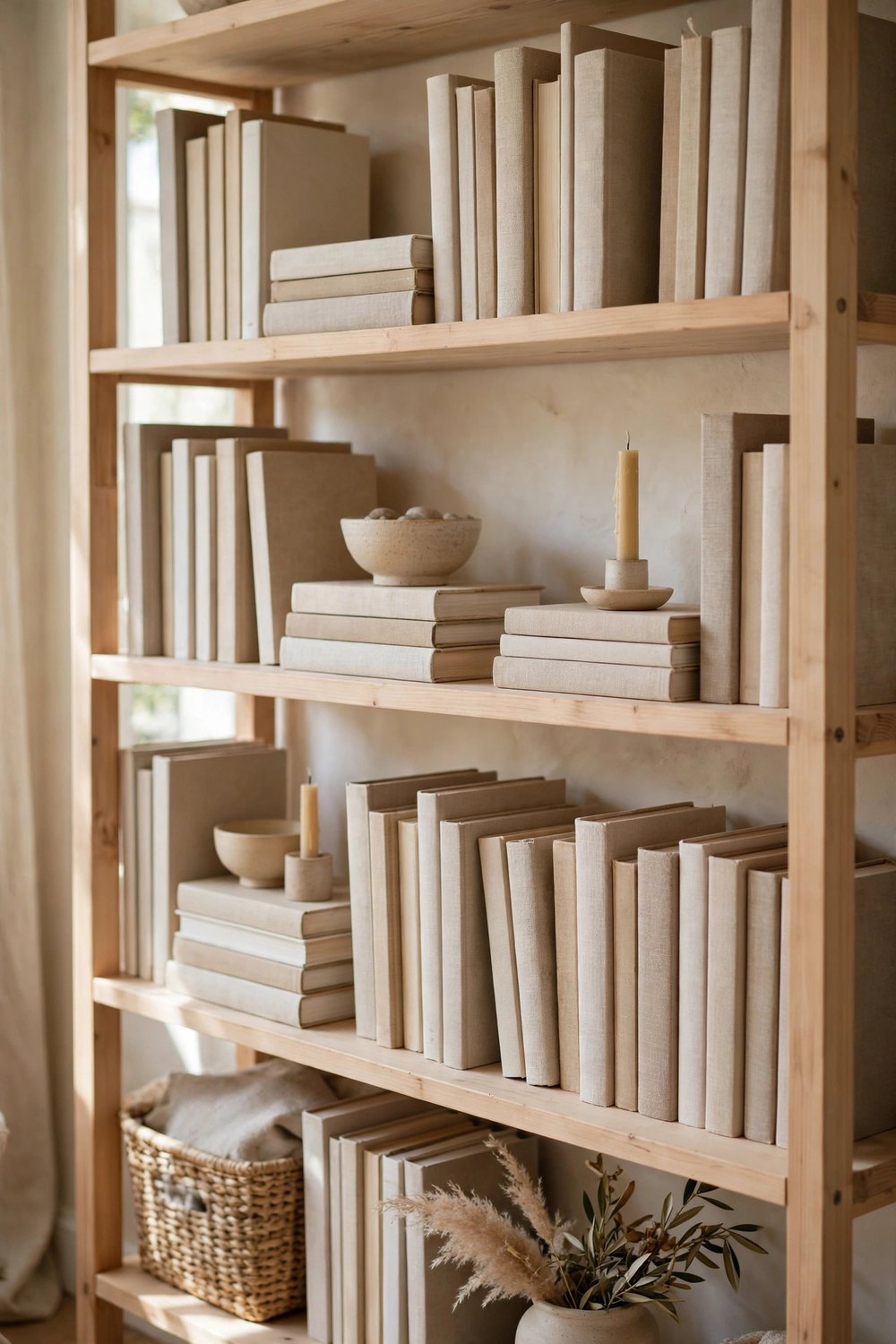
A shelf of nothing but upright spines reads like a library storeroom, while stacks alone look like a coffee table that lost its way. The collected look lives in between: stand most books upright in loose groups, then interrupt them with one or two short horizontal stacks, each topped with a small object — a candle, a bowl, a tiny plant. The rhythm of tall, flat, tall keeps the eye travelling and makes every shelf feel arranged rather than stored. Vary the heights of your stacks so no two shelves repeat the same pattern.
2. Leave Breathing Room Between Groups
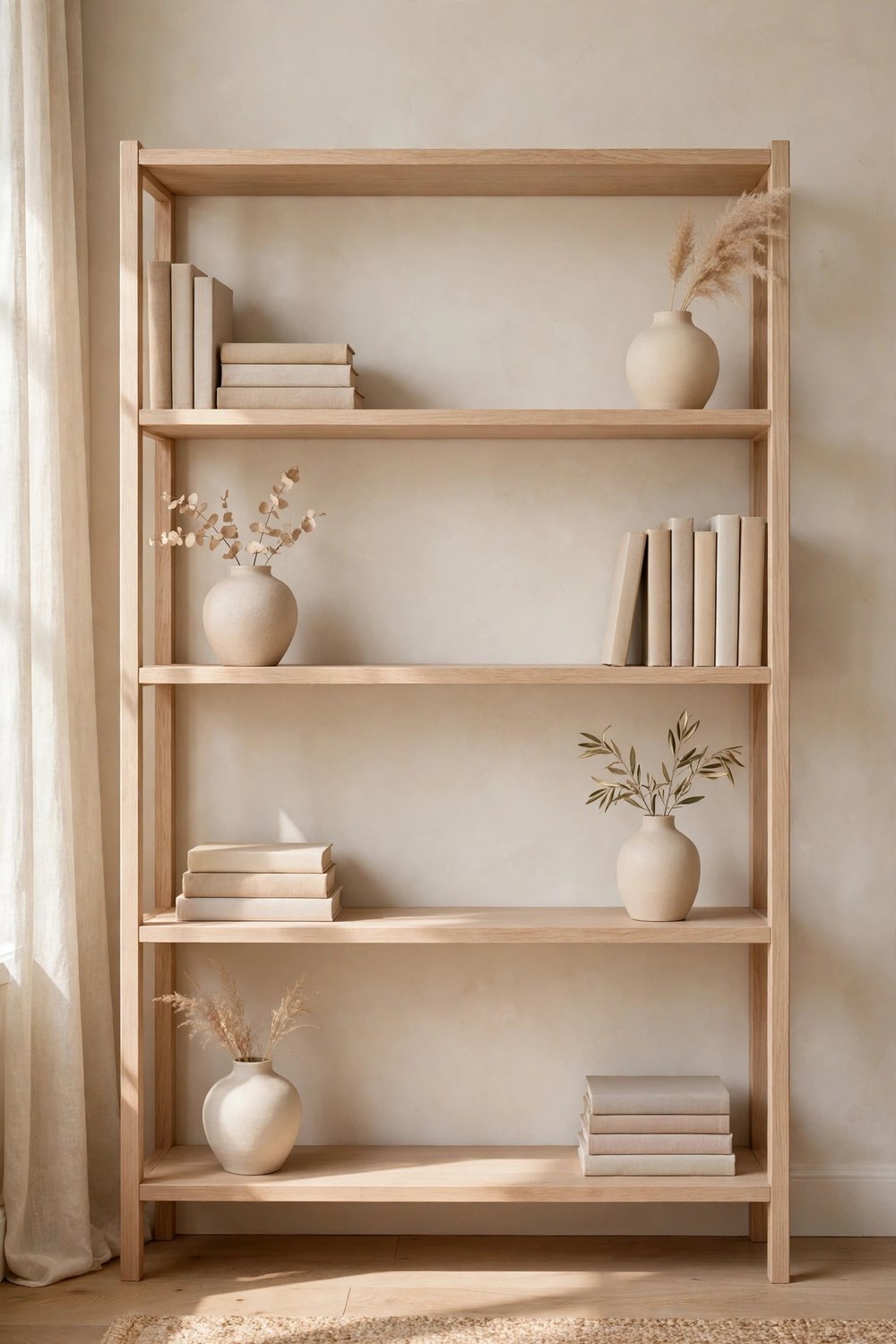
Empty space is the secret ingredient most home shelves are missing. When every inch is filled, the eye cannot rest and nothing special stands out — but leave a hand’s width of bare shelf at the ends of a group and suddenly each piece looks chosen. Aim to fill about two-thirds of each shelf and let the rest breathe; you can always add later when something you love finds you. Breathing room is also what separates “styled” from “storage,” and it costs absolutely nothing.
3. Group Decor in Odd Numbers of Three
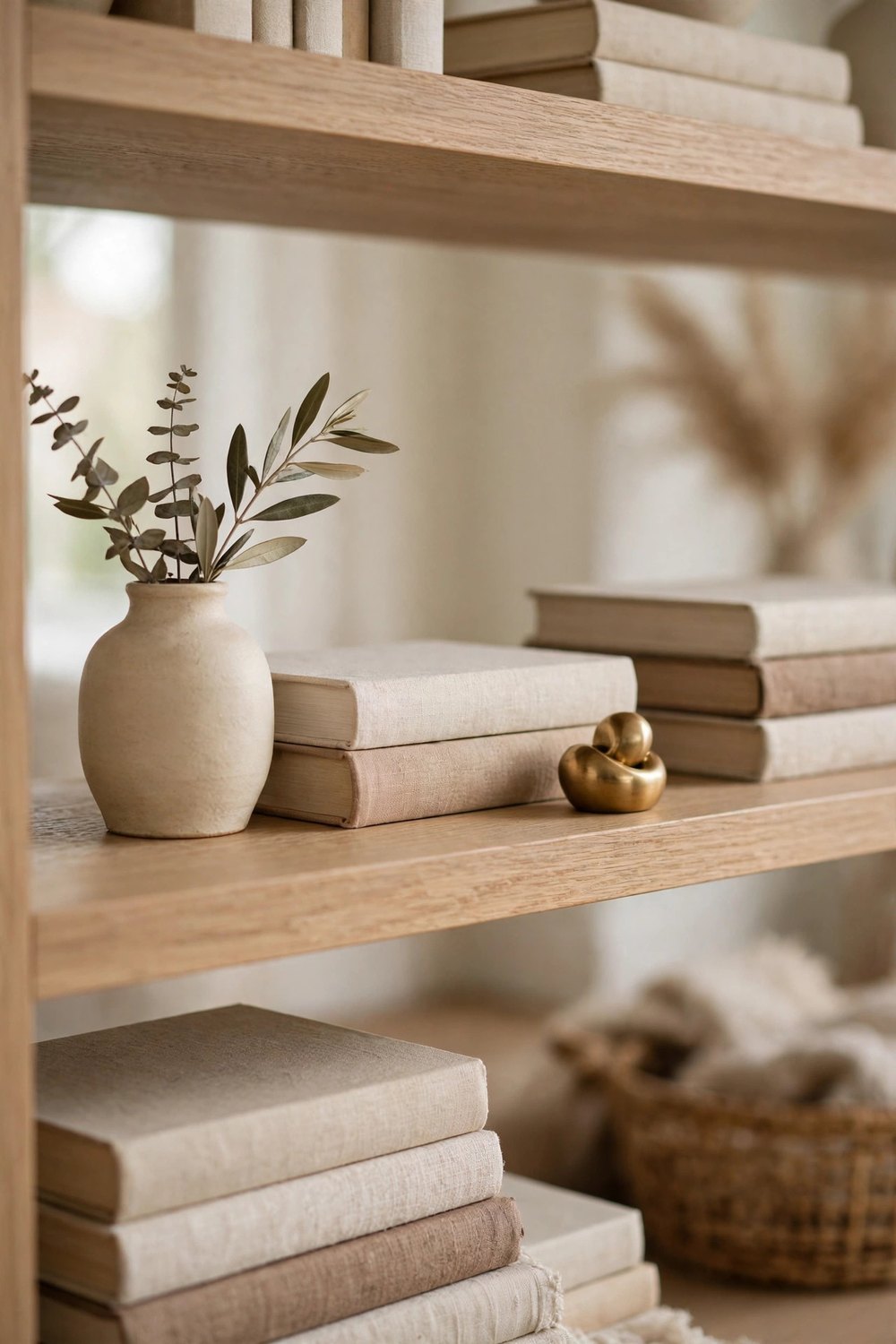
Designers lean on the rule of three because it simply works: a trio — say a small vase, a stack of two books, and a brass object — reads as a finished composition where a pair can look like it is waiting for a third guest. Keep the three pieces at different heights and in different materials so the group feels gathered rather than bought as a set. Use threes within a shelf, and echo the same trick on the shelf below in a different corner to create a gentle diagonal rhythm across the whole bookcase.
4. Let One Shelf Be Mostly Books
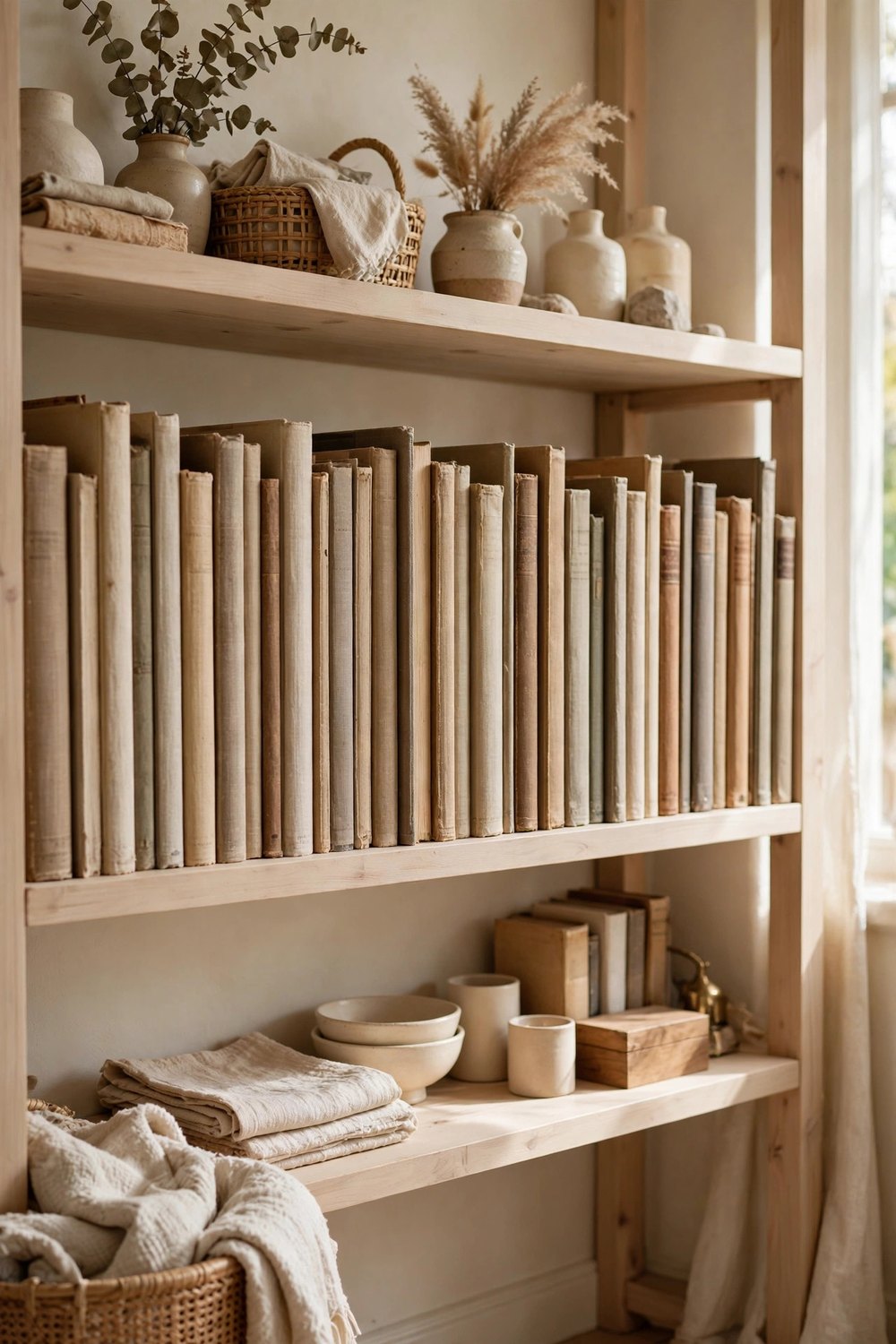
A bookcase that is all decor and no books feels like a shop display, so give at least one shelf over to honest, dense reading — a full run of well-loved novels or a complete set standing shoulder to shoulder. This “library shelf” grounds the styled shelves around it and proves the bookcase has a real job in the house. It also gives you permission to style the other shelves more loosely, because the bookish credibility is already established. Face one favorite cover outward if you want a quiet focal point.
5. Layer Small Art and Photos in Front of Books
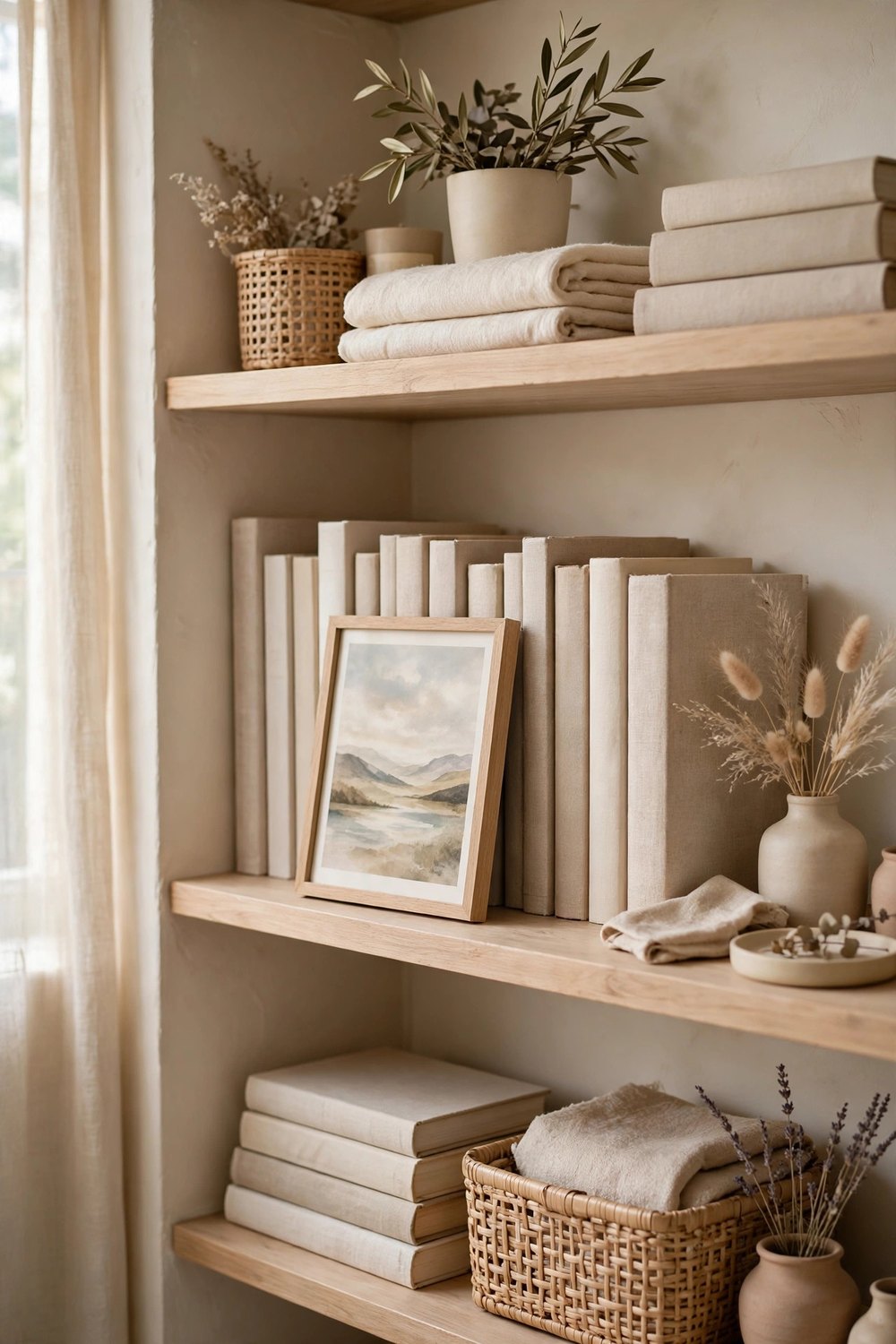
Layering is what makes shelves look collected instead of lined up: lean a small framed print, a postcard in a frame, or a family photo against the wall or against a row of spines, slightly overlapping the books in front of it. The depth this creates is instant — the shelf suddenly has a front, middle, and back instead of a single flat line. Keep frames small and the art simple; a landscape sketch or a black-and-white photo suits almost any shelf. It is also the easiest styling move to undo, so experiment freely.
6. Add a Trailing Plant for Softness
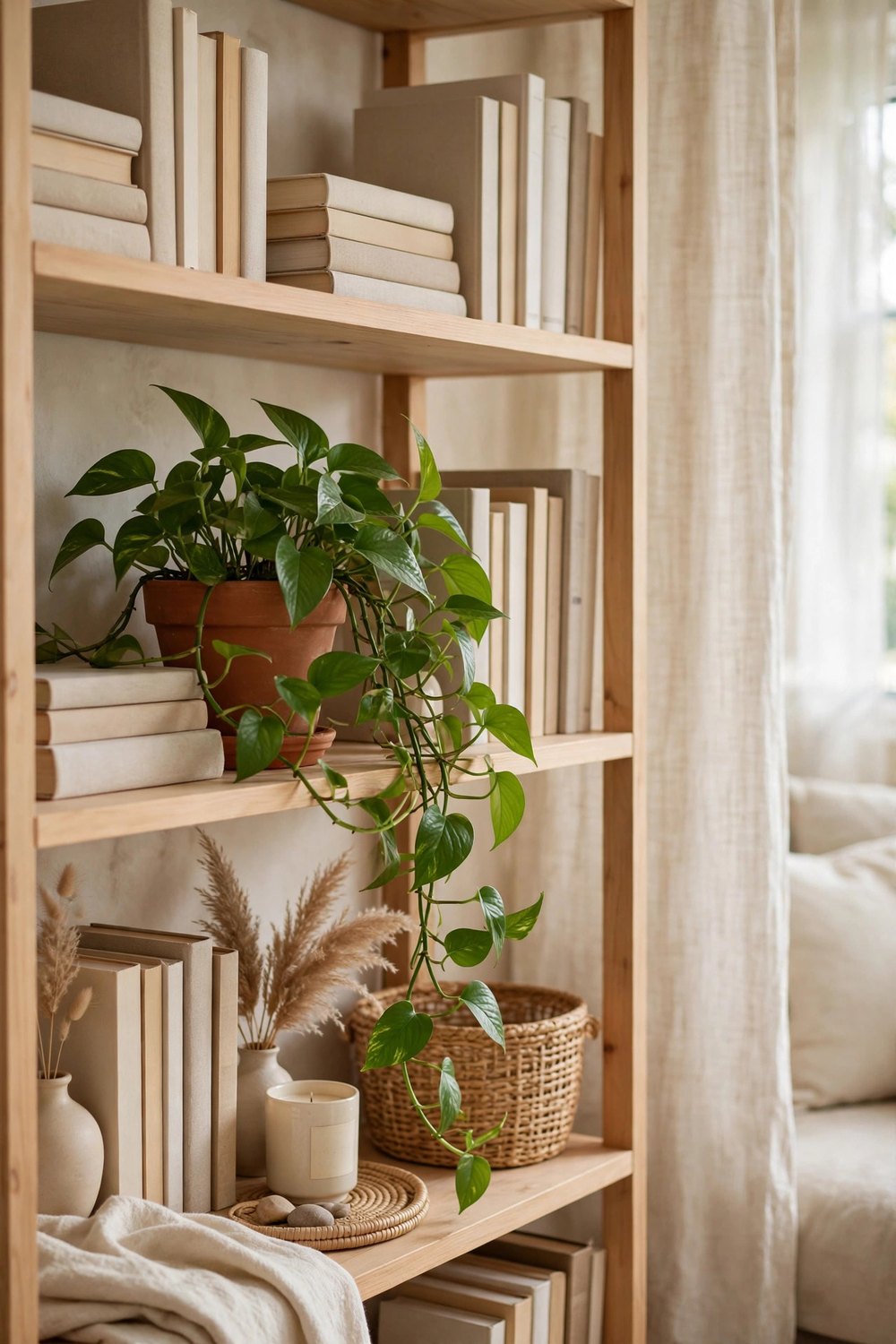
Every hard-edged shelf of wood and spines softens the moment a plant joins it. A small pothos, ivory, or string of pearls in a simple pot, set at the end of a shelf, spills green over the edge and breaks up all the straight lines. If your shelves get little natural light, a good faux trailer does the same job without the guilt. Choose a pot in a material you already have on the shelves — ceramic, terracotta, woven — so the green feels like part of the family, not a visitor.
7. Hide the Mess in Baskets and Lidded Boxes
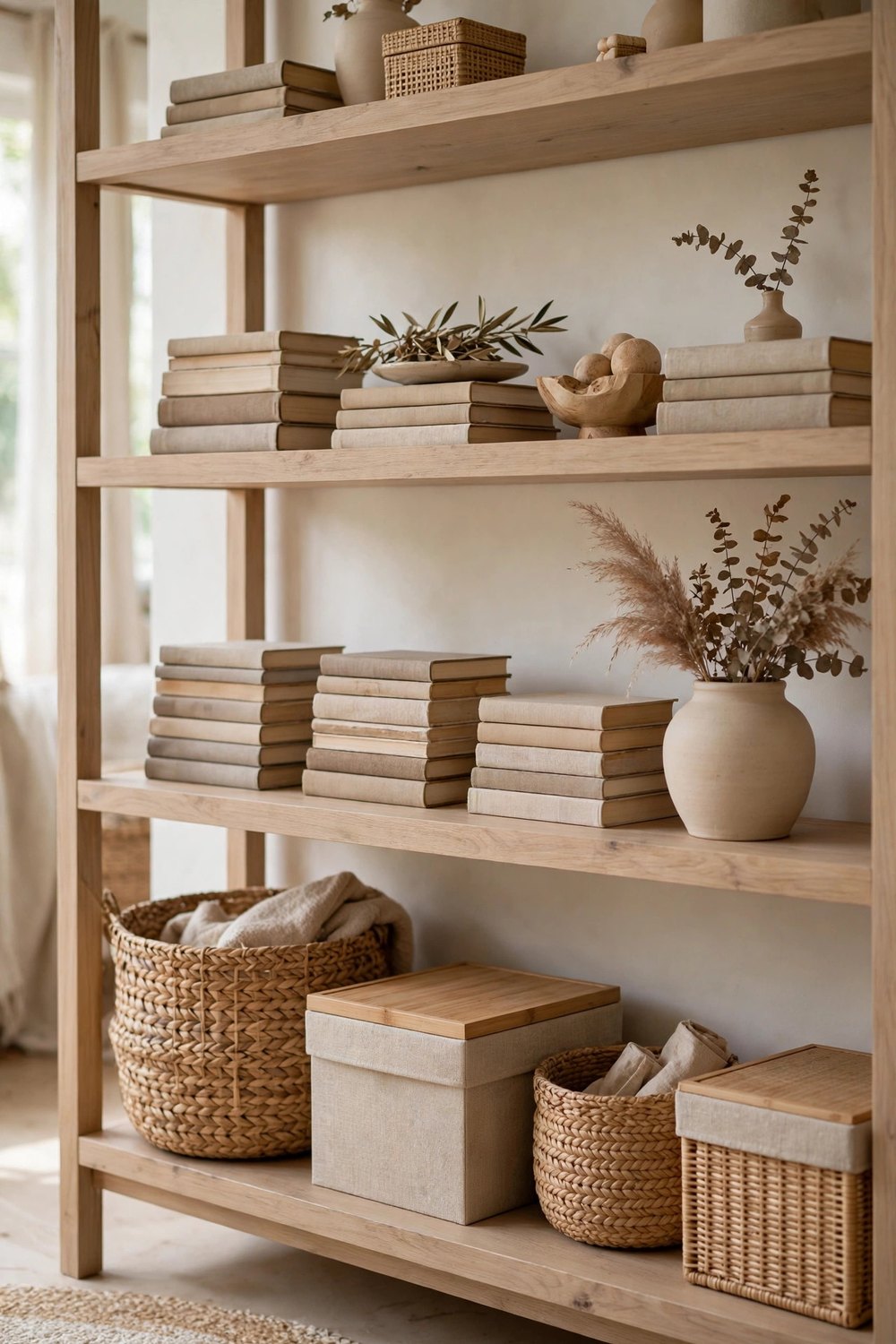
Real homes have chargers, remotes, board-game pieces, and paperwork, and the collected shelf makes peace with them by hiding them beautifully. Woven baskets and lidded boxes in natural tones corral the chaos while adding the warm texture shelves love. Dedicate one lower shelf — the least visible — to two or three of them, and your styling stays calm above while life stays practical below. Matching boxes read tidiest, but a small mix of woven styles feels more collected, so choose by the room you have.
8. Repeat a Simple Color Story Across Every Shelf
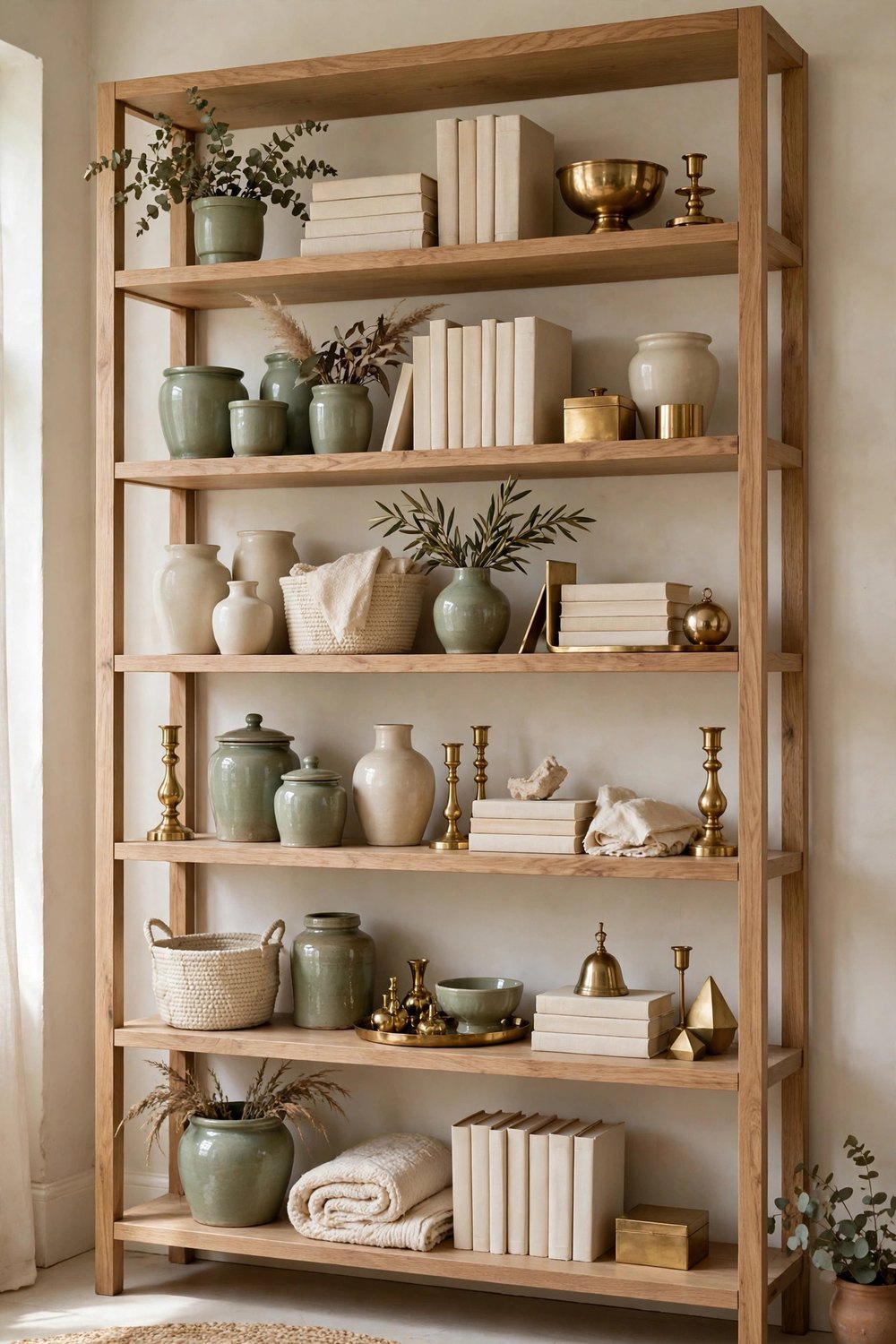
Collected shelves still need a thread tying them together, and color is the easiest one. Pick two or three tones already in your room — cream and warm wood, or sage and brass — and make sure each shelf carries a small echo of them in a book cover, a pot, or an object. You are not color-coding every spine; a gentle repetition is enough for the whole bookcase to feel intentional. When you add something new later, this little palette tells you instantly whether it belongs.
9. Place Your Biggest Anchor Pieces First
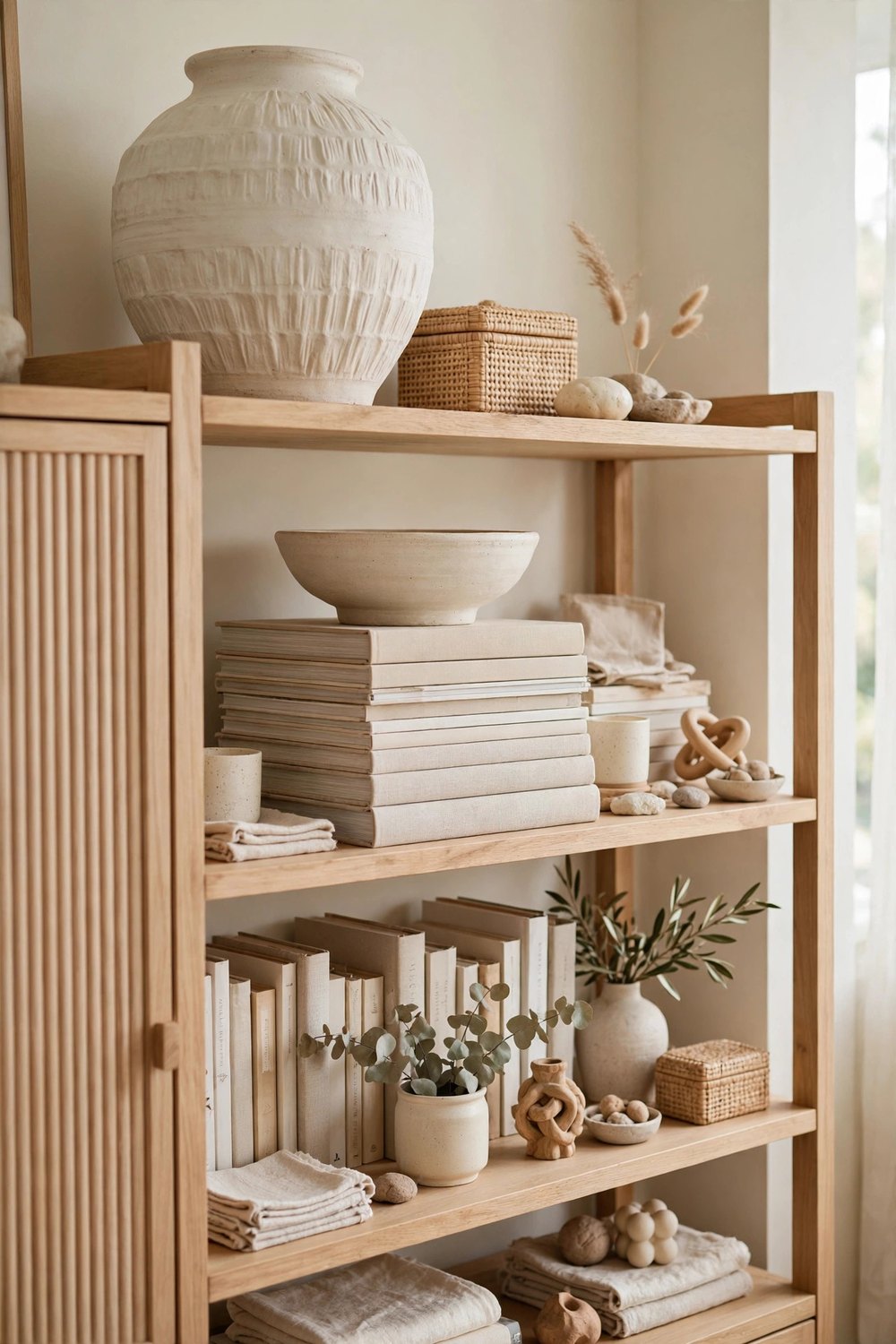
When a restyle feels overwhelming, start with anchors: your largest vase, the chunky stack of art books, the biggest bowl. Place one anchor per shelf, spread across different positions — left on one shelf, center on the next, right below that — and only then fill in around them with smaller books and objects. Anchors give each shelf a focal point and stop the “lots of little things” look that makes shelves feel cluttered. If a piece is not big enough to anchor, it is a filler — and fillers come last, in small numbers.
10. Mix Old and New for a Genuinely Collected Feel
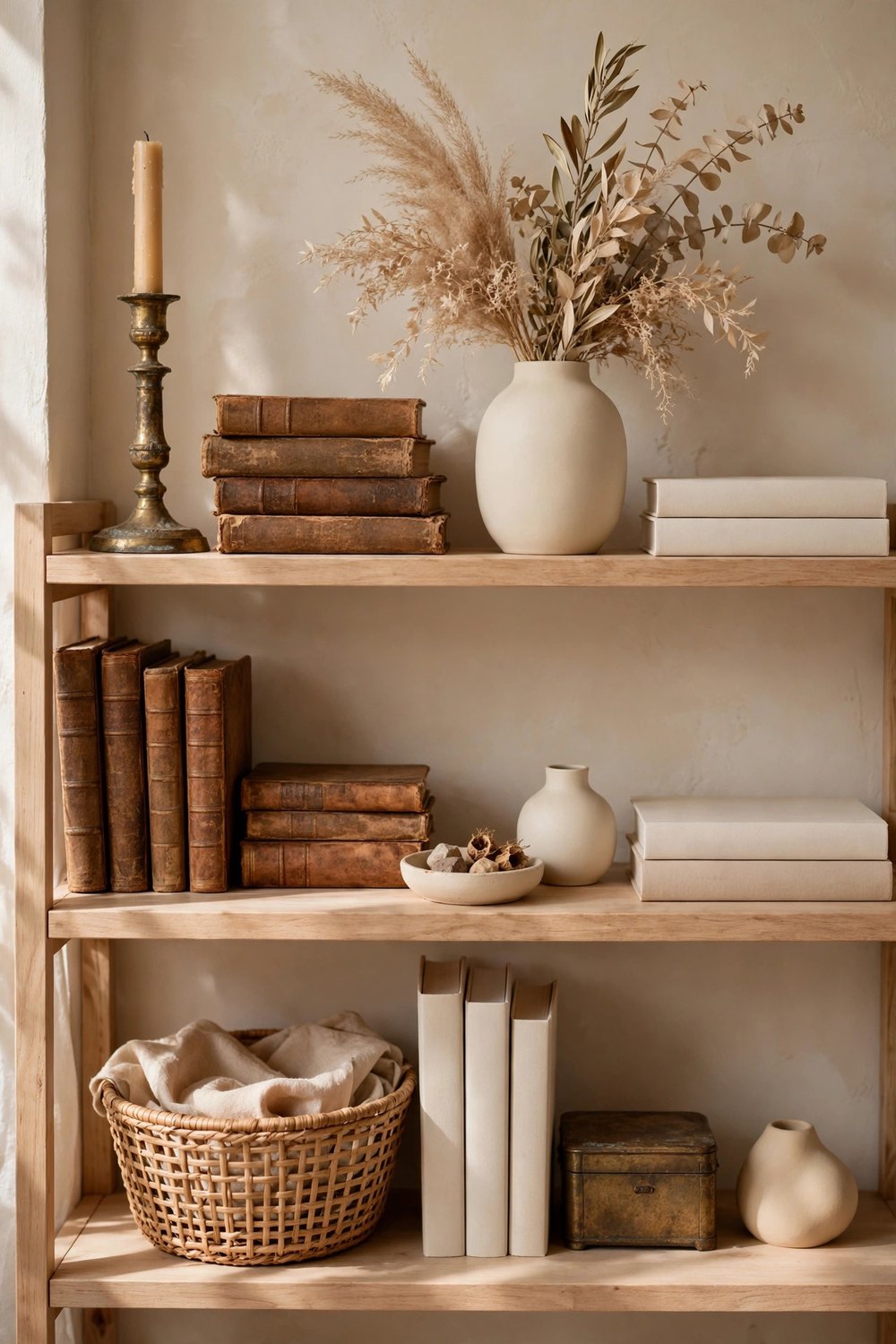
The word “collected” really means “gathered over time,” so let your shelves tell that story honestly: a flea-market brass candlestick beside a new ceramic vase, your grandmother’s teacup next to this year’s novel. Patina next to clean glaze is exactly the contrast that makes a shelf feel lived-in rather than decorated. Shop your own house first — kitchen bowls, travel souvenirs, and spare picture frames all migrate happily to a bookshelf — and buy slowly, one loved piece at a time.
11. Bring In Texture with Ceramics, Wood, and Woven Pieces
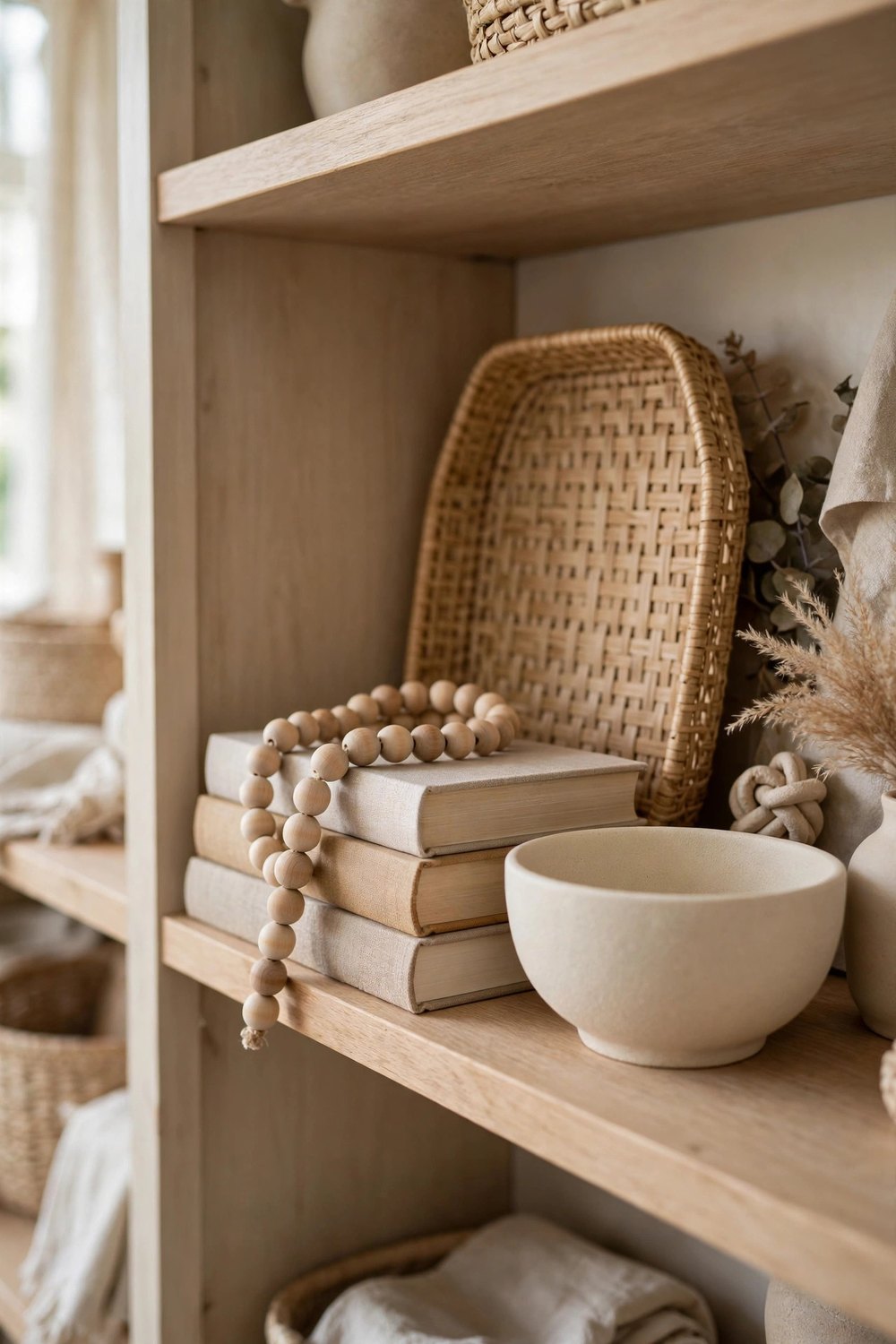
Books are flat and smooth, so a shelf of only books and glass can feel cold even when it is perfectly arranged. Warm it up with texture: a matte ceramic bowl, a carved wooden bead garland draped over a stack, a small woven tray leaning at the back. These humble materials catch light differently from shiny covers and make the whole bookcase feel touchable and calm. Repeat each texture at least twice across the shelves so it reads as a theme, not an accident.
12. Style the Top of the Bookcase Like a Mantel
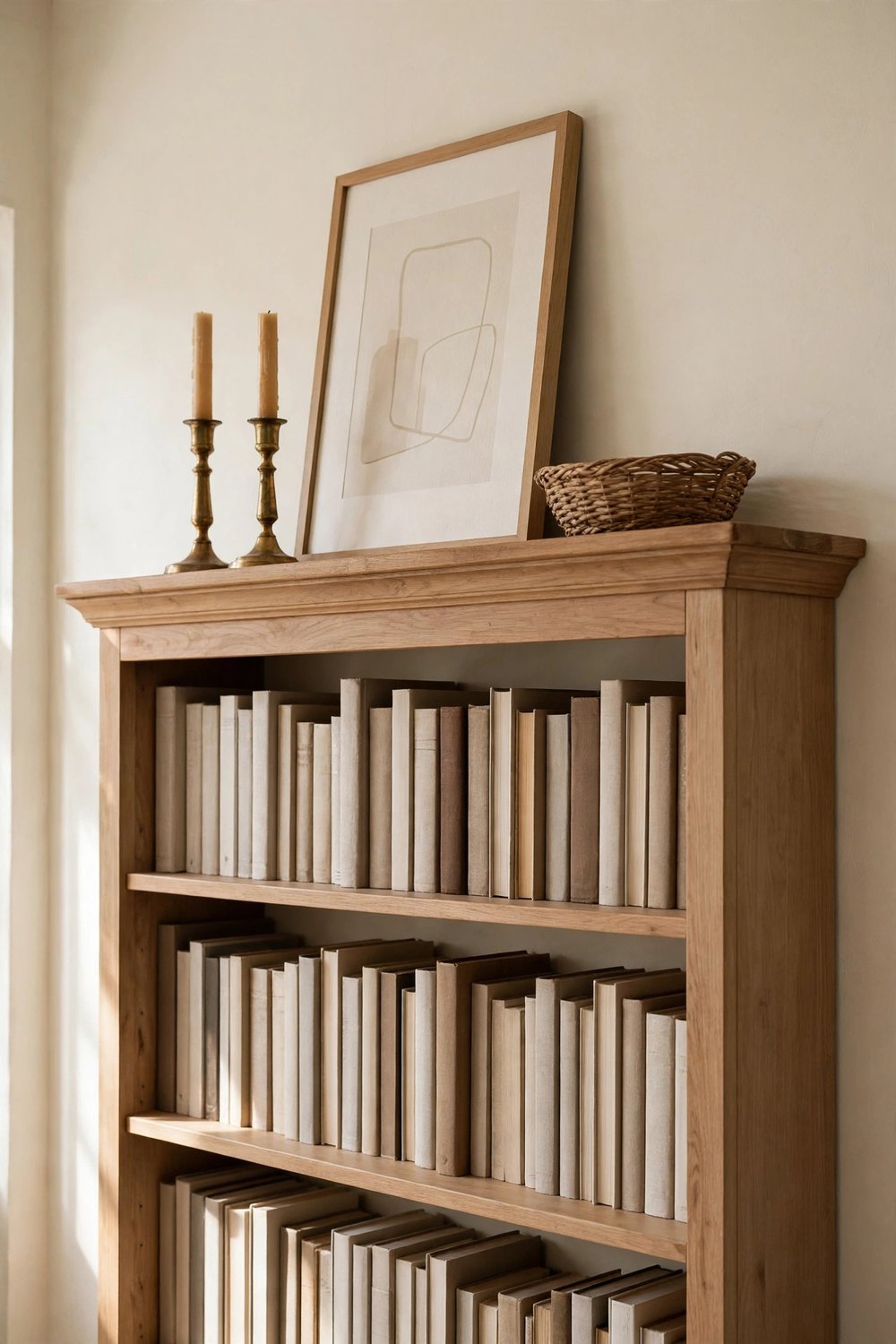
The top of a bookcase is prime display space that most of us abandon to dust and storage boxes. Treat it like a mantel instead: a leaning framed print or small mirror, a pair of candlesticks or a lantern, and one low basket or stack of beautiful books. Keep the arrangement below the sightline of the ceiling so it feels grounded, and let one piece be tall enough to lead the eye up. A styled top finishes the whole piece of furniture — suddenly the bookcase is a feature, not just furniture against a wall.
A collected bookshelf is never really finished — it just reaches a calm, happy balance that you adjust as new books and small treasures arrive. Start with anchors and breathing room, hide the practical mess in baskets, and let old favorites share space with new finds. Save this list to your Pinterest board so the styling tricks are handy on your next slow Sunday restyle — and follow DecorNesti for a new cozy room list every week.

Leave a Reply