
An expensive-looking living room is rarely about expensive things — it is about scale, light, texture, and a few choices made with confidence. The rooms we all save are usually ordinary rooms where someone hung the curtains higher, chose the bigger rug, and edited ruthlessly. These twelve updates are the budget versions of those designer moves, most costing less than a takeaway dinner, and several costing nothing at all. Work through them in any order, save your favorites to Pinterest, and watch your room quietly start looking like the expensive one.
In This Article
- 1. Go Bigger with Your Cushions
- 2. Anchor the Room with One Large Rug
- 3. Hang Curtains High and Wide
- 4. Refresh the Walls with Warm White Paint
- 5. Swap In One Statement Floor Lamp
- 6. Style the Coffee Table Like a Designer Vignette
- 7. Lean One Oversized Mirror Against the Wall
- 8. Add a Tall Plant for Instant Height
- 9. Update Your Lampshades and Bulbs
- 10. Pull the Furniture Off the Walls
- 11. Layer Texture with Throws and Woven Baskets
- 12. Edit Your Shelves Down to Breathing Room
1. Go Bigger with Your Cushions
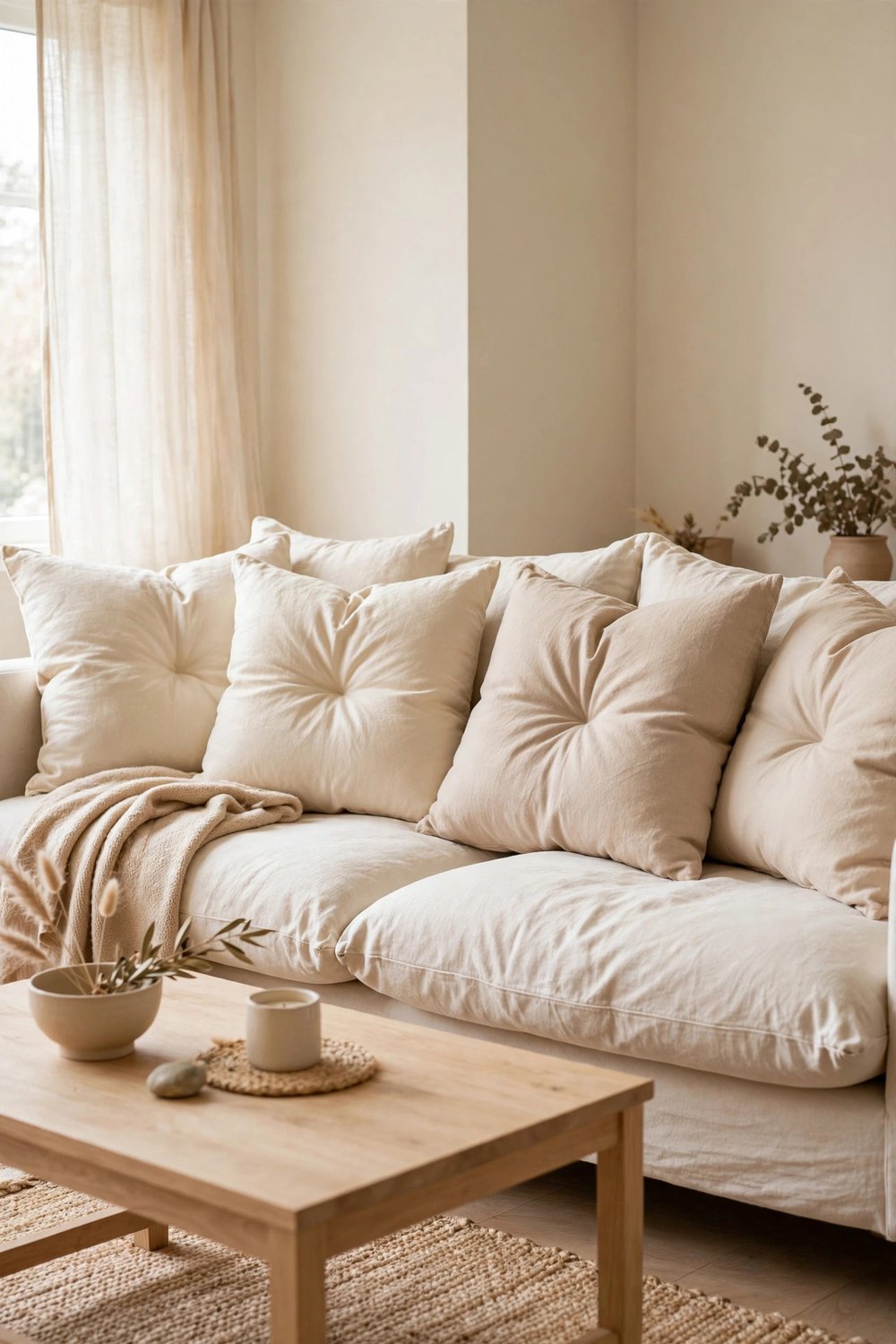
Small, flat cushions are the fastest way to make a sofa look tired, and generously sized ones are the cheapest fix. Swap your covers for larger linen-look or woven covers — 50 to 60 centimeters — and stuff them firmly, even reusing the inserts from two tired cushions in one plump new cover. A karate-chop crease down the center gives that soft, designer slump. Two or three big cushions in warm neutrals look far more expensive than six small ones in a busy mix.
2. Anchor the Room with One Large Rug
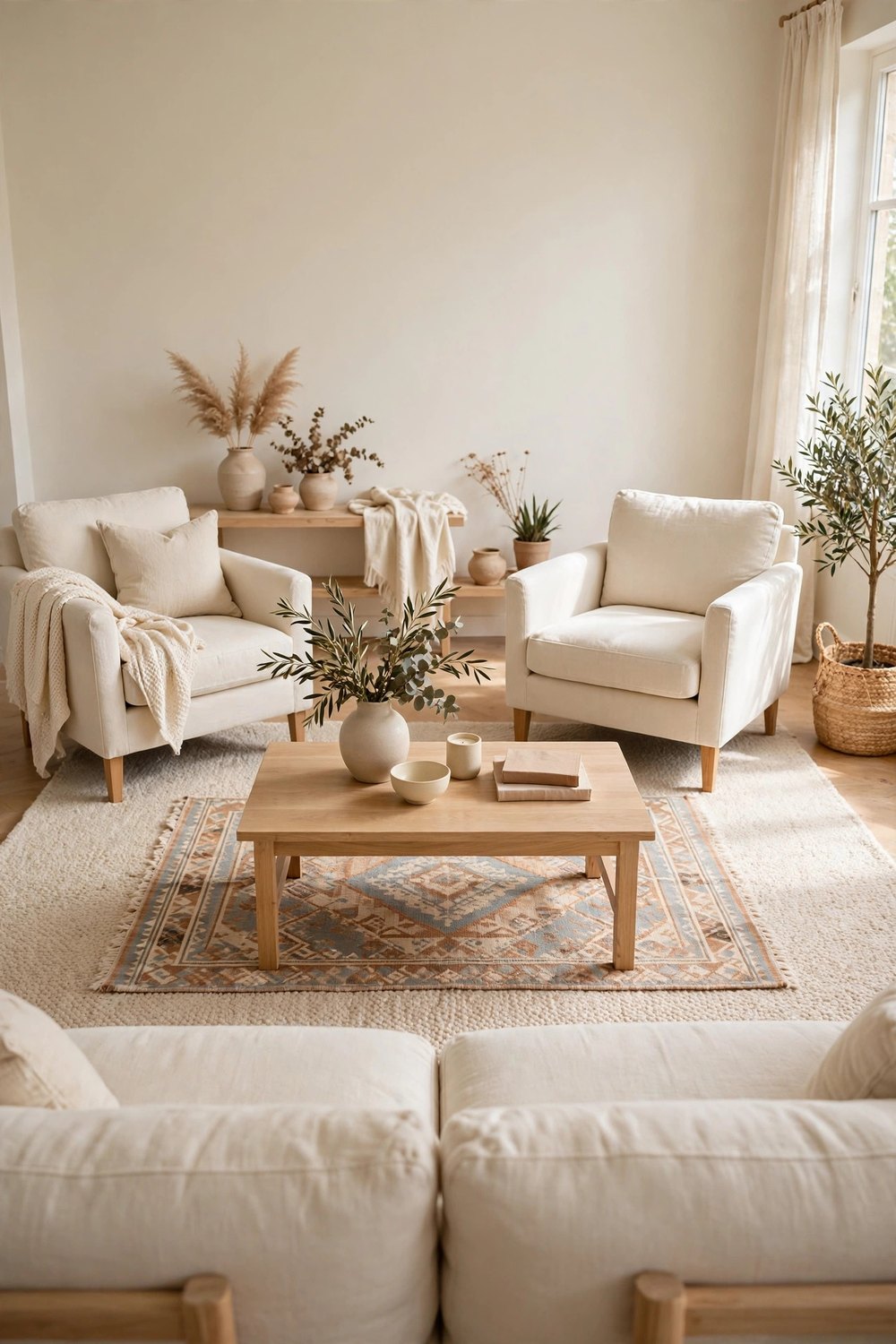
A too-small rug makes even lovely furniture look like it is floating, and a big rug is the single most expensive-looking upgrade a living room can get. Choose the largest size your budget allows, so the front legs of the sofa and chairs all stand on it — that one rule is what makes rooms in magazines look grounded. If a big rug is out of reach, layer a smaller patterned rug over a large, inexpensive natural-fiber one. The layered pair reads as one generous, collected foundation.
3. Hang Curtains High and Wide
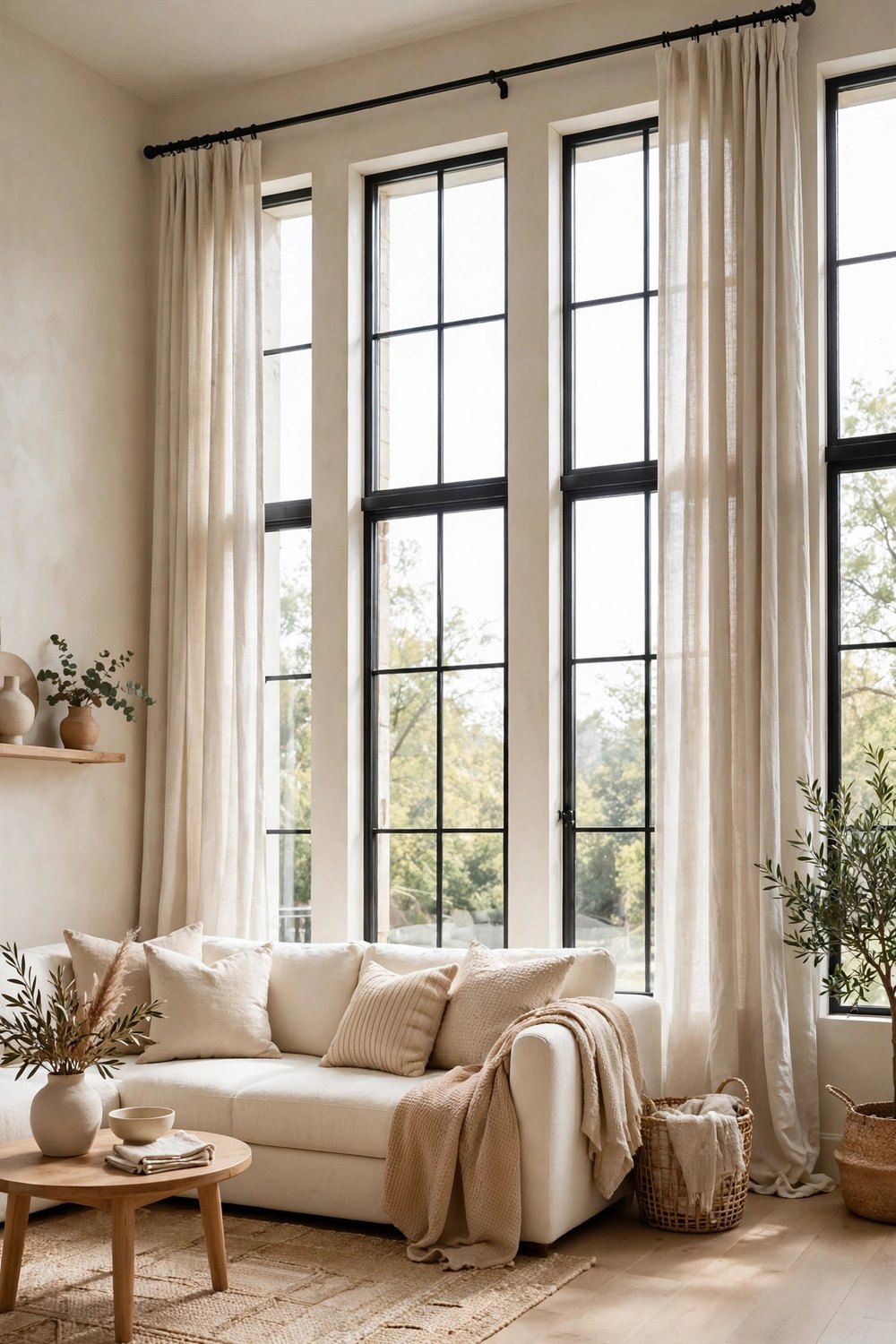
Curtains hung just above the window frame make ceilings look low and rooms look boxy — and moving the rod is free. Rehang it close to the ceiling and extend it well past the window on both sides, so the fabric stacks on the wall instead of covering the glass. Your windows instantly look taller, wider, and grander, and more daylight pours in. Pair the high rod with long, simple linen-look panels that just kiss the floor for the full expensive effect.
4. Refresh the Walls with Warm White Paint
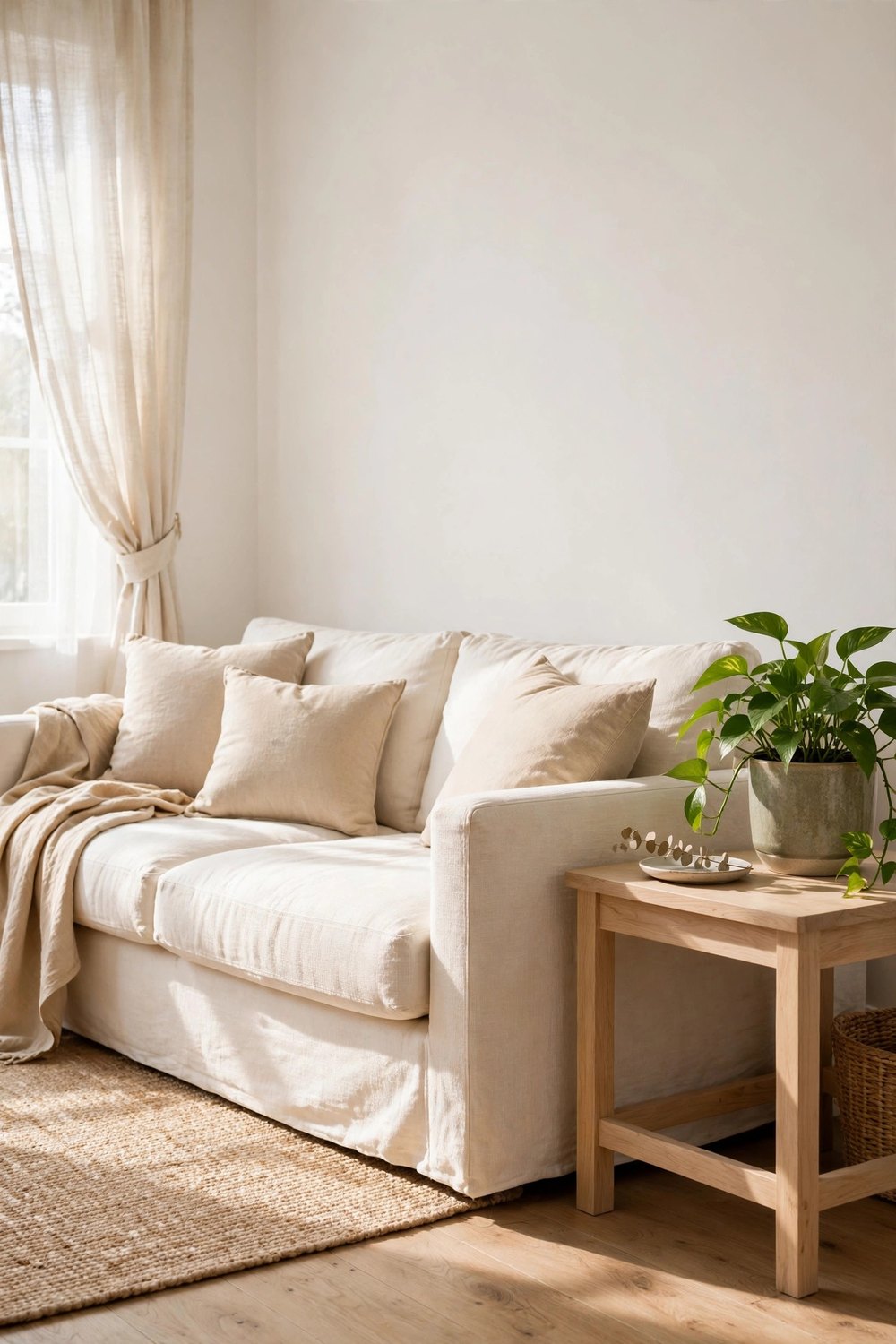
One tin of warm white paint can do what no accessory can: make everything you already own look intentional. Dated magnolia, cold grey, and tired beige all photograph as dingy, while a soft warm white lifts the light and lets wood, linen, and greenery glow. Paint is the cheapest square meter of transformation there is, and one wall behind the sofa is enough if a whole room feels like too much. Keep the finish matte or eggshell — flat, soft walls always read more expensive than shiny ones.
5. Swap In One Statement Floor Lamp
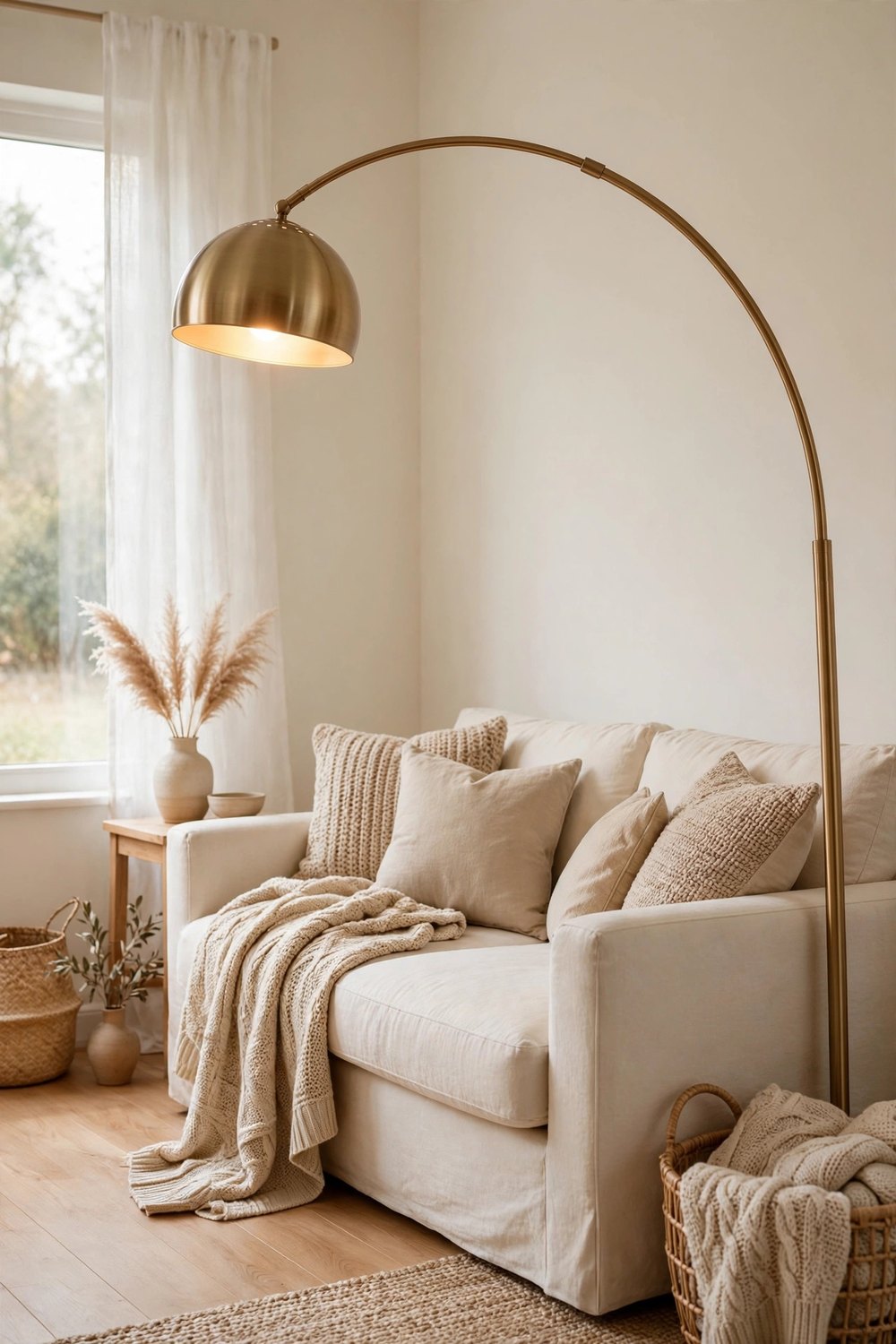
Lighting is where budget rooms give themselves away, and one sculptural lamp can carry the whole corner. An arc lamp sweeping over the sofa, a tripod in warm wood, or a large drum-shade floor lamp instantly looks like a chosen designer piece. Second-hand and flat-pack versions are everywhere, and the shape matters far more than the price tag. Place it where a ceiling light cannot reach — over the reading chair or the sofa’s dark end — and the room gains a pool of designed light.
6. Style the Coffee Table Like a Designer Vignette
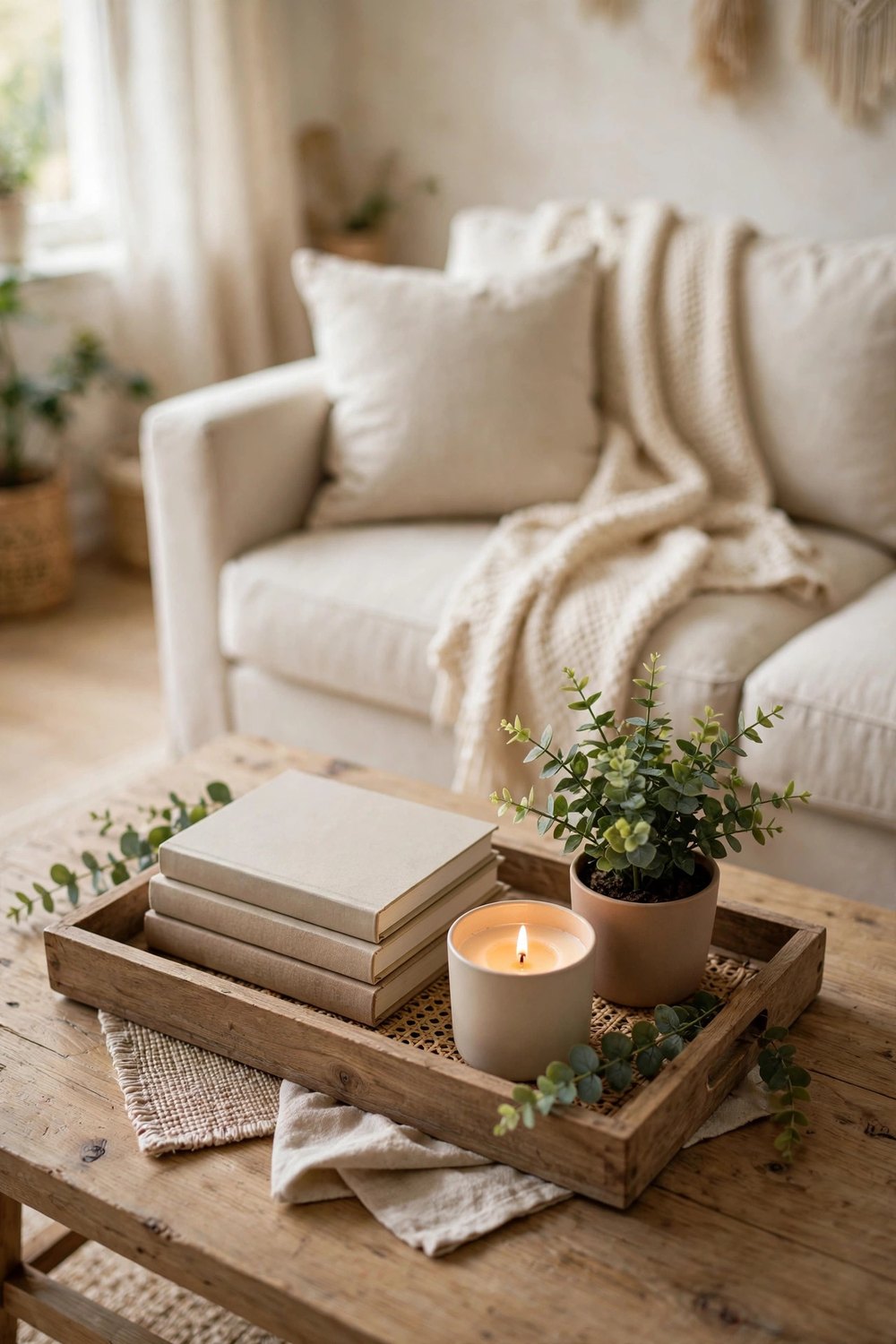
An empty coffee table looks unfinished; a cluttered one looks messy. The expensive middle is a simple formula: one low tray, a small stack of books, something green, and something that glows. Corral remotes and coasters inside the tray so the styling survives real life, and keep the heights varied — tall plant, mid books, low candle. It takes ten minutes, costs whatever you already own, and makes the whole seating area look composed in every photo.
7. Lean One Oversized Mirror Against the Wall
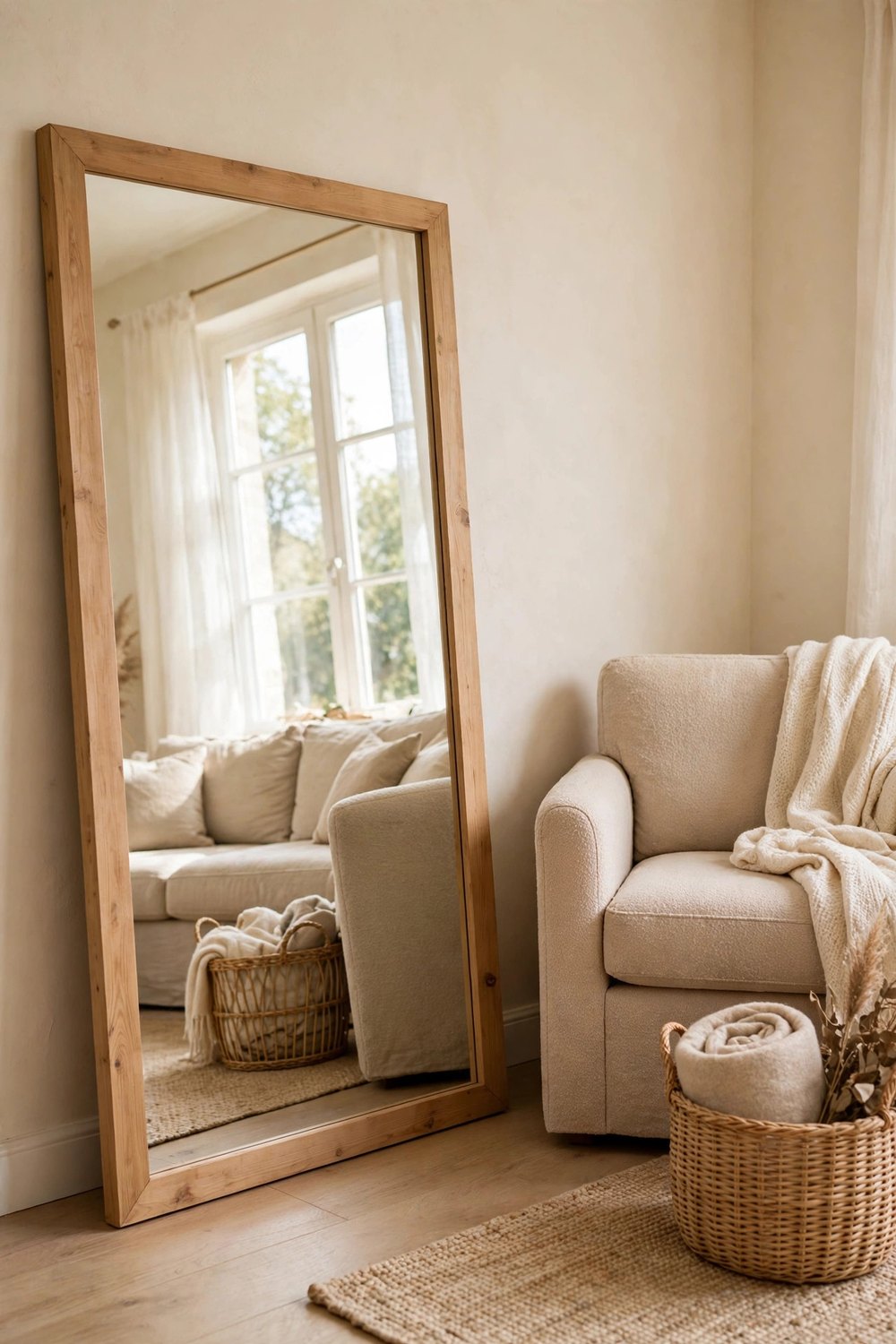
Mirrors are the oldest expensive-room trick there is: they double the light, fake a second window, and add architecture to a blank wall. Go as large as you can — one oversized mirror leaned casually against the wall behind a chair or beside the sofa looks far richer than a cluster of small ones. A simple wood, black, or aged brass frame suits warm neutral rooms best. Lean it where it catches a window’s reflection and the room will feel brighter all day.
8. Add a Tall Plant for Instant Height
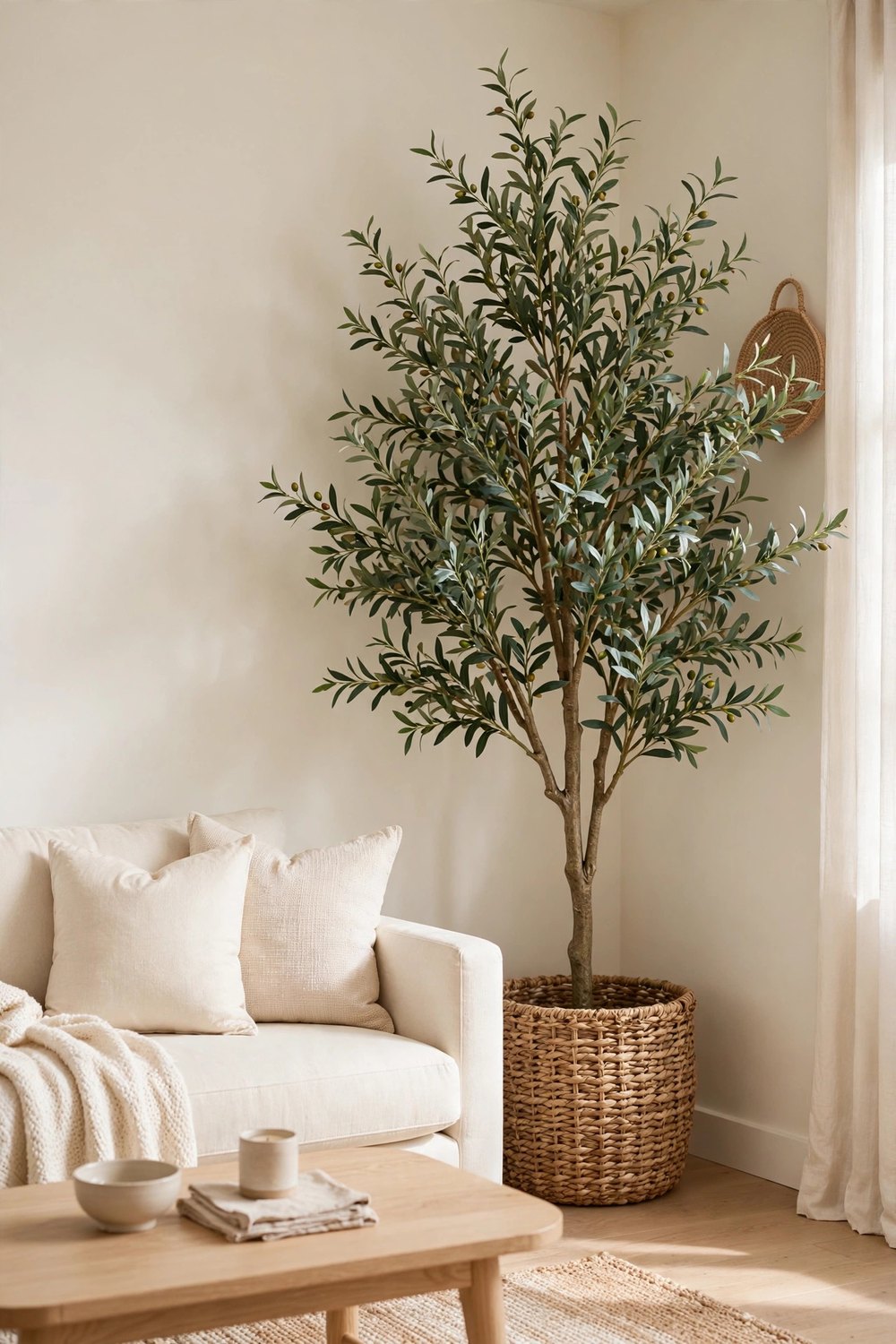
Every expensive-looking room has something tall and alive in it. One generous plant — a faux olive tree, a fiddle-leaf style tree, or a tall grass in a woven basket — fills the dead vertical space in a corner and softens every straight line around it. Height is the key: a plant that reaches toward the ceiling reads as architecture, while small pots scattered on shelves just read as clutter. One tall plant, one good basket, and the corner is finished.
9. Update Your Lampshades and Bulbs
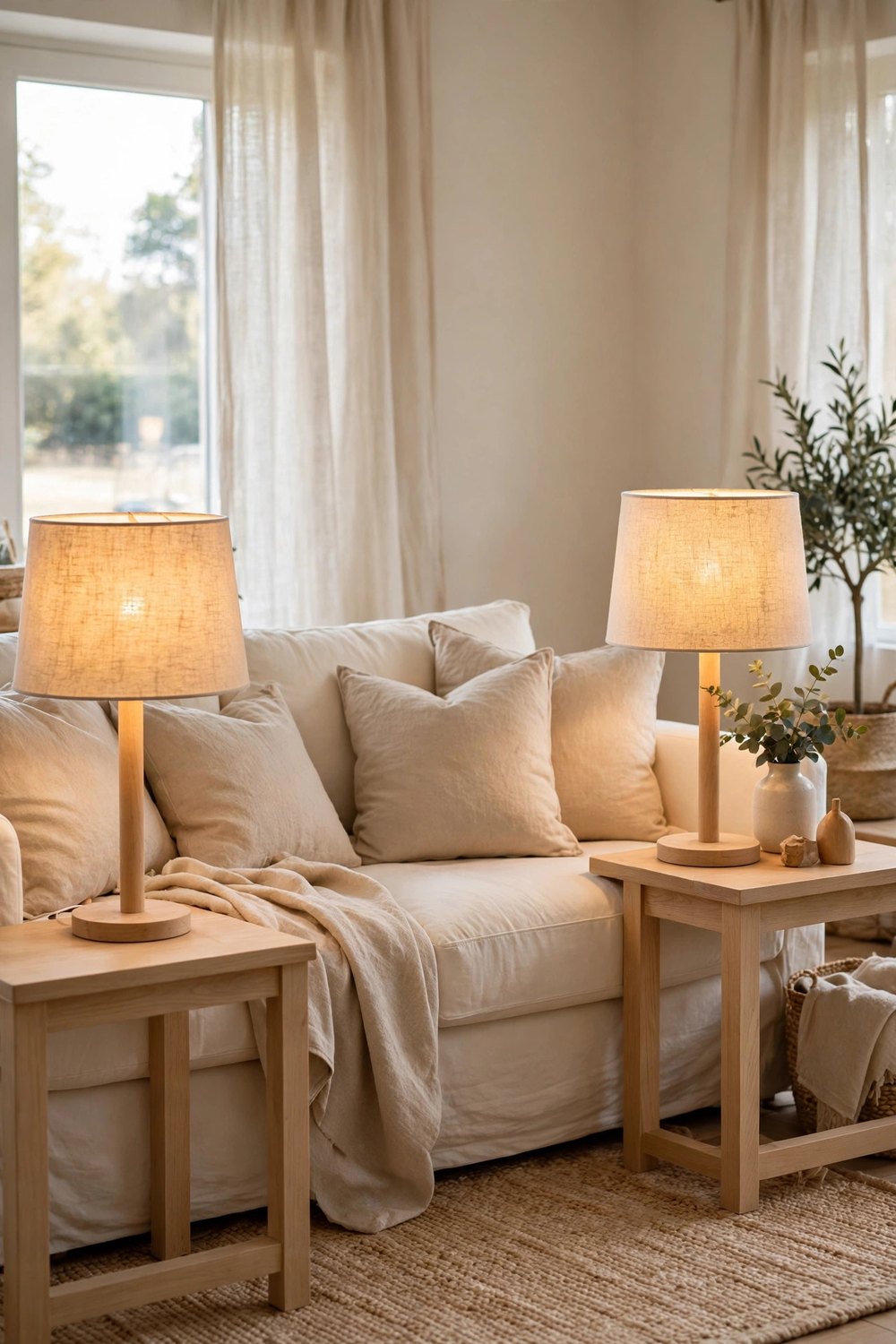
Yellowed, dented, or undersized lampshades date a room faster than the lamp beneath them, and replacements are cheap. Choose plain drum or empire shades in natural linen a touch larger than the old ones, and switch every bulb to the same warm white temperature so the room’s light feels unified. Matching, soft light is a hallmark of expensive interiors, and it costs a few bulbs. While you are there, put the main lamps on a timer or dimmer plug for instant evening atmosphere.
10. Pull the Furniture Off the Walls
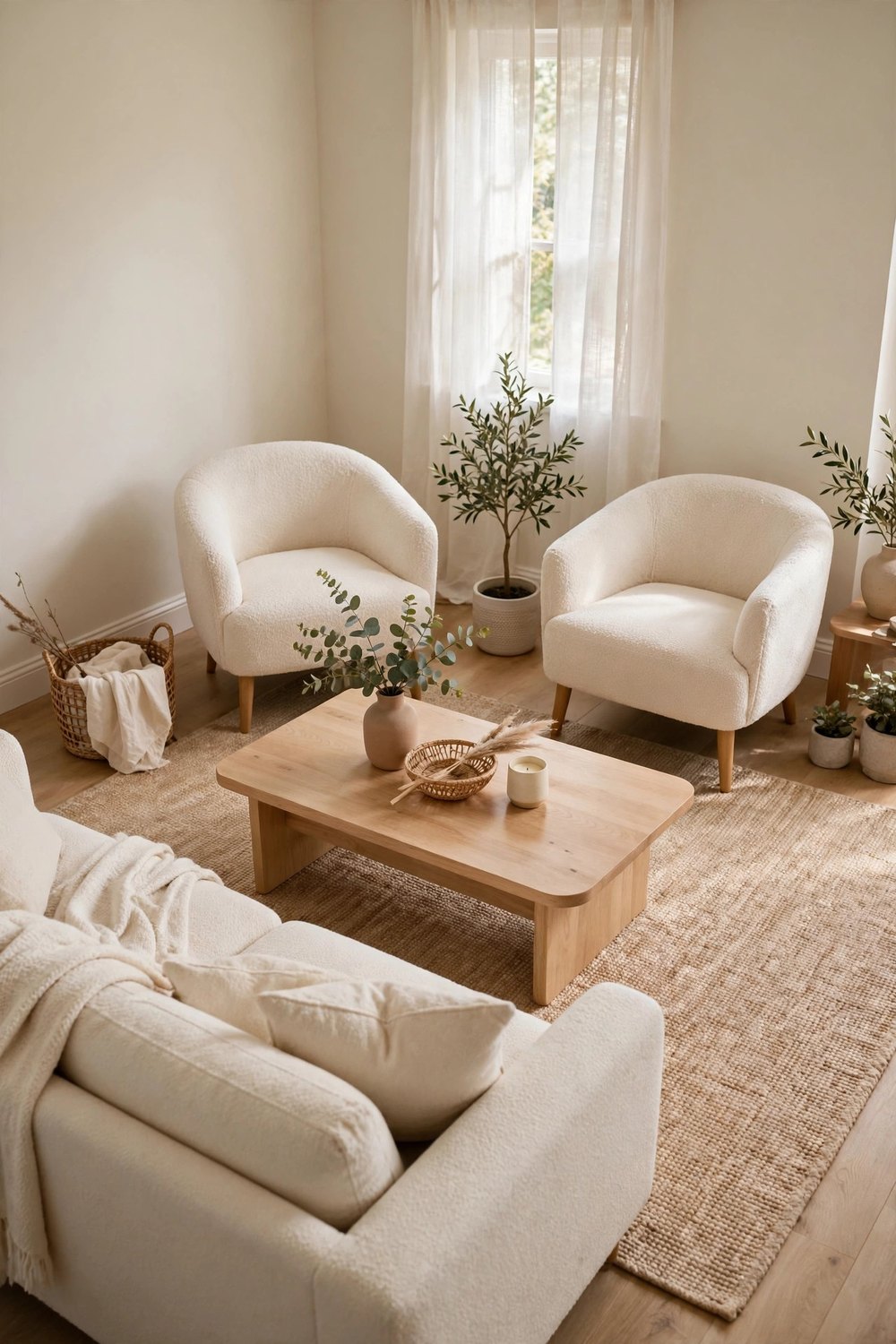
The most expensive update on this list costs nothing: rearrange. Sofas shoved against every wall leave a dead, empty middle and a waiting-room feel. Pull the sofa even fifteen centimeters forward, angle a chair, and let the rug define a conversation zone instead of lining the furniture up around the edges. Rooms arranged for people — seats facing each other, a table within reach of every seat — instantly look like the styled rooms in magazines. Live with it a day before you judge; it almost always wins.
11. Layer Texture with Throws and Woven Baskets
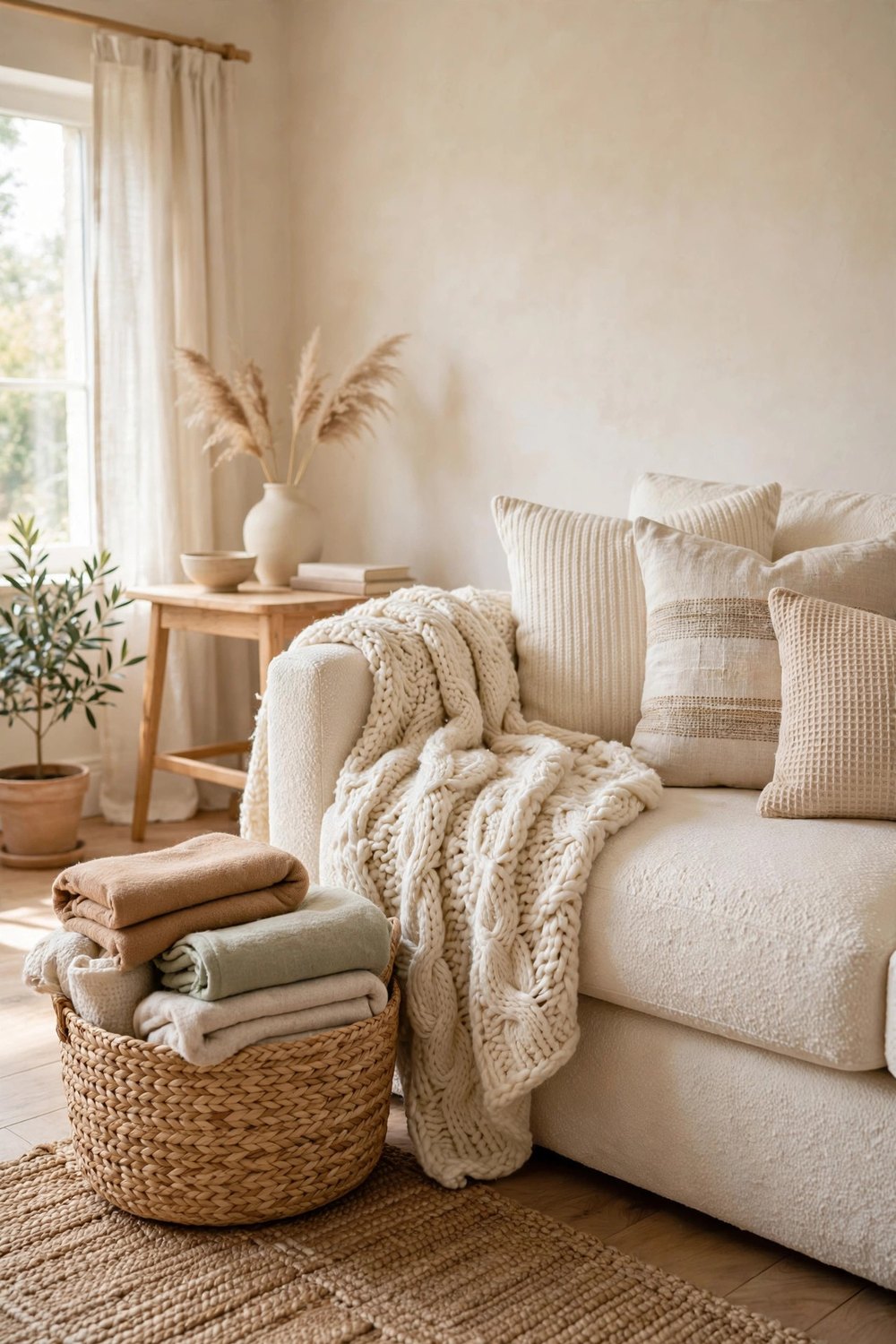
Flat rooms look cheap; layered rooms look collected. A chunky knit throw over the sofa arm, a woven basket holding the spare blankets, a jute or rattan piece somewhere in the mix — texture is what makes a neutral room feel warm instead of bare. These are among the least expensive accessories there are, and mixing three textures (knit, weave, wood) does more than adding color ever could. Keep the palette calm and let the surfaces do the decorating.
12. Edit Your Shelves Down to Breathing Room
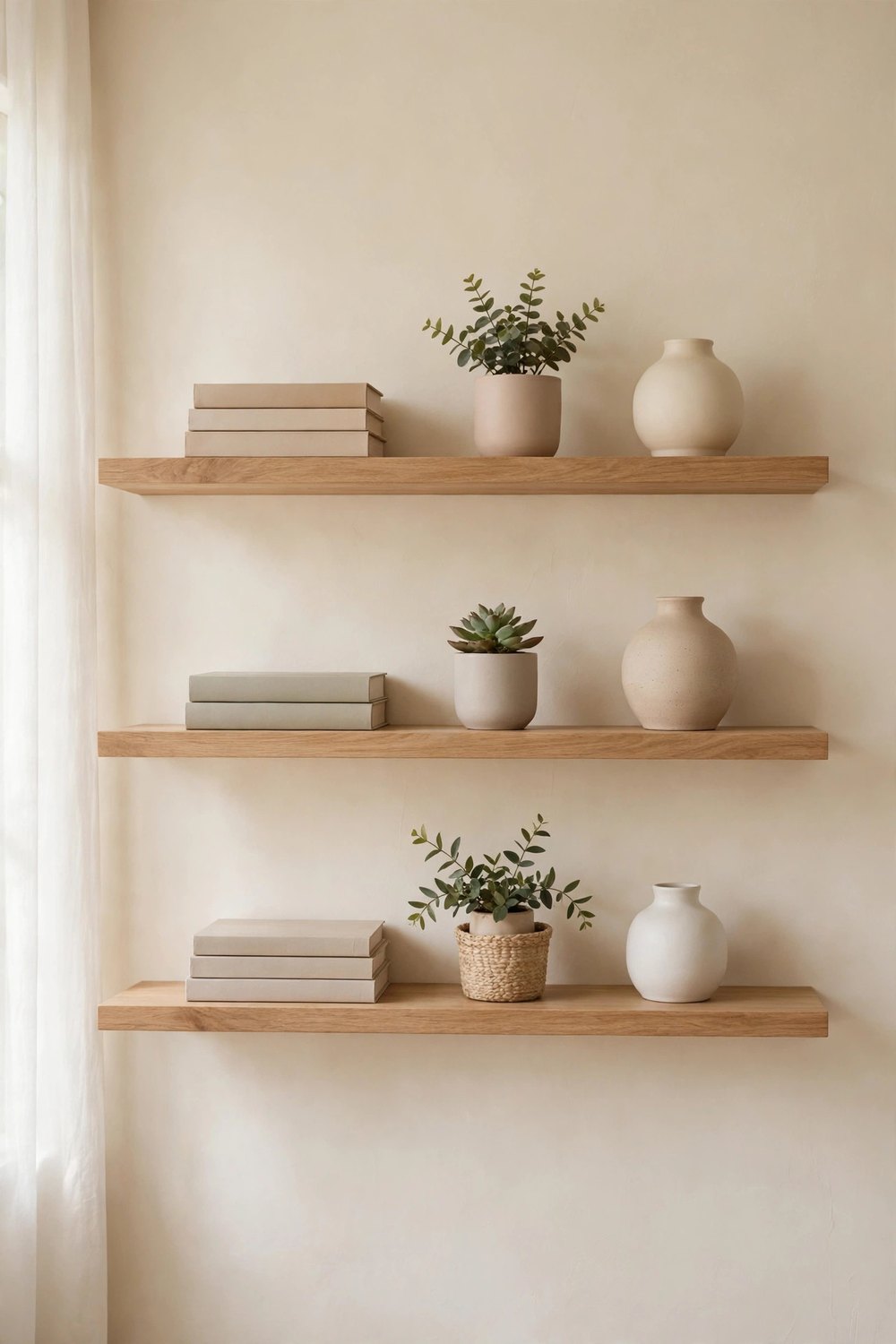
Stylists know the secret to expensive-looking shelves is what is not on them. Take everything off, then put back only the pieces you love, in small groups, with empty space between them — a stack of books lying flat, one plant, one object with breathing room on every side. Turn some books spine-in for calm, pale blocks of color if your collection is a rainbow. The same shelves with half the objects will look twice as expensive, and it costs exactly nothing.
Expensive-looking is a set of habits, not a budget: bigger scale, warmer light, higher curtains, and fewer, better-arranged things. Start with the free moves — rearrange, edit, rehang — then add the one or two purchases your room asks for most. Save this list to your Pinterest board so the next update is ready when you are, and follow DecorNesti for a new cozy room list every week.

Leave a Reply