
If your bathroom feels a little boxy and dim, color is usually the fastest fix you have got. You do not need to move a wall, replace the tub or learn how to tile. The right shades can make the exact same small room feel calmer, brighter and honestly a bit bigger than it really is.
The trick is choosing colors that bounce light around instead of swallowing it. Warm whites, soft greens and gentle blues all do that job in different ways, and even a bold shade can work beautifully when you keep it to one smart spot. Think of this list as a menu rather than a rulebook, because you only need one direction that feels like you.
Below are 16 small bathroom color ideas grouped by mood, from the safest neutrals to one confident accent. Pick the family you love most, then borrow the little layering tricks inside it.
Warm Whites and Creams
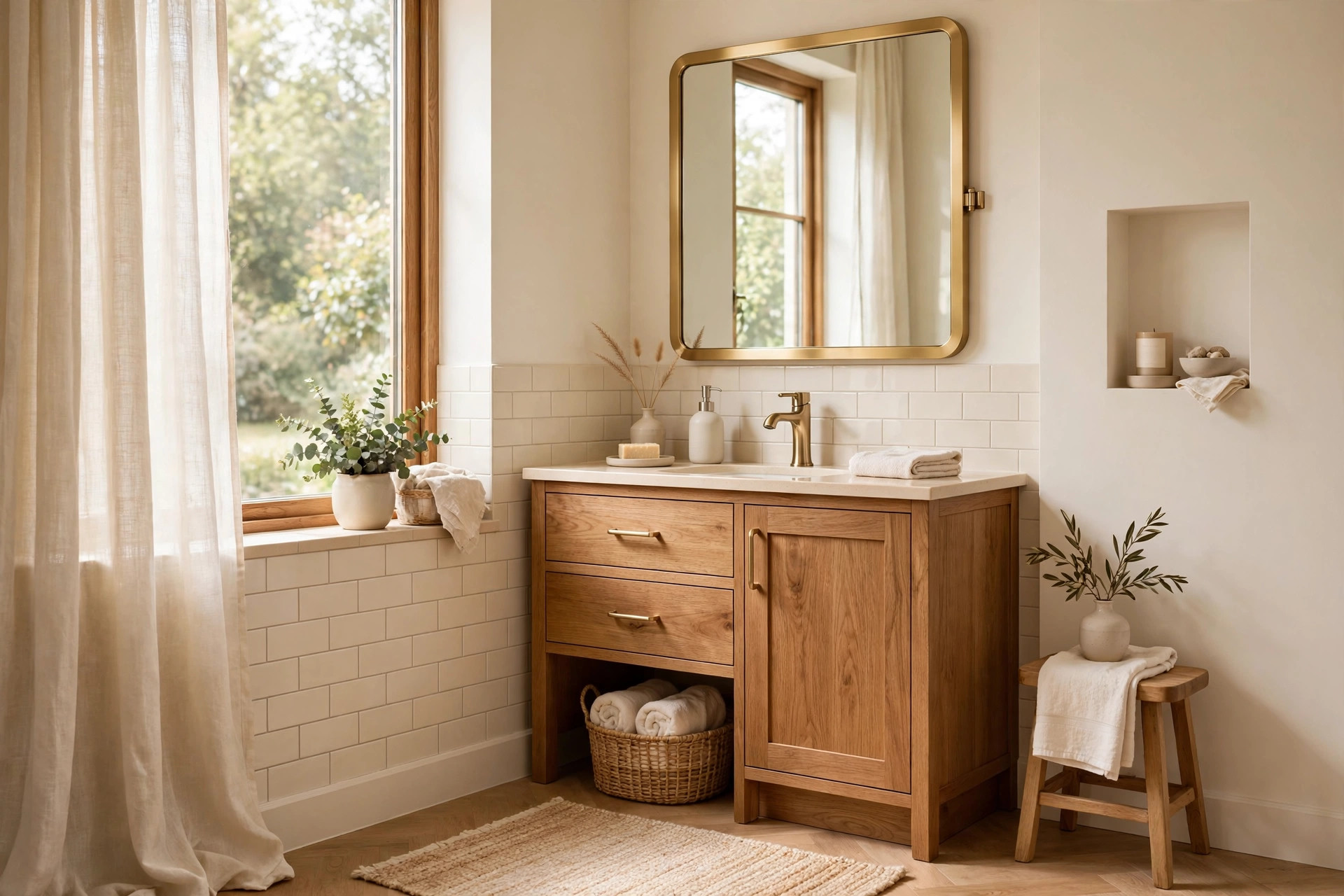
If you are nervous about color altogether, this is your section. Warm whites and creams are the classic small bathroom safety net, because they reflect the most light and go with absolutely everything you already own.
Start with a warm white on the walls. Stark blue whites can feel a bit cold and clinical in a tiny room, especially under typical bathroom lighting. A warm white with a hint of cream usually softens everything, flatters your skin in the mirror and gives you the brightest, easiest base to build the rest of the room on.
Layer creams instead of matching one flat shade. When every single surface is the exact same white, a small bathroom can end up looking flat and a little stark. Try cream towels, a slightly deeper ivory bath mat and warm white walls together, because those tiny shifts in tone add depth while the room still reads bright and clean.
Bring the warmth in with wood and brass. A warm white room really wakes up when you add natural texture against it. A light wood vanity, a woven basket and brushed brass taps stop the palette from feeling plain, and they typically make the whole space look more finished without adding any visual clutter.
Paint the ceiling a soft cream too. A bright white ceiling sitting over warm walls can chop the room visually right at the top edge. Carrying a gentle cream over the ceiling instead usually blurs that hard line, which makes a low ceiling feel a touch higher and the whole room feel more cocooned and calm.
Soft Sage and Pale Greens
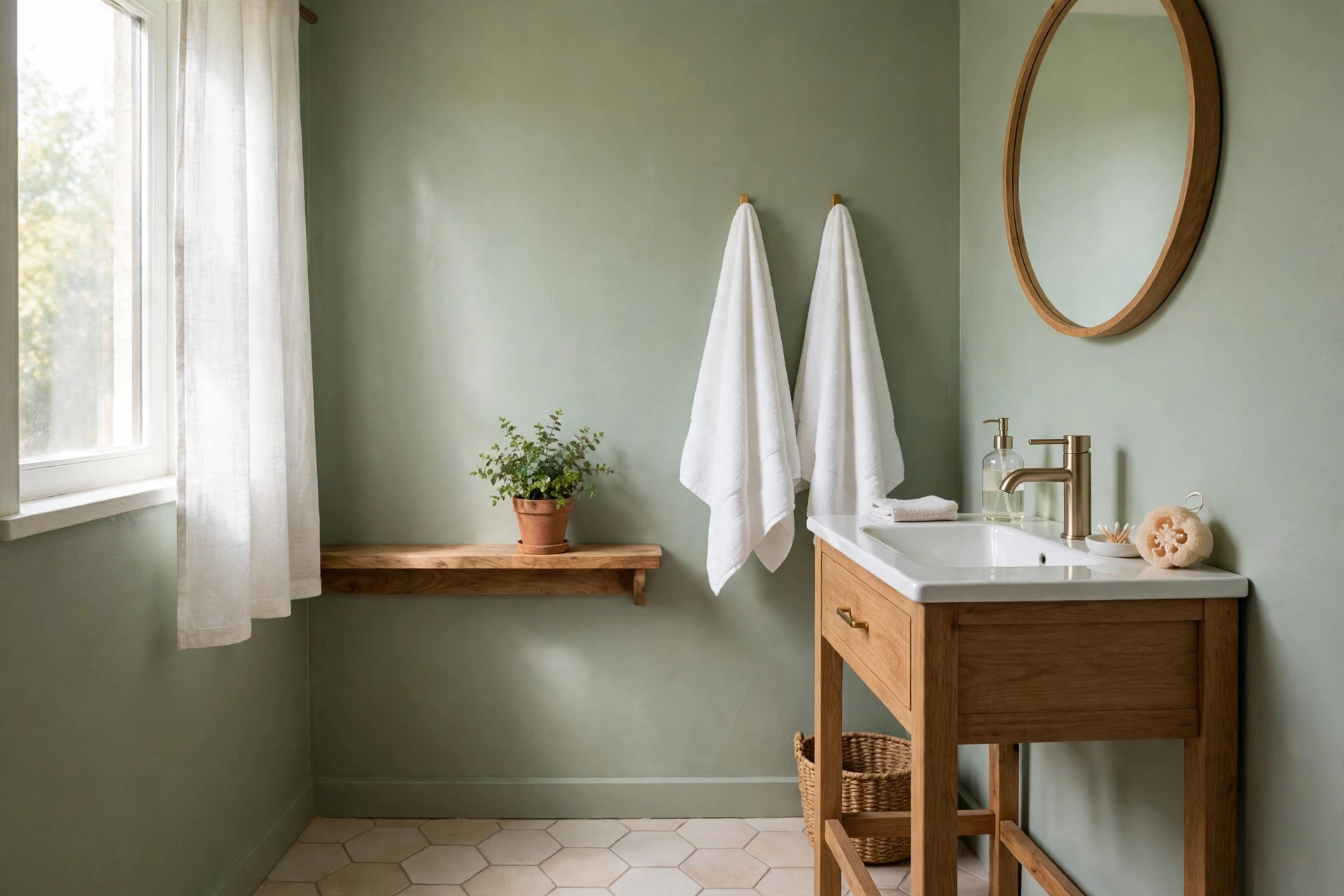
Sage is the color small bathrooms keep coming back to, and for good reason. It feels calm, it loves natural light and it pairs happily with warm wood, white ceramics and brass.
Sage on walls
Try sage on all four walls for a wrapped in calm feeling. Pale sage has enough color to feel intentional, but it stays soft enough that a small room does not close in around you. It usually looks its best with warm white trim and a light floor, so the green reads fresh rather than moody.
Use sage on just the vanity wall. If full color feels like a big step, paint only the wall behind the mirror and vanity and leave the rest warm white. The sage panel becomes a gentle focal point that makes the mirror area feel styled on purpose, and the room still feels wide open.
Sage in textiles
Add sage through towels and a shower curtain. Textiles are the lowest commitment way to test a color in a small bathroom, because nothing is permanent. Sage towels, a linen look curtain or a soft green bath mat can shift the whole mood in one afternoon, and you can swap them out whenever you fancy a change.
Blush and Warm Neutrals
Blush and its warm neutral cousins are for anyone who finds plain white a bit cold but still wants that light, open feeling. They bring warmth without stealing brightness, which is exactly the balance a small room needs.
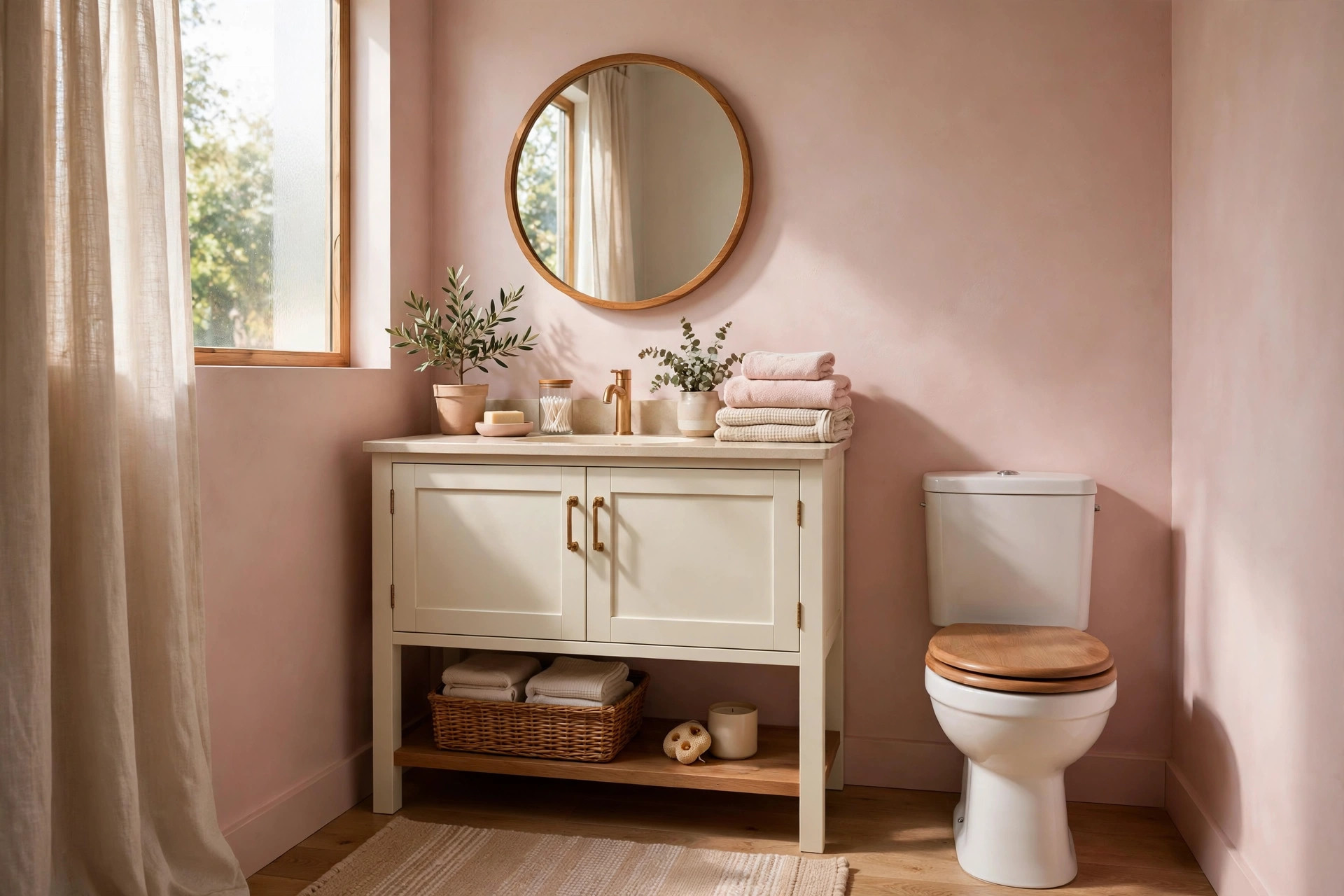
Pick a blush with a warm, dusty base. Blush can turn sweet and sugary very quickly, so look for a muted, almost beige pink rather than a bubblegum tone. In a small bathroom it usually reads warm and grown up, especially when you set it next to cream tile, warm wood and brushed brass details.
Pair blush with warm greige for balance. If blush on every wall feels like too much, split the difference with warm greige on the larger walls and blush saved for one section or the vanity front. The neutral keeps everything grounded while the pink adds the softness, and the room still feels light from corner to corner.
Warm up neutrals with texture instead of more color. Warm neutrals open a small room up best when they are not all flat paint. Think of a nubby cotton rug, a stone tray by the sink, rattan baskets and linen towels in oatmeal and sand tones, because texture is what stops a quiet scheme from feeling unfinished.
Light Blues and Aqua
Blue greens feel like a deep breath in a small bathroom. They suit rooms that get decent daylight, and they can make even a windowless space feel fresher than it has any right to.
Use pale aqua to make the room feel fresh. Light blue greens are a classic small bathroom choice because they hint at water and make everything feel clean and awake. A pale aqua usually works well with white fixtures and either chrome or brass, and it tends to look brighter and fresher as the daylight changes through the day.
Keep light blue pale on walls and a touch deeper in details. A very soft blue on the walls keeps the space airy, while slightly deeper blue towels or a bath mat add definition. That gentle bit of contrast typically helps a tiny room feel layered and considered instead of washed out and one note.
Balance cool blues with warm wood. Blue is a cool color family, so on its own it can leave a small bathroom feeling a little chilly. Warm wood shelves, a bamboo bath caddy or a brass mirror frame usually fix that in seconds, and the mix of cool walls with warm touches keeps the palette friendly.
One Bold Accent Done Right
And if you are thinking light colors are lovely but a little safe for you, this last section is where the fun is. One bold accent can open a small room up too, because a clear focal point gives your eye somewhere to land.
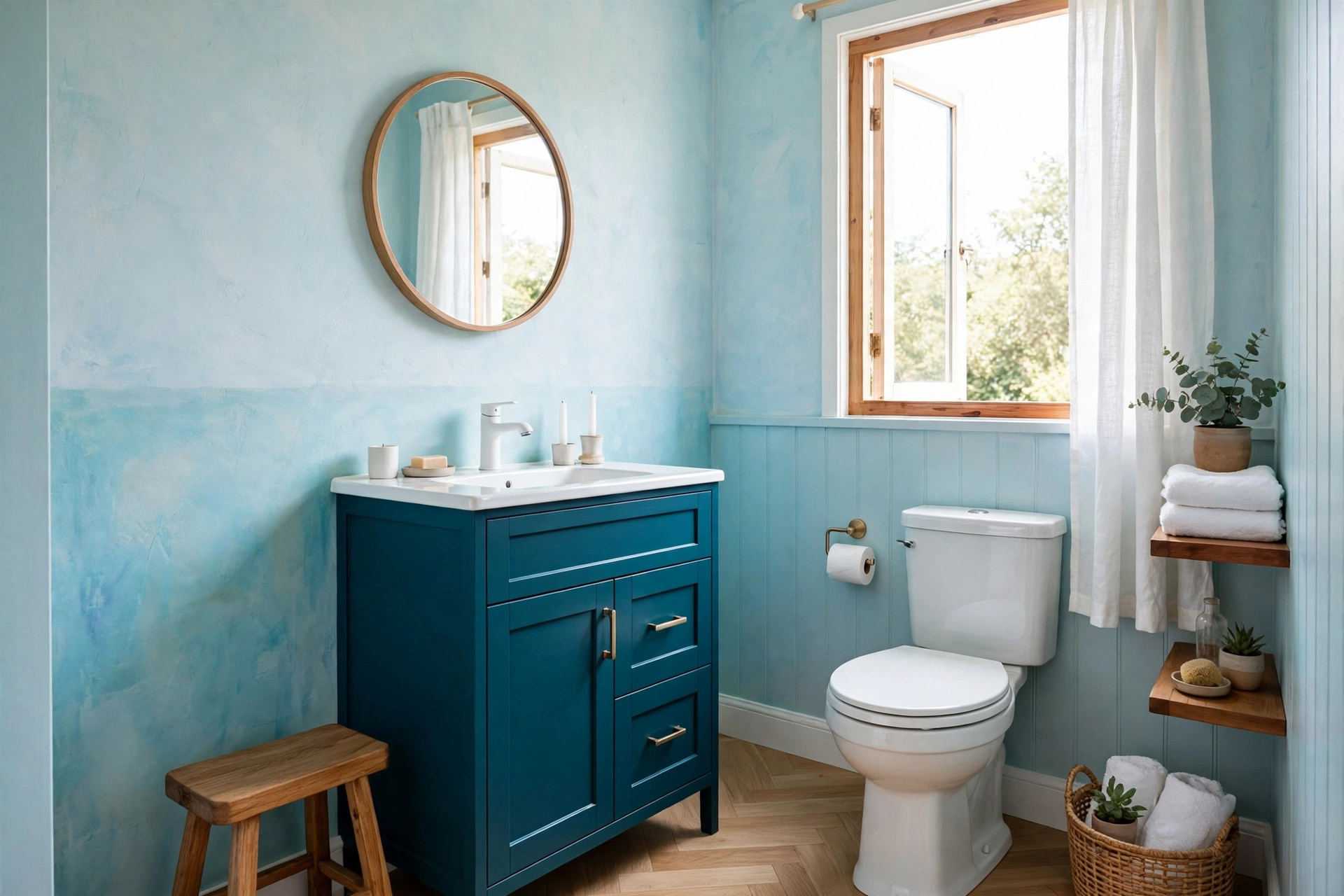
Paint the vanity one deep color and keep everything else calm. A deep teal, inky navy or forest green vanity set against warm white walls gives a small bathroom one clear focal point. Because the footprint is small, the bold shade adds personality and depth without shrinking how the room actually feels when you step inside.
Hide the bold color inside a niche or on the back of the door. These little out of the way spots are perfect if you love drama but worry about commitment. The color surprises you when the door swings shut or you reach for the shampoo, while the main view of the room stays light, bright and open.
Repeat the accent twice more in tiny doses. One bold item on its own can look like an accident, while three small touches look planned. If the vanity is deep teal, echo it in a hand towel and a little plant pot, and the whole scheme typically pulls together like you meant it all along.
You do not need every shade on this list, and honestly one well chosen color family is usually enough to change a small bathroom completely. Start with the mood you want on an ordinary weekday morning, test the color on the wall or through towels first, and then let the little room show you how much the right palette can do.

Leave a Reply