
18 Bunk Bed Ideas for Kids Guests and Small Rooms
Look, we get it. A bunk bed has to do a lot of jobs at once. It needs to save floor space, feel safe after lights out, and still leave room for sleepovers, homework, and the odd afternoon fort. If you’re working with a small bedroom or a guest room that doubles as something else, the choices can feel endless. You’re not alone in that, and you don’t need to get everything perfect on the first try either.
That’s what this list is for. You’ll find ideas for frames and layouts first, then simple ways to make each bunk feel personal and practical, and finally the cozy finishing touches that pull a small room together. Some of these are easy swaps, like adding clip-on lights or a shared rug. Others take a little more planning, like a staircase with drawers or a bunk over a desk. You don’t need all eighteen. Two or three that fit your family will usually make the biggest difference.
Start with the frame that suits your room and your kids, then think about comfort and storage, and finish with the details that make the space feel welcoming for guests too. Work in that order and you’ll typically waste less money and less floor space. Take a quick photo and a few measurements before you begin, because a bunk that looks right on screen still has to fit the door, the ceiling, and the everyday rush in and out of the room.
In This Article
- Choose a Classic Wooden Bunk in a Warm Finish
- Try an L-Shaped Bunk to Open the Corner
- Use a Bunk With a Trundle for Sleepovers
- Add Built-In Shelves at Each Bunk Level
- Hang Curtains on the Lower Bunk for a Fort Feel
- Use a Staircase Bunk With Storage Drawers
- Style Each Bunk With Its Own Color Theme
- Add Clip-On Lights for Night Reading
- Use a Low Bunk for Younger Kids
- Create a Guest Room With a Double Lower Bunk
- Add a Slide for Playful Mornings
- Use a Bunk Over a Desk for Study Space
- Keep Bedding Coordinated but Not Matching
- Add Safety Rails That Match the Frame
- Use the Space Under a Loft Bunk as a Play Den
- Style a Coastal Bunk Room for a Holiday Home
- Add Name Plaques or Art at Each Pillow
- Finish With a Shared Rug and Reading Corner
Choose the Right Frame for Your Room
Before you think about bedding or paint, start with the frame itself. The shape, height, and built-in extras decide how much floor you save and how easy the room feels day to day. These first six ideas cover the most useful layouts, from a timeless wooden bunk to storage stairs and a hidden trundle, so you can match the frame to your space, your budget, and how often guests actually stay over.
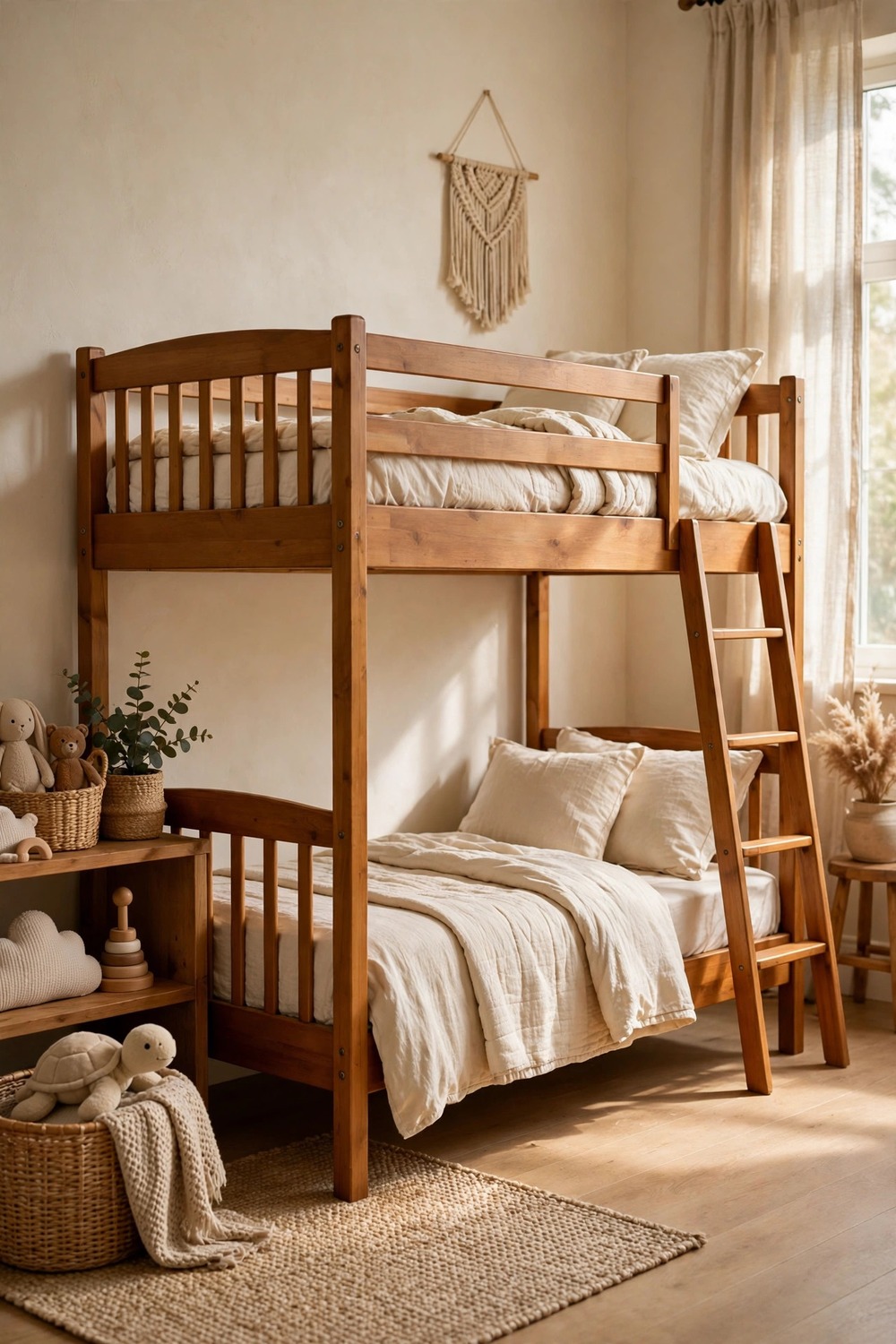
1. Choose a Classic Wooden Bunk in a Warm Finish
A classic wooden bunk in a warm finish is usually the safest place to start, especially if you want the bed to last through a few room makeovers. Look for solid posts, smooth edges, and a finish in honey, walnut, or warm oak that works with both bright kids bedding and calmer guest linens later on. Wood tends to feel sturdier and quieter than thin metal frames, and small scuffs are typically easier to touch up over time. Keep the headboards simple without wide gaps, and check that the ladder feels firm underfoot. If the room is small, a clean lined frame without bulky extras will leave more visual space. Add soft cream or white bedding to let the wood glow, and you’ll have a bunk that feels welcoming rather than heavy, even in a compact bedroom where every piece of furniture has to earn its place.
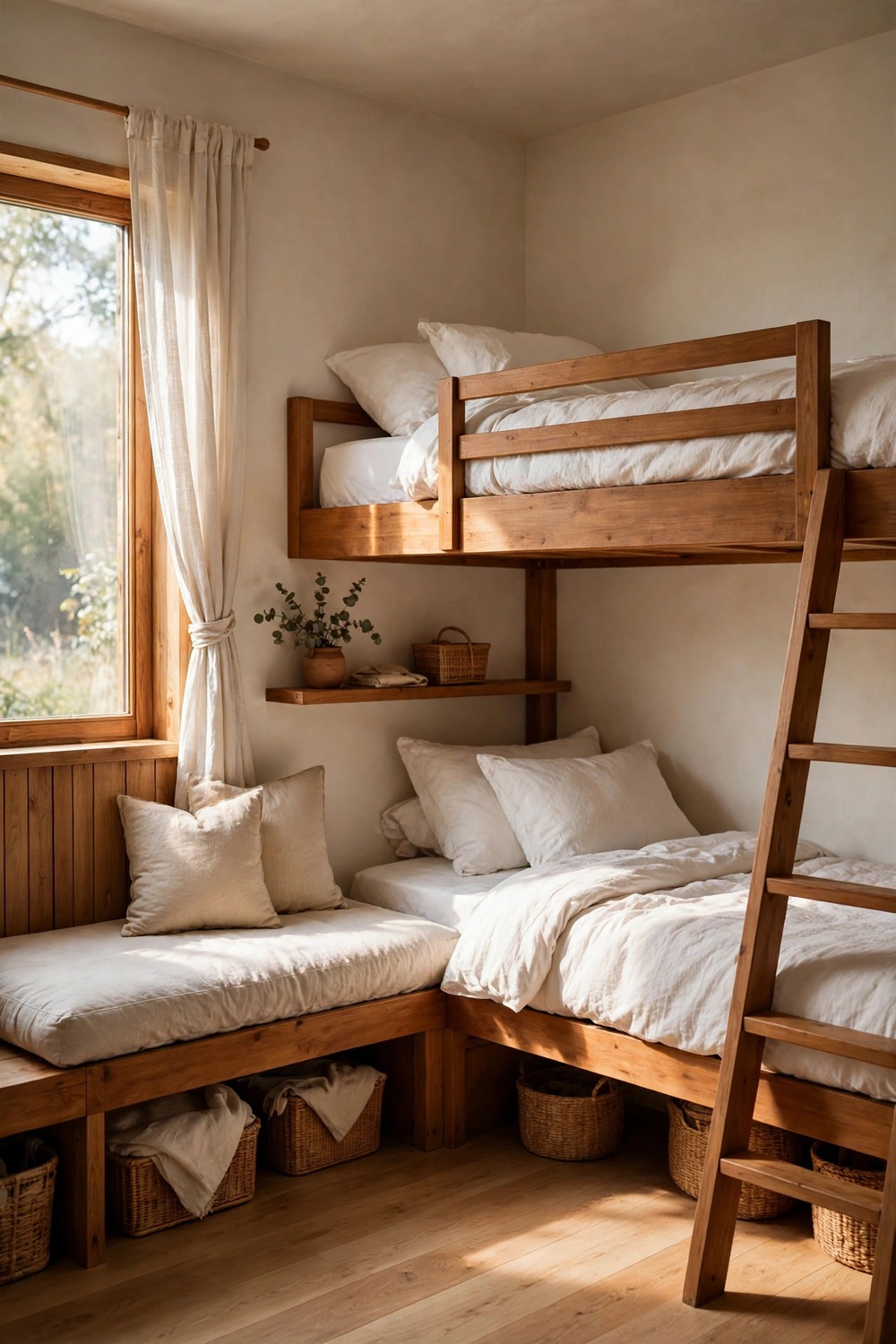
2. Try an L-Shaped Bunk to Open the Corner
An L-shaped bunk can change how a small room works because the two beds sit at right angles instead of stacked directly on top of each other. The lower bed usually sticks out into the room a little, which opens up the corner and often leaves a handy nook underneath or beside the top bunk for a small shelf, a basket, or a reading light. Kids often like it because neither sleeper feels completely hidden, and the lower bed can double as a daytime sofa for books and games. It does take a wider footprint than a standard bunk, so measure carefully and leave clear walking space on the open side. Choose a low profile design if your ceiling is modest, and keep bedding light and simple so the unusual shape feels airy rather than bulky in the room.
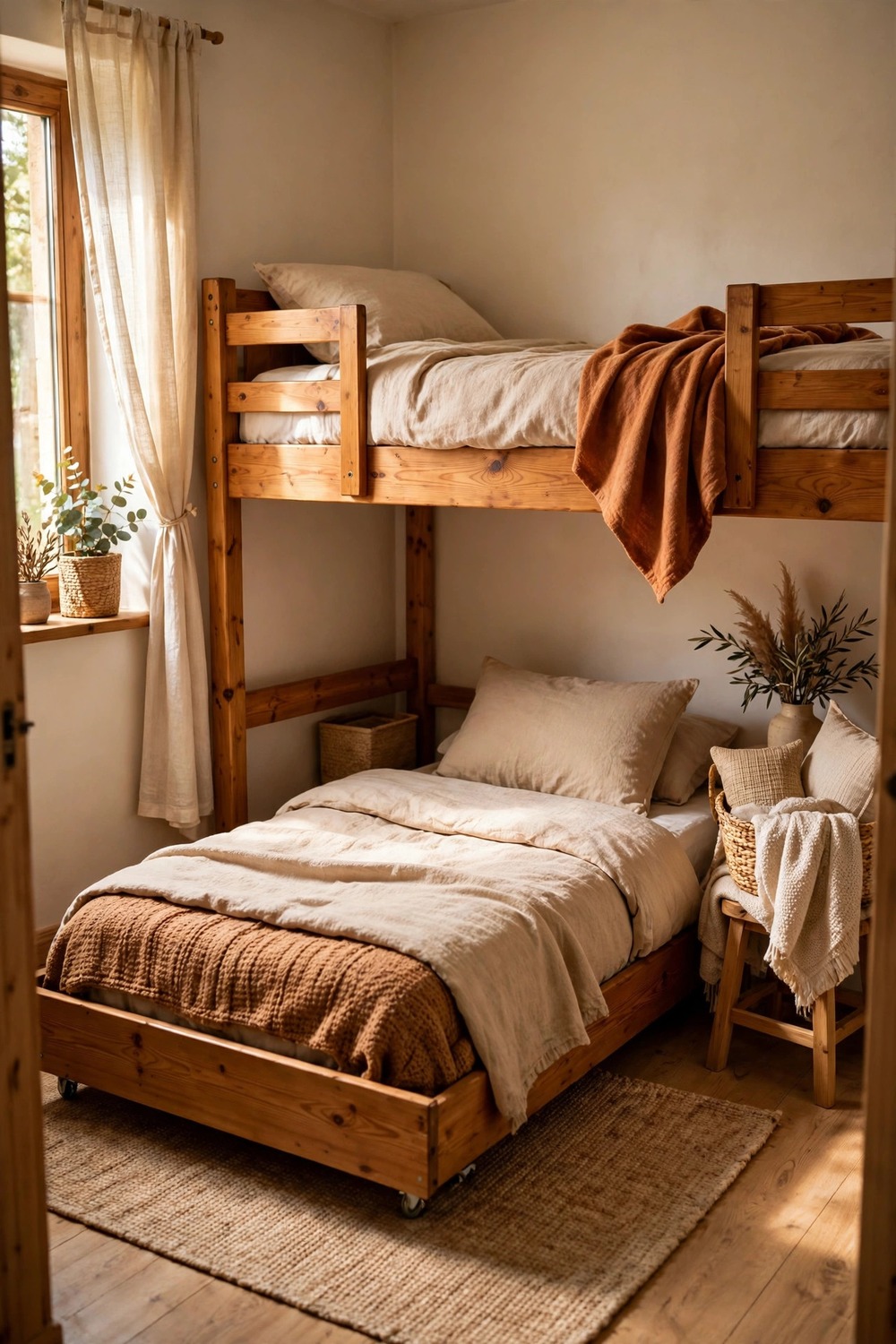
3. Use a Bunk With a Trundle for Sleepovers
If sleepovers happen most weekends, a bunk with a trundle is one of the most practical choices you can make. The extra bed rolls out from under the lower bunk when you need it and disappears again by morning, so you get three sleep spaces without giving up floor space all week. Look for smooth wheels and a handle or cutout that small hands can grip easily, and dress the trundle with the same quality mattress and bedding as the other beds so no guest feels like an afterthought. Keep a spare pillow and blanket folded nearby to make setup quick and calm, even late at night. During the day, the closed trundle just looks like a deep drawer, which helps the room stay tidy. It is a simple idea, but it usually saves a lot of stress when cousins or friends arrive with overnight bags.
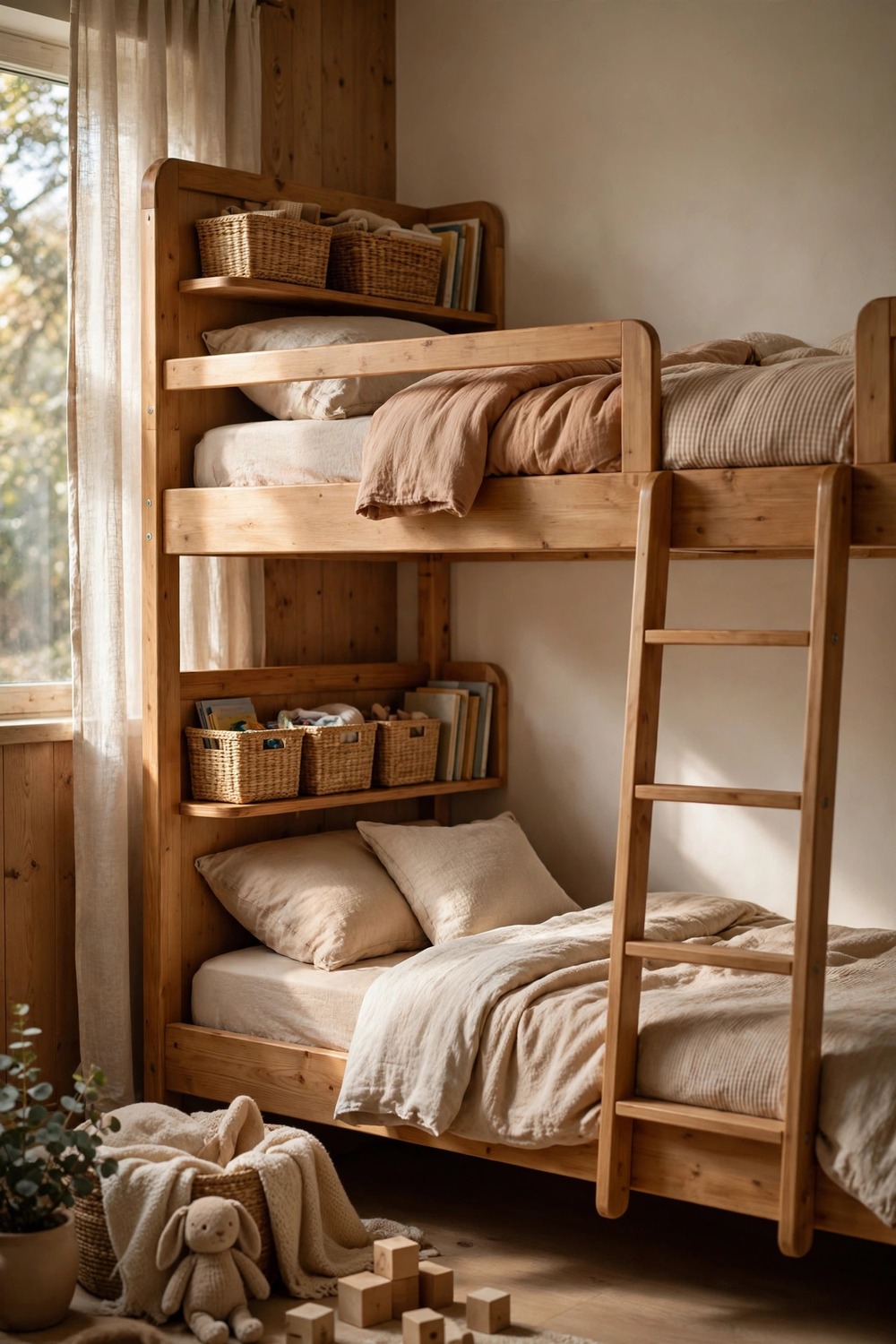
4. Add Built-In Shelves at Each Bunk Level
Built-in shelves at each bunk level solve the problem every bunk room knows too well, which is where to put the book, the water bottle, and the small treasures that travel to bed each night. A shallow shelf at pillow height on both levels means each sleeper has a personal spot without needing a separate nightstand that the room may not have space for. Choose shelves with a small lip or raised edge so things do not slide off, and keep them deep enough for a paperback and a clock but not so deep that they invite clutter. If you are adding shelves to an existing frame, match the finish as closely as you can and fix them firmly to the headboard or wall. A tiny basket on each shelf helps keep the surface clear, and the whole setup typically makes bedtime calmer because everything each child needs is already within reach.
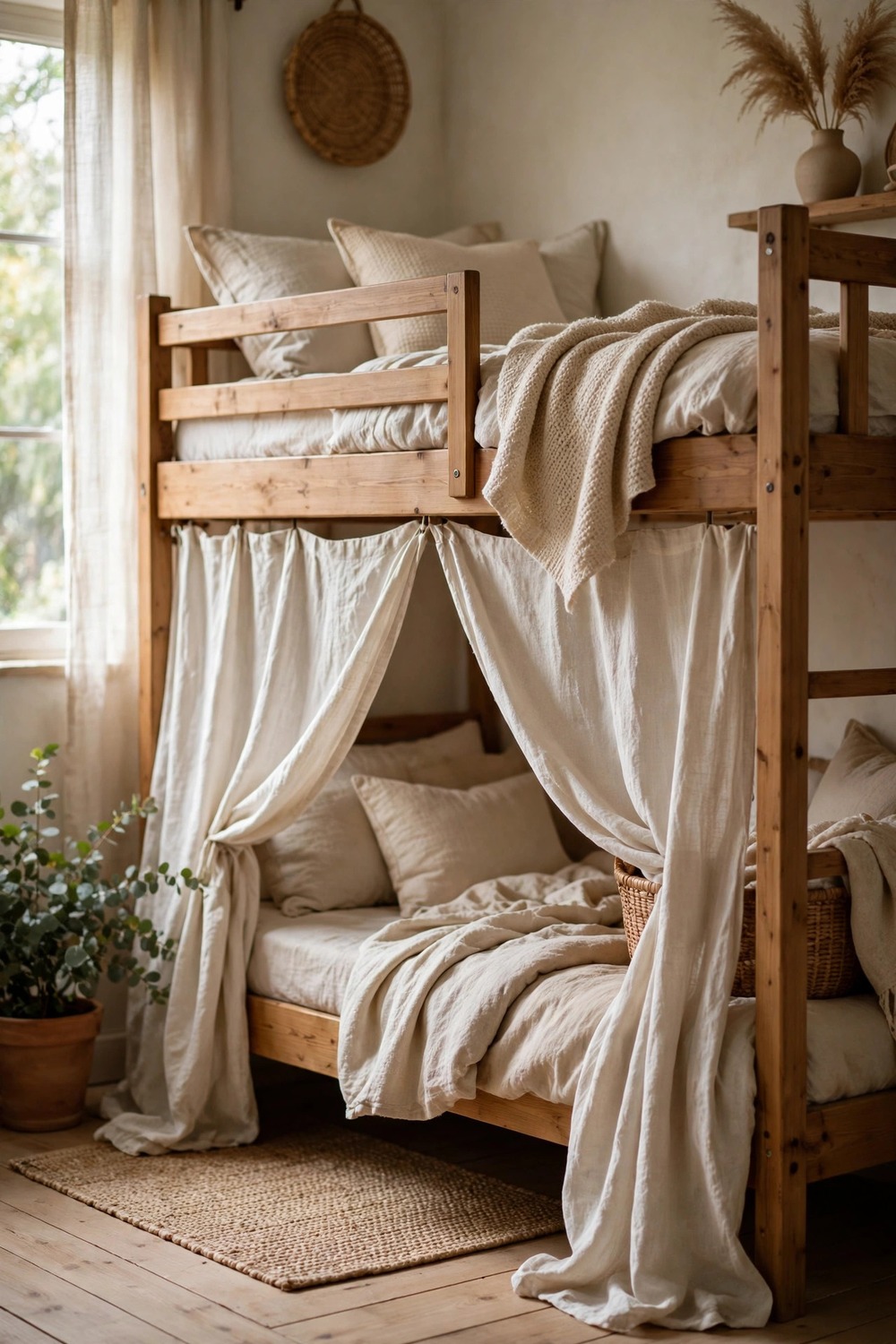
5. Hang Curtains on the Lower Bunk for a Fort Feel
Hanging light curtains across the lower bunk is a small change that kids usually love right away. The fabric creates a cozy fort feeling, gives the lower sleeper a bit of privacy, and can soften the look of a plain frame without any permanent changes. Choose washable cotton or linen in a soft solid or a gentle stripe, and hang it from a slim rod or a tension wire that sits safely inside the frame so it cannot swing into the sleep space. Keep the curtains easy to pull fully open in the morning, because good airflow and natural light still matter during the day. If two children share, let the lower bunk owner pick the color, since that little choice makes the space feel truly theirs. In a guest room, the same curtains can hide stored bedding below a loft or simply add a soft, finished layer to the room.
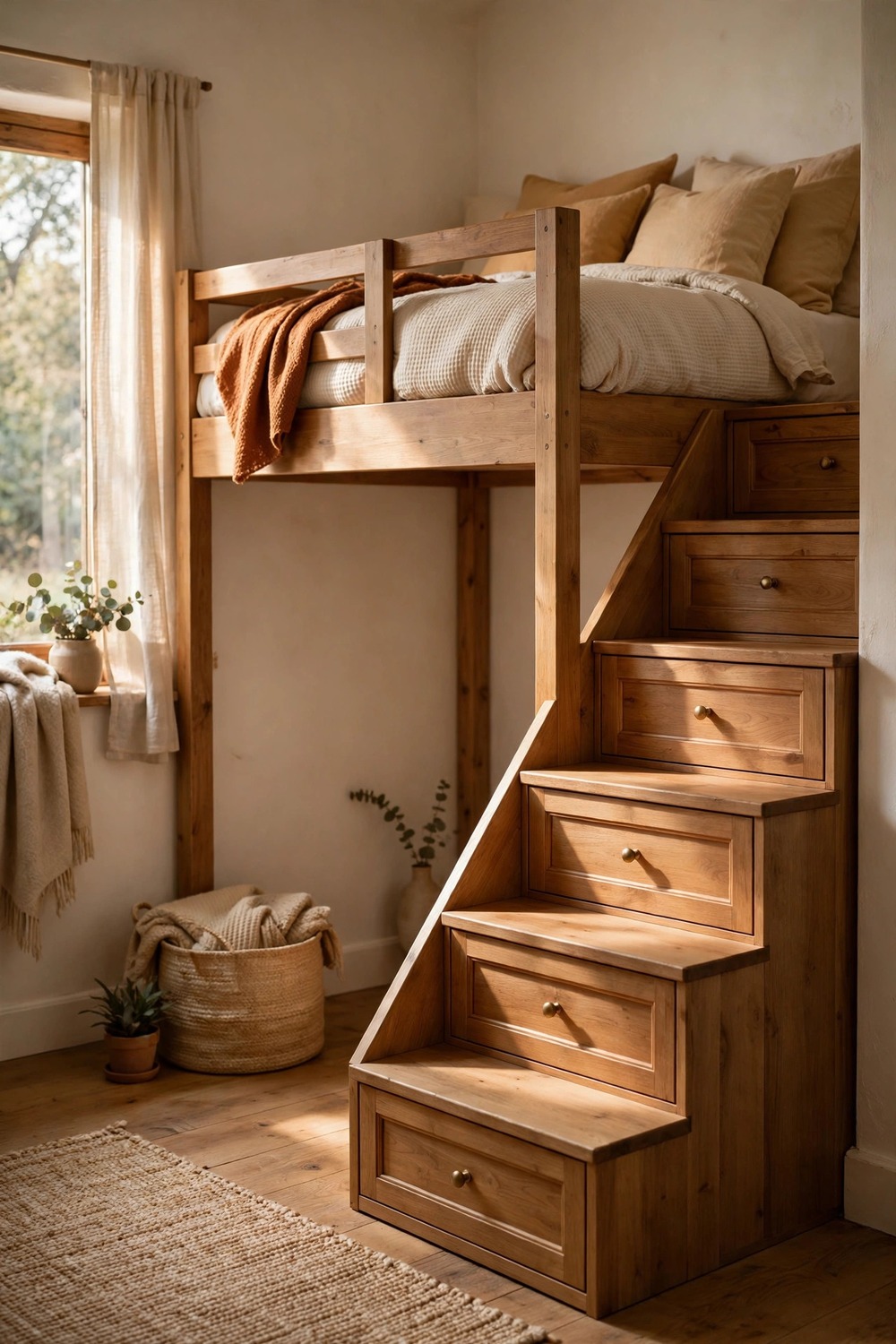
6. Use a Staircase Bunk With Storage Drawers
A staircase bunk with storage drawers is a smart pick when you need both safer climbing and more places to put things. Wide steps usually feel easier and calmer than a vertical ladder, especially for younger kids, visiting grandparents checking on them at night, or anyone carrying a book and a drink up to the top bunk. Each step can hide a drawer for pajamas, spare bedding, or out of season clothes, which is a real bonus in a small room without much closet space. The trade off is size, because a staircase takes up more floor than a ladder, so place it along the longest wall and measure the walkway carefully. Keep the steps clear rather than using them as extra shelves, and add a simple handrail if the design allows it. Done well, this style feels sturdy, organized, and a little bit special without trying too hard.
Make Each Bunk Personal, Safe and Practical
Once the frame is sorted, the next job is making each sleep space feel fair, comfortable, and easy to use every night. A few personal touches, the right height for your child’s age, and flexible setups for study or guests can stop the usual arguments before they start. These ideas balance fun with the practical details that parents and hosts actually worry about after the first excited week.
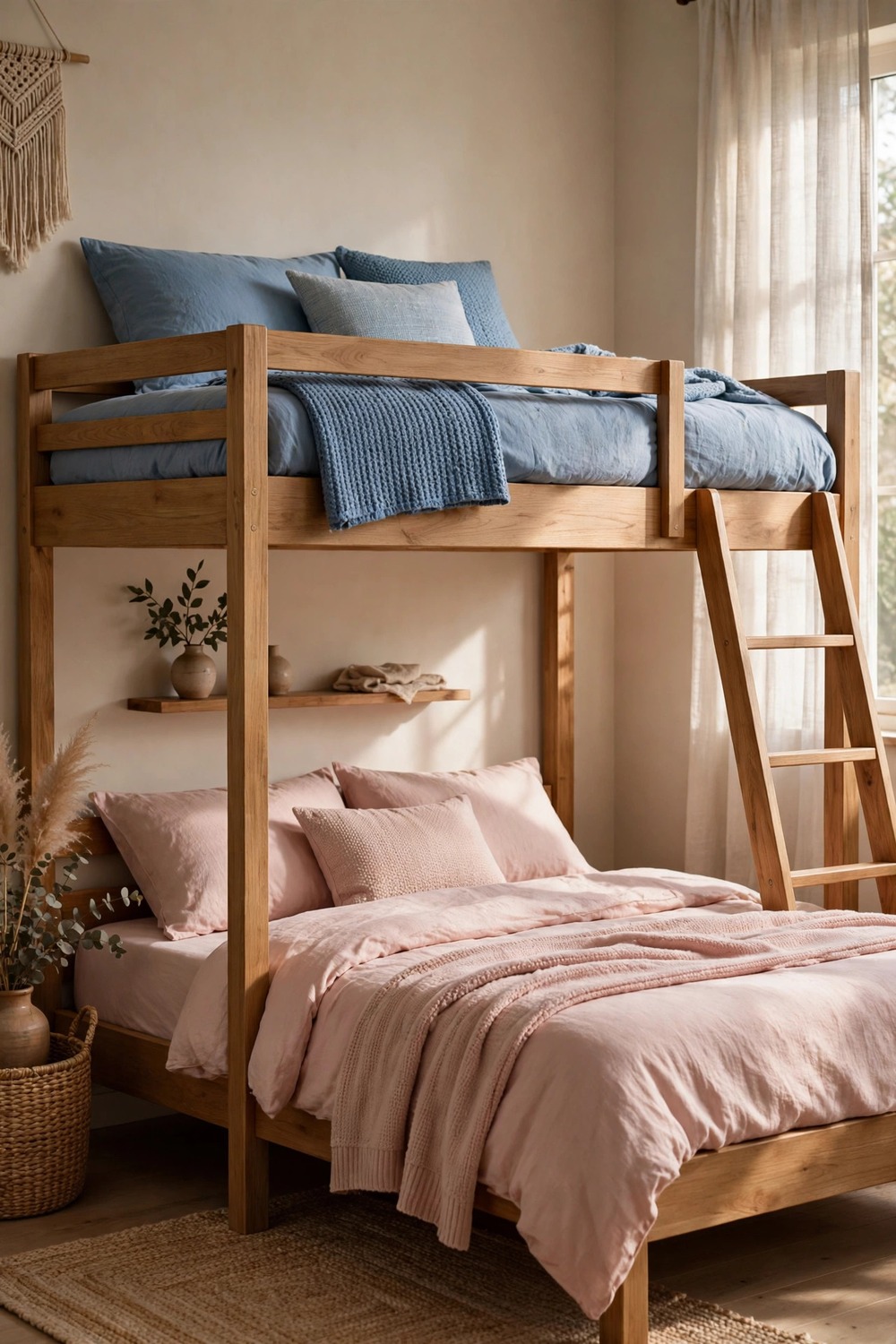
7. Style Each Bunk With Its Own Color Theme
Giving each bunk its own color theme is a kind way to let siblings feel individual without turning the room into a clash. Pick two colors that sit happily together, like soft blue on top and gentle blush or sage below, then repeat each color in the pillow, throw, and one small cushion so the theme reads clearly. Keep the base sheets and the frame the same on both levels, because that shared foundation is what stops the room from feeling split in two. This approach also helps younger kids remember which bed is theirs and gives guests a subtle cue about where to settle in. If tastes change, you can swap one theme at a time without redoing the whole room. Typically, softer shades work better than very bright ones in a small space, since strong color on both bunks at once can feel busy and a little overwhelming by bedtime.
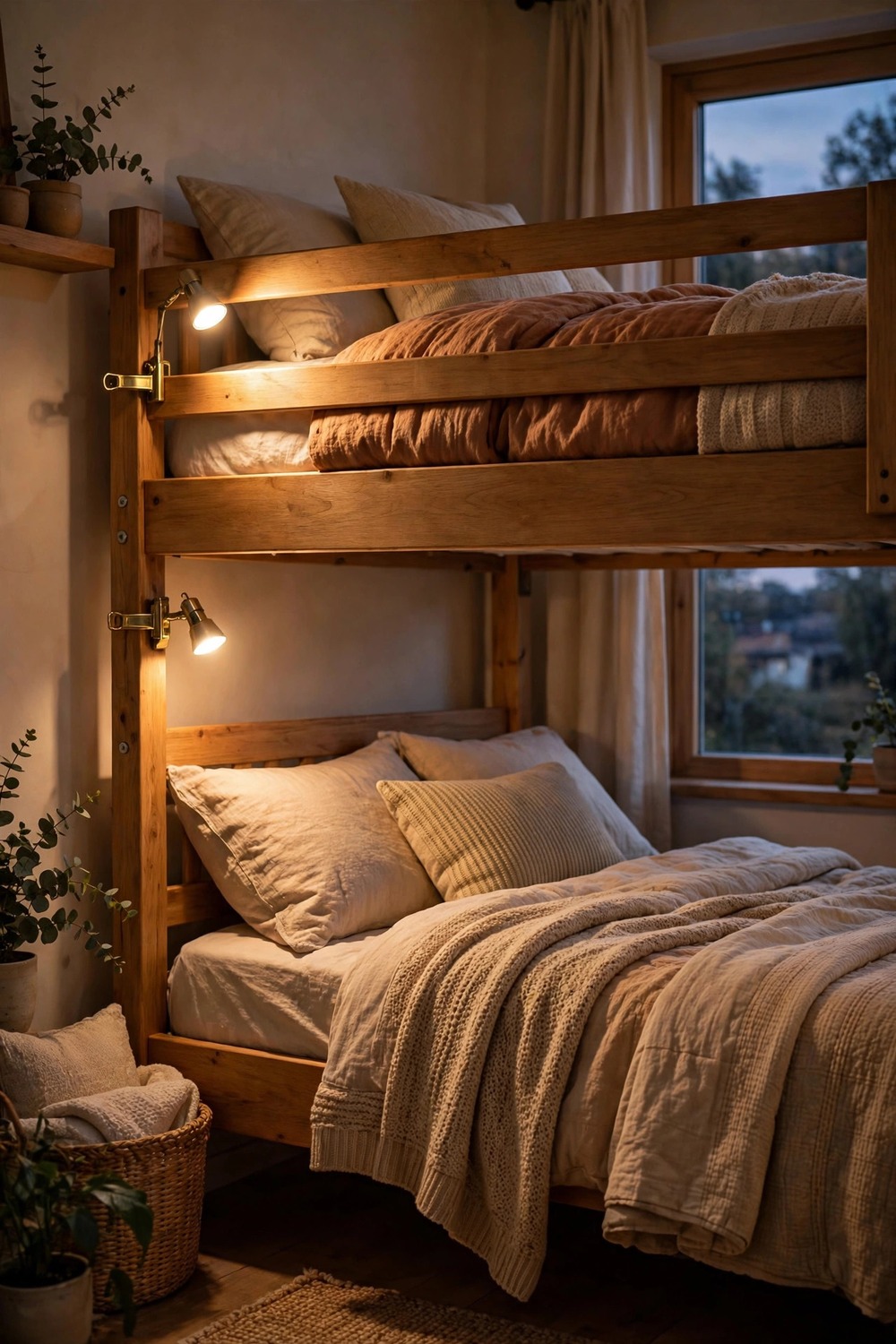
8. Add Clip-On Lights for Night Reading
Clip-on lights are one of those small additions that change bedtime for the better. One warm light at each bunk means a keen reader can finish a chapter without keeping the whole room bright, and the other sleeper can drift off in near darkness. Look for lights with a flexible neck, a soft warm glow, and a clip that grips the frame firmly without marking the wood. Battery or rechargeable styles avoid trailing cords, which is safer and tidier around bedding. Show kids how to angle the light toward the page and away from their eyes, and agree a lights out time so the freedom still feels fair. In a guest room, the same lights double as thoughtful night lights for visitors who do not know the room well. It is an inexpensive detail, but it usually makes both bunks feel properly equipped and cared for.
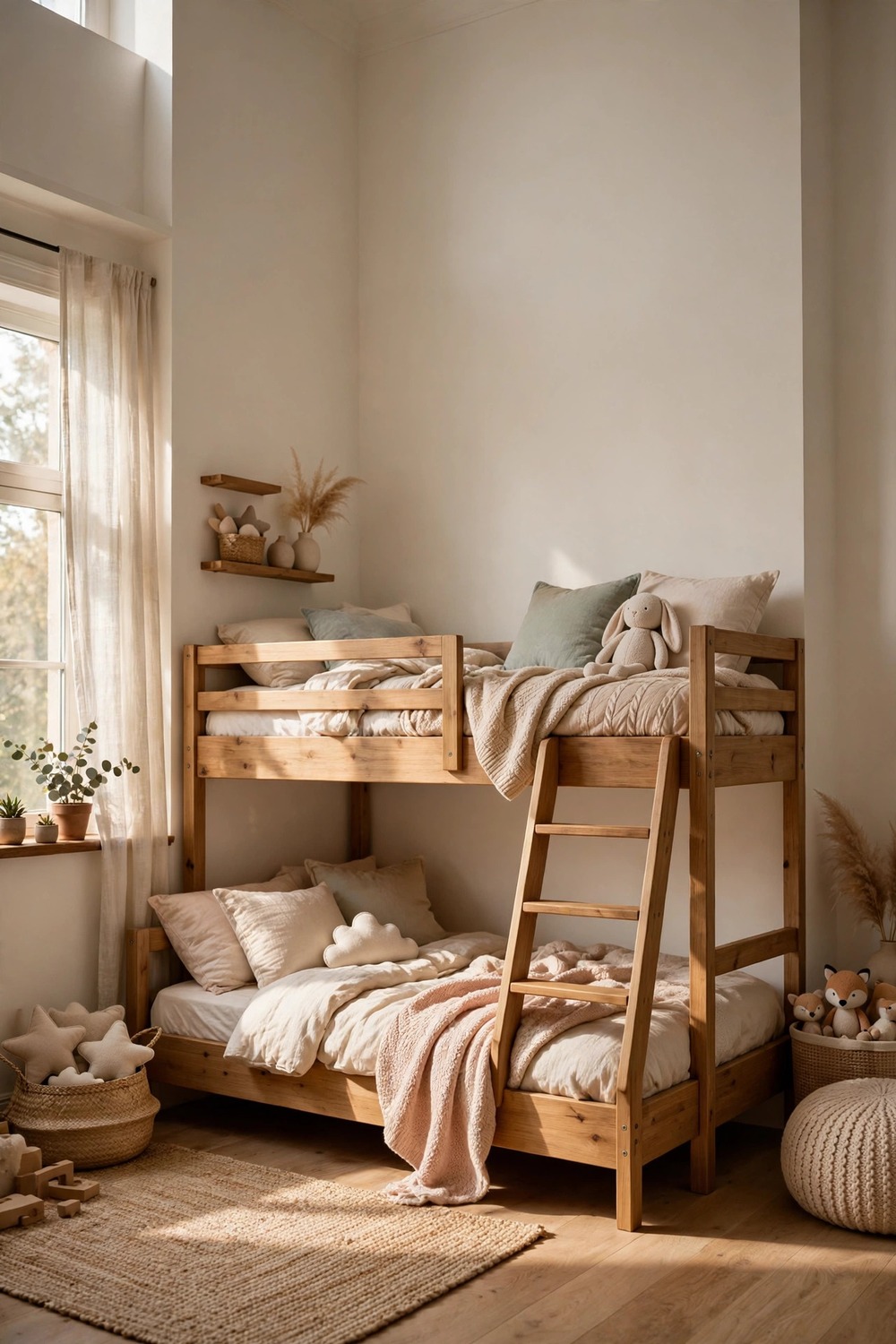
9. Use a Low Bunk for Younger Kids
A low bunk is usually the gentlest introduction to bunk sleeping for younger kids. The top level sits closer to the floor, the ladder or steps feel less daunting, and parents can reach in easily for stories and goodnight checks. The lower bed is often nearly at floor level too, which can work beautifully as a first big kid bed with a guard rail for reassurance. Because the whole frame is lower, the room tends to feel more open and less dominated by furniture, which helps in a truly small bedroom. Check the guard rail height above the mattress carefully and keep soft toys out of the top bunk if they crowd the rail. As your child grows, the same room can graduate to a standard bunk or a loft later. Starting low builds confidence slowly, and that calm feeling at night is worth more than rushing into a taller design.
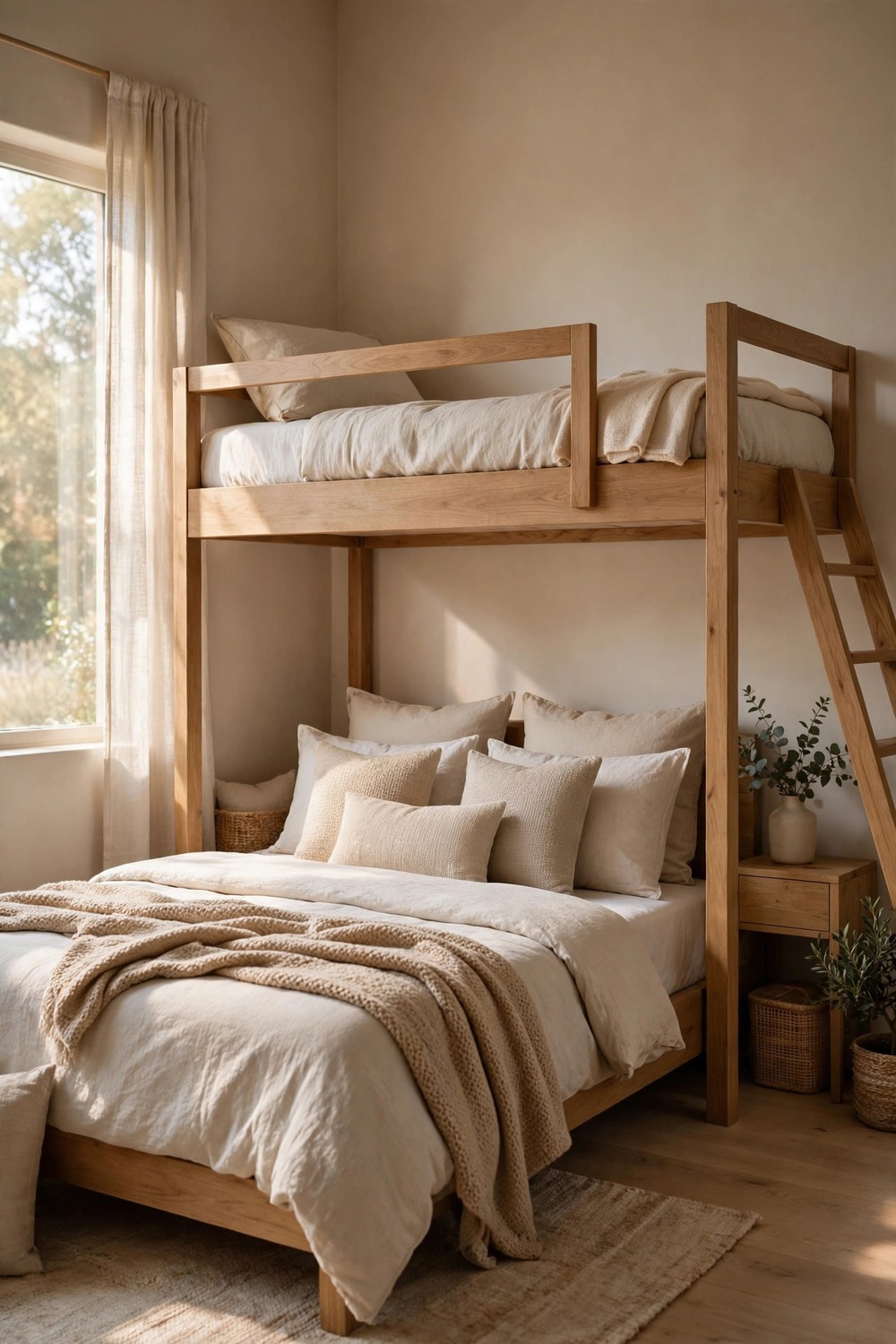
10. Create a Guest Room With a Double Lower Bunk
A double bed on the lower level with a single bunk above is one of the most welcoming setups you can offer guests. Couples or a parent can take the roomy lower bed while a child or a single visitor sleeps up top, so a small spare room can host a whole family without air mattresses on the floor. Dress the double bed a little more generously, with layered pillows and a folded throw, so it reads as the main bed rather than the bottom of a kids bunk. Keep a clear step or sturdy ladder that adults can use comfortably, and leave space beside the lower bed for bags and a glass of water. Neutral bedding usually works best here, with one warm accent color to keep things friendly. This layout costs a bit more floor space, but it typically turns an underused box room into the most useful bedroom in the house.
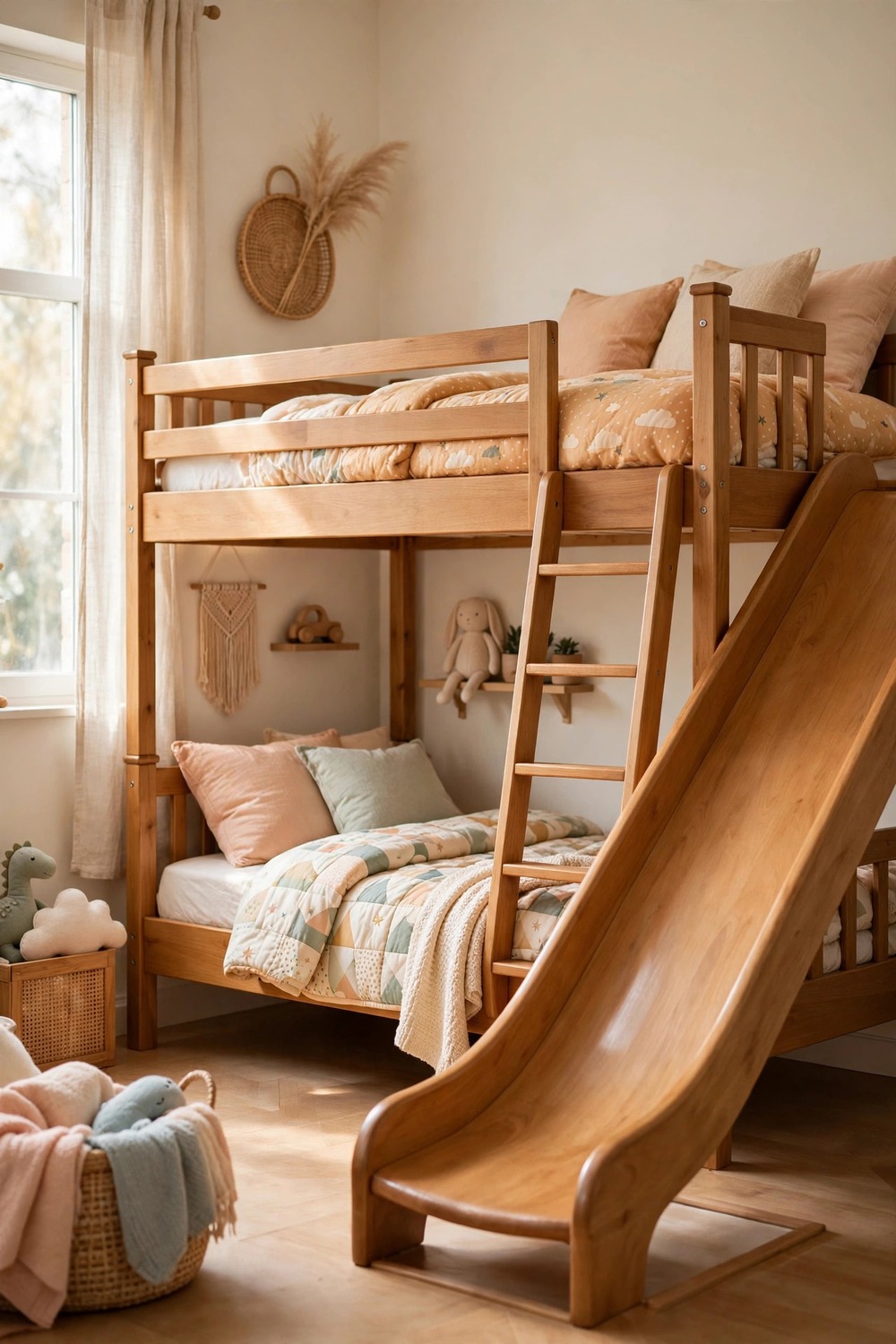
11. Add a Slide for Playful Mornings
A slide turns getting out of bed into the best part of the morning, and for playful kids that joy can make a small shared room feel like an adventure rather than a compromise. Choose a smooth, well finished slide with raised sides that sits at a gentle angle, and make sure the landing zone stays completely clear of rugs that slip, storage boxes, and bedroom doors that swing open. Slides suit confident climbers best, so think honestly about your child’s age and nighttime habits before you commit. The frame will need a little extra width on the slide side, which is worth measuring twice in a tight room. Keep bedding simple so nothing trails near the slide, and set a clear house rule that the slide is for mornings, not midnight. Used thoughtfully, it adds real fun without taking over the whole room, and guests with young kids will usually remember the stay fondly.
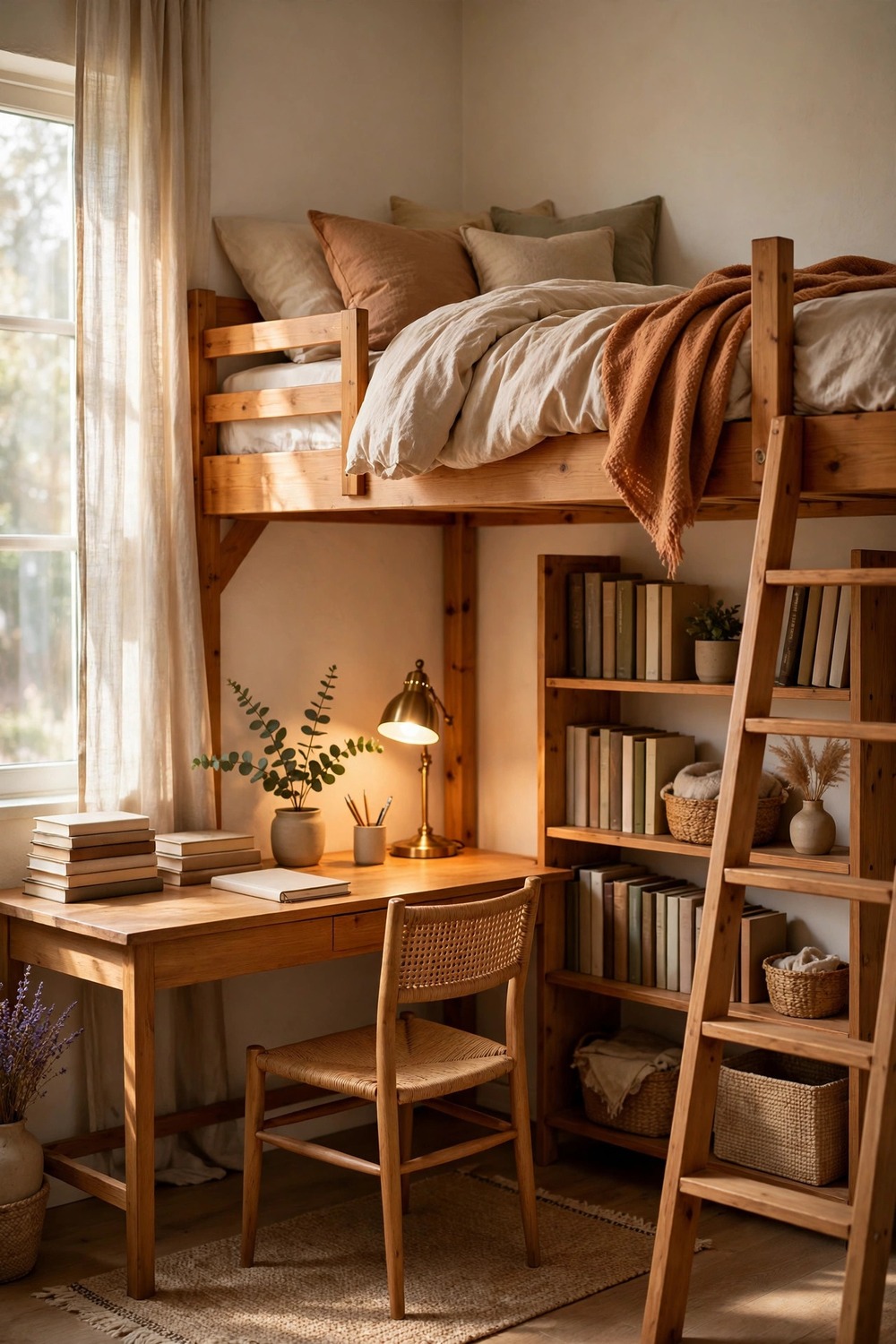
12. Use a Bunk Over a Desk for Study Space
A bunk over a desk, often called a loft or high sleeper, is a hardworking choice for older kids, teens, and small guest rooms that double as a home office. Lifting the bed frees the floor below for a proper desk, a chair with back support, and a shelf for books, which usually beats doing homework on the bed or the kitchen table. Check that there is enough headroom both above the mattress and at the desk, and add a warm task lamp plus a pinboard or small shelf so the study zone feels complete rather than tucked away. Keep the desk surface as clear as you can, because a tidy workspace under a bed can feel cave like if clutter builds up. Good light and one plant or framed picture help a lot. For guests, the desk becomes a handy spot for laptops and bags, so the room earns its keep all year round.
Finish With Comfort, Style and Shared Moments
The final details are what make a bunk room feel finished rather than just functional. Coordinated bedding, rails that look like part of the design, and a shared corner for reading or play all help the room feel calm and generous, even when it is small. These last ideas also help a kids room welcome guests gracefully, and a holiday bunk room feel like a treat instead of a squeeze.
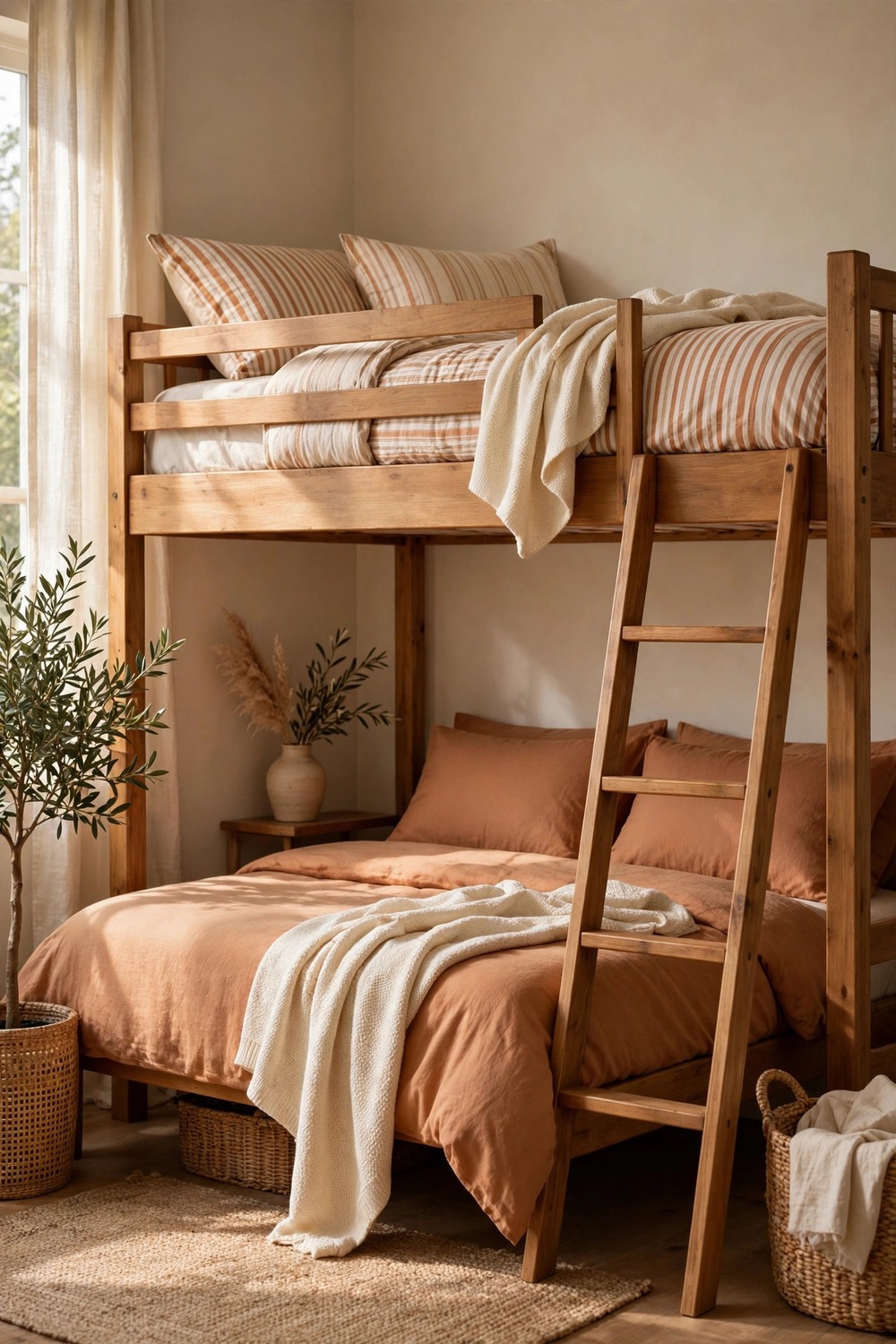
13. Keep Bedding Coordinated but Not Matching
Coordinated but not matching bedding tends to look more relaxed and more grown up than two identical sets. Start with a shared palette of two or three colors, then vary the pattern, so one bunk might wear a soft stripe while the other uses a plain or a tiny check in the same tones. This gives each sleeper a little identity while the room still reads as one calm picture from the doorway. It is also practical, because you can replace or wash one set at a time without hunting for an exact match that may no longer be sold. Add one common thread, like the same cream throw folded at the foot of both beds, to tie the look together. In guest rooms, this approach feels thoughtful rather than formal, and photos of the room will usually look warmer and more natural than a perfectly matched set ever does.
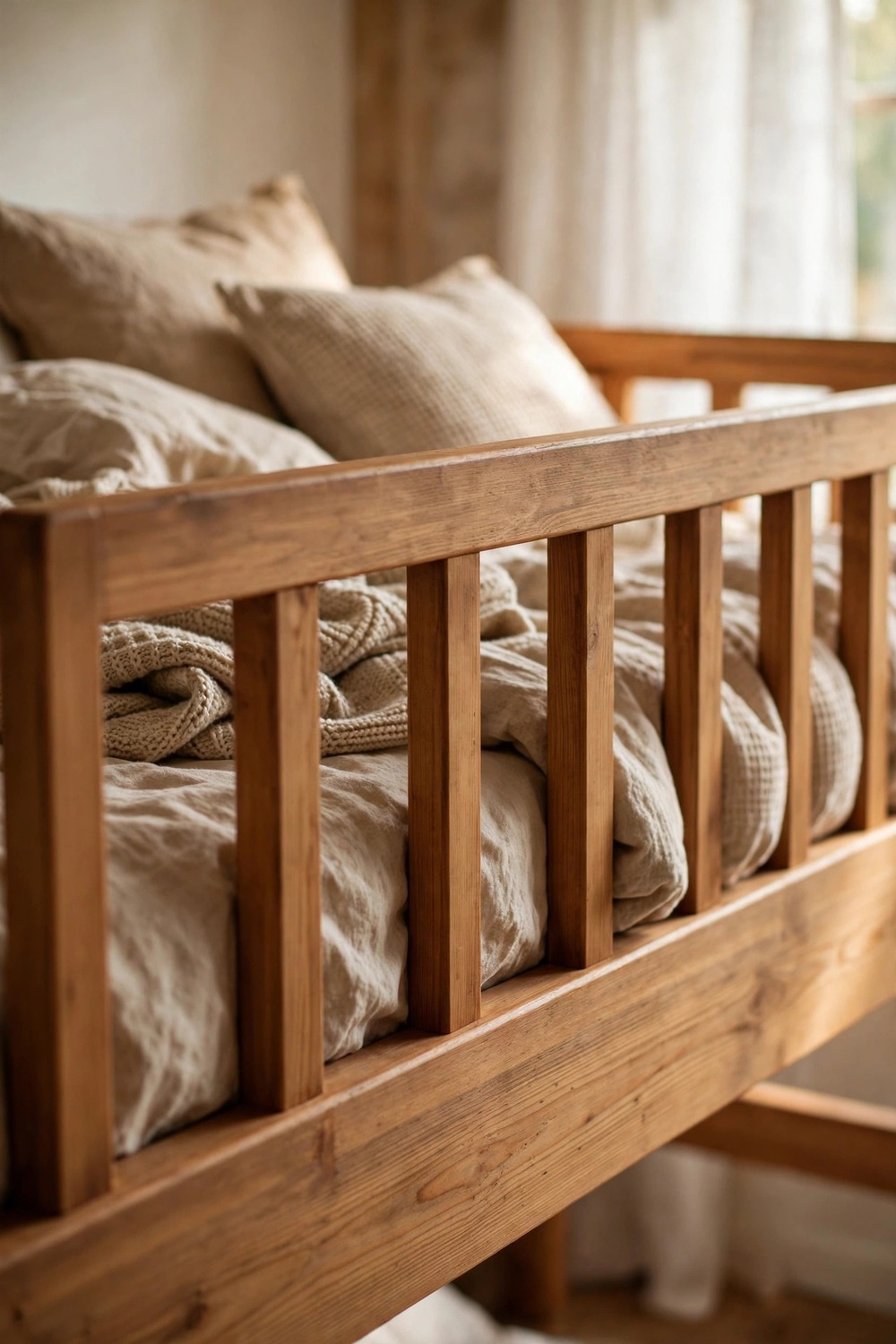
14. Add Safety Rails That Match the Frame
Safety rails matter on every top bunk, but they do not have to look like an afterthought. Choosing rails that match the frame in material, finish, and line makes the whole bed feel designed rather than patched together, which matters in a guest room or a holiday home where first impressions count. The rail should run along most of the open side with a clear gap only at the ladder, sit well above the top of the mattress, and feel completely solid when you grip and shake it. Check the fixings every few months, because screws can loosen quietly over time with everyday use. If you are adding rails to an older frame, take a wood sample or clear photos to match the tone as closely as you can. A rail that looks intentional helps everyone sleep easier, kids and adults alike, and it keeps the focus on comfort instead of worry.
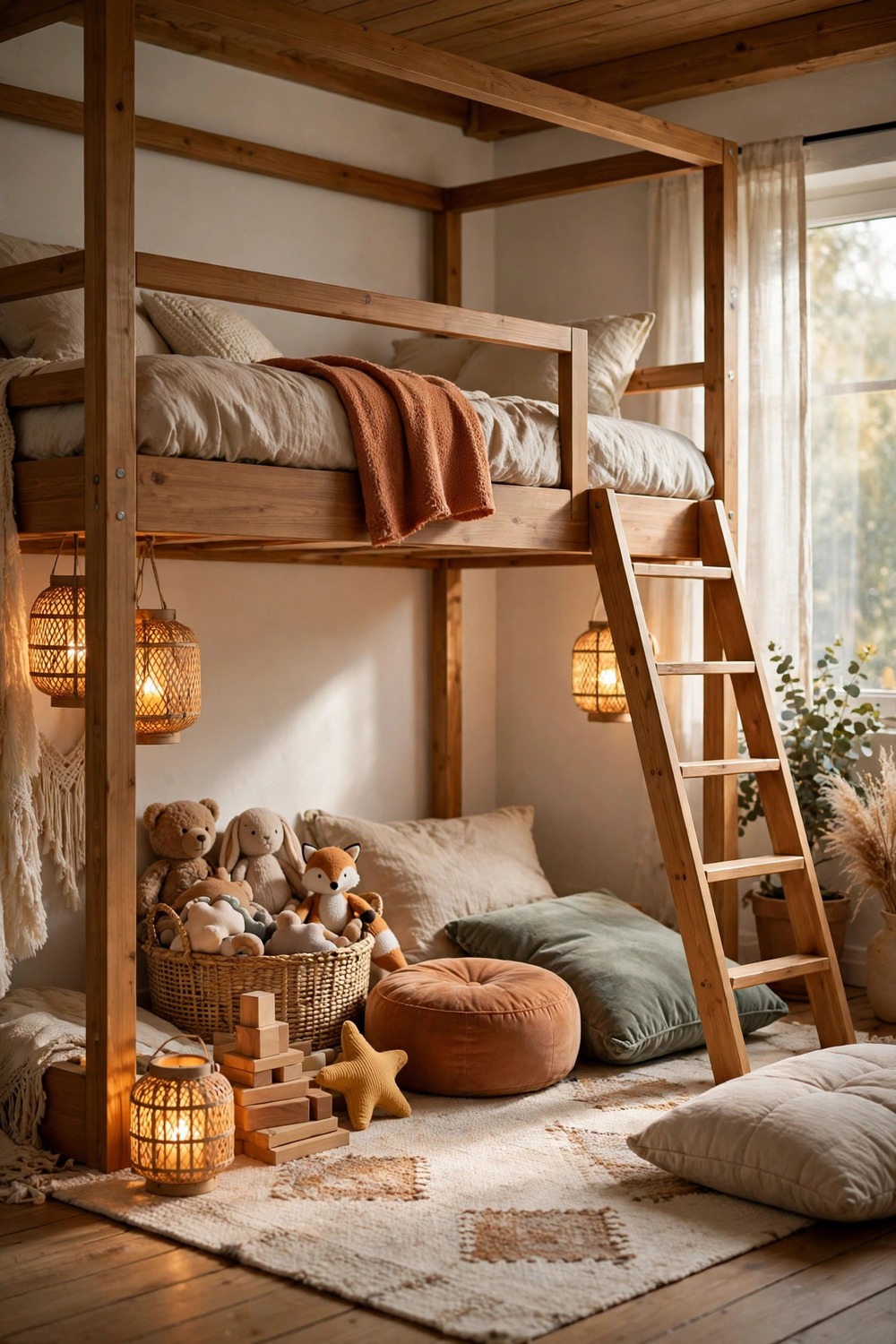
15. Use the Space Under a Loft Bunk as a Play Den
The space under a loft bunk is too valuable to waste, and a simple play den is usually the most loved use for it. Lay a soft rug or a folded blanket on the floor, add a few large cushions to lean against, and keep a small basket of books, puzzles, or favorite toys within reach. A battery powered lantern or a string of warm lights can make the den feel magical, as long as cords and fittings stay safely out of the play area. Low curtains or a draped throw at the opening give a sense of hiding without shutting out air or supervision. Because the den sits in the footprint of the bed, even a very small bedroom can offer both a sleep zone and a play zone without crowding the middle of the room. Rotate the toys every few weeks and the den will keep feeling new, which typically buys you quiet, happy play while you get on with the day nearby.
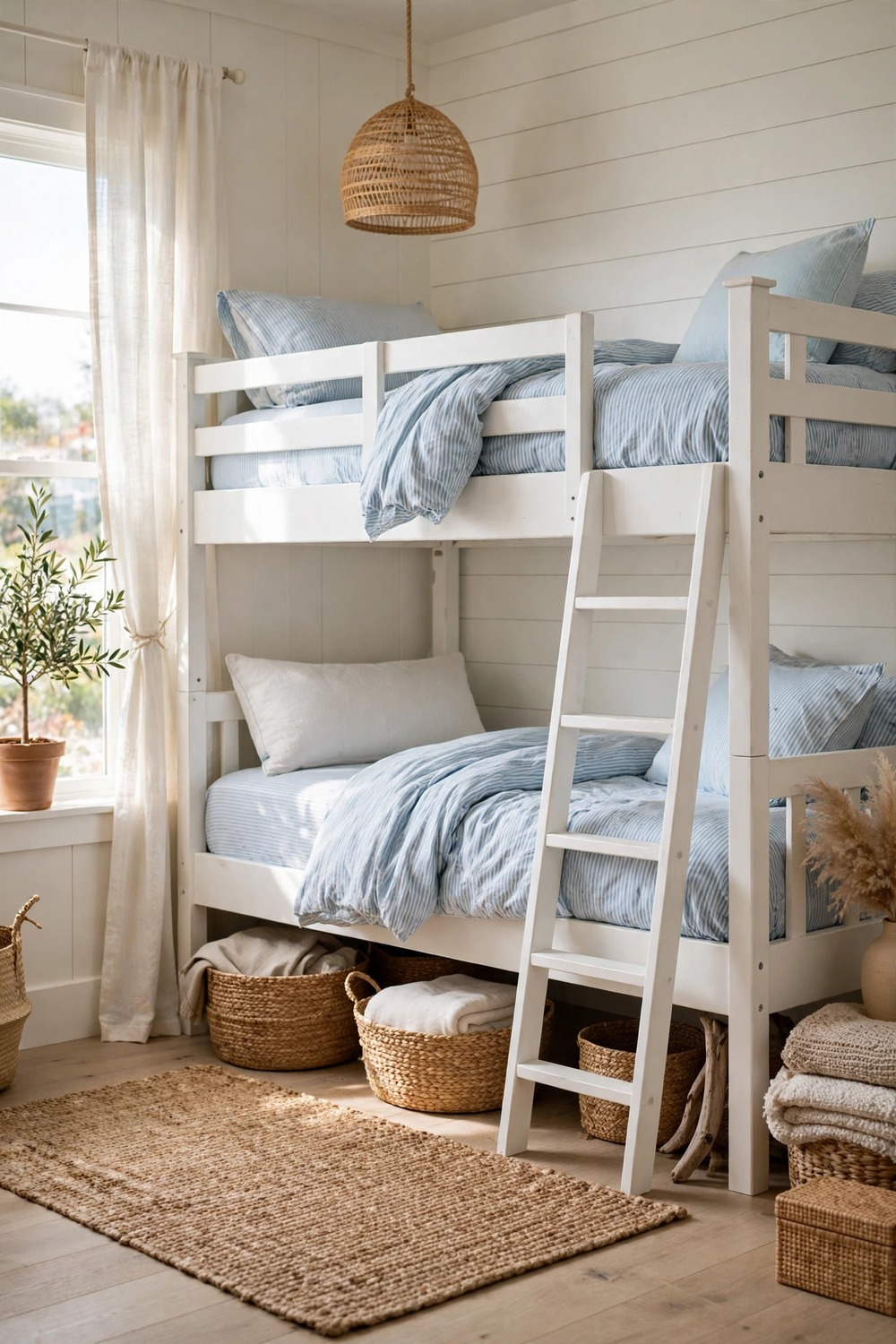
16. Style a Coastal Bunk Room for a Holiday Home
A coastal bunk room is a natural fit for a holiday home, a beach house spare room, or any bedroom where you want guests to exhale the moment they walk in. Start with white or pale painted bunks to keep the room bright, then layer light blue and sandy tones in striped bedding, woven throws, and simple cushions. Natural textures do most of the work here, so look for rattan baskets, a jute rug, and light wood accents rather than themed decor that can date quickly. Keep surfaces easy to clean and bedding easy to wash, because holiday rooms work hard and sandy feet are a given. One framed print of the sea or a simple piece of driftwood on a shelf is usually enough storytelling. The result feels fresh in summer and still cozy in winter with an extra blanket, and a small room benefits most of all from the pale, uncluttered palette.
17. Add Name Plaques or Art at Each Pillow
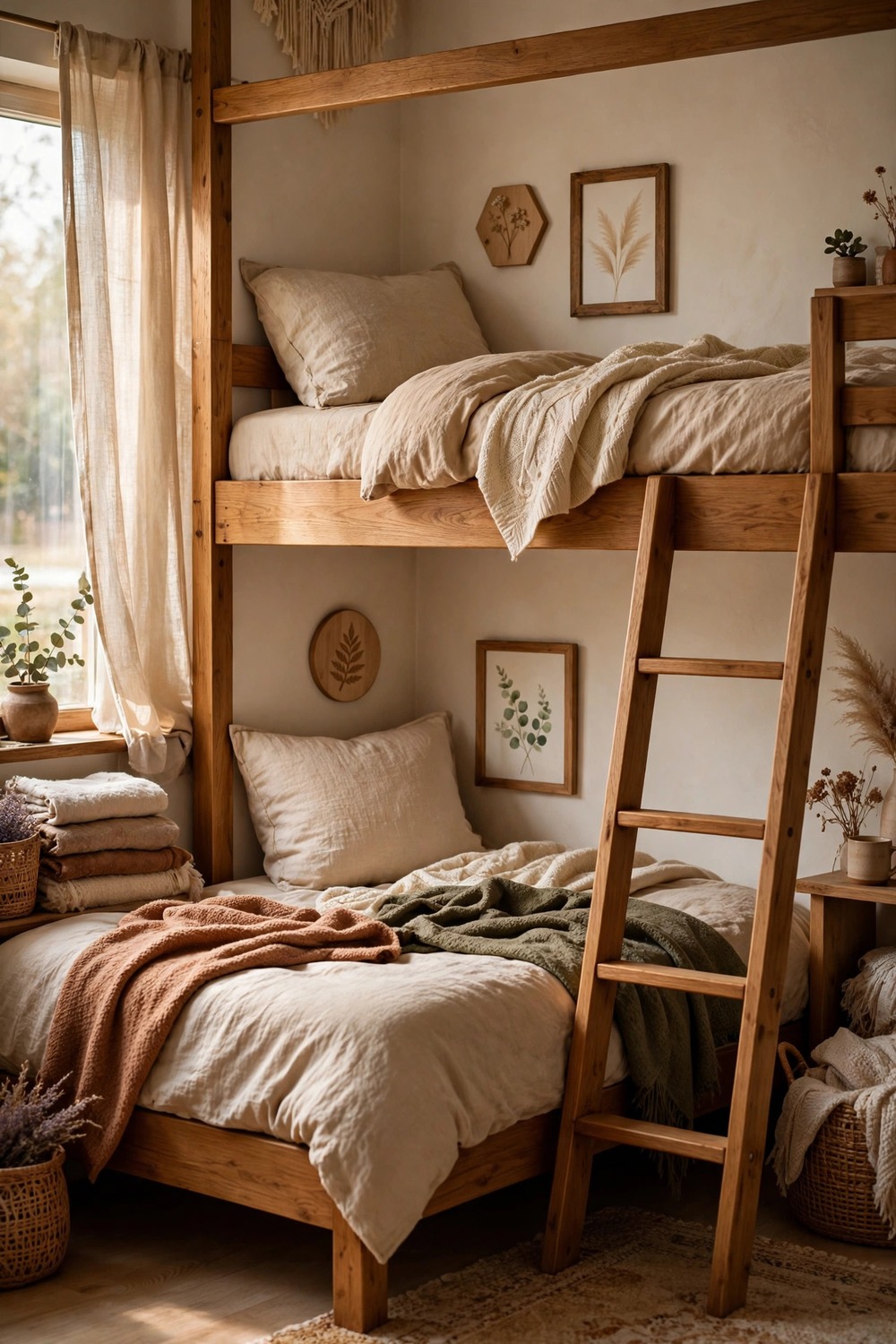
A small name plaque or a piece of art at each pillow is a tiny gesture that makes a shared room feel fair and personal. Each sleeper gets a spot that is clearly theirs, which can ease bedtime negotiations and help young guests feel claimed and welcome instead of squeezed in. Keep plaques simple and securely fixed, in painted wood, soft felt, or a small framed print with the child’s initial if a full name feels too much. Place them where they can be seen from the doorway but not where heads will bump them during sleep. For a guest room, swap names for small matching artworks, like two coastal prints or two botanical sketches, so the welcome feels warm without being overly personal. This detail costs very little and takes minutes to add, yet it is often the thing children point out proudly to anyone who visits the room.
18. Finish With a Shared Rug and Reading Corner
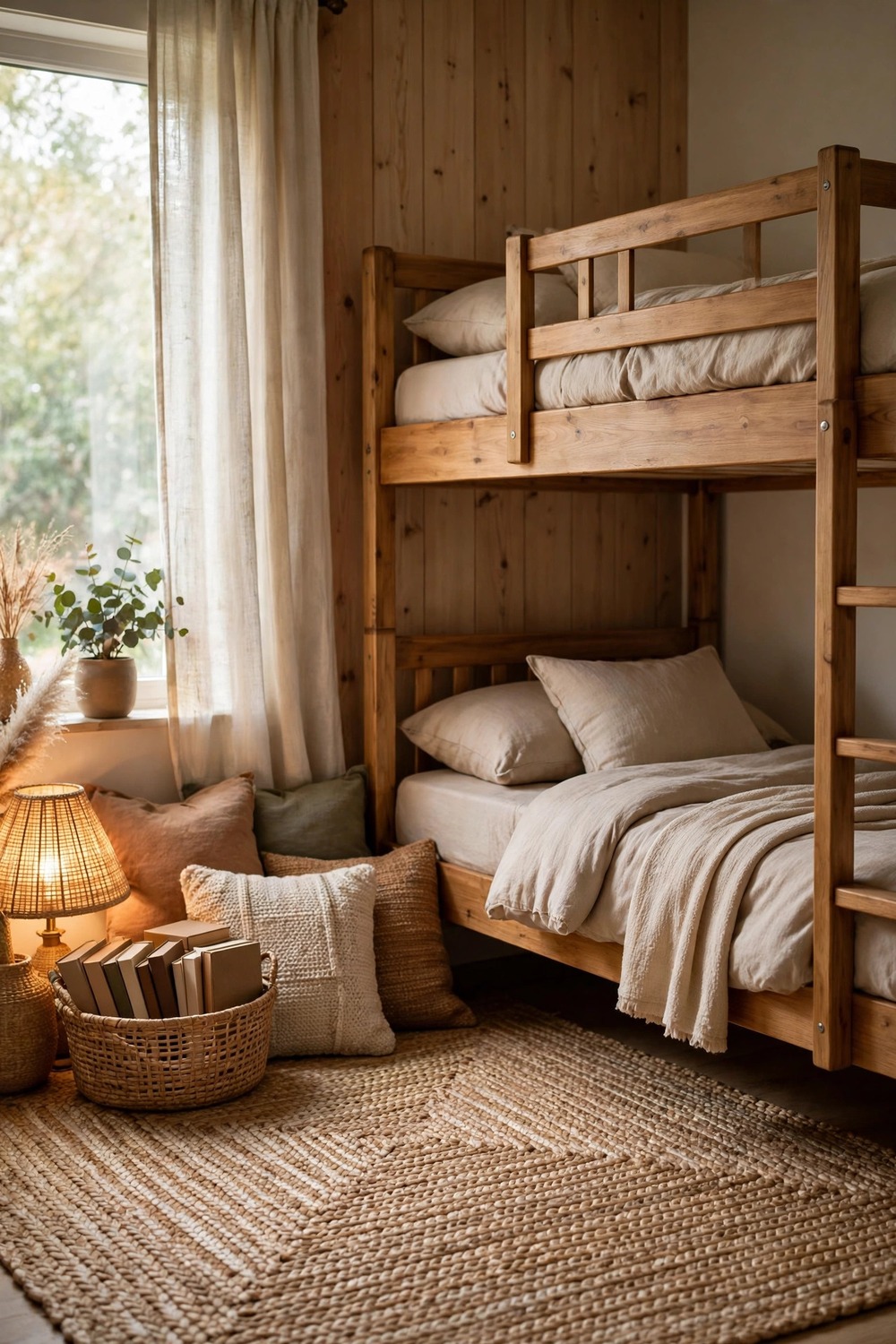
Finishing with a shared rug and a small reading corner gives the whole bunk room a heart. A soft woven rug between or beside the bunks warms the floor for bare feet, softens sound in a busy house, and quietly marks the room as a place to linger rather than just sleep. Add two floor cushions, a low basket of shared books, and one warm lamp nearby, and you have a corner that both sleepers can use together without crowding either bed. Choose a rug that is easy to vacuum and forgiving with everyday spills, in a warm neutral that ties your bunk colors together. Keep the corner small and clear of the ladder path so nighttime trips stay safe. This shared spot often becomes where stories happen, where guests perch to chat, and where the room’s best memories gather, which is a lovely way to round out even the smallest bedroom.
When you step back, a good bunk room does not need to be large or expensive to feel right. It just needs a frame that fits, beds that feel safe and personal, and one or two shared comforts that bring everyone together. If the room still feels tight, change only one thing at a time, live with it for a week, and then decide what is next. Bunk rooms usually come together slowly, through small thoughtful choices, and that is completely fine.
So start small this week. Measure your room honestly, pick the one idea that solves your biggest headache, whether that is a trundle for sleepovers or lights for a keen reader, and begin there. That single change will show you what your room can become, and the next step will probably suggest itself. Before long, those bunks won’t feel like a compromise for a small space anymore. They’ll feel like the coziest, cleverest corner of your home.

Leave a Reply