
18 Cinder Block Bench Ideas You Can Build in a Weekend
If you’ve got a bare patio corner or a garden path that needs somewhere to sit, you don’t need a big budget or a workshop full of tools to fix it. Cinder blocks and a few sturdy planks can become a bench that is strong, surprisingly good looking, and ready in a weekend. That’s the beauty of this material. It’s heavy enough to stay put, easy to stack, and forgiving if you’re new to building.
In this guide you’ll find eighteen ideas, from the simplest two stack bench to planter benches, fire pit seating, and painted styles that look far more polished than their humble parts. Most of them need no mortar at all for a dry stacked build on level ground, though you’ll want to check stability carefully and follow local guidance for anything tall or permanent. A level, a tape measure, and a little patience usually matter more than fancy skills.
Pick the idea that fits how you actually live outside. Maybe you need storage, a spot by the herbs, or extra seats for a long table. You can start small, live with it for a season, and restack or repaint when your needs change. That flexibility is hard to beat, and it’s why these benches keep showing up in real gardens year after year.
In This Article
- Classic Two Stack Plank Bench
- Low Garden Path Bench
- L Shaped Corner Bench
- Bench With Built In Planter Ends
- Cushioned Patio Lounge Bench
- Rustic Fire Pit Bench
- Curved Fire Pit Seating
- Storage Bench With Hidden Cubbies
- Raised Planter Back Bench
- Poolside Sun Bench
- Entryway Welcome Bench
- Herb Garden Bench
- Painted White Coastal Bench
- Modern Black and Cedar Bench
- Bohemian Cushion Bench
- Kids Garden Bench
- Long Farmhouse Table Bench
- Tiered Plant Stand Bench
Simple Weekend Builds
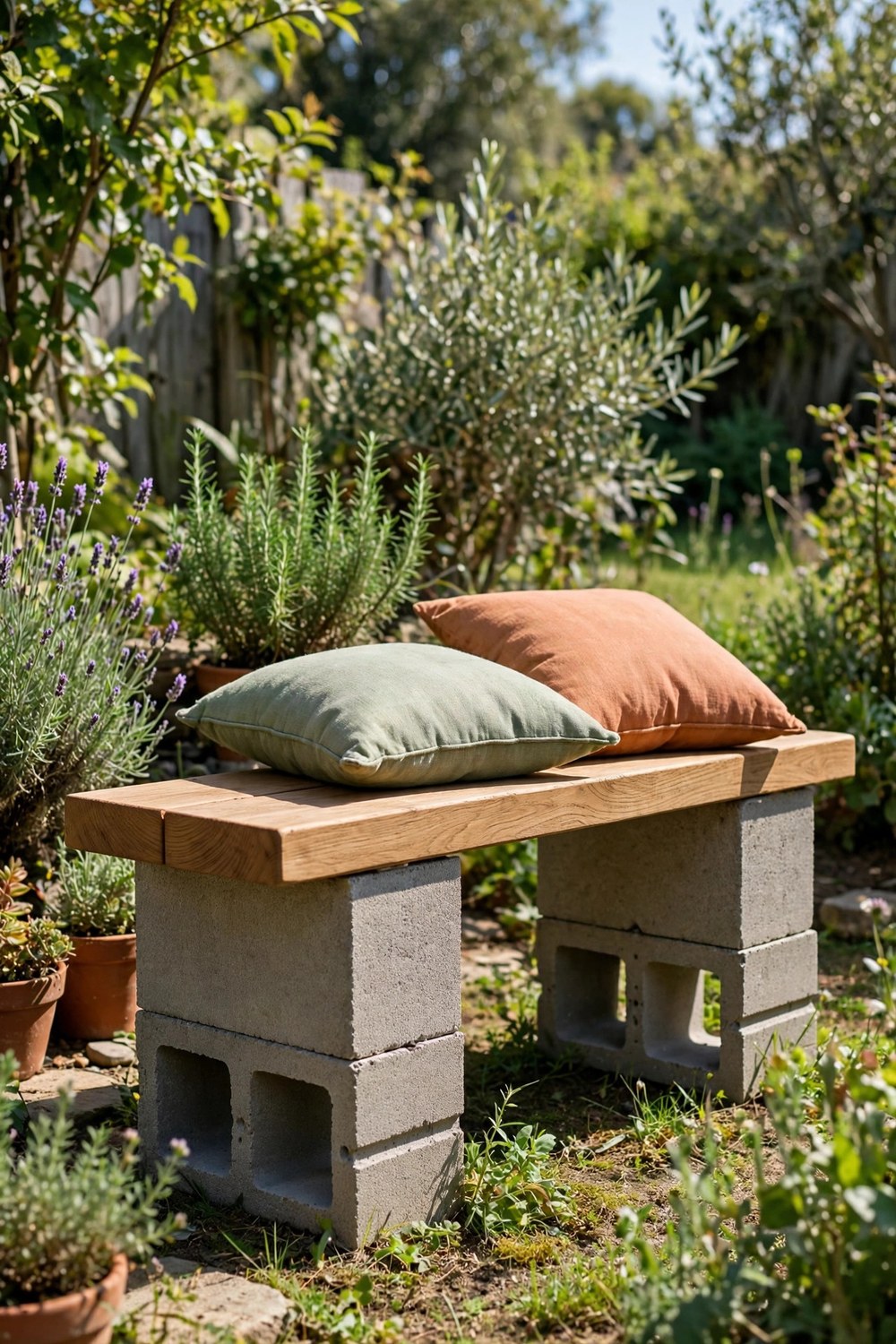
1. Classic Two Stack Plank Bench
This is usually the bench people build first, and there’s a good reason for that. You stack two or three blocks at each end on a flat, level patch, check them with a level, and lay sturdy wood planks across the top through the block openings or right over the stacks. It typically comes together in an afternoon if your ground is already fairly even. Sand the planks well so nobody catches a splinter, and add a coat of outdoor finish if they’ll sit in rain. Two outdoor cushions and a small throw make it feel finished without much cost. If the bench wobbles at all, don’t ignore it. Shim the low side, pack gravel underneath, and test it again before anyone sits down with coffee. Take a photo once it is finished and live with it for a week before you paint or change anything, because your first impressions in different light can be surprisingly useful for final choices.
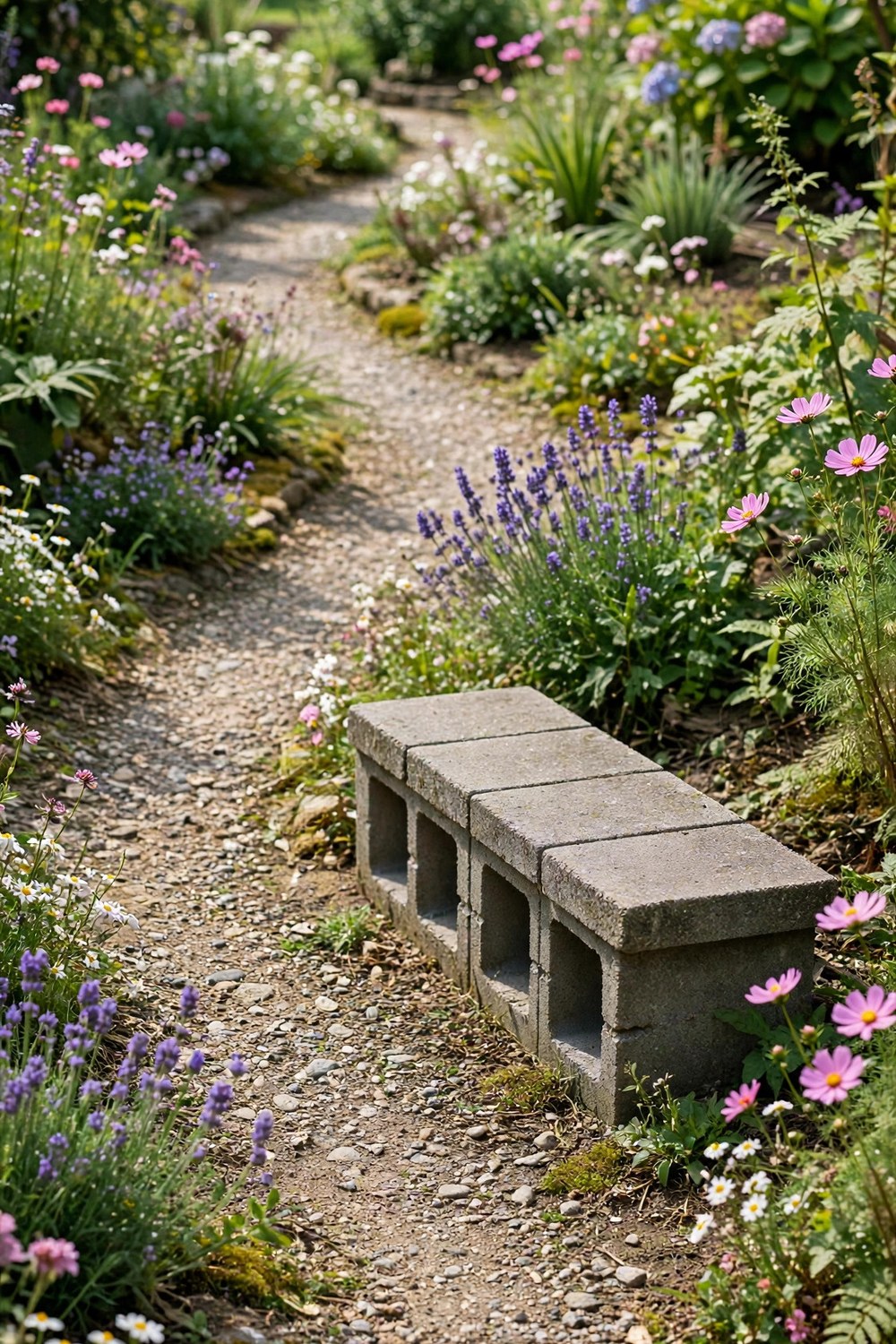
2. Low Garden Path Bench
A low bench along a garden path gives you somewhere to pause, tie a shoe, or just sit among the plants for a minute. Keep it one block high so it feels relaxed and doesn’t block the view of your borders. You’ll want a firm gravel or paver base, because low benches show every tilt once you sit down. A single wide plank or two narrower boards usually work best here, and a slightly overhanging edge looks softer. Tuck low herbs or trailing flowers around the feet so the blocks feel settled into the garden rather than dropped onto it. It’s a small project, but it typically changes how often you actually linger outside. Keep a small brush nearby to sweep off leaves and grit, and your simple upkeep will help the seat stay inviting through the whole season without turning into another chore on your list.
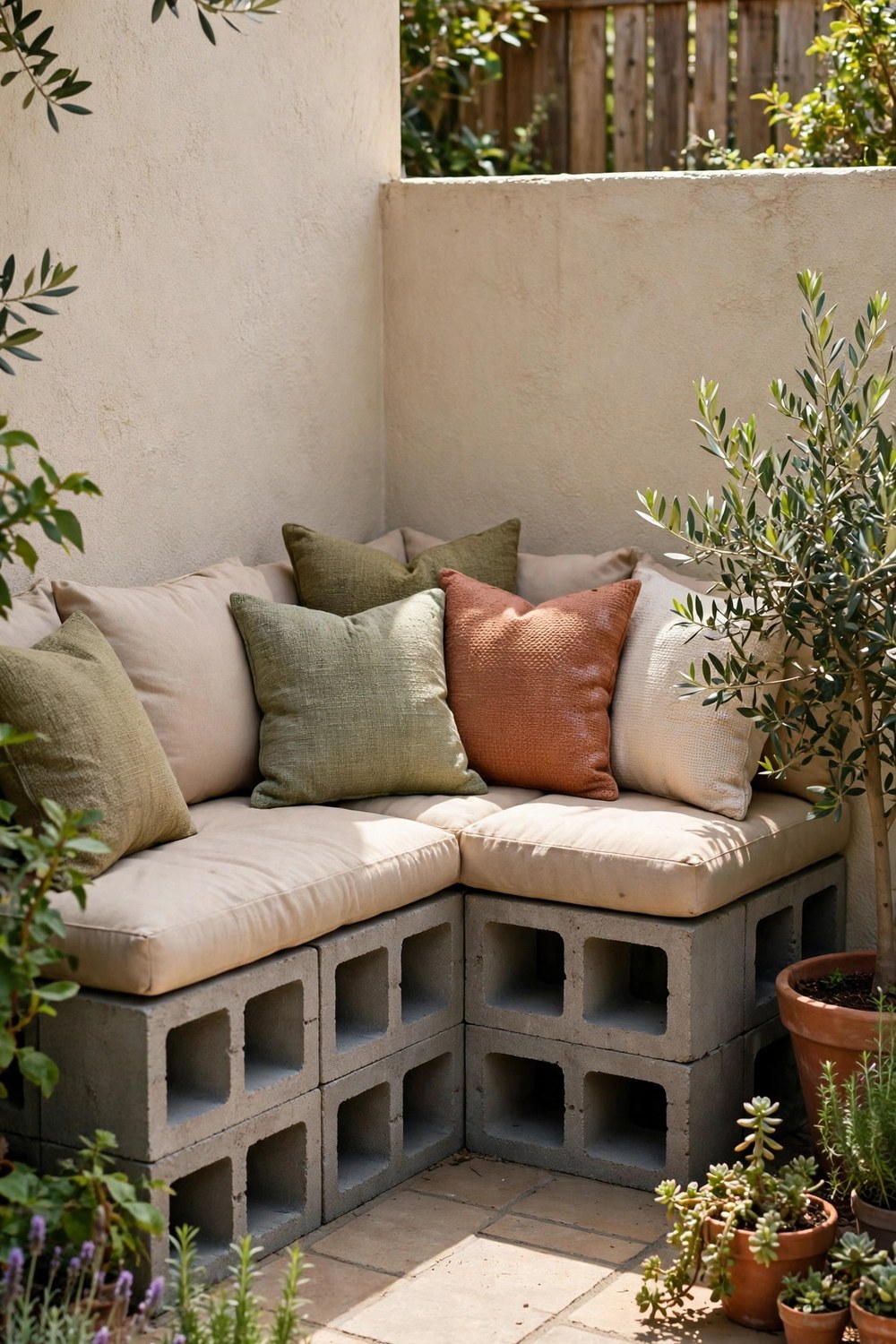
3. L Shaped Corner Bench
Corners are often wasted on a patio, and an L shaped bench fixes that without buying bulky furniture. Build one run along each wall or fence line, sharing a corner stack of blocks so the whole thing feels connected. Long planks form one seat and shorter planks form the other, and you’ll usually want extra support blocks in the middle of the longer span. Add corner cushions in one color and smaller patterned pillows along each side so the corner doesn’t look empty. A small side table or a lantern on the corner stack is handy for drinks. Measure your corner carefully first, because even a slight angle in a fence can throw off your plank cuts. If you are building with a friend, let one person hold the level while the other adjusts the base, since that small teamwork usually makes the whole stacking process faster and far less frustrating.
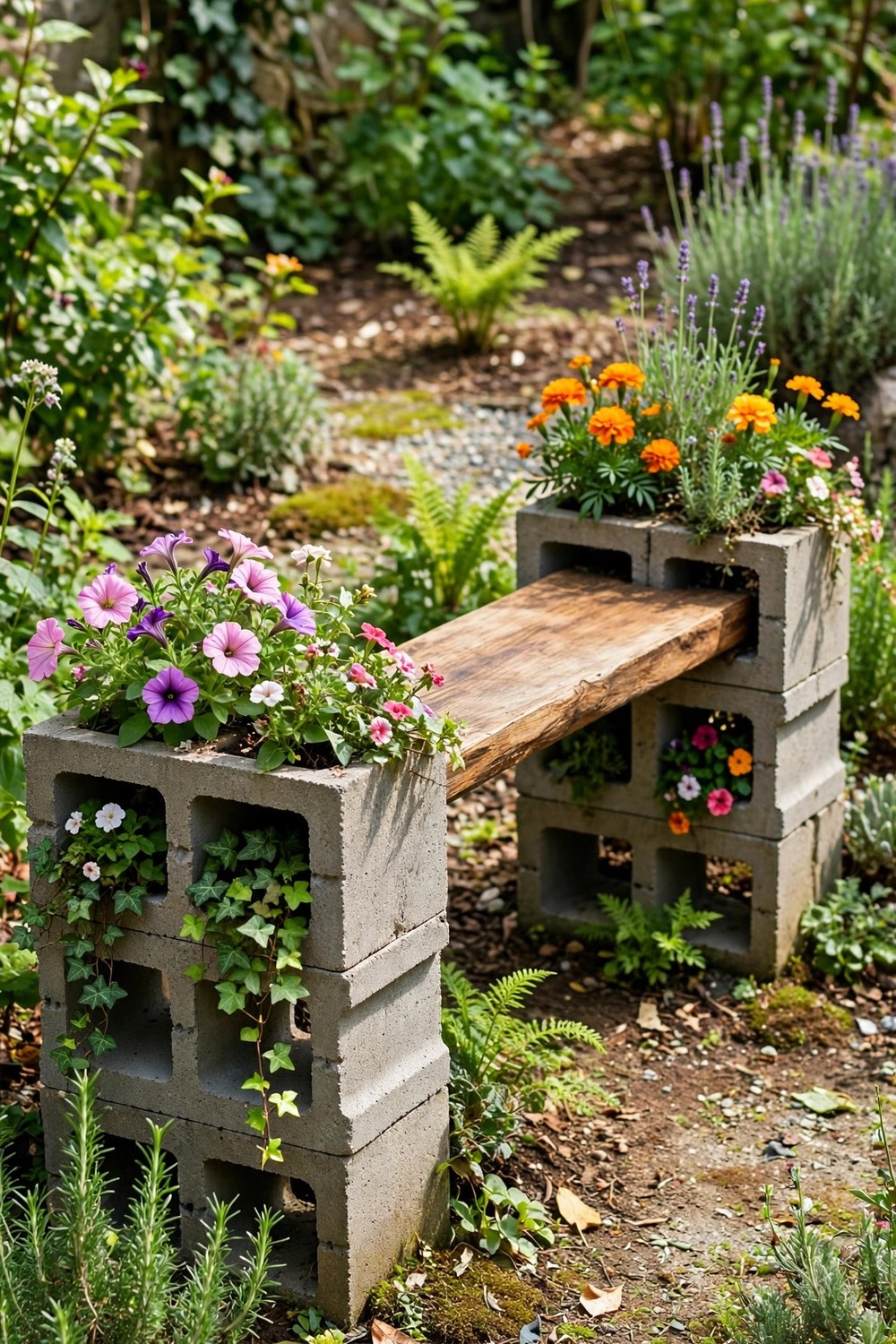
4. Bench With Built In Planter Ends
If you love plants, let your bench hold a few for you. Stack the end blocks a little higher or leave their top openings open, line them loosely, add drainage material, and fill them with soil and compact flowers or herbs. The seat planks rest between those planted ends, so the blooms frame everyone who sits down. Marigolds, petunias, and trailing vines usually do well, but pick plants that match your sun. You’ll need to water a bit more often than beds in the ground, since small pockets dry out faster. It’s a cheerful build for a front porch or a sunny back wall, and it typically softens the gray of the blocks right away. Try sitting in different spots along the seat before you call it done, and shift the cushions until the middle feels just as comfortable and steady as the ends do for everyday use.
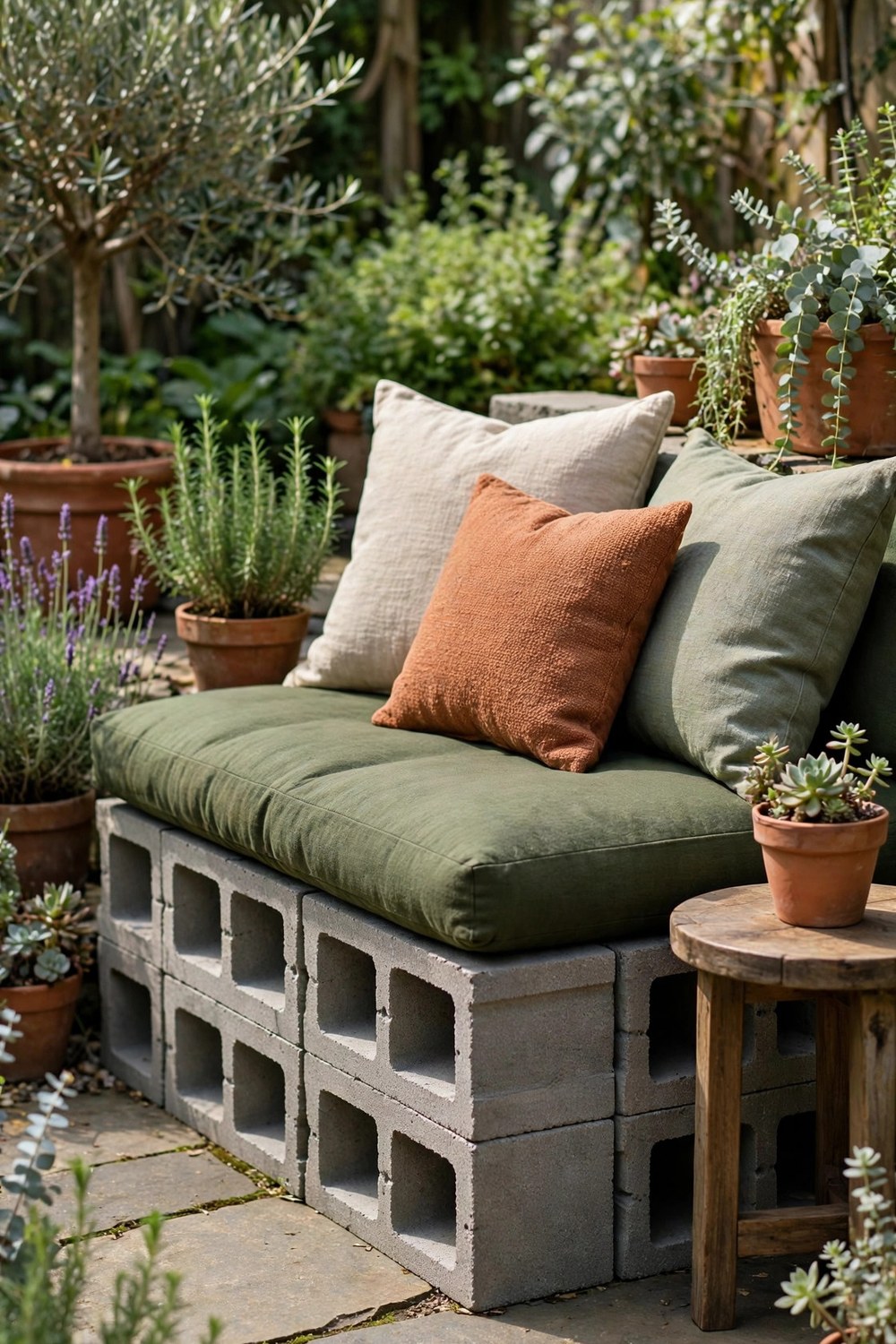
5. Cushioned Patio Lounge Bench
For a patio where you actually want to lounge, go a little deeper than a standard bench. Wider block spacing and broad planks give you room for thick outdoor cushions, and a few large back pillows turn a simple build into a spot where you’ll read for an hour. Choose cushion covers you can wash, because patio seating collects pollen and dust pretty quickly. A low block stack beside it works as a side table for a book or a cold drink. Keep the whole arrangement under a bit of shade if you can, or add an umbrella nearby. It doesn’t look fancy in a formal way, but it’s usually the seat everyone chooses first. On windy days a light throw can blow away, so tuck it into a nearby basket or cubby when you head inside, and your patio will still look tidy when you come back.
Benches for Gathering and Relaxing
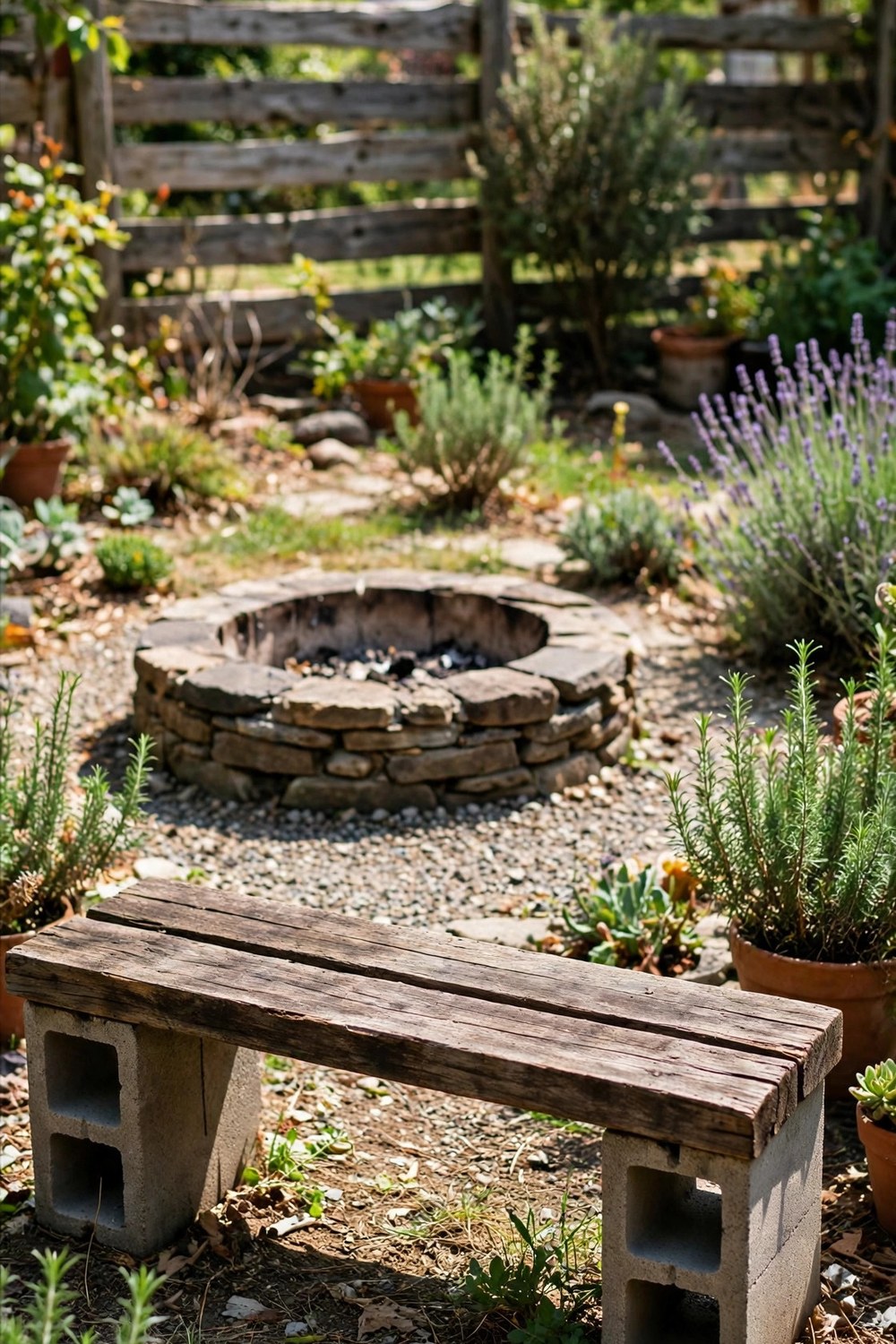
6. Rustic Fire Pit Bench
A straight bench facing a fire pit is simple, sturdy, and ready for long evenings. Place it far enough back that the heat feels pleasant rather than intense, and leave clear walking space behind it. Weathered looking wood pairs nicely with plain blocks, and you don’t need the planks to be perfect. A couple of washable blankets folded over the back are practical when the air cools. Ground that is level and covered with gravel typically helps with drainage and keeps chair legs and bench feet from sinking. Before your first fire, sit on the bench and check the view and the distance again. Small adjustments now usually save you from dragging heavy blocks later. Leave a clear path for carrying food and drinks to the seat, and avoid placing sharp garden tools nearby, because a relaxed gathering spot should always feel easy and safe to reach.
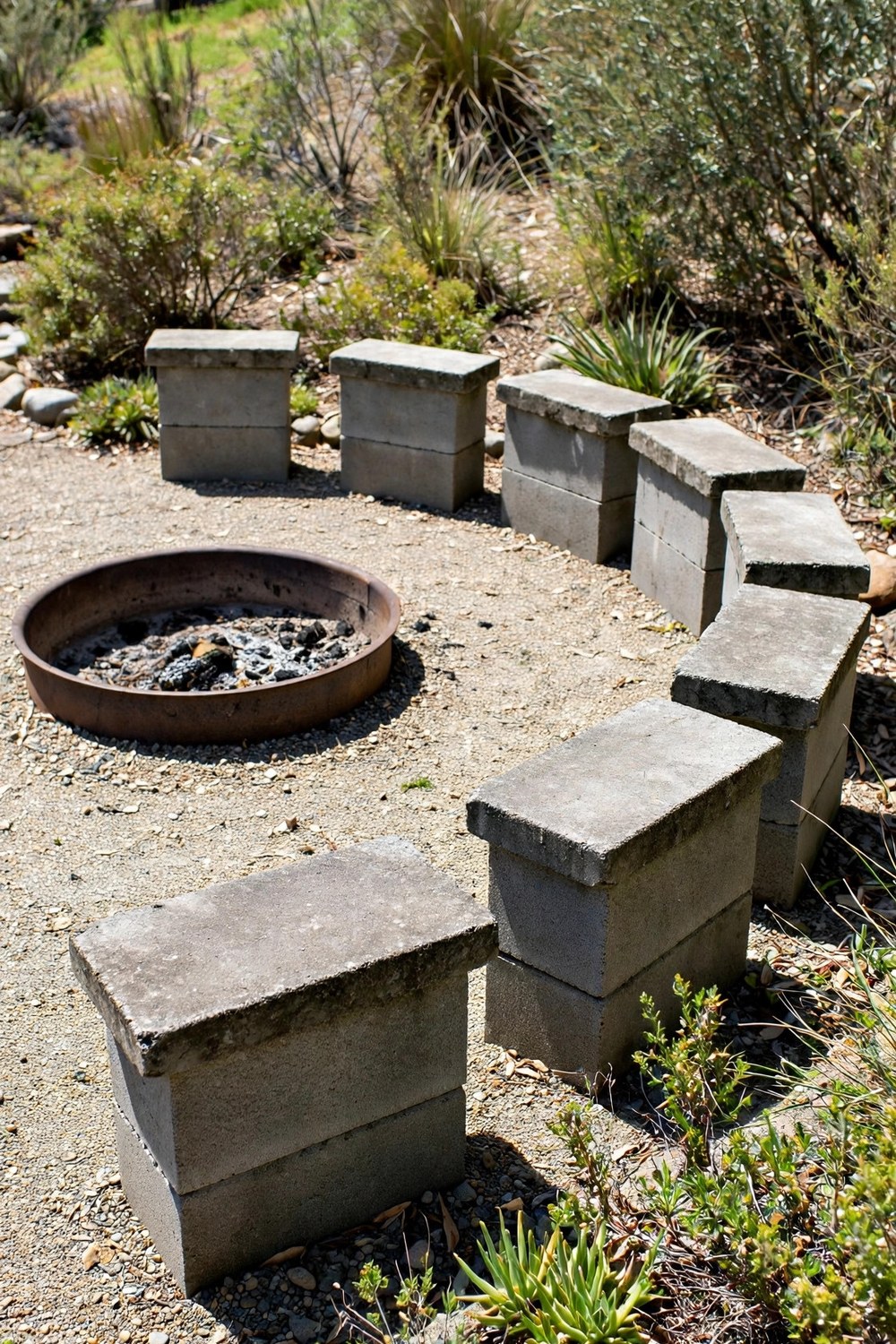
7. Curved Fire Pit Seating
A round fire pit usually feels better with seating that follows its shape, at least a little. Instead of one long bench, build two or three short block benches and angle them around the pit like slices of a pie. Each one is the same easy stack and plank build, just shorter, so the project still stays manageable in a weekend. Leave gaps between them for people to walk through and for air to move. Matching cushions tie the separate pieces together visually. This setup works well when your group size changes, because you can add or move a bench without rebuilding everything. It typically feels more social than a single straight row too. Matching the benches in height keeps the circle feeling calm and balanced, and a shared color for the cushions helps even mismatched wood planks look like they belong together as a set.
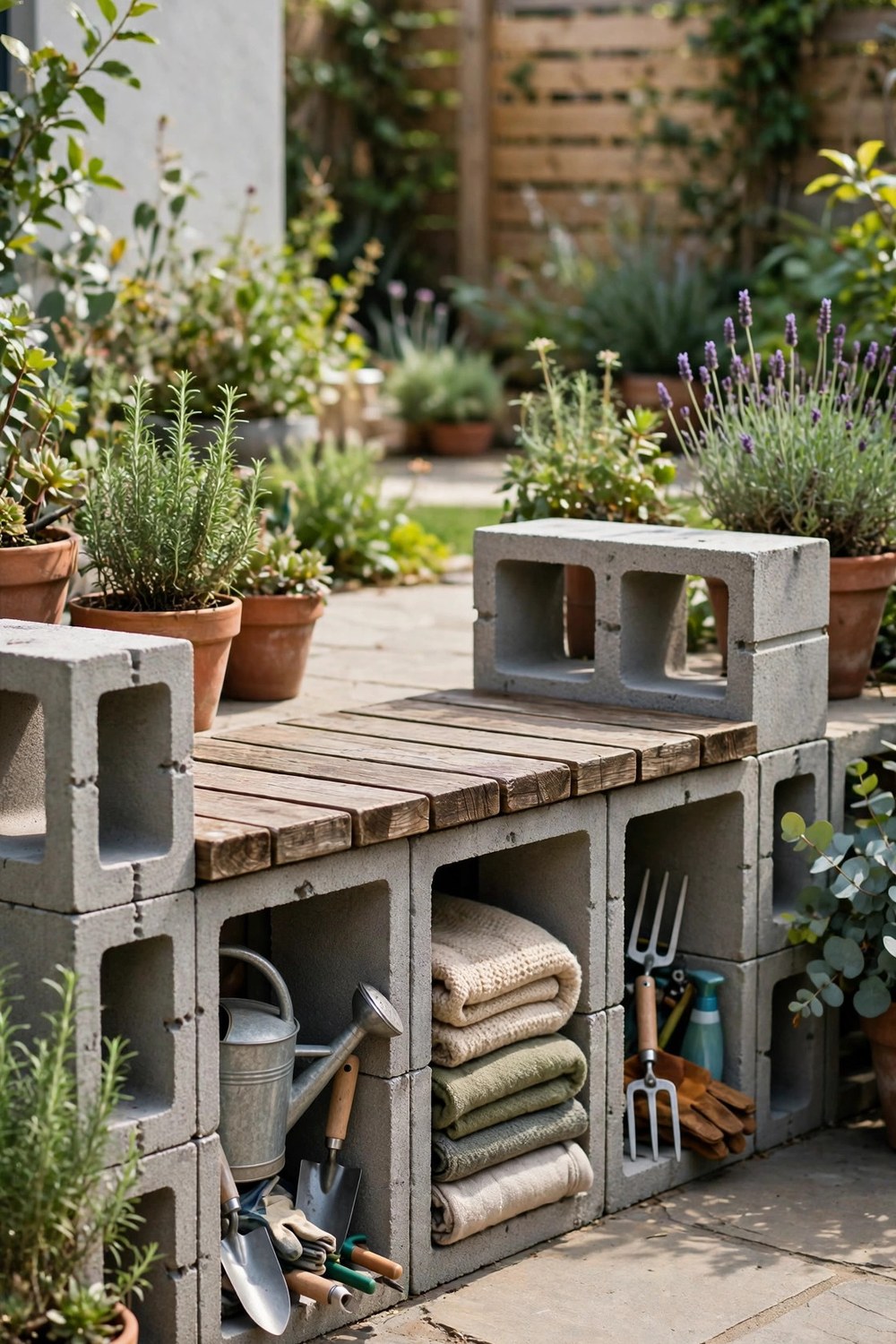
8. Storage Bench With Hidden Cubbies
The openings in cinder blocks are too useful to waste, so turn them outward and use them as cubbies. Face the holes toward the front and you get neat little compartments for garden gloves, small tools, sunscreen, or folded outdoor blankets. A solid plank seat on top keeps the look clean, and small baskets or boxes can slide in if you want things tidier. This works especially well near a vegetable garden or a play area, where small items otherwise end up on the ground. Keep anything that shouldn’t get wet in a sealed container, because the cubbies aren’t waterproof. It’s practical storage that doesn’t need an extra shed or bin taking up space. Label the inside of a few cubbies if kids will use them, and that tiny touch usually helps everyone put things back where they belong instead of leaving them scattered on the seat.
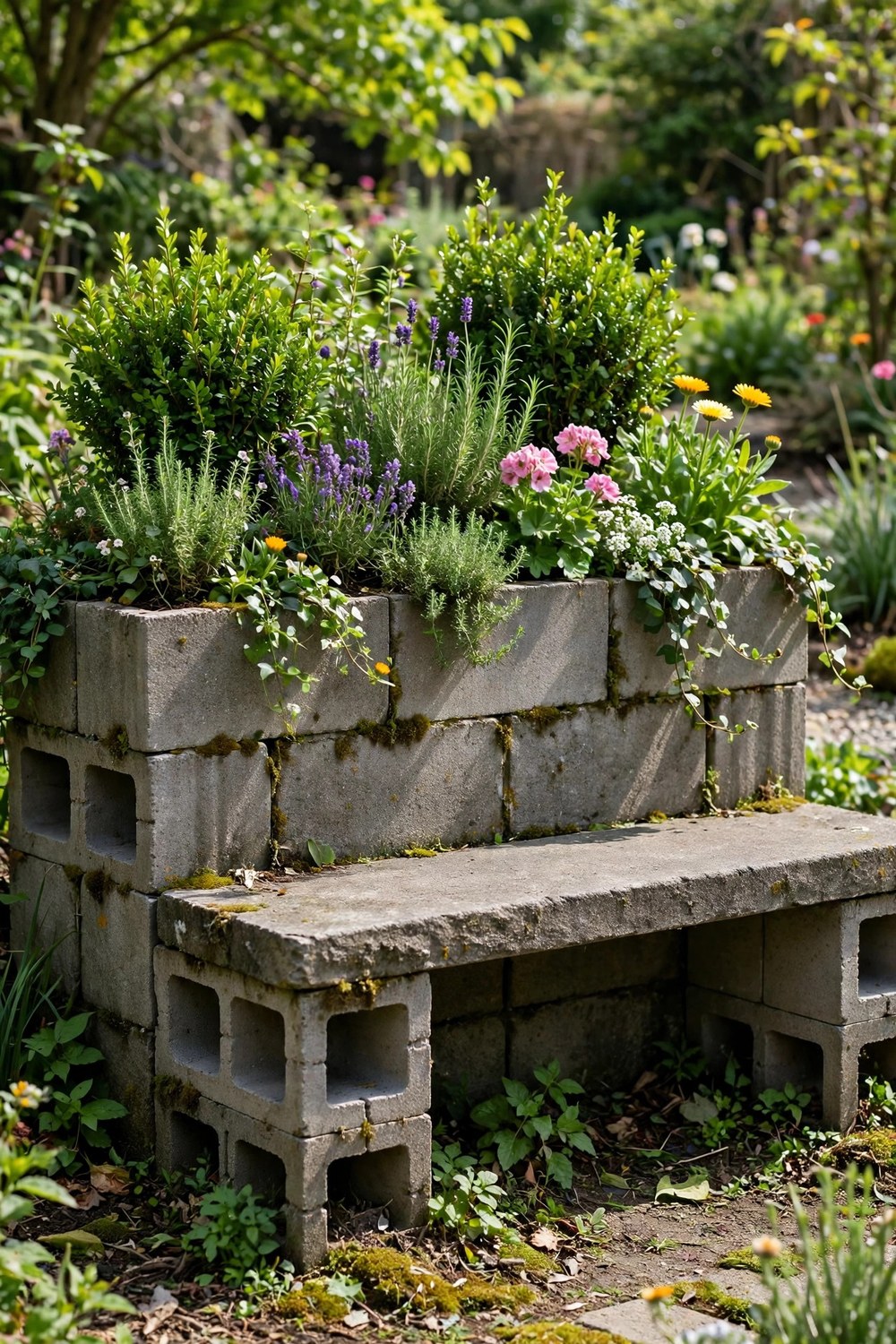
9. Raised Planter Back Bench
Build a low planter wall right behind your bench and you’ll get privacy, greenery, and a sense of enclosure all at once. Stack blocks two or three high for the back, fill the planting pockets and the bed behind with soil, and set your seat planks in front. Taller plants in back and softer trailing plants near the edge usually create a layered look. Be thoughtful about roots and watering, and leave yourself access to tend the bed without climbing over the seat. This is a slightly bigger weekend job, but it’s still very doable in stages. By the second season, the planting typically grows in and the bench feels like part of the garden. Check the planting after heavy rain the first few times, and add a little extra soil if it settles, since fresh beds often sink a bit before the roots and soil firm up.
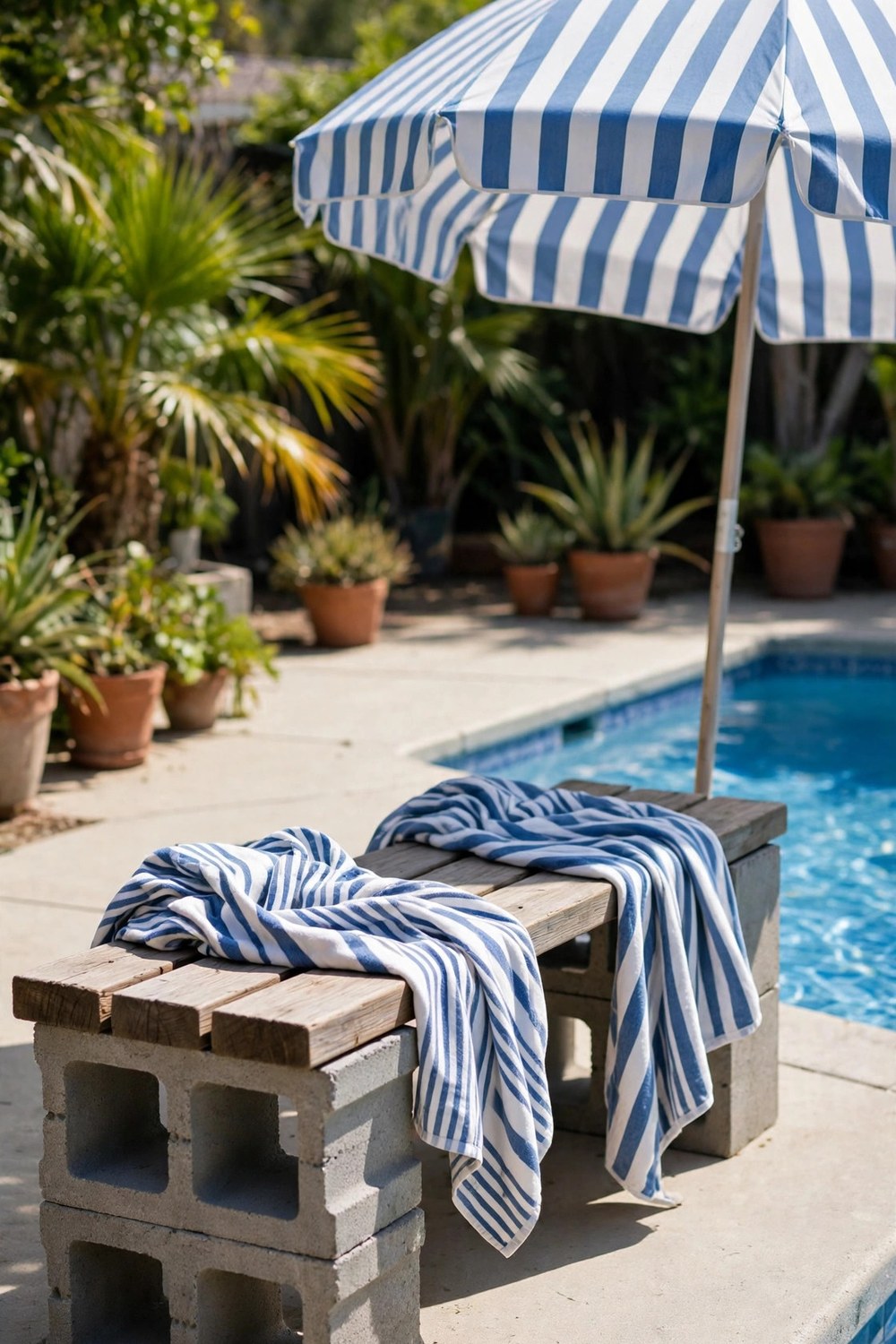
10. Poolside Sun Bench
By a pool, you need seating that doesn’t mind splashes, and blocks handle that beautifully. Build a simple bench on the deck or paved edge, top it with smooth planks or a slatted seat that drains, and keep a few bright towels folded nearby. Avoid placing it where it blocks the path to the water or the gate, because wet feet and tight corners don’t mix well. Light colored cushions usually stay cooler in strong sun, and removable covers make cleanup easier. A small block side stack can hold drinks away from the splash zone. It’s not a delicate piece of furniture, and that’s exactly why it works so well out here. Set a timer for sunscreen and water breaks if you are lounging in strong sun, because a comfortable bench can make an hour pass quickly before you notice how warm it has become outside.
Small Spaces and Everyday Uses
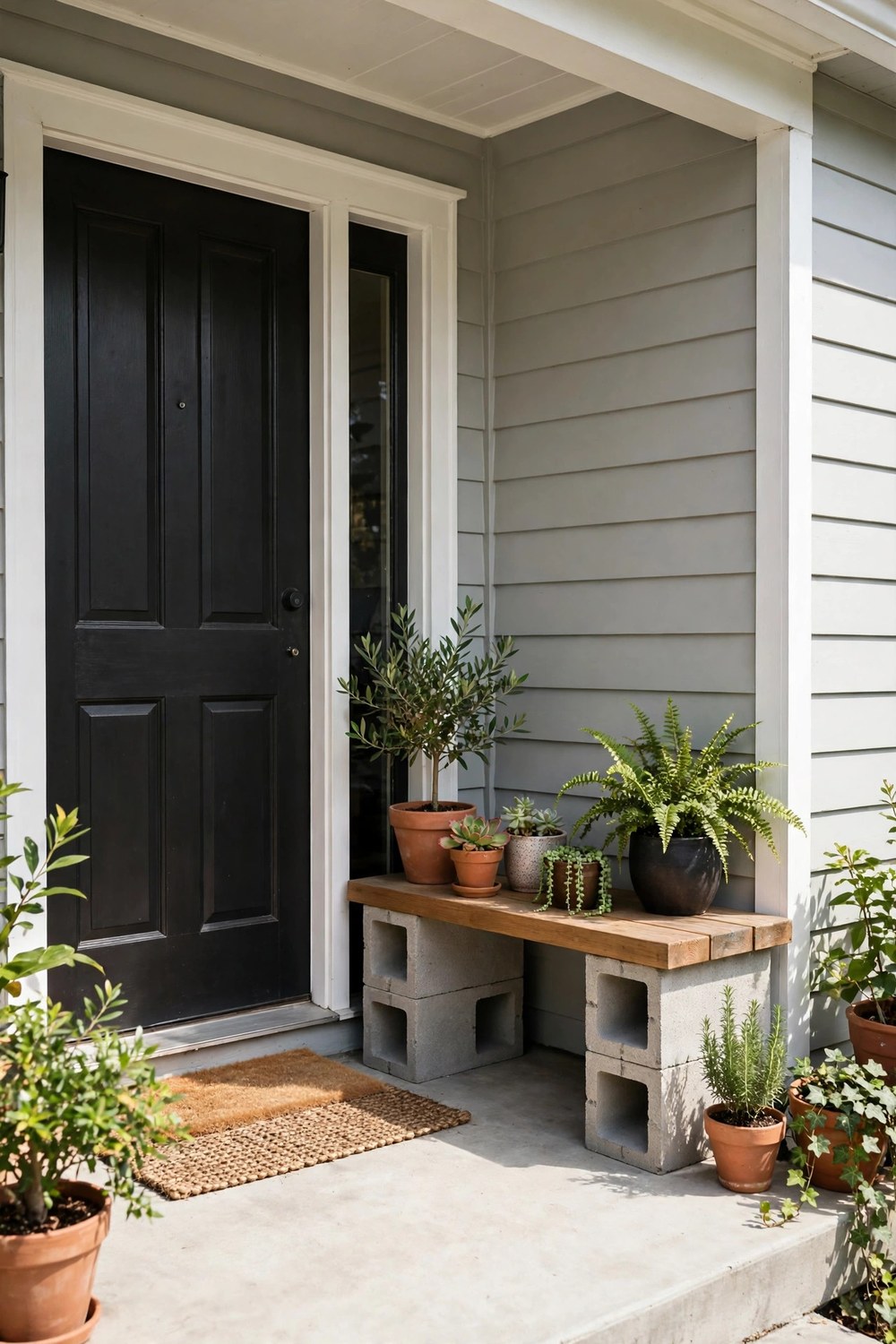
11. Entryway Welcome Bench
A small bench by the front door is one of those things you don’t realize you needed until you have it. It’s where packages land, where you sit to pull on boots, and where a guest waits for a second. A compact two stack build fits most porches, and a painted finish can help it match your door or trim. Add one pot on each side and a simple mat in front to create a tidy welcome moment. Keep the seat clear most of the time so it stays useful, rather than becoming a permanent pile. If your entry is narrow, measure the walkway first and scale the planks down a little. A small hook or basket on the wall beside the bench can hold keys and mail for a minute, which keeps the seat itself clear and makes the entry routine feel calmer every day.
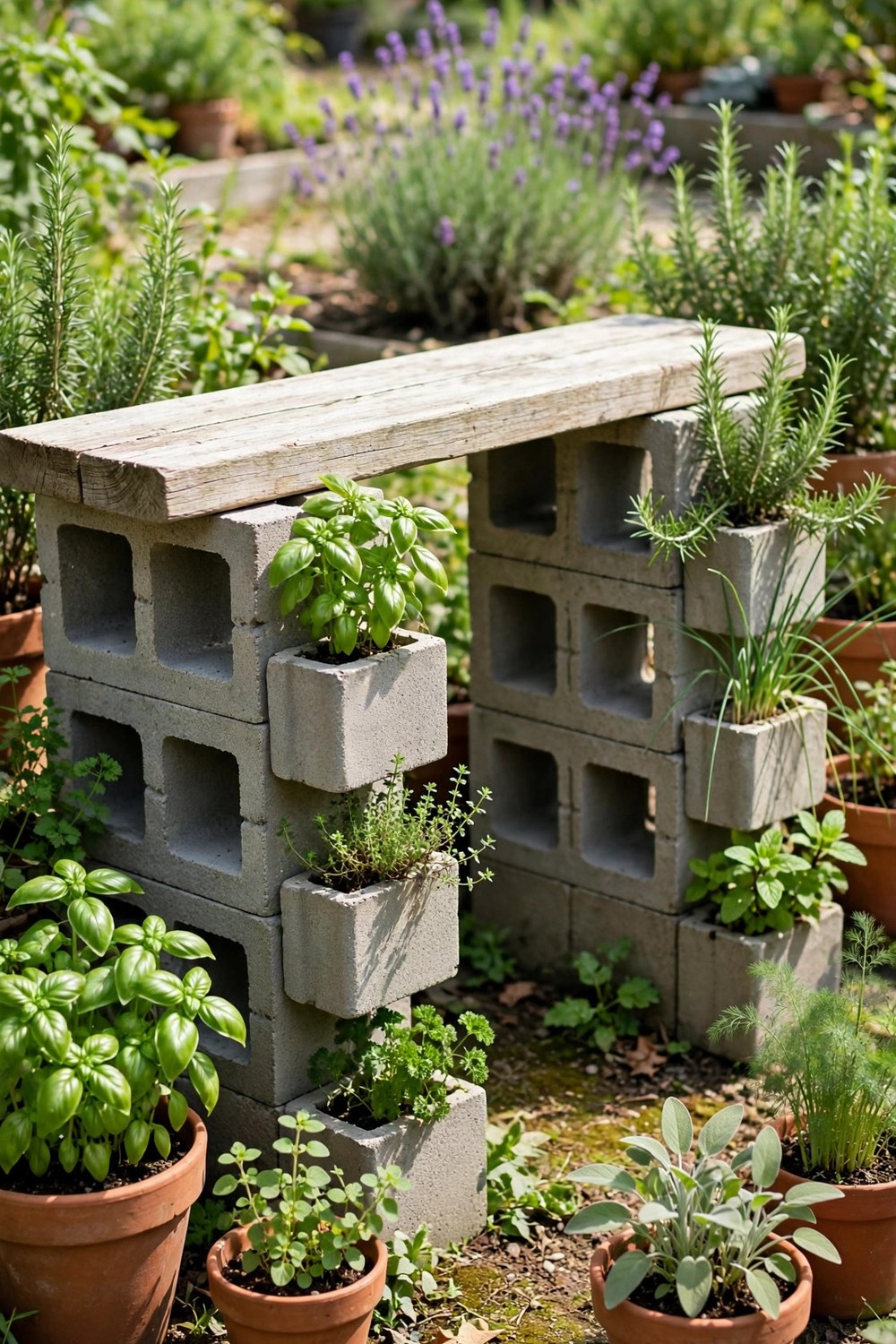
12. Herb Garden Bench
If you cook outside or just love brushing past something fragrant, surround a simple bench with herbs. Plant the block pockets with compact herbs like thyme, oregano, and chives, and set larger pots of rosemary or basil at each end. The bench itself stays basic, which keeps the focus on the green, slightly wild planting around it. Place it where it gets plenty of sun and where you can reach the herbs without stepping into beds. You’ll typically harvest more often when the plants are right beside a seat you use every day. Add a small watering can nearby so a quick drink for the pots becomes part of your routine. Snip herbs in the morning when their flavor is usually strongest, and rinse them gently before you cook, so this pretty planting corner earns its keep at the table as well as in photos.
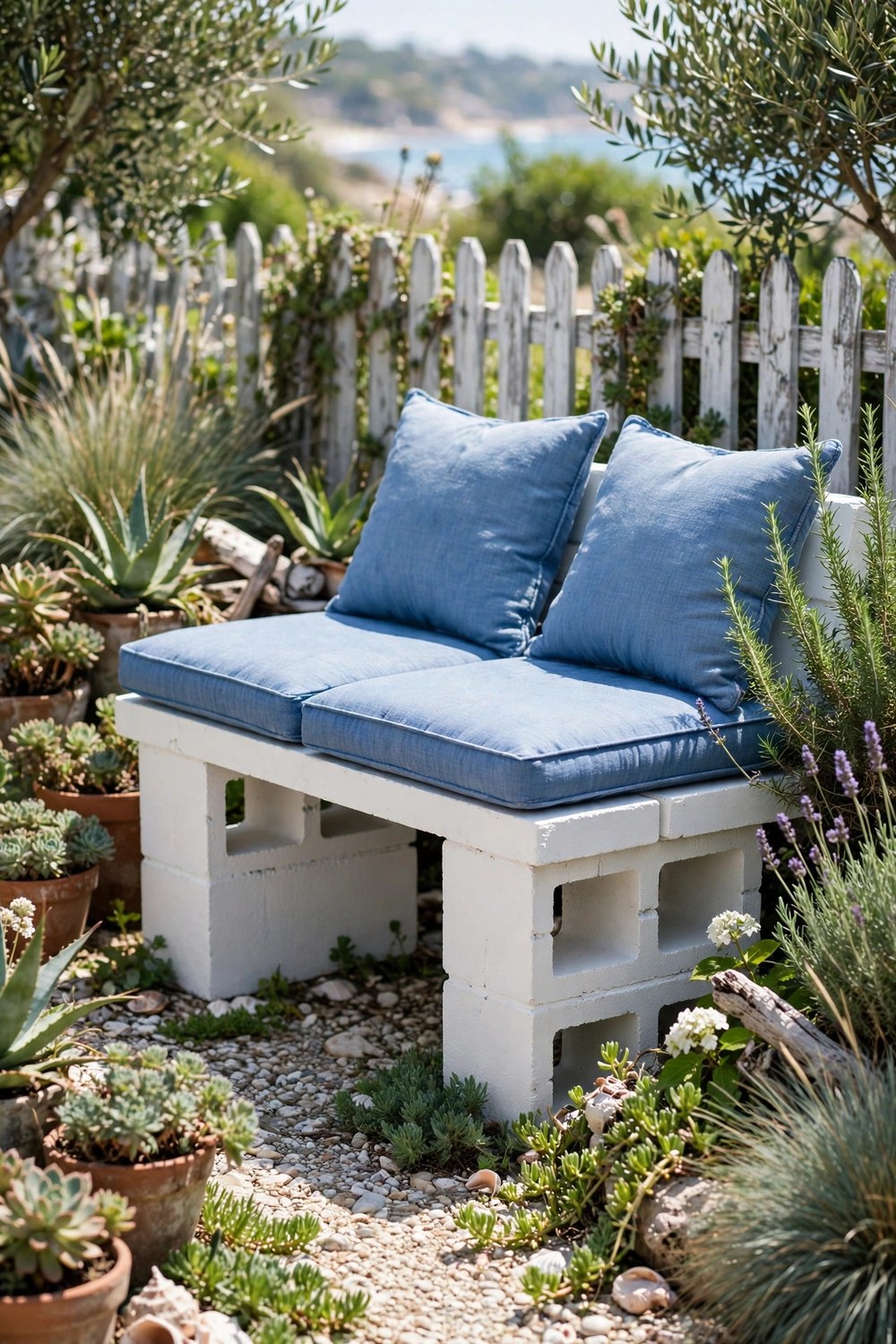
13. Painted White Coastal Bench
Paint changes everything with cinder blocks, and clean white is a favorite for a bright, coastal feeling yard. Use masonry friendly paint, let each coat dry fully, and pair the white blocks with light wood and blue or striped cushions. The result feels fresh even on a very simple build. White does show dirt more quickly, so this style usually suits a paved patio better than a muddy garden corner. A quick rinse now and then keeps it looking good. Add a woven texture through a throw or a basket nearby so the white doesn’t feel stark. It’s a cheerful update if your outdoor space has started to feel a little heavy or dark. Test your paint on the back of one block first and let it dry overnight, because colors often look lighter outside in bright sun than they do on the sample or in store.
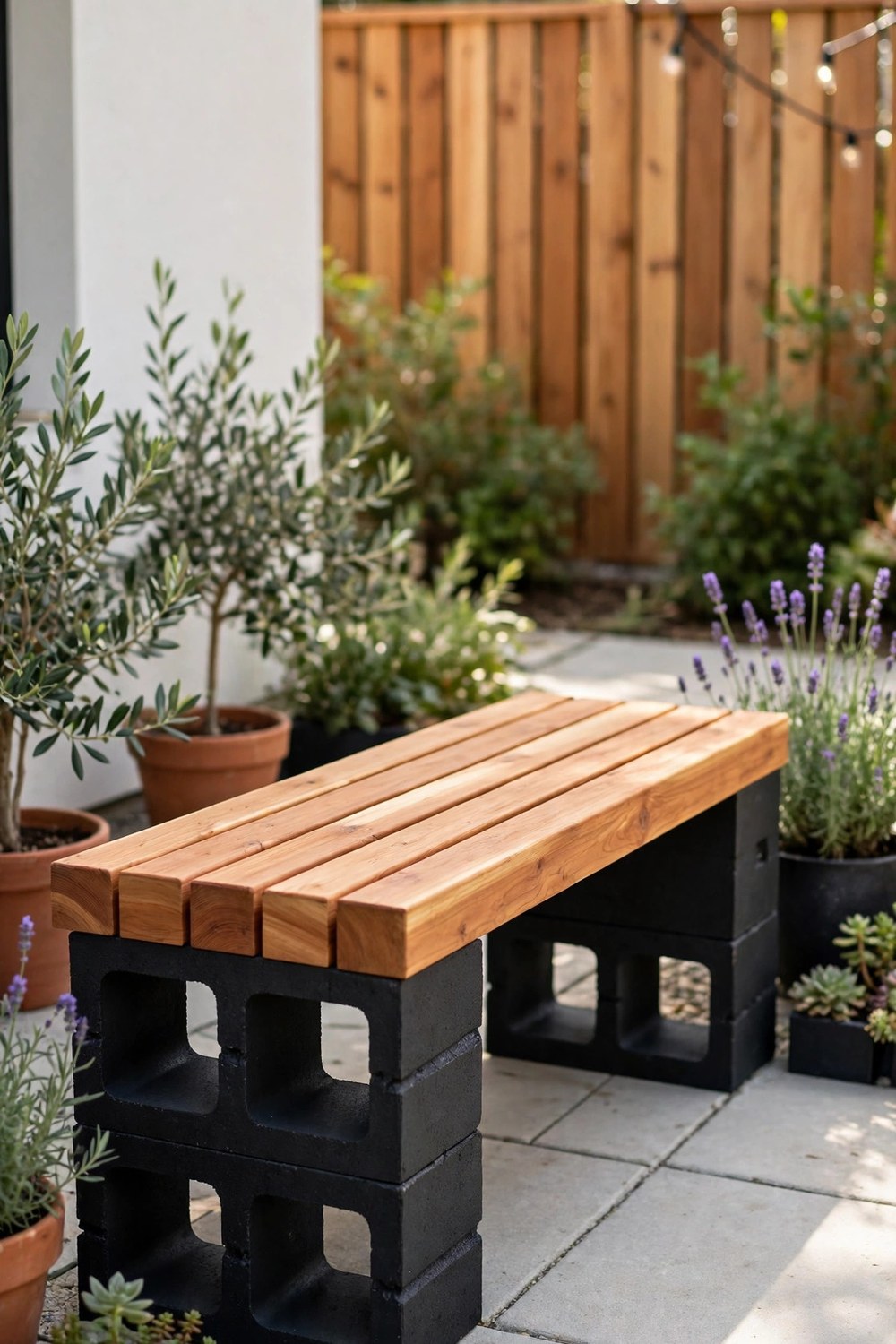
14. Modern Black and Cedar Bench
For a more modern look, paint the blocks a deep matte black and top them with warm toned wood planks. That contrast is strong, simple, and surprisingly forgiving, because black hides scuffs that would show on a lighter color. Keep the lines clean, avoid fussy cushions, and let one or two large pillows in a neutral tone do the softening. This style typically works best against a light wall, a simple fence, or a lot of green planting, where the dark bench reads as a deliberate accent. Seal the wood well so its color stays rich. If your patio already has black fixtures or planters, this bench will usually tie them together without much effort. Wipe the wood with a dry cloth before guests arrive and fluff the pillows, and that two minute reset is usually enough to make the whole corner feel freshly styled again for visitors.
Painted and Styled Finishes
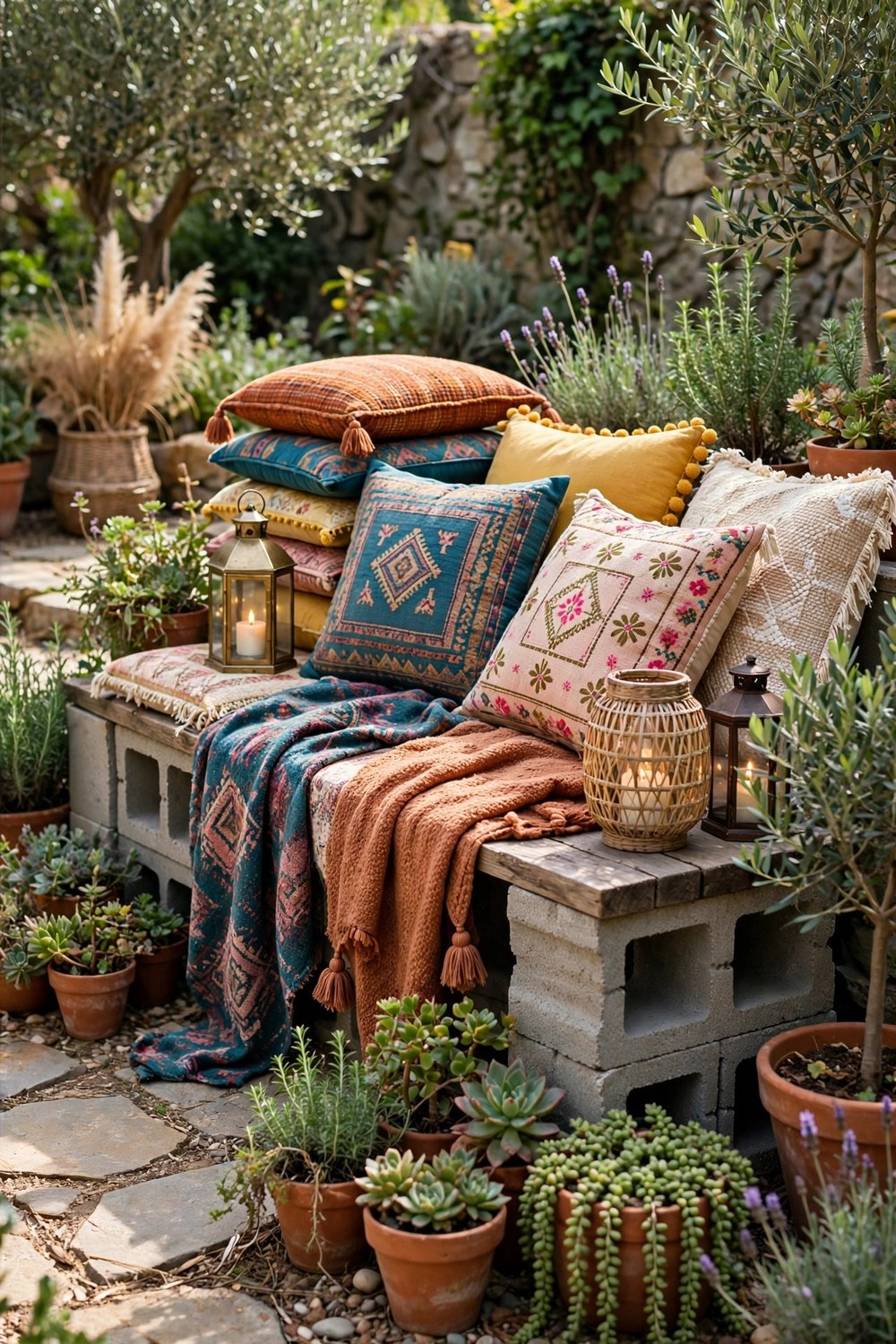
15. Bohemian Cushion Bench
A bohemian style bench is forgiving and joyful, which makes it perfect for a first build that isn’t perfectly square. Start with the basic block and plank frame, then layer it with cushions in mixed patterns, a folded throw, and lanterns or potted plants clustered nearby. The structure can stay plain because the textiles carry the personality. Choose a loose color family so the mix feels intentional rather than messy, and bring delicate fabrics inside when heavy rain is coming. Low seating, floor cushions in front, and a small rug underfoot can extend the hangout area. It’s usually the coziest corner in the yard, and guests tend to settle there and stay awhile. Rotate the cushions every few weeks so fading stays even, and shake them out outdoors to release dust, which keeps the colors looking richer and the seating feeling fresh through the summer months.
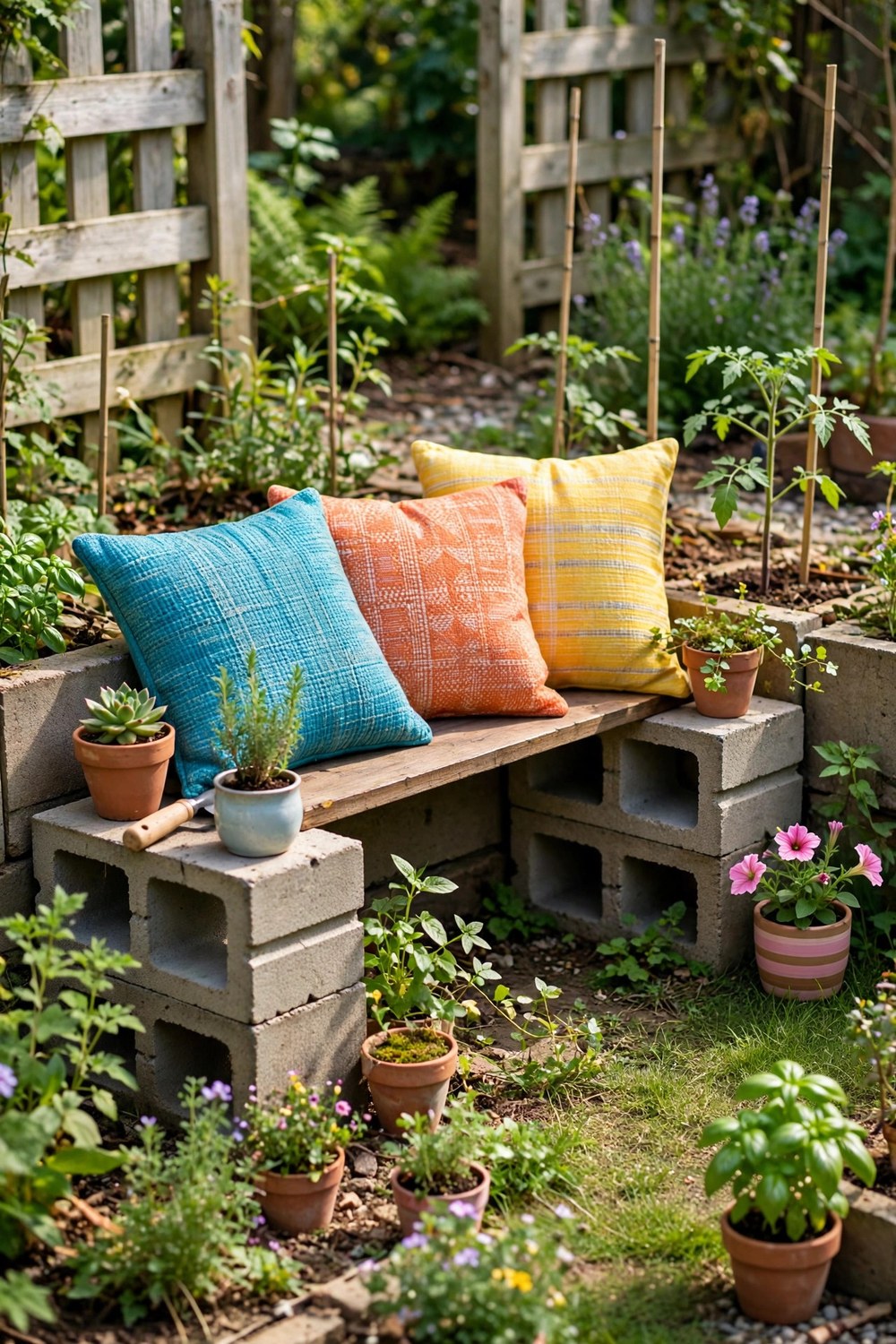
16. Kids Garden Bench
A low, sturdy bench sized for kids gives them a place that is truly theirs in the garden. Build it one block high, use short planks with well sanded edges, and double check that everything is completely stable before little ones climb on. Bright cushion colors and a couple of small pots they can water themselves make it inviting. Place it near a bed where they can watch bugs, shell peas, or read outside without being in the main walkway. Avoid sharp corners on the wood and keep the area underneath clear. As they grow, the same bench typically becomes a plant stand or a garden work seat, so it won’t go to waste. Make a simple rule that shoes stay on the mat beside the bench, and the seat will stay cleaner while kids still feel welcome to climb up, read, and watch the garden from it.
17. Long Farmhouse Table Bench
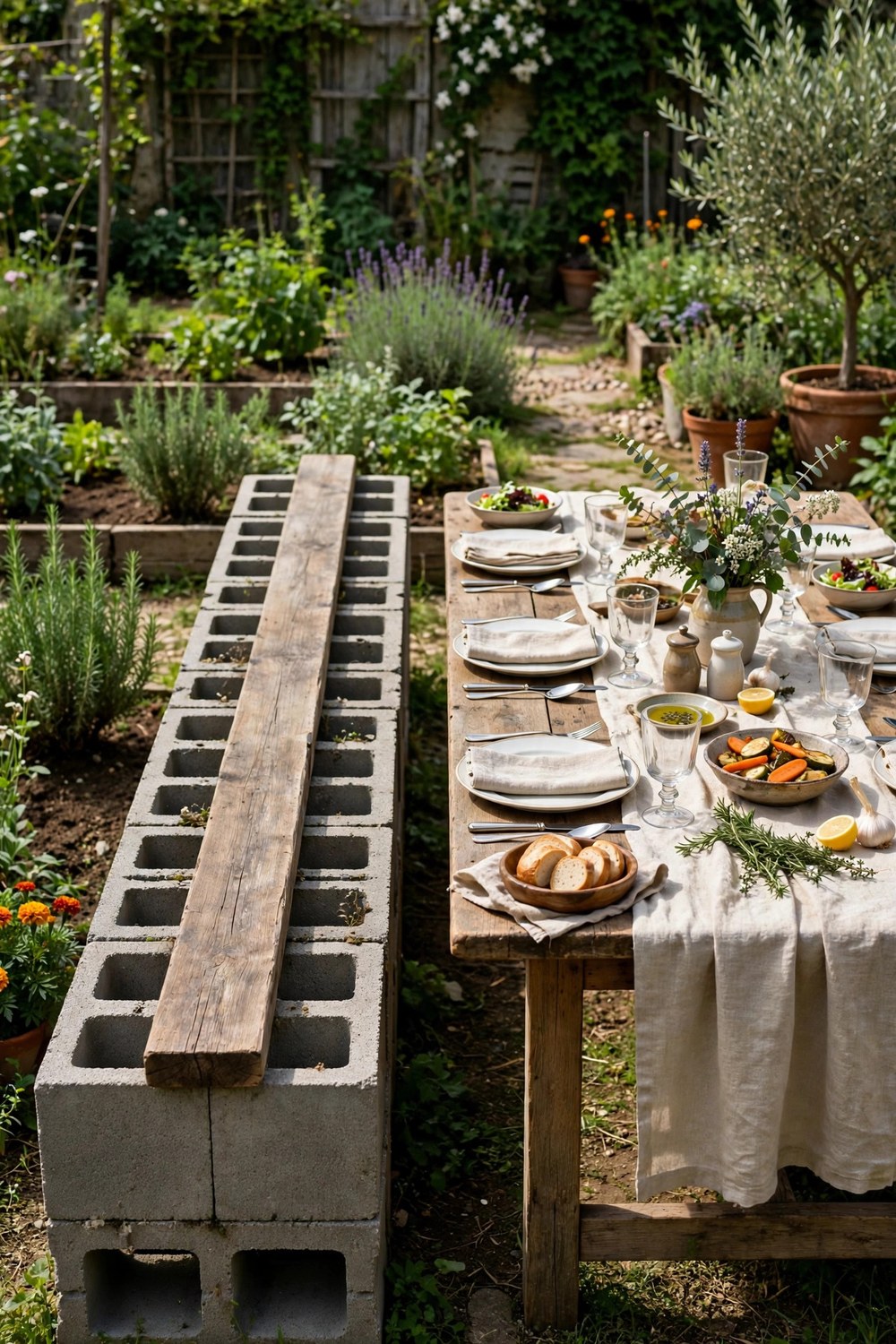
When you host outdoors, a long bench along one side of a dining table seats more people than chairs and tucks away neatly. Support it with three block stacks instead of two, because a longer span usually needs that middle support to avoid flexing. Use thick, smooth planks and leave a little space between boards for drainage. A long washable runner cushion adds comfort during slow meals, and it can come inside easily at night. This bench also works against a fence when it isn’t needed at the table. Just be sure your table height and bench height feel comfortable together before you finalize plank thickness, since a small difference changes how a meal feels. When you are not hosting, this bench can hold potted plants or a stack of outdoor games, so measure that second use too and you will get more value from the same simple build.
18. Tiered Plant Stand Bench
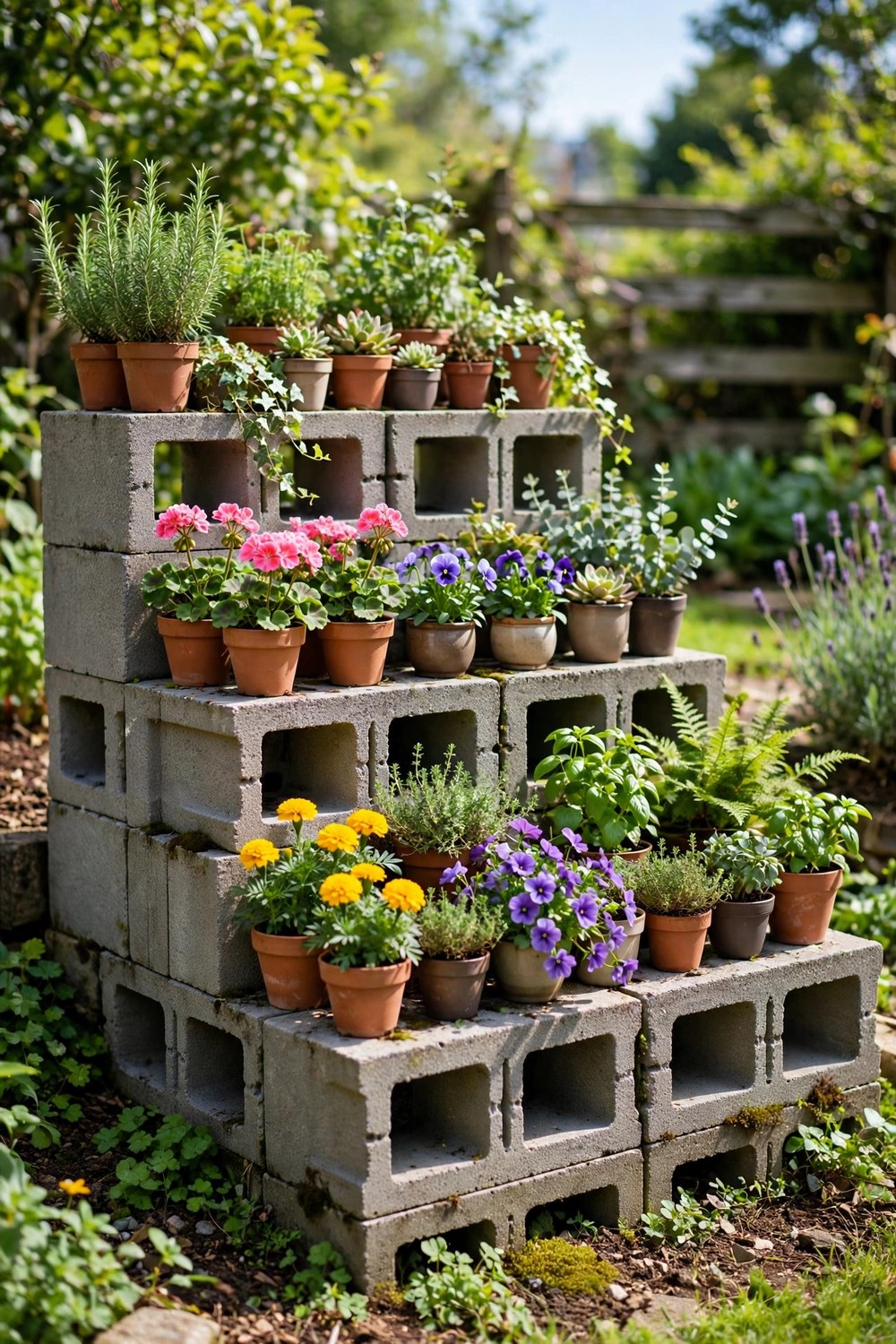
Not every bench has to be for sitting, and a tiered version makes a wonderful plant stand. Stack blocks at different heights, lay planks across each level, and arrange pots so taller plants sit in back and trailing ones hang near the front. The strong frame handles heavy pots that would worry you on a flimsy shelf. Group plants with similar water needs together so care stays simple, and put a tray under any pot that drips onto wood. This is a great solution for a small patio where ground space is tight but you still want a lot of green. You can always clear one level later and turn part of it back into seating. Group pots by color as well as height for a calmer display, and step back from the street or doorway to check the view, because a plant bench is often seen from a distance.
Before You Stack Your First Block
Start with the ground, because every good bench in this list depends on it. Clear the spot, level it as well as you can, and add a compacted gravel or paver base if your soil is soft. Dry fit your blocks and planks before you commit, sit down carefully, and adjust until nothing rocks. If a design will be tall, heavily loaded, or permanent, consider mortar or adhesive and check what is typically recommended for your area. A few extra minutes at this stage usually prevent a wobbly bench all season.
After that, have fun with the finish. Paint, cushions, plants, and a lantern or two can turn plain blocks into a corner you love. Maintain the wood with a fresh coat of finish when it looks dry, rinse the blocks when they get dusty, and store soft furnishings during harsh weather. Your bench doesn’t have to be perfect to be well used and well loved. Build one this weekend, pour something cold, and enjoy the first sit. You’ve earned it.


Leave a Reply