
18 Felt Christmas Tree Ideas Kids Can Actually Touch
Look, we get it. You put up a beautiful real tree with breakable ornaments and twinkling lights, and your toddler hears exactly one thing, which is that the sparkliest toy in the house is now strictly off limits. That is a hard sell for a two year old, and honestly it is a tiring month for everyone if the main job becomes guarding the tree. A felt Christmas tree changes the whole arrangement, because this one tree in the house is theirs to touch, rearrange, and decorate as many times a day as they like.
A felt tree is usually just a soft flat tree that hangs on a wall, plus a set of felt ornaments that stick on with simple contact and peel right off again. There is nothing breakable, nothing sharp, and typically nothing small enough to worry about, so decorating becomes safe, repeatable play instead of a supervised event. Kids can work on it standing at the wall, carry a mini version to the table, or slowly build it day by day through December. It also folds flat when the season ends, which your storage shelves will quietly appreciate.
Below you will find eighteen ideas that cover the main styles, the most loved ornament themes, and a few gentle learning and sensory twists along the way. You certainly do not need all eighteen. Most families start with one good tree and one ornament set, then add a garland, a skirt, or a second theme the following year. Think about your space first, your childs age second, and how much storage you have third, and the right starting point usually becomes pretty clear.
In This Article
- Hang a Wall Felt Tree With Stick On Ornaments
- Choose a Low Toddler Tree With Big Easy Grip Ornaments
- Hang a Doorway Felt Tree for Small Spaces
- Set Up a Mini Tabletop Felt Tree
- Pick a Fold Flat Tree You Can Store in a Drawer
- Dress It Up With Woodland Animal Ornaments
- Add Sweet Treat Ornaments in Candy Colors
- Try a Farmyard Ornament Set for Story Play
- Choose a Rainbow Ornament Set for Color Learning
- Add Dinosaurs and Stars for a Playful Twist
- Turn It Into a Felt Tree Advent Calendar
- Make a Number and Letter Learning Tree
- Add Pockets, Textures and Soft Bells for Sensory Play
- Drape a Soft Felt Garland Across the Branches
- Give Your Felt Tree Its Own Felt Tree Skirt
- Create a Playroom Corner Tree for Everyday Play
- Pack a Travel Felt Tree Kit for Trips and Visits
- Build a Cozy Storybook Nook Around Your Tree
Start With a Wall Tree That Welcomes Little Hands
The best felt tree is simply the one your child is allowed to touch as much as they like. These first ideas cover the main styles, from the classic wall tree to tiny tabletop and travel friendly versions, so you can match the tree to your space, your storage, and your childs age before you fall in love with any particular ornament set.
1. Hang a Wall Felt Tree With Stick On Ornaments
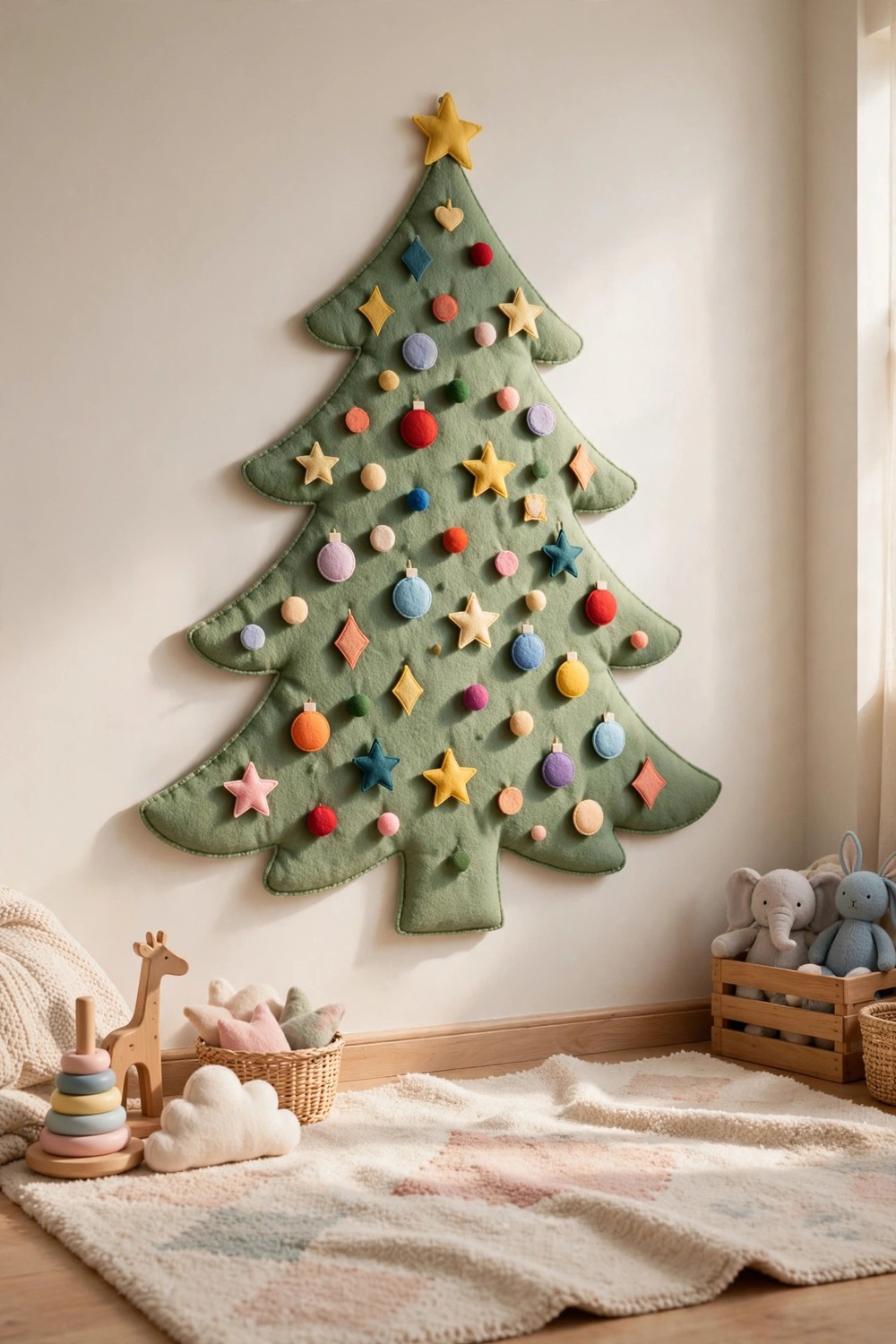
This is usually the felt tree most families start with, and it is easy to see why. A big soft triangle of green felt hangs flat on the wall at toddler height, and a pile of felt ornaments sticks on and peels off wherever little hands decide they belong. There is nothing to shatter, nothing to swallow, and no right way to decorate it, so a two year old can move the same star ten times in one morning and feel proud every single time. Hang it with removable strips or small loops so it sits flush and does not flap, and keep the lowest branches right at your childs reach. Typically the tree goes up in minutes and folds away just as fast in January. Start with fewer ornaments than you think you need, add a few each week, and the tree will feel new again and again without costing you anything extra.
2. Choose a Low Toddler Tree With Big Easy Grip Ornaments
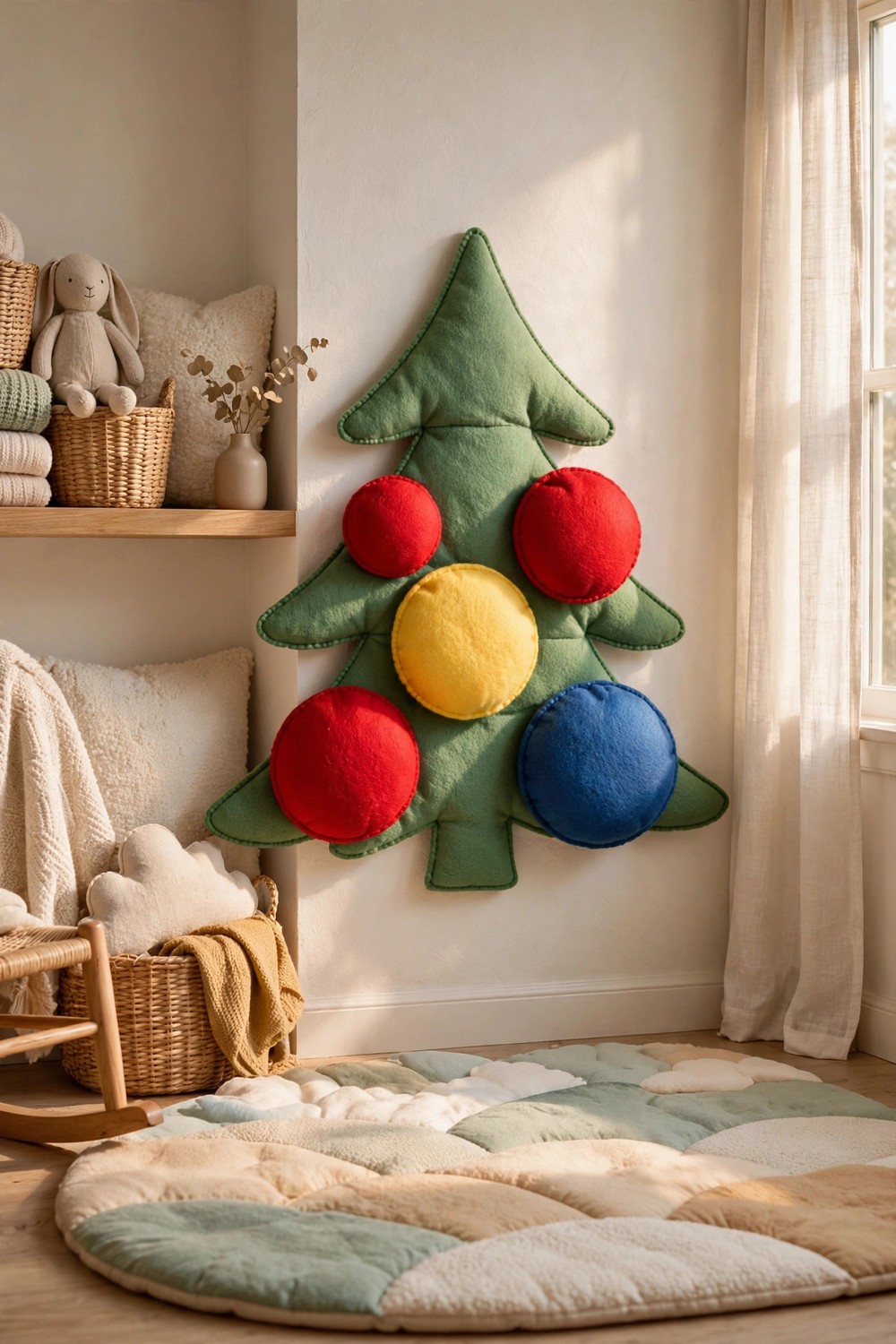
If your child is still in the wobbly standing stage, a shorter tree mounted lower on the wall usually works much better than a tall one. Look for ornaments that are chunky, stitched firmly, and big enough for a whole fist to grab, because those are the ones that actually get used instead of dropped and forgotten. Big circles, plump stars, and simple rounded shapes are typically the easiest for young toddlers to press on and pull off by themselves. Keep the tree low enough that your child can reach the top star while standing flat footed, since reaching on tiptoe tends to end with the whole tree getting a firm tug. A low tree also turns decorating into a squat, stand, and shuffle game, which is quietly lovely for balance practice. You can raise the same tree a little higher next year, so it grows with them instead of being outgrown.
3. Hang a Doorway Felt Tree for Small Spaces
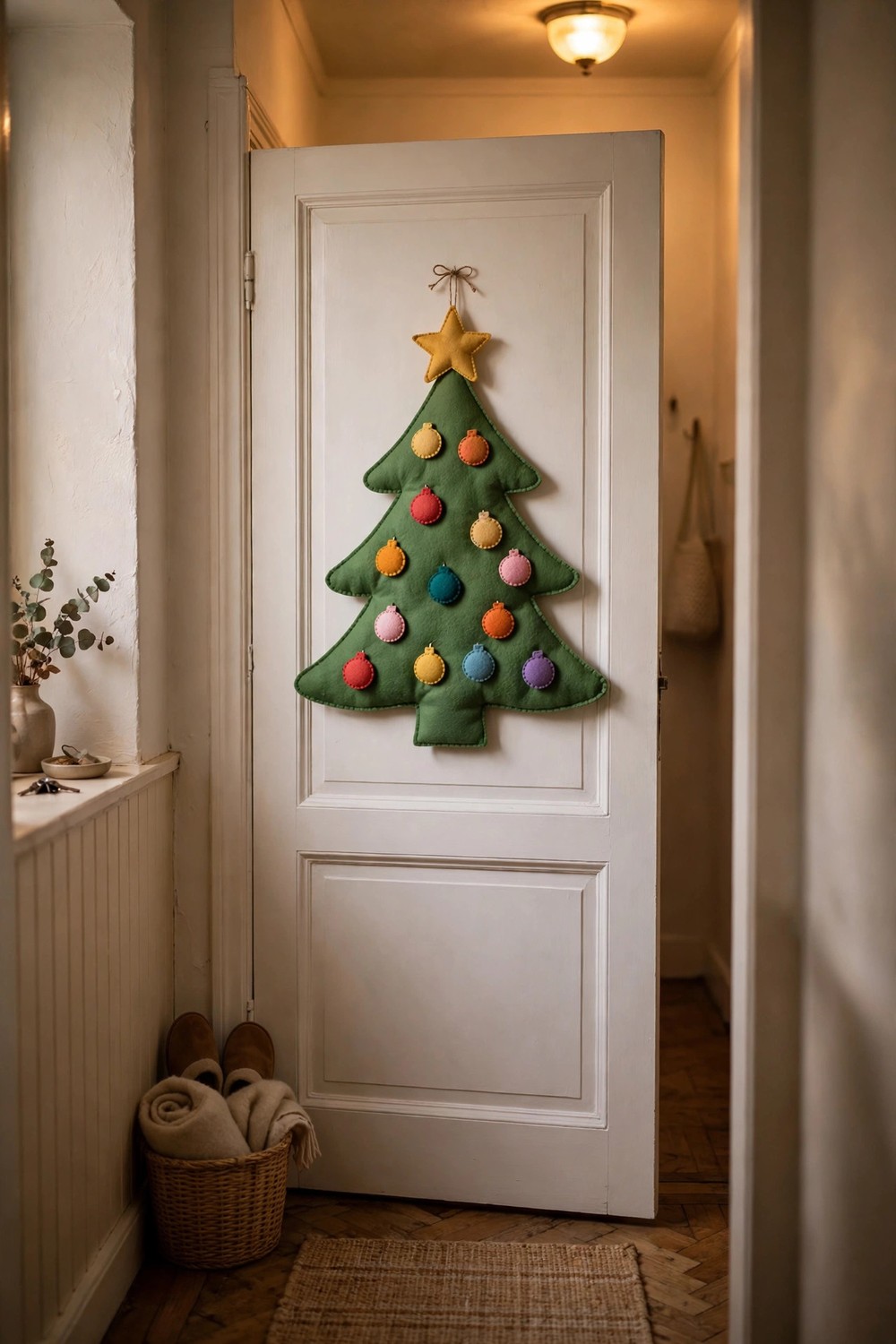
Not every home has a spare wall, and that is exactly where a doorway felt tree earns its keep. It hangs on the back of a door or over a door frame, flat and soft, so it adds all the decorating fun without taking up a single bit of floor. This version is especially handy in apartments, small nurseries, and shared bedrooms where the real tree already fills the one good corner. Use a door that does not slam often, and check that the hanging loops do not pinch the frame when it closes. Typically felt this thin swings a little as the door moves, which most kids find hilarious rather than annoying. Ornaments with a strong stick tend to stay put through gentle opening and closing. At night you can take the whole thing down in seconds if the door needs to move freely, then pop it back up after breakfast.

4. Set Up a Mini Tabletop Felt Tree
A mini tabletop felt tree is the version kids can carry, and that changes everything about how it gets played with. These little trees usually stand on a soft cone or a flat base, sit about as tall as a water bottle, and come with tiny ornaments sized for small fingers. Your child can decorate it at the kitchen table while you cook, move it to a bedroom shelf, and bring it along to the couch for movie night. Because it is small, it also feels manageable for children who get overwhelmed by a big wall tree with dozens of pieces. Typically one mini tree and eight or ten ornaments is plenty for a satisfying session. Watch that the base is sturdy enough not to tip every time an ornament gets pressed on hard, since wobbling tends to frustrate younger kids. A slightly weighted or wide base usually solves that in one go.
5. Pick a Fold Flat Tree You Can Store in a Drawer
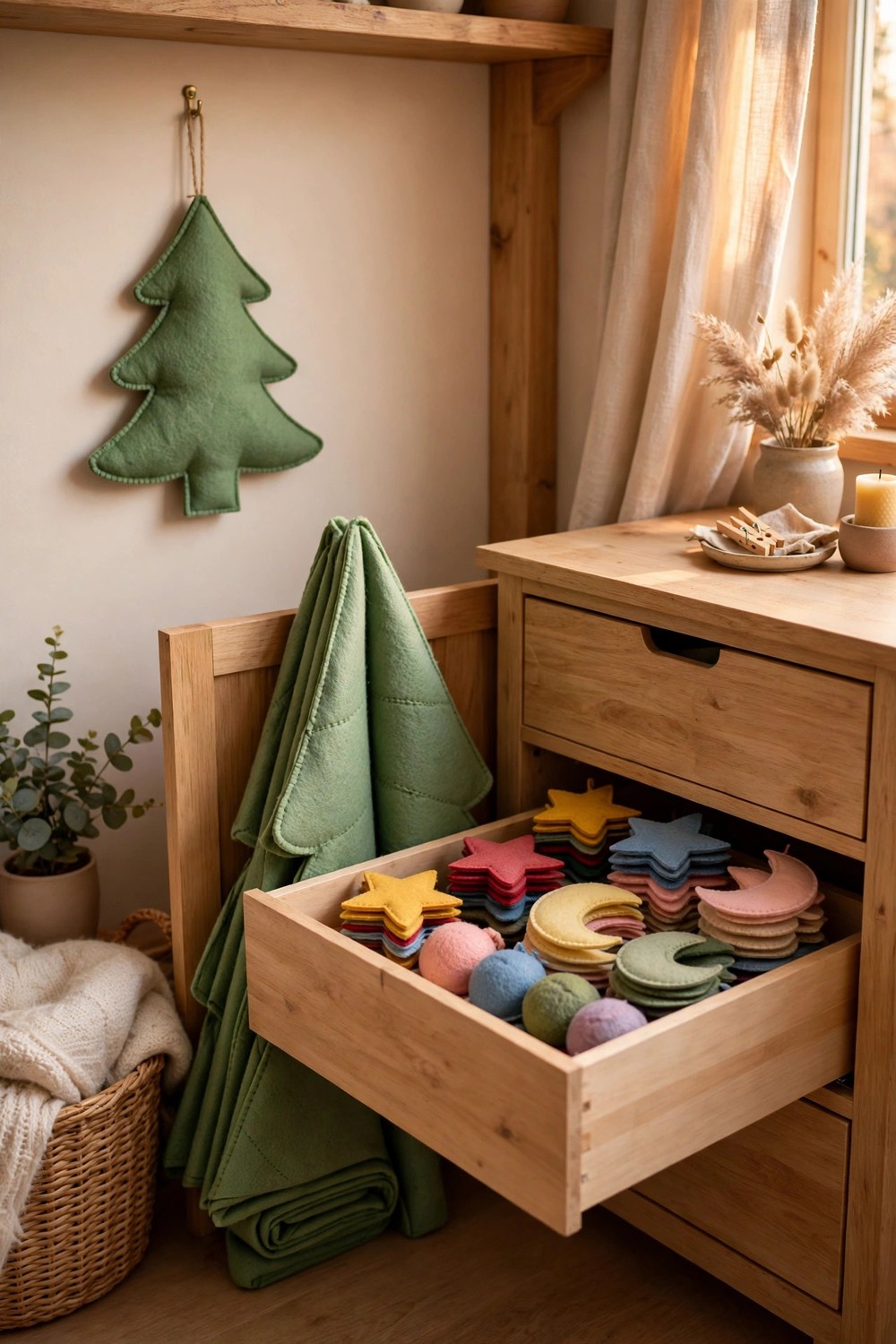
Storage is the unglamorous part of every holiday decoration, so a fold flat felt tree is a genuinely smart pick for smaller homes. The tree itself is just soft felt, the ornaments are just soft felt, and the whole set usually slips into a drawer, a tote, or even a large envelope between seasons. Nothing gets crushed, nothing needs its own plastic bin, and you will not find a stray ornament rolling around in July. When you unpack it, a quick hang on the wall smooths out most creases, and any stubborn fold lines typically relax within a day or two. This is also the style that travels well to grandparents houses, since it weighs almost nothing in a suitcase. Label the envelope clearly when you put it away, because a flat green triangle is surprisingly easy to lose among wrapping paper and ribbons. Future you will be very grateful for that one small note.
Add Themed Ornaments That Tell a Story
Once the tree itself is sorted, the ornaments decide what kind of play happens around it. Themed sets give children characters, colors, and little stories to act out on the branches, and swapping a set is usually the cheapest way to make an old tree feel brand new again.
6. Dress It Up With Woodland Animal Ornaments
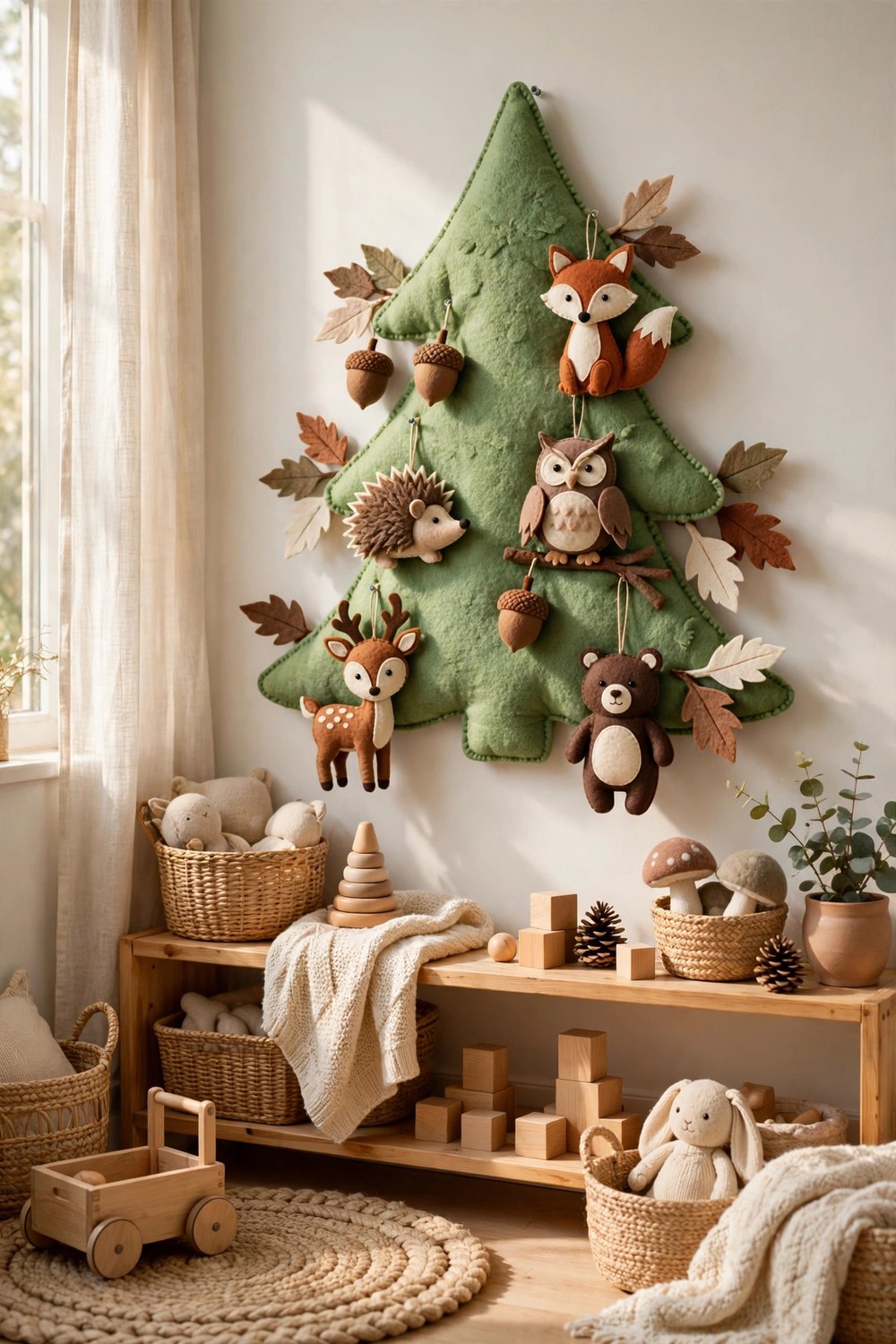
Woodland animal ornaments turn decorating into storytelling, and that is usually when a felt tree holds attention the longest. Think a soft fox, a round owl, a hedgehog, a deer, and a little bear, each in warm rust, cream, and brown tones that look lovely against deep green felt. Kids tend to give the animals names, arrange them as families, and move them around the branches as if the tree is a little forest neighborhood. That kind of play stretches far beyond Christmas morning, which is exactly what you want from a decoration you bought for a toddler. Mix the animals with simple felt acorns, leaves, and stars so the tree still reads as festive. Typically a set of eight to twelve pieces is enough to fill a wall tree without looking crowded. If your child has a favorite animal, let that one live at the very top for a while.
7. Add Sweet Treat Ornaments in Candy Colors
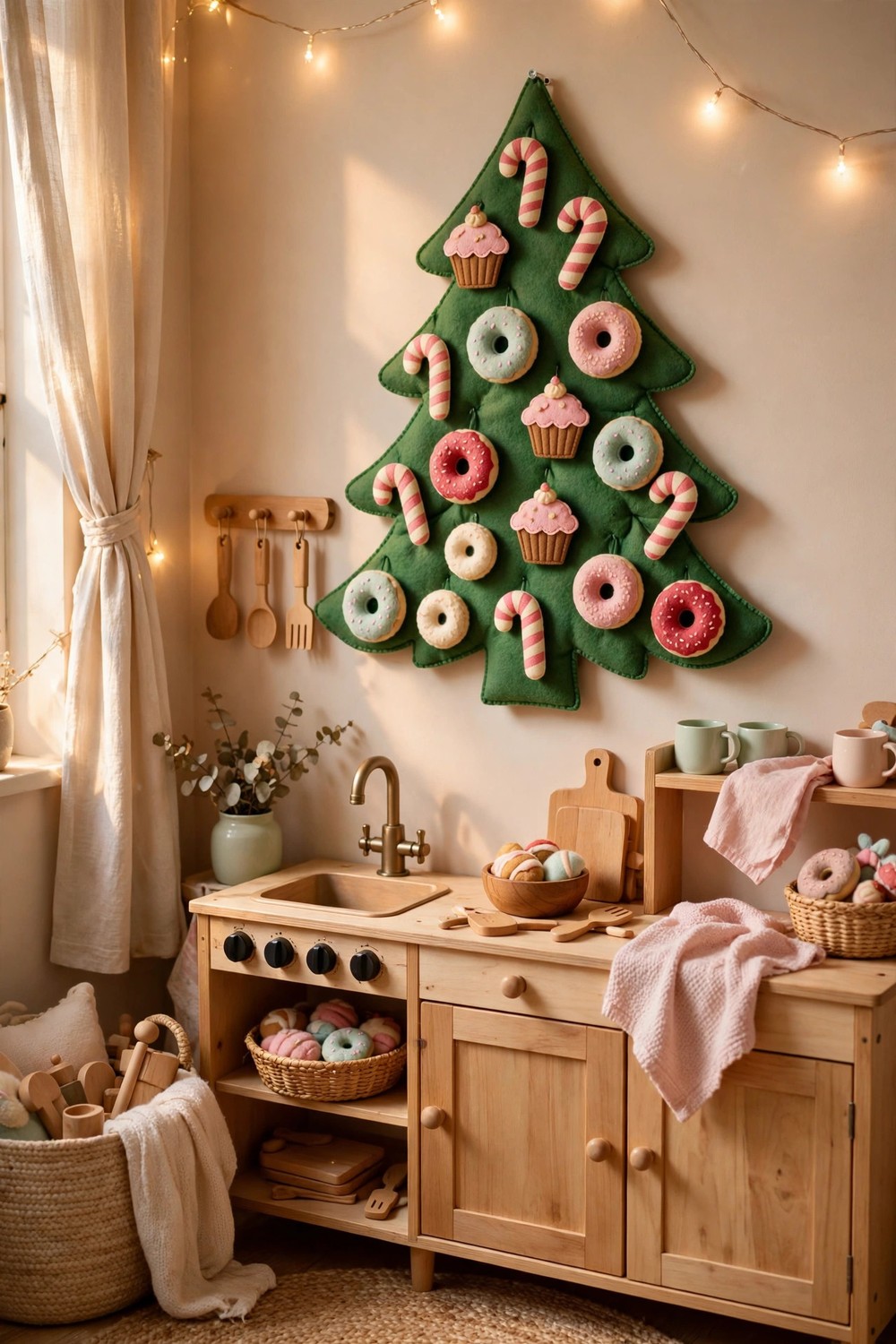
A treats themed set is pure joy to look at, and it tends to be the one visitors ask about. Felt candy canes, gingerbread shapes, cupcakes, donuts with stitched sprinkles, and little mugs of cocoa in pink, mint, red, and cream give the tree a playful bakery feel that suits a play kitchen corner beautifully. Kids usually sort these by color first, then by favorite pretend flavor, then start taking imaginary orders from anyone nearby. Because the shapes are so recognizable, this set also works well for simple naming and matching games with younger toddlers. Keep the palette soft rather than neon so the tree still feels cozy next to your other holiday decor. Typically treats pair best with a few plain round ornaments mixed in, which gives busy patterns a little breathing room. It is a sweet theme in every sense, and it photographs adorably for holiday cards too.
8. Try a Farmyard Ornament Set for Story Play
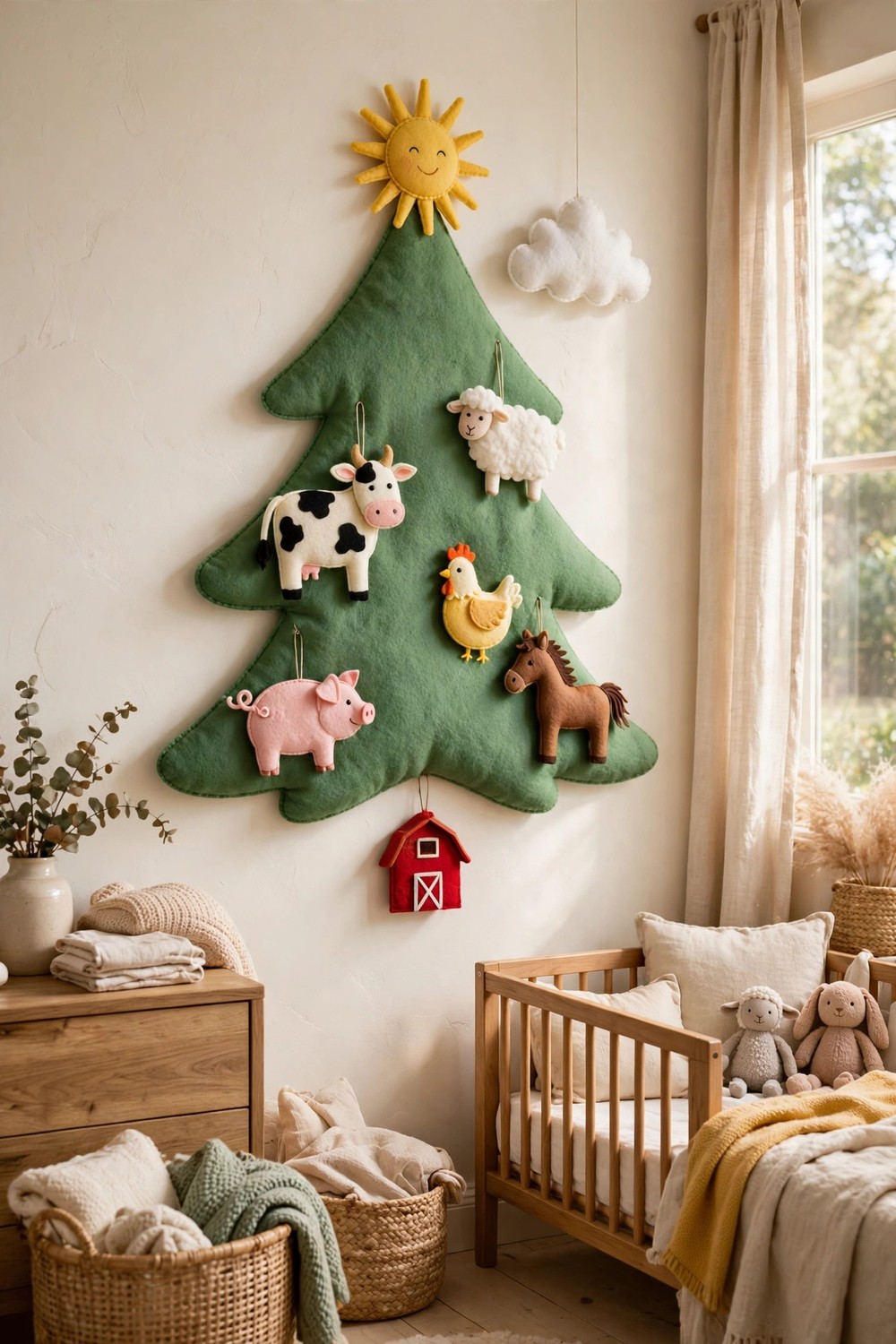
Farmyard ornaments bring a whole different kind of play to the tree, especially for kids who already love animal sounds and barnyard books. A felt cow, pig, chicken, sheep, horse, and a little red barn give children a ready made cast, and the tree becomes the farm fence they all gather around. Expect a lot of mooing during decorating, and honestly that is half the charm. This theme usually works best when you lean into it fully, adding a felt sun, a cloud, and maybe a tiny tractor so the scene feels complete. Kids who are learning animal names get gentle practice every time they hang a piece, without it ever feeling like a lesson. Typically farm sets use brighter primary colors, so they pop nicely on both green and paler felt trees. Pair it with a favorite farm story at bedtime and the tree becomes part of the routine.
9. Choose a Rainbow Ornament Set for Color Learning
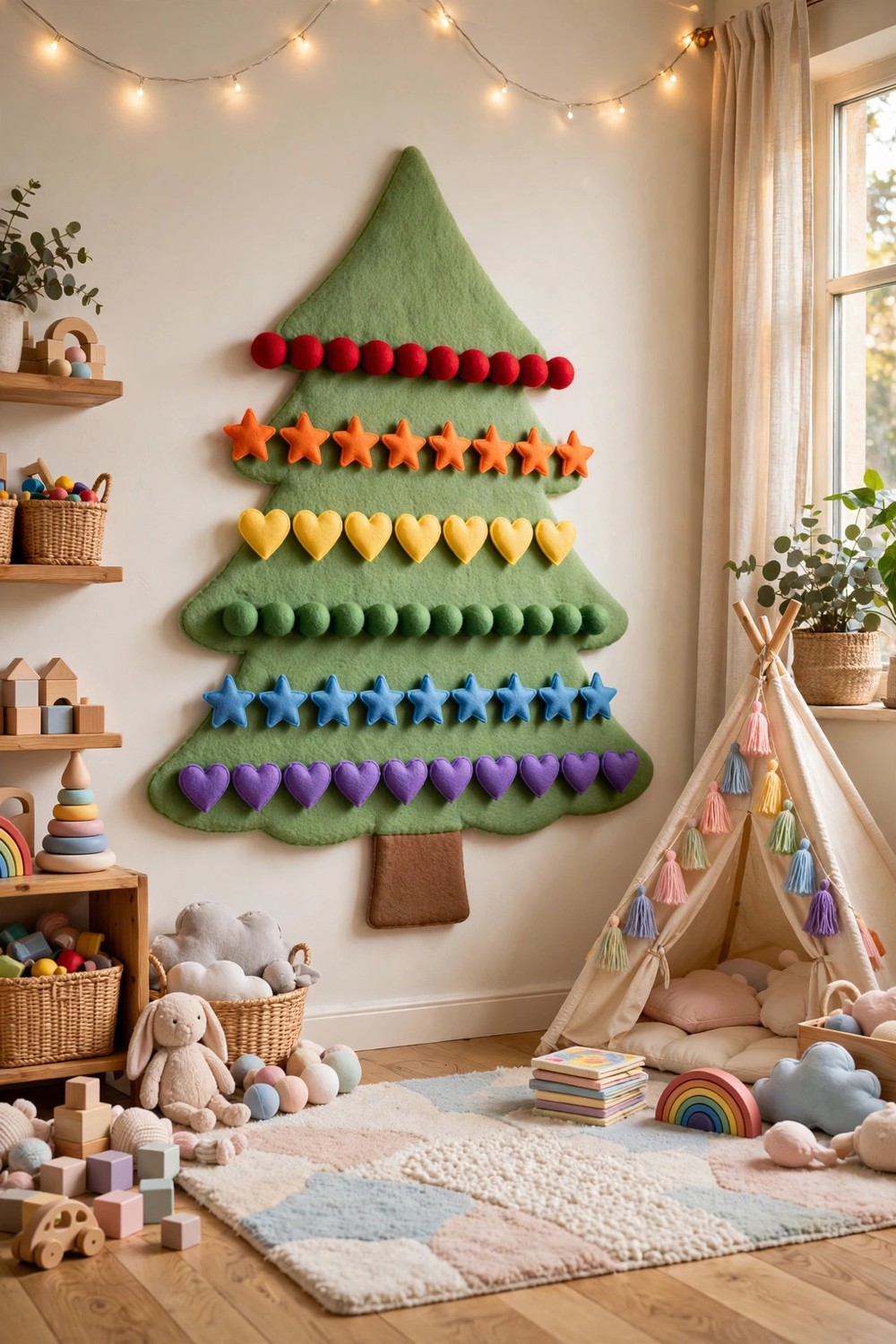
A rainbow ornament set is one of the hardest working options on this list, because it is a decoration and a color lesson at the same time. Simple felt balls, stars, and hearts in clear red, orange, yellow, green, blue, and purple let you play easy games while you decorate, like asking your child to find all the blue ones or to make a row that repeats. Toddlers usually start by grouping favorites, and over a few weeks you will typically notice them sorting more deliberately. The bright mix also cheers up a plain wall in a way that softer themes do not, so it suits playrooms especially well. If the full rainbow feels like a lot, start with three colors and add more as your child gets confident. Because every piece is soft and light, even a very full rainbow tree stays completely safe for enthusiastic little decorators.
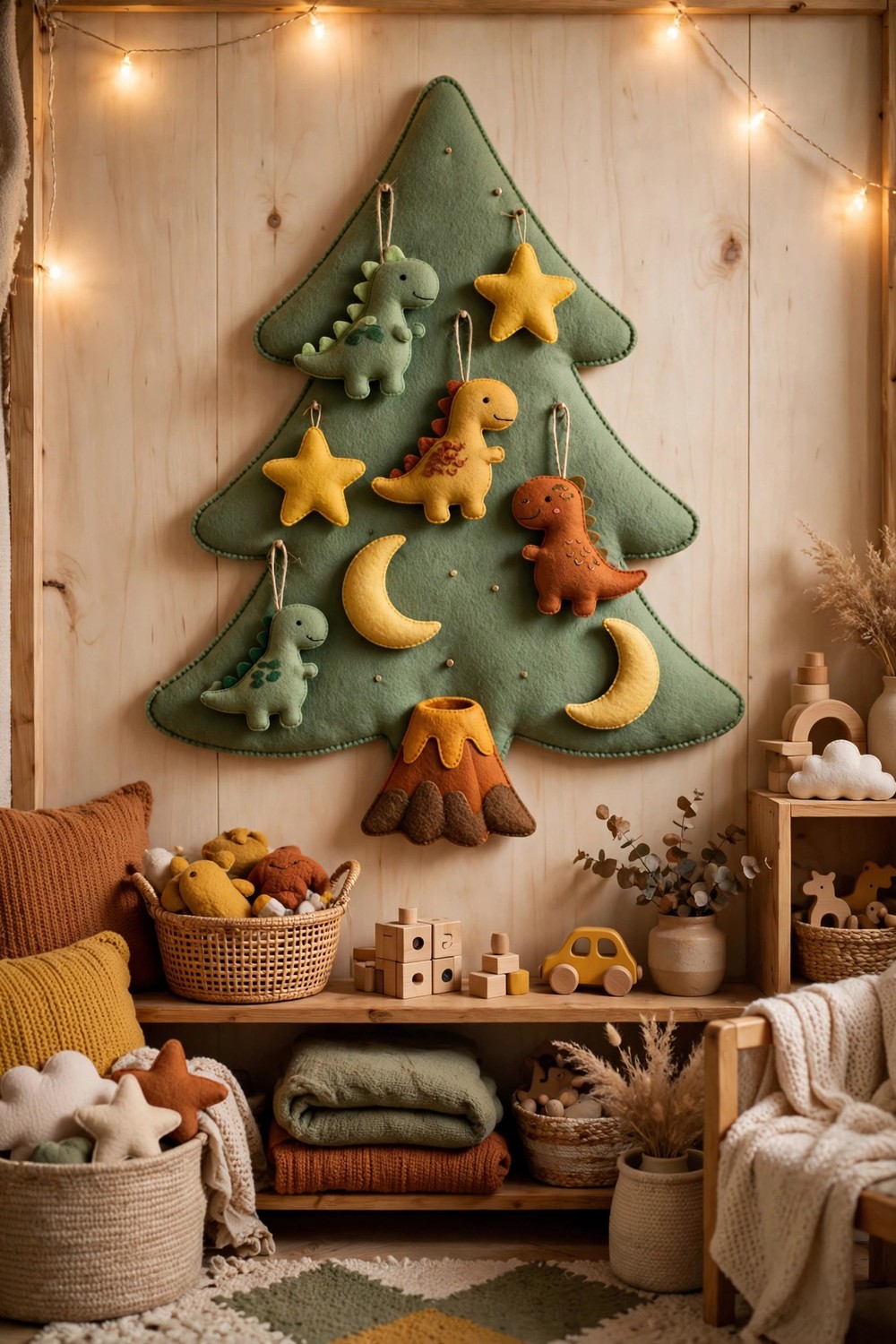
10. Add Dinosaurs and Stars for a Playful Twist
Not every child wants a traditional tree, and a dinosaur set proves the felt tree can bend to whatever phase your kid is in right now. Soft felt dinosaurs in green, mustard, and rust, mixed with chunky stars and little moons, look surprisingly festive once they are all up on the branches. Kids tend to roar, stomp, and arrange the dinosaurs in parades across the tree, which is exactly the kind of repeat play that makes a purchase feel worth it. This theme usually lands best with preschoolers who have strong opinions, since letting them choose the theme gives them real ownership of the decorating. Add a felt volcano or a few simple trees if your set includes them, and the scene builds itself. Typically a slightly silly theme like this becomes the one your family talks about for years, long after more sensible decorations are forgotten.
Make It Playful, Gentle and Full of Learning
A felt tree can do quiet double duty as a learning toy and a sensory toy, without ever feeling like homework. These ideas build counting, letters, textures, and a slow December countdown right into the decorating, at exactly the pace a small child can enjoy.
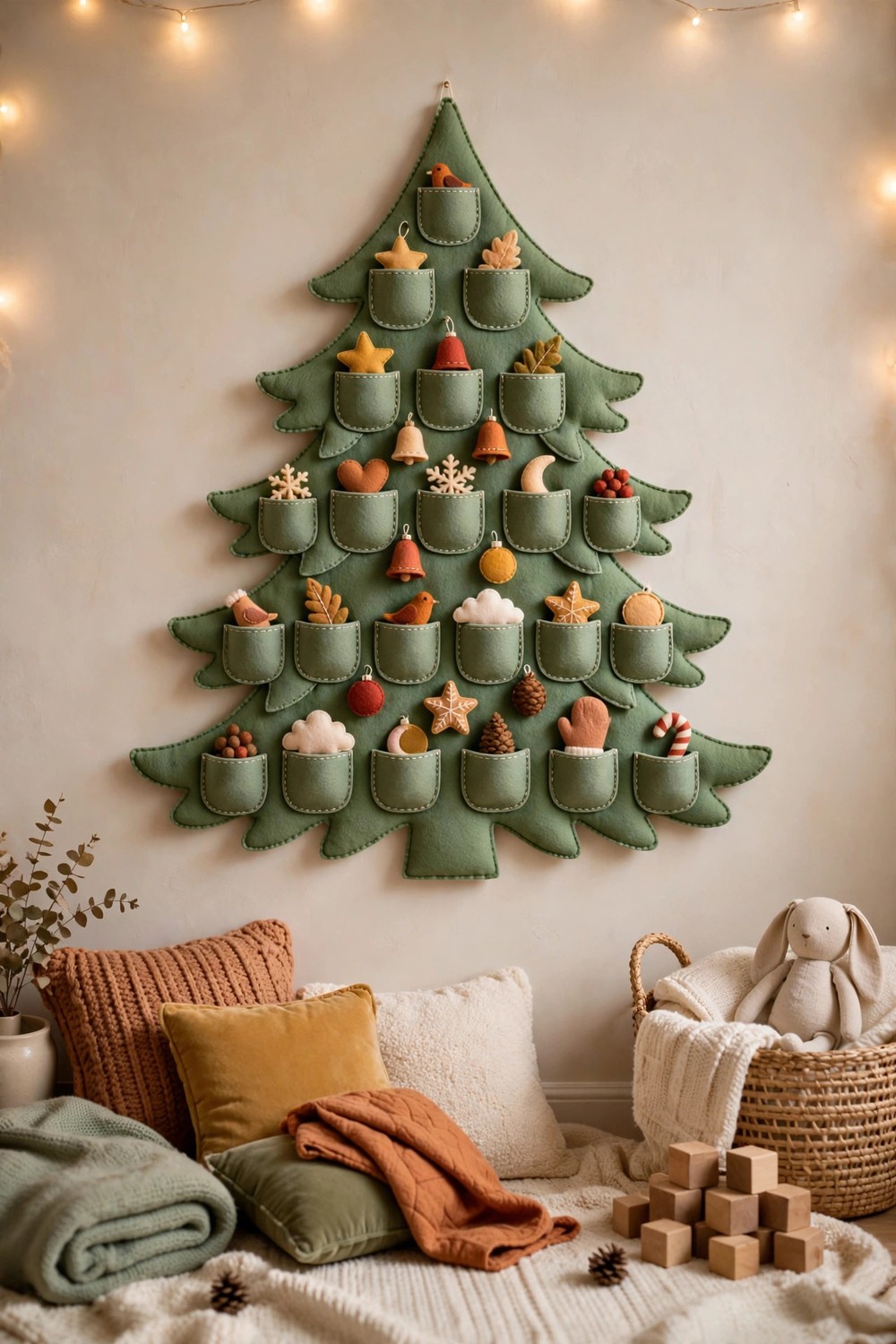
11. Turn It Into a Felt Tree Advent Calendar
A felt tree advent calendar slows the whole season down in the nicest way. Each day your child adds one ornament or checks one little pocket on the tree, so the decorating spreads across December instead of peaking in one afternoon. Some versions have numbered pockets stitched along the branches, and others simply build the tree up piece by piece until it is full and glorious by Christmas Eve. Both approaches give toddlers a gentle sense of time passing, which is usually a tricky concept at that age. Fill pockets with tiny felt pieces, a small note, or a simple activity idea like singing a song together, rather than sweets every day. Typically kids race to the tree first thing each morning, and that little ritual becomes the heartbeat of the month. It is calm, it is screen free, and it makes the countdown feel kind instead of frantic.
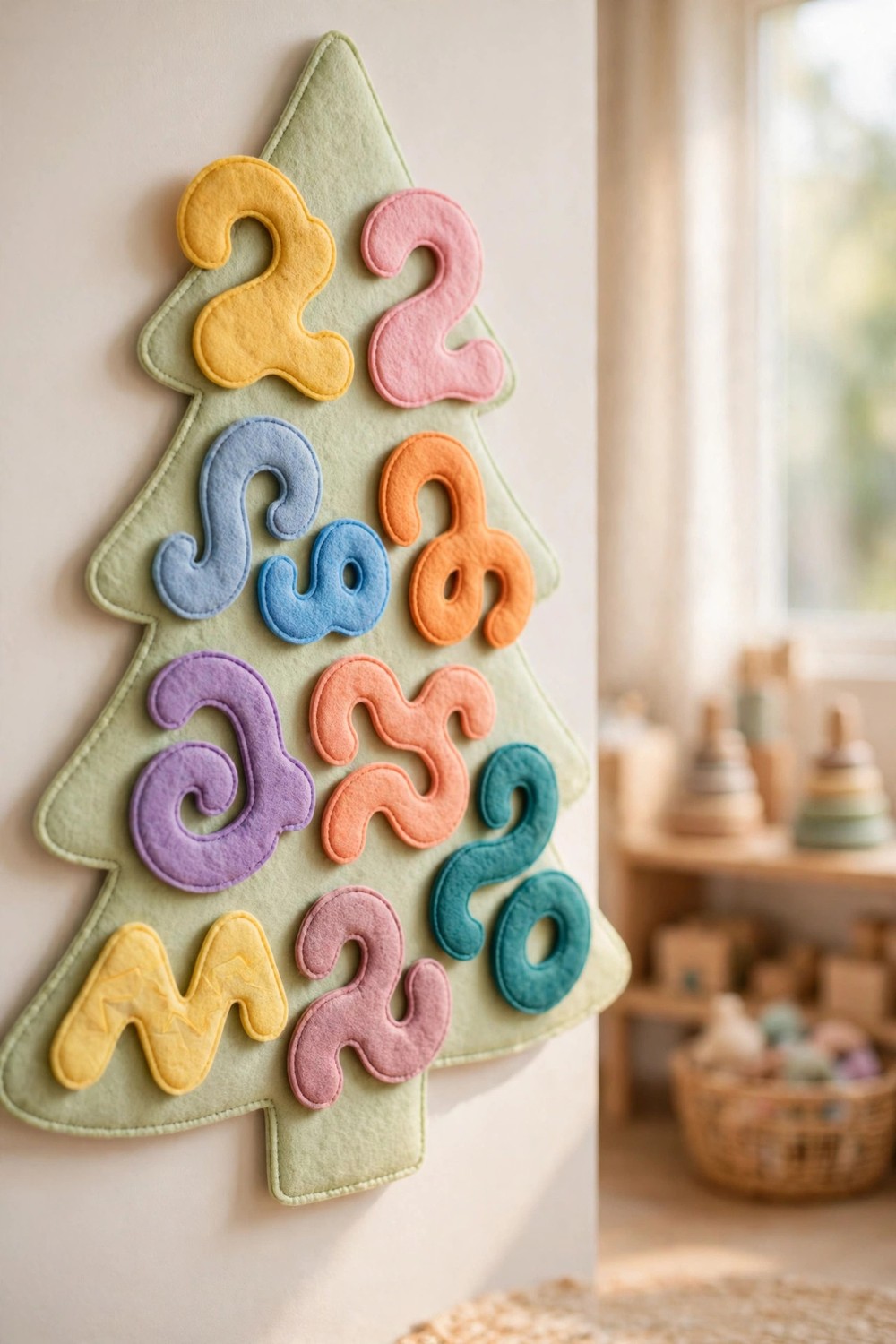
12. Make a Number and Letter Learning Tree
If you like decorations that quietly teach, a number and letter tree is a lovely middle ground between toy and decor. Felt ornaments shaped as simple numbers or letters stick anywhere on the tree, so your child can spell their name across the branches, line up one to ten, or just enjoy the shapes with no agenda at all. Keep expectations light here, because the learning happens through play and repetition, not through quizzing at the tree. Preschoolers usually enjoy matching a letter ornament to the first letter of a family members name, and that game can fill a happy half hour. Choose a set with clear, simple shapes and strong stitching, since these pieces tend to get handled more than most. Typically a muted tree with brighter letters looks best, so the characters stand out clearly. It is festive, it is useful, and it earns its wall space.
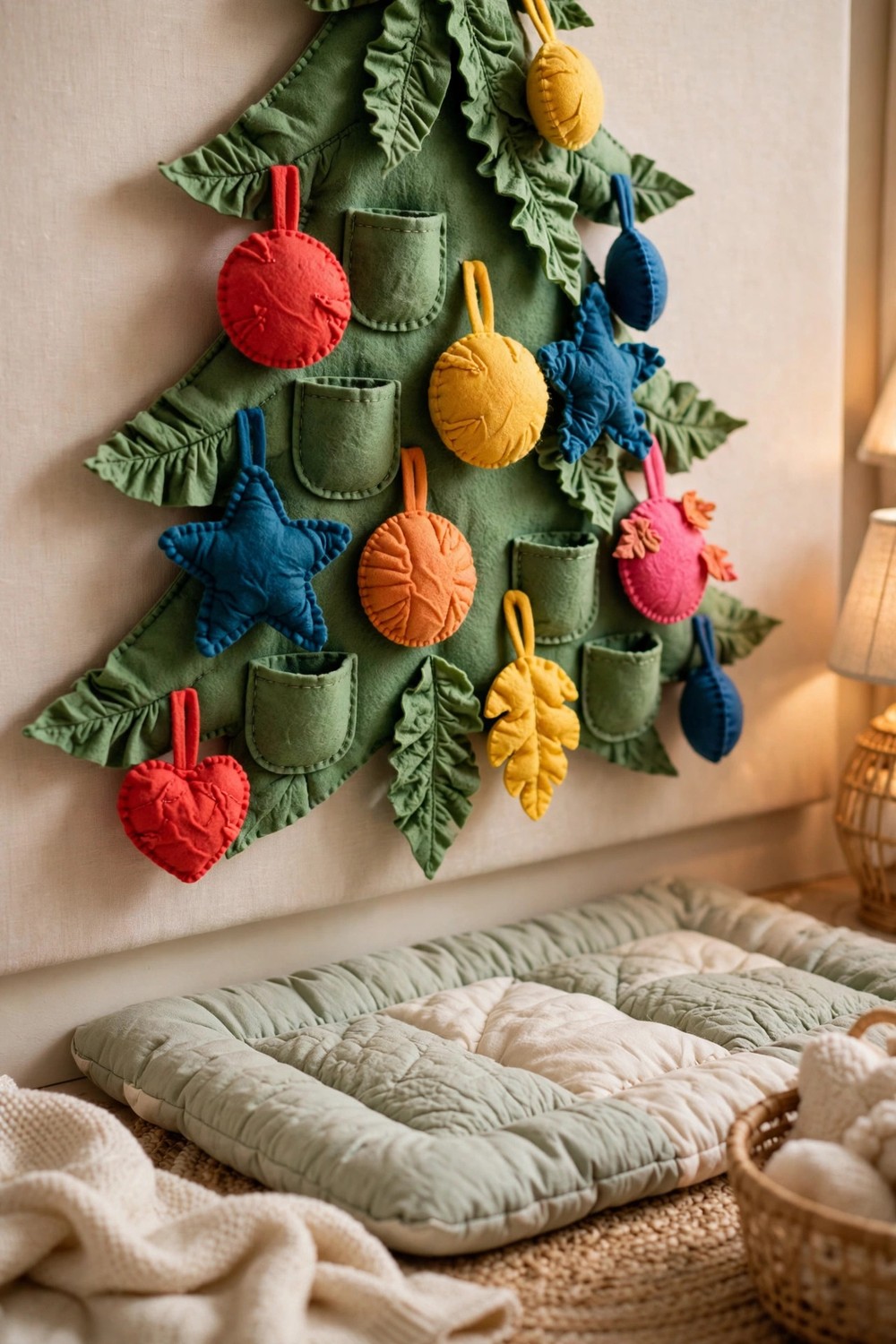
13. Add Pockets, Textures and Soft Bells for Sensory Play
Some felt trees are made to be explored as much as decorated, and for babies and young toddlers that sensory side matters a lot. Look for trees and ornaments that mix textures, like smooth felt beside bumpy stitched pieces, crinkly leaves, small pockets to tuck fingers into, and soft bells sewn safely inside an ornament so it jingles gently when moved. Every texture gives little hands a reason to stay a bit longer and investigate. Always check that bells and extras are stitched inside or firmly enclosed, never loose, and give any new set a good tug test before play. Typically sensory trees use high contrast colors too, which younger babies track more easily. Hang this style low, sit nearby, and let your child pat, squeeze, and shake at their own pace. It is decorating, tummy time entertainment, and quiet play all in one soft green package.
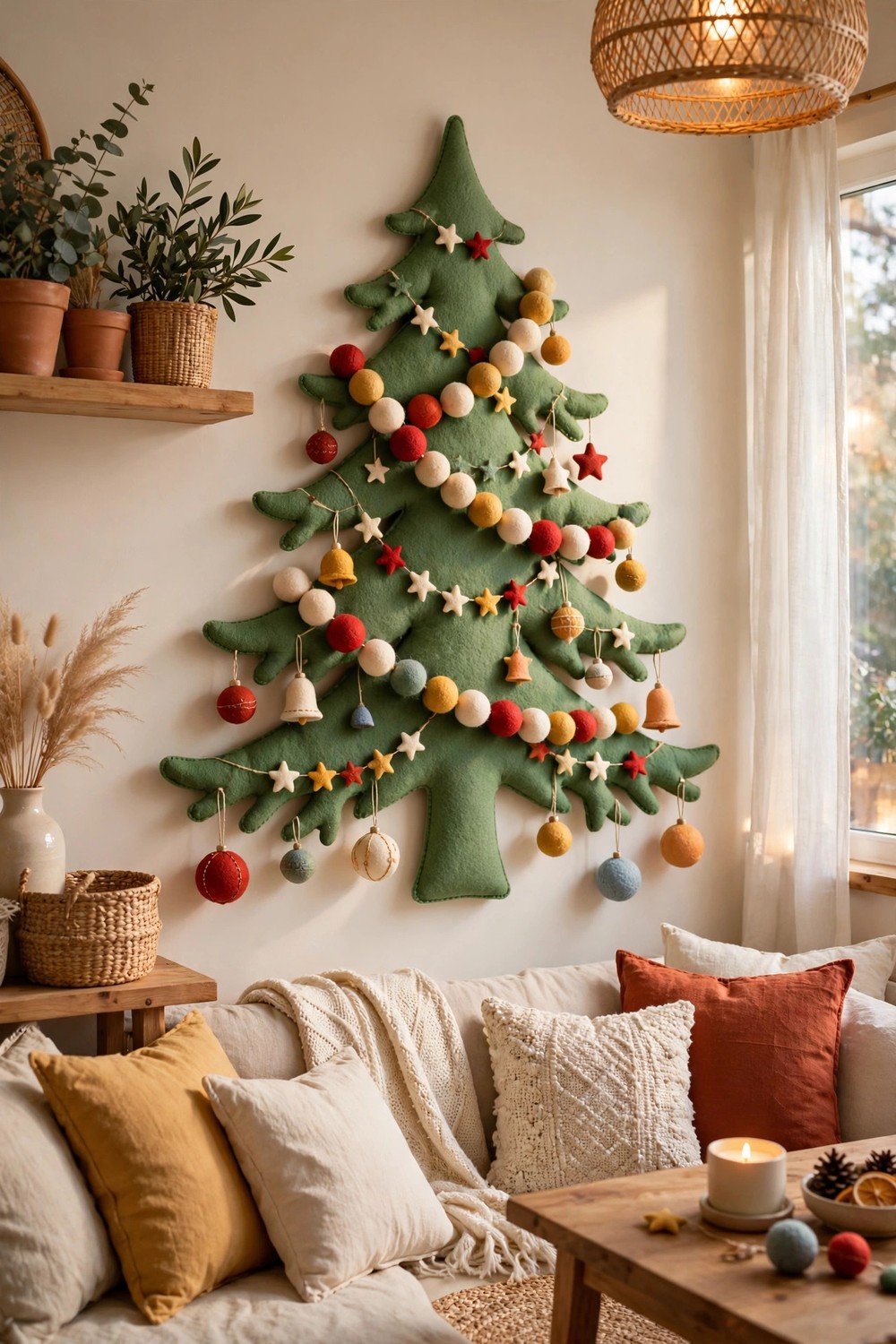
14. Drape a Soft Felt Garland Across the Branches
A felt garland is the finishing touch that makes a wall tree look properly dressed, and kids love being in charge of it. Strands of felt balls, tiny felt stars, or simple stitched shapes can be draped, swagged, and rearranged across the branches, and because it is all soft, there is no tangled wire or broken strand to worry about. Felt ball garlands in red, cream, and mustard are usually the easiest for small hands to hold and move. Show your child one gentle zigzag pattern, then step back and let their version happen, however lopsided it gets. Typically garlands also help fill in bare patches on a sparsely decorated tree, which makes a small ornament collection look more generous. When the season ends, the same garland can move to a shelf or a bedroom doorway, so it keeps earning its keep well beyond the tree itself. Simple, soft, and endlessly rearrangeable is hard to beat.
Finish the Corner and Make It Part of the Season
The last touches are what turn a felt tree on a wall into a little place your child seeks out. A skirt, a garland, a dedicated play corner, and a book nook take almost no extra effort, and they are typically what make the tree feel like part of your familys real Christmas.
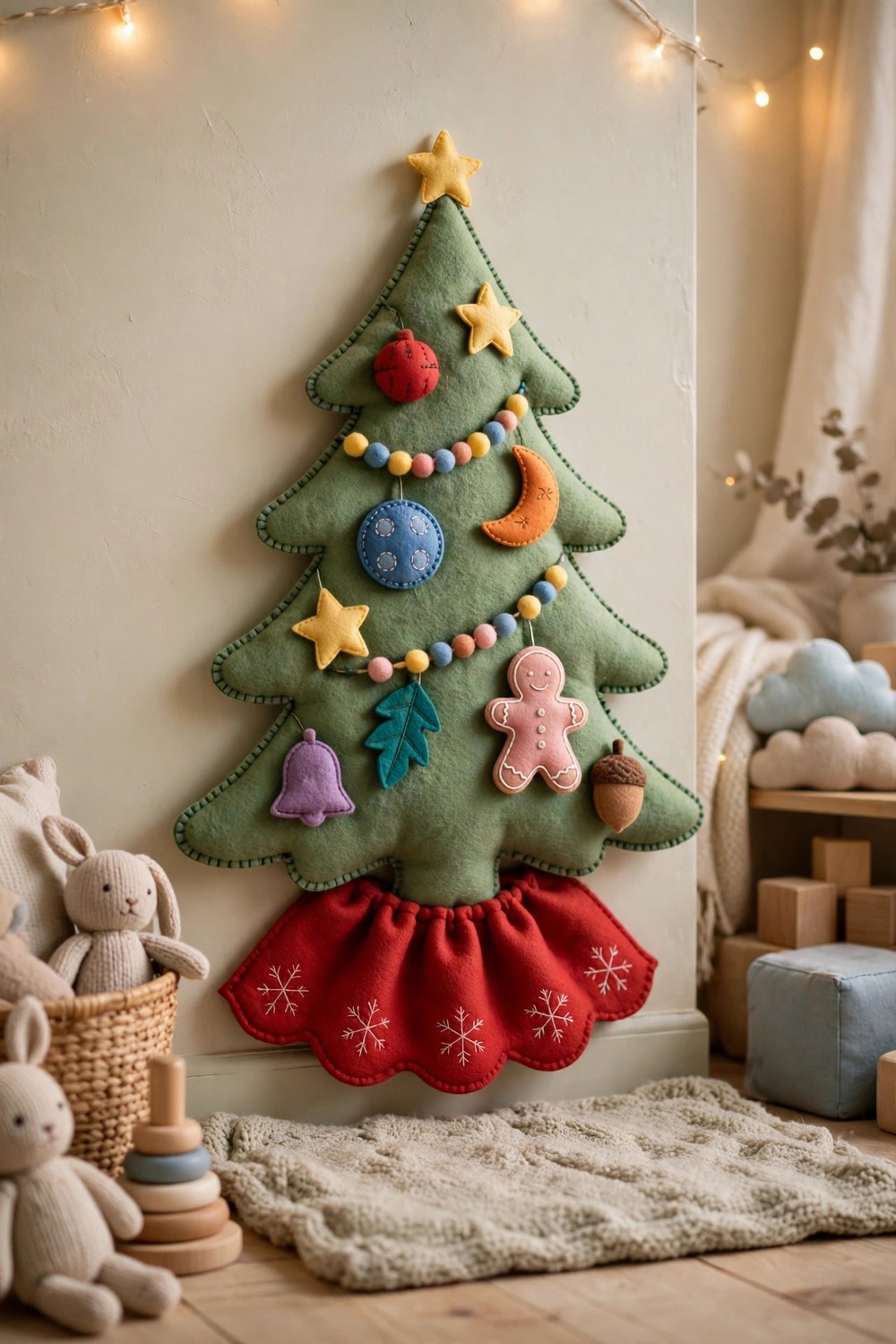
15. Give Your Felt Tree Its Own Felt Tree Skirt
A felt tree skirt for a felt tree sounds like a small thing, and honestly it is, but it finishes the whole picture in a way kids notice. A soft half circle or scalloped strip of felt along the bottom of the wall tree works like a frame, and it gives children one more piece to place, adjust, and feel proud of. Some skirts come in red with stitched snowflakes, others in cream or plaid patterns, and a few even have little pockets along the edge for hiding a tiny ornament surprise. It also protects the wall paint a little from busy hands working at the bottom branches, which parents tend to appreciate by mid December. Typically the skirt sticks on with the same simple method as the ornaments, so setup takes seconds. If your tree sits above a play mat, match the skirt color to the mat and the whole corner suddenly looks pulled together and intentional.
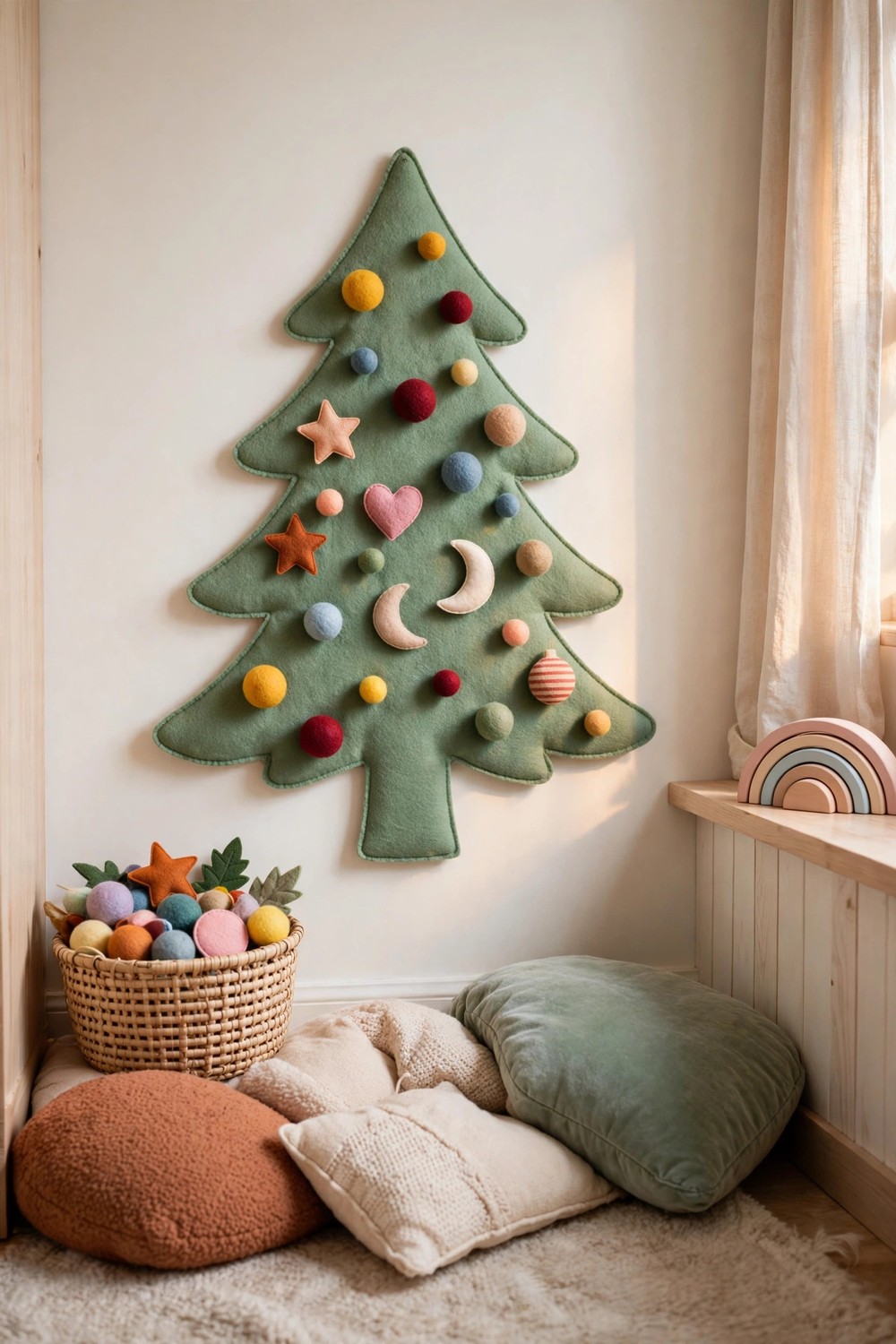
16. Create a Playroom Corner Tree for Everyday Play
Giving the felt tree its own corner in the playroom turns it from a decoration into a destination. Set the tree on the wall at child height, lay a small soft mat or rug underneath, and keep the ornaments in a low basket right beside it so your child can start playing without asking for help. That independence is usually the difference between a tree that gets used daily and one that gets admired once. Add a couple of cushions and the corner becomes a natural spot for quiet time when the playroom gets loud. Because everything is soft and washable in most cases, you do not need to police this corner at all, which is a rare gift in December. Typically playroom trees end up decorated in wild, wonderful ways that change by the hour. Photograph a few of the best arrangements, because those funny, lopsided masterpieces are the memories you will actually want to keep.
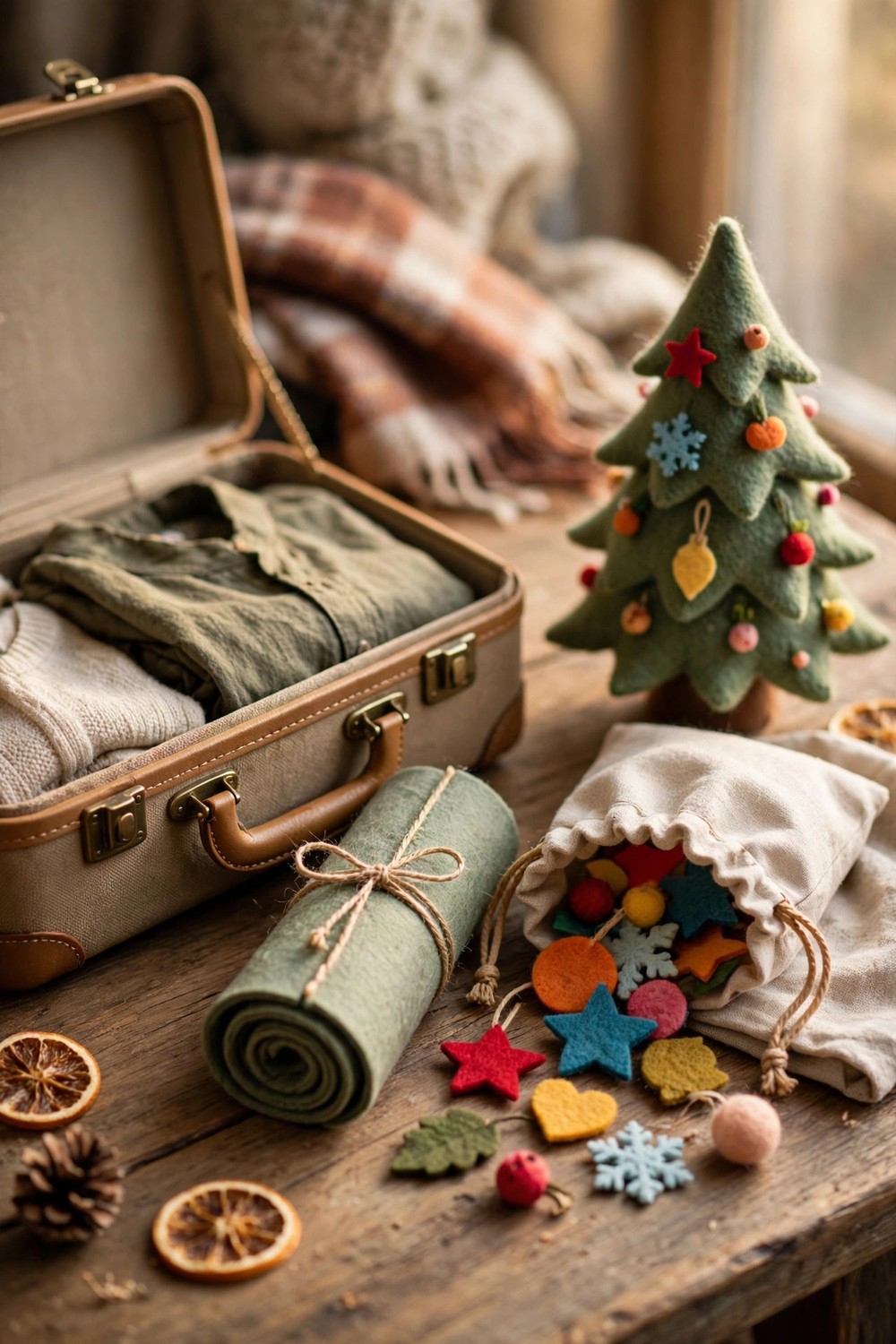
17. Pack a Travel Felt Tree Kit for Trips and Visits
December usually involves at least one trip, a long visit, or a wait somewhere boring, and a travel felt tree kit handles all three gracefully. The kit is typically a smaller tree that rolls or folds flat, plus a handful of ornaments in a little pouch, light enough to live in a diaper bag or carry on. Kids can decorate on a tray table, at a grandparents kitchen table, or in a waiting room, and the familiar activity tends to settle them in unfamiliar places. It also gives traveling families a tiny holiday ritual of their own, even when the real tree is far away at home. Choose a kit with a pouch that closes firmly, because loose felt pieces have a real talent for vanishing under car seats. Typically ten or twelve ornaments is the sweet spot for travel, enough for a full looking tree without bulk. It packs flat, weighs almost nothing, and saves the day quietly.
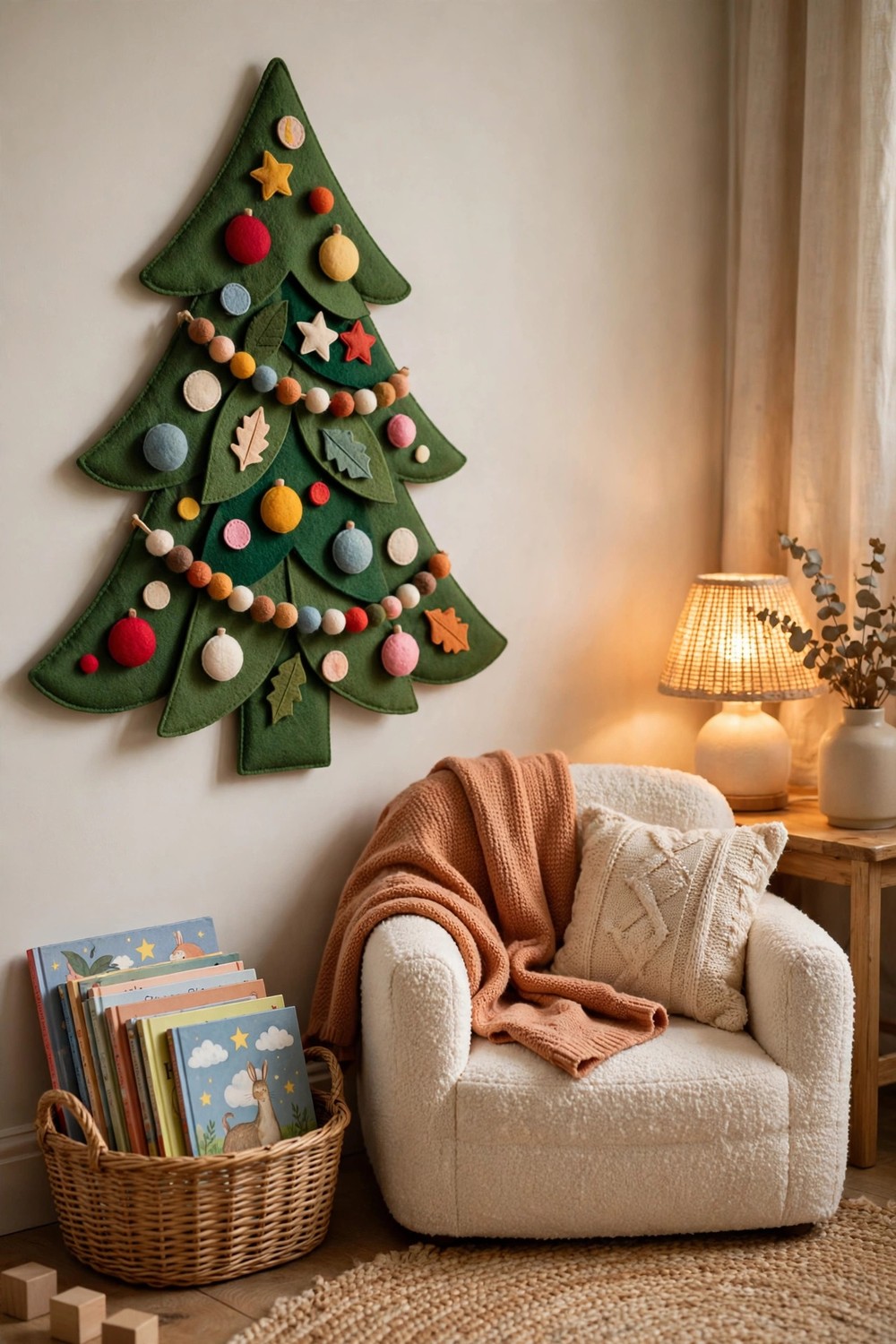
18. Build a Cozy Storybook Nook Around Your Tree
Finishing the tree by building a little reading nook around it gives the whole setup a second life beyond decorating. Place the felt tree on the wall beside a small bookshelf or a basket of holiday picture books, add a soft cushion or a child sized chair, and drape a warm throw nearby for whoever is reading aloud. Kids usually start connecting the stories to the tree, pointing out ornaments that match pictures in their books, and that crossover makes both activities richer. Keep the lighting soft if you can, since a warm lamp nearby makes the corner feel like a hideaway rather than just another part of the room. Typically this nook becomes the calm down spot of the season, the place for one last story before bed through all of December. It asks for nothing fancy, just a tree, some books, and a comfortable place to sit together, and it tends to be the version of the felt tree your child remembers most fondly.
A Tree They Can Touch Is a Tree They Will Love
If there is one thing worth taking from this list, it is that the perfect felt tree does not exist, and that is genuinely good news. The wall tree that hangs a little crooked, covered in dinosaurs one day and candy canes the next, is doing its job perfectly, because its job is to be touched. Start simple, let your child lead the decorating, and add pieces slowly as you see what they actually reach for. Typically the cheapest setup played with every day beats the elaborate one admired from a distance, every single time.
However you build yours, try to enjoy the funny stage while it lasts. Ornaments will cluster at toddler height, the star will live at the bottom for a week, and someone will insist the owl belongs on top. That is not the tree decorated wrong, that is the tree decorated by a small person who was finally allowed to join in. And usually, that is the version of Christmas they remember, the one where the tree was theirs too. Happy decorating, and may your felt ornaments stay exactly where your child proudly put them, at least until tomorrow morning.






Leave a Reply