
18 Green Bathroom Ideas That Feel Fresh and Grounded
Look, we get it. Green sounds lovely for a bathroom, but in a real home it can feel risky. You worry it might look too dark, too cold, or a bit like a trend you will tire of by next year. You want a room that feels fresh in the morning and calm at night, and you also need it to handle splashes, steam, and everyday mess without a fuss. If your bathroom currently feels plain white and a little tired, you are not alone. Most bathrooms get there slowly, and they usually improve with thoughtful color and texture rather than a full gut renovation.
That is what this list is for. You will find gentle starting points with sage and mint paint, deeper ideas with forest tile and stone, and warm pairings with brass, wood, and marble that keep green feeling grounded. Some of these are easy weekend changes, like towels, plants, and paint. Others take more planning, like a new vanity or a tiled shower. You do not need to do all eighteen. Two or three that fit your light, your budget, and your storage will typically change how the whole room feels.
Start with the shade ideas if you are unsure which green suits you, then look at tile and surfaces if you are renovating, and finish with the styling ideas if your room just needs life. Work in that order and the room will usually come together step by step. Take a photo before you begin, test every color in your own light, and remember that a bathroom you can adjust slowly is always easier to love than one you try to perfect in a single weekend.
In This Article
- Paint the Walls a Soft Sage Green
- Use Olive Green for a Warm and Earthy Mood
- Brighten a Small Bathroom With Pale Mint
- Layer Two Tones of Green for Depth
- Choose Eucalyptus Tones for a Spa Like Calm
- Cover the Shower in Deep Forest Green Tile
- Choose Glossy Green Zellige Tile for Movement
- Ground the Room With Patterned Green Floor Tile
- Try Green Grout With Simple White Tile
- Pick a Green Stone Sink or Countertop
- Choose a Painted Green Vanity as the Focal Point
- Pair Green With Brass Fixtures and Mirrors
- Soften Green With Warm Wood Accents
- Keep It Fresh With White Marble and Green
- Try Botanical Wallpaper for a Garden Feel
- Add Humidity Loving Plants on Every Surface
- Make the Tub the Star in a Deep Green Finish
- Bring Green In With Towels, Rugs, and Art
Find Your Shade of Green
Before you think about tile or fixtures, decide which green actually suits your room. Light, size, and the colors next door all change how a shade behaves once it is on the wall. These first five ideas move from soft sage to warm olive and spa like eucalyptus, so you can find a starting point that feels fresh without feeling cold or flat.
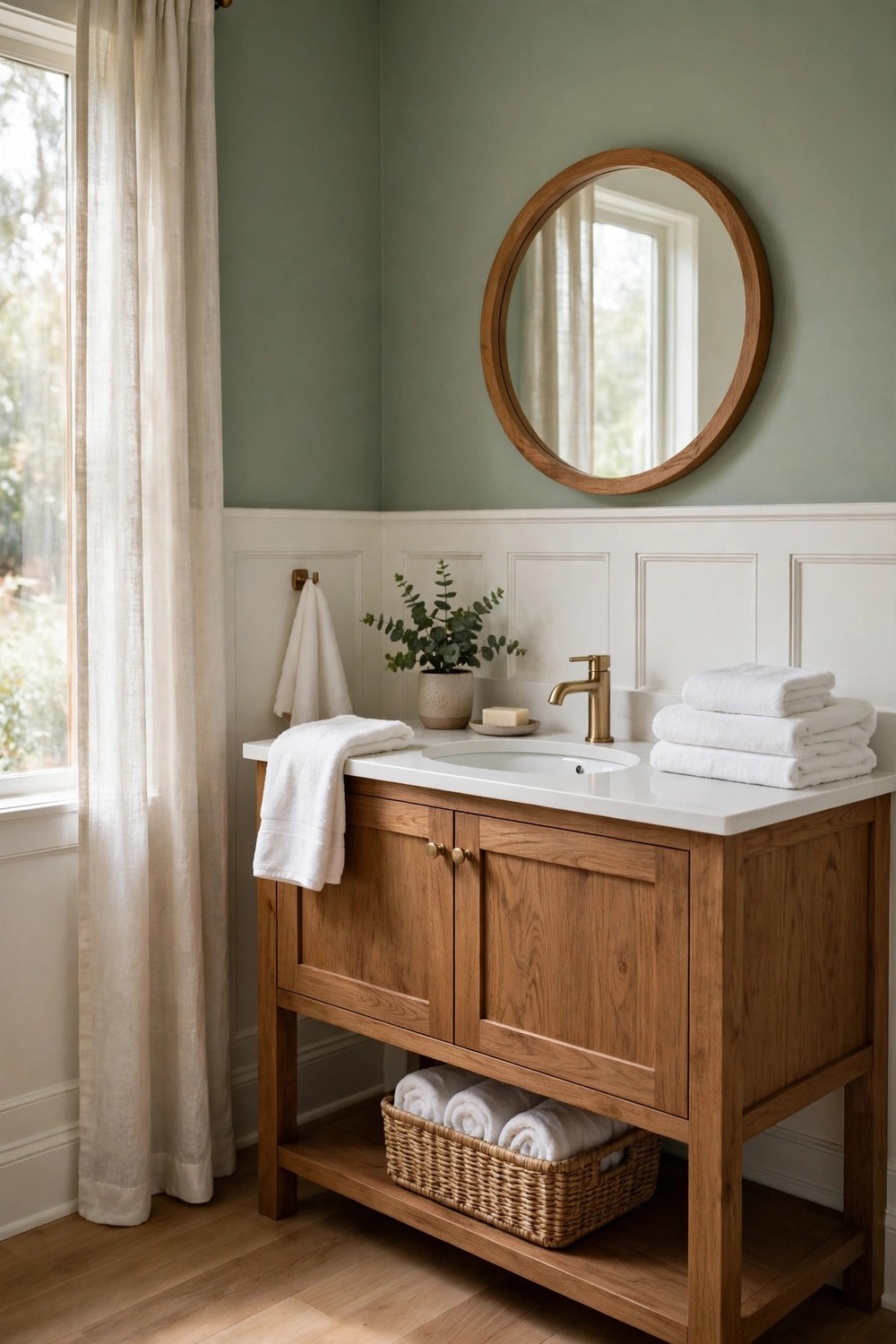
1. Paint the Walls a Soft Sage Green
Soft sage is usually the easiest green to live with, because it has enough grey in it to feel calm rather than bright. It works beautifully above white wainscot, beside a white tub, or behind a simple wood vanity, and it tends to flatter most skin tones in the mirror, which matters more than people expect. Test a sample on two walls and check it in morning and evening light, because sage can look cooler in a north facing room and warmer when the sun comes in. Keep the ceiling and trim a soft white so the edges stay crisp and the room still feels airy. If you rent or you are nervous about color, start with the wall behind the mirror only and live with it for a week. Most people find sage so gentle that they happily keep going, and a single gallon of paint typically gives you the whole fresh feeling without touching tile, plumbing, or layout at all.
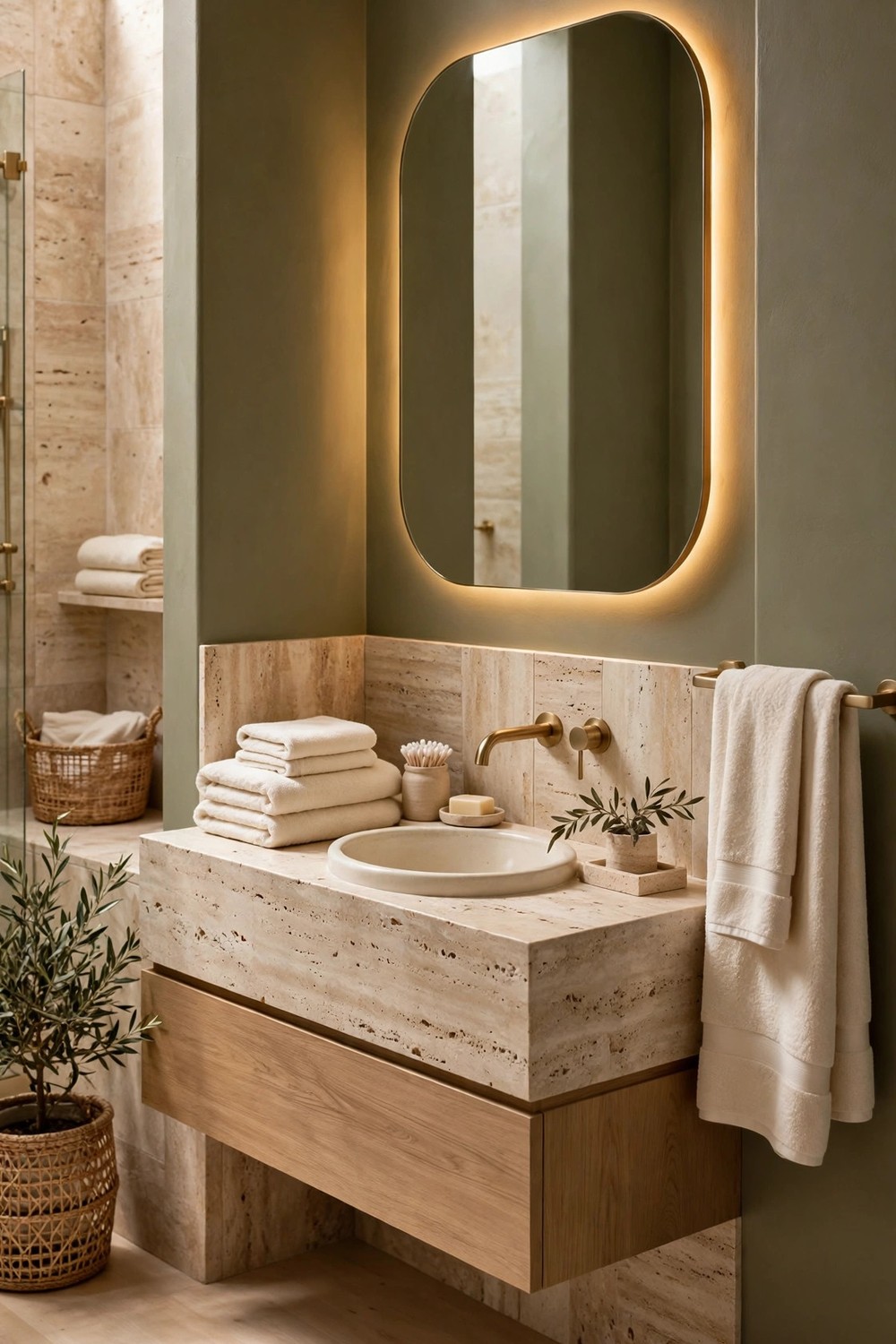
2. Use Olive Green for a Warm and Earthy Mood
Olive green brings warmth that sage sometimes lacks, which makes it a lovely choice if your bathroom feels a bit chilly or stark. It has yellow and brown undertones, so it sits comfortably beside cream towels, warm stone, travertine, and aged metals, and it usually looks richer in smaller rooms with limited natural light. Pair olive walls with a light floor and a pale countertop so the room does not feel heavy, and add warm lighting around the mirror rather than a single cool overhead bulb. A woven basket, a wooden stool, or a linen shower curtain will echo the earthy mood without adding more color to manage. Olive also hides everyday splashes and dust a little better than very pale shades, which is a quiet practical bonus. If you love a grounded, collected feeling and you lean toward warm neutrals everywhere else in your home, olive will typically feel like a natural fit rather than a bold leap.
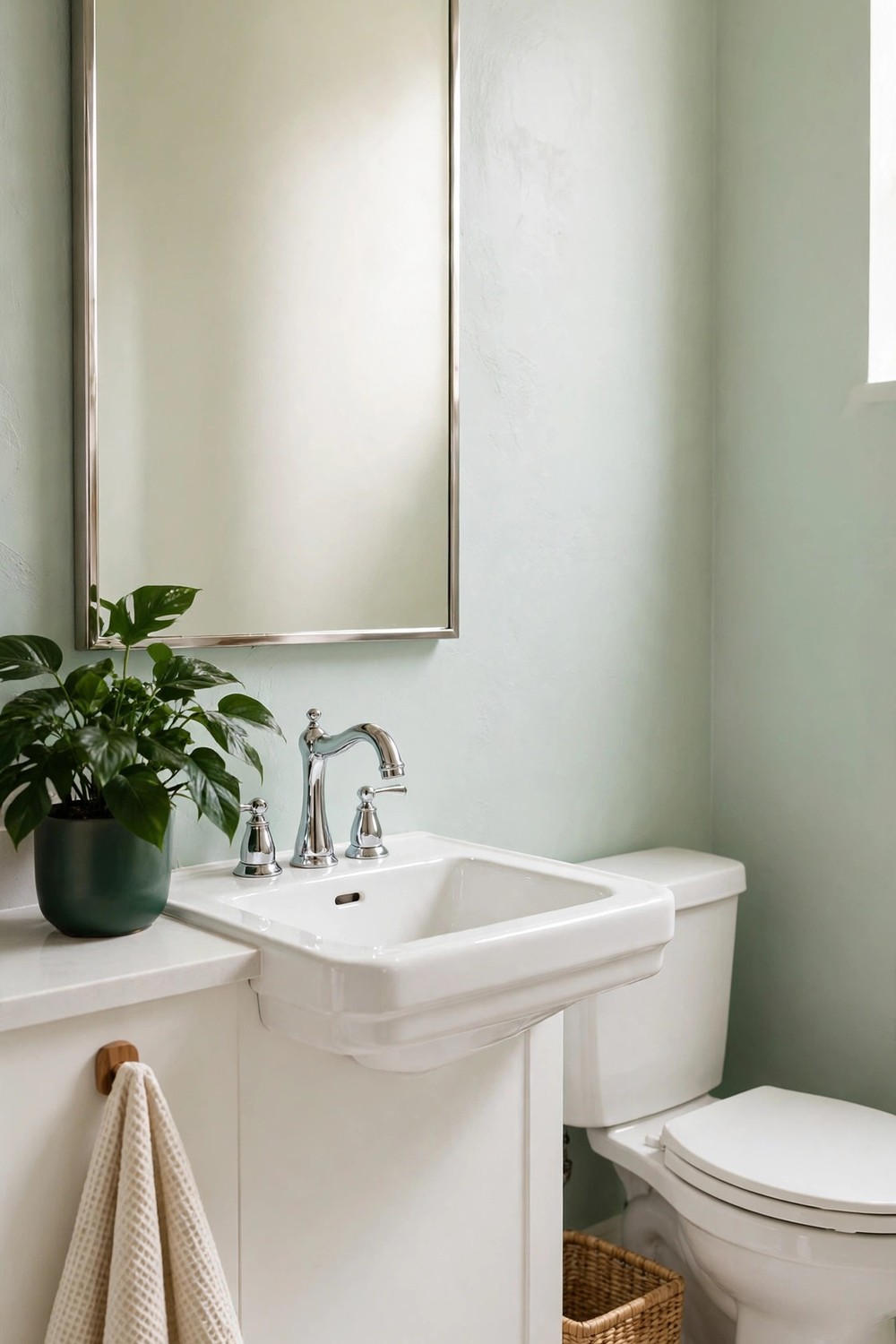
3. Brighten a Small Bathroom With Pale Mint
Pale mint is the green to reach for when your bathroom is small, windowless, or short on light. It reads as fresh and clean, it reflects what light you do have, and it makes white fixtures look bright without the blue coldness that plain white paint can sometimes bring. Keep the mint soft and slightly muted rather than sweet or icy, because a grey undertone usually feels calmer and more grown up. Use it on the walls and even on a small vanity if you want the room to feel pulled together, then add chrome or polished nickel for a crisp finish. A large mirror helps a lot here too, since it bounces the pale color around and doubles the sense of space. Add one deeper green accent, like a plant or a folded towel, so the room has a little contrast. That small layer stops mint from feeling flat and gives a tiny bathroom real character.
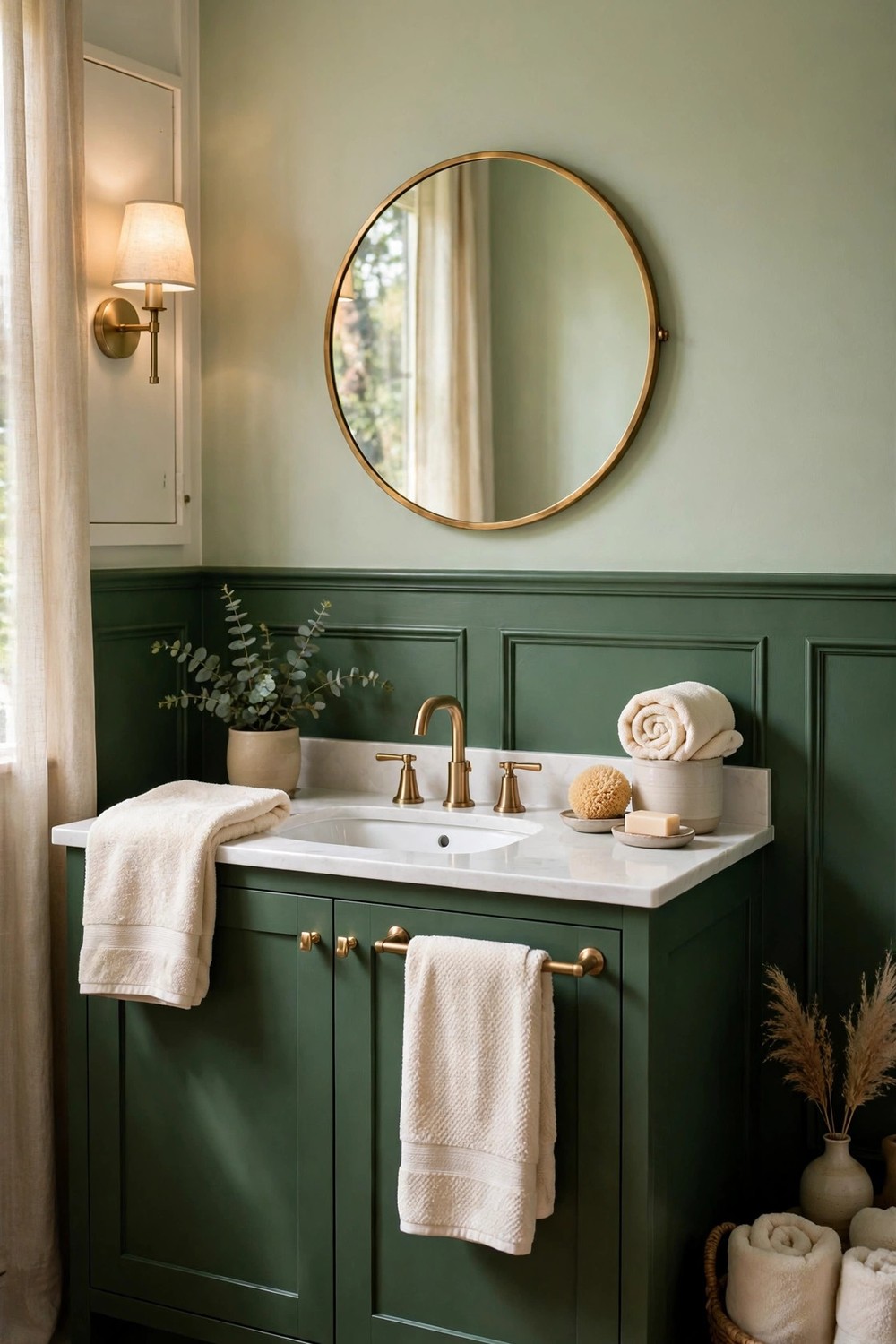
4. Layer Two Tones of Green for Depth
Using two tones of green in one room gives you depth without asking you to introduce a whole new color. The simplest version is a lighter green on the upper walls and a deeper version of the same family on the vanity, the wainscot, or the lower tile. Because the tones are related, the room feels intentional and calm, but the contrast stops everything from blending into one flat wash. Choose shades that share an undertone, so both lean warm or both lean cool, and test them side by side in your light before you commit. Keep towels, the tub, and the countertop in quiet whites or creams so the two greens stay the story. This approach works especially well in a medium sized bathroom where a single pale shade might feel a bit plain. You get the fresh feeling of green and the grounded feeling of something darker low down, where daily wear usually shows most.
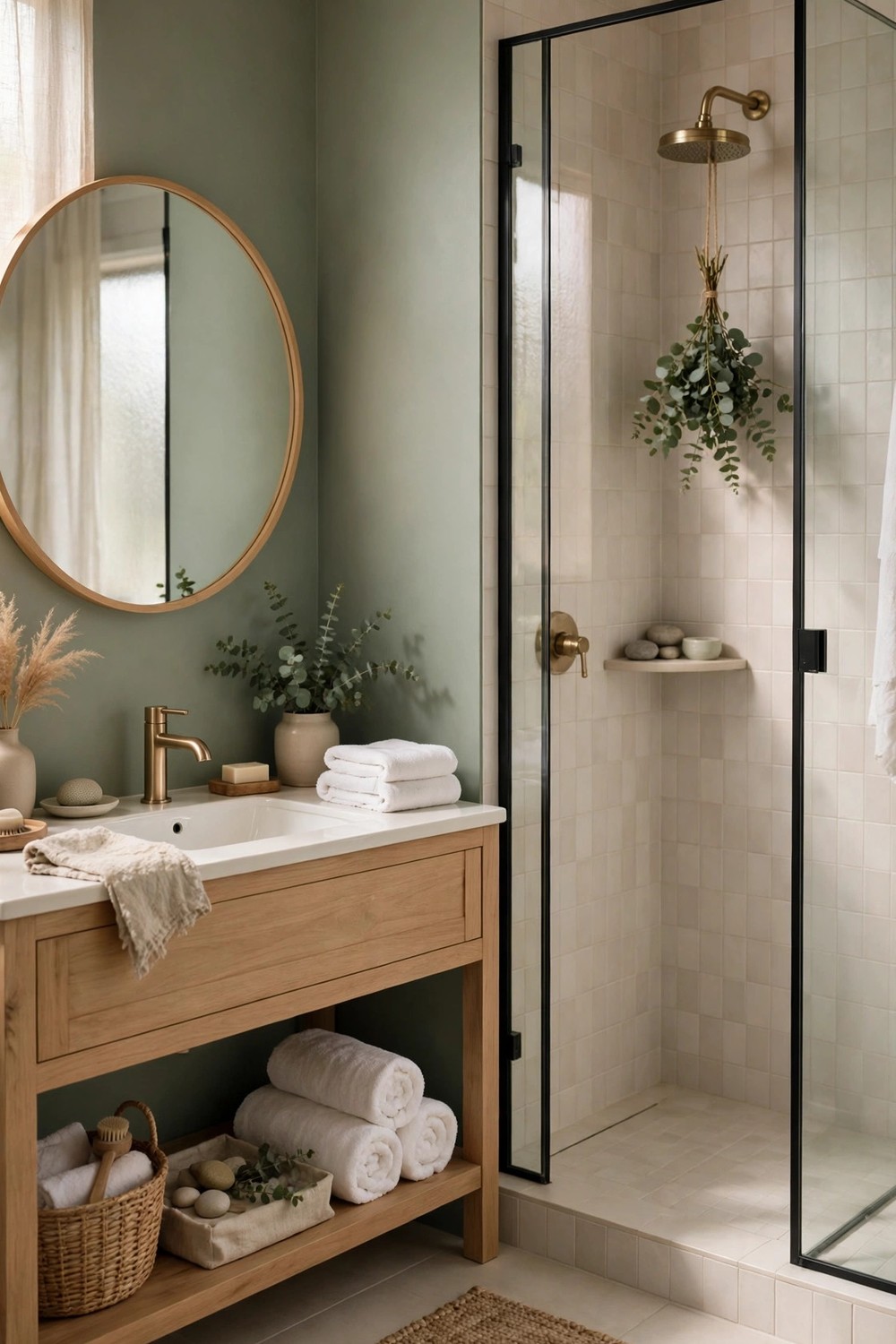
5. Choose Eucalyptus Tones for a Spa Like Calm
Eucalyptus tones sit between sage and soft blue green, and they have a quiet, misty quality that suits a spa like bathroom beautifully. Think muted, dusty, and calm rather than bright. This shade works well on walls, on simple flat front cabinets, or on large format tile with very little pattern competing beside it. Pair it with white towels, pale stone, and light wood, and keep your styling deliberately simple, with one tray, one plant, and plenty of clear counter space. Soft, warm lighting matters here, because eucalyptus can look grey and flat under harsh light, while a gentle glow brings out the green again. A small bunch of real eucalyptus in the shower is a sweet finishing touch, and the steam usually releases a light scent while you bathe. If your goal is a bathroom that helps you slow down at the end of the day, this understated tone typically delivers that calm without asking for a dramatic renovation.
Let Tile and Surfaces Do the Work
If you are renovating, tile and stone can carry your green in a way that feels built in and lasting. These ideas range from a full forest green shower to a simple change of grout color, so there is an option for almost every budget. Choose surfaces with texture and variation, and the color will usually look richer all day as the light changes.
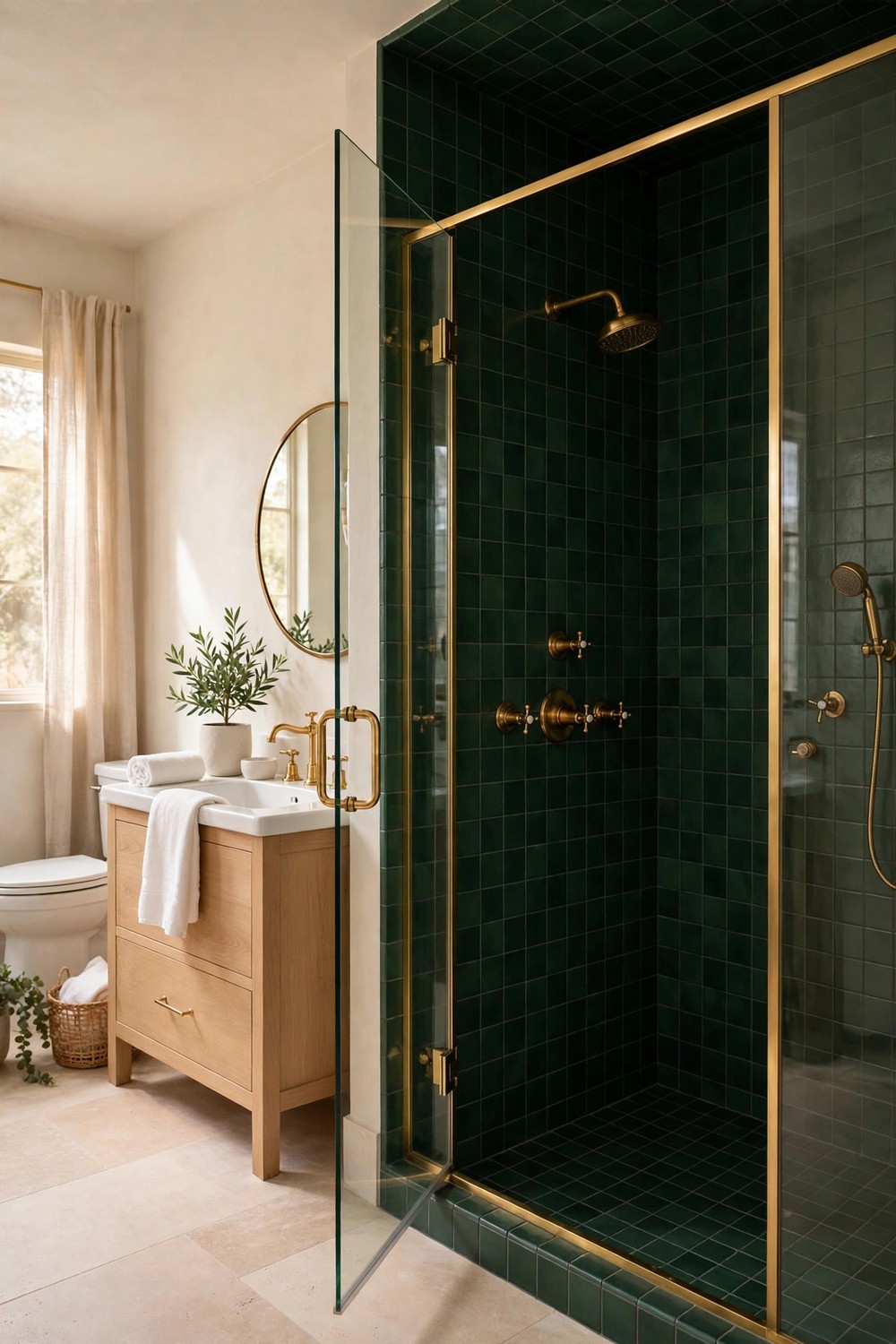
6. Cover the Shower in Deep Forest Green Tile
A shower covered in deep forest green tile feels grounded, private, and a little bit luxurious, like stepping into a quiet garden room. The dark color makes white fixtures and warm metal fittings stand out, and it usually shows fewer water marks than very pale glossy tile, which is a practical win in a busy family bathroom. Take the tile all the way to the ceiling if you can, because that height makes the shower feel taller and the color feel intentional rather than cut off. Keep the rest of the room lighter, with pale walls and a light floor, so the shower reads as a deliberate focal point. Add good lighting inside the shower itself, since deep color absorbs light and you still need to see clearly. A small niche lined in the same tile, a simple bench, and a plant on a stool outside the glass will finish the look. It is bold, but in a contained space it typically feels calm rather than overwhelming.
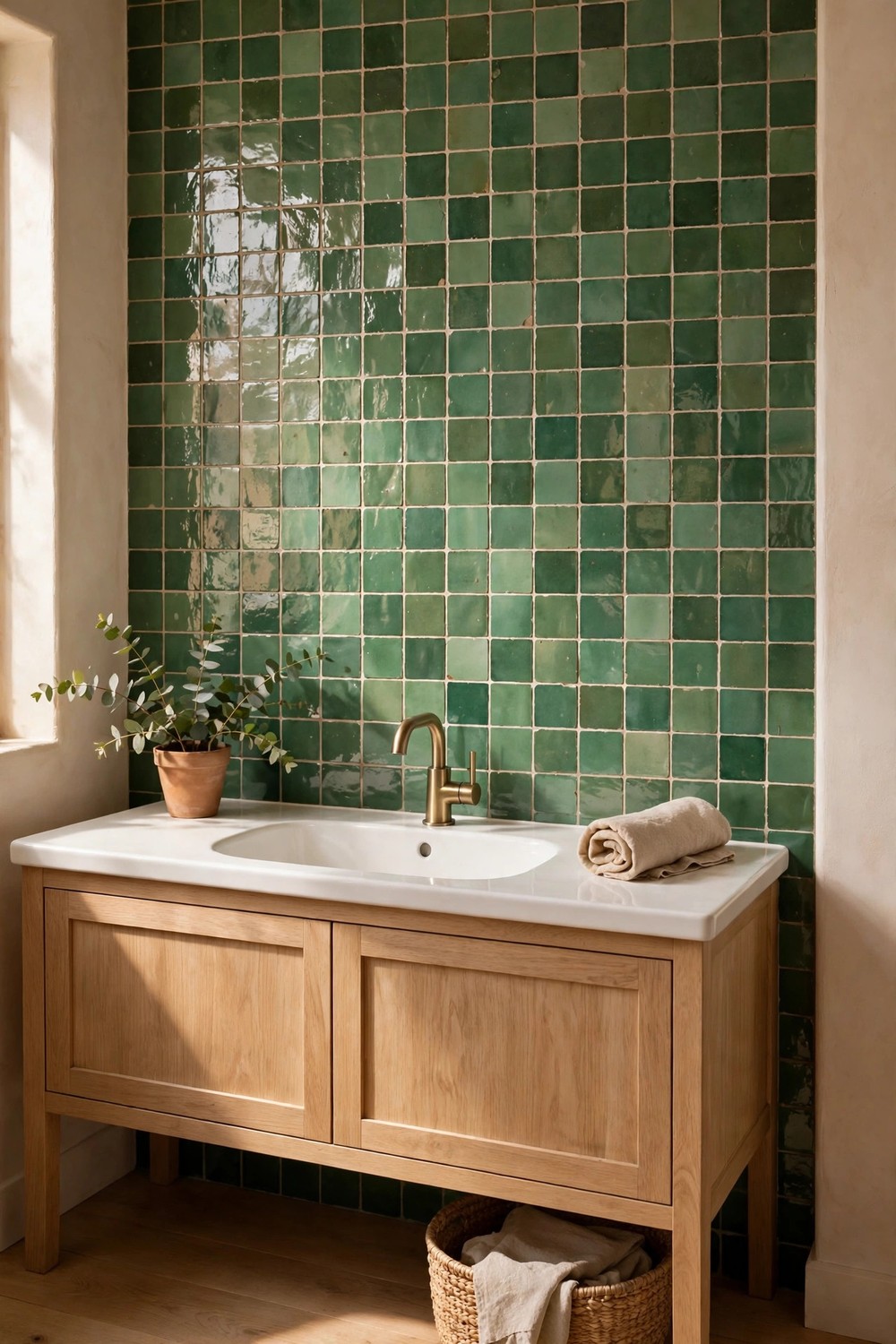
7. Choose Glossy Green Zellige Tile for Movement
Green zellige tile brings movement and life that flat, perfectly uniform tile simply cannot. Each handmade style piece varies a little in tone, edge, and shine, so the wall shifts gently as light moves across it during the day. That variation is exactly why a single green can feel rich rather than plain. Use it behind the vanity, inside the shower, or as a full wall behind a freestanding tub, and keep the surrounding finishes simple so the texture stays the star. A warm mid green or a deep emerald usually shows the variation best, while very pale shades can look almost white in bright light. Ask your installer to lay the pieces out first and mix boxes, because blending the tones evenly takes a little care. Grout in a soft, close tone keeps the look calm. If you love surfaces that feel crafted and personal, zellige typically gives a green bathroom its most memorable detail.
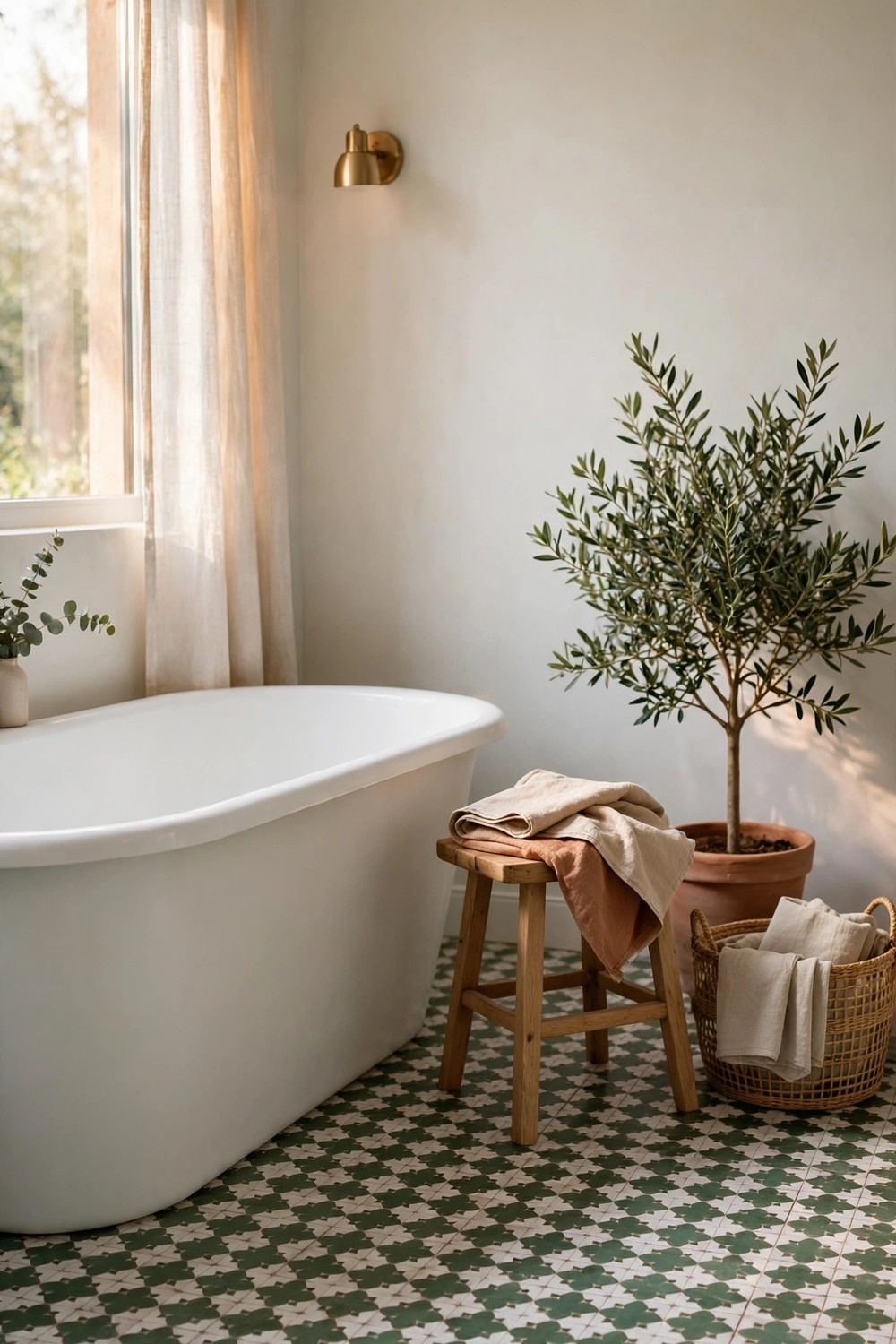
8. Ground the Room With Patterned Green Floor Tile
Green floor tile grounds a bathroom in a literal way, and it is a smart choice if your walls need to stay plain for renting, resale, or simple taste. A patterned green and white floor adds character underfoot while white walls and fixtures keep the room feeling open above. Smaller patterns usually suit smaller rooms, because they read as texture from a distance, while a larger motif can look confident in a bigger space with a freestanding tub. Choose a matte finish for grip, especially in a family bathroom, and check how the pattern looks beside your existing wood tones if the hallway sits right outside the door. A patterned floor also hides hair, dust, and everyday splashes between cleans far better than a plain pale floor does, which most people appreciate by week two. Keep rugs simple and low pile, or skip them and let the pattern show. The room will feel finished from the moment you step in.
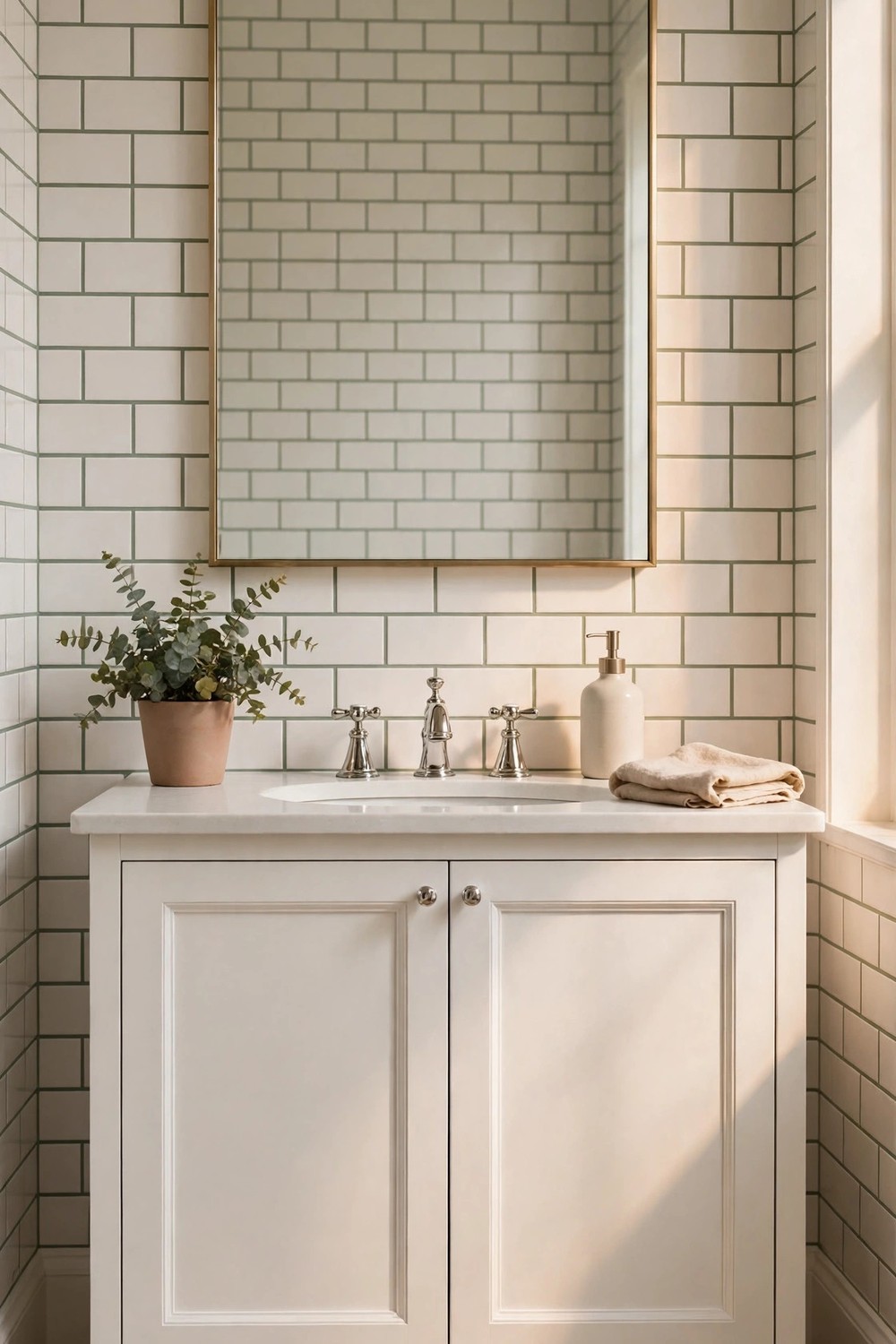
9. Try Green Grout With Simple White Tile
Green grout with simple white tile is a clever middle path if you love the idea of green but you are not ready for green tile itself. The white tile keeps the room bright and classic, while the colored lines quietly outline every piece and give the wall a fresh, tailored pattern. A soft sage or muted olive grout usually feels calmest, and it pairs well with white fixtures, chrome fittings, and a wood or white vanity. This is also one of the more affordable ways to change a tiled look, though grout work still needs care and proper sealing so the color stays even and resists moisture. Test a small board first, because grout often dries lighter than it looks when wet, and you want the contrast gentle rather than stark. If you later tire of color elsewhere, the white tile base stays timeless. It is a small detail that guests tend to notice and compliment, which makes it feel bigger than its cost.
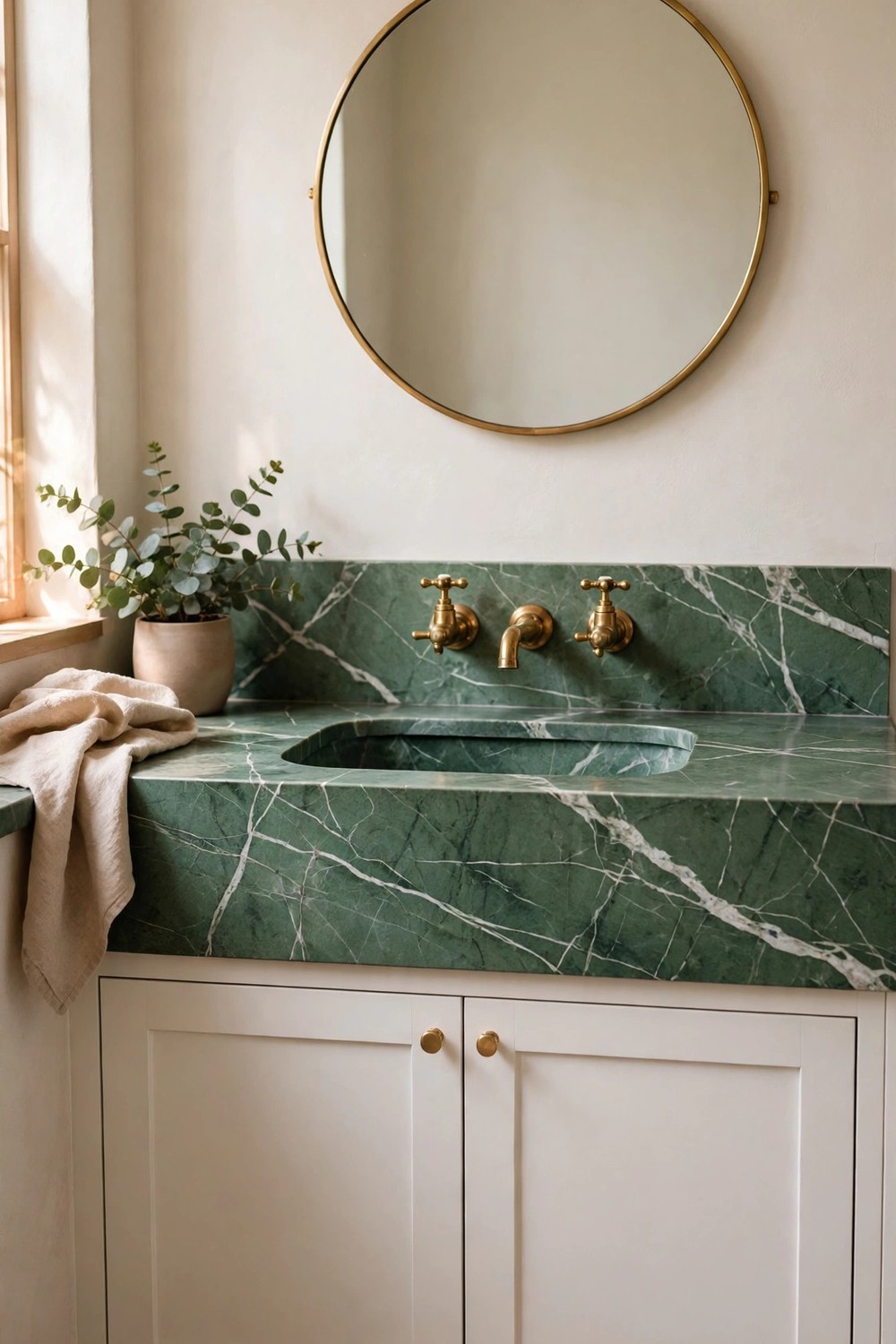
10. Pick a Green Stone Sink or Countertop
A green stone sink or countertop brings natural variation that paint and tile cannot quite copy. Greens in stone range from soft, misty quartzite to deep marble with white and gold veining, and each slab looks a little different, which gives your bathroom a one of a kind focal point. Use the stone where hands and eyes land most, on the vanity top or as a carved basin, and keep the cabinets below in a quiet white, cream, or warm wood so the stone can lead. Ask about sealing and daily care before you choose, because some stones need a little more attention around toothpaste and cosmetics, and a honed finish usually hides marks better than a high polish. Pair the stone with simple mirrors and warm metal taps to echo any gold tones in the veining. It is an investment piece, but it typically anchors a green scheme so well that the rest of the room can stay simple and affordable.
Pair Green With Materials That Flatter It
Green rarely sits alone in a bathroom, and what you put beside it decides whether it feels fresh, warm, or a little cold. A painted vanity, warm brass, natural wood, and white marble are the classic partners for a reason. These four ideas help you build a room that feels grounded and balanced, with green as the clear lead.
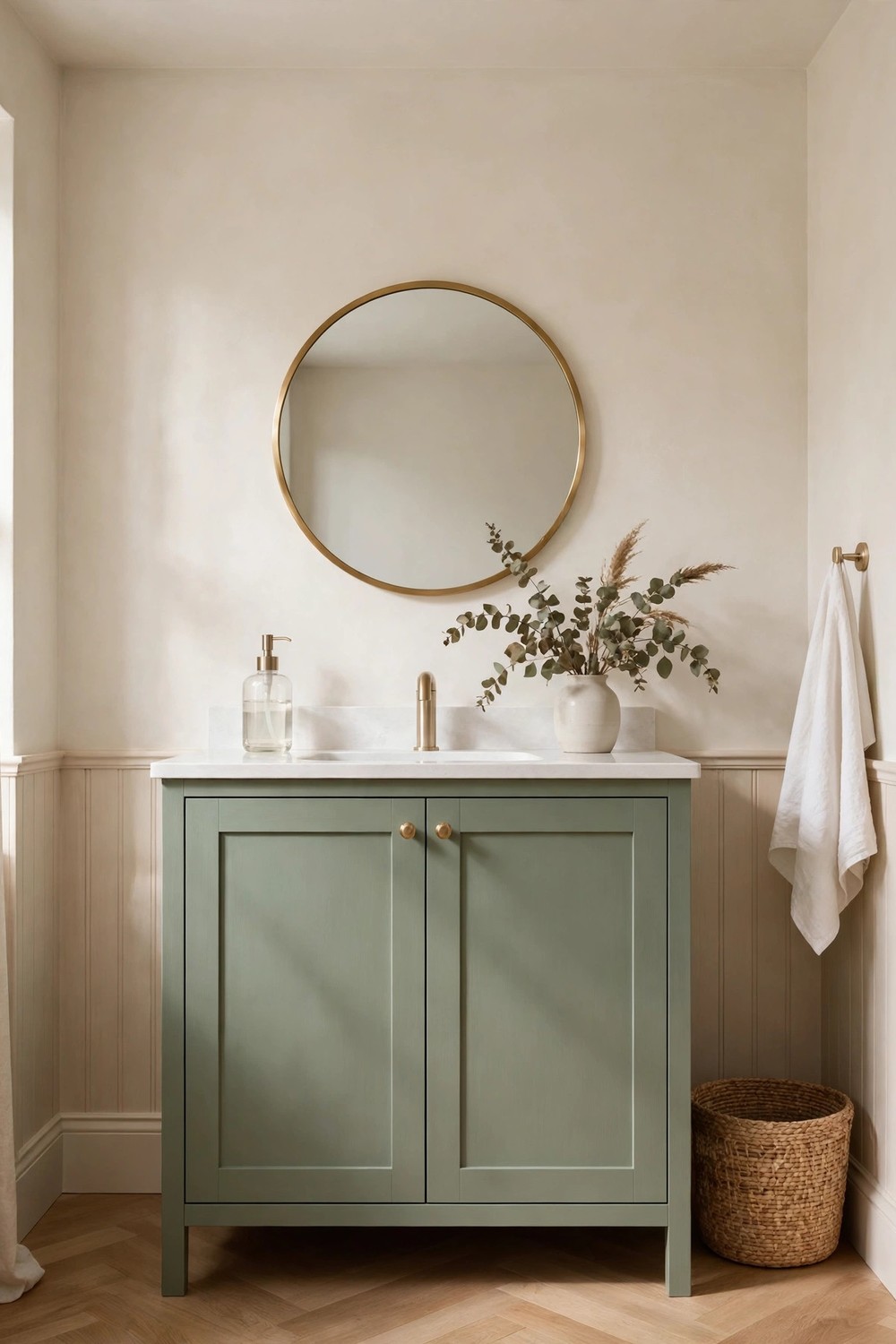
11. Choose a Painted Green Vanity as the Focal Point
A painted green vanity is often the best value move in the whole list, because it puts strong color exactly where the room needs a focal point and leaves the walls free to stay light. Sage feels gentle and classic, olive feels warm and earthy, and a deep forest green vanity can look surprisingly elegant under a white countertop with a simple mirror above. If you are painting an existing vanity, clean, sand, and prime properly, and choose a durable finish made for cabinets and moisture, because bathroom doors work hard every day. New hardware in brass, black, or polished nickel will make the paint look fresh and intentional. Keep the countertop uncluttered, with daily items in a drawer or a small tray, so the color shows cleanly. This idea also suits a small bathroom well, since one colored piece gives character without darkening every wall. You get a custom look for the cost of paint and a free Saturday.
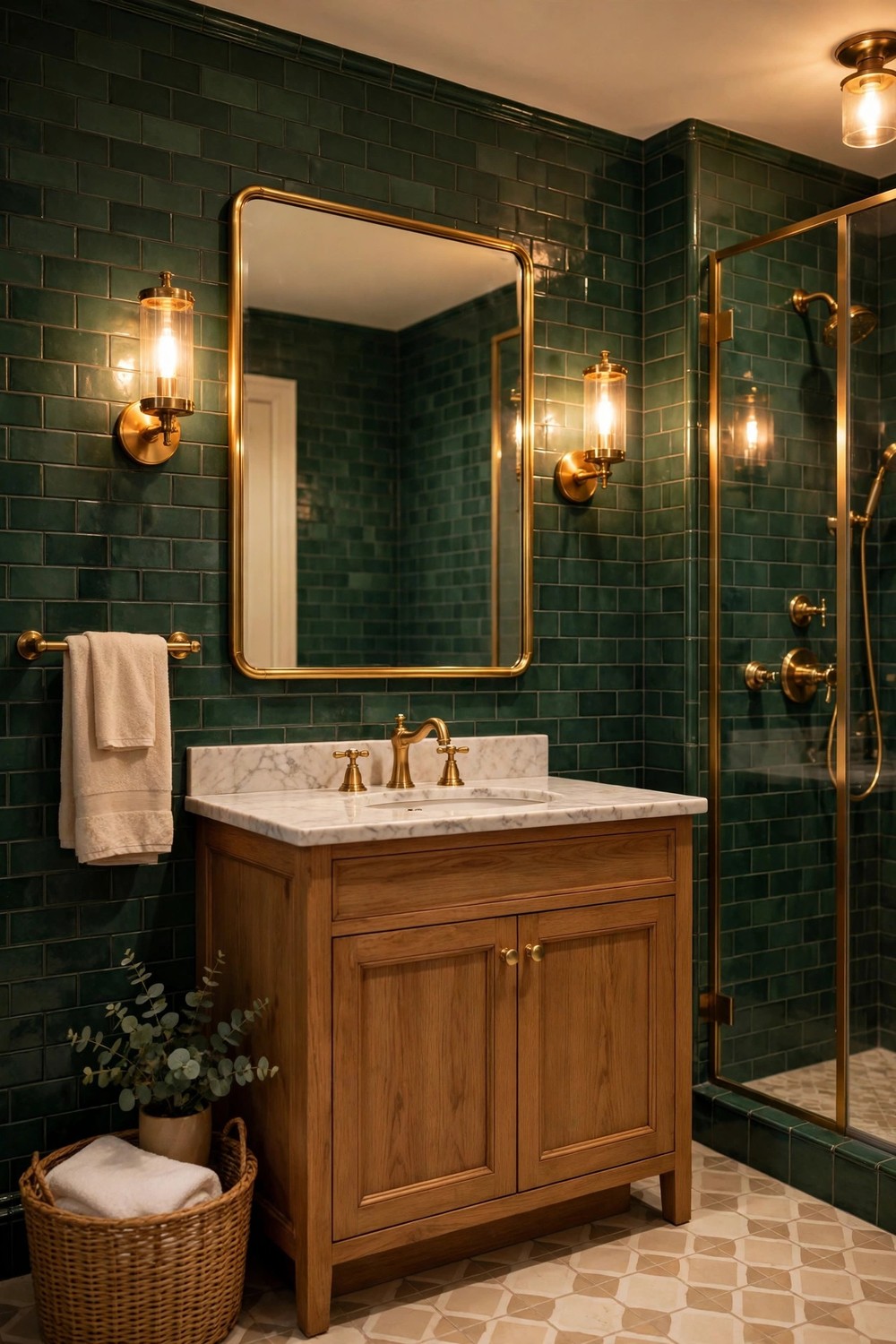
12. Pair Green With Brass Fixtures and Mirrors
Brass and green are a natural pair, because the warmth of the metal lifts green and stops it from feeling cold, while green makes brass look richer and less shiny. Use brass for the taps, the shower fittings, drawer pulls, and a mirror frame, and the room will feel pulled together even if everything else is simple. Unlacquered brass develops a soft patina over time, which suits an earthy green scheme beautifully, while a brushed or satin finish stays more even if you prefer a tidier look. Keep the metal consistent across the room rather than mixing several finishes, because repetition is what makes the pairing feel deliberate. Warm lighting helps too, since cool bulbs can make brass look dull and green look blue. If you already have chrome and cannot change the plumbing fittings, start with a brass mirror and pulls only. That smaller dose usually gives you most of the warmth for far less cost and effort.
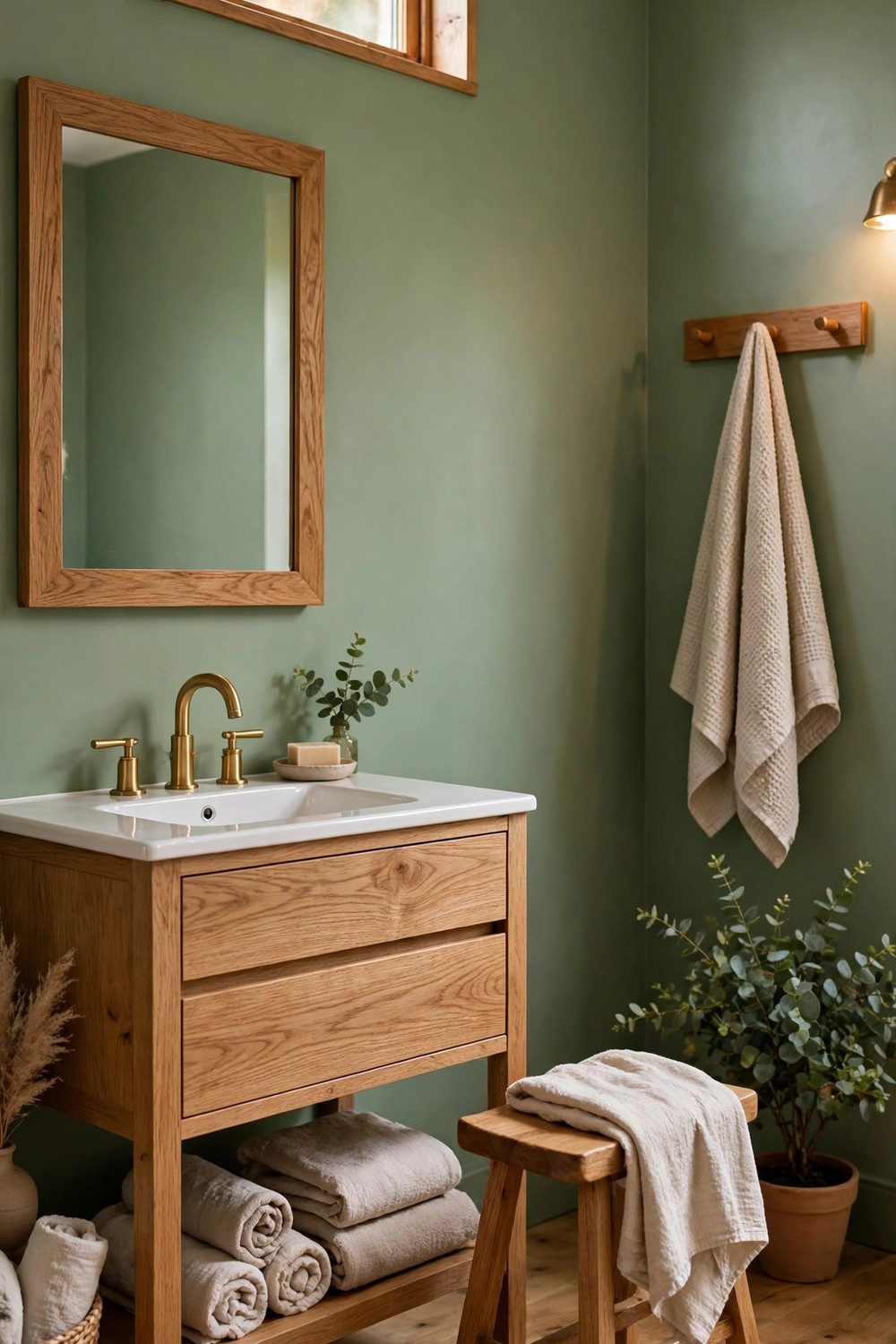
13. Soften Green With Warm Wood Accents
Warm wood is the quickest way to make a green bathroom feel grounded and welcoming instead of cool and formal. Teak, oak, walnut, and other warm tones echo nature, so they sit comfortably beside almost any green, from pale mint to deep forest. You can bring wood in through a vanity, a mirror frame, a small bath stool, floating shelves, or even a simple tray that corrals bottles beside the tub. In a wet room, choose wood that is sealed for moisture or keep solid wood pieces just outside the direct splash zone, and wipe standing water rather than leaving it to sit. The contrast of smooth green tile against real wood grain adds texture even in a very simple room, and it usually makes white fixtures feel warmer too. If your floor is cool grey tile, wood accents help especially, because they bridge the gap between the floor and the green. Start with one generous piece rather than many small ones, and the effect will feel calm.
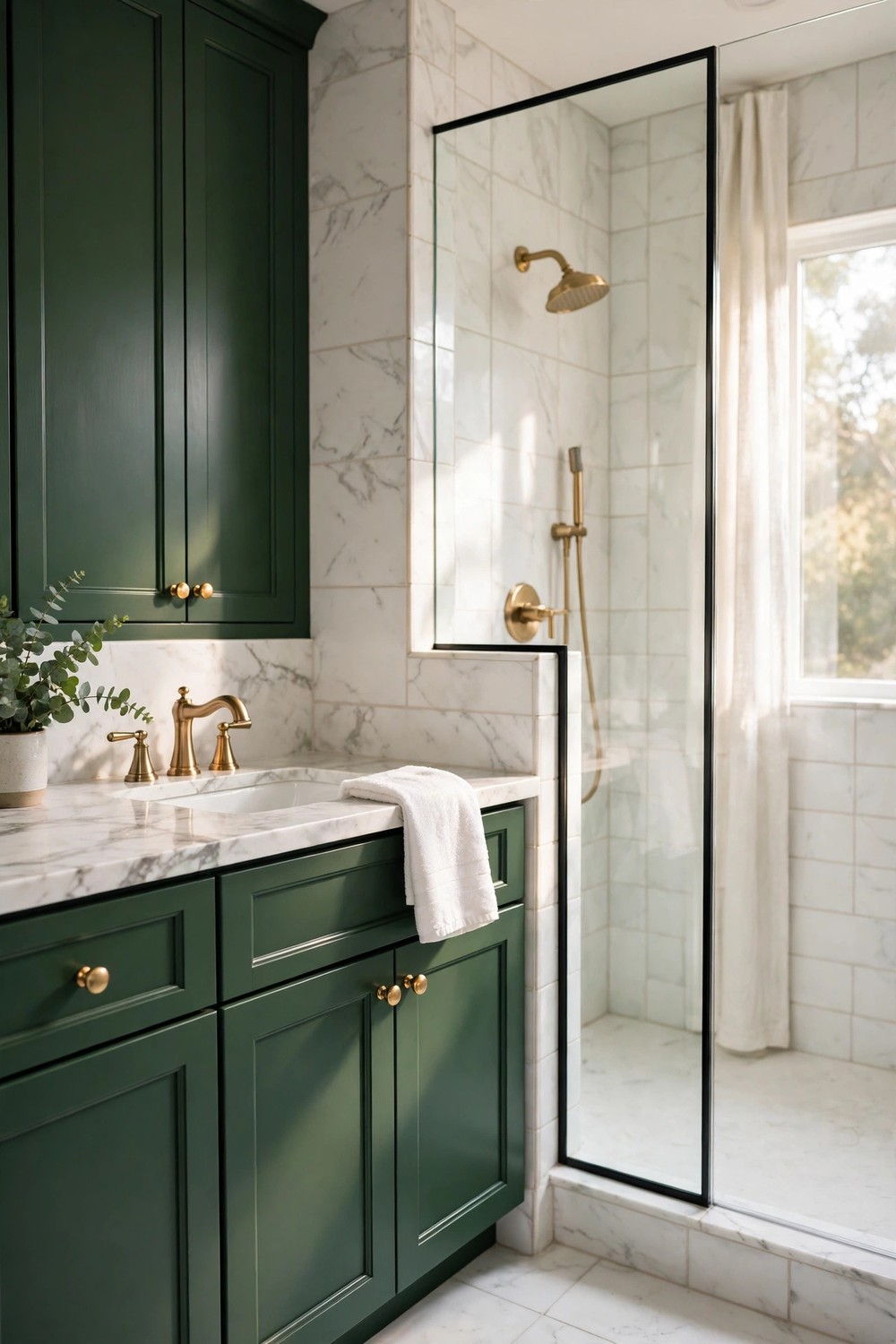
14. Keep It Fresh With White Marble and Green
White marble and green keep each other in balance. The marble brings light, soft veining, and a clean feeling that stops deep green from feeling heavy, while green gives marble warmth and personality so it does not read as cold or plain. Use marble on the countertop, in the shower, or as large floor tiles, and let green lead on the vanity, the walls, or an accent tile. Real marble needs sealing and a little care with colored products, so if your household is busy, a good marble look porcelain can give you the same fresh pairing with far less worry. Keep grout lines pale and simple so the veining stays the pattern, and repeat a small touch of green in towels or a plant to tie the two together. This pairing suits both classic and modern rooms, which is why it lasts beyond trends. It typically feels bright in the morning and still calm under warm evening light.
Finish With Living and Layered Details
The last ideas are about how the room feels to be in, not just how it photographs. Wallpaper, real plants, a statement tub, and soft everyday layers bring the garden feeling of green to life. Take these one at a time, live with each change, and let the room settle before you decide what, if anything, still feels missing.
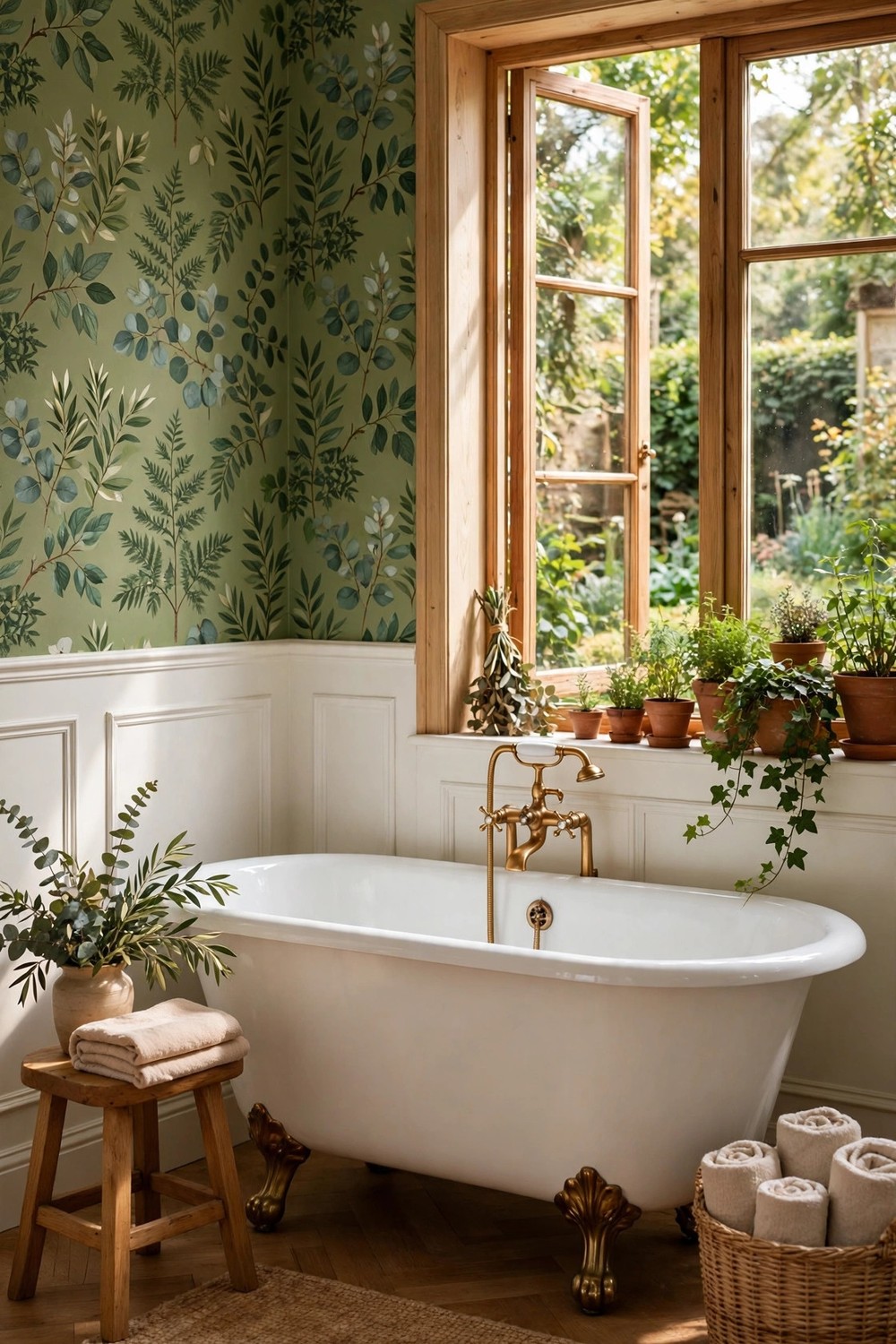
15. Try Botanical Wallpaper for a Garden Feel
Botanical wallpaper gives you the garden feeling of green with pattern, scale, and detail that flat paint cannot offer. A leafy print above white paneling or wainscot is a classic arrangement, because the hard, splash friendly surface handles the lower wall while the paper adds softness above where steam and splashes are lighter. Choose a print with plenty of white or cream in the background if you want the room to stay bright, and pull one green from the paper into a towel, a stool, or a painted vanity so the wall feels connected to the room. In a very steamy bathroom with no window, ask for a vinyl or moisture suited paper and make sure the fan works well, because preparation matters more than the print itself. Keep mirrors and art simple on that wall, since the pattern is already the decoration. Done with a little restraint, botanical paper typically makes even a small bathroom feel like a quiet retreat rather than a plain utility room.
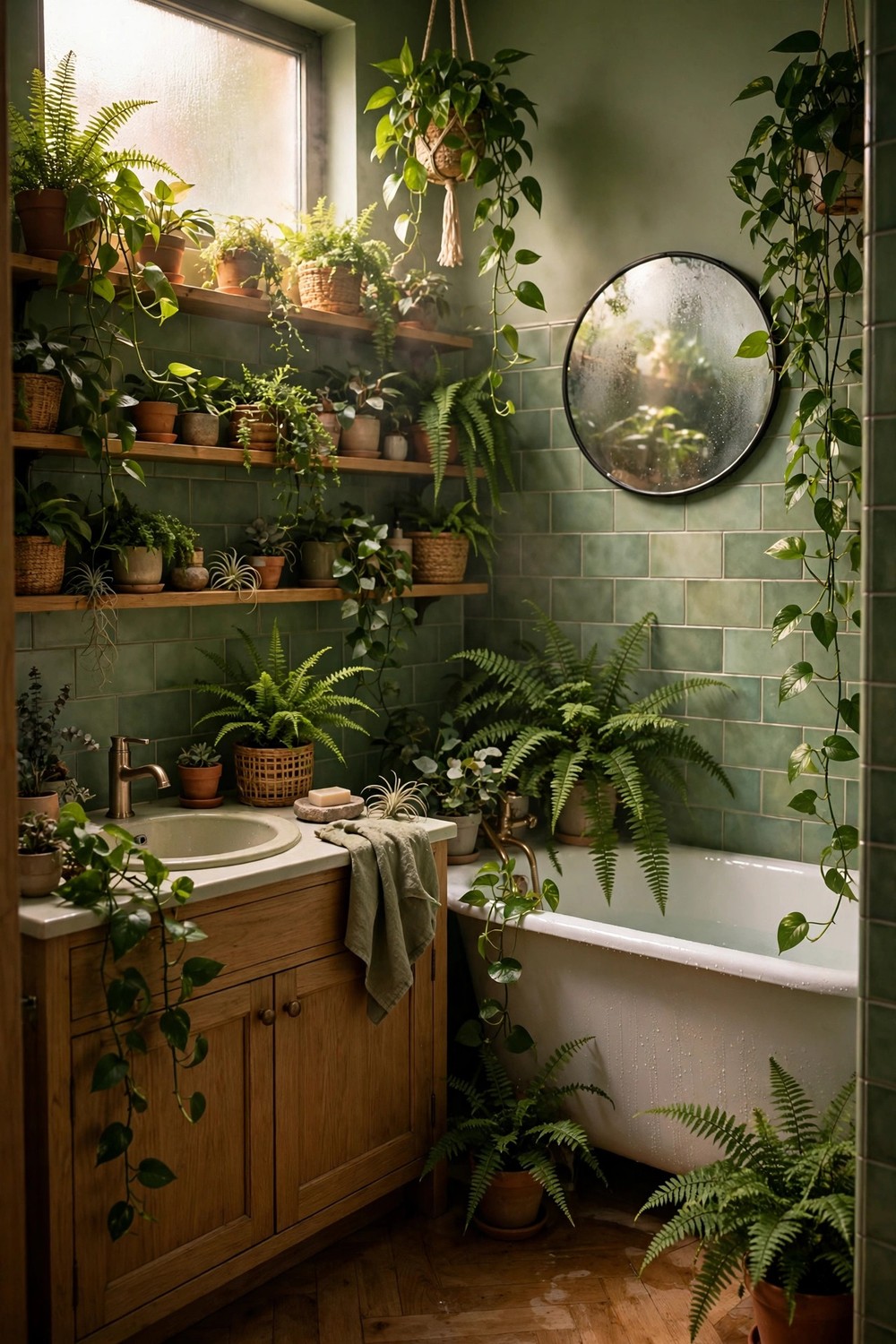
16. Add Humidity Loving Plants on Every Surface
Real plants are what make a green bathroom feel alive rather than decorated, and many common houseplants actually enjoy the humidity that bathrooms provide. Ferns, pothos, philodendrons, and many orchids typically thrive with regular steam and soft, indirect light, trailing happily from a high shelf or sitting beside the tub. Start with the spots your eye lands on first, like the corner of the vanity, a stool by the bath, and one shelf above the toilet, and vary the heights so the green feels layered rather than lined up. Use simple pots in white, terracotta, or woven baskets so the leaves stay the focus, and group plants where you will actually remember to water them. If your bathroom has no window, rotate plants to a brighter room every week or two, or choose a good faux stem for the darkest corner and keep real plants near the light. That honest mix usually looks better than struggling plants, and the room still feels fresh.
17. Make the Tub the Star in a Deep Green Finish
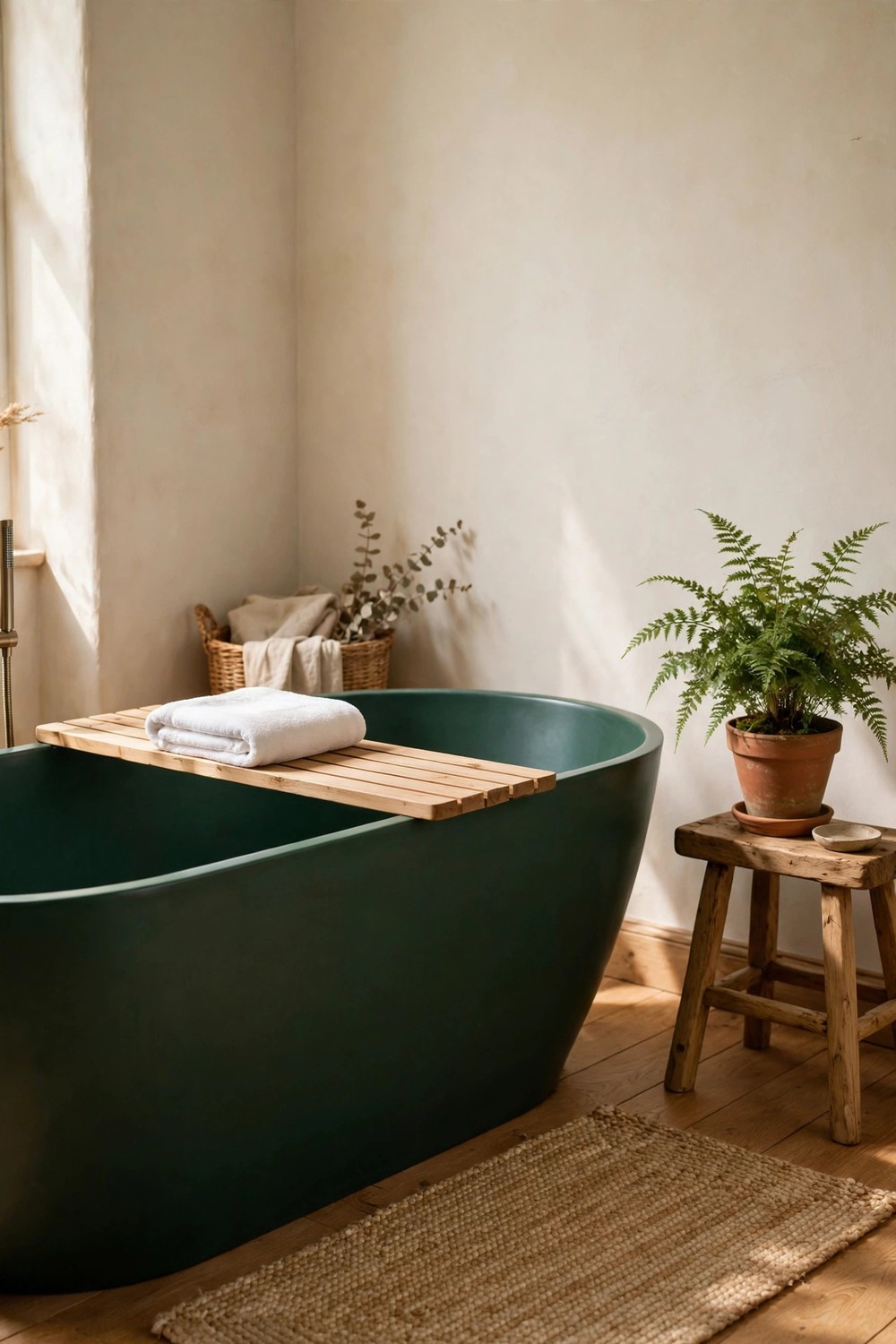
A deep green tub makes a whole bathroom feel considered in one bold move. Painting the outside of a freestanding tub in forest, olive, or a rich emerald leaves the inside white and practical, while the colored shell becomes the piece everyone remembers. It works best when the rest of the room stays fairly quiet, with pale walls, a simple floor, and warm wood or brass nearby to soften the contrast. Use paint or a finish that is suited to the tub material and to heat and moisture, and ask for advice at a good paint counter if you are unsure, because preparation decides how long the finish lasts. Style the tub simply, with a wooden bath board, a folded white towel, and a plant on a stool, and let the shape and color do the talking. If you are choosing a new tub, a colored model can feel like furniture rather than a fixture. Either way, this is the idea that typically turns a plain bathroom into a small retreat.
18. Bring Green In With Towels, Rugs, and Art
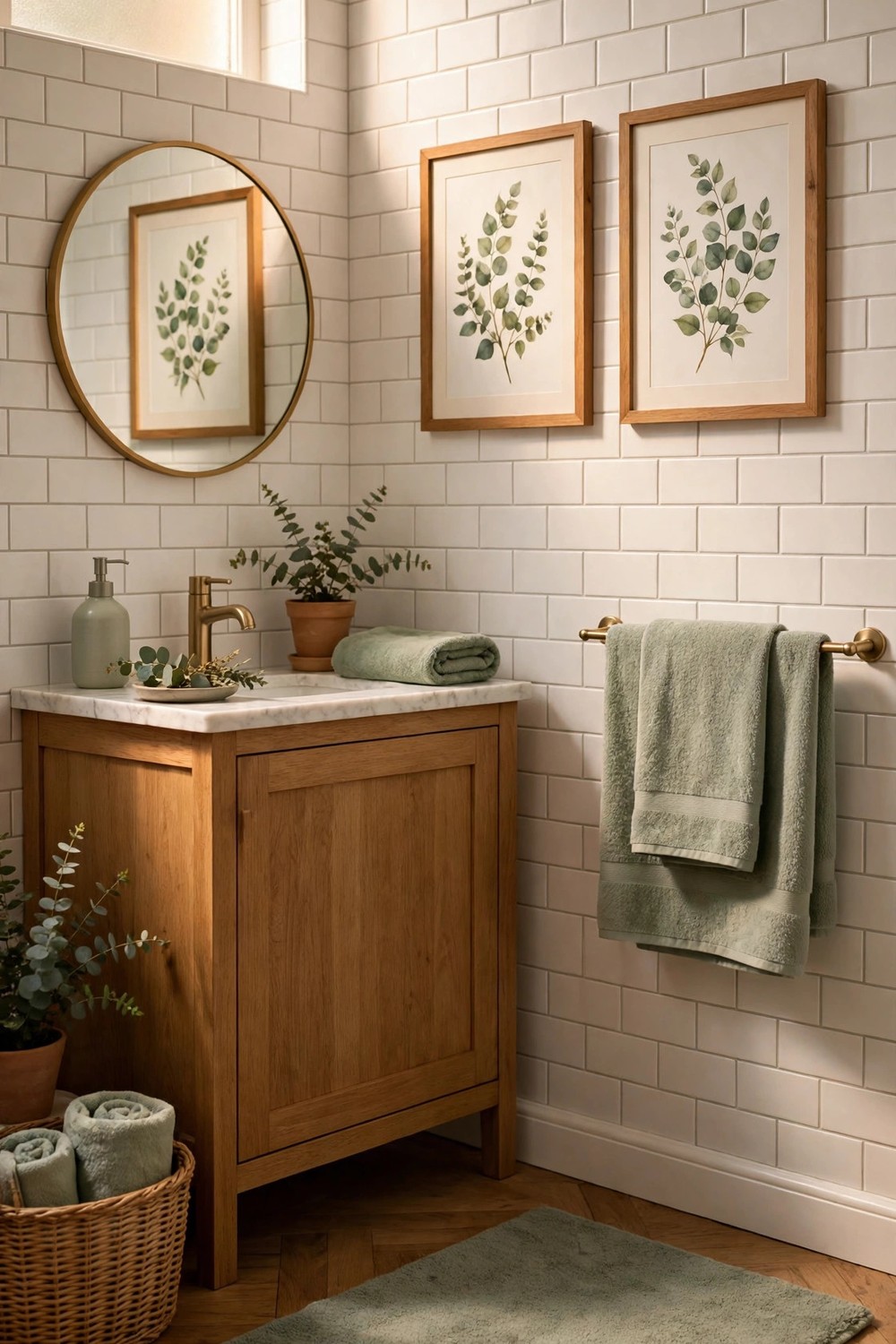
If painting and tiling are not on the table, towels, a rug, and art can still give you a green bathroom that feels fresh and grounded. Choose towels in two related greens, perhaps sage for daily use and a deeper stripe or trim for the guest set, and hang them where the color will show against white tile or pale walls. A washable bath rug in a muted green softens hard floors and ties the towels to the rest of the room, and framed botanical prints or simple leaf art above the toilet or beside the mirror repeat the color at eye level. This layered approach is forgiving and affordable, and you can adjust the depth of green with the seasons, lighter in spring and deeper when the weather turns cold. Keep the pieces you choose useful as well as pretty, wash them well, and replace them when they fade. Small, cared for layers usually change the mood of a plain bathroom far more than one expensive piece ever could.
A Bathroom That Feels Like a Deep Breath
When you step back, a green bathroom does not need to match a photo or use every shade you like. It just needs to feel fresh when the morning light comes in, grounded when you are getting ready in a rush, and calm when you run a bath at night. If one corner feels cold, add wood, brass, or a plant there. If a wall feels busy, take one pattern away and let a single green lead. Green is a forgiving color, and small adjustments usually make a bigger difference than another large purchase.
So start small this week. Hang a plant where the steam will reach it, swap in a set of sage towels, or paint a sample square and live with it for a few days. That one honest test will show you which green your room wants, and the next step will probably suggest itself. Before long, your bathroom will not feel like a project anymore. It will feel like the fresh, grounded place you meant it to be, ready for busy mornings and slow evenings alike.

Leave a Reply