
If you have ever stood in your child’s bedroom doorway and wondered where the floor went, you are not alone. A tiny kids room has to hold a bed, clothes, books, toys and one small human who keeps growing, and that is a lot to ask of a few square meters.
The good news is that small does not have to feel cramped. Most tiny rooms do not actually need more space. They just need the right bed, storage that climbs the walls, and a few light tricks that fool the eye in the best possible way.
Here are 18 small kids bedroom ideas that work in real family homes, grouped by the problem they solve. Start with the bed, because it takes up the most room, and let everything else follow from there. None of them need a renovation, and most can be done in a single weekend.
Beds That Save Space
In a tiny room the bed is the biggest piece of furniture by far, so it is usually where the biggest wins are hiding. Choose a bed that earns its footprint and the whole room breathes easier.
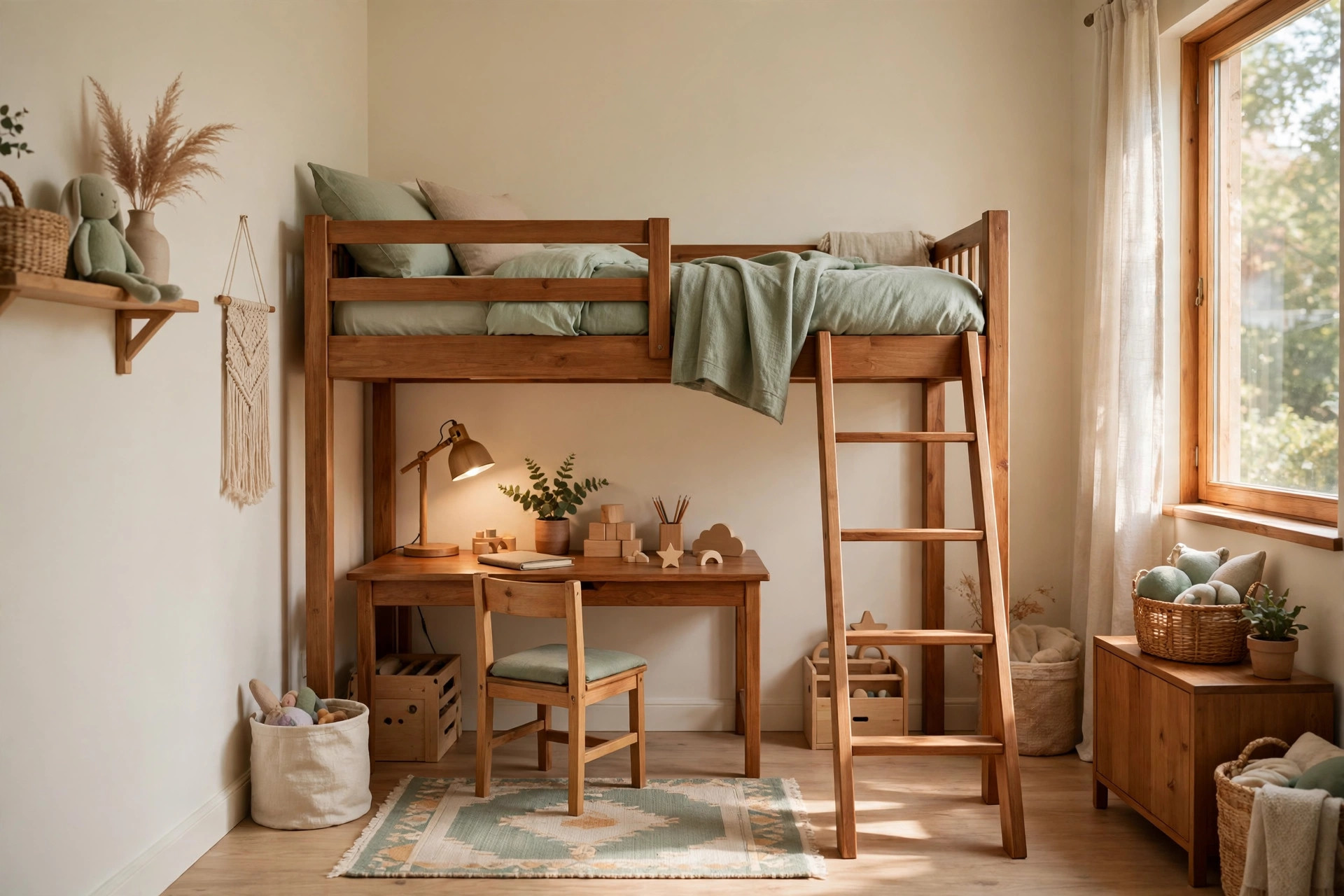
Raise the bed on a loft frame. A loft bed lifts the mattress up high and frees the floor underneath for a desk, a reading nook or a small dresser. It typically works best for kids who are confident climbers, and a sturdy guard rail is a must. The space below feels like a bonus little room inside the room.
Pick a low mid sleeper for younger kids. Mid sleepers sit lower than full lofts, so they usually feel safer for smaller children while still opening up space underneath. The gap below is just right for storage boxes, a small bookshelf or a cozy cushion corner. It is a gentle step between a toddler bed and a full loft later on.
Use a trundle for sleepovers without a second bed. A trundle slides out from under the main bed at night and disappears again by morning, which is perfect in a room with no spare floor at all. It saves you from the air mattress shuffle every time a cousin stays over. During the day, nobody would guess a whole extra bed lives under there.
Choose a bed with built in drawers. Storage beds turn the dead space under the mattress into drawers for pajamas, clothes and spare bedding. In a tiny room, that can mean skipping a separate dresser altogether. Look for smooth runners, because kids will open those drawers about a hundred times a day.
Try a wall bed if the room doubles as a play space. A fold down bed frees the entire floor during the day, which is a real game changer in the smallest rooms. It does need proper wall fixing and a bit more budget, so it is not the right fit for everyone. But for a room that has to work a double shift, it is hard to beat.
Vertical Storage and Shelves
When the floor is full, the walls become your extra room. Thinking upwards is usually the single biggest change you can make in a tiny kids bedroom.
Wall shelves
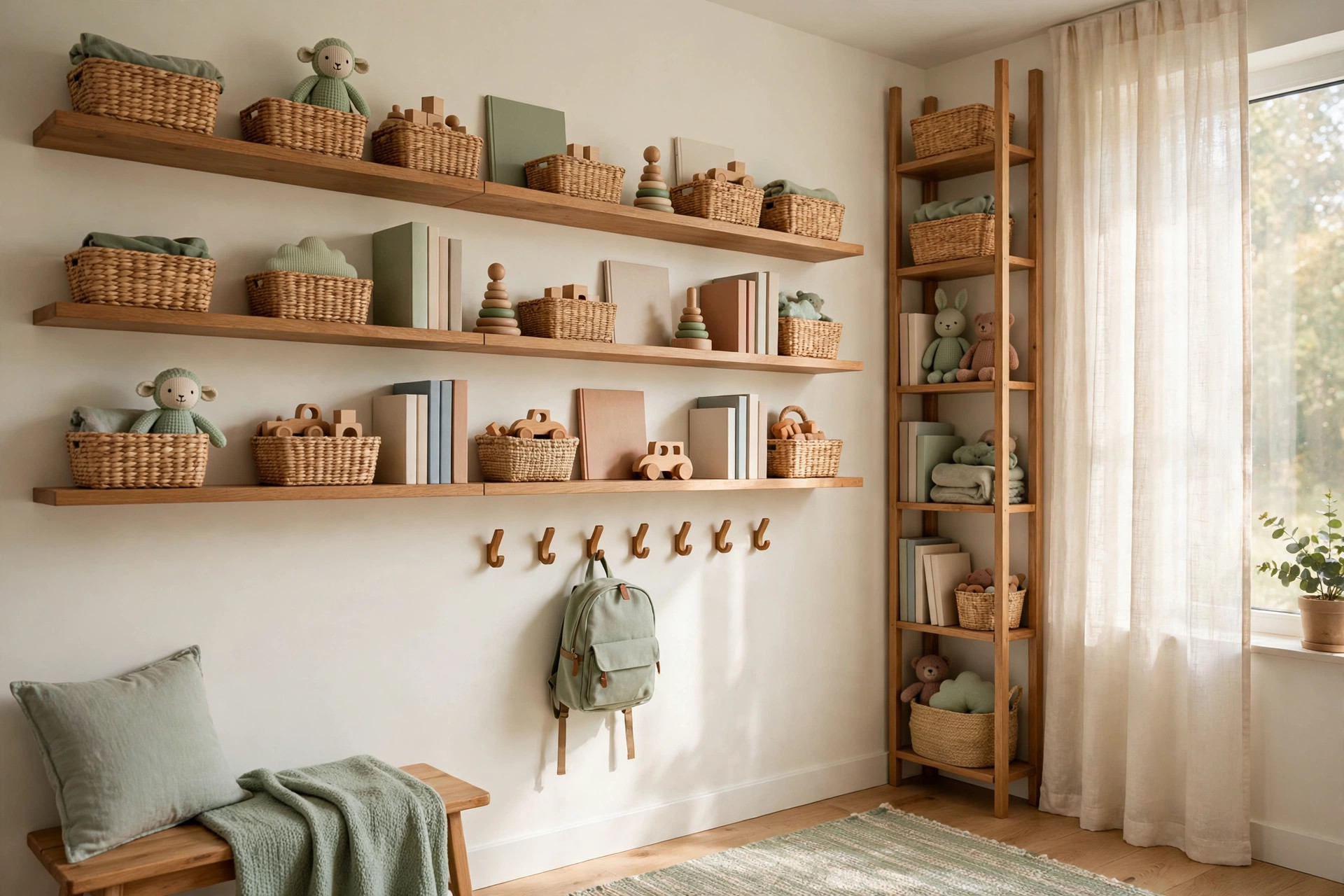
Run shelves up high, where small hands cannot reach. A shelf near the ceiling holds keepsakes, spare bedding and out of season clothes that do not need daily access. It also keeps visual clutter off the lower walls, which makes the whole room feel calmer. Just keep a sturdy step stool nearby for grown up retrieval missions.
Swap the bookcase for wall mounted book ledges. Front facing book ledges hold picture books in one slim line against the wall instead of eating up floor space. Kids can see the covers and pick their own bedtime story, which usually means more reading and less digging. Two or three ledges beside the bed make a lovely little library corner.
Add one slim shelf above the bed. That blank stretch of wall over the pillow is prime real estate in a small room. A narrow shelf holds a night light, one favorite teddy and the current bedtime book. Keep it shallow and light, and never put anything heavy up there.
Over-door
Hang an over door organizer for the small stuff. The back of the door is basically a free cupboard that most of us walk past every day. Clear pockets or fabric slots hold hair clips, socks, crayons and all the tiny things that usually vanish. It adds real storage without changing the floor plan one bit.
Use over door hooks for tomorrow’s outfit. A simple row of hooks on the door handles the backpack, a hoodie and the next day’s clothes in one tidy spot. Mornings get calmer when the outfit is already chosen and hanging in plain sight. It also saves the bedroom chair from becoming an unofficial wardrobe.
Light, Mirrors and Color Tricks
A tiny room with good light and pale walls feels bigger than a larger room that is dark and busy. These are honestly the cheapest extra square meters you will ever gain.
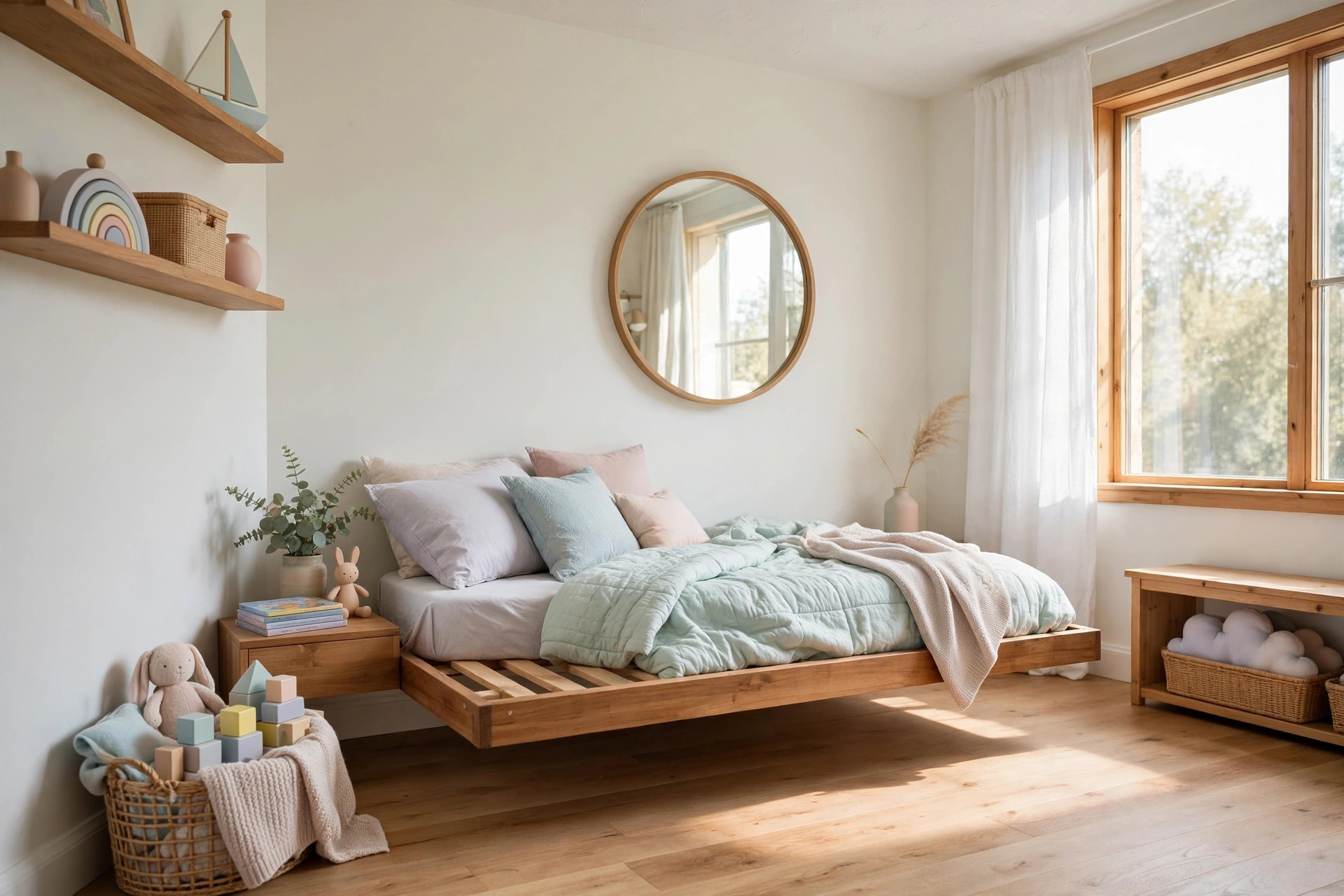
Paint it warm white or a soft pale shade. Light walls bounce daylight around and typically make a small room feel airier straight away. Warm whites and gentle creams feel cozy for kids, while stark bright white can feel a bit cold. Save the bold colors for bedding and cushions, which are much easier to change later.
Hang one mirror where it catches the light. A mirror across from or beside the window reflects daylight deeper into the room and doubles the view. Go for a sturdy, shatter safe style and fix it firmly to the wall. Kids usually love it for dress up games, and you will love how much bigger the room feels.
Keep window coverings light and hang them high. Sheer curtains or a simple blind mounted close to the ceiling let in as much daylight as possible. Heavy, dark curtains tend to shrink the visual space around a small window. If you need blackout for sleep, a plain blackout blind behind a sheer layer usually does both jobs.
Layer soft lighting instead of one harsh bulb. A single bright ceiling light flattens a small room and throws shadows into every corner. A warm ceiling light plus a small bedside lamp feels much gentler and makes the room seem larger after dark. A short string of warm fairy lights over the bed never hurts either.
Zones in a Room with No Room
Even the tiniest bedroom can hold a sleep zone, a play zone and a small spot for homework. The trick is marking each area clearly, so the room feels organized instead of squeezed. When everything has its own little territory, tidying up gets simpler too, because everyone can see where things belong.
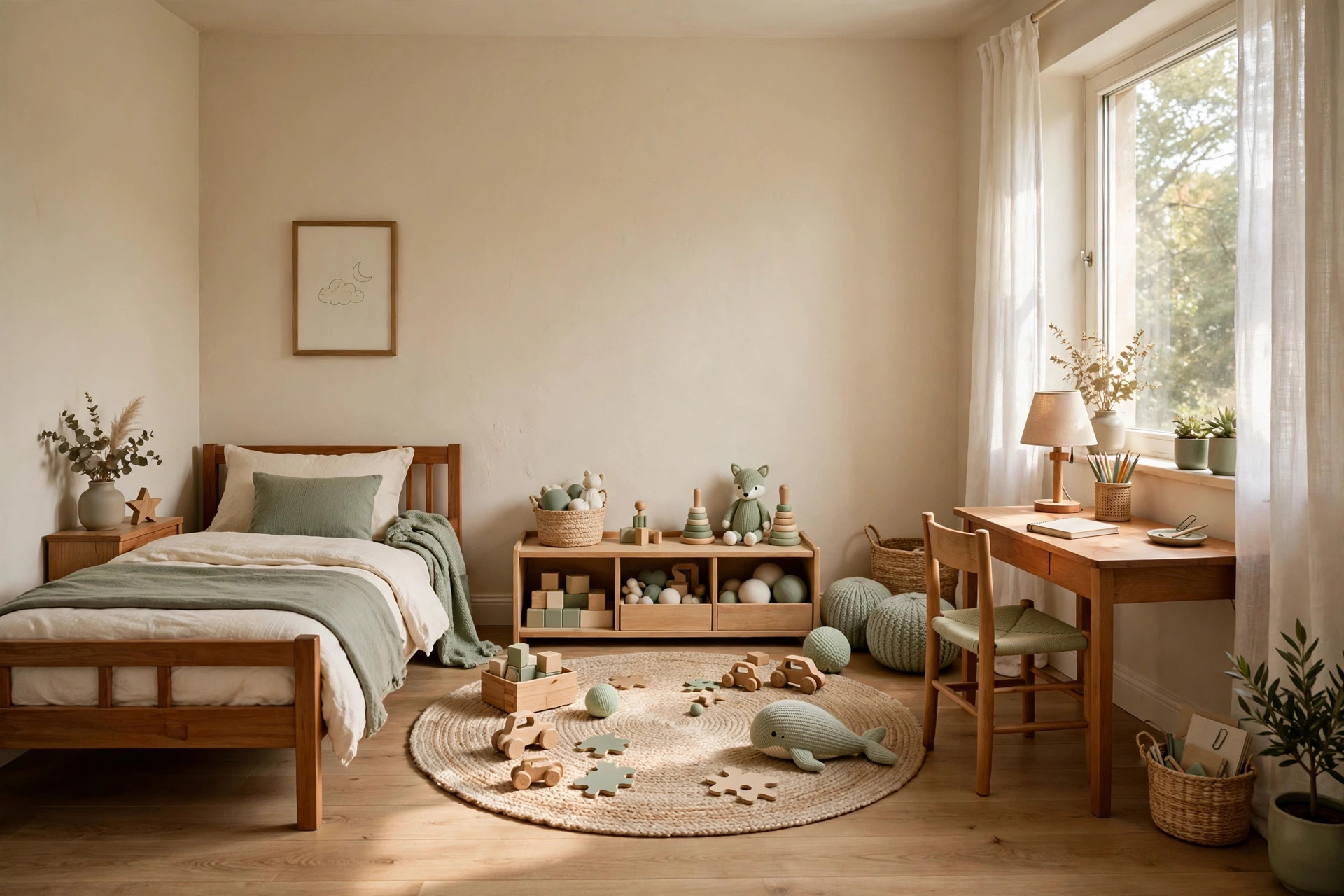
Anchor each zone with its own small rug or mat. A rug in the play corner and a different mat by the desk quietly tells everyone what happens where. It sounds simple, but zones make a tiny room feel planned rather than accidental. Low pile and washable usually win in kids rooms, for obvious reasons.
Slide the desk into the leftover nook. Every small room has one awkward gap, by the window, beside the wardrobe or under the loft, and a compact desk usually fits into one of them. A wall mounted fold down desk is even better, because it disappears once homework is done. Add one small lamp and the corner suddenly feels like a proper study spot.
Keep play storage low and open. Low open boxes and baskets at kid height mean toys can be reached easily and, just as importantly, put away without help. When cleanup takes two minutes, it actually tends to happen. Label the boxes with little pictures if your child is small, and the system mostly runs itself.
Give the bed a cozy corner of its own. Tucking the bed into a corner with soft pillows, a light canopy or a simple curtain turns the sleep zone into the calmest part of the room. It separates rest from play visually, even when the two are only a step apart. Kids typically love the den like feeling, and bedtime often gets a little easier for it.
A tiny kids bedroom will never be a big one, and that is honestly fine. With a smarter bed, storage on the walls and a few clear zones, a small room can feel calm, playful and completely theirs. Start with whichever idea solves your biggest daily headache, and let the little room surprise you.


Leave a Reply