
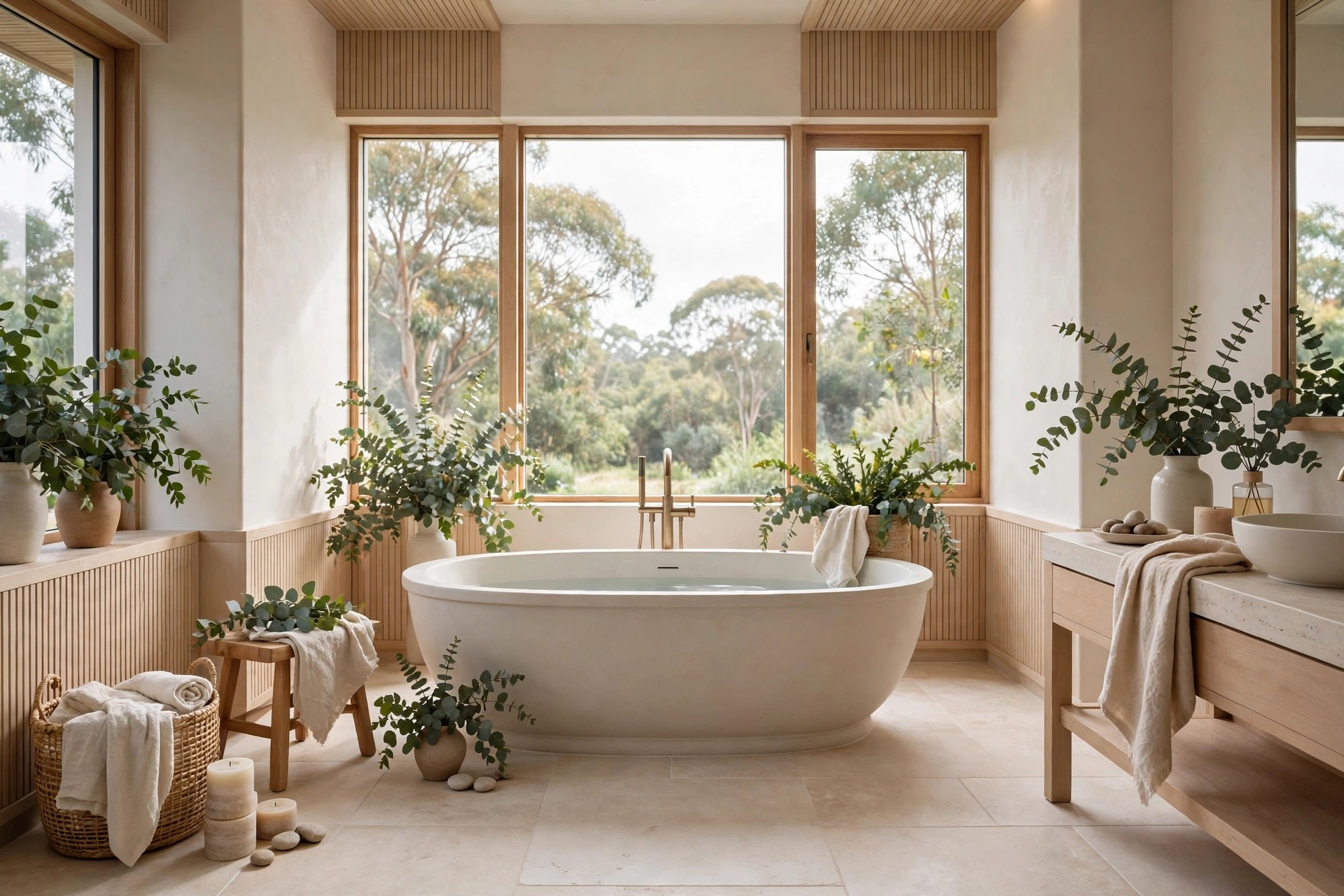
A freestanding tub changes the whole mood of a bathroom, even before you run the water. It sits in the room like a piece of furniture rather than a fixture tucked into a corner, and that alone usually makes a master bath feel calmer. If you have been collecting freestanding tub ideas, you are probably chasing that quiet spa feeling at home, where a soak feels like a small reset at the end of the day. It does not ask for a huge bathroom either, just a little clear floor and a spot where the light feels kind.
The good news is that the spa feeling rarely comes from one big dramatic choice. It usually comes from a handful of gentle ones that work together, like a shape that suits your body, a material that keeps the water warm, and soft light in the right place. Warm white walls, pale stone, light wood, and a little eucalyptus green tend to do most of the heavy lifting, and they play nicely with almost any tub shape you fall for.
Below are nineteen ideas to borrow, starting with shape and materials, then placement, fillers, and the styling touches that make a tub feel inviting. Take the ones that fit your space and the way you actually unwind, and leave the rest for later. A tub you love looking at is usually a tub you will actually use, and that is really the whole point of the project, is it not.
Choosing Your Tub Shape
Shape is the first thing you will notice and the thing that matters most once you are in the water, so think about how you like to sit. Some people love to stretch out, and others prefer to sit up with a book, so let your own habits lead here. If you can, sit in a showroom tub for a minute or two, because your back will usually tell you the truth faster than your eyes will.
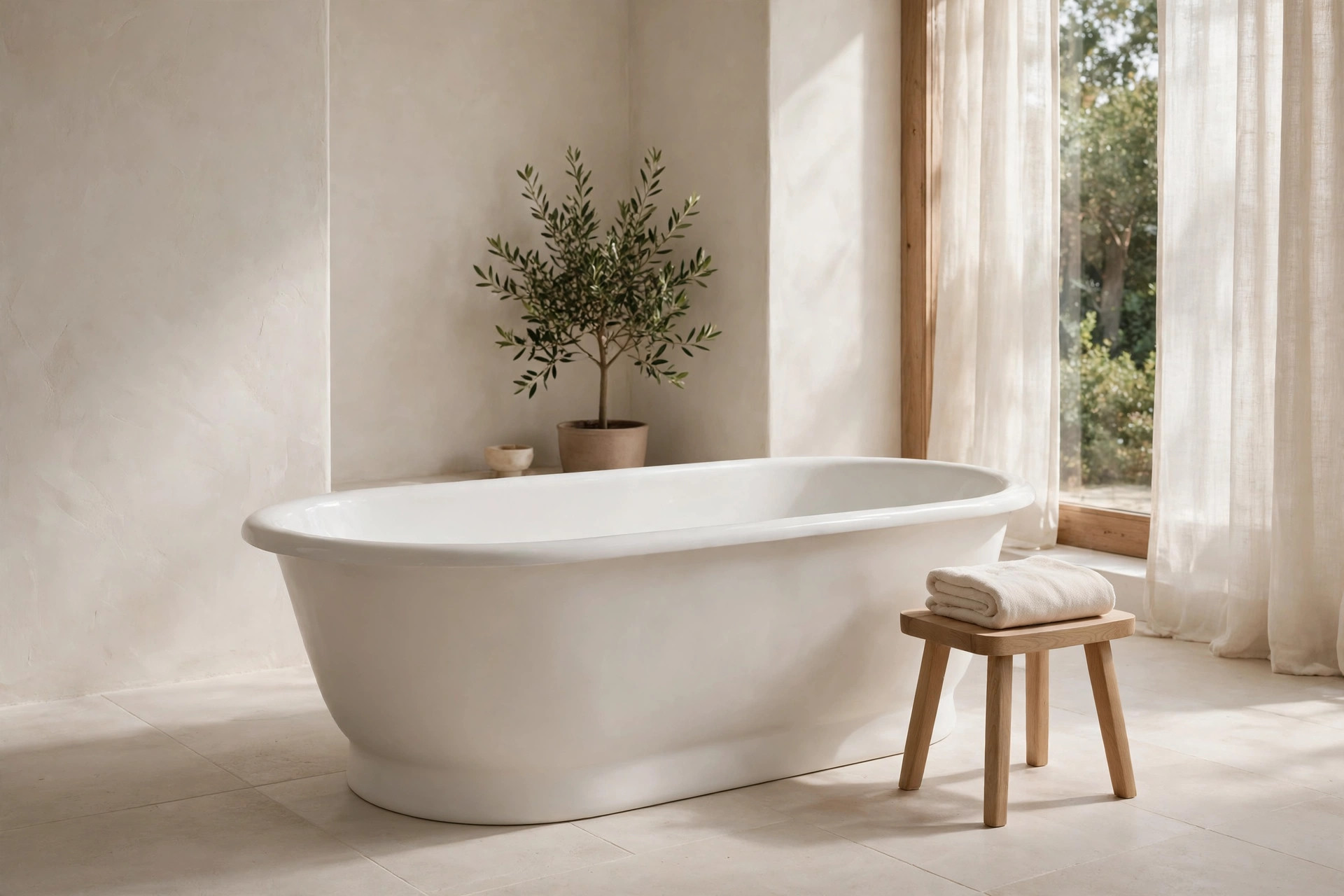
Choose an oval tub when you want the softest, most classic look. An oval usually suits a spa mood best, because there are no sharp corners to catch your eye or your elbow. The curved ends tend to support your back at a gentle angle, so a longer soak feels easy and unhurried.
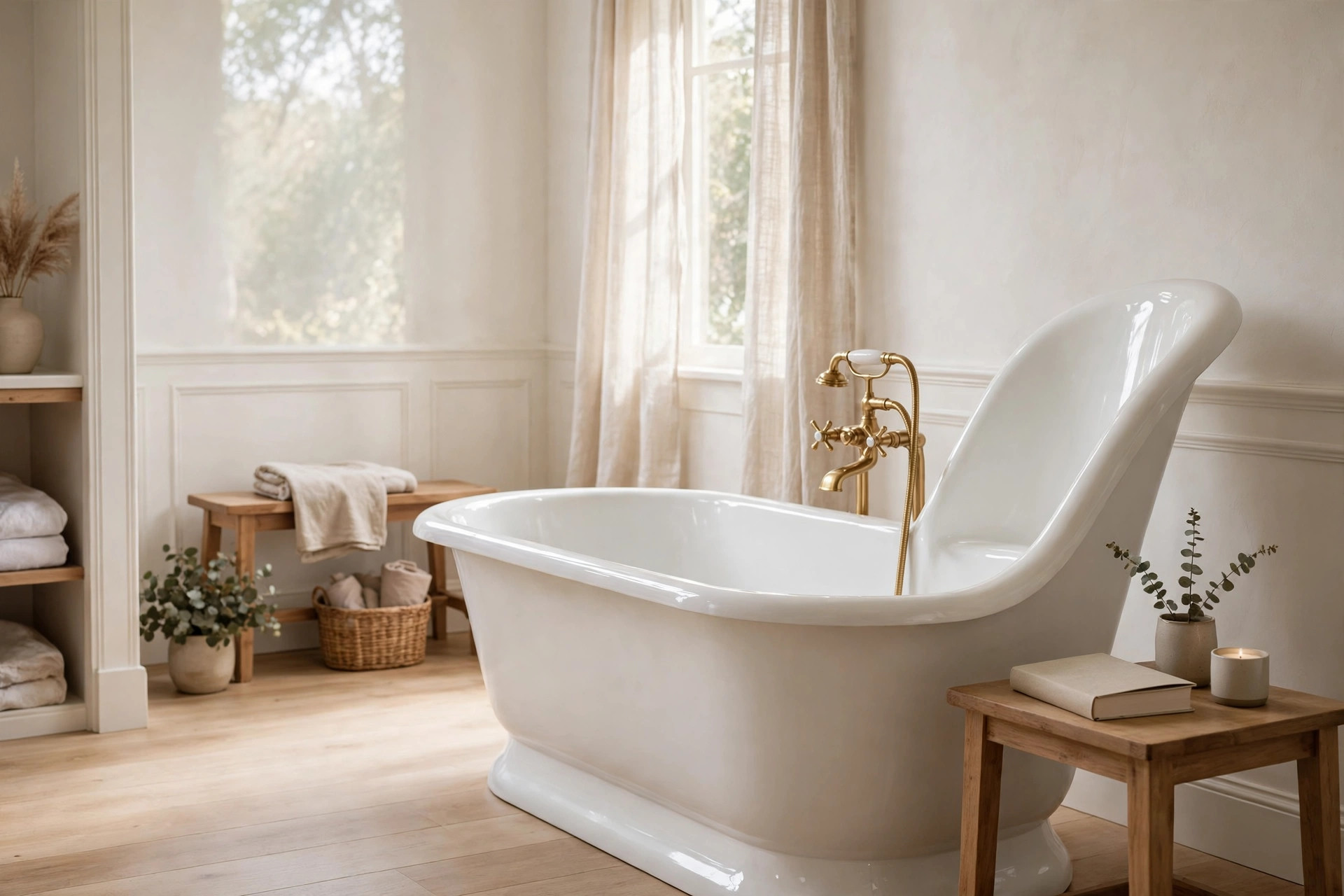
Try a slipper tub if you love to sit up and linger. A slipper shape rises higher at one end, or at both ends, and that raised back typically gives lovely support for reading. It has a romantic charm that still feels calm in a pale, simple room.
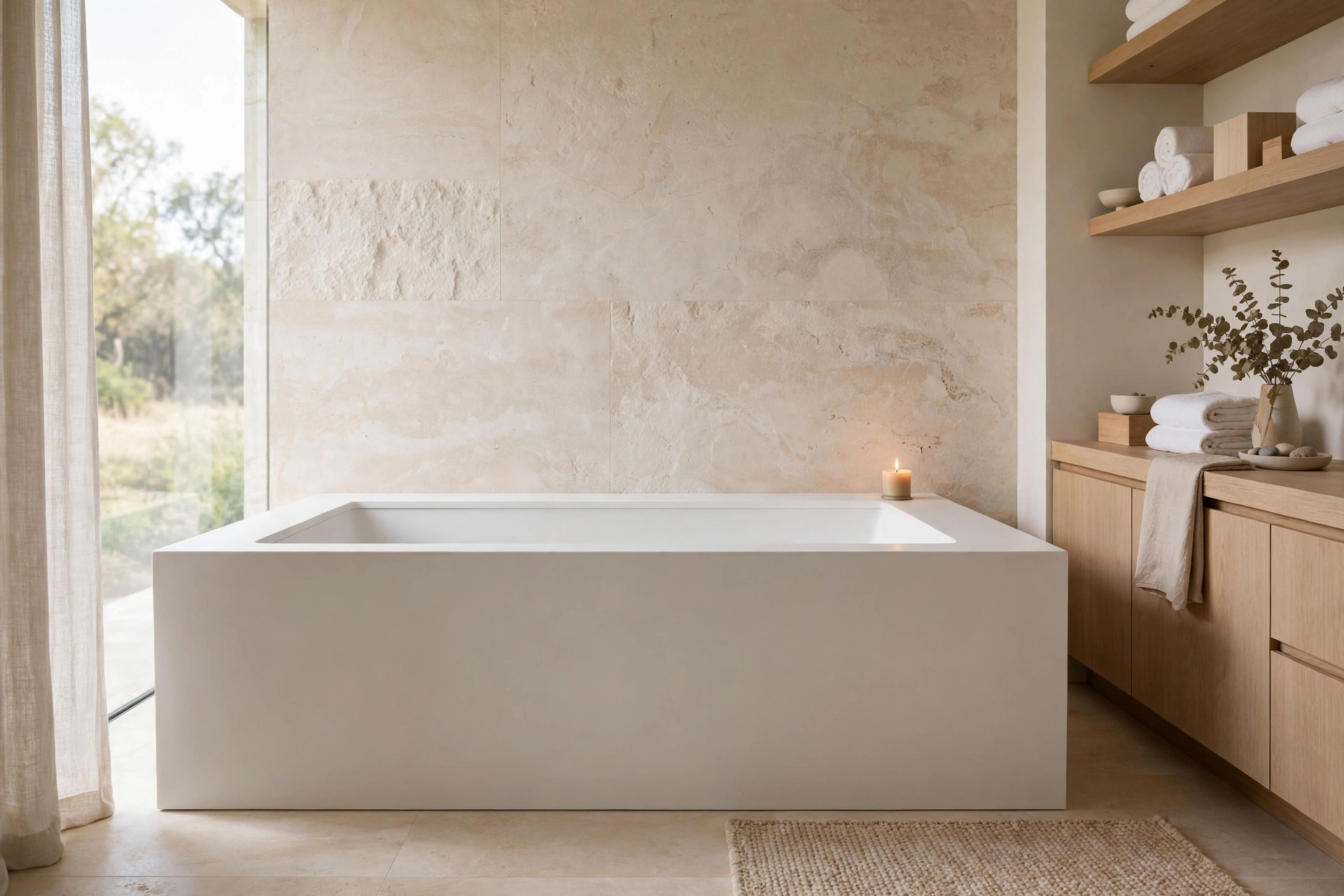
Look at a rectangular tub for a cleaner, more modern line. A straight sided tub can feel tidy and architectural, especially against pale stone or simple plaster walls. It often sits happily near a wall, and the flat rim usually gives you a handy spot for a candle.
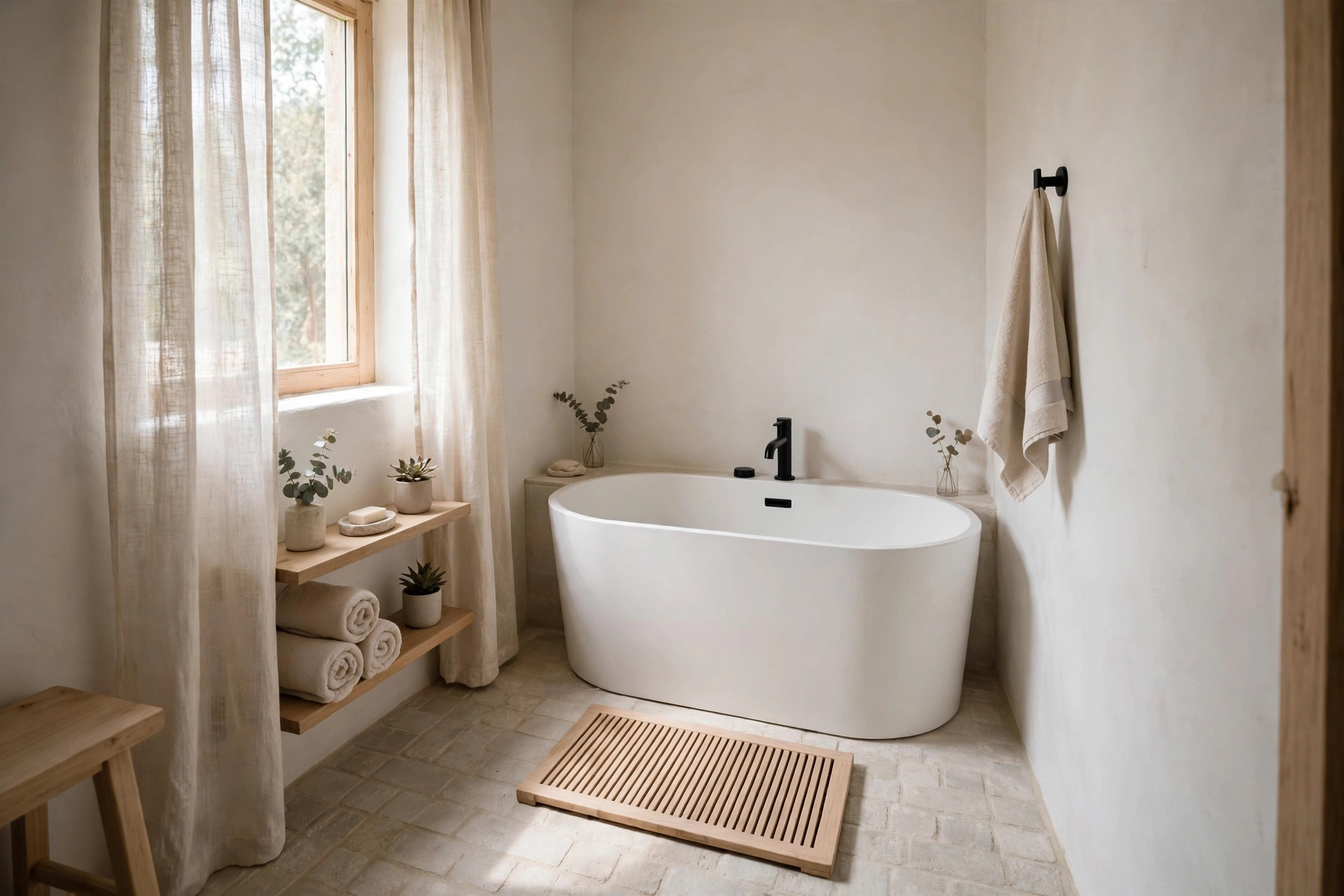
Consider a compact tub when space is tight but you still want the look. A smaller footprint does not have to mean a smaller feeling, and a deeper compact tub can still give you a proper soak. Measure your doorway carefully too, because the tub needs a comfortable path into the room.
Materials That Hold the Heat
Material changes how warm the water stays, how the tub feels under your hands, and how much care it asks from you. None of them are wrong, but they each have a personality, and it helps to know what you are signing up for before the tub is sitting in the middle of your floor.
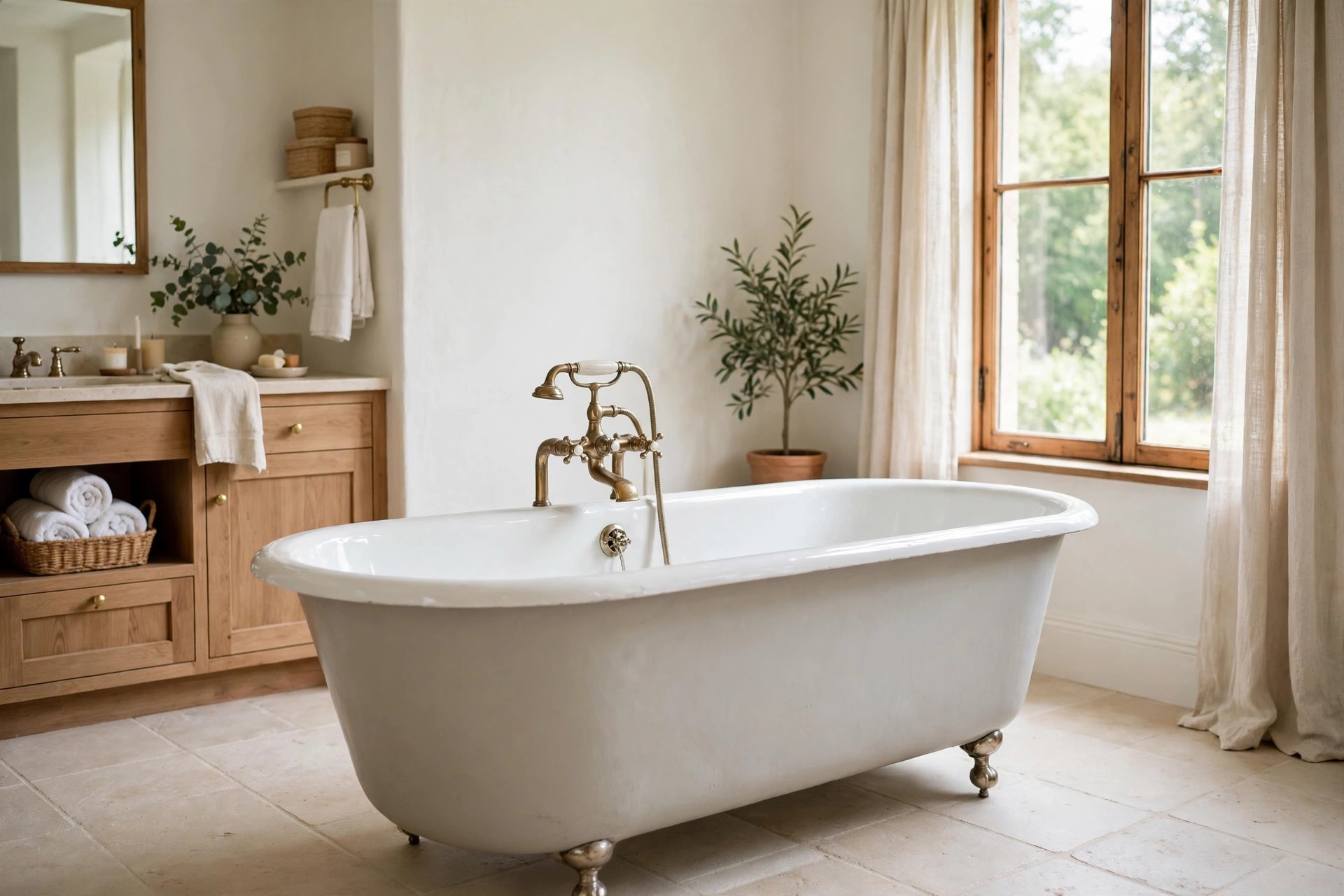
Pick cast iron when keeping the water warm matters most to you. Cast iron usually holds heat beautifully, so your soak stays comfortable for longer without topping up the hot water. It is heavy, though, so your floor may need extra support, and that is worth checking early.
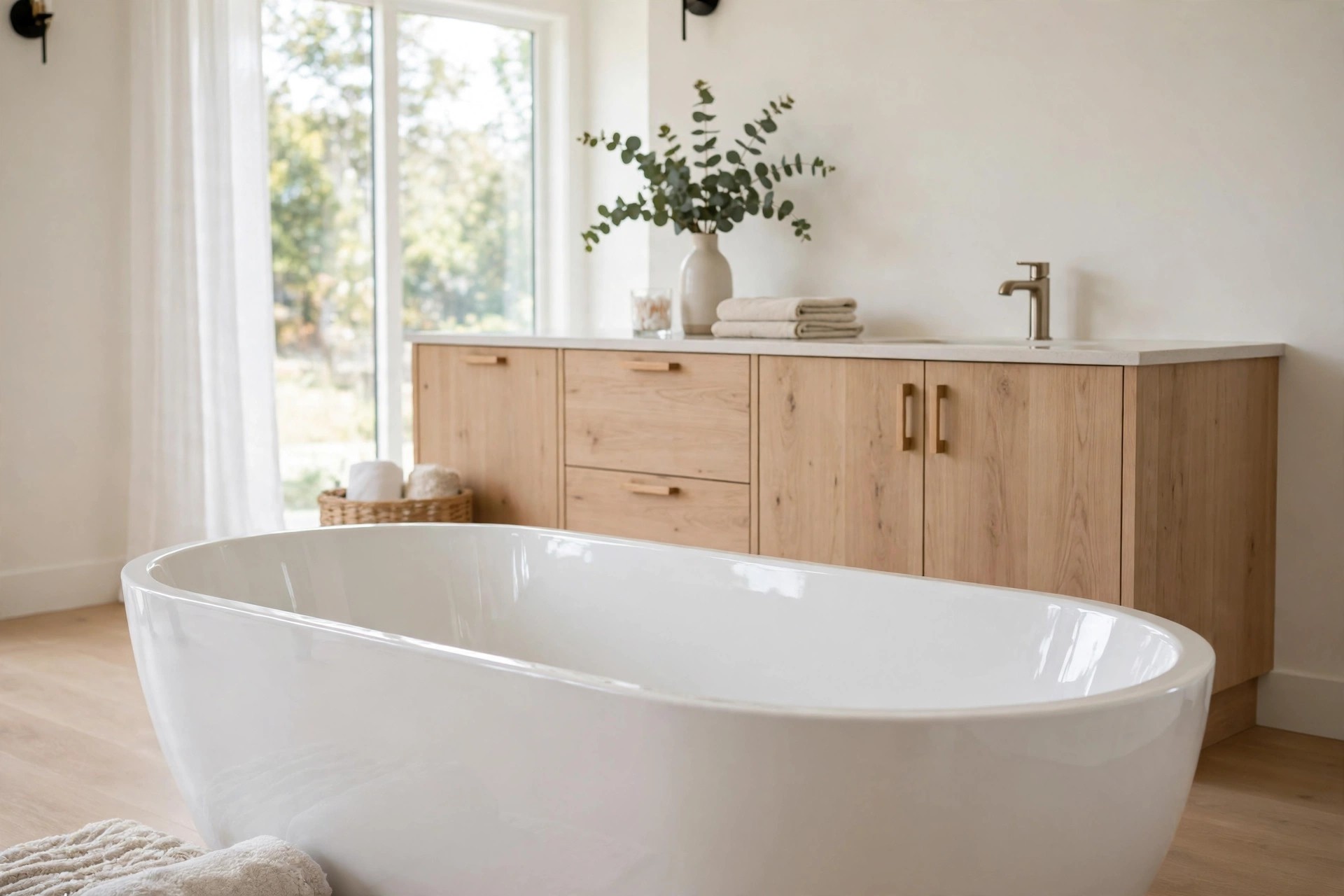
Choose acrylic when you want something lighter and easier to live with. Acrylic tubs are usually warmer to the touch at first than stone or metal, and they come in many gentle shapes. They are typically lighter to bring in, which can make an upstairs bath much simpler.
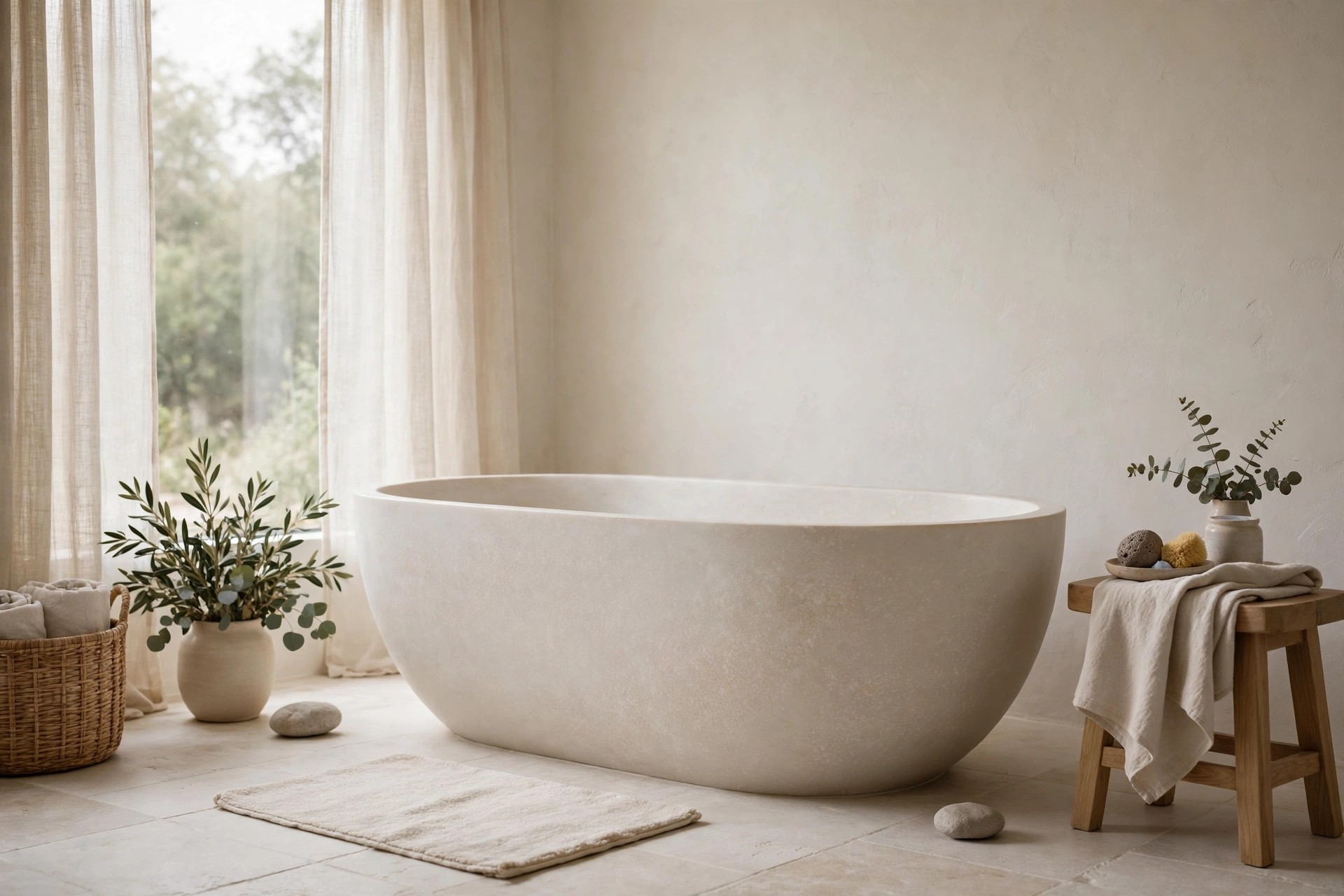
Consider stone resin for a soft, matte spa feel. This material often has a smooth, almost silky finish that looks lovely with pale stone floors and warm white walls. It usually holds warmth well and tends to hide water spots kindly, which is a small mercy on busy mornings.
Placement: Window, Corner or Center Stage
Where the tub sits shapes everything else in the room, from the plumbing to the view you get while you soak. Stand in the empty space for a moment and imagine your evening routine, because the best spot usually feels calm before anything is installed. Think about morning light, evening privacy, and how far you will carry a towel, too.
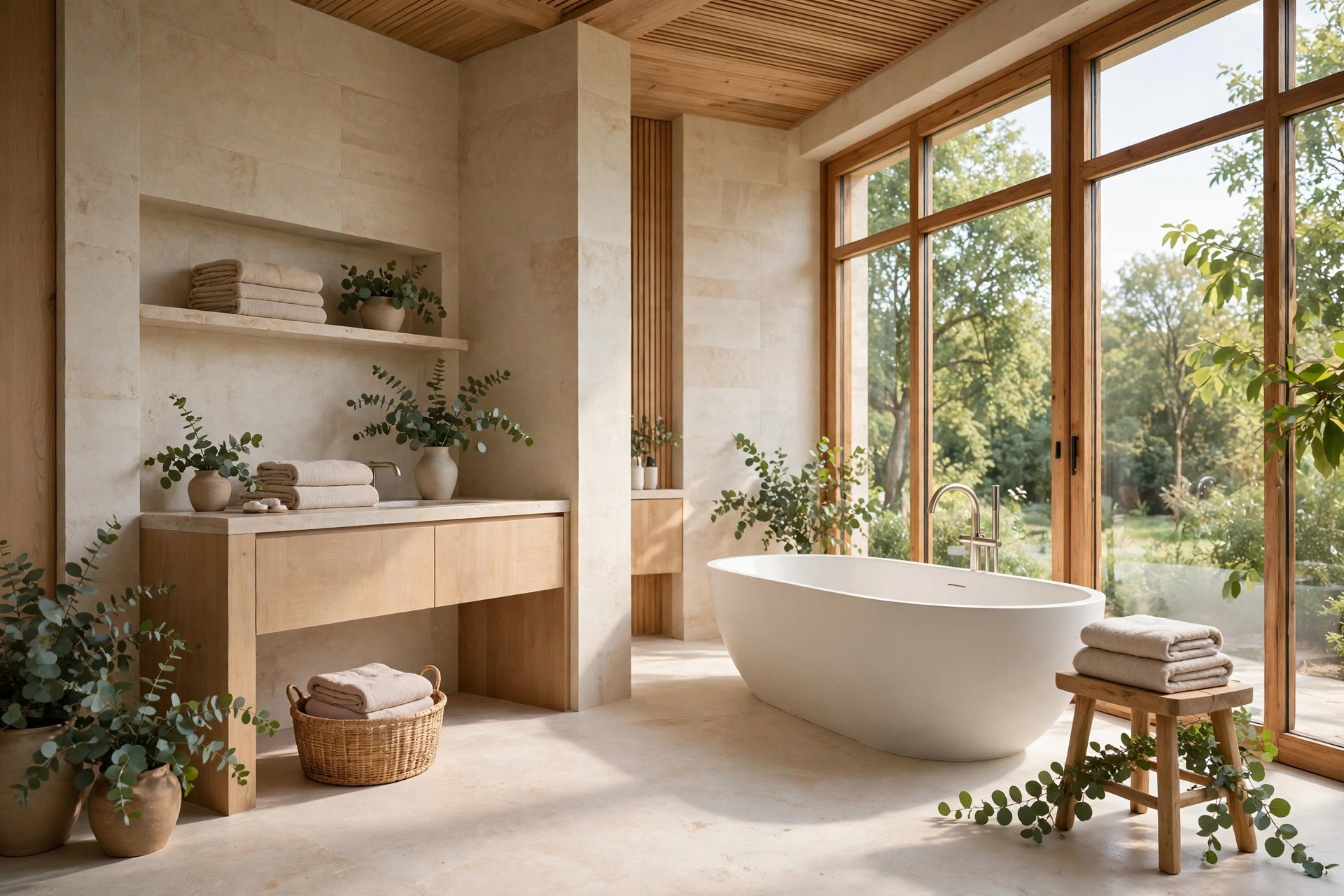
Place the tub under a window when you want light and a view. Soft daylight over the water feels deeply relaxing, and a window spot usually turns an ordinary soak into a small ritual. If privacy is a worry, frosted glass or a linen blind typically softens the light without shutting it out.
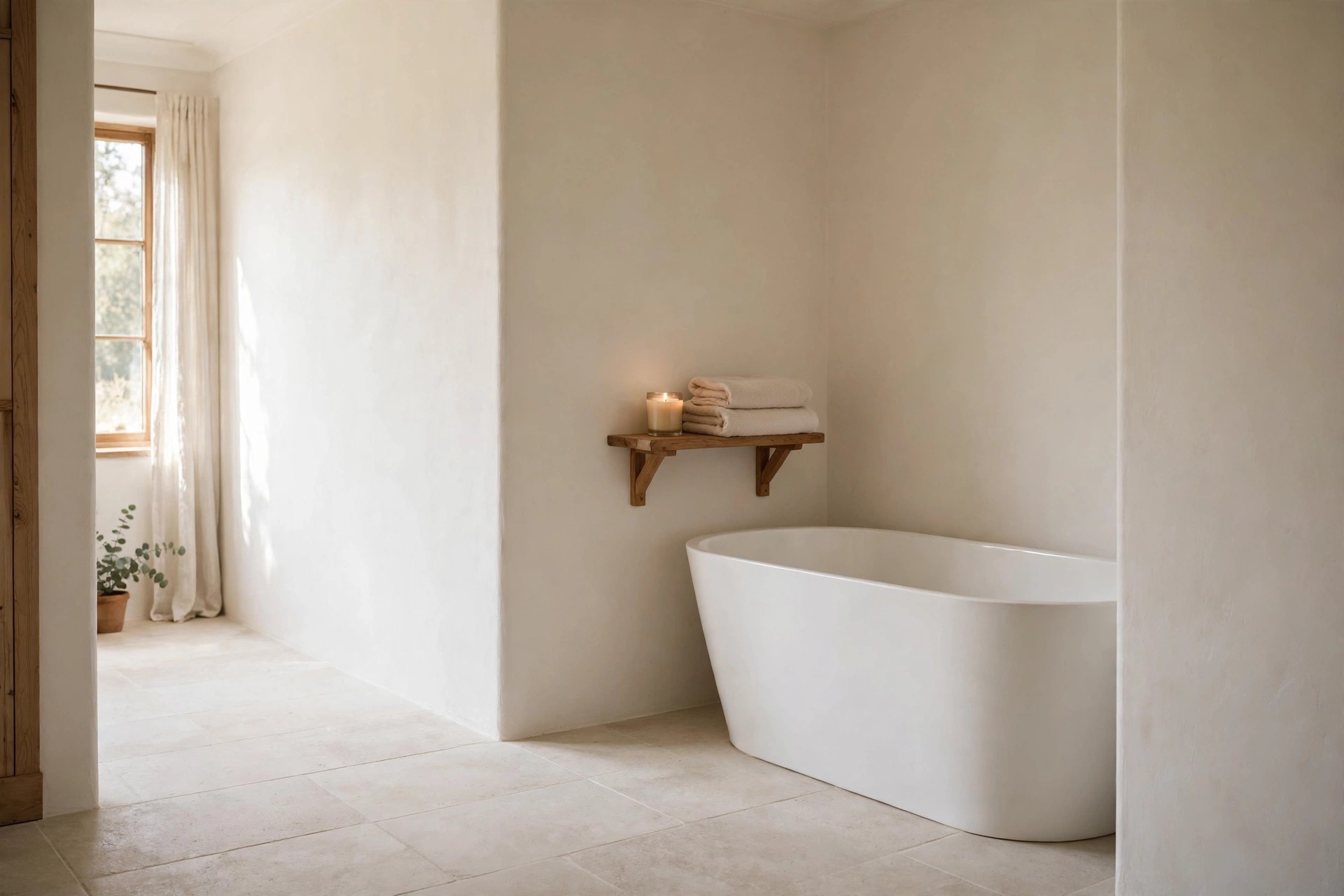
Tuck the tub into a corner when the room needs to stay open. A corner placement can feel surprisingly cozy, like a little nook made just for unwinding, and it leaves the floor clear. Add a small shelf on one wall, and the corner tends to feel finished rather than squeezed in.
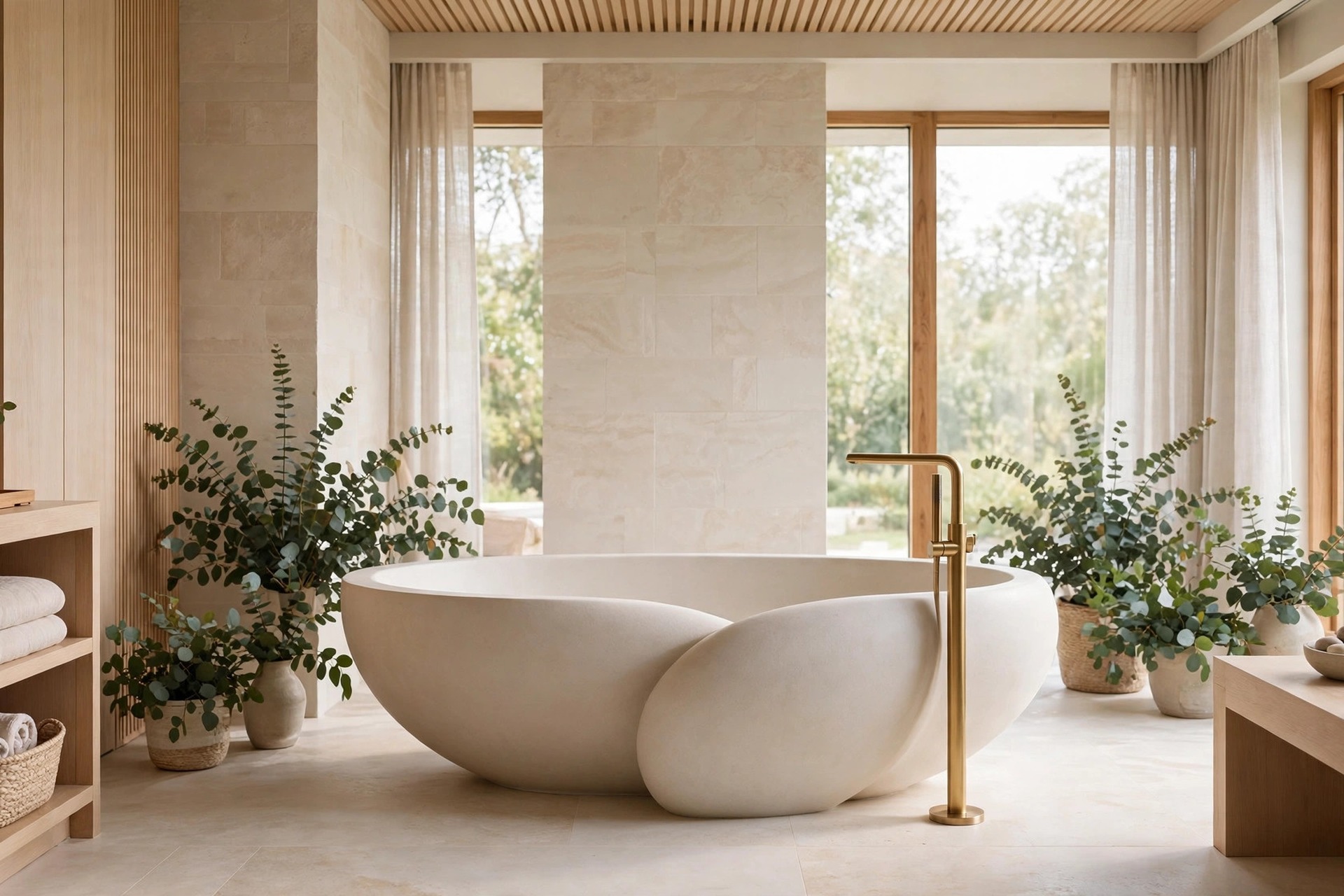
Give the tub center stage when you want a true focal point. Placing the tub in the middle of the room, or angled gently, makes it the star the moment you walk in. This usually asks for a floor mounted filler and a little breathing room on all sides.
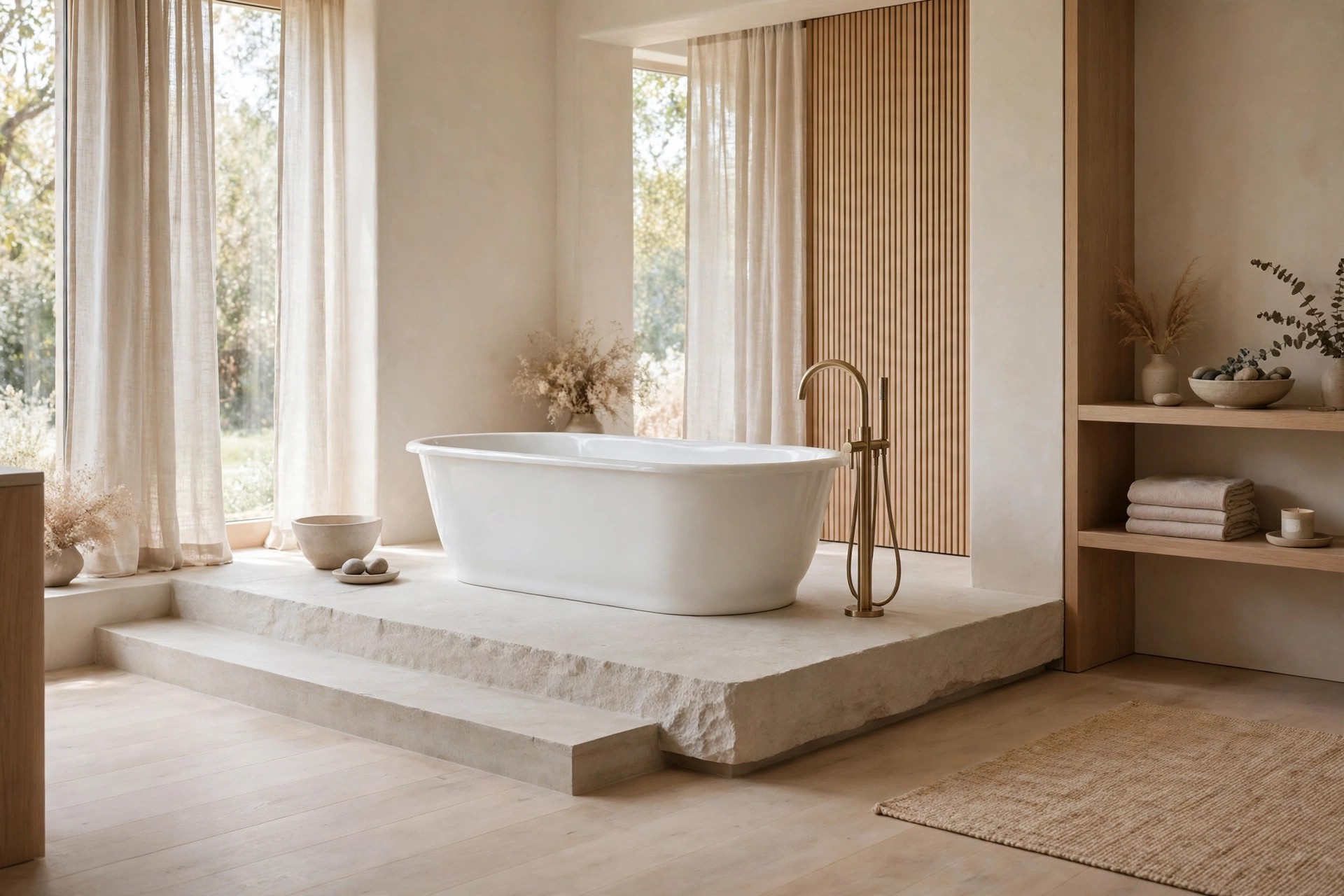
Set the tub on a low platform for a gentle sense of ceremony. A slight lift can make a simple tub feel like it belongs in a boutique hotel, and it helps define the bathing zone. Keep the step low and easy, and choose a surface that feels comfortable under wet feet.
Fillers, Faucets and the Plumbing Side
The filler is the piece of jewelry on a freestanding tub, and it is also the part that needs the most planning, so it deserves a little thought early on. Where the pipes can go will usually guide your choice, and a calm chat with your plumber before you order tends to save stress later. Bring a photo of the tub you love, because that usually makes the conversation much easier.
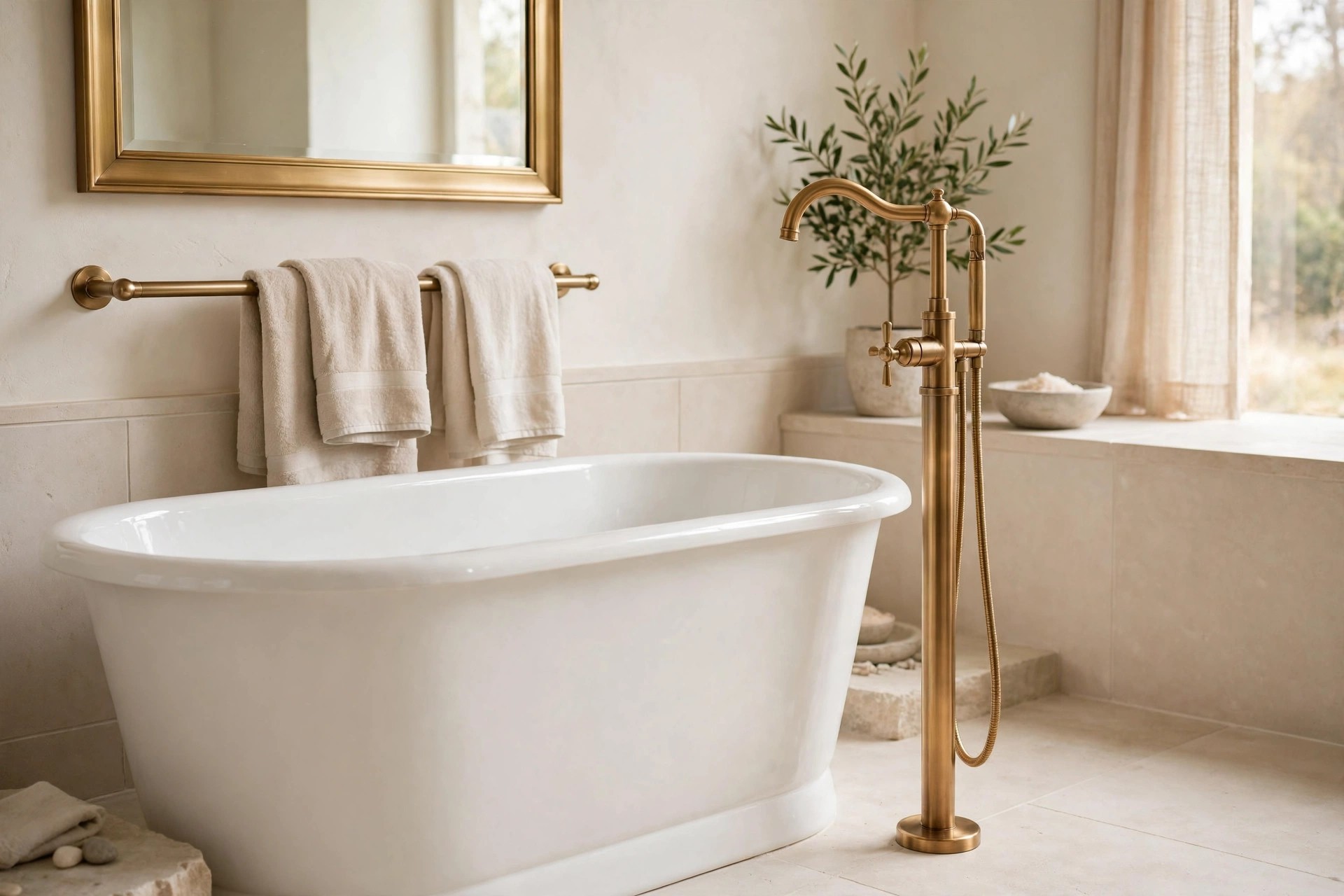
Match the filler finish to one other finish in the room. Warm brass, brushed nickel, and matte black all sit happily in a spa palette, as long as the finish shows up in one other place. That small repetition usually makes the room feel pulled together without trying too hard.
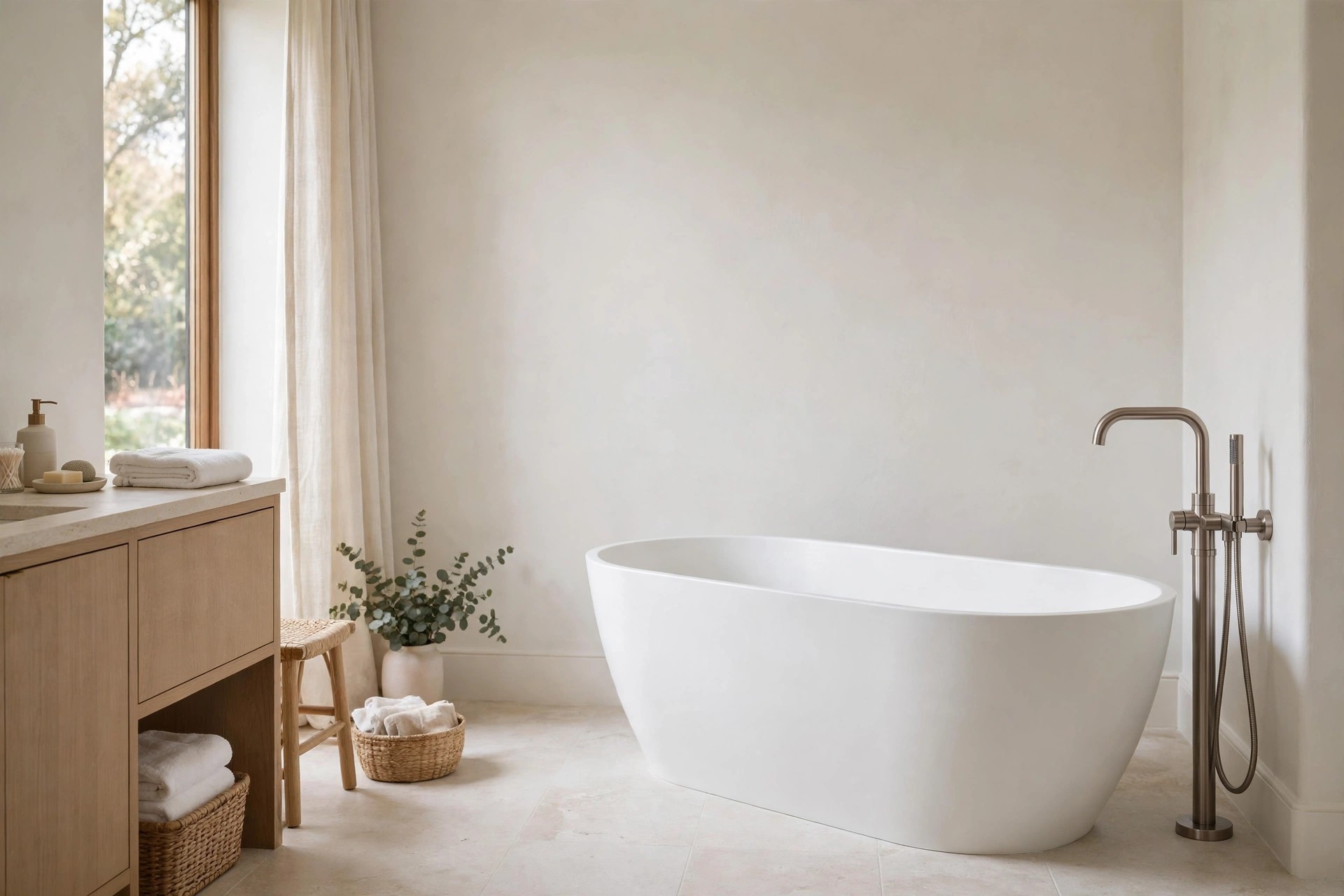
Add a hand shower on the filler for rinsing and easier cleaning. A simple hand shower is a practical touch you will thank yourself for, whether you are rinsing your hair or cleaning the tub. It usually tucks neatly against the filler, so it does not spoil the clean lines.
Floor-Mounted vs Wall-Mounted Fillers
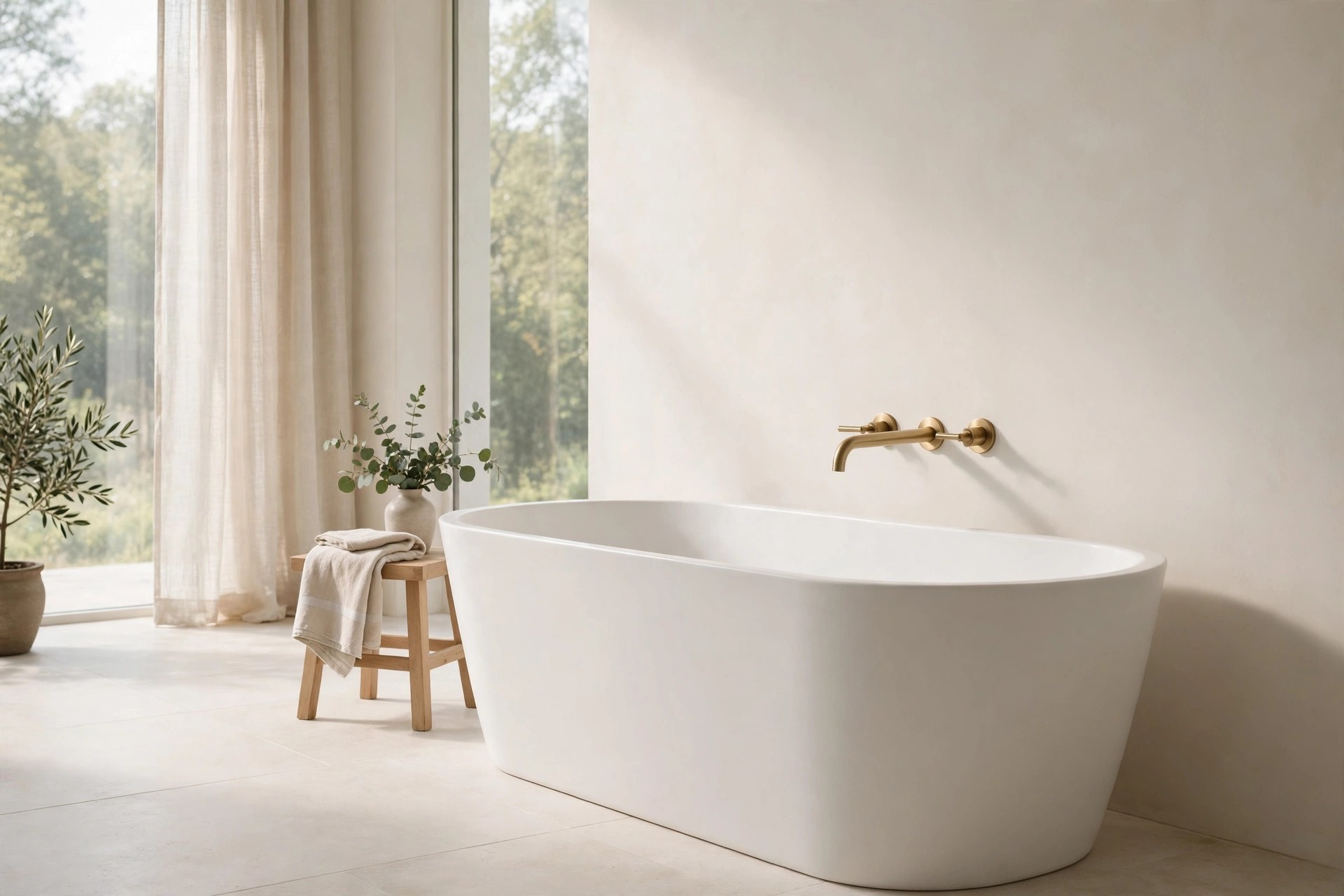
Choose the filler style that fits where your tub actually sits. A floor mounted filler rises beside the tub like a small sculpture, and it typically suits tubs placed away from a wall. A wall mounted filler keeps the floor clear and usually feels calmer when the tub sits close to the wall.
Styling the Spa Feeling Around the Tub
Once the tub and the plumbing are settled, the spa feeling mostly comes from soft, simple things you can change in an afternoon. Think in terms of texture, scent, and a place for everything, so the area stays calm rather than cluttered. You do not need much, and honestly, the less you pile around the tub, the calmer it tends to feel.
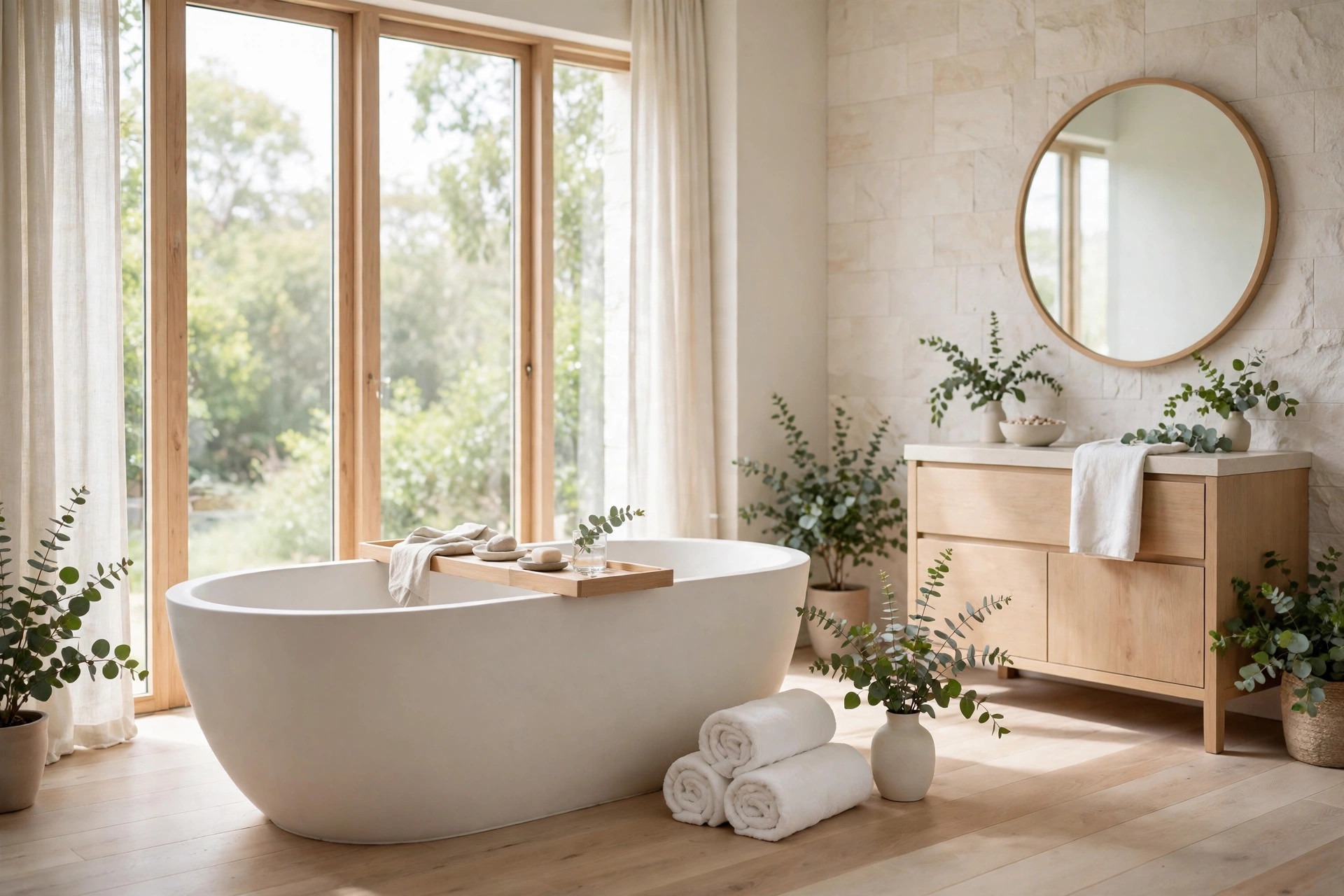
Keep a bath tray across the tub for the things you actually use. A light wood tray gives you a steady spot for a book, a candle, and a drink, and it makes the setup feel inviting. Choose one that sits securely, because a wobbly tray tends to end up stored away.
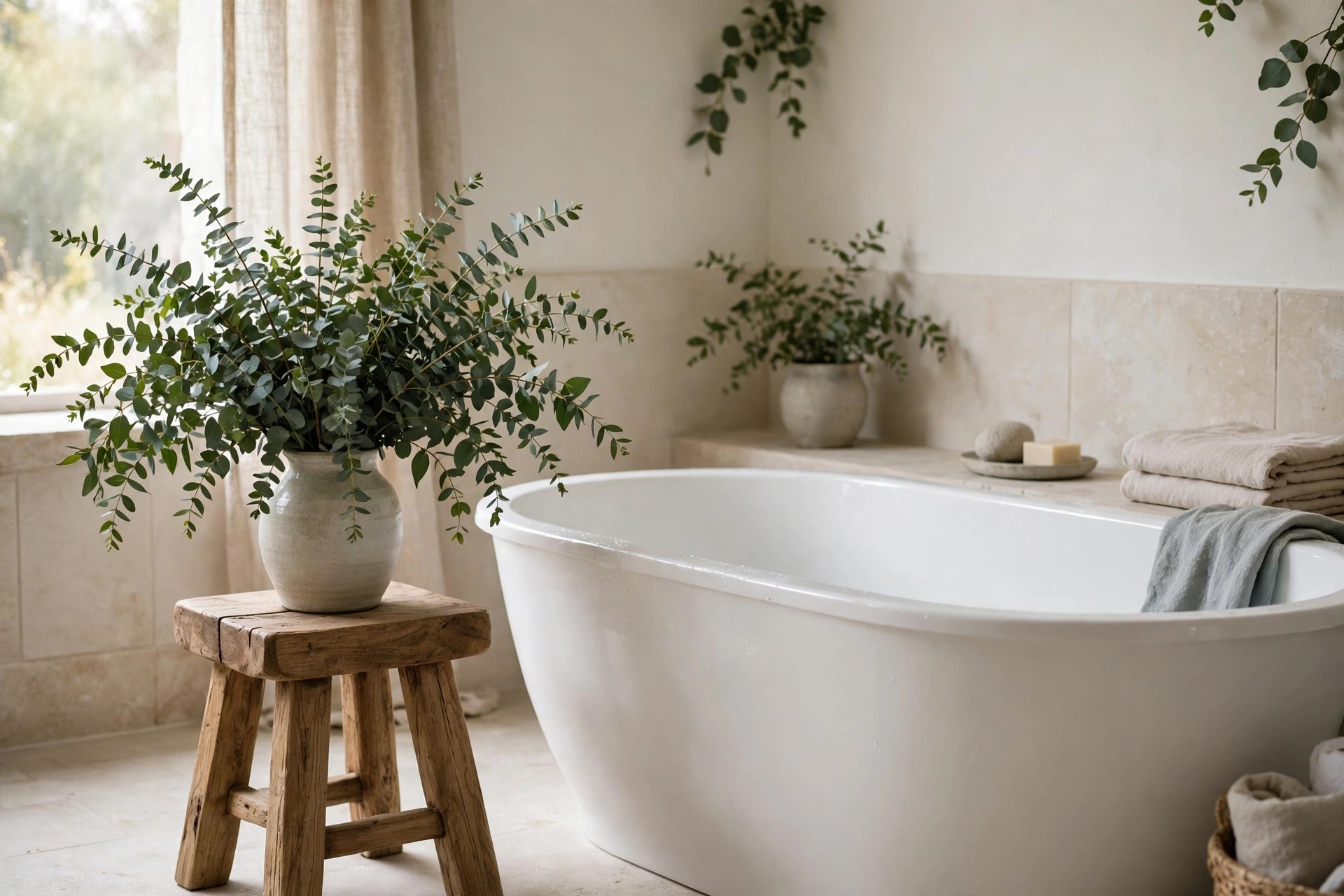
Bring in eucalyptus and soft green touches for that fresh spa scent. A bunch of eucalyptus near the tub, or a simple plant on a stool, usually adds life to warm white and pale stone. The steam from a hot bath tends to release a gentle scent, which feels like a small luxury.
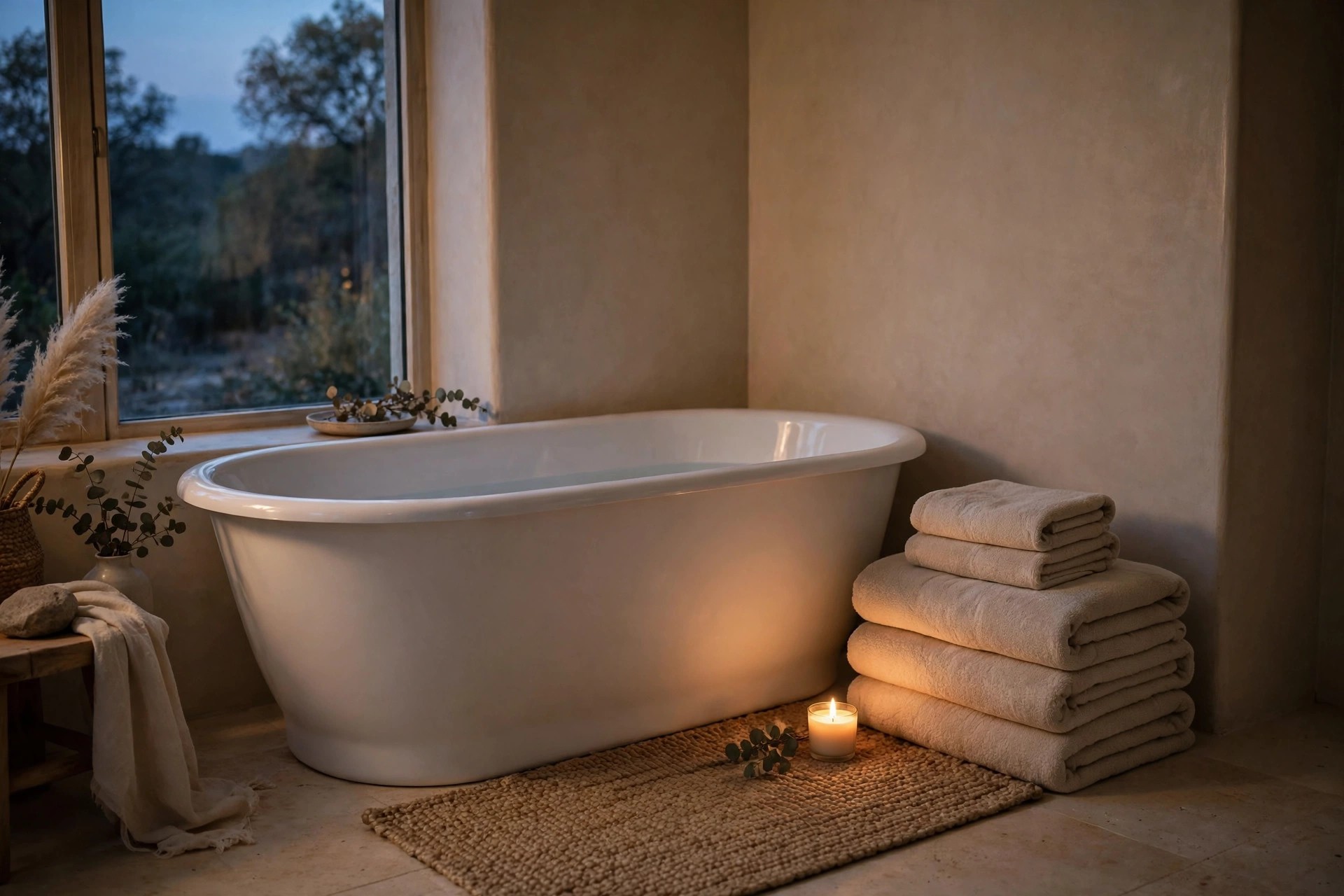
Layer warm textiles and low, soft light around the bathing corner. A folded stack of oatmeal towels, a woven mat underfoot, and a candle nearby usually do more for the mood than any big purchase. Keep the light low and warm, because that tells your body the day is winding down.
Keeping a Freestanding Tub Practical
A beautiful tub still has to work on a Tuesday morning, so a couple of practical habits are worth planning from the start. Most of them are small, and they tend to disappear into the design when you think of them early, rather than turning into little daily annoyances you keep meaning to fix.
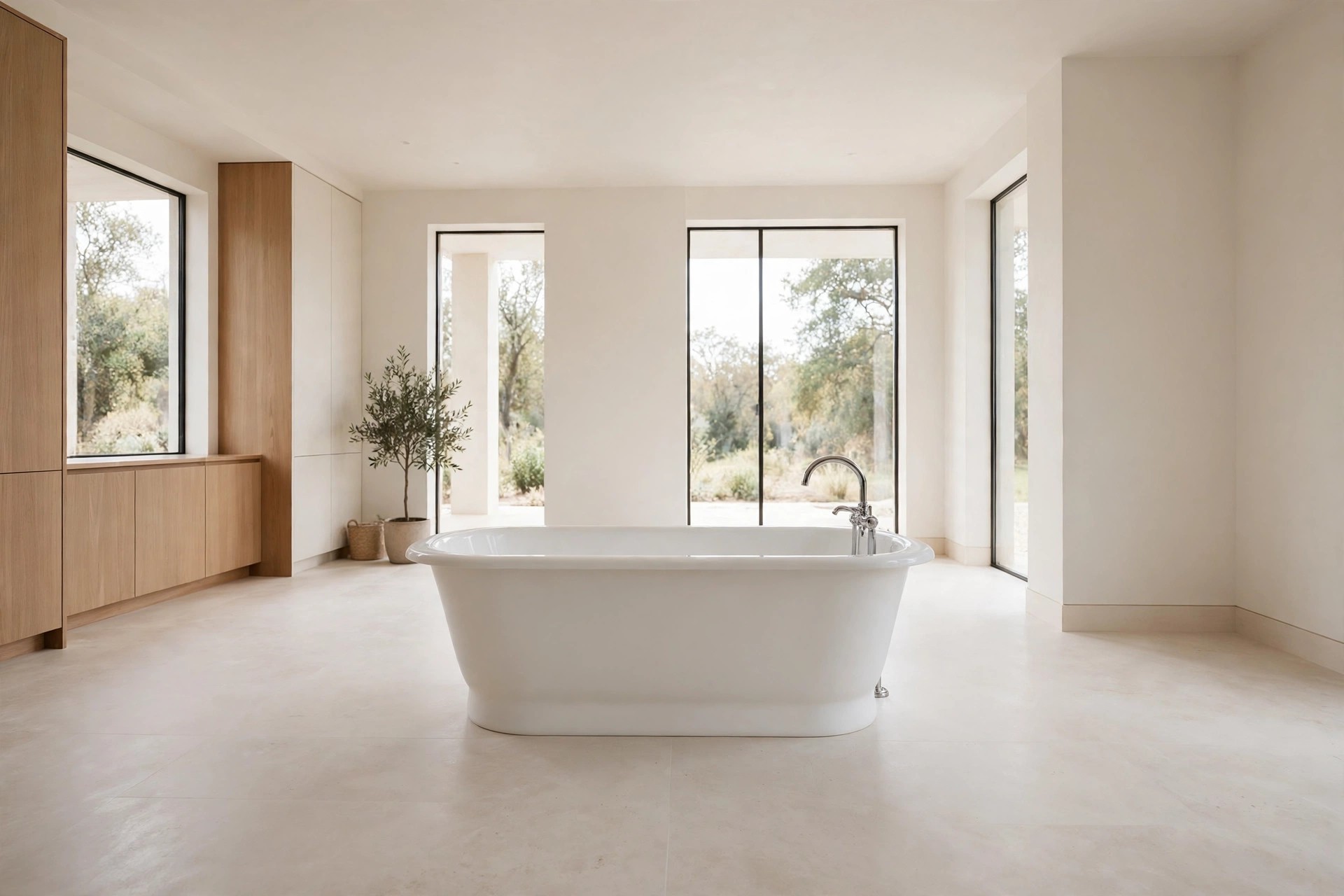
Leave enough room around the tub to clean and move comfortably. You will need to reach the floor on every side, so a comfortable gap usually makes weekly cleaning far less of a chore. A smaller tub with breathing room typically feels better than a big one squeezed in.
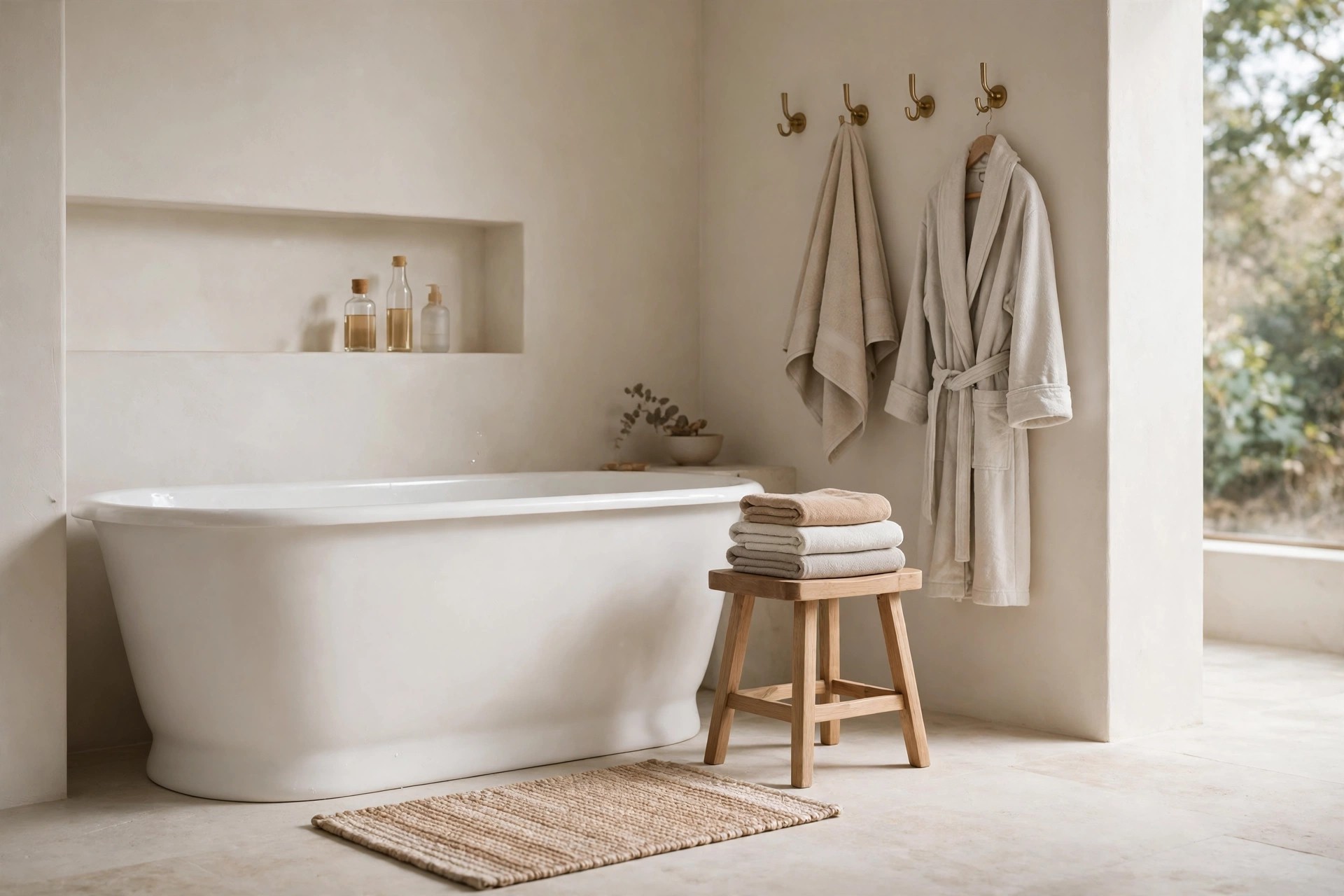
Plan storage and a dry spot for towels before the tub goes in. A nearby stool, a wall hook, or a shallow niche usually stops towels and bottles from landing on the floor. Think about where you will step out too, because a mat in the right place keeps wet footprints contained.
At the end of the day, the freestanding tub ideas that matter most are the ones that make you slow down. Choose a shape that welcomes you, a material that keeps the water warm, and a spot with soft light, then keep everything around it simple and kind. Your master bath does not need to look like a hotel to feel like a retreat, and with a few gentle choices, yours can become the quietest room in the house.

Leave a Reply