
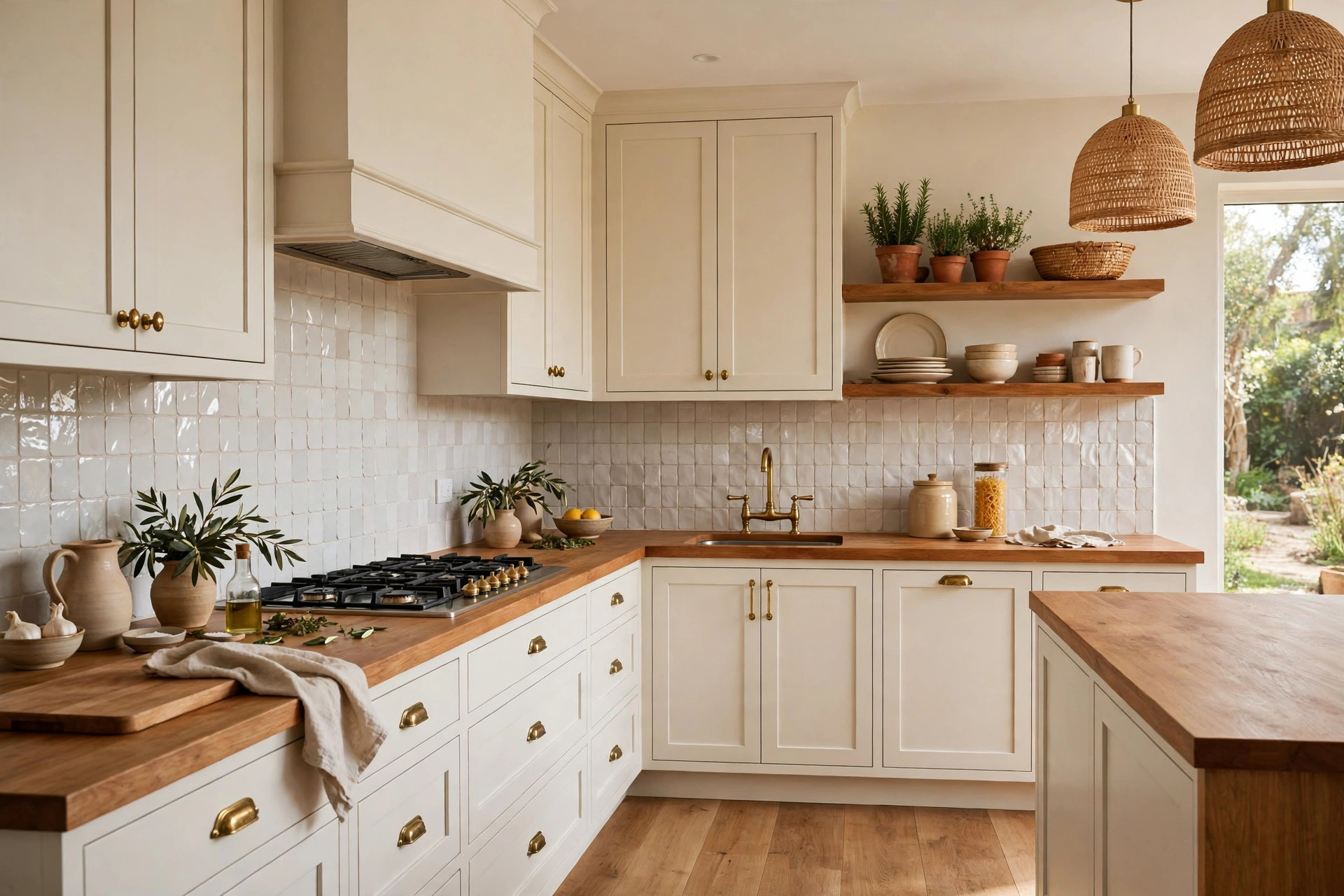
A good backsplash has two jobs, and it has to do both of them every single day. It should catch the splashes, steam and little cooking messes without a fuss, and it should still make the whole kitchen feel calm and finished when the counters are clear.
The sweet spot is usually a smooth surface, a layout you genuinely like looking at and grout that does not demand constant scrubbing. Tile, stone slabs and a few clever budget options can all get you there, as long as you choose with real cooking in mind and not just the showroom photo.
Below are 19 kitchen backsplash ideas grouped by material and budget, plus the finishing details that quietly decide how easy the wall is to live with. Start with the surfaces, then pay close attention to the grout, because that is where most of the upkeep hides.
Tile Backsplashes
Tile is the classic choice for a reason, since it comes in almost every shape, finish and mood you can imagine. Glazed ceramic and porcelain usually wipe clean with a soft cloth, and the layout lets you add personality without changing the cabinets or counters.
Subway and zellige
Run classic subway tile in a simple stack or brick pattern. A straight stack feels modern and tidy, while the offset brick layout reads a little more traditional and forgiving. Either way, the smooth glaze usually shrugs off sauce splashes, and the regular shape keeps the wall looking organized behind busy counters.
Choose larger subway tiles to cut down the grout. Bigger tiles mean fewer joints across the wall, and fewer joints usually mean less scrubbing over the life of the kitchen. The look stays familiar and calm, just a touch more relaxed in scale. It pairs especially well with warm white cabinets and simple wood counters.
Try zellige or a zellige look tile for gentle shine. These tiles have soft edges and a slightly uneven glaze, so the light moves across the wall instead of sitting flat on it. That handmade shimmer hides tiny water spots surprisingly well between proper cleans. Porcelain versions typically give you the same mood with a very practical surface.
Patterned tile
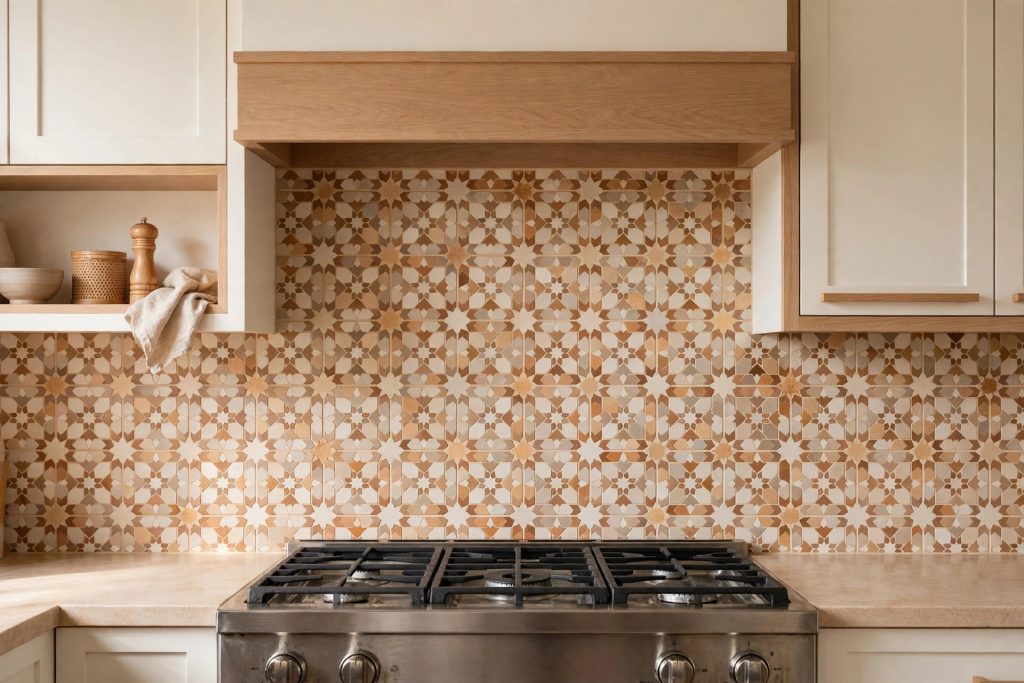
Keep pattern soft and tonal behind the stove. A gentle geometric pattern in cream, clay and warm gray adds interest without shouting across the room. Because the colors stay close in tone, splashes and everyday marks are less obvious than they would be on a stark contrast. It is a friendly way to give a plain kitchen one memorable moment.
Use a patterned border inside a plain field. If a whole wall of pattern feels like too much, run simple tile across most of the backsplash and save the pattern for a band behind the hob or sink. You get the decorative lift where your eye lands first, and the rest stays easy and calm. This also keeps the busiest cleaning zone in a glazed tile that wipes down fast.
Stone and Slab Backsplashes
A slab backsplash takes the counter material straight up the wall, and the effect is calm in a way tile rarely manages. With almost no joints to trap grease, it usually wipes clean in one pass, and the continuous surface makes even a small kitchen feel more spacious.
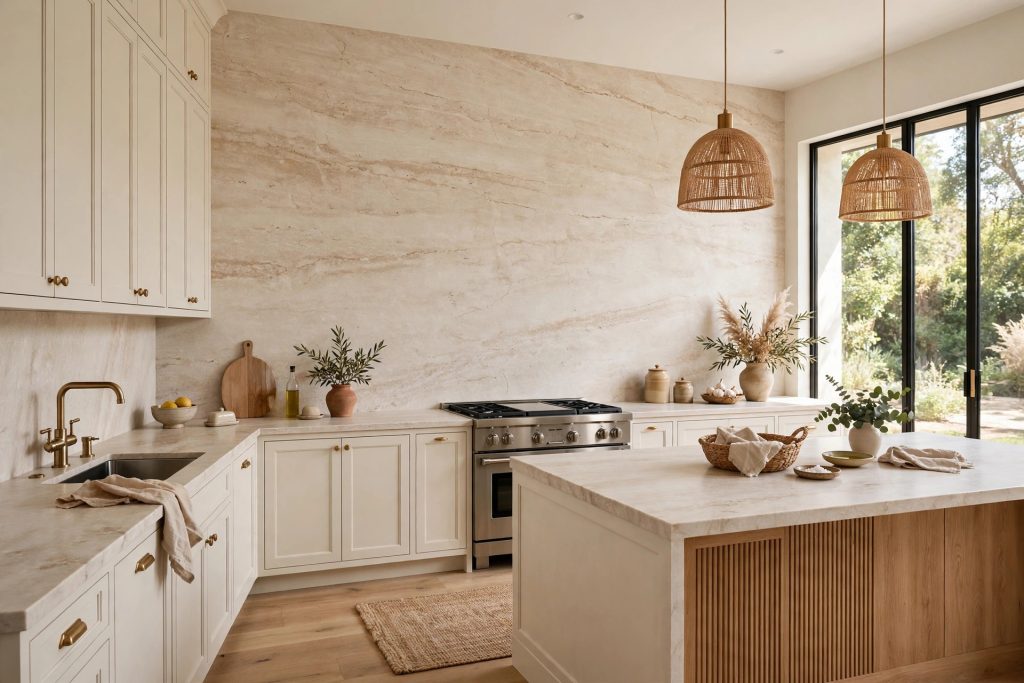
Carry the counter stone all the way up. Running the same slab from counter to cabinets gives you one unbroken sweep of color and veining. There is no grout to maintain, and the wall typically reads as part of the counter rather than a separate decision. Keep the stone soft and light if you want the room to stay bright.
Pick a quartz slab for a low worry surface. Quartz is non porous, so tomato sauce and turmeric usually sit on the surface instead of soaking in. A full height panel looks tailored and modern, especially with handle free cabinets and warm metal details. Wiping it down after cooking tends to be quick and oddly satisfying.
Get the marble look with a porcelain slab. Large porcelain panels can echo soft marble veining while staying hard, smooth and simple to clean. The realistic pattern gives you the elegant mood many people love, without asking you to fuss over every splash. It suits warm neutral kitchens that want a little quiet luxury.
Choose honed natural stone and seal it properly. If you love real stone, a honed finish usually feels softer and shows fewer shiny marks than a polished one. Sealing it as the installer recommends helps everyday spills stay on the surface where you can wipe them away. The natural variation also does a kind job of disguising small marks between deeper cleans.
Add a slim stone ledge along the slab. A narrow ledge where the counter meets the wall gives oils, salt and a small plant a proper home off the work surface. It keeps daily items close while the main counter stays clearer for cooking. Because the ledge is the same smooth stone, it wipes clean right along with the wall.
Budget and Renter-Friendly Options
You do not always need a tiler, a big budget or permission to rip out a wall to get a backsplash that works. The friendliest updates sit over a sound existing surface, come off cleanly when life changes and still give you a smooth face that can handle a damp cloth.
Use high quality peel and stick tiles on a flat wall. The better versions have a real tile feel and a wipeable face, and they can transform a tired rental kitchen in a weekend. They work best on a smooth, clean surface and away from direct heat unless the maker says otherwise. Keep the pattern simple and the color warm so the result feels designed rather than temporary.
Paint tired tile and protect it with a clear topcoat. If the tile layout is fine but the color dates the room, proper tile paint in a warm white can be a calm reset. Careful cleaning and priming matter here, because the finish is only as good as the surface under it. A washable topcoat usually helps the painted tiles cope with steam and regular wiping.
Fit smooth splash panels in acrylic or laminate. One clean panel behind the stove or along the sink run gives you a surface with almost no seams at all. Acrylic and modern laminate panels typically wipe down in seconds and come in soft stone and warm neutral looks. They can be a smart middle step when tile feels too permanent and paint feels too plain.
Try sealed beadboard for a soft cottage mood. Beadboard brings gentle lines and a friendly, unfussy feel, especially in cream or pale sage. Sealed with a washable paint, it handles light splashes around the sink and prep areas well. Most people keep tile or a panel behind the hottest part of the stove, where a tougher surface makes more sense.
Spend the budget behind the stove only. If funds are tight, tile or panel the hardworking stretch behind the hob and paint the remaining wall in a washable kitchen paint. Your money lands exactly where the splashes are worst, and the rest of the wall stays simple and bright. The mix can look completely intentional when the colors sit in the same warm family.
Grout and Finishing Details
The prettiest tile can still become a chore if the grout and edges are an afterthought. These last details decide whether your backsplash stays looking fresh with normal cleaning or starts asking for a toothbrush and a free afternoon.
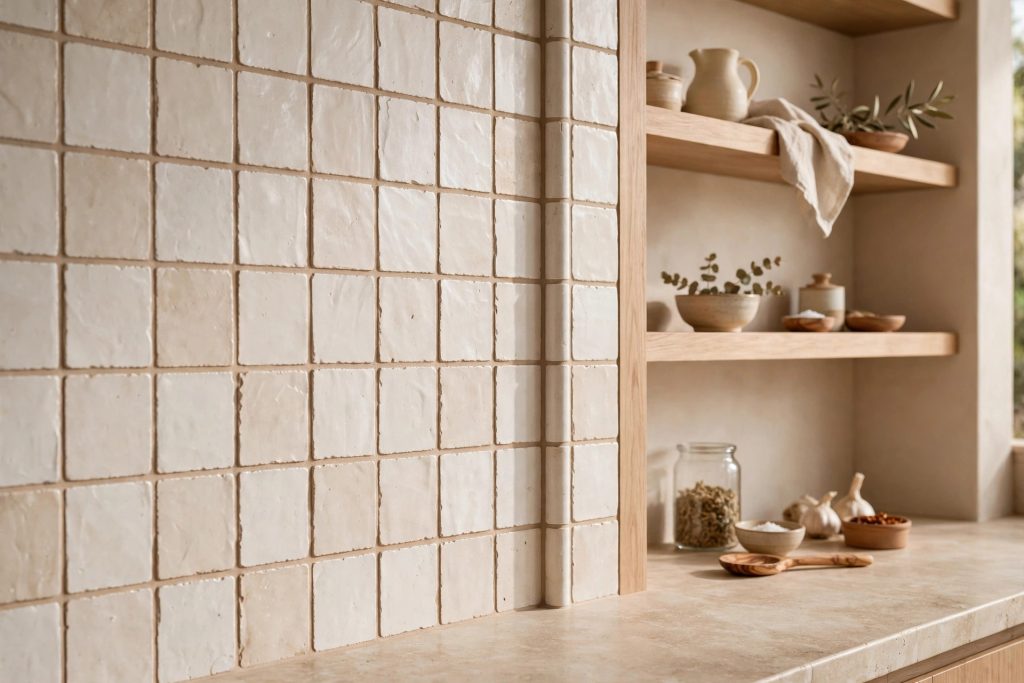
Choose the grout color like it is part of the design. Grout that closely matches the tile makes the wall read as one calm surface and hides the grid on busy cooking days. A slightly deeper grout can define handmade tile beautifully, though it will show the pattern of the layout more. Either choice works, as long as it is deliberate and suits how much upkeep you honestly want.
Ask about stain resistant or epoxy grout in the splash zone. Modern grouts are typically much better at resisting stains and moisture than the basic options many of us grew up scrubbing. That matters most behind the stove and around the sink, where grease and colored sauces land most often. It is a quiet upgrade you appreciate every time you wipe the wall and move on.
Seal porous grout and refresh it when water stops beading. If you go with a standard cement grout on a ceramic tile, a sealer helps spills sit on top instead of sinking in. The job is simple and usually quick once the grout has cured properly. Keeping up with it means the lines stay closer to their original color with ordinary cleaning.
Finish the edges and the counter joint neatly. A slim metal trim, a bullnose tile or a neatly returned edge makes the ends of the backsplash look intentional instead of cut off. The joint where tile meets counter should be a flexible seal, so small movements do not crack the line and let water creep in. These are small details, but they are the ones your eye catches every morning.
The backsplash you will love in five years is usually not the boldest one. It is the one that suits your cabinets, shrugs off a pasta night and still looks gentle when the kitchen is quiet. Pick a surface you can wipe without thinking, be kind to yourself on the grout and let the finishing details do their quiet work.


Leave a Reply