
If you are choosing tile for a small bathroom, it is easy to feel like every decision is a trap. Too dark and the room shrinks, too busy and it shouts, too small and the grout lines take over. The good news is that tile is actually one of the hardest working tools you have in a compact space, as long as it is laid with the room in mind.
Most of these small bathroom tile ideas are not about buying the fanciest tile in the shop. They are about size, direction, grout color and knowing where to stop, because a calm floor and one well chosen wall pattern usually do more for a tiny bathroom than an expensive feature wall ever could.
Below are 19 ideas split between floors, walls, grout, the shower and the spots where tile meets paint. Steal the two or three that fit your room, and let the rest wait for the next project.
Floor Tiles That Stretch the Room
The floor is the biggest unbroken surface in a small bathroom, so it sets the tone for how large the room feels before anything else registers. It is also the surface you cannot easily change later, which makes it worth a little extra thought now. Get the floor calm and generous, and even very ordinary wall tiles tend to look better sitting on top of it.
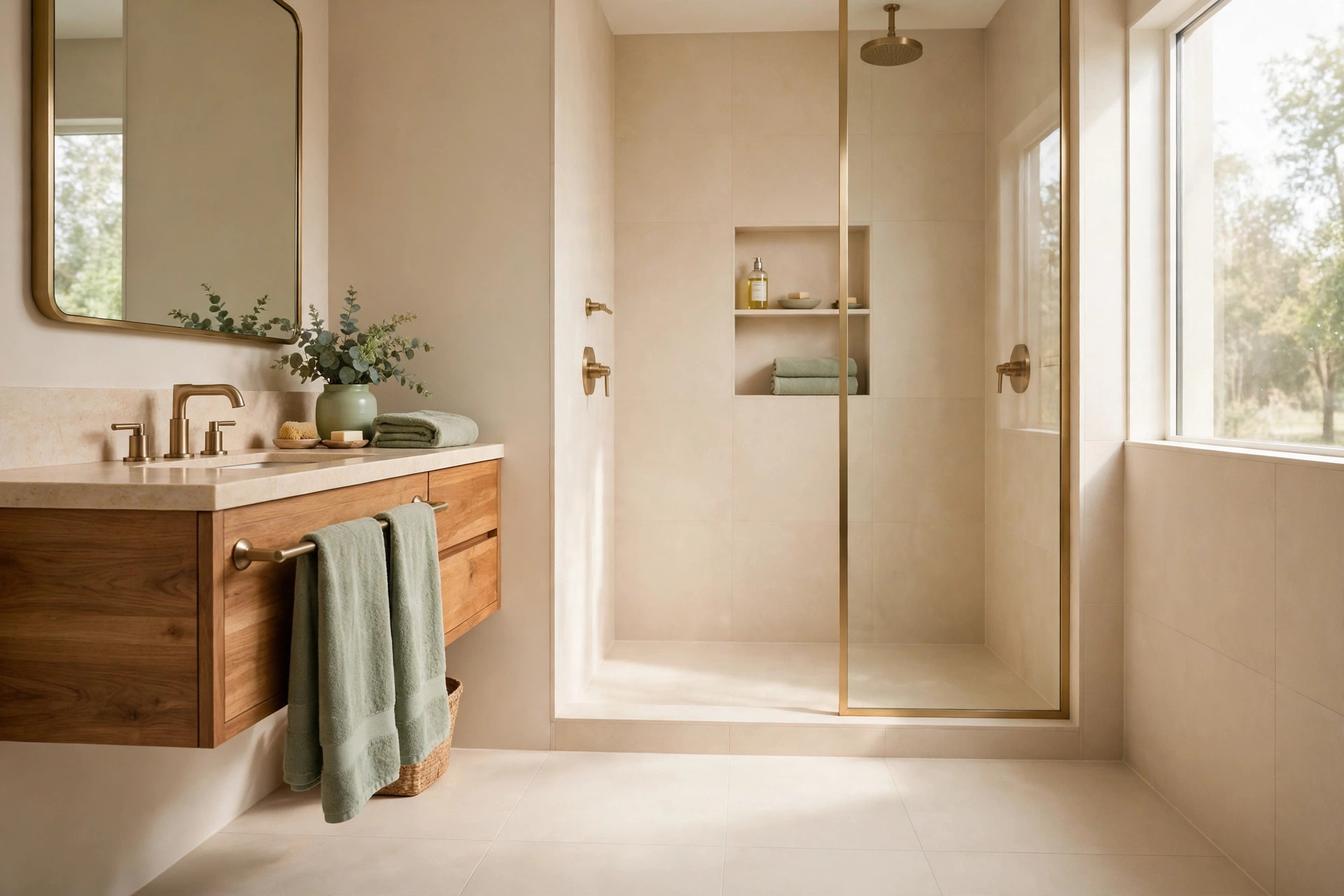
Go large format on the floor. Bigger tiles mean fewer grout lines, and fewer lines usually read as one calm surface instead of a busy grid. A large warm ivory tile tends to make even a boxy little bathroom feel wider, because your eye travels across it without stopping every few inches.
Run the same tile straight into the shower. When the floor tile flows into a curbless shower with no step and no change of material, the whole wet area reads as one bigger room. It is typically the single layout choice that makes visitors say the bathroom feels twice its size.
Lay rectangular tiles in the long direction. Plank style or rectangular floor tiles laid along the longest wall pull the eye forward and stretch the room visually. If the room is narrow, laying them across the width can help instead, so it is worth dry laying a few both ways before you commit.
Keep the floor tone light and warm. Pale warm tones bounce what little light a small bathroom gets, while stark cold greys can feel a bit flat in a windowless room. A soft ivory or warm stone look usually flatters wood vanities and brass fittings far better too.
Wall Tiles and Patterns
Walls are where pattern earns its keep, but in a small room one pattern, done well, almost always beats three competing ones.
Tile one wall fully and keep the rest calm. Taking tile all the way up the wall behind the sink or around the shower gives a small bathroom a finished, considered feel. The untiled walls can simply be painted, which keeps the room from feeling like the inside of a swimming pool.
Choose a finish that bounces a little light. A softly glossy or polished wall tile catches light and throws it further than a flat matte one usually can. You do not need a mirror shine, just enough sheen that the walls help the lighting instead of swallowing it.
Vertical stack
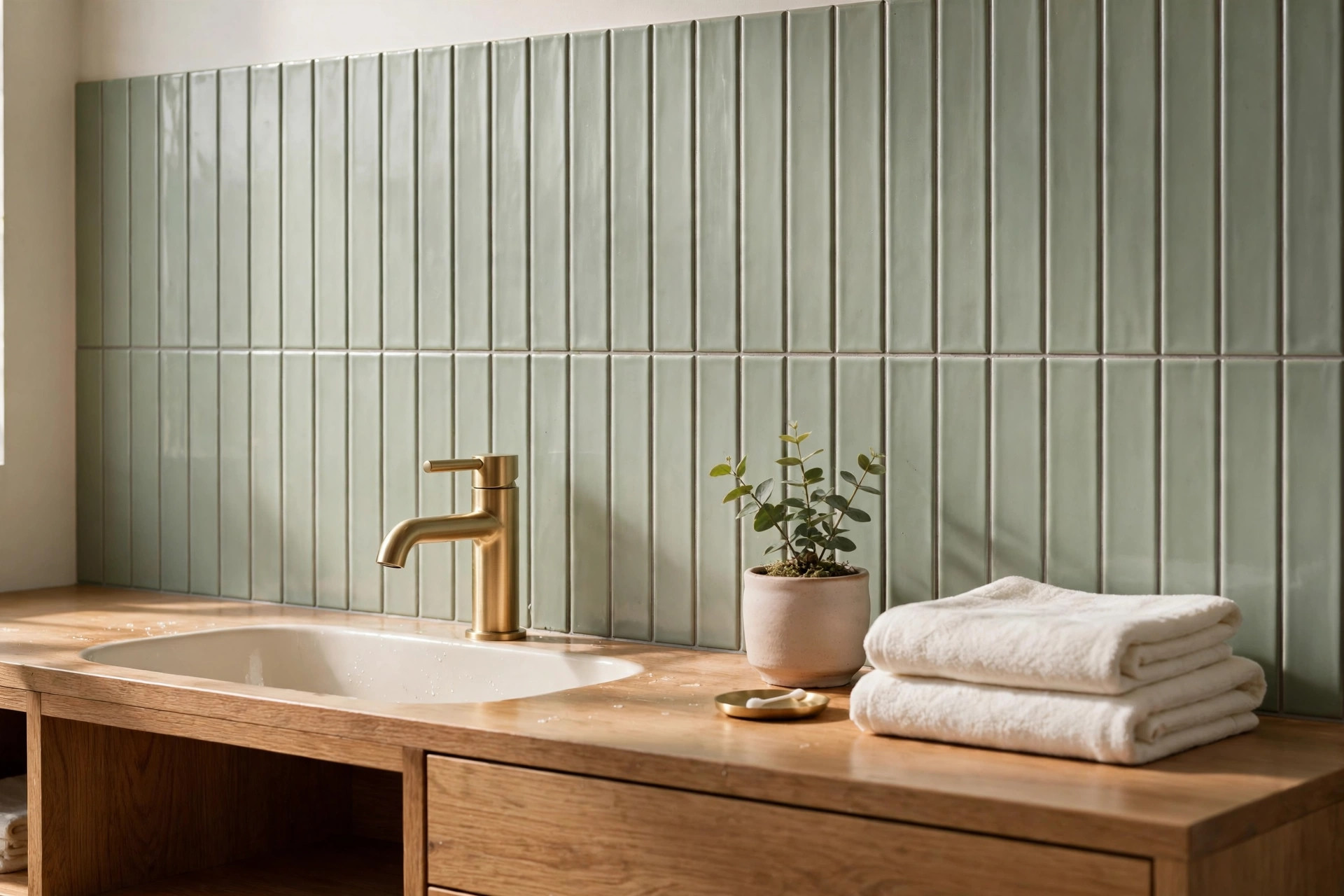
Stack subway tiles vertically instead of in brick pattern. Turning a familiar tile upright draws the eye up and makes a low ceiling feel taller, which is exactly what most small bathrooms need. A soft sage or warm ivory vertical stack looks modern without shouting, and it pairs beautifully with a wood vanity.
Herringbone
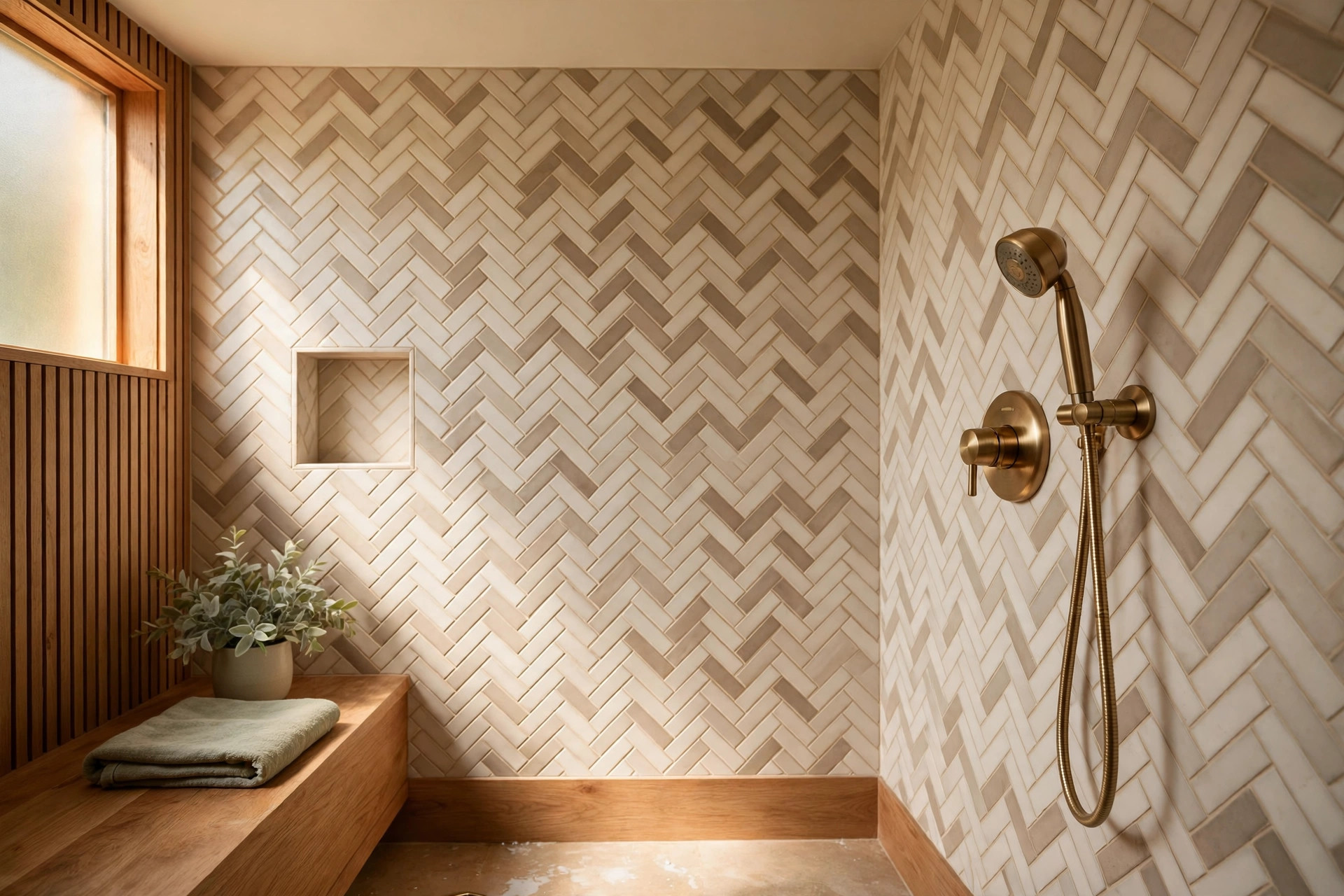
Save herringbone for one contained area. Herringbone brings lovely movement, but across every wall it can overwhelm a tiny room. Kept to the shower wall or the splashback behind the sink, it reads as a deliberate feature, and warm neutral tones stop it from feeling busy.
Grout Color Tricks
Grout is the quiet half of every tile job. Get it right and the tile looks expensive, get it wrong and the grid becomes the loudest thing in the room. It is also the cheapest part of the whole project, oddly enough, which makes it the best value decision you will make. A different grout color on the exact same tile can give you a calmer room or a bolder one, so it deserves more than a last minute shrug at the counter.
Match the grout closely to the tile. When grout and tile are close in color, the surface reads as one continuous plane and the room feels bigger for it. This trick works especially well with large floor tiles, where contrast grout would chop the floor back into squares.
Go a shade darker on floors only. Floor grout takes the daily traffic, and a slightly deeper tone usually hides everyday marks far better than bright white. It still reads calm against a light tile, it just forgives more between cleans.
Ask for the thinnest grout lines you can. Slim joints make tiles look larger and walls look smoother, because there is simply less grid to look at. Rectified tiles with straight cut edges typically allow the tightest lines, so it is worth asking your tiler what your chosen tile can do.
Pick warm grout tones with warm tiles. A warm greige or soft sand grout sits quietly beside ivory and wood tones, while a blue grey grout can make the same tiles look cold. Tiny sample sticks dried against your tile are worth the small effort before the whole room is done.
Shower Tile Ideas
The shower is often a third of a small bathroom, so what happens in there has an outsized effect on how the whole room feels. It is also where tile works hardest, dealing with daily water, so the pretty choices and the practical ones have to be the same choices here. A clear glass screen instead of a curtain helps too, because the tiled shower stays part of the room you can see.
Carry the wall tile through the shower without a border. One tile, run from the bathroom wall straight into the shower, removes the visual chop that a contrasting shower tile creates. The room reads as one space instead of two small ones arguing with each other.
Build the niche in the same tile, or one soft contrast. A recessed shower niche tiled to match the wall all but disappears until you reach for the shampoo. If you want it to show a little, one gentle contrast like a soft sage inside an ivory shower usually looks calm rather than busy.
Use bigger tiles on the shower walls too. Large tiles in a shower mean fewer grout lines to scrub and a smoother, spa like feel. They typically need a well levelled wall, so this is one to plan with your tiler early rather than on the day.
Keep the shower floor small and grippy. The one place small tiles belong is underfoot in the shower, where all those grout lines give your feet something to hold onto. A small mosaic in a tone close to the main floor keeps the look joined up while doing the practical job properly.
Mixing Tile with Paint and Panels
Tiling every surface is rarely necessary, and mixing tile with paint or wood often makes a small bathroom feel warmer and more like a room. It is usually kinder on the budget too, since paint covers a lot of wall for very little money. The trick is deciding where the water actually lands and tiling honestly for that, then letting softer finishes handle the rest.
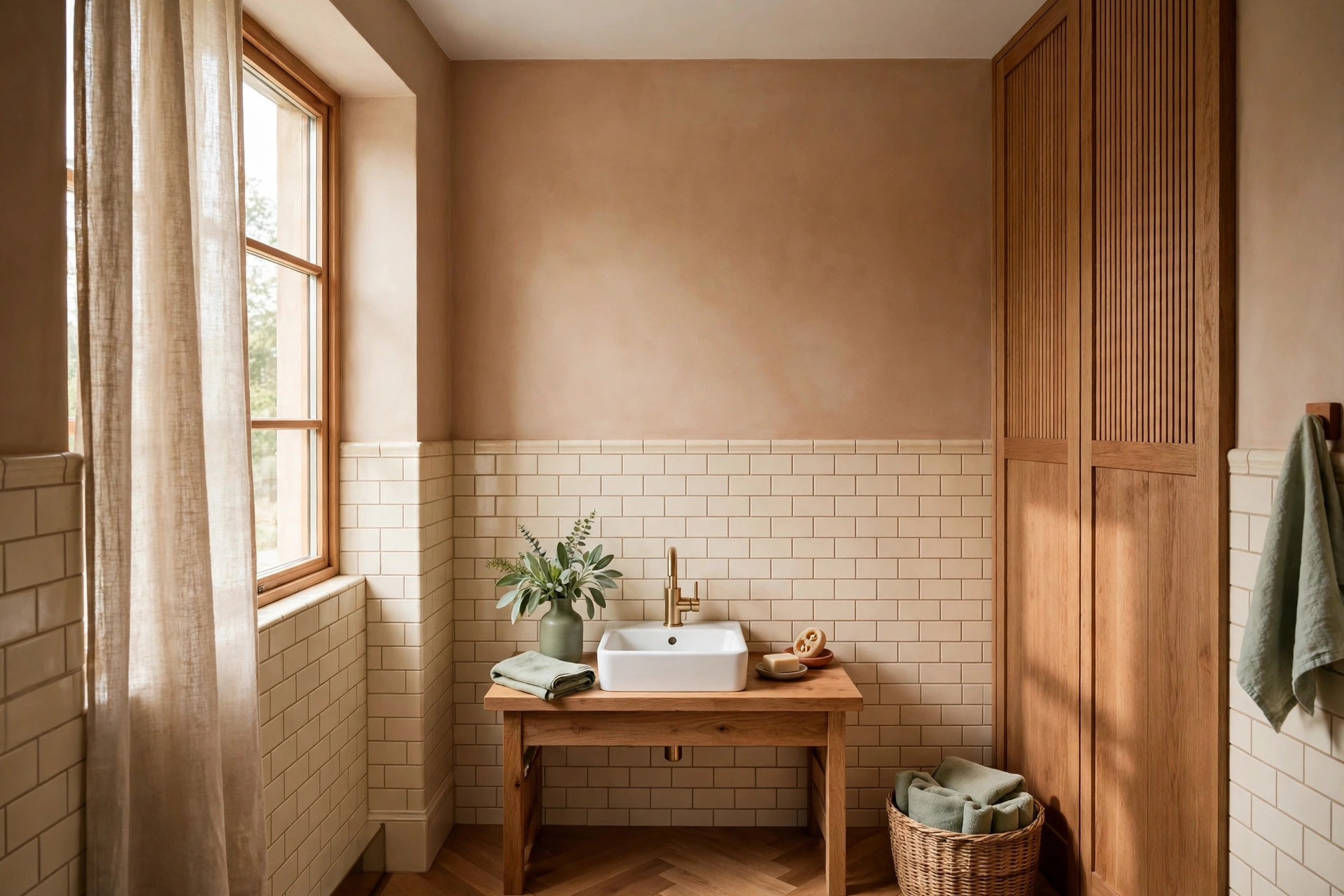
Tile halfway and paint the rest. A half height tiled wall with a warm painted upper wall is a classic for good reason, since the tile covers the splash zones and the paint keeps things soft and affordable. A simple tile edge or a slim brass trim typically finishes the line where the two meet.
Add a wood panel detail where water does not reach. A run of warm wood panelling or slats on a dry wall adds the texture tile cannot, and it stops a small bathroom feeling all hard surfaces. Keep it away from direct spray, seal it well, and it usually ages gracefully.
Paint the ceiling and untiled walls in one warm family. When the paint color is a close cousin of the tile color, the whole room feels wrapped rather than patched together. Warm ivory paint beside warm ivory tile is a quiet combination that rarely dates, and it lets the fittings be the interesting part.
You do not need all 19 of these working at once. One calm large format floor, one pattern you love on a single wall and grout that behaves itself will carry most small bathrooms a very long way. Choose slowly, sample honestly, and the smallest room in the house might just become your favorite one.

Leave a Reply