
20 Bedroom Storage Ideas for a Tidy Calm Space
Look, we get it. A bedroom can look tidy at breakfast and somehow feel scattered again by bedtime. Clothes land on a chair, chargers wander, and the closet that seemed fine last month suddenly feels full. If that sounds familiar, you’re not alone. Most bedrooms don’t need more space so much as they need a few kinder homes for the things that already live there.
That’s what this list is for. You’ll find simple ways to use the space under the bed, inside drawers, behind doors, and up on walls you might be ignoring right now. Some ideas take ten minutes, like adding dividers or a little tray. Others ask for a small weekend effort, like fitting a bench or a set of shelves. You don’t need to do all twenty. Two or three that fit your room and your habits will usually make the whole space feel calmer.
Start with the hidden spaces if clutter is the main problem, then move to the closet ideas if mornings feel rushed, and finish with the closed storage if the room simply looks busy. Work in that order and you’ll typically notice a difference quickly. Take it one corner at a time, step back often, and remember that storage only works when it’s easy enough to use on a tired evening too.
In This Article
- Use Under-Bed Boxes With Lids for Off-Season Clothes
- Add a Storage Bench at the Foot of the Bed
- Use Baskets Inside Open Shelves
- Install Floating Shelves Above the Dresser
- Use Drawer Dividers to End the Morning Scramble
- Add Hooks Behind the Door for Robes and Bags
- Use a Nightstand With Drawers, Not Just a Table
- Store Extra Bedding in a Lidded Ottoman
- Use Vertical Wardrobe Organizers
- Add a Slim Rolling Cart Beside the Bed
- Use Matching Boxes on the Top Closet Shelf
- Hang a Peg Rail for Everyday Essentials
- Use a Jewelry Tray to Keep the Dresser Clear
- Store Books in a Bedside Crate or Basket
- Use Space-Saving Hangers for More Closet Room
- Add a Trunk That Doubles as Decor
- Use Over-Door Organizers for Small Things
- Keep a Donation Basket in the Closet Corner
- Use Vacuum Bags for Bulky Duvets
- Finish With One Closed Cabinet for Visual Calm
Start With the Bed and the Big Hidden Spaces
Before you buy anything fancy, look at the biggest surfaces in the room. The space under the bed, the foot of the bed, and the top of the dresser can usually hold far more than they do right now. These first five ideas help you hide the bulky and seasonal things first, so the rest of the room can breathe a little easier.
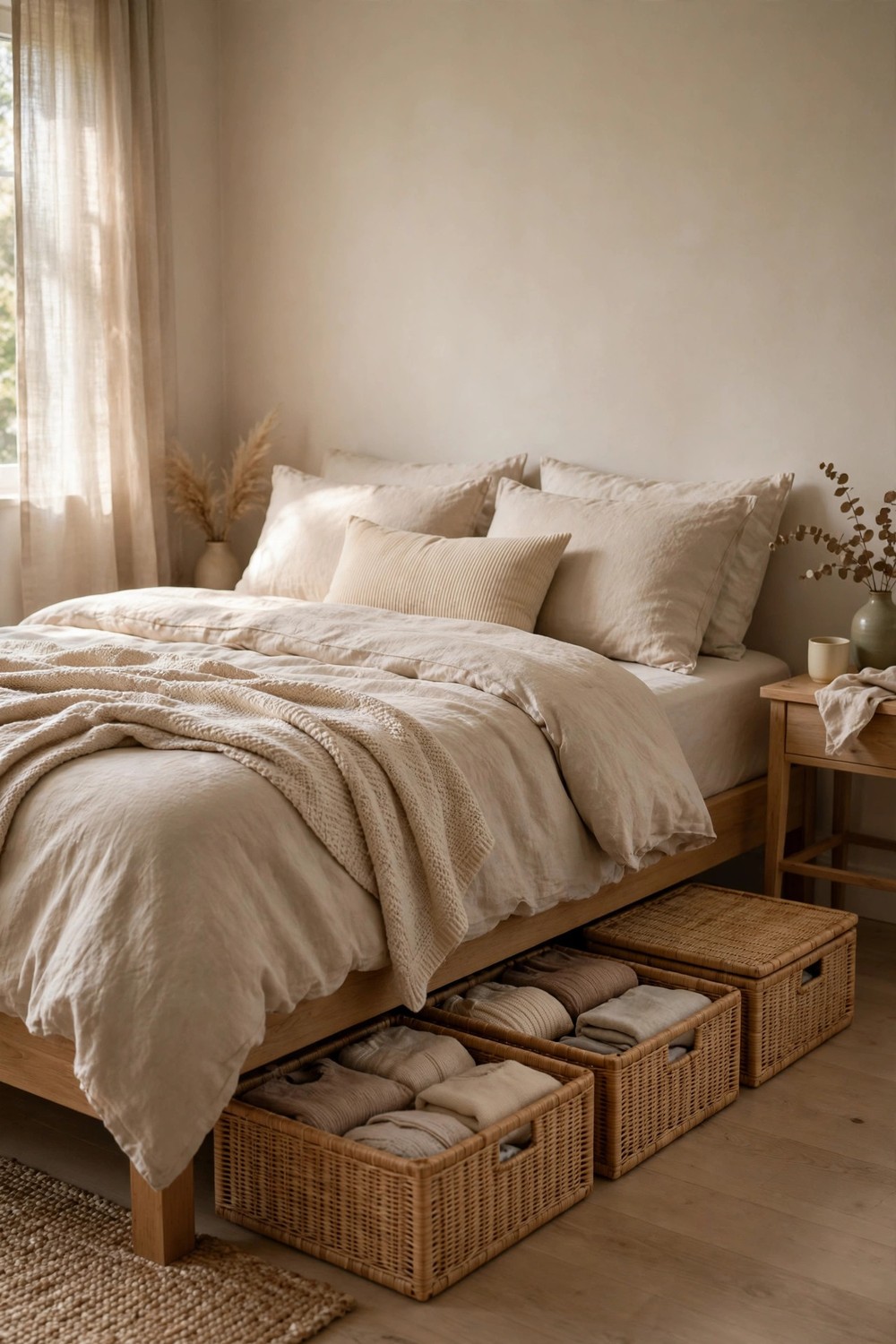
1. Use Under-Bed Boxes With Lids for Off-Season Clothes
The space under your bed is probably the largest storage spot you’re not fully using, and lidded boxes make it work without turning into a dust trap. Choose low, flat boxes that slide easily on your floor type, and give each one a single job, like winter sweaters in one and summer dresses or shorts in another. Fold things loosely so they come out wearable, and tuck a small scented sachet on top if you like that fresh feeling when you open the lid. Lids matter more than you’d think, because they keep dust off and let you stack your expectations neatly rather than shoving loose piles underneath. Label the short end that faces out, and you’ll typically find what you need in seconds instead of pulling everything out on a busy morning.
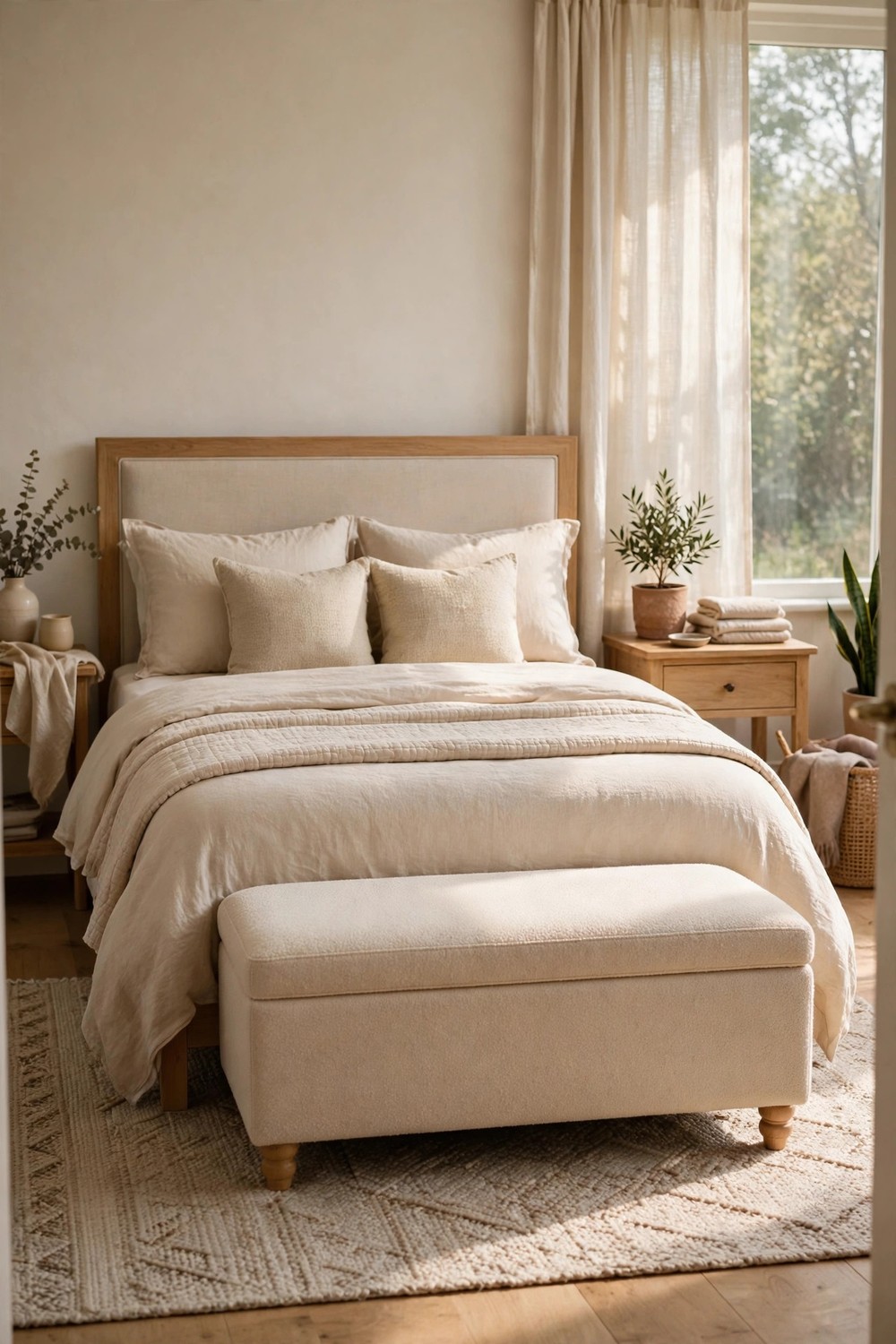
2. Add a Storage Bench at the Foot of the Bed
A storage bench at the foot of the bed earns its place three ways at once. It gives you somewhere to sit while you put on shoes, it catches the throw or extra cushions at night, and inside it quietly holds whatever tends to clutter the floor. Look for a bench that’s a little narrower than your bed and low enough that it doesn’t block the view across the room. Inside, it usually works best for soft things like blankets, spare pillows, or a small bag you only use on weekends. If the lid is hinged, check that it opens softly and stays up while you tidy. In a smaller room, a lighter fabric and slim legs typically keep the bench feeling airy instead of bulky.
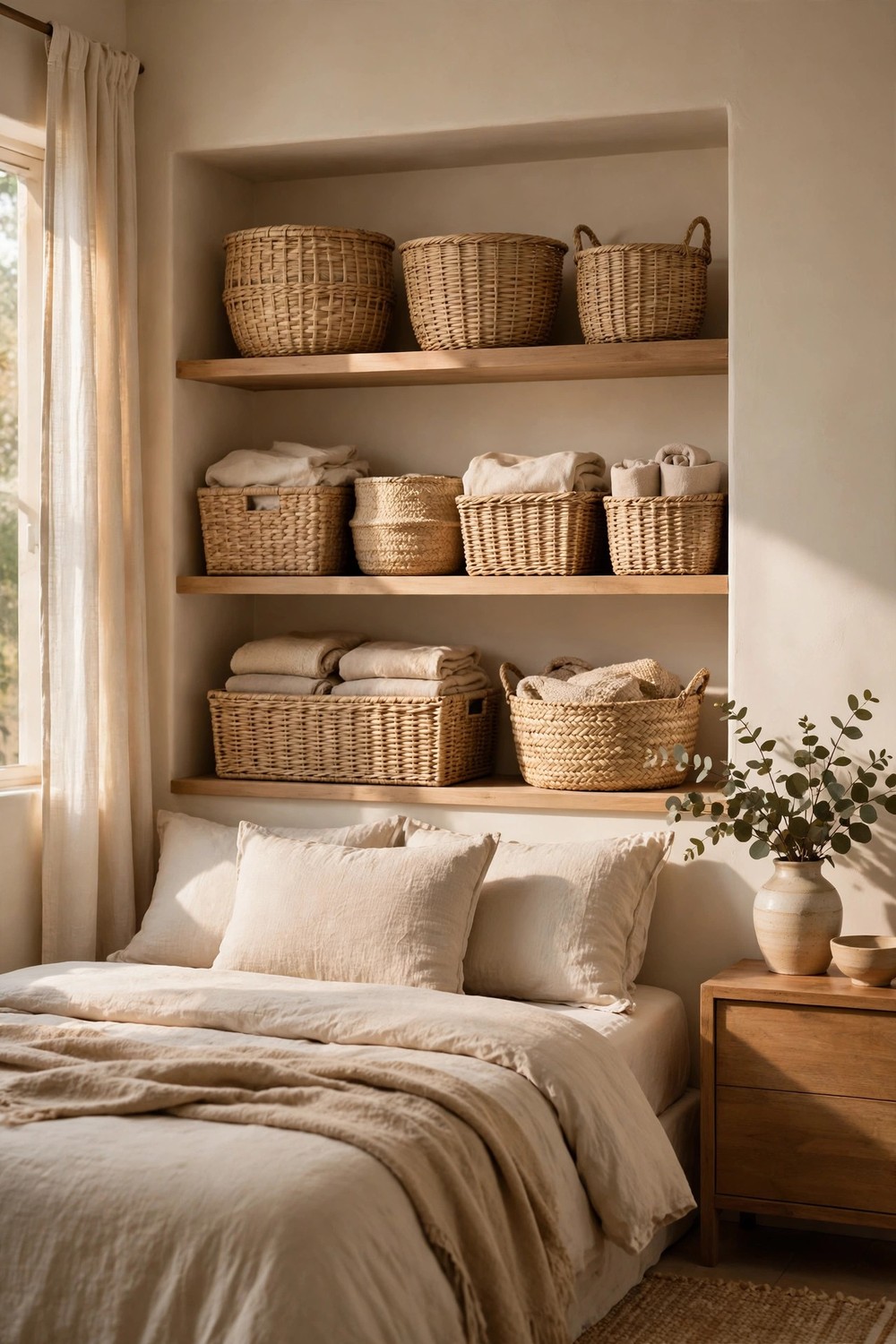
3. Use Baskets Inside Open Shelves
Open shelves look lovely until every little thing on them starts competing for attention. Baskets fix that in minutes because they turn a jumble of small objects into one calm, textured shape. Choose baskets that fill most of the shelf width and sit at a similar height, so the row reads as intentional rather than collected by accident. Woven styles in warm natural tones usually soften a bedroom nicely, while fabric baskets can feel gentler in a very minimal room. Give each basket a loose theme, like reading bits in one and skincare or chargers in another, and resist filling them to the brim. When baskets stay about three quarters full, they’re easy to use and they keep the shelves looking tidy without any real effort.
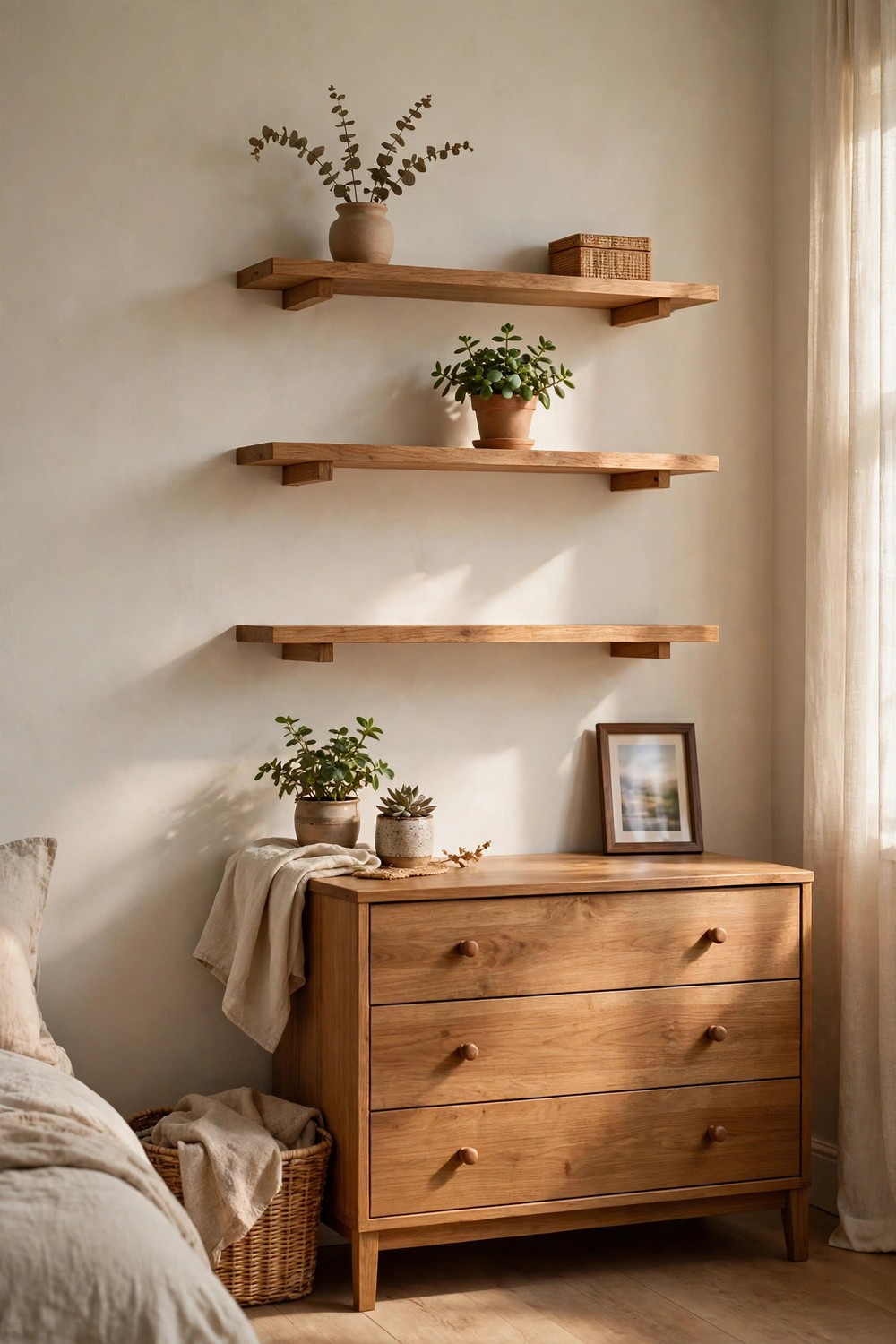
4. Install Floating Shelves Above the Dresser
The wall above a dresser is often blank, even though it’s some of the most useful space in the room. One or two floating shelves there can lift perfume, books, and keepsakes off the dresser top, so getting ready feels less crowded. Keep the shelves a comfortable distance above the dresser surface, and leave the lowest shelf for things you reach for often. Style them lightly, with a small plant, a framed photo, and a neat stack or two, because floating shelves look best when they don’t feel loaded. Match the wood tone or color to something already in the room, like the bed frame or a basket, and the shelves will typically feel like they were always meant to be there.
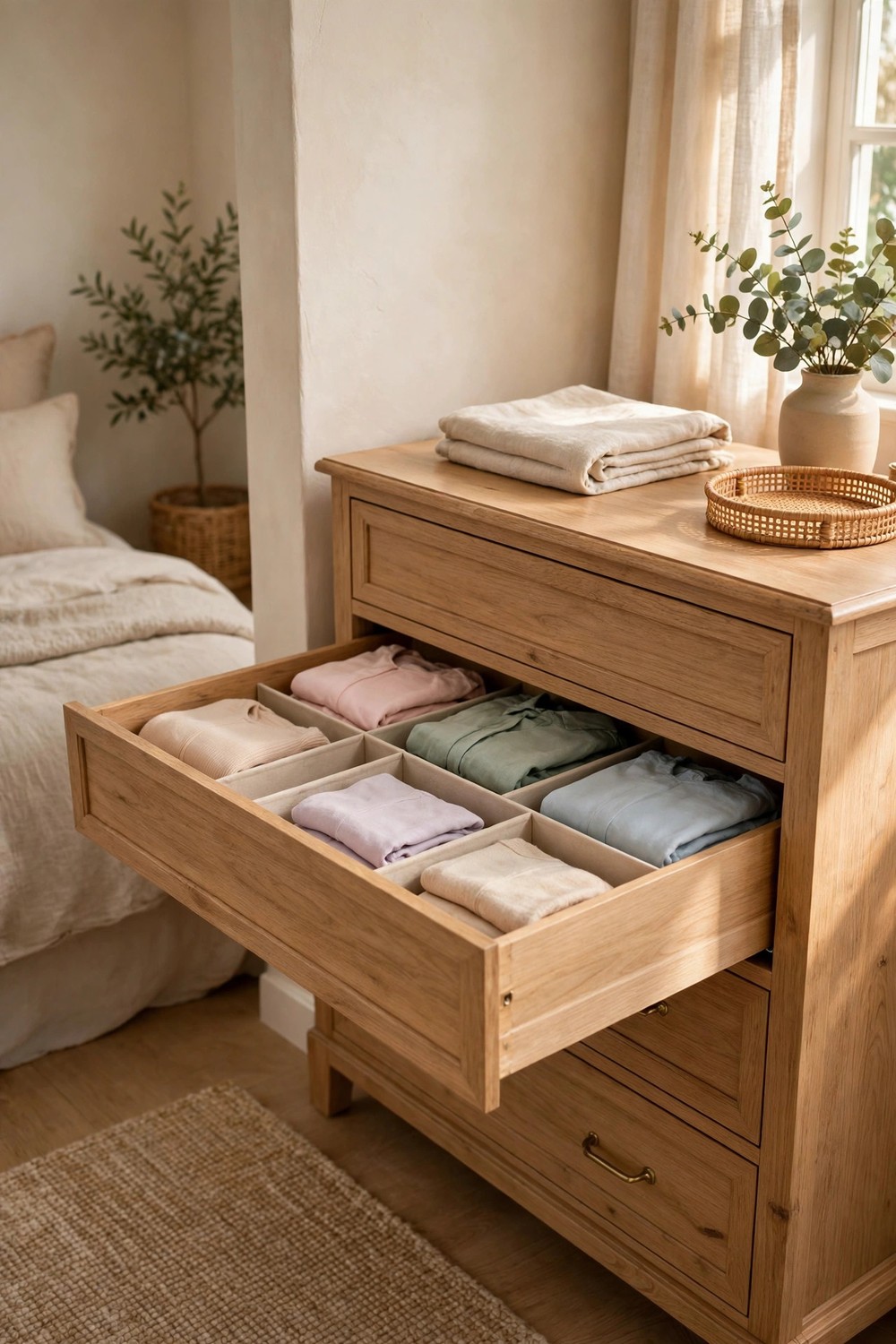
5. Use Drawer Dividers to End the Morning Scramble
If you dig through a drawer every morning, the drawer isn’t really the problem. It just needs a little structure inside. Simple dividers or small boxes create separate homes for socks, underwear, tees, and workout clothes, so you can see everything at a glance and grab what you need without unfolding the rest. Measure before you buy, because dividers that actually fit the drawer feel completely different from ones that slide around. Folding clothes upright in rows usually helps too, since you can spot colors quickly. Start with the drawer you open first each day and live with it for a week. Most people find that one calm drawer makes them want to quietly sort the next one too, especially once mornings start feeling easier.
Add Smart Spots Beside and Behind
Once the big areas feel calmer, look at the in-between spots you pass a dozen times a day. The back of the door, the space beside the bed, and the inside of the wardrobe can all hold more than you expect. These next five ideas are about giving everyday things a home that’s close to where you actually use them.
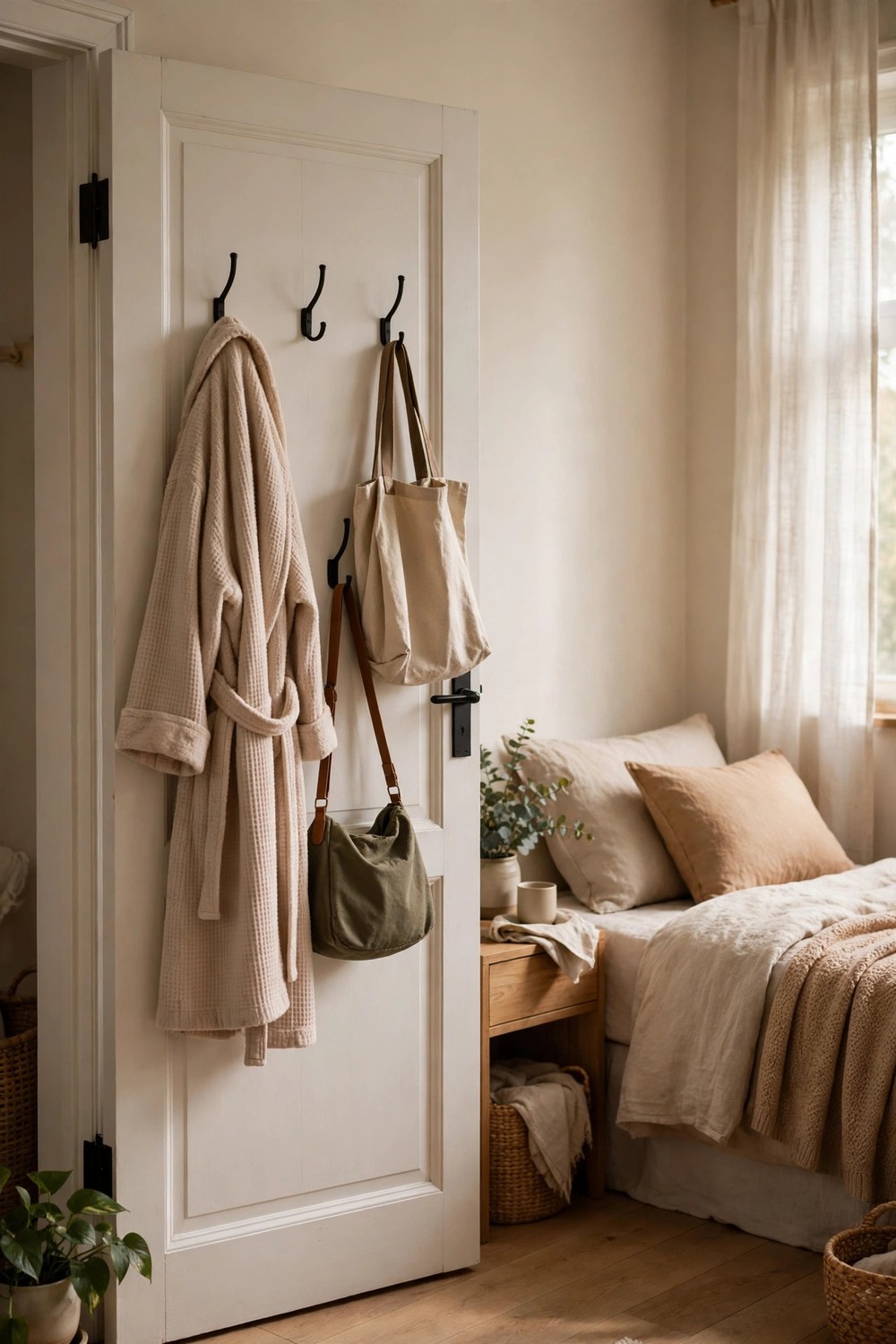
6. Add Hooks Behind the Door for Robes and Bags
The back of the bedroom door is prime storage that most of us walk past without noticing. A small row of sturdy hooks there is perfect for the robe you wear every morning, the bag you grab on your way out, and the hoodie that otherwise lives on a chair. Choose hooks that sit fairly flat so the door still opens fully, and space them so bulkier items don’t bunch together. If you rent or just don’t want to drill, over-door hook racks can work well too, as long as they feel solid and don’t rattle. Keep it to three or four things at most. When the door stays uncrowded, this little system usually disappears into daily life in the best possible way.
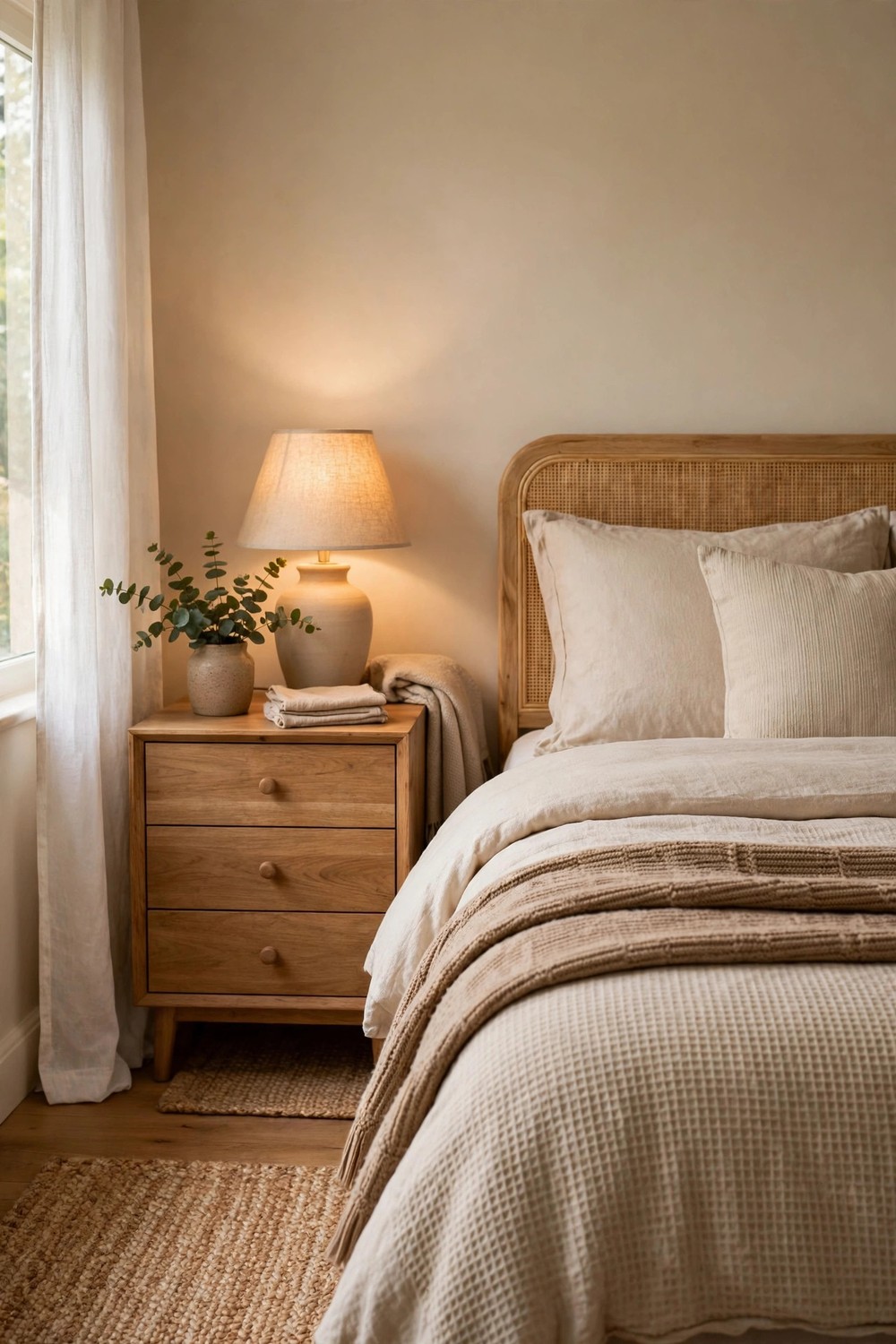
7. Use a Nightstand With Drawers, Not Just a Table
An open side table looks light and pretty, but it leaves everything you need at night out on display. A nightstand with drawers gives you the same surface for a lamp and a book, plus a hidden home for chargers, lip balm, tissues, and all those small bedtime bits. Even one drawer makes a real difference, because the top can stay clear except for what you’re actually using. Use the top drawer for nightly things and a lower drawer, if you have one, for less frequent bits like spare cables or a sleep mask. Add a tiny tray or box inside so small items don’t roll around. You’ll typically fall asleep in a room that feels quieter simply because less is staring back at you.
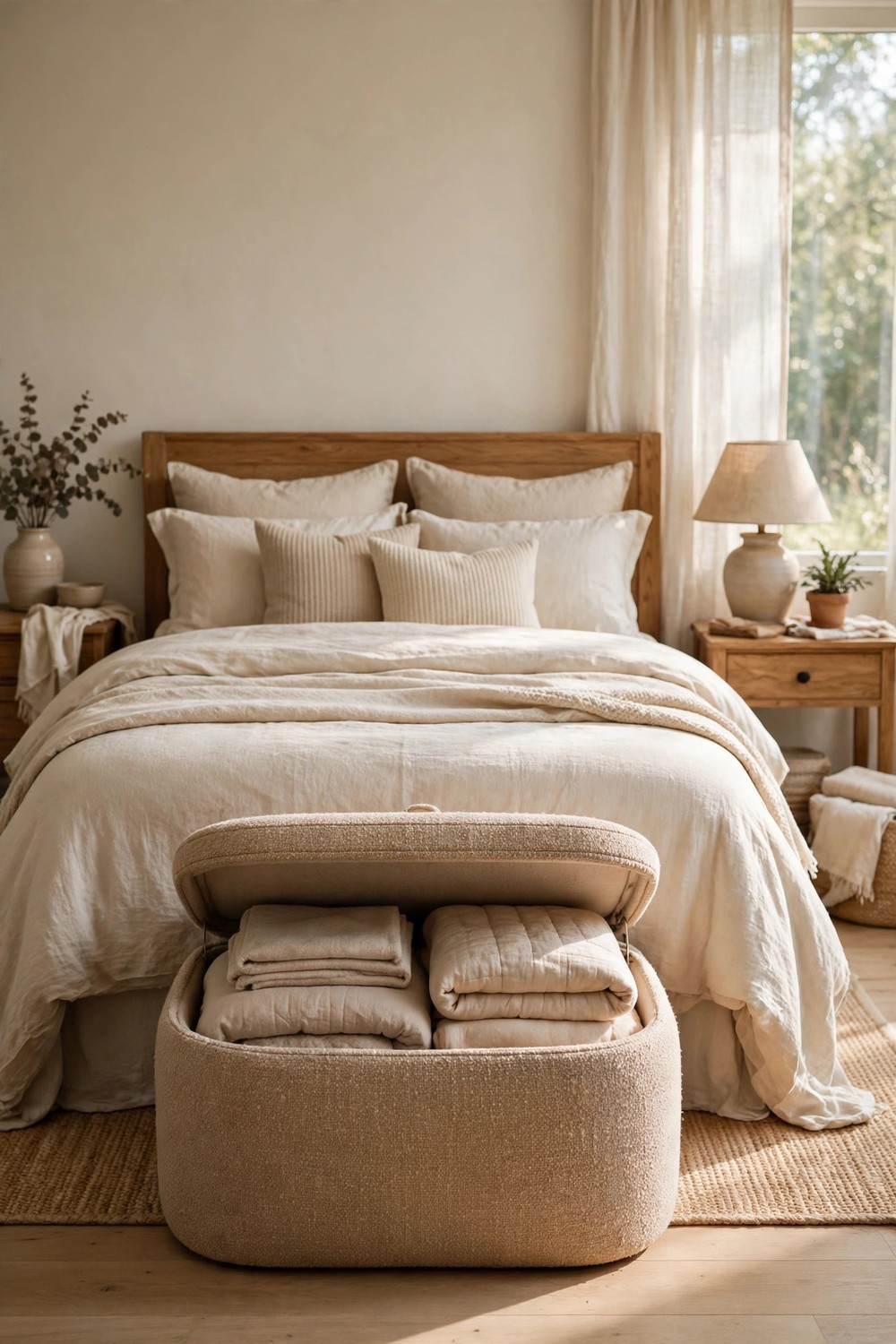
8. Store Extra Bedding in a Lidded Ottoman
Extra bedding is bulky, soft, and oddly hard to store well, which is why a lidded ottoman suits it so nicely. The spare duvet, guest pillows, or that extra throw can live inside, folded loosely so they stay fresh and easy to lift out. Place the ottoman at the foot of the bed or under a window, where it can double as a seat when you’re tying shoes or laying out clothes for tomorrow. A fabric finish usually feels cozier in a bedroom than hard wood, and a removable lid is easier on busy mornings than a hinged one. If bedding tends to sit for months, pop a lavender sachet inside. Everything will come out smelling calm and ready to use.
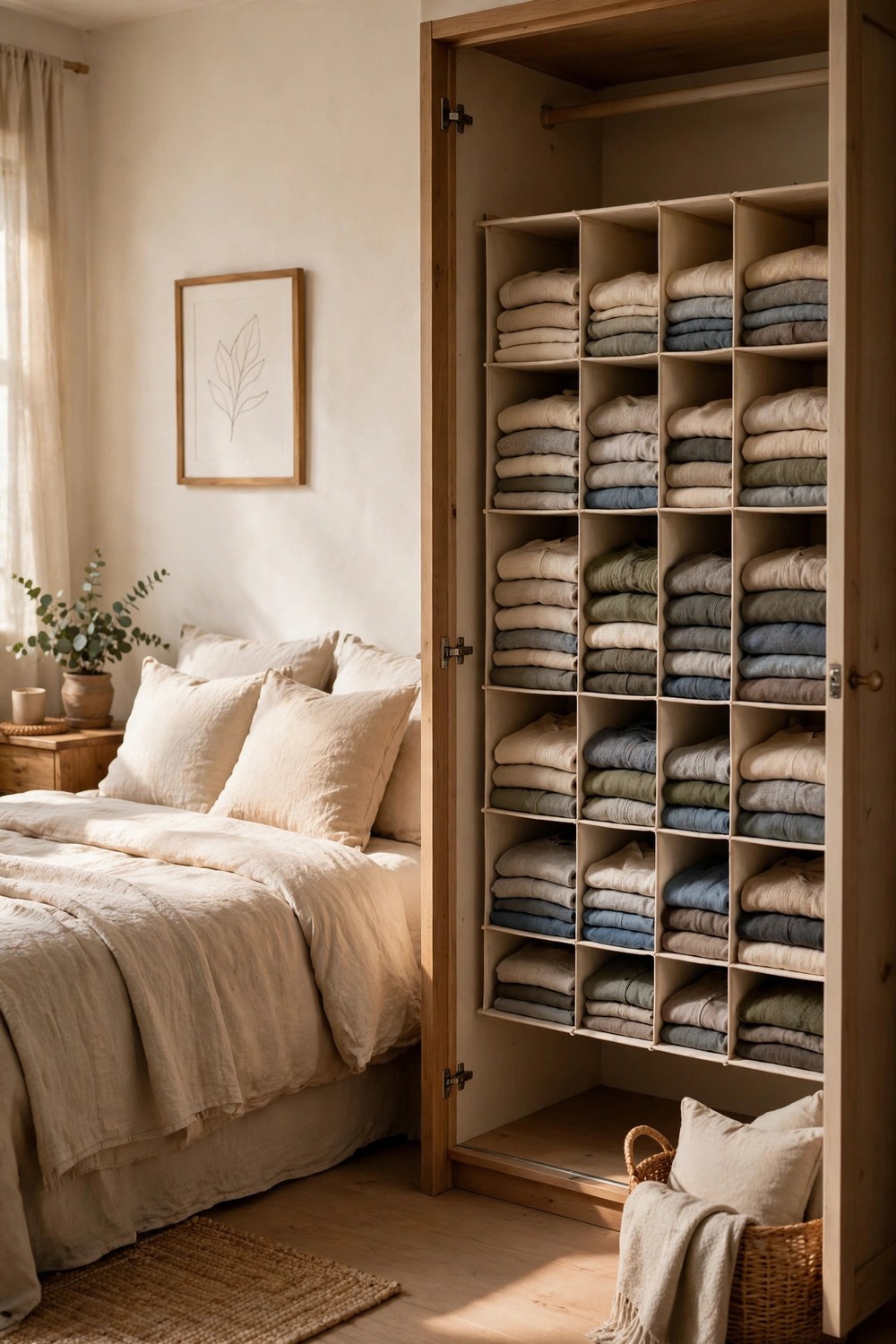
9. Use Vertical Wardrobe Organizers
Wardrobes often waste the tall space between a hanging rail and the floor or shelf above it. Vertical organizers that hang from the rail or stack on a shelf turn that empty height into neat compartments for folded jumpers, tees, jeans, or bags. Fabric hanging shelves are a gentle place to start because they’re light, affordable, and easy to move if your layout changes. Give each compartment one category and try not to stuff them, because soft organizers lose their shape when they’re overloaded. In a shared wardrobe, one column each can quietly end the whose pile is whose debate. Typically, just seeing your clothes in tidy stacks makes getting dressed feel slower and kinder, even on a rushed weekday morning.
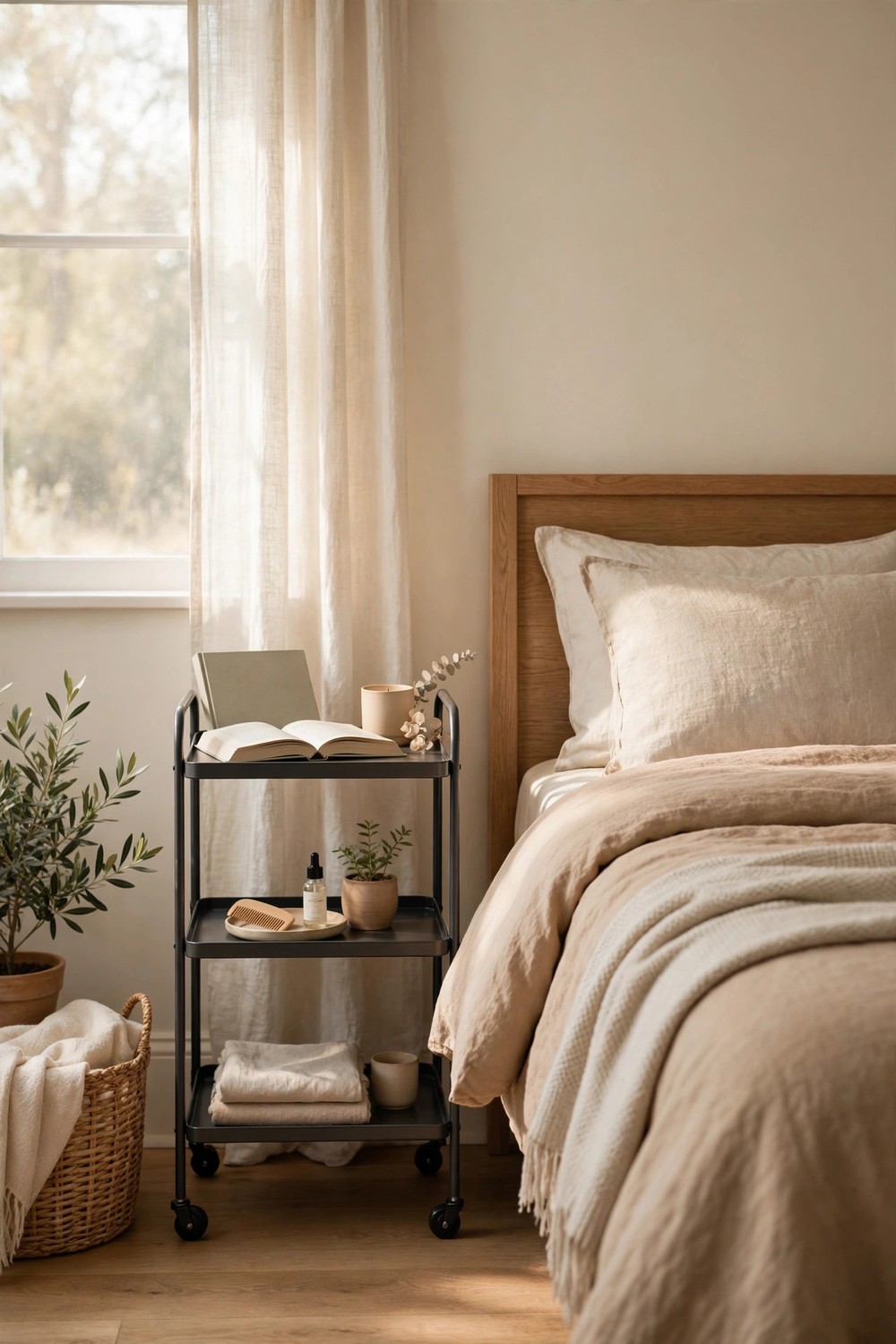
10. Add a Slim Rolling Cart Beside the Bed
A slim rolling cart is a friendly fix for the awkward gap beside a bed, especially in a small room where a full nightstand won’t fit. The top tier can hold your current book, a glass of water, and your phone, while lower tiers quietly handle chargers, hand cream, and reading glasses. Because it rolls, you can pull it closer at night and tuck it back in the morning, and cleaning around it takes seconds. Choose a calm color that blends with your bedding or walls so it reads as part of the room rather than a utility item that wandered in. Keep the top tier light and uncluttered, and the cart will usually feel like a clever bedside companion instead of extra clutter on wheels.
Tame the Closet and the Dresser Top
A calm bedroom usually comes down to two busy zones behaving themselves, the closet and the dresser top. When those two look ordered, the whole room tends to feel ordered too. These next ideas focus on matching containers, small trays, and hangers that quietly make your clothes and little essentials easier to see and easier to put back.
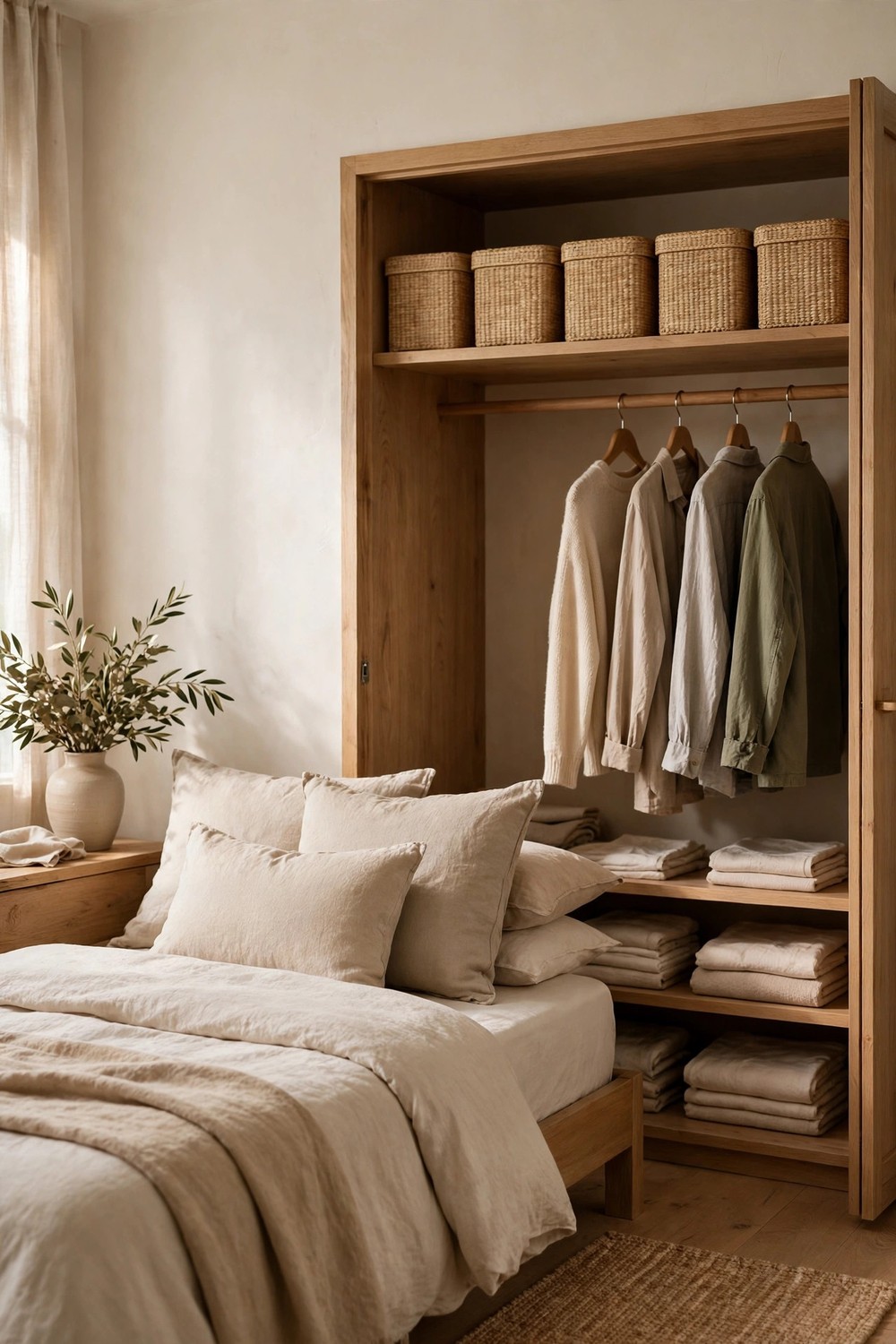
11. Use Matching Boxes on the Top Closet Shelf
The top closet shelf has a habit of becoming a skyline of random bags, loose boxes, and things balanced at angles. A row of matching lidded boxes changes that instantly, because your eye reads one calm line instead of a dozen different shapes. Use that high shelf for things you need rarely, like occasion shoes, travel bits, or keepsakes, and keep everyday clothes within easy reach below. Label each box on the front in simple words, or take a quick photo of the contents and stick it inside the lid if labels feel fussy. Measure the shelf height before you buy so the boxes slide in without a squeeze. Typically, this one change makes opening the closet feel peaceful rather than slightly risky.
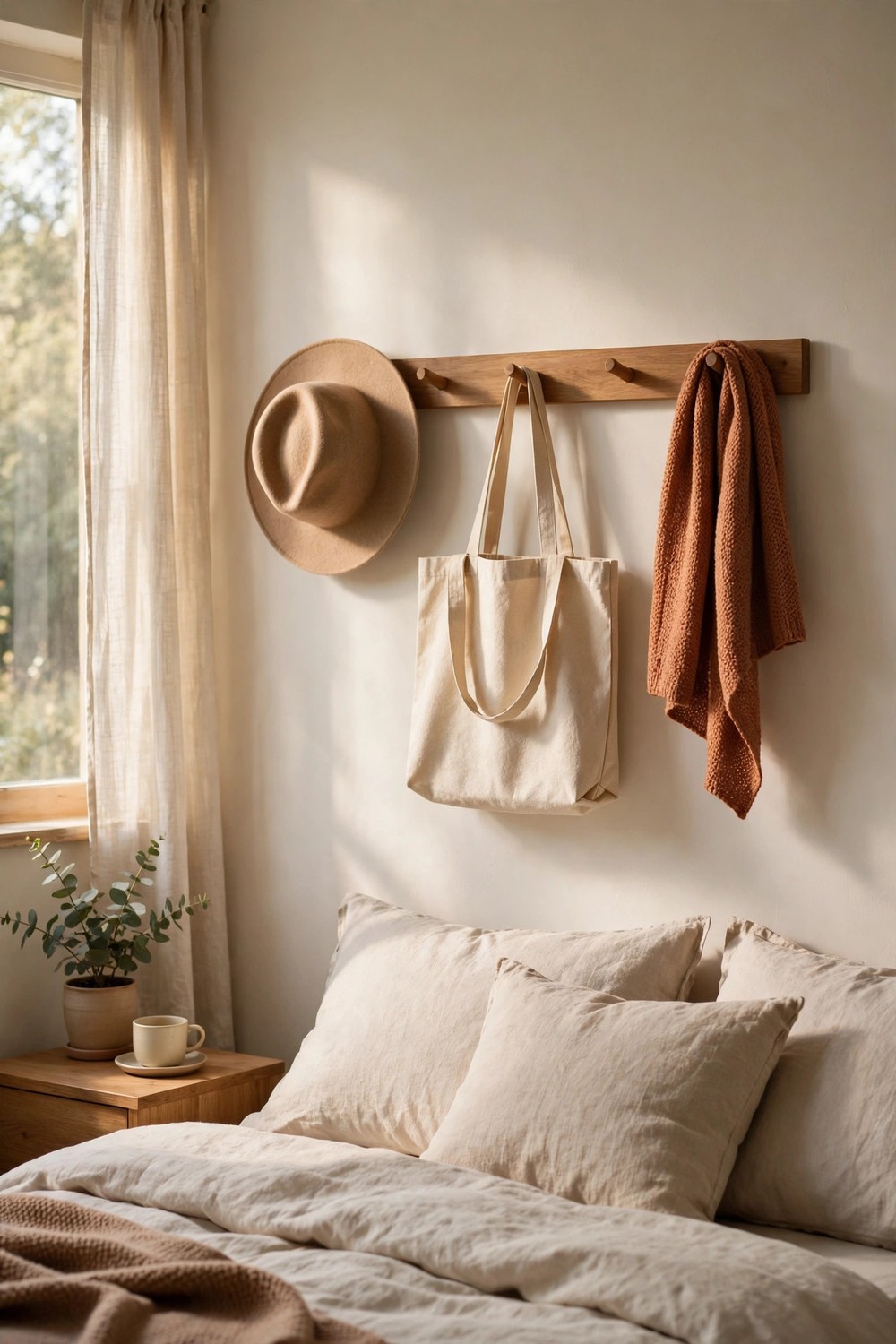
12. Hang a Peg Rail for Everyday Essentials
A peg rail is one of those old fashioned ideas that still works beautifully in a modern bedroom. Mount a simple wooden rail near the dresser, the door, or inside the closet, and use the pegs for the hat you wear daily, a tote, a scarf, or tomorrow’s outfit hung ready to go. It keeps essentials visible and off surfaces, which is exactly what a small room needs. Paint the rail the same color as the wall if you want it to blend in, or leave natural wood for a warm, crafted feel. Space your items with a little air between them, because a peg rail looks best styled lightly. Most people find three to five pegs in regular use is the sweet spot between helpful and crowded.
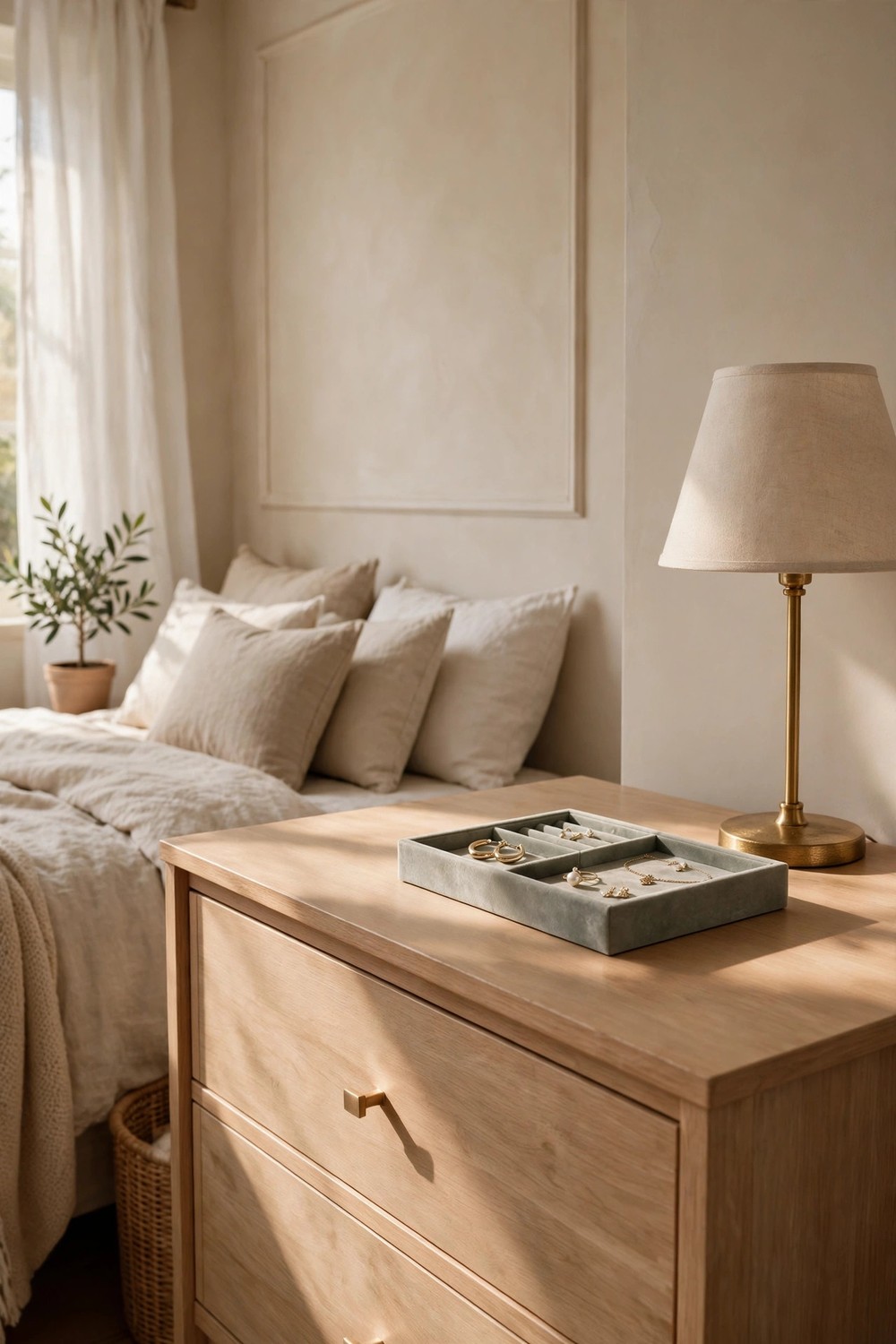
13. Use a Jewelry Tray to Keep the Dresser Clear
Jewelry is small, but it has a real talent for spreading across a whole dresser. A single tray gives rings, earrings, and a watch one clear home, so taking them off at night becomes a calm little ritual instead of a scatter. Choose a tray with a soft lining or gentle compartments if your pieces tangle easily, and keep it near where you actually get ready. A ceramic, stone, or warm wood tray usually looks pretty enough to leave out, which is the point. Limit the tray to the pieces you wear most often and store the rest in a drawer or box nearby. When the dresser top holds just a tray, a lamp, and maybe a plant, the whole room typically feels more restful.
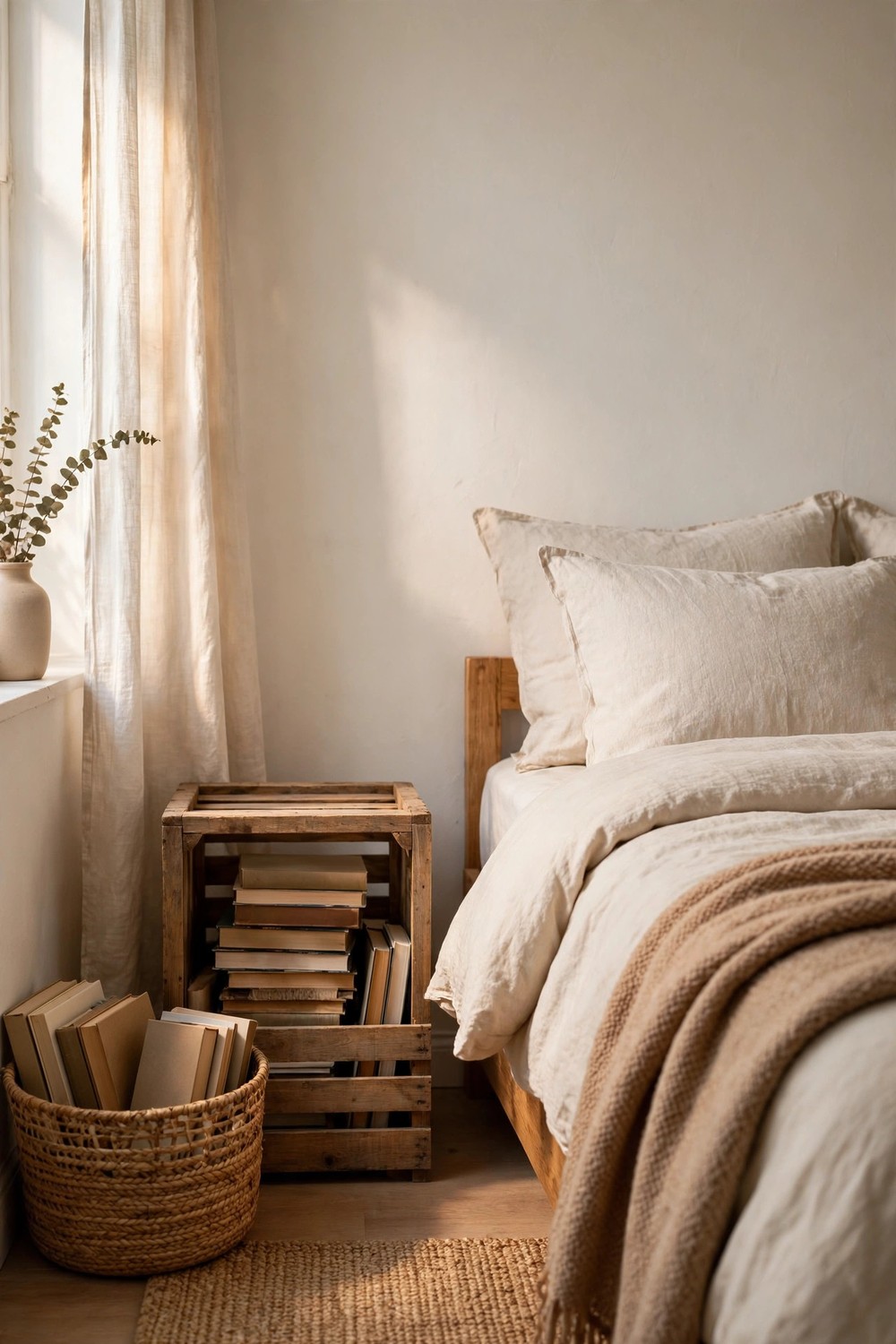
14. Store Books in a Bedside Crate or Basket
If your reading pile keeps growing across the floor or the nightstand, a bedside crate or basket gives it a home that still feels cozy. Tuck it right beside the bed so your current reads, a journal, and maybe a magazine or two stay within arm’s reach without taking over the surface. A wooden crate suits a relaxed, rustic room, while a woven basket softens a more minimal space, and both keep book spines tidy and upright enough to browse. Try to keep the collection honest, with the books you’re actually reading rather than a whole library, and pass finished ones back to a shelf now and then. That small habit usually keeps bedtime reading feeling like a pleasure instead of another pile to manage.
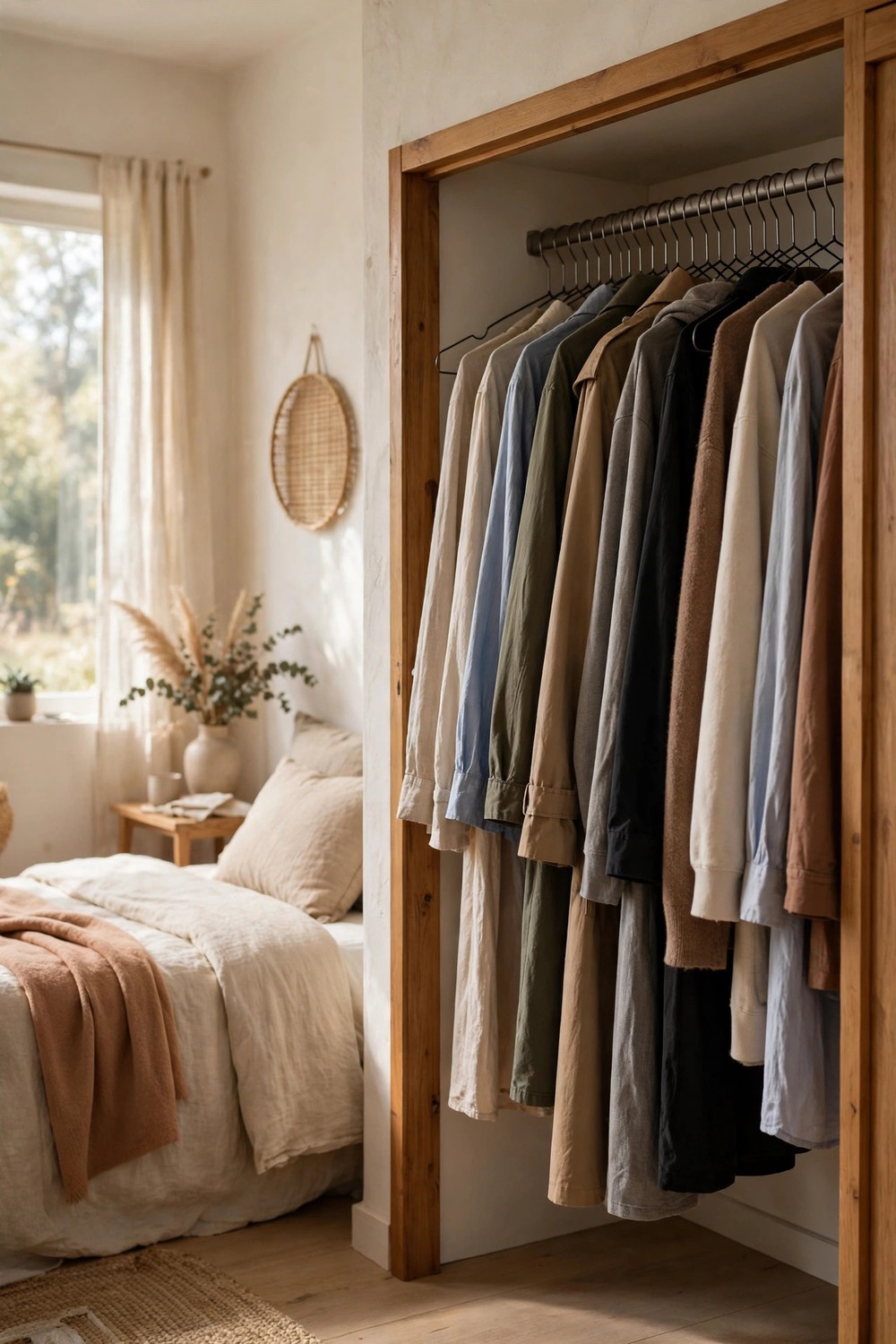
15. Use Space-Saving Hangers for More Closet Room
Sometimes the closet isn’t too small. The hangers are just taking up more room than they should. Slim, space saving hangers, especially the kind that let you hang several items vertically and then drop them down, can free a surprising amount of rail space without buying a new wardrobe. They work particularly well for shirts, blouses, and lightweight trousers that you wear in rotation. Switching to one hanger style also makes the rail look calmer, because everything sits at the same height and thickness. Go slowly if you have a lot of clothes, perhaps one section on a quiet afternoon, and donate hangers you no longer need. Typically, the extra breathing room makes choosing an outfit feel easier straight away.
Finish With Flexible Storage That Keeps the Calm
The last ideas are about staying tidy over time, not just on the day you organize. Flexible pieces that move with you, a place for things leaving the room, and one truly closed spot for visual quiet all help the calm last. Think of this final stretch as setting up gentle habits as much as adding storage.
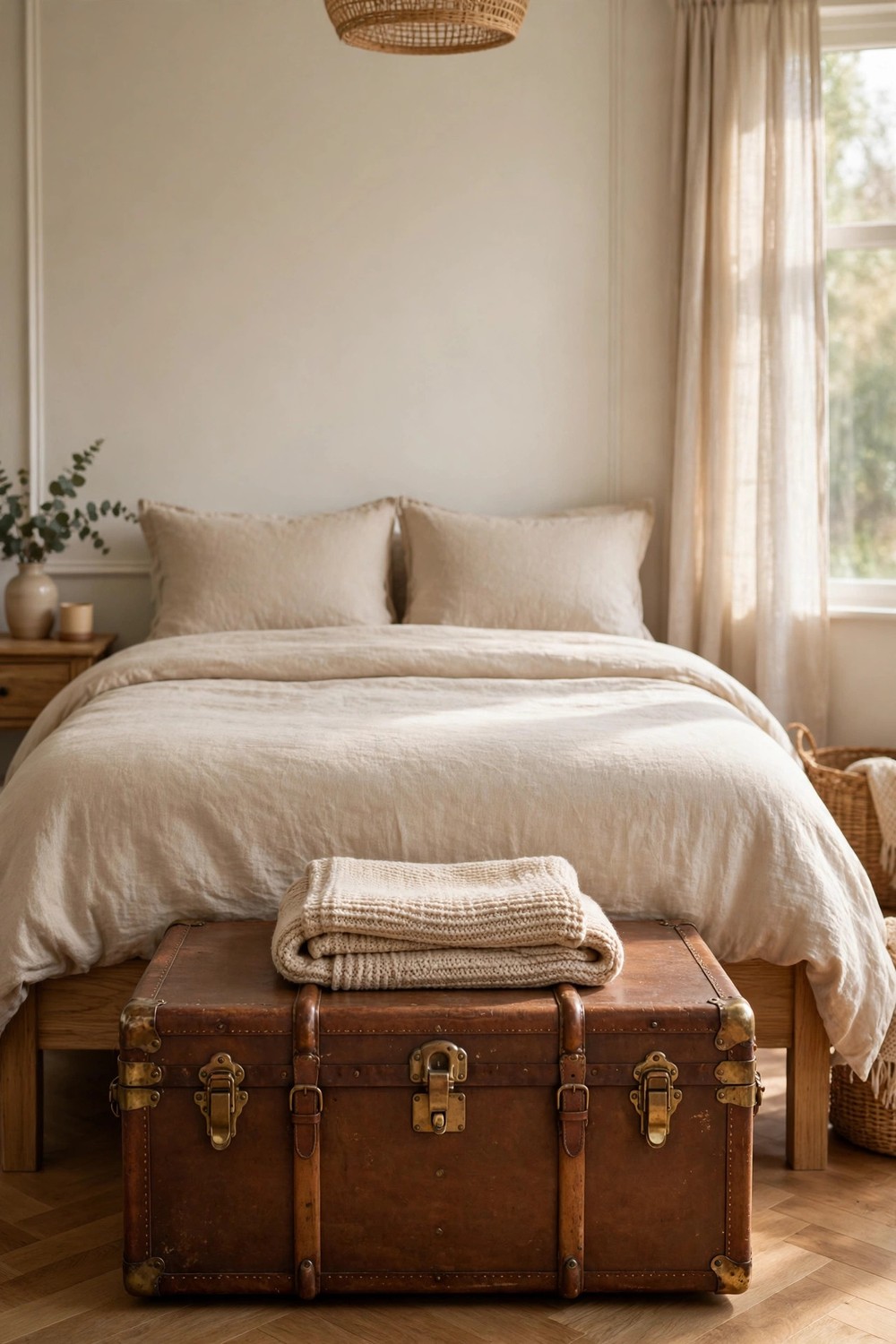
16. Add a Trunk That Doubles as Decor
A trunk brings storage and character in equal measure, which is a lovely combination at the foot of a bed or along a spare wall. Inside, it can hold spare blankets, board games, memory boxes, or seasonal decor that you want nearby but not on show. On top, a folded throw or a small stack of books is usually enough styling, because the trunk itself already has presence. Vintage trunks bring history and texture, while a clean lined modern one feels calmer in a minimal room, so choose the mood you want the room to hold. Check the hinges and lining before you commit, especially with older pieces. A good trunk typically becomes one of those pieces guests ask about while quietly doing a very practical job.
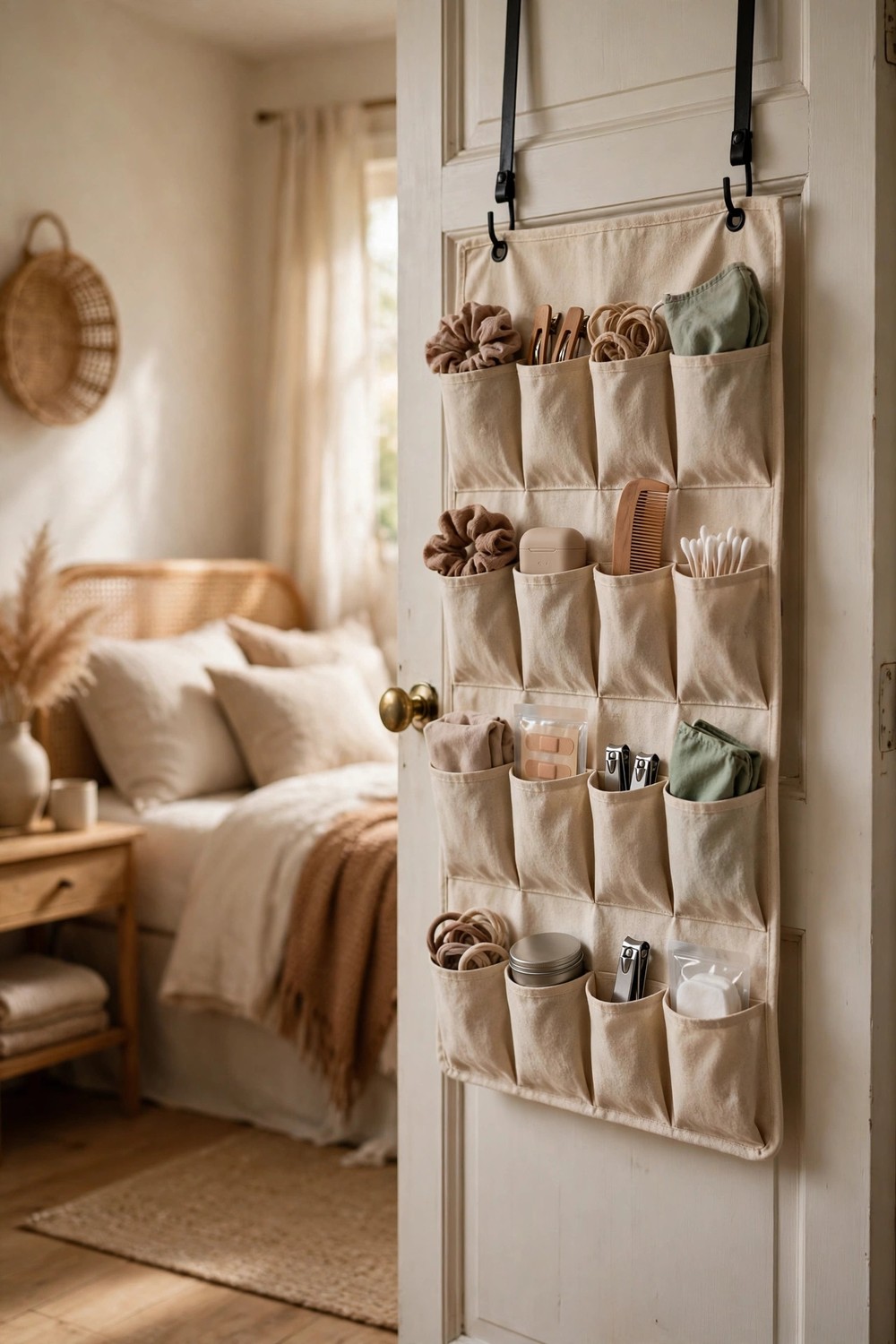
17. Use Over-Door Organizers for Small Things
Small things are often the hardest to store, because they don’t justify a drawer each and they vanish into big boxes. A clear or fabric over-door organizer gives scarves, belts, hair tools, socks, or craft bits their own little pockets where you can actually see them. Hang it on the closet door or the bedroom door, whichever you open most, and group similar items together so the pockets make sense at a glance. Try not to fill every pocket just because it’s there. Leaving a few empty gives you room to grow and keeps the organizer from bulging or swinging heavily. For renters and small rooms especially, this kind of storage usually feels like finding a drawer you didn’t know you had.
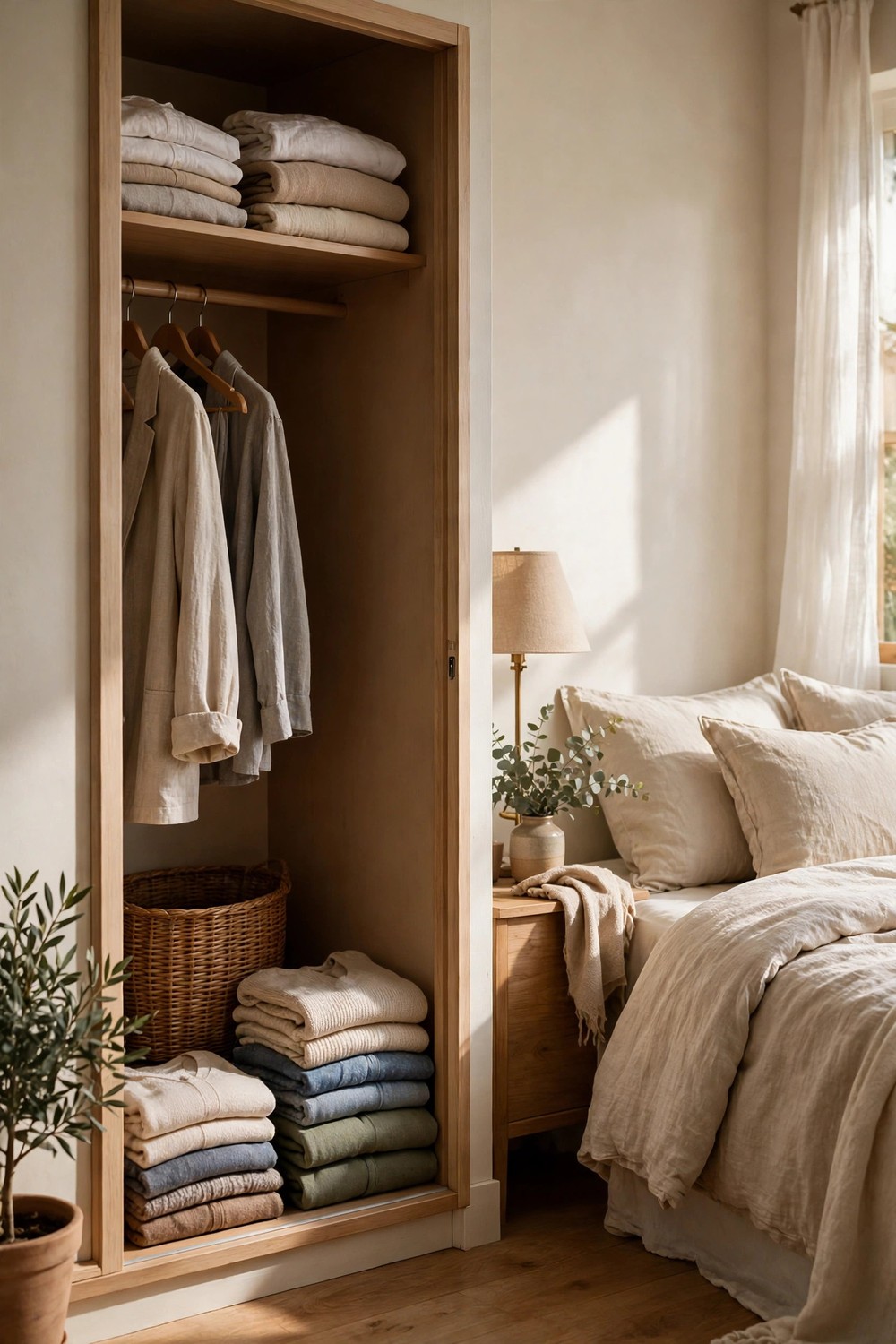
18. Keep a Donation Basket in the Closet Corner
A tidy closet stays tidy when things have an easy way out, and a donation basket in the corner provides exactly that. Whenever you try something on and realize you never reach for it anymore, it can go straight into the basket instead of back onto the rail for another six months. When the basket fills up, you simply carry it to a donation point or a charity bag by the front door. Choose a basket or fabric bin that looks pleasant enough to live in the closet full time, because an ugly one tends to migrate and get forgotten. This tiny system typically works because it removes the need for a big, emotional clear out. You just make small, calm decisions as you get dressed each week.
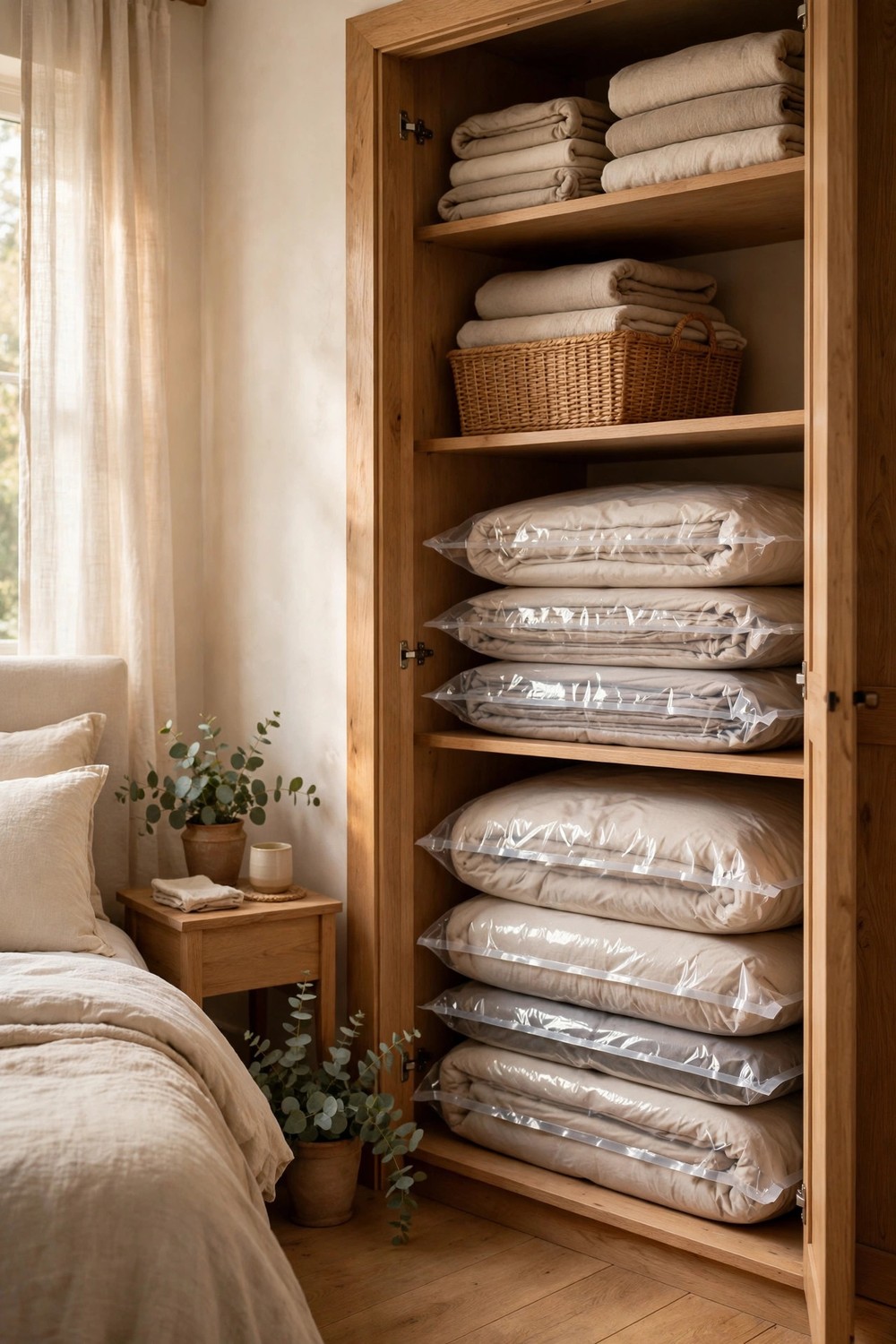
19. Use Vacuum Bags for Bulky Duvets
Bulky duvets, spare pillows, and winter blankets can swallow a whole shelf before you’ve stored anything else. Vacuum bags shrink them down to a flat, manageable stack, which frees real space for the clothes and bedding you use every week. Wash and fully dry items before you seal them, fold them loosely to fit the bag, and don’t vacuum out every last bit of air if the filling is natural, because a little loft left in usually helps it recover better later. Store the flat bags on a high shelf, under the bed, or upright like files in a deep drawer. Label the outside with what’s inside and the season. When the weather turns, you’ll typically be grateful you can find the warm layer in one quick reach.
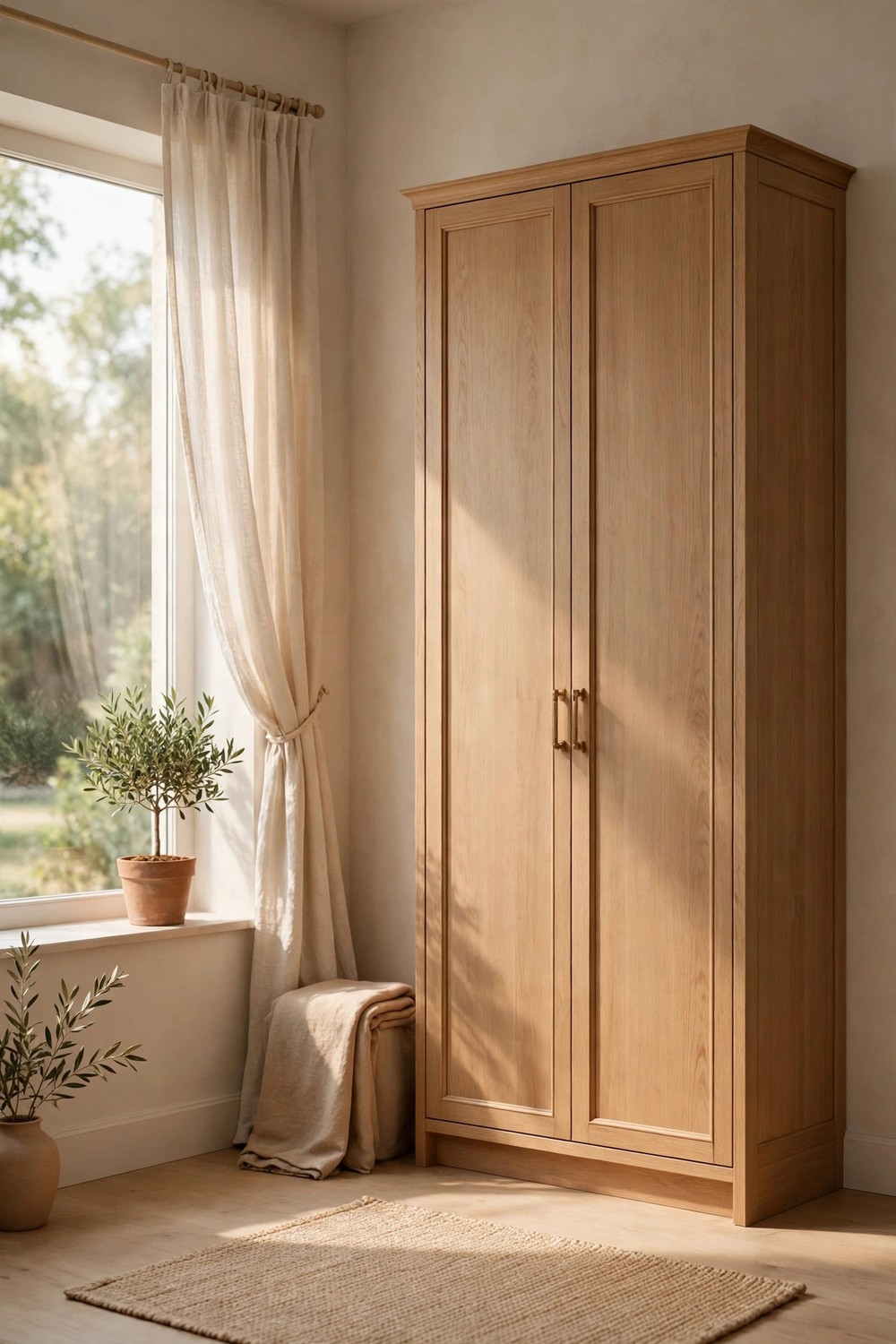
20. Finish With One Closed Cabinet for Visual Calm
After all the baskets, trays, and open shelves, there’s one final trick that quietly holds the whole room together. Give yourself one closed cabinet, armoire, or lidded cupboard where the not so pretty essentials can live out of sight. Medicines, paperwork, spare chargers, tools, and the miscellaneous bits every bedroom collects can all go behind those doors without apology. Closed storage lowers the visual noise in a way open styling never quite can, because your eye gets a rest from reading labels and shapes. Keep the inside roughly grouped with a box or two, but don’t aim for perfection in there. This cabinet is your pressure valve. When its doors close and the room looks calm again, you’ll typically feel that calm yourself too.
When you step back, your bedroom doesn’t need to look like a showroom to feel restful. It just needs clear surfaces where it counts, a home for the things you use daily, and a few hidden spots for everything else. If one area still bothers you, change only that area, live with it for a few days, and then decide again. Tidy usually grows one small, kind decision at a time, and your room will keep showing you what it needs as your routines and seasons change.
So start small this week. Pick the spot you see first when you wake up, perhaps the nightstand top or one dresser drawer, and give it a proper home for everything that lands there. That single calm spot will show you what the rest of the room can become, and you’ll probably find the next change suggests itself. Before long, getting ready and winding down will both feel a little easier, and your bedroom will feel like the quiet, tidy place you meant it to be all along.

Leave a Reply