
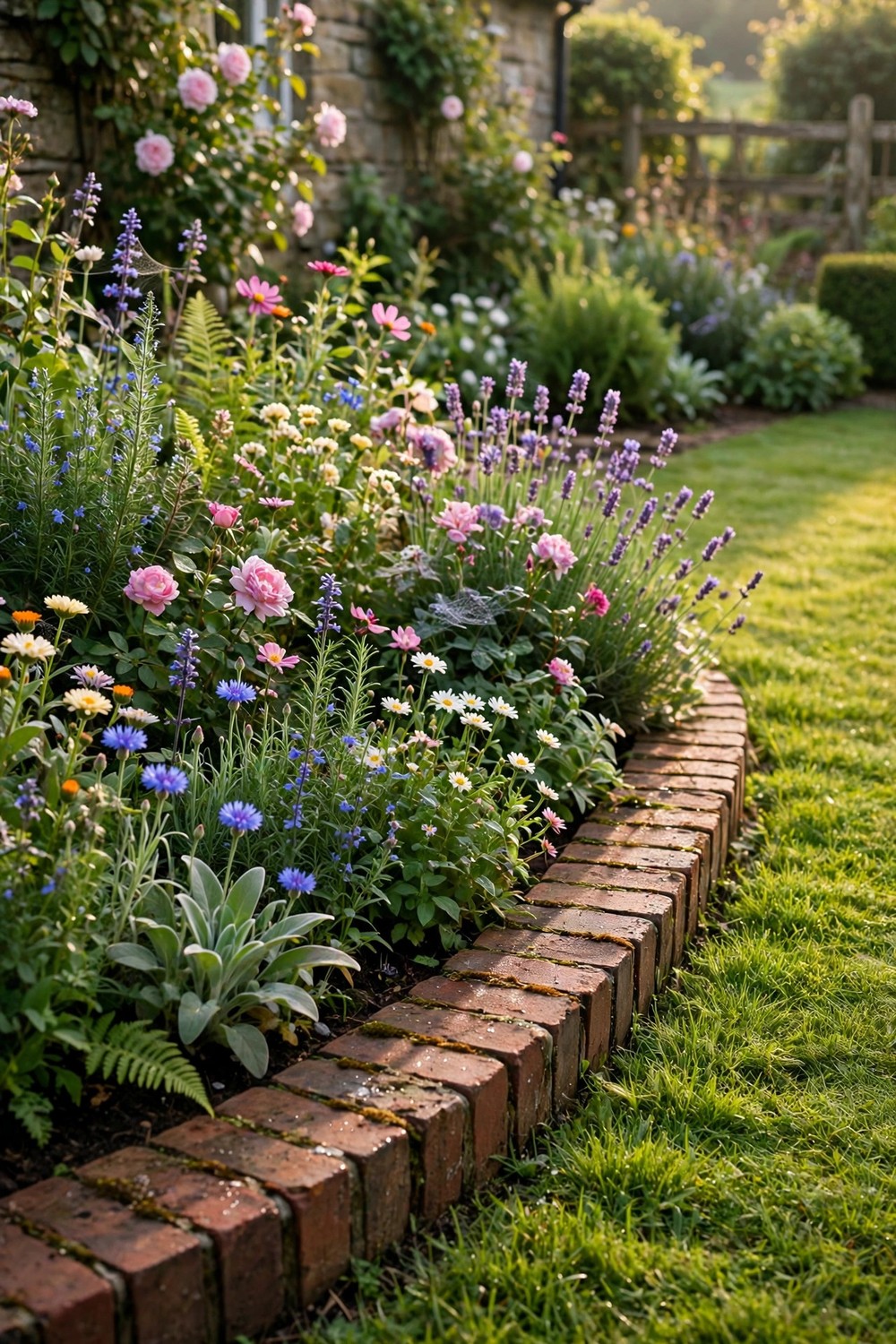
20 Brick Edging Ideas for a Tidy Garden Border
Nothing makes a garden look finished faster than a clean edge, and no edging material beats brick for doing it with character. Brick is warm, weighty, and honest. It keeps mulch in and grass out, gives the mower a line to follow, and somehow manages to suit both a cottage garden and a modern one.
Better still, brick edging is a forgiving weekend craft. Bricks can be dug in, laid flat, stood on end, or stacked in patterns, and if one sits crooked you simply lift it, add a little sand, and set it again. Reclaimed bricks cost pennies and bring instant age, while new ones weather into the garden within a season or two.
Here are 20 brick edging ideas, from classic soldier rows and Victorian rope edging to patterns, curves, and raised borders. Choose the one that matches your garden’s mood, and your borders will look tended even in the weeks when they are not.
Contents
- 1. Classic Soldier Row Edging
- 2. Sailor Row Flat Brick Edging
- 3. Victorian Rope Edging Look
- 4. Sawtooth Angled Brick Edging
- 5. Herringbone Brick Border
- 6. Basketweave Brick Edge
- 7. Double Row Brick Border
- 8. Curved Serpentine Brick Edge
- 9. Brick Mowing Strip Edge
- 10. Raised Brick Bed Border
- 11. Brick Tree Ring
- 12. Brick Edging with Gravel Infill
- 13. Mixed Brick and Stone Edge
- 14. Brick Border for the Vegetable Garden
- 15. Brick Edged Path
- 16. Brick and Creeping Thyme Edge
- 17. Whitewashed Brick Edging
- 18. Brick Spiral Herb Bed Edge
- 19. Brick Edge with Solar Lights
- 20. Reclaimed Brick Cottage Edge
Classic Brick Edging Patterns
The traditional ways of laying brick edging have survived a century of gardens because they work. Each pattern below changes the rhythm of the border while using exactly the same humble material.
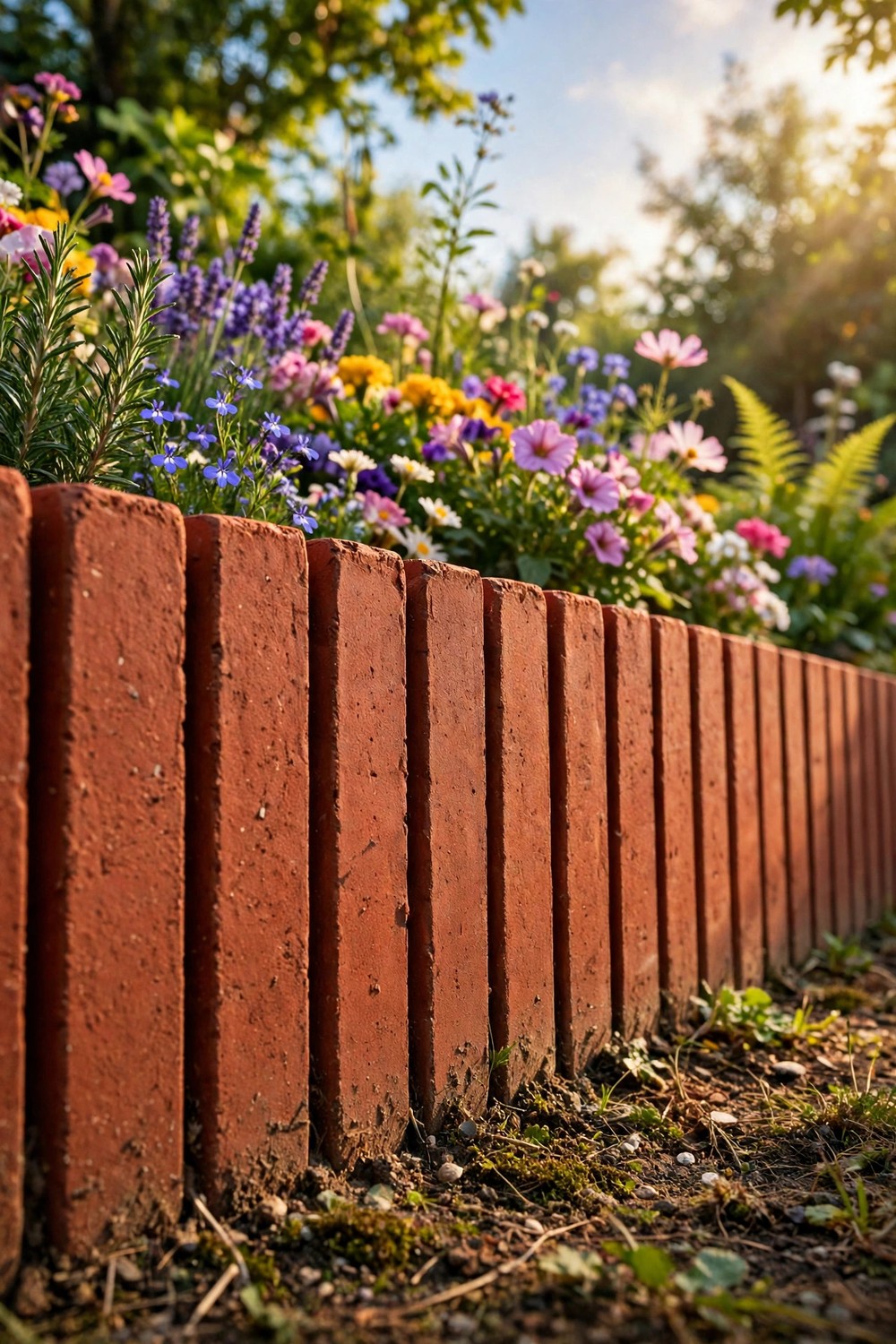
1. Classic Soldier Row Edging
Stand bricks upright in a soldier row. Bricks buried on end, shoulder to shoulder, make the crispest edge in the garden. The tops form a neat, even line about four inches above the soil, tall enough to hold mulch back and stop lawn runners at the border. Dig a straight trench, set each brick tight against the last, and check the line with a string, because a soldier row shows every wobble honestly.
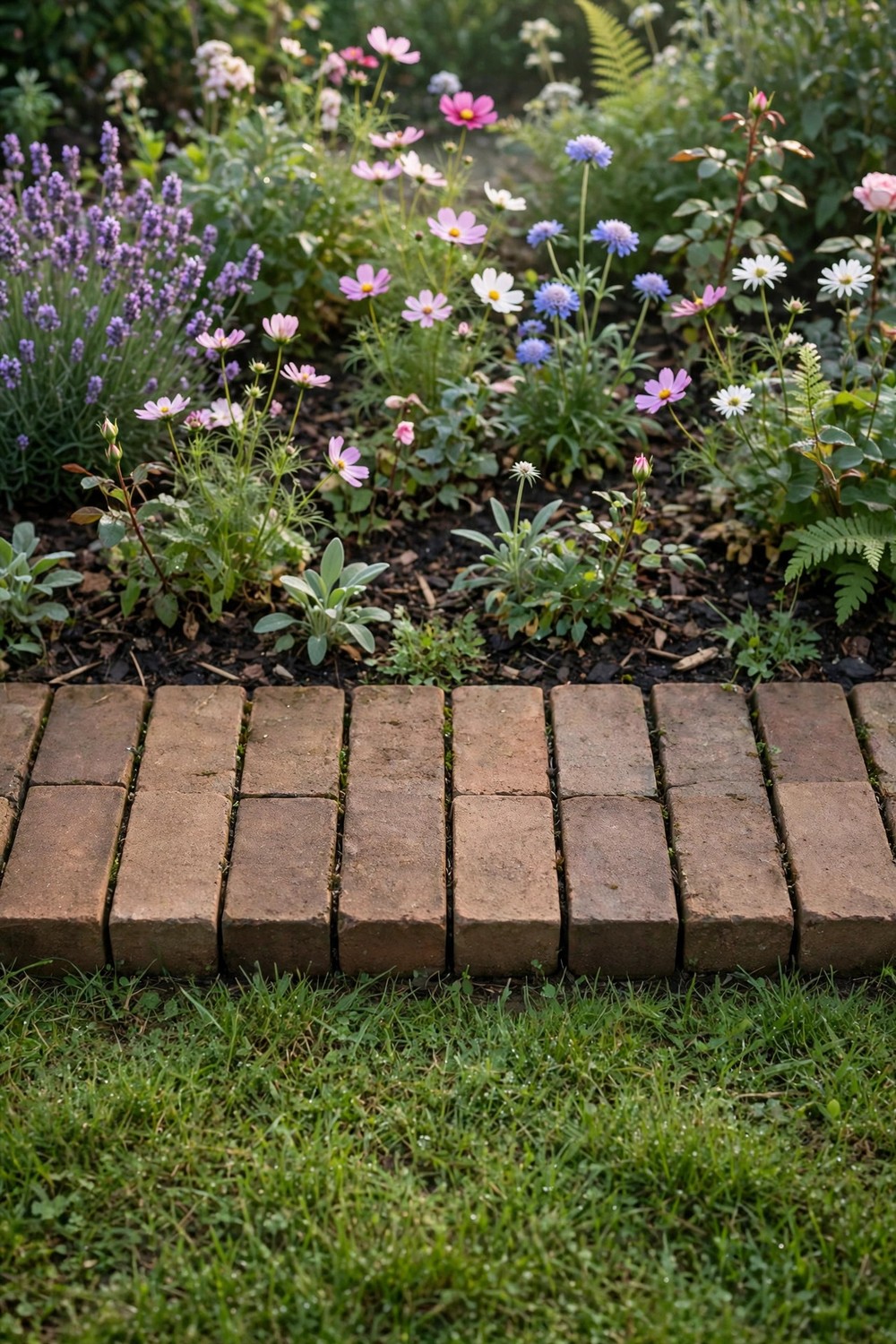
2. Sailor Row Flat Brick Edging
Lay bricks flat, side by side, for a sailor row. Flat bricks show their wide faces to the garden and sit low and quiet, which suits modern beds and shallow borders. The wide surface doubles as a small mowing strip, the line is easy to keep level, and the whole edge feels calm rather than busy. It uses more bricks per foot than a soldier row, but the result is wonderfully solid.
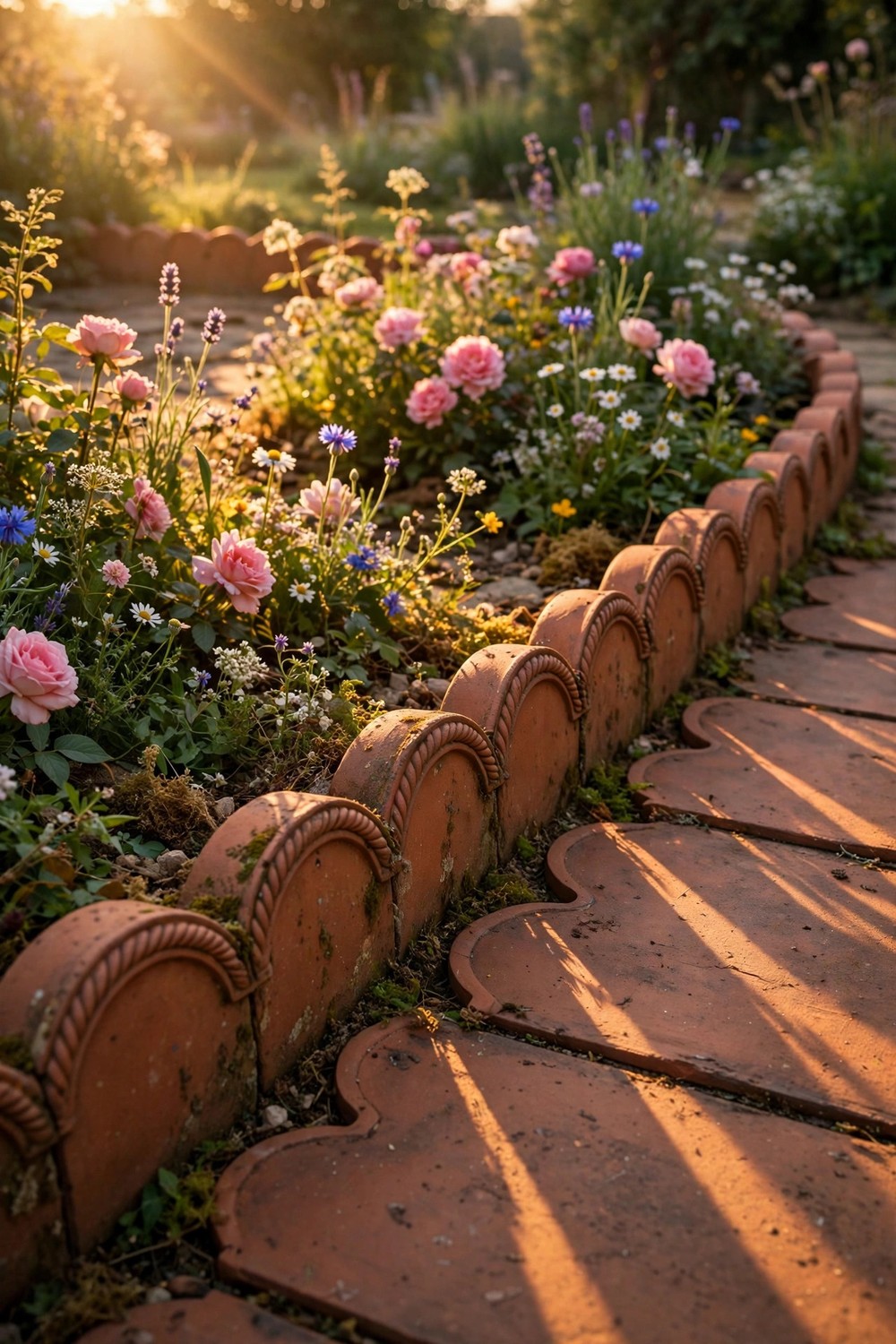
3. Victorian Rope Edging Look
Chase the Victorian rope top look. Original Victorian gardens used terracotta rope edging, and you can echo it with rope top tiles where you find them, or fake the rhythm with bricks set in a gentle repeating wave of heights. The scalloped silhouette suits cottage borders and old houses beautifully, and it casts a lovely shadow line in low sun. Even a short run of it by the front door changes the whole feeling of an entrance.
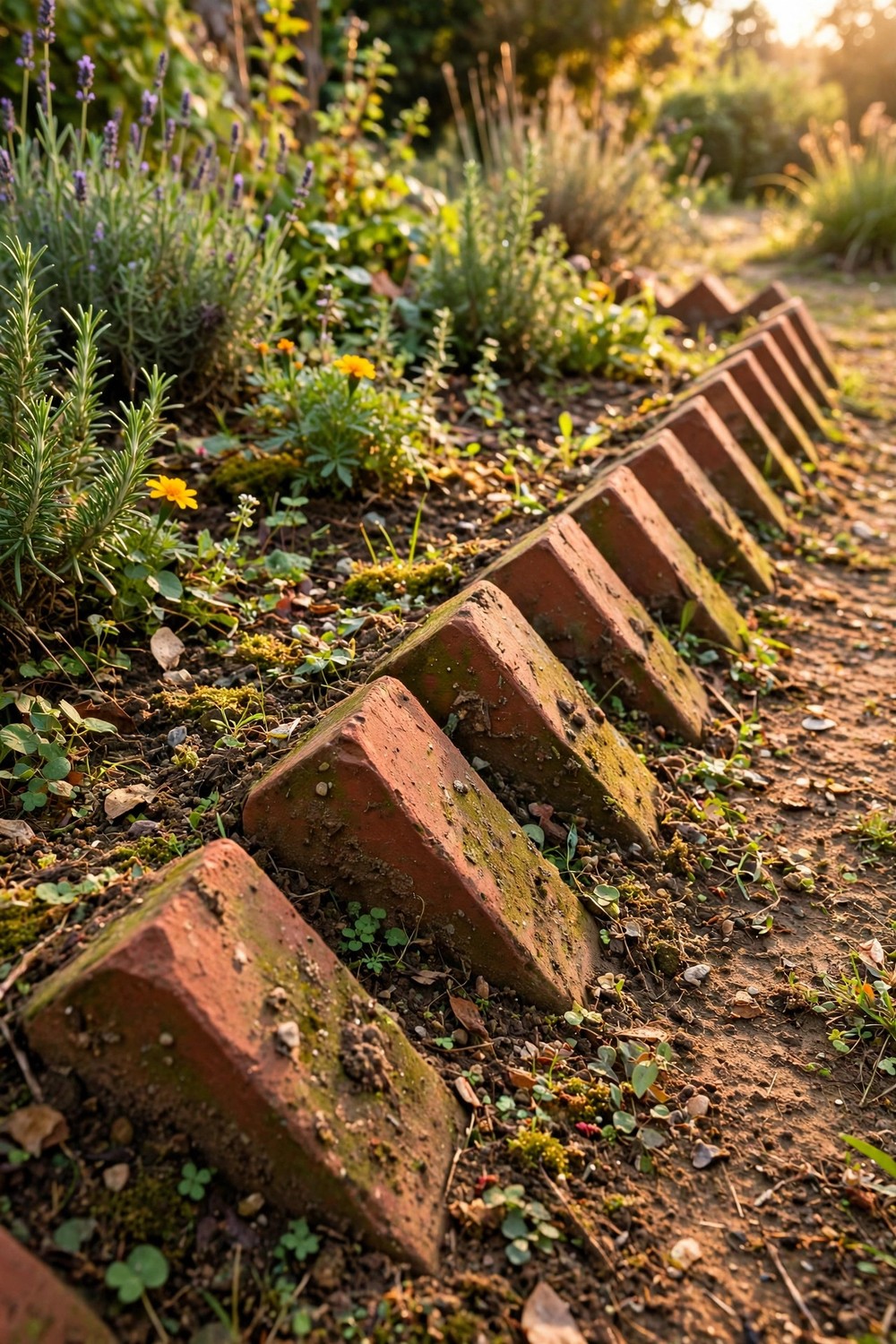
4. Sawtooth Angled Brick Edging
Tilt bricks at an angle for a sawtooth edge. Bricks leaned at forty five degrees, half buried, make a row of neat triangles that sheds water, discourages cats from strolling the border, and looks far more crafted than it is. The pattern is a Victorian favorite that still feels fresh, and it hides small level differences in the ground gracefully. Set them against a board to keep the angle honest while you work.
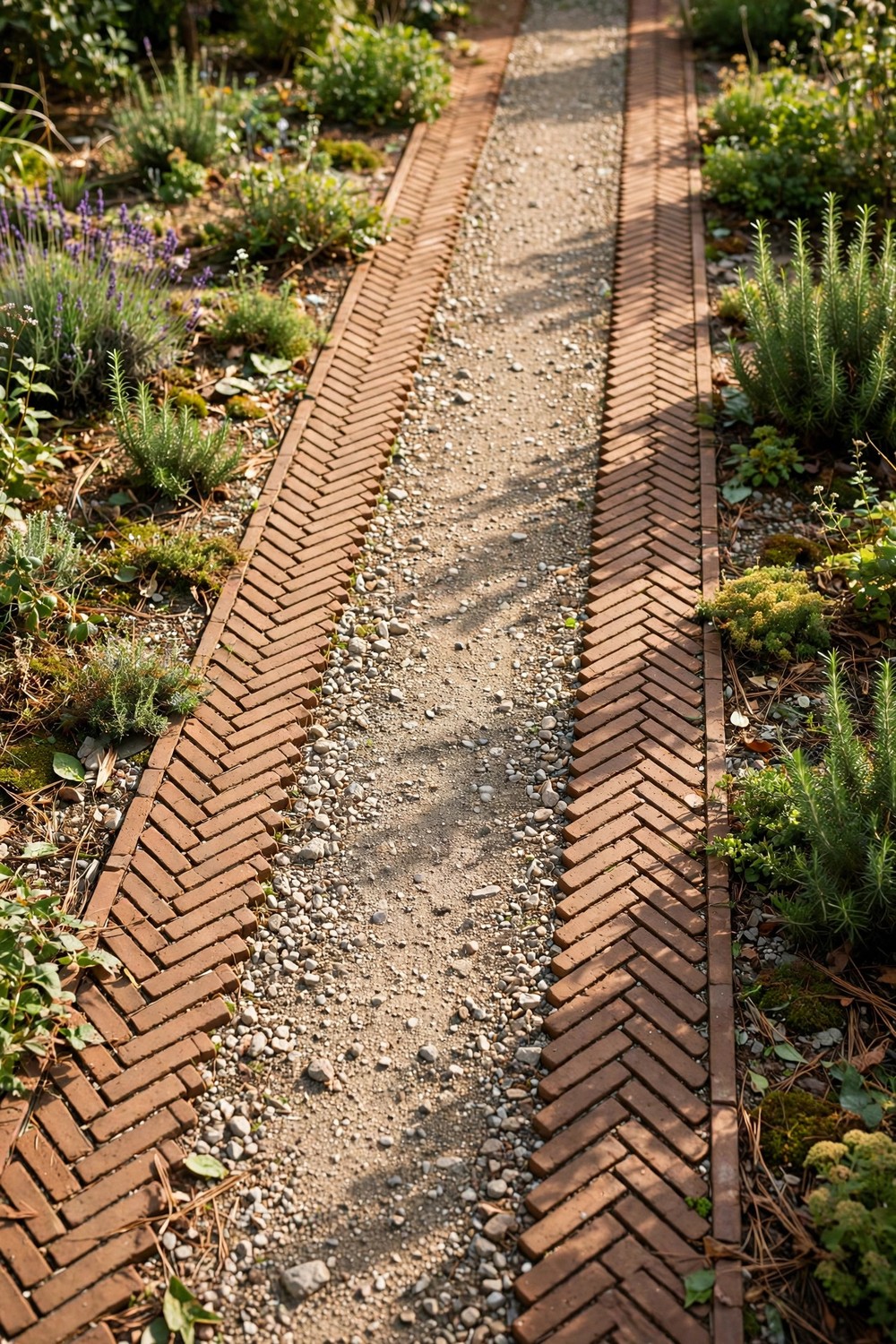
5. Herringbone Brick Border
Lay a herringbone border for pattern lovers. Flat bricks zigzagged at right angles make a border with real movement, more like a woven ribbon than an edge. Herringbone eats bricks and time in equal measure, so save it for short, important runs, the front path, the rose bed, the herb garden entrance. Seen from above, especially with gravel or grass beside it, it is the most decorative edge on this list.
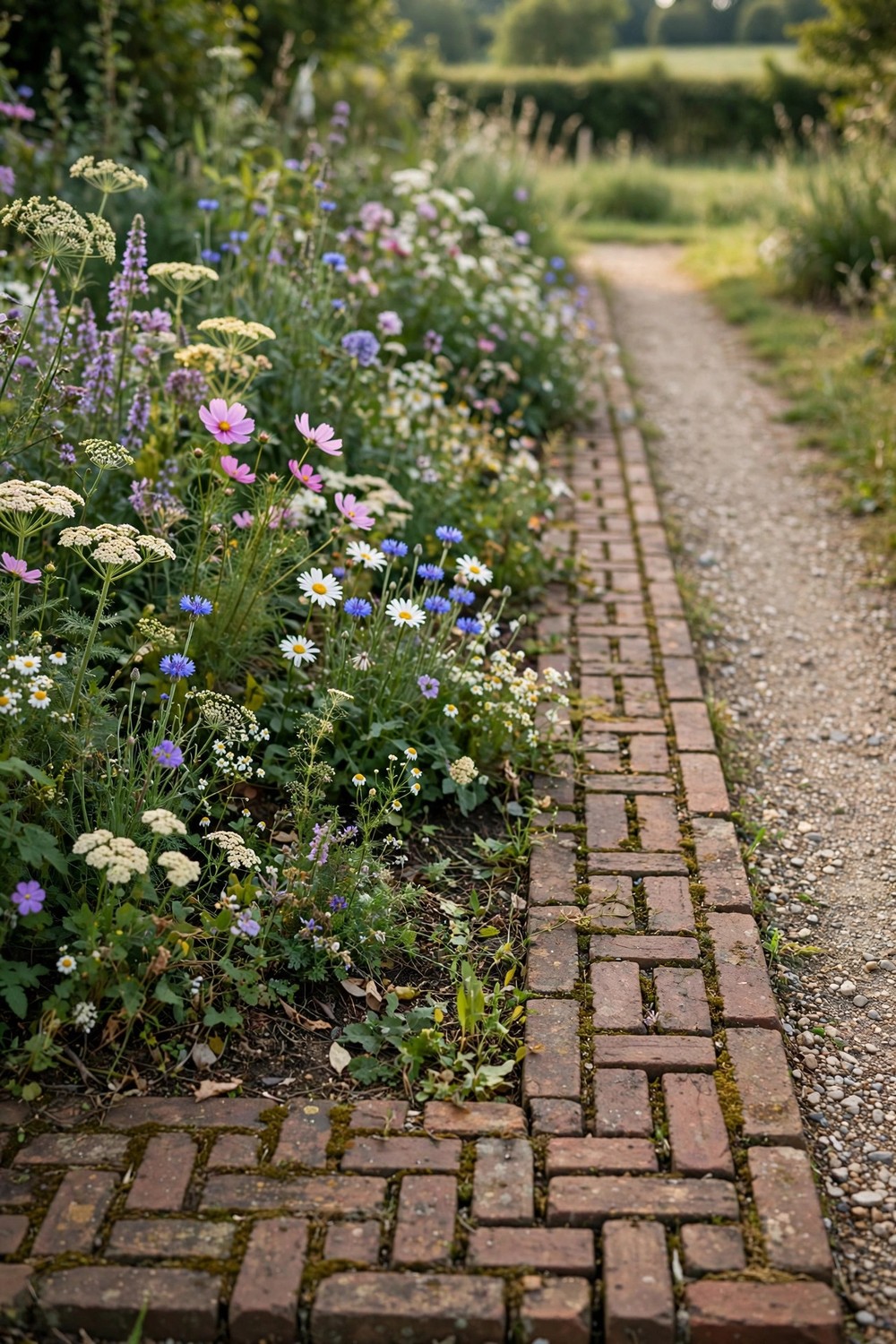
6. Basketweave Brick Edge
Pair bricks in a basketweave pattern. Two bricks laid lengthwise, then two laid crosswise, repeating down the border, gives a woven, textile feeling that suits relaxed country gardens. The pattern is forgiving of uneven ground because each pair settles as its own little unit. It reads beautifully beside gravel paths and cottage planting, and the rhythm of building it is oddly meditative.
Brick Borders for Beds, Trees and Paths
Where edging has a job beyond looking neat, holding soil on a slope, ringing a tree, edging a working vegetable bed, brick’s weight and permanence come into their own.
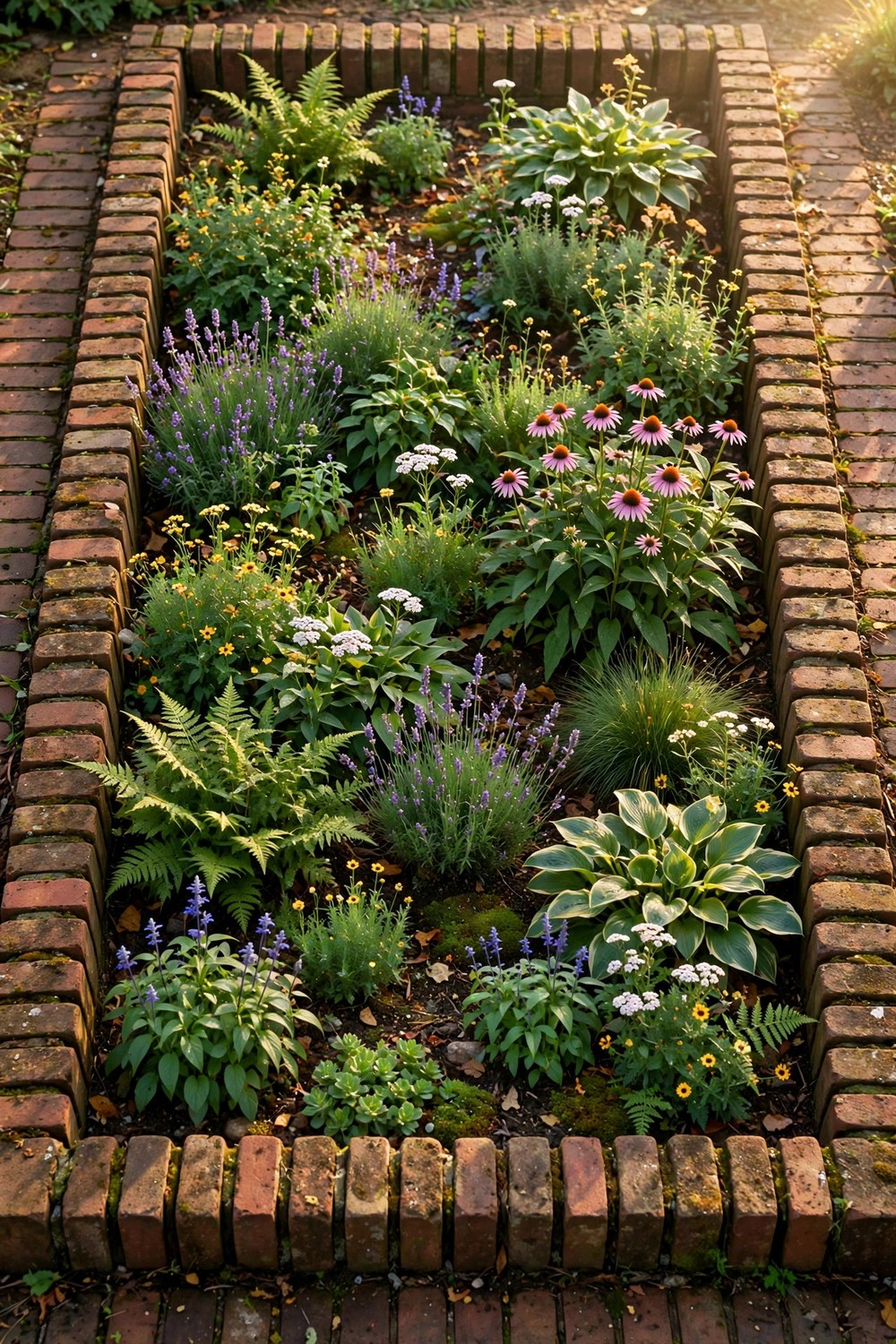
7. Double Row Brick Border
Double the row for deep, important beds. Two parallel rows of bricks, soldier style or one flat and one upright, give a border the presence of a low wall without mortar or permanence. The wide edge holds back generous mulch, gives you a step free place to kneel a bucket, and frames big perennial beds with confidence. It suits the main beds of the garden, the ones everything else is measured against.
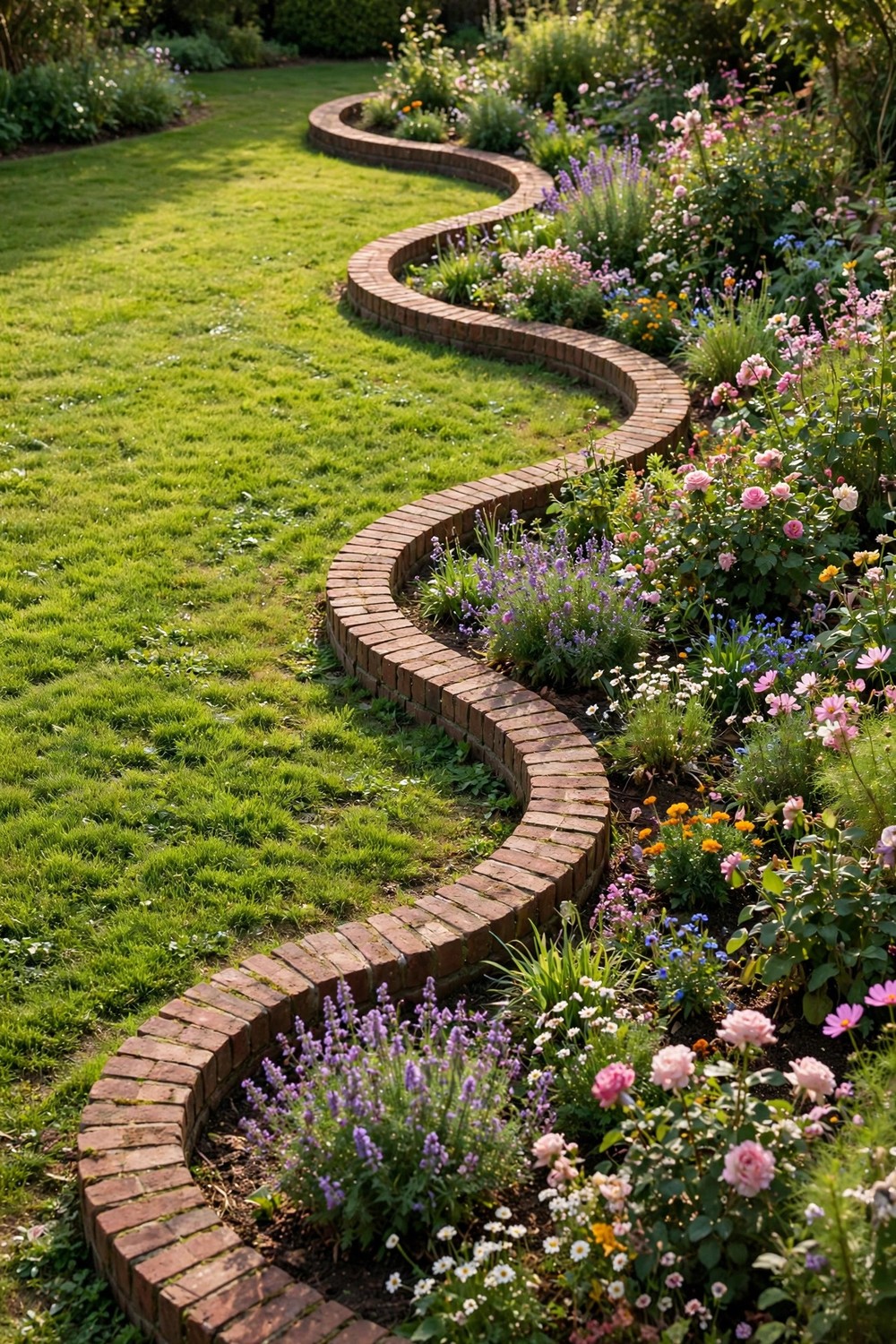
8. Curved Serpentine Brick Edge
Let the edge curve in a serpentine sweep. Bricks follow curves beautifully, each one angled a touch against the next. A curving edge softens a rectangular garden, guides the eye around a lawn, and makes mowing meditative rather than fiddly. Lay a hose along the ground to design the curve first, because a brick edge will faithfully preserve whatever line you give it, graceful or otherwise.
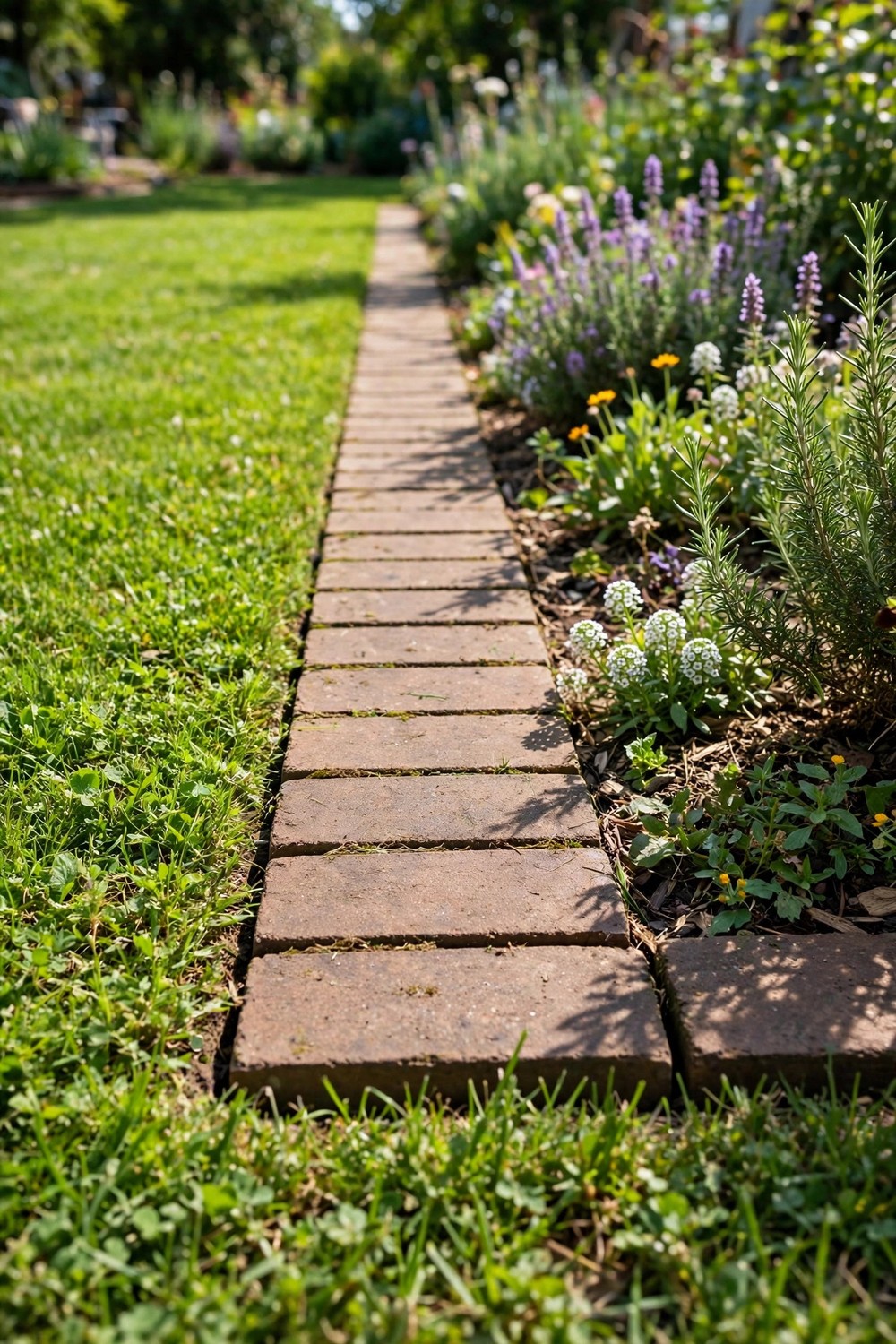
9. Brick Mowing Strip Edge
Set bricks flush as a mowing strip. A row of flat bricks sunk level with the lawn gives the mower wheel a runway and your border a permanently crisp line, with no trimming along the bed ever again. It is the least showy idea here and the one gardeners praise most by the second summer. Set the bricks on a thin bed of sand so they sit steady and drain freely.
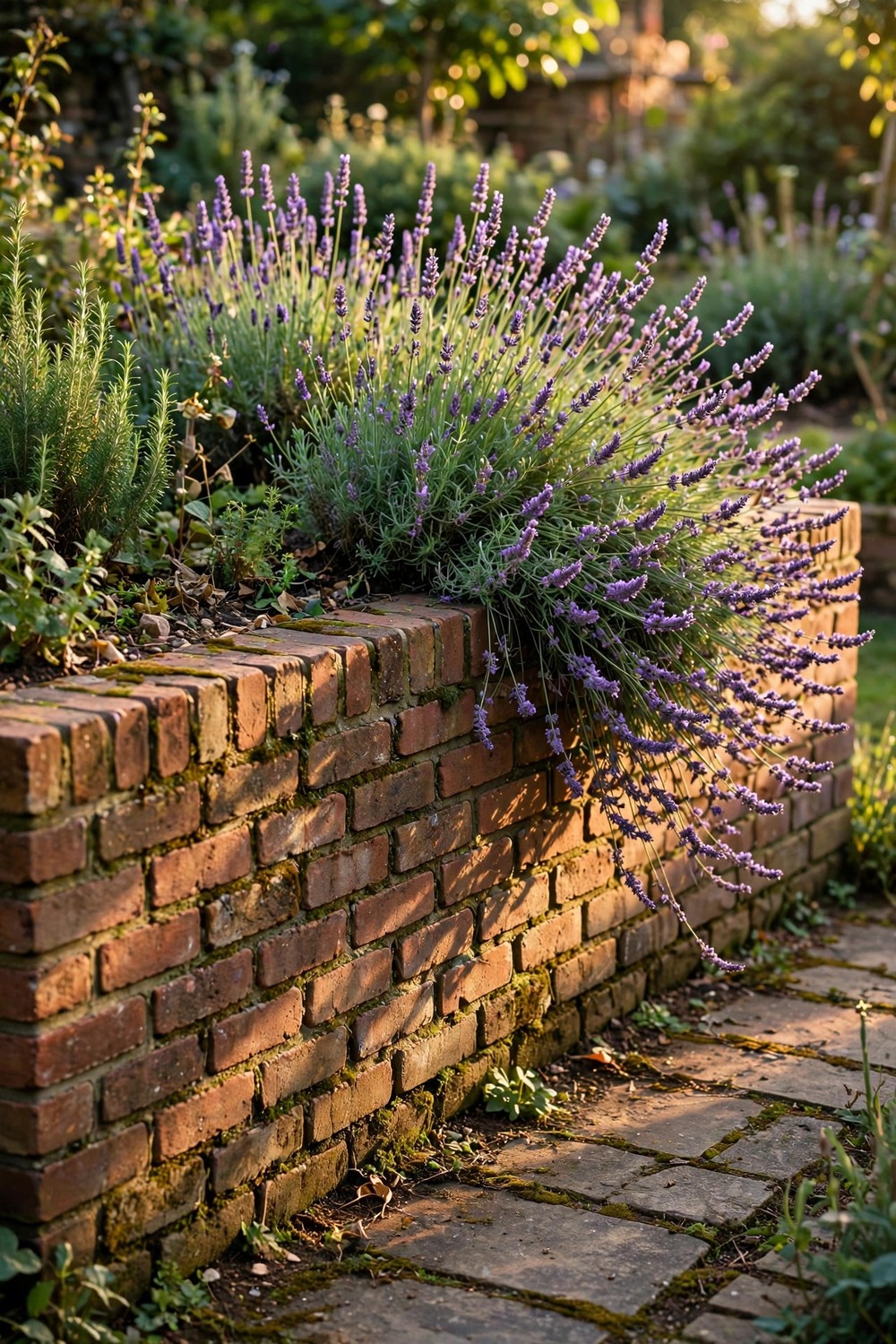
10. Raised Brick Bed Border
Stack two courses for a raised border. When a bed sits above a path or slopes away, a low raised border, two or three courses of brick, dry stacked or lightly mortared, holds the soil and gives the garden architecture. It doubles as a perch for a cup of tea and a seat for deadheading. Raised brick warms up in spring sun, and plants at the edge, like lavender, visibly appreciate the drainage.
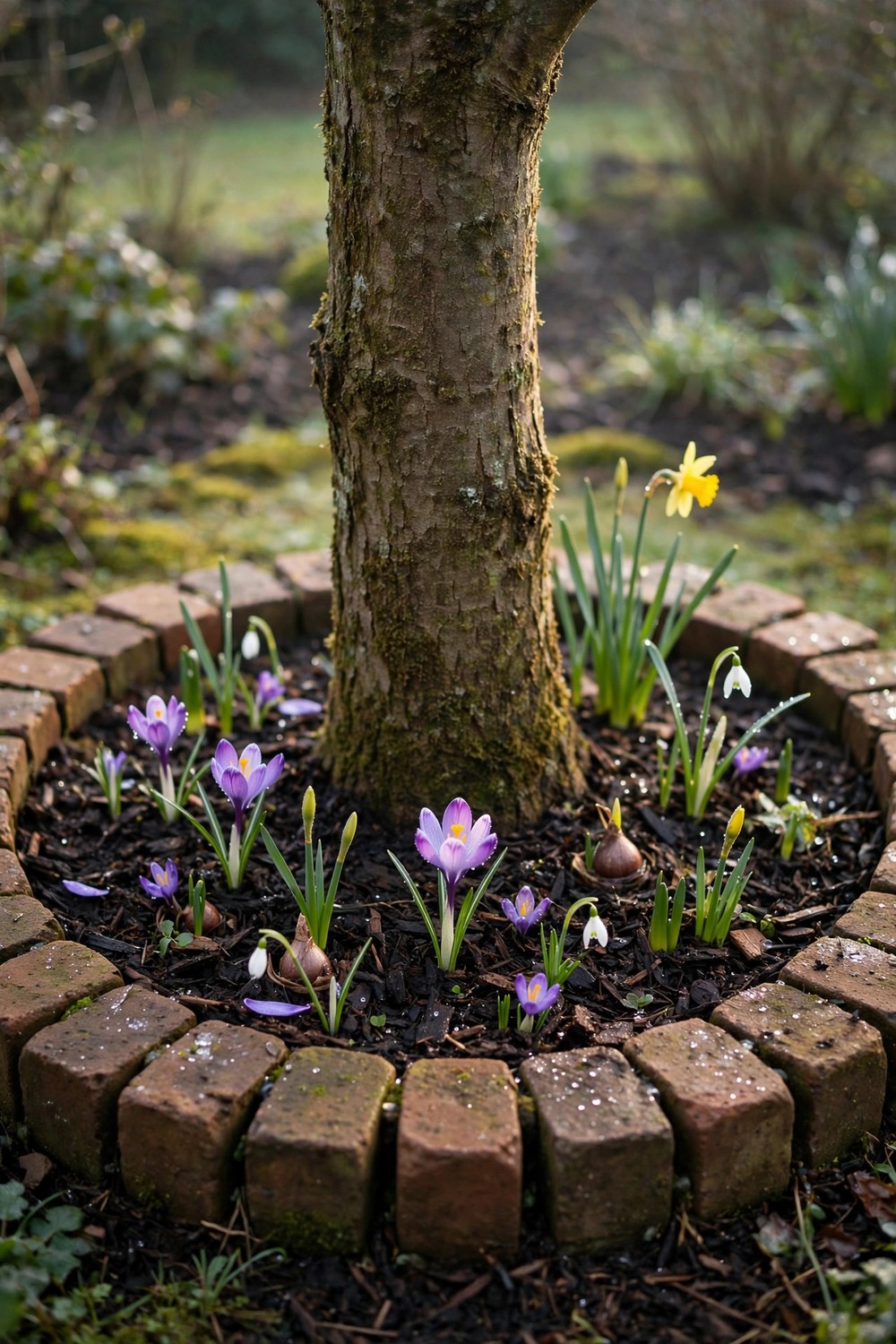
11. Brick Tree Ring
Ring a tree with a circle of bricks. A brick ring around a tree trunk tidies the awkward circle where lawn never thrives, holds a mulch layer neatly, and protects the trunk from mower bumps. Leave growing room, because trunks widen, and a ring set a generous foot or two out will serve for years. Plant the ring with spring bulbs and shade loving groundcover and the tree gains a whole extra season of interest.
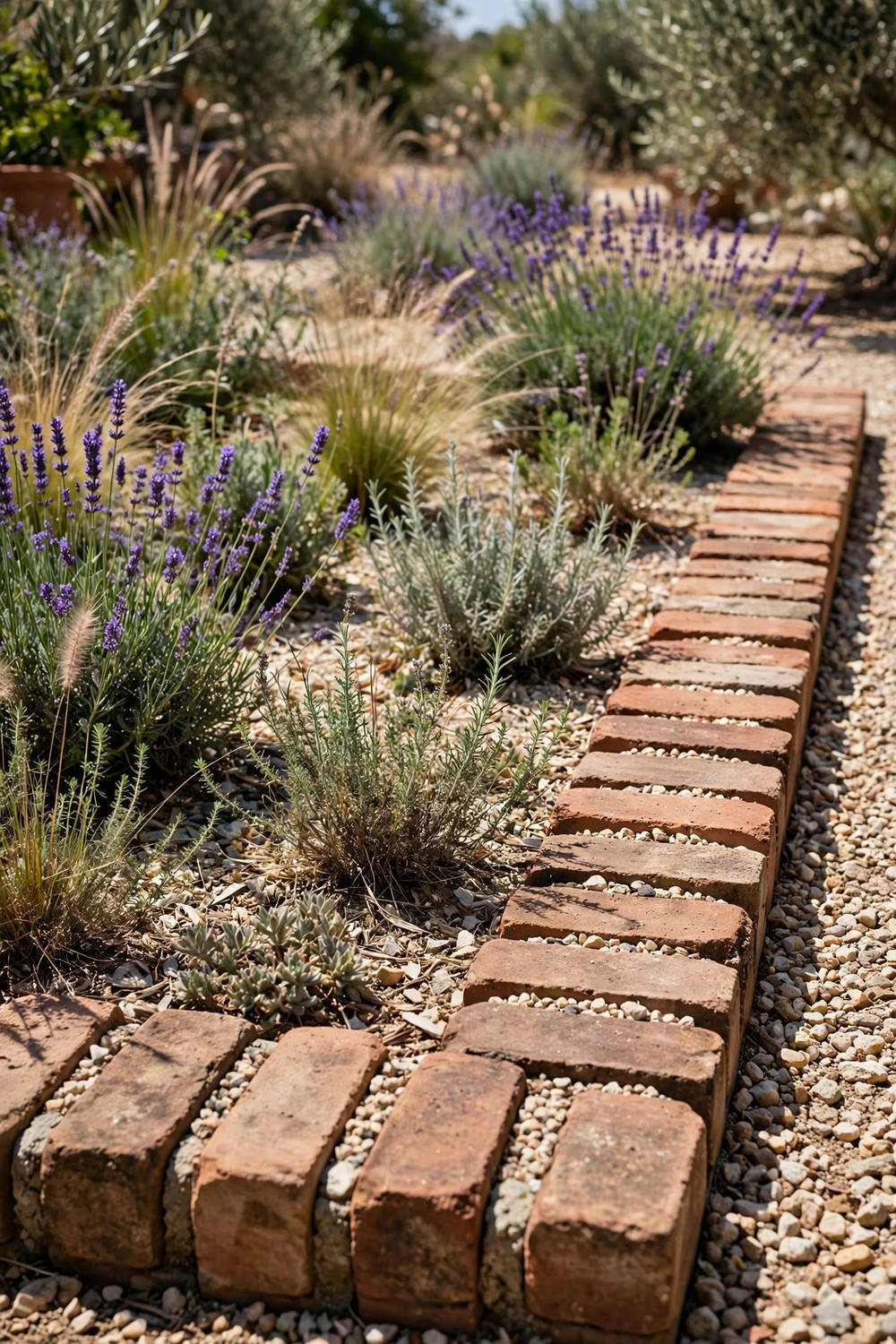
12. Brick Edging with Gravel Infill
Space bricks with gravel between them. Instead of a tight row, set bricks with small gaps filled with gravel or coarse sand. The broken rhythm suits Mediterranean, gravel, and drought gardens, costs fewer bricks per foot, and drains beautifully, so edges never sit in puddles. Weeds find the gravel less welcoming than soil filled joints, which keeps this edge low maintenance as well as handsome.
Creative Brick Border Finishes
The last group is about personality, mixing materials, planting into the edge itself, and finishing touches that make a brick border unmistakably yours.
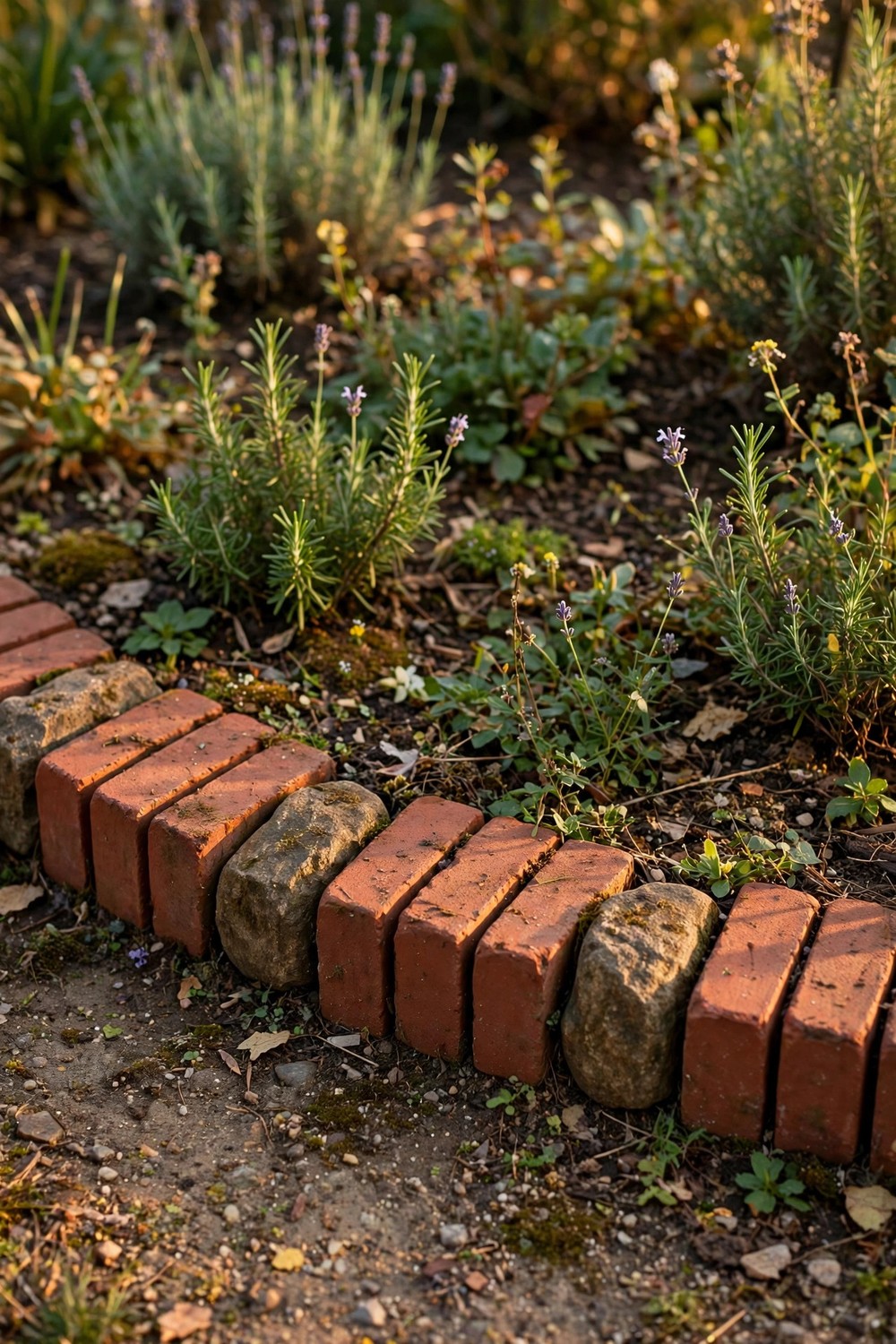
13. Mixed Brick and Stone Edge
Alternate brick with natural stone. A pattern of three bricks, one chunky stone, repeated, gives an edge that looks evolved rather than installed, perfect for older gardens and rural settings. The stone breaks the rhythm just enough to look found and gathered. It is also a practical way to stretch a short supply of matching reclaimed bricks across a long border.
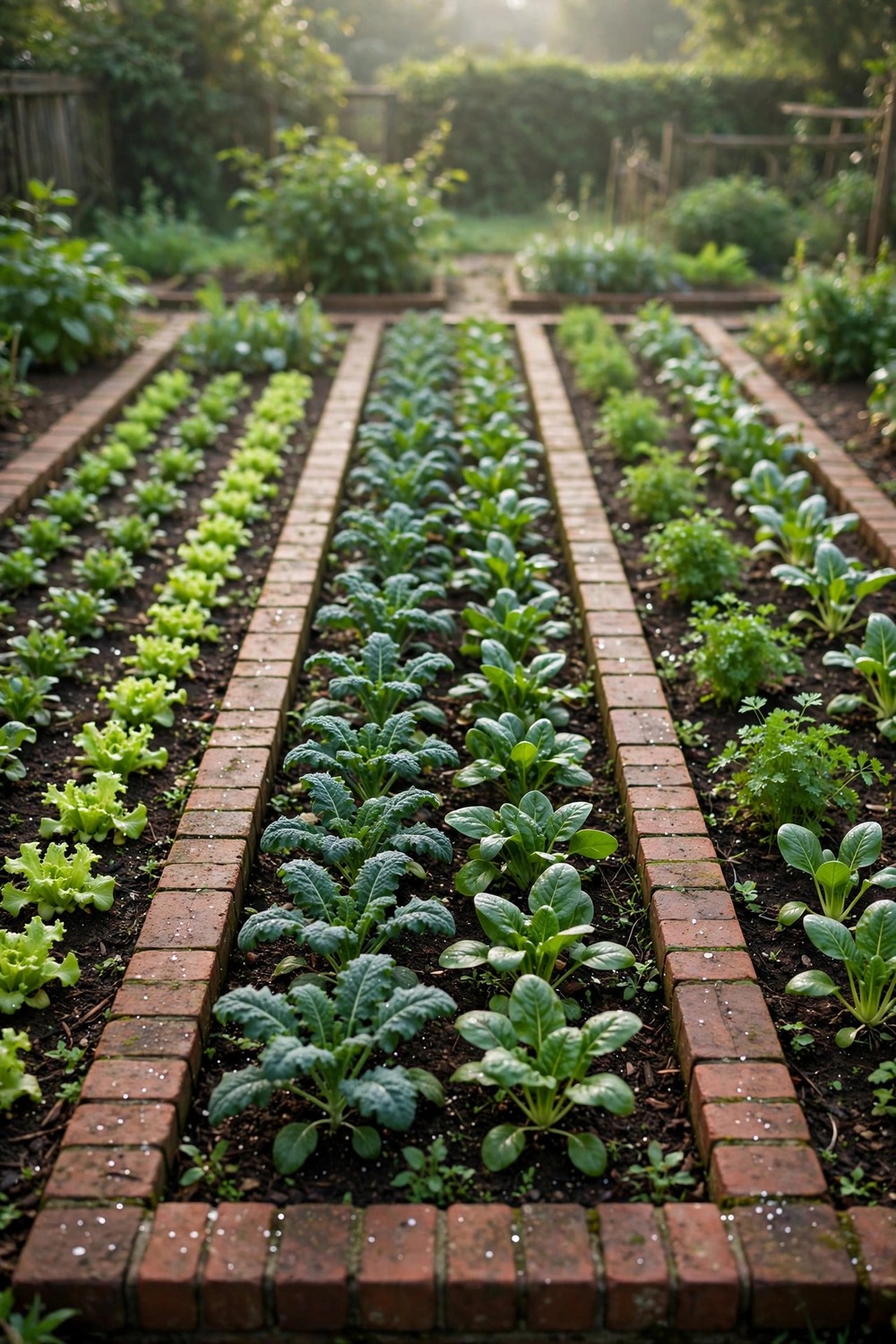
14. Brick Border for the Vegetable Garden
Edge vegetable beds in brick for order. In the working garden, brick edges keep paths clean, soil in place, and beds looking intentional between crops. Flat bricks between beds make dry footing for harvesting in wet weeks, and the straight rows satisfy something deep in a gardener’s soul. Brick also warms the soil edge slightly, which early lettuces quietly enjoy.
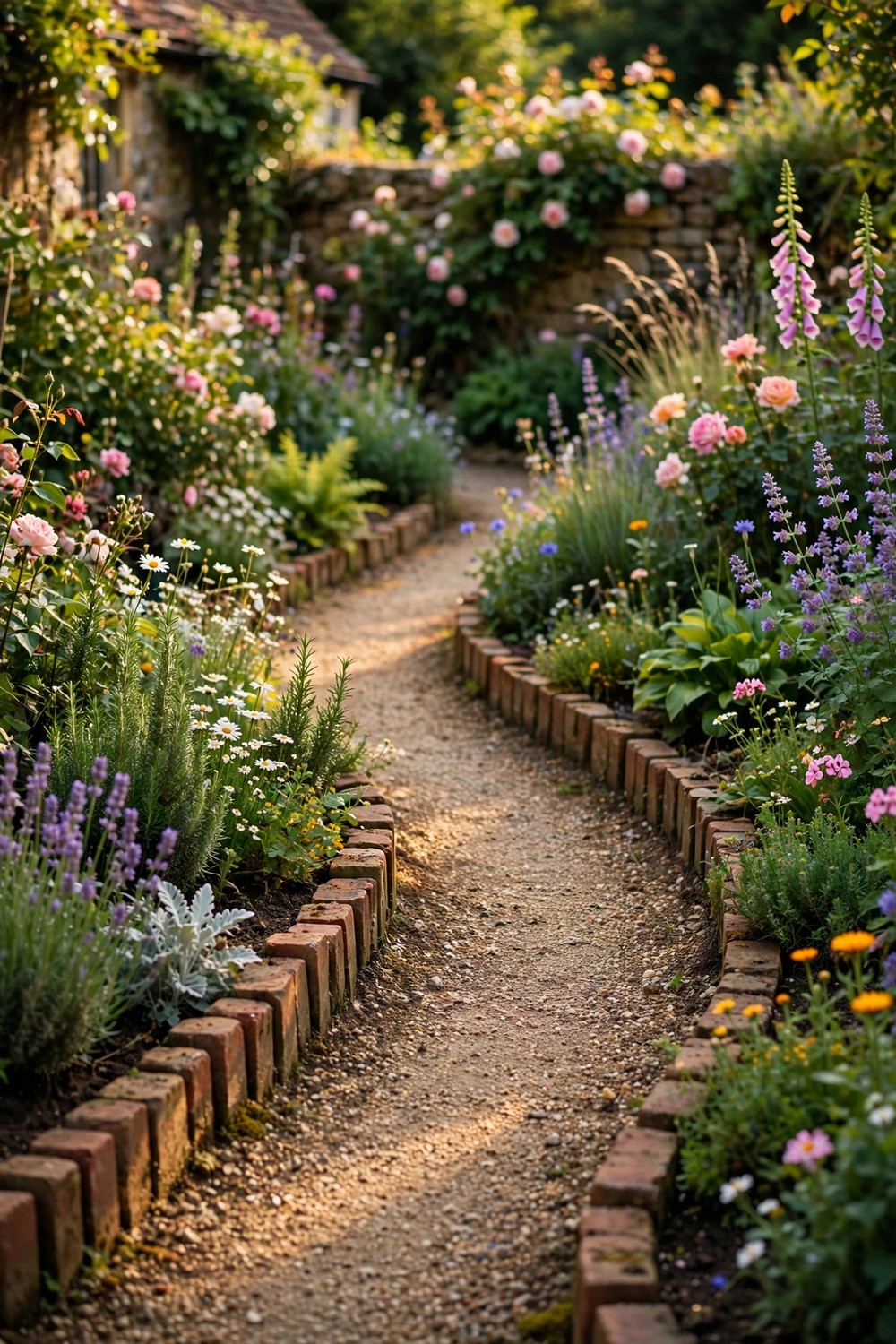
15. Brick Edged Path
Edge a gravel path with brick. Gravel paths wander without an edge, and brick gives them manners. A soldier or sailor row on both sides keeps the gravel home, draws a clean line through the garden, and makes a simple path feel designed. The combination of warm brick and pale gravel is one of the oldest and prettiest in gardening, and it suits every style from cottage to formal.
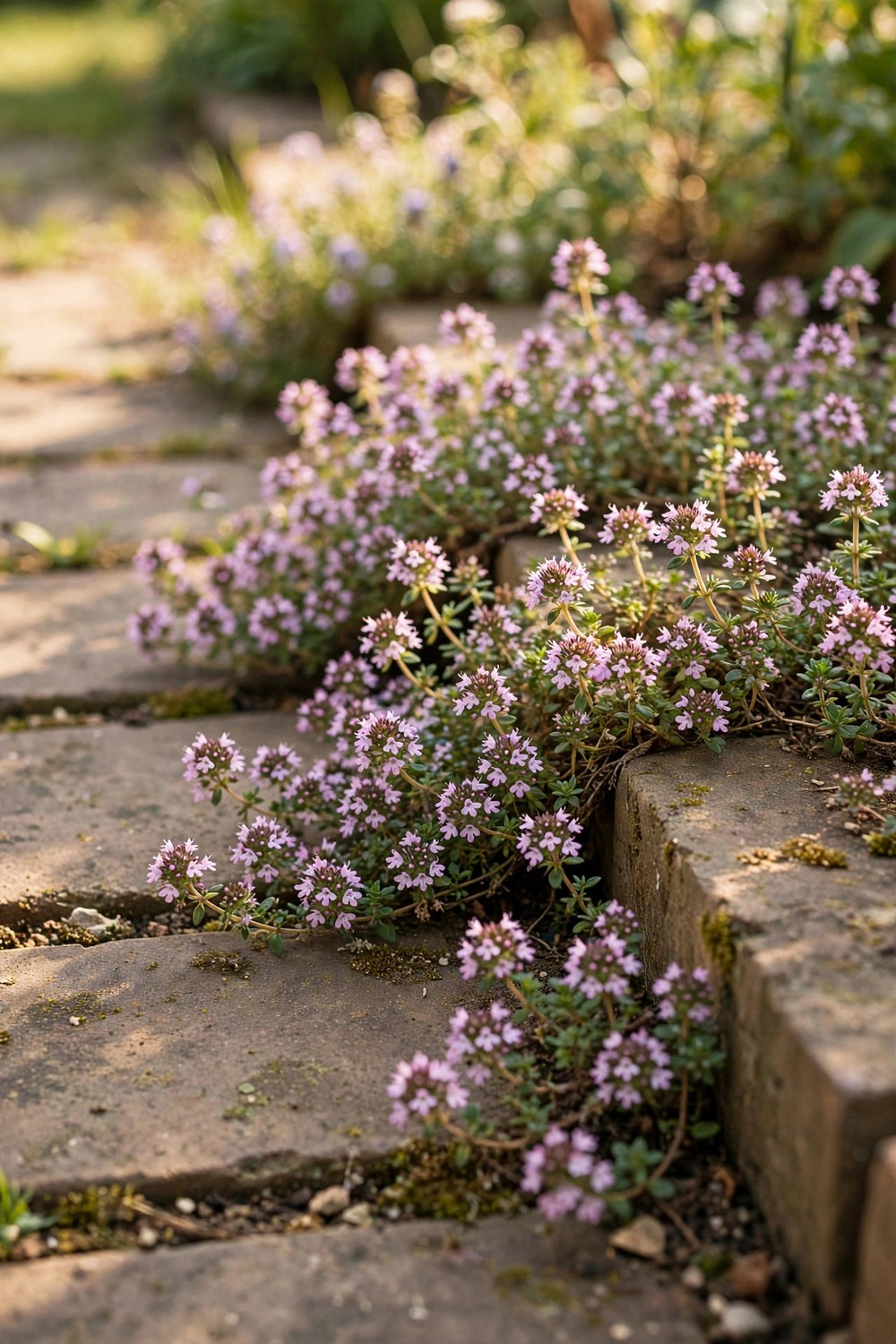
16. Brick and Creeping Thyme Edge
Plant creeping thyme between the bricks. Leave small soil pockets along a flat brick edge and tuck in creeping thyme, which will spill softly over the brick, bloom in early summer, and scent every footstep that brushes it. The hard and soft combination is irresistible, and the thyme suppresses weeds in the joints it occupies. Keep it to sunny edges, because thyme sulks in shade and damp.
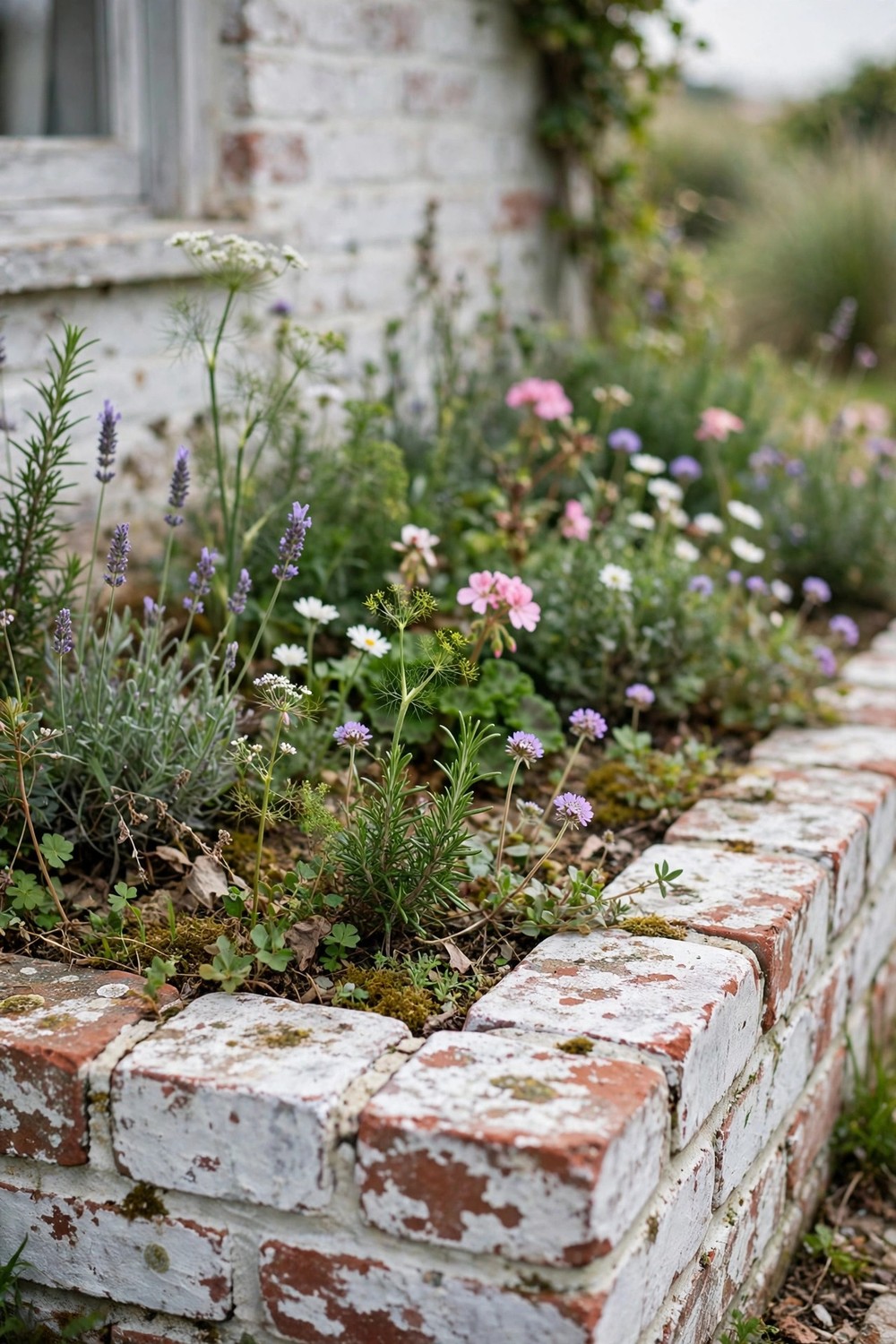
17. Whitewashed Brick Edging
Whitewash bricks for a pale, coastal edge. A thin limewash or diluted white paint, brushed on and partly wiped back, turns strong red brick into a soft, chalky edge that suits coastal, Mediterranean, and white garden schemes. The bricks still show through, patchy and gentle, nothing like a solid paint job. It is the easiest transformation on this list, one bucket and one afternoon, entirely reversible by weather and time.
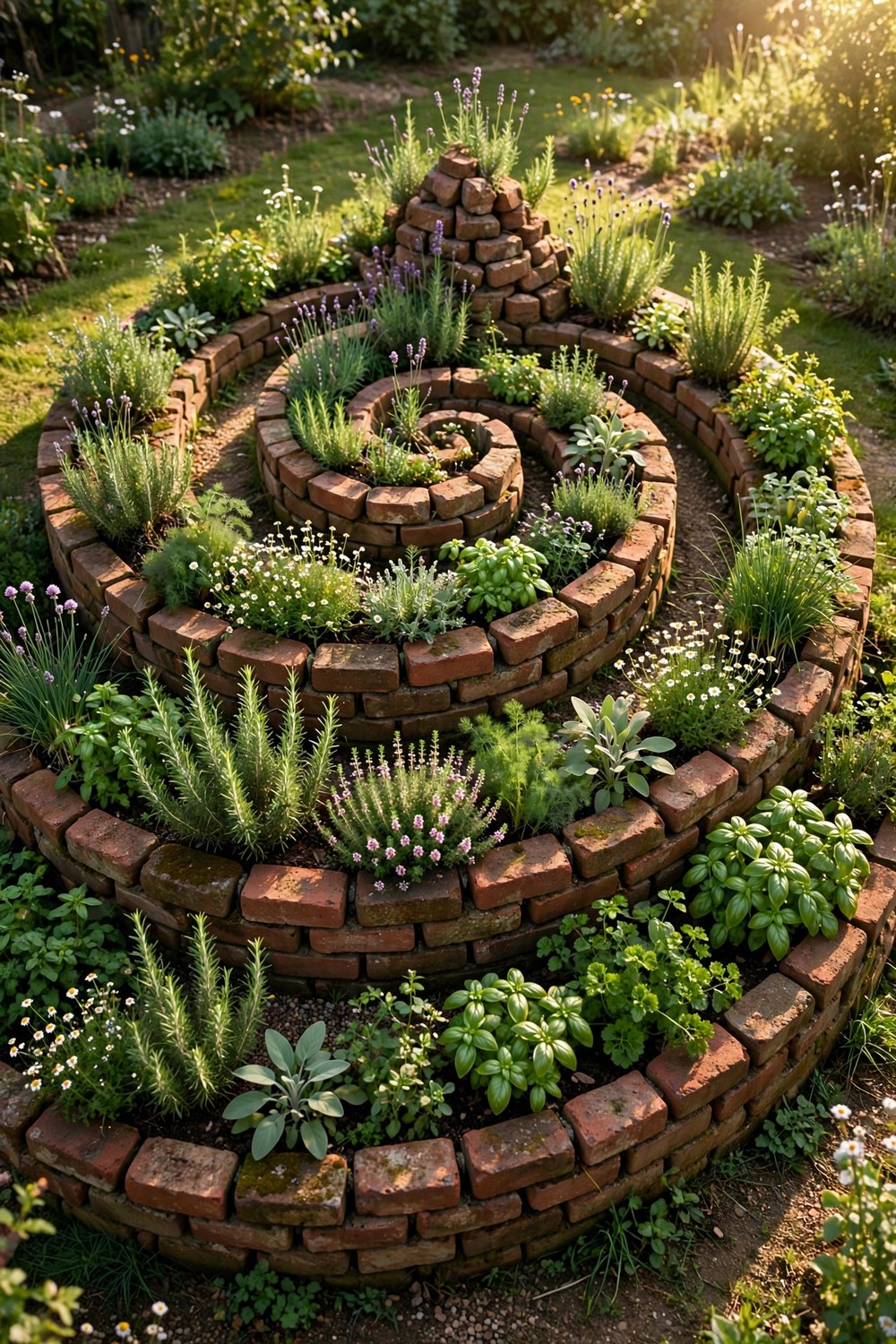
18. Brick Spiral Herb Bed Edge
Build a brick herb spiral. A spiral of bricks rising gently to a center point creates a whole herb garden in a few square feet, with dry sunny spots at the top for Mediterranean herbs and cooler, damper pockets at the base for mint and parsley. The edging becomes the structure itself, and the spiral is a small piece of garden sculpture that earns its keep at dinner. It is the most ambitious idea here and the most talked about.
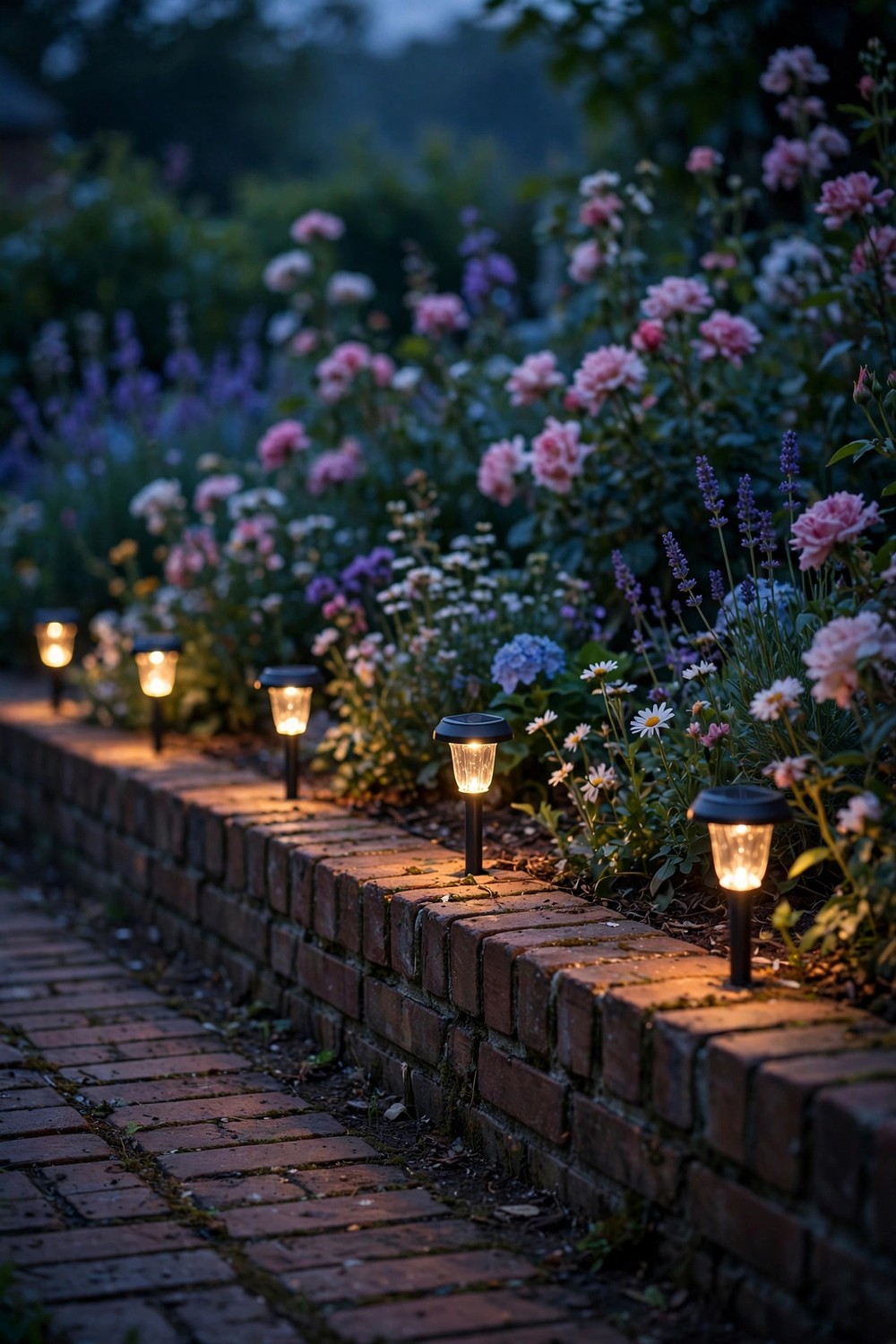
19. Brick Edge with Solar Lights
Nestle small solar lights along the edge. A low solar light every few feet along a brick border traces the garden’s shape after dark, guiding feet and showing off the day’s work into the evening. Brick holds the lights’ warm color beautifully. Keep them small and warm toned, because the goal is a gentle dotted line of light, not a landing strip through the petunias.
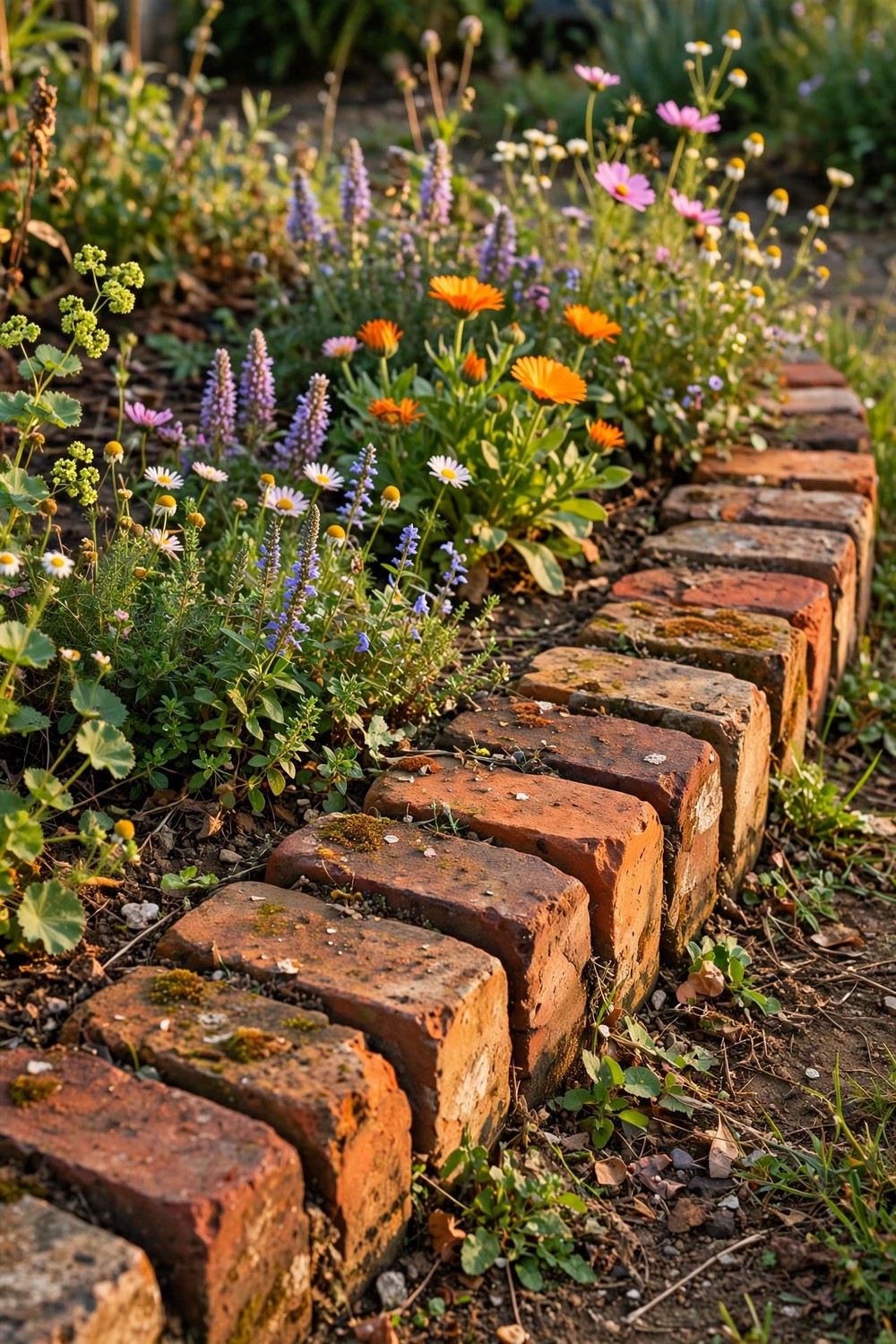
20. Reclaimed Brick Cottage Edge
Embrace mixed reclaimed bricks for cottage charm. A border of genuinely old bricks, mixed reds, oranges, and the odd blue engineering brick, laid simply and a little unevenly, gives a cottage garden an edge that looks a century old on day one. Source them from salvage yards and demolitions, clean off old mortar with a chisel, and let the variation be the pattern. No two gardens will ever share your exact edge.
Laying Brick Edging That Stays Put
Every pattern above lasts longer with the same three habits. Dig a trench a little deeper than the buried part of the brick and level a bed of sharp sand in it, because sand is what lets you tap each brick true. Backfill and tamp firmly on both sides as you go, brick edging fails from loose soil, not from bad bricks. And check your line every few feet with a string or a straight board, stepping back often, because an edge is a line the whole garden will be judged by.
Expect a brick edge to settle and soften over its first winter, and plan a pleasant hour in spring to lift, relevel, and reset any wanderers. After that, it will sit quietly for years, holding the garden’s shape through every season, which is exactly what a good border, and a good brick, is for.






Leave a Reply