
20 Brown Couch Living Room Ideas That Feel Warm and Rich
Look, we get it. A brown couch can feel like a safe choice that quietly sits there, or it can feel like the warmest, richest seat in the whole house. It usually comes down to what you put around it. The color of the walls, the rug under your feet, the cushions you toss on top, and even the lamp you switch on at night all change how that brown reads, from flat and heavy to deep and welcoming.
That’s exactly what this list is for. You’ll find ideas for leather and fabric couches, light walls and moody ones, small corners and open layouts. Some are big moves, like changing a wall color, and some are ten minute swaps, like trading a cushion cover or moving a lamp closer. You don’t need to do all twenty. Most rooms only need two or three that fit how you actually live.
Start with the section that matches your biggest problem. If your couch feels dark, look at the light and wall ideas first. If it feels plain, go straight to the layers. If it feels disconnected from the rest of the room, jump to the finishing touches at the end. Work in that order and you’ll usually feel a difference before you’ve spent much at all.
In This Article
- Pair a Cognac Leather Couch with Cream Walls
- Layer a Chocolate Brown Sofa Over a Warm Beige Rug
- Add Mustard and Rust Cushions for Rich Contrast
- Balance a Dark Brown Couch with Soft White Curtains
- Warm Up a Brown Sectional with Brass Table Lamps
- Mix a Brown Leather Couch with Natural Wood Tones
- Use Sage Green Walls to Soften a Brown Sofa
- Drape a Chunky Knit Throw Over a Brown Fabric Couch
- Anchor a Brown Couch with a Patterned Vintage Style Rug
- Add Cream and Camel Cushions in Mixed Textures
- Place a Brown Sofa Against a Warm Greige Wall
- Bring in Terracotta Accents Around a Brown Couch
- Lighten a Deep Brown Couch with a Pale Coffee Table
- Create a Cozy Corner with a Brown Loveseat and Floor Lamp
- Combine a Brown Couch with Black Accents for Depth
- Soften a Brown Leather Sofa with Linen and Cotton Layers
- Frame a Brown Couch with Tall Plants and Woven Baskets
- Build a Gallery Wall Above a Brown Sofa
- Choose a Brown Velvet Couch for a Luxe Warm Feel
- Float a Brown Couch in an Open Plan Layout with a Console Behind
Start with Color, Walls, and Light
Before you buy a single cushion, look at the backdrop. Brown is a warm color, so it usually looks richest against walls and lighting that are warm too. Cool, blue toned light can make it look dull, while a soft cream wall or a low, warm lamp can make the same couch glow. These first ideas set that foundation, so everything you layer on later has an easier job to do.
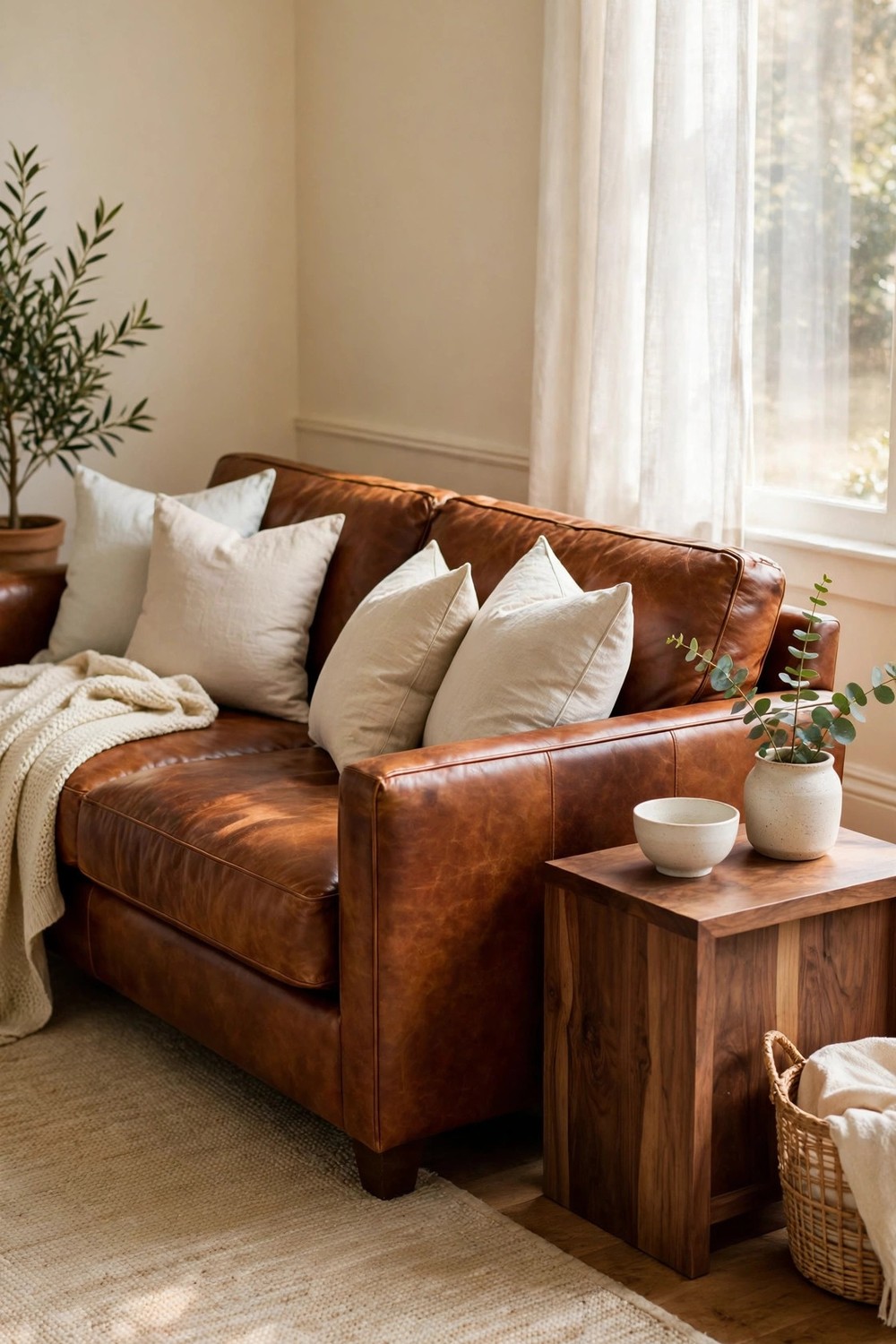
1. Pair a Cognac Leather Couch with Cream Walls
Cognac is one of the friendliest browns you can choose because it already carries a little orange and honey in it. Against cream walls, it doesn’t have to fight for attention, and the whole room typically feels brighter without turning stark. Keep the cream on the warm side rather than icy white, and repeat that warmth in a light rug or pale cushions so the couch doesn’t sit alone. If your leather has a slight shine, balance it with matte textures nearby, like a woven throw or a flat weave rug. Add one darker piece, such as a walnut side table, to stop the scheme feeling washed out.
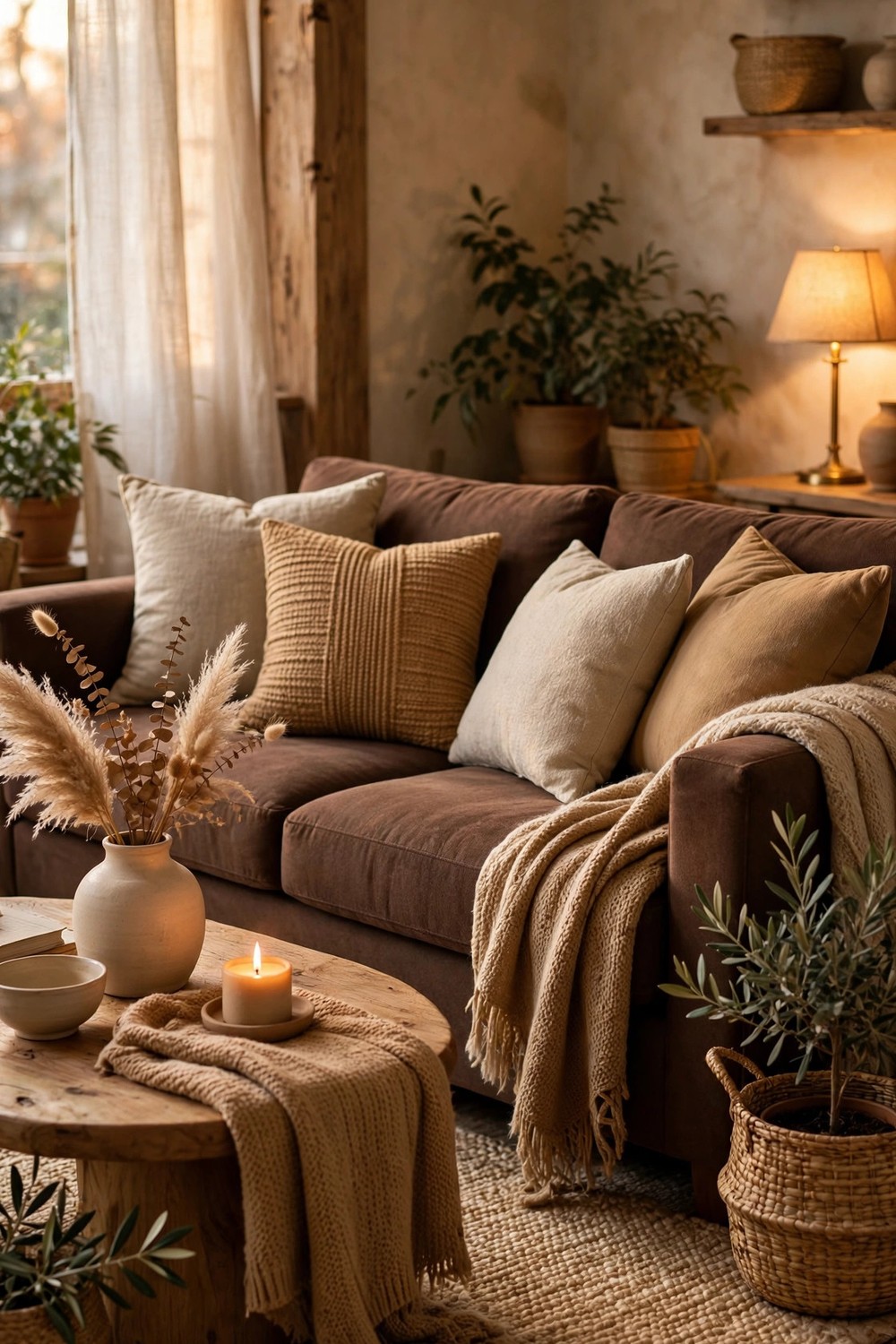
2. Layer a Chocolate Brown Sofa Over a Warm Beige Rug
A deep chocolate sofa needs something light under it, otherwise the bottom half of the room can feel heavy and closed in. A warm beige rug breaks that up and gives your eye a soft place to land. Choose a rug large enough that the front legs of the sofa sit on it, which usually makes the seating area feel pulled together rather than floating. Look for a little texture or a faint pattern in the beige so scuffs and crumbs don’t show straight away. Finish with cushions that sit between the two tones, in camel or oatmeal, so the jump from dark sofa to light rug feels gradual.
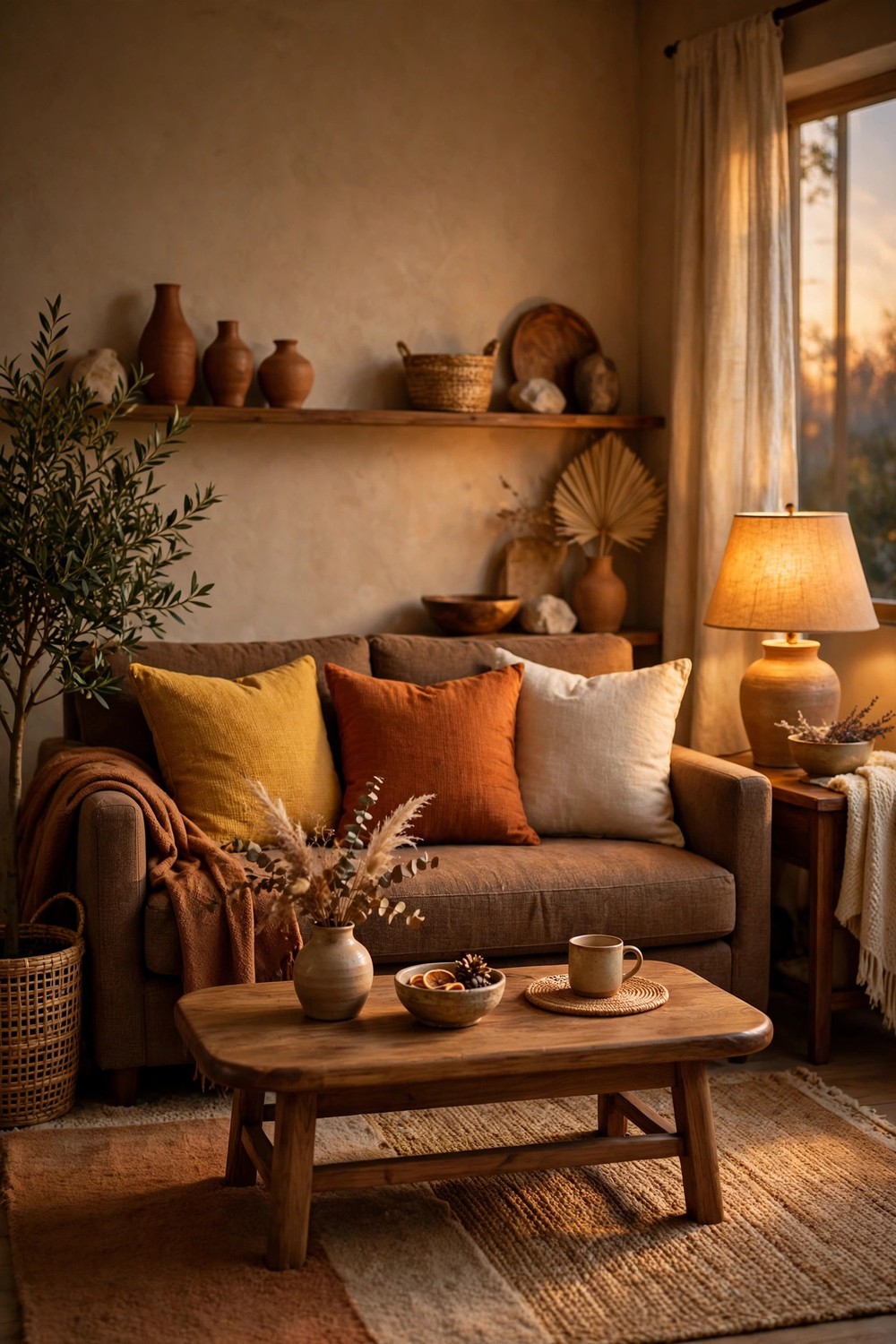
3. Add Mustard and Rust Cushions for Rich Contrast
If your brown couch feels flat, mustard and rust are an easy fix because they’re warm like brown but brighter and more saturated. Try two mustard cushions and one rust cushion rather than matching pairs, since an uneven mix typically looks more relaxed and lived in. Keep at least one plain cream cushion in the group so the colors have breathing room. You can echo the shades in a small way elsewhere, perhaps a book cover, a candle, or a piece of art, without turning the room into a theme. When the seasons change, swap mustard for olive and the same couch will feel completely different again.
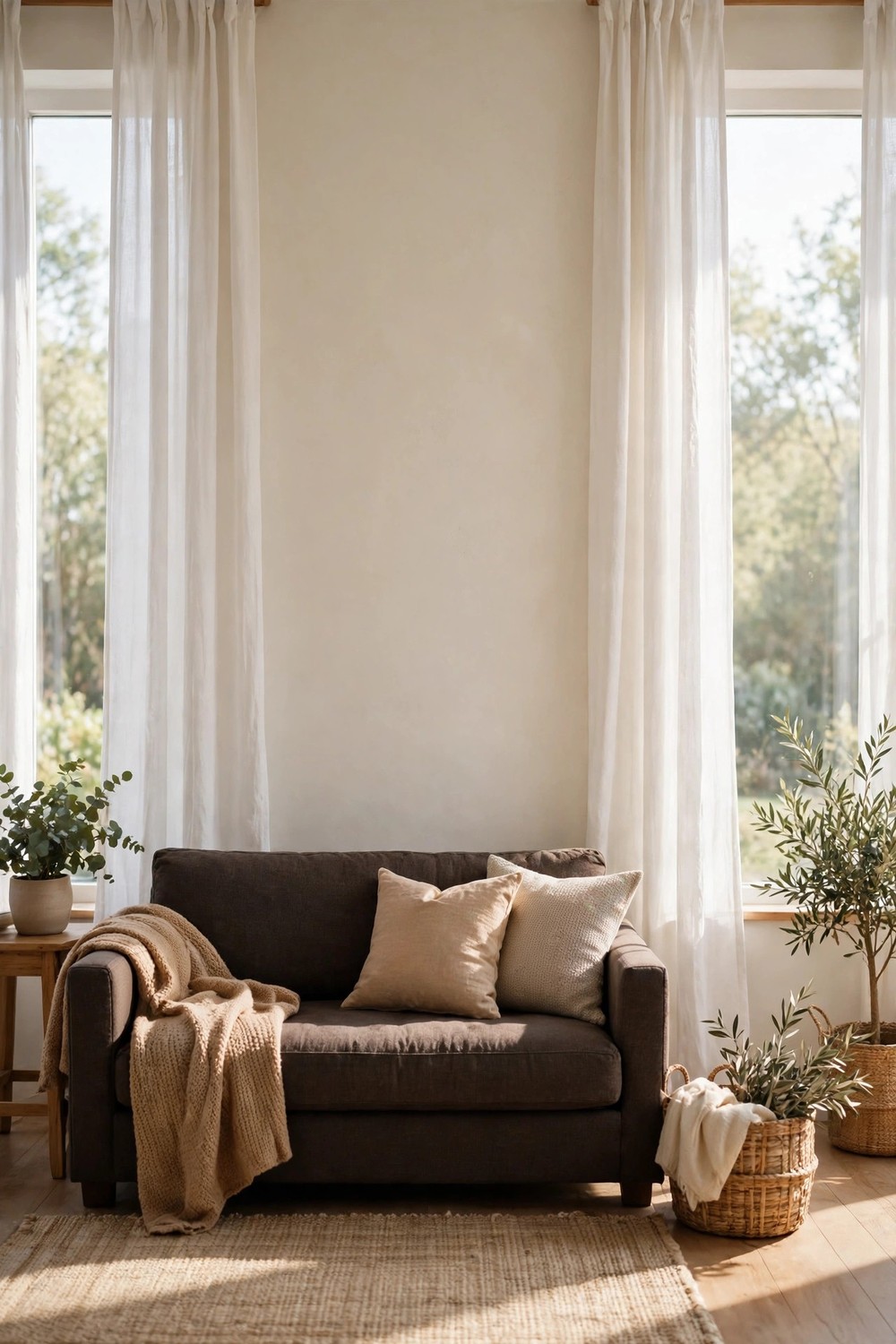
4. Balance a Dark Brown Couch with Soft White Curtains
Dark brown absorbs light, so the window treatment beside it matters more than you’d think. Soft white curtains that hang from near the ceiling to the floor let in a gentle glow and lift the whole wall, which usually stops a dark couch from dominating. Avoid bright, bluish whites if your couch is warm toned, and pick a fabric with a little weight so it drapes rather than flutters. If privacy is an issue, layer a simple sheer behind a heavier curtain. Pull the curtains well to the sides during the day so you get the full benefit of the light you’re letting in.
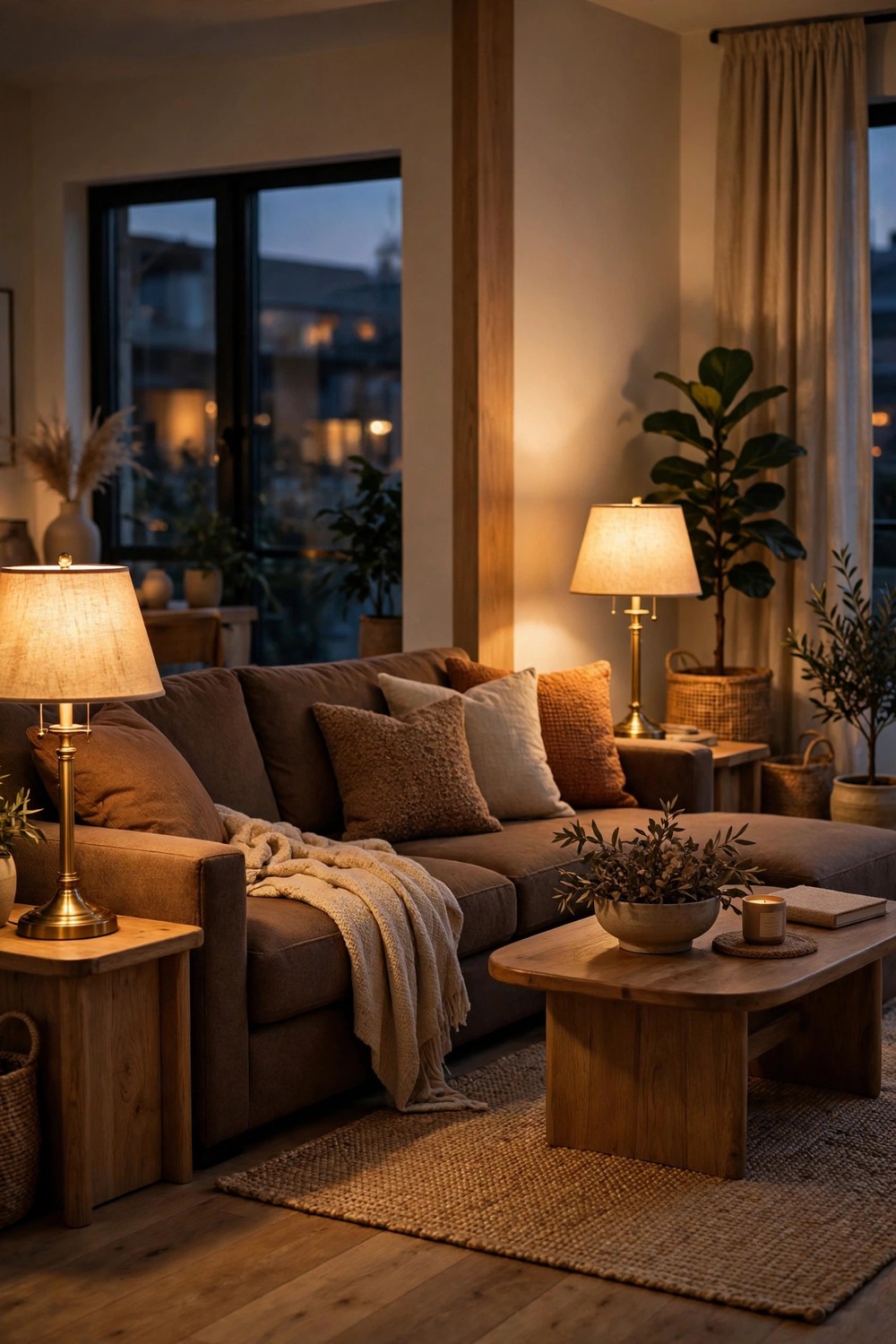
5. Warm Up a Brown Sectional with Brass Table Lamps
A big brown sectional can swallow a corner, especially in the evening when overhead light leaves the edges in shadow. Two brass table lamps, one at each end, solve that and add a soft metallic warmth that brown loves. Use warm bulbs and keep the shades light colored so the light spreads instead of pooling. Brass doesn’t need to match anything else exactly, though repeating it once, in a tray or a picture frame, typically helps it feel intentional. If your sectional is an L shape, place the second lamp on a small table at the open end so both seats get their own pool of light.
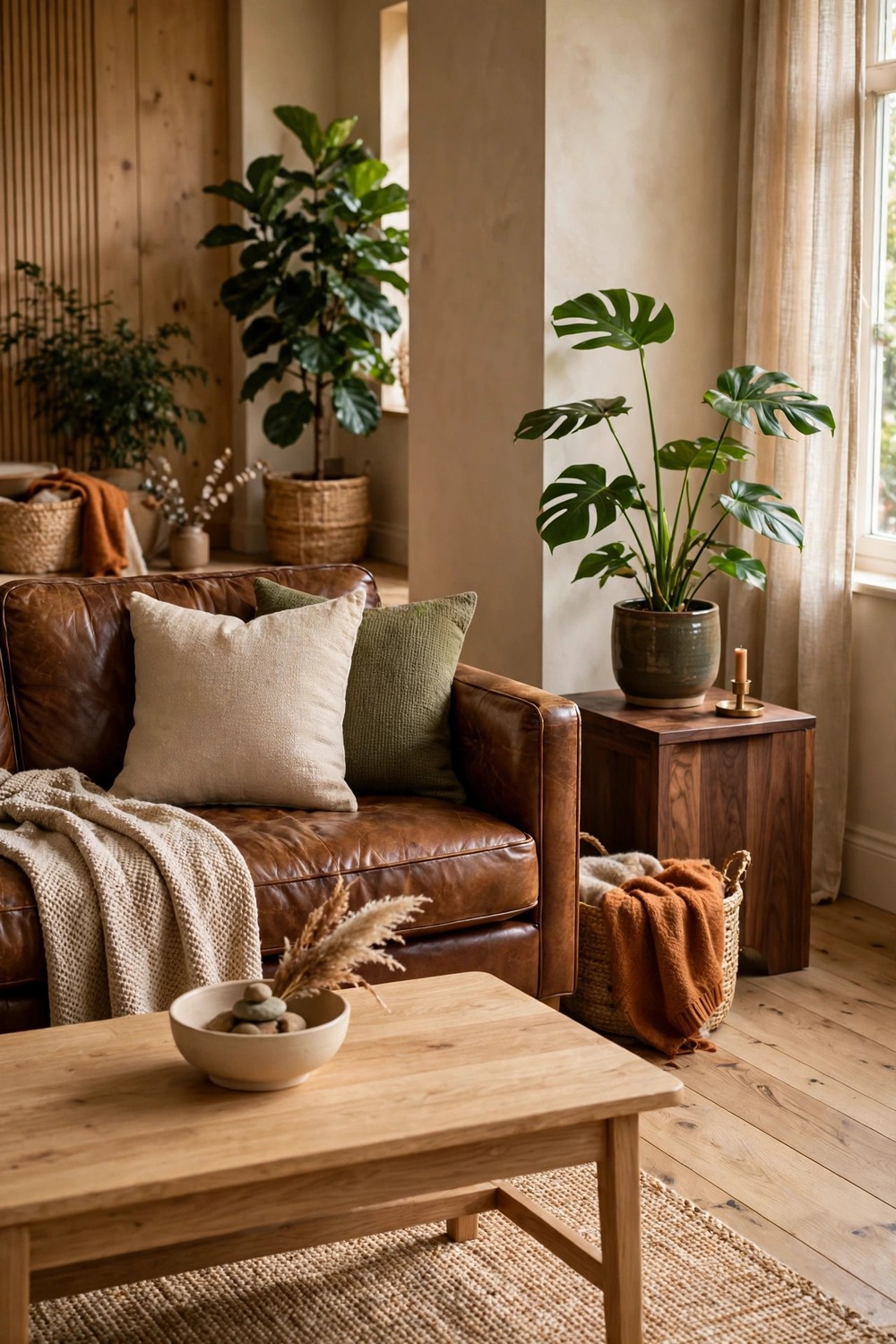
6. Mix a Brown Leather Couch with Natural Wood Tones
Leather and wood are natural partners, but the trick is to vary the wood tones instead of matching them to the couch. If everything lands on the same mid brown, the room can look like one big block. Try a lighter oak coffee table, a medium walnut side table, and your darker leather in between, so each piece stays distinct. Grain helps too, because visible wood grain adds pattern without adding color. Keep metal and fabric pieces in the mix so it doesn’t feel like a cabin unless that’s the look you want. A plant or two will soften the harder edges nicely.
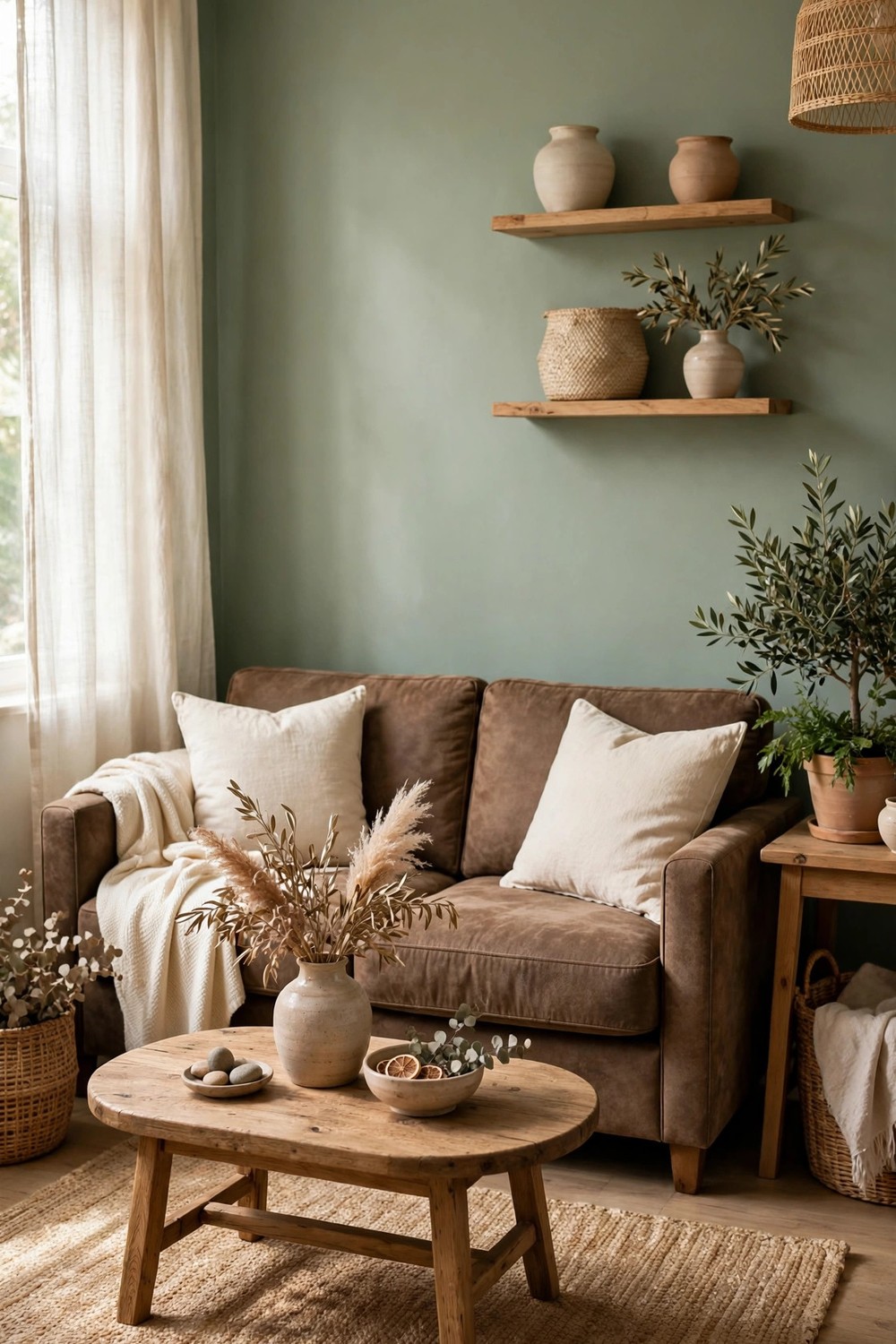
7. Use Sage Green Walls to Soften a Brown Sofa
Sage green and brown come from the same natural palette, so they rarely clash, and sage has a calming effect that can make a heavy sofa feel lighter. It’s a good choice if cream feels too plain but you don’t want a bold wall. Test a fairly muted sage first, because brighter greens can pull the brown toward orange in some lights. Cream or off white cushions keep the pairing fresh, and a little black or dark wood gives it definition. If painting every wall feels like too much, try sage on the wall behind the sofa only and keep the rest of the room a warm neutral.
Layer Texture with Rugs, Cushions, and Throws
Once the backdrop is working, texture does the heavy lifting. Brown couches, especially leather and plain fabric ones, can look smooth and flat, so every layer you add gives the eye something new to notice. You don’t need a lot of pieces. A rug with a pattern, cushions in three different fabrics, and one throw you actually use will usually do more than a pile of matching accessories bought all at once.
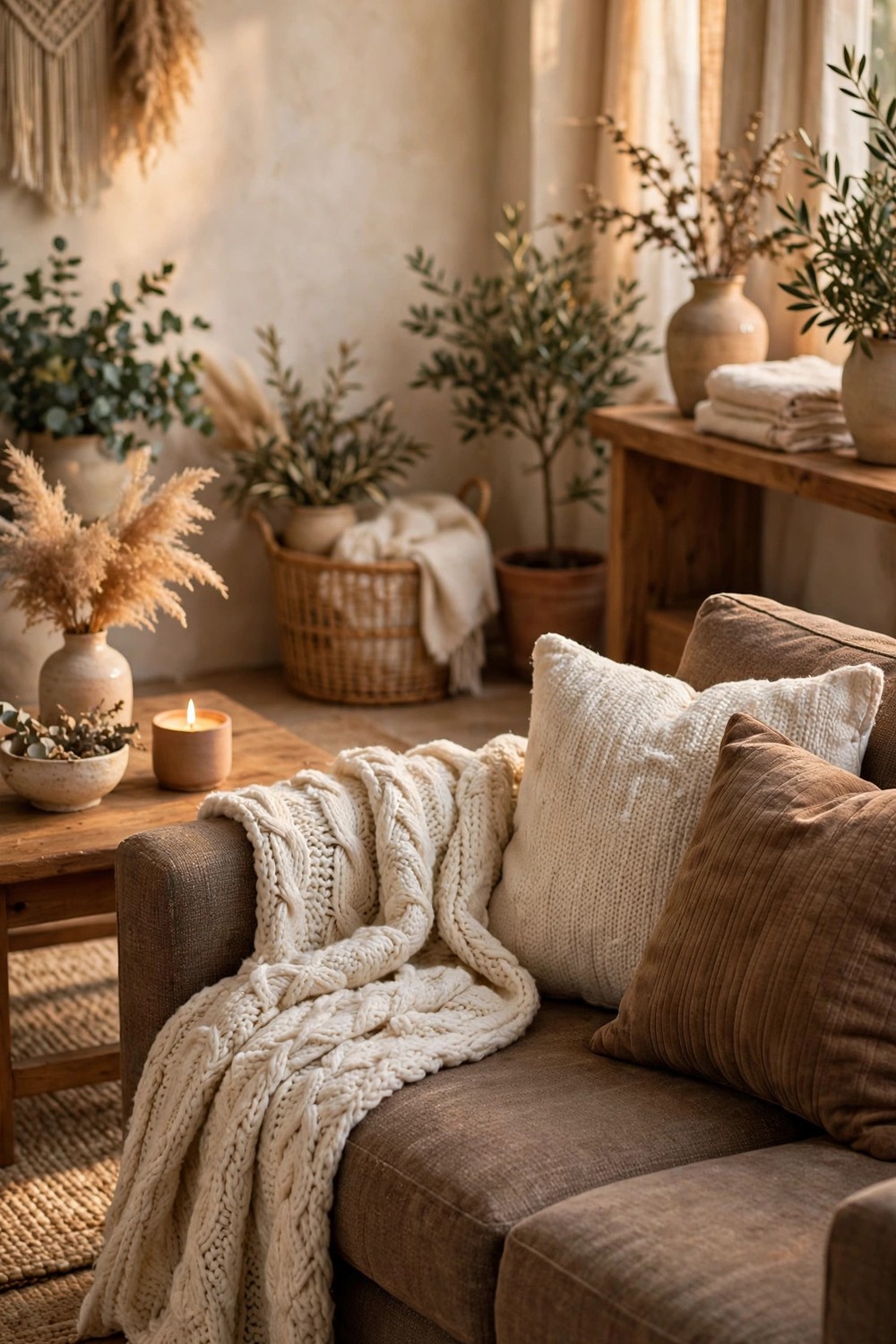
8. Drape a Chunky Knit Throw Over a Brown Fabric Couch
A chunky knit throw is the quickest way to make a plain brown fabric couch feel inviting rather than just practical. Drape it over one arm or across a corner instead of folding it neatly in the middle, because a looser drape typically looks softer and more natural. Choose a color that contrasts gently, like cream, soft camel, or a dusty clay, so the texture shows up against the brown. If you have pets or kids, pick a washable knit and keep a second throw in rotation. Pair it with one smoother cushion so the textures play off each other instead of competing for attention.
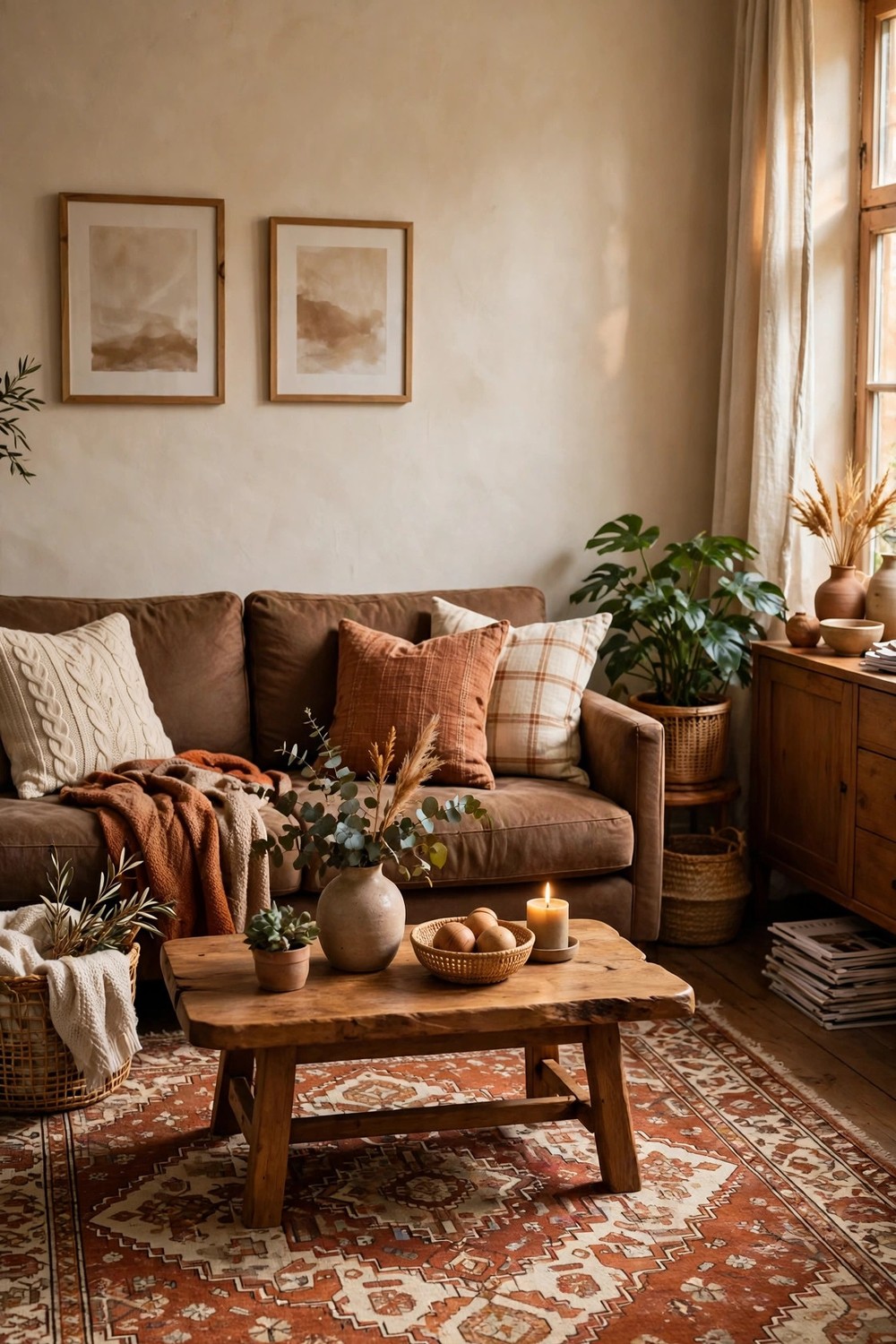
9. Anchor a Brown Couch with a Patterned Vintage Style Rug
A patterned rug gives a brown couch the interest it might be missing, and a vintage style pattern is forgiving in a busy living room because small marks blend right in. Look for a design that includes brown plus two or three other warm colors, then pull one of those colors into your cushions so the rug and couch feel connected. Keep the pattern scale medium, since a tiny busy print can feel restless under a large sofa. Make sure the rug extends beyond the sides of the couch if you can, which usually makes the seating zone feel generous rather than squeezed onto a mat.
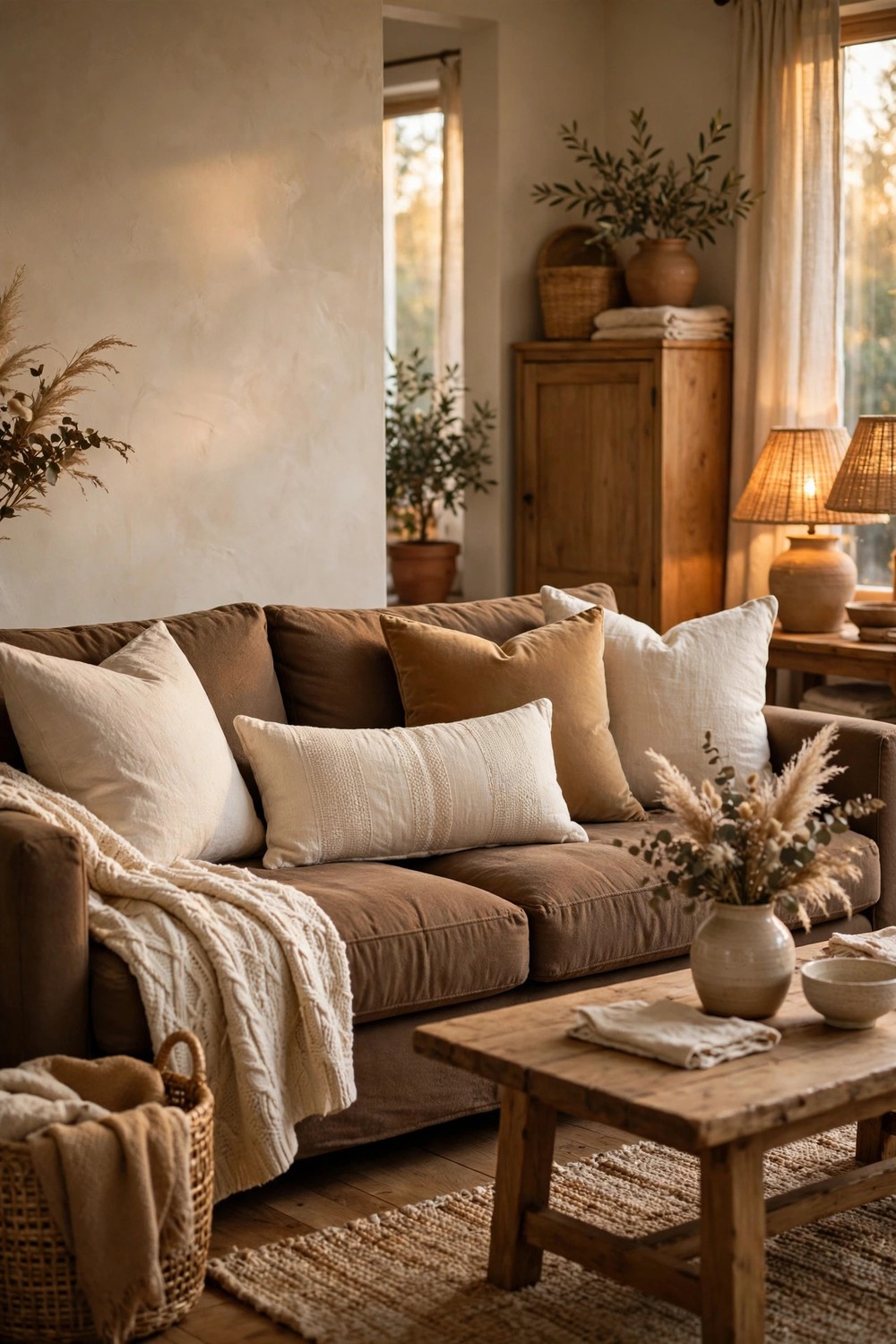
10. Add Cream and Camel Cushions in Mixed Textures
If bold colors aren’t your thing, you can still make a brown couch feel rich by staying in the same family and changing the textures instead. Mix cream linen, camel velvet, and a woven or boucle style cushion, and the light will catch each one differently. That tonal layering typically reads as calm and expensive rather than plain. Use odd numbers, three or five cushions, and vary the shapes with one longer lumbar cushion in front. Keep the inserts plump so the cushions hold their shape, because flat cushions can make even a lovely couch look tired by the end of the day.
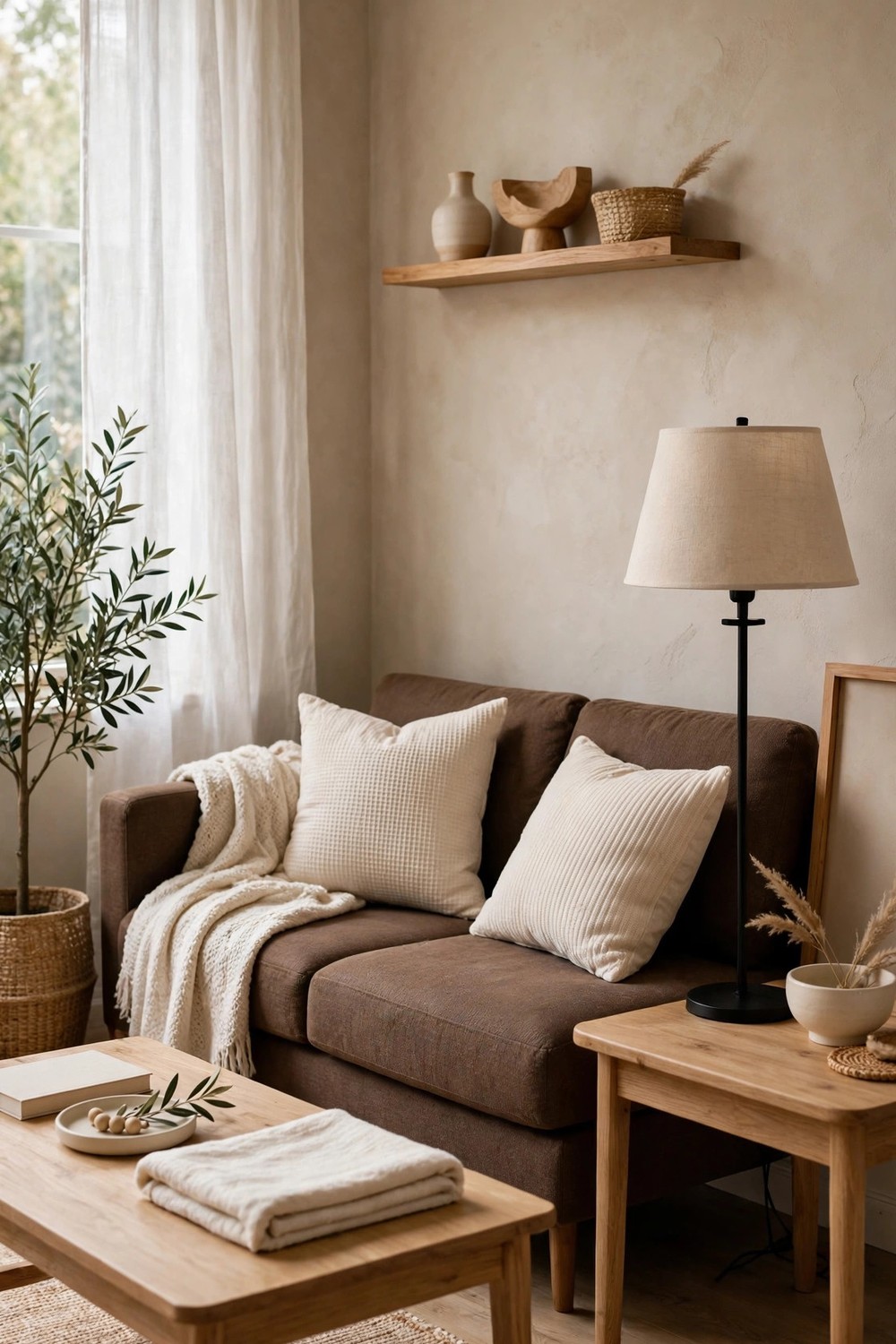
11. Place a Brown Sofa Against a Warm Greige Wall
Greige, that mix of gray and beige, works well behind brown when you choose a warm version rather than a cool, stony one. It gives you a modern, neutral backdrop without the yellow feel some creams can have. The key check is daylight, so test your paint swatch beside the sofa fabric at different times of day before committing. If the greige starts to look green or blue next to your couch, it’s too cool. Add warm white textiles and wood accents to keep the pairing cozy, and use black sparingly for contrast in a lamp base or frame so the softness doesn’t turn bland.
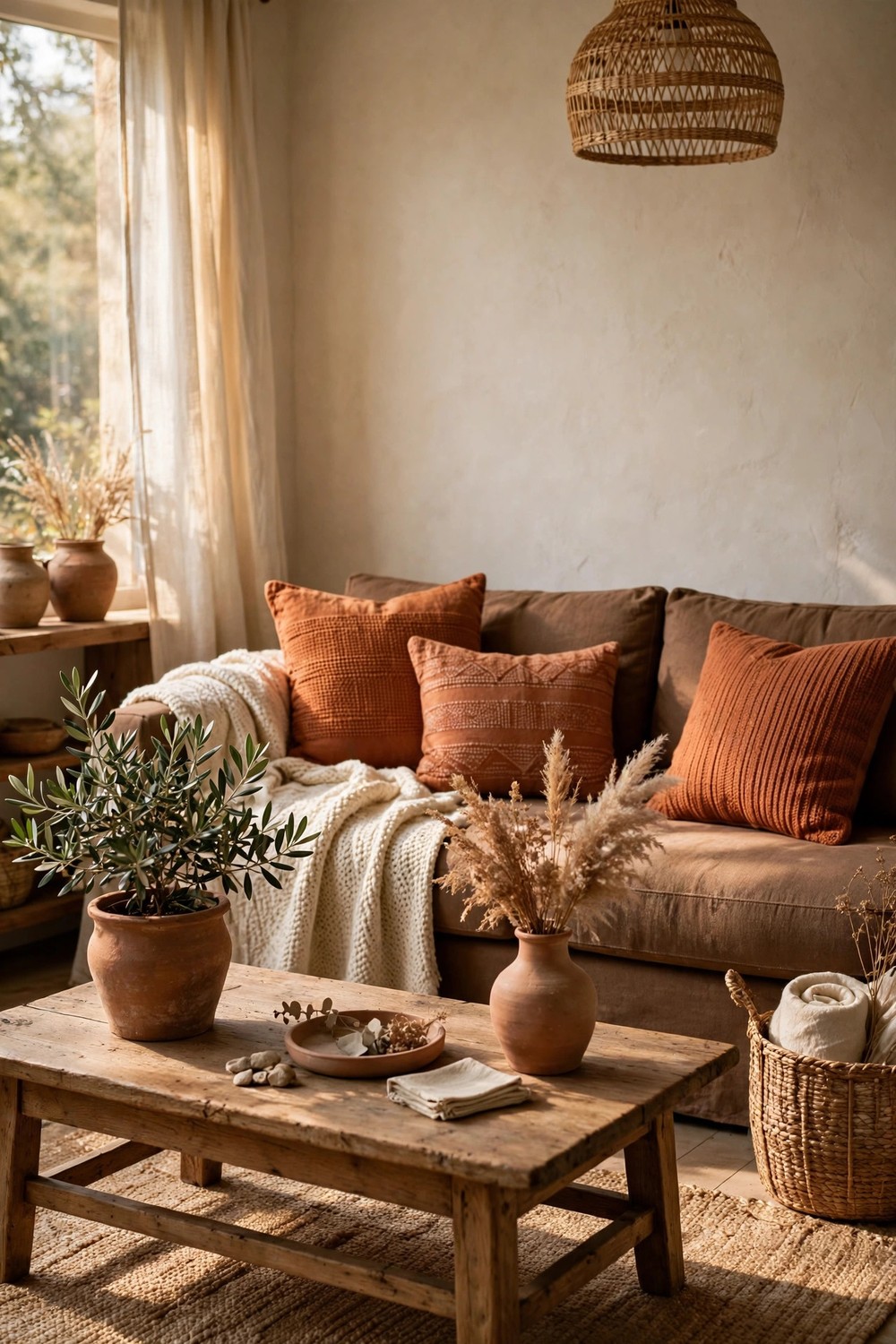
12. Bring in Terracotta Accents Around a Brown Couch
Terracotta sits right beside brown on the warm spectrum, so it deepens the richness without introducing a jarring new color. Start small with a cushion, a clay pot, or a vase, and repeat it in at least two places so it looks deliberate. Terracotta works especially well with chocolate and cognac couches because it lifts them toward a sun baked, earthy feel. Balance it with something pale, like a cream throw, so the scheme stays open. If you love the look, a terracotta toned rug or a piece of wall art can carry it further, but you don’t need much for the effect to register.
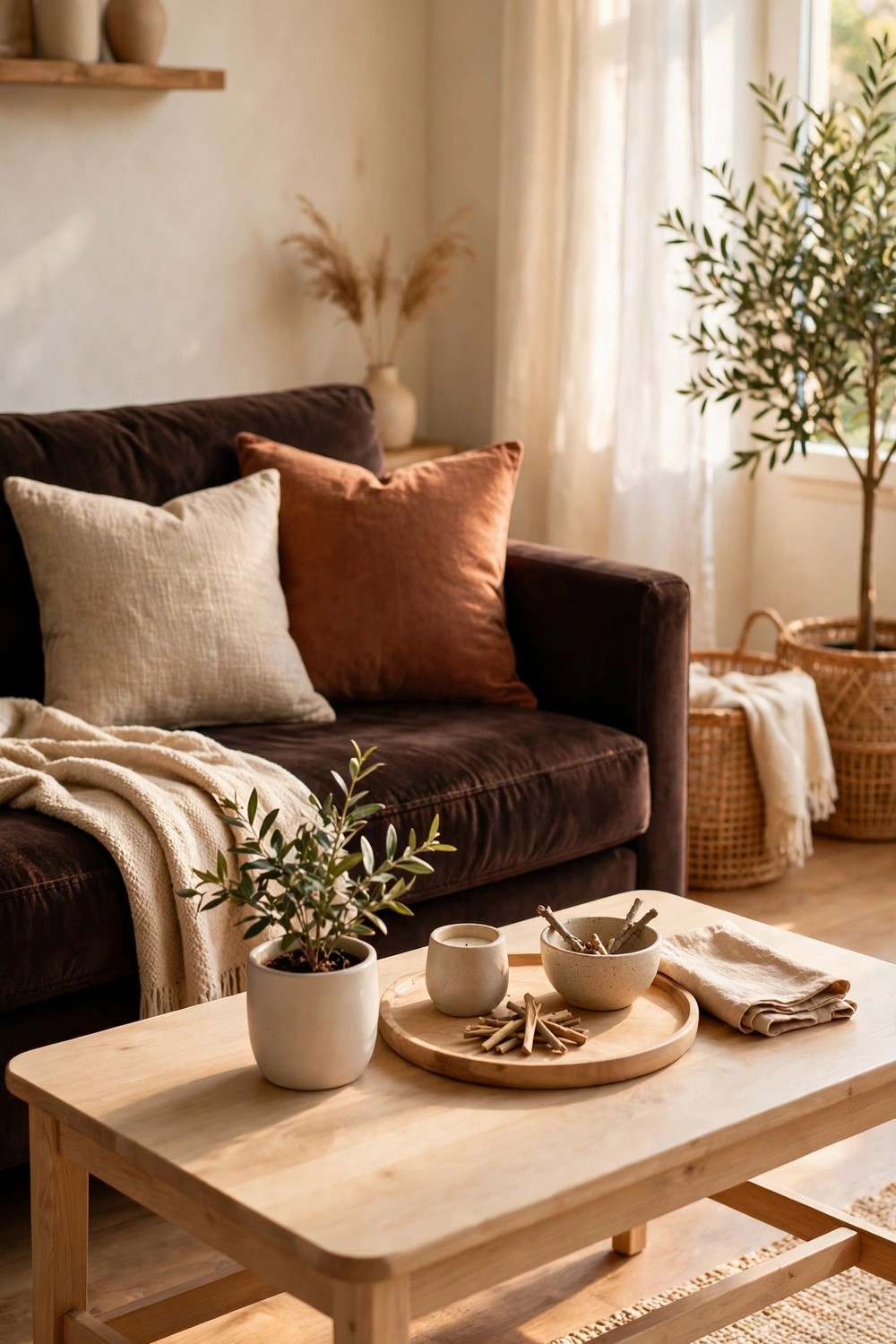
13. Lighten a Deep Brown Couch with a Pale Coffee Table
When a couch is very deep brown, a dark coffee table in front of it can create one heavy mass in the center of the room. Swapping in a pale coffee table, in light wood, stone effect, or painted off white, opens that space up straight away. The contrast also makes the couch color look more deliberate and rich by comparison. Style the table simply with a book, a small plant, and a tray so the pale surface doesn’t look bare. If a new table isn’t an option, a light colored runner or a large pale tray on your existing table can give you a similar lift.
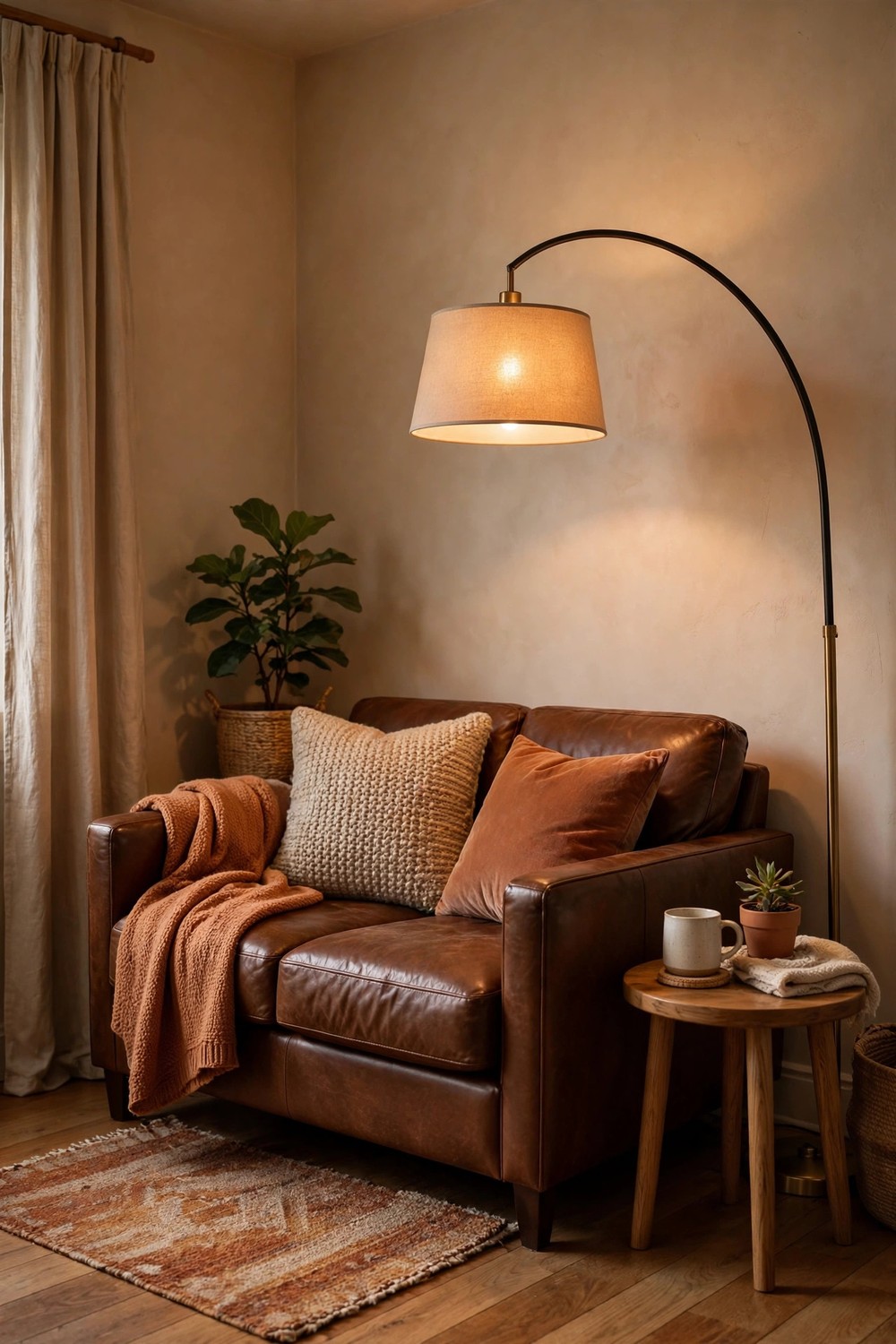
14. Create a Cozy Corner with a Brown Loveseat and Floor Lamp
Not every room needs a big sofa moment. A brown loveseat tucked into a corner with a floor lamp can become the spot everyone actually wants. Angle the loveseat slightly rather than pushing it flat into the corner, and place the lamp just behind or beside it so the light falls where you’d read. Add a small side table for a drink and a cushion or two in a lighter tone. A little rug underfoot helps define the corner as its own zone. This setup typically works well in apartments and spare corners that feel wasted, and brown’s warmth makes the nook feel sheltered rather than forgotten.
Finish with Wood, Layout, and Accent Details
The last layer is about how the couch sits in the room and what frames it. A few darker accents for definition, something green and living nearby, art at the right height, and a layout that lets you walk around the couch comfortably can change the feel as much as any color choice. These finishing ideas are usually the ones that make a room look considered rather than assembled by accident.
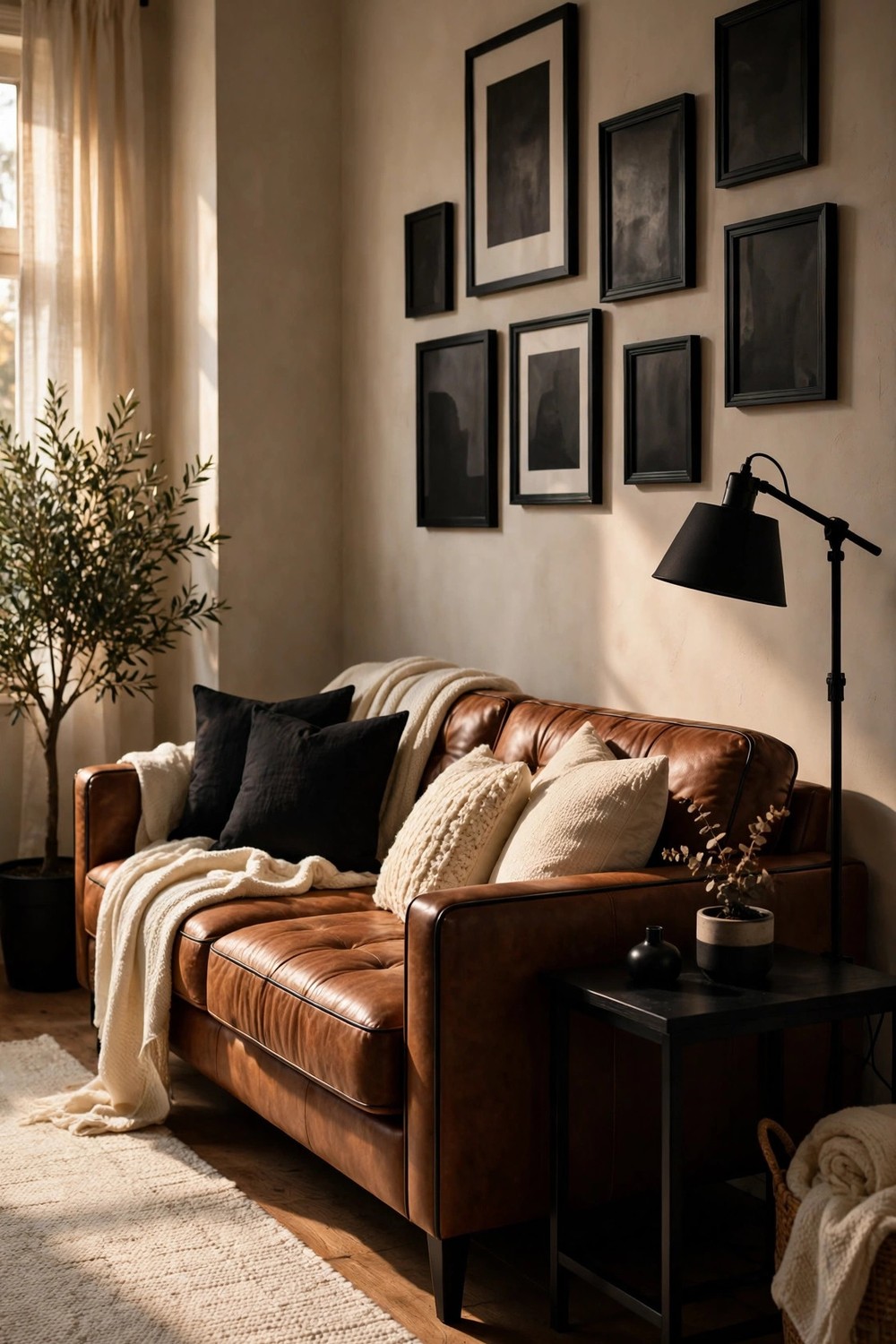
15. Combine a Brown Couch with Black Accents for Depth
A touch of black stops a warm brown scheme from feeling too soft or too brown on brown. Think of it as punctuation. A black lamp, a slim black side table, black picture frames, or a black metal leg on a coffee table can sharpen the whole arrangement. You don’t need much, and it’s usually better to use black in three small places than in one large piece that competes with the couch. Keep the black matte where you can, since shiny black can feel harsh beside warm leather or fabric. Pair it with cream textiles so the contrast stays balanced and the room still feels welcoming.
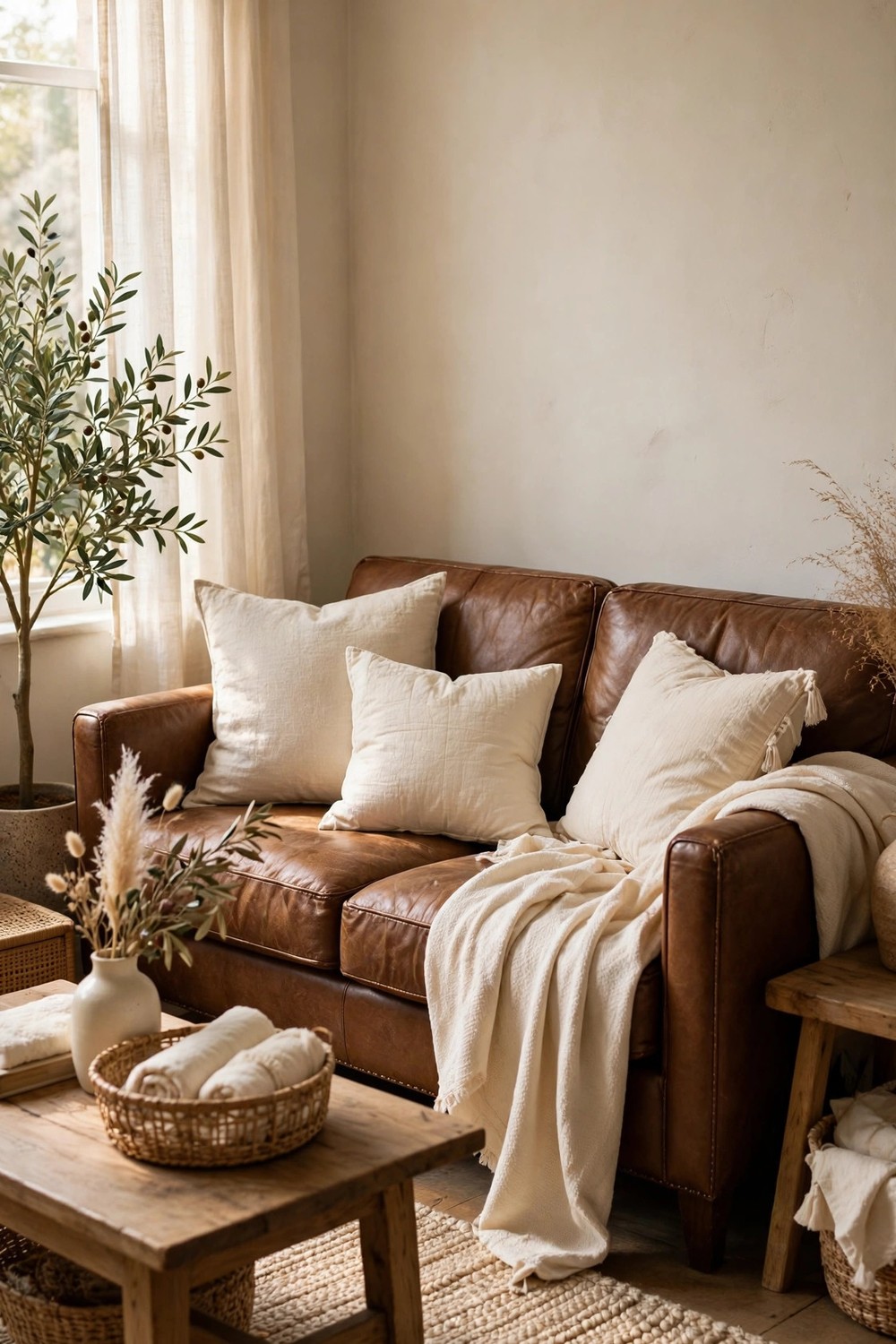
16. Soften a Brown Leather Sofa with Linen and Cotton Layers
Leather can feel cool and formal on its own, especially in winter, so soft natural fabrics are its best friends. Linen and cotton cushions in cream, flax, or pale stripe patterns take the edge off and make a leather sofa somewhere you want to curl up. The slight wrinkle in linen is part of the charm and typically looks better than a perfectly pressed cover in this setting. Add a cotton throw for everyday use and save any delicate pieces for elsewhere. If your leather is dark, keep these layers light. If it’s a paler tan, you can afford slightly deeper tones like clay or warm taupe.
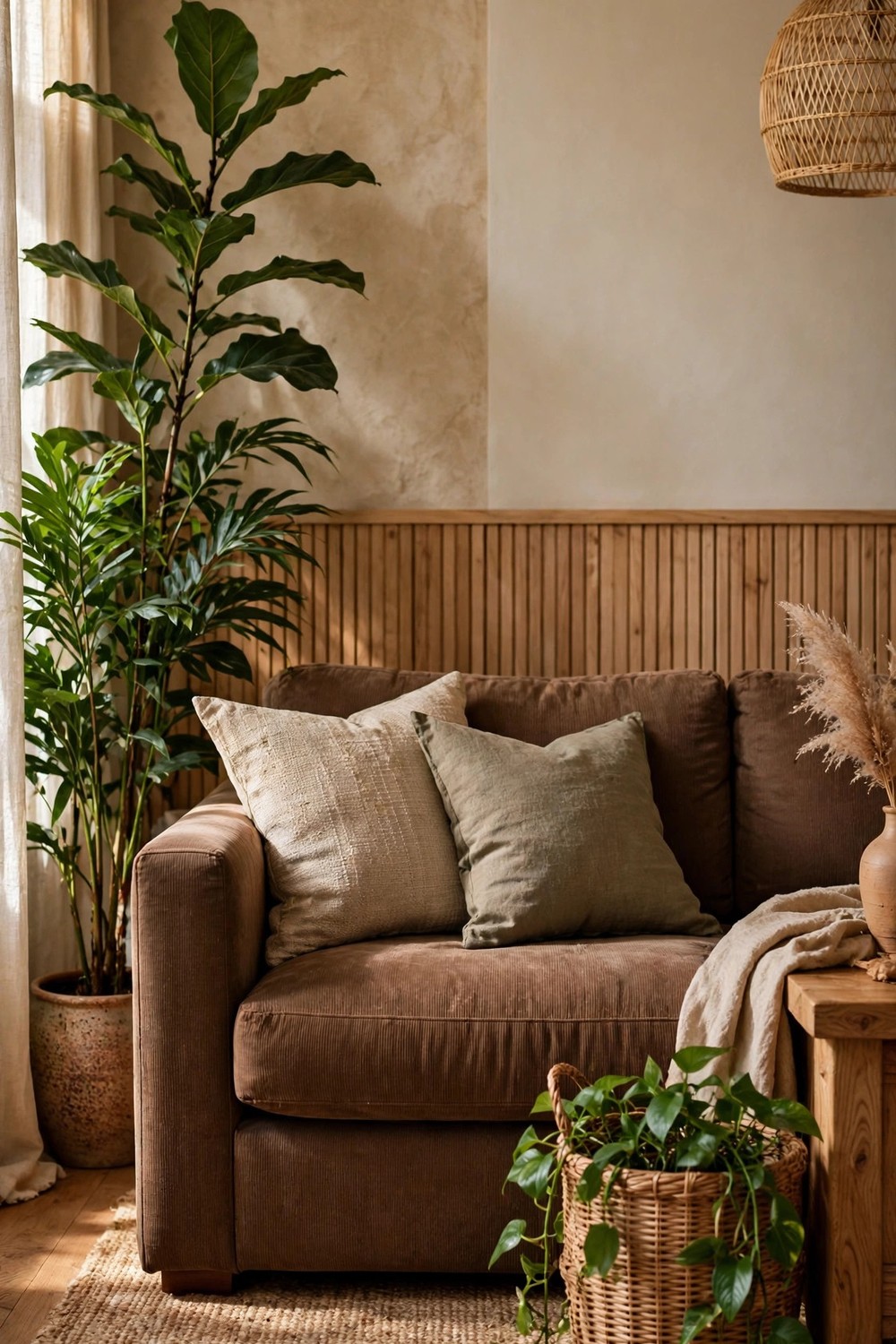
17. Frame a Brown Couch with Tall Plants and Woven Baskets
Greenery does something for brown that no cushion can, because the fresh green makes the warm brown look even richer by contrast. Place one tall plant at one end of the couch and something lower, like a woven basket with a trailing plant, at the other end, so the framing isn’t perfectly symmetrical. Woven baskets add a second natural texture that suits brown well and can hide blankets, toys, or magazines. Choose plants that suit your light rather than the photo you saw, since a struggling plant won’t help anyone. If real plants aren’t practical, one good quality faux stem in a heavy pot can still give you the shape.
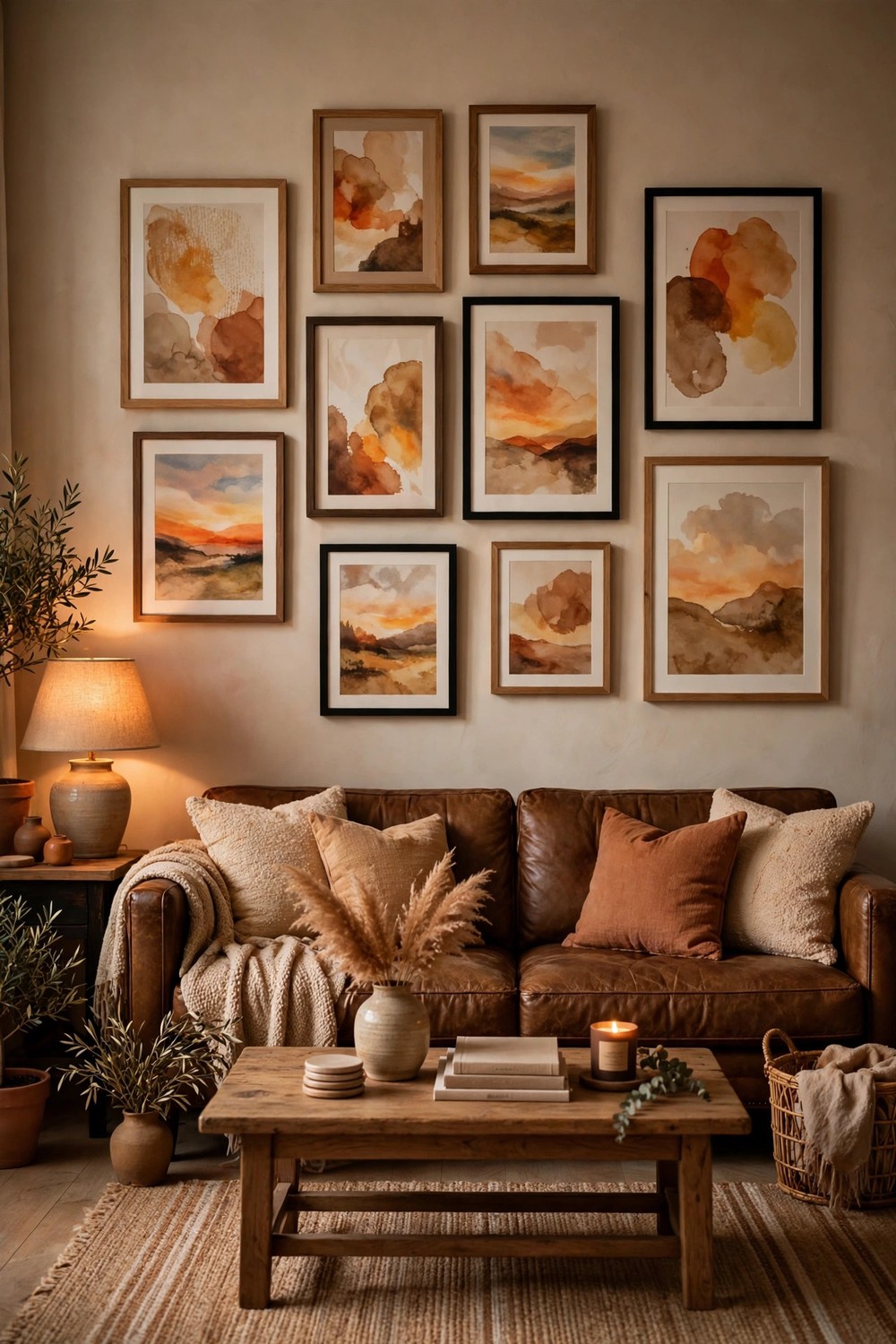
18. Build a Gallery Wall Above a Brown Sofa
The wall above a brown sofa is valuable space, and a gallery wall gives the couch a proper backdrop instead of a blank stretch. Hang the lowest frames roughly a hand’s width above the back cushions so the art and sofa read as one arrangement. Mix frame finishes, perhaps warm wood and thin black, and include at least one piece with cream or white space so the group doesn’t get heavy. Lay the arrangement on the floor first and take a photo before you make any holes. Warm toned art, landscapes, and abstract pieces in rust, ochre, and cream usually sit comfortably above brown upholstery.
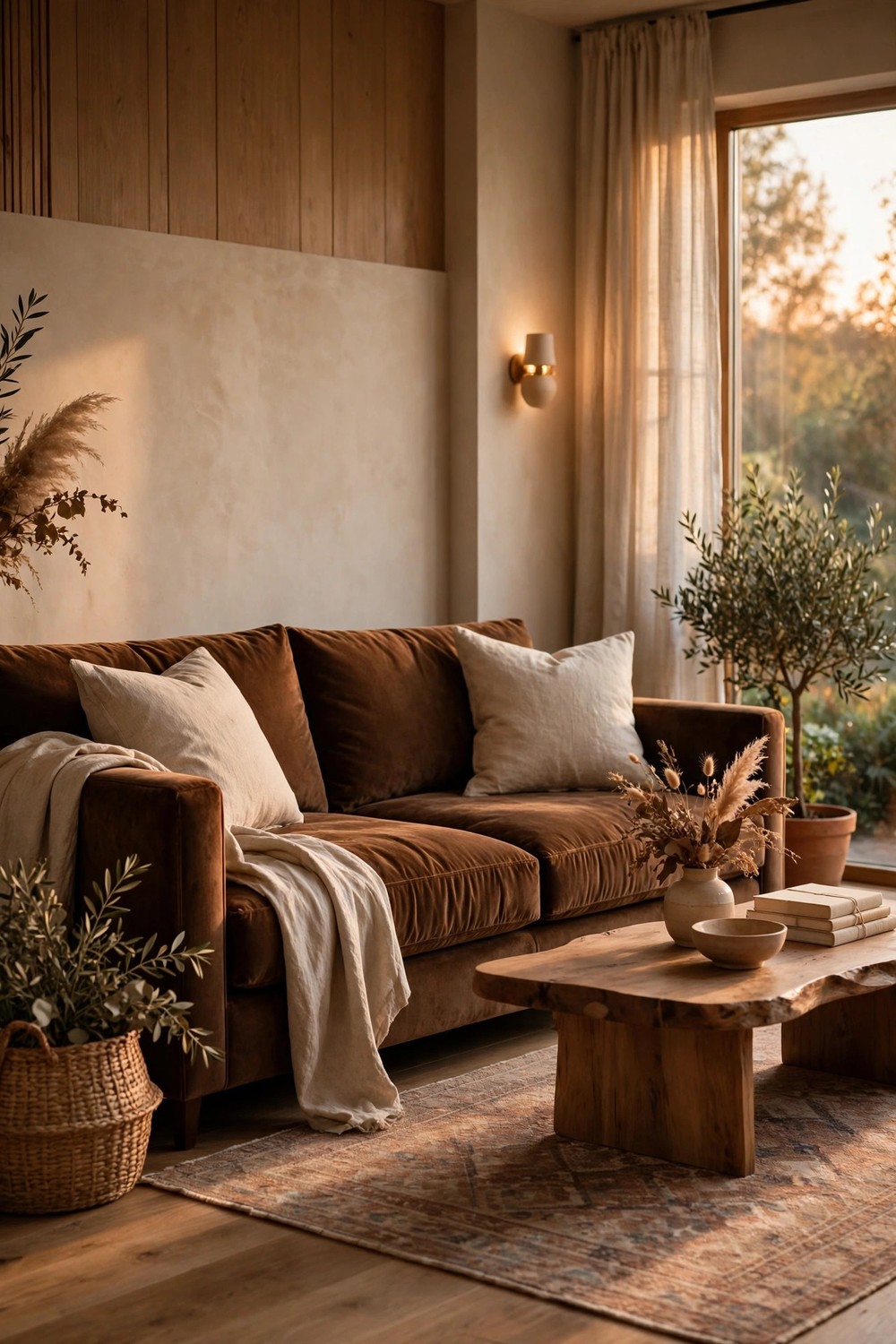
19. Choose a Brown Velvet Couch for a Luxe Warm Feel
If you’re choosing a new couch and you want brown to feel special rather than safe, velvet is worth a look. The pile catches light differently across the seat and arms, so a brown velvet couch can shift from milk chocolate to deep espresso as the day changes. That movement is what makes it feel luxe without any extra decoration. Keep the surrounding pieces simpler, with plain linen cushions and a low pattern rug, so the fabric stays the star. Velvet does show marks where you sit, which most people find adds character, but a brush and a quick steam usually refresh it when you want a cleaner look.
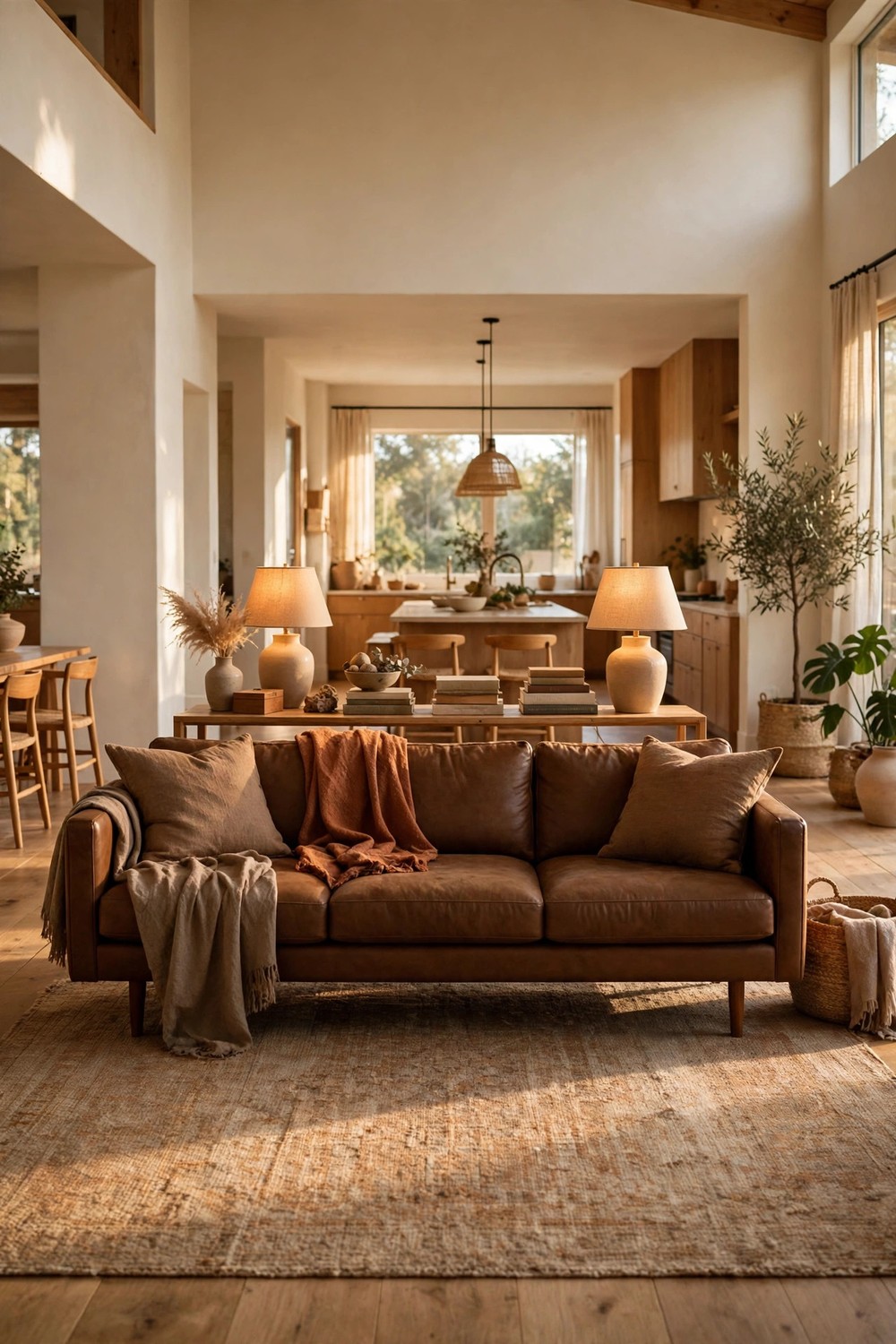
20. Float a Brown Couch in an Open Plan Layout with a Console Behind
In an open plan room, pushing a brown couch against the wall can leave a dead space in the middle and make the seating feel far from everything. Floating it, with its back to the dining or kitchen area, creates a clear living zone and usually makes the room feel more deliberate. A slim console behind the couch finishes the back view, which matters because you’ll see it often, and gives you a place for lamps, books, and a basket. Leave enough walking space behind the console so the layout doesn’t feel tight. Anchor the floated couch with a large rug so it looks settled rather than stranded.
Here’s the thing to remember. A brown couch isn’t a problem to hide, it’s a warm base that gives you more room to play than a lot of bolder colors do. Change the light, change a layer, or change what sits behind it, and the same couch can feel calm, rich, cozy, or sharp. Start with the one idea that fixes the thing that bothers you most, live with it for a week, and then decide if you need another.
And don’t worry about getting it perfect in one go. Rooms that feel genuinely warm are usually built in stages, with pieces added as you find them and live in the space. Your brown couch will happily carry each stage. Pick your first move from the list, whether that’s a cream wall, a patterned rug, or just a chunky throw, and enjoy how quickly the room starts to feel like yours.



Leave a Reply