
20 Home Library and Reading Nook Ideas for Book Lovers
Look, we get it. You don’t need a whole extra room to feel surrounded by books. A living room corner, a bright window, or even the space under the stairs can turn into the spot you reach for first, with a good chair, warm light, and shelves that actually hold the stories you love. It’s less about how many books you own and more about how easy it feels to sit down and open one.
That’s the approach in this list. You’ll find big builds like floor to ceiling shelves and smaller, friendlier moves like a side table for tea, a soft rug, or a better lamp. Some ideas help you store more without crowding the room, and others are purely about comfort, because a beautiful nook you never sit in isn’t much use. You don’t need all twenty. Most living rooms only need a shelf plan, a seat you love, and light that doesn’t tire your eyes.
Use the list in the order that suits your space. Start with the shelves and hidden spots if storage is your problem, jump to the seating if you already have books everywhere but nowhere cozy to read them, and finish with the little touches that make a corner feel personal. Work through it slowly, try one change at a time, and you’ll usually notice the room inviting you to stay a little longer.
In This Article
- Build Floor to Ceiling Bookshelves Around a Reading Chair
- Add a Rolling Ladder to Tall Living Room Shelves
- Tuck Bookshelves Under the Stairs for a Hidden Nook
- Carve a Reading Nook Inside an Alcove or Unused Closet
- Build Low Bookshelves That Double as a Window Bench
- Use a Bookshelf as a Room Divider for a Private Nook
- Install Picture Ledges to Display Favorite Covers
- Turn a Window Bay into a Cushioned Window Seat Nook
- Create an Armchair Corner with a Warm Floor Lamp
- Set a Reading Chair Beside the Fireplace for Quiet Evenings
- Choose a Deep Armchair with a Footstool for Long Reads
- Layer a Soft Rug and Floor Cushions for Low Reading
- Create a Double Reading Corner with Two Chairs
- Add a Blanket Ladder with Cozy Throws Within Reach
- Use Warm Task Lighting That Is Easy on the Eyes
- Place a Small Side Table for Tea and Bookmarks
- Organize Your Shelves by Mood and Moment
- Mix Plants and Small Art Among the Books
- Style a Low Table Stack for Books You Are Reading Now
- Hang Sheer Curtains to Soften a Sunny Reading Corner
Build the Shelves and Find the Space
Every good library corner starts with a place for the books to live that doesn’t feel like an afterthought. You don’t have to cover every wall. A tall shelf on one side, a low bench under a window, or shelves tucked into a spot you’d otherwise waste can hold more than you’d expect. These first ideas help you find that space and make it feel built in, calm, and easy to reach.
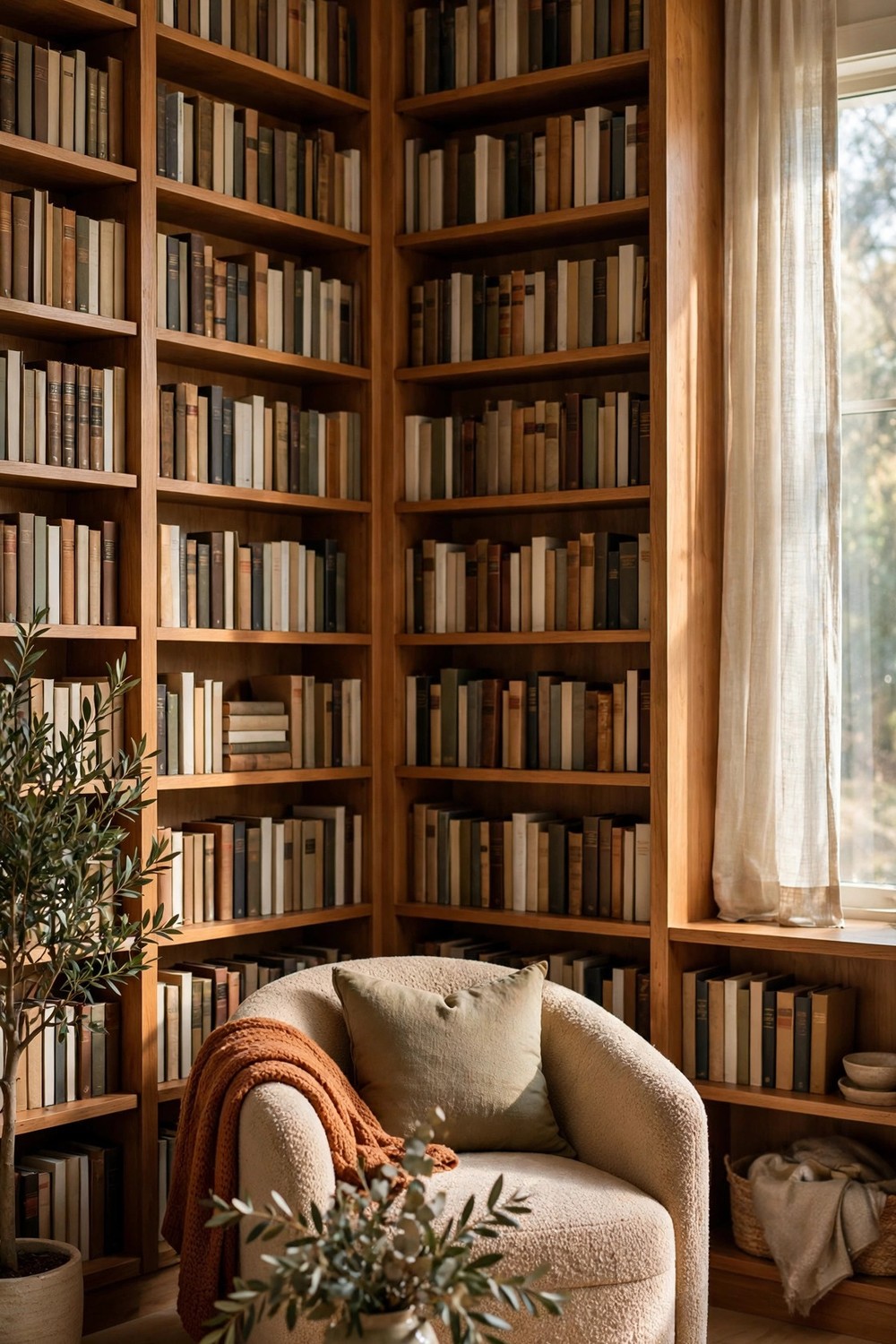
1. Build Floor to Ceiling Bookshelves Around a Reading Chair
Floor to ceiling shelves give you the true library feeling, even when they only cover one living room wall. Frame the shelves around a comfortable chair so the seat feels tucked inside the collection rather than pushed in front of it. Keep the shelves you reach most often at waist to eye level, and put the books you love but read less up high. Warm wood or a soft painted finish usually feels more inviting than a stark, glossy one. Leave a little breathing room on a few shelves for a plant or a small object, because a wall that’s completely packed can feel heavy instead of cozy.
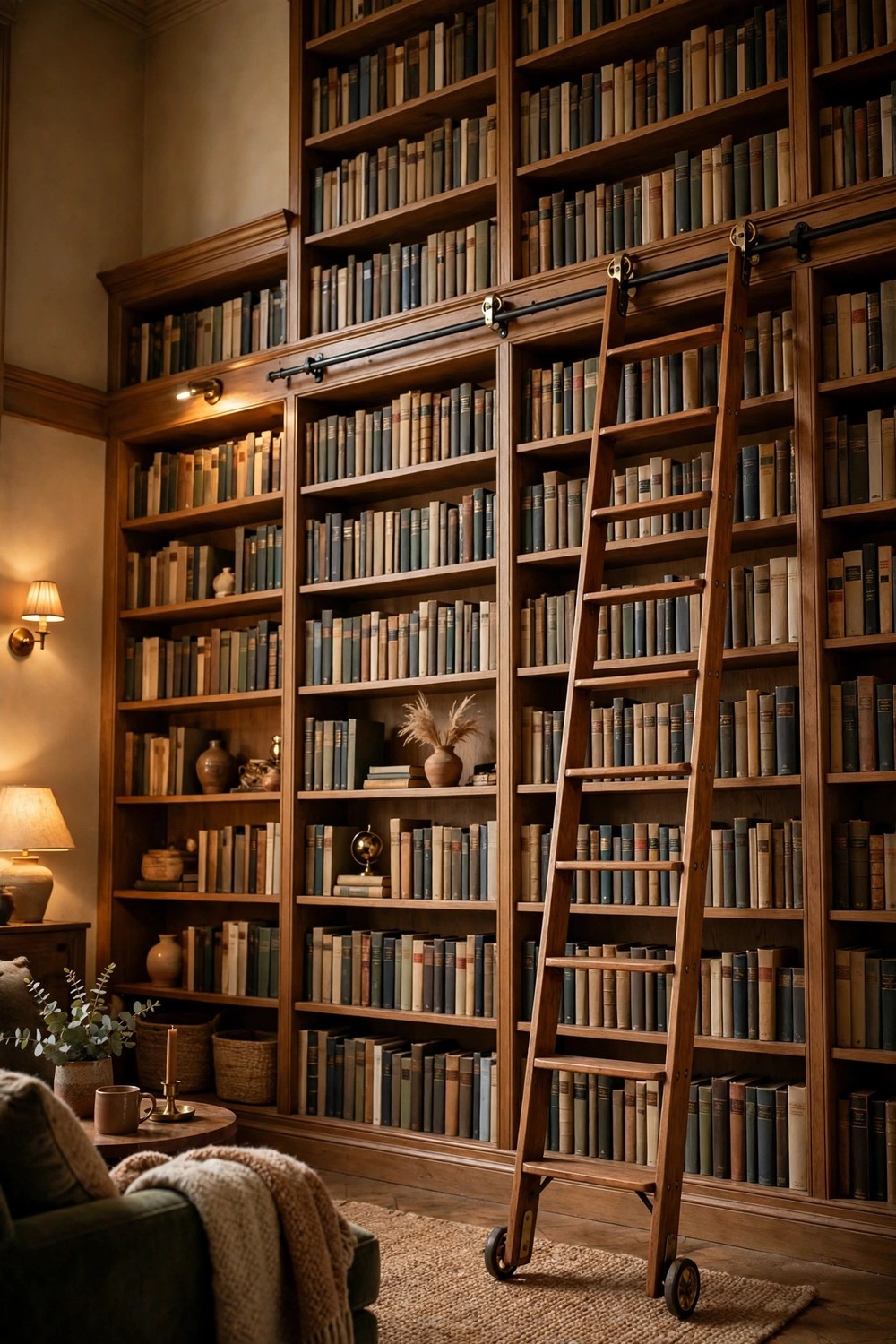
2. Add a Rolling Ladder to Tall Living Room Shelves
If you’re going tall with your shelves, a rolling ladder makes the top rows part of your everyday library instead of decoration you can’t reach. Choose a ladder that moves smoothly and locks or rests safely when you’re standing on it, and keep the track clear of rugs with thick edges. It also becomes a lovely focal point, so pick a wood tone that sits well with your shelves rather than trying to match them exactly. Store the books you rotate often near the middle, where you don’t need the ladder at all. That way the ladder is a pleasure to use, not a chore you have to tackle every time you want a novel.
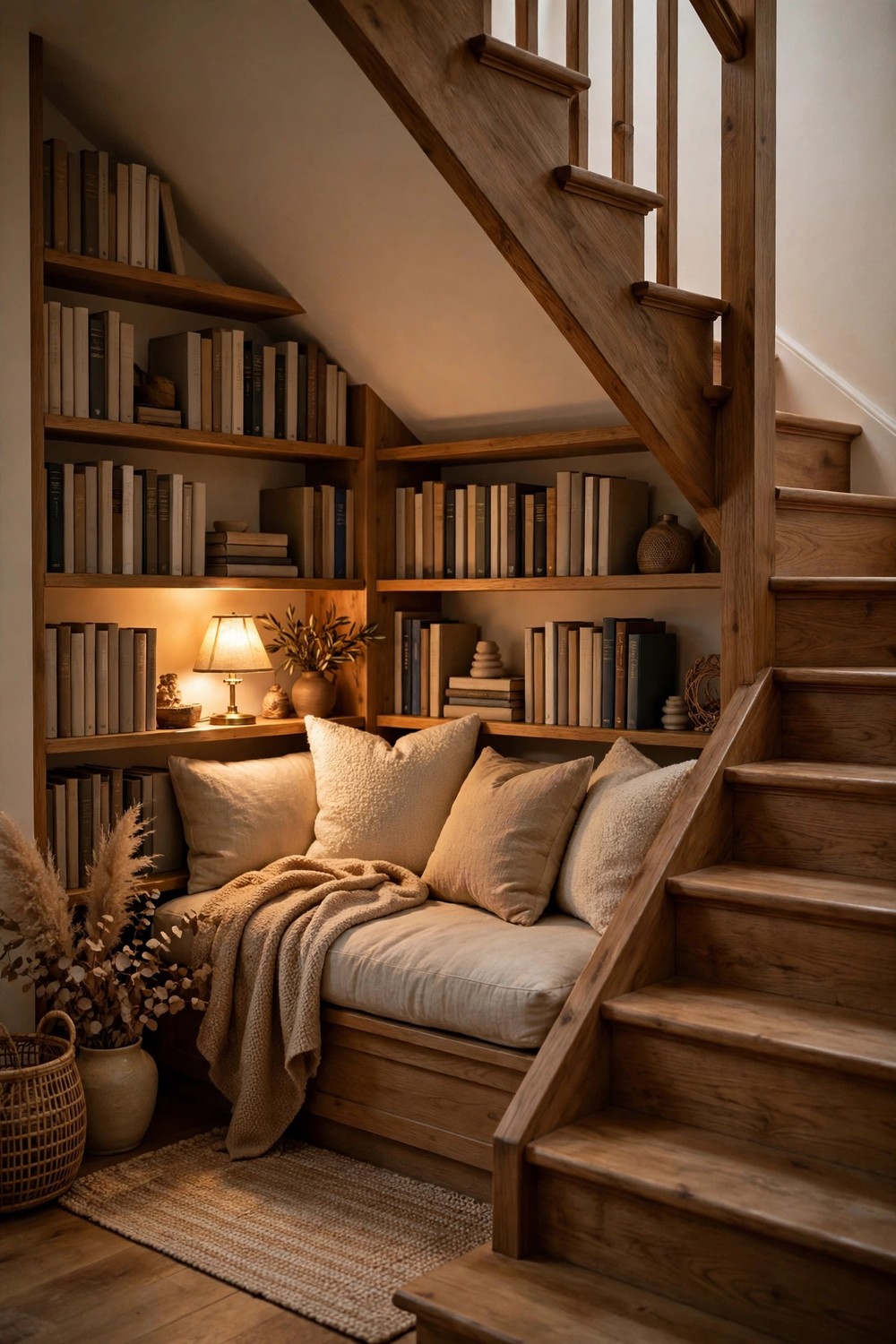
3. Tuck Bookshelves Under the Stairs for a Hidden Nook
The space under the stairs is often awkward, a little dark, and hard to use for anything big, which is exactly why it works so well for books. Low shelves can follow the slope, with taller sections where the ceiling is highest and shorter stacks as it drops. Add a thick cushion, a small lamp, and a throw, and you’ve got a hidden nook that feels like it was always waiting for a reader. Keep a basket nearby for the book you’re in the middle of so it doesn’t get lost. Because the spot is naturally sheltered, it typically feels quieter than the rest of the room, even in a busy house.
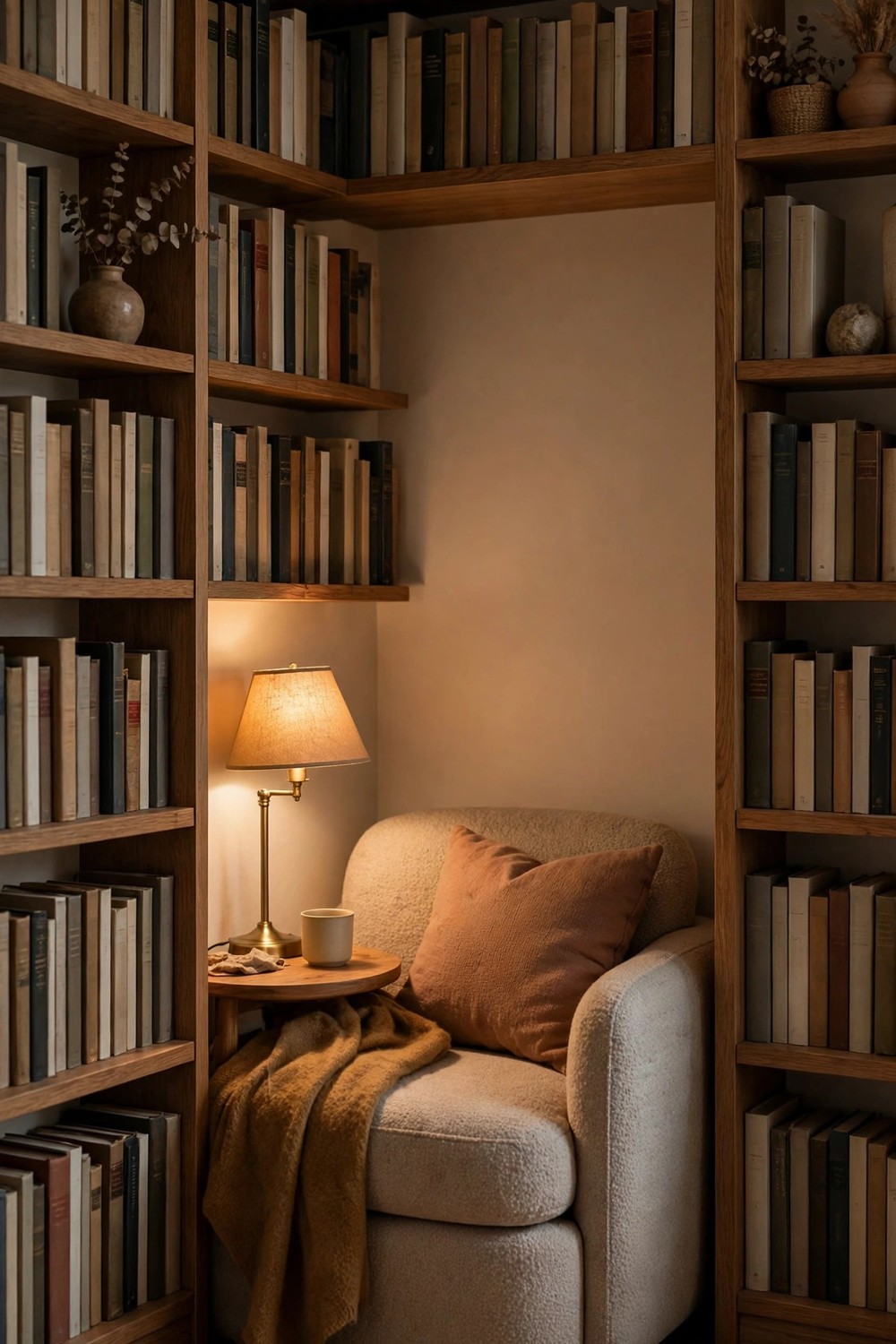
4. Carve a Reading Nook Inside an Alcove or Unused Closet
An alcove or an unused closet can become a tiny library of your own without taking any floor space from the main room. Remove a closet door if you can, line the back and sides with shallow shelves, and fit a bench or a compact armchair inside. Paint the inside a shade deeper than the living room walls if you want it to feel like a retreat, or keep it light if the space is very small. A wall light or a small plug in lamp matters here, because these tucked away spots rarely get good natural light. Add one cushion you really love, and the little space will feel personal straight away.
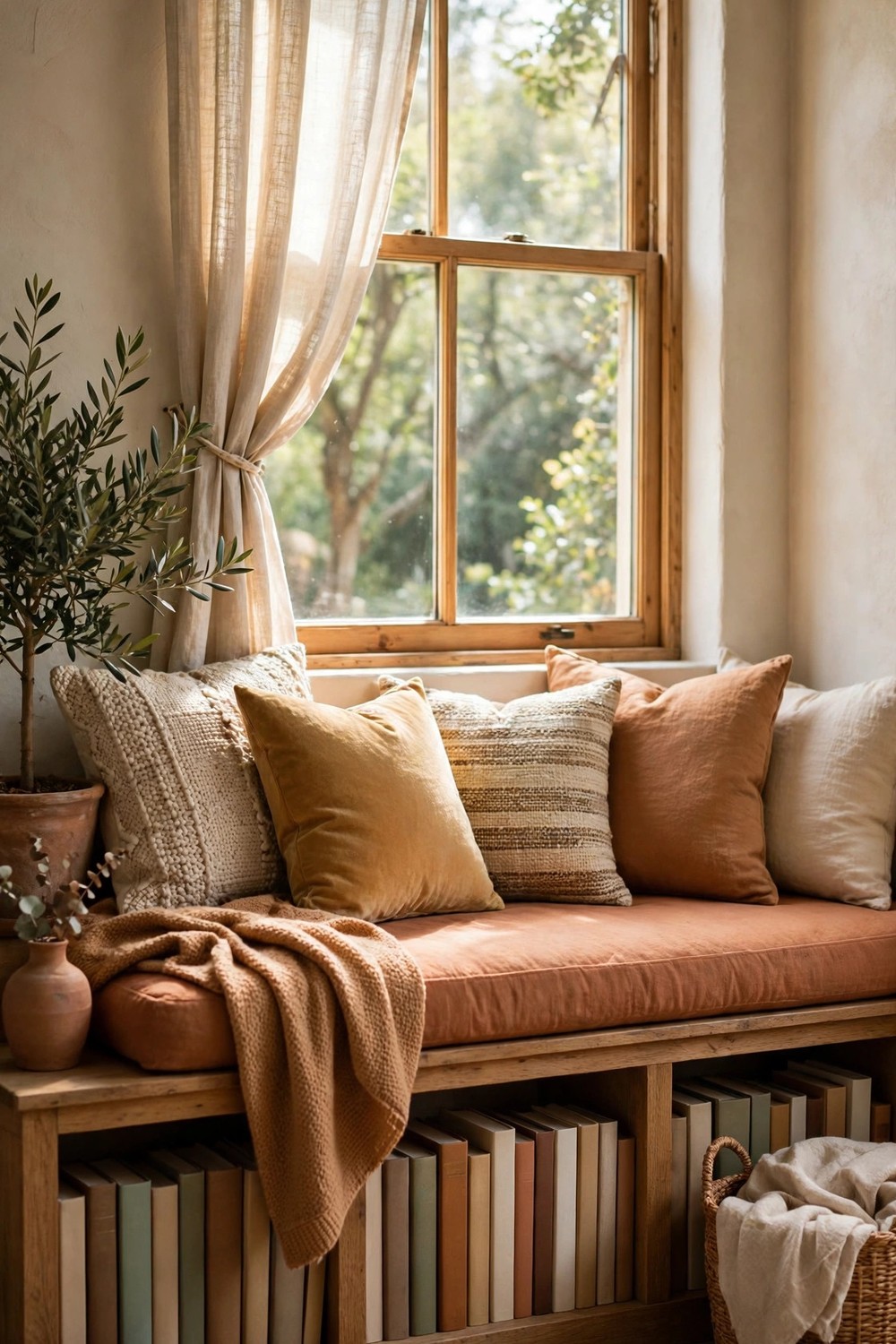
5. Build Low Bookshelves That Double as a Window Bench
Low shelves under a window do two jobs at once. They hold a good number of books without blocking the light, and with a long cushion on top, they become a bench where you can stretch out. Keep the shelf height comfortable for sitting, and choose a cushion fabric you won’t worry about fading a little in the sun. Store the books you reach for on lazy afternoons in this spot, since they’re right beside you. If the bench is in your living room, it also gives guests extra seating when you need it. That kind of flexibility is handy in smaller homes, where every piece has to earn its place.
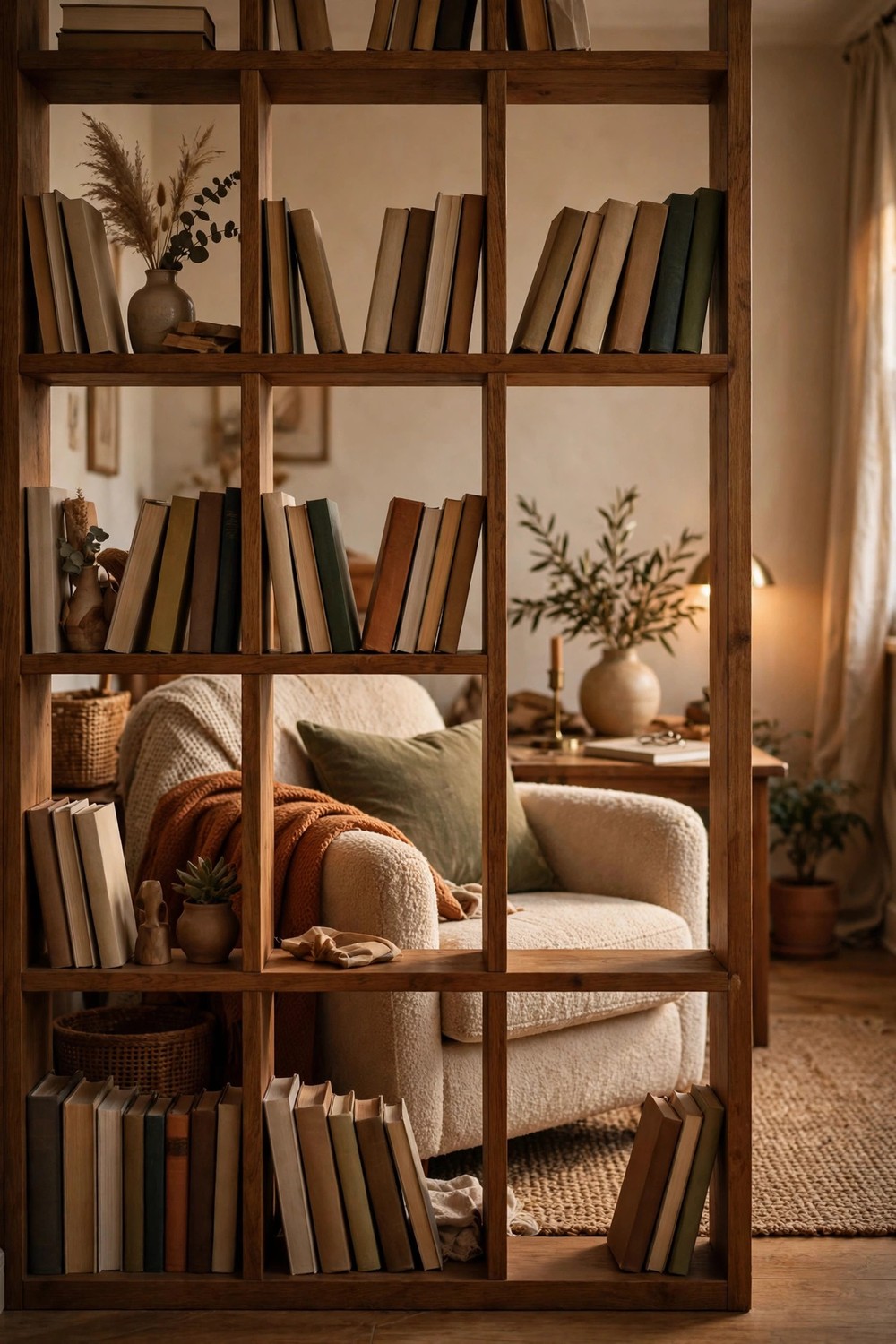
6. Use a Bookshelf as a Room Divider for a Private Nook
In an open living room, a bookshelf can quietly mark off a reading corner without building a wall. Place a medium height, open backed shelf at a right angle to the wall, put your chair on the far side, and you’ll feel tucked away while the room still stays bright and connected. Style the shelves from both sides, with books facing each way and a few objects that look good from behind. Make sure the shelf is sturdy and can’t tip, especially if kids climb nearby. This setup usually works best when you leave a clear walking path around it, so the nook feels calm rather than squeezed into a corner.
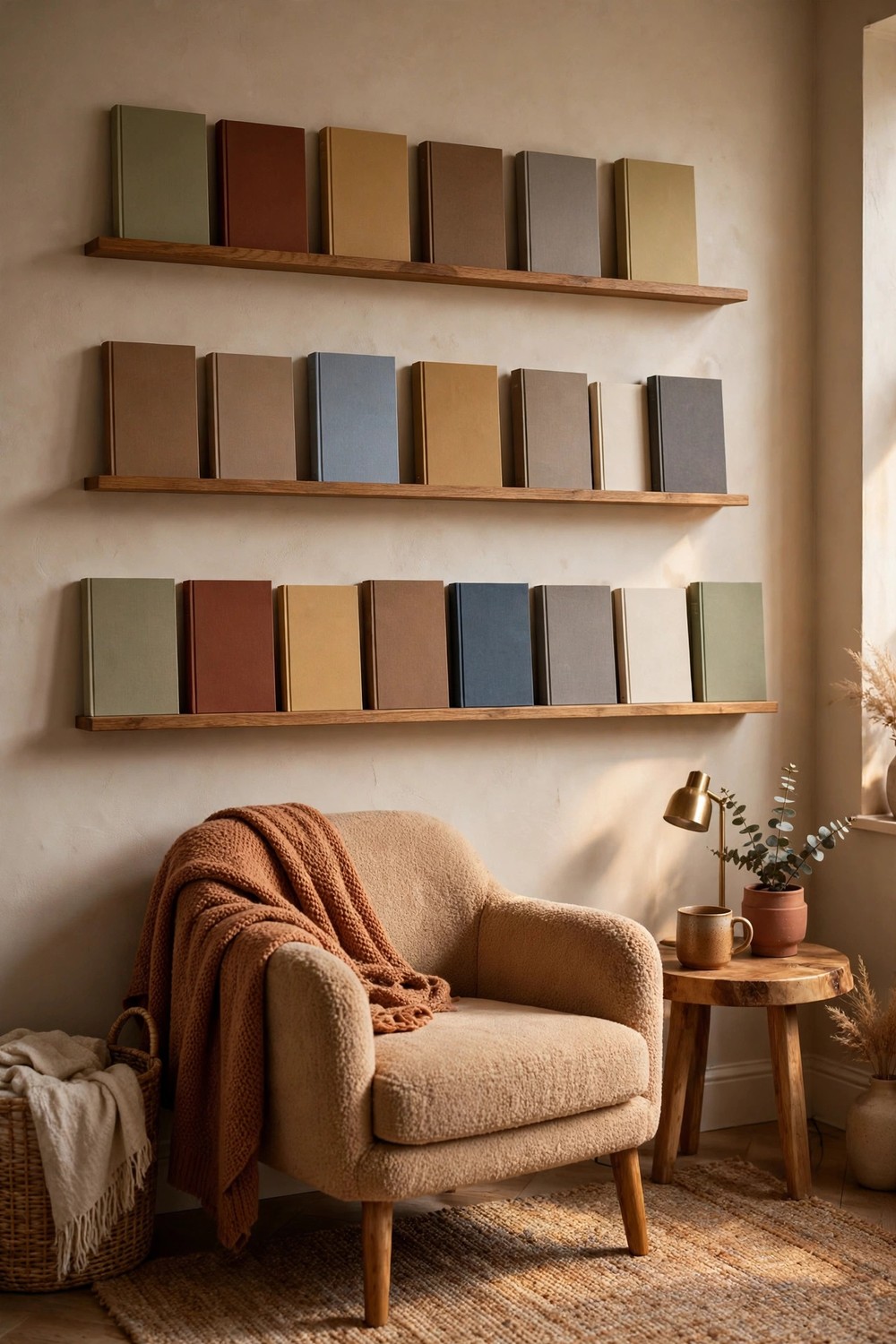
7. Install Picture Ledges to Display Favorite Covers
Not every book has to hide its spine on a shelf. Narrow picture ledges let you face a few favorite covers outward, like small pieces of art you can swap whenever your mood changes. Hang two or three ledges above a reading chair or along a short wall where deep shelves wouldn’t fit. They’re shallow, so they work in hall like corners of a living room too. Rotate the display with the seasons or with what you’re reading now, and keep the rest of your storage simple behind it. Because the ledges hold books loosely, they’re best for cherished copies you handle gently rather than heavy reference books you pull out every day.
Make the Seat Impossible to Leave
Storage gets the books into the room, but comfort is what keeps you there past the first chapter. A good reading seat supports your back, gives your legs somewhere to rest, and sits near light without glare. You don’t need a matching set or a brand new chair. These seating ideas start with what you have and add the soft layers that make a corner hard to walk past without sitting down.
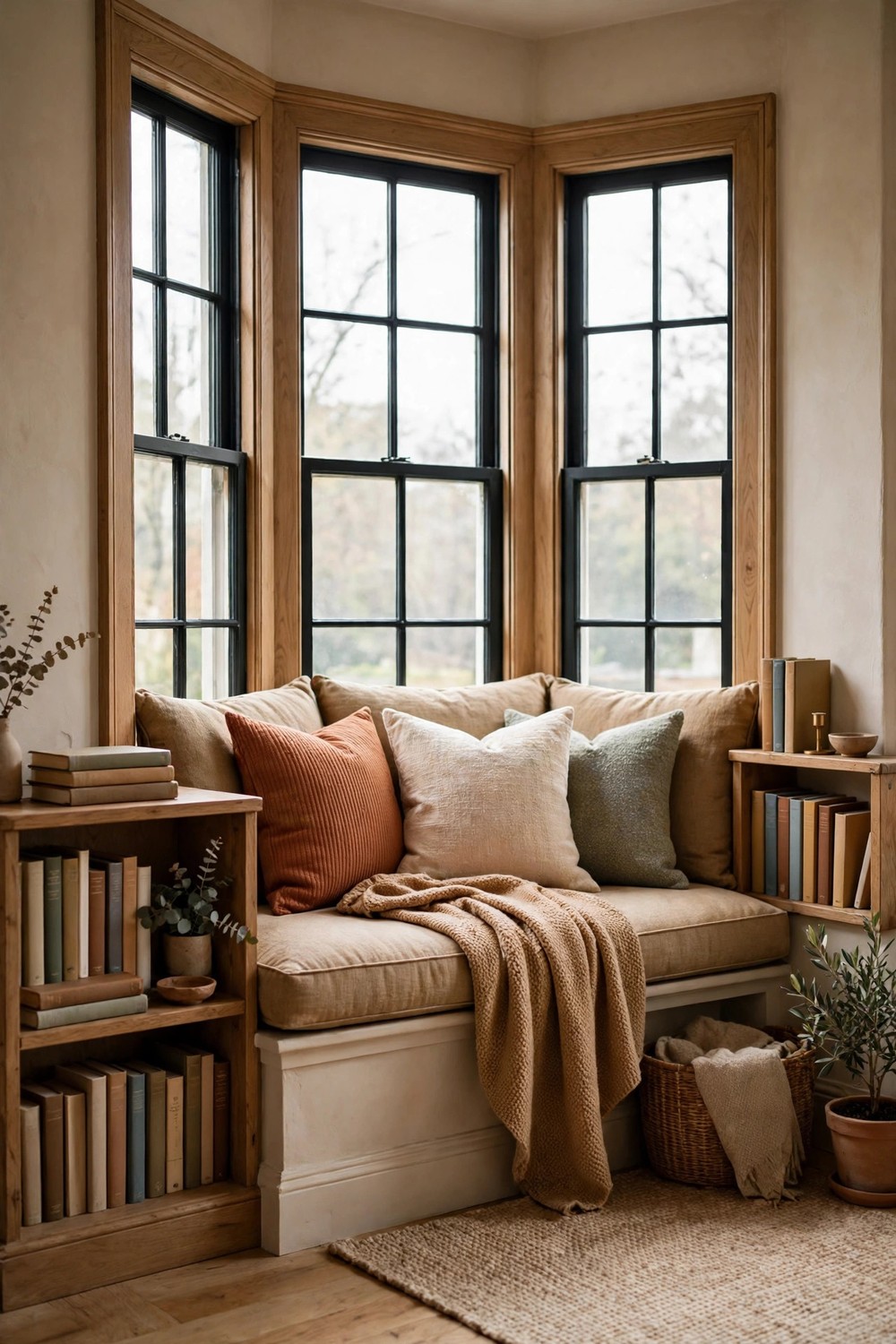
8. Turn a Window Bay into a Cushioned Window Seat Nook
A window bay is a natural reading nook because the light is already there and the shape already feels a little separate from the room. Fit a deep cushion across the bay, add two or three pillows you can move around for your back, and keep a folded throw at one end for cooler days. If you can, add small shelves or a book box at one side so your current reads live right there. Watch how the sun moves before you settle in for long sessions, since direct midday light can be tiring. A simple blind you can tilt usually gives you soft light without losing the view.
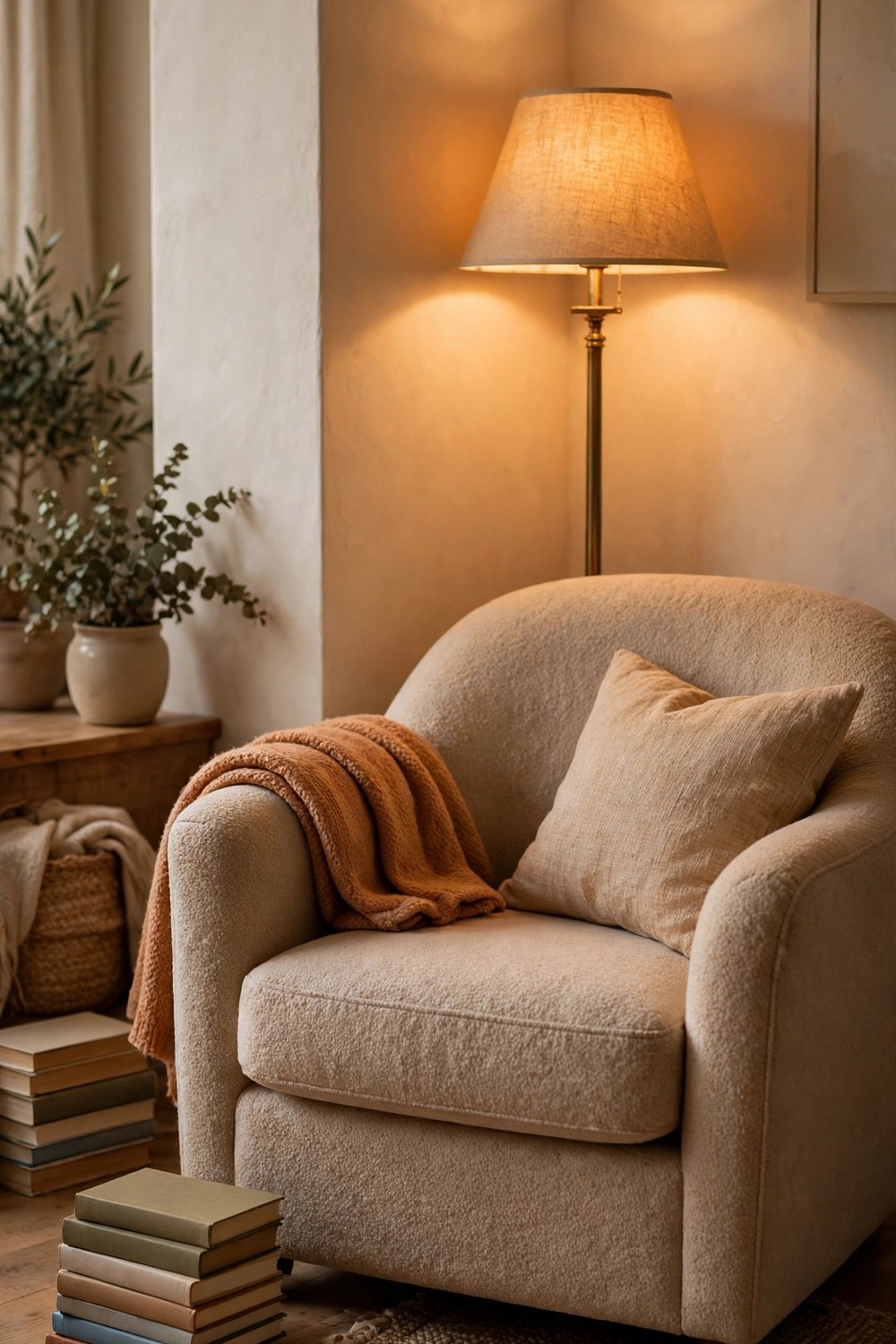
9. Create an Armchair Corner with a Warm Floor Lamp
Sometimes the simplest nook is the best one. Take your most comfortable armchair, angle it into a quiet corner, and stand a warm floor lamp just behind your shoulder so the light falls onto the page. Add a small rug under the chair to mark the spot as its own little zone, even if it’s part of the living room. This works in almost any home because you’re not building anything, you’re just arranging with intention. Keep the corner free of clutter and chargers if you can. When the chair, the lamp, and a book are all waiting for you, it’s much easier to choose reading over scrolling.
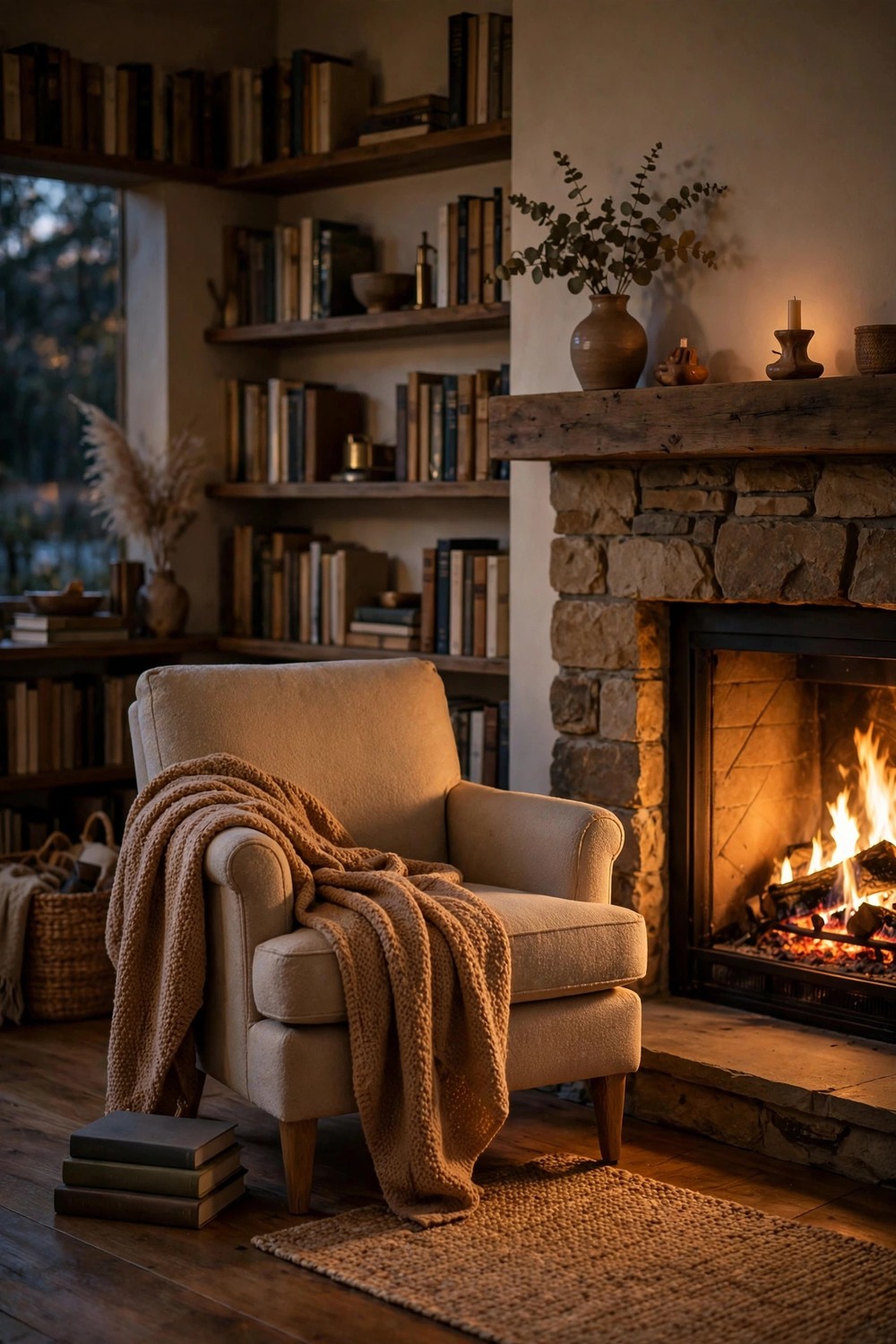
10. Set a Reading Chair Beside the Fireplace for Quiet Evenings
A chair beside the fireplace has a warmth and a gentle focus that few other spots can match, especially on dark evenings. Place the chair close enough to feel the heat but far enough that you and your books stay comfortable and safe, and angle it slightly toward the fire rather than straight at the room. Keep a small stack of current reads and a throw on a stool or basket beside you. If your fireplace is decorative rather than working, candles or a soft lamp in the hearth area can give you a similar glow. Either way, the ritual of settling there typically makes reading feel like an occasion.
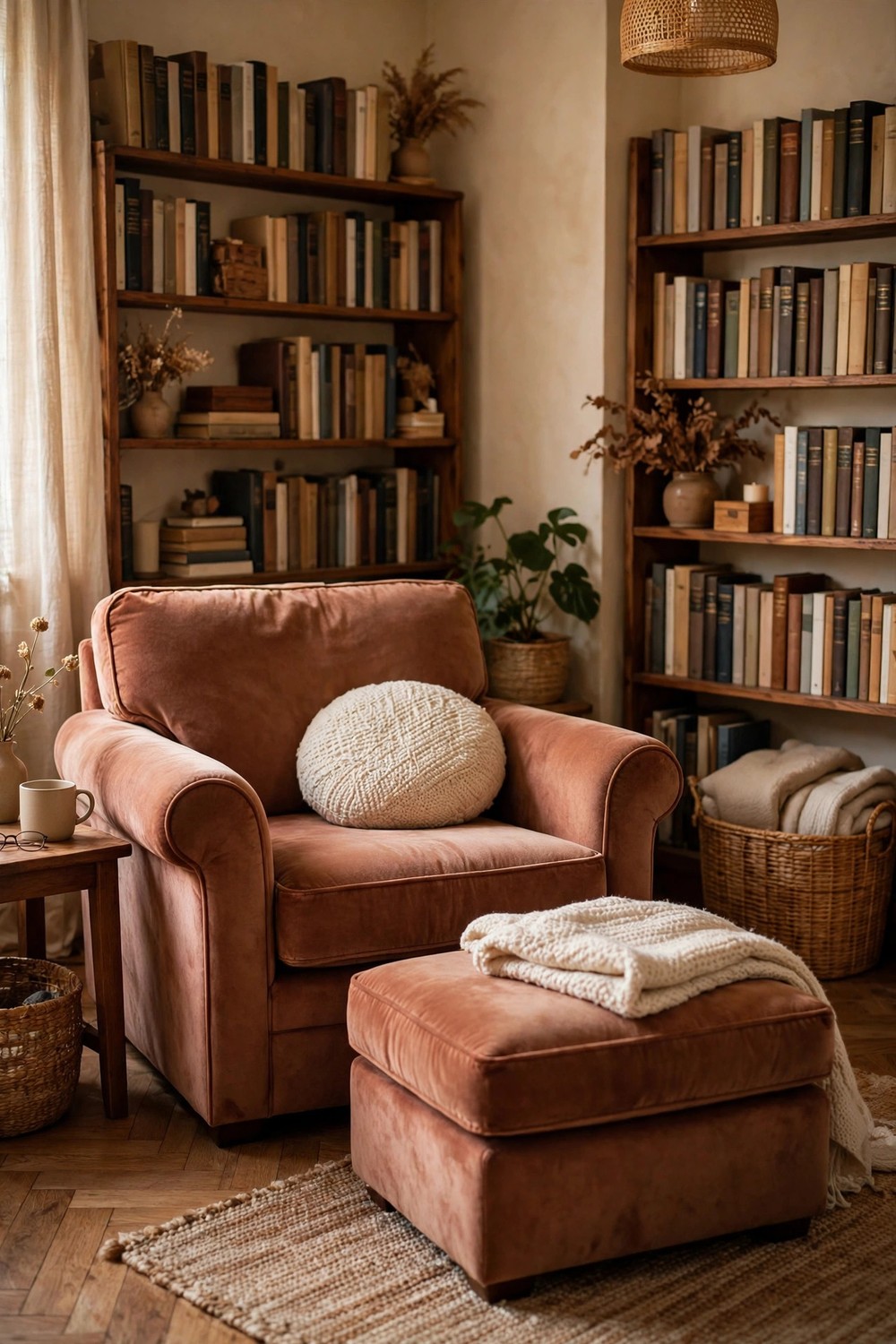
11. Choose a Deep Armchair with a Footstool for Long Reads
For the books you can’t put down, posture matters more than style. A deep armchair that lets you sit back, with arms at a height that supports your elbows, will keep you comfortable far longer than a pretty but upright chair. Pair it with a footstool or a soft ottoman so your legs aren’t dangling and your back can relax. Test the combination with an actual book before you commit, and check that your lamp still reaches the page when you’re fully settled. A washable throw over the arm protects the fabric where you touch it most. Once this seat is right, you’ll find yourself planning your evenings around it.
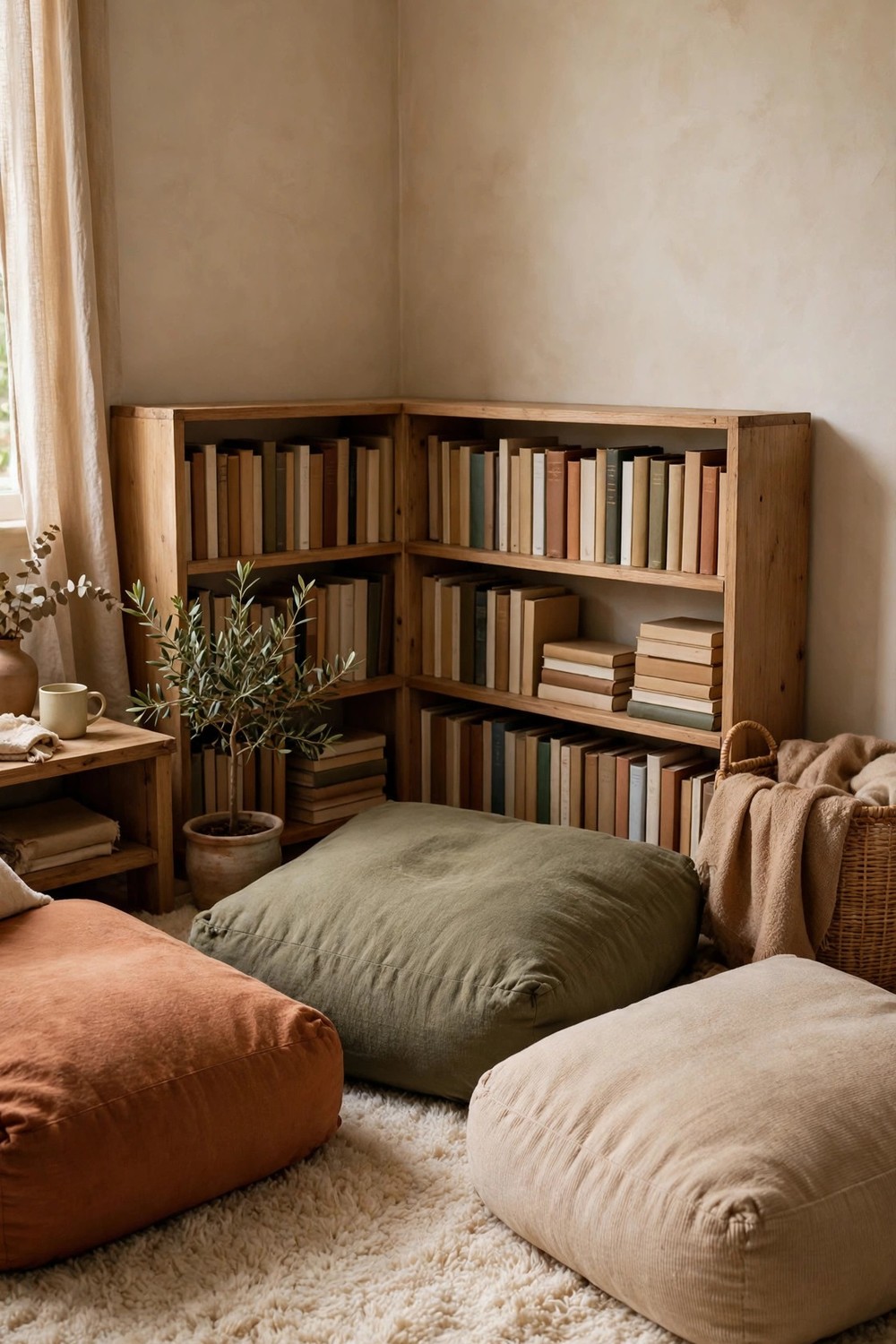
12. Layer a Soft Rug and Floor Cushions for Low Reading
Not every reader wants a chair. A thick, soft rug with a few large floor cushions and a low bookcase beside it creates a relaxed, low reading spot that feels informal and welcoming. It’s a good option for a corner that’s too small for an armchair, and kids and younger readers usually love it right away. Choose cushion covers you can wash, and keep one firmer cushion for back support against the wall. A low tray can hold a drink safely off the rug. Because everything sits low, the rest of the living room still feels open, and you can tidy the cushions into a neat stack when guests arrive.
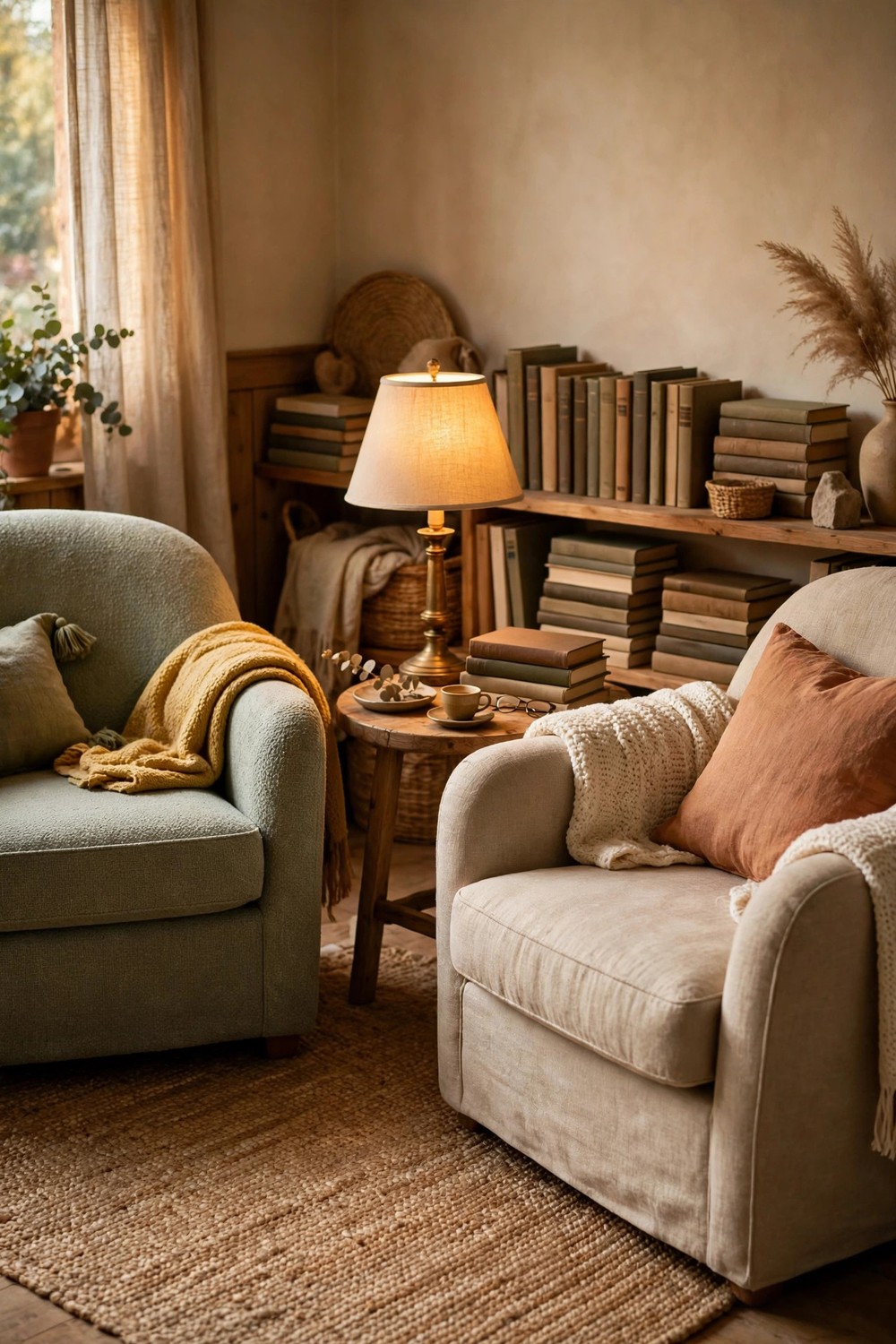
13. Create a Double Reading Corner with Two Chairs
Reading doesn’t have to be a solo habit. Two comfortable chairs with a shared side table and lamp between them make a corner where you and a partner, a friend, or an older child can read together in companionable quiet. The chairs don’t need to match, but keeping their heights and cushion colors in a similar family usually looks calmer. Give each seat its own throw, because you’ll rarely want the same amount of warmth. Angle the chairs slightly toward each other rather than in a stiff row. This kind of corner often becomes a screen free ritual in the evening, and that’s a lovely thing for a living room to hold.
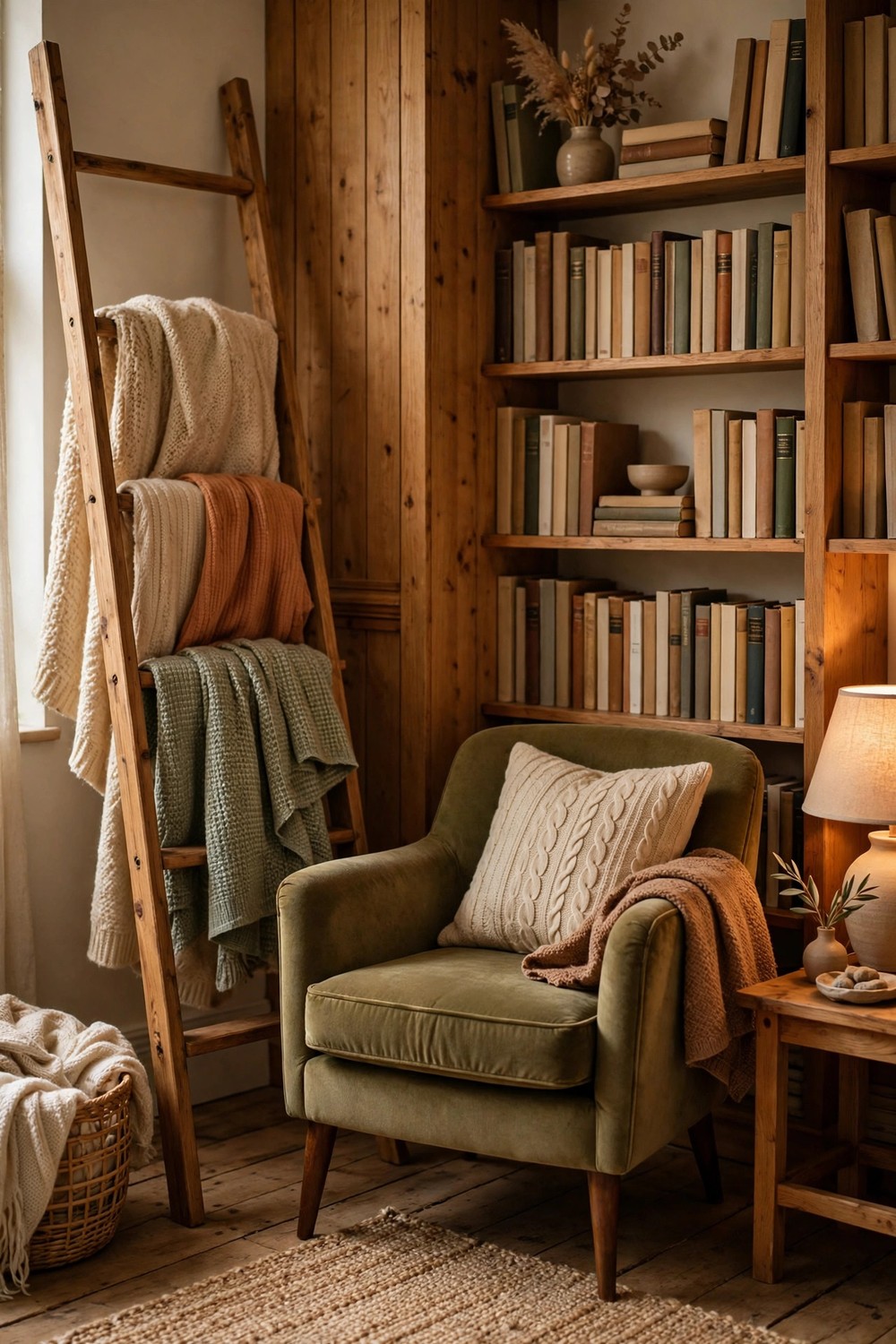
14. Add a Blanket Ladder with Cozy Throws Within Reach
A reading nook feels unfinished if you have to get up for a blanket just as the story gets good. A simple blanket ladder leaning safely against the wall beside your chair keeps two or three throws visible, tidy, and within arm’s reach. Choose throws in different weights, a light cotton one for warmer days and a chunkier knit for winter, so you’re covered all year. The ladder also adds height and texture to a plain corner without taking up much floor space. Keep it stable and away from a walking path so it doesn’t get knocked. Small comforts like this are usually what turn a chair into your chair.
Light, Little Tables, and Personal Touches
The last layer is the one you feel most. Good light protects your eyes, a table at the right height keeps your tea and your place in the book safe, and the way you organize and decorate your shelves changes whether the corner feels like storage or like a story about you. These finishing ideas are quick to try and easy to adjust, so you can keep tweaking until the nook feels just right.
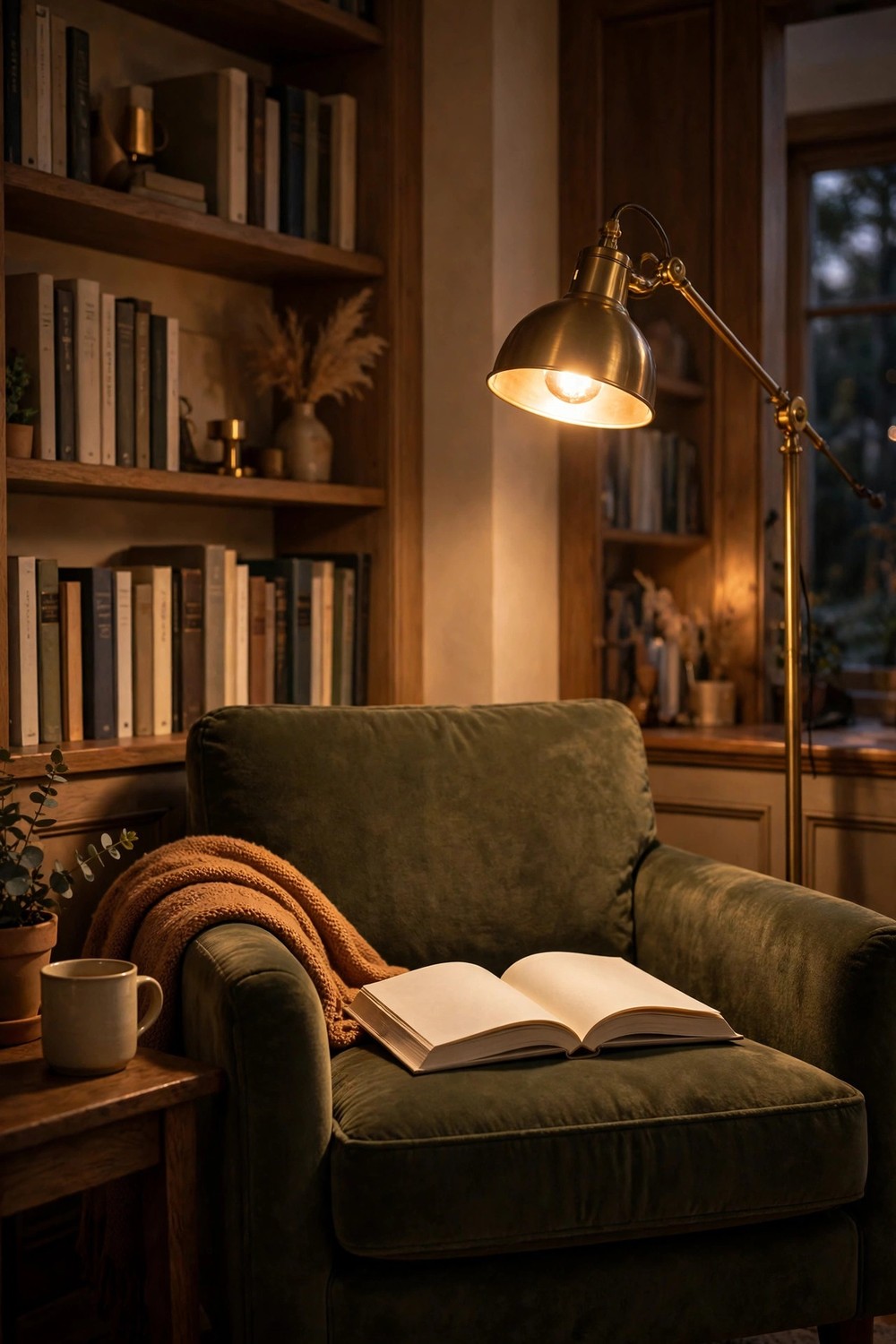
15. Use Warm Task Lighting That Is Easy on the Eyes
Reading in dim or harsh light is tiring, even if you don’t notice it until your head aches. A dedicated task lamp with a warm bulb and a shade that directs light onto the page is one of the most useful things you can add to a nook. Position it over your shoulder rather than in front of you, so you don’t get glare off the paper. If the lamp has an adjustable arm, even better, because you can move it as you shift in your chair. Keep the rest of the room a little dimmer than the reading light, which typically helps the corner feel focused and calm without straining your eyes.
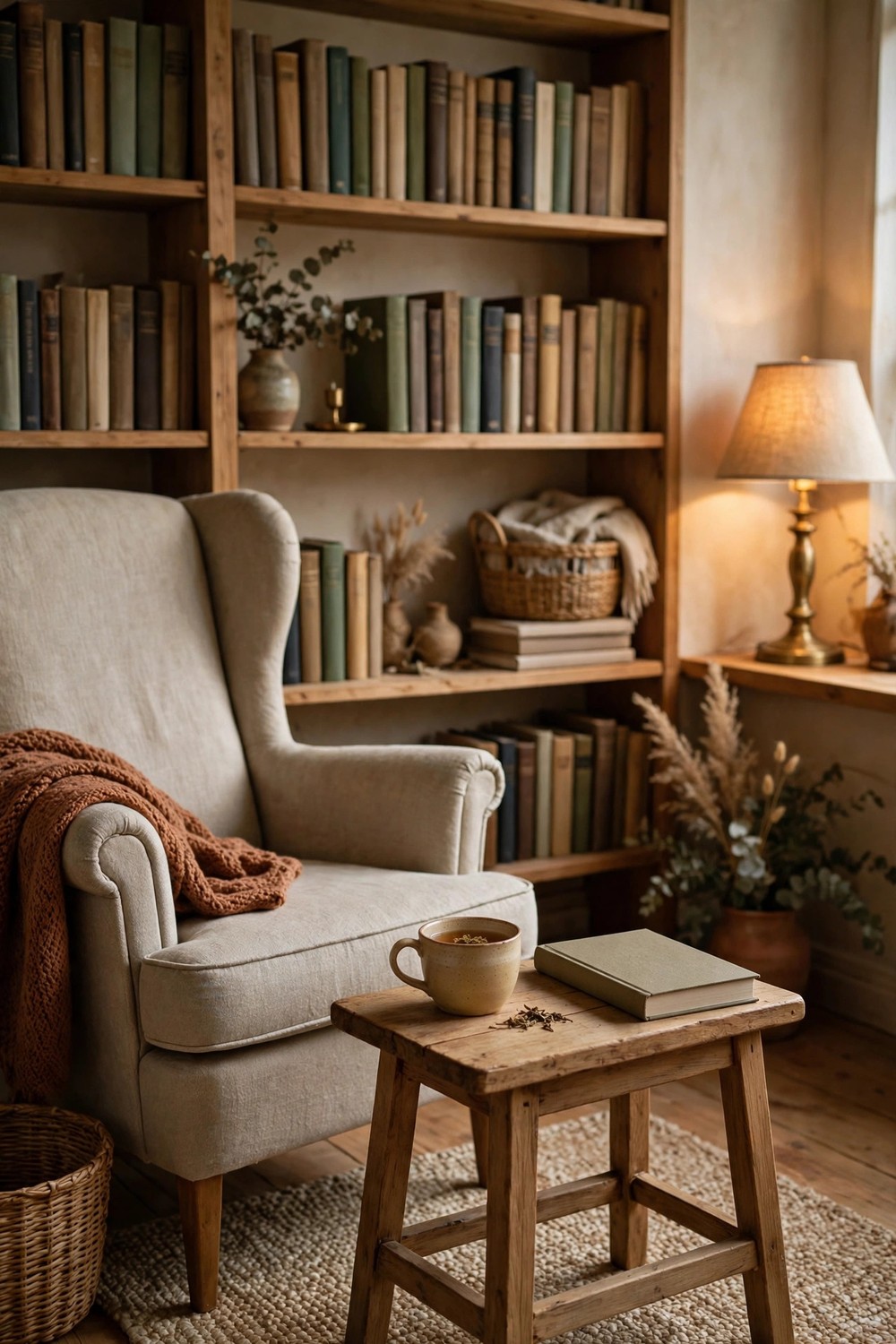
16. Place a Small Side Table for Tea and Bookmarks
A tiny side table might be the hardest working piece in a reading nook. It holds your tea, your glasses, a bookmark, and the next book in line, all without you having to balance anything on the arm of the chair. Choose a table that’s roughly level with the chair arm, sturdy enough not to wobble on a rug, and small enough to tuck into tight corners. A table with a lower shelf gives you bonus storage for a small stack. If space is really tight, a narrow stool or a wall mounted mini shelf can do the same job. It’s a modest addition, but it makes the whole ritual smoother.
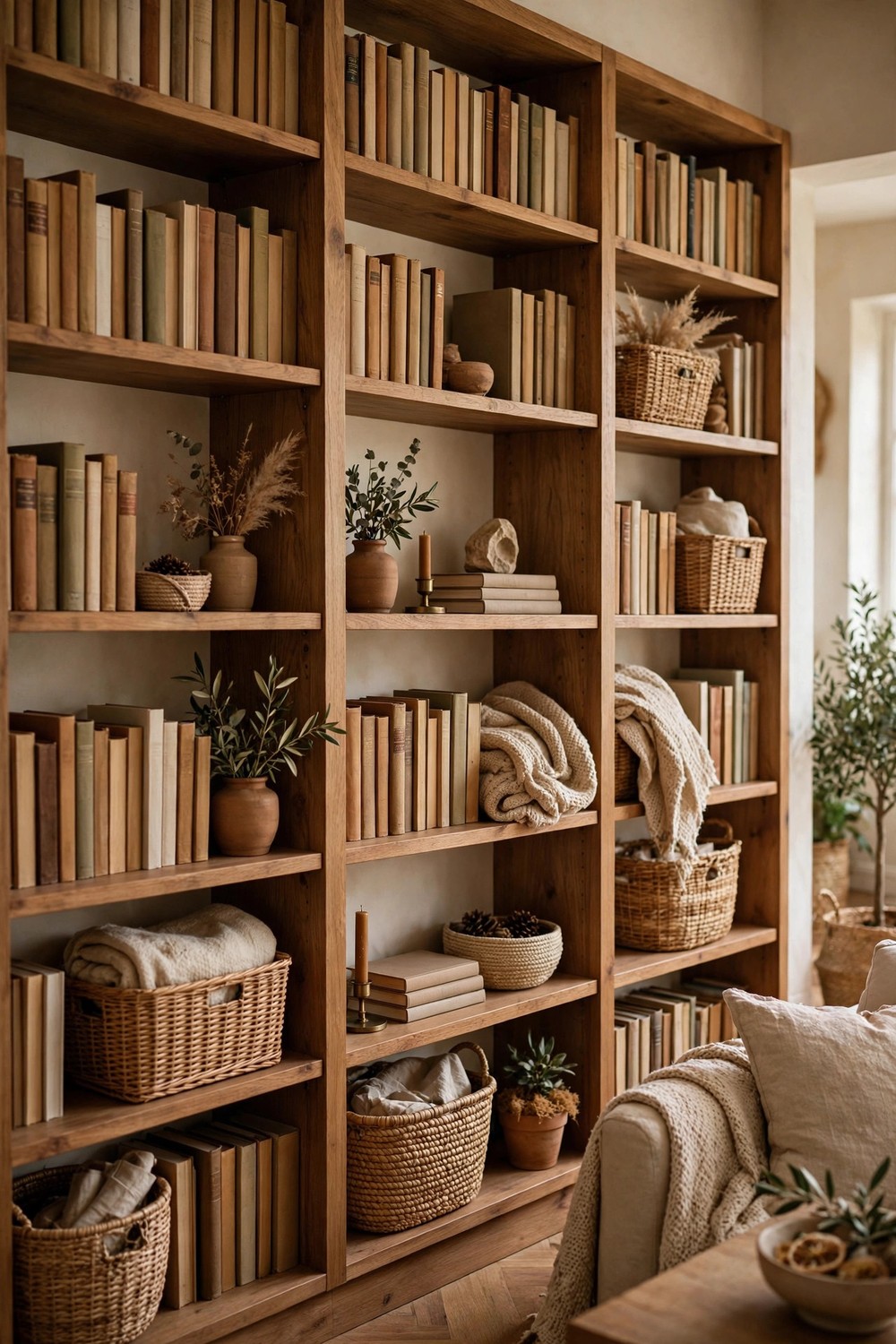
17. Organize Your Shelves by Mood and Moment
Alphabetical order is tidy, but it isn’t always how you choose a book. Try grouping your shelves by mood and moment instead, with comforting rereads together, gentle stories for slow Sundays, absorbing novels for holidays, and short reads for busy evenings. You’ll browse more naturally, and guests will understand your shelves without a guide. Leave a little space at the end of each group so new books have a home and the shelves don’t feel crammed. You can still keep series together inside a group, which usually keeps everyone happy. If a book could fit in two places, put it where you’re most likely to look for it on a tired night.
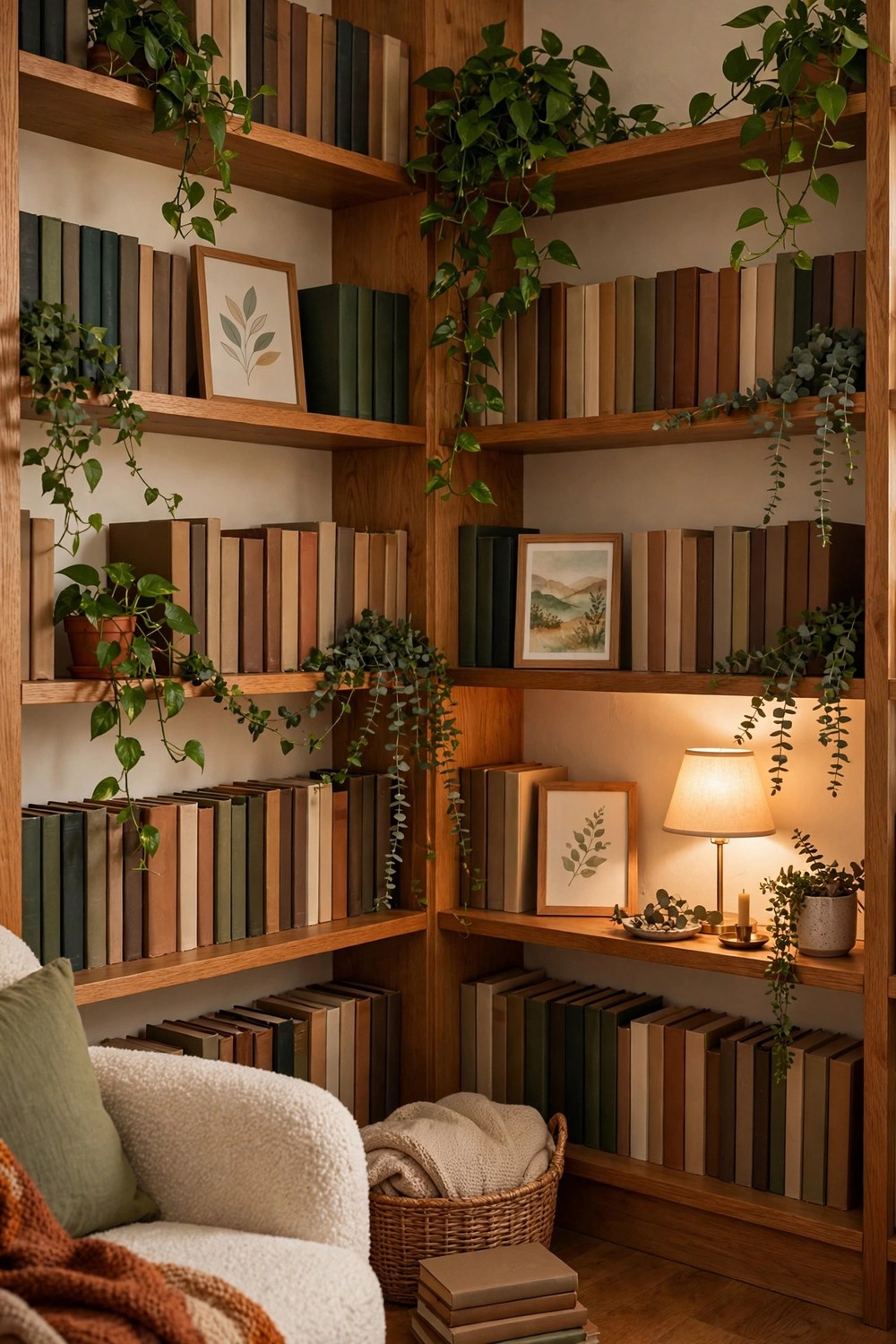
18. Mix Plants and Small Art Among the Books
Shelves that hold only books can look a little flat, however much you love them. Tuck a trailing plant on a high shelf, rest a small framed print against a row of spines, or lay a short stack flat with an object on top, and the whole bookcase softens. Plants bring a fresh color that sits beautifully beside warm wood and cloth covers, but choose ones that suit the light your shelves actually get. Keep art small and personal rather than formal. The goal isn’t to decorate over your books, it’s to let the shelves show a bit of your life between the stories, which makes the nook feel like yours.
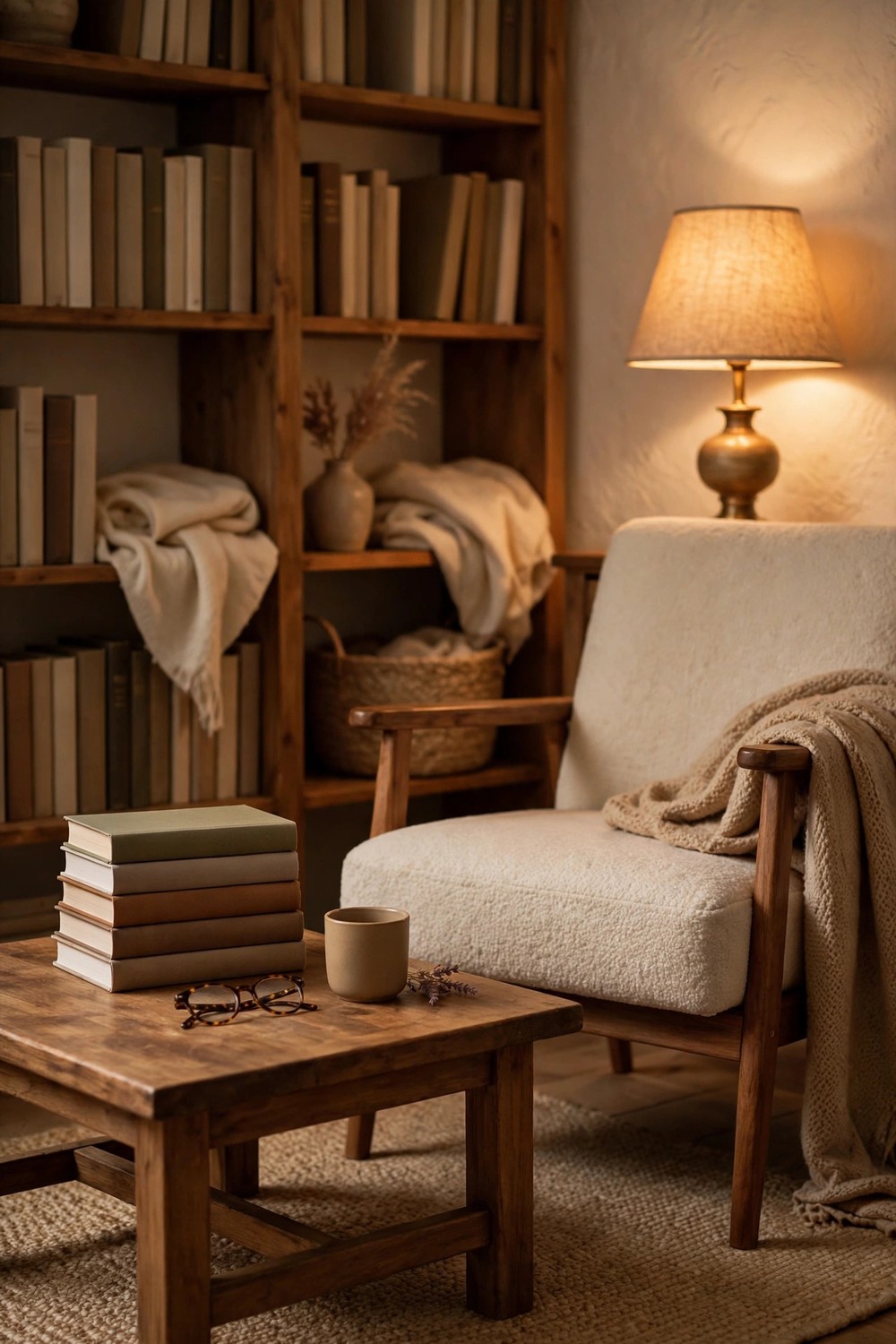
19. Style a Low Table Stack for Books You Are Reading Now
Keep the books you’re actually reading out of the main shelves and in a neat stack on a low table beside your chair. Three to five books is usually plenty. More than that tends to turn into a pile you avoid. Lay them flat with the one you’re deepest into on top, and add a bookmark or a pair of reading glasses so everything you need is in one place. This little stack changes as your reading changes, which keeps the nook feeling alive rather than staged. It also protects your shelves from the daily shuffle of pulling the same books in and out, and it gives visitors a friendly glimpse of what you love.
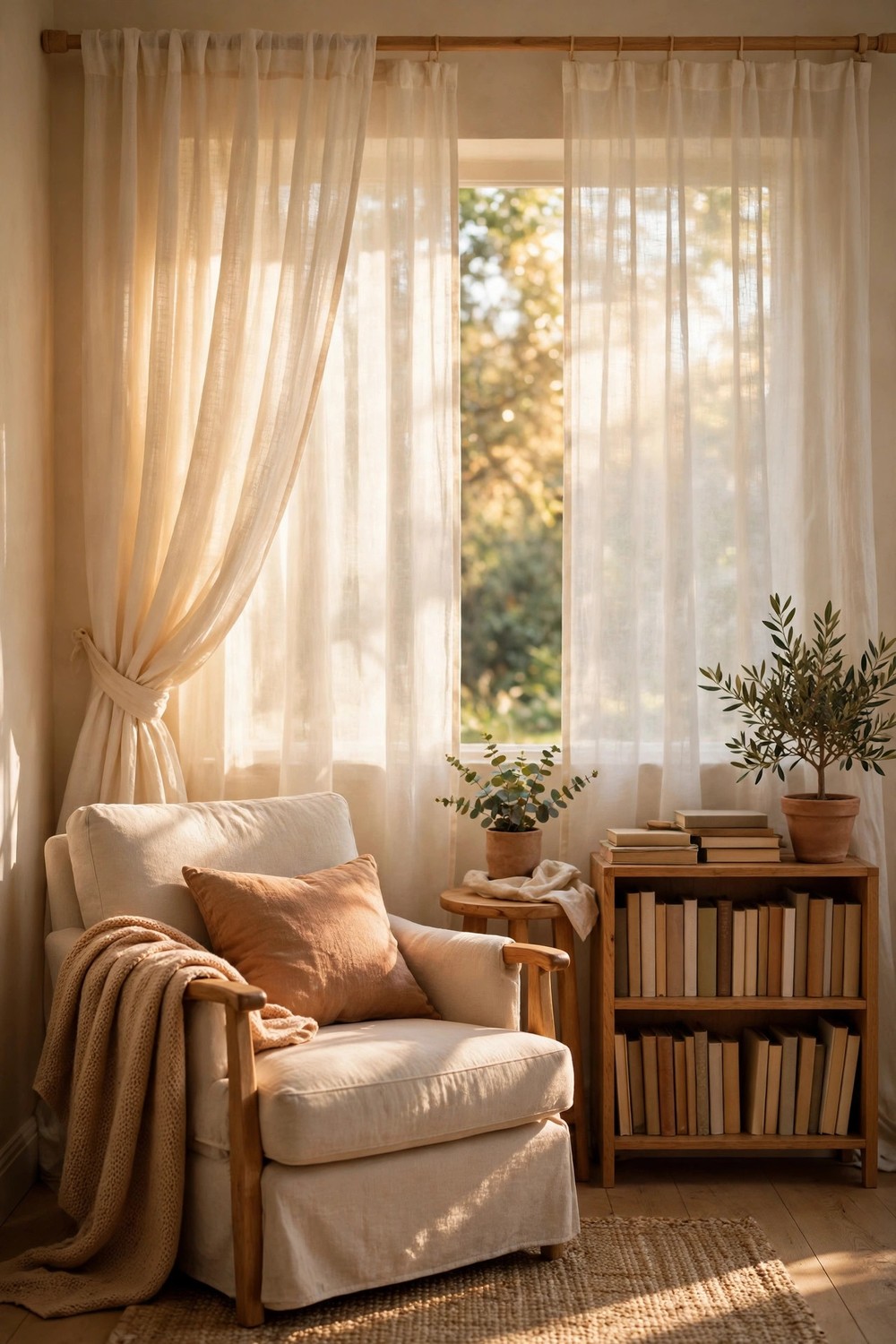
20. Hang Sheer Curtains to Soften a Sunny Reading Corner
A bright corner is a gift for reading, but hard sunlight can bounce off pale pages and leave you squinting. Sheer curtains soften that light without shutting it out, so a sunny living room corner stays usable all day. Hang them high and let them fall to the floor for a gentle, airy frame around your chair or window seat. Choose a warm white or soft cream rather than a bright, cool white, which usually sits better with wood shelves and warm fabrics. On grey days you can pull them fully open and lose nothing. It’s a small change, but the softer light can be the difference between a corner you admire and one you use.
Here’s the thing to hold onto. A home library isn’t measured by the size of the room or the height of the shelves. It’s measured by how often you sit down in it. A single well lit chair with your favorite books within reach will do more for your reading life than a grand wall of shelves you never get comfortable in front of. Start with the seat and the light, add storage where your space allows it, and let the rest grow around the way you actually read.
And don’t worry if your nook comes together slowly. Most of the coziest corners do, built book by book, cushion by cushion, as you notice what you need. Borrow one idea from this list this week, maybe the side table, the throw ladder, or a shelf under the stairs, and live with it for a while. Your living room will start to feel like it has a quiet heart, and you’ll have a place that’s ready whenever a good story calls.

Leave a Reply