
20 Kitchen Organization Ideas That End Counter Chaos
Look, we get it. You can spend twenty minutes wiping down your counters at night and still wake up to a toaster, a coffee maker, three chargers, yesterday’s mail, and a crowd of bottles all fighting for the same small stretch of workspace. If cooking in your own kitchen feels a little like working around everyone else’s stuff, you’re definitely not alone. Most counters do not get cluttered because we are messy. They get cluttered because the kitchen is usually the hardest working room in the house, and everything tends to land there first.
That’s exactly why a good organization plan helps so much. You do not need a bigger kitchen or a full remodel to get calm counters back. You just need a clear home for the things that keep wandering, from small appliances and spices to charging cables and cutting boards. In this list you’ll find ideas that start right on the counter, move into drawers and cabinets, make use of hidden corners and narrow gaps, and finish with simple trays and zones that keep the whole system going. Some take ten minutes and some take a weekend, and you certainly don’t need all twenty at once.
A helpful way to work through this list is to pick your biggest frustration first. If you cannot find prep space, start with the counter ideas. If you cannot find anything at all, start with the drawers. Take a quick before photo, try two or three ideas, and live with them for a week before you add more. Organization that sticks is usually built slowly, around how you actually cook and clean, not around how a showroom kitchen looks on its best day.
In This Article
- Hide Small Appliances in an Appliance Garage
- Install a Charging Drawer for Phones and Tablets
- Move the Mail Station Off the Counter
- Edit Down to One Simple Utensil Crock
- Store Knives in a Slim In-Drawer Block
- Divide Drawers With Adjustable Inserts
- Turn a Shallow Drawer Into a Spice Drawer
- Rack Pots and Pans Vertically
- Separate Boards and Sheets With Tray Dividers
- Hide Trash in a Pull-Out Cabinet
- Organize Under the Sink With Tiered Shelves
- Add a Lazy Susan to Deep Corner Cabinets
- Mount Racks Inside Cabinet Doors
- Hang an Over-Door Rack for Pantry Overflow
- Tuck a Slim Rolling Cart Beside the Fridge
- Decant Staples Into Labelled Glass Canisters
- Corral Oils and Spices on a Single Tray
- Build a Coffee Station on a Wooden Tray
- Keep One Small Caddy for Dish Supplies
- Zone Your Counters and Reset Them Nightly
Clear the Counters First
Start where the chaos is most visible, right on the counter itself. Appliances, cables, paper, and everyday tools tend to spread out simply because they have nowhere else to go. These first five ideas give each of those usual suspects a proper home, so your main work surface can go back to being a work surface again.
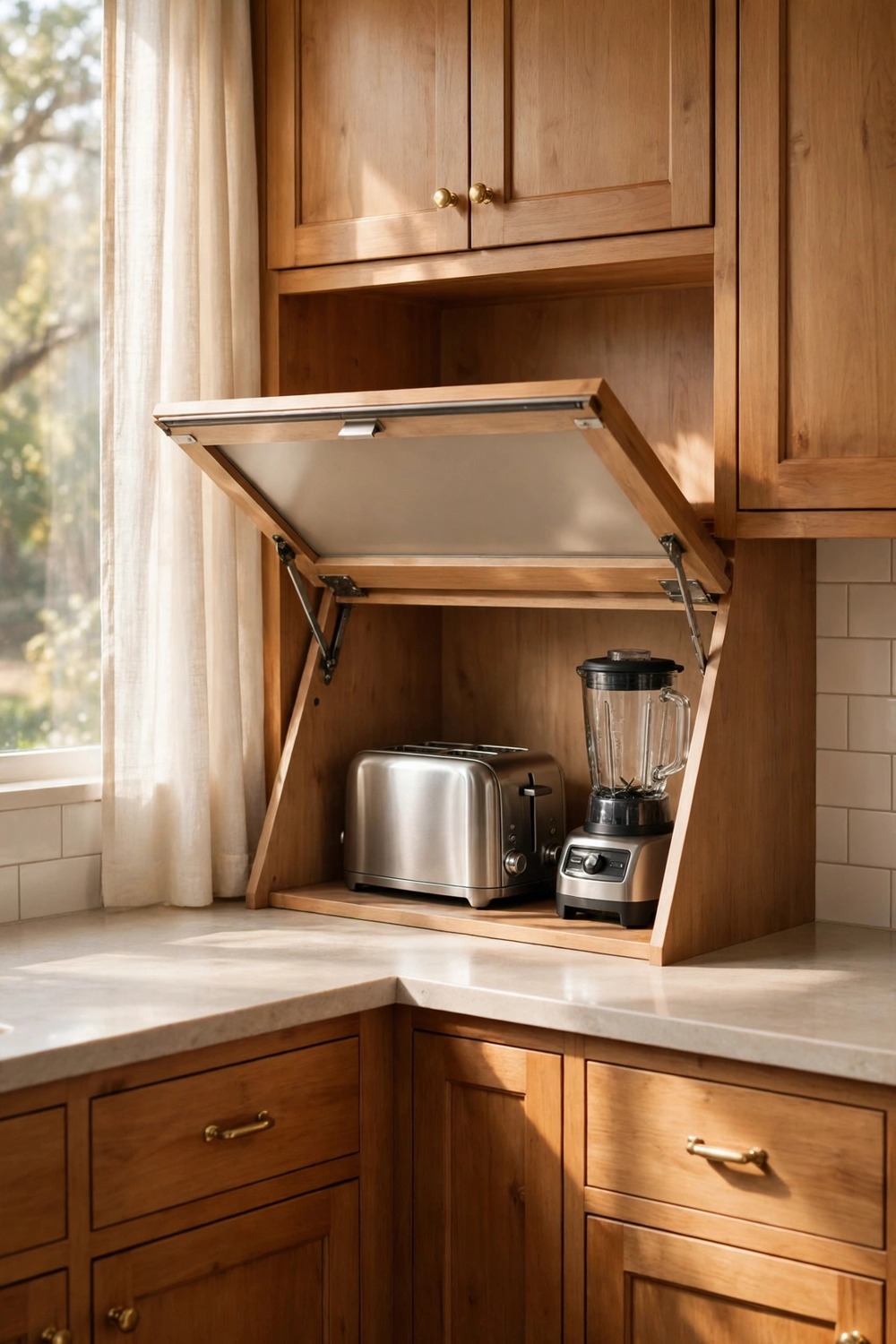
1. Hide Small Appliances in an Appliance Garage
An appliance garage is simply a cabinet section that sits on the counter or just above it, with a door that lifts or rolls up to hide your toaster, blender, or coffee maker behind it. It is one of the kindest upgrades you can give a busy counter, because the machines you use every day stay plugged in and ready, but they stop dominating the view. If you are planning cabinets, a garage in a corner usually works beautifully, since corners are awkward prep space anyway. Renting or working with what you have is fine too. A large lidded box, a bread box style cover, or even a simple cabinet with the lower shelf removed can suggest the same effect. The key habit is closing the door after breakfast. When the door is shut, the whole kitchen typically feels calmer in about two seconds, and you get that clear stretch of counter you have been missing.
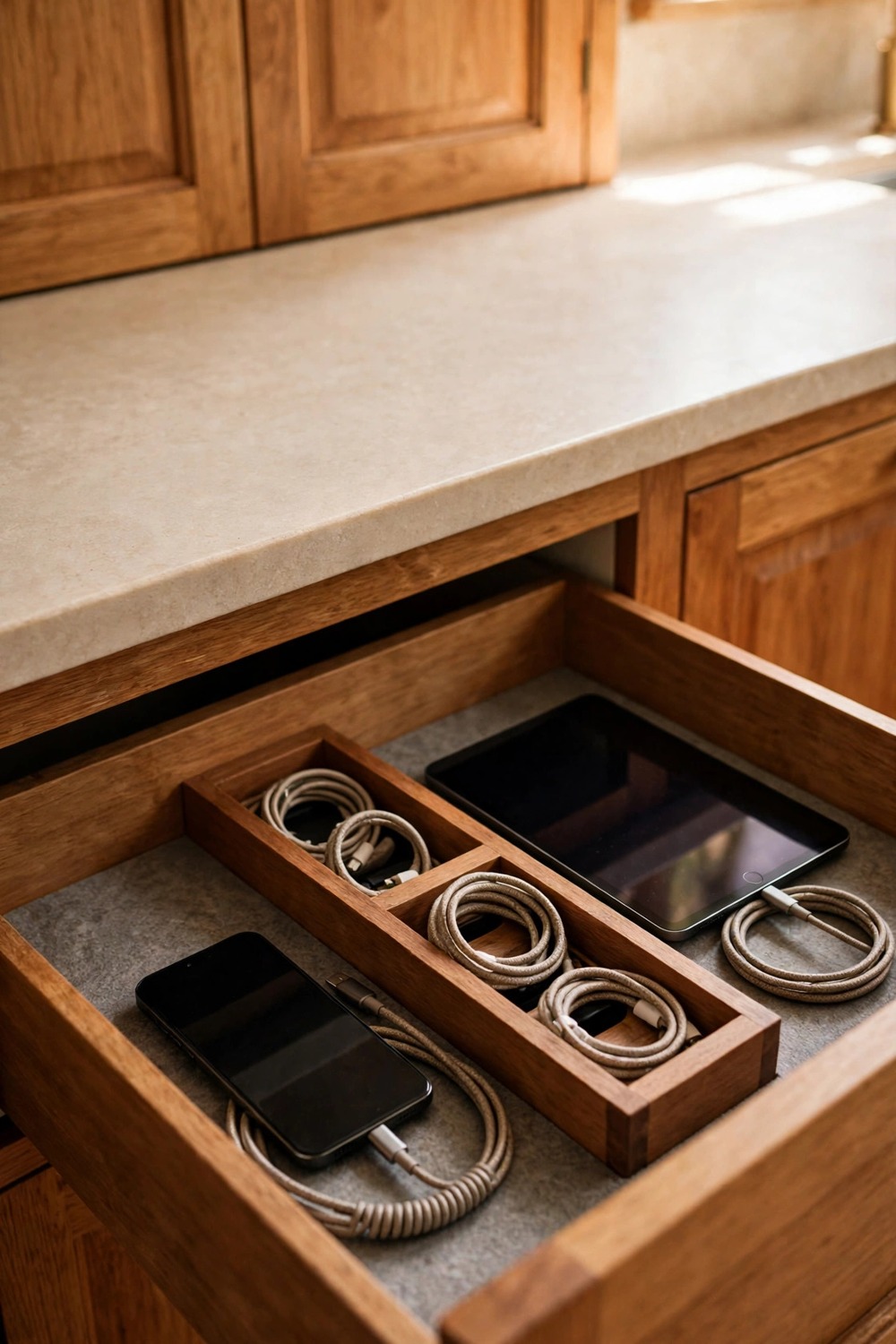
2. Install a Charging Drawer for Phones and Tablets
Phones and tablets tend to charge wherever they land, which usually means right beside the sink with a tangle of cables across your best prep space. A charging drawer fixes that in one move. Pick a drawer near an outlet, add a simple power strip or a drawer outlet kit if you are comfortable with that kind of project, and line the bottom with a soft mat so devices do not slide around. Cables stay coiled inside, screens stay off the counter, and recipe videos still play happily from a small stand just inside the drawer when you need them. Choose a drawer away from heat and water, and leave a little airflow room rather than packing devices in tightly. If a wired drawer feels like too much, even a small lidded basket that lives in a cabinet and comes out at night is a step in the right direction.
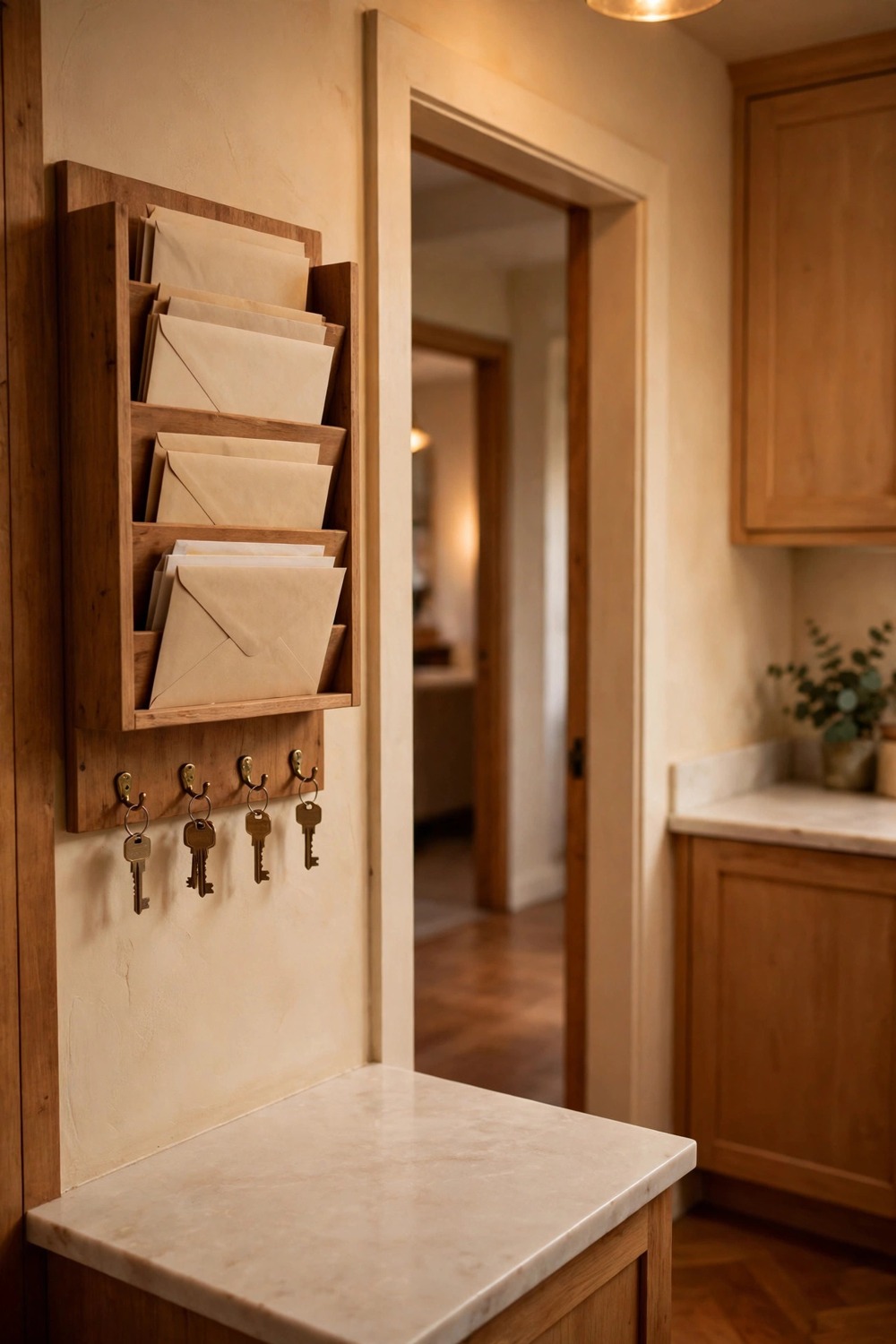
3. Move the Mail Station Off the Counter
Mail is quiet clutter. One envelope looks harmless, but within a week the pile usually grows into a small paper landscape of school notes, coupons, bills, and keys that all landed in the same spot. Moving the whole station off the counter is what actually ends it. Hang a simple wall organizer or a few slim slots inside a pantry door near where you walk in, and give it clear jobs. One slot for mail that needs action, one for papers to file, and a small hook or dish for keys if they belong with it. The rule that makes it work is sorting as you walk in, not later. Toss the junk straight into recycling, drop the rest into its slot, and the counter never becomes the holding zone. You will be surprised how much bigger your kitchen feels when paper stops living on it.
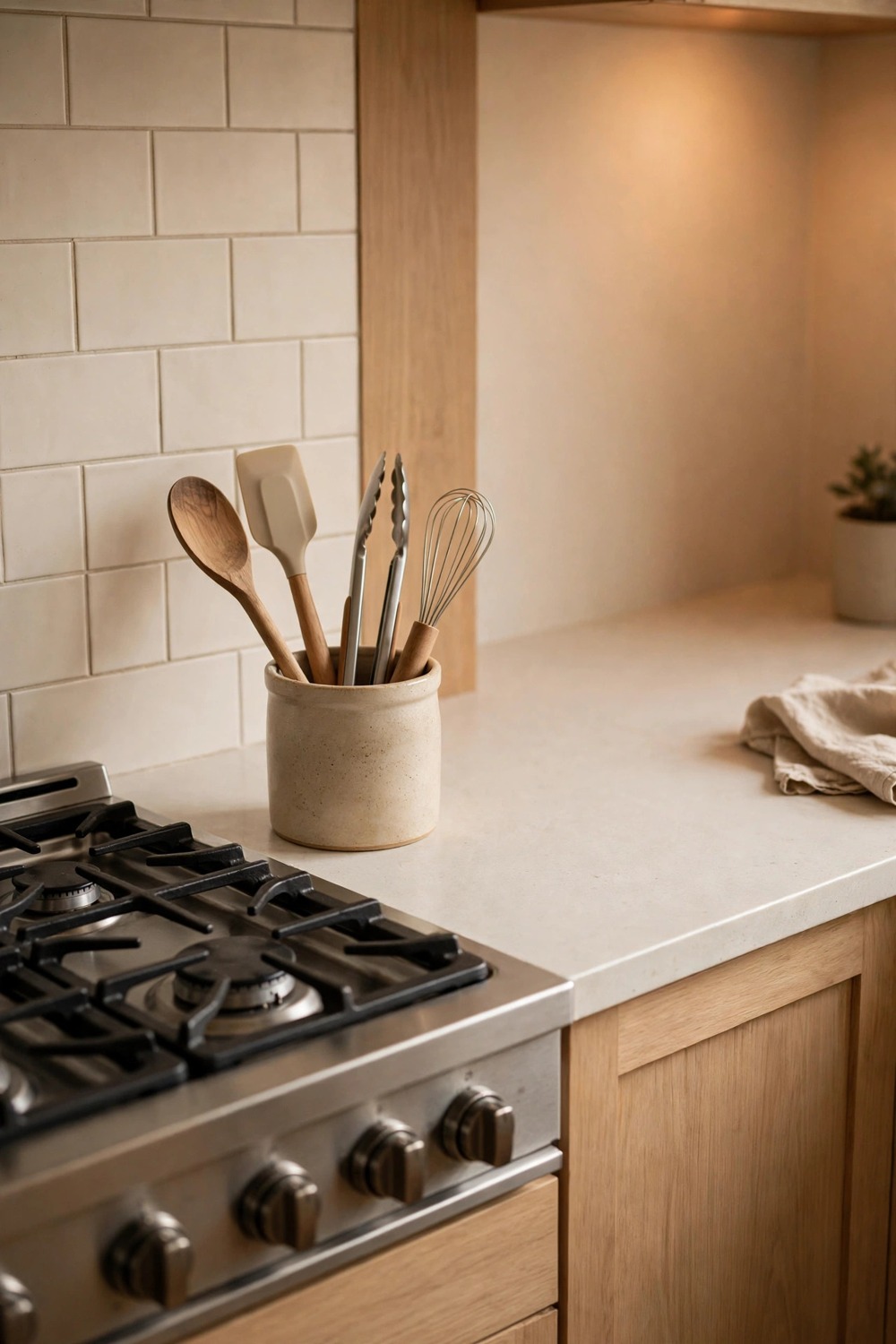
4. Edit Down to One Simple Utensil Crock
Most of us keep far more utensils by the stove than we ever actually reach for, and two or three crowded crocks can make a counter look busy even when it is clean. Try this gentle edit. Pull everything out, then put back only the tools you use most weeks, like a wooden spoon, a spatula, tongs, a ladle, and a whisk. One crock, comfortably filled but not stuffed, is usually plenty. The rest can live in a drawer nearby, and the true duplicates or the tools you have not touched in a year can move on to a new home. Choose a crock with a little weight to it so it does not tip when you grab something quickly, and keep it close to the stove but out of your main chopping zone. Cooking feels calmer when the handful of tools you love is easy to see and easy to grab.
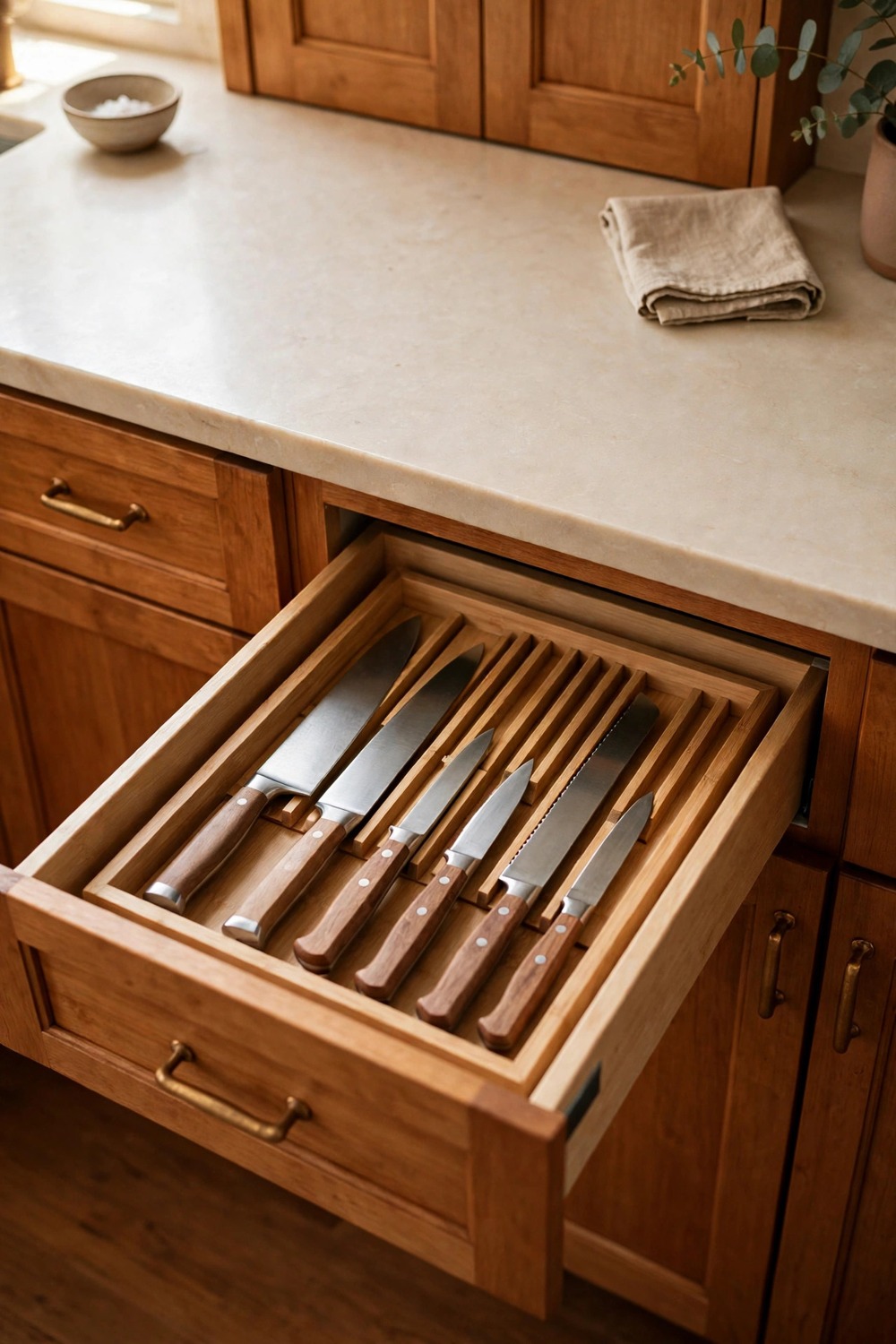
5. Store Knives in a Slim In-Drawer Block
A traditional knife block is useful, but it is also a surprisingly large object to give permanent counter space to, and it tends to collect crumbs and dust around its base. An in-drawer knife block gives you the same safe, separated storage in a footprint you were already using. Look for a slim bamboo or wood insert that lies flat in a wide drawer, with slots that keep blades apart and handles easy to grip. Place the drawer near your main prep area so the habit feels natural, and keep your most used knives in the front row. This move is especially helpful in smaller kitchens, because it frees a whole corner of counter at once. It can also feel safer in busy households, since blades are tucked away rather than standing out in the open. Wipe knives fully dry before you put them back, and the insert will stay fresh for years.
Make Drawers and Cabinets Do the Heavy Lifting
Once the counter is breathing again, look one layer down. Drawers and cabinets usually hold plenty of space, but it is often wasted in jumbled piles and awkward stacks. These next five ideas turn that hidden space into calm, visible storage where you can find things the first time you look.
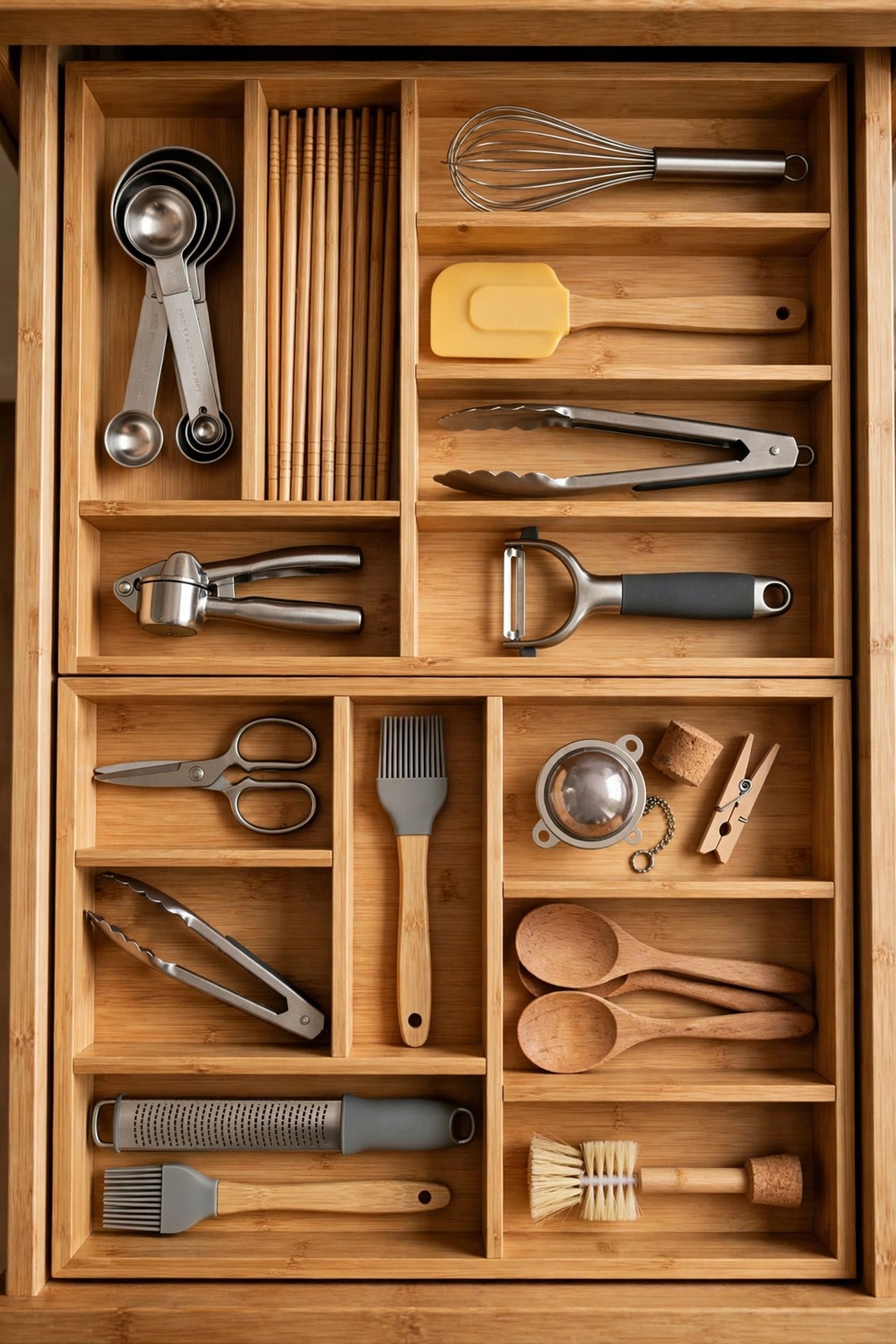
6. Divide Drawers With Adjustable Inserts
A drawer without dividers almost always becomes a drawer full of digging. Adjustable inserts change that overnight, because they let you build compartments that match what you actually own instead of forcing your tools into fixed boxes. Start with the drawer that annoys you most, which is typically the utensil drawer beside the stove or the dishwasher. Measure inside, choose bamboo or simple plastic dividers that can shift as your collection changes, and give each category its own lane. Long tools together, small gadgets together, measuring tools together. Leave one flexible space for odd shapes, because every kitchen has a few. The habit that keeps it tidy is putting things back in their lane even when you are in a hurry, and the lanes make that genuinely easy. A divided drawer also shows you your duplicates at a glance, which quietly stops you from buying a third can opener you do not need.
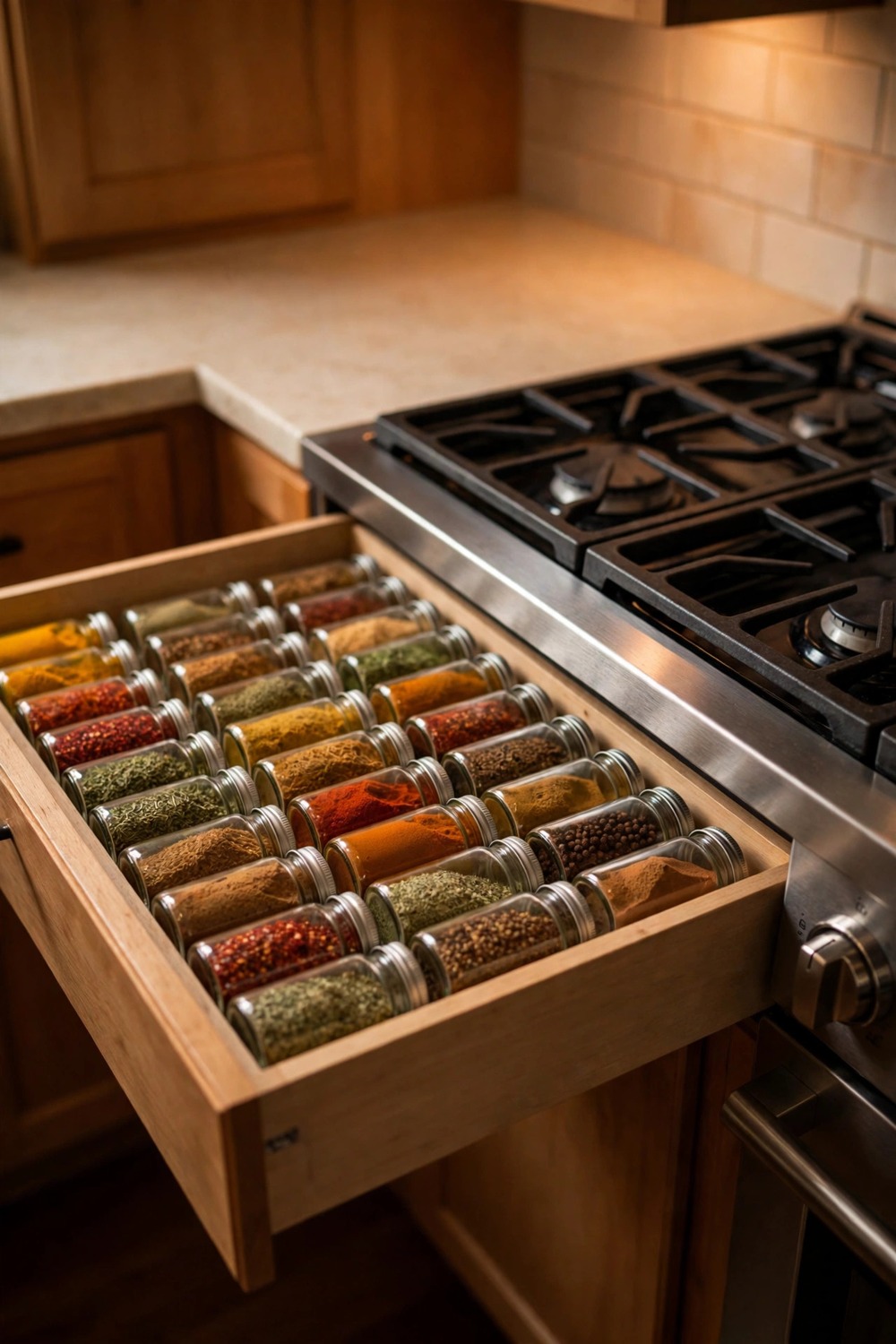
7. Turn a Shallow Drawer Into a Spice Drawer
Spices stored in a deep cabinet tend to hide behind each other, so you buy a second jar of cumin while the first one sits forgotten in the back. A shallow drawer near the stove solves the whole problem, because jars lying flat in neat rows are all visible at once. Use a tiered drawer insert or simple angled strips if you like, or just line matching small jars in rows with their labels facing up. Decanting into the same size jar makes the drawer look calm and makes refilling easier, and a small handwritten or printed label on each lid is usually enough. Keep the spices you reach for daily at the front, and group the baking spices together at one end. Cooking gets faster and a little more joyful when you can open one drawer, see everything you own, and grab what you need without moving five bottles first.
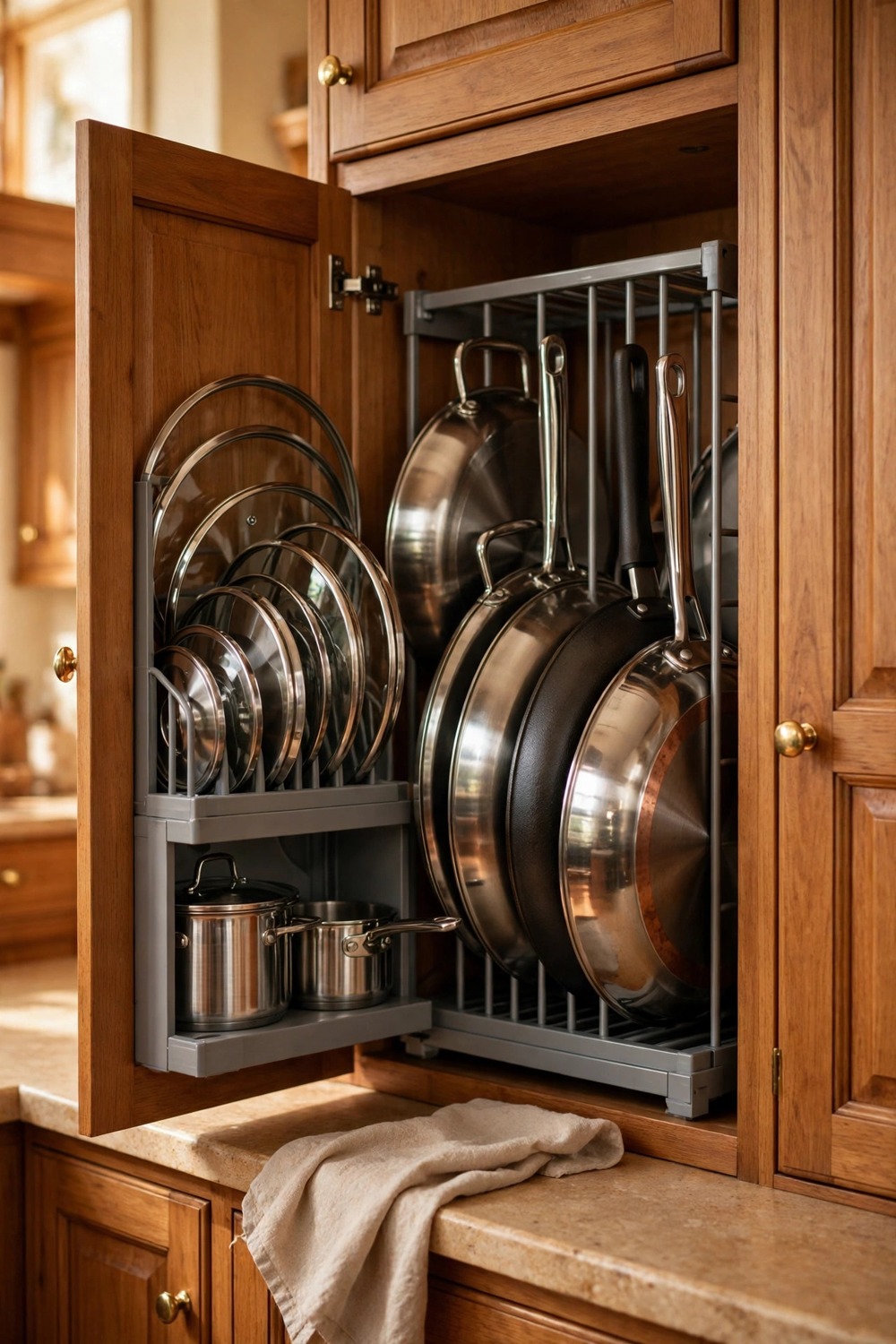
8. Rack Pots and Pans Vertically
Stacked pans are heavy, noisy, and hard on nonstick surfaces, and the pan you need is somehow always at the bottom of the pile. Storing pans vertically, like files in a cabinet, changes all of that. A simple vertical rack or a set of adjustable dividers inside a deep cabinet lets each pan and lid stand upright, so you can slide out exactly the one you want. If cabinet space is tight, a rack inside a deep drawer works well too, and it is often kinder on your back than a low cabinet. Keep lids in their own divider row or on a door rack so they stop clattering around. Group pans by how often you use them, with the daily skillet front and center. This one change usually pays you back the very first time you cook dinner and reach for a pan with one quiet hand instead of unloading a whole stack.
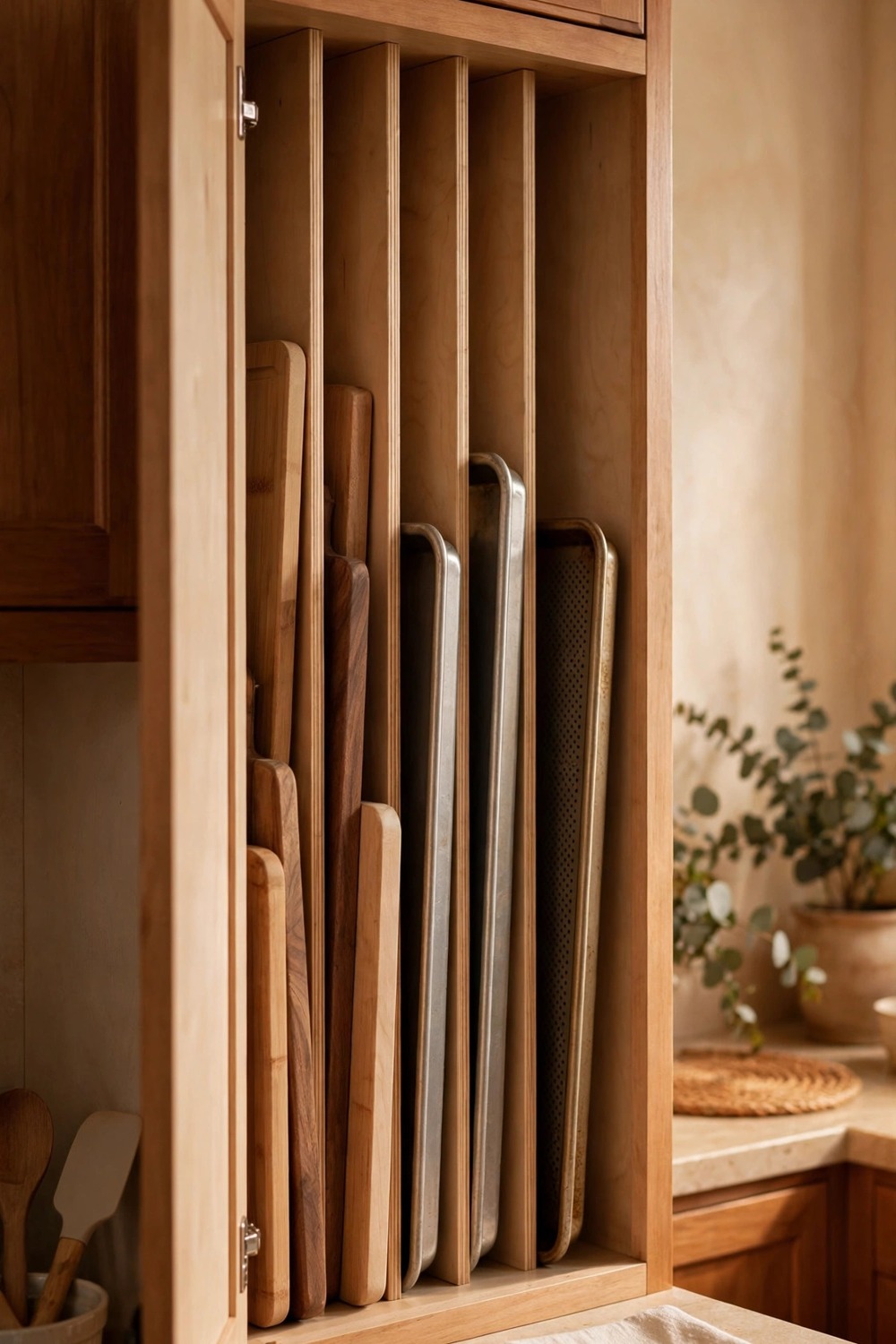
9. Separate Boards and Sheets With Tray Dividers
Cutting boards, baking sheets, cooling racks, and trays are all flat, awkward, and determined to slide into a messy leaning pile. Vertical tray dividers give each one its own slot, so they stand upright and stay separated. You can buy simple wire or wood dividers, use tension style organizers, or ask for a divided cabinet above the oven or beside it if you are ever planning a refresh. A narrow cabinet that feels useless for pots is often perfect for this job. Sort by job rather than size if that helps you think, with boards together, sheets together, and the big holiday tray at the back where it will not be in your way. Everything becomes visible, which means you stop wrestling the stack one handed while holding a hot pan. It is a small, unglamorous idea, but it removes a daily frustration most cooks just accept without thinking.
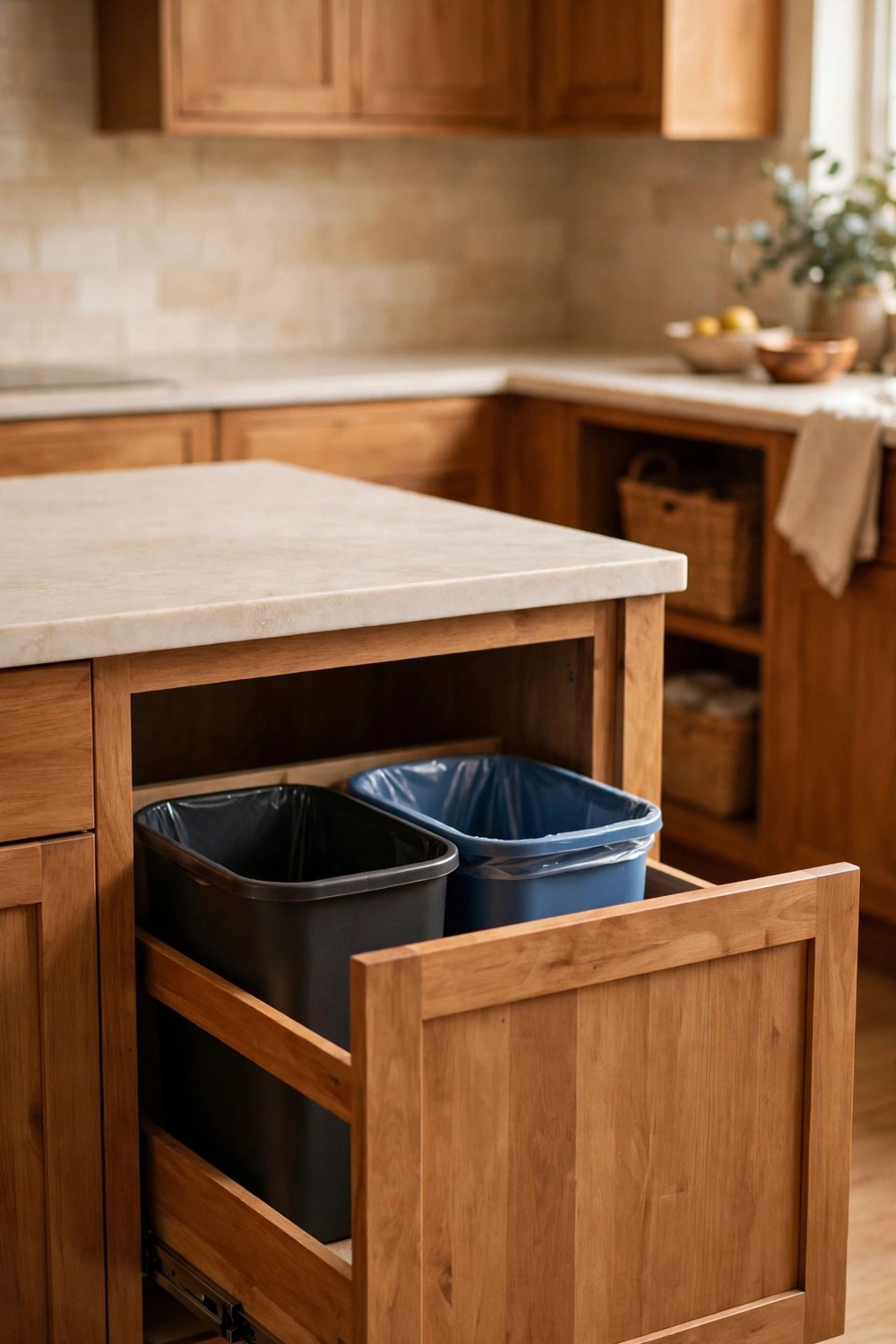
10. Hide Trash in a Pull-Out Cabinet
A pull-out trash cabinet does not add counter space directly, but it changes how the whole kitchen works. When the bin slides out right where you prep, scraps go straight in instead of piling up on the board or the counter while you look for a free hand. Most pull-out frames hold two bins, so recycling gets a proper home too instead of a bag hanging off a cabinet handle. Place the cabinet between your prep zone and your sink if you can, because that is the path scraps naturally travel. If a built-in is not in the cards, a slim freestanding bin tucked at the end of a run of cabinets still keeps the floor clearer than a bin floating in the middle of the room. Choose a frame that glides softly and liners that fit well, and wipe the cabinet front when you do the counters. Hidden trash simply makes a kitchen feel tidier.
Use the Hidden and Awkward Spaces
Every kitchen has a few spaces that feel wasted, like the cavern under the sink, the deep corner cabinet, and the narrow gap beside the fridge. Those spots are not problems. Handled well, they are some of the best storage in the room. These five ideas put each awkward space to calm, practical work.
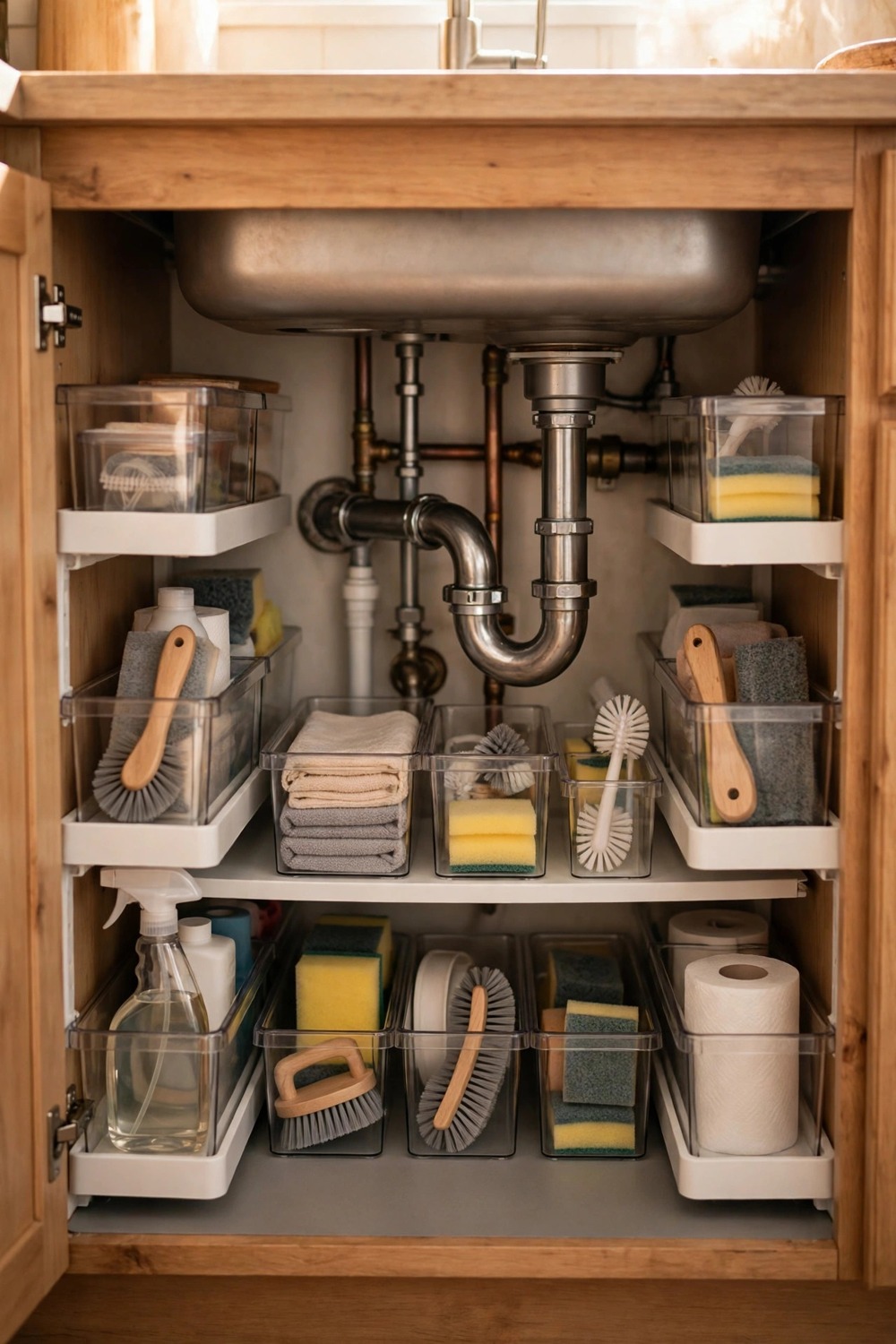
11. Organize Under the Sink With Tiered Shelves
Under the sink is where good intentions go to get lost behind the pipes. A tiered shelf or a pair of clear pull-out bins brings order to that dark corner without any plumbing drama. Start by taking everything out and letting go of the near empty bottles and the products you never reach for. Then group what is left by job, with daily dish supplies at the front and the occasional extras behind them. A two level shelf that works around the pipes doubles your usable space, and clear bins mean you can see when you are running low. Keep a small mat or liner on the cabinet floor so drips are easy to wipe and easy to spot early. This is also a kind place to store extra sponges and trash bags, right where you use them. Open that cabinet a week later and it should still look calm, which is the real test of any organizer.
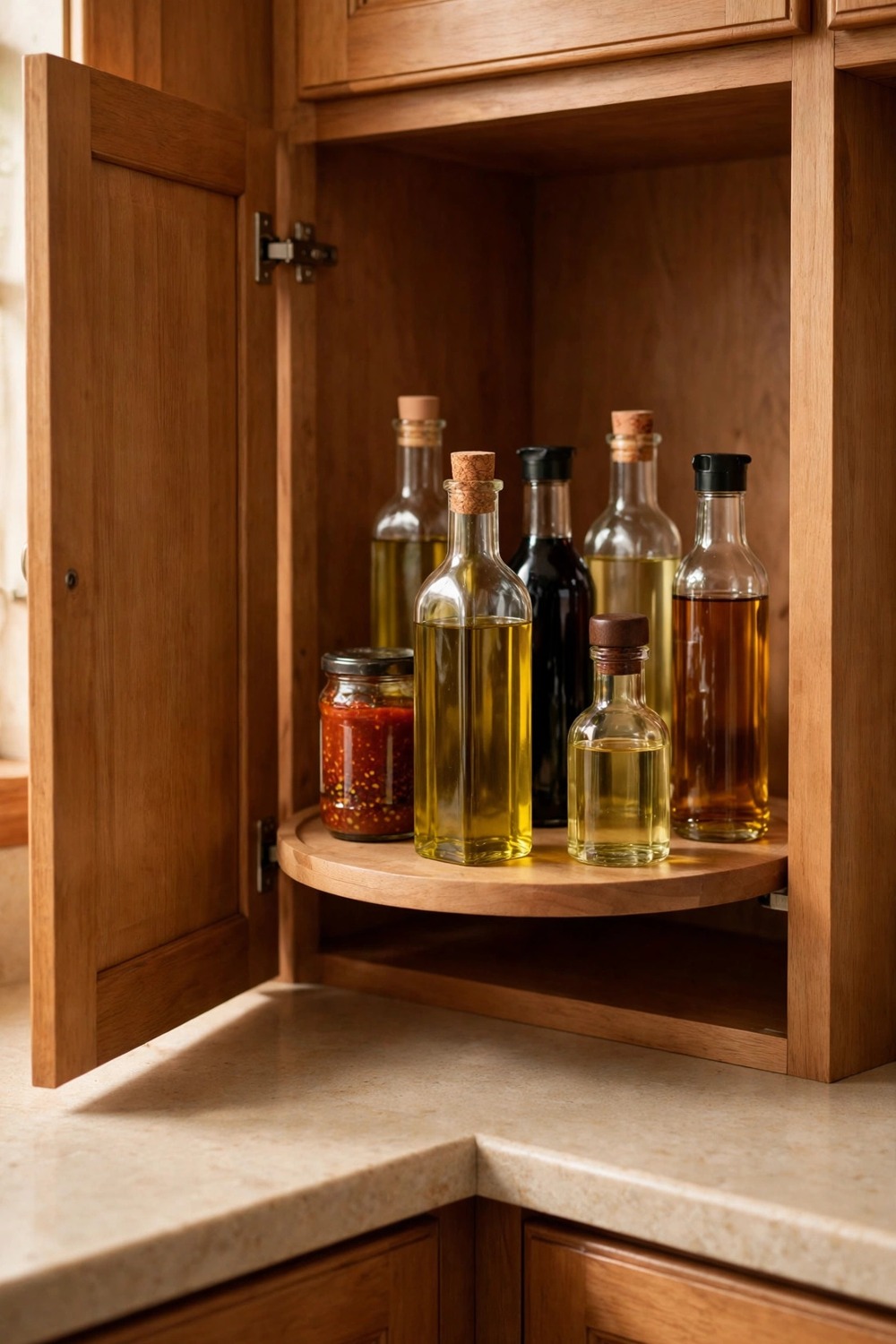
12. Add a Lazy Susan to Deep Corner Cabinets
Deep corner cabinets swallow bottles and jars whole, and whatever goes to the back tends to stay there until it expires. A lazy Susan, that simple round turntable, brings everything back within reach with one gentle spin. Choose the largest size that fits comfortably through the door opening, and keep a small gap around the edge so it turns freely. It typically works best for one category at a time, like oils and vinegars, sauces, or baking supplies, rather than a mix of everything. Taller bottles often behave better on a turntable with a low rim, which stops them tipping as it moves. In a pantry cabinet, two smaller turntables on different shelves can be easier to manage than one giant one. Label shelf edges if your household needs a nudge to return things to their zone. One spin before you shop will also save you from buying duplicates of what you already own.
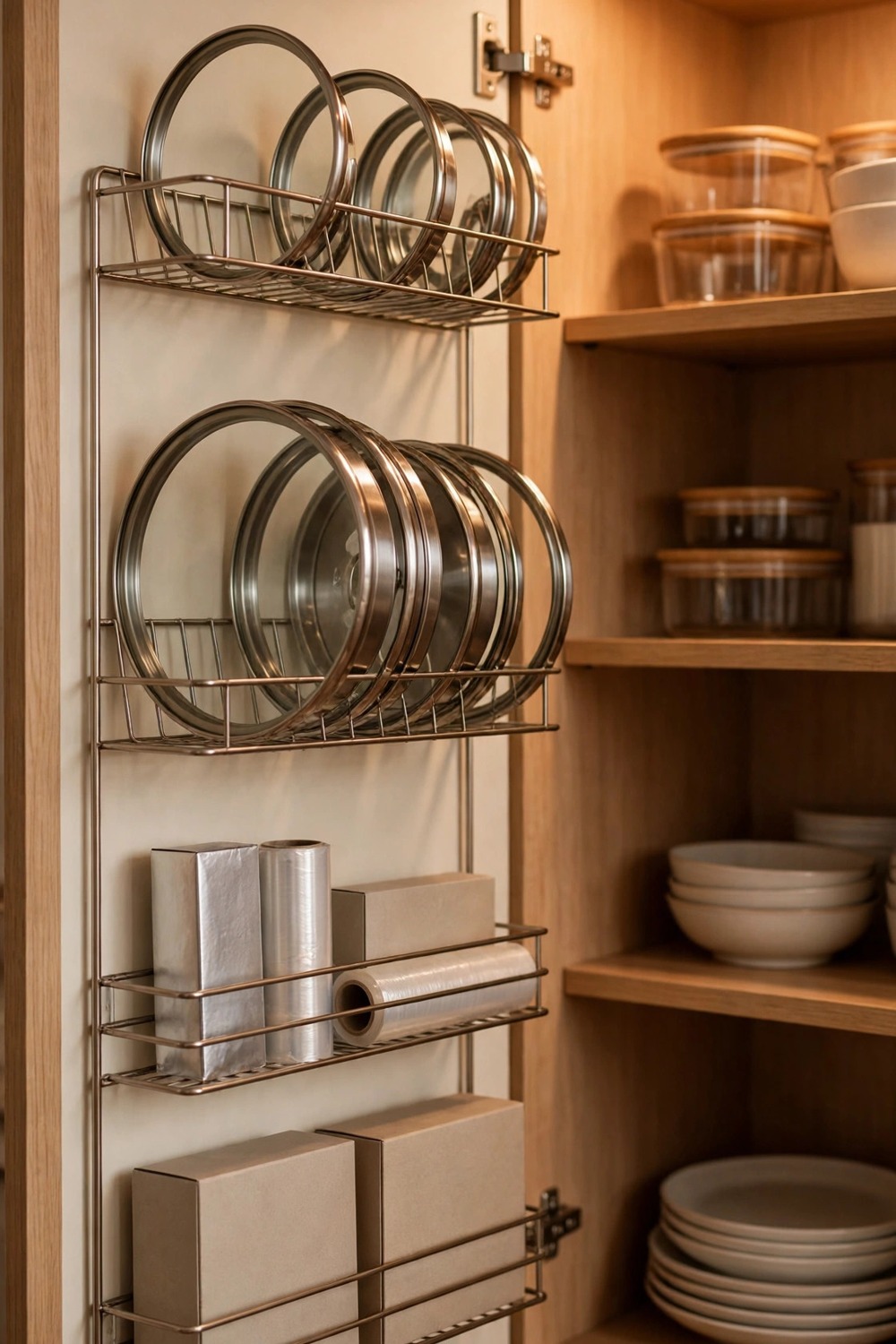
13. Mount Racks Inside Cabinet Doors
The inside of a cabinet door is flat, close at hand, and usually doing absolutely nothing. A slim rack mounted there can hold pot lids, wraps and foils, measuring cups, or the spray bottle you reach for every day. Over-door styles need no screws at all, while simple mounted racks feel sturdier if you are happy to fit them properly. Just check the clearance first by closing the door slowly, so the rack and its contents clear the shelves inside. The under-sink doors are a favourite spot for cleaning supplies, and a door near the stove is perfect for lids that otherwise rattle around in a drawer. Keep the load light and the items flat where you can, because doors are happiest holding slim things. This idea costs very little and gives you storage that feels almost like a magic trick the first week you use it.
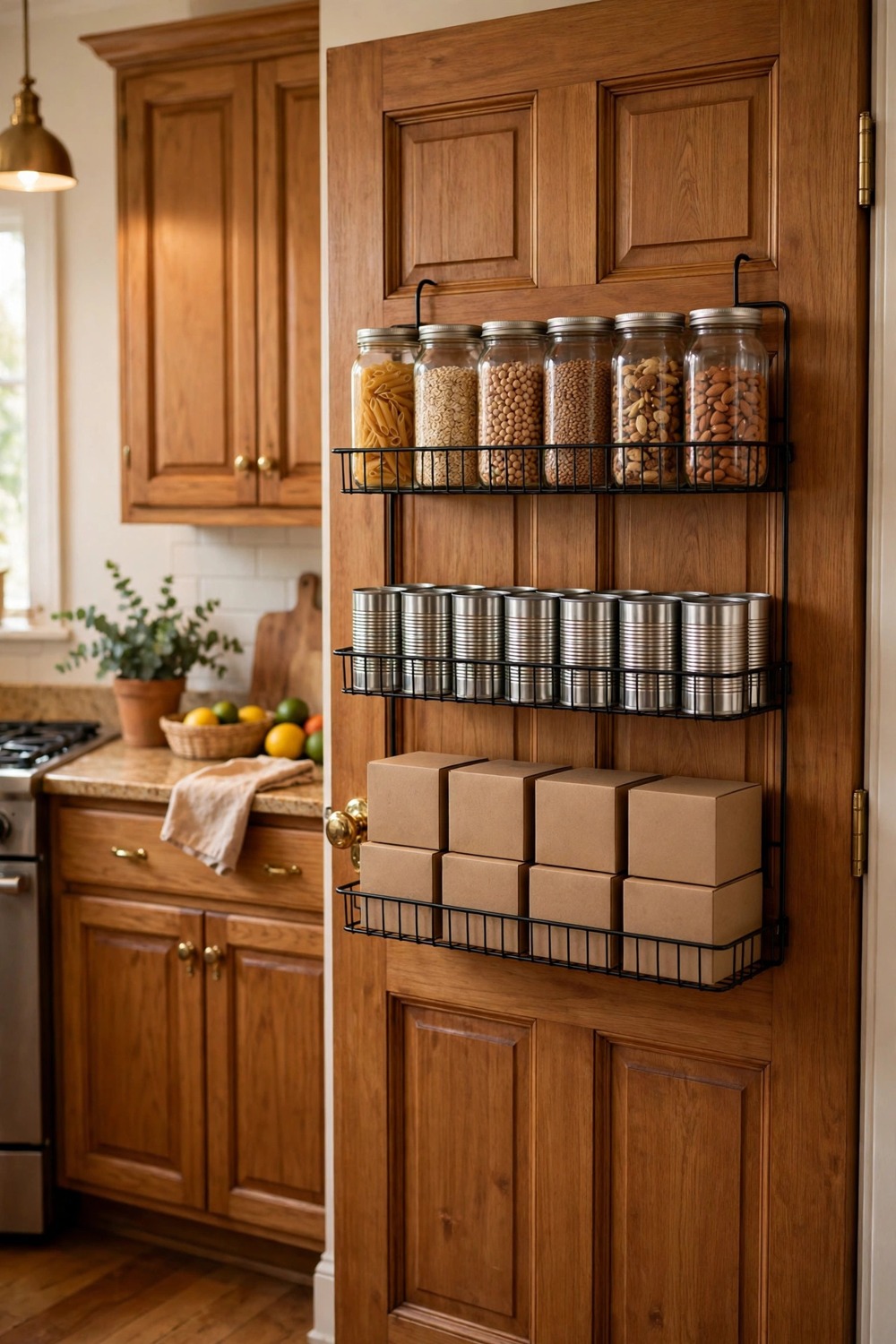
14. Hang an Over-Door Rack for Pantry Overflow
When pantry shelves are full, the overflow usually migrates to the counter in the form of cereal boxes, snack bags, and jars waiting for a home. An over-door rack on the pantry door gives that overflow a proper address. The clear pocket style works well for small packets and spice refills, while a wire rack with adjustable shelves handles cans, jars, and boxes more confidently. Group by category as you load it, with snacks together, lunch supplies together, and baking extras together, so the rack stays useful instead of becoming a jumble with a door attached. Check that the door still closes smoothly and add soft pads if the rack taps the frame. Renters tend to love this idea because it leaves no marks and moves with you. Best of all, every box that lives on that rack is a box that is not taking up your prep space tonight.
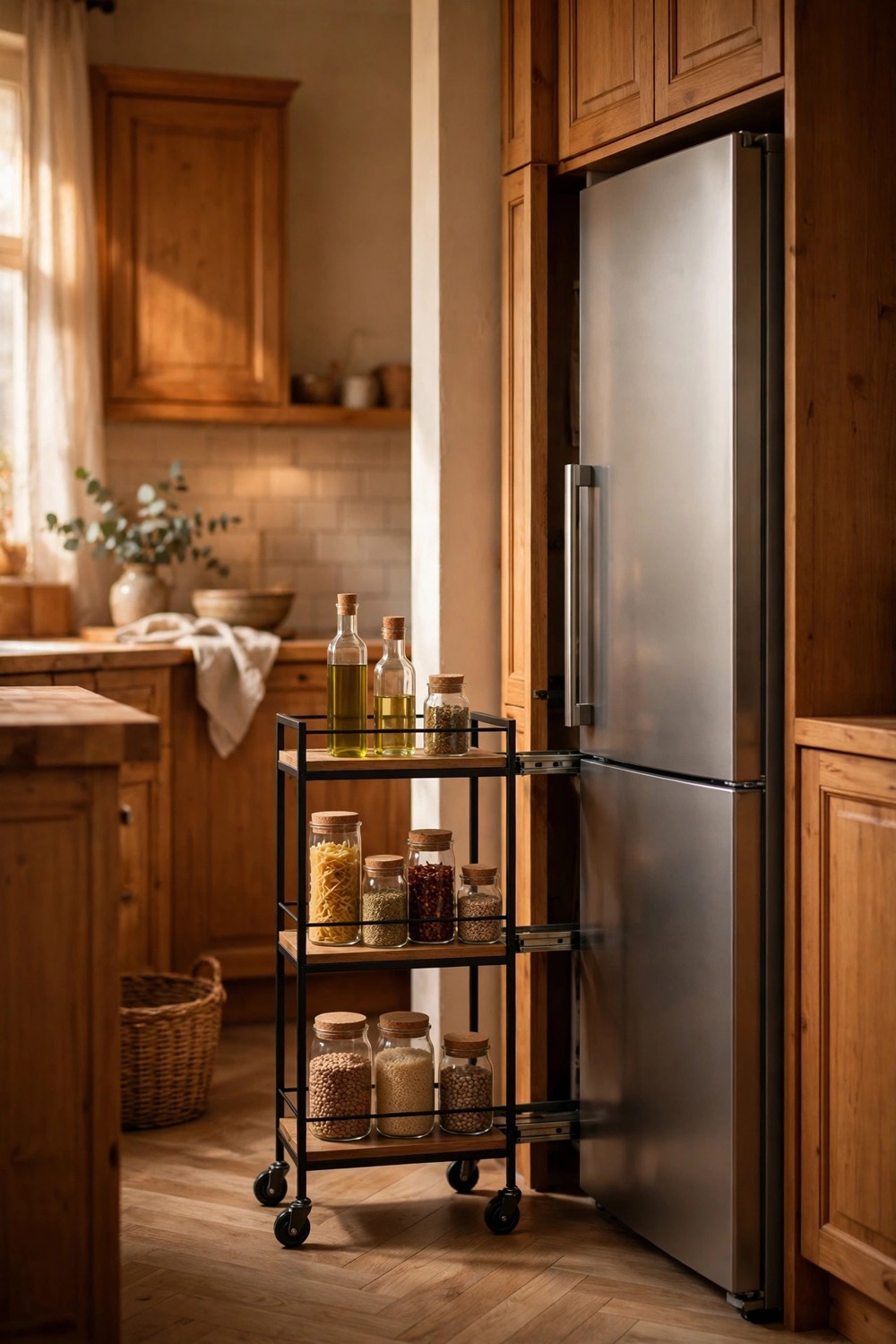
15. Tuck a Slim Rolling Cart Beside the Fridge
That narrow gap between the fridge and the wall or counter looks like nothing, but in most kitchens it is wide enough for a slim rolling cart, and a cart there can hold a surprising amount. Measure the gap honestly first, then look for a tiered cart that slides in and out smoothly on its casters. It is a natural home for bottles, jars, canned goods, or extra cleaning supplies, all the sturdy things that do not mind a cool spot beside the fridge. Keep the heaviest items on the lowest tier so the cart stays steady, and pull it out by its handle rather than by the top shelf. Because the cart hides away completely, it adds storage without adding any visual clutter at all, which is the dream in a small kitchen. Give the floor under it a quick sweep now and then, since crumbs love that gap as much as storage does.
Contain the Little Things That Wander
The last layer is about the small, everyday things that drift across counters and make a tidy kitchen look untidy again by lunchtime. Canisters, trays, and one or two simple habits can contain almost all of it. These final five ideas are quick, pretty, and easy to keep up on an ordinary busy day.
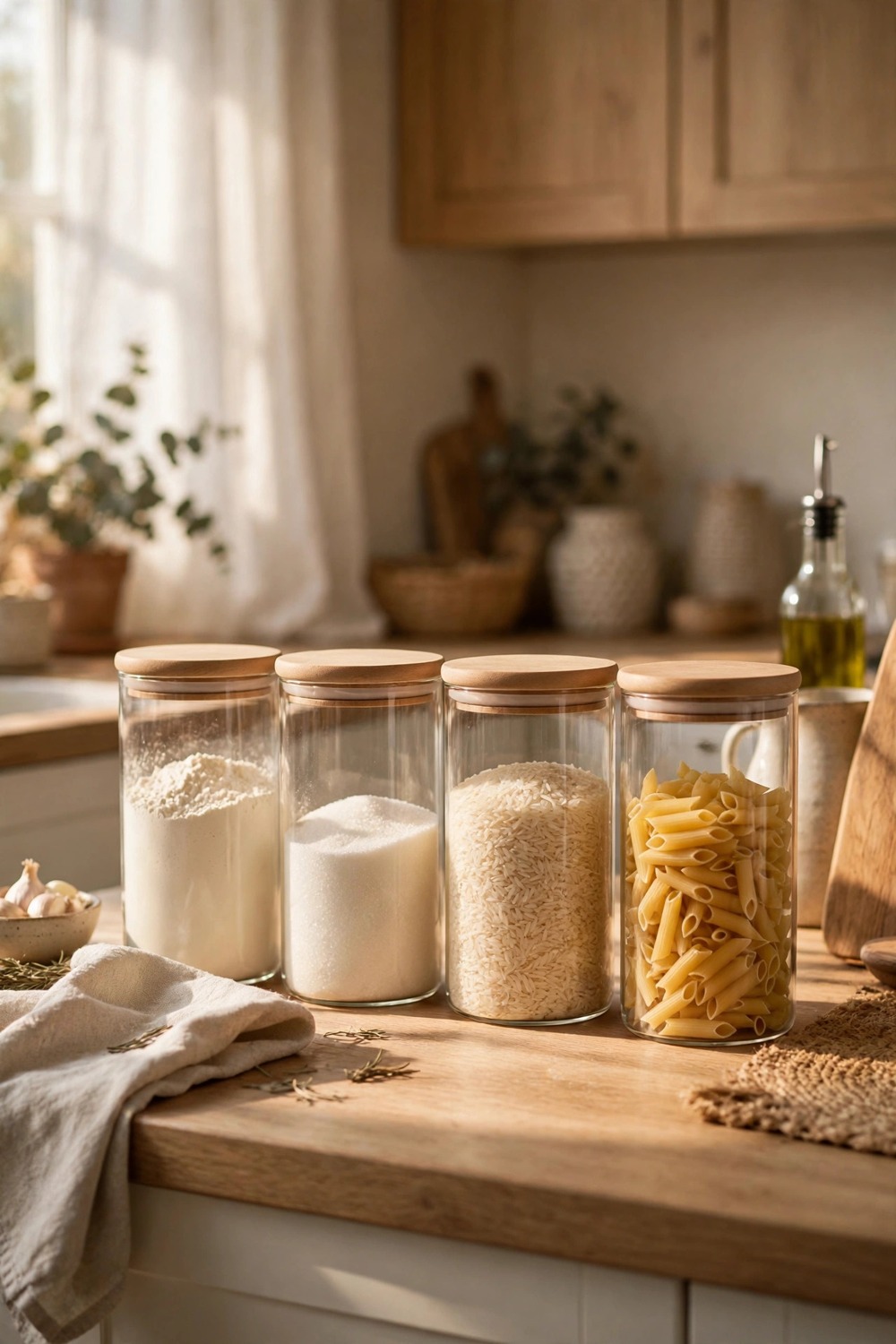
16. Decant Staples Into Labelled Glass Canisters
Half open bags and mismatched boxes make any shelf or counter look restless, even when everything is technically put away. Decanting your most used staples, like flour, sugar, rice, pasta, and coffee, into matching glass canisters calms the whole picture at once. Glass lets you see what you have and how much is left, which makes shopping lists easier and cuts down on stale surprises at the back of the pantry. Add a simple label with the name and, if it helps, the date you filled it. Keep only the canisters you use daily on the counter, lined up in one neat group, and store the rest in the pantry so the counter group stays small. Choose lids that seal well and jars wide enough for a scoop or a measuring cup. This is one of those ideas that looks lovely in photos, but its real gift is how peaceful it makes everyday cooking feel.
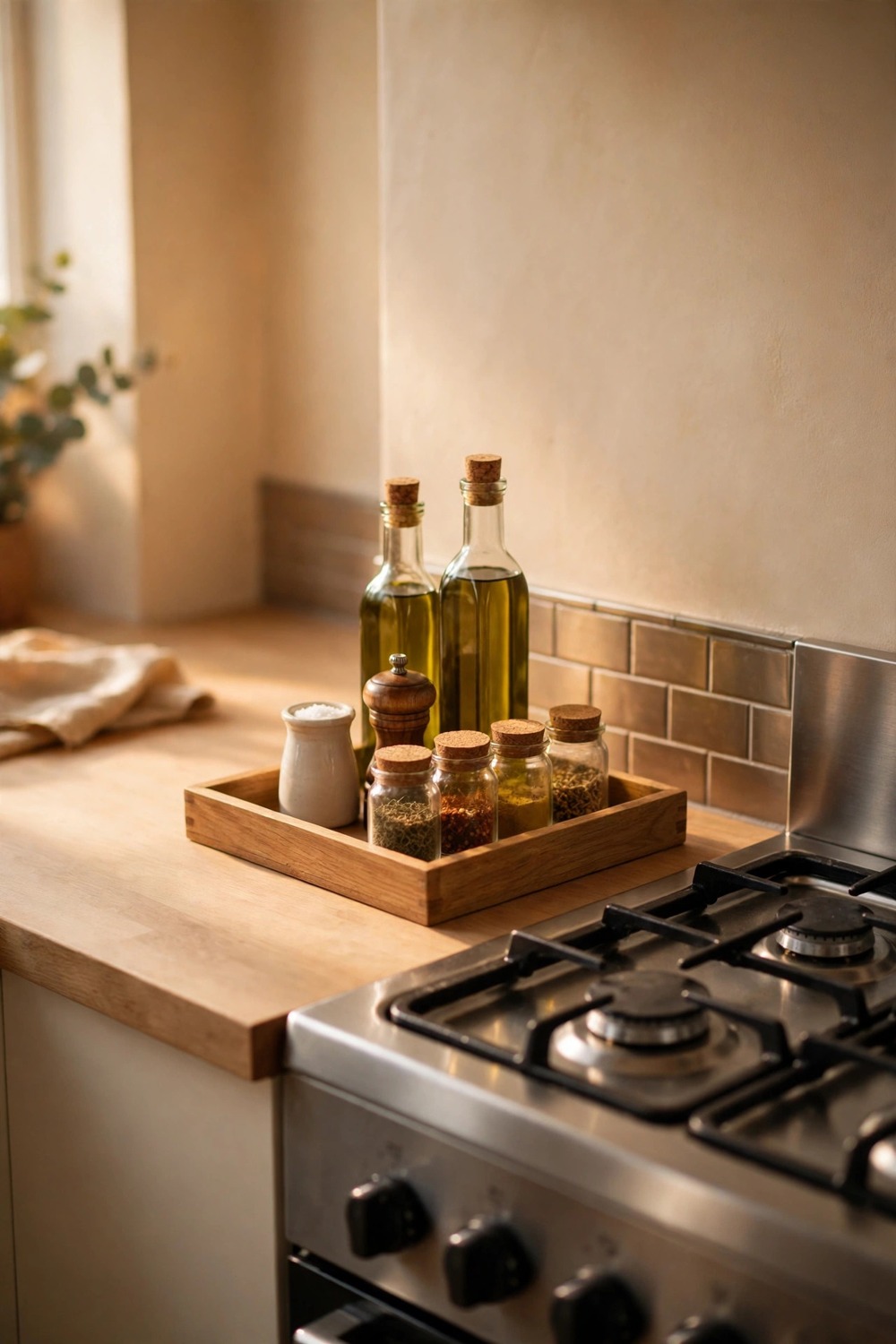
17. Corral Oils and Spices on a Single Tray
Cooking oils, salt, pepper, and your most used seasonings have a habit of spreading across the back of the stove and halfway down the counter by the end of the week. Putting them all on a single tray gives them a clear boundary, and a boundary is usually all they need. Choose a tray that wipes clean easily, since oils will drip, and keep it beside the stove where your hand naturally reaches while you cook. Limit the tray to what you truly use most days. If a bottle does not fit, it probably belongs in the pantry or the spice drawer instead. The tray also protects your counter and makes cleaning simpler, because you lift one tray rather than moving eight bottles. When guests come over, that little group reads as intentional styling instead of clutter, which is a nice bonus for zero extra effort.
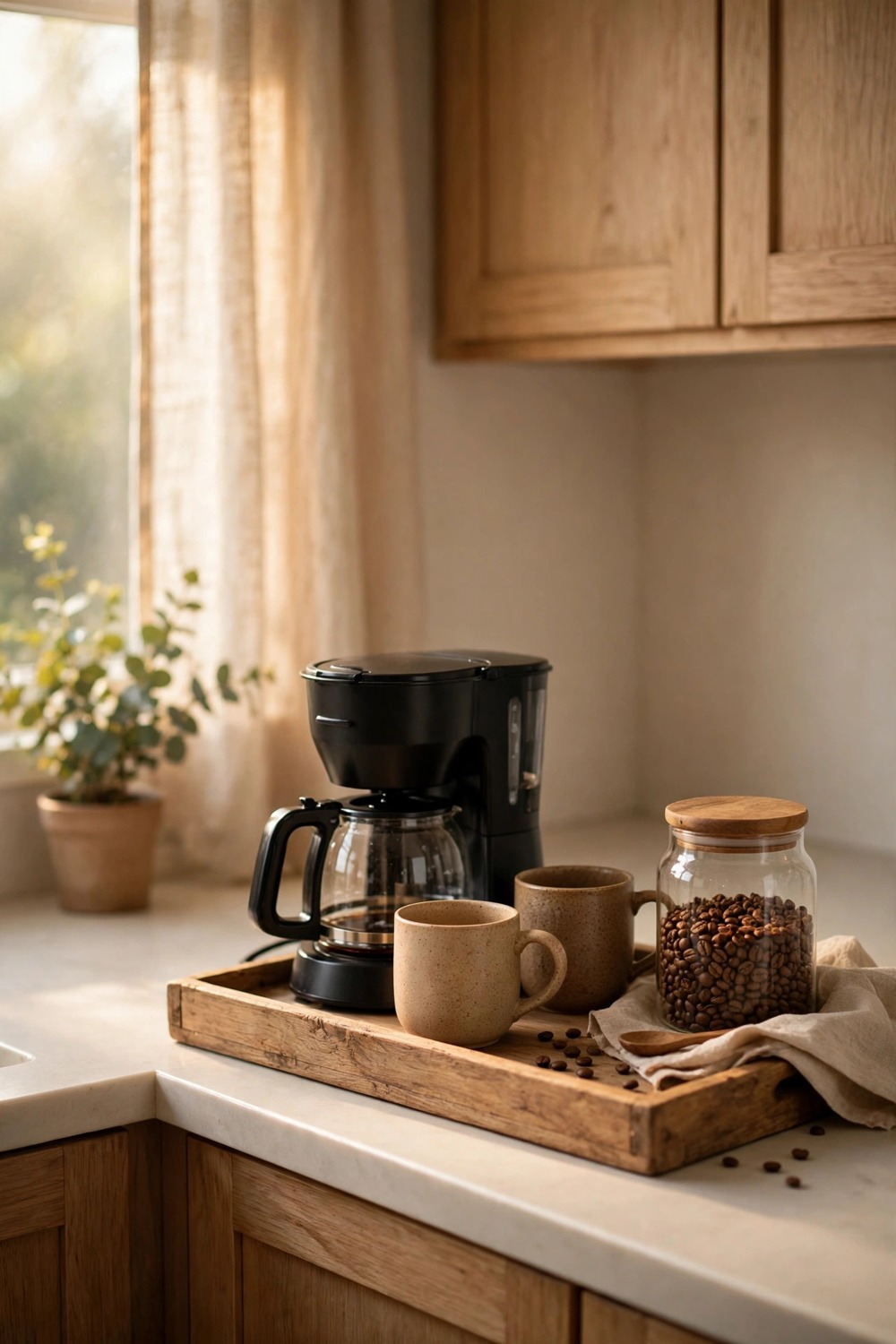
18. Build a Coffee Station on a Wooden Tray
A coffee station gathers your maker, mugs, filters, and jars into one defined spot, so the morning routine stops spreading supplies across the whole kitchen. Start with a wooden tray or a low board under or beside the machine to mark the territory. Keep the daily essentials inside that footprint, like your favourite mugs on a small hook rail or stacked neatly, beans or pods in a lidded jar, and filters in a slim holder. Everything else, like the extra mugs and the seasonal extras, can live in a cabinet nearby. If you also make tea, one small basket for teas beside the kettle keeps the two routines friendly rather than tangled. The tray trick works because it turns a collection of objects into a single vignette your eye reads as one thing. Mornings feel smoother when the first thing you do in the kitchen happens in one calm, ready corner.
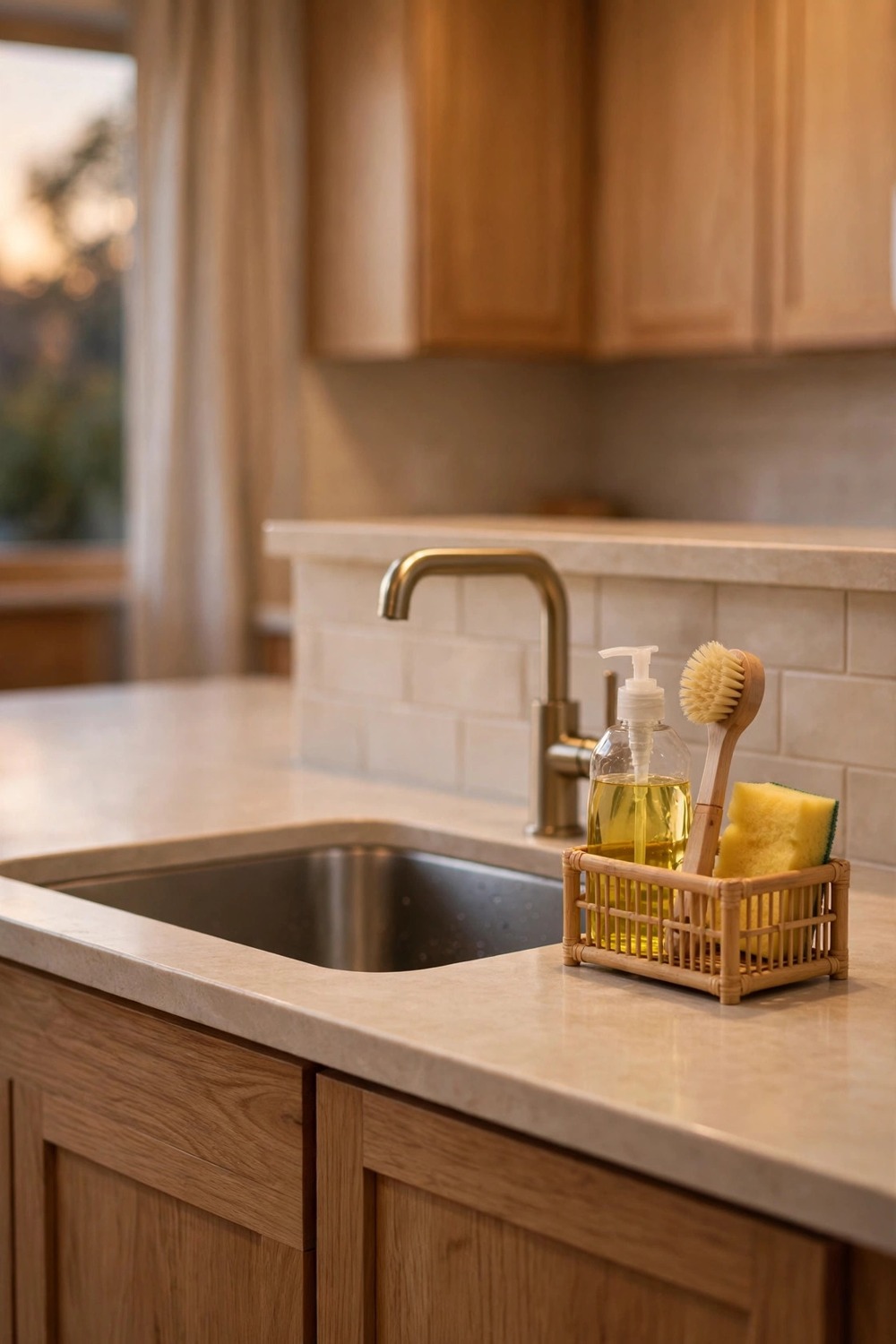
19. Keep One Small Caddy for Dish Supplies
The sink area collects dish soap, brushes, sponges, scrubbers, and hand lotion faster than almost any other spot in the kitchen. One small caddy gives that whole crew a single home and keeps the wet items off the counter itself. Look for a caddy with drainage or a simple tray base, since sponges sitting in a puddle get unpleasant quickly and can mark stone counters over time. Keep it honest and small. Soap, one brush, one sponge, and maybe hand soap if your household uses both. Anything beyond that usually belongs under the sink in your newly tidy bins. Place the caddy at one end of the sink rather than right behind the faucet, so your main washing up space stays open and splash free. Rinse the caddy when you wipe the counters each night. It takes ten seconds and it keeps the whole sink corner looking fresh.
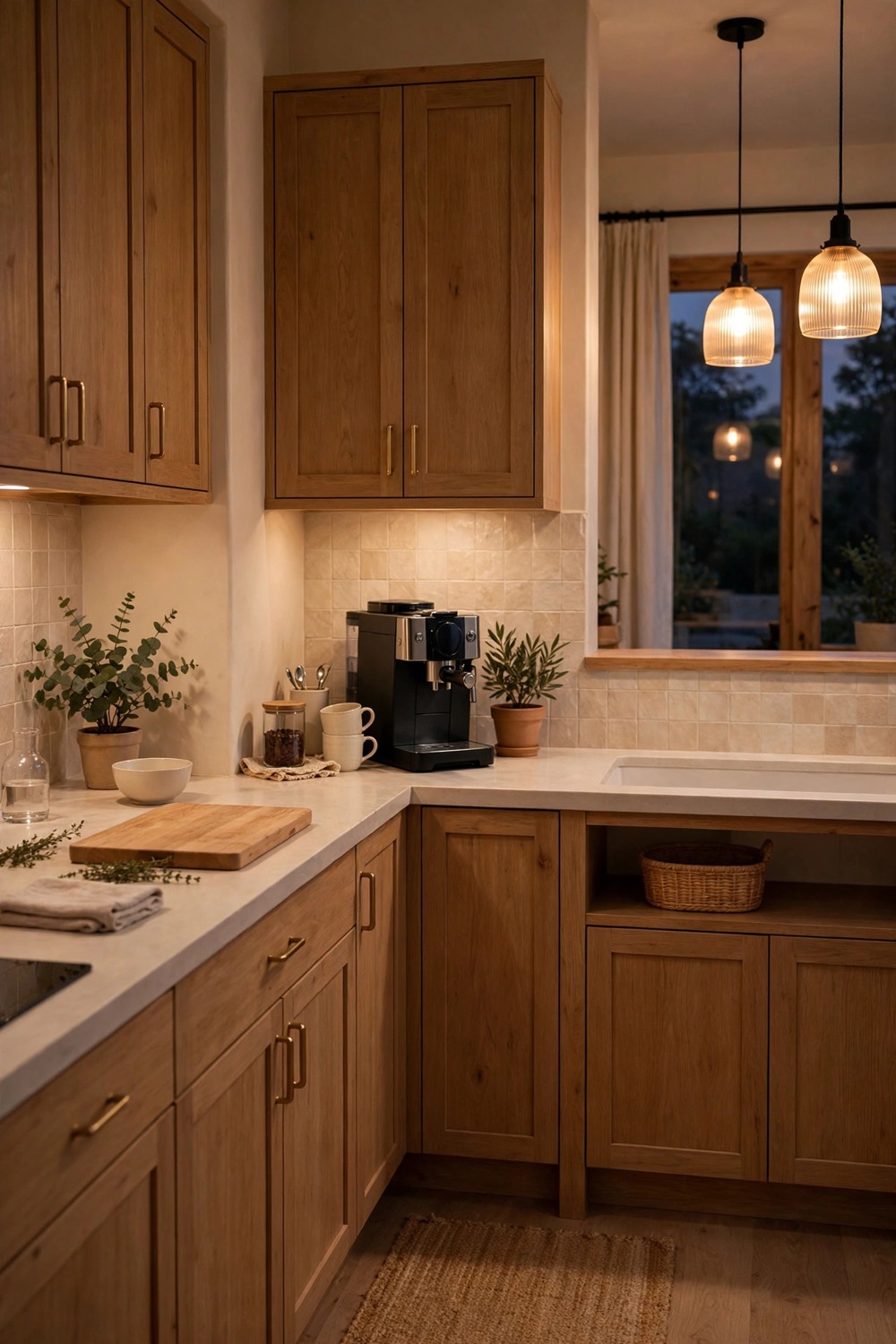
20. Zone Your Counters and Reset Them Nightly
All the best organizers in the world will slowly unravel without one gentle habit to hold them together, and zoning is that habit. Decide what each stretch of counter is actually for, like one zone for prep, one for coffee, and one clear landing spot near the door or the fridge for groceries and bags. Then protect those zones. When something does not belong in a zone, it does not get to live there, even temporarily, because temporary piles are how chaos usually starts. The nightly reset takes about five unhurried minutes. Return strays to their homes, wipe the counters, set the coffee for morning if that is your routine, and stop there. You are not deep cleaning. You are just handing tomorrow morning a calm kitchen. Households share this best when everyone knows the zones, so say them out loud once and let the system teach itself after that.
Enjoy a Kitchen That Stays Calm After You Clean It
When you step back and look at the whole list, the pattern is pretty simple. Everything works better when it has a home, a boundary, and a reason to stay there. Appliances rest behind a door, spices lie where you can see them, boards stand in their own slots, and the little daily things sit on trays that tell your eye this is one tidy group, not ten loose objects. You do not need to do it all in one heroic weekend. Two or three ideas that match your biggest frustrations will usually change how your kitchen feels every single day.
So pick one idea for this week and let it be small and finished. Hide the toaster, divide that one wild drawer, or set up your tray by the stove, and enjoy how good a single calm corner feels. Then let that corner encourage the next one. Before long your counters will not just look clear right after you clean. They will stay clear, because the system underneath them finally makes staying tidy the easiest thing to do.






Leave a Reply