
20 Small Bedroom Layout Ideas That Make Every Inch Count
Look, we get it. A small bedroom can feel tricky because the bed takes up most of the room and everything else has to fit around it. You still need somewhere for clothes, books, a lamp, and maybe even a little desk, and it is easy to end up shuffling furniture in circles. If your room currently feels cramped no matter how you arrange it, you are not alone. Most small bedrooms usually feel better after one or two smart layout changes rather than a full redo.
That is what this list is for. You will find ideas for where to place the bed, how to swap bulky furniture for slimmer storage, and how to use light, mirrors, and rugs to help the room feel more open. Some of these are quick moves you can try this weekend, like pushing the bed into a corner or hanging curtains a little higher. Others take a bit more planning, like building storage around the bed. You do not need to do all twenty. Two or three that fit your space will typically make a real difference.
Start with the bed placement ideas if your floor feels crowded, then look at the storage ideas if your surfaces are always covered. Finish with the light and breathing room ideas if the room feels fine on paper but still feels tight when you walk in. Work in that order and you will usually see progress pretty quickly.
In This Article
- Push the Bed Into the Corner to Open the Floor
- Center the Bed With Slim Nightstands on Both Sides
- Use a Daybed Along the Wall for Dual Duty
- Try a Loft or High Sleeper to Free the Floor Below
- Swap Nightstands for Wall-Mounted Shelves
- Use a Headboard With Built-In Storage
- Place a Narrow Desk at the Foot of the Bed
- Use Under-Bed Drawers Instead of a Dresser
- Hang Curtains High and Wide to Widen the Room
- Use a Mirror to Borrow Light and Space
- Choose a Folding or Drop-Leaf Desk
- Build Storage Around the Bed With Tall Units
- Use a Trundle for Guests Without a Guest Room
- Keep the Palette Light to Open the Room
- Hang Tall Art to Draw the Eye Up
- Use Sliding or Curtain Closures to Save Swing Space
- Add a Slim Bench That Doubles as Storage
- Use Corner Shelves for Books and Plants
- Use a Rug to Anchor the Layout in a Small Footprint
- Leave Walking Space Clear So the Room Can Breathe
Start With Where the Bed Goes
The bed is the biggest piece in the room, so where it lands decides almost everything else. Get this part right and the rest of the layout usually falls into place much more easily. These first five ideas look at simple bed placements and one easy nightstand swap that can free up floor space without making the room feel awkward or hard to use every day.
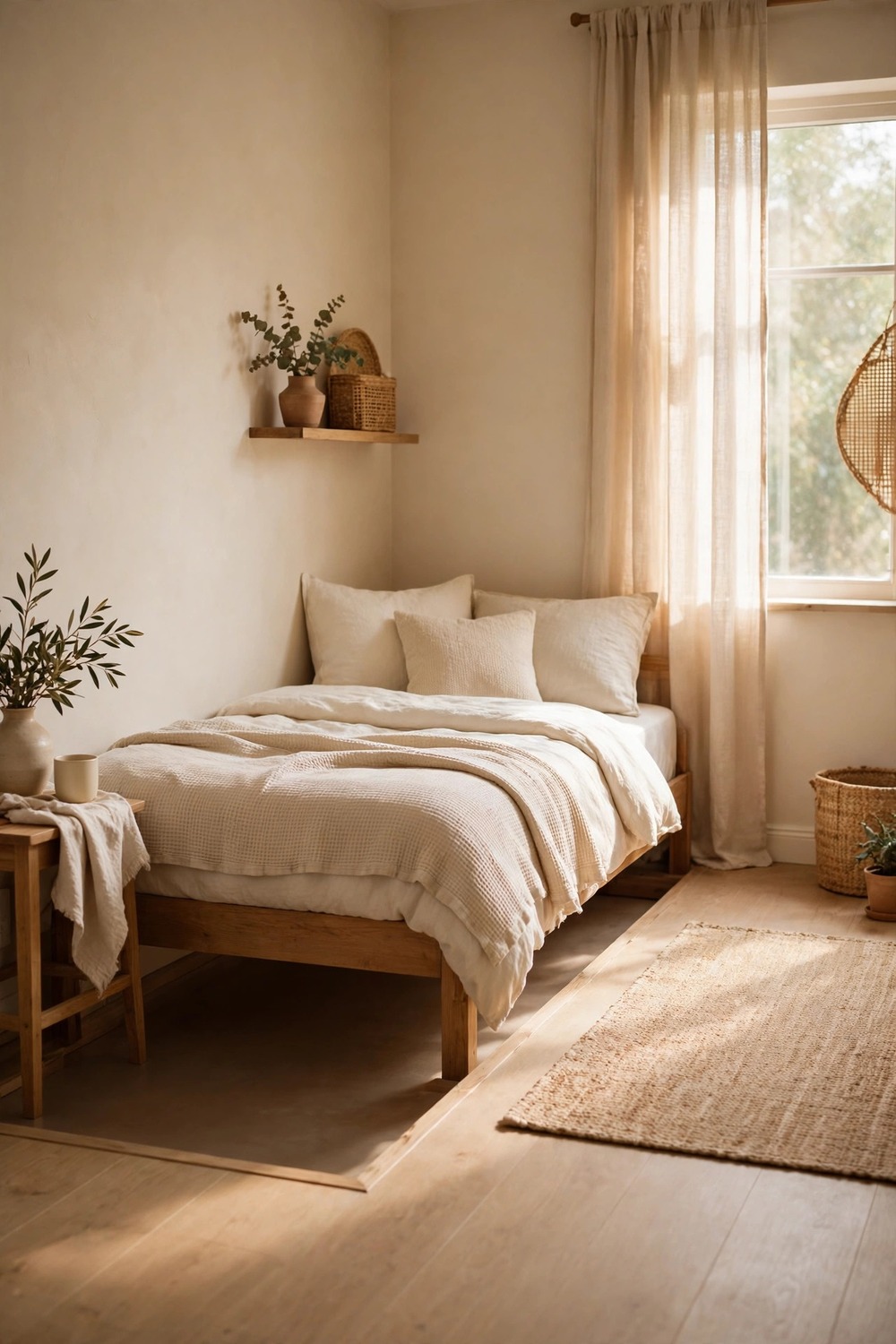
1. Push the Bed Into the Corner to Open the Floor
Pushing the bed into the corner is often the fastest way to win back floor space in a very small bedroom. Instead of leaving narrow gaps on both sides that are too tight to use well, you gather all the open space into one larger, more useful area. That open patch can hold a small chair, a laundry basket, or just room to get dressed without turning sideways. It works especially well for a single bed or a small double in a child or teen room. The trade off is that making the bed takes a little more reaching, and the person on the wall side has to climb a bit. For many people, that is a fair swap for a room that finally feels easy to move around in during the day.
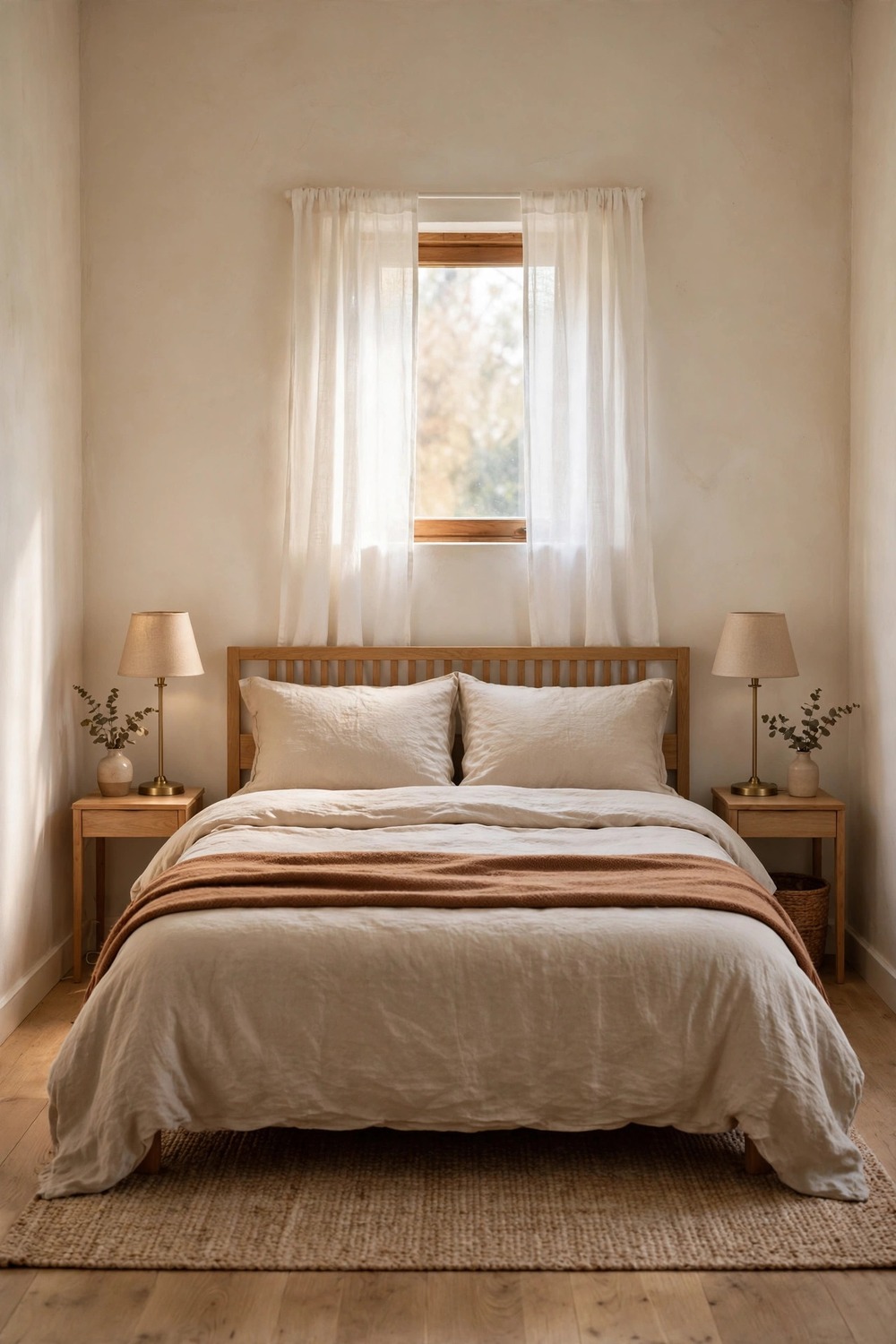
2. Center the Bed With Slim Nightstands on Both Sides
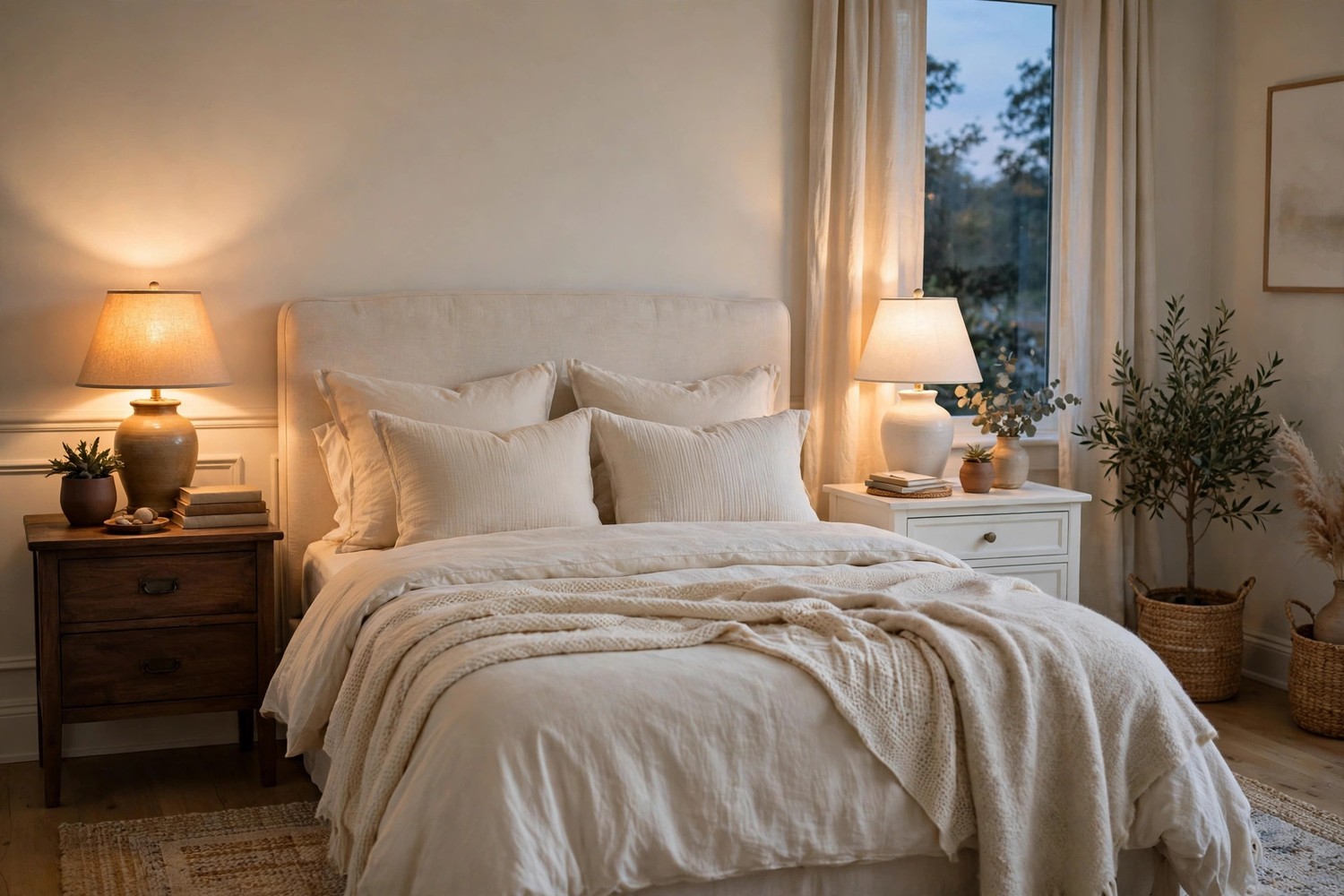
If you share the bed or you just love a balanced look, centering the bed can still work in a small room as long as the nightstands stay slim. Choose narrow tables or small floating ledges that are only wide enough for a lamp, a book, and a glass of water. That keeps the symmetry you want without letting bulky drawers eat into your walking space. Measure carefully before you buy, because even a few extra inches on each side can make the path around the bed feel tight. A low headboard usually helps here too, since it keeps the wall from feeling crowded. This layout typically feels calm and grown up, and it is a good choice when the room is small but not extremely tiny.
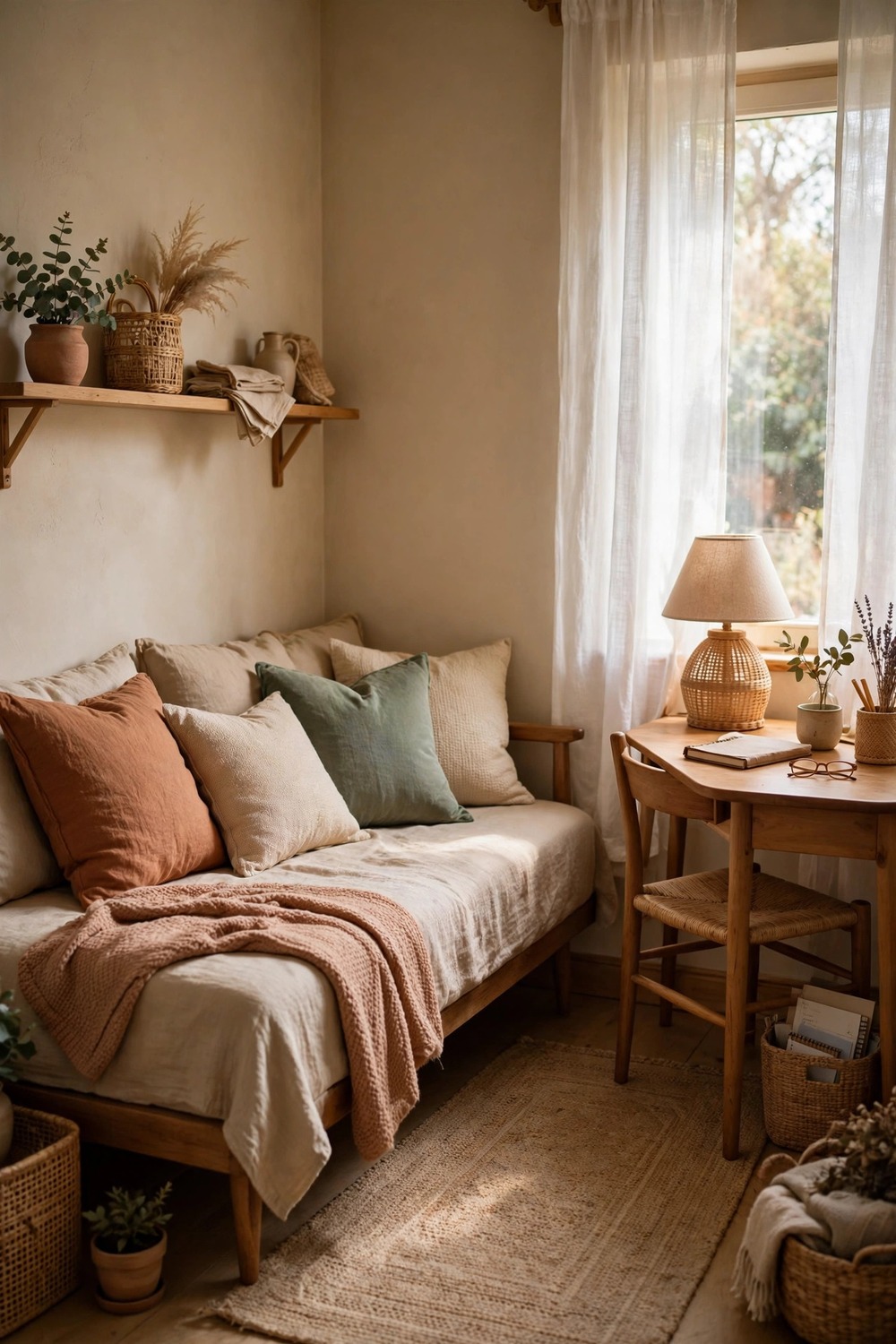
3. Use a Daybed Along the Wall for Dual Duty
A daybed along the wall can turn a small bedroom into a room that works twice as hard. During the day it reads as a sofa with cushions along the back, which gives you a comfortable spot to read, chat, or fold laundry. At night it is simply your bed, already in place and ready to use. This is a lovely option for a studio corner, a guest room that is also an office, or a teen room where friends gather. Keep the bedding fairly simple and add a few larger cushions for daytime, so the switch between sofa and bed does not feel like a big job. Choose a frame without tall ends if the room is narrow, because lower lines usually help the space feel more open.
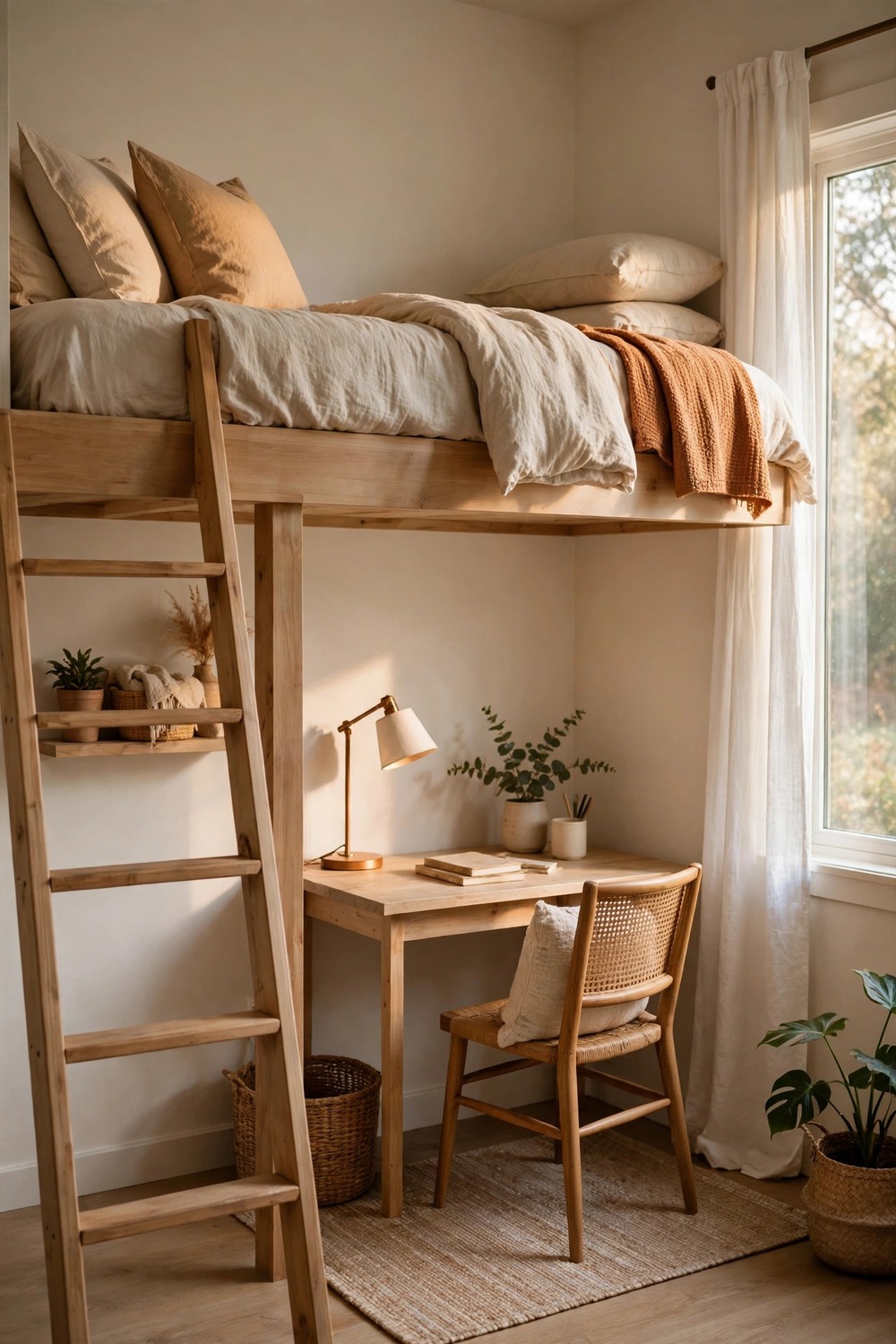
4. Try a Loft or High Sleeper to Free the Floor Below
A loft bed or high sleeper lifts your sleeping space up and gives the floor below back to you for daily life. That area underneath can become a small desk, a reading nook with a chair and lamp, or open storage for boxes and a dresser that would not fit otherwise. It is a popular choice for students and for children who need play space as much as sleep space. Check your ceiling height carefully and leave comfortable headroom both above the mattress and below the frame. Sturdy guard rails and a secure ladder are not optional here, they are part of what makes the idea work well. If climbing up every night does not suit you, this one is probably better saved for a younger room.
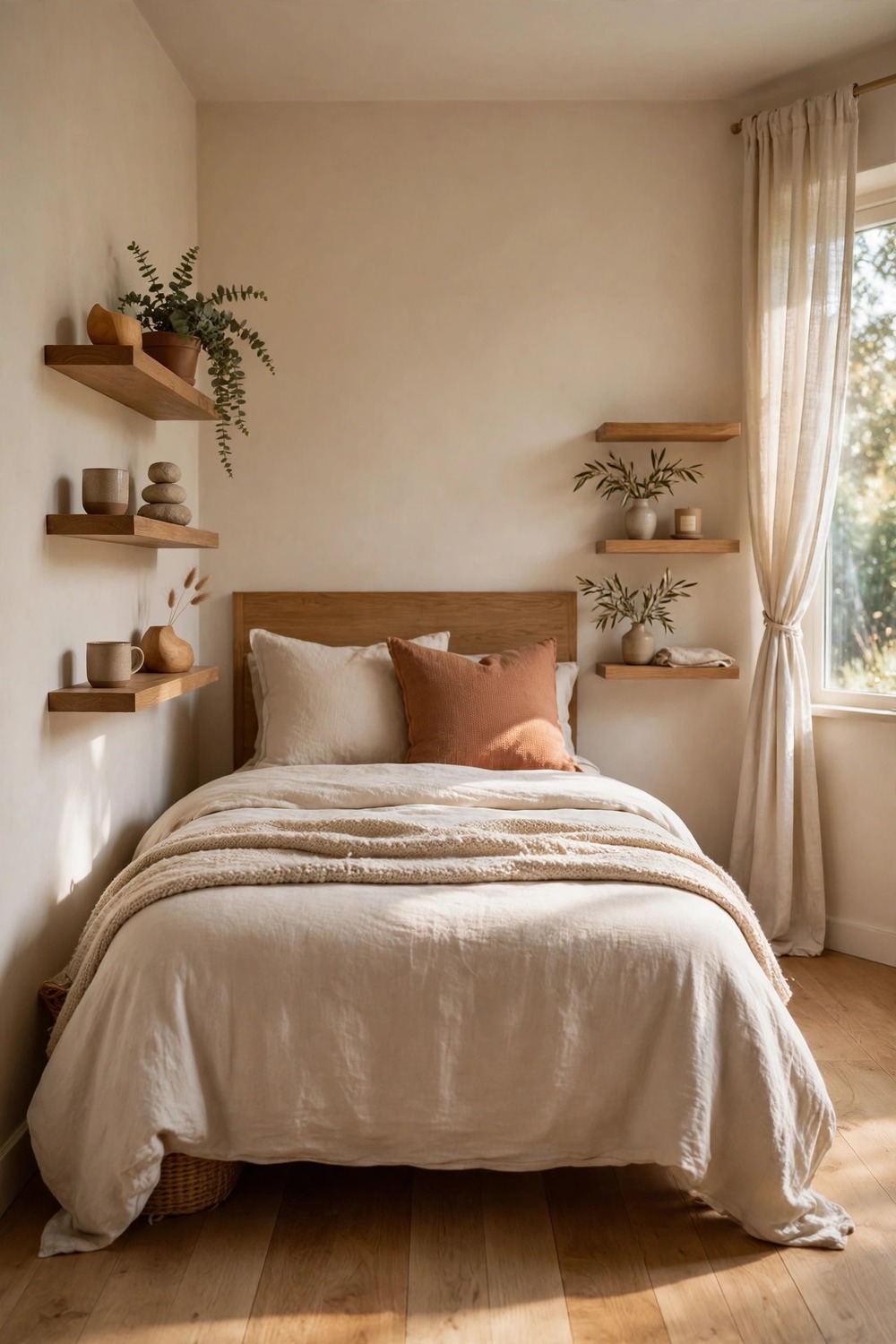
5. Swap Nightstands for Wall-Mounted Shelves
Wall mounted shelves can do the nightstand job without taking up any floor space at all. A small shelf at mattress height holds your phone, book, and water, while the area below stays clear for shoes, a basket, or simply easier cleaning. You can use one shelf on each side of the bed or just one if the bed sits in a corner. Choose a shelf with a small lip or raised edge if you tend to knock things over in the dark, and add a wall light above it if you can. This swap usually makes the bed area feel lighter right away. It is also budget friendly, because two simple shelves typically cost much less than a matching pair of nightstands.
Let Storage Hide in Plain Sight
Once the bed is placed, storage is usually the next problem. Clothes, bedding, and everyday bits need a home, but a big dresser can overwhelm a small footprint. These next five ideas hide storage inside pieces you already need, and use curtains and mirrors to help the room feel wider and brighter while you are at it.
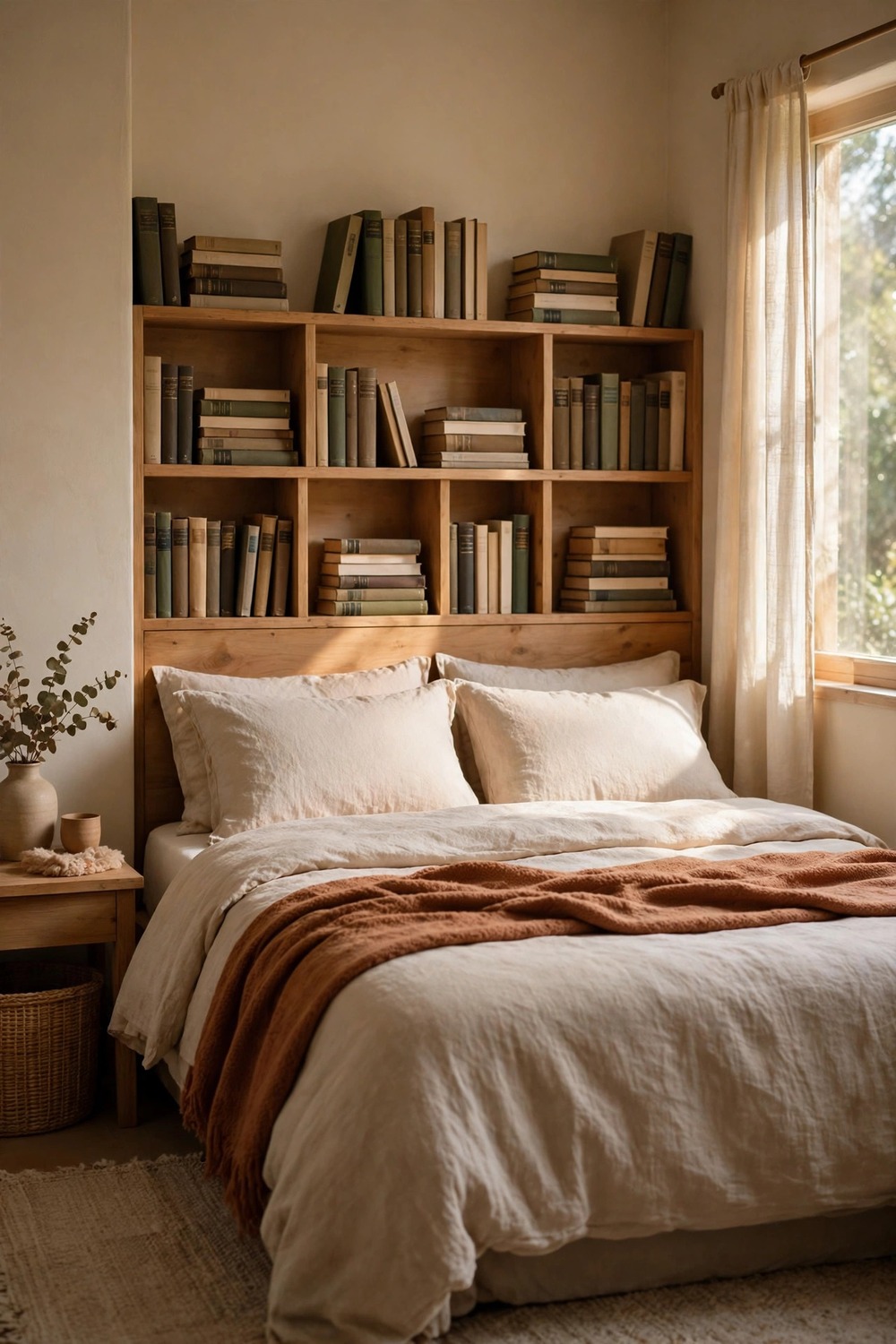
6. Use a Headboard With Built-In Storage
A headboard with built in storage gives you shelves and cubbies right where you need them most, without asking for extra floor space. Books, an alarm clock, a small plant, and your nighttime essentials can all live within reach, which means you may not need nightstands at all. Some designs include deeper cubbies that can hold spare bedding or baskets for chargers and clutter. Keep the styling fairly light, because a headboard packed solid can start to feel heavy above the pillows. A couple of books, one small object, and a lot of clear space usually looks best. This idea works particularly well when the bed is centered on the wall and you want that wall to work harder without adding separate furniture around it.
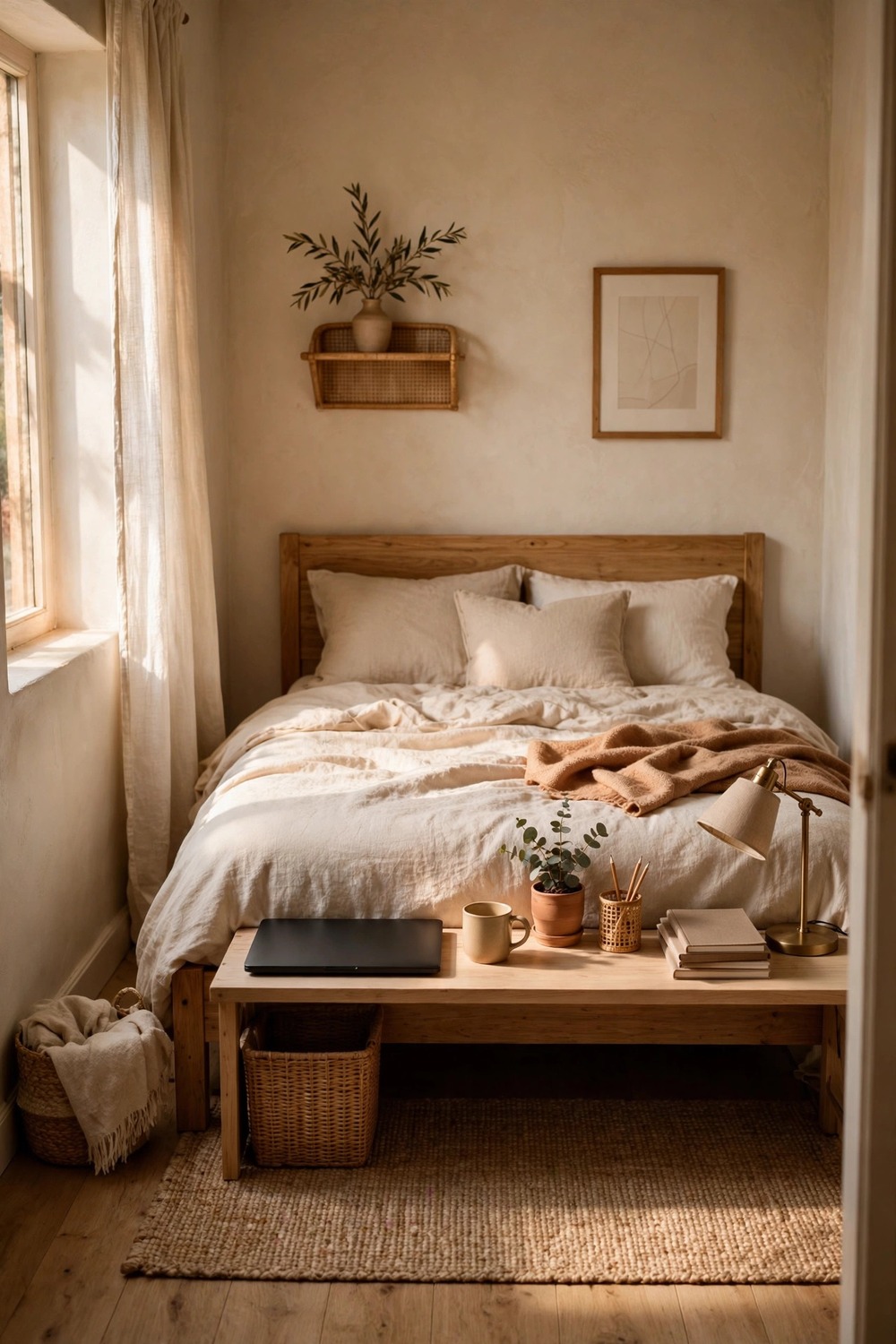
7. Place a Narrow Desk at the Foot of the Bed
A narrow desk at the foot of the bed can give you a real work spot in a room that has no spare wall for one. Look for a shallow console style desk that leaves a clear walking path on at least one side, and pair it with a stool that tucks completely underneath when you are done. During the day it holds a laptop and a lamp, and in the evening it can double as a dressing table or a place to set folded clothes. Keep the surface as clear as you can between uses, because a cluttered desk at the end of the bed is the first thing you will see in the morning. This layout typically suits a longer, narrow room best.
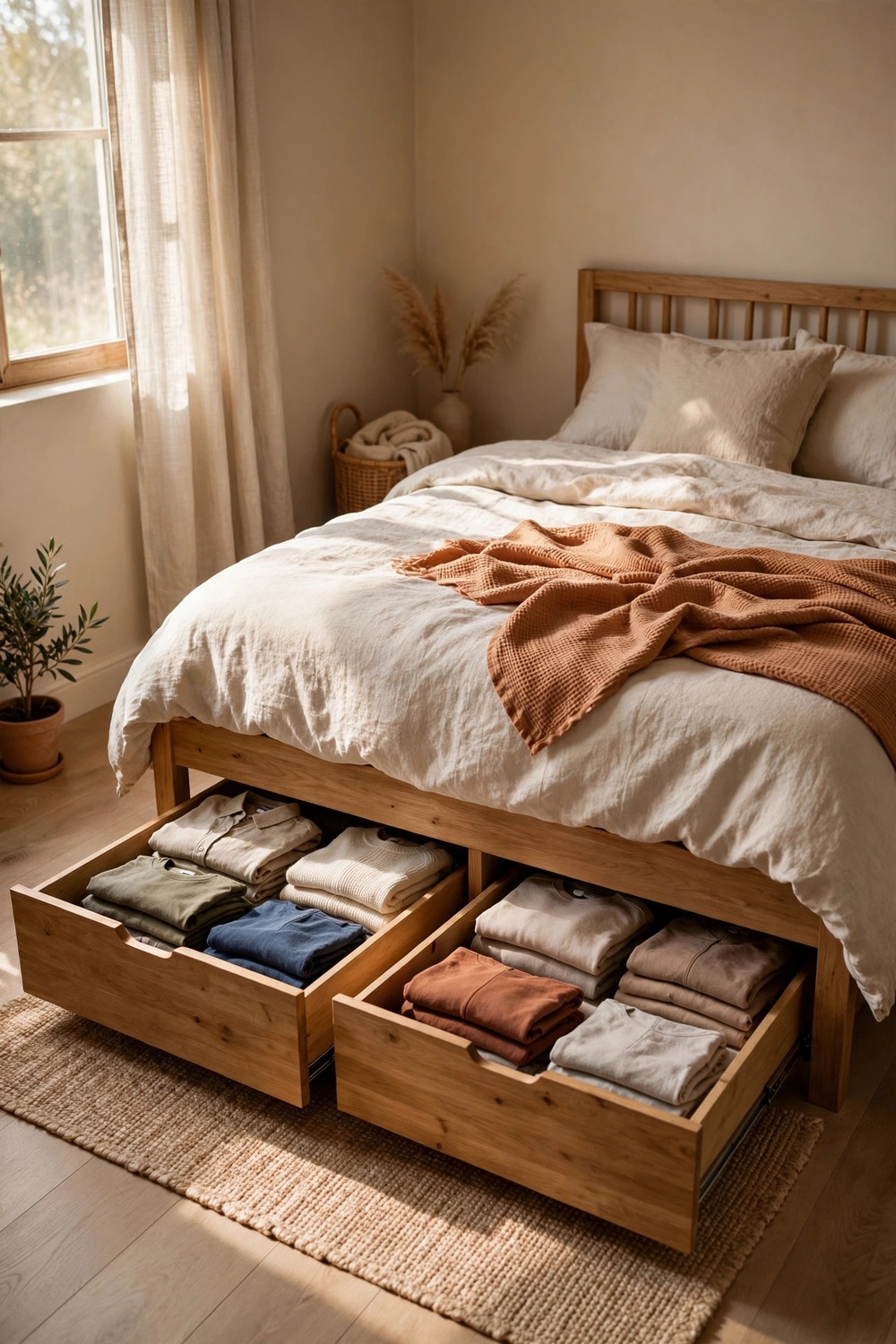
8. Use Under-Bed Drawers Instead of a Dresser
The space under your bed is valuable storage that often goes to waste or turns into a dusty catch all. Low drawers on wheels or a bed frame with built in drawers can hold out of season clothes, spare bedding, or shoes in a way that stays tidy and easy to reach. For many small bedrooms, that storage is enough to skip a separate dresser entirely, which frees a whole wall for a desk, a chair, or just breathing room. Measure the height under your frame before you buy anything, and choose drawers with lids or closed fronts if dust is a concern. Label each drawer loosely by category if you share the space. You will typically find you use what is stored there more often when it slides out smoothly.
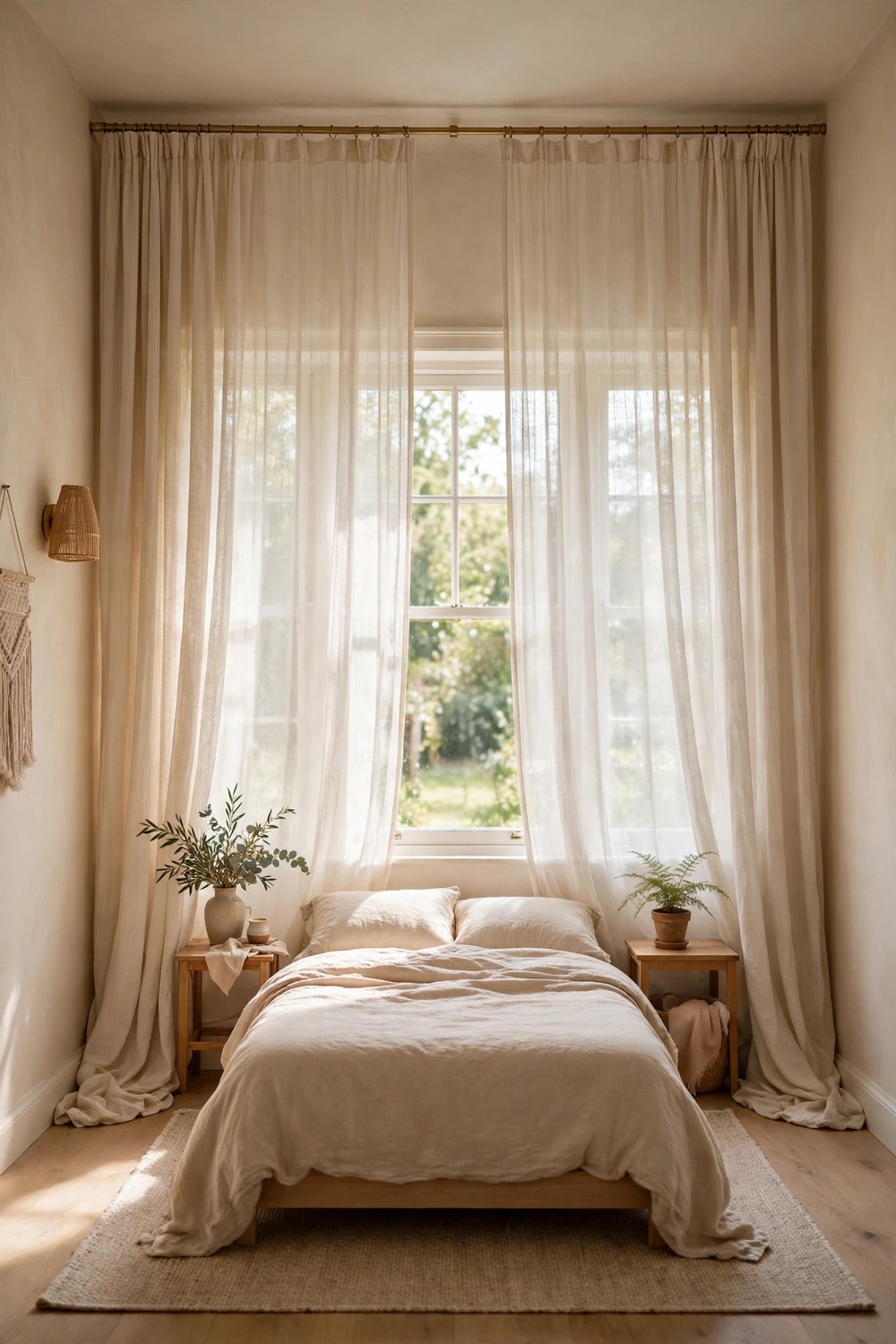
9. Hang Curtains High and Wide to Widen the Room
Where you hang your curtains can quietly change how wide and tall your bedroom feels. Mount the rod close to the ceiling and let it extend beyond the window frame on both sides, so the curtains sit mostly over the wall when they are open. That lets in more light and makes the window look larger than it really is. Choose a light fabric that softens the light without blocking it, and let the curtains fall to the floor if you can, because that long line helps the wall feel taller. Avoid heavy, dark panels in a very small room unless you need serious darkness for sleep. This is usually a low cost change, and people are often surprised by how much airier the room feels afterward.
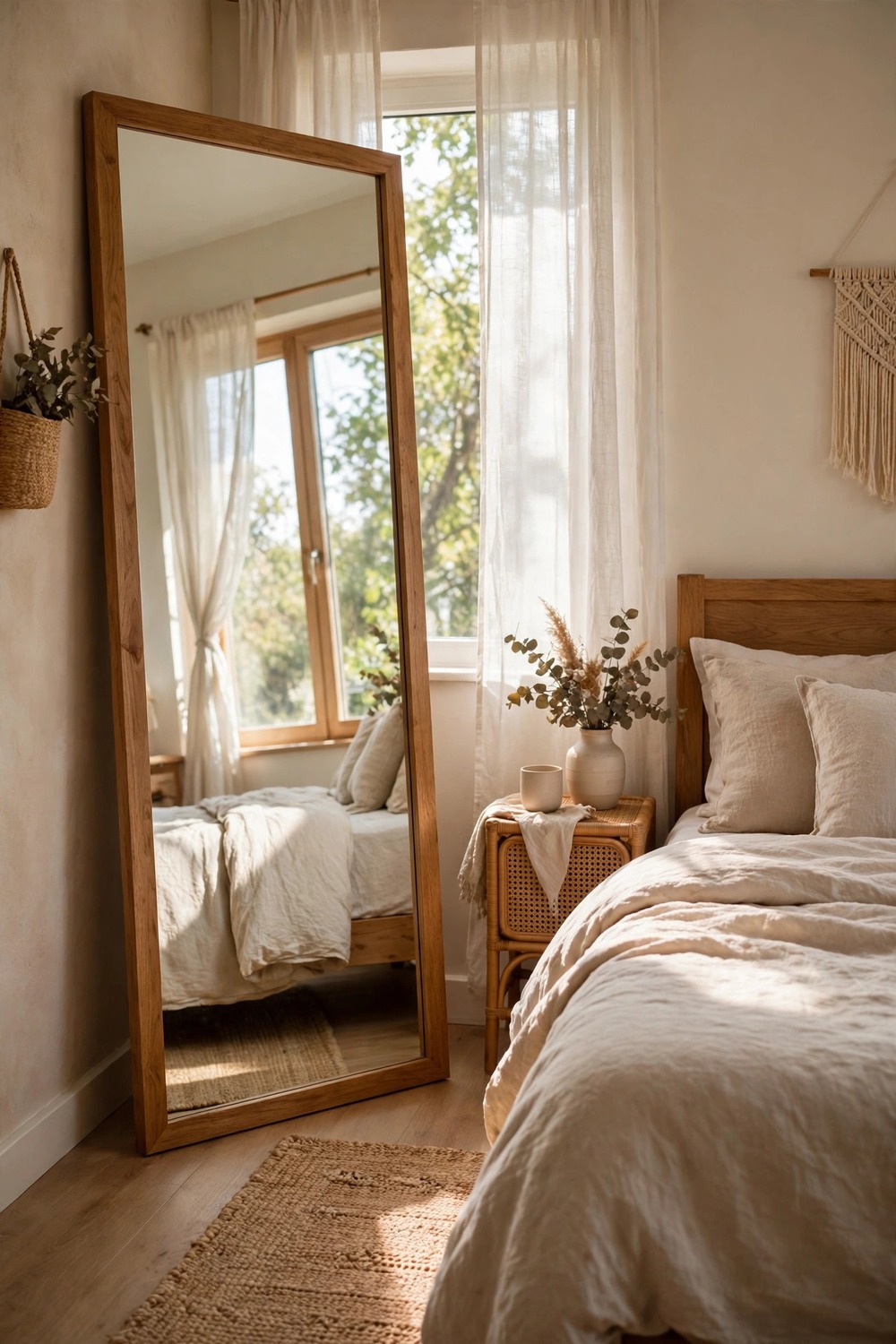
10. Use a Mirror to Borrow Light and Space
A mirror is one of the kindest tools you can use in a small bedroom because it borrows light from the window and gives it back to the darker corners. Place a large mirror opposite or beside a window so it catches daylight, or lean a tall mirror against a wall to add a sense of depth without any fixing at all. It also earns its keep as a practical dressing mirror, so it is never just decoration. Keep the frame simple and light in color if the room already has a lot going on. Be thoughtful about what the mirror reflects, because a view of a tidy bed will help the room feel calm, while a view of a cluttered corner will double that clutter instead.
Choose Flexible Pieces and a Light Touch
Small rooms usually work best when furniture can fold, slide, or change jobs as your day changes. A desk that disappears, storage built around the bed, and a guest bed that hides away can all help. These next five ideas focus on flexible pieces, plus two gentle visual tricks with color and art that cost very little floor space at all.
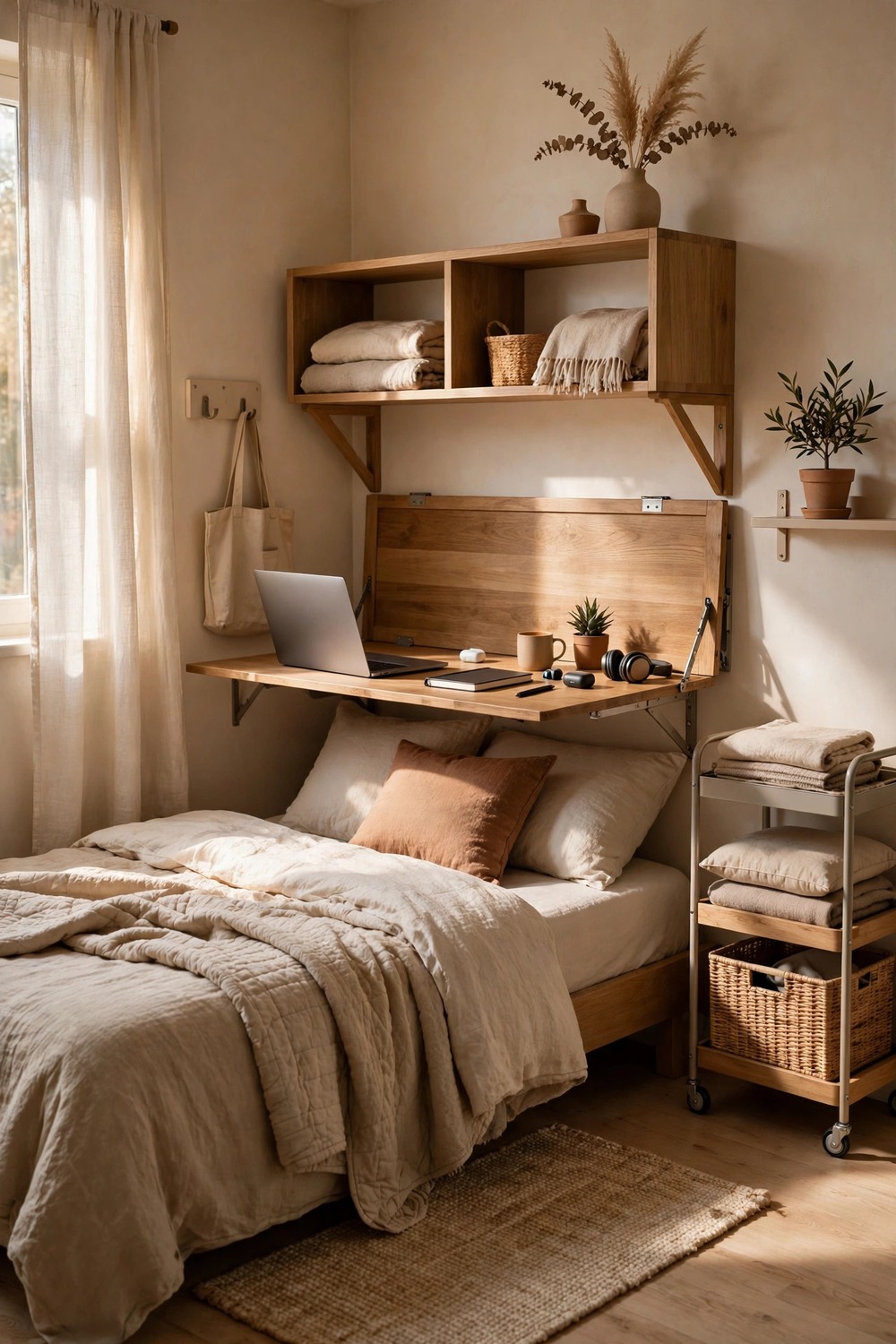
11. Choose a Folding or Drop-Leaf Desk
A folding or drop leaf desk gives you a proper surface when you need it and gives the space back when you do not. Wall mounted versions fold completely flat, while small drop leaf tables can open just one side for a laptop or both sides for a bigger project. Pair yours with a folding chair or a stool that lives under the bed, and the whole work setup can disappear in a couple of minutes. This is a kind option for rooms that double as a guest room or for anyone who does not want to look at work in the evening. Keep a small basket nearby for your notebook and charger, so clearing the desk stays quick and you actually do it most days.
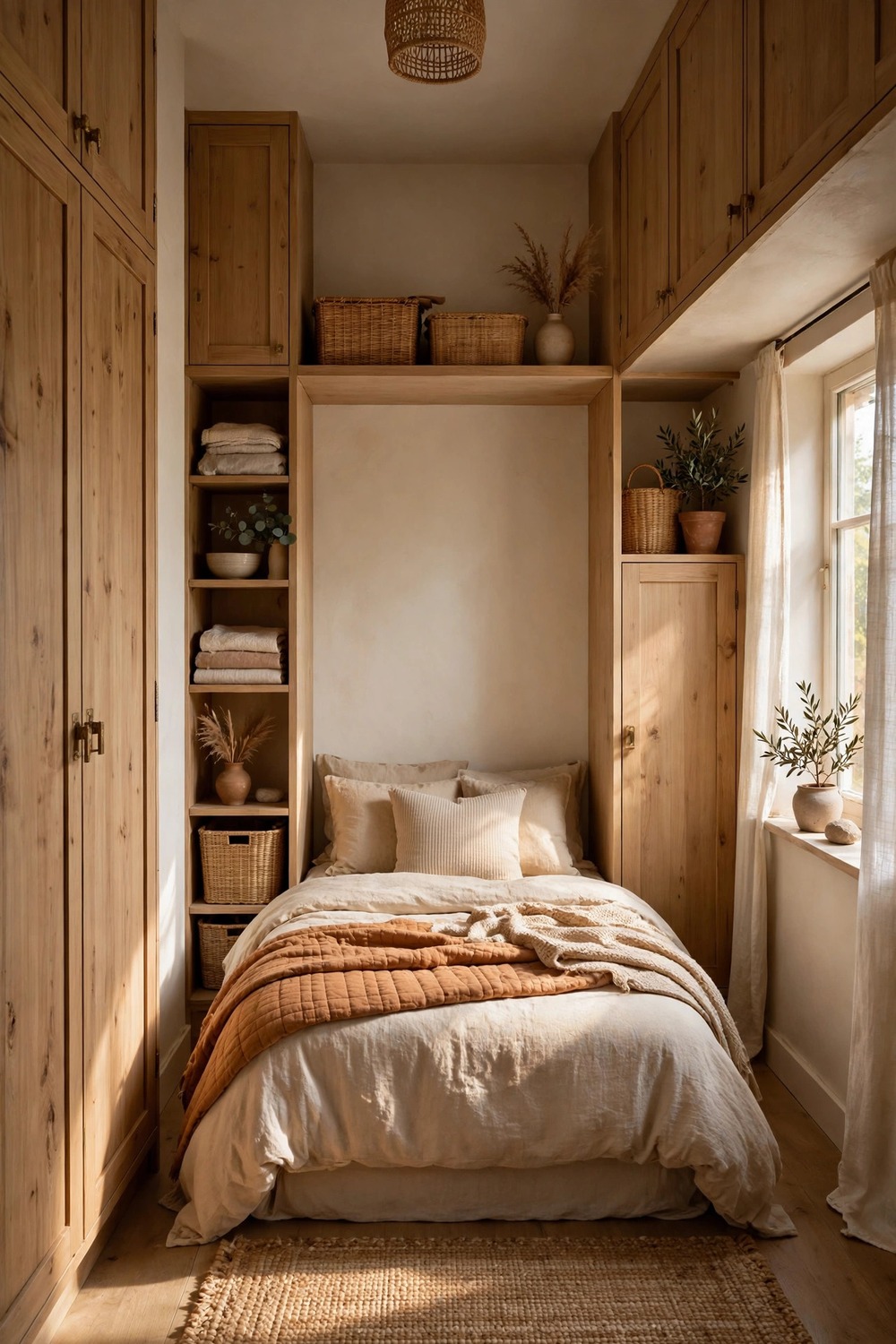
12. Build Storage Around the Bed With Tall Units
Building storage around the bed turns the headboard wall into a full, useful feature instead of leaving tall gaps on either side. Two narrow wardrobes or bookcases flanking the bed, with a shelf or cupboard running above it, can hold clothes, books, and bedding in one tidy zone. The bed nestles into the middle and often feels cozy rather than cramped, a bit like a little alcove made just for sleeping. Keep the unit color close to the wall color if you want it to feel calmer and less bulky. Add a small reading light inside the nook if you can. This idea asks for careful measuring and usually a bigger budget, but it can replace several separate pieces of furniture at once.
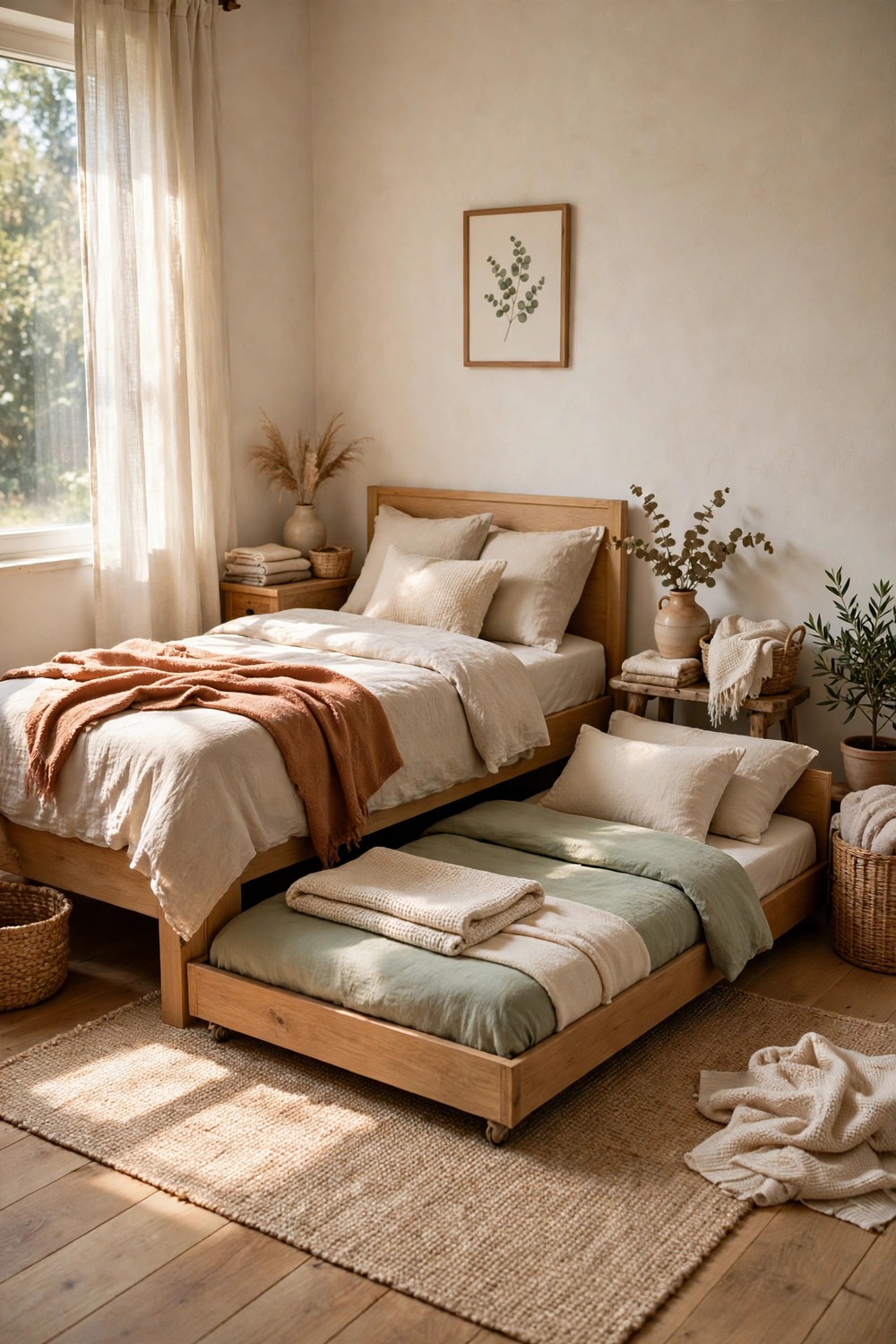
13. Use a Trundle for Guests Without a Guest Room
A trundle bed lets you welcome a guest without giving up a whole room to a bed that sits empty most of the year. The second mattress slides neatly under the main bed during the day and rolls out only when someone stays over. It is a friendly solution for a child room with sleepovers, a small home where family visits often, or a studio where every piece has to justify its space. Check that you have clear floor space to pull the trundle fully out, and keep a set of bedding stored close by so making it up is not a hunt. During the day, no one would guess the extra bed is even there, and the room keeps its usual calm layout.
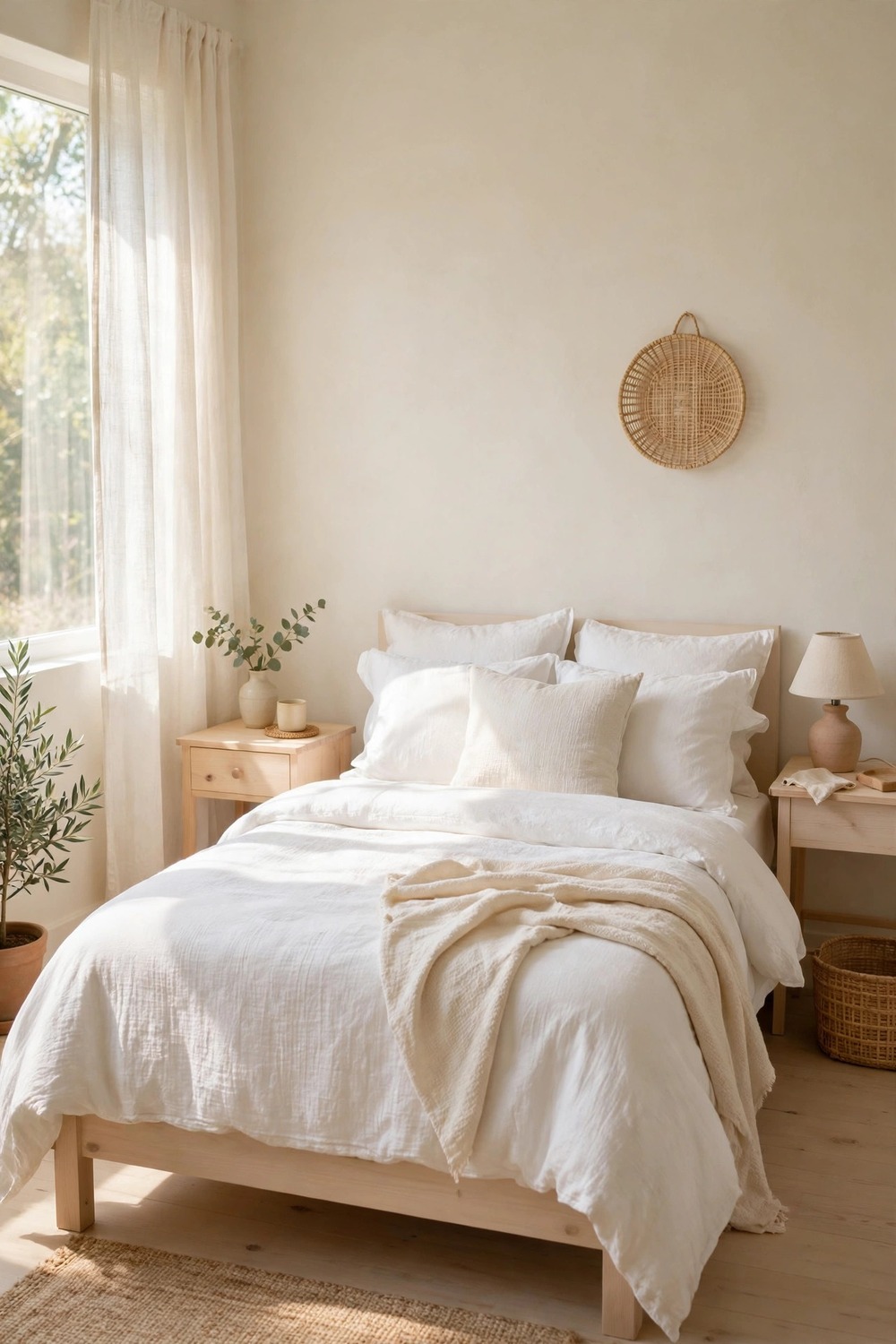
14. Keep the Palette Light to Open the Room
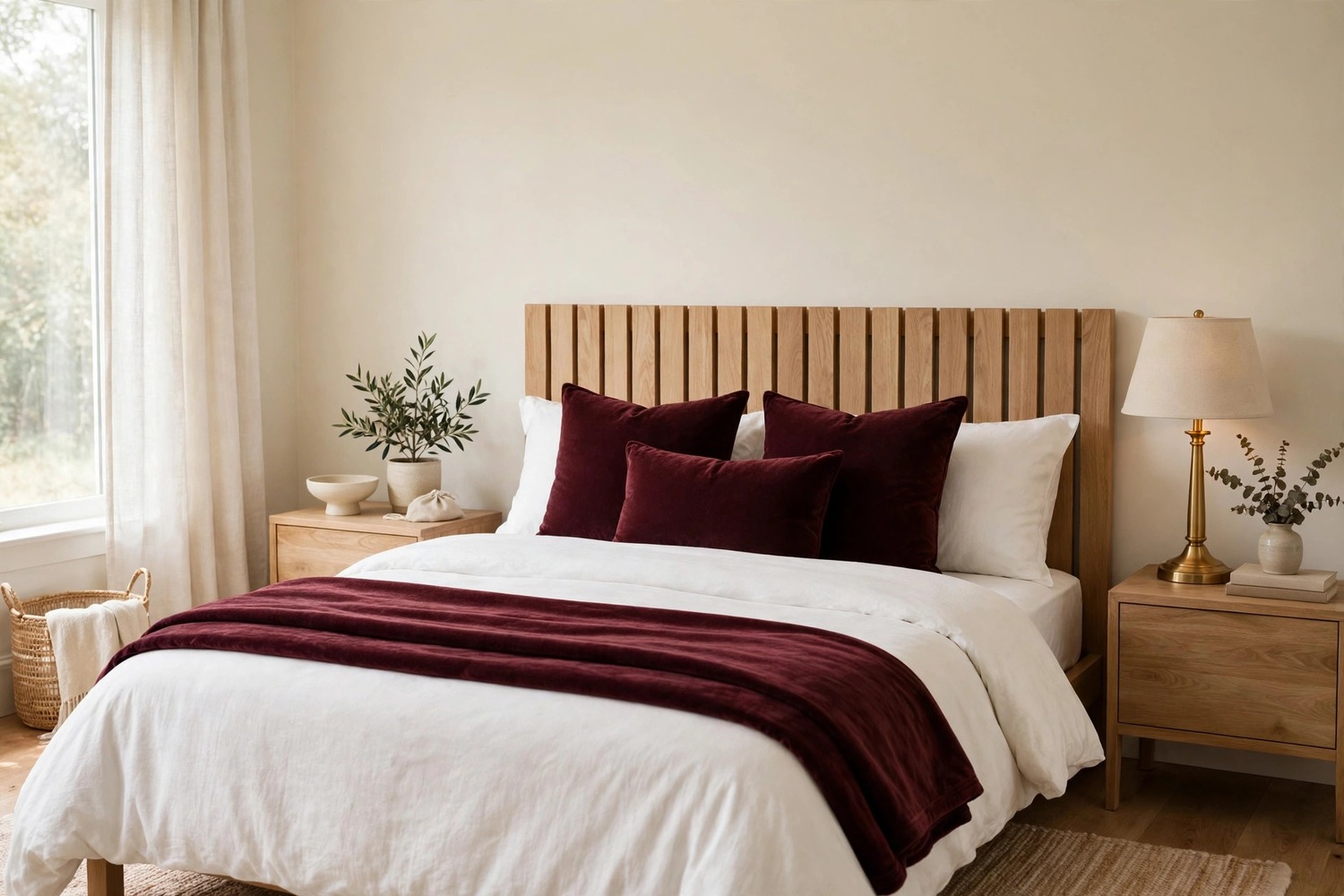
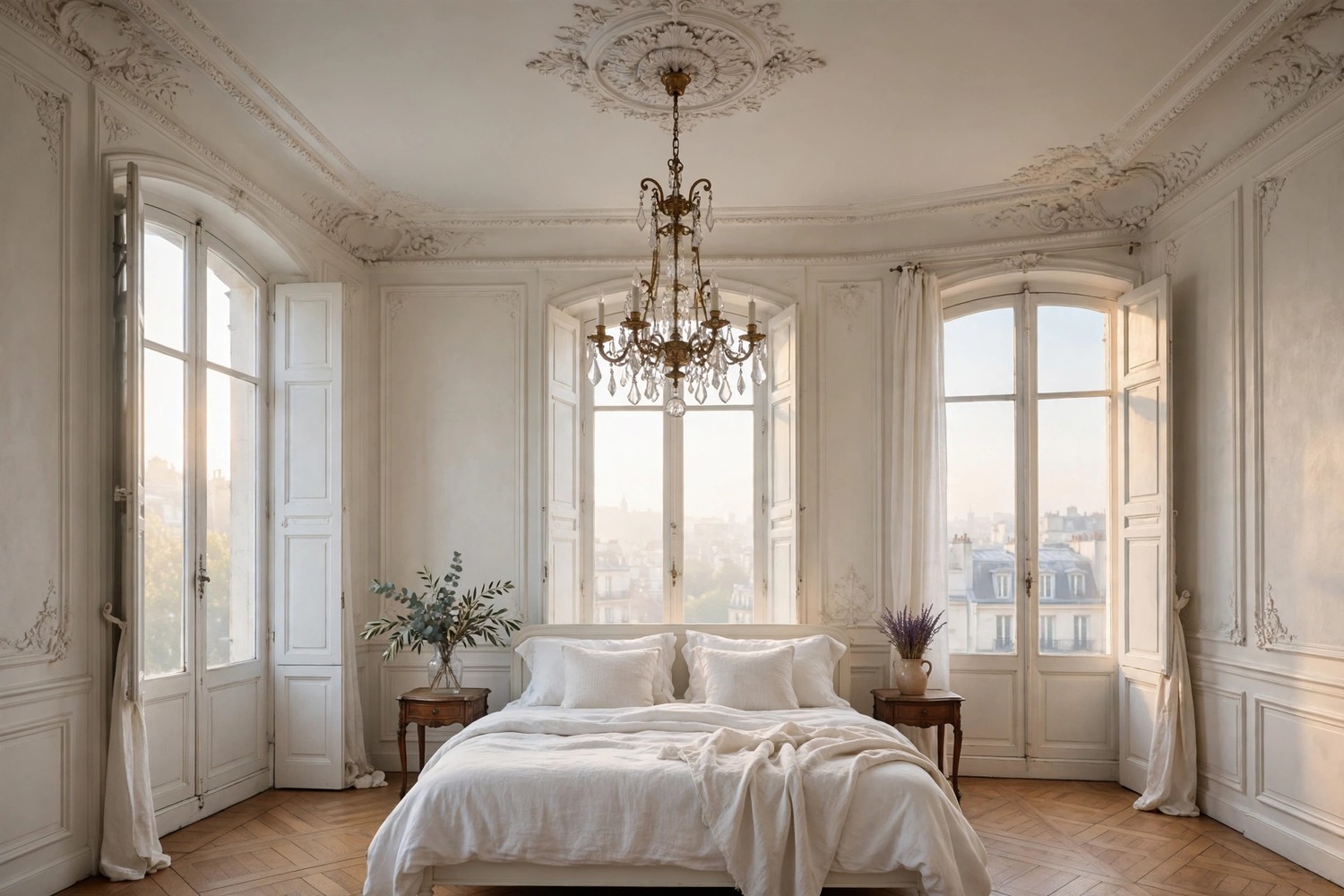
A light palette will not add square footage, but it can change how spacious a small bedroom feels the moment you walk in. Soft white, warm cream, pale gray, and gentle natural tones on walls and bedding reflect more light and blur the edges of the room a little, so it feels less boxed in. That does not mean everything has to be plain or cold. Layer in warmth with wood, woven textures, a colored throw, or cushions in a shade you love. Keep the biggest pieces the lightest, because a dark bulky wardrobe and dark bedding together can make a tiny room feel much smaller. If you love deeper color, try it on one small accent and let the rest of the room stay bright around it.
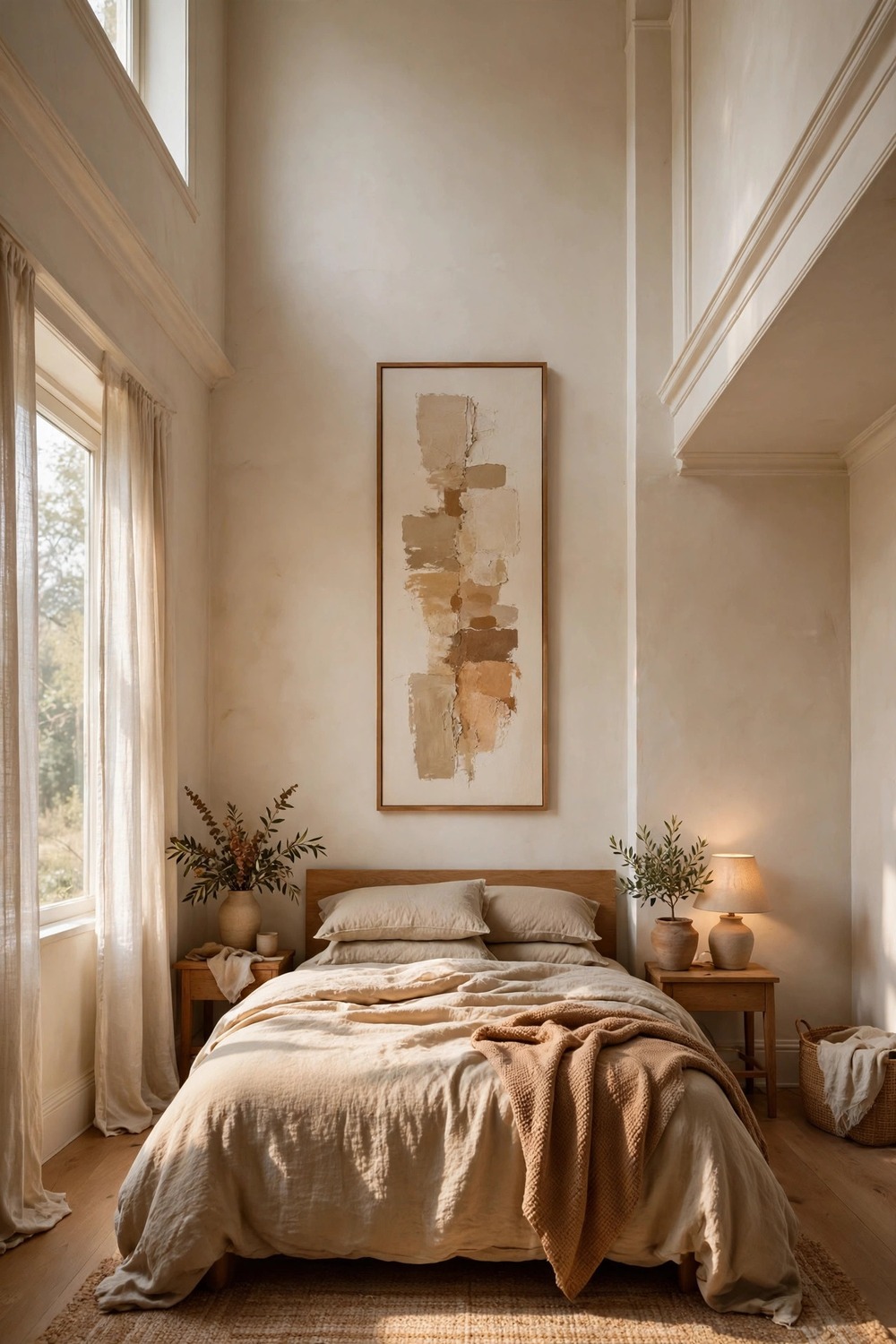
15. Hang Tall Art to Draw the Eye Up
Tall art gives a small bedroom a little lift by encouraging your eye to travel upward instead of stopping at the bed. A single vertical print above the headboard, or a pair of narrow frames side by side, can make the ceiling feel a touch higher and the wall feel more finished. Choose art with a light background and a simple subject if the room is already busy, so it adds height without adding visual noise. Hang it a little higher than you might in a larger room, while still keeping it connected to the bed below. You do not need expensive pieces for this to work. A favorite photo printed larger, a simple line drawing, or even a pretty piece of fabric in a tall frame can do the job nicely.
Finish With Space to Move and Breathe
The final touches are less about adding things and more about placing what you have with care. Storage that uses forgotten corners, doors that do not swing into your path, and clear walking routes can make a small room feel calm instead of cramped. These last five ideas help you finish the layout so the room stays easy to live in, not just nice to look at.
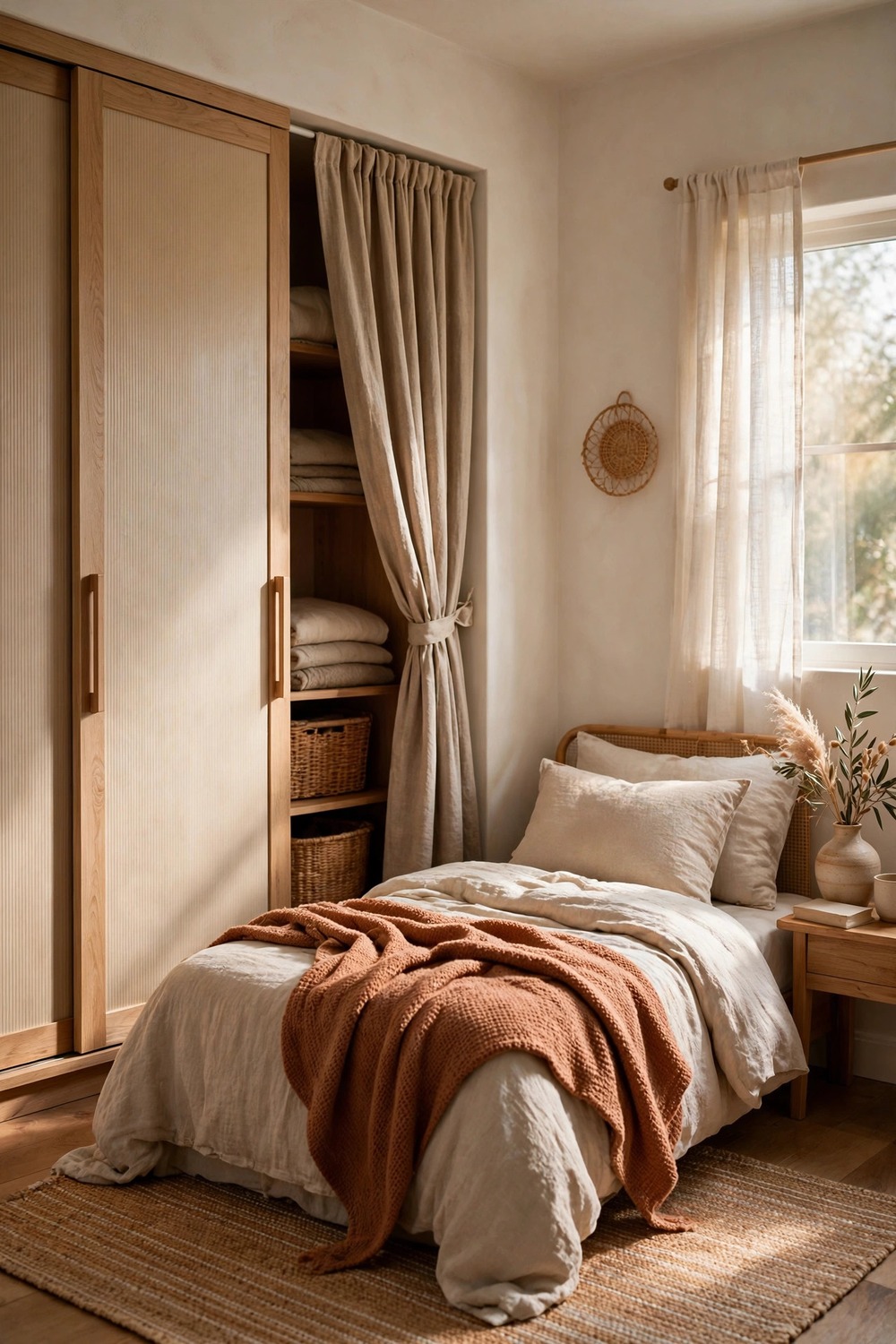
16. Use Sliding or Curtain Closures to Save Swing Space
Swinging doors need more room than we usually realize, and in a small bedroom that swing can clash with a bed, a dresser, or your own walking path. Sliding doors for a wardrobe, or a simple curtain closure on an open closet or storage nook, can solve that clash without major work. A curtain adds softness and color too, and it is easy to change when you want a fresh look. For a bathroom or entry door, a sliding option may need professional fitting, so start with the wardrobe or closet if you are renting. The floor space you save is not huge on paper, but in daily life it typically feels like the room has loosened up and stopped getting in your way.
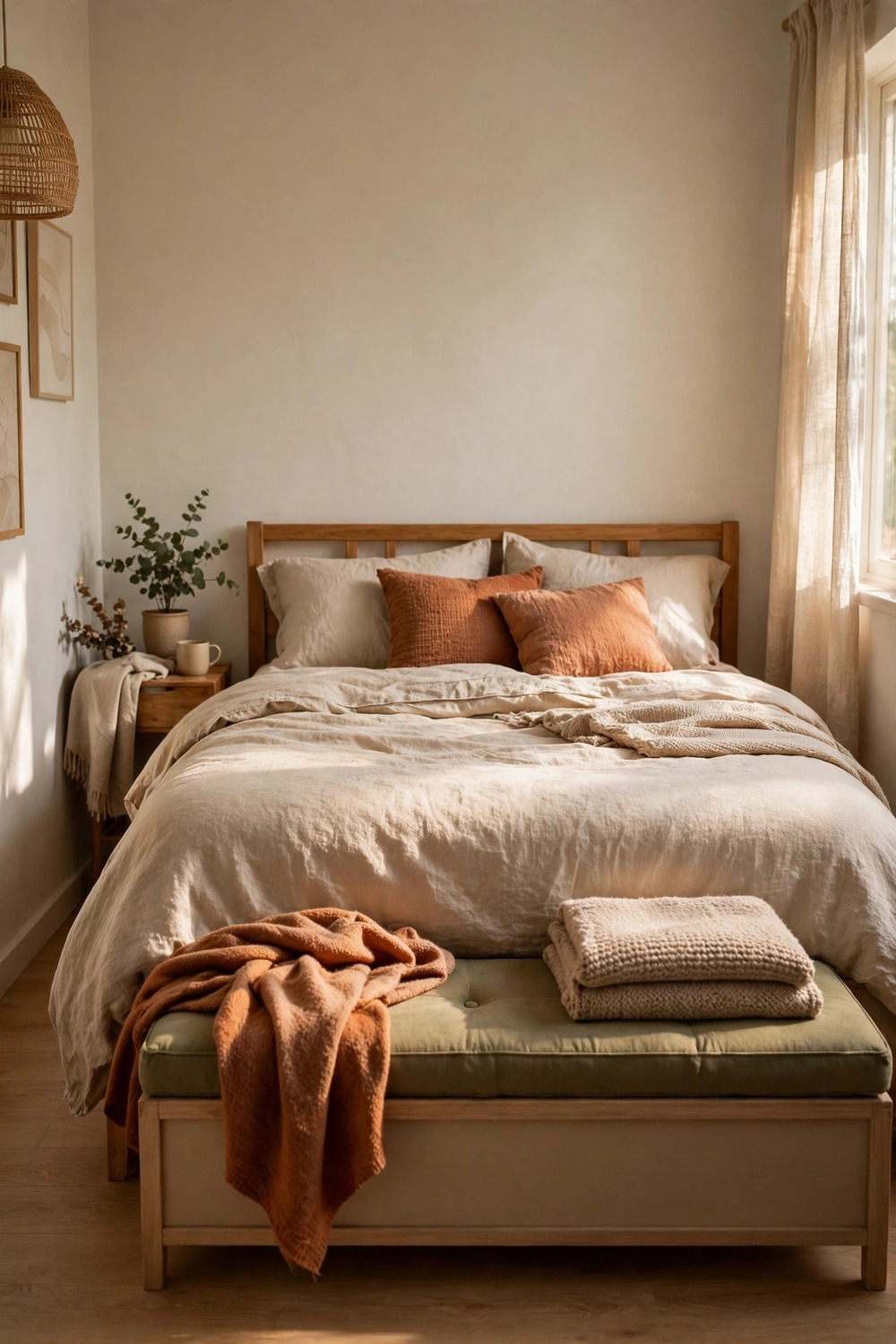
17. Add a Slim Bench That Doubles as Storage
A slim bench at the foot of the bed is one of those pieces that quietly does three jobs at once. It gives you a place to sit while you put on shoes, a surface for a folded throw or tomorrow clothes, and hidden storage inside for spare blankets, books, or seasonal pieces. Choose a narrow design that leaves a clear path on at least one side of the bed, and check that the lid opens fully without hitting the mattress. A cushioned top in a washable fabric usually works best for daily life. Keep what you store inside to things you use fairly often, or the bench can become a forgotten box. Used well, it typically makes the whole bed area feel more finished.
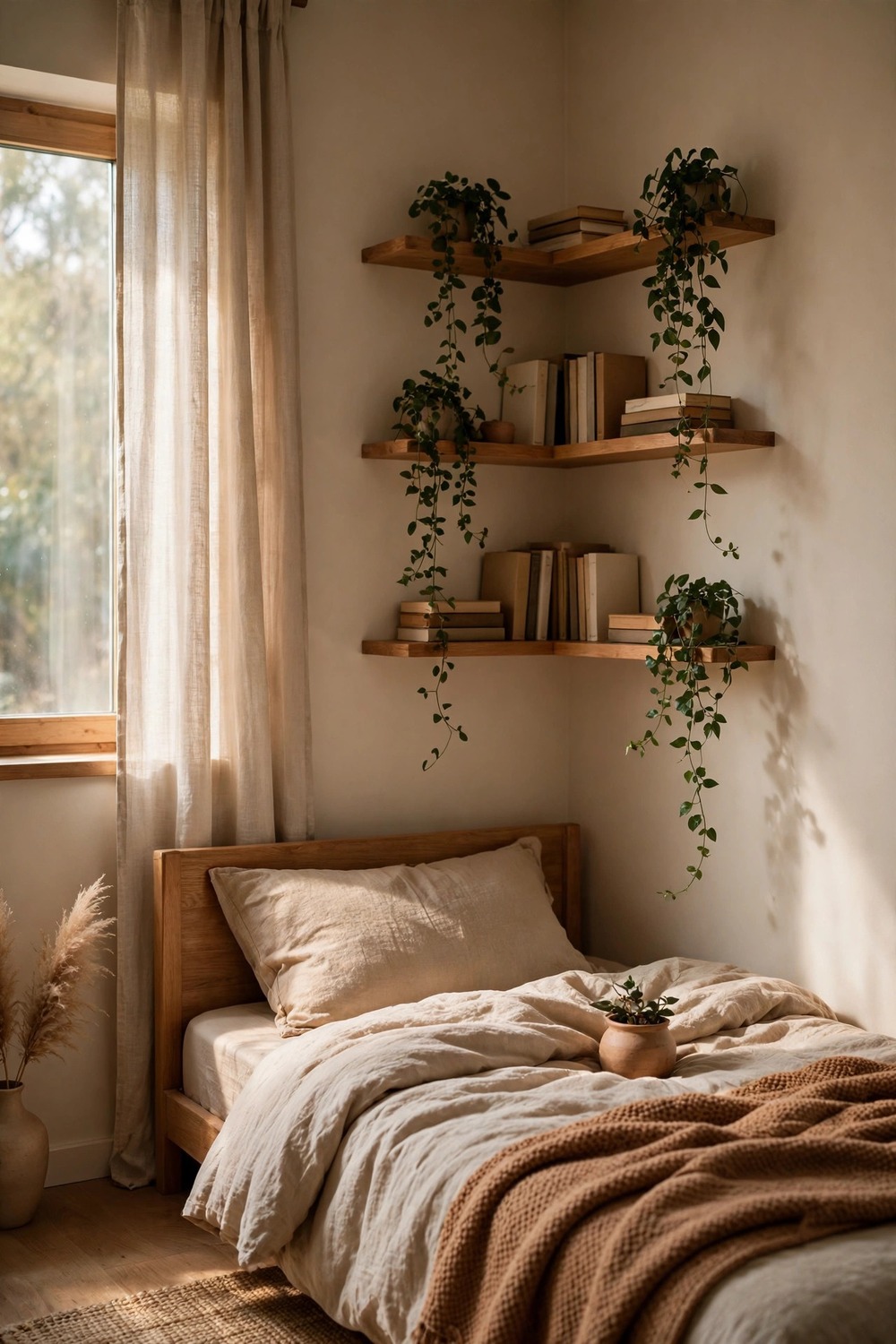
18. Use Corner Shelves for Books and Plants
Corners are often the most wasted part of a small bedroom, too tight for furniture but too visible to ignore. A small stack of corner shelves can turn that awkward spot into a sweet home for books, a trailing plant, and a few personal pieces. Start with three or four shelves at staggered heights rather than filling the corner from floor to ceiling, so it feels light rather than like another bookcase squeezed in. Keep heavier books on the lower shelves and let a plant soften the top. This is also a kind spot for a small lamp or a night light if the corner is near the bed. You will typically be surprised by how much a previously empty corner can hold without crowding the room.
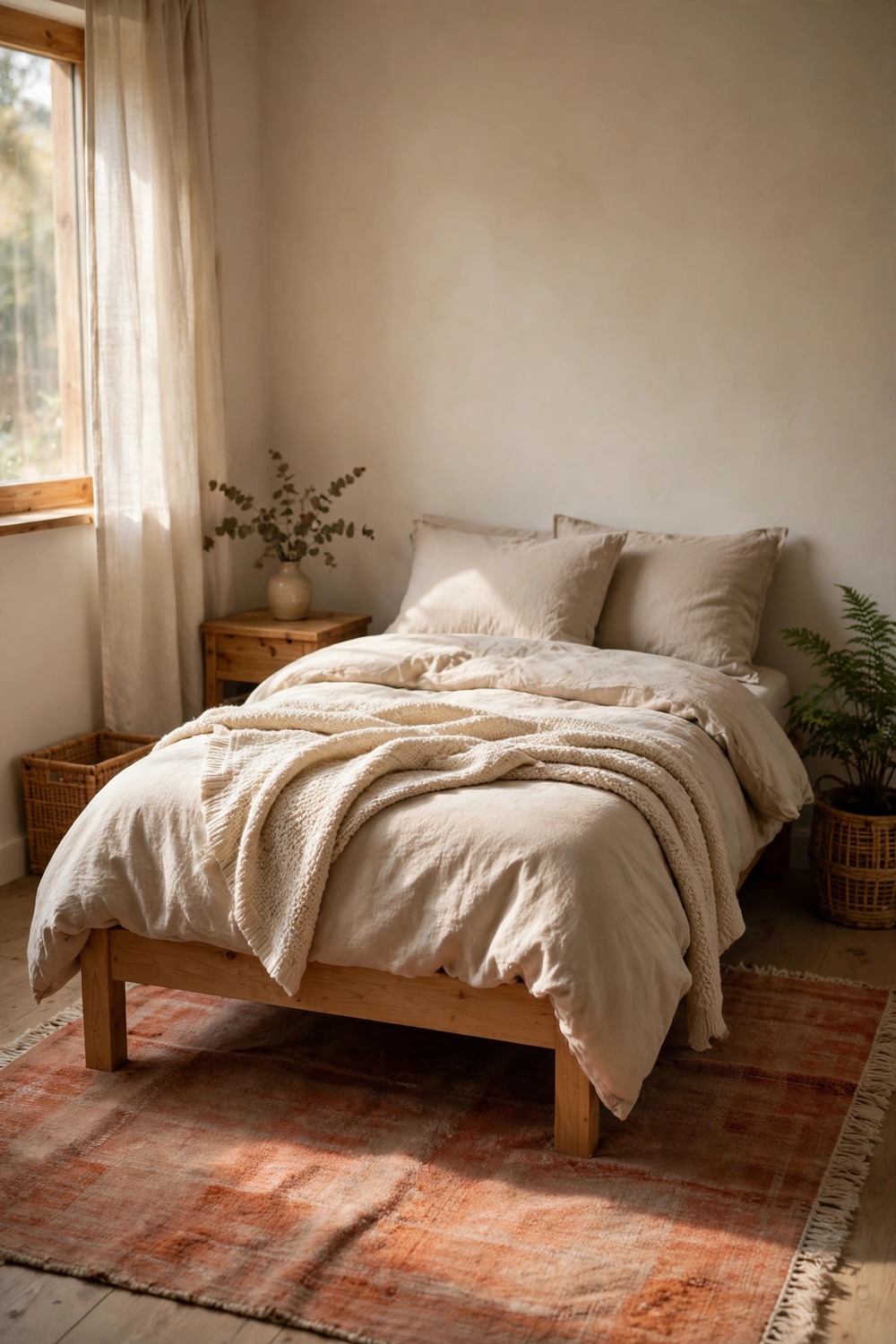
19. Use a Rug to Anchor the Layout in a Small Footprint
A rug can hold a small bedroom layout together by marking out the sleeping zone as one calm, connected area. Placing a rug partly under the bed, with a generous border showing on both sides and at the foot, usually makes the bed area feel intentional rather than just parked against a wall. Choose a size that lets you step onto something soft when you get up, because that small comfort is part of the point. A light, low pile rug in a subtle pattern tends to work well, since it adds warmth without darkening the floor or catching on drawers and trundles. If the room is very narrow, a runner along the side of the bed can give you a similar anchored feeling for less.
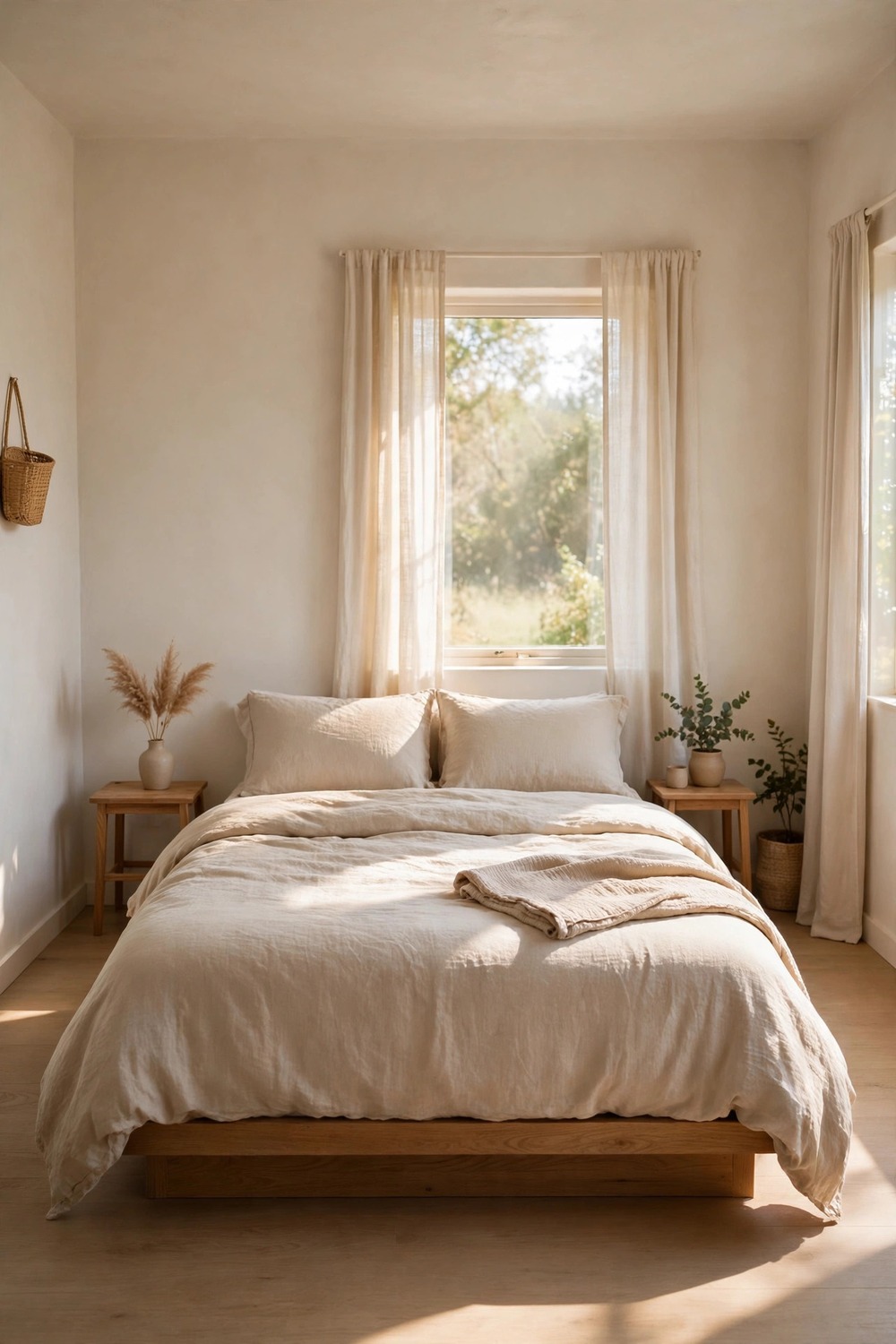
20. Leave Walking Space Clear So the Room Can Breathe
The most helpful small bedroom idea is sometimes the simplest one, which is to leave your walking space truly clear. It is tempting to fill every gap with a basket, a plant, or a little table, but a clear path from the door to the bed and to the window lets the room breathe and makes daily life calmer. Walk the routes you use every day, in the morning and in the dark, and notice where you turn sideways or step around something. Those are the spots to fix first. Move, slim down, or rehome the piece that blocks you, even if you like it. A room with a little empty floor typically feels larger and rests easier than a room where every inch is working hard.
When you step back, a small bedroom does not need to feel perfect or look like a magazine to work well for you. It just needs a bed placed with care, storage that fits the space you actually have, and clear room to move without thinking about it. If one area still bothers you, change only that area, live with it for a few days, and then decide again. Small rooms usually teach you what they need slowly, as you notice where light falls, where clutter gathers, and where you always wish there was a little more space.
So start small this week. Pick just one idea, maybe clearing the walking path or swapping a bulky nightstand for a simple wall shelf, and try it before you buy anything new. That single change will show you what your room can become, and the next step will probably suggest itself. Before long, your small bedroom will not feel like a problem to solve anymore. It will feel like a cozy, well thought out place that uses every inch with kindness.

Leave a Reply