
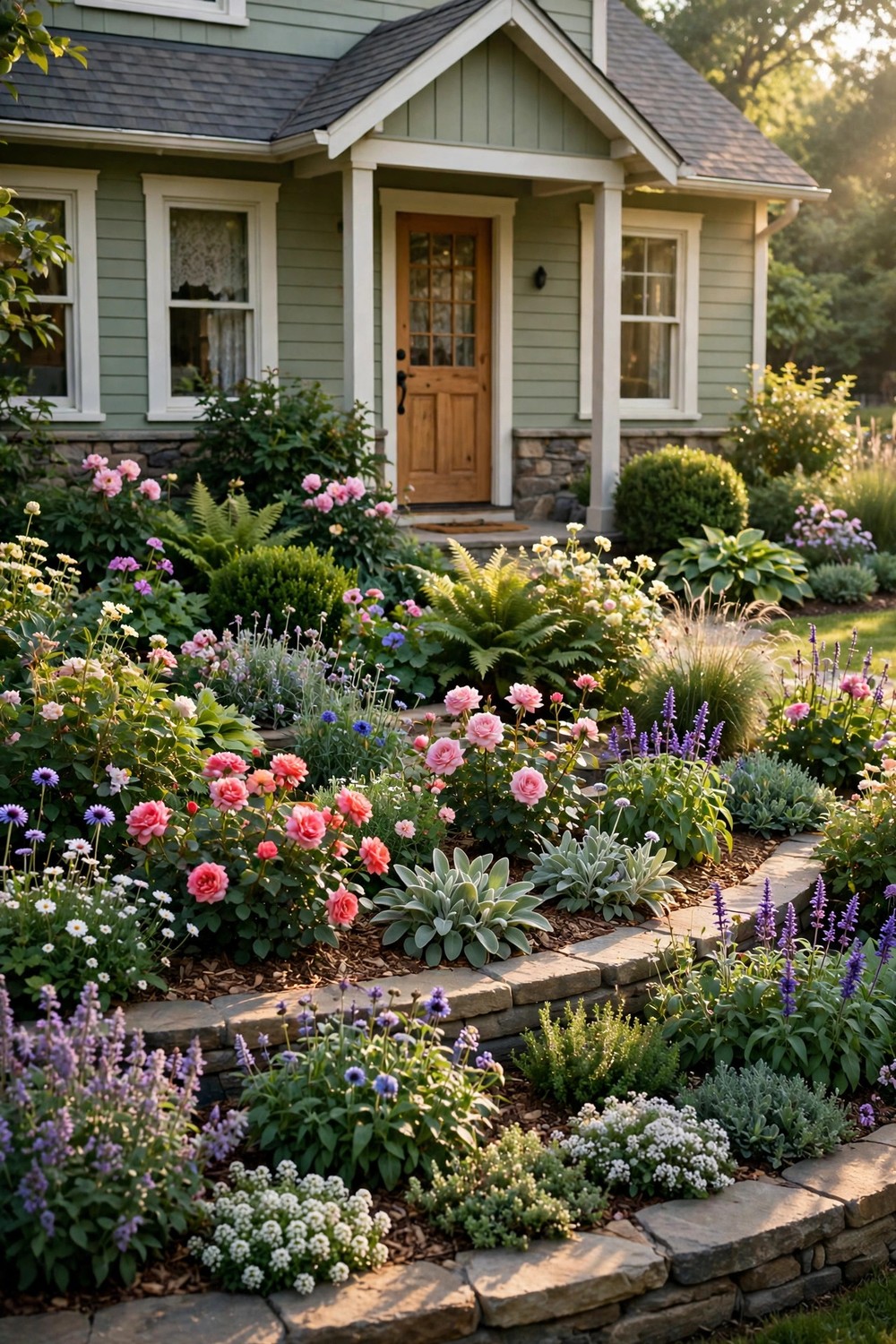
22 Flower Bed Ideas for the Front of Your House
The flower bed along the front of the house is the hardest working planting you own. It greets every guest, frames every photograph of your home, and does it while growing in the awkward strip between a wall and a lawn, in soil that is often rubble, dry, and shaded by the very house it is meant to flatter.
The secret of the beds that look wonderful is not exotic plants. It is structure first, evergreen bones that hold the shape in January, then layers of flowers for the seasons, and a disciplined edge that makes the whole thing look tended. Get those three right and even a narrow bed becomes the house’s best feature.
Here are 22 flower bed ideas for the front of your house, from classic cottage borders and low maintenance evergreen beds to shade solutions, modern minimal plantings, and seasonal rotations. Measure your strip, watch its light for a day, and choose the idea that fits the bed you actually have.
Contents
- 1. Classic Cottage Front Border
- 2. Evergreen Foundation Bed
- 3. Layered Shrub and Perennial Bed
- 4. Curved Island Bed
- 5. White and Green Front Bed
- 6. Pollinator Front Bed
- 7. Shade Loving Front Bed
- 8. Hosta and Fern Bed
- 9. Coral Bells and Heuchera Edge Bed
- 10. Drought Tolerant Front Bed
- 11. Lavender and Gravel Bed
- 12. Ornamental Grass Bed
- 13. Modern Minimal Front Bed
- 14. Brick House Rose Bed
- 15. Climbing Rose and Clematis Bed
- 16. Spring Bulb Front Bed
- 17. Summer Annual Color Bed
- 18. Autumn Front Bed
- 19. Raised Front Bed
- 20. Tiered Bed on a Slope
- 21. Window Box Style Narrow Bed
- 22. Four Season Front Bed
Classic Front Bed Designs
These are the beds that have framed houses beautifully for generations, built on evergreen structure, honest flowers, and edges that mean business. Start here if your front bed is a blank strip of nothing.
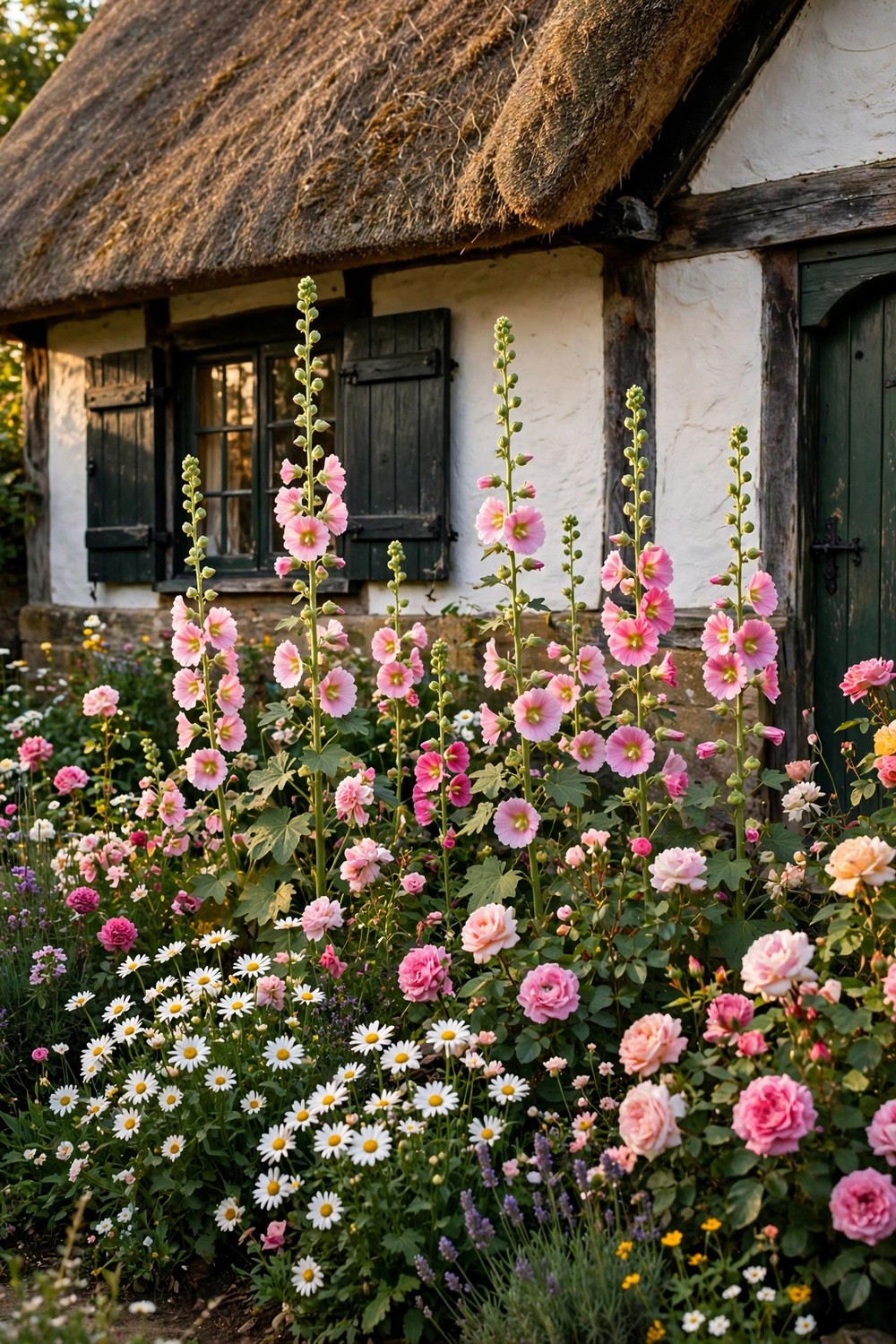
1. Classic Cottage Front Border
Plant a cottage border that tumbles gently. Roses, lavender, catmint, geraniums, and a froth of alyssum spilling toward the path is the front bed of storybooks, and it suits brick and cottage homes especially. The trick is repetition, the same few plants in drifts down the bed’s length, so the abundance reads as design rather than a plant collection. Let it soften the house’s lines, because that is precisely its job.
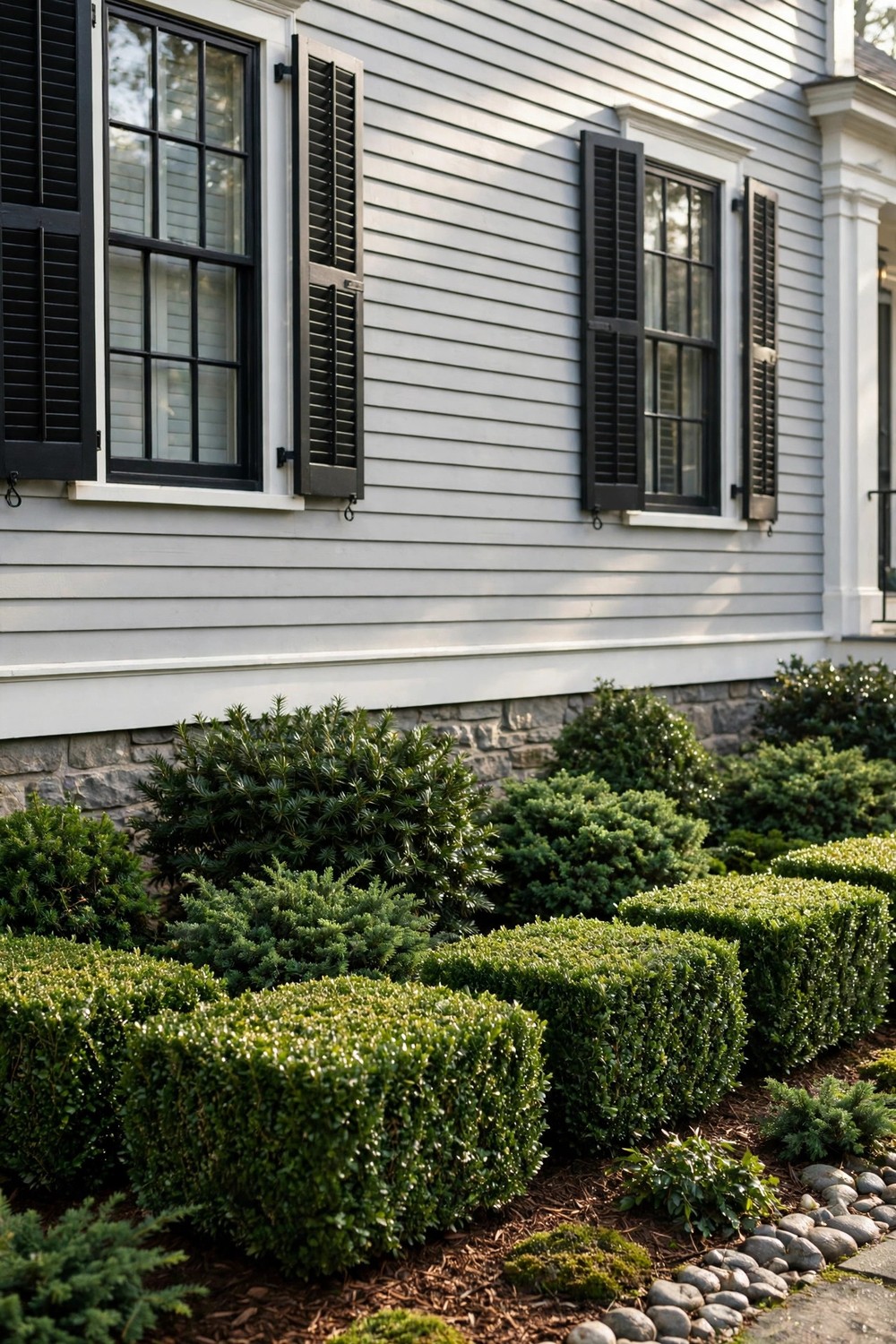
2. Evergreen Foundation Bed
Anchor the house with evergreens. A bed of boxwood, yew, holly, and compact evergreen shrubs against the foundation gives the house green bones in every month, including the ones when flowers are a rumor. Vary the shapes, balls, cones, and soft mounds, and the bed reads as architecture. This is the lowest maintenance front bed there is once established, asking for a clip or two a year and nothing else.
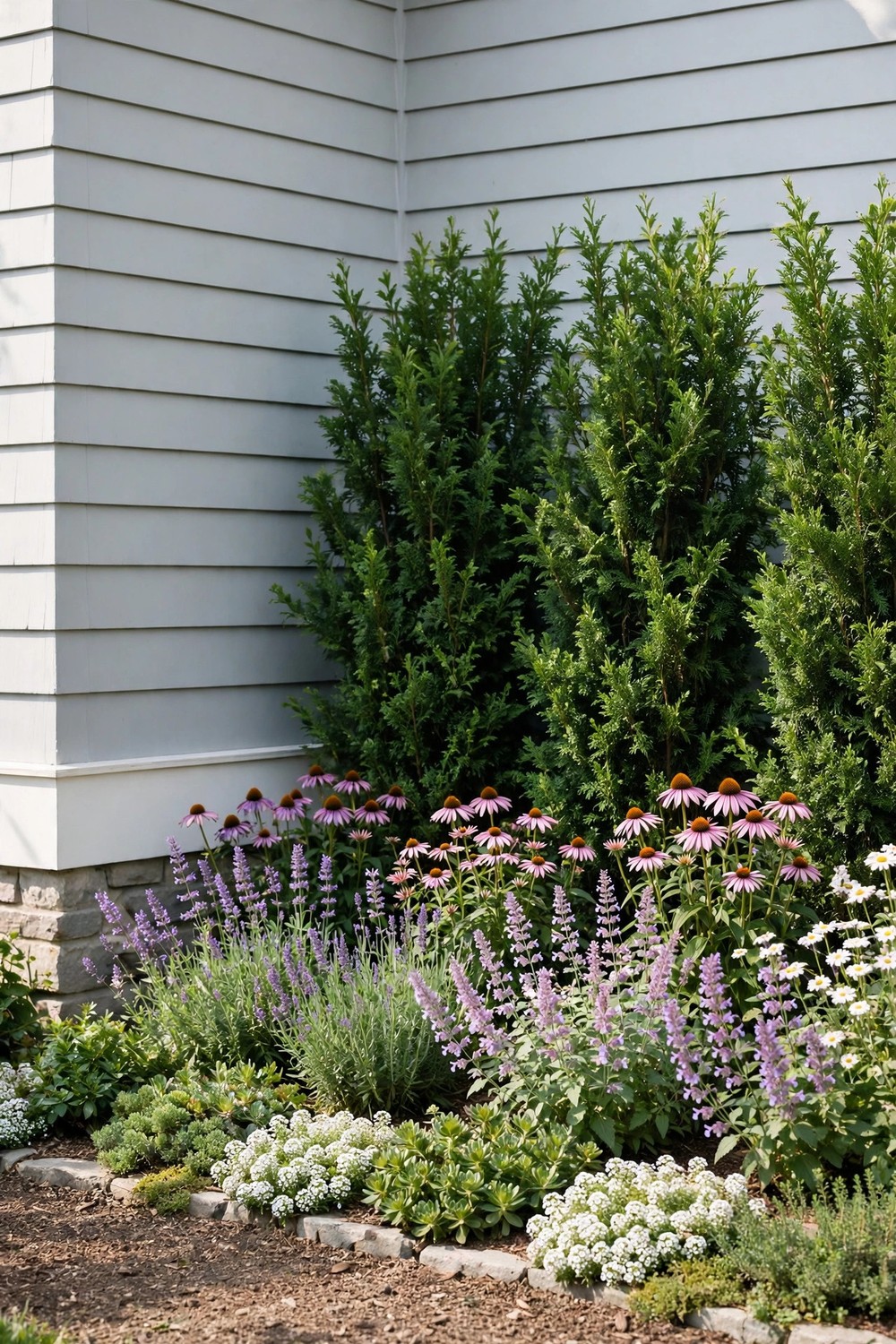
3. Layered Shrub and Perennial Bed
Layer shrubs behind perennials behind edging. Three tiers, shrubs at the wall, mid height perennials in the middle, low edging plants at the front, make any front bed look deep and generous, even a narrow one. The layers hide each other’s bare legs and give flowers a green backdrop to perform against. It is the professional’s basic recipe, and it works on every house style there is.
4. Curved Island Bed
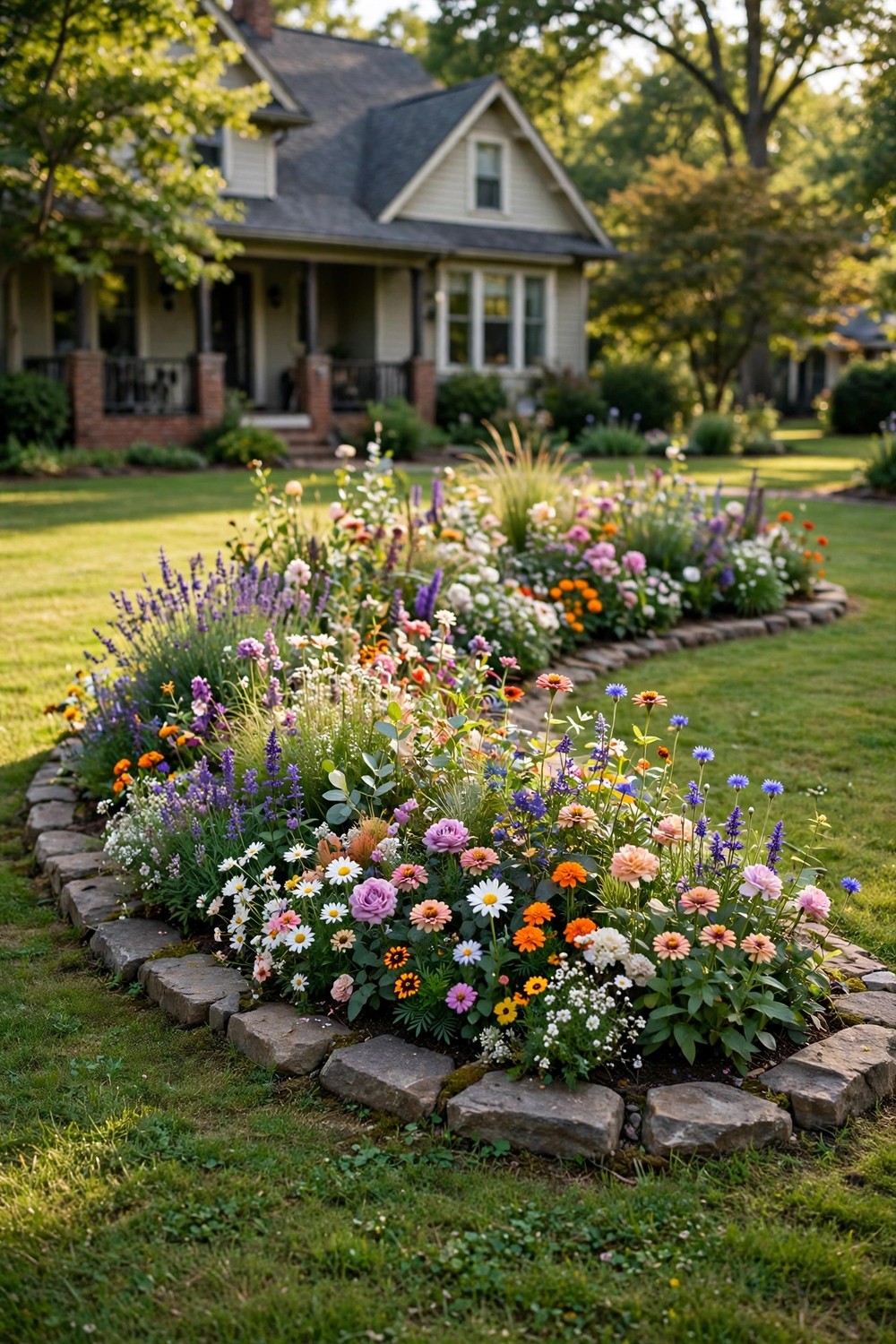
Curve an island bed into the front lawn. If the strip by the house is too narrow or too shaded, move the show into the lawn. A curved island bed with a small tree, shrubs, and perennials gives you room to plant properly and makes the house look settled into a garden rather than parked beside one. Keep its curves gentle for mowing, and underplant the tree with spring bulbs for an early show.
5. White and Green Front Bed
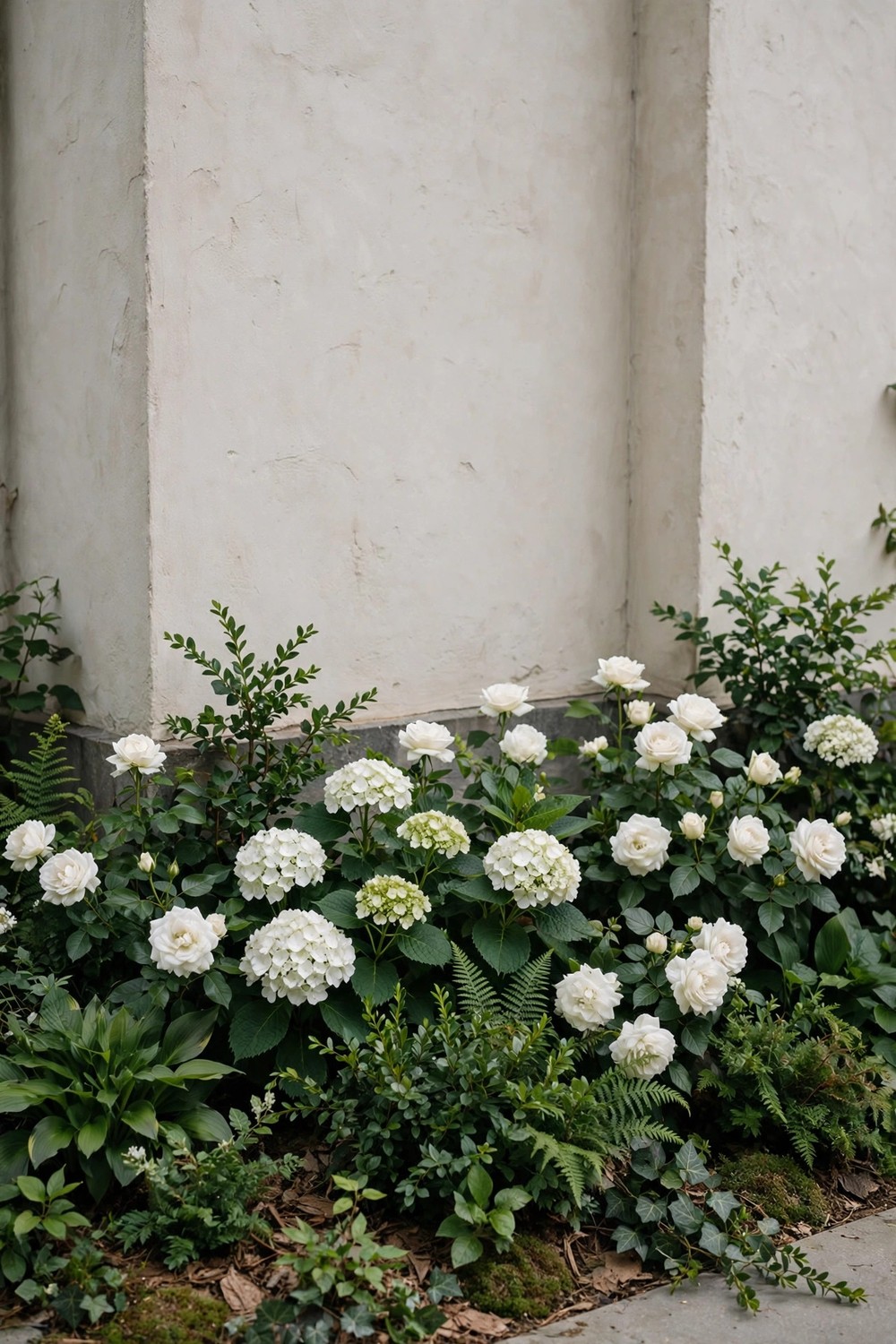
Plant white flowers and green foliage only. A bed restricted to white blooms, white roses, white hydrangeas, white geraniums, set in green foliage looks calm, expensive, and good against every house color ever painted. It also glows at dusk when guests arrive. The discipline of two colors does the design work, and the bed never clashes with anything, including the car.
6. Pollinator Front Bed
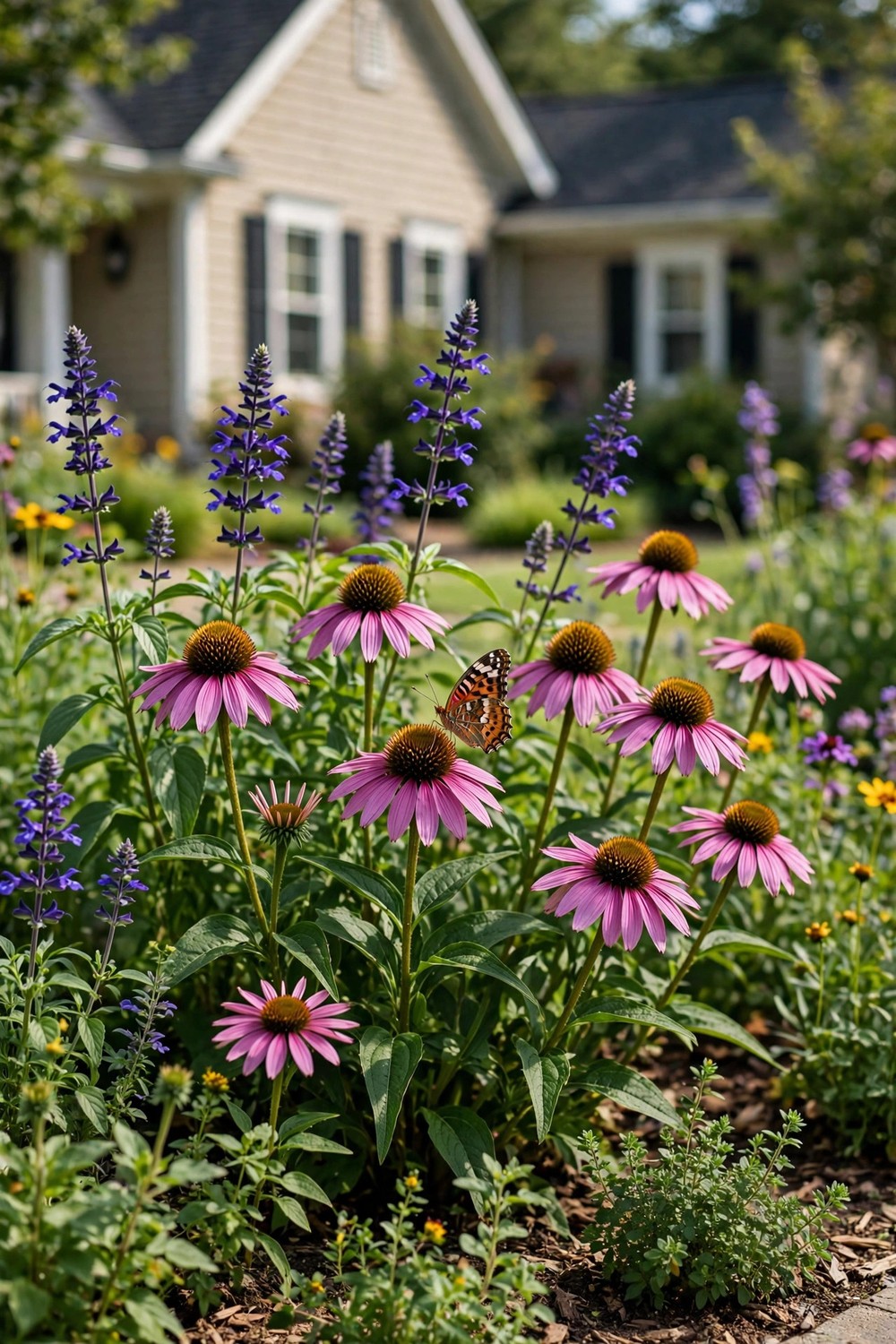
Fill the front bed with pollinator favorites. Coneflowers, salvia, lavender, catmint, and sedum in the front bed turn the house’s public face into a small wildlife reserve, busy with bees and butterflies from spring to frost. It is the friendliest bed a street can have, and children walking to school will know your house as the butterfly one. Choose long blooming varieties and the show runs for months.
Beds for Shade and Tricky Strips
North facing walls, deep eaves, and narrow side strips defeat ordinary planting. These beds are built from plants that genuinely prefer those conditions, which is the only honest way to garden in them.
7. Shade Loving Front Bed
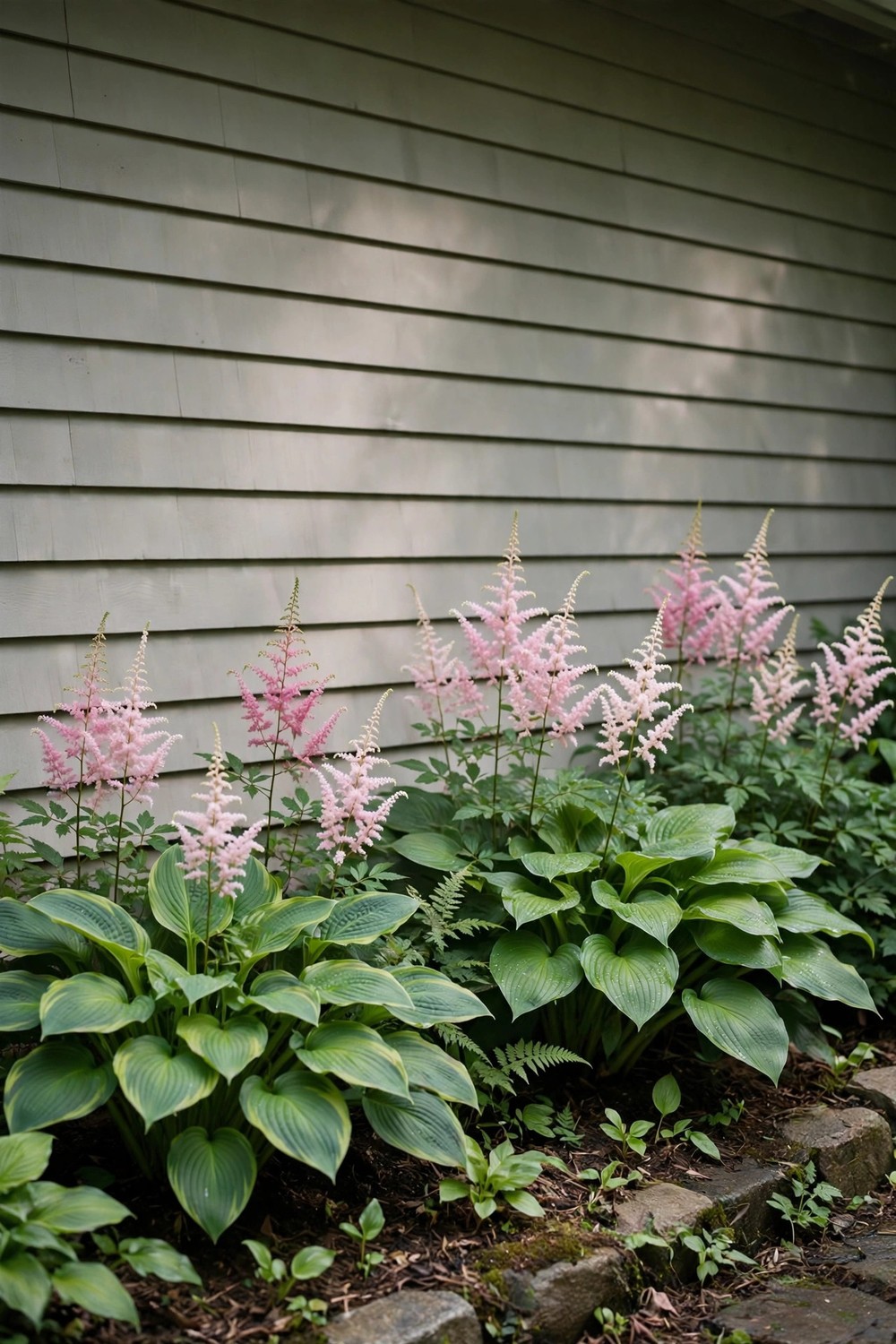
Plant for shade honestly and lushly. Hostas, astilbe, ferns, and bleeding hearts in a shaded front bed give a cool, green lushness that sunny beds envy by August. Add white and pale flowers, which glow in shade, and a few big leaves for drama. A shade bed done confidently looks intentional and serene, and it asks for almost no watering once settled.
8. Hosta and Fern Bed
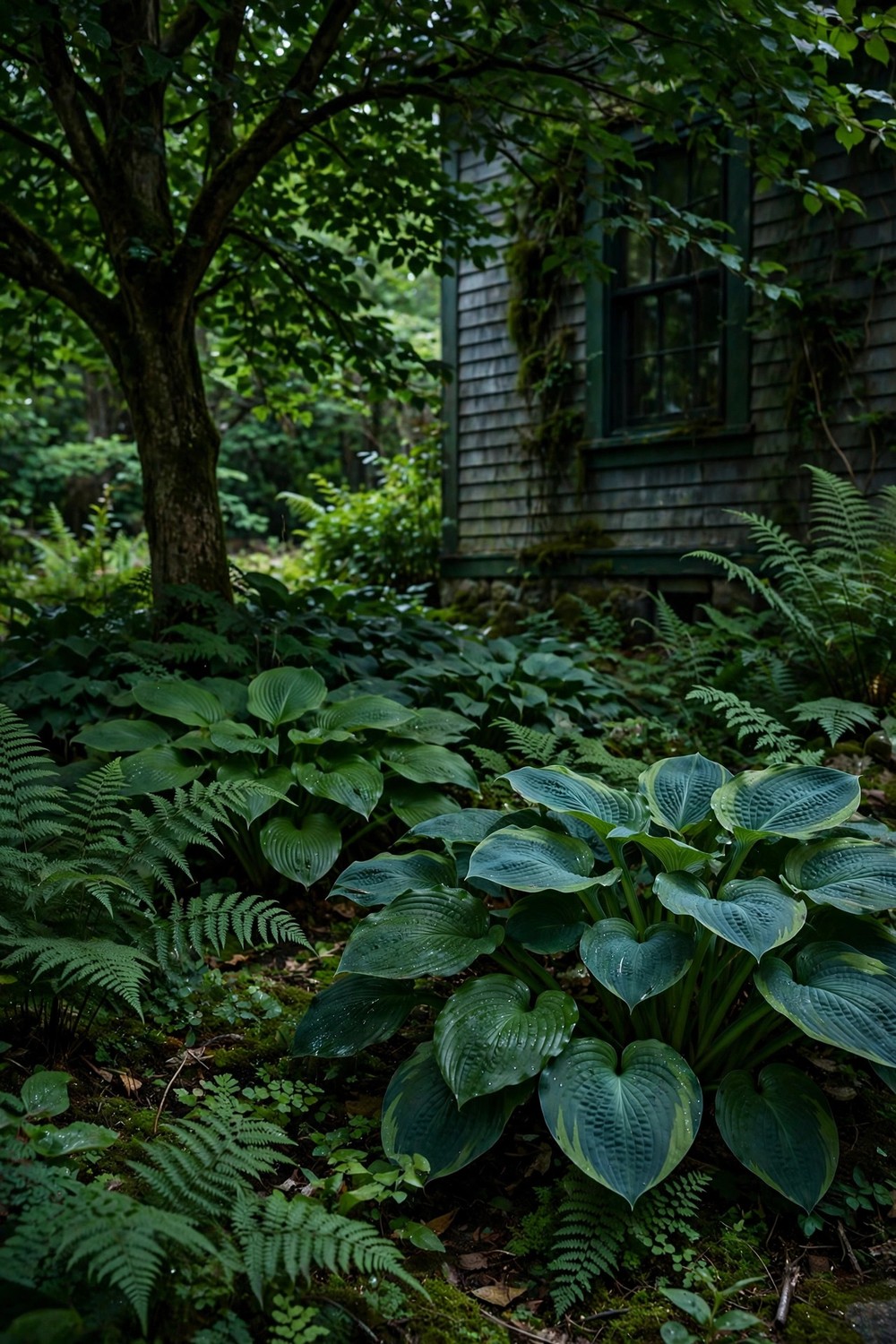
Let hostas and ferns carry the whole bed. A bed of nothing but hostas in varied sizes and greens, underplanted and edged with ferns, is a study in leaf texture that needs no flowers at all. It suits shaded fronts and woodland houses beautifully, and it deepens in beauty every year as the clumps mature. Guard it from slugs early in the season and it will guard your house’s dignity all summer.
9. Coral Bells and Heuchera Edge Bed
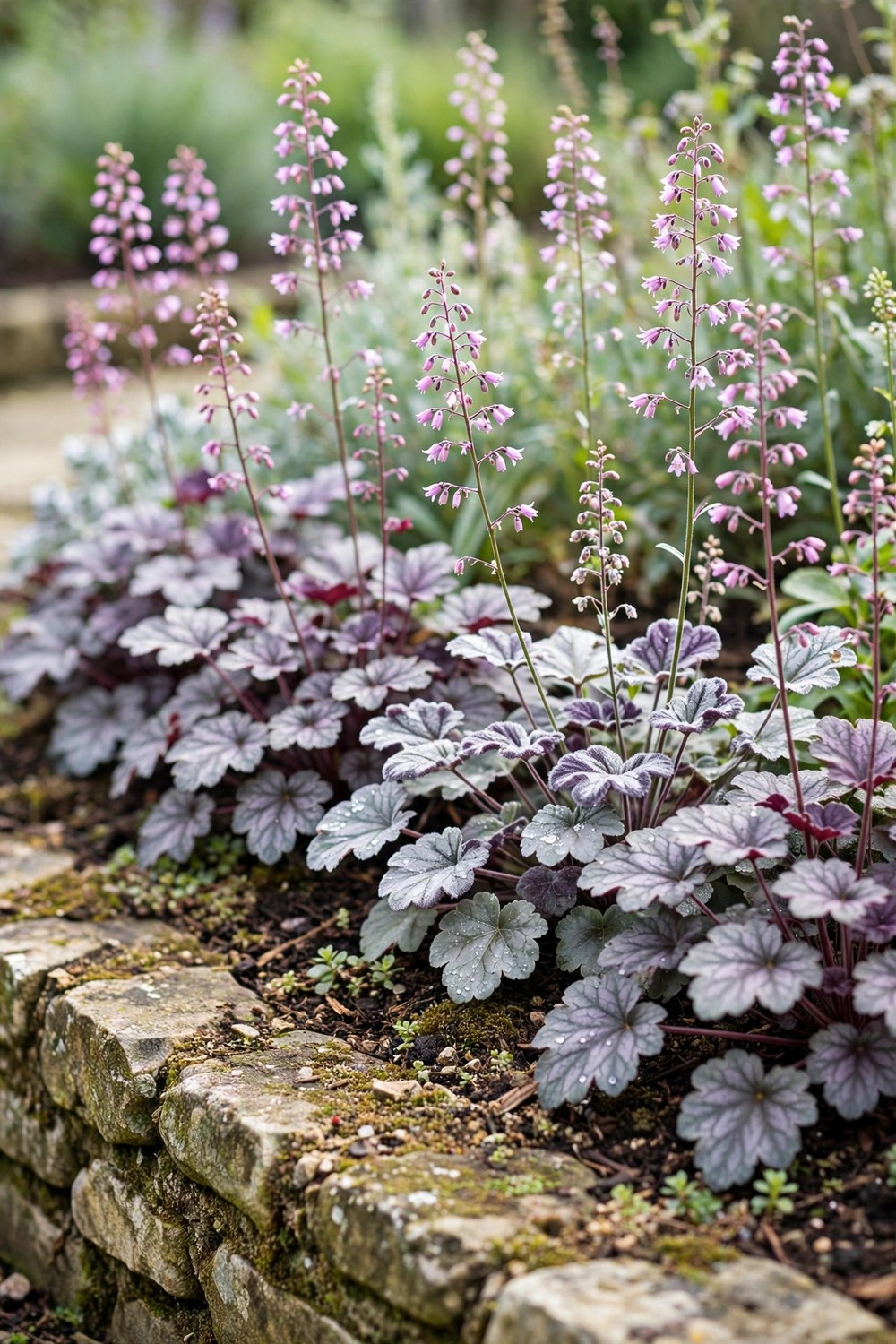
Edge the bed with heuchera for year round color. Coral bells in plum, silver, caramel, and lime make an edging that is colorful in January, flowers delicately in spring, and never needs replacing like annual edging does. Use one variety in a long ribbon for the smartest effect. In a small front bed, a heuchera edge with a few shrubs behind it can be the entire design, and a very good one.
10. Drought Tolerant Front Bed
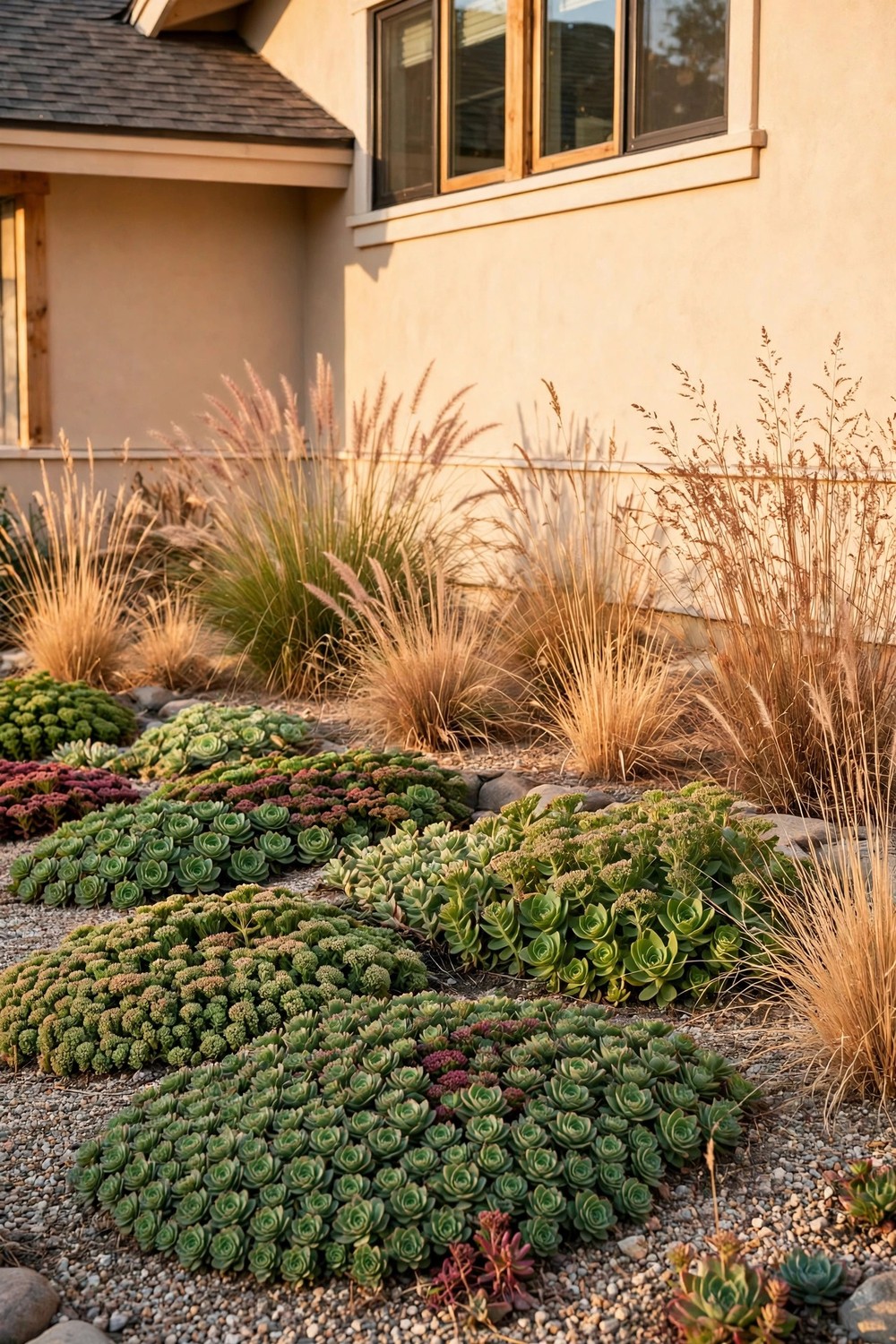
Plant a bed that laughs at dry soil. The strip under the eaves is a rain shadow, permanently dry, which is exactly what sedum, lavender, Russian sage, and ornamental grasses ordered. A drought bed in gravel mulch needs watering only in its first season and looks better the hotter the summer gets. It is the honest answer to the front bed that has defeated three generations of petunias.
11. Lavender and Gravel Bed
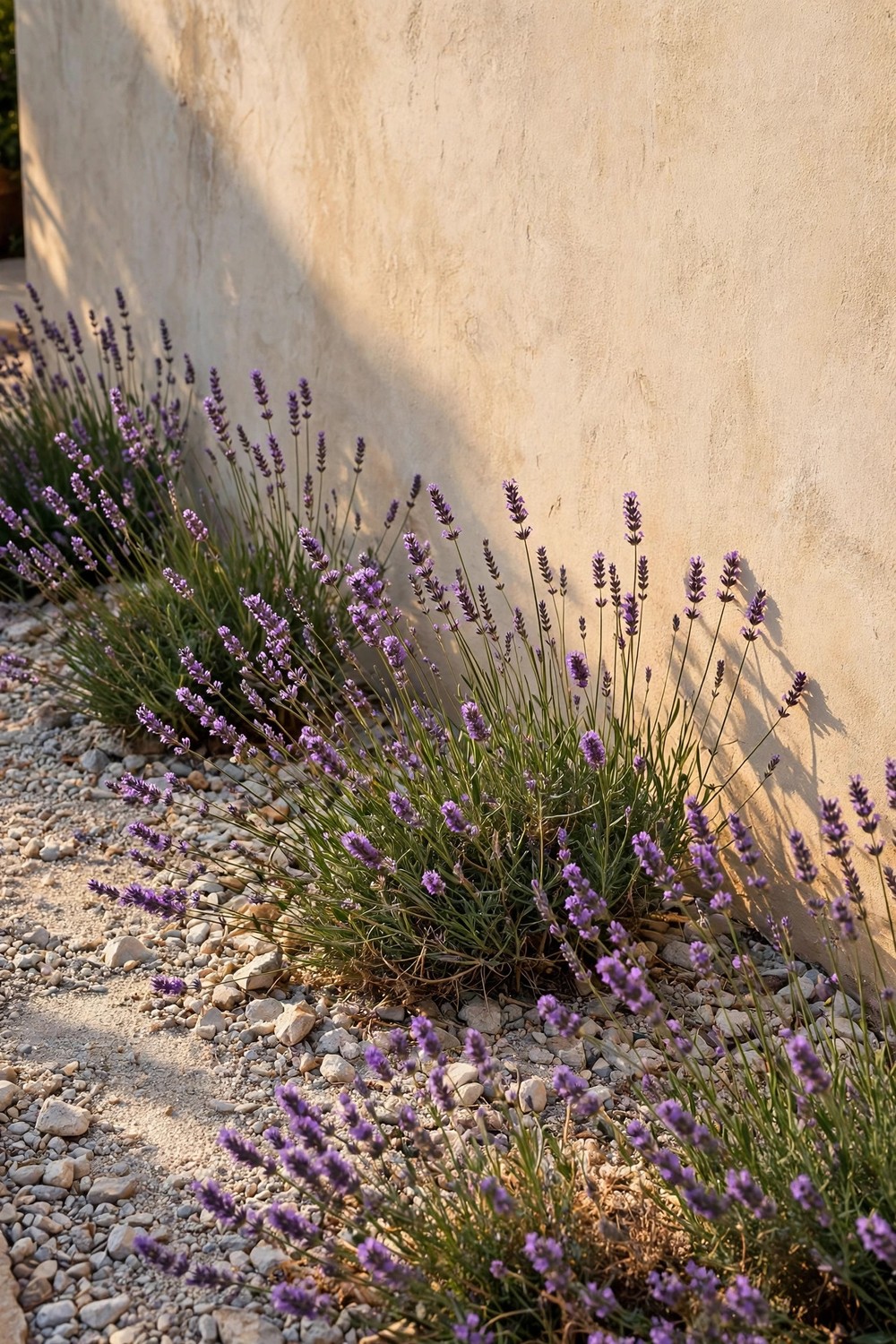
Lay gravel and plant lavender in drifts. A sunny front wall with a gravel bed and rows or drifts of lavender is Mediterranean, fragrant, and practically self maintaining. The wall’s reflected heat ripens the lavender, the gravel keeps its crown dry, and callers get a brush of scent at the door. It flatters stone, render, and modern houses alike, and ages gracefully.
12. Ornamental Grass Bed
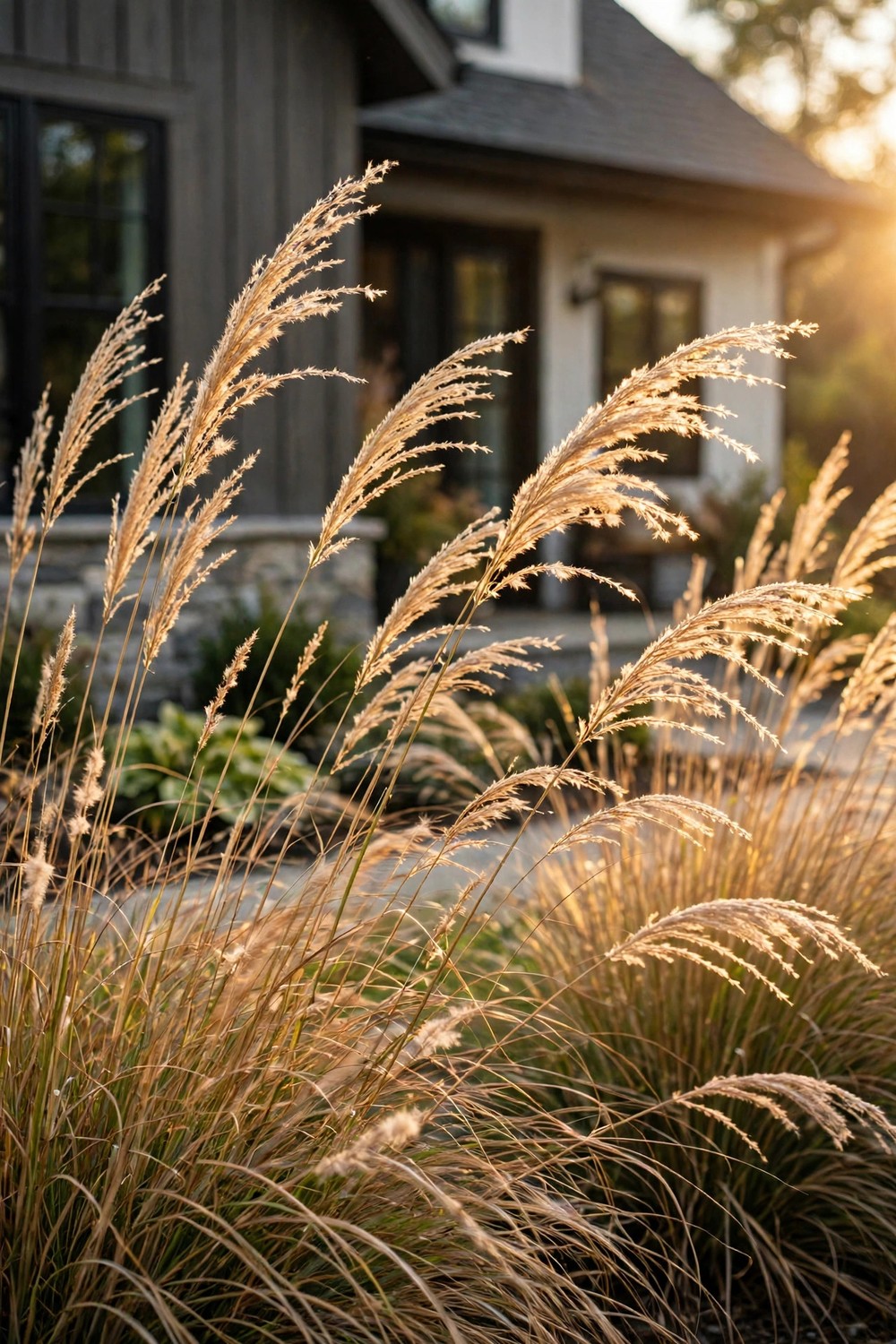
Let ornamental grasses do the waving. A front bed of fountain grasses, miscanthus, and blue fescue, with a few alliums in spring, brings movement and soft sound to the front of the house and looks good from the street in every season, including frost. Grasses need one cut a year and no deadheading, which makes this the modern low effort bed. Their plumes catching evening light by the front door is a small daily show.
Styles for Every House
Once the bed works, it can also dress the house. These designs match the planting to the architecture, cottage roses for brick, clean lines for modern fronts, and climbers where the wall itself wants in on the act.
13. Modern Minimal Front Bed
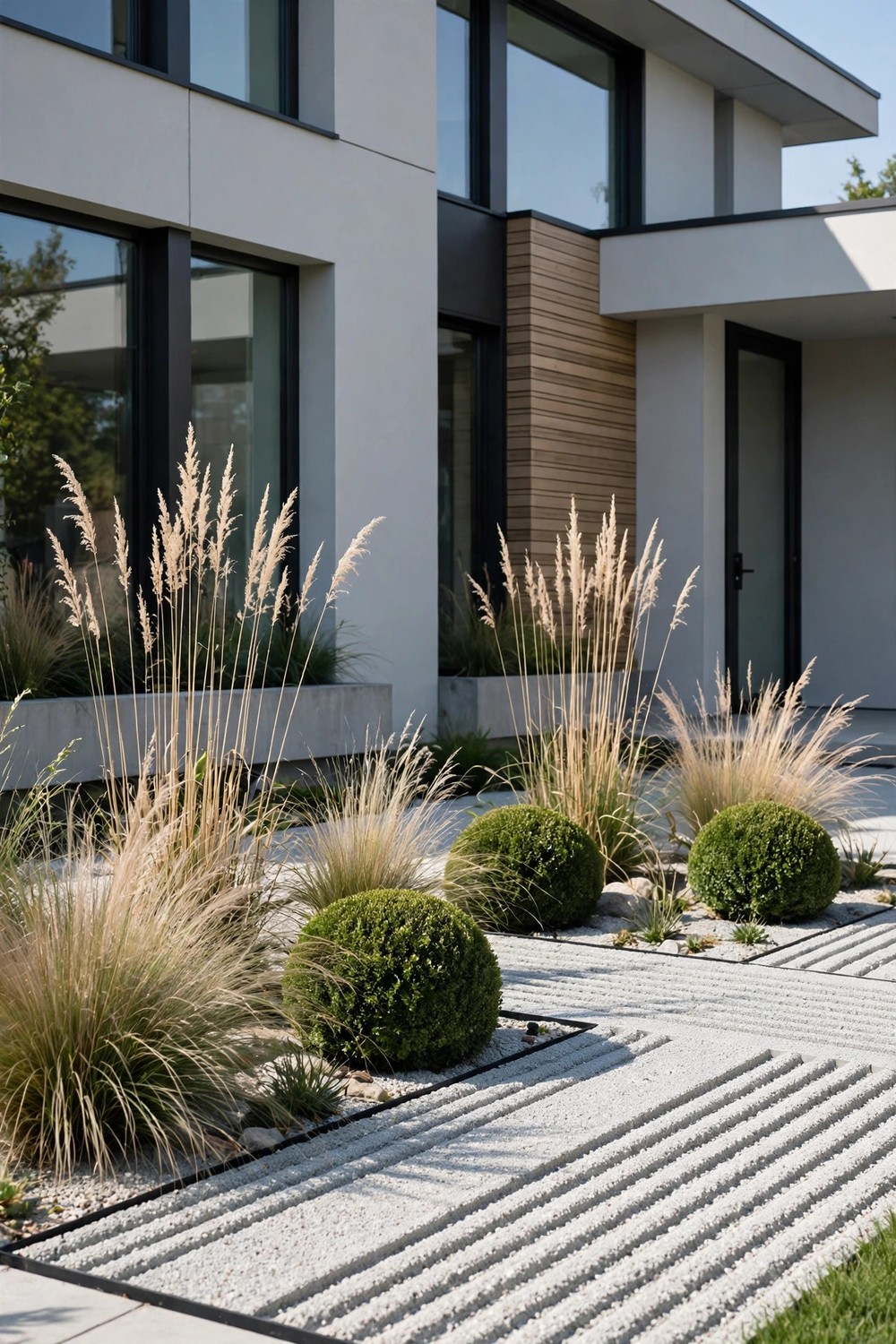
Keep a modern bed minimal and repeated. One grass, one shrub, repeated in blocks against gravel or dark mulch, with a razor clean edge, is the front bed a modern house deserves. Restraint is the design, and repetition is what makes it read as intentional rather than empty. Add a single specimen, a sculptural pine or a multi stemmed tree in the bed, and let it be the exclamation point.
14. Brick House Rose Bed
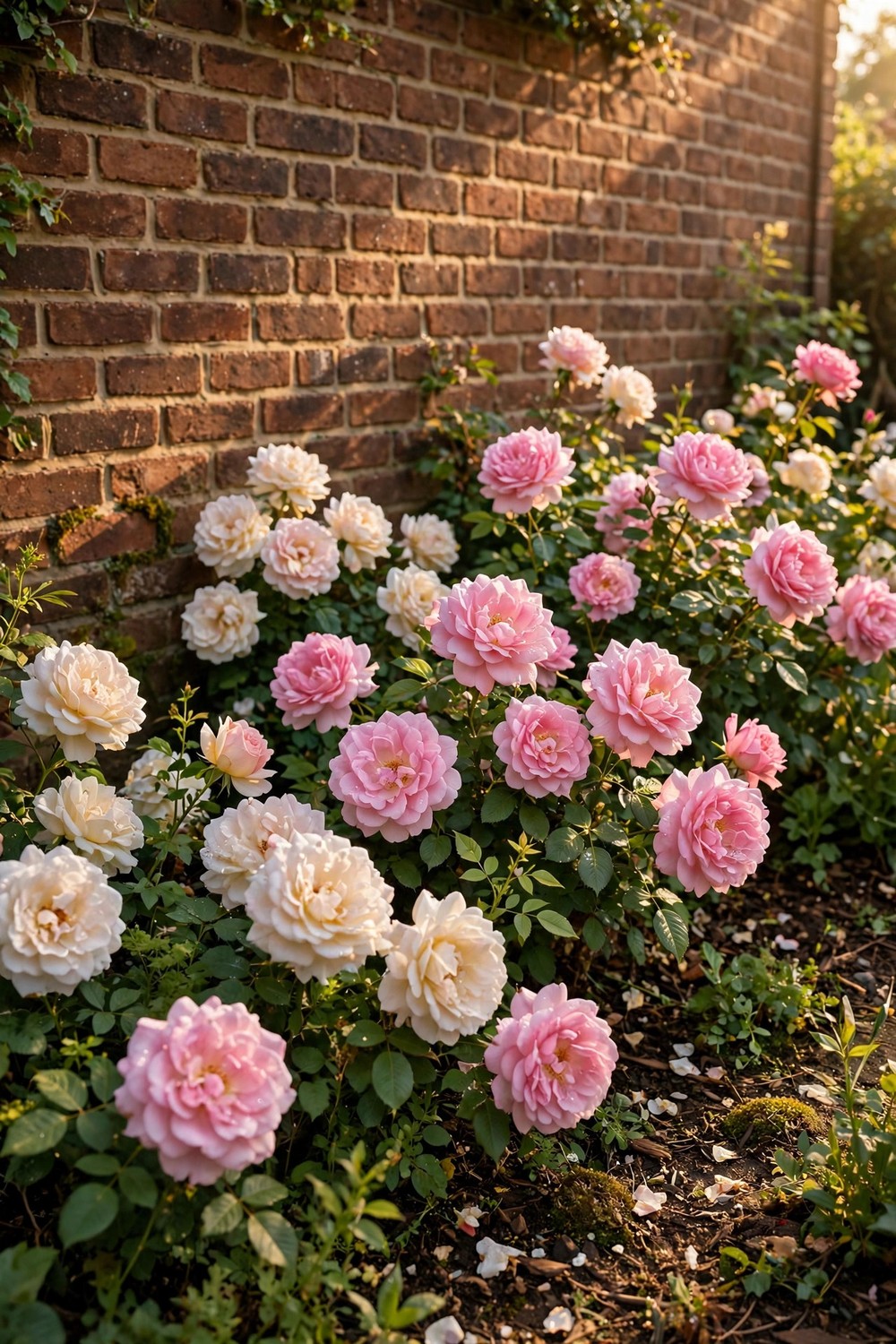
Plant roses against brick for the classic portrait. Brick and roses have been making houses beautiful for centuries, because the colors deepen each other and brick holds the day’s warmth for the blooms. Shrub roses are the low fuss choice, underplanted with hardy geraniums to hide their legs. A rose bed asks for feeding and a spring prune, and repays both with the front garden everyone photographs.
15. Climbing Rose and Clematis Bed
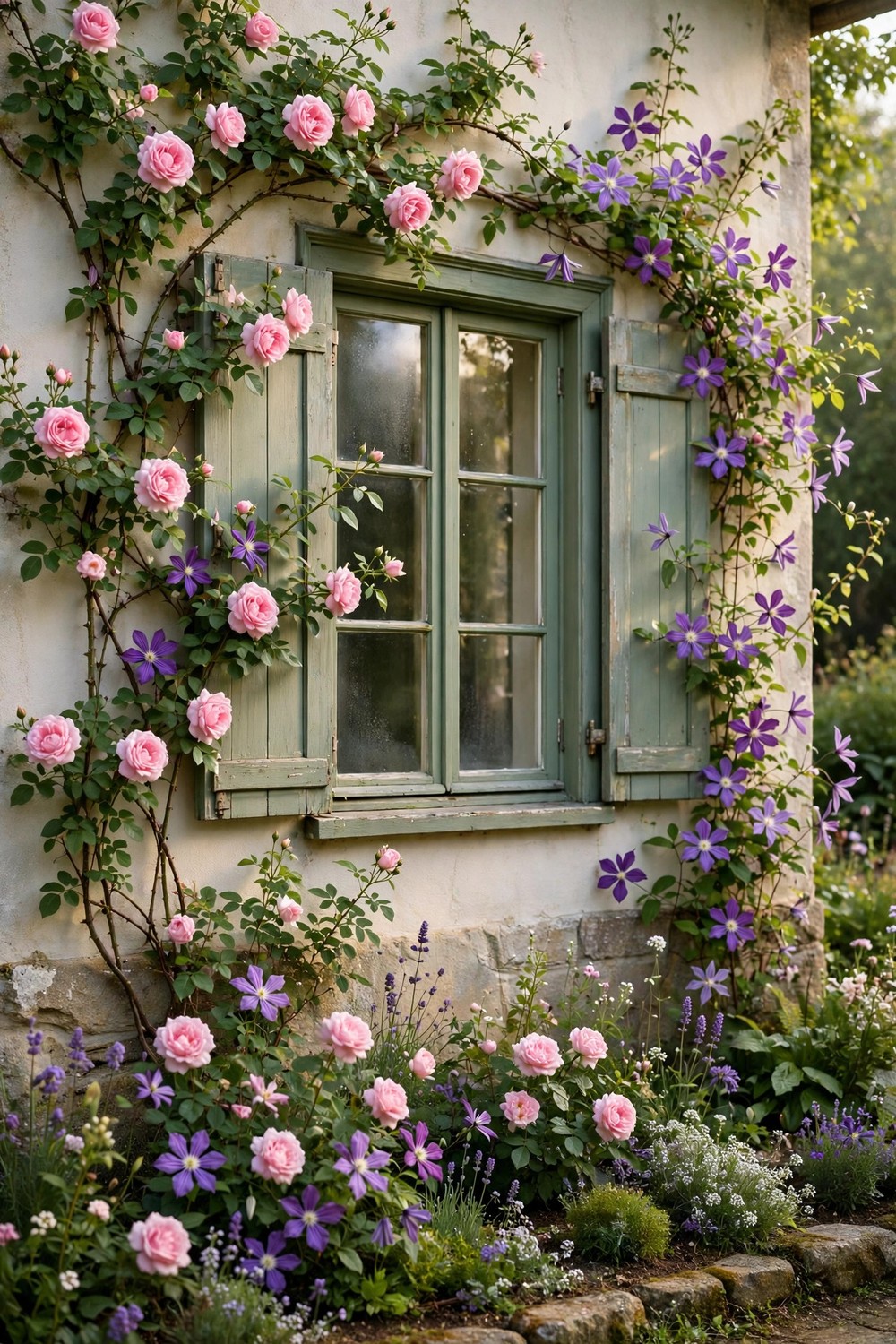
Send the bed up the wall with climbers. A narrow bed can still be generous if it grows upward. A climbing rose with a clematis threaded through it gives a wall of flowers from a two foot strip of soil, and frames windows and doors like paintings. Keep roots shaded and heads in sun, mulch well, and the wall of the house becomes the garden’s best bed.
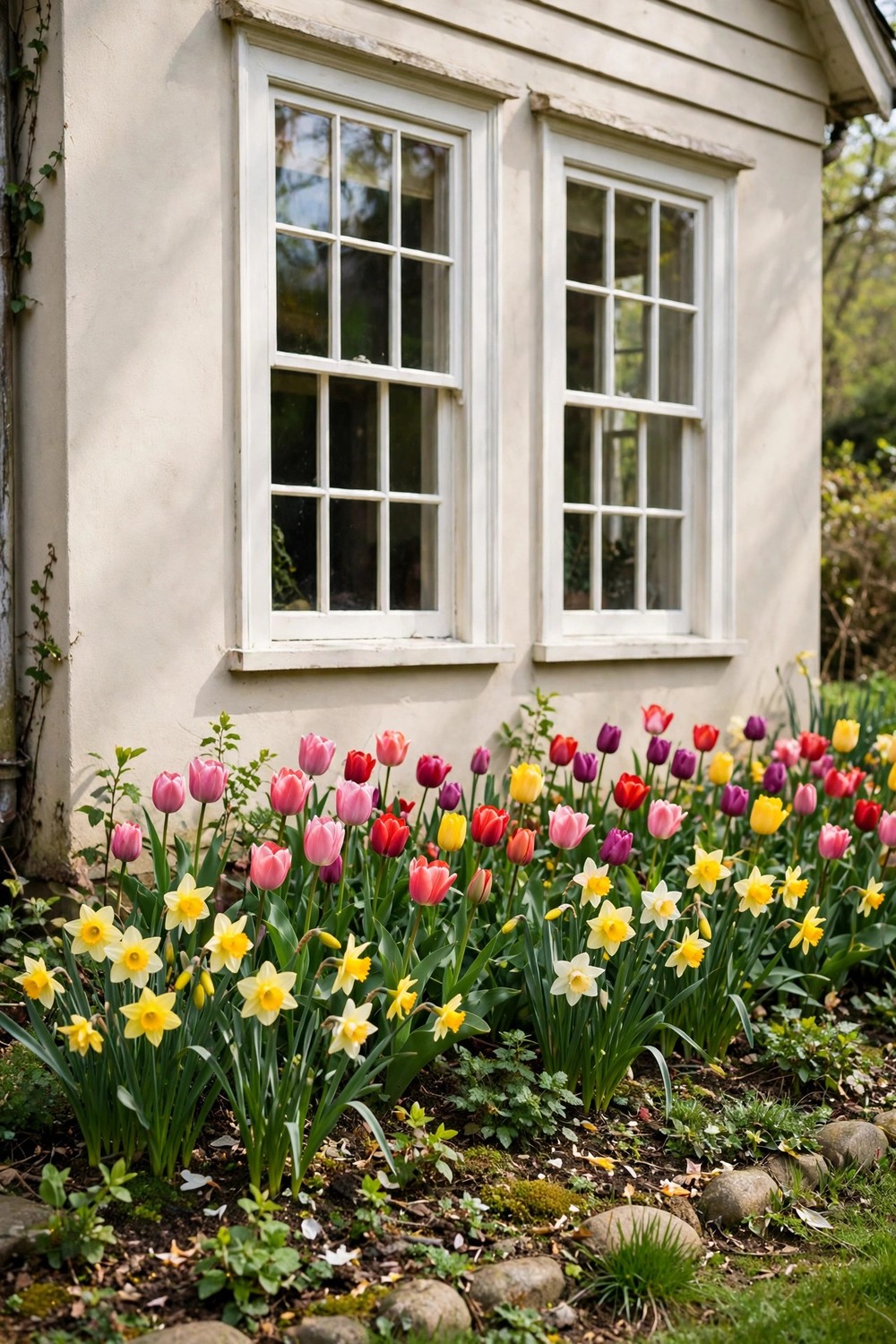
16. Spring Bulb Front Bed
Load the bed with spring bulbs. Daffodils, tulips, alliums, and hyacinths layered through a front bed give the house a spring opening that the whole street waits for. Plant bulbs between the perennials, whose leaves rise to hide the bulbs’ fading foliage, and the bed hands over from spring color to summer green without a gap. It is the cheapest transformation in gardening, a bag of bulbs and an autumn afternoon.
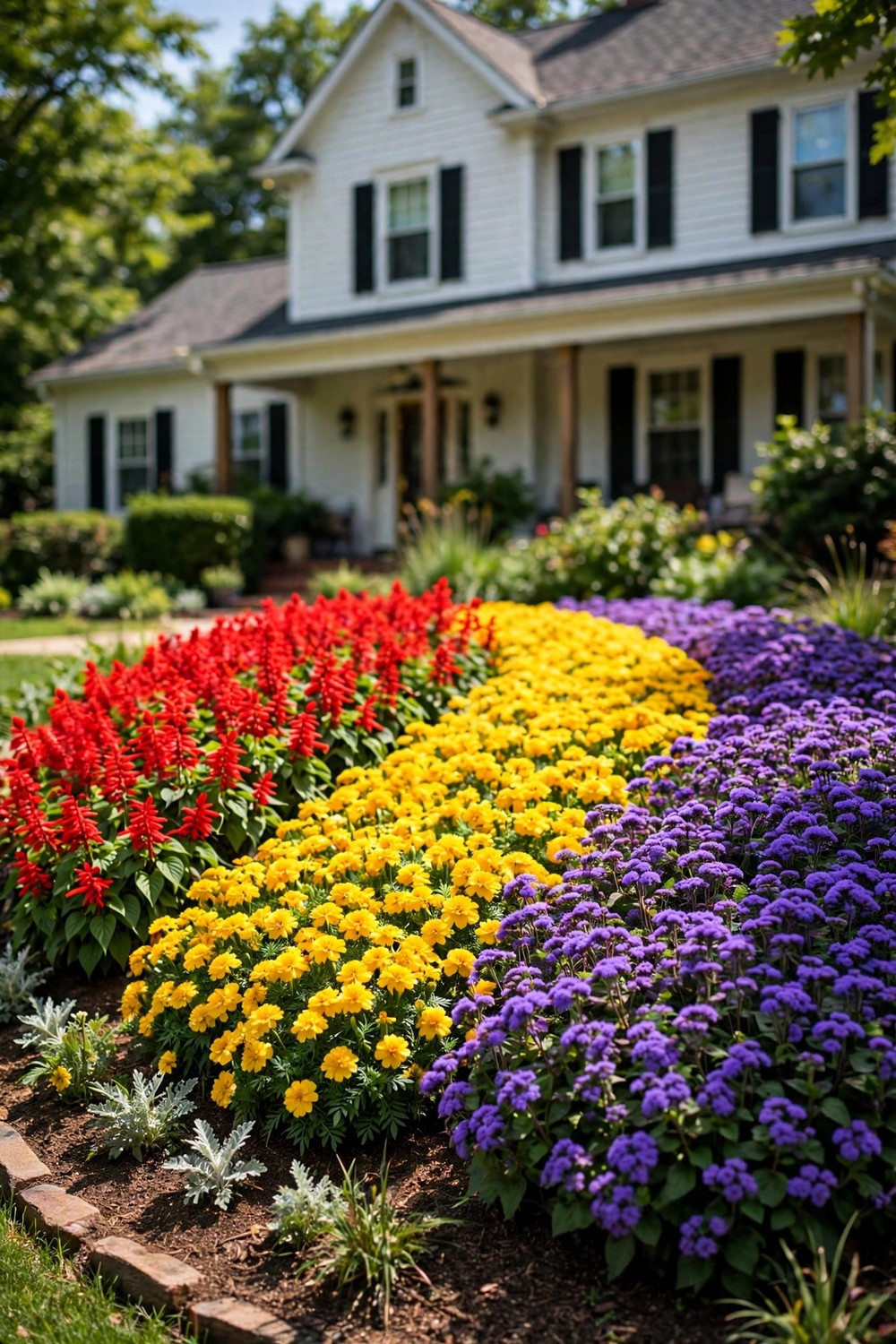
17. Summer Annual Color Bed
Run a summer annual bed in bold color. For pure, saturated, all summer color, annuals remain unbeatable, petunias, geraniums, marigolds, and zinnias in confident blocks or ribbons. A front bed is the place to commit to one or two colors and repeat them, which reads as a designed display from the street. Feed and deadhead a little each week and the bed peaks exactly when the garden is most used.
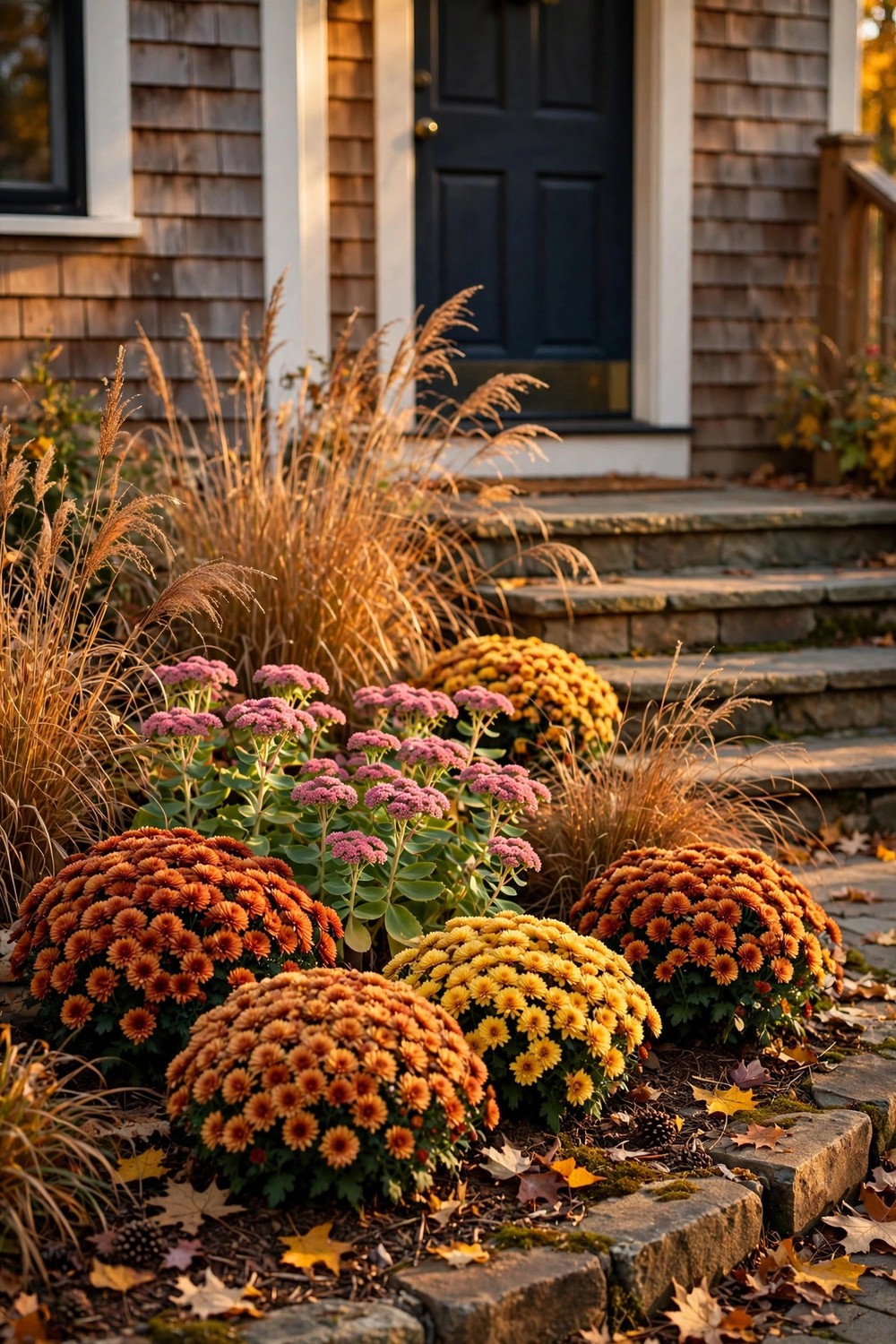
18. Autumn Front Bed
Plan a bed that peaks in autumn. Most front beds retire in September, but one planted with sedum, asters, mums, ornamental grasses, and heuchera comes into its glory as the light turns golden. Add a few ornamental cabbages and the bed carries the house handsomely to the first frosts. An autumn bed doubles the garden’s season, and it greets the school run and the holidays equally well.
Shaped, Raised and Seasonal Front Beds
Finally, the bed’s construction itself can solve problems, height for drama and drainage, tiers for slopes, and narrow bed tricks for the strips between path and wall that everyone struggles with.
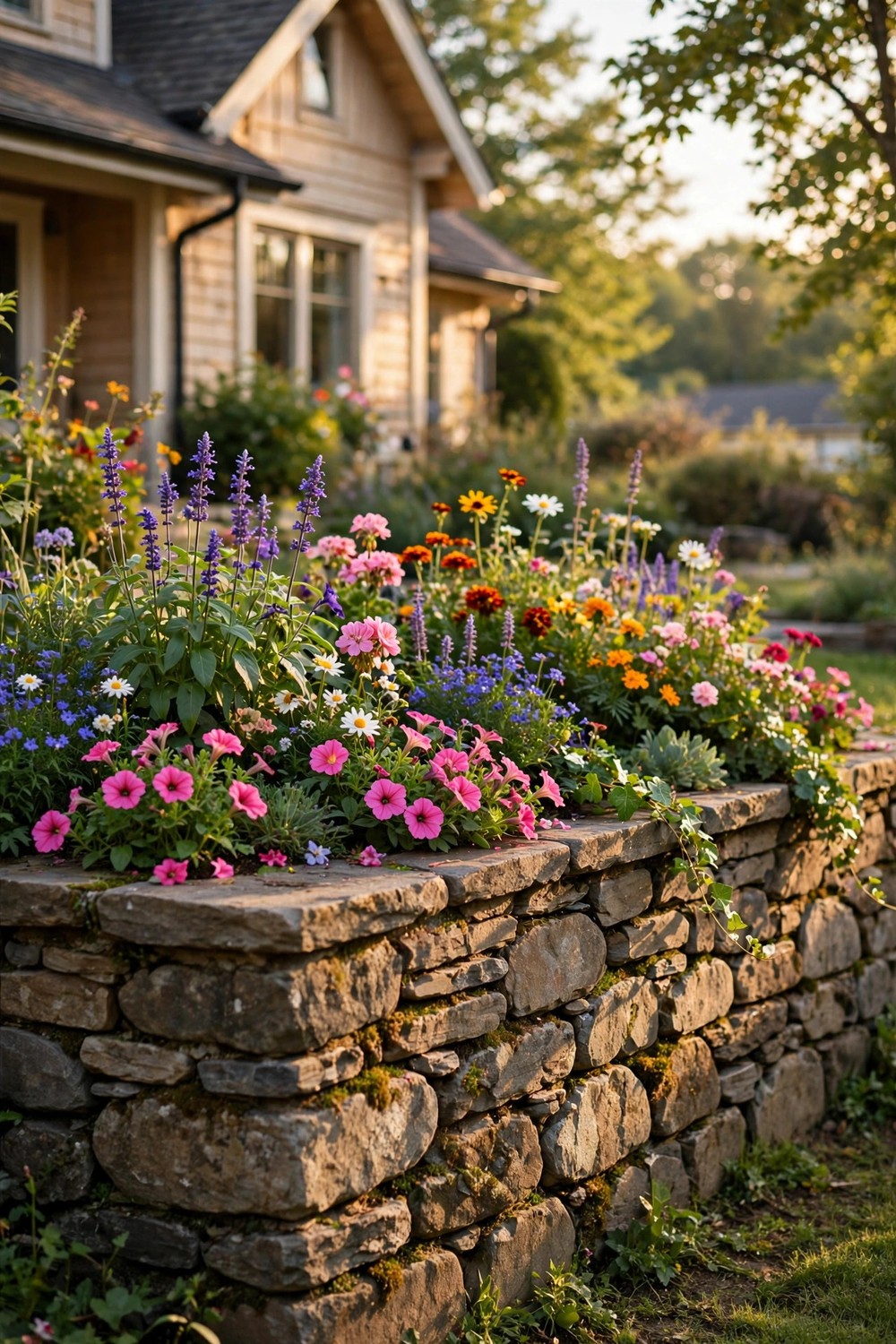
19. Raised Front Bed
Raise the bed for presence and drainage. A low stone, brick, or sleeper wall lifting the front bed a foot or so gives flowers a stage, improves drainage in heavy soil, and makes tending kinder on the back. Raised beds warm earlier in spring and let trailing plants spill over the wall, which is the prettiest thing a front bed can do. The wall itself becomes part of the house’s face, so build it in a material that matches.
20. Tiered Bed on a Slope
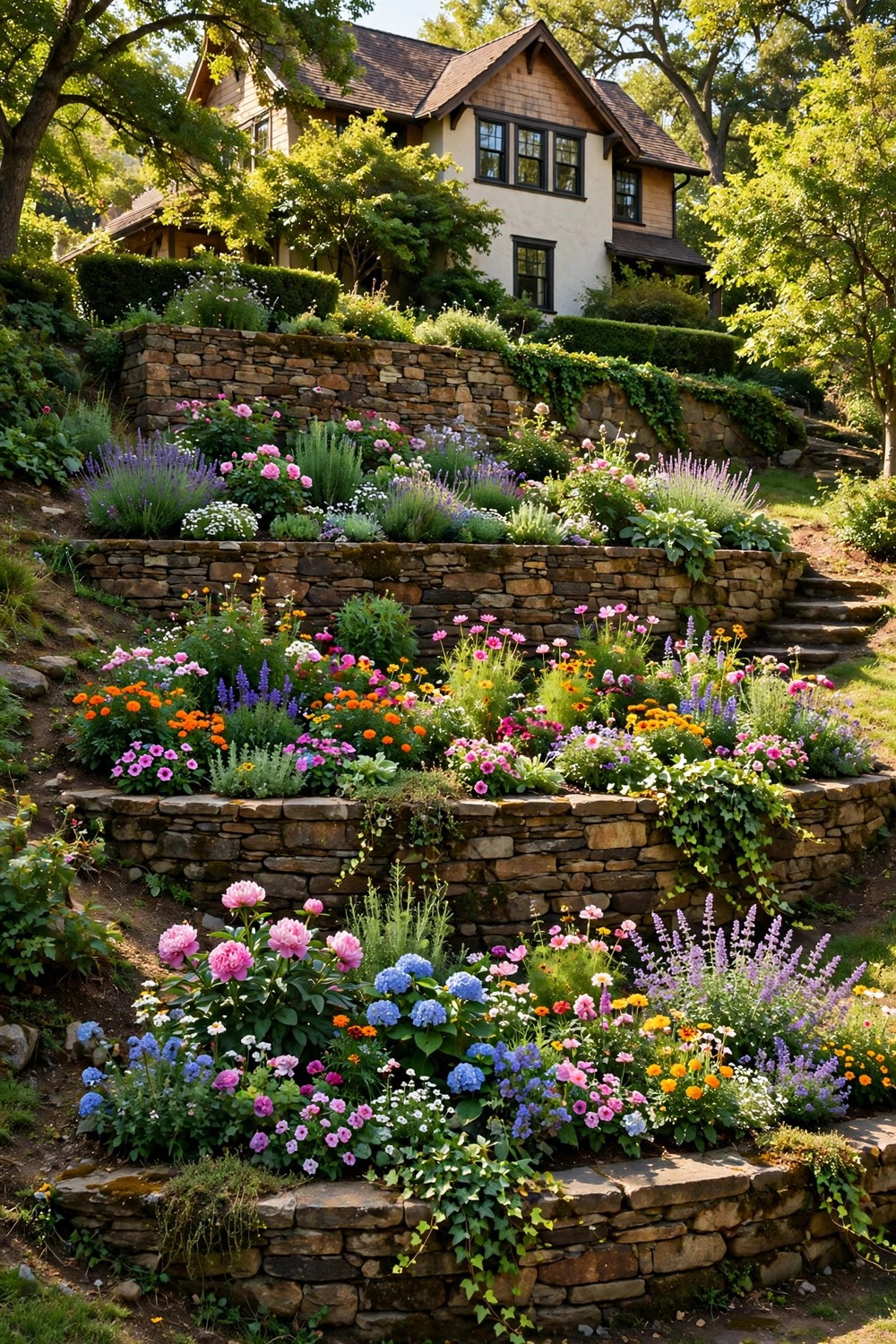
Terrace a sloping front into tiers. A front yard that slopes to the street defeats flat beds, but two or three low terraces turn the problem into the garden’s best feature, each tier planted as its own layer. Retaining edges of stone or timber hold the soil, and water stays where it falls instead of running to the gutter. From the street, a tiered front garden reads as abundance itself.
21. Window Box Style Narrow Bed
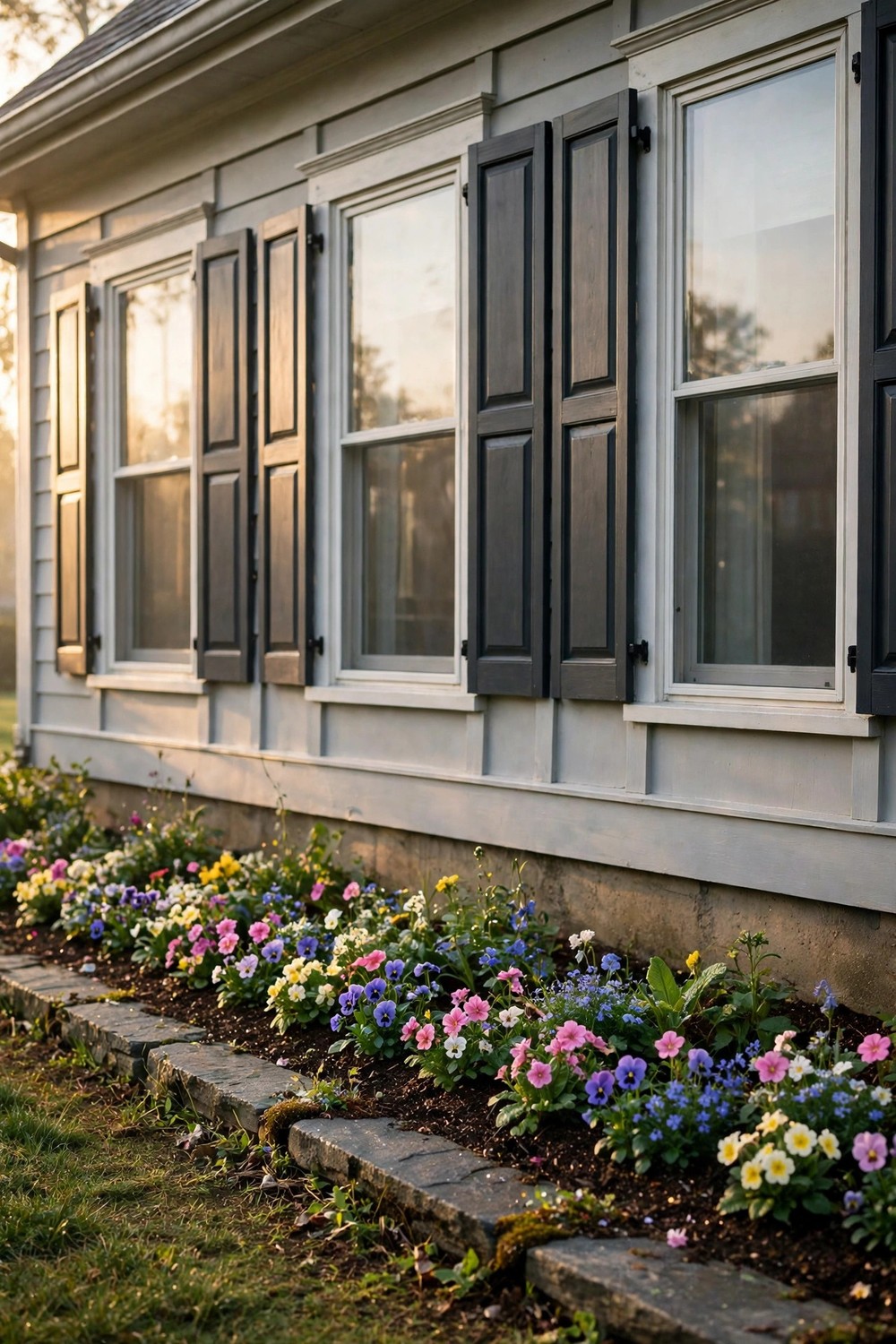
Treat a narrow bed like a window box. Where the strip is barely a foot wide, plant it as a giant window box, one repeating row of a single tough plant, lavender, dwarf boxwood, heuchera, or hardy geranium, in a clean line. Repetition turns stingy soil into a design statement. A narrow bed planted with six different things looks apologetic, with one thing it looks Milanese.
22. Four Season Front Bed
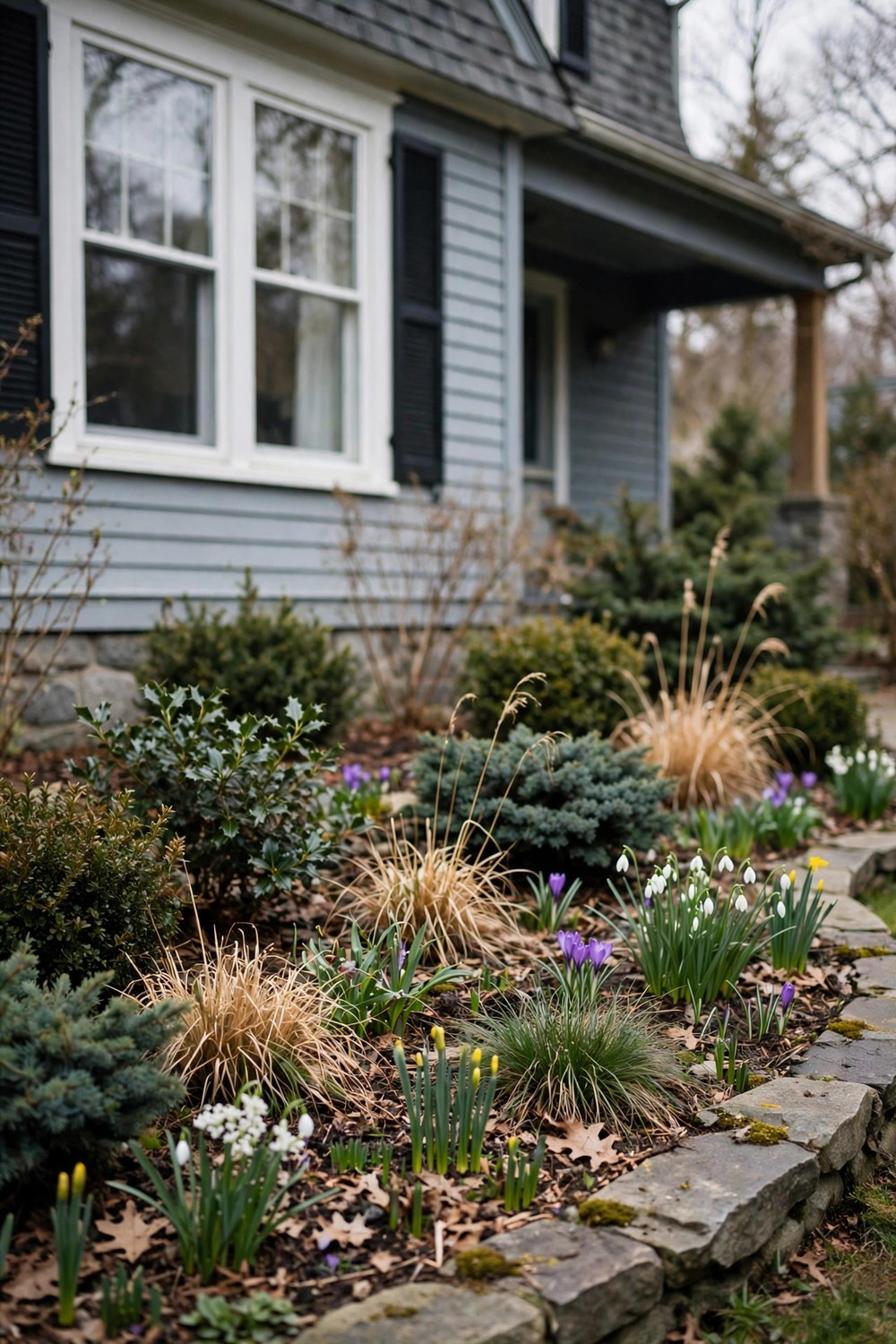
Design one bed that performs all year. The master recipe. Evergreen structure for winter bones, bulbs for spring, perennials for summer, grasses and sedum for autumn, and bark and berries for the quiet months. A four season bed is not the most flowers at any one moment, it is never having a moment with nothing to show callers. Plan it on paper once, plant it once, and the front of the house is dressed for a decade.
Soil, Edging and the Habits That Keep Front Beds Beautiful
Front beds fail from the ground down more often than from the planting plan. Foundation soil is usually builder’s rubble and subsoil, so dig in compost generously before planting anything you love, and mulch every year after. It is unglamorous work that decides everything above it, because plants in front beds are ambassadors and deserve decent rations.
Finally, keep the edge ruthless. A front bed with a crisp line between soil and lawn looks tended even in a scruffy week, while a beautiful bed with a wandering edge looks neglected. Re-cut the edge each spring, mulch to the line, and the house will look cared for from the street in every season, which was the entire point of the bed in the first place.




Leave a Reply