
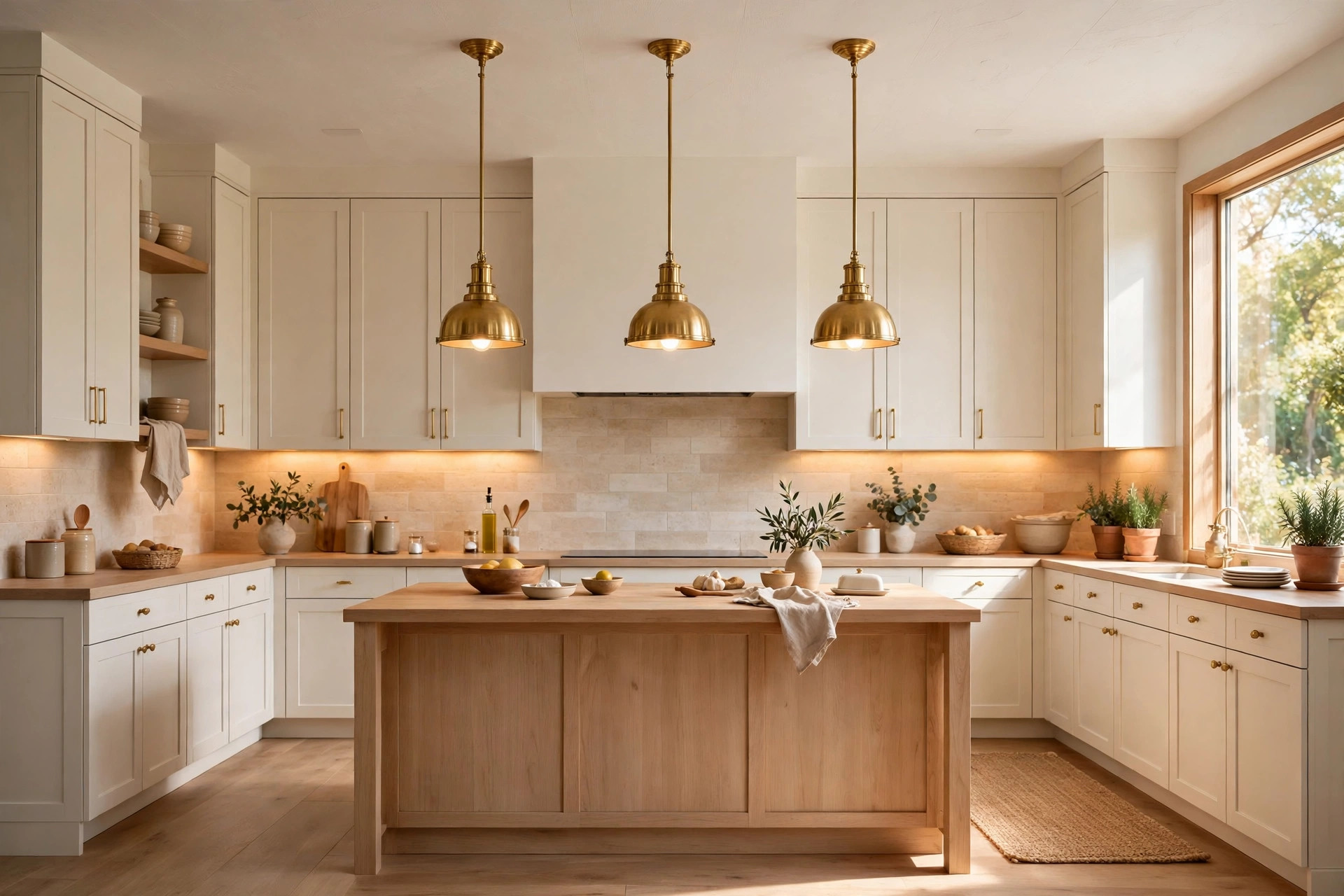
If you have ever tried to chop an onion under one dim ceiling light while your own shadow falls right across the board, you already know the problem. Most kitchens are not badly decorated, they are just badly lit. One overhead fixture gets asked to do every job, and it usually does all of them poorly.
Here is the good news. Good kitchen lighting is rarely about one perfect light. It is about layers, a bright layer where you work, a soft layer that fills the room, and a little glow that makes the space feel warm once the cooking is done. Each layer on its own is simple, but together they change how the whole kitchen feels and works.
Below are 22 kitchen lighting ideas grouped by layer, from the strip of light above your chopping board to the dimmer you will wish you had installed years ago. Start with the task layer, because that is where real cooking happens, and let the prettier layers follow.
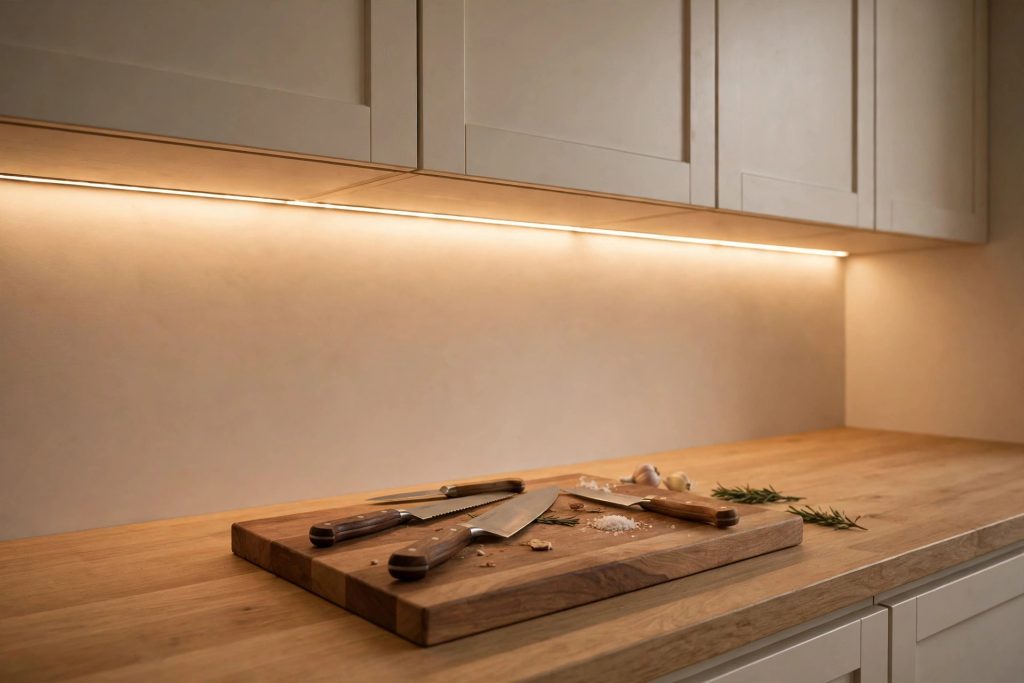
Task Lighting Where You Chop
Task lighting is the hardworking layer, the light that lands exactly where your hands are. Without it, even a beautiful kitchen feels frustrating at dinner time. With it, prep feels easier, safer and honestly a bit more enjoyable.
Run strip lights under the upper cabinets. A slim LED strip tucked under the front edge of your wall cabinets throws light straight onto the counter, right where you chop, mix and read recipes. It removes the shadow your body casts from the ceiling light, which is usually the single biggest improvement you can make. Strips are typically easy to fit, and many simply plug in.
Choose puck lights if your cabinets are short. Small round puck lights work well when you only need to brighten a few key spots, like the main prep stretch or the area beside the stove. Spaced evenly, they give pools of focused light without a full strip. Battery versions exist too, which renters usually appreciate since nothing needs wiring.
Put a dedicated light over the sink. Washing up and rinsing vegetables is detailed work, and the sink often sits in the dimmest corner of the room. A small downlight, a mini pendant or a simple wall light above the window usually fixes it. You will be surprised how much nicer the evening tidy up feels with proper light on it.
Add a light inside deep drawers and cabinets. A motion activated strip inside a deep drawer or pantry cabinet means no more digging for the cumin with your phone torch. The light comes on when you open it and goes off when you close it. It sounds like a luxury, but it typically becomes the detail everyone mentions.
Brighten the stove area properly. Most range hoods come with a light, but it is often weak or a chilly blue white. Swapping in a warmer, brighter bulb makes a real difference when you are judging whether onions are golden or just tired. Good stove light helps you see color, and color is how you know food is ready.
Keep a small lamp on the counter if you lack cabinets. Open shelving kitchens and galley layouts without uppers still need task light. A slim counter lamp or an angled work lamp at one end of the counter gives you a pool of light you can move where you need it. It is not the classic solution, but it works surprisingly well in small spaces.
Ambient and Ceiling Light
Ambient light is the room’s general glow, the layer that stops corners feeling gloomy and makes the kitchen welcoming at any hour. It should be even, warm and bright enough to move around safely, but it does not need to do the detailed work.
Flush and semi-flush
Pick a flush mount for low ceilings. If your ceiling is low, a close fitting flush mount spreads light without hanging into anyone’s headroom. Frosted or opal shades soften the glare and keep the light feeling gentle rather than stark. In a small kitchen, one well placed flush mount is often plenty.
Try a semi-flush for a little more presence. A semi-flush fixture drops just a few inches from the ceiling, which gives you a touch of style while staying practical. Warm metal finishes like brushed brass usually sit beautifully against white cabinets and wood. It is a good middle ground when a pendant would hang too low.
Use recessed downlights in a loose grid. Recessed lights give a clean ceiling and even coverage, especially in larger kitchens where one fixture cannot reach the corners. Spaced thoughtfully, they wash the room in soft general light. Just avoid placing them all in one strict line, which can feel a bit like a runway.
Pendants over islands
Hang two or three pendants over the island. Pendants over an island or peninsula do double duty, giving you focused light for prep and a visual anchor for the whole room. Odd numbers usually look relaxed, while a pair suits narrower islands. Keep the bottom of the shades roughly at eye level when standing, so they light the surface without blocking the view across.
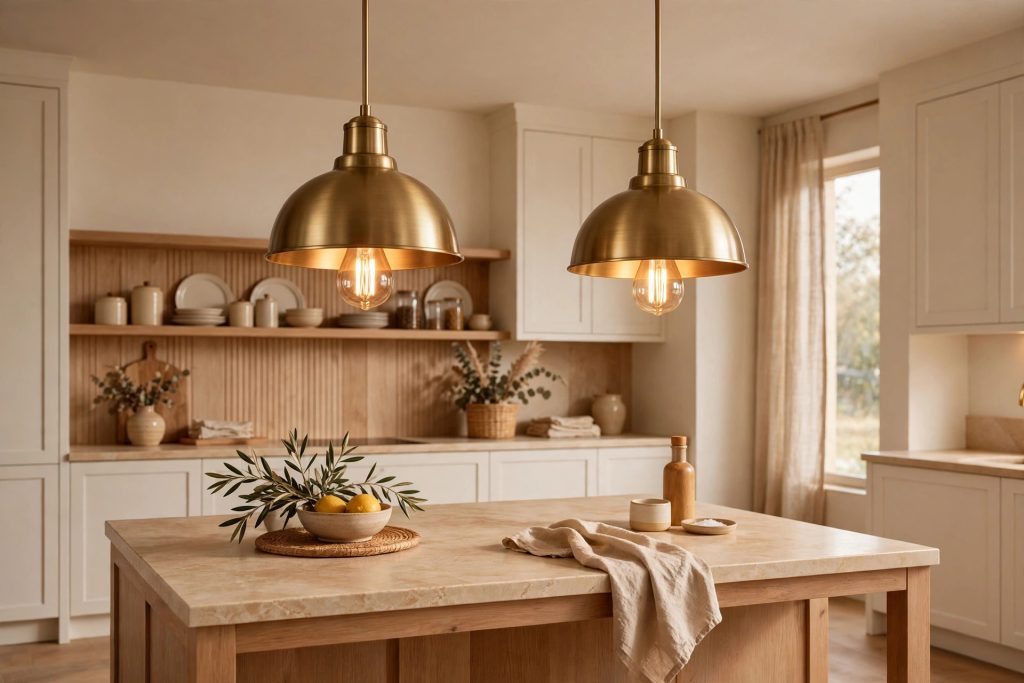
Match pendant scale to the island, not the room. Tiny pendants get lost over a big island, and oversized ones can crowd a small one. A useful guide is to leave some breathing space between shades and let the group span most of the island’s length. When in doubt, slightly larger usually reads calmer than slightly smaller.
Choose shades that send light down and out. Metal shades with a warm interior bounce a focused pool onto the counter, while glass or fabric shades spread a softer glow around the room. If your pendants are your main evening light, softer shades typically feel kinder. Clear glass with warm bulbs looks lovely, but bare bulbs can glare, so dimmers help.
Accent and Under-Cabinet Glow
Accent lighting is the layer most people skip, and it is the one that makes a kitchen feel finished. It is not about brightness at all. It is about soft highlights, gentle shadows and the kind of glow that makes you want to linger after dinner.
Add a warm glow above the cabinets too. If there is a gap between your wall cabinets and the ceiling, a strip along the top washes the ceiling with soft indirect light. It makes the room feel taller and gives a calm background glow in the evening. It is usually an easy add once your under cabinet strips are in.
Light one open shelf like a picture. A small strip or puck under a shelf turns everyday bowls and glasses into a quiet display. Keep the styling simple, a few stacked bowls, a plant, some jars, and let the light do the showing off. One lit shelf is typically enough, more can start to feel busy.
Run a low strip along the toe kick. A soft strip at floor level, under the base cabinets, gives a gentle floating effect and doubles as a night light for midnight water runs. On a low setting it is practical without being startling. It also tends to make a small kitchen feel surprisingly high end.
Put a small lamp in the forgotten corner. Most kitchens have one dead corner on the counter where nothing useful lives. A tiny lamp there adds warmth at counter height, which balances all the light coming from above. It sounds odd until you try it, and then the corner usually becomes everyone’s favorite spot.
Use candlelight and flameless candles for evenings. Once the cooking is done and the bright layers go off, a couple of candles or convincing flameless versions on the island or table change the mood completely. The kitchen stops feeling like a workspace and starts feeling like a room. Group them in twos or threes and keep them away from busy cooking zones.
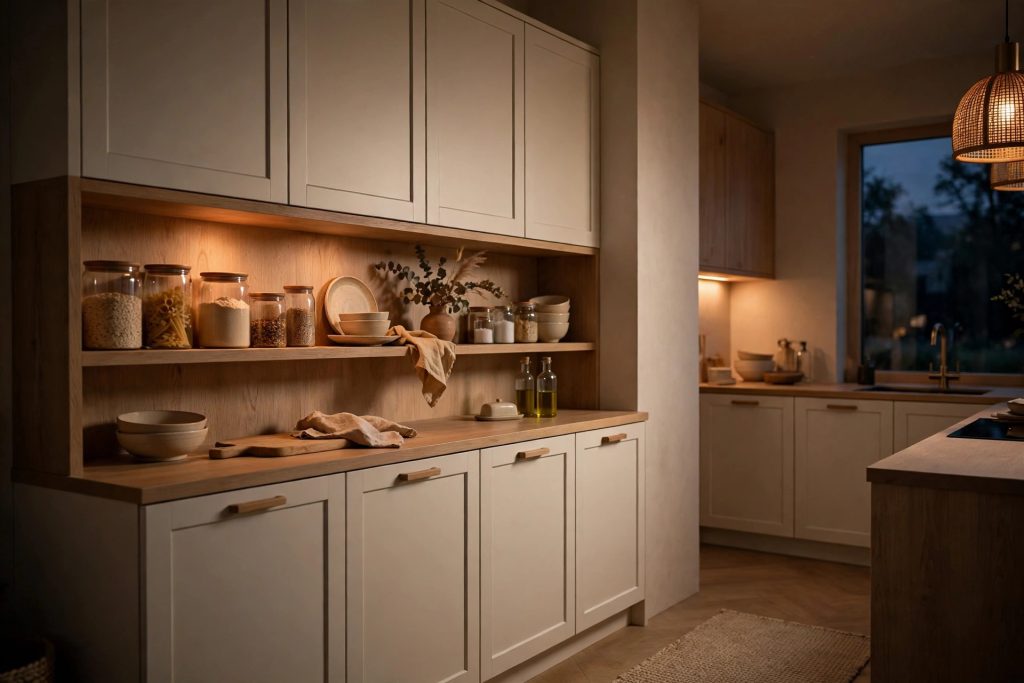
Bulbs and Dimming for Kitchens
The best fixtures in the world can still disappoint with the wrong bulbs. This last layer is the quiet one, but it decides whether all your other lighting feels warm and calm or cold and clinical.
Choose warm white bulbs throughout. Bulbs labeled warm white, typically around 2700K to 3000K, flatter wood, skin and food alike. Cooler daylight bulbs can make a kitchen feel like an office, however clean it is. Whatever warmth you pick, using the same one everywhere usually makes the layers blend instead of clash.
Put the ceiling light on a dimmer first. If you only dim one thing, make it the main overhead light. Full brightness for cleaning and cooking, low and soft for dinner at the island, all from the same fixture. It is typically one of the cheapest upgrades on this whole list and the one people use every single day.
Dim pendants separately from the ambient light. Separate controls for each layer let you build scenes, bright task light with soft pendants while you cook, then pendants alone once you sit down. It takes a little planning with your electrician, but the flexibility is worth it. Even two switches are better than one master switch for everything.
Pick bulbs with good color rendering. A high CRI rating, usually marked on the box, means colors look true under the light. That matters in a kitchen, where you judge ripeness, doneness and whether the sauce looks right. Greens look greener and tomatoes look like themselves, which quietly makes cooking easier.
Match bulb brightness to the job. Task areas want brighter bulbs, accent spots want gentle ones. When every bulb blazes at the same level, the room can feel flat and a little harsh. Letting the work zones lead and the glow zones follow usually gives that calm, layered feeling everyone is after.
A well lit kitchen is rarely about spending more on fixtures. It is about giving each job its own light, a bright pool where you chop, an even glow across the room, and a little warmth left on when the day is done. Start under the cabinets, add a dimmer, and your everyday cooking will feel easier long before the kitchen looks different.

Leave a Reply