
22 Minimalist Living Room Ideas That Still Feel Cozy
Look, we get it. You love the calm of a minimalist living room, but you don’t want your home to feel cold, empty, or like nobody actually lives there. That’s the worry a lot of people have, and it’s a fair one. The good news is that minimal and cozy aren’t opposites at all. When you lean on warm color, natural materials, and soft texture instead of piling on more stuff, a simple room can feel deeply relaxing and genuinely inviting at the same time.
The approach in this list is pretty simple. You’ll keep the layout open and the surfaces mostly clear, but you’ll be thoughtful about what stays. Every piece earns its place because it’s useful, comfortable, or beautiful in a quiet way. Think warm whites instead of stark whites, wood instead of shiny finishes, and linen and wool instead of a dozen small decorations. It’s less about having almost nothing and more about having just enough of the right things.
Use this list in whatever way helps you most. You can start at the top and work through the foundations first if you’re redoing a whole room, or you can jump straight to the lighting and texture ideas if your space already feels tidy but a little flat. Each idea works on its own, and they layer together really well too. Pick two or three that speak to you, live with them for a bit, and then add more only if the room still feels like it’s missing something.
In This Article
- Start With Warm White Walls Instead of Stark White
- Layer Natural Wood for Instant Warmth
- Choose a Low, Deep Sofa in a Soft Neutral
- Add Texture With Linen and Wool Throws
- Keep a Simple Palette of Three Colors Max
- Use One Oversized Rug to Anchor the Room
- Let Negative Space Do the Decorating
- Pick One Statement Piece and Let It Breathe
- Hide Storage Inside Clean Lined Furniture
- Bring in Curved Shapes to Soften Straight Lines
- Add a Single Large Plant for Life and Color
- Layer Soft, Warm Lighting at Different Heights
- Use Limewash or Plaster Walls for Subtle Depth
- Choose Quality Over Quantity in Every Piece
- Create a Cozy Reading Corner With Very Little
- Keep Window Treatments Light and Simple
- Display Just a Few Meaningful Objects
- Choose Low Furniture to Make Ceilings Feel Higher
- Add Woven Baskets for Storage That Looks Warm
- Keep Floors Mostly Bare and Beautiful
- Use Cushions in Varied Textures, Not Busy Patterns
- Leave One Wall Completely Blank on Purpose
Warm Foundations That Keep Minimalism Soft
Cozy minimalism usually starts with the bones of the room, not the decorations. Warm wall color, natural materials, and a calm palette do most of the heavy lifting, so the ideas in this first group focus on those quiet foundations that make everything else feel softer.
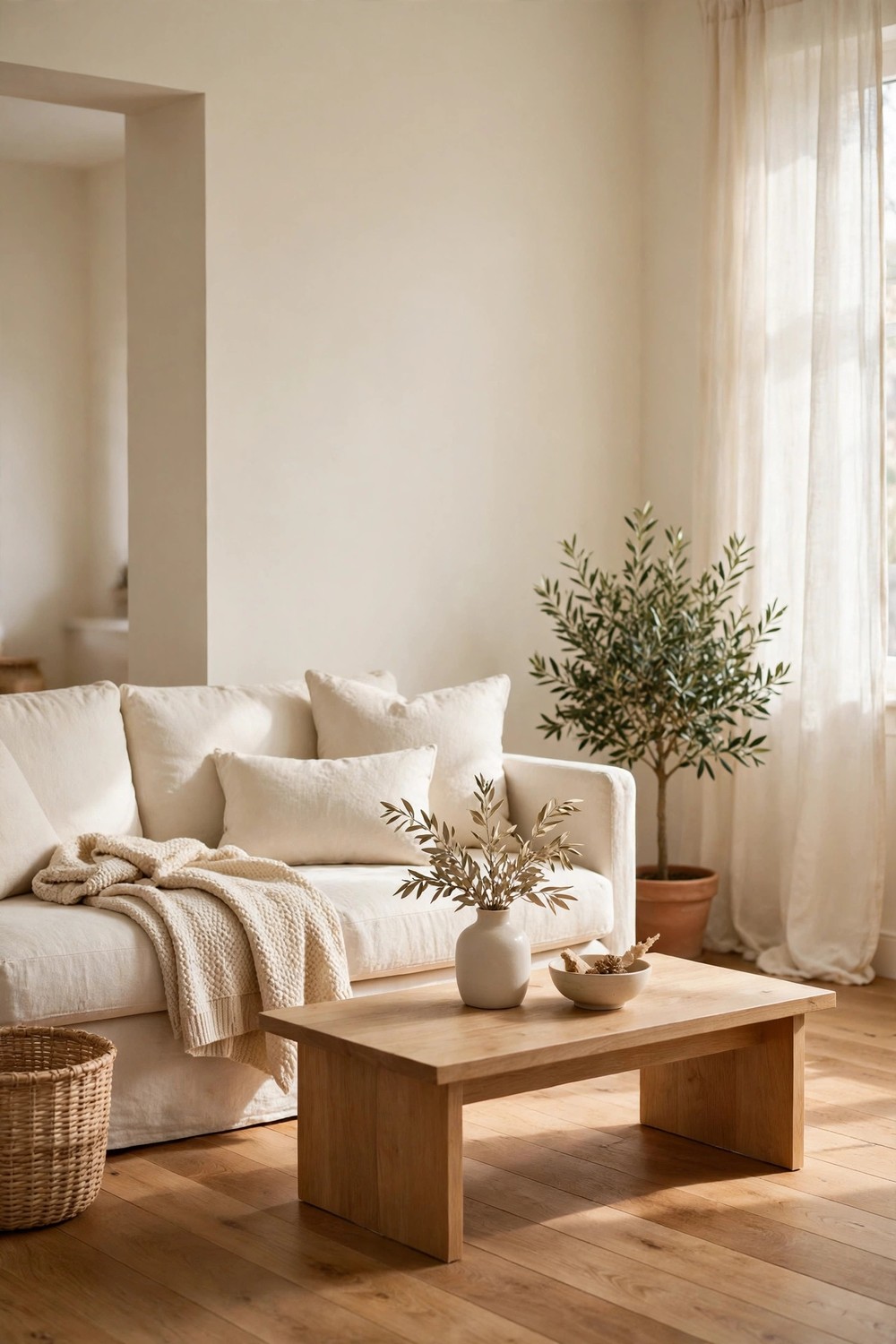
1. Start With Warm White Walls Instead of Stark White
Stark bright white can make a minimal room feel a bit cold, so it’s worth choosing a warm white with a soft creamy or slightly beige undertone instead. It still gives you that clean, open backdrop you want, but the light bounces around more gently and the whole room feels calmer by evening. Test a few swatches on different walls and look at them in morning and late afternoon light before you commit, because undertones shift a lot through the day. Pair the walls with natural wood and soft textiles and you’ll usually find you don’t need much else to make the space feel finished and welcoming.
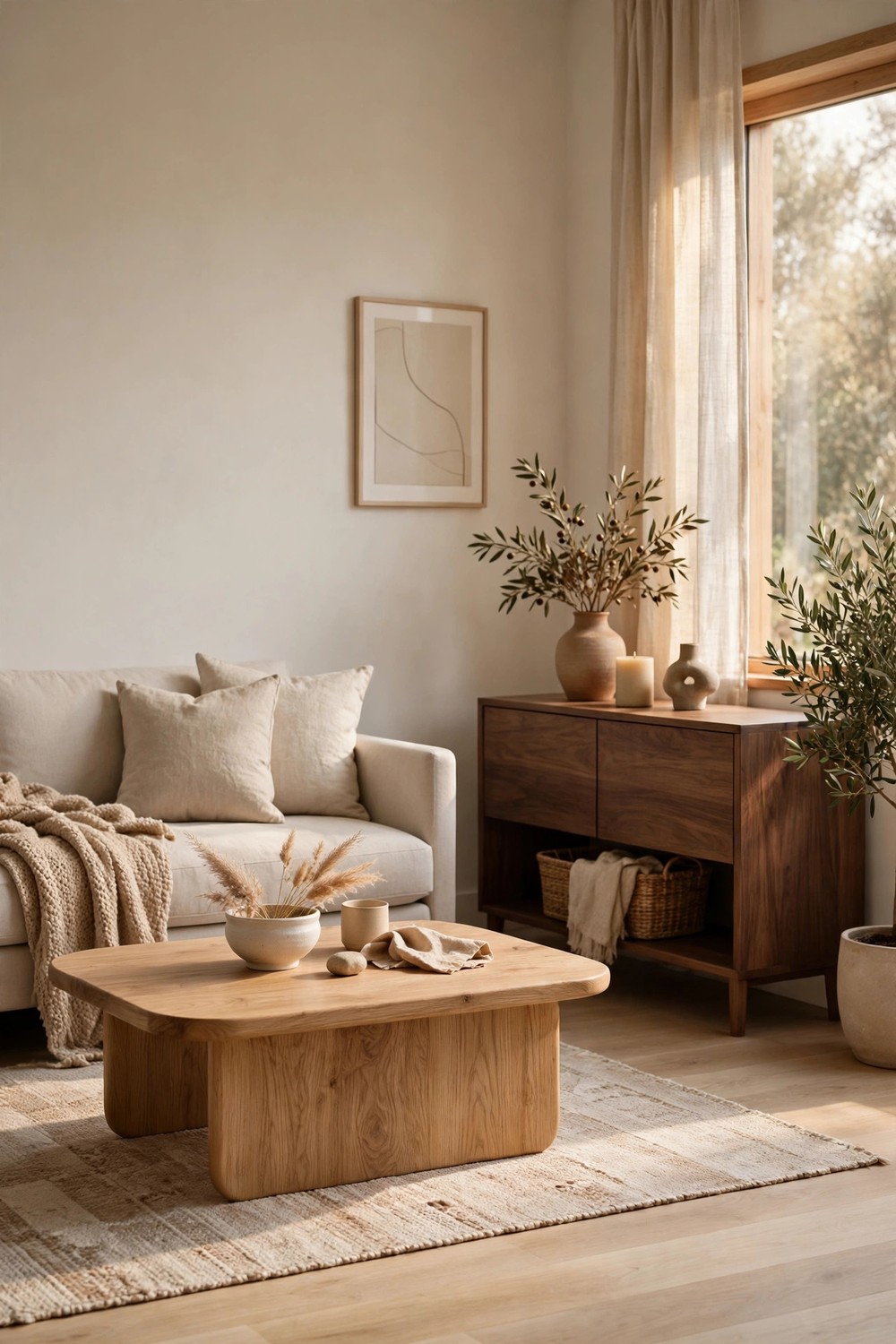
2. Layer Natural Wood for Instant Warmth
Nothing warms up a minimal room faster than real wood, and you don’t need a lot of it to feel the difference. A simple oak coffee table, a walnut sideboard, or even just wooden legs on your sofa and chairs can soften all those clean lines. Try to mix two tones at most so it still feels calm, like light oak on the floor with a slightly deeper walnut for furniture. The grain itself works as quiet pattern, so you get visual interest without adding objects. Over time the wood usually deepens in color a little, and that lived in richness is exactly what keeps minimalism from feeling brand new and untouchable.
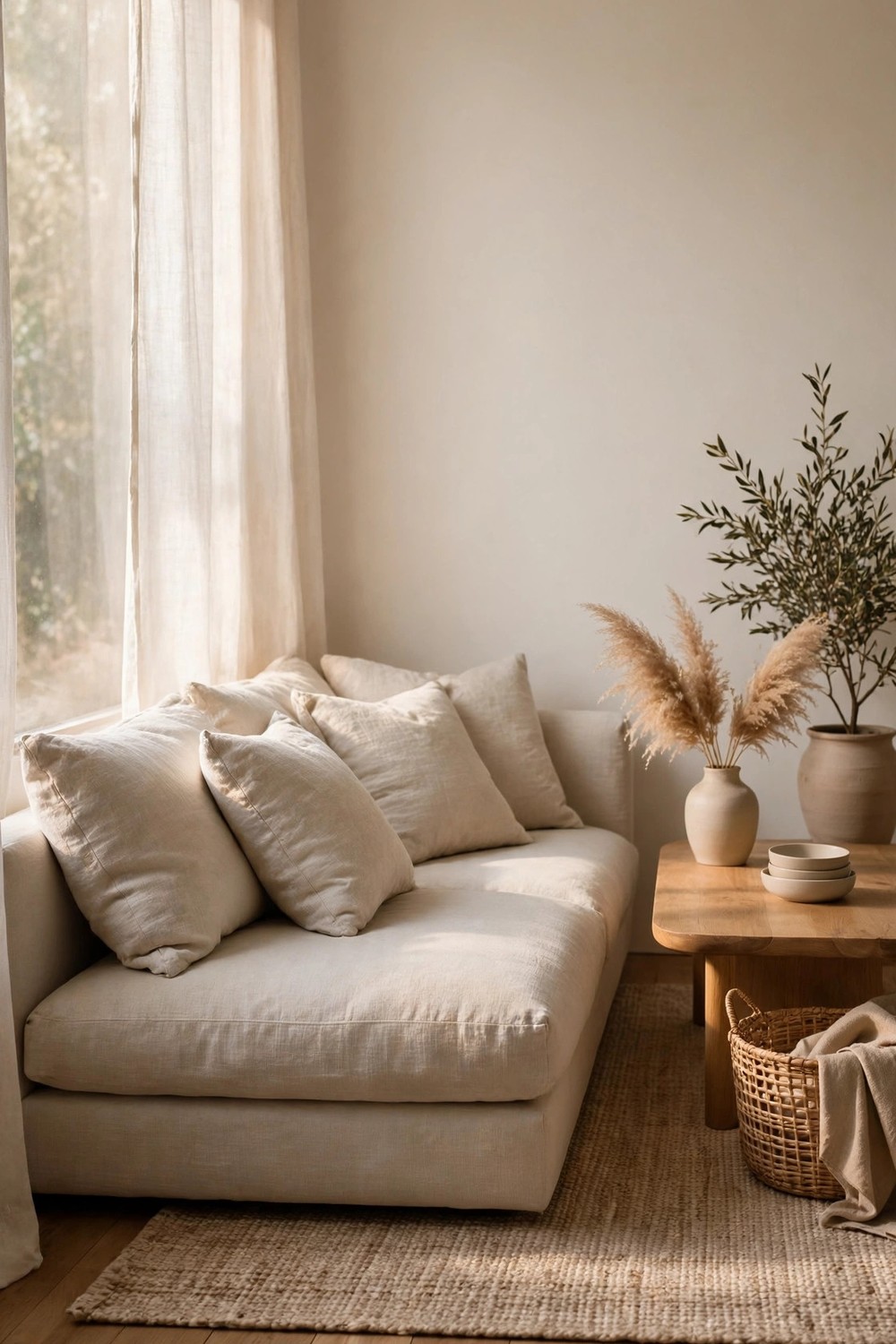
3. Choose a Low, Deep Sofa in a Soft Neutral
Your sofa is probably the biggest piece in the room, so it sets the tone for everything else. A low, deep seat in a soft neutral like oatmeal, warm grey, or gentle cream invites you to actually sink in and stay awhile, which is the whole point of cozy. Look for wide arms or no arms at all, simple lines, and a fabric with a visible weave so it doesn’t read as flat. If you can, sit on it before you buy, because comfort matters more than looks here. One generous, well made sofa will typically do more for the room than a matching set of smaller, fussier pieces.
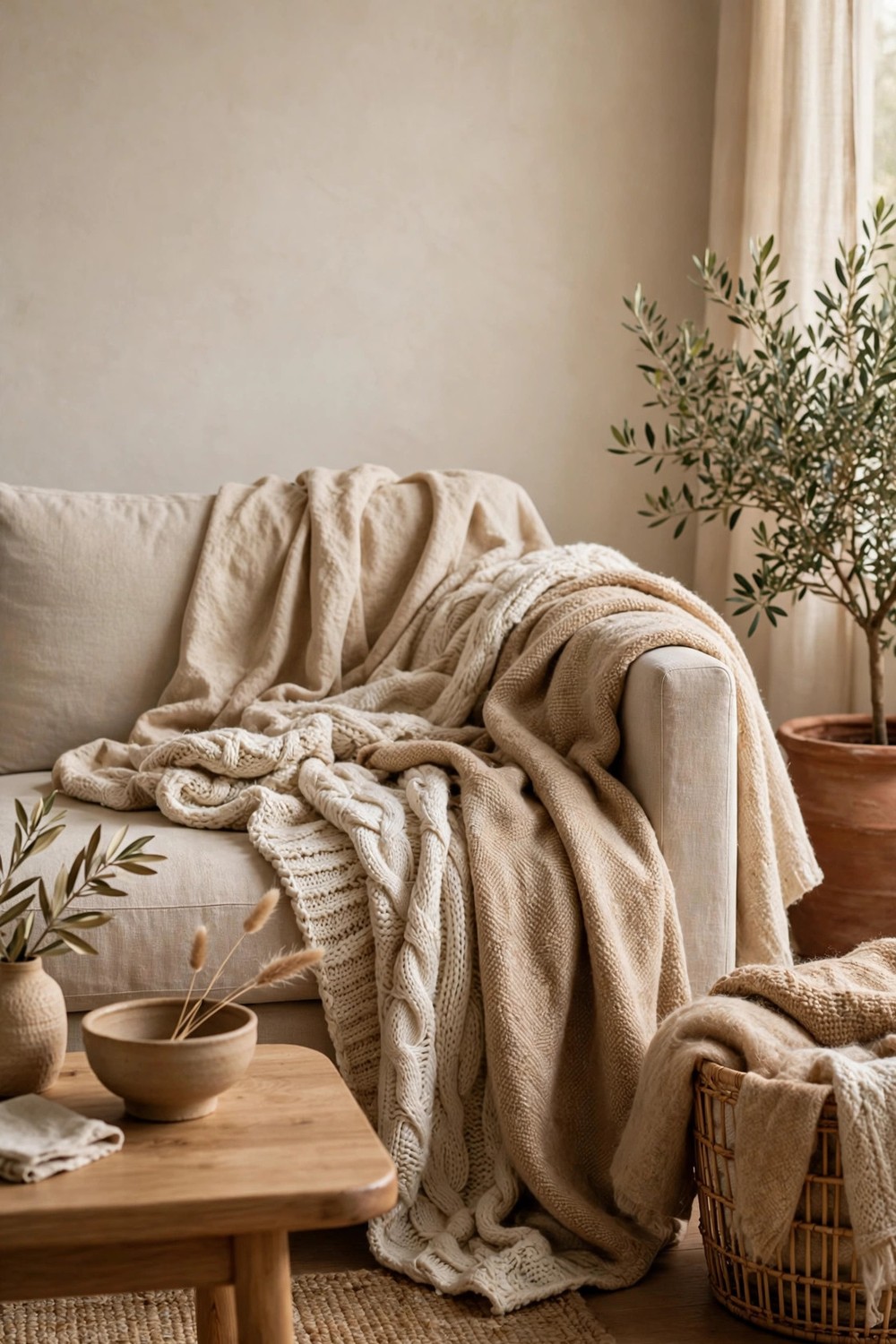
4. Add Texture With Linen and Wool Throws
When you can’t add more objects, you can always add more texture, and throws are the easiest way to do it. Drape one rumpled linen throw over the arm of the sofa for summer and swap in a chunky wool one when the evenings turn cool. That slight imperfection is important, because a throw that’s folded too perfectly can make the room feel styled instead of lived in. Stick to tones that sit close to your sofa color so the layers blend rather than shout. You’ll reach for them every day, and that everyday use is what makes a minimal room feel like a real home.
5. Keep a Simple Palette of Three Colors Max
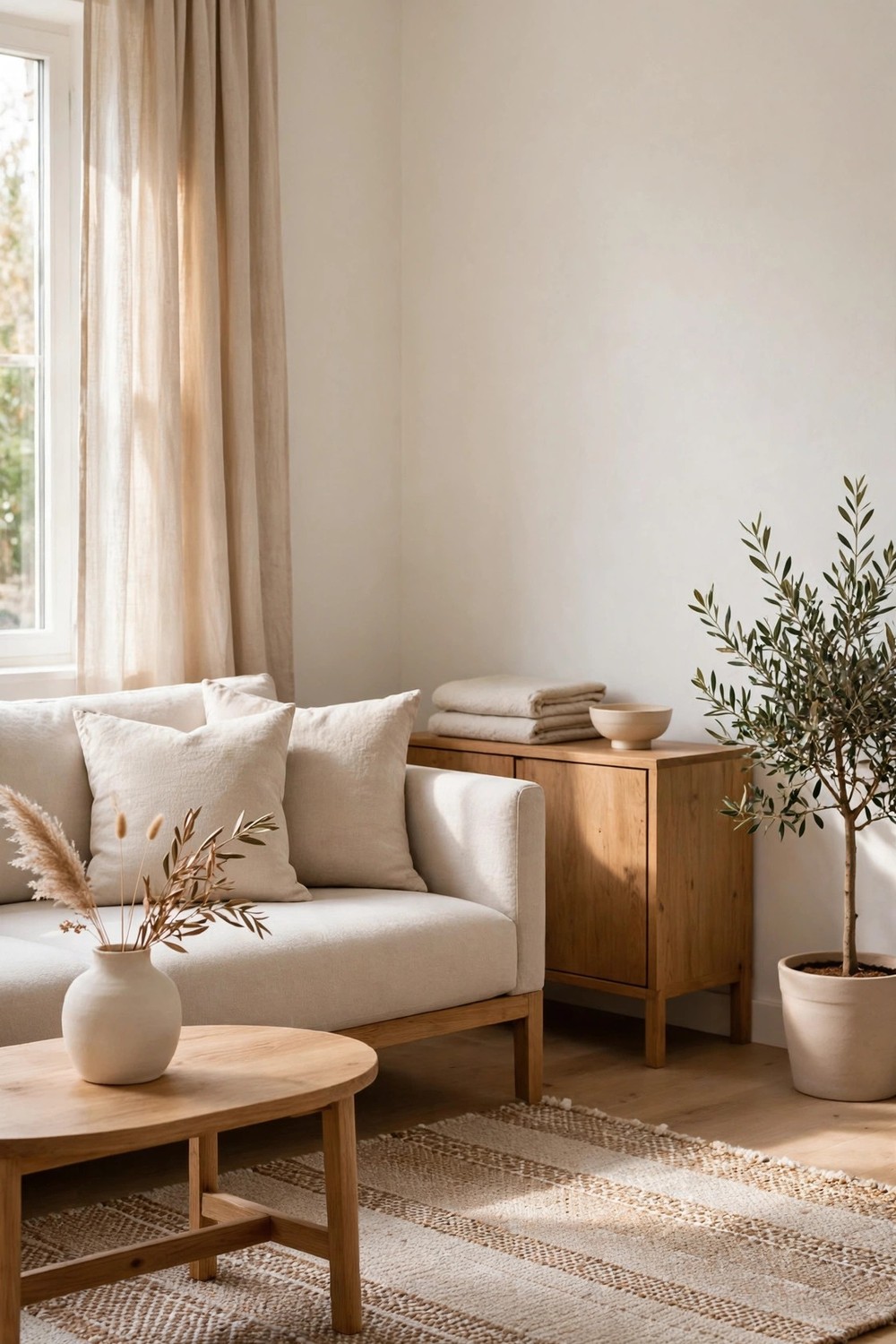
A tight palette is what makes a minimal room feel restful instead of random. Pick three main colors and let them repeat quietly around the space, something like warm white, natural wood brown, and a soft beige or muted sage. When the same tones show up in the rug, the cushions, and the curtains, your eye relaxes because nothing is competing for attention. It also makes shopping much simpler, since you can ask yourself whether a new piece fits the palette before you bring it home. If you want a little contrast, add it through texture or a darker wood tone rather than a whole new color.
6. Use One Oversized Rug to Anchor the Room
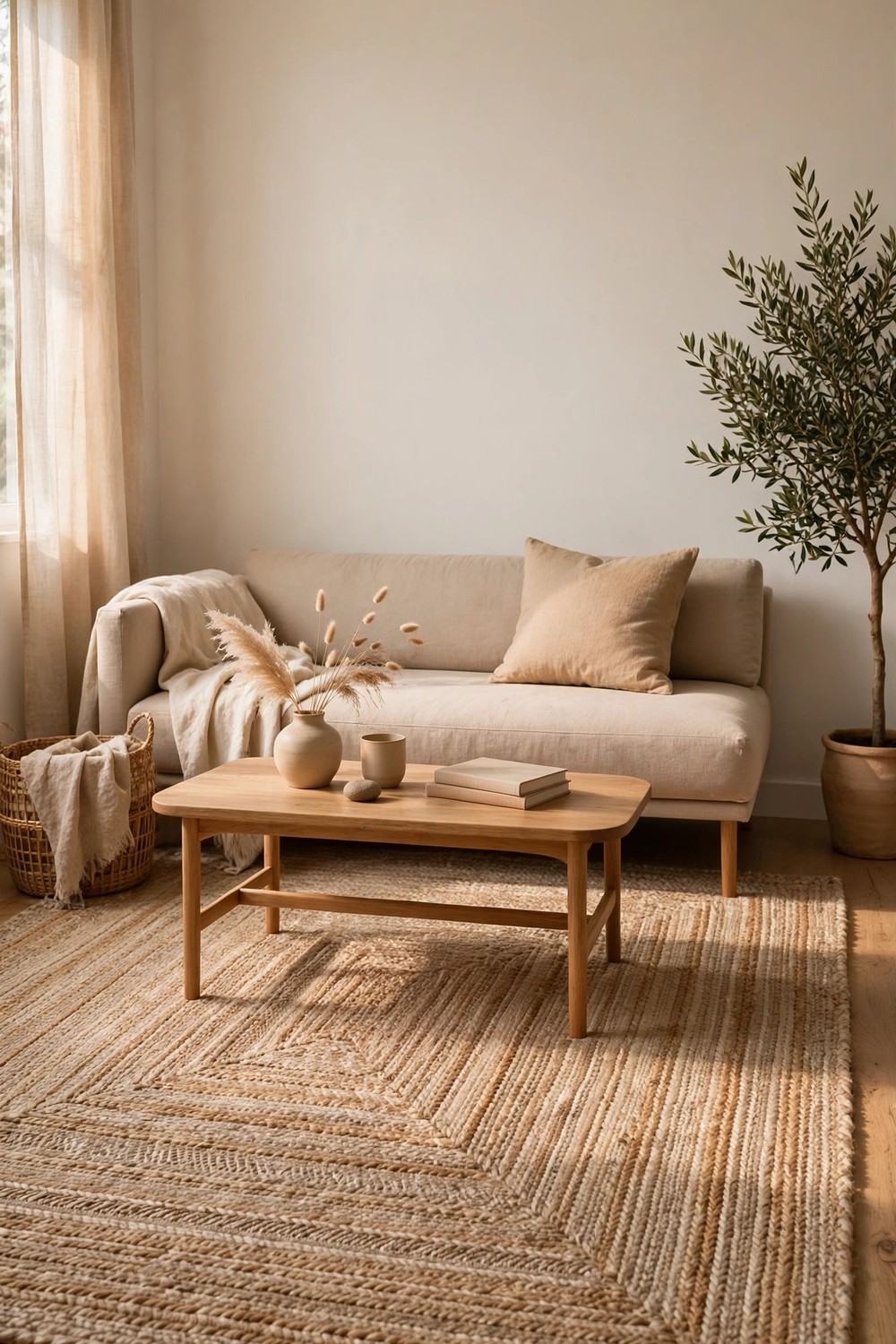
A rug that’s a little too small can make even a tidy room feel unsettled, so go bigger than you think you need. Ideally the front legs of your sofa and chairs sit on the rug, which pulls the seating into one calm, connected group. Choose a low pile wool or a simple woven style in a warm neutral, and don’t worry if it’s plain. Plain is good here, because the rug is doing a structural job rather than acting as artwork. It softens sound, warms the floor underfoot, and gives kids and pets a comfortable place to land, all without adding any visual clutter at all.
7. Let Negative Space Do the Decorating
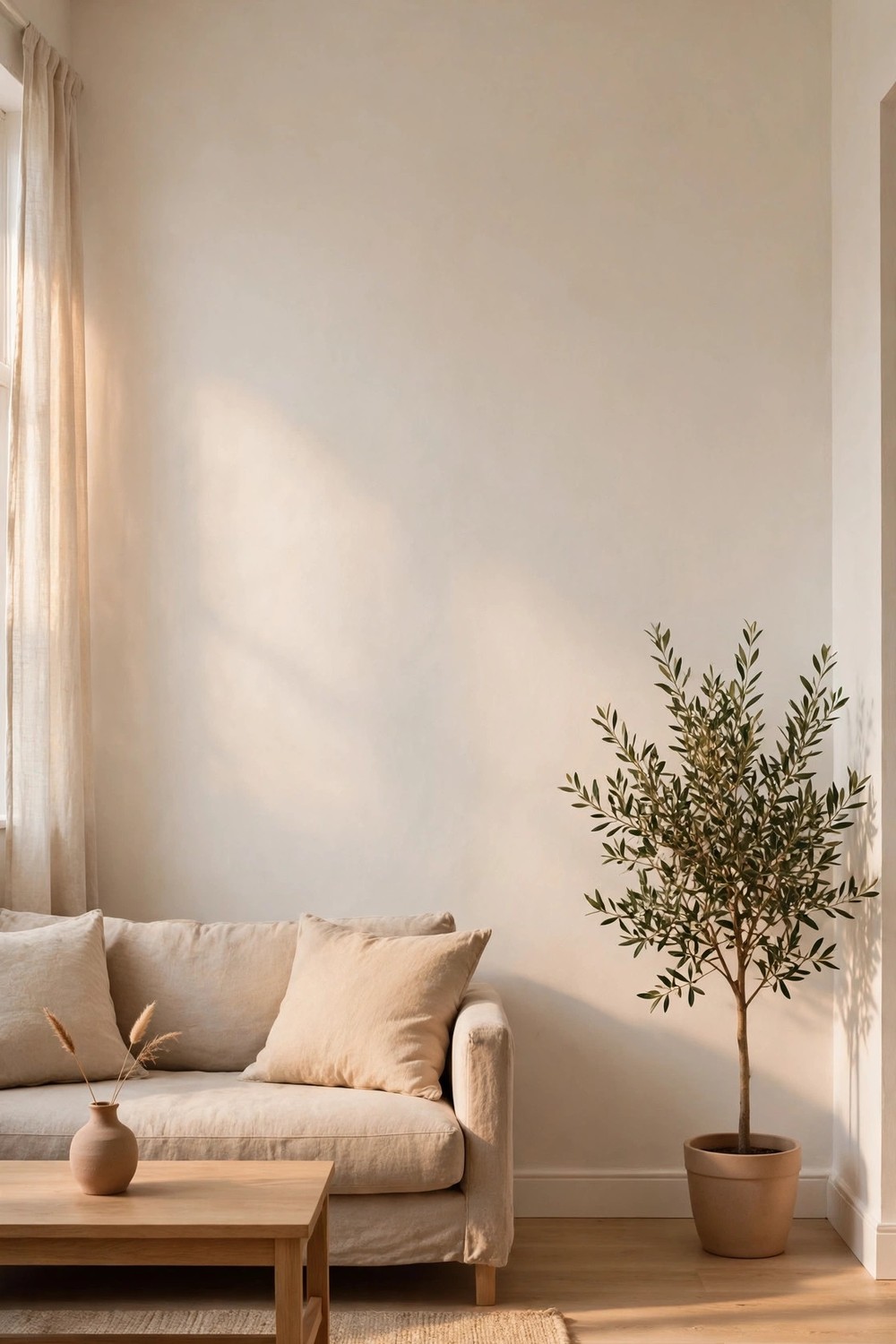
Negative space is just the empty area you leave around and between things, and it’s one of the most powerful tools you have. When a sideboard has nothing on one half, or a wall has room to breathe around a single piece of art, the whole room feels calmer and, honestly, more luxurious. It can feel strange at first to leave a surface partly empty, but try living with it for a week before you fill it. You’ll usually notice that the objects you do keep stand out more and mean more. Cozy doesn’t come from filling gaps. It often comes from protecting them.
8. Pick One Statement Piece and Let It Breathe
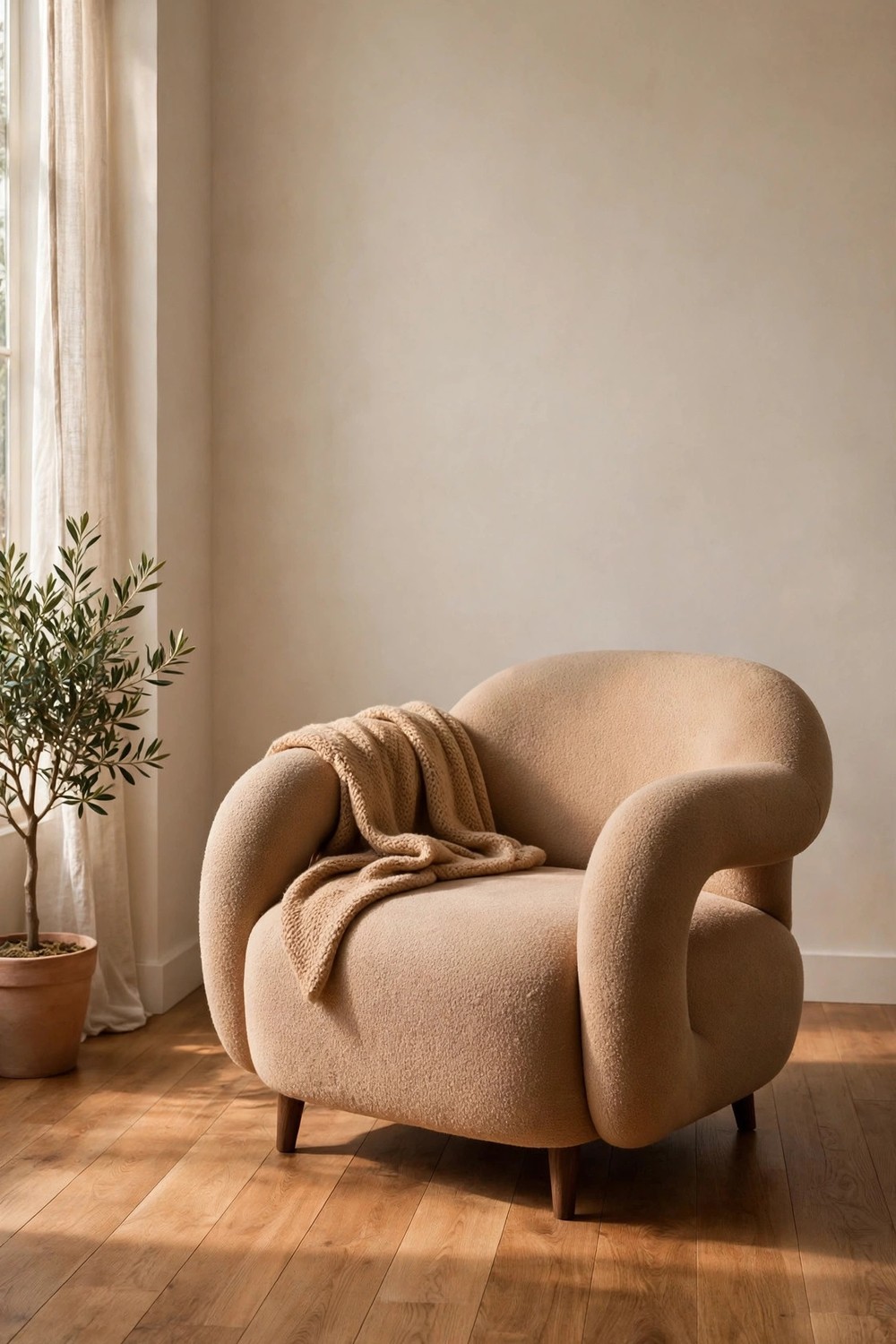
Instead of spreading your budget and attention across lots of small decorations, choose one piece you truly love and give it room to shine. It might be a sculptural armchair, a beautiful floor lamp, or a large piece of calm, abstract art. Keep everything around it simple so it doesn’t have to compete, and leave some empty space nearby on purpose. That contrast between one expressive piece and a quiet background is what makes a minimal room feel designed rather than unfinished. And because it’s only one piece, you can afford to choose something with real character, texture, or craftsmanship that you’ll enjoy looking at every day.
Furniture and Layout That Feel Calm and Inviting
Once the foundations are warm, the way you arrange the room decides whether it feels inviting or a little distant. These ideas focus on furniture choices, hidden storage, and small layout moves that keep the space open while still making it easy to relax, read, and gather in.
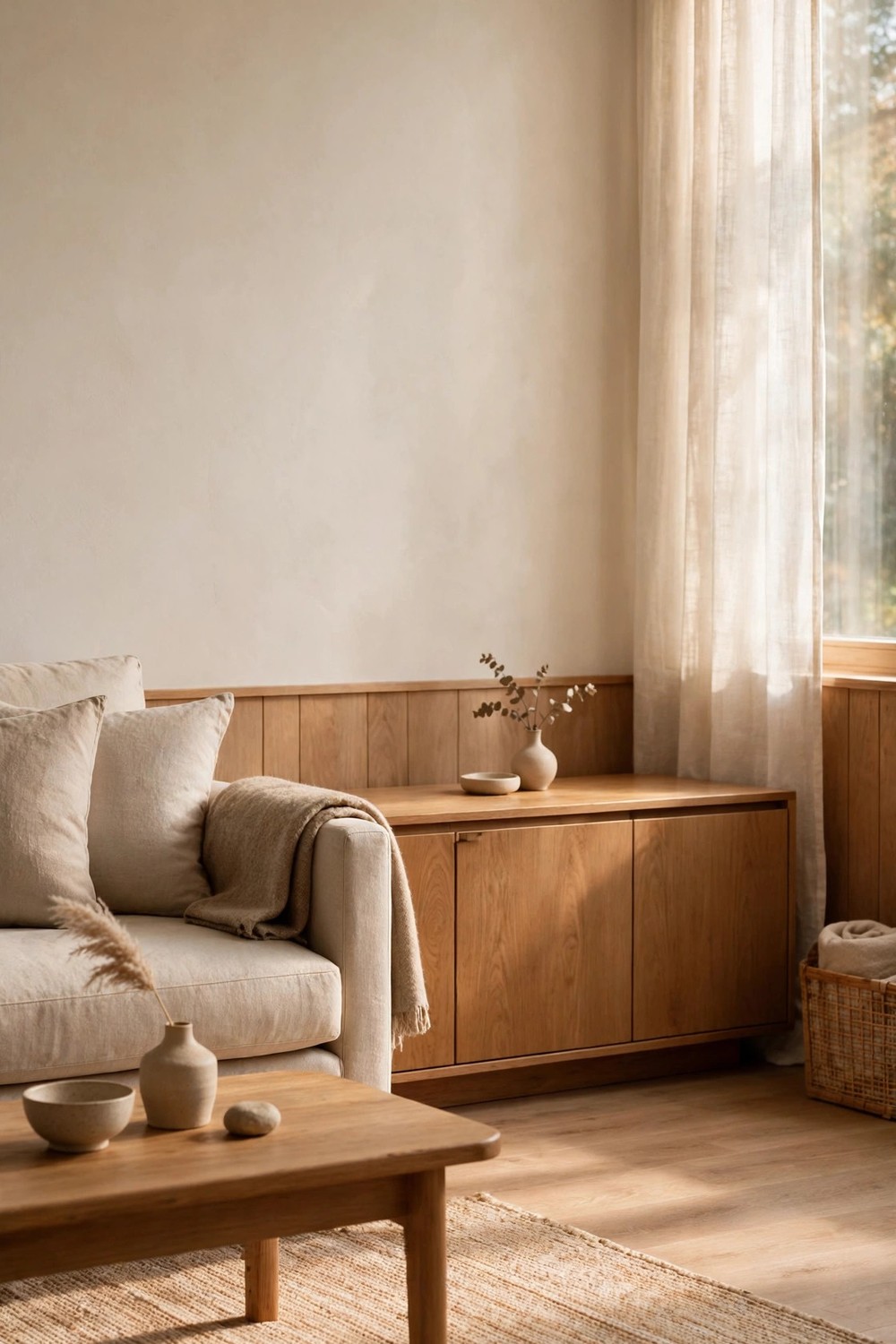
9. Hide Storage Inside Clean Lined Furniture
Clutter is usually what breaks the cozy feeling first, so smart hidden storage is your best friend. A low sideboard with closed doors, a coffee table with a shelf tucked underneath, or an ottoman that opens up can hold remotes, blankets, games, and chargers out of sight. The room still functions like a real family living room, but it looks calm when you walk in. Try to give everything a home that’s easy to reach, because storage only works if it’s simple to use on a tired evening. When tidying takes two minutes instead of twenty, the minimal look is much easier to keep.
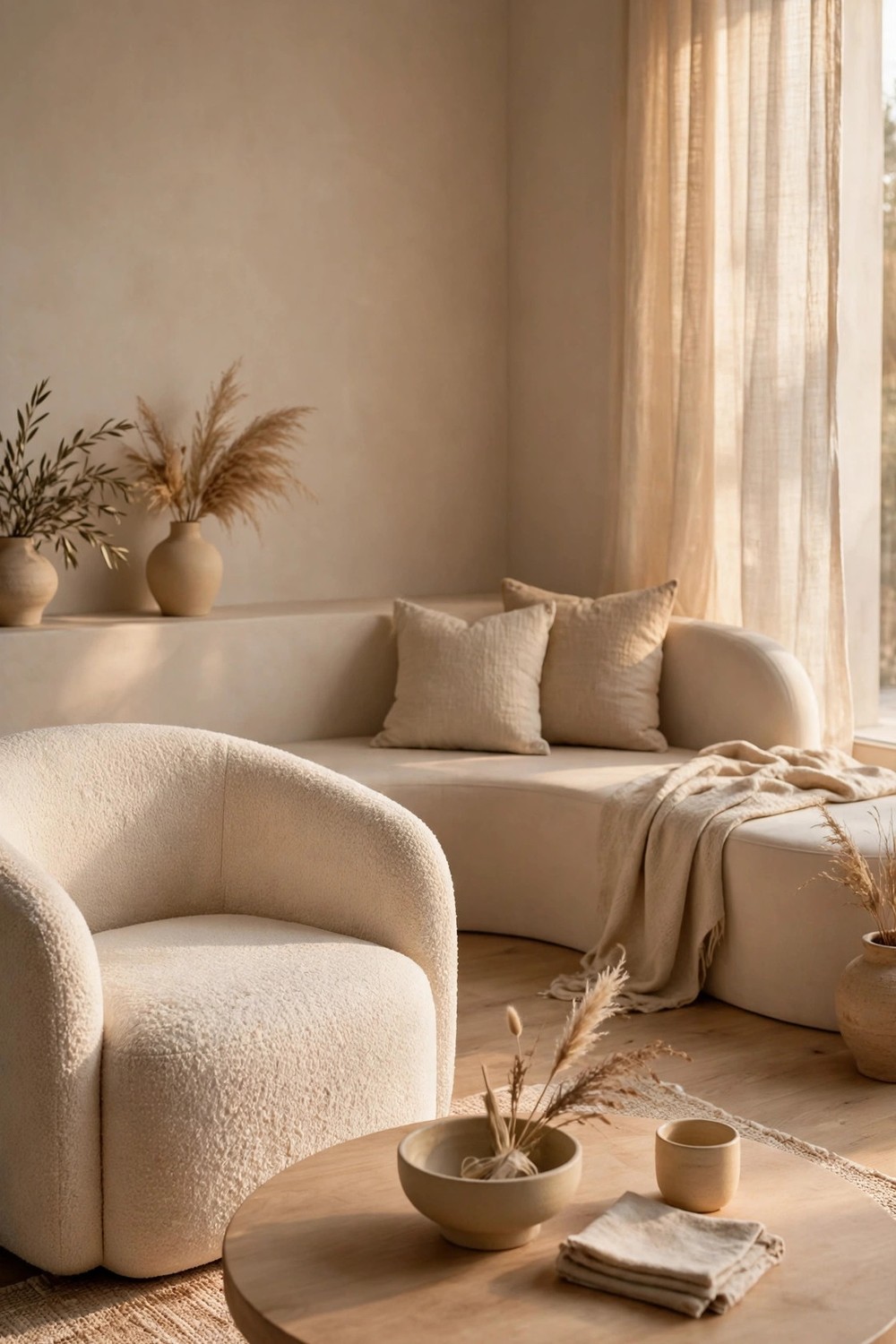
10. Bring in Curved Shapes to Soften Straight Lines
Minimal rooms tend to have a lot of straight edges, from the walls and windows to the sofa and shelves, and that can start to feel a bit sharp. Adding a few curves balances it beautifully. A round coffee table, an arched floor lamp, a curved armchair, or even a circular rug can make the whole layout feel gentler and more welcoming. You don’t need to replace everything. One or two rounded pieces are typically enough to change the mood. As a bonus, a round table is easier to move around in a small space, and there are no corners to bump into.
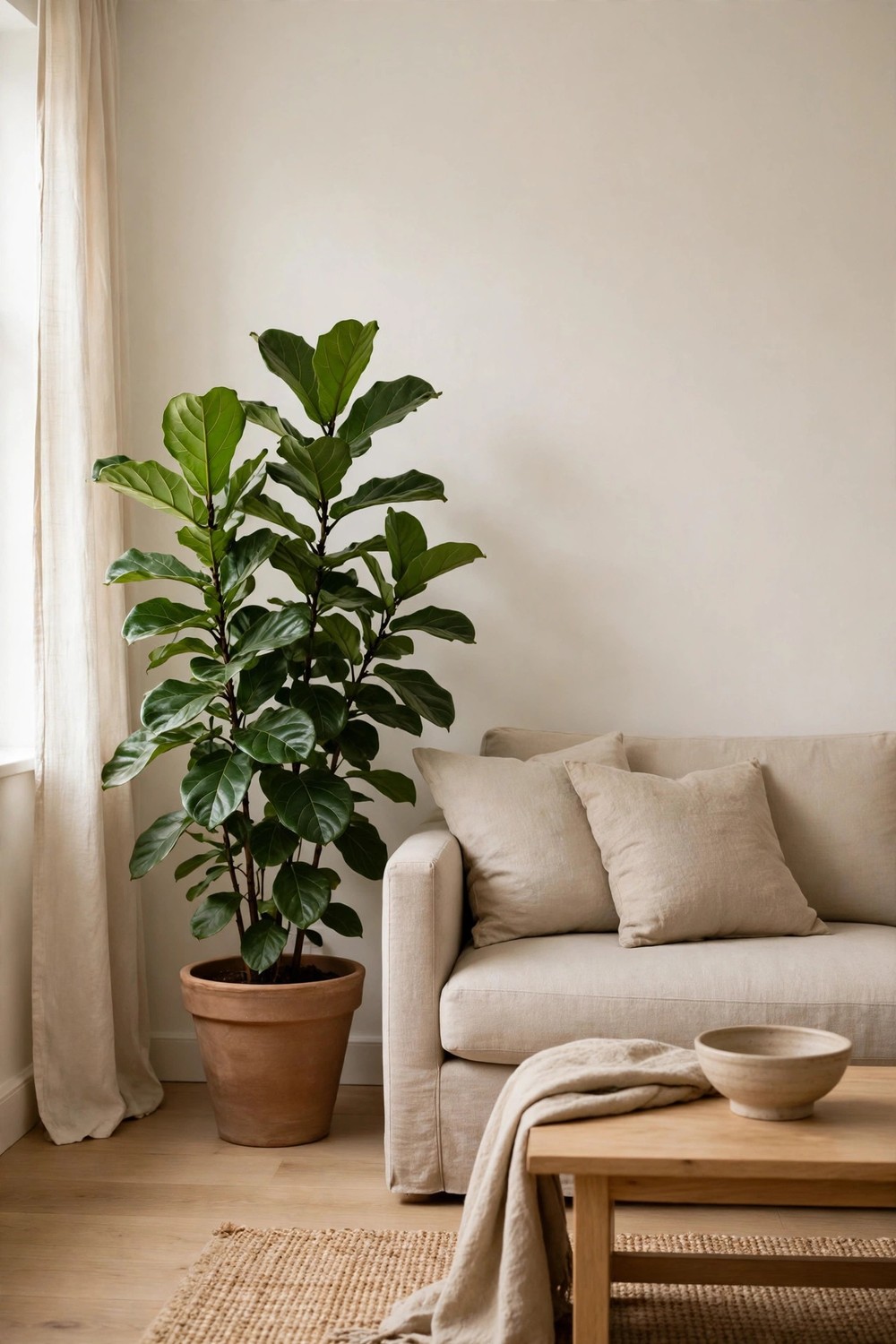
11. Add a Single Large Plant for Life and Color
One large plant can do the job of a dozen small accessories, and it brings something no object can, which is living, changing color. A tall olive style tree, a leafy fig, or a simple palm in a plain clay or woven pot adds height, softness, and a gentle sense of life to a quiet corner. Place it where it gets the light it needs rather than only where it looks good, because a healthy plant always looks better than a struggling one. If real plants aren’t practical for you, one good quality faux stem arrangement in a simple vase can give a similar calm effect.
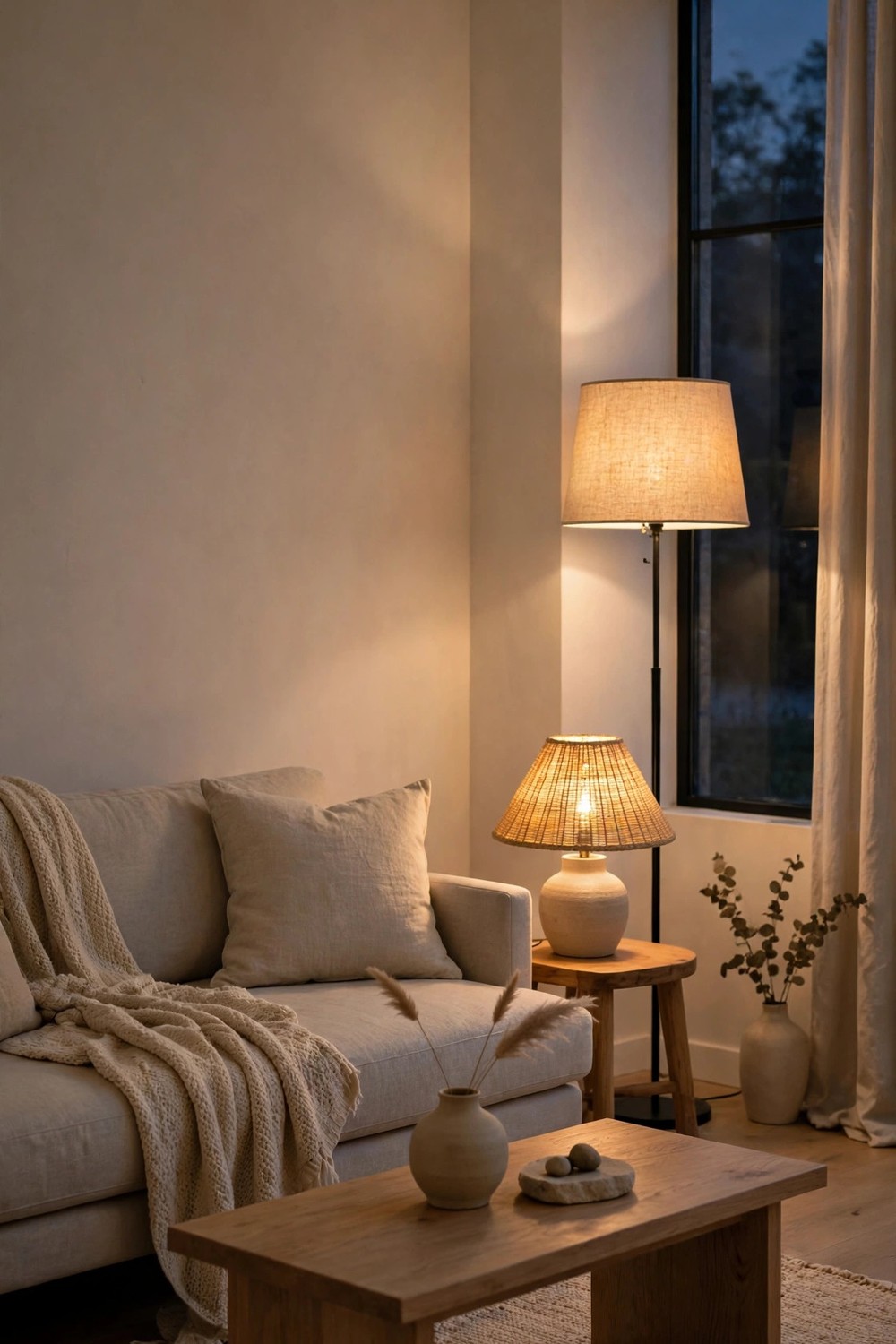
12. Layer Soft, Warm Lighting at Different Heights
Lighting is often the difference between a room that looks minimal and a room that feels cozy. Instead of relying on one bright ceiling light, layer a few softer sources at different heights, like a floor lamp by the sofa, a small table lamp on the sideboard, and maybe a candle or two in the evening. Choose warm bulbs and simple shades in linen or paper so the glow feels diffused rather than harsh. Dimmer switches help a lot if you have them. When the light is low and warm, textures look richer, colors look deeper, and people naturally settle in and stay longer.
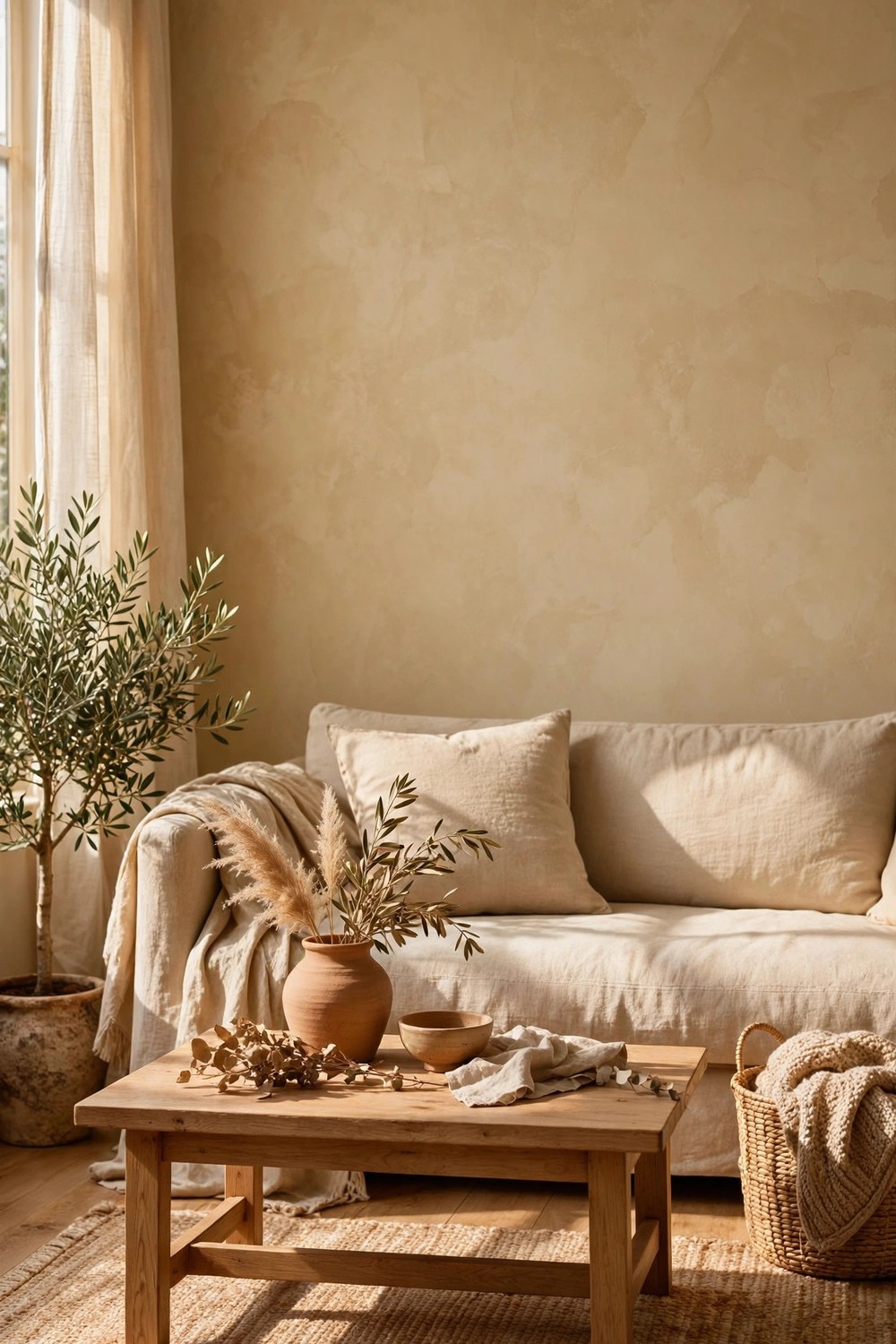
13. Use Limewash or Plaster Walls for Subtle Depth
If flat painted walls feel a little too plain for you, limewash or a plaster style finish adds depth without adding a single object. The surface has gentle movement and soft variation, so it catches light differently through the day and makes a simple room feel warm and handcrafted. Warm sandy, clay, and stone tones work especially well with wood and linen. It’s a bigger job than regular paint, so test it on one wall or in a small room first if you’re unsure. Many people find that once the walls have this kind of texture, they want even less on them, which suits minimal living perfectly.
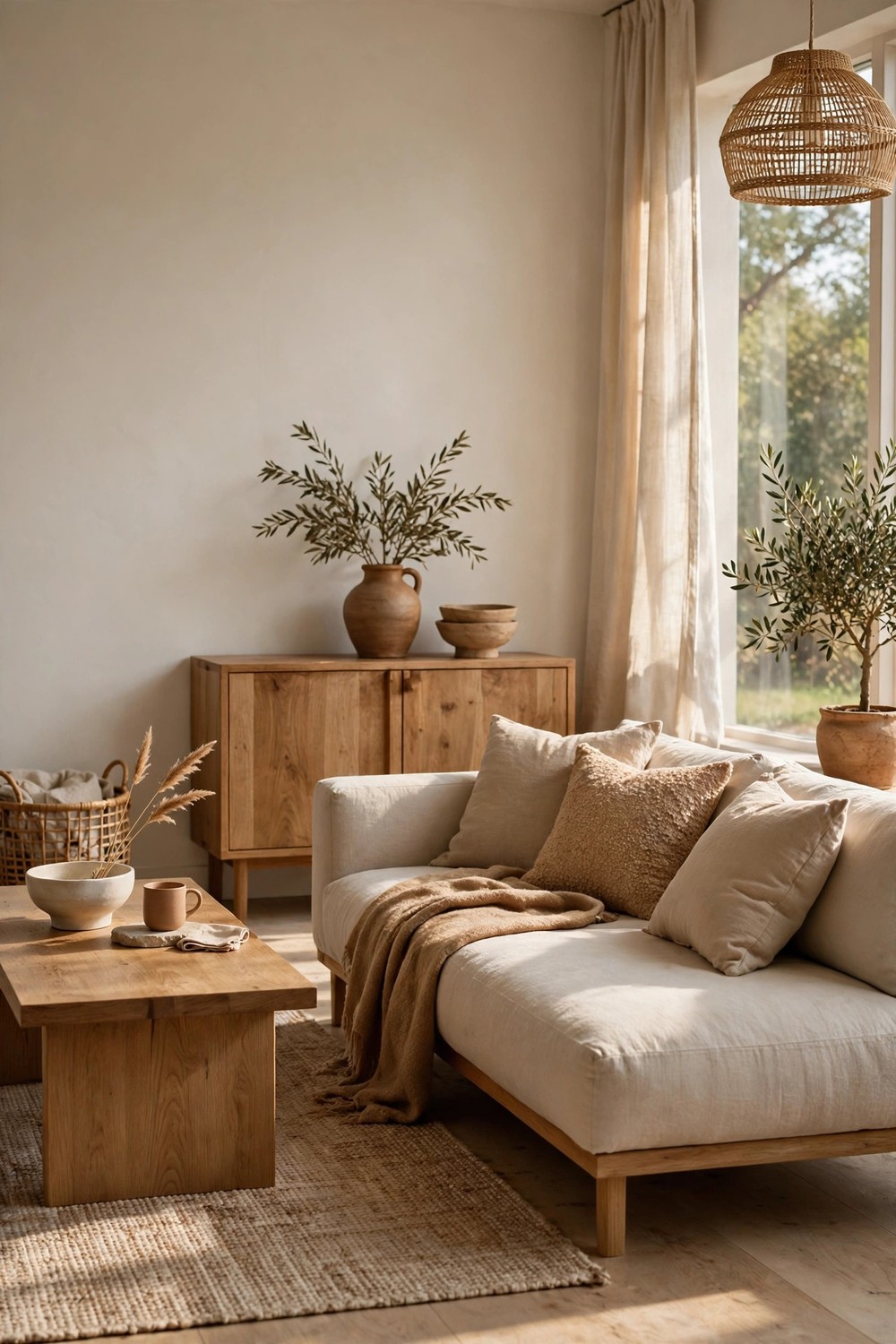
14. Choose Quality Over Quantity in Every Piece
Minimalism feels cozy when the few things you own are genuinely pleasant to use. A solid wood table that doesn’t wobble, cushions that keep their shape, and a rug that feels soft under bare feet all quietly tell you the room was chosen with care. That doesn’t mean everything has to be expensive. It usually just means buying a little slower, saving for the piece you really want, and choosing natural materials that age well. Fewer, better things also means less to clean, repair, and replace over time. If you touch it or sit on it every day, it’s worth prioritizing comfort and build over a bargain.
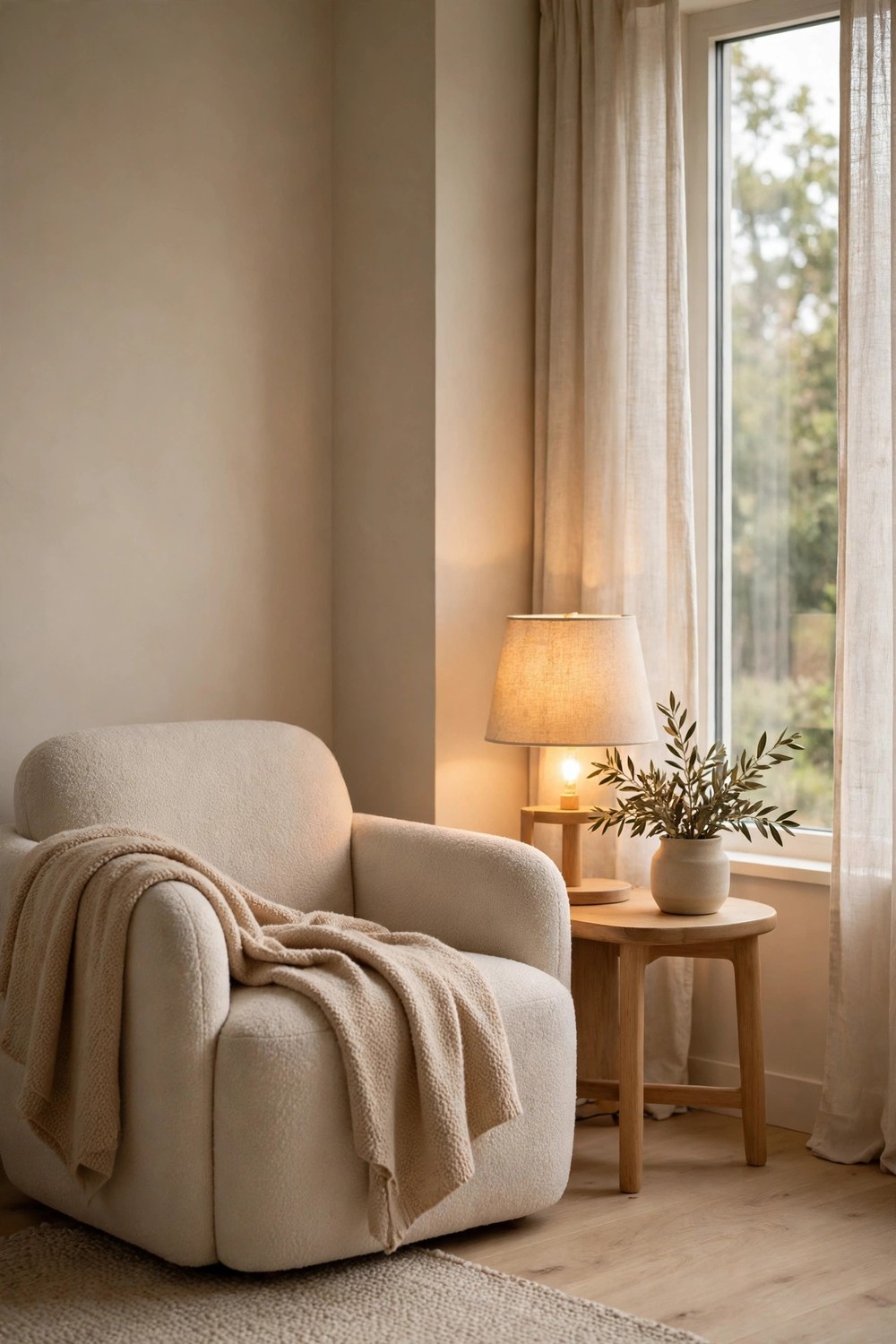
15. Create a Cozy Reading Corner With Very Little
You don’t need a library to make a reading corner feel special. One comfortable chair, a small side table for a cup and a book, and a warm lamp are honestly enough. Place it near a window if you can, or in the quietest corner of the room, and add a cushion and a throw so it feels like a little retreat within the larger space. Keep a tiny stack of current reads nearby and let the rest live elsewhere, so the corner stays calm. A spot like this gives a minimal room a clear purpose, and it’s often the first seat everyone chooses.
Texture, Light, and Small Details That Add Coziness
The final layer is where a tidy room becomes a room you want to linger in. These last ideas are smaller and simpler, from window treatments to cushions and baskets, but together they add the softness and personality that keep minimalism feeling warm rather than spare.
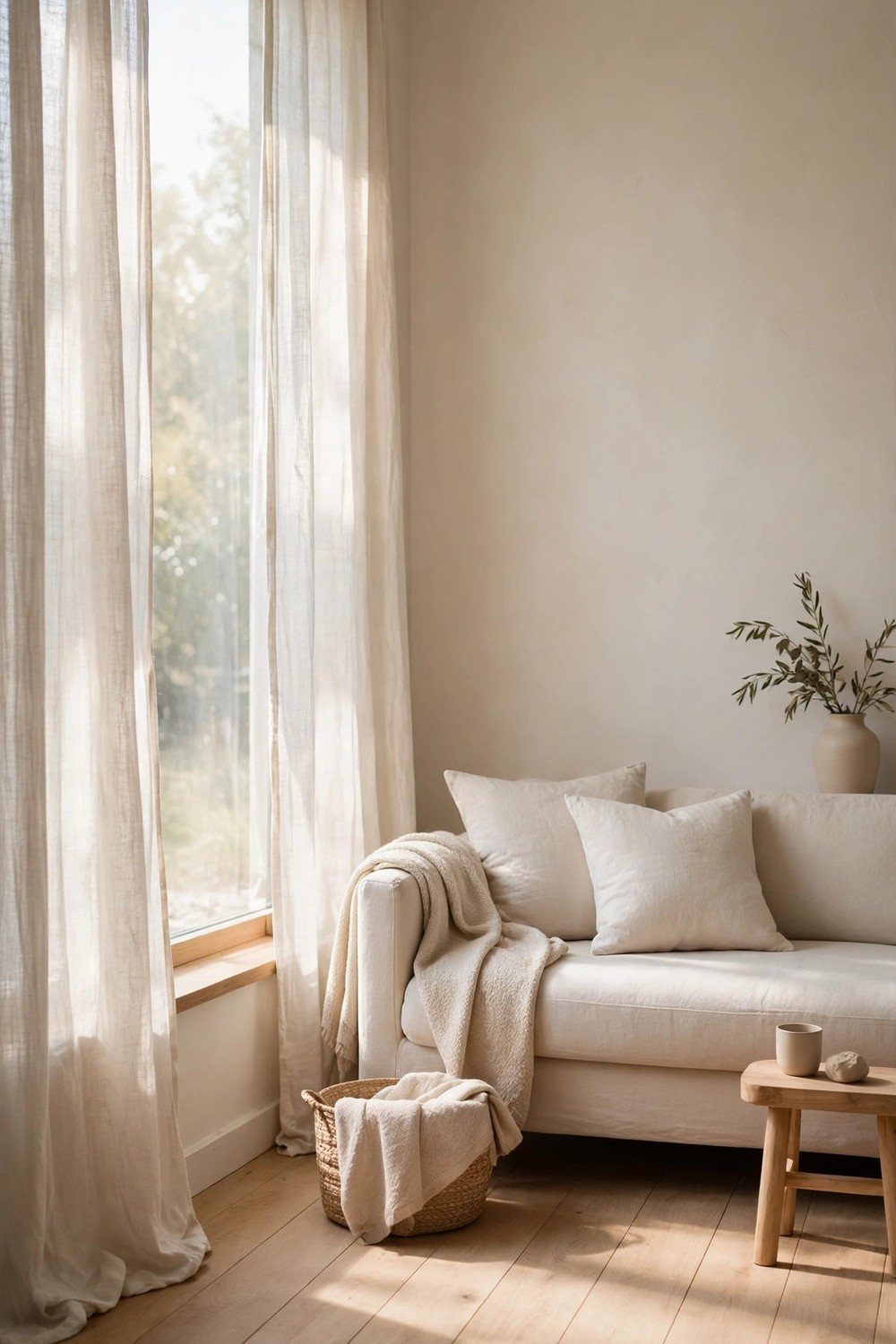
16. Keep Window Treatments Light and Simple
Heavy curtains can weigh down a minimal room, so lighter treatments usually work better. Simple linen curtains in a warm white or natural flax tone soften the light without blocking it, and they move gently when a window is open, which adds a quiet sense of life. Hang them a little higher and wider than the window frame if you can, so the room feels taller and the glass stays mostly clear. If privacy is a concern, a plain sheer layer underneath solves it without fuss. The goal is daylight that feels soft and filtered, not a window that becomes another big block of color.
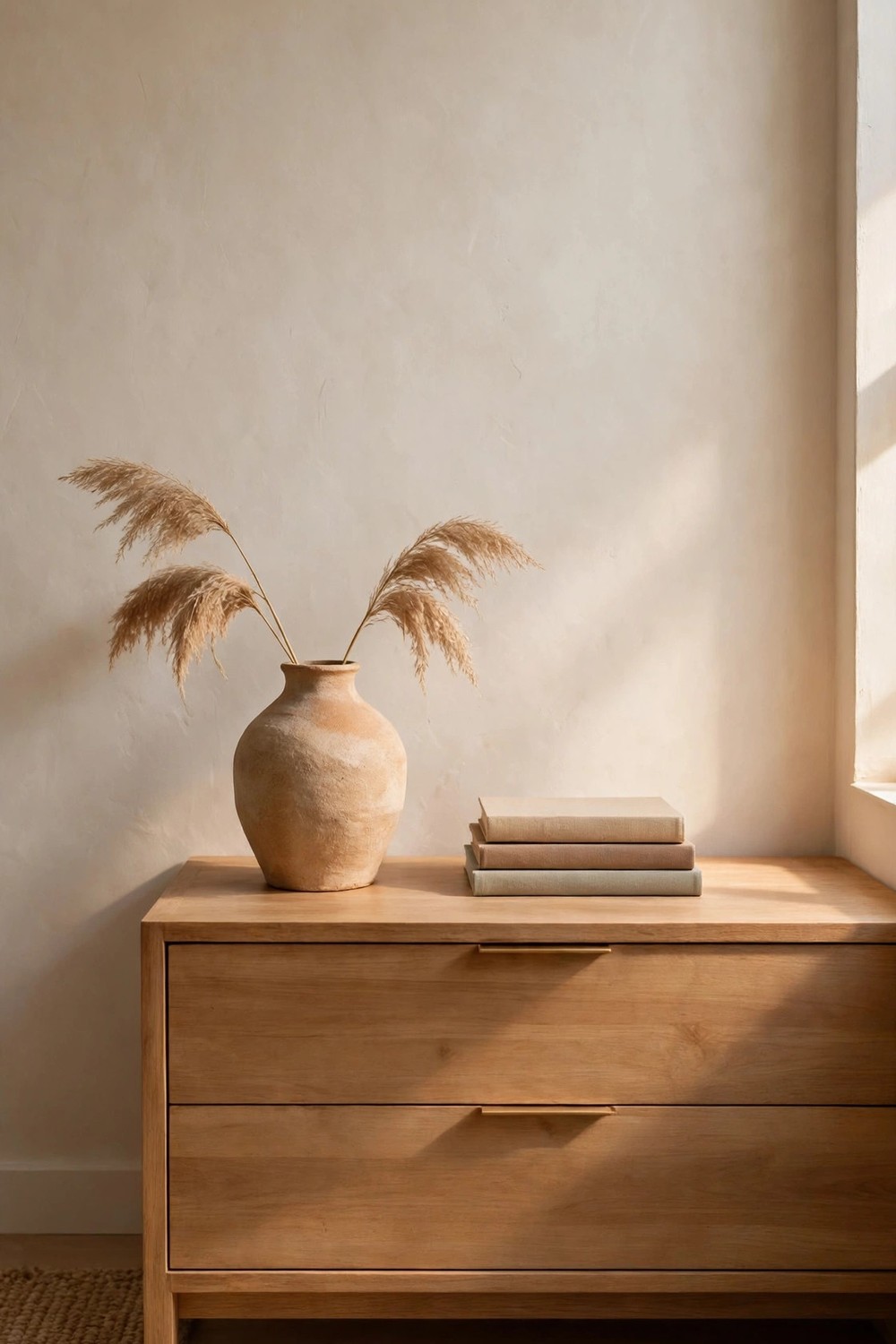
17. Display Just a Few Meaningful Objects
A minimal room doesn’t have to be impersonal. In fact, it feels warmest when the few objects on display actually mean something to you. A handmade vase from a trip, a small stack of books you love, or a bowl you use every day can carry more warmth than a shelf full of decorations bought to fill space. Group two or three pieces together and leave the rest of the surface clear, so the grouping reads as intentional. Rotate pieces now and then if you like, and store the others away. When everything on show has a story, guests notice, and the room feels like yours.
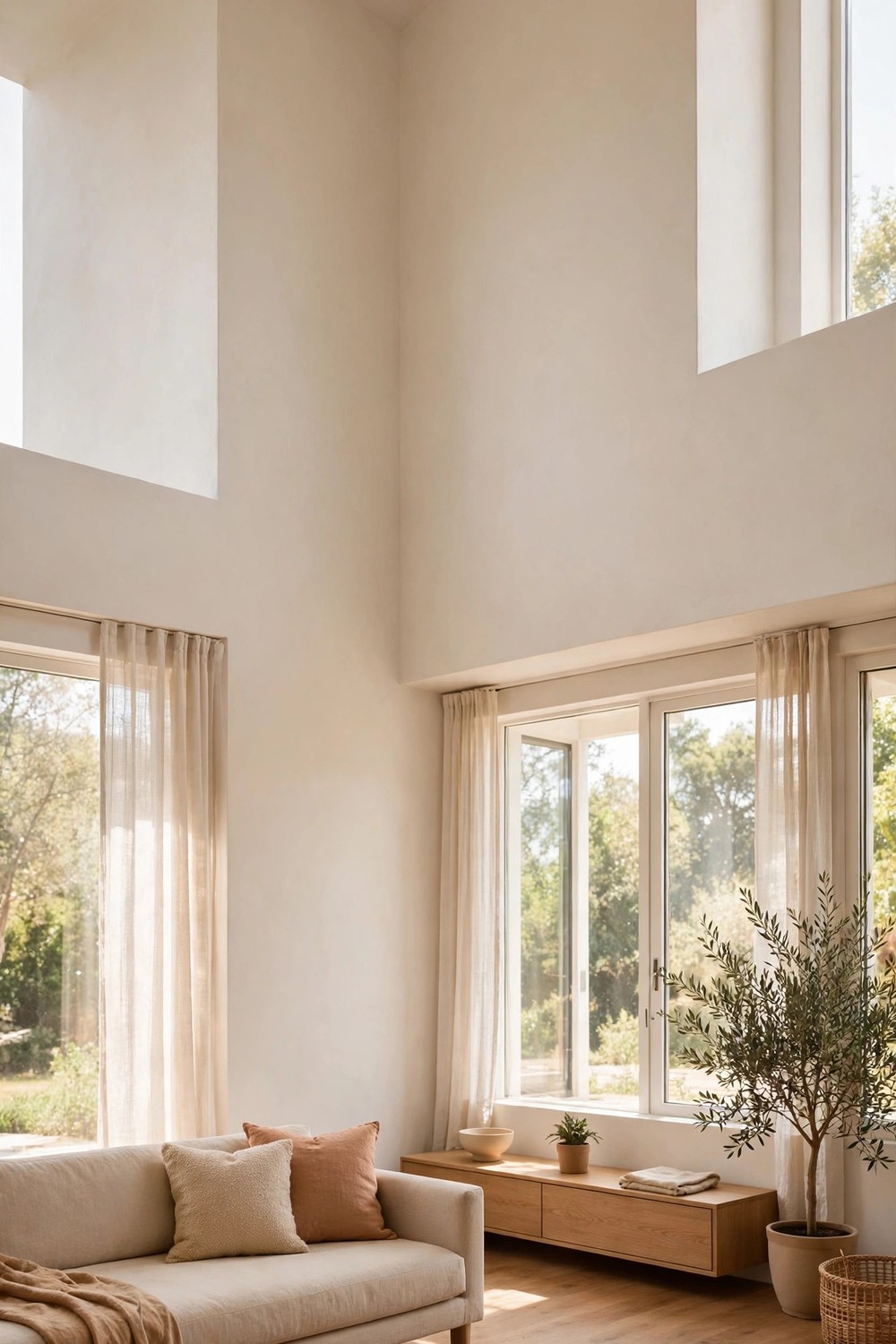
18. Choose Low Furniture to Make Ceilings Feel Higher
Low furniture is a quiet trick that makes a room feel both calmer and more spacious. A sofa with a low back, a low media unit, and a coffee table that sits close to the floor leave more empty wall above them, so the ceiling feels higher and the room breathes. It also creates a relaxed, grounded feeling, almost like sitting around a hearth. This approach works especially well in smaller rooms or places with modest ceiling height. Just make sure seats are still comfortable to get up from, and pair the low lines with one taller element, like a plant or floor lamp, for balance.
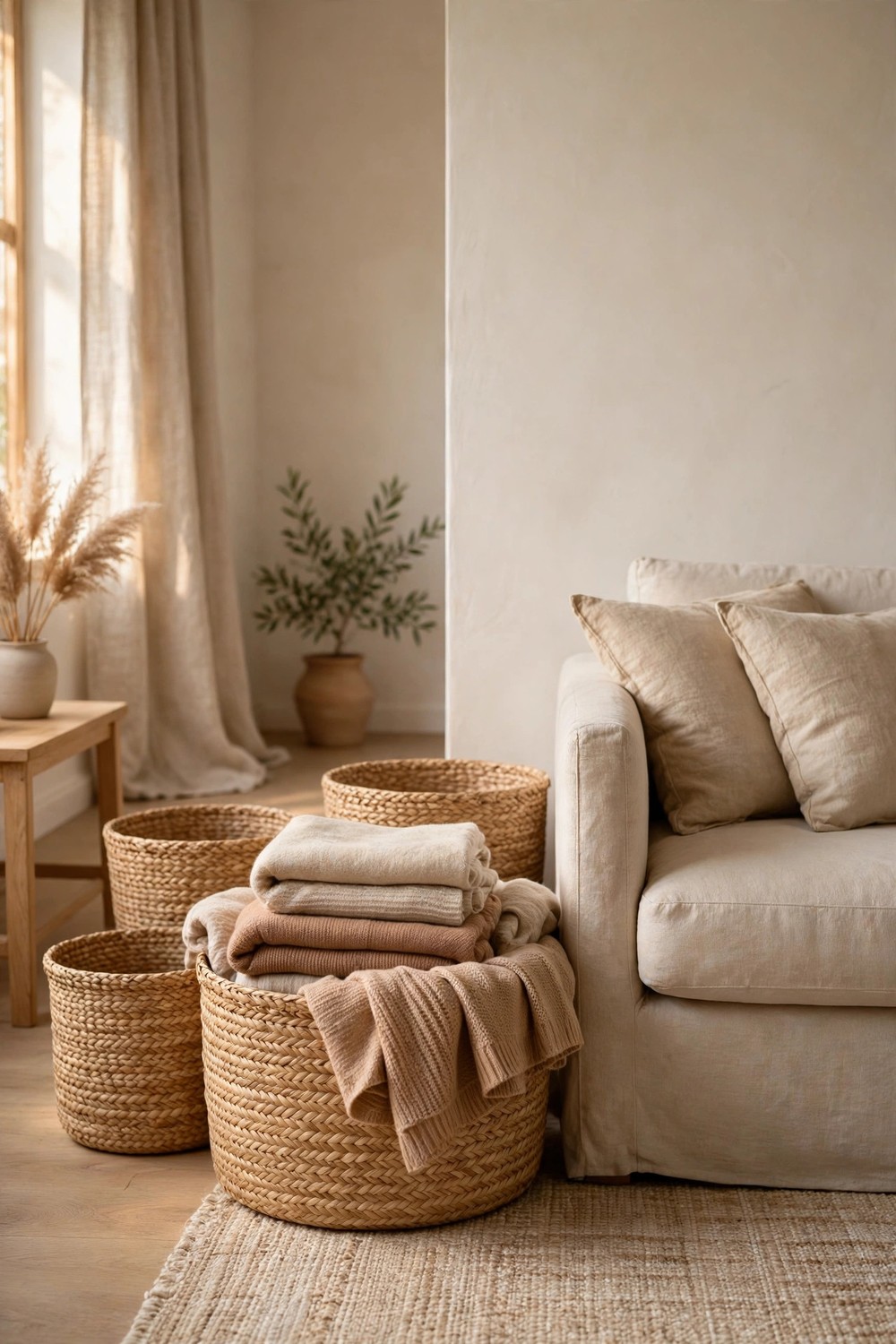
19. Add Woven Baskets for Storage That Looks Warm
Some things in a living room will always need a home, and woven baskets handle that job while adding warmth at the same time. Use one for extra throws, one for toys or magazines, and maybe one for a plant pot that needs a softer cover. The natural fibers bring in texture and a handmade feel that balances smooth furniture and plain walls. Choose similar tones so the baskets read as a calm set rather than a mix of styles. Because they’re open and easy to toss things into, they make quick tidying realistic, and a room that tidies fast tends to stay cozy and calm.
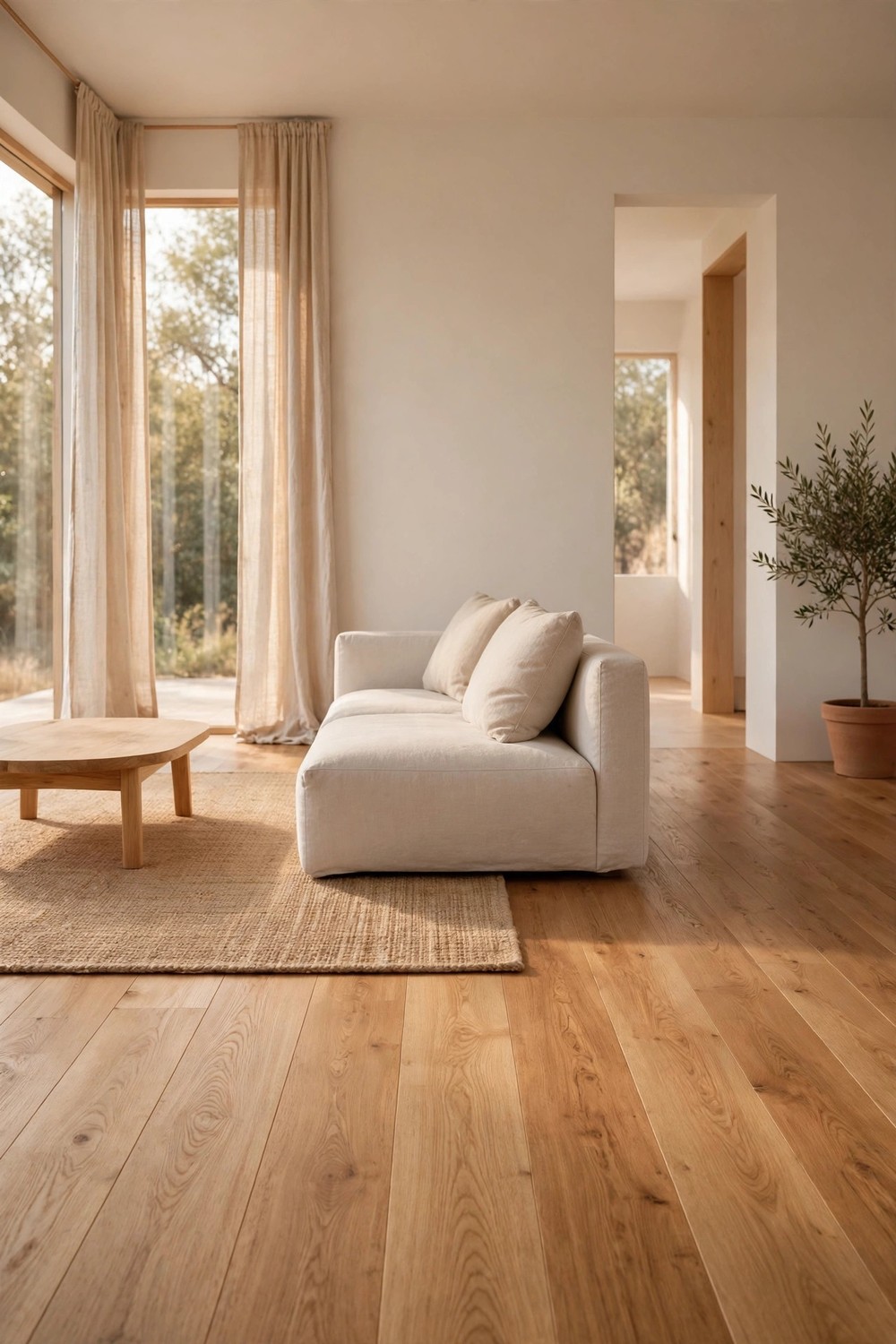
20. Keep Floors Mostly Bare and Beautiful
If you have wood or stone floors you like, let them be part of the decor instead of covering them up. One good rug in the seating area is usually enough, and leaving the rest of the floor bare keeps the room feeling open, clean, and calm. Bare floors also show off the natural grain and tone of the material, which adds warmth without any extra objects. Keep them easy to care for with a simple mat by the door and felt pads under furniture legs. In cooler months, the rug and a pair of soft slippers by the sofa handle comfort just fine.
21. Use Cushions in Varied Textures, Not Busy Patterns
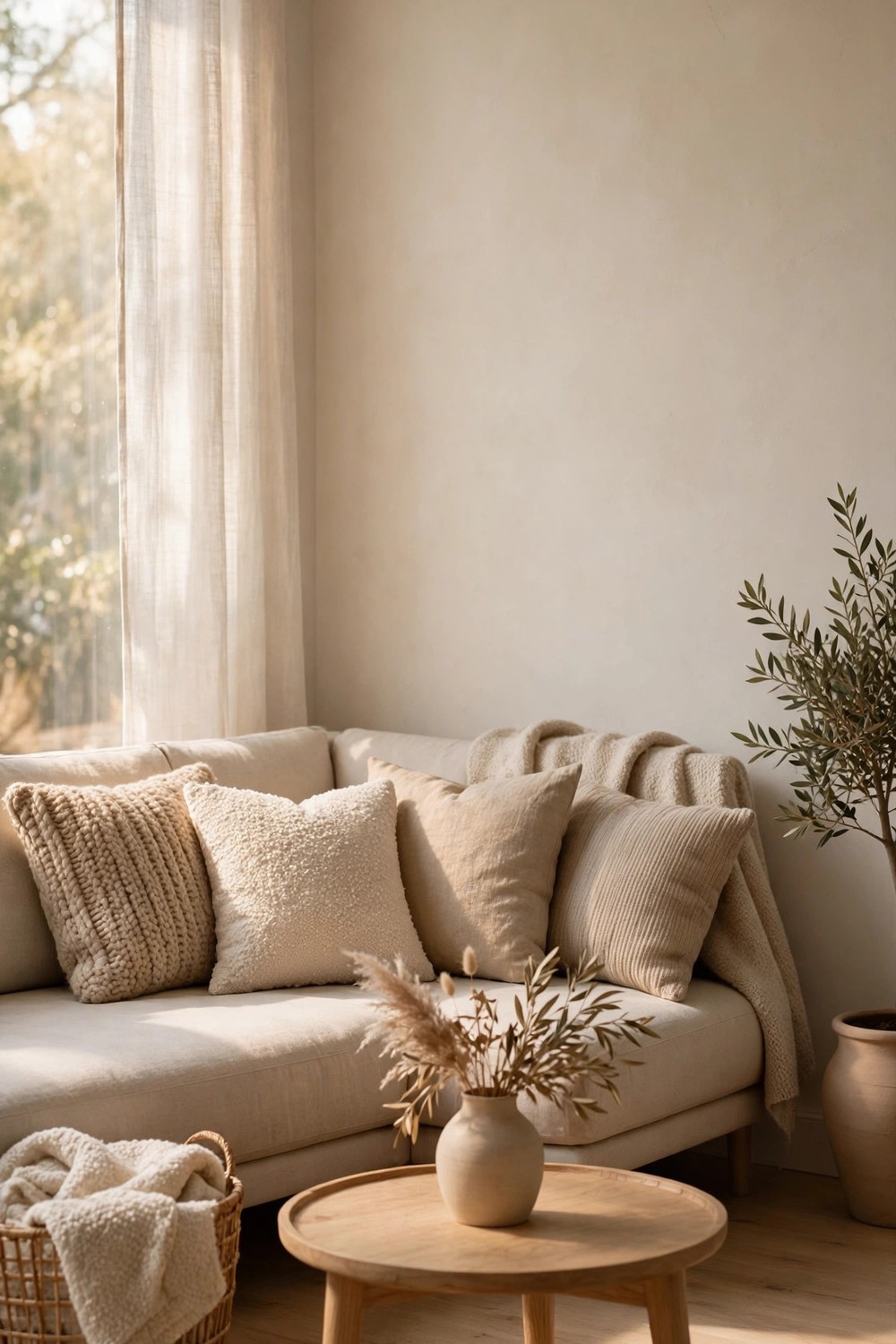
Cushions are where a lot of minimal rooms either get cozy or get cluttered, and the difference is usually texture versus pattern. Instead of mixing lots of prints, choose cushions in the same calm color family but different fabrics, like smooth linen next to nubby wool or a soft boucle. Your eye sees harmony while your hands feel variety, and that’s a lovely combination. Three to five cushions on a sofa is typically plenty. More than that and you’re moving them every time you sit down. If you want one accent, let it be a deeper tone of a color already in the room.
22. Leave One Wall Completely Blank on Purpose
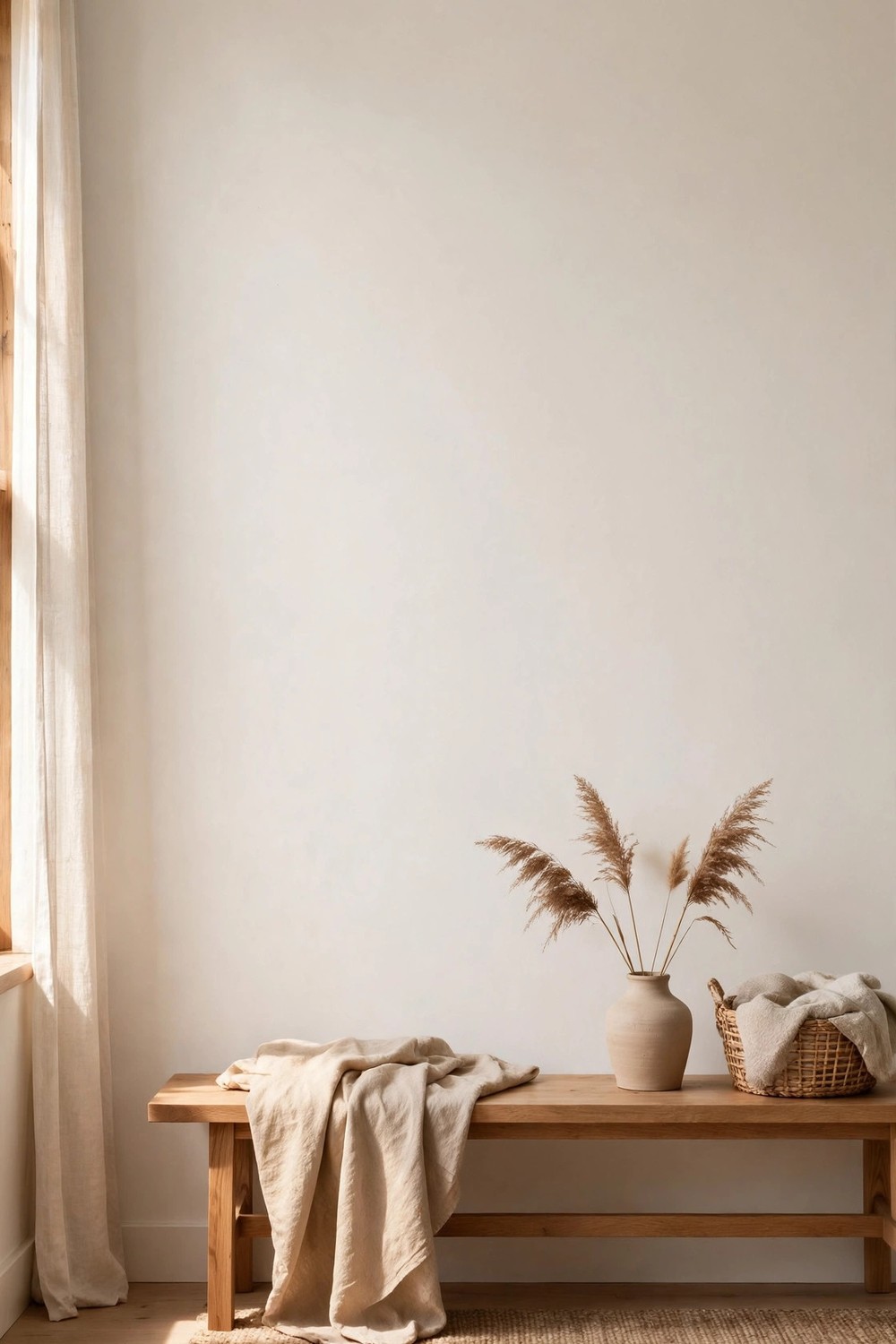
Leaving one wall completely blank can feel brave, but it’s one of the coziest choices you can make. An empty wall gives your eyes a true place to rest, and it makes the art, furniture, and objects on the other walls feel more special by contrast. It also helps a small room feel larger, because there’s nothing pulling that side of the space toward you. Choose the wall you see when you first sit down if you can, so the calm is part of your everyday view. If it feels too bare at first, give it time. Most people find the quiet grows on them quickly.
At the end of the day, a cozy minimalist living room isn’t about following strict rules or owning almost nothing. It’s about choosing calm on purpose, then softening that calm with warm color, natural texture, good light, and pieces you genuinely enjoy using. You really can have clear surfaces and a room that hugs you back. Start small, trust empty space a little more than feels natural at first, and let comfort be the test for everything you keep.
As you try these ideas, remember that your room doesn’t need to be finished in a weekend. Minimal spaces usually come together slowly, one thoughtful piece at a time, and that slow pace is part of why they feel so personal when they’re done. Live in the room, notice where you naturally curl up and where clutter tends to gather, and adjust gently from there. A living room that feels calm when you walk in and cozy when you settle down is absolutely within reach, and it’s worth taking your time to get there.

Leave a Reply