If you have ever finished a kids room, stepped back feeling proud, and then watched your child fall out of love with it six months later, you are not alone. Kids change fast, and their rooms usually struggle to keep up.
The good news is that a room does not need a full redo every time a favorite character changes. When the big pieces stay calm and flexible, the room can quietly grow along with your child. Small swaps then do the updating, and they typically cost far less than starting over.
Below are 24 kids bedroom ideas that lean on timeless furniture, gentle color and storage that actually gets used. Pick the ones that fit your child’s age right now, and the rest will usually still make sense a few years from today.
Beds, Bedding and Sleep Zones
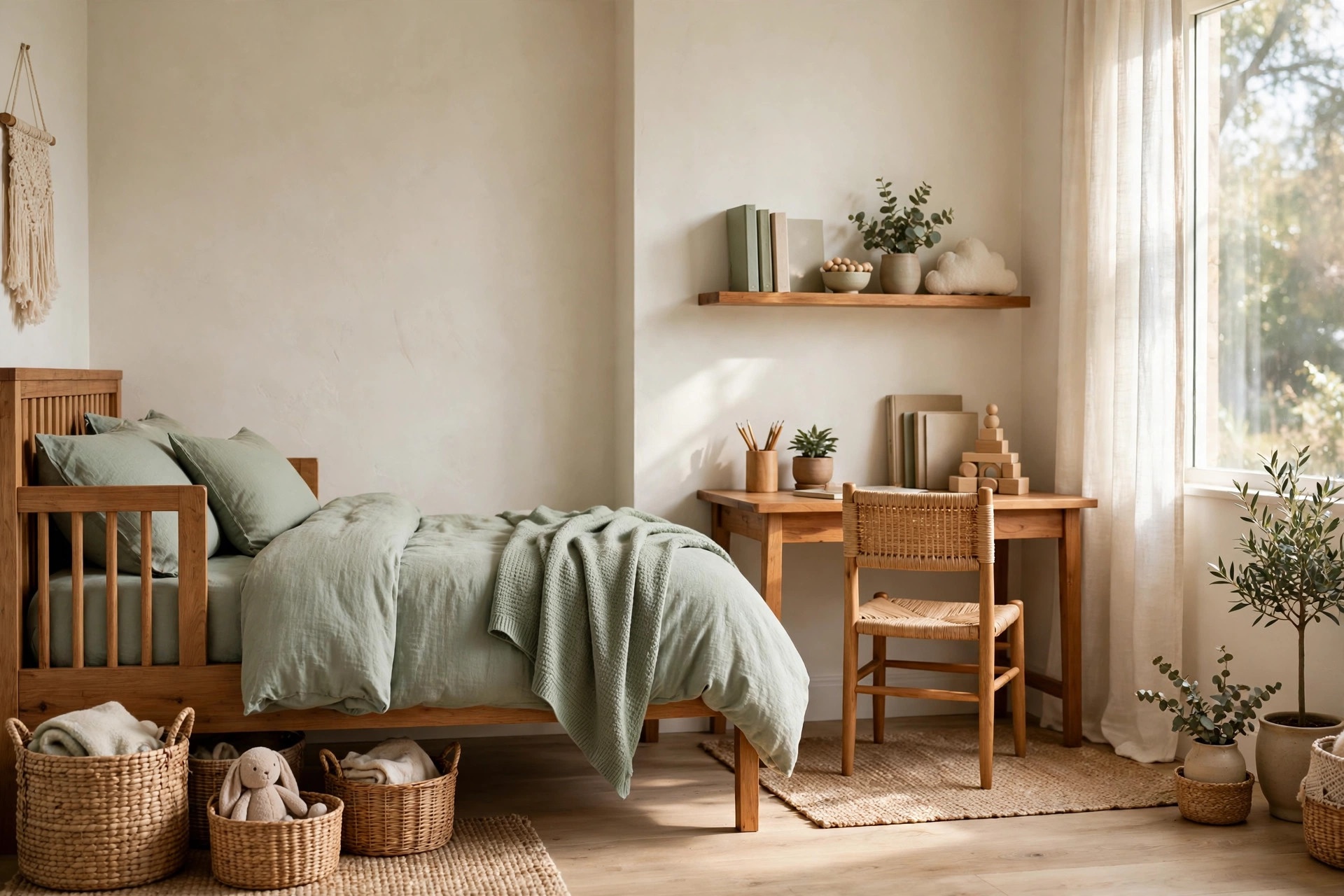
The bed is the biggest thing in the room, so it sets the tone for everything else. Choose it well and the sleep zone stays welcoming from the early years right through to the tween stage. It is also the zone that needs the least updating over the years when the basics stay simple and sturdy.
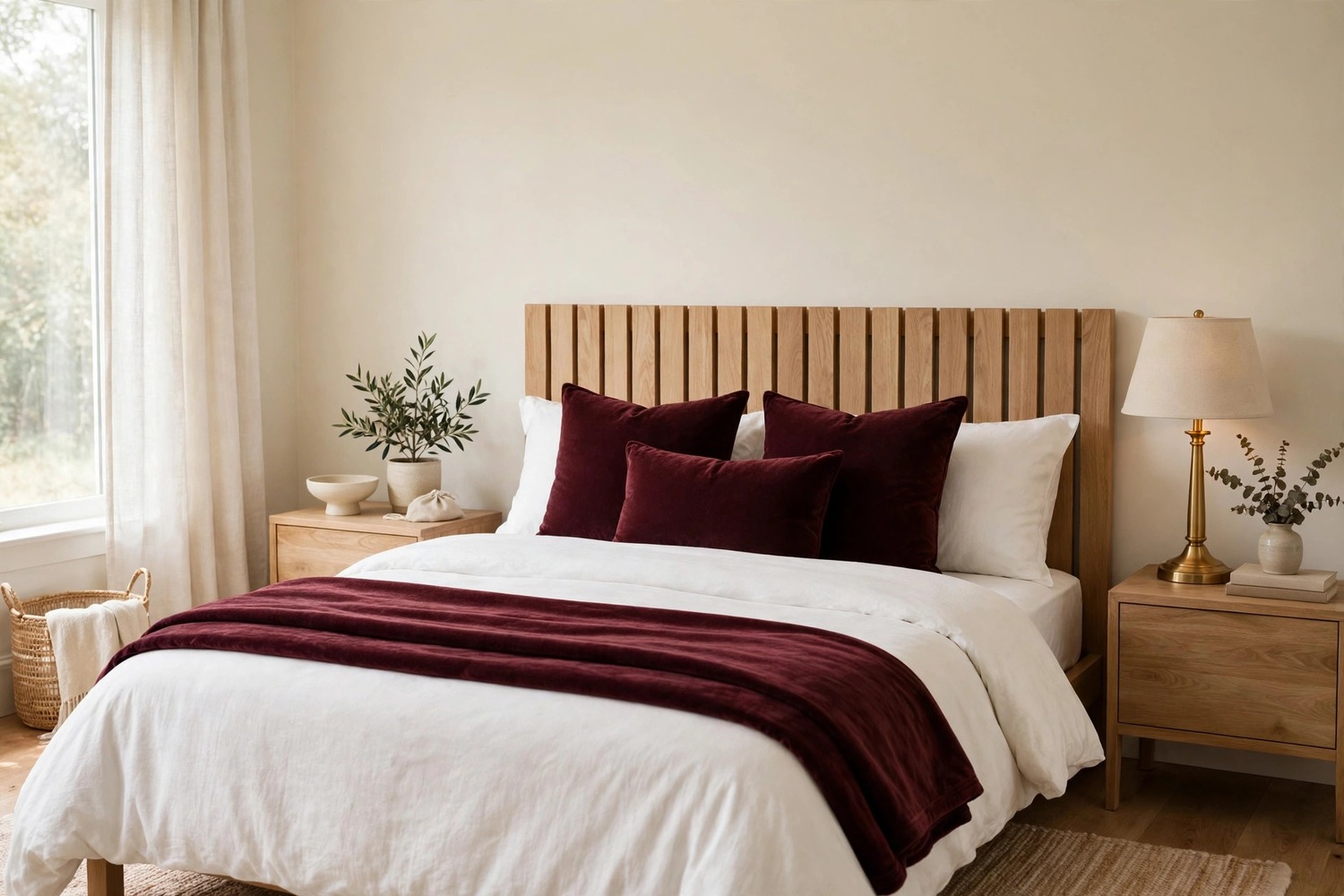
Start with a simple wooden bed frame. A plain warm wood frame in a standard size usually works from the first big kid bed all the way to the teen years. It does not tie the room to one age or theme, and it pairs happily with almost any bedding you layer on top later.
Let the bedding carry the personality. Duvet covers and pillow shams are the cheapest layer to swap when tastes change. A set with a favorite animal today can become calm stripes or a soft solid next year, typically without touching anything else in the room.
Build a cozy sleep corner, not a sleep theme. A soft rug beside the bed, a warm lamp and one or two cushions make bedtime feel special without locking you into a look. These pieces usually move easily to a bigger room or a different layout later on.
Keep a small nightstand within reach. A simple stool or a low cabinet gives water, a book and a night light a proper home. Look for one with a drawer or a shelf, because that bit of hidden storage tends to earn its keep every single night.
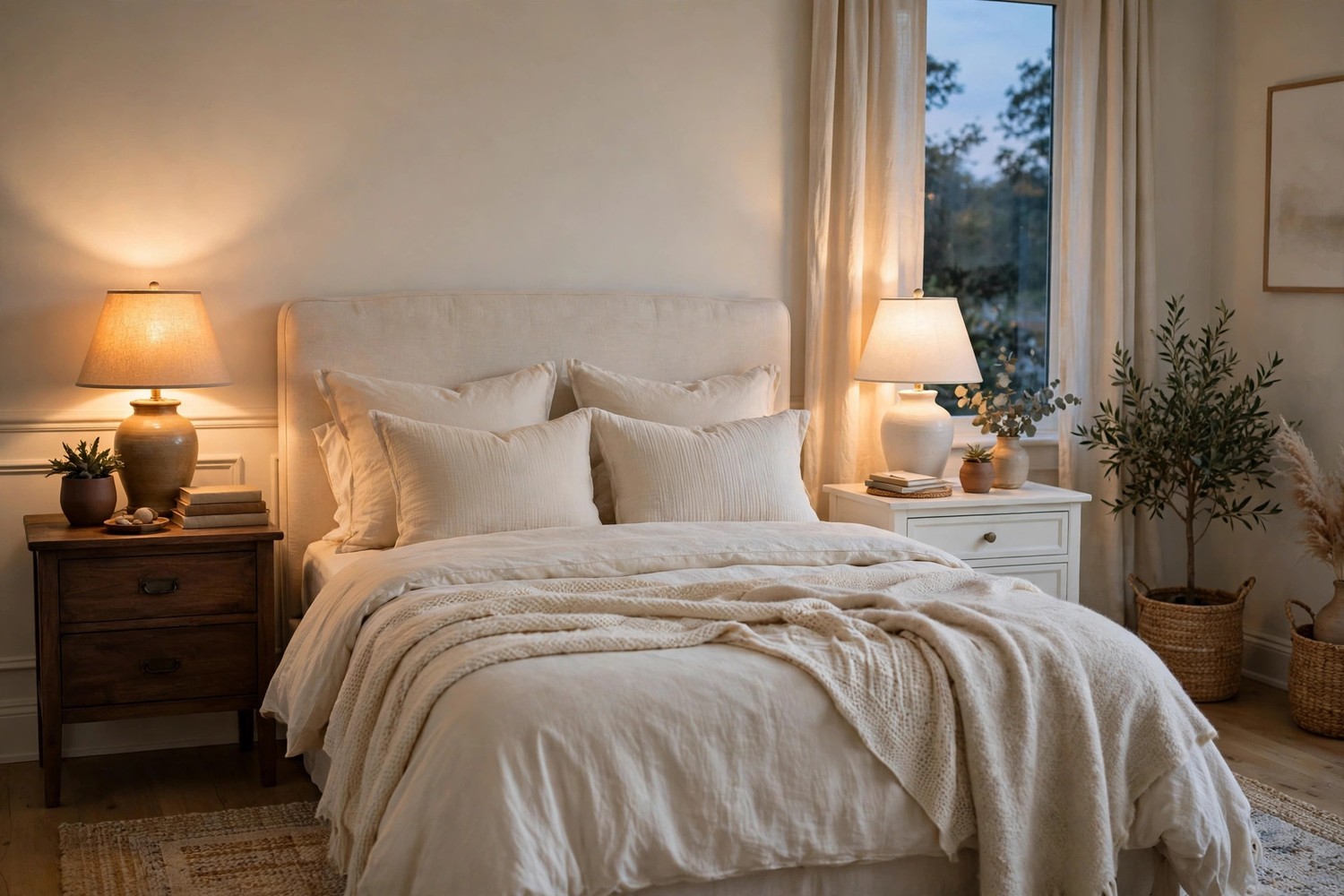
Layer blankets in calm, mixable colors. A couple of throws in ivory, sage or soft clay fold neatly at the foot of the bed and add warmth in winter. Because the colors are gentle, they usually blend with whatever bedding comes next instead of fighting it.
Study and Play Corners
A room that only sleeps quickly gets outgrown. Adding one corner for homework and one for stories gives the space jobs to do, and those jobs typically matter more as your child gets older, not less.
Desks
Choose a desk that fits an adult sized chair later. A plain, sturdy desk with a decent stretch of legroom usually serves a six year old with crayons and a twelve year old with a laptop. Simple lines matter more than cute details here, because the desk will likely stay in the room for years.
Keep the desktop almost empty on purpose. A small tray or a pencil pot holds the everyday bits, and the rest can live in a drawer or a basket nearby. A clear surface usually makes homework feel less overwhelming and tidying up much faster.
Add a lamp with warm, steady light. A simple desk lamp with an adjustable arm grows from picture books to late night projects without missing a beat. Warm bulbs are usually kinder on tired eyes than harsh white ones, especially in the evening.
Reading nooks
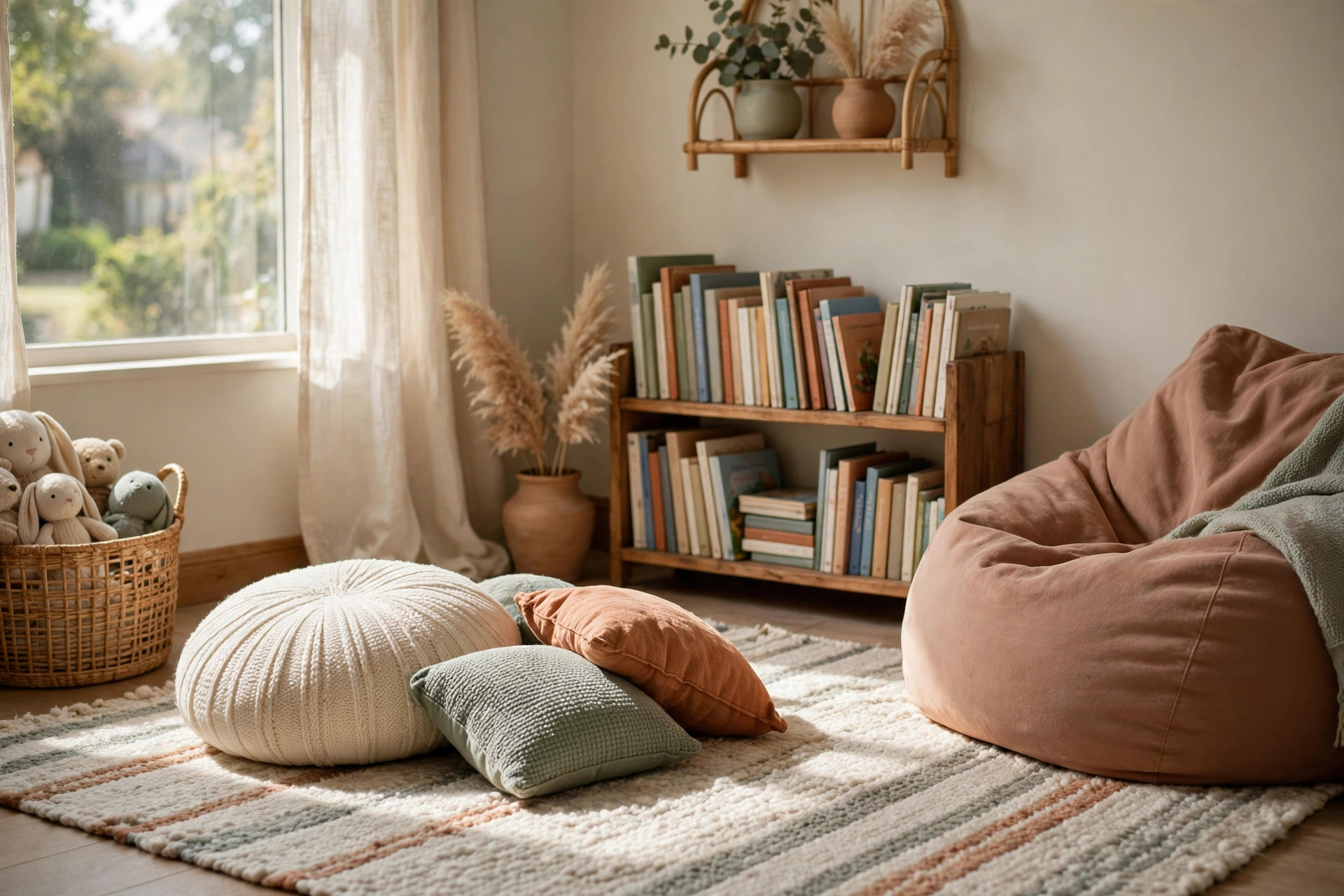
Claim one corner with cushions and a soft rug. A reading nook does not need building work, just a pile of floor cushions, a beanbag or a small chair in the quietest corner. Add a low bookshelf within arm’s reach and the spot usually becomes the most loved part of the room.
Use forward facing book storage for little readers. When covers face out, young kids typically pick up books far more often because they can see what they are choosing. Later the same shelf works as a regular bookcase, so nothing about it feels babyish.
Storage That Kids Actually Use
Storage only works if a child can reach it, open it and understand where things go. These ideas keep the system simple enough that tidying up does not always have to be your job. And when the system is this simple, kids usually surprise you with how willingly they use it on their own.
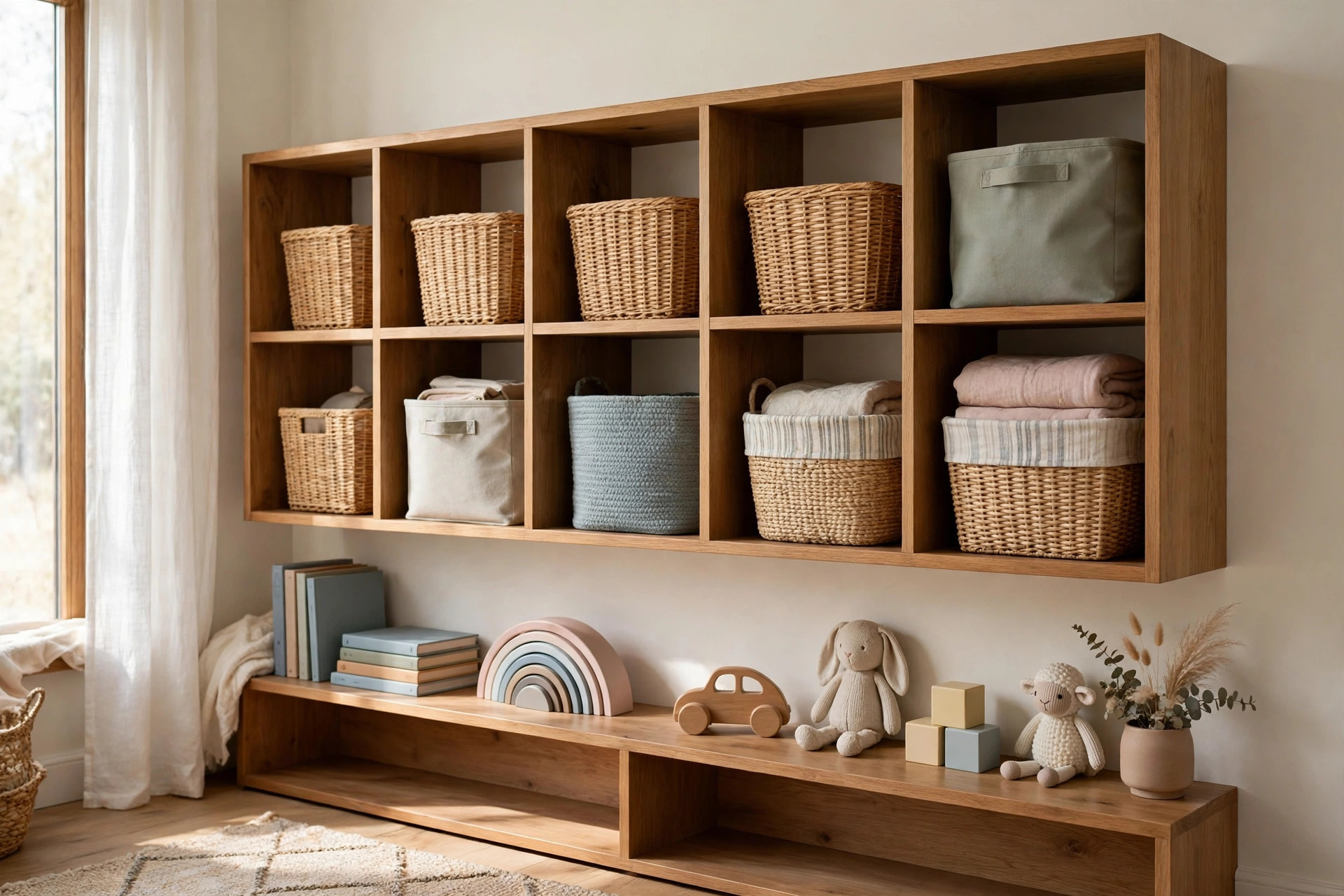
Go low with open cubbies. Cubby shelves at child height mean toys and books can be put away without help or climbing. Open storage usually gets used more than closed cupboards, simply because kids can see what belongs where.
Give every category one basket. One basket for blocks, one for soft toys, one for dress up bits. Woven or fabric baskets look calm on a shelf, and when a basket fills up it is usually a gentle sign that something can move on.
Pick picture labels over written ones. A simple drawing of cars on the car basket helps pre readers tidy up on their own. As they grow, the labels can quietly disappear and the same baskets still look perfectly at home.
Add hooks at their height, not yours. A short row of hooks by the door holds backpacks, hats and pajamas that would otherwise live on the floor. Hooks typically beat hangers for younger kids because there is nothing fiddly to wrestle with.
Use the space under the bed wisely. Flat rolling bins slide out easily and hold out of season clothes, spare bedding or the toy rotation. It is storage nobody sees, and it usually frees up a whole shelf somewhere else in the room.
Decor Themes Without Going Full Theme Park
A hint of a theme gives a room its magic, but a light touch is what keeps it working next year. These ideas suggest a mood rather than shouting a character’s name from every wall.
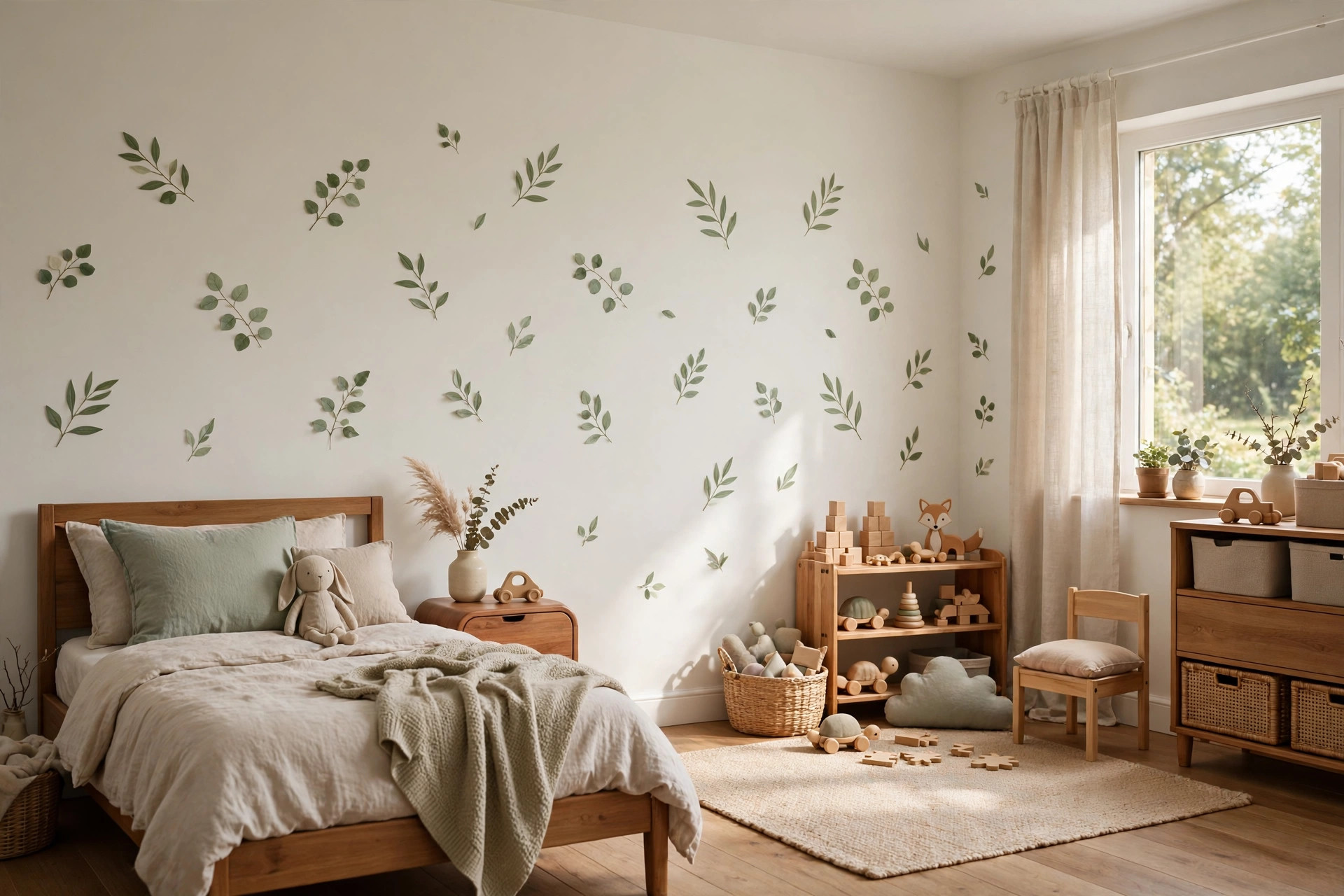
Try a subtle nature mood. Leaf decals, a soft green cushion and a wooden toy shelf hint at the outdoors without committing to a full jungle. Nature themes usually age gracefully, because a forest feeling suits a five year old and a ten year old in different ways.
Keep walls a calm, warm neutral. Ivory or a very soft sage on the walls lets the toys and books bring the color. Neutral walls typically survive several bedding changes and poster phases, which saves you repainting every time tastes shift.
Let art be small, framed and changeable. A little gallery of inexpensive frames can hold drawings, postcards and printable art that swaps in minutes. When a new obsession arrives, you change the pictures and not the room, and that usually keeps everyone happy.
Bring the theme in through textiles only. One cushion, a throw and a rug in a favorite color or motif can suggest stars, the sea or a garden. Textiles are typically the fastest and cheapest layer to refresh, so the theme can evolve quietly over time.
Leave one wall mostly bare. A calm empty stretch of wall gives busy toys and bright books room to breathe. It also leaves space for the pinboard, shelf or artwork that your child will inevitably want later on.
Easy Updates as They Grow
Even the most flexible room needs small refreshes now and then. The trick is planning for updates that take an afternoon, not a renovation, and letting your child help choose them.
Swap soft pieces first when things feel stale. New cushion covers, a different throw or a fresh rug can shift the whole mood of the room in one go. These pieces usually move to another room later, so they rarely feel like wasted money.
Raise and rearrange before you replace. Hooks can move up, shelves can hold chapter books instead of picture books, and the reading chair can trade places with the desk. A simple rearrange often makes an outgrown room feel new again without buying a thing.
Add one grown up piece at a time. A proper bedside lamp, a framed print with a real frame or a small plant signals that the room is maturing. Mixing one mature piece among the kid things typically bridges the in between years beautifully.
Hand over one corner completely. Letting your child arrange one shelf or corner entirely their way gives them ownership of the space. That small freedom usually reduces the pressure for a full theme overhaul, because the room already feels like theirs.
You do not need all 24 ideas in place at once, and honestly, a room that grows well is usually built slowly. Start with a calm bed, storage your child can manage and walls that leave room for change. The posters, cushions and favorite colors will keep rotating on their own, and the room underneath them will quietly keep up.

Leave a Reply