
Good sleep starts long before your head touches the pillow — it starts with a room that can actually get dark. The right curtains do far more than dress a window: they seal out streetlight and early sunrise, soften outside noise, and make the whole bedroom feel like a calm, cocooning retreat. These ten curtain ideas balance real blackout performance with the soft, warm look a bedroom deserves, so you never have to choose between sleeping well and a room you love. Measure your windows, save your favorites to Pinterest, and give yourself the gift of a properly dark, quiet morning.
In This Article
- 1. Choose True Blackout Curtains in a Soft, Calm Color
- 2. Layer Blackout Panels Behind Sheer Daytime Curtains
- 3. Hang Curtains High and Wide to Seal the Light Gaps
- 4. Pick a Linen-Blend Blackout Fabric for a Softer Look
- 5. Add a Pelmet or Soft Valance to Block Top Light
- 6. Let Panels Fall to the Floor to Close the Bottom Gap
- 7. Use a Wrap-Around Rod That Returns to the Wall
- 8. Pair Curtains with a Blackout Blind Behind Them
- 9. Add Blackout Lining to Curtains You Already Own
- 10. Finish with Tiebacks That Keep Days Bright and Nights Dark
1. Choose True Blackout Curtains in a Soft, Calm Color

Not all “blackout” curtains are equal — look for panels with a woven or coated blackout layer that blocks nearly all light, not just dims it. The good news is they no longer come only in heavy, shiny fabrics: soft matte finishes in warm cream, stone, and gentle sage keep the room feeling calm instead of cave-like. Hold a phone flashlight behind the fabric in the shop if you can; a true blackout panel lets almost nothing through. One honest pair of curtains can add a full hour to your morning sleep.
2. Layer Blackout Panels Behind Sheer Daytime Curtains

A double rod solves the oldest bedroom dilemma: privacy and daylight by day, real darkness by night. Hang a soft sheer closest to the glass for bright, private days, and your blackout panels on the outer rod to draw across in the evening. The layered look also happens to be the prettiest one — sheers soften the window all day, and the heavier panels frame it like a boutique hotel room at night. Keep both layers in the same neutral family so the combination feels restful, not busy.
3. Hang Curtains High and Wide to Seal the Light Gaps
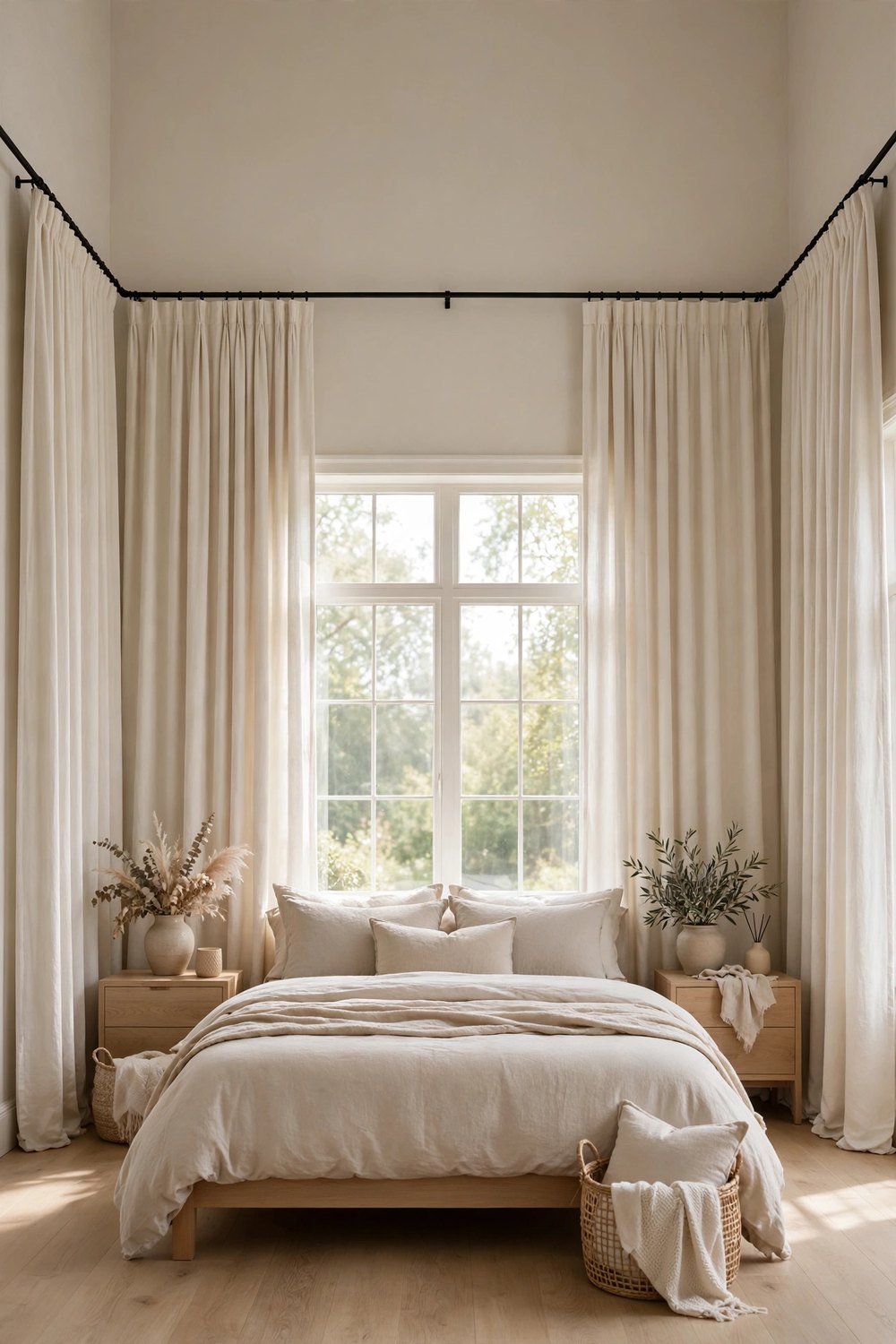
Most light leaks are not the fabric’s fault — they are the hanging’s fault. Mount the rod close to the ceiling and extend it well past the window frame on both sides, so the panels cover the wall around the glass instead of stopping exactly at its edges. Light sneaking over the top and around the sides is what wakes most people at dawn, and this one change quietly fixes it. The bonus: high, wide curtains make the window look grander and the ceiling taller.
4. Pick a Linen-Blend Blackout Fabric for a Softer Look

If you love the relaxed texture of linen but need real darkness, a linen-blend blackout fabric is the happy middle ground. The front face keeps that natural, slightly slubbed weave while a hidden blackout backing does the serious light-blocking work. It drapes more softly than stiff coated panels and suits a calm, neutral bedroom beautifully. Choose washed, matte tones — flax, oatmeal, soft white — and the curtains look like pure decor while quietly performing like sleep equipment.
5. Add a Pelmet or Soft Valance to Block Top Light

The sneakiest light leak in most bedrooms is the bright strip that pours over the top of the rod. A simple upholstered pelmet, a soft fabric valance, or even a wide wooden cornice closes that gap completely and gives the window a finished, custom look. Keep the covering in the same fabric or color family as the curtains so it reads as one calm treatment. It is a small carpentry or sewing project with an outsized effect on how dark the room feels at 6 a.m.
6. Let Panels Fall to the Floor to Close the Bottom Gap
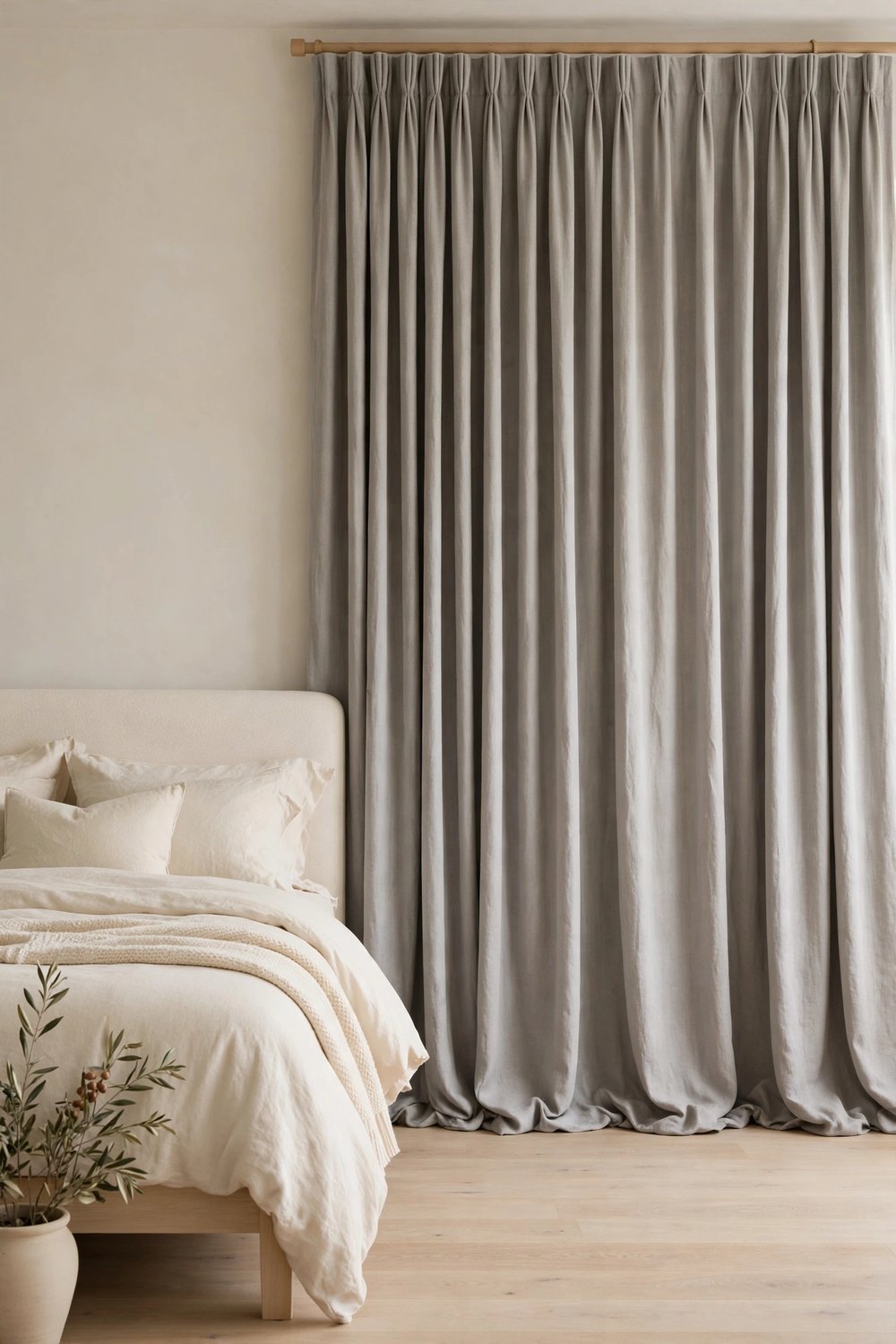
Curtains that end at the sill or hover above it leave a glowing line of light along the bottom — right where it reflects across the room. Panels that fall all the way to the floor, just brushing it, seal that gap and pool the darkness in. Floor length also looks calmer and more finished in a bedroom, where long soft lines encourage rest. Measure carefully so the fabric kisses the floor rather than puddling heavily, which keeps the look tailored and the hems easy to clean.
7. Use a Wrap-Around Rod That Returns to the Wall

A return rod curves the curtain ends back to the wall, closing the side gaps where early light loves to slip through. It is a small hardware change — French-style and wrap-around rods are widely available — but it makes the whole treatment feel built-in and serene. As a bonus, the returned ends frame the window neatly and stop panels from billowing inward when the window is open at night. For corner windows and bays, flexible return fittings solve angles that straight rods never could.
8. Pair Curtains with a Blackout Blind Behind Them
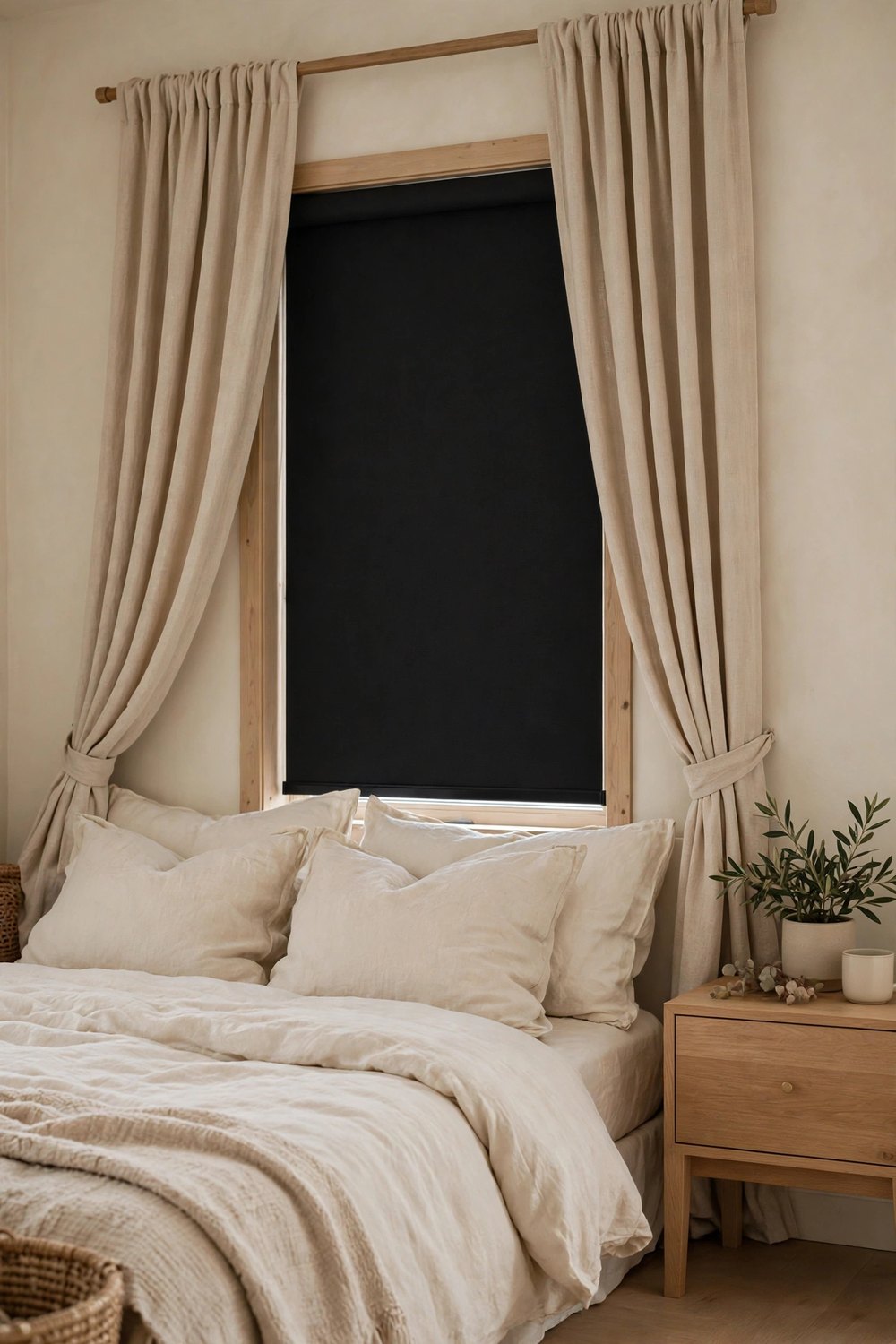
For bedrooms facing streetlights or east-facing sunrise, two layers of defense beat one. Fit a blackout roller blind inside the window frame for near-total darkness, then hang soft decorative curtains over it for the warm, layered look. The blind does the heavy blocking; the curtains do the softening, the sound-dampening, and the style. This combination is also kind to shift workers and anyone with a baby napping in the room during bright afternoons.
9. Add Blackout Lining to Curtains You Already Own

If you already love your curtains, you do not have to replace them to sleep better. Blackout lining can be bought by the meter and hung on the same rod behind your existing panels, or clipped and hemmed onto their backs with simple curtain hooks. The lining stays invisible from the room side while quietly doing all the light-blocking work. It is the cheapest fix on this list, and it means a favorite fabric — the linen you saved for, the print that matches the bedding — never has to be sacrificed for sleep.
10. Finish with Tiebacks That Keep Days Bright and Nights Dark

The right finishing touch makes the whole routine effortless. Simple linen or rope tiebacks, wall hooks, or magnetic holds sweep the panels fully open in the morning so the room floods with the daylight that resets your body clock — then release them at night to fall closed in one smooth motion. Place the tiebacks high enough that the opened panels frame the window generously rather than bunching at the middle. A ten-second ritual at each end of the day, and your curtains are working for your sleep around the clock.
Darkness is a design choice as much as a sleep habit — and with the right curtains you get both a calmer-looking bedroom and a deeper night’s rest. Start with the fix your window needs most, whether that is sealing the gaps, adding a lining, or finally choosing a true blackout fabric. Save this list to your bedroom board on Pinterest so it is ready before your next refresh — and follow DecorNesti for a new cozy room list every week.






Leave a Reply