
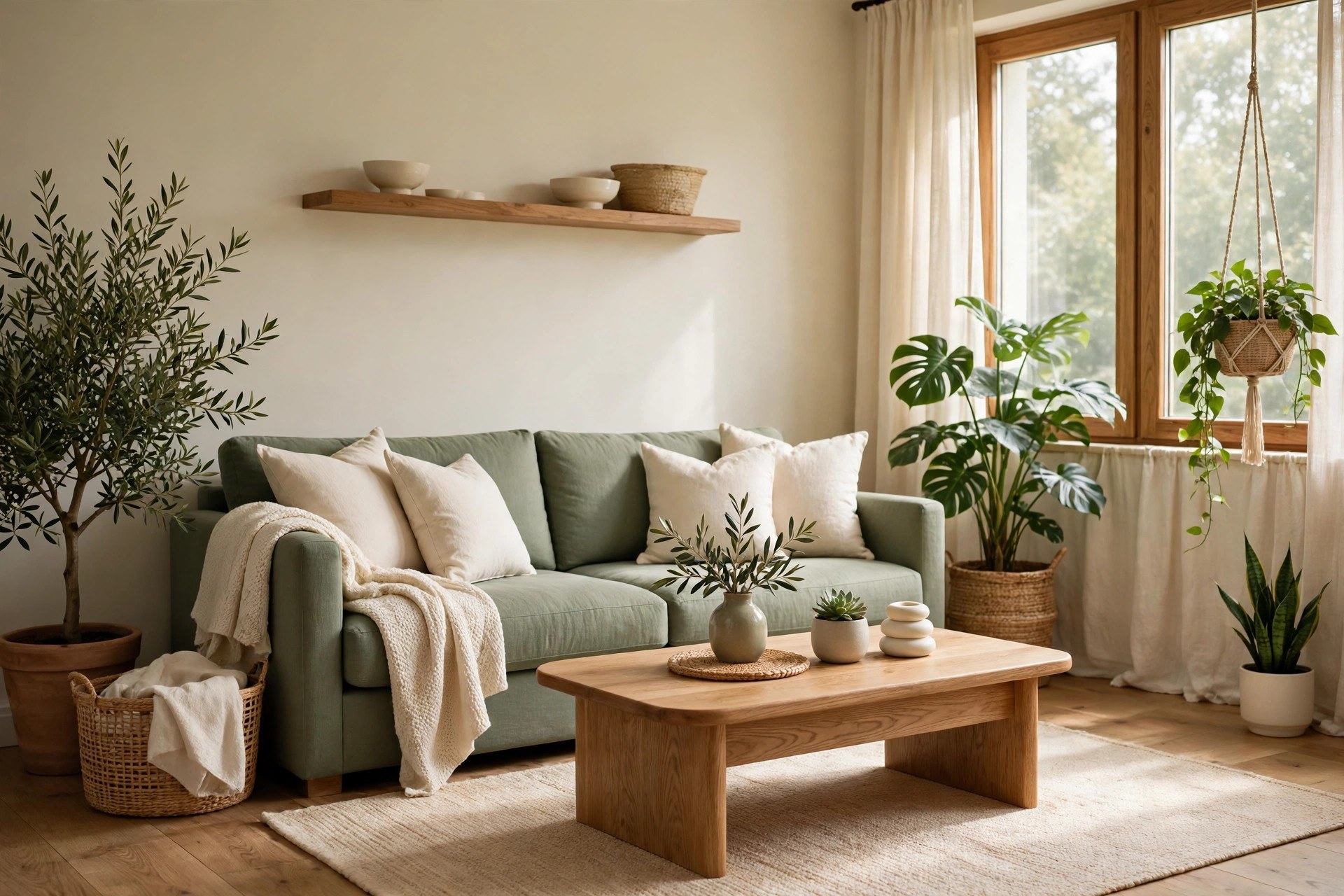
If your living room feels a little tired but you do not want a color that shouts, sage green is usually the sweet spot. It is soft, fresh and easy to live with, and it tends to make a room feel calmer. These sage green living room ideas are all about using that gentle color in ways that feel relaxed rather than themed.
What makes sage so friendly is how well it gets along with the pieces you probably already own. Cream sofas, warm oak furniture and simple white walls all sit comfortably next to it, and you can go bold with painted walls or keep it light with a few cushions and curtains. Most rooms do not need a full makeover, just a clearer plan for where the color shows up.
Below are 17 sage green living room ideas that cover walls, sofas, warm terracotta pairings and soft textiles, plus plants and light tests that help you get the shade right. Pick one section to start with, live with it for a week or two, and add more only if the room still asks for it.
Sage Walls vs Sage Accents
The biggest choice comes first, and it is simply how much sage you want. Walls give you a calm backdrop that wraps the room, while accents let you try the color gently and move things around whenever you like.
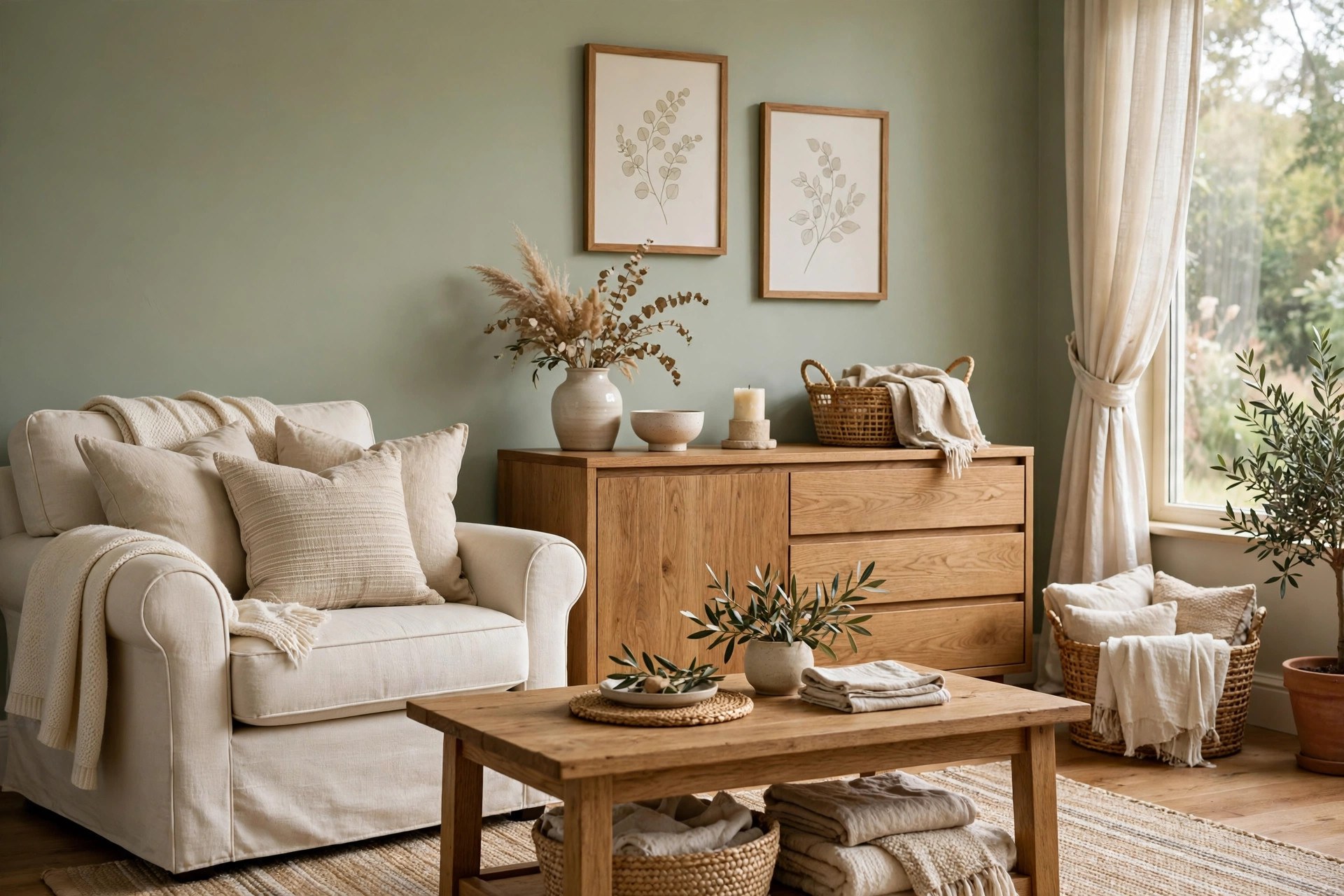
Paint all four walls when you want a calm, cocooning feel. A soft sage on every wall usually works best in rooms with decent daylight, where the color reads fresh rather than flat. Keep the ceiling and trim in a warm white so the edges stay crisp, and let cream furniture lighten the middle of the room. It typically feels peaceful, especially with layered lamps in the evening.
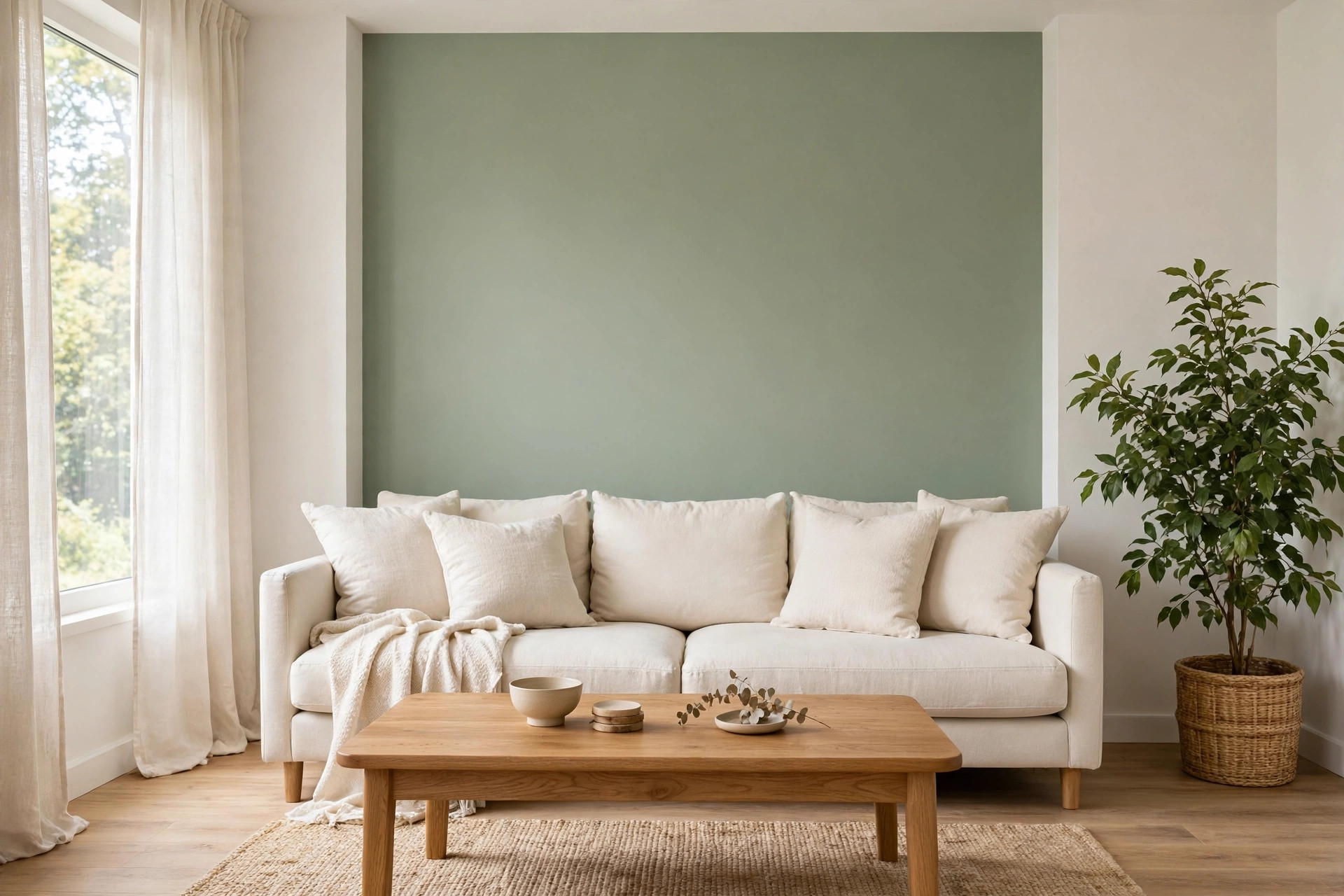
Try one sage wall behind the sofa for a gentler change. A single wall gives you that fresh backdrop where it matters most, right behind your main seating, without committing the whole room. If you are renting or just unsure, this is often the easiest place to begin and the easiest to repaint later.
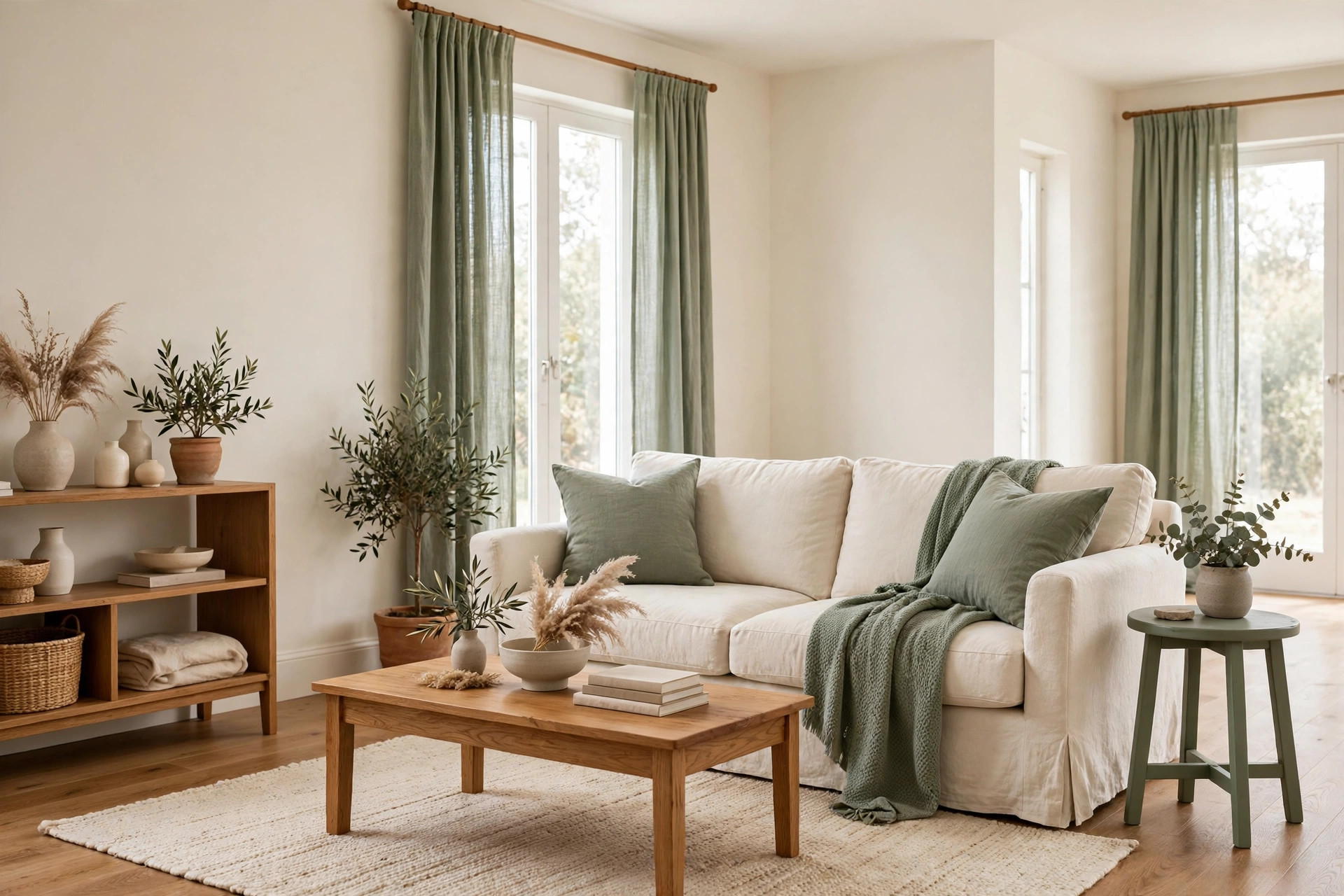
Keep walls neutral and let accents carry the sage instead. Cushions, a throw, curtains or a single painted side table can bring in plenty of color when the walls stay cream or warm white. This route is flexible, because you can swap pieces between rooms and adjust the balance by season. It usually suits smaller rooms too, where pale walls help the space feel open and airy.
Sofas and Chairs in Sage
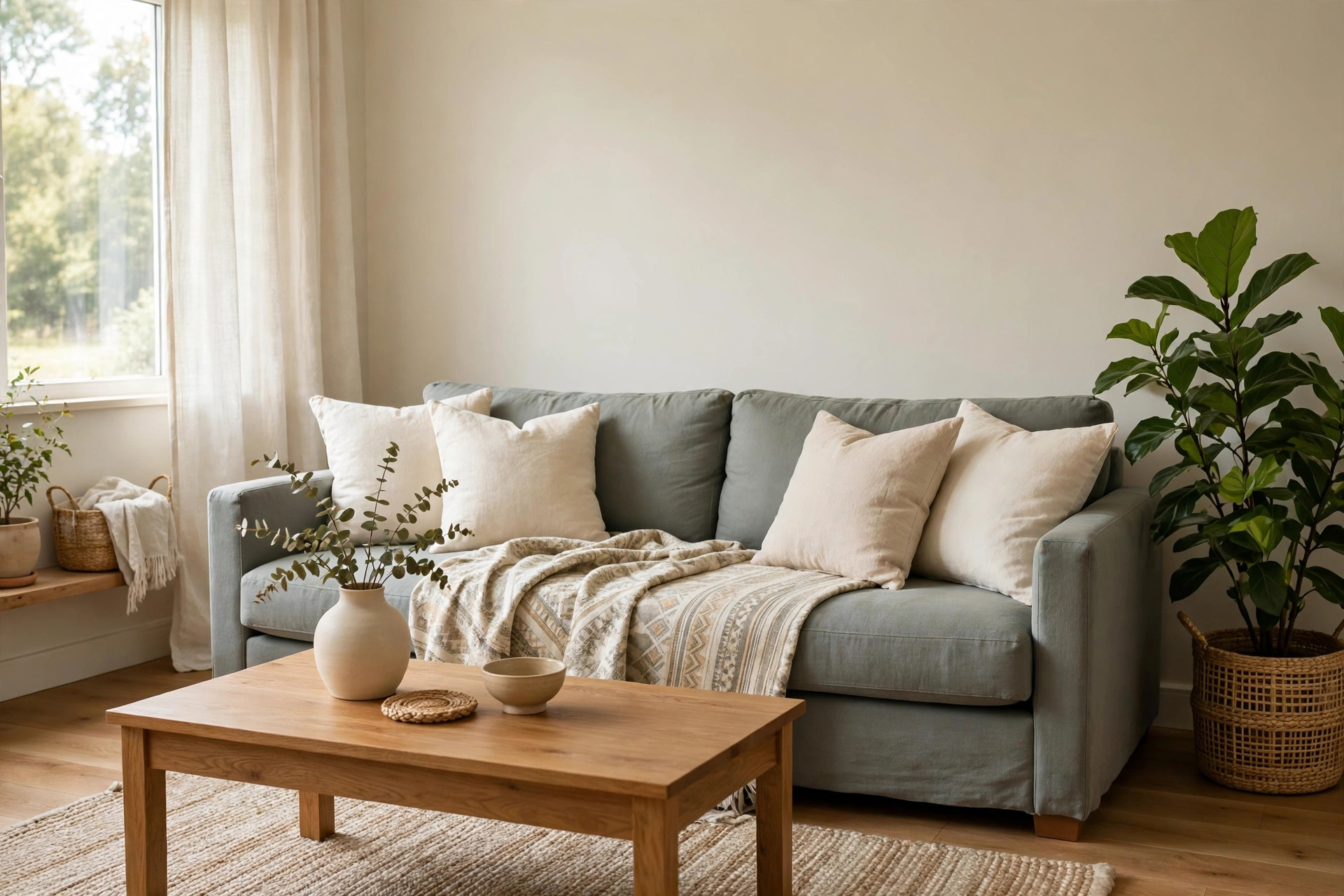
Choose a sage sofa as the quiet anchor of the room. A sofa in a muted sage acts almost like a neutral, so it pairs with cream cushions, patterned throws and warm wood without much fuss. Look for a tone with a little gray in it, because very bright greens can feel restless over time. In most homes, the softer and dustier the shade, the longer it stays easy to love.
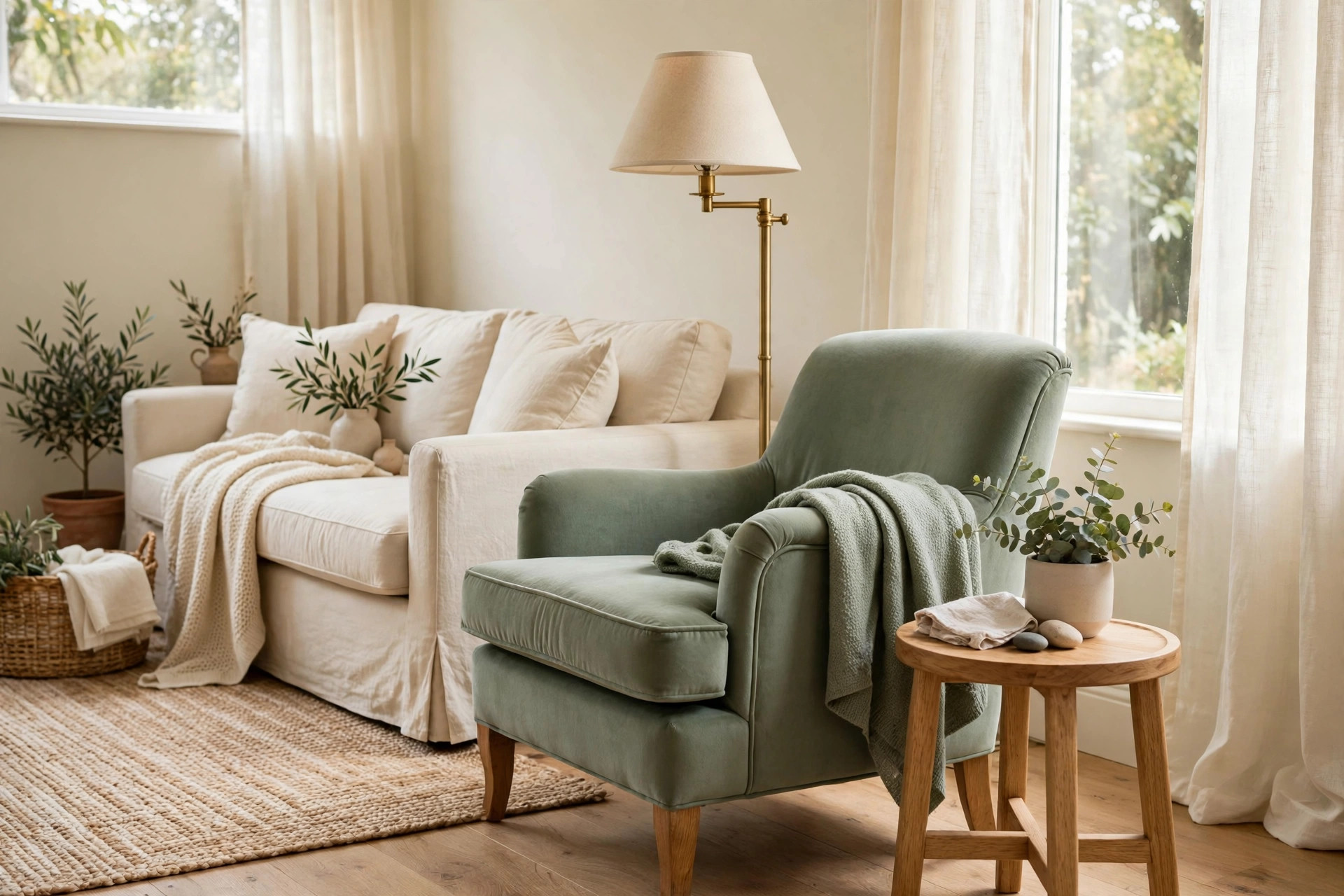
Add one sage armchair if a full sofa feels like too much. A single chair in sage gives you the color in a smaller, safer dose, and it creates a lovely reading corner with a floor lamp and a small side table. Place it at an angle to the sofa rather than lined up in a row, and the room instantly feels more relaxed.
Pairing with Cream and Oak
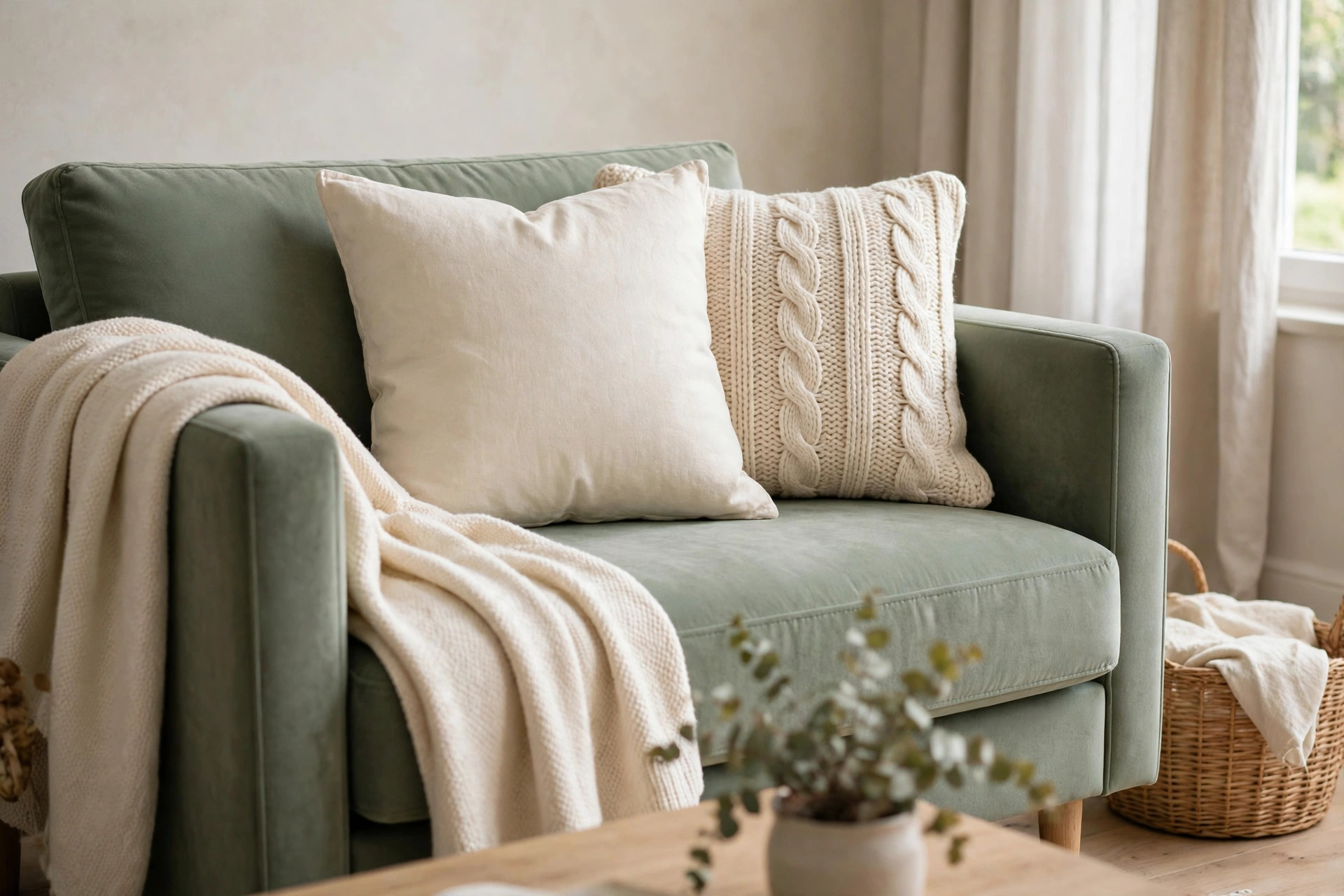
Soften a sage sofa with cream cushions and a pale throw. Cream breaks up the green just enough and keeps the seating feeling light, even on gray days. Mix one smooth cushion with one textured knit or linen piece, because that small contrast makes simple colors feel thoughtful. Drape the throw over one arm rather than folding it perfectly, and the whole corner feels lived in and welcoming.
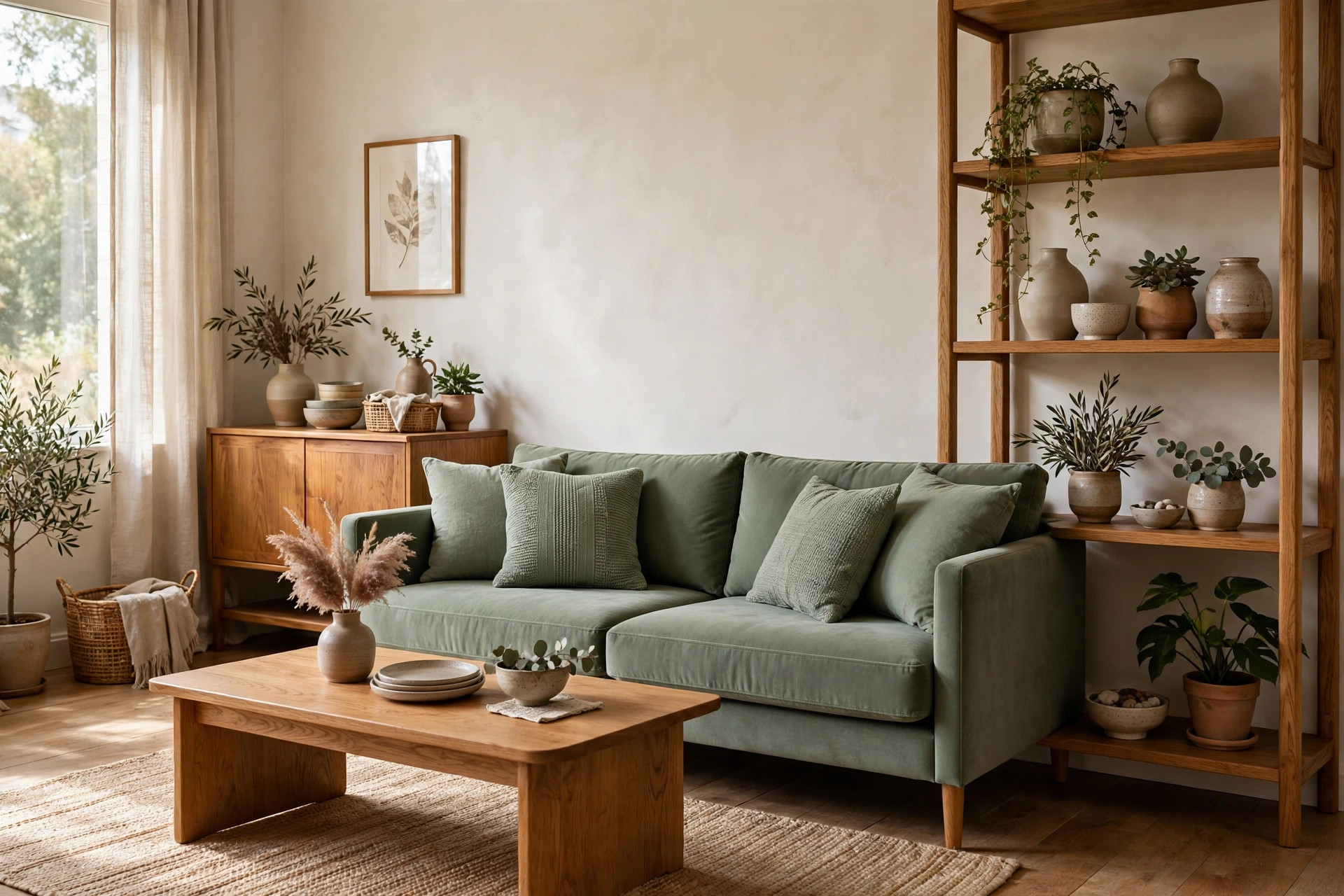
Ground sage seating with warm oak tables and shelving. Oak brings the warmth that sage sometimes needs, since sage can lean cool in north facing light. A simple oak coffee table, sideboard or bookcase usually balances the palette and stops the room feeling chilly. Repeat the wood tone in two or three places, like a tray or picture frames, so it feels planned rather than accidental.
Sage with Terracotta and Brass
Sage loves a little warmth beside it, and terracotta and brass are its natural friends. Used in small doses, they stop a green room feeling cool and add that cozy, collected glow most of us are really after.
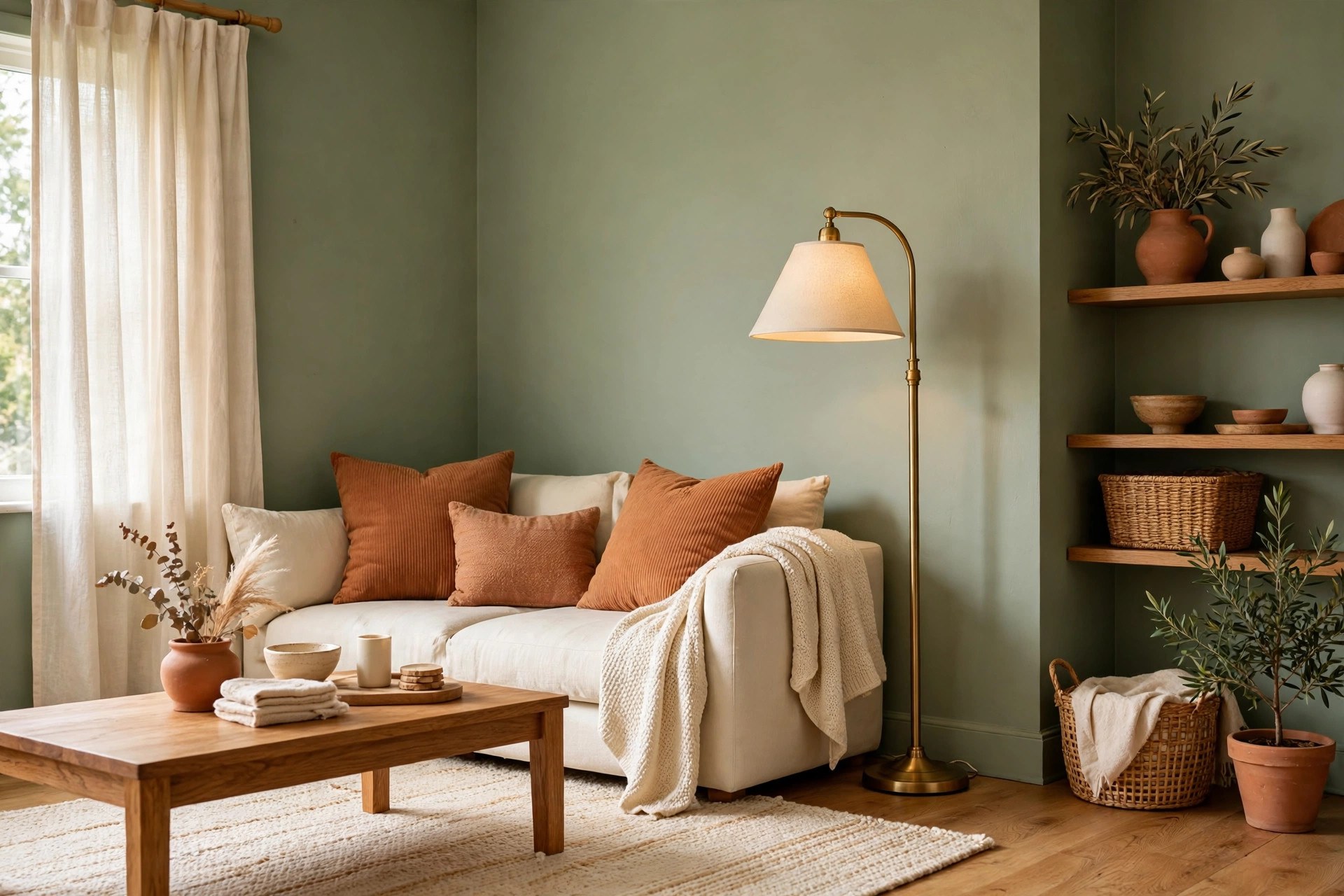
Bring in terracotta cushions for instant warmth. Two cushions in a clay or terracotta tone can completely change how a sage sofa feels, making it warmer and more inviting without any paint at all. Keep the rest of the textiles cream or natural linen so the contrast stays calm. This pairing typically works in every season, and it feels especially cozy once the lamps come on.
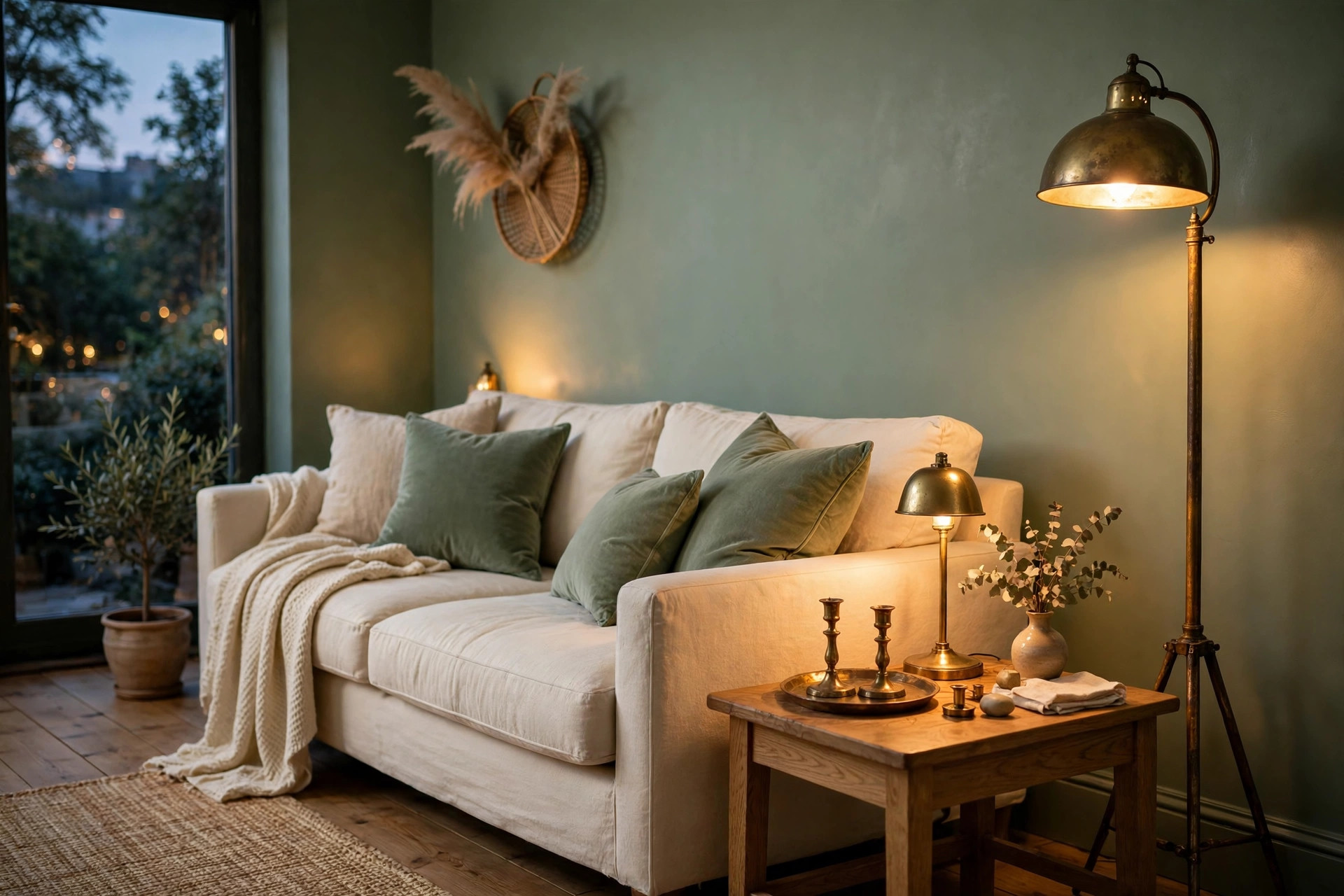
Use brass lamps and small accents to add a soft glow. A brass floor lamp, a picture light or even small brass trays and candlesticks give sage rooms a gentle warmth that chrome rarely does. You do not need much, just a few pieces repeated around the room so the finish feels intentional. Slightly aged brass usually suits the relaxed mood of sage best.
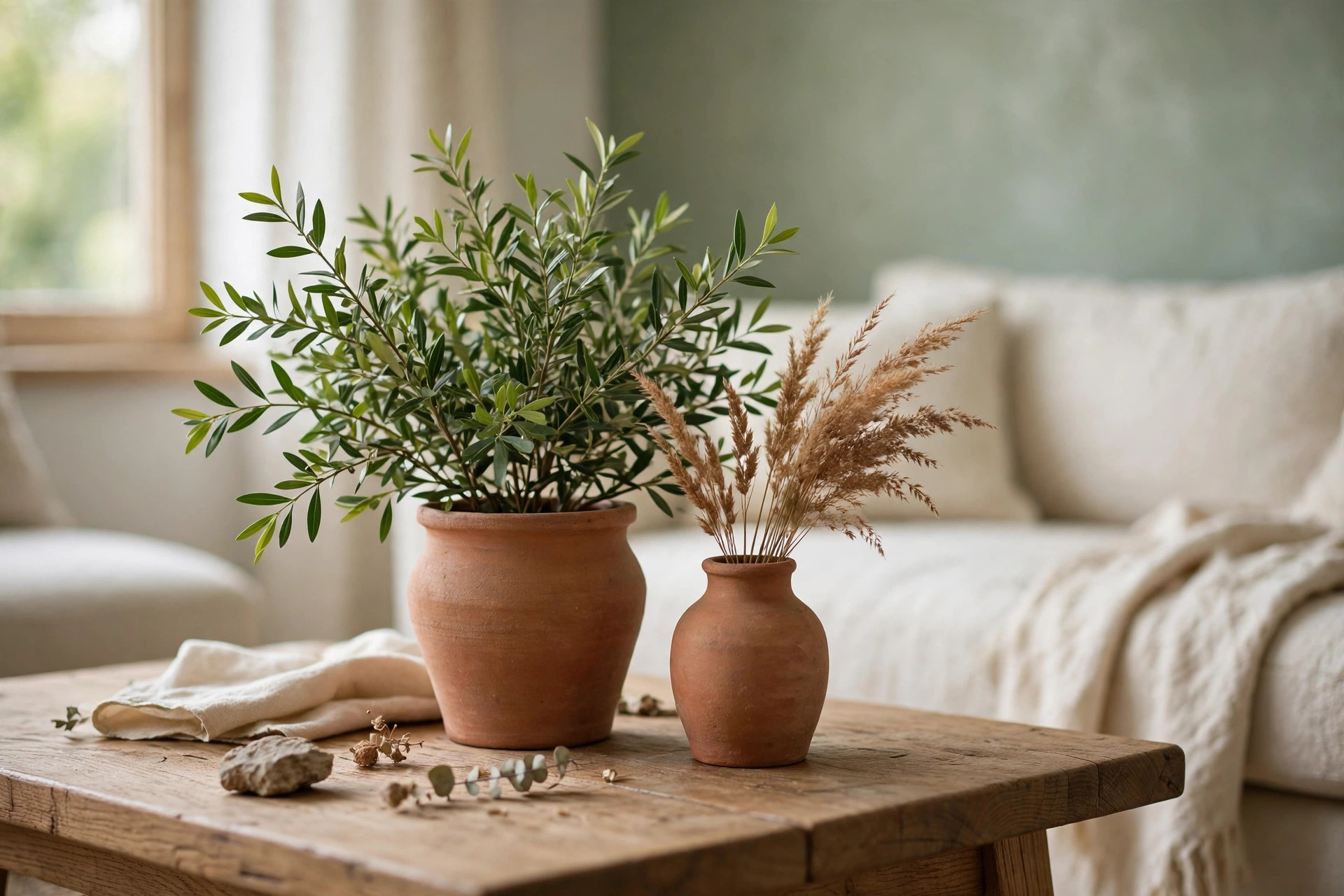
Try a terracotta pot or vase as a calm centerpiece. One unglazed terracotta pot with a leafy plant, or a simple vase with dried grasses, brings earthy color to a coffee table or sideboard. It bridges the green and the warm tones in a way that feels natural, almost like the colors grew together. Keep the arrangement loose and a little uneven, because perfection is not really the goal here.
Curtains, Rugs and Cushions in Sage
Textiles are the lowest risk way to live with sage, and they are usually where a room starts to feel pulled together. Start with the largest piece first, then layer smaller ones until the green feels evenly spread around the room.
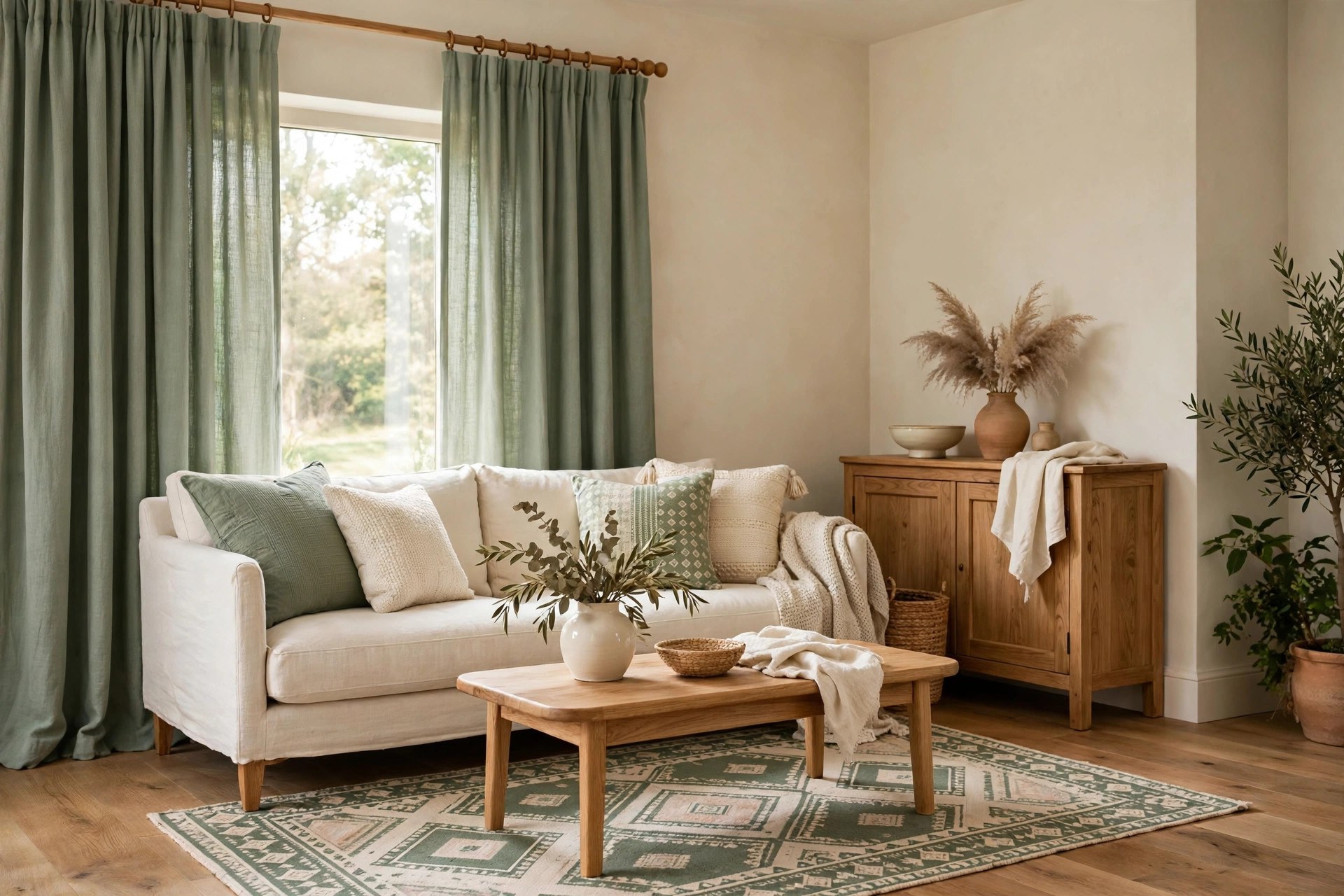
Hang sage curtains to frame your windows softly. Curtains in a washed sage linen or cotton soften the light and give plain walls a finished edge, without the commitment of paint. Hang them a little wider than the frame if you can, so the windows feel bigger and the fabric falls in gentle folds.
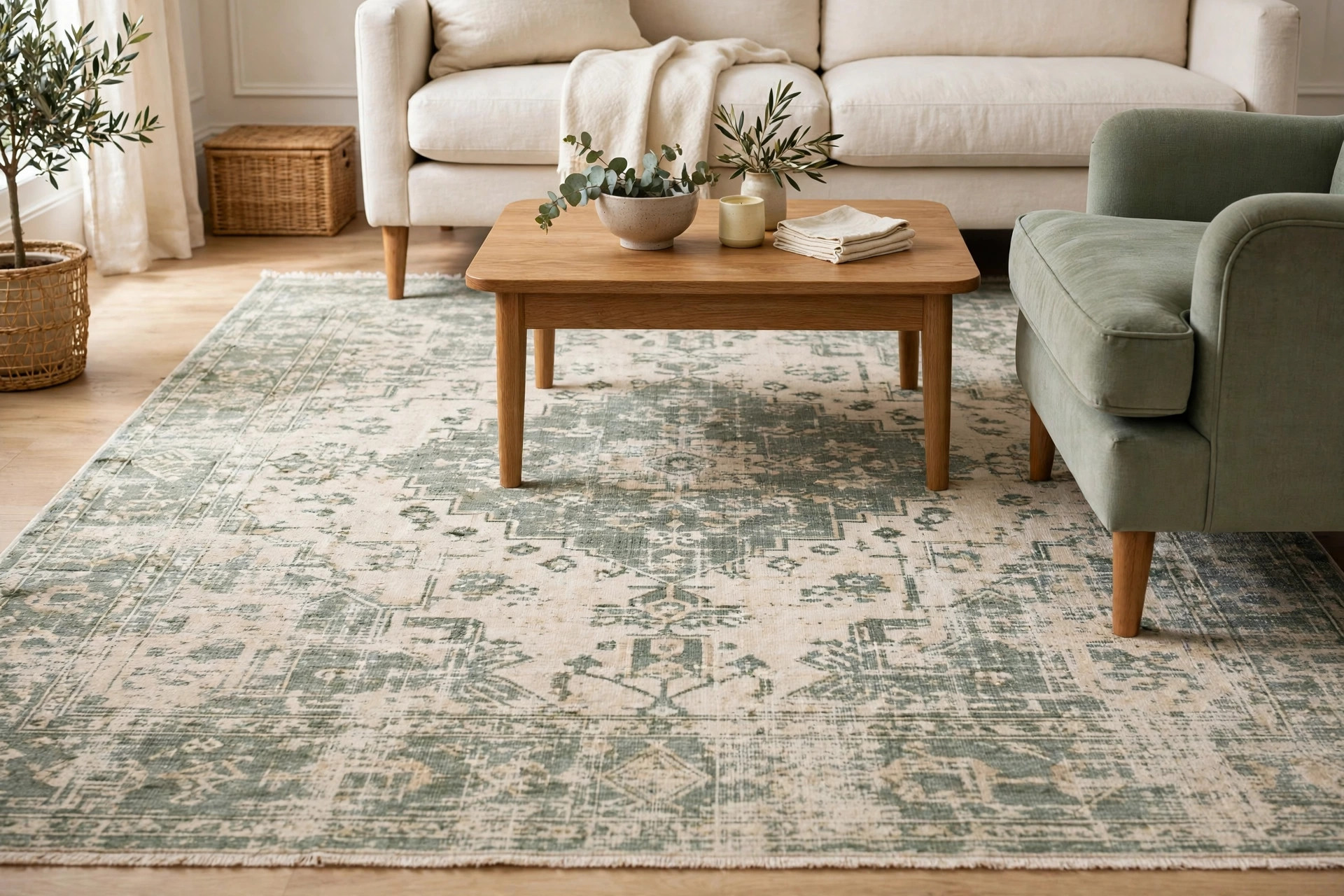
Choose a patterned sage and cream rug to anchor the seating. A rug with sage woven through a cream or warm beige base ties the furniture together and hides everyday wear far better than a plain pale rug. Patterns with soft, faded lines usually feel calmer than bold geometric prints in this palette. Make sure the front legs of your sofa and chairs sit on the rug, because that one detail makes the grouping feel settled.
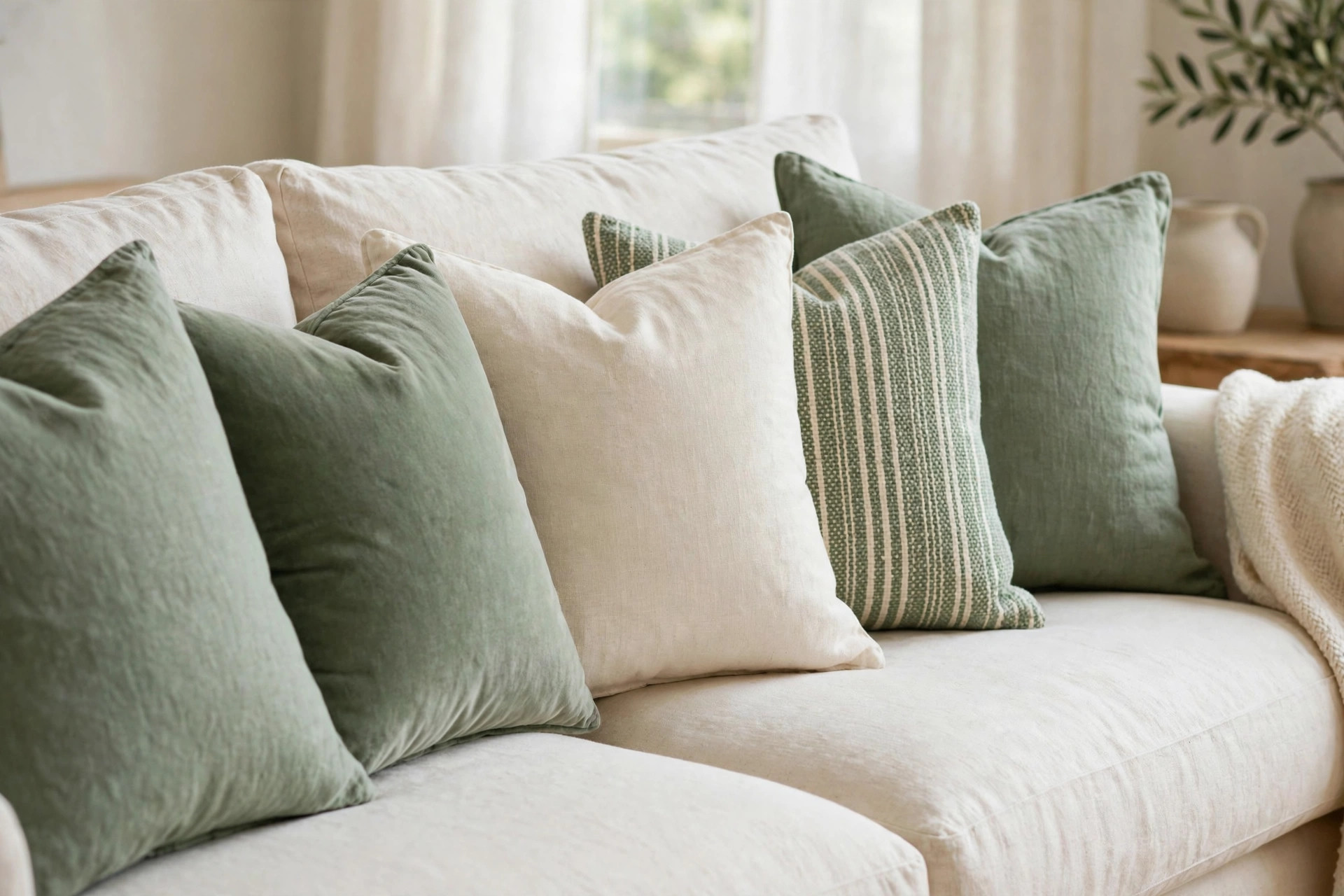
Layer sage cushions in different textures rather than one flat set. A mix of linen, soft velvet and a small woven stripe in similar sage tones looks collected instead of matched, and it is kinder when one piece fades a little. Odd numbers tend to look more relaxed on a sofa, so try three or five rather than a stiff pair. Add one cream cushion in the middle to rest the eye.
Plants That Love a Sage Room
Real greenery is the easiest partner sage has, because leaf tones echo the walls and furniture without matching them exactly. A few well placed plants usually do more for this palette than any extra decor piece.
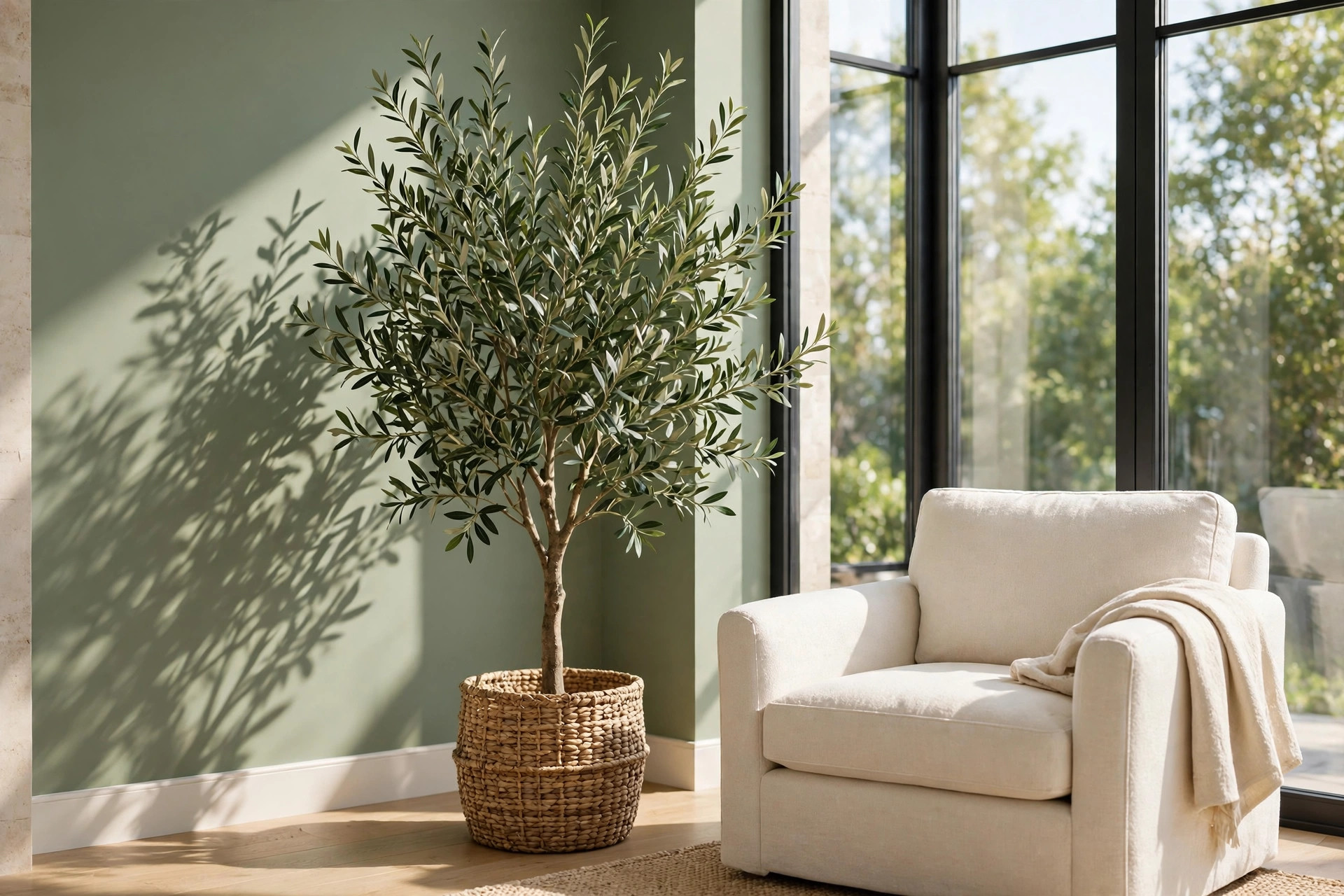
Place one tall leafy plant where the light already falls. A fiddle leaf style tree, an olive style plant or a simple tall palm in the brightest corner adds height and soft shadow to a sage room. Put it in a natural basket or terracotta pot so the base feels as calm as the leaves.
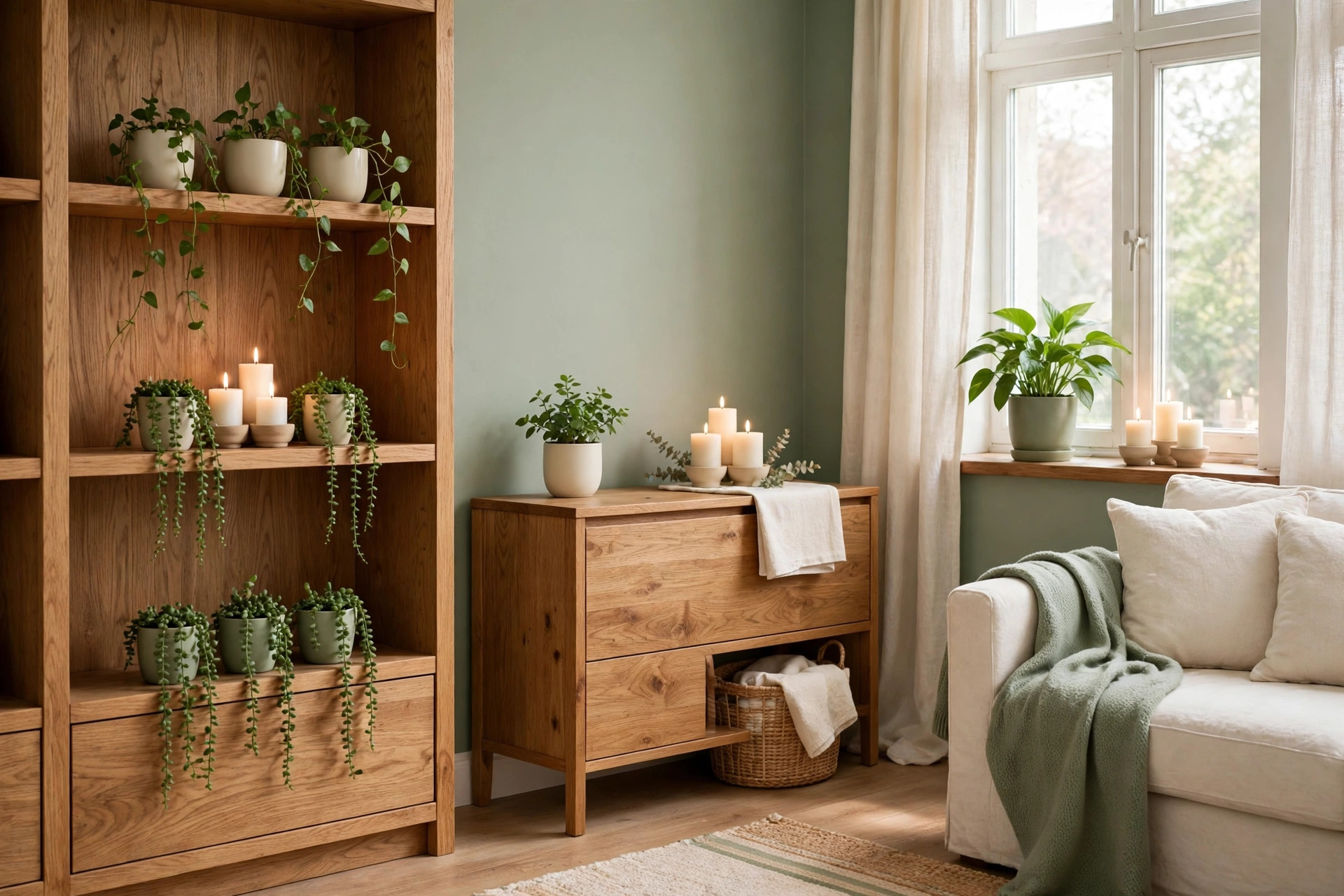
Dot smaller plants across shelves and side tables. Little pots of trailing greenery on a bookcase, a sideboard or a windowsill repeat the green story in a gentle, scattered way. Group them in threes with a small stack of books or a candle nearby, because tiny groups look deliberate rather than random. Vary the leaf shapes a little, and the room will feel fresher without feeling like a greenhouse.
Testing Sage in Your Light First
Sage is famously changeable, and the shade on a paint card is rarely the shade you get at home. A little testing first usually saves money, repainting and that sinking feeling when a fresh wall dries cooler than you hoped.
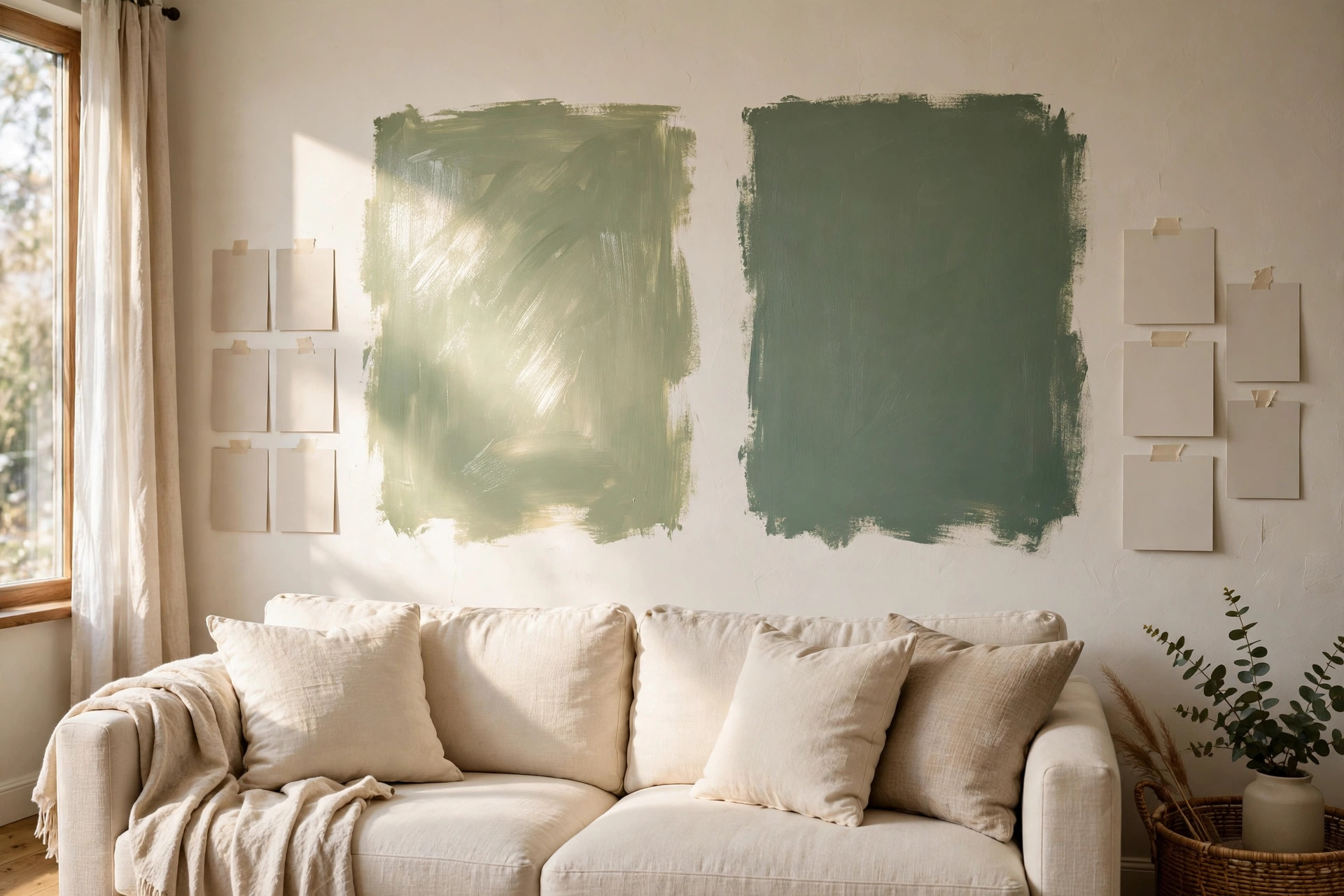
Paint large test patches and live with them for a few days. Brush generous squares on two walls, ideally one that gets sun and one that stays shaded, and check them in the morning, at midday and under lamps at night. Sage often looks perfect at noon and surprisingly gray by evening, or the other way around. If a patch still makes you smile in every light, you have usually found your shade.
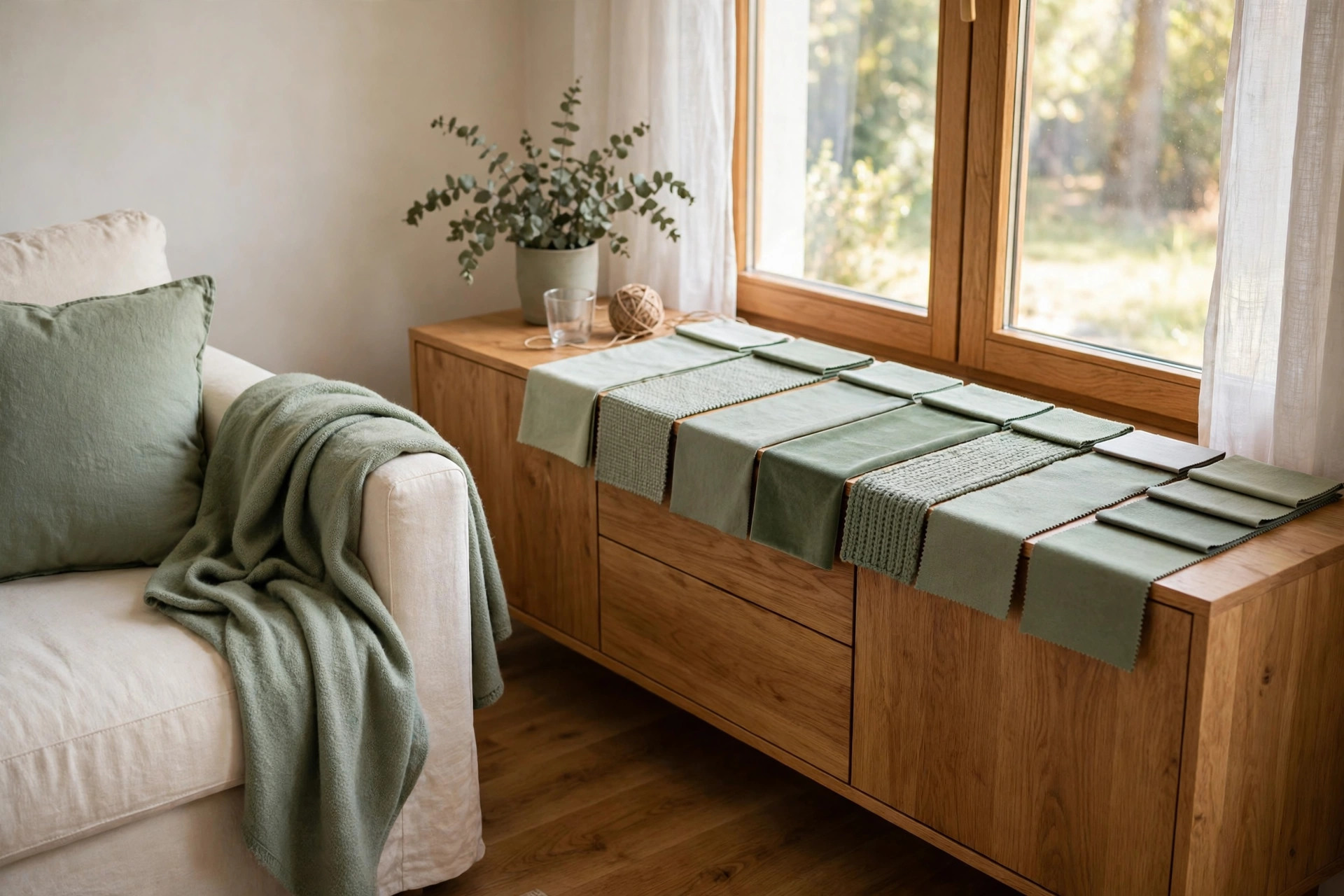
Test fabrics and cushions beside your fixed pieces before you buy more. Hold a cushion cover, curtain sample or throw against your sofa, floor and any wood you are keeping, because those fixed tones decide whether a sage reads warm or chilly. Natural daylight near a window gives you the truest read, and phone photos can help you compare options later. Start with the piece you will see most, and let everything else follow it.
Sage green works because it asks very little of a room. It softens what is already there, warms up beside cream and oak, and leaves space for terracotta, brass and real plants to do their quiet work. Start small if you need to, test your shade in your own light, and trust that a calm room is usually built one gentle layer at a time.

Leave a Reply