
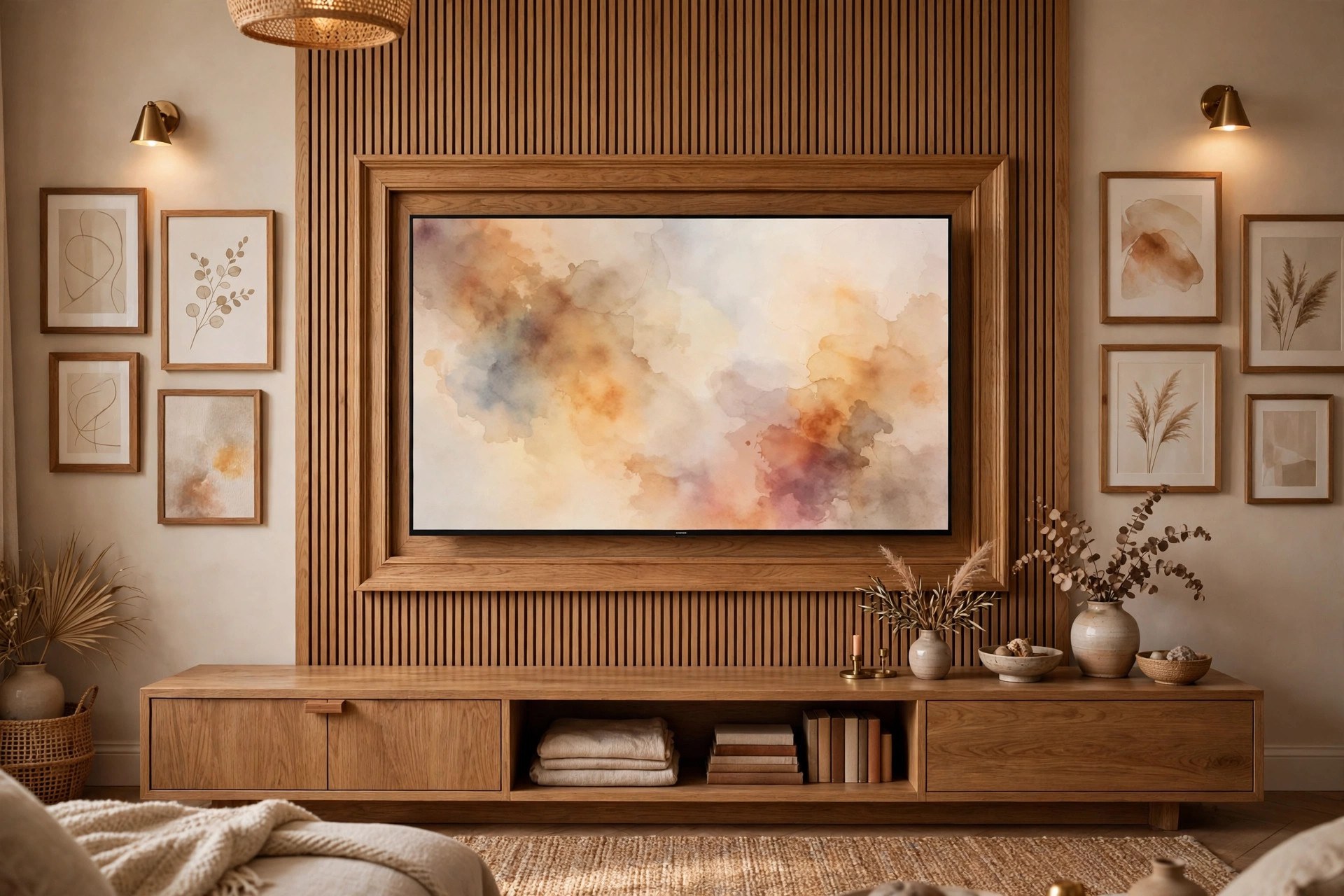
Look, we get it, the TV is usually the one thing in the living room that nobody chose for its looks. It is a big dark rectangle, it tends to land on the most visible wall in the house, and for years the only plan was to pretend it was not really there. The good news is that the best tv wall decor ideas do not hide the screen at all, they simply give it company.
When the wall around the TV is styled with the same care as the rest of the room, the screen usually stops feeling like an interruption. A frame, a panel, a console that actually suits the sofa, these small choices typically pull everything together so the whole wall reads as one calm, finished picture. Movie night still works exactly the same, it just looks a lot better getting there.
Below are 18 ideas you can mix and match, from frame style trim and gallery walls to slat panels, low cabinets, tidy cables and gentle lighting. Some are a weekend project, a few are a one hour shuffle of things you already own, and none of them ask you to give up the big screen you love.
Frame-Style Styling and Gallery Around the TV
The easiest shift is to treat the screen like one large piece of art among others. Once it sits inside a frame or a gallery arrangement, it usually reads as intentional instead of parked.
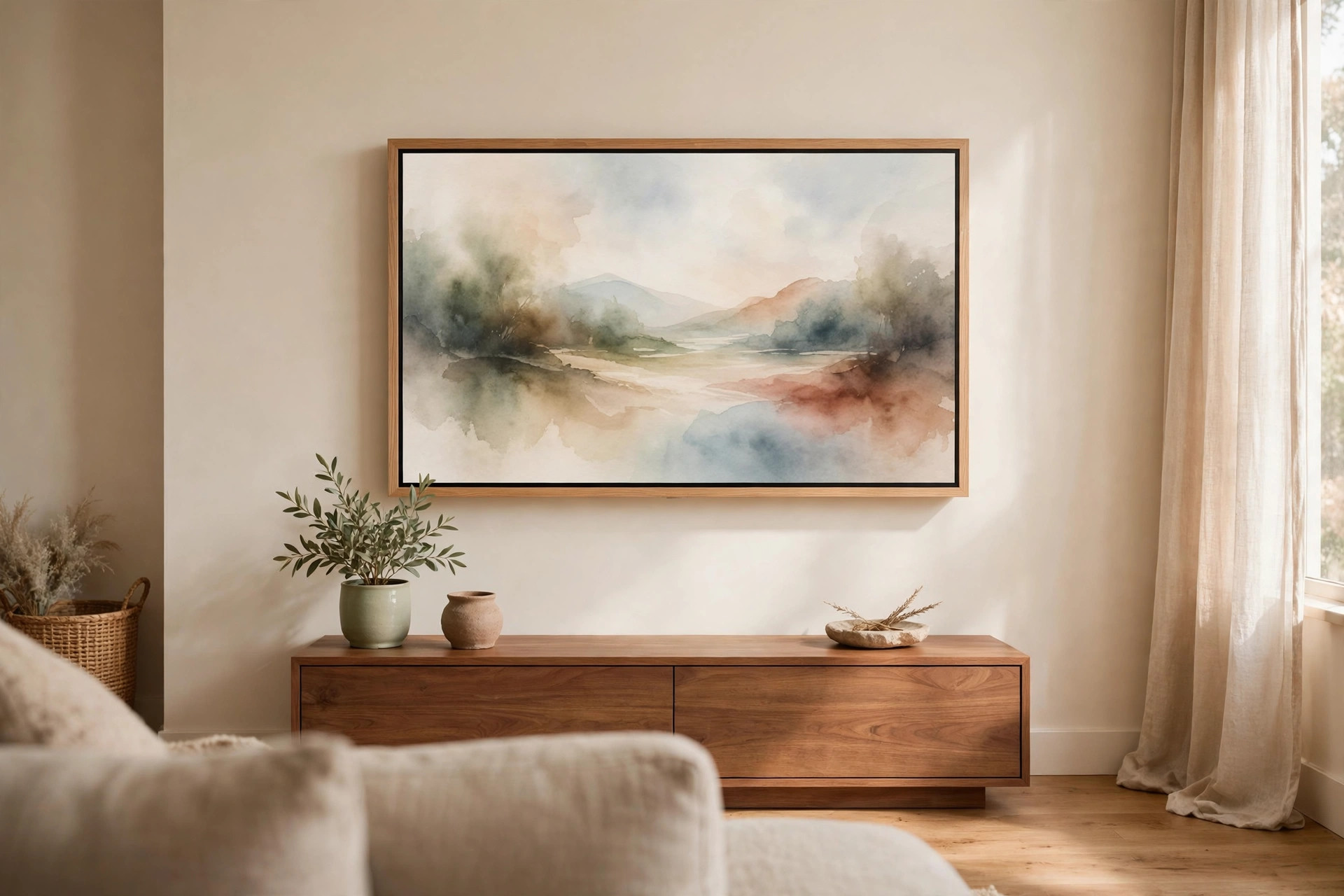
Add a slim wood frame around the screen so it looks like artwork. A simple trim in oak, walnut or painted black usually softens the hard edge of the screen and gives it a finished border. Many TVs accept a clip on frame, and a carpenter or a careful DIY cut can do the same job. When the screen is off, it typically reads as a dark, calm panel rather than a gadget.
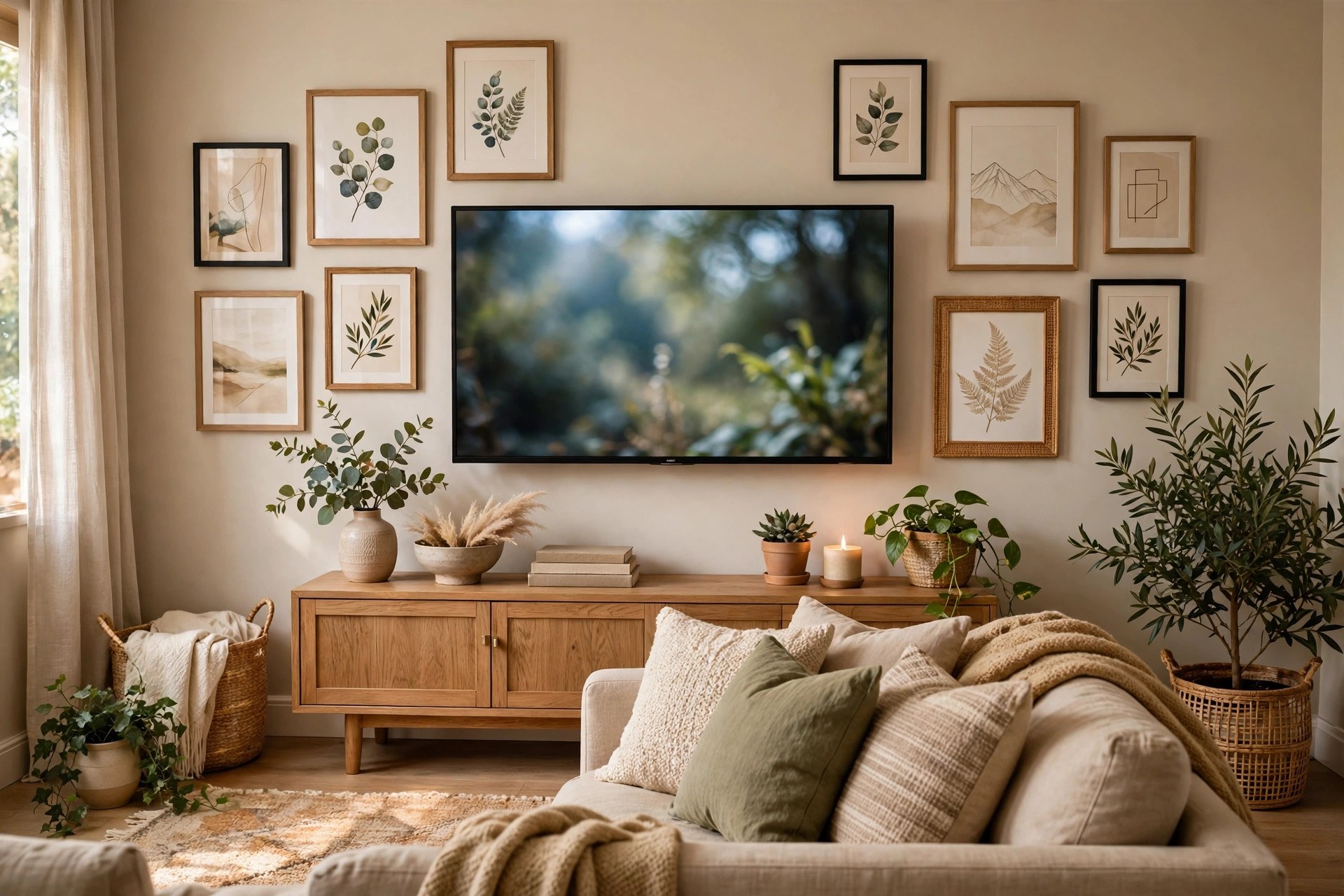
Build a relaxed gallery wall that includes the TV as its biggest piece. Hang framed prints, photos and small art around the screen, keeping the spacing loose and the frames in a shared palette. The TV becomes the anchor instead of the odd one out. It usually helps to lay the arrangement on the floor first, so you can shuffle pieces before any nails go in.
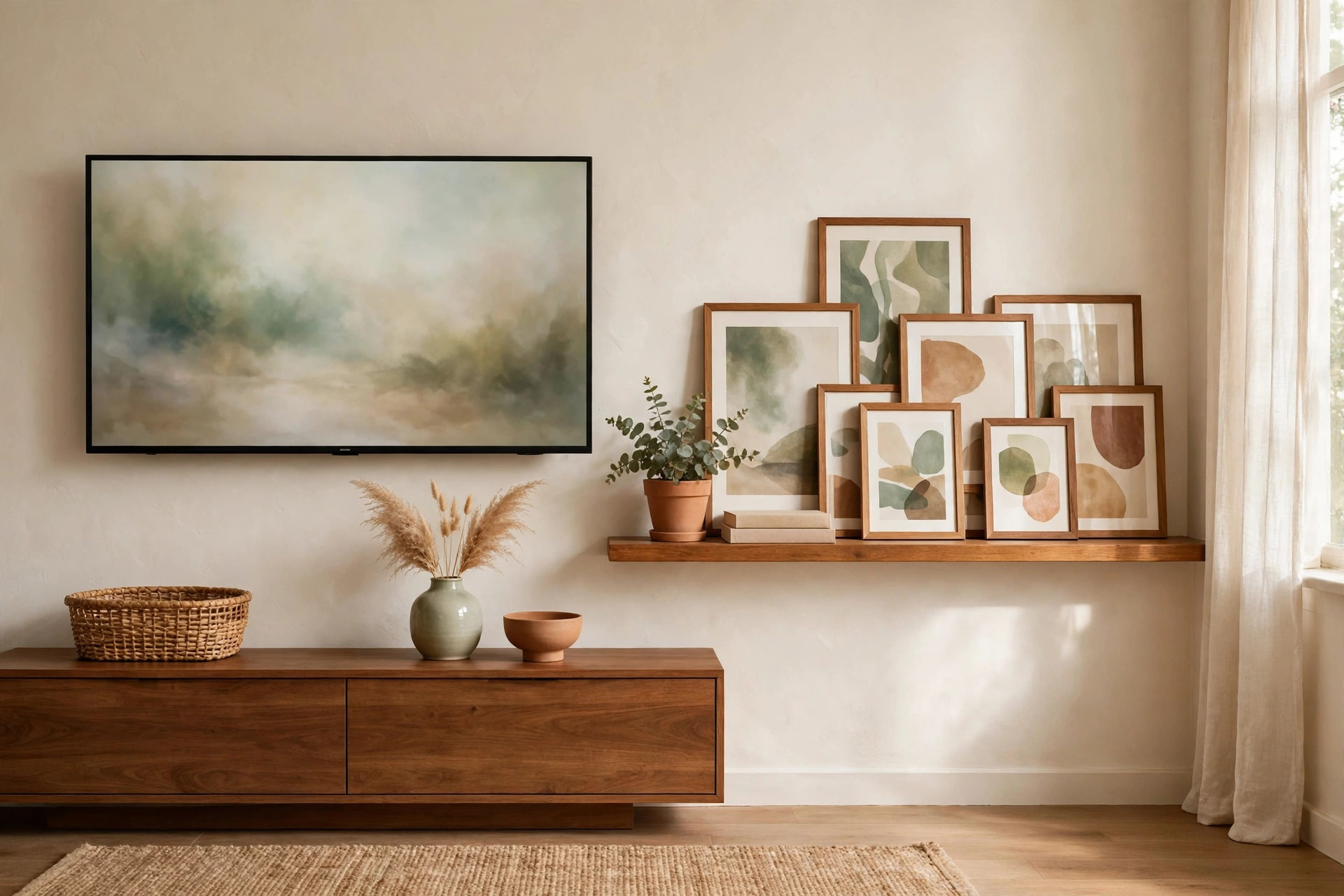
Lean smaller frames and art on a picture ledge beside the screen. A shallow ledge on one or both sides lets you layer frames, a small plant and a book or two without committing to holes. You can swap the art with the seasons, which keeps the wall feeling fresh. Ledges typically suit renters and indecisive stylists equally well, and we say that with love.
Paneling and Slat Walls
A full wall treatment gives the screen a backdrop with real presence. Paneling usually makes even a plain TV feel like it was always part of the architecture.
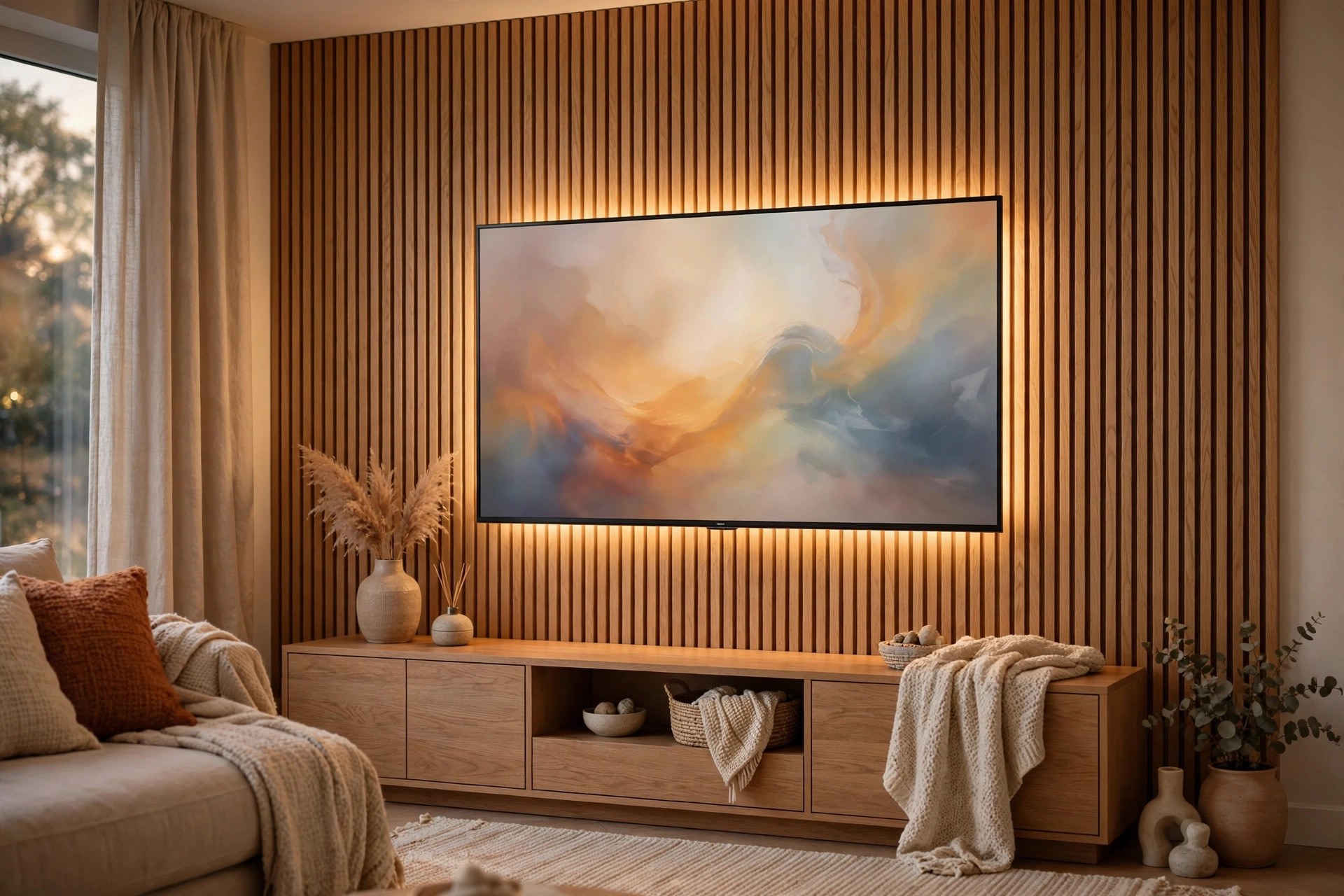
Run warm oak slats behind the TV for texture and rhythm. Vertical slats add shadow lines and warmth that a flat painted wall cannot match, and the screen sits neatly in the middle of the pattern. Oak and walnut tones usually pair well with neutral sofas and woven textiles. Leave a small gap or a recessed section behind the mount so cables can pass through quietly.
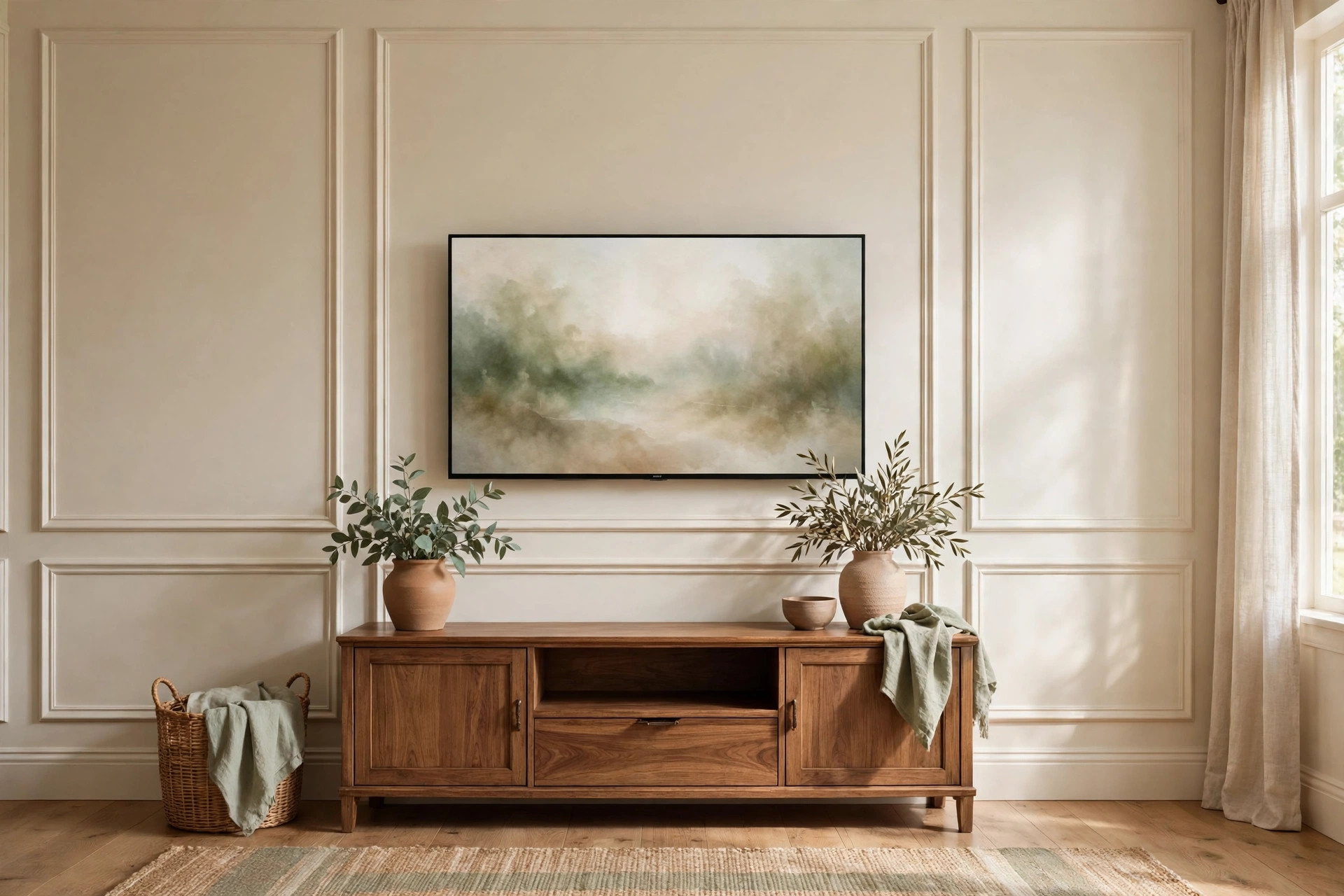
Frame the screen with simple wall panel molding for a classic look. Trim molding arranged in large rectangles around and beside the TV gives the wall a tailored, built in feel without deep carpentry. Paint it the same color as the wall so the effect stays soft and architectural. It typically suits traditional rooms, although a clean version works in modern spaces too.
Paint-Only Versions
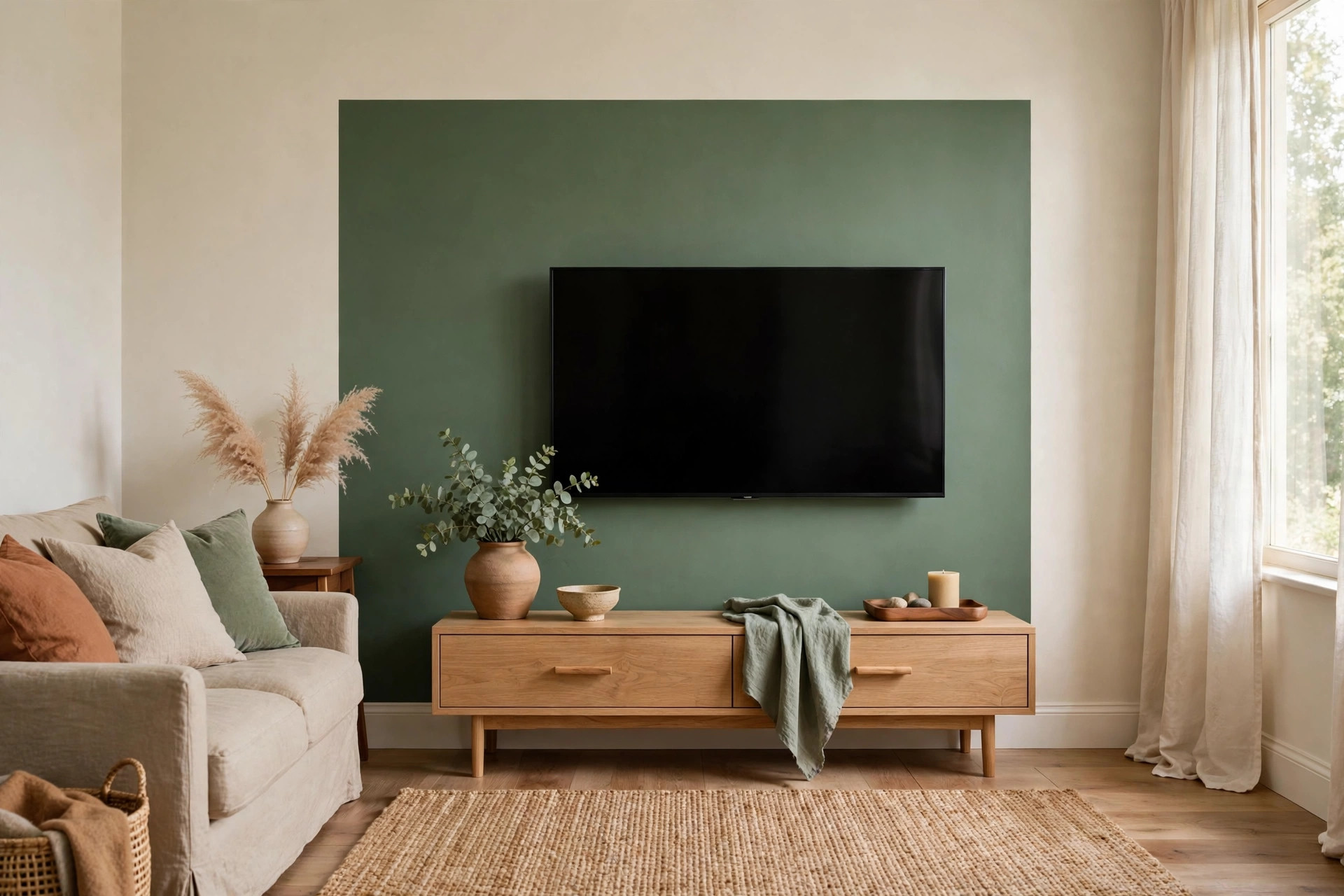
Paint a wide color block behind the TV to ground the whole wall. A rectangle or arch of deeper color behind the screen gives you the panel effect with nothing but paint and tape. Deep sage, warm clay or a soft charcoal usually make the screen blend in rather than glare out. It is also the easiest idea on this list to undo if you change your mind.
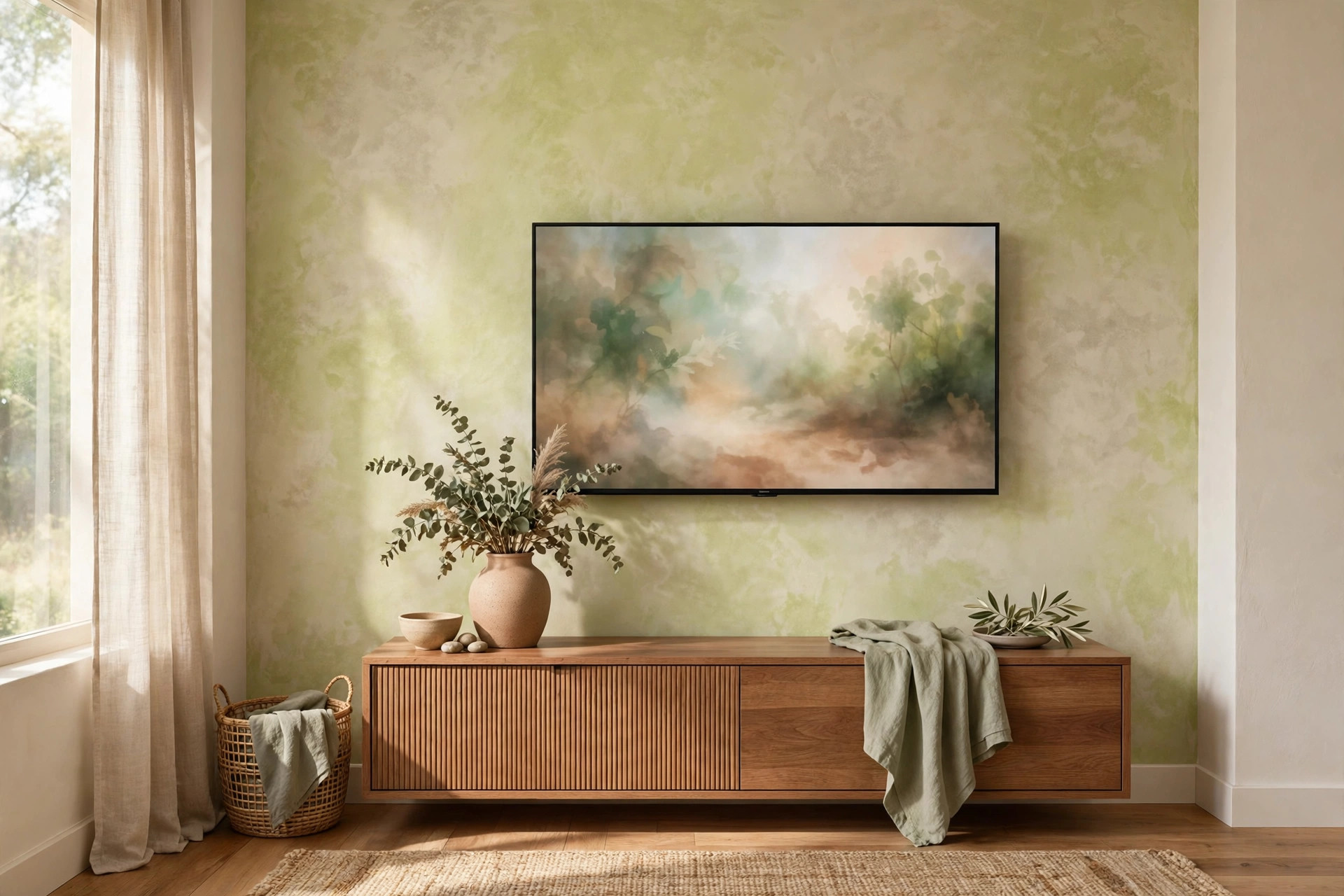
Use limewash or textured paint to give the TV wall a soft finish. A cloudy, brushed finish adds depth that flat paint cannot, so the wall feels warm even when the screen is dark. Keep the color close to the rest of the room if you want calm, or go one shade deeper for gentle contrast. Textured finishes typically hide minor wall bumps too, which is a quiet bonus.
Consoles and Low Cabinets
What sits under the screen does a lot of the visual work. A low, well chosen console usually makes the whole wall look grounded and finished.
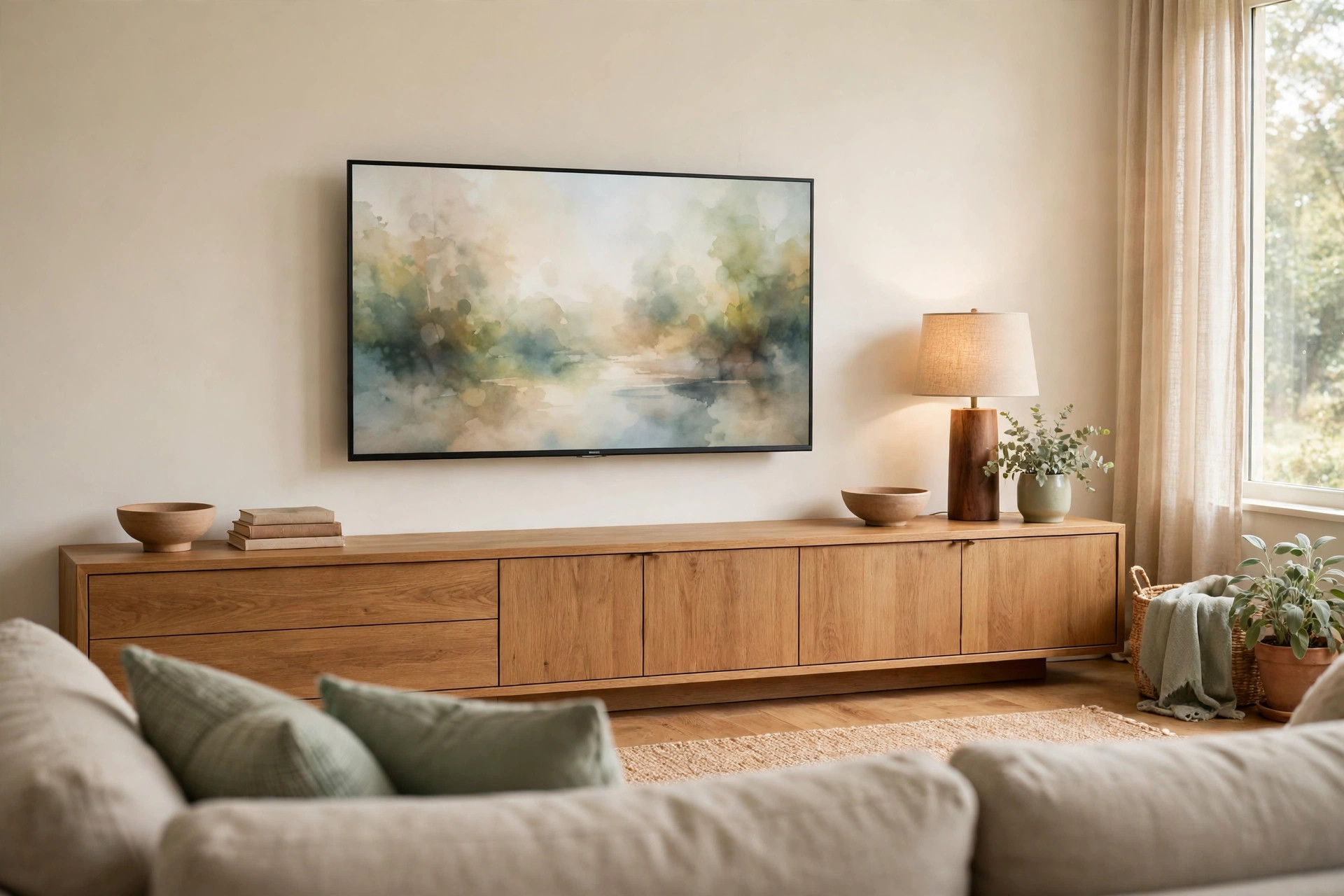
Choose a long, low console that stretches wider than the screen. When the cabinet extends past the TV on both sides, the proportions usually feel calm and deliberate instead of top heavy. Leave a little styling room at each end for a lamp, a stack of books or a bowl. Closed storage in the middle keeps the everyday clutter quietly out of sight.
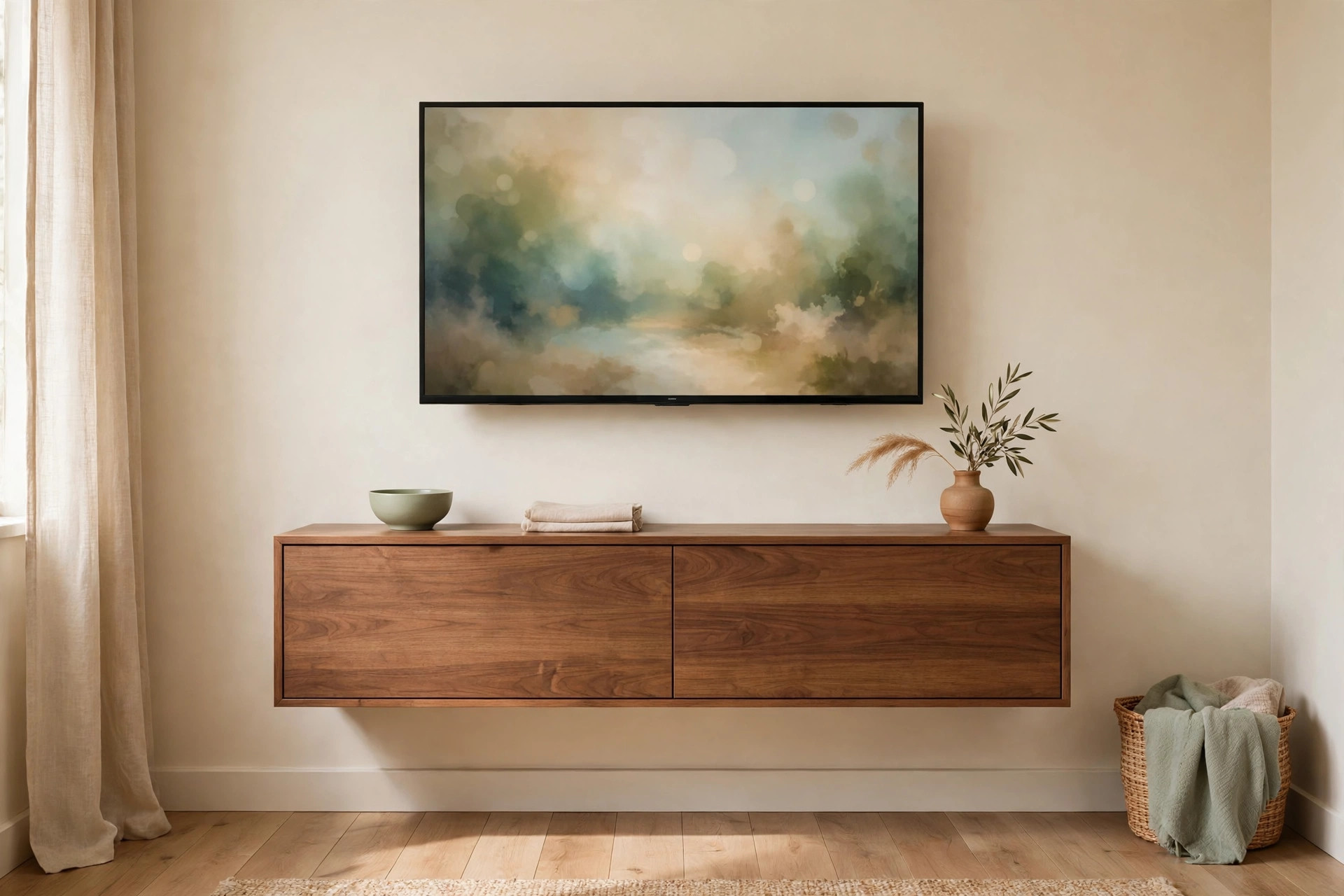
Float a wall mounted cabinet for a light, modern feel. A floating console keeps the floor visible, which typically makes a smaller room feel airier and cleaning far easier. The shadow line underneath adds a soft, tailored detail. Just be sure the fixings go into solid structure, because a cabinet full of media gear is heavier than it looks.
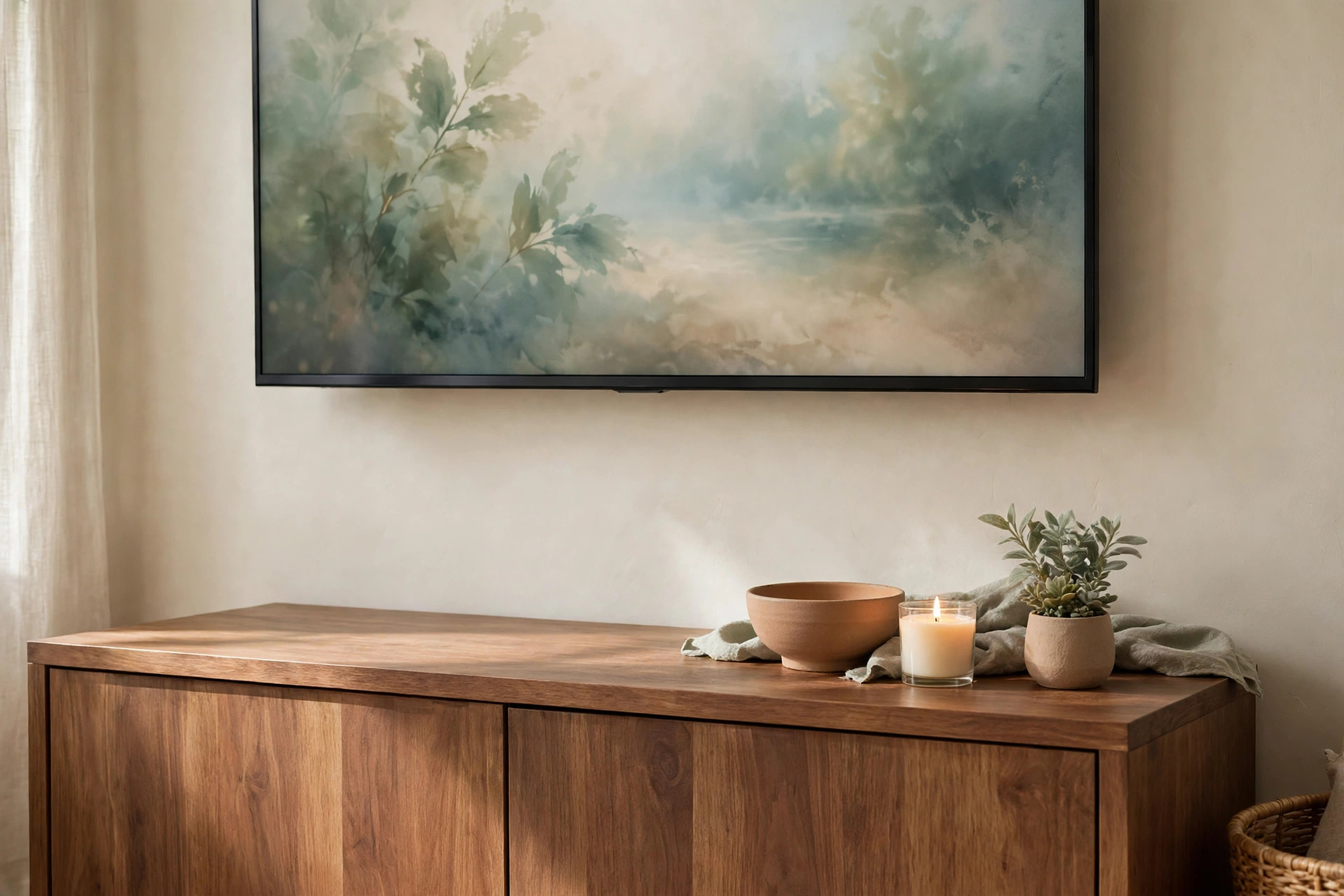
Style the console top in loose groups of three. A small plant, a candle or lamp and one personal object, like a ceramic bowl or a framed photo, usually make a group that feels collected rather than staged. Keep the middle sight line under the screen fairly clear so nothing fights with what you are watching. Swapping one piece now and then keeps the wall feeling lived in.
Hiding Cables and Boxes
Nothing undoes a styled wall faster than a tangle of cords. The fixes are usually simple, and they make every other idea on this list look ten times better.
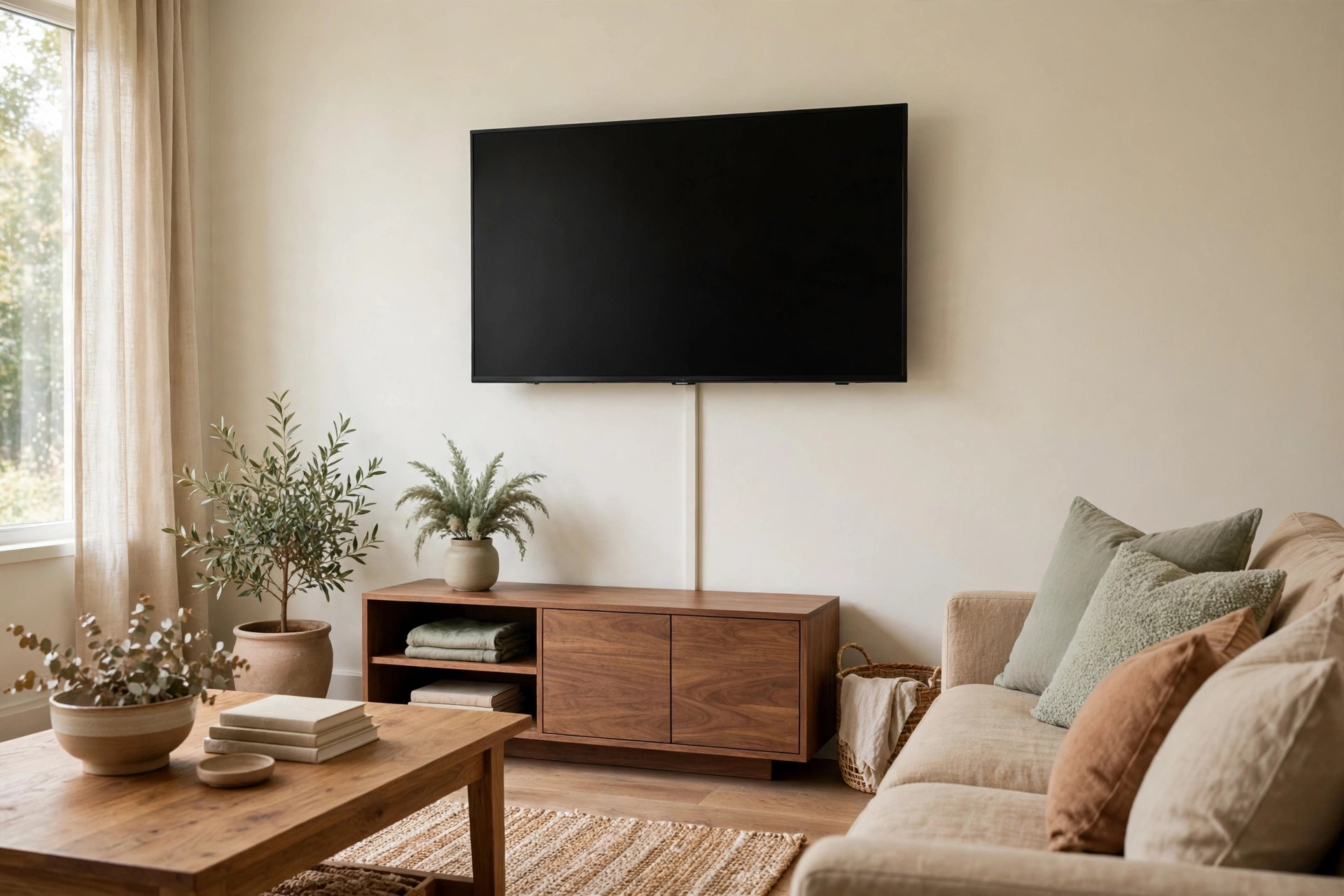
Run cables inside the wall or through a paint matched cable cover. An in wall kit gives the cleanest result, while a slim cover painted the wall color is the renter friendly runner up. Either way, the dangling lines disappear and the screen seems to float. It typically takes less than an hour once you have the pieces in hand.
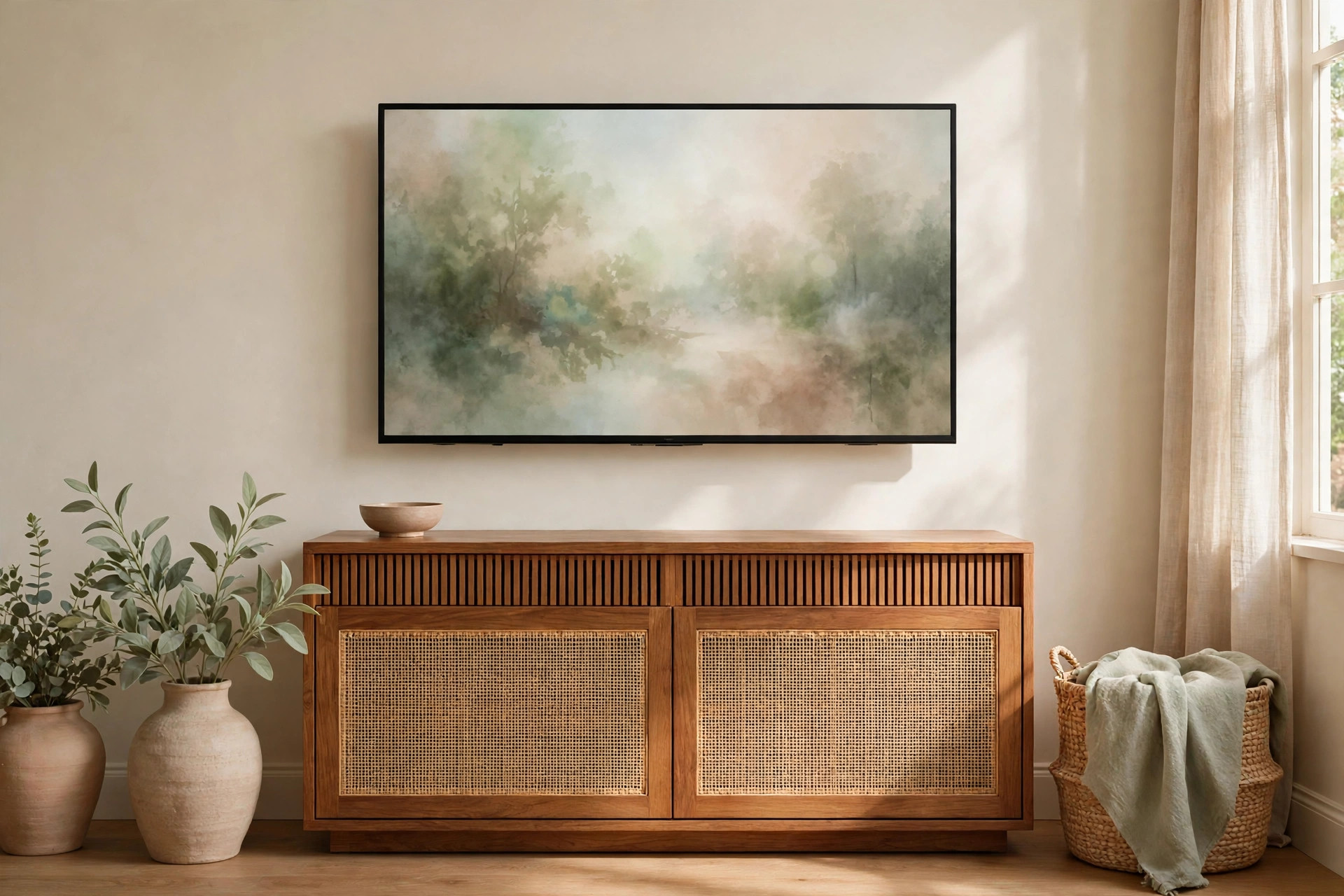
Tuck boxes and consoles into the cabinet behind closed or slatted doors. Streaming boxes, game consoles and routers usually behave fine inside a cabinet, especially if the doors are slatted or cane fronted for airflow and remote signals. A small vent hole at the back helps with warmth. The wall stays calm, and the blinking lights stop competing with your evening.
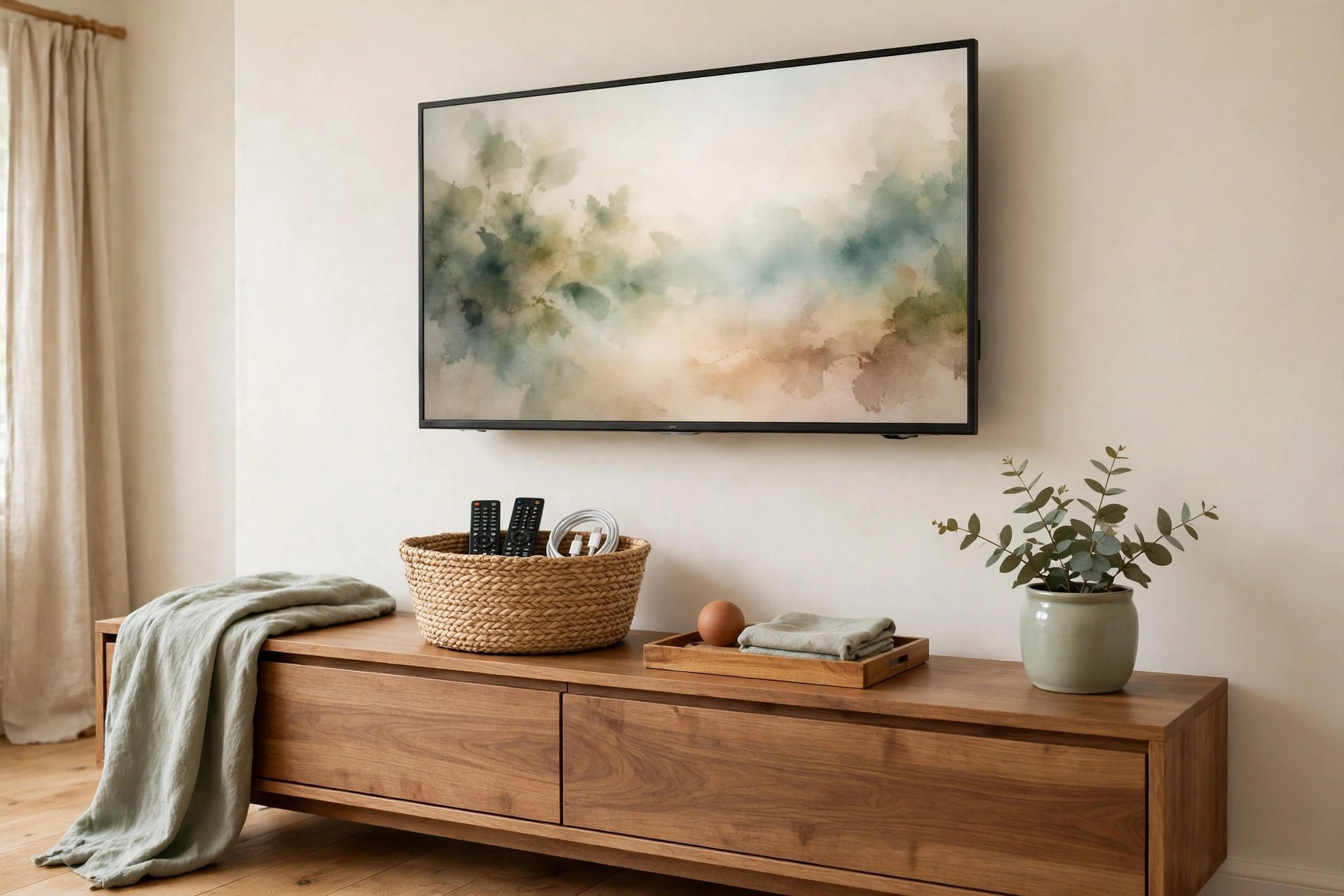
Group remotes and chargers in one pretty basket or tray. A woven basket, a wooden box or a simple tray on the console gives every small black rectangle a home. It sounds minor, but a tidy surface usually changes how the whole wall feels at a glance. As a bonus, the remote hunt before a film gets noticeably shorter.
Lighting Around the Screen
Gentle light around the TV softens contrast and makes evening viewing easier on the eyes. It also gives the wall a warm glow long after the screen goes dark.
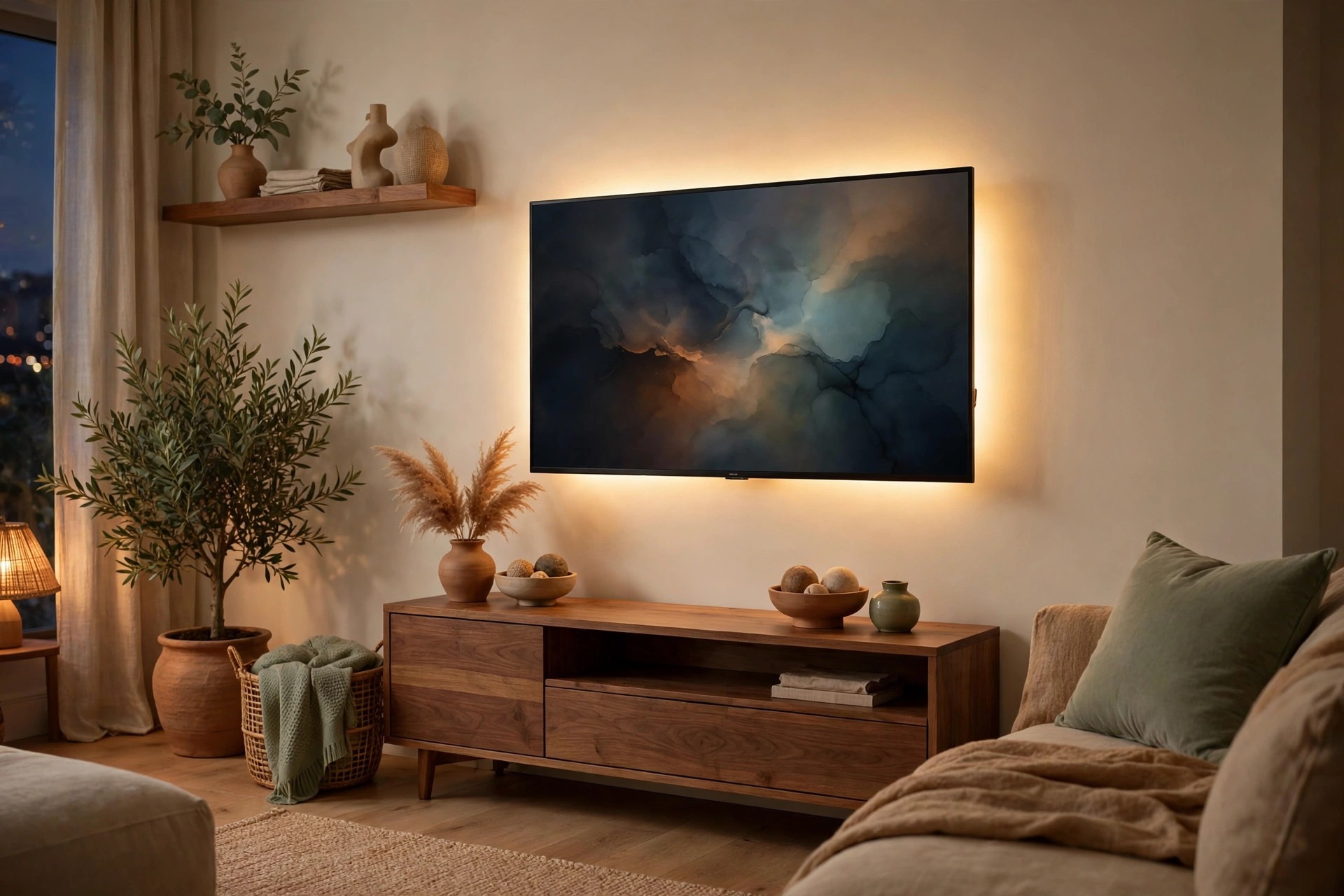
Add a soft backlight strip behind the screen for a halo glow. A warm white strip along the back edges of the TV throws a gentle halo onto the wall, which typically makes dark scenes feel richer and the room cozier. Keep the tone warm rather than bright white so it suits a living room mood. Many strips dim or switch off with the TV itself, which keeps things effortless.
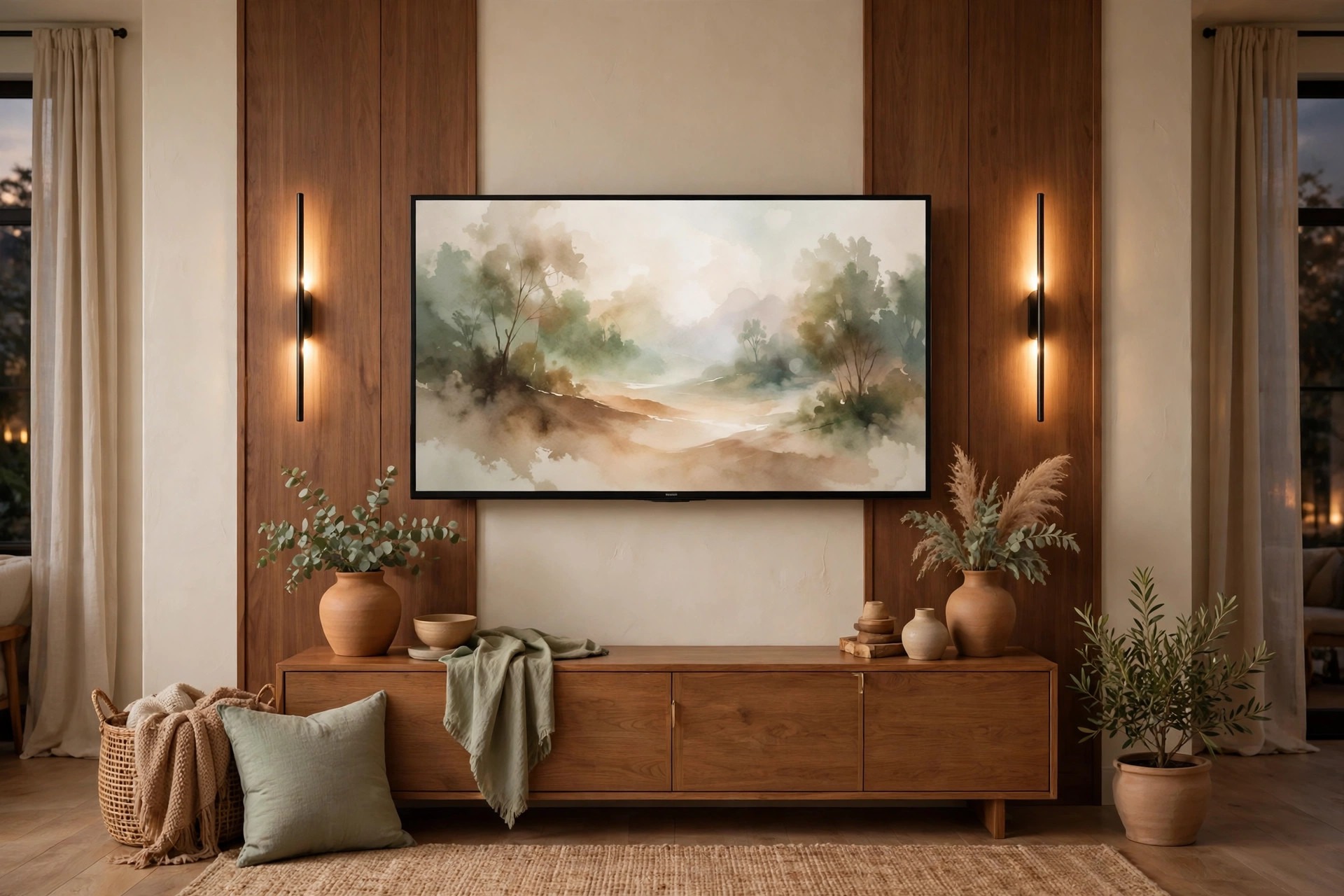
Flank the wall with sconces or a pair of slim lamps. Matching lights on either side of the screen balance the wall and give you soft, even light for reading or conversation. Plug in sconces avoid electrician work and still look built in once the cords are tucked away. Warm bulbs usually flatter wood tones and skin alike, so the whole room feels kinder in the evening.
Fireplace Plus TV Walls
A fireplace and a TV on the same wall can compete, or they can share the spotlight gracefully. The trick is usually to style them as one composed scene.
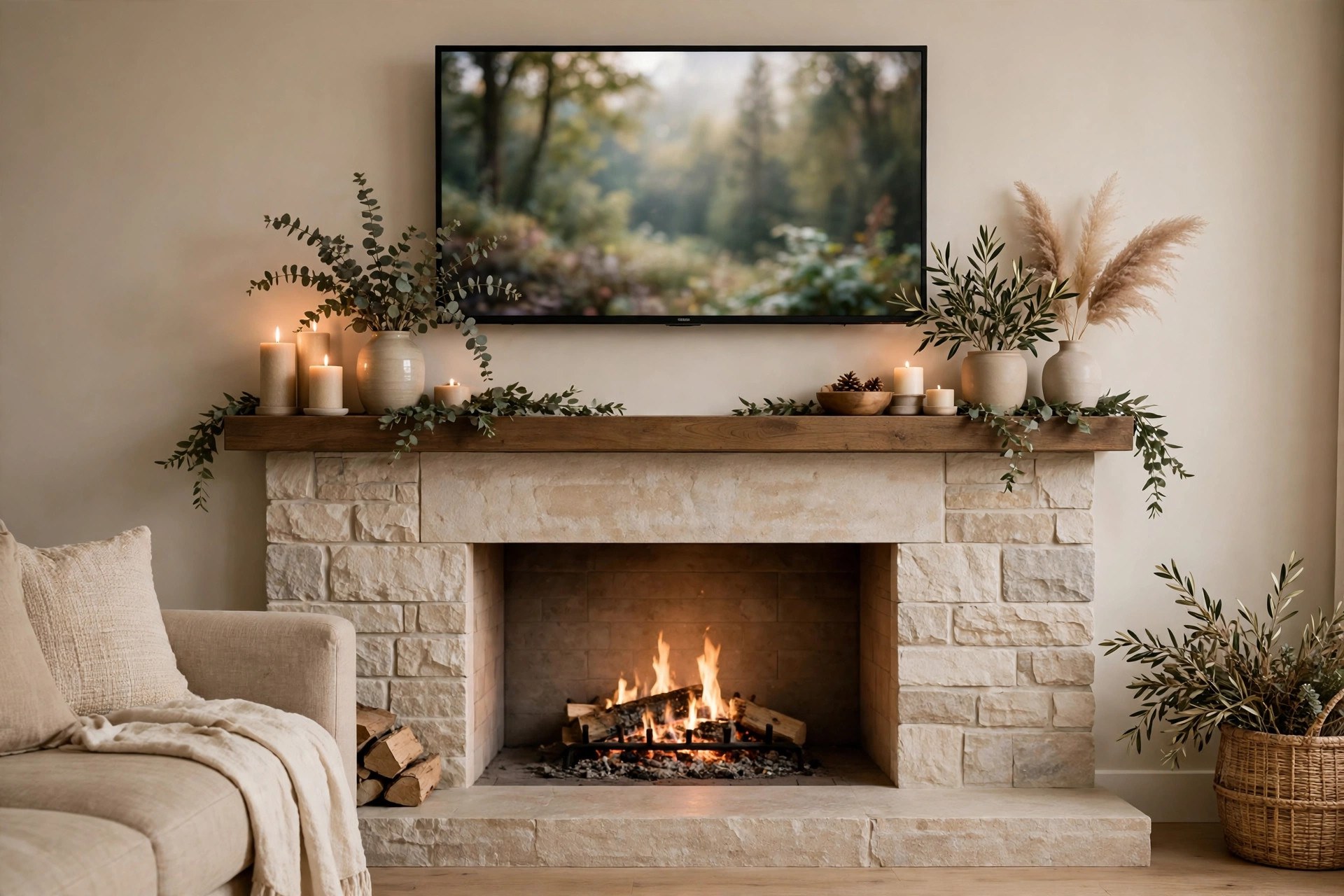
Mount the TV above the mantel and style the mantel like a shelf. A few candles, a trailing plant and one larger piece of art or a mirror leaned nearby usually connect the two focal points. Keep the styling low and loose so nothing blocks the screen or crowds the fire. If neck comfort is a worry, a tilting mount typically helps more than people expect.
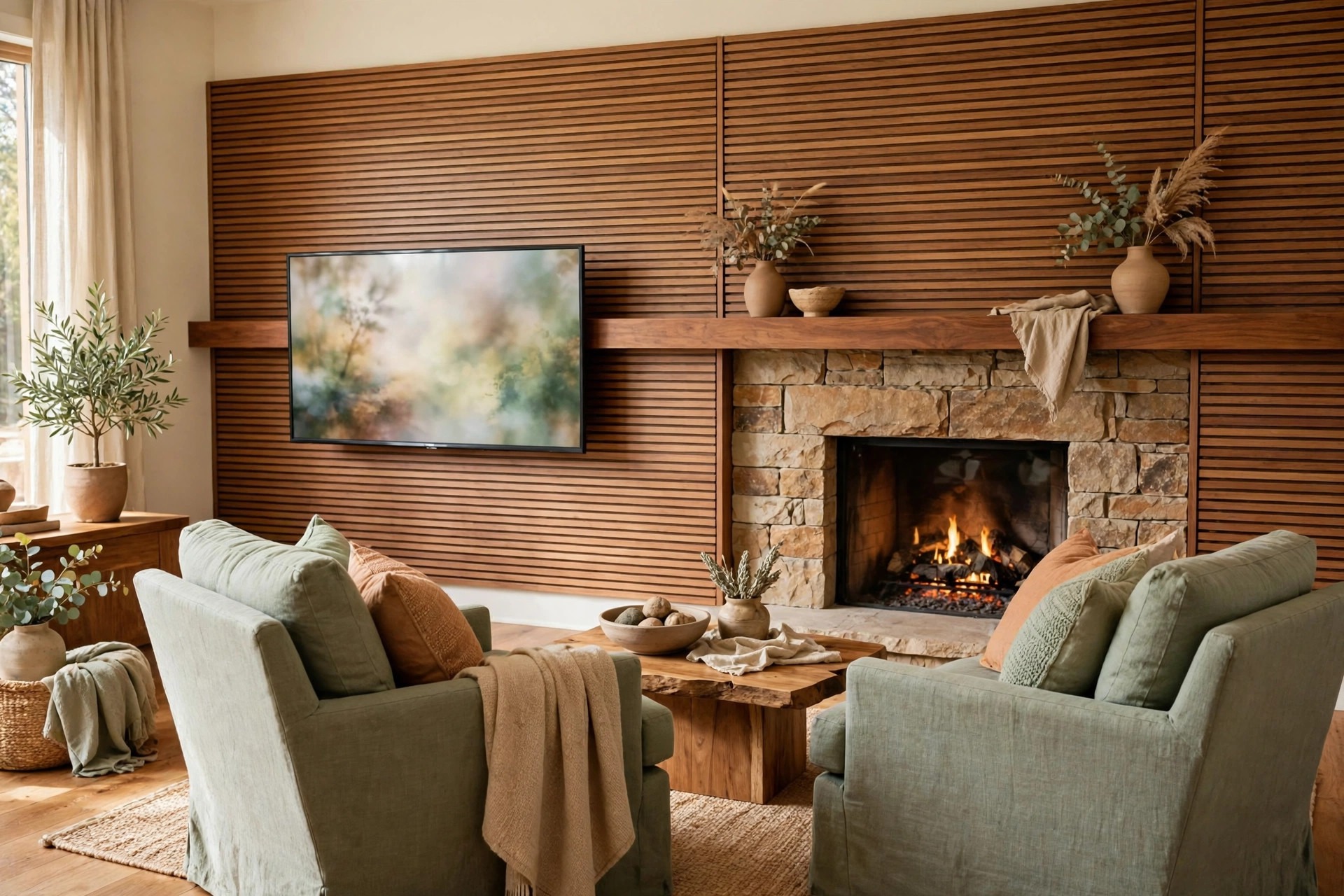
Place the TV beside the fireplace instead of above it. In rooms where the fireplace sits off center, giving the screen its own section of wall can look surprisingly balanced. A shared mantel shelf or matching panel treatment across both sections usually ties the arrangement together. Seating can then angle gently toward both, which works well for fireside film nights.
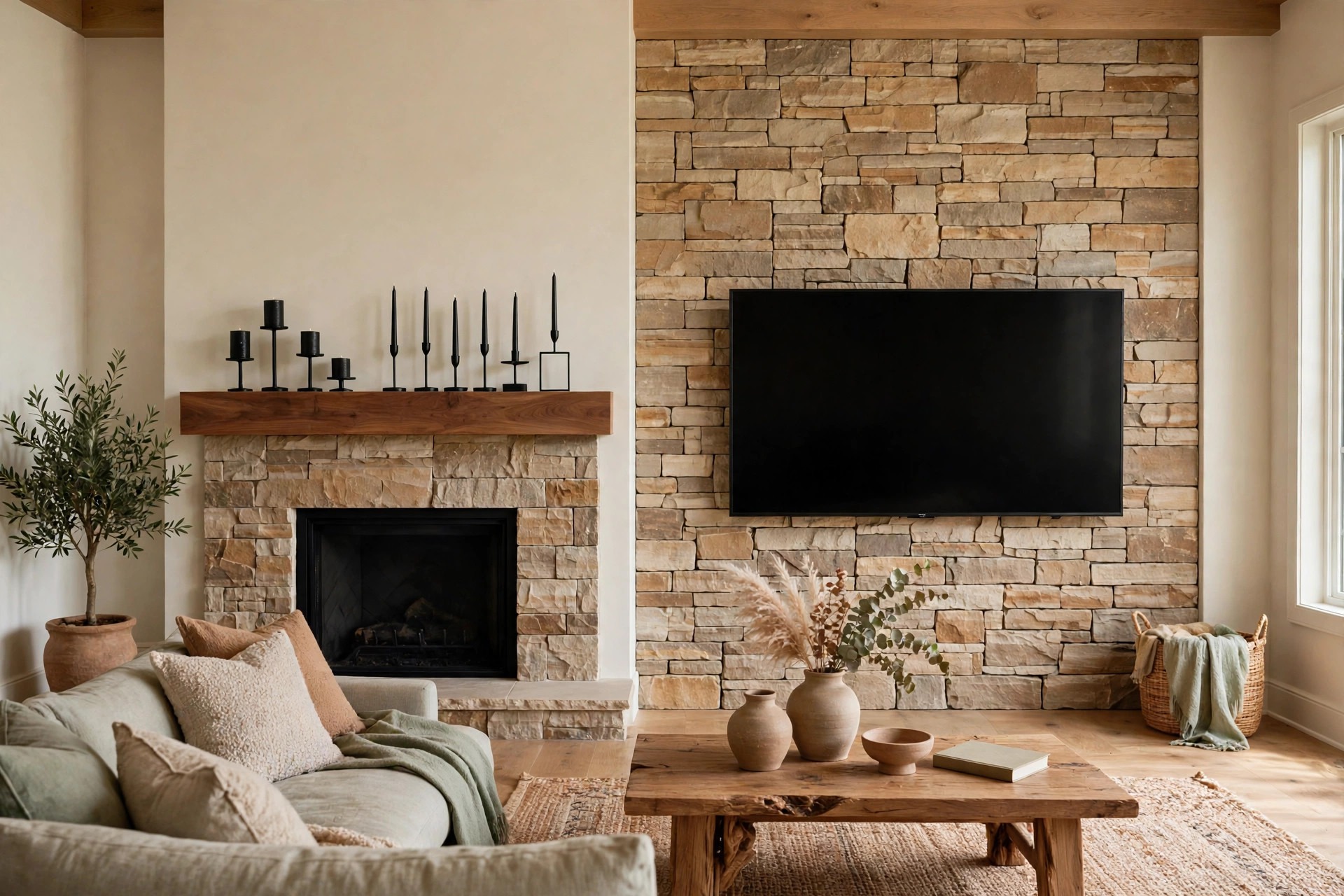
Repeat materials on both halves of the wall for a unified look. If the fireplace surround is stone, wood or plaster, echoing that tone in the TV frame, console or paneling typically makes the wall read as one design. Even small repeats help, like black candle holders that match the screen frame. The result feels calm and collected, and neither feature has to shout over the other.
In the end, the screen is not going anywhere, and honestly it does not need to hide. Pick one or two of these tv wall decor ideas, start with the wall you look at every single day, and let the TV take its place as part of the room you actually love sitting in.

Leave a Reply