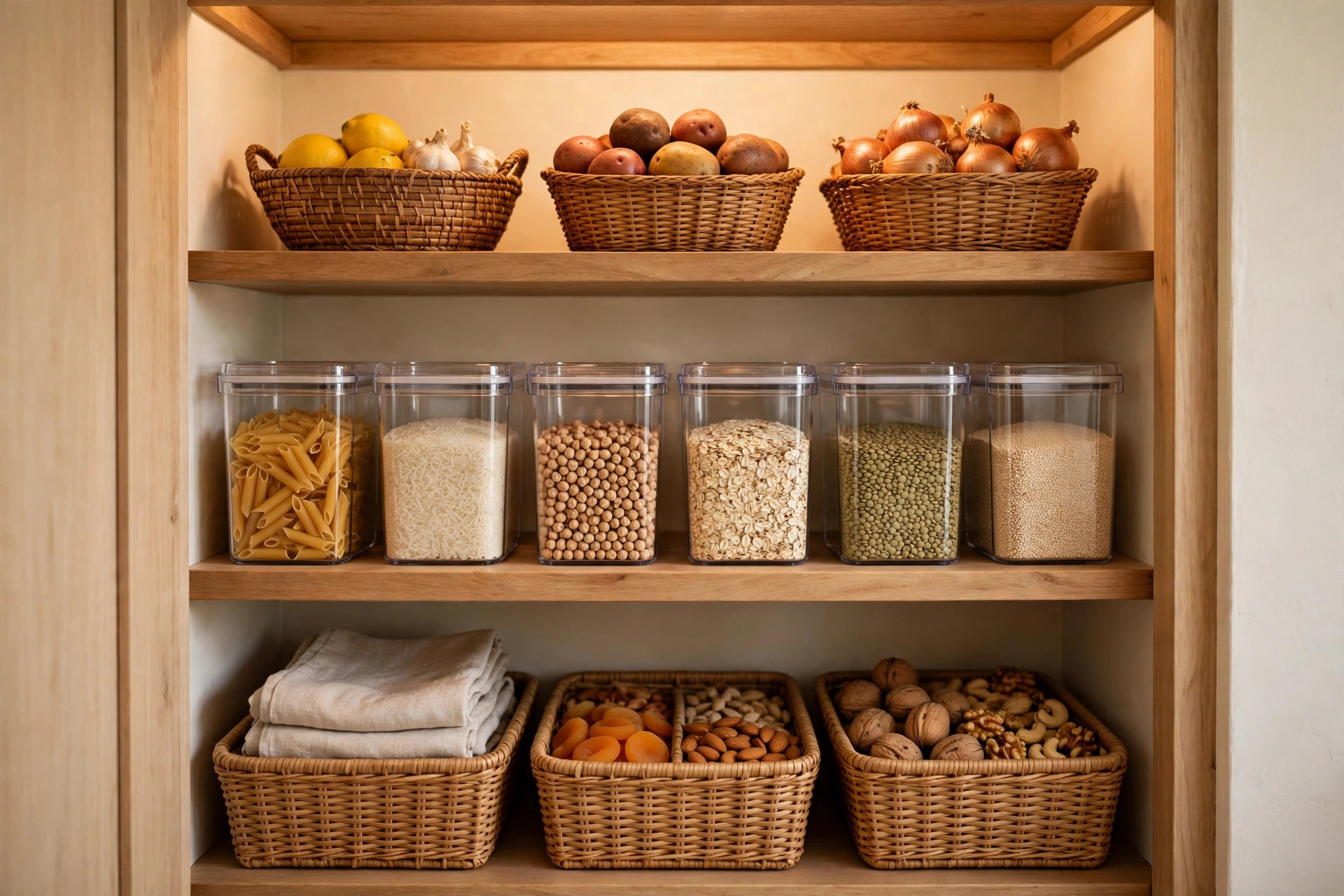
If your kitchen cupboards are bursting and you still cannot find the cumin, you are not alone. A tiny pantry, or no pantry at all, is usually a layout problem rather than a space problem. These small pantry ideas focus on simple layouts and storage systems that help every shelf work a little harder.
The good news is that you do not need a walk in room or a big renovation to store food well. A spare closet, a slim cabinet, the back of a door and a few well chosen racks can add up to a pantry that actually makes sense.
Below are 18 small pantry ideas that cover creating a pantry from scratch, using doors, setting up simple zones and keeping it all tidy with a short weekly reset. Start with the section that matches your kitchen, try one change at a time, and let the system grow as you learn how you really cook and shop.
No Pantry? Create One
Lots of kitchens were built without a pantry, but most homes are hiding a little storage somewhere. Look for an awkward corner, a shallow closet or one cabinet you can give over completely, and you usually have a starting point.
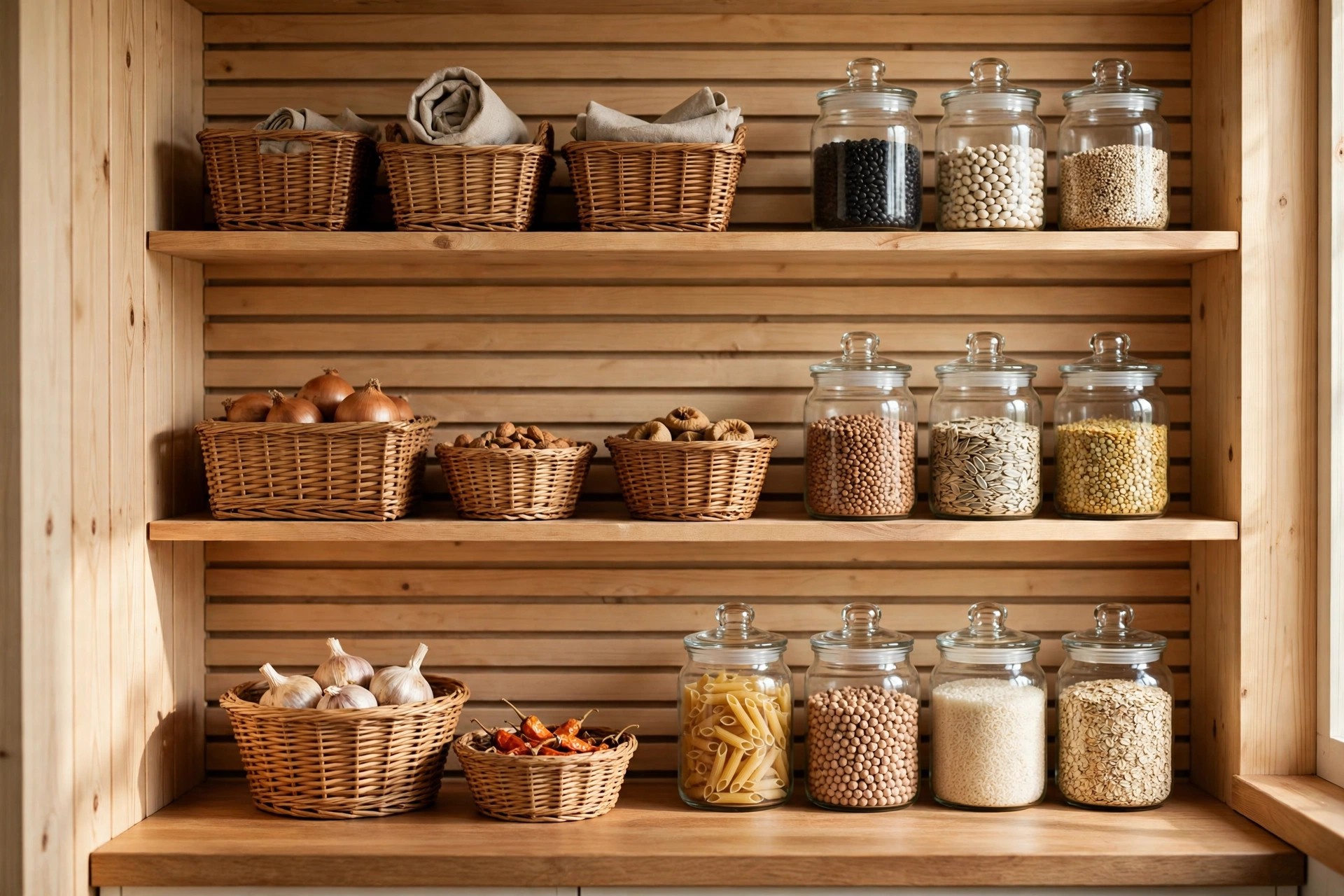
Turn a spare wall into a shallow pantry with open shelves. Shallow shelves are often better than deep ones in a small space, because nothing can hide at the back and get forgotten. Fit simple wooden shelves from counter height upward, keep everyday staples at eye level, and store backup items higher up. It typically works well along a short wall near where you prep food.
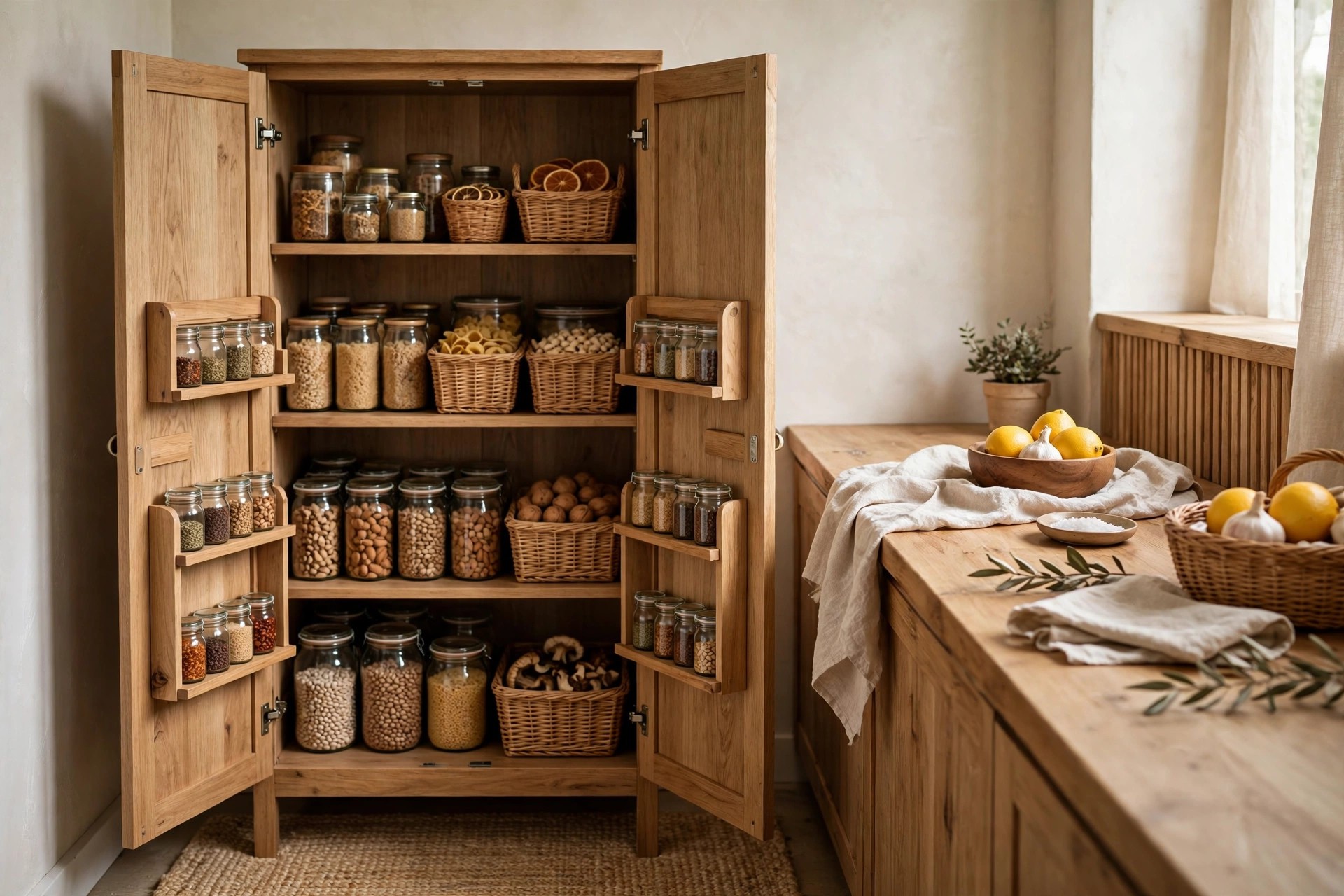
Claim a freestanding cupboard as your pantry if walls are tight. A tall, narrow cupboard placed near the kitchen can hold a surprising amount when the inside is planned in zones. Add small racks or baskets inside the doors if you can, and treat each shelf as one category so things do not drift.
Closet Conversions
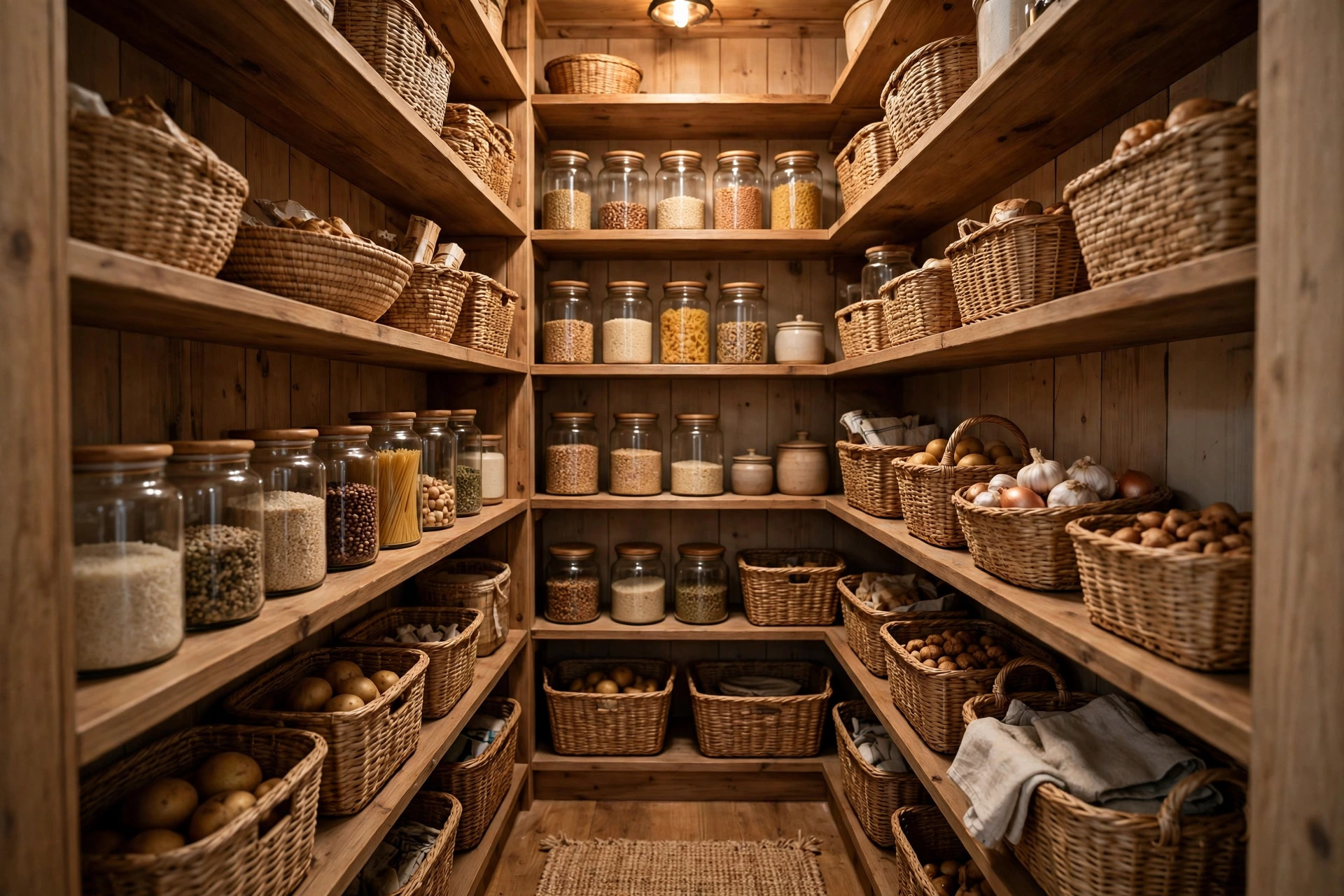
Convert a nearby hall or coat closet into a simple food pantry. A closet close to the kitchen is often the easiest win, since the shell is already there and you only need shelving. Remove the hanging rail, add sturdy shelves at varied heights, and keep heavier items low where they are safer to lift. You will usually find the walk is short enough for daily use.
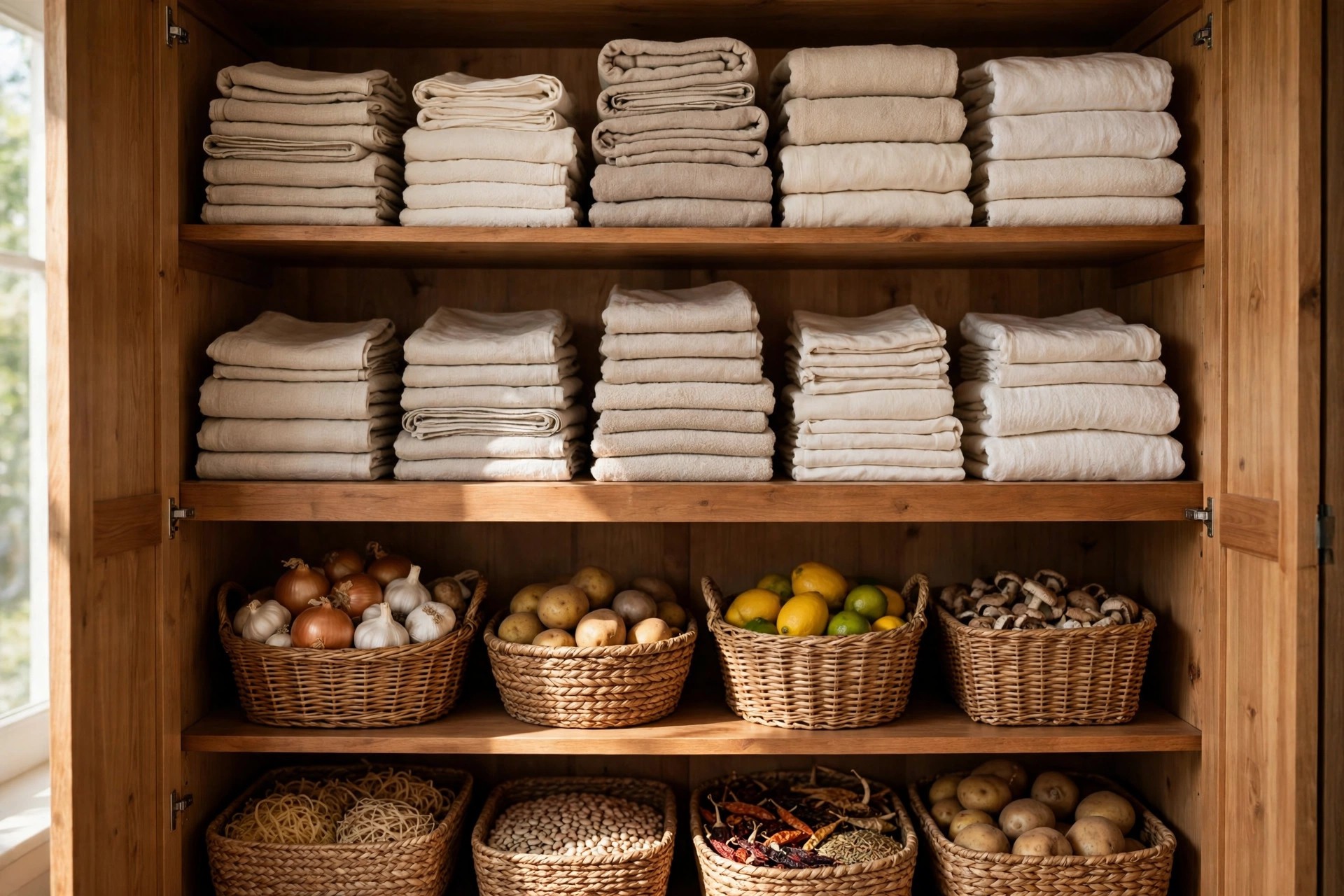
Use the lower half of a linen closet and leave the top for household things. Sharing a closet works when each half has a clear job and a clear boundary. Put food on the lower shelves in baskets or bins so crumbs and spills stay contained, and keep cleaning items well away from anything edible.
Cabinet Pull-Outs
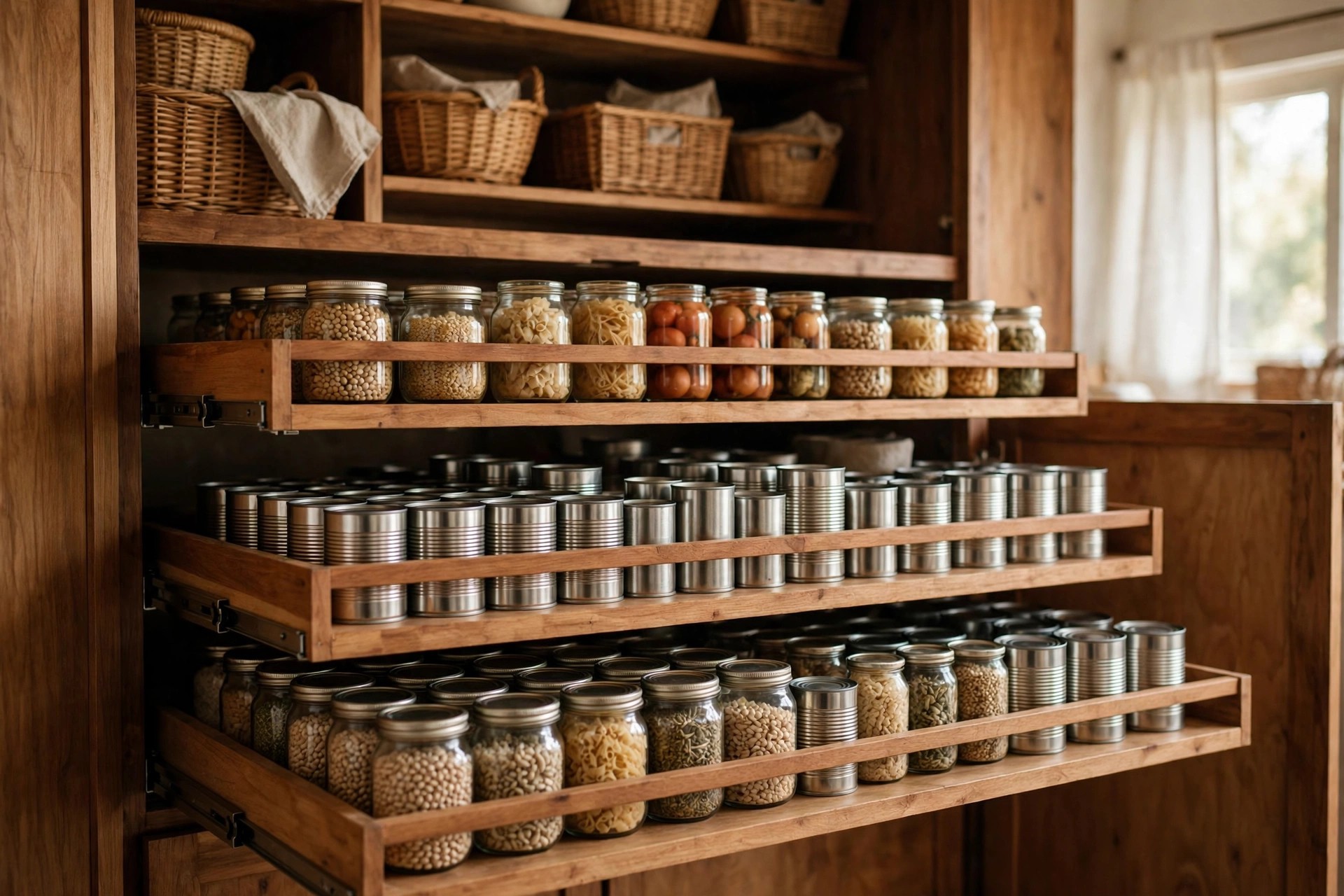
Swap one deep base cabinet for pull out shelves that come to you. Deep cabinets are where small pantries usually lose food, because the back row is hard to see and harder to reach. Pull out shelves or sturdy sliding trays bring the whole depth forward in one motion, so you can check what you have before you shop. Start with the cabinet you reach into most often.
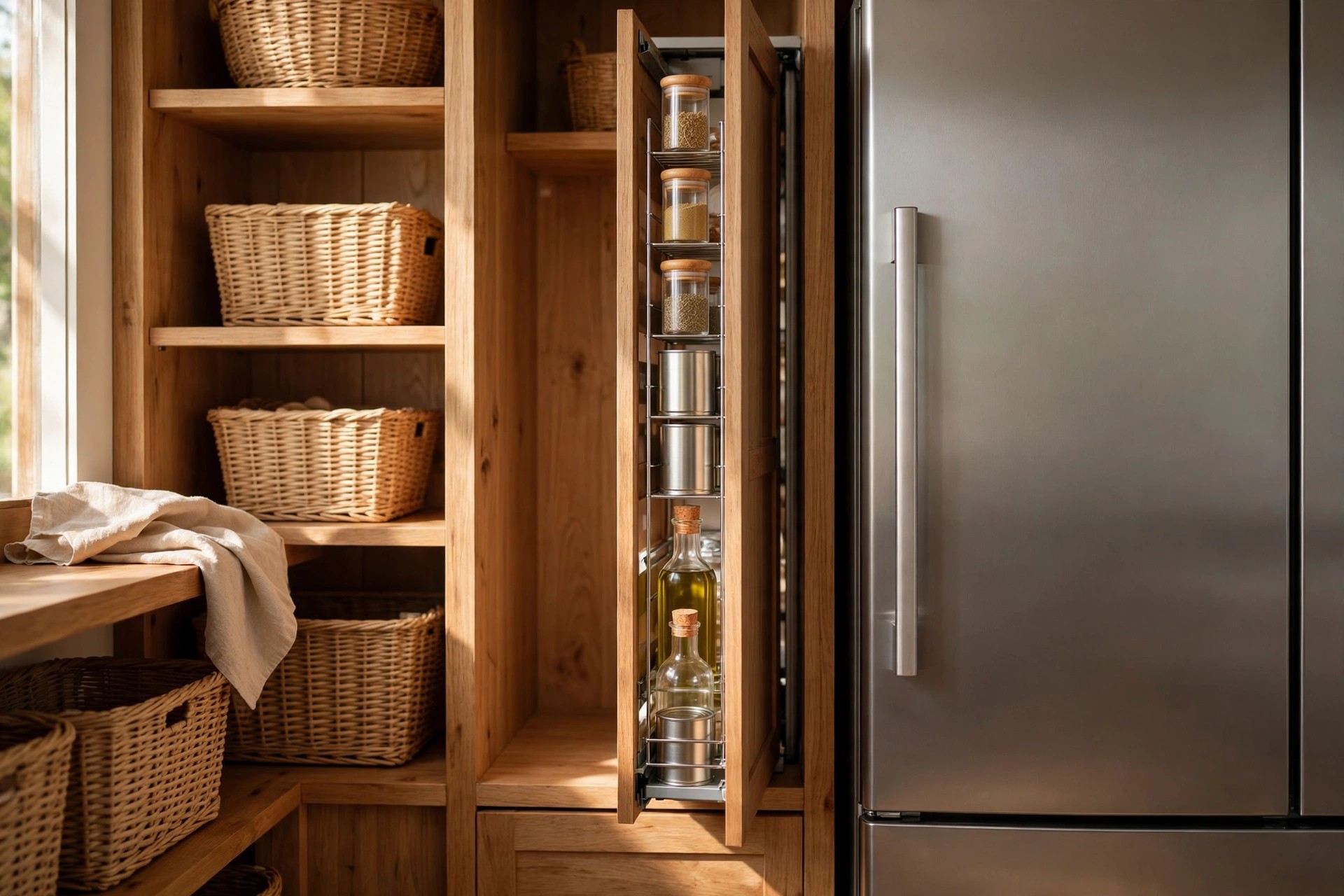
Add a slim pull out rack in the narrow gap beside the fridge or oven. Those awkward narrow gaps often sit empty, yet they are a natural home for cans, bottles and spice jars stored in a single row. A slim rolling or pull out rack keeps each item visible from the side, so nothing doubles up. Measure carefully first, because these racks only work when the fit is snug and smooth.
Door Racks and Over-Door Storage
Doors are storage most of us walk past every day without noticing. A rack on the inside of a pantry or cabinet door adds a whole extra layer of shelving without taking any floor or shelf space away.
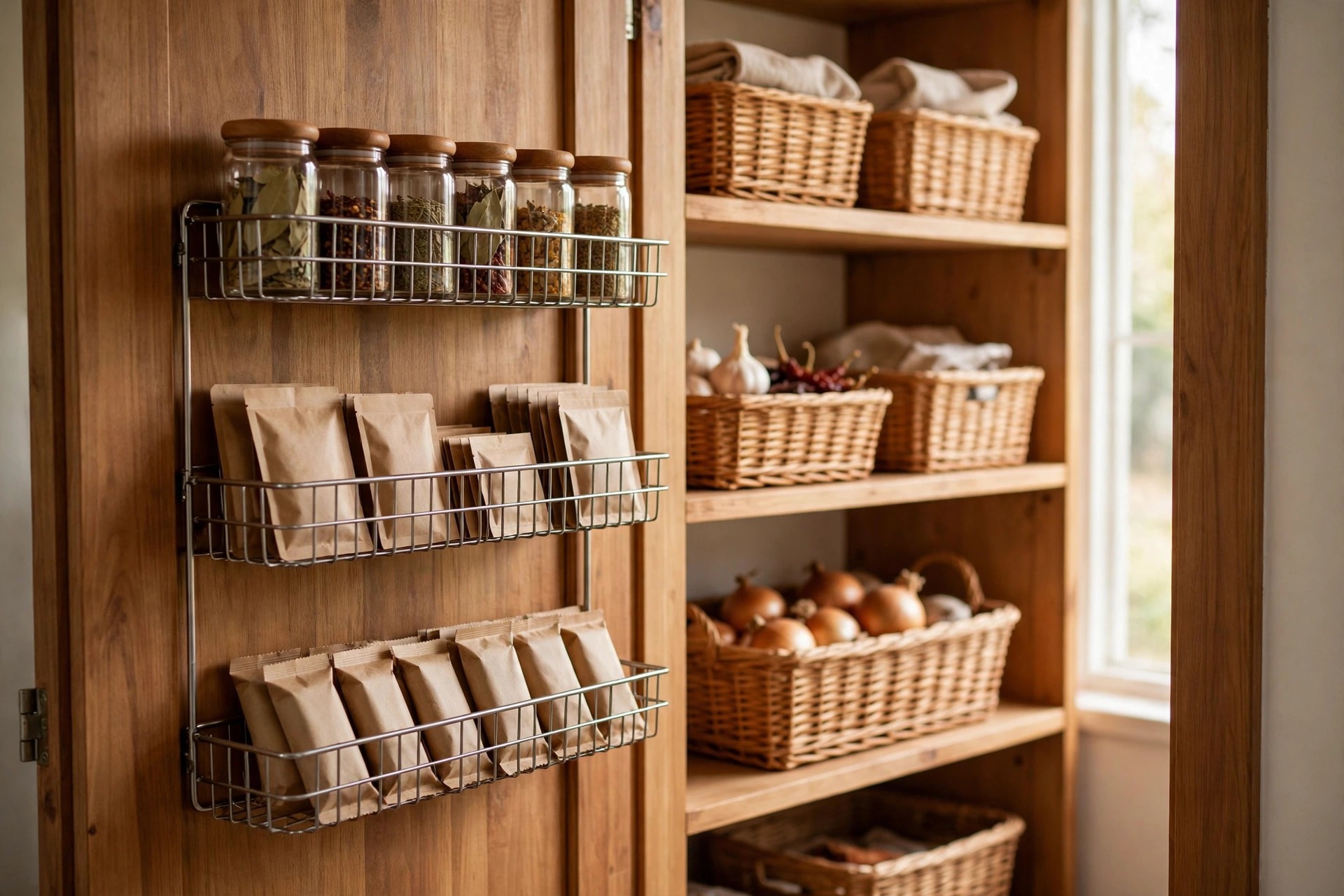
Hang an over door rack for your lightest, most used items. Spice packets, wraps, small jars and snack bars usually sit happily on door racks, where you can see them at a glance. Keep the heaviest cans and bottles on real shelves instead, because doors swing better and last longer without too much weight. Check that the door still closes softly before you load every tier.
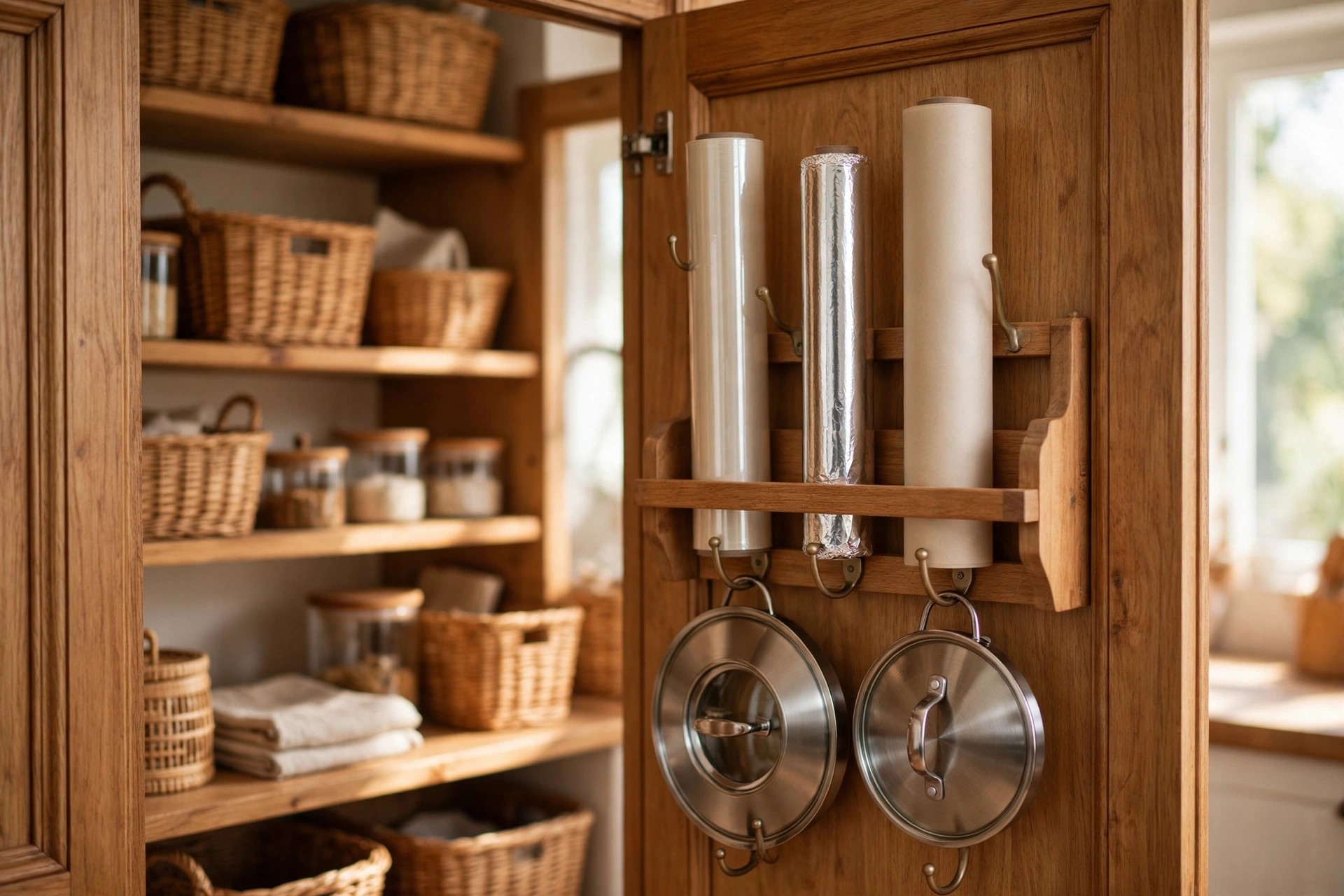
Fit small racks inside cabinet doors for wraps and lids. The inside of a cabinet door is a handy spot for cling film, foil, baking paper and pot lids that otherwise slide around in drawers. A shallow rack or a few sturdy hooks keeps them upright and easy to grab with one hand. It is a small change, but it usually frees a surprising amount of drawer space.
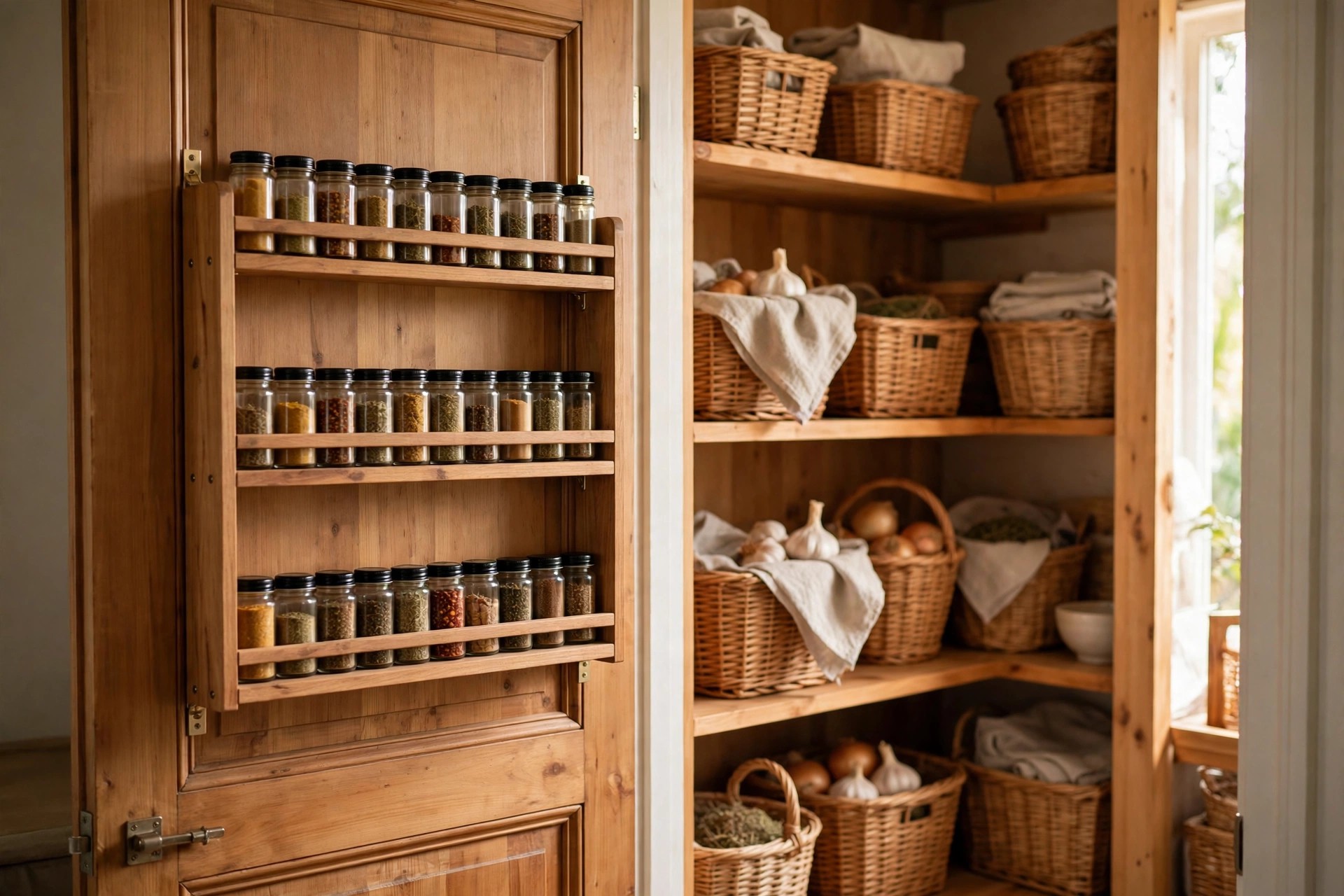
Use a door mounted spice rack so jars stop crowding your shelves. Spices take up shelf room fast, and they are much easier to scan in a single row on a door. Group them in a way that matches how you cook, whether that is by cuisine or by how often you reach for them.
Zones: Baking, Breakfast and Snacks
Zoning is simply giving each kind of food its own patch of shelf, so you shop, cook and put things away by category. In a small pantry it matters even more, because one messy shelf can make the whole space feel chaotic.
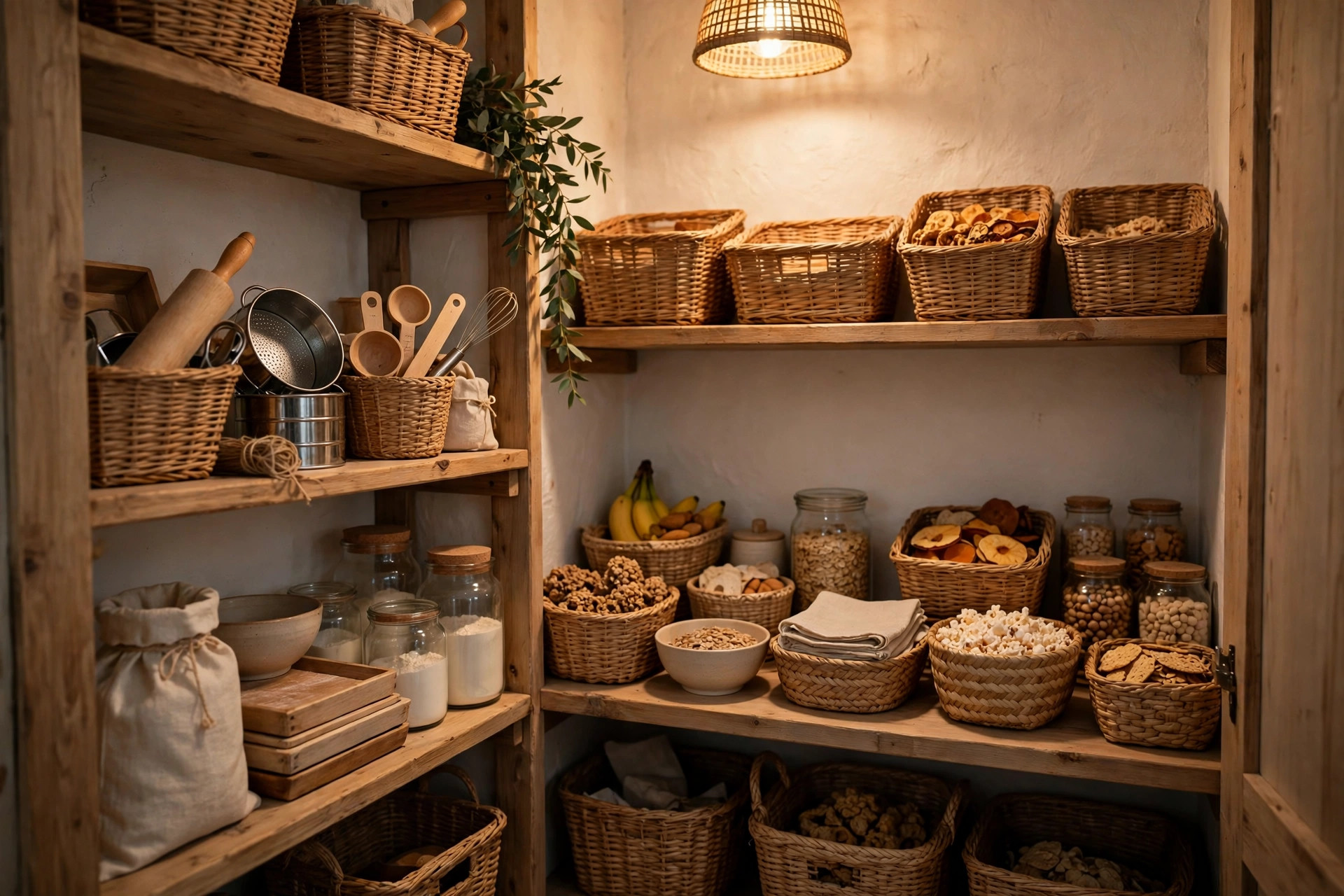
Give baking its own shelf or basket near your mixing bowls. Flour, sugar, baking powder, cocoa and vanilla stay together in one zone, so you can see at a glance what is running low before you start a recipe. A basket or tray you can lift out in one go makes baking days calmer, especially on a high shelf. Keep opened bags clipped shut inside the basket so spills stay contained.
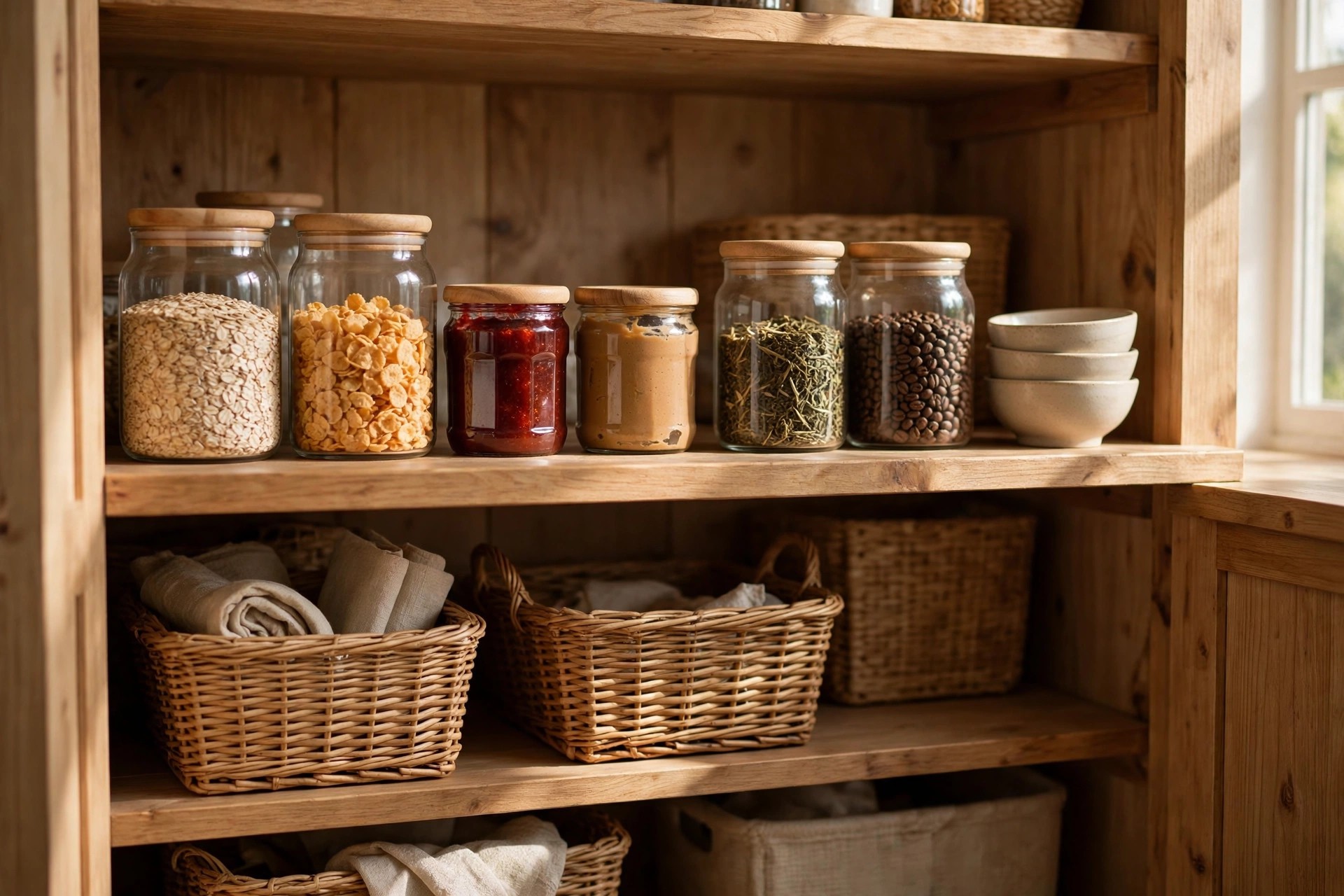
Set up a breakfast zone you can use half asleep. Cereal, oats, spreads, tea and coffee belong together at easy reach height, ideally near the kettle and the bowls. When the morning things live in one place, everyone in the house can help themselves without rummaging through the whole pantry. It typically speeds up busy mornings more than any other small change.
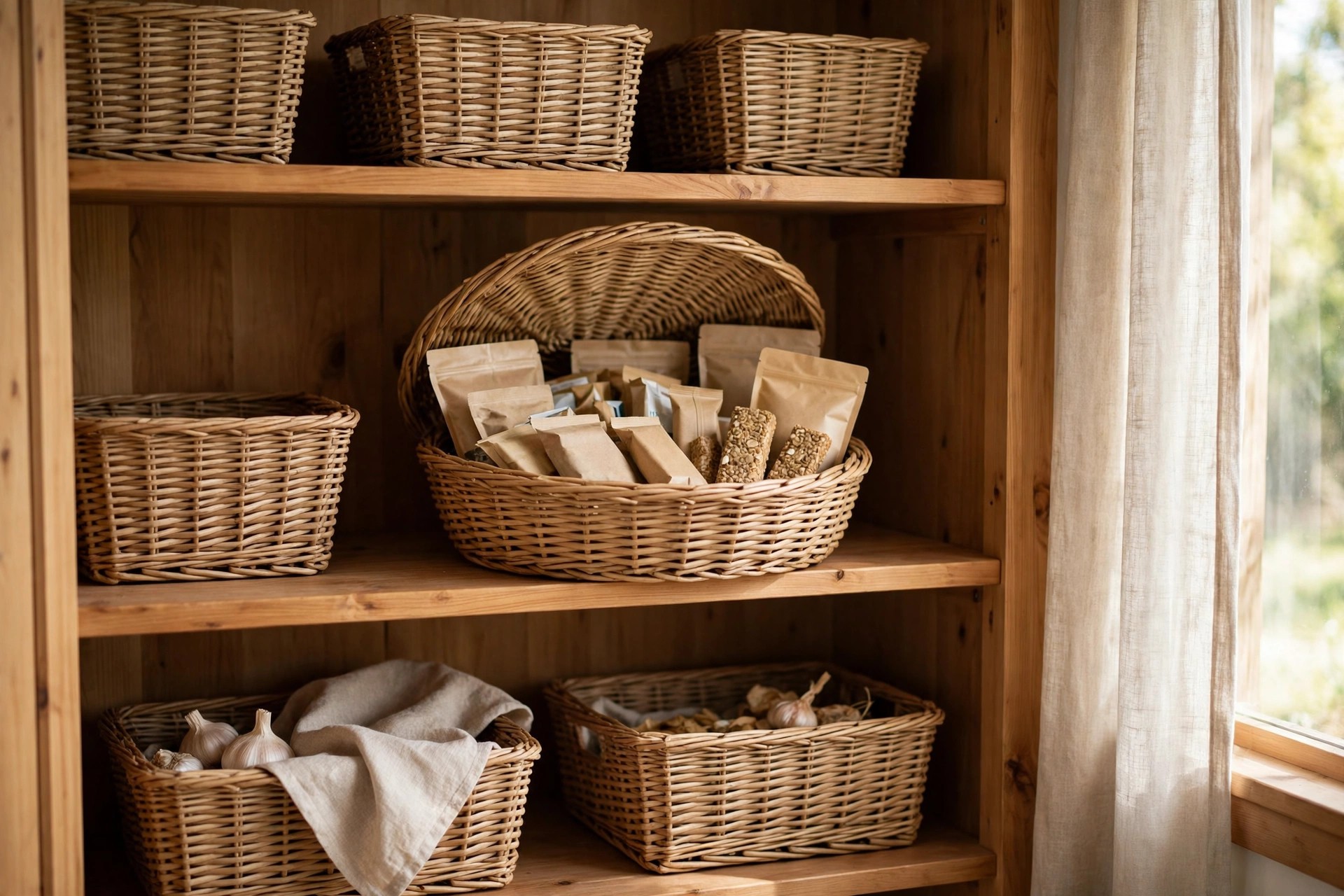
Keep snacks in one open basket so the supply is easy to judge. A single snack zone stops packets from wandering onto every shelf and hiding behind the pasta. Choose a basket you can lift down and look through quickly, and let that basket set the limit, because when it is full, you do not need more. Put the snack basket where children can reach it if that suits your home, and keep treat refills up higher.
Containers That Earn Their Shelf
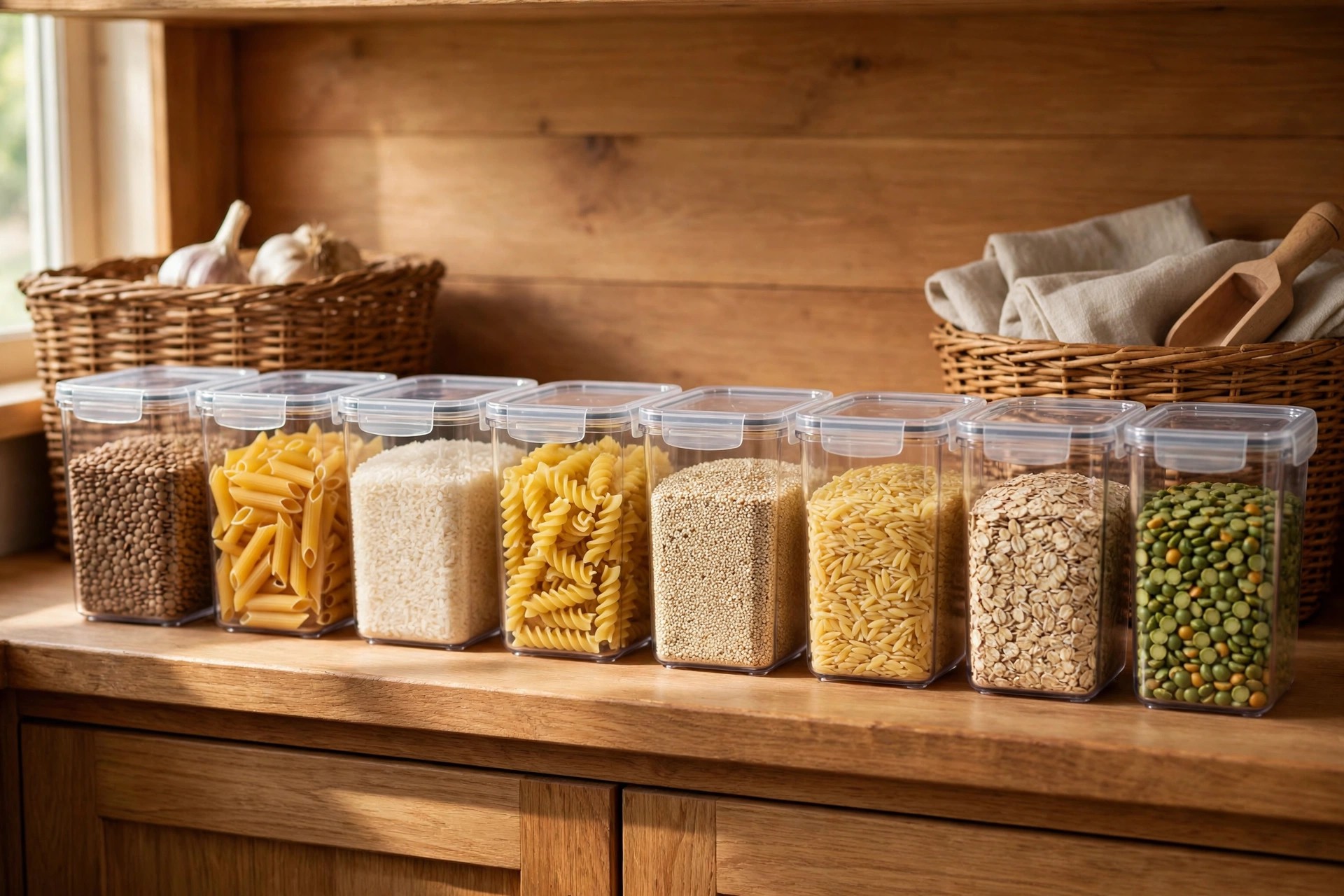
Choose containers by shape and fit, not by how they look. Square or rectangular containers usually earn their shelf better than round ones, because they sit side by side without wasting corners. Pick sizes that match the shelf height and the amount you actually buy, so a container is rarely half empty for long. Clear sides help you judge what is left at a glance, which quietly prevents duplicate buying.
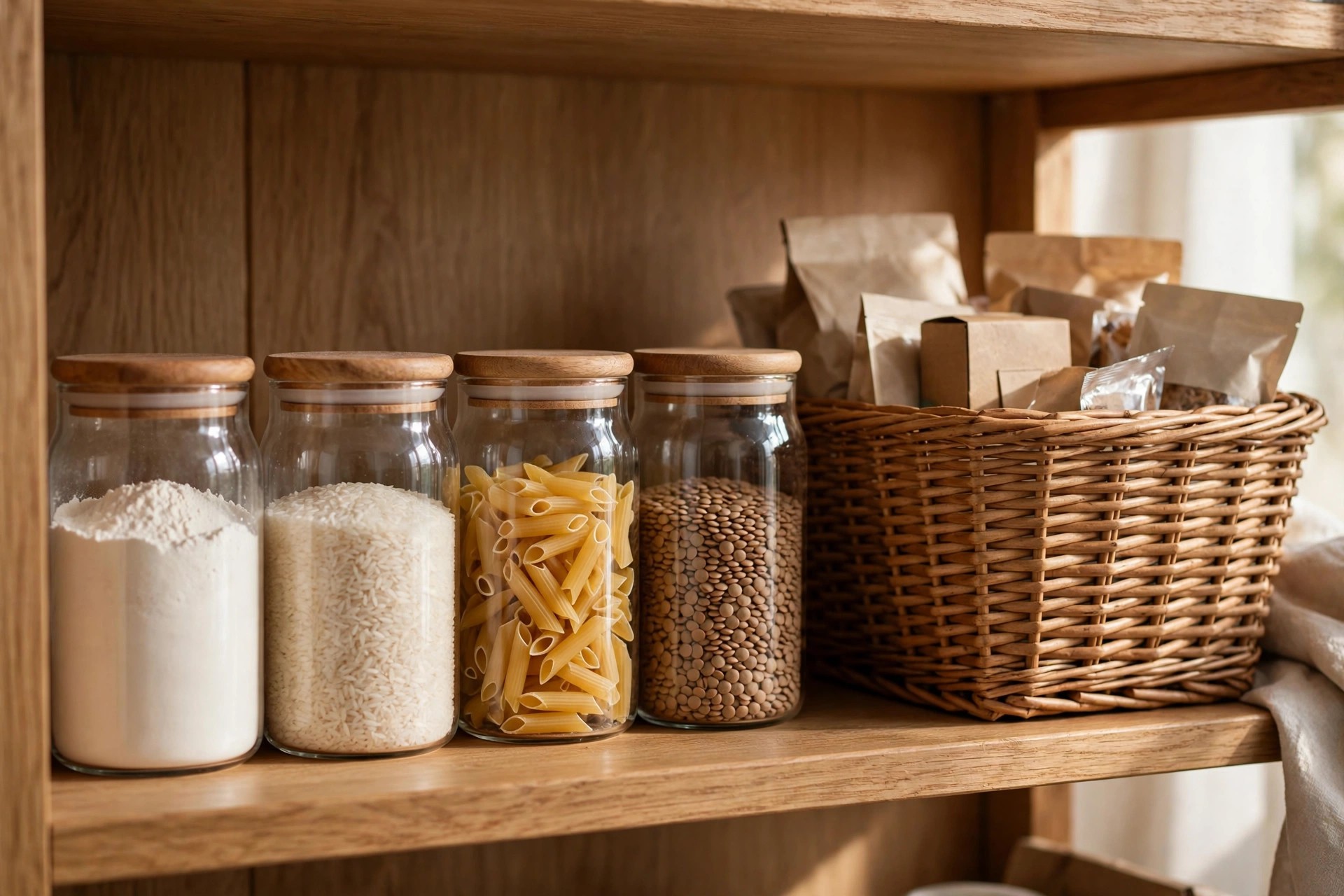
Decant only the staples that truly store better out of their packets. Flour, rice, pasta and lentils often pour more easily and stay fresher in a sealed container, while many other foods are fine in their original packaging inside a basket. Decanting everything takes time and shelf space you may not have, so be choosy. If an item is used up quickly, it typically does not need a special container at all.
Lazy Susans and Risers
Deep corners and tall shelves are where small pantries waste the most room. A couple of simple helpers can turn those dead spots into storage you can actually reach without unloading half the shelf.
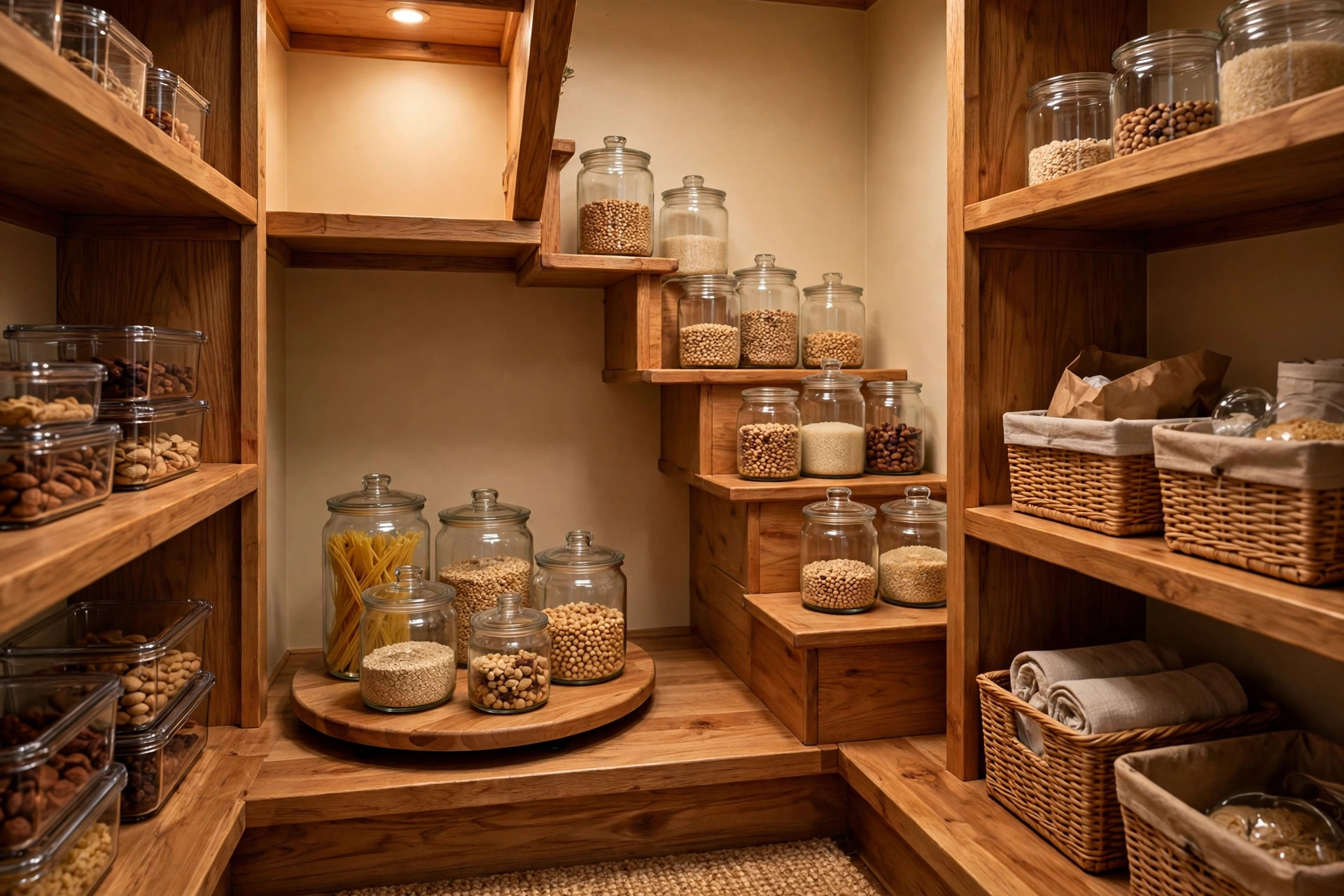
Put a lazy susan in deep corners for oils, sauces and jars. A turntable brings the back of the shelf to the front with a gentle spin, so bottles stop getting lost behind each other. Keep similar items together on one turntable, and give it a quick wipe now and then so it keeps spinning smoothly. It usually works best on a shelf you use every day, where the saved rummaging adds up.
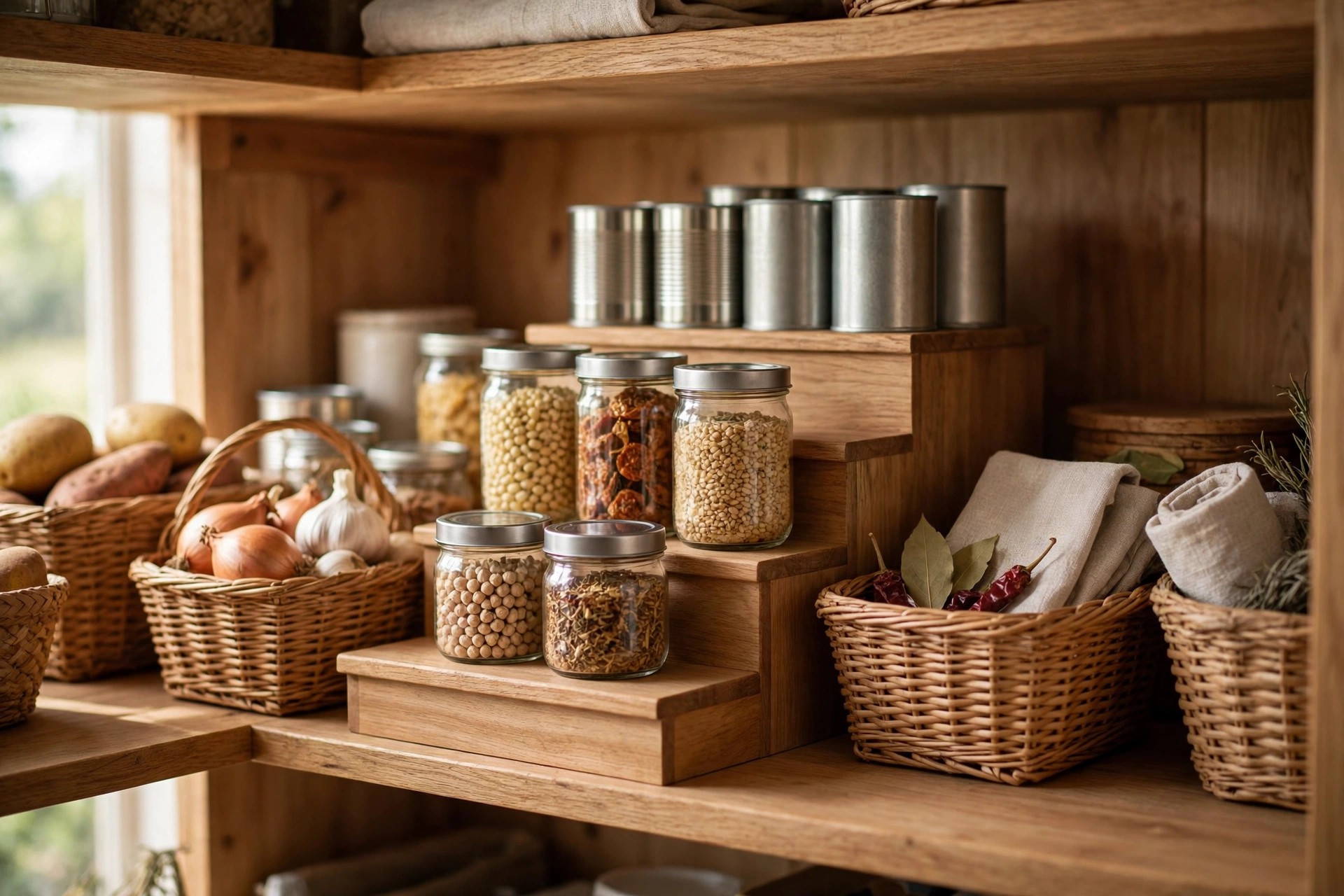
Use stepped risers so back rows are as visible as the front. A riser lifts cans and jars behind into view, turning one flat shelf into small stadium steps. You can scan the whole shelf in seconds, which makes stock checks and meal planning much easier. Choose a riser that fits your shelf width well, because wobbly risers and rolling cans are not a helpful combination.
A Tiny Pantry Weekly Reset
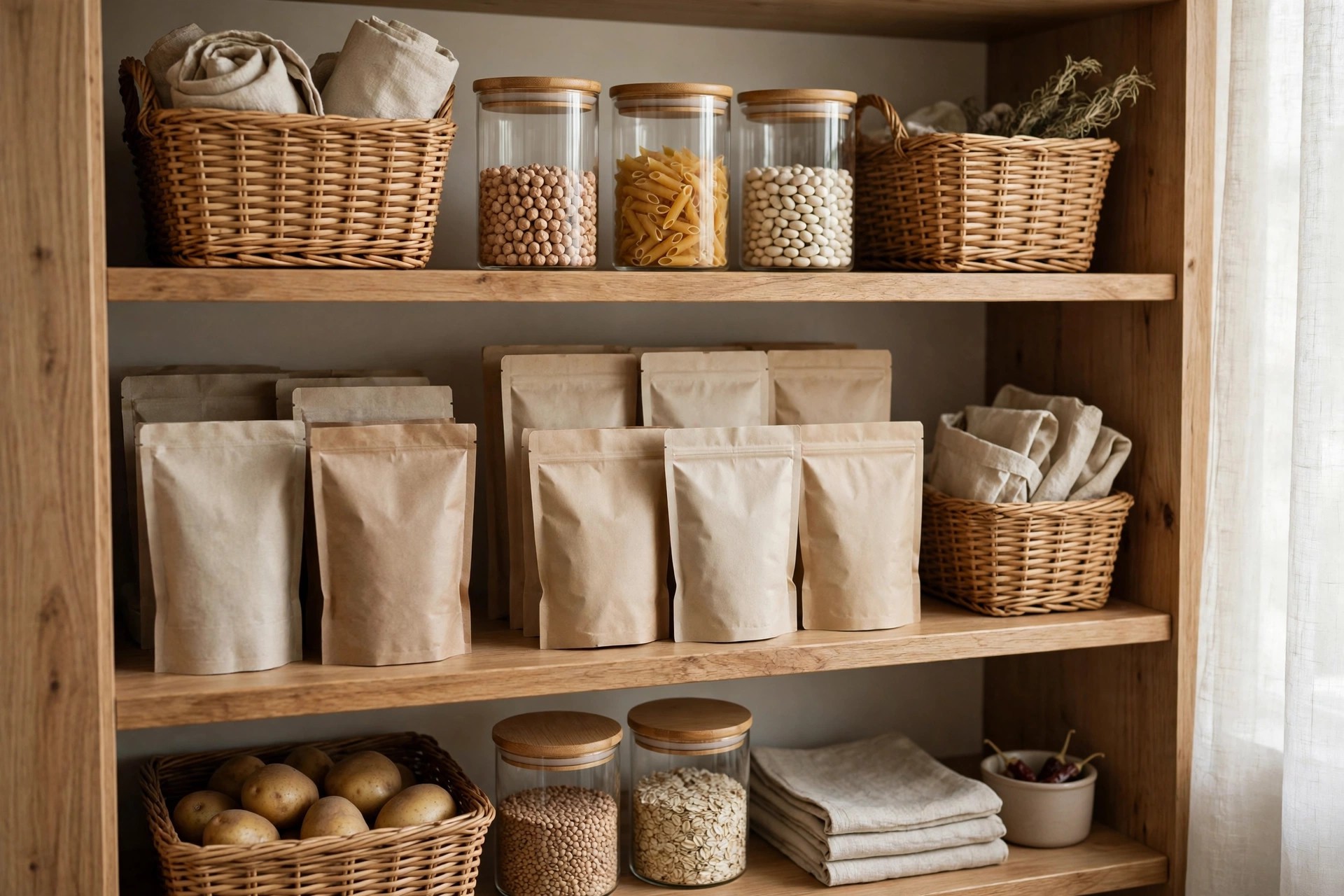
Do a short front to back tidy once a week before you shop. Pull anything forgotten at the back toward the front, move older packets ahead of newer ones, and make a quick note of what is nearly gone. It only needs to be a brief sweep, not a full reorganize, and it usually stops you buying a third bag of something you already own. Doing it on the same day each week helps it become a habit.
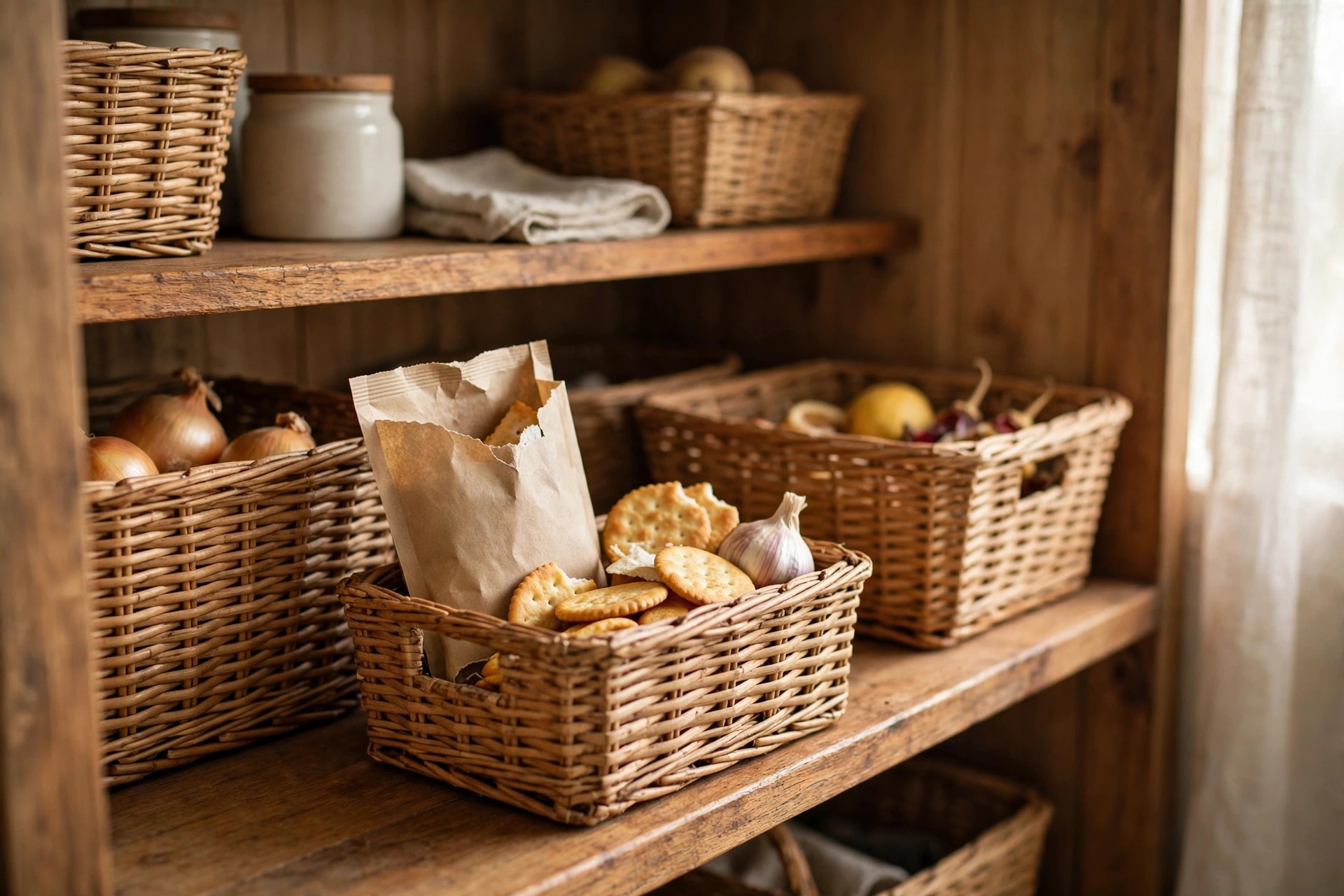
Keep a small basket for items that need using up first. Half used packets, the last few crackers and ingredients bought for one recipe can all live in a use first basket until they are gone. Check that basket before you plan meals, and let it guide a soup, a bake or a snack plate now and then. It is a gentle system that typically cuts waste without any strict rules or guilt.
A small pantry works when the layout does the remembering for you. Give each food a zone, let doors and corners pull their weight, and keep the reset short and kind. You do not need more space nearly as often as you need a clearer system, and once yours clicks, even a tiny pantry can feel calm, capable and easy to live with.



Leave a Reply