
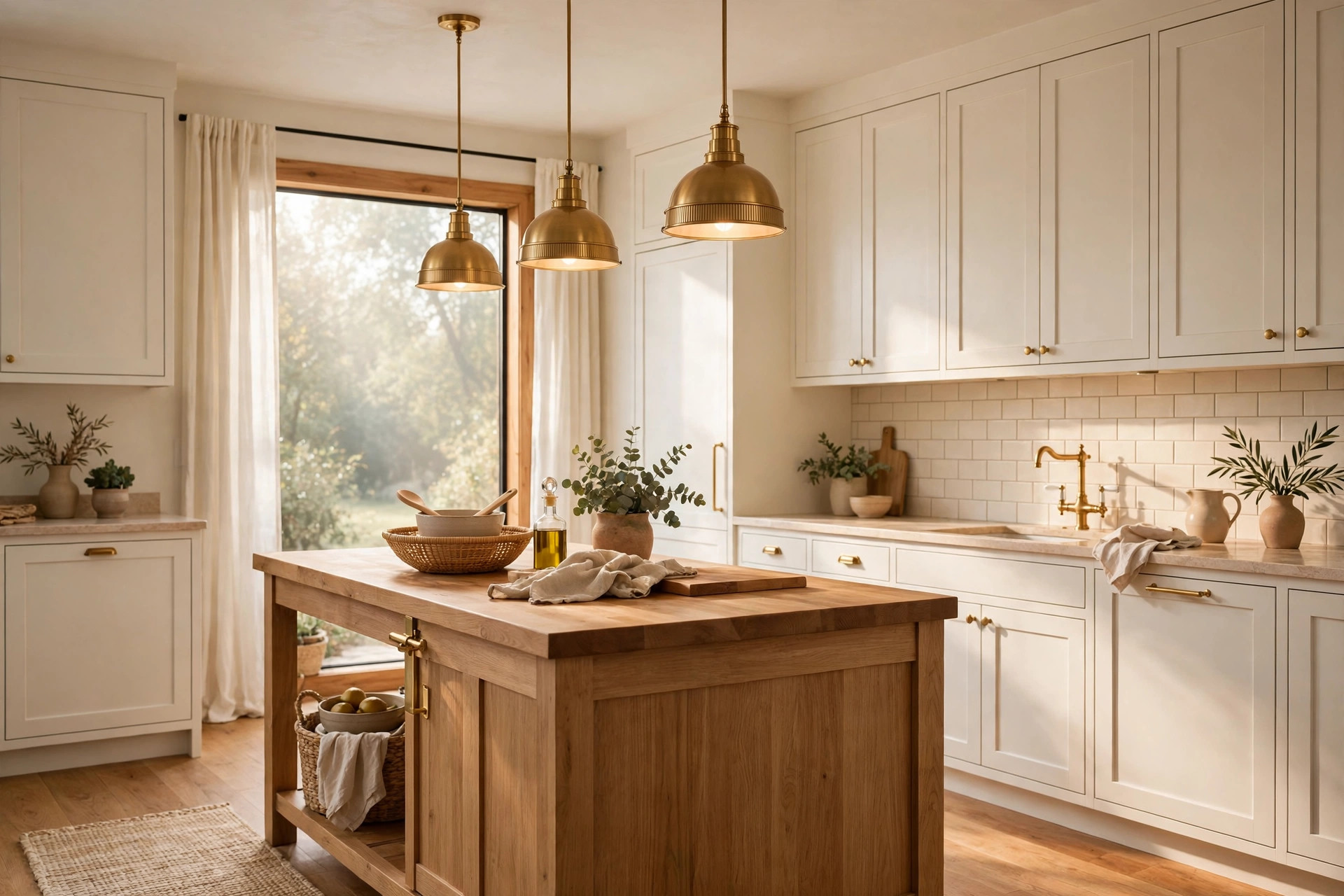
A white kitchen sounds simple until you are in a paint store staring at swatches that all look exactly the same. Pick the wrong one and the room feels cold and a little clinical. Pick a warmer one, though, and the light feels softer and the whole kitchen feels welcoming.
That is what these white kitchen ideas for 2026 are about. They are not about making a kitchen whiter for the sake of it. They are about layering warm tones, natural wood, stone with a bit of life in it, and small cozy details so your kitchen feels calm and clean without ever feeling stark.
You do not have to use every idea here, and you probably should not. Most warm white kitchens work because they mix just a few of these layers really well. So notice what you keep coming back to, and start there, because that is usually the direction your kitchen wants to go.
Warm White Paint Tones
Warmth usually starts with the paint, long before you choose a countertop or a handle. These tones give you a soft base that everything else can build on.
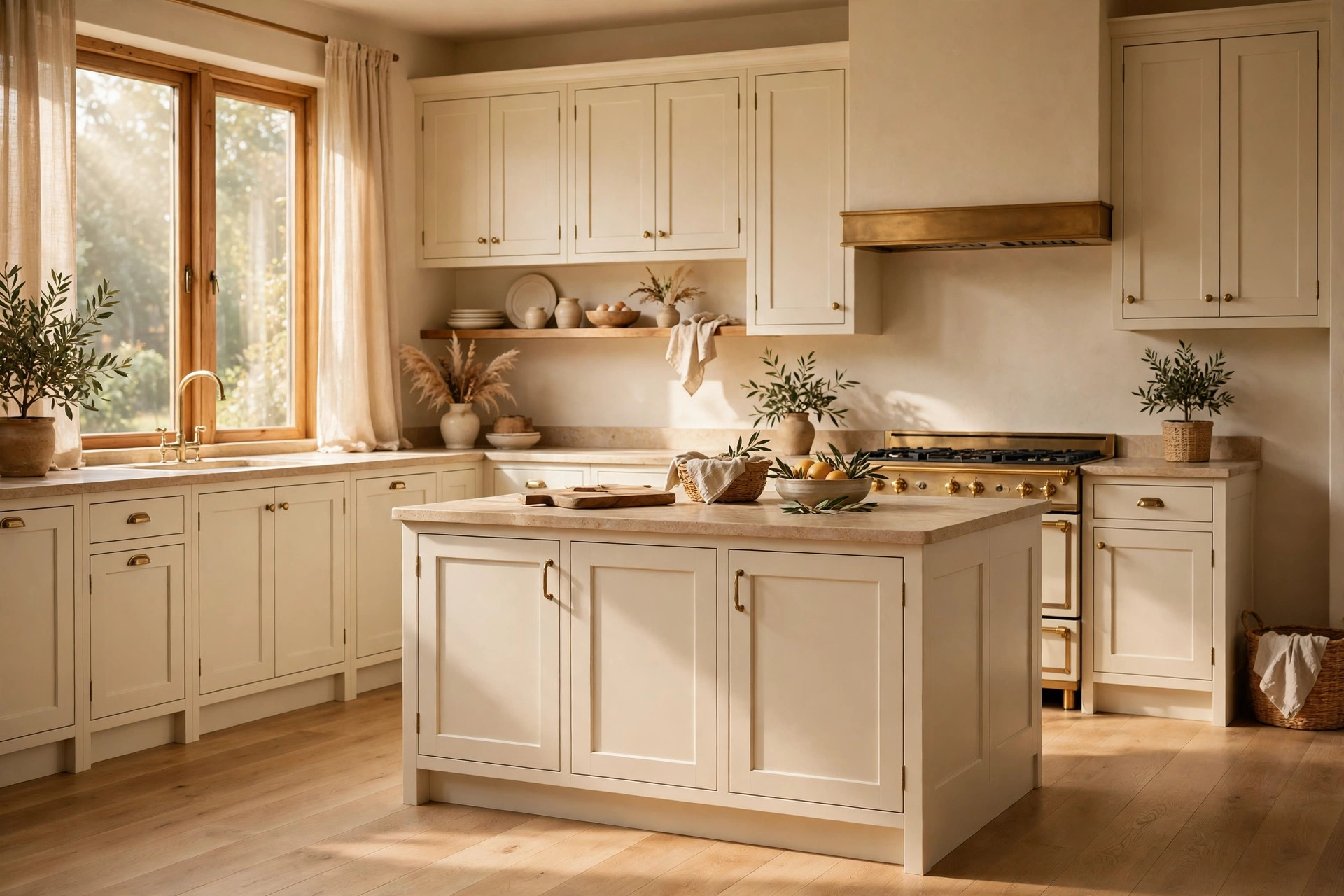
Start with a creamy white instead of a bright white. A creamy white has a gentle yellow or beige undertone, and that tiny bit of warmth makes a huge difference on a cloudy morning. It still reads as white, but it never feels icy, especially in cool north facing light. It is a small shift on the swatch, but across a whole wall of cabinets it is the shift that matters.
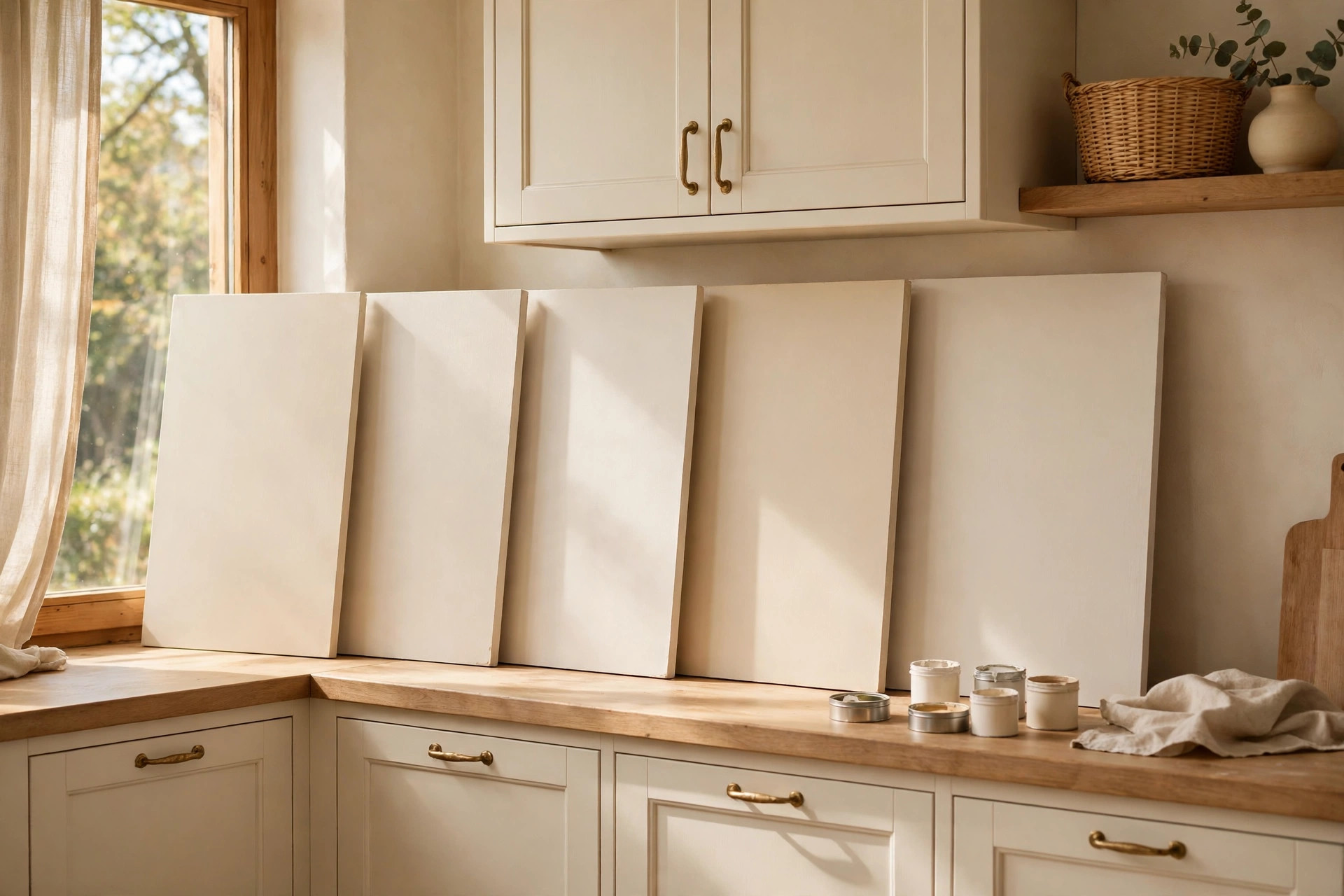
Test your white in the room, not in the store. Paint a large swatch on a board and live with it for a day or two, because white changes more than almost any other color. Check it in the morning and again under evening lights, since what looks pretty at noon can look a little gray by dinner.
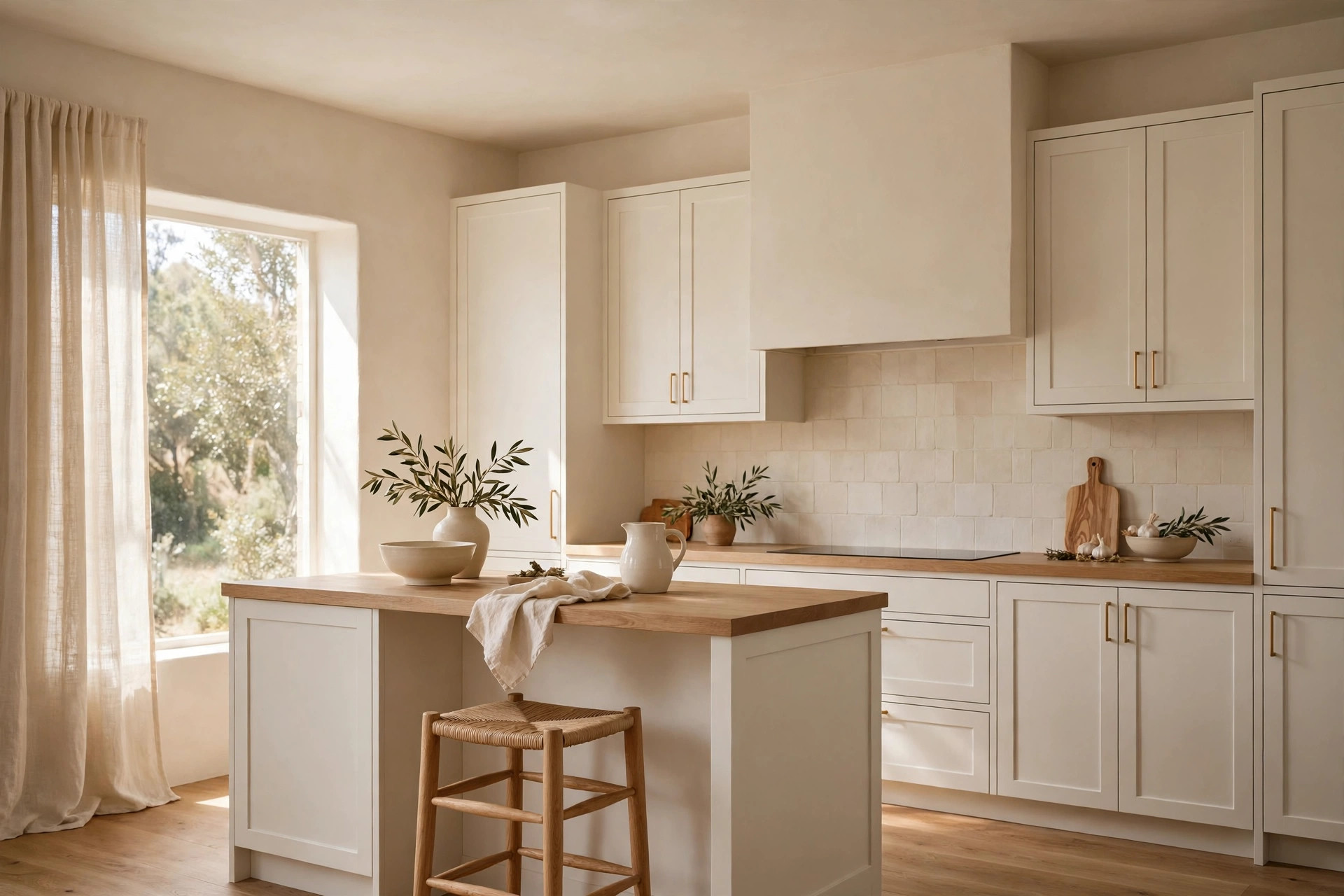
Layer two or three warm whites instead of matching everything exactly. Try a slightly deeper white on the walls, a cleaner warm white on the cabinets, and a softer tone on the ceiling. The differences are subtle, but they stop the room from feeling flat and give your eye gentle contrast to rest on. Friends may not spot the difference right away, but they will feel how calm the room is.
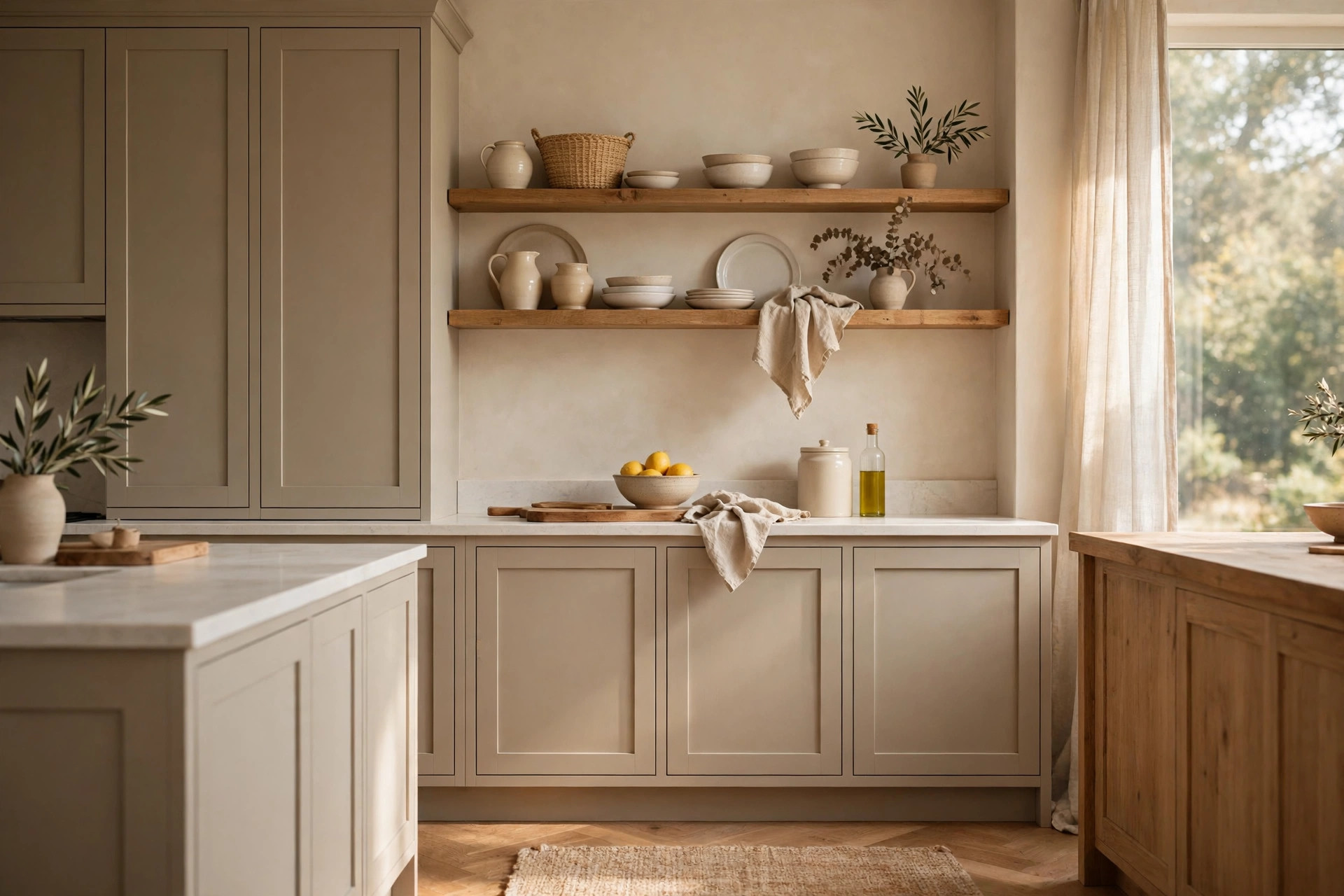
Bring in a warm greige if pure white still feels too much. Greige sits between gray and beige, and in a kitchen it usually feels calm, grounded, and very forgiving. It pairs beautifully with white counters and wood, and it hides everyday splashes a little better too.
Wood Islands and Open Shelves
Wood is often the fastest way to warm up a white kitchen, and you do not need very much of it. An island or a few shelves can shift the whole mood.
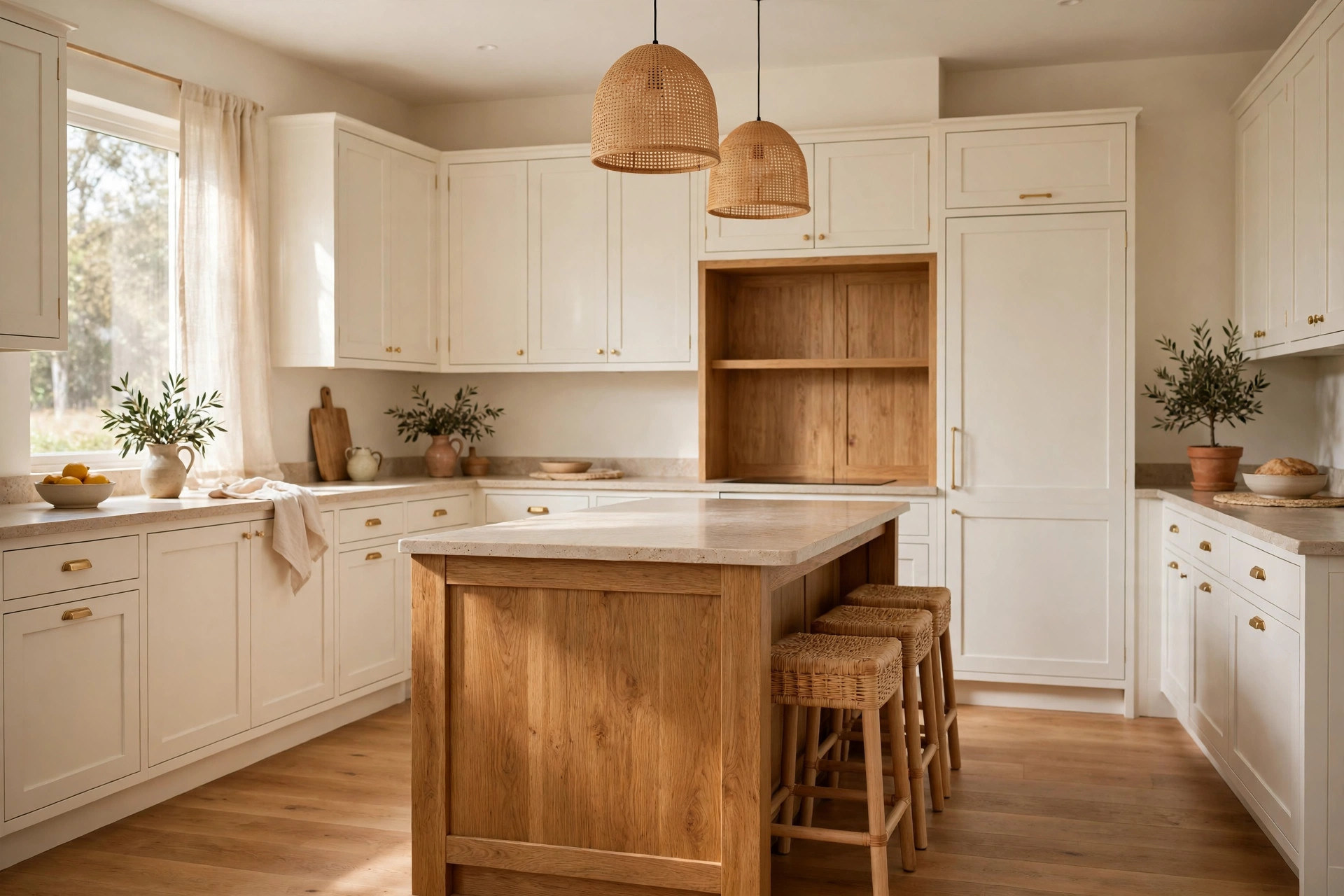
Make the island wood and keep the perimeter cabinets white. This gives the room a clear focal point, and the island starts to feel like furniture rather than another big white box. The grain itself adds pattern, so you do not need much extra decor around it. It is also a nice place to gather, because wood simply feels warmer to lean on than stone.
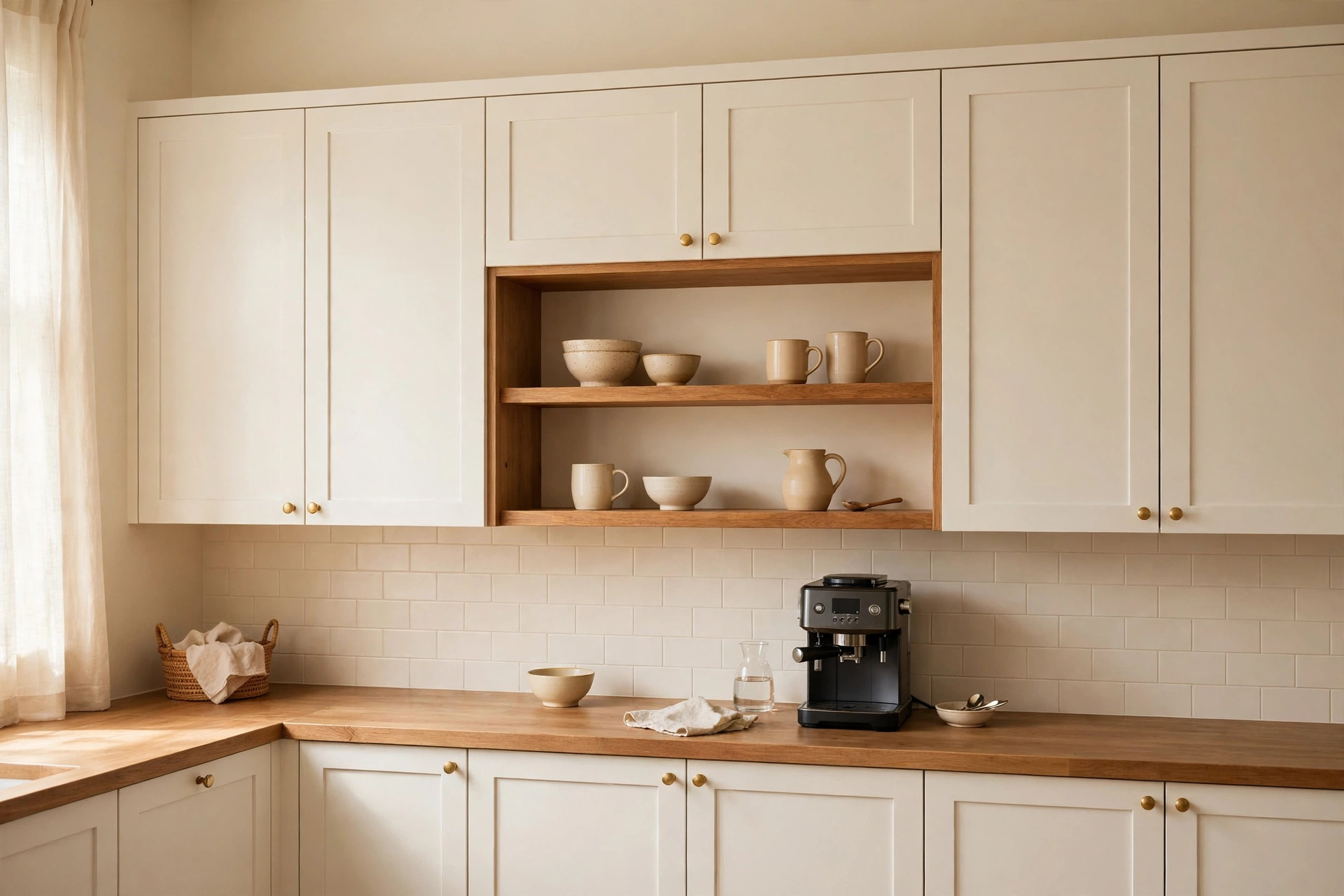
Swap a few upper cabinets for open wood shelves. Open shelves break up a long run of white doors and give you a place for bowls and ceramics you actually use every day. Keep the styling simple and leave breathing room, because crowded shelves can feel messy very quickly. Start near the coffee area if you are unsure, and you will know within a week if you love it.
Breaking Up the White
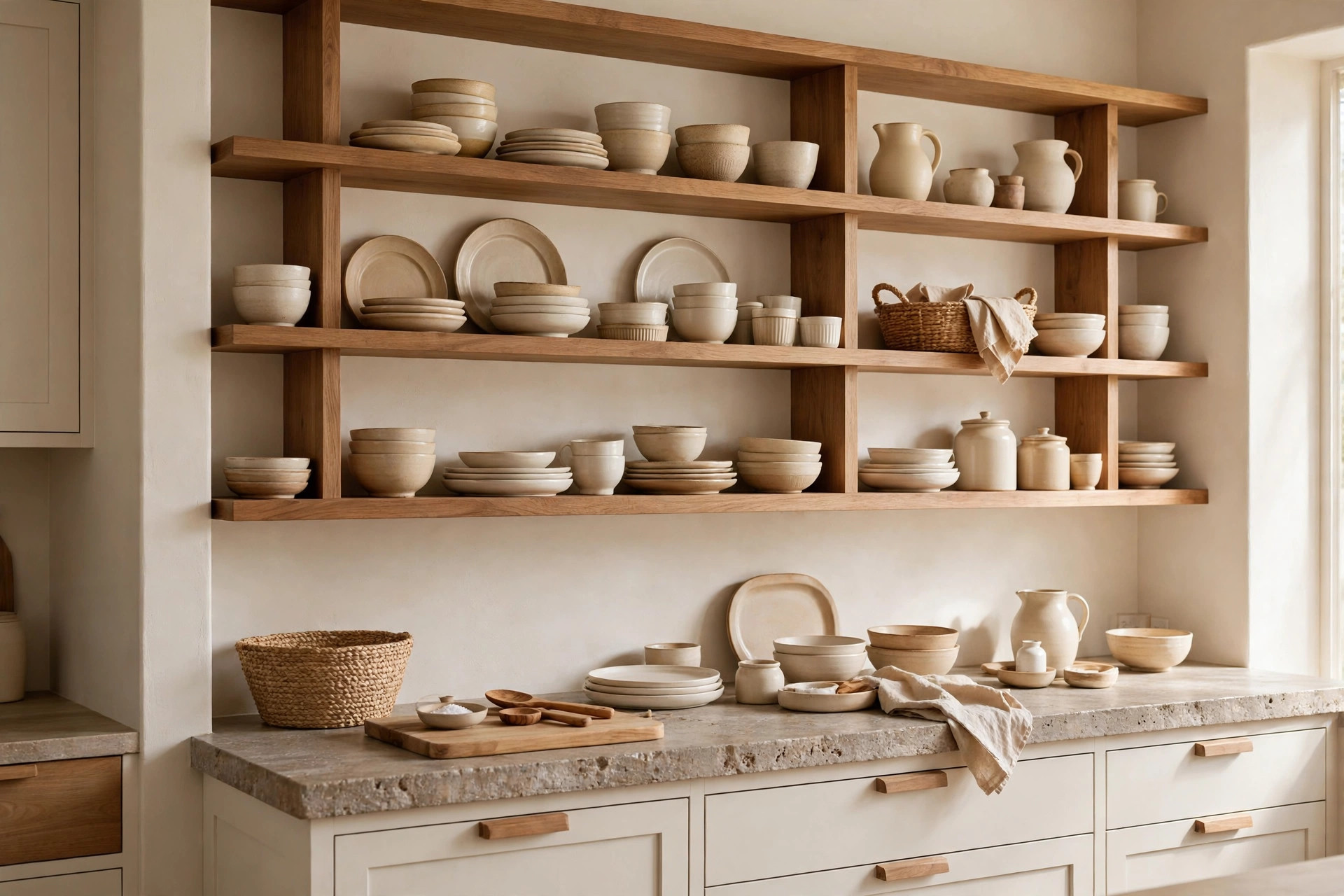
Mix closed cabinets below with open storage above. Closed lowers hide the less pretty essentials, while open uppers keep the room feeling light and personal. That balance is typically why this look works in real homes and not just in photos.
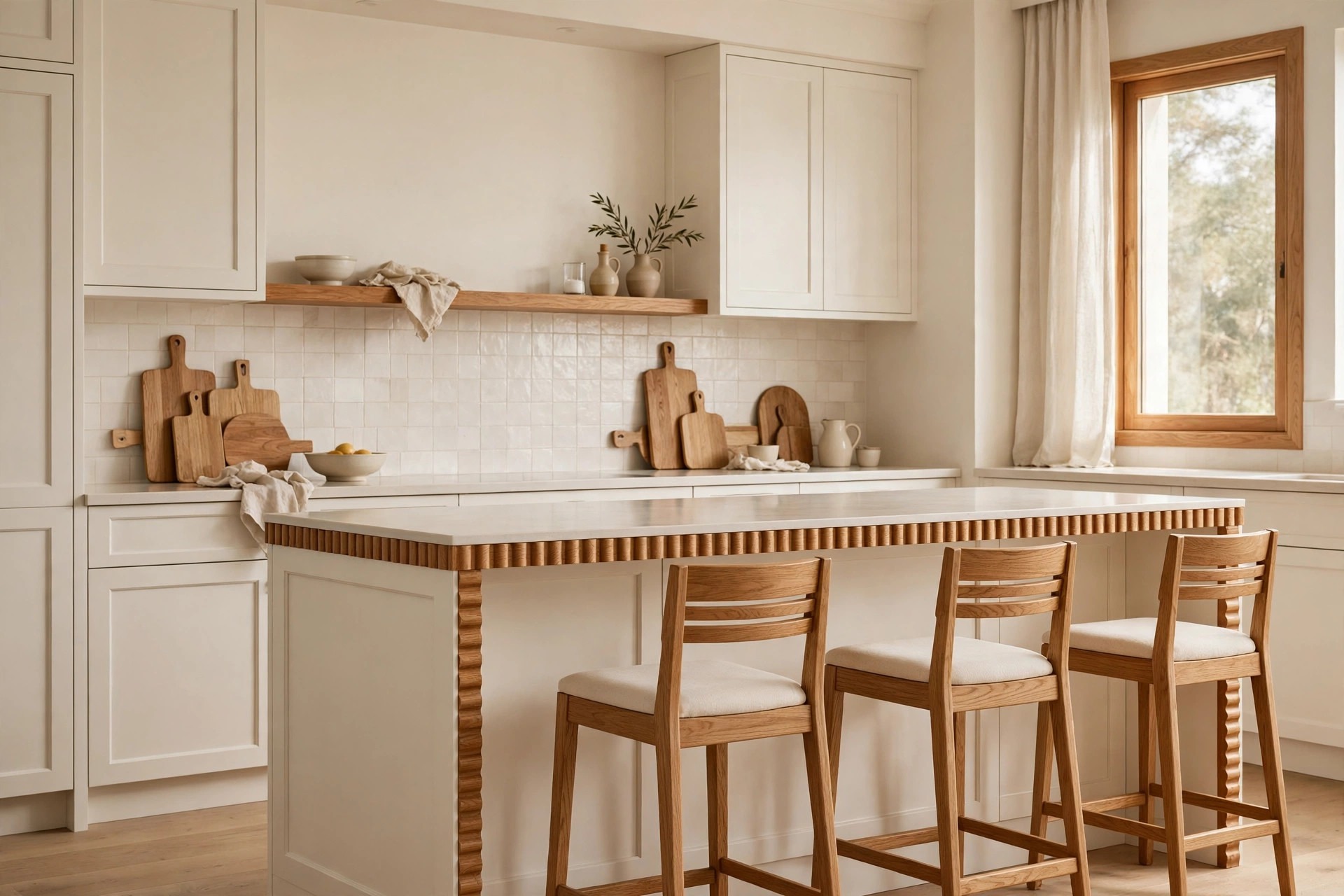
Add wood in small repeats so it feels intentional. A wood island looks even better when the same tone shows up again in a shelf, a cutting board, or your stool frames. You do not need an exact match, and a near match often looks more relaxed.
Stone with Movement
A plain white counter can leave a kitchen feeling one note, so stone with veining or gentle color variation is a lovely counterbalance. It adds movement without adding clutter.
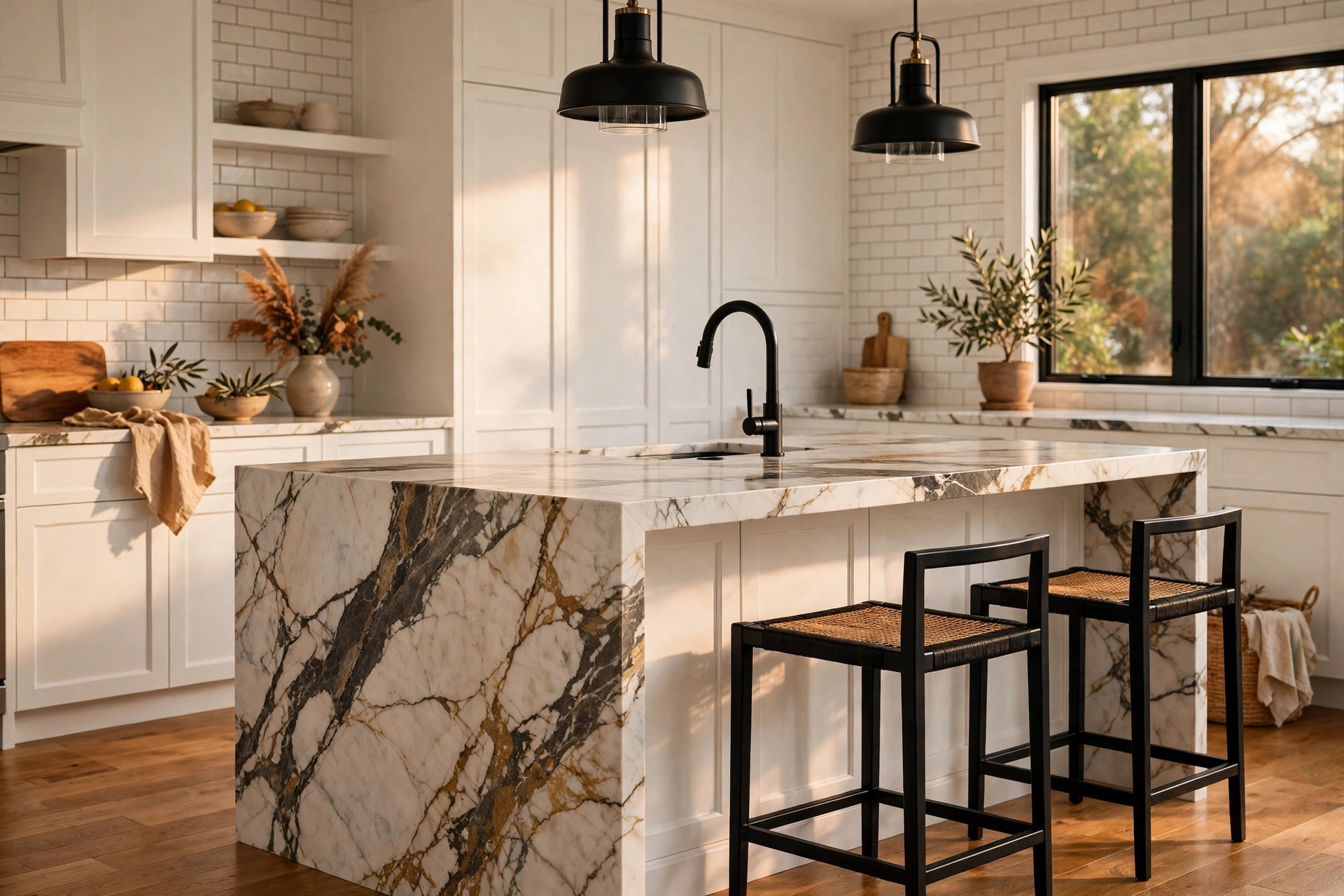
Choose a marble look stone with warm veining. Veins in soft gold, taupe, or warm gray give a white island life and connect white cabinets to brass or wood nearby. The pattern also does you a quiet favor, because crumbs and water spots are much less obvious on it.
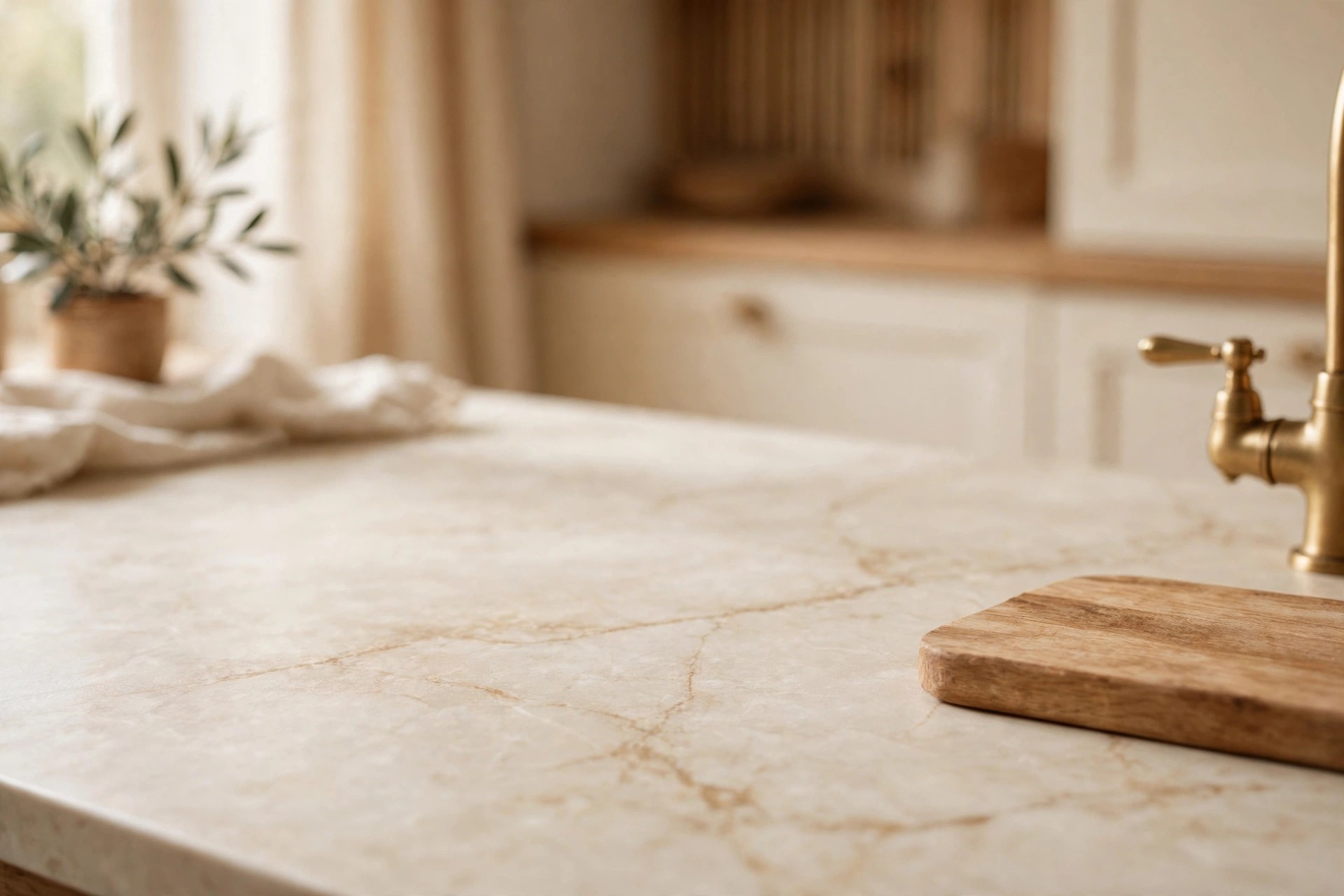
Try a honed finish if shiny stone feels too formal. Honed stone has a soft, low sheen surface that feels more relaxed and a little more lived in. Fingerprints and reflections also tend to show less, which makes the kitchen feel calmer through a busy day. It pairs especially well with natural wood and soft brass, which both soften with time too.
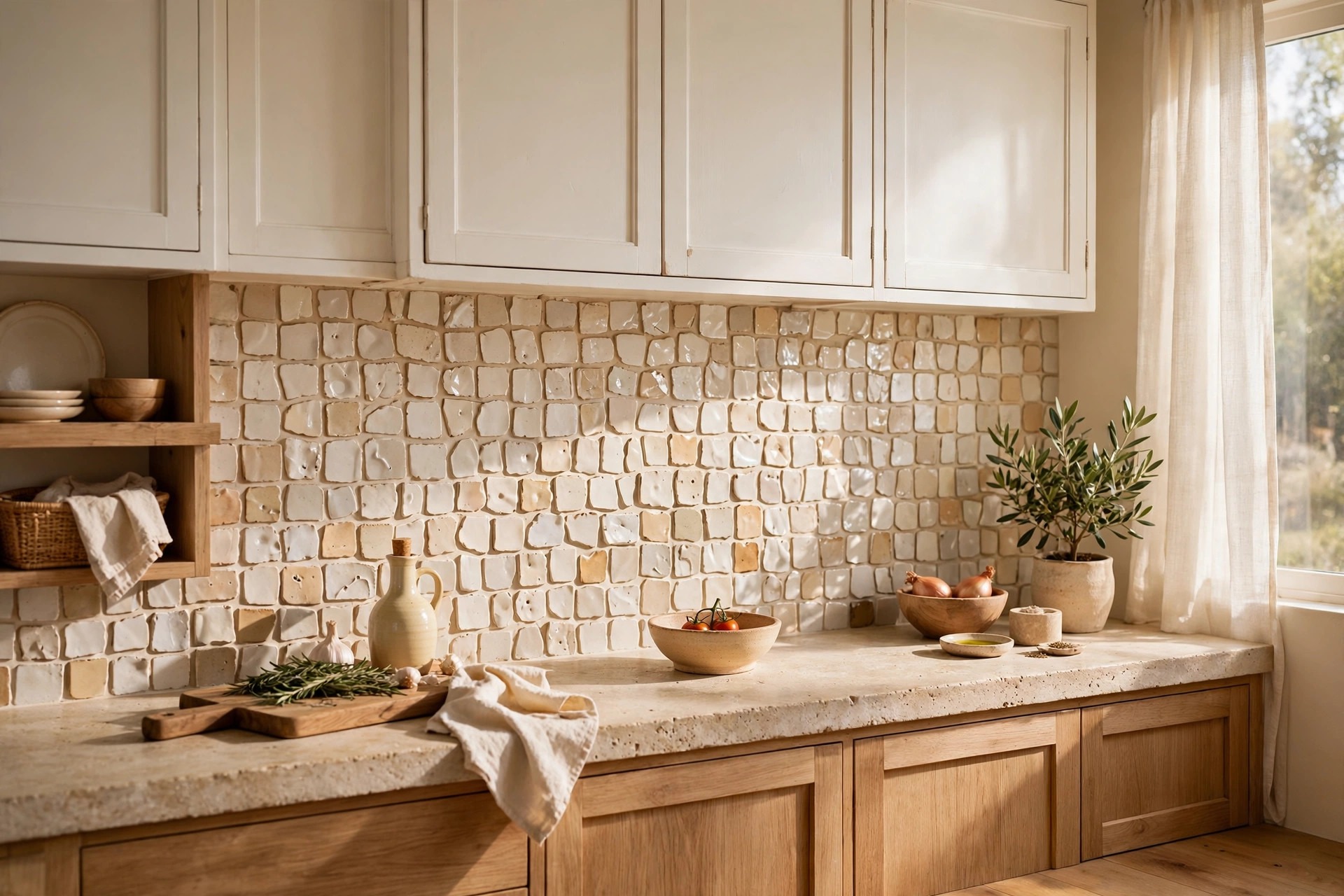
Let the backsplash carry a little texture. A handmade look tile or a stone slab with gentle variation can warm up the wall between your counters and cabinets. In changing daylight those small irregularities cast tiny shadows, and that is often all the texture a white scheme needs.
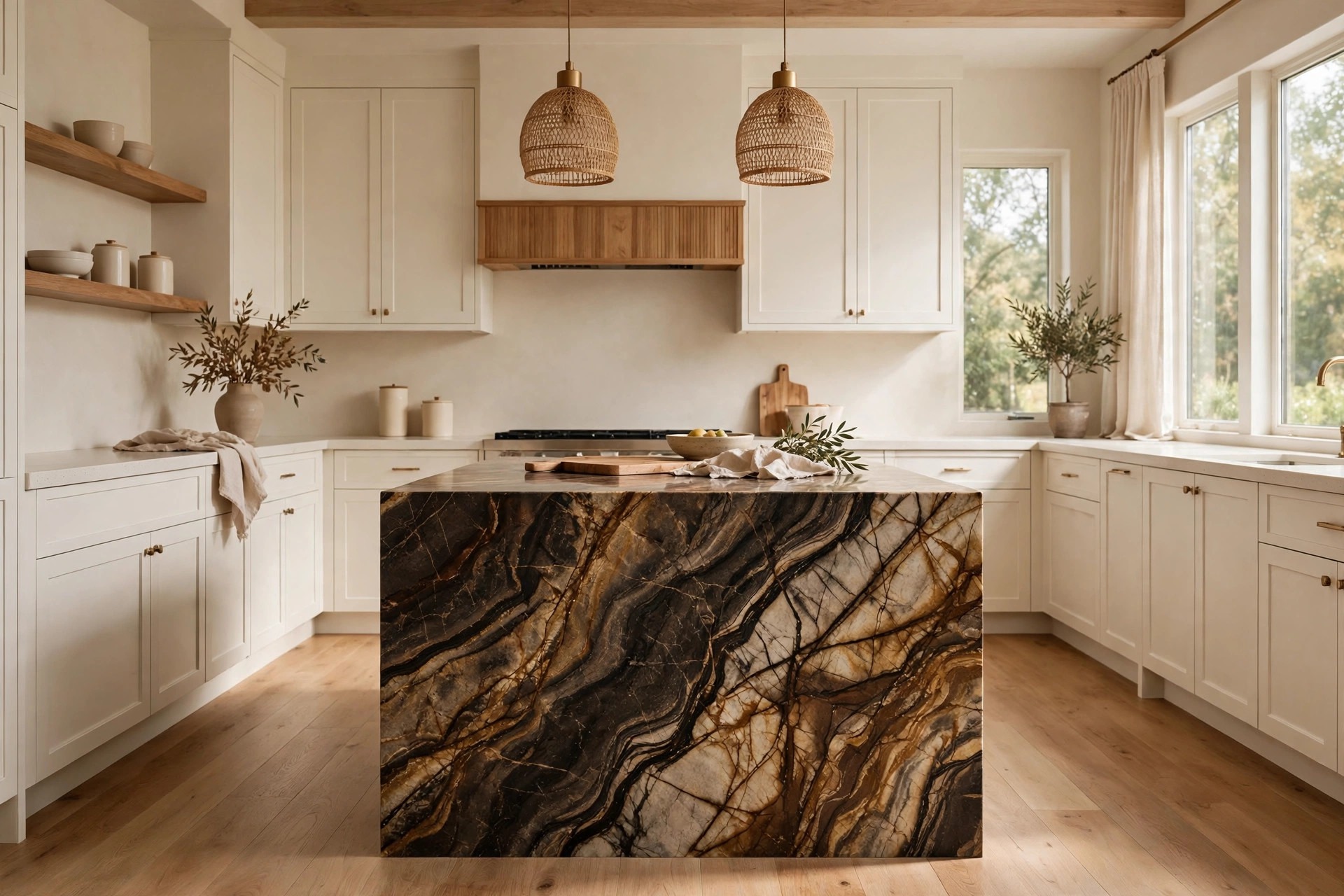
Use stone on the island and something simpler on the perimeter. Making the island the star lets you enjoy a dramatic slab where everyone gathers, while quieter counters keep visual noise in check. The contrast usually makes both materials look better than they would on their own.
Black Accents for Definition
White kitchens sometimes drift because nothing defines the edges. A little black, used in small and deliberate doses, gives the room shape without taking away its softness.
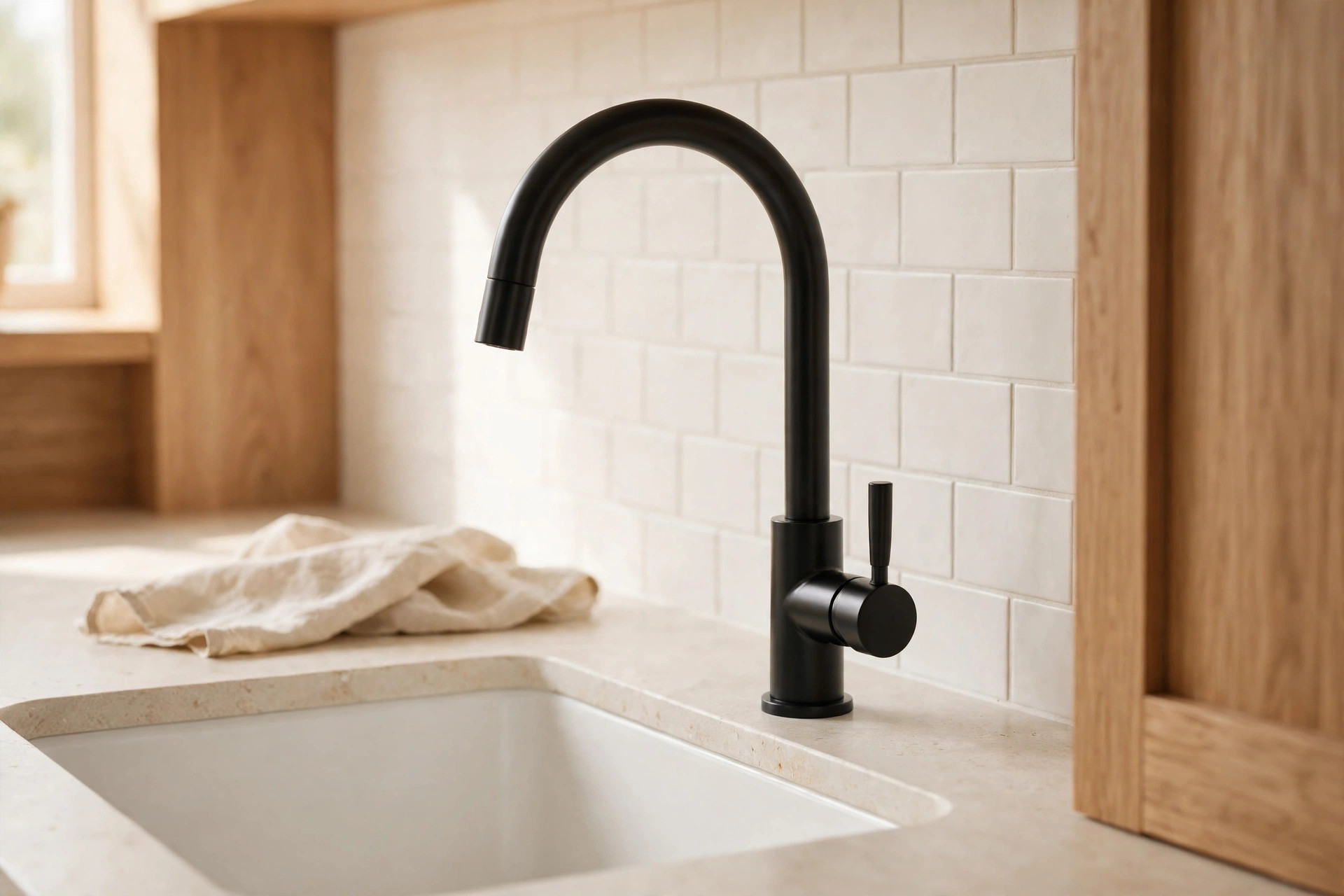
Add a black faucet for one confident line at the sink. It is a small change, but a black faucet reads clearly against white counters and instantly makes the sink area look finished. It also repeats well, because you can echo it later in a handle or a light fitting.
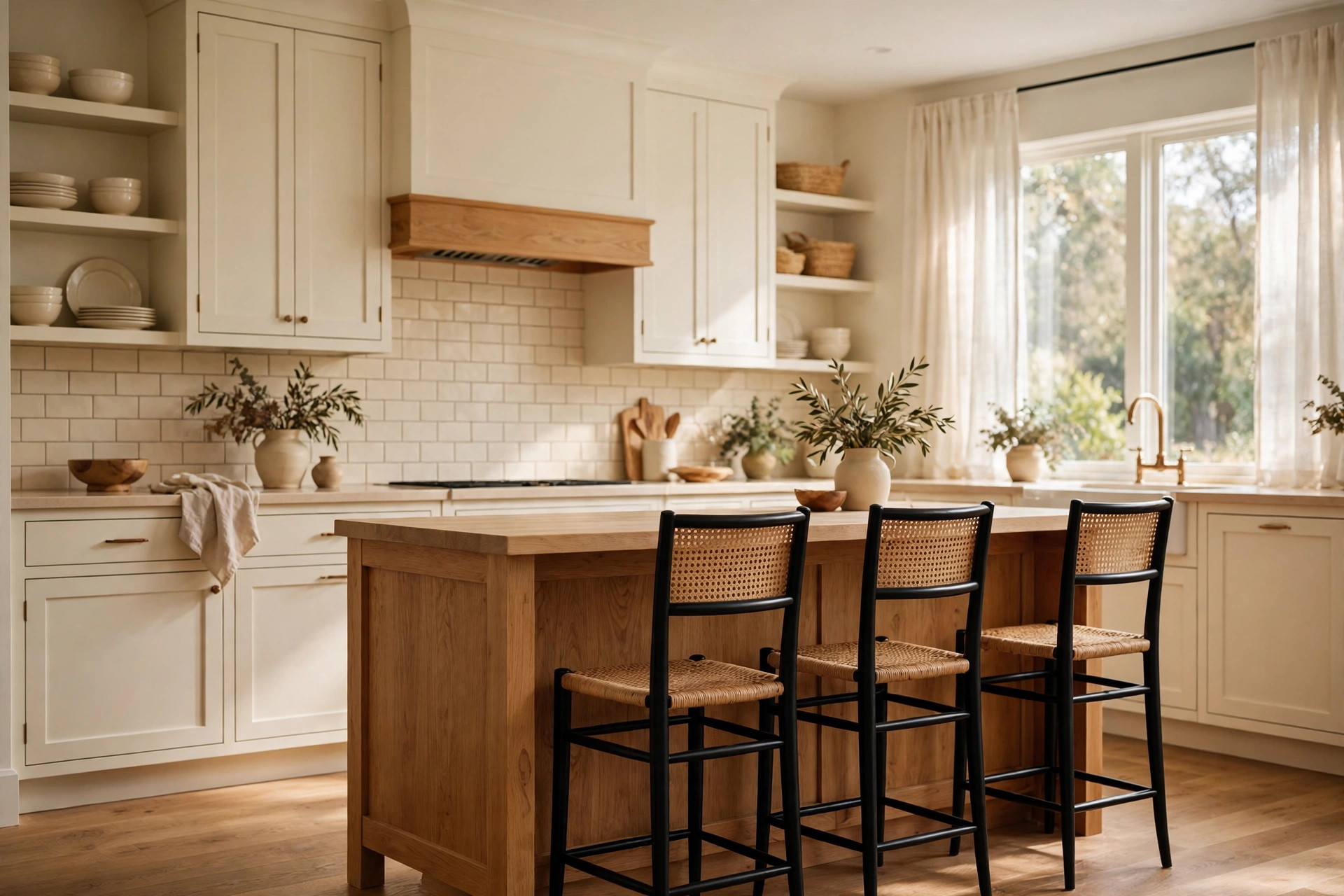
Frame the seating with black stools or chairs. Black framed stools tucked under a wood or stone island give the kitchen a grounded base, and they are wonderfully practical around spills. Choose a softer seat in wood, cane, or upholstery so the dark frame does not feel hard.
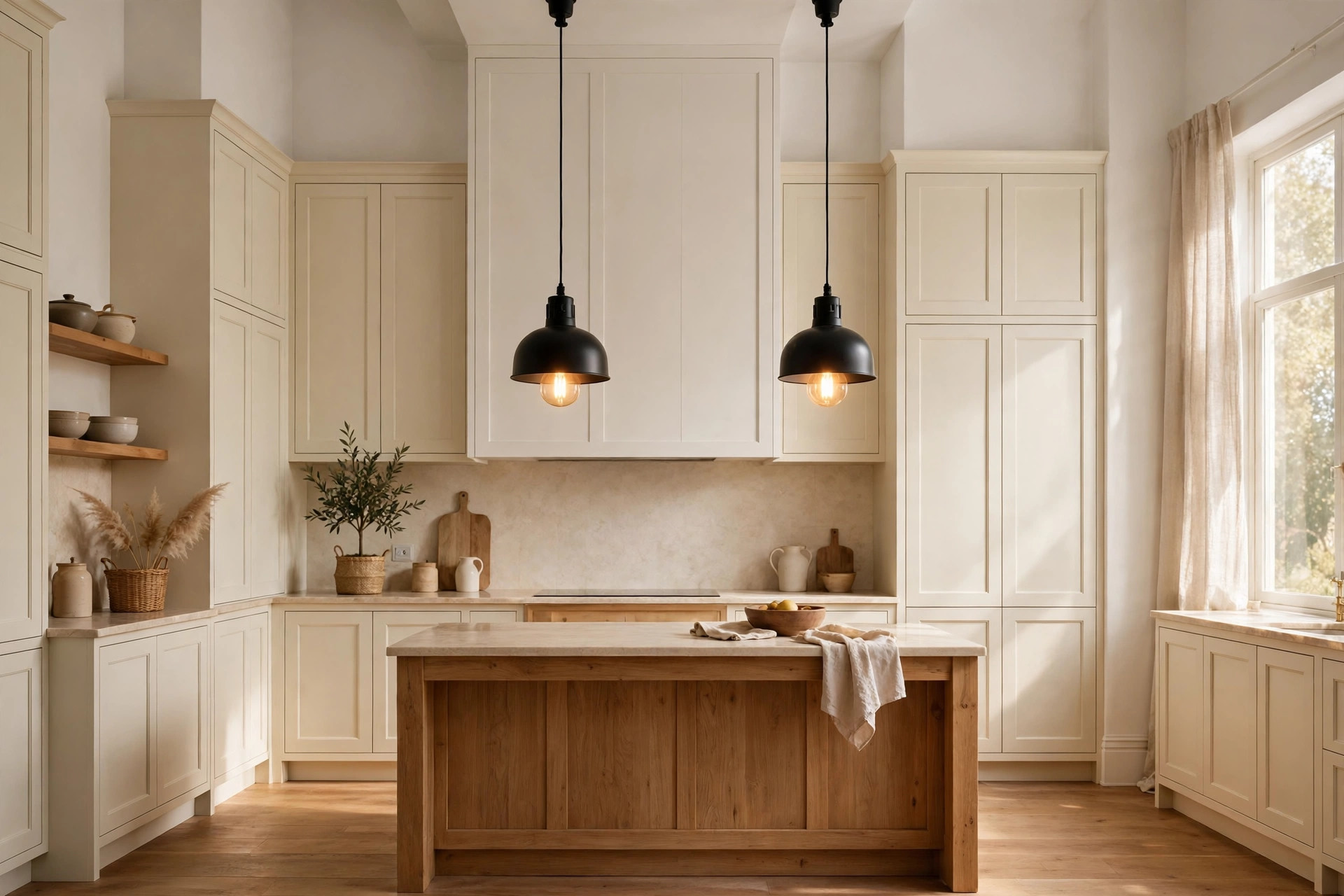
Use black lighting to draw the eye upward. A pair of black pendants over the island gives a tall white room some punctuation without adding color. Keep the bulbs warm so the light stays cozy, because a cool bulb can undo all your warm paint work in one switch.
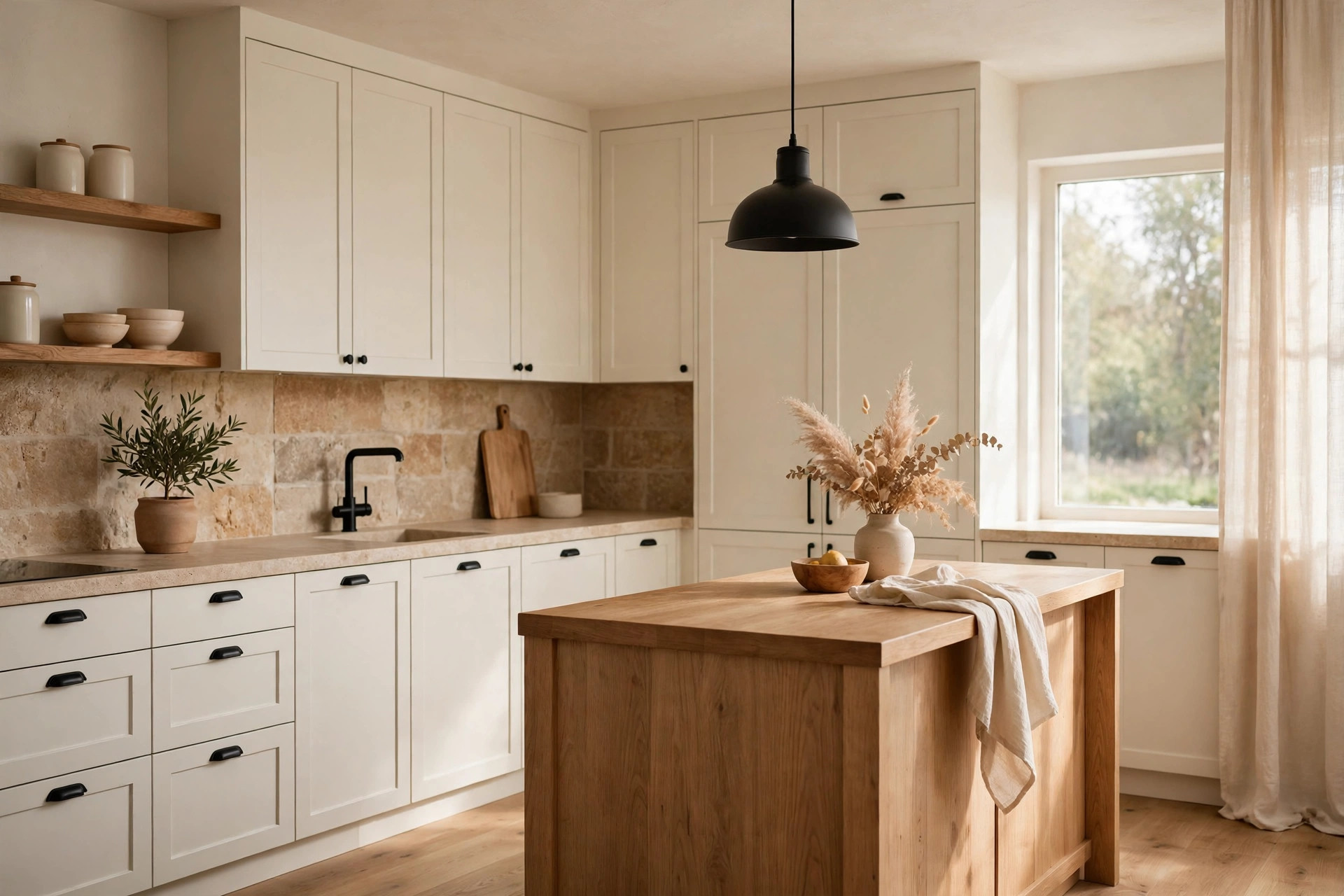
Keep black accents matte and limited. Matte black feels softer than glossy black, and it sits more comfortably beside cream, wood, and stone. Try a small handful of touches rather than scattering black everywhere, because restraint is usually what makes each piece count.
Cozy Lighting and Textiles
This is the layer people often leave until last, and it is usually the layer that makes a white kitchen feel like home. Light and fabric soften every hard surface in the room.
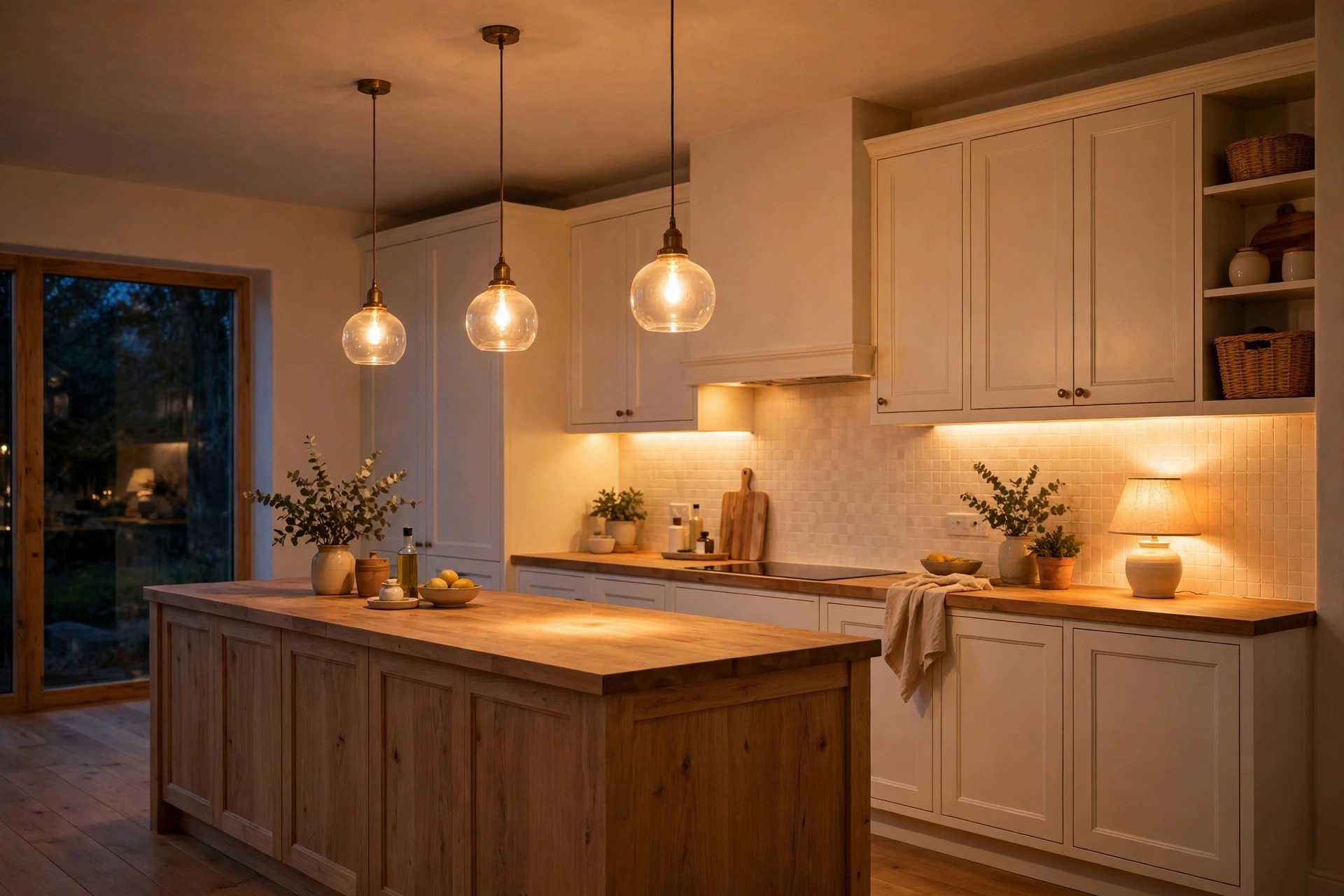
Layer warm lighting at different heights. Pendants over the island, a small counter lamp, and soft light under the cabinets together feel far cozier than one bright ceiling light. Warm bulbs typically flatter creamy paint and wood the most, especially on dimmers in the evening. That mix is what turns a working kitchen into a room you actually want to sit in after dinner.
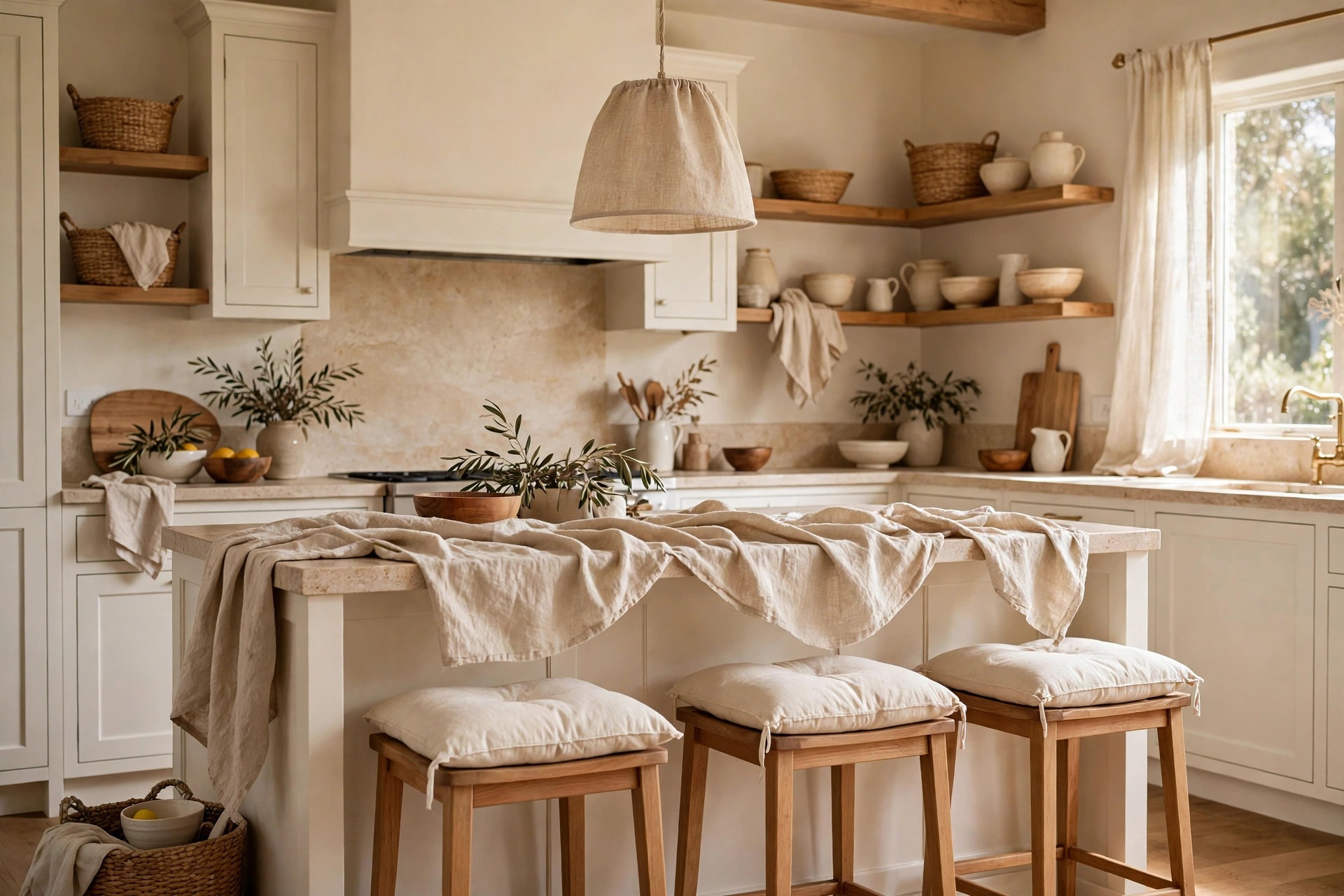
Bring in linen and cotton wherever the room feels hard. A linen runner, soft seat cushions, or a simple cotton shade can take the edge off stone and cabinetry in seconds. Natural fabrics add that slightly relaxed texture a too perfect kitchen often lacks. Washable covers help here, because a cozy kitchen should never feel too precious to actually use.
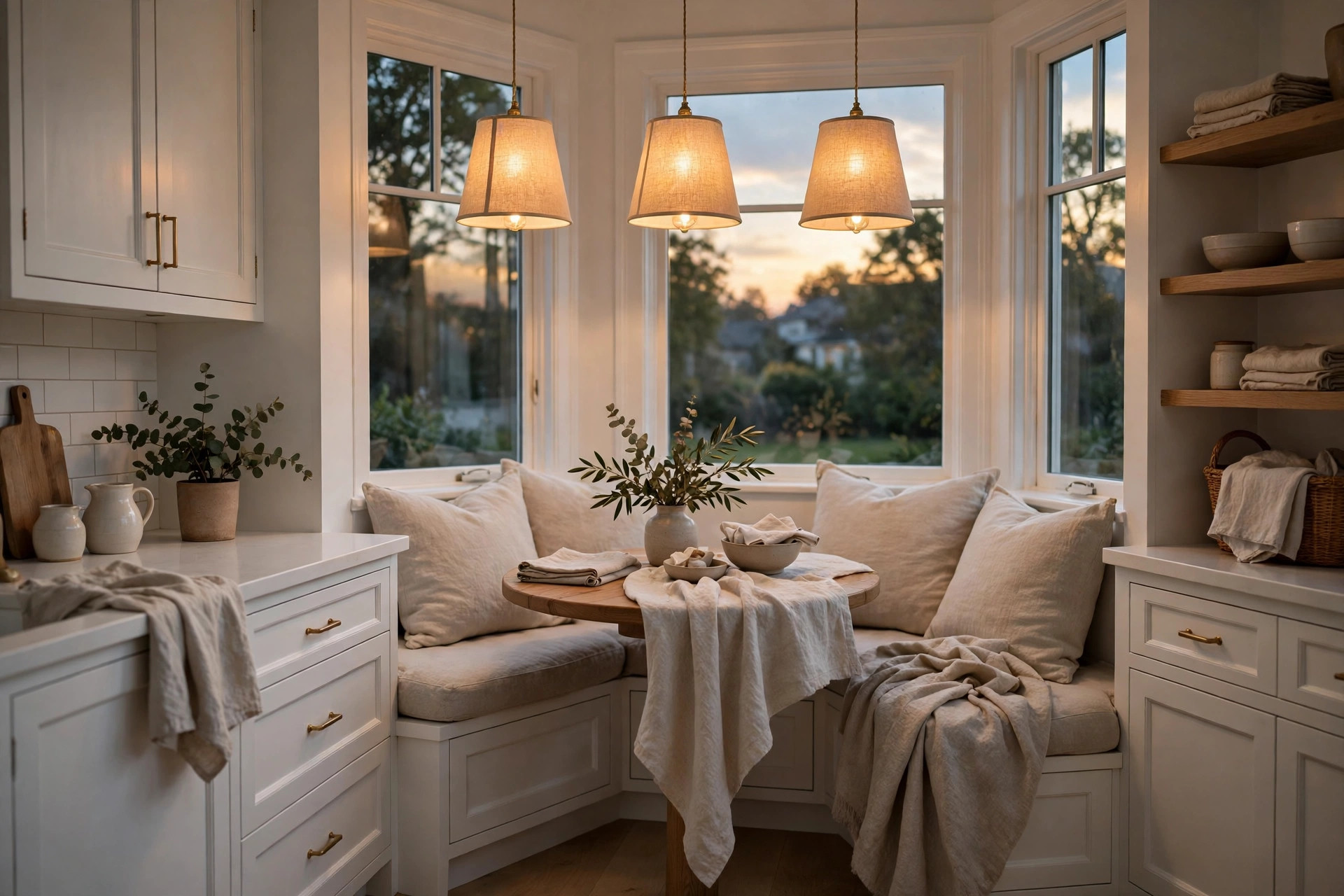
Create one small soft corner, even if it is tiny. A breakfast nook with a bench cushion or a chair with a throw near a window gives the kitchen a place to pause. You do not need much space for this, just one spot that is clearly meant for lingering.
Keeping a White Kitchen Clean-Looking
A warm white kitchen does not need to be spotless to look good, and that is honestly part of its charm. A few simple habits keep it feeling fresh without constant cleaning.
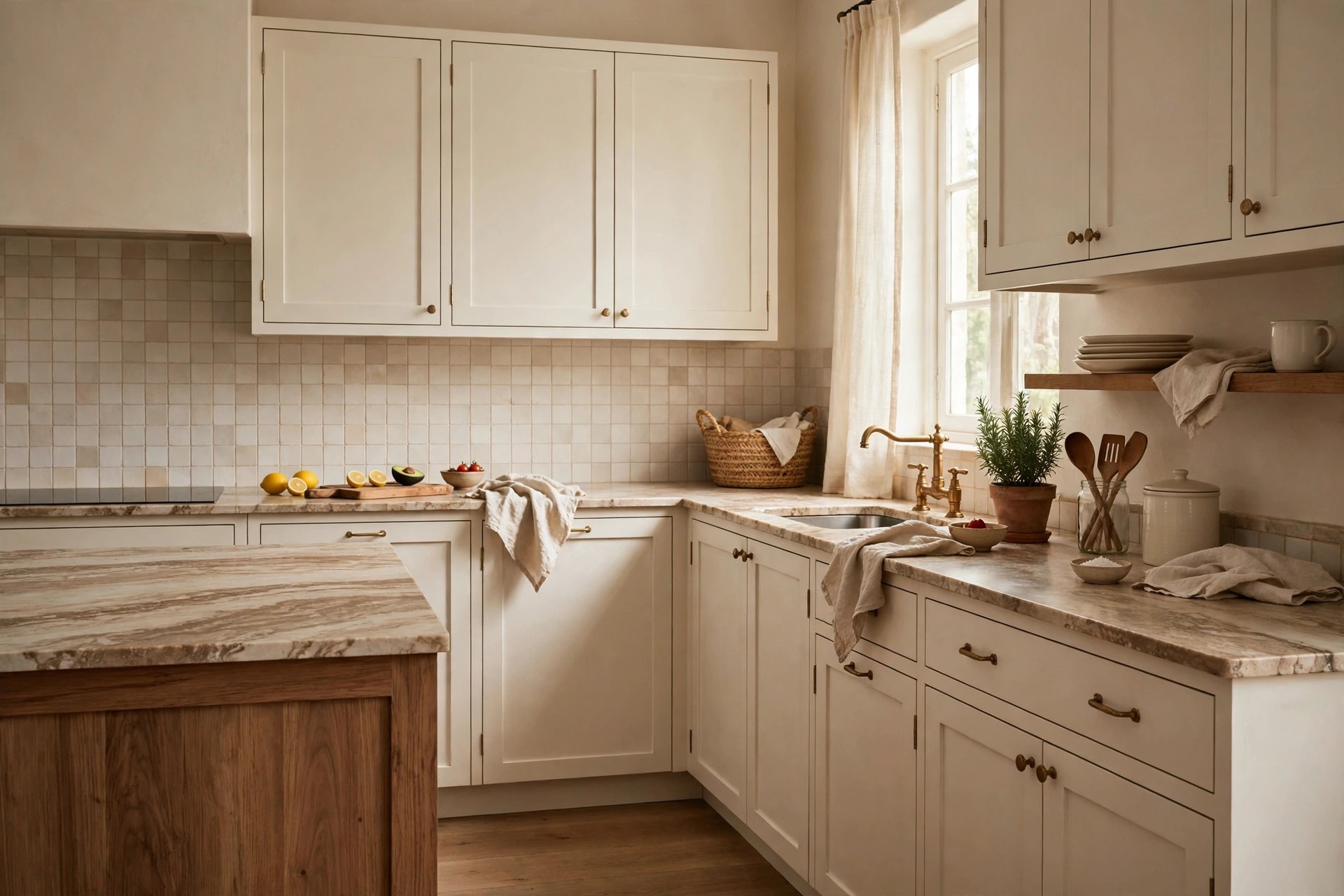
Choose finishes that forgive everyday life. Matte or satin cabinet paint, a moving stone pattern, and mid tone wood all hide smudges better than glossy pure white everywhere. That means the room still looks good on a normal Tuesday, not just after a deep clean. Think of it as choosing for real life first, and for photos second.
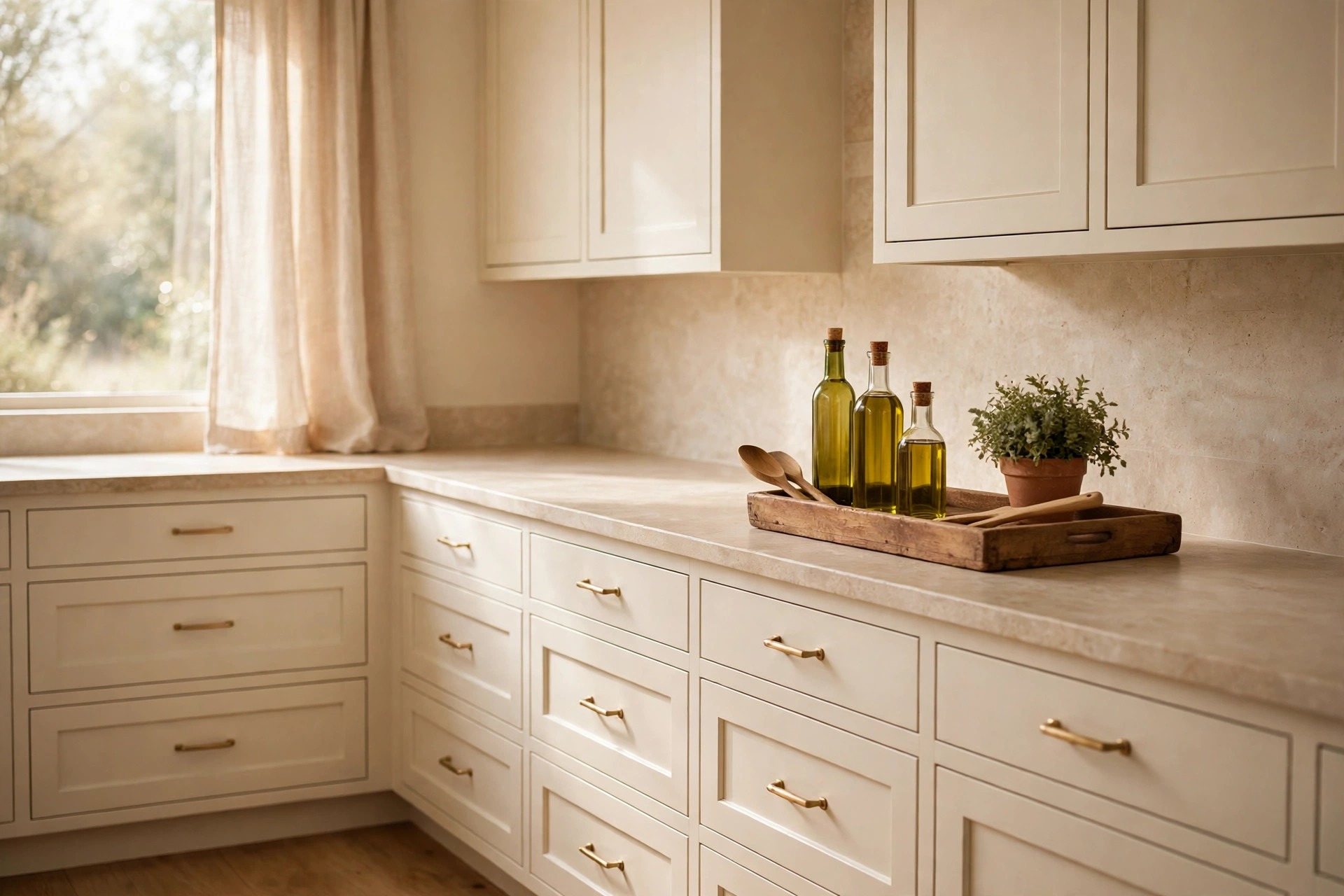
Keep counters mostly clear and give everything a home. White kitchens show clutter quickly because the background is so light, so closed drawers and a tray or two really help. Corral oils, utensils, and mail into one defined spot and the rest will feel calm by comparison.
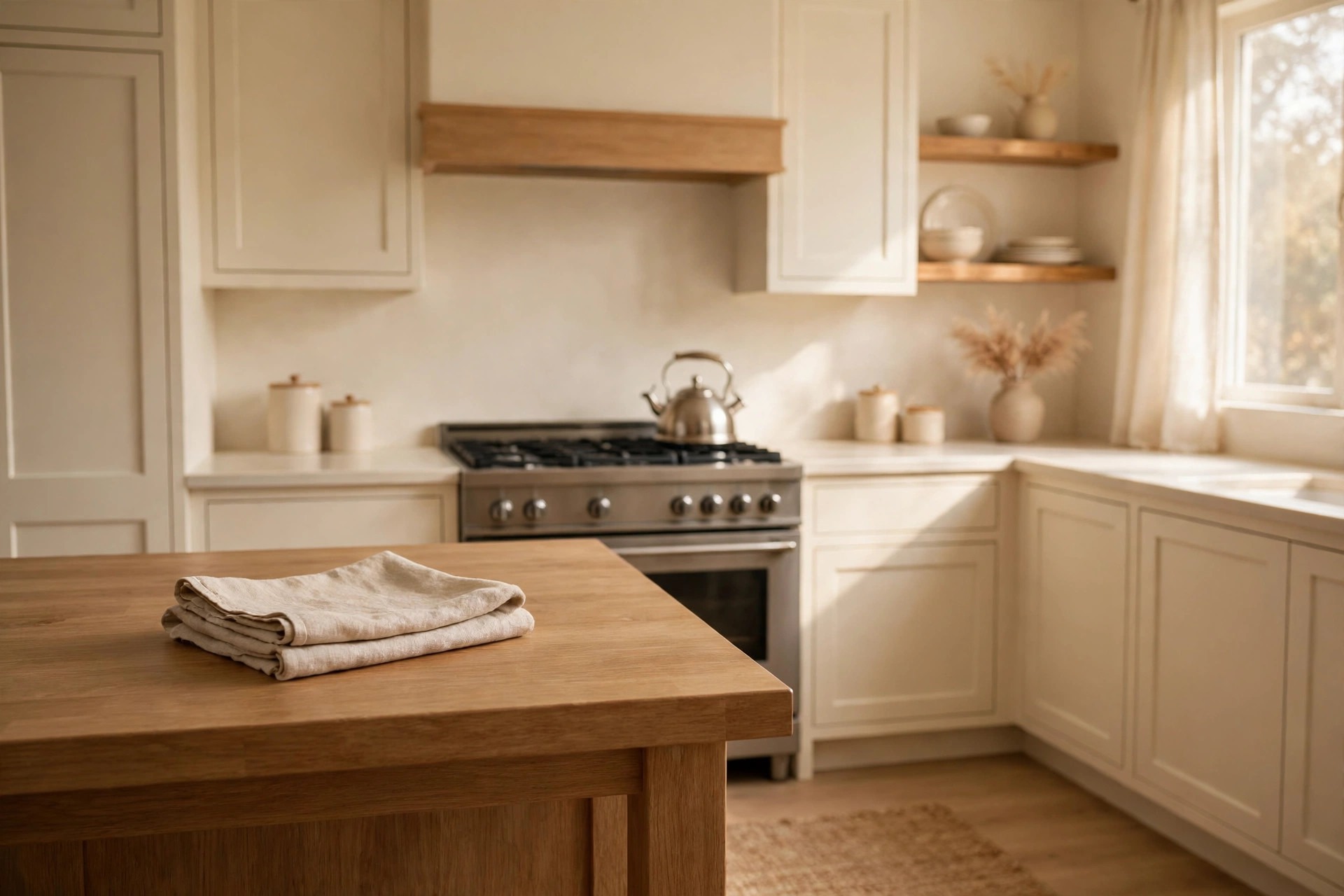
Do little resets often instead of big cleans rarely. A quick wipe of the island and putting five things away while the kettle boils is typically enough to keep things feeling cared for. Warm whites and varied textures help too, because they do not show every mark the way stark white does.
At the end of the day, a warm white kitchen is not really about the color white at all. It is about how the room feels at breakfast when the light is soft, or in the evening when dinner is on and someone is perched at the island. Start with a creamy base, add wood and stone with a little life in them, and finish with light and fabric you want to live with. You do not need to rush it either, because these layers can arrive one by one as your budget and energy allow. Do that, and your kitchen will feel bright in the way that matters most, like a room that is loved and used every day.

Leave a Reply