
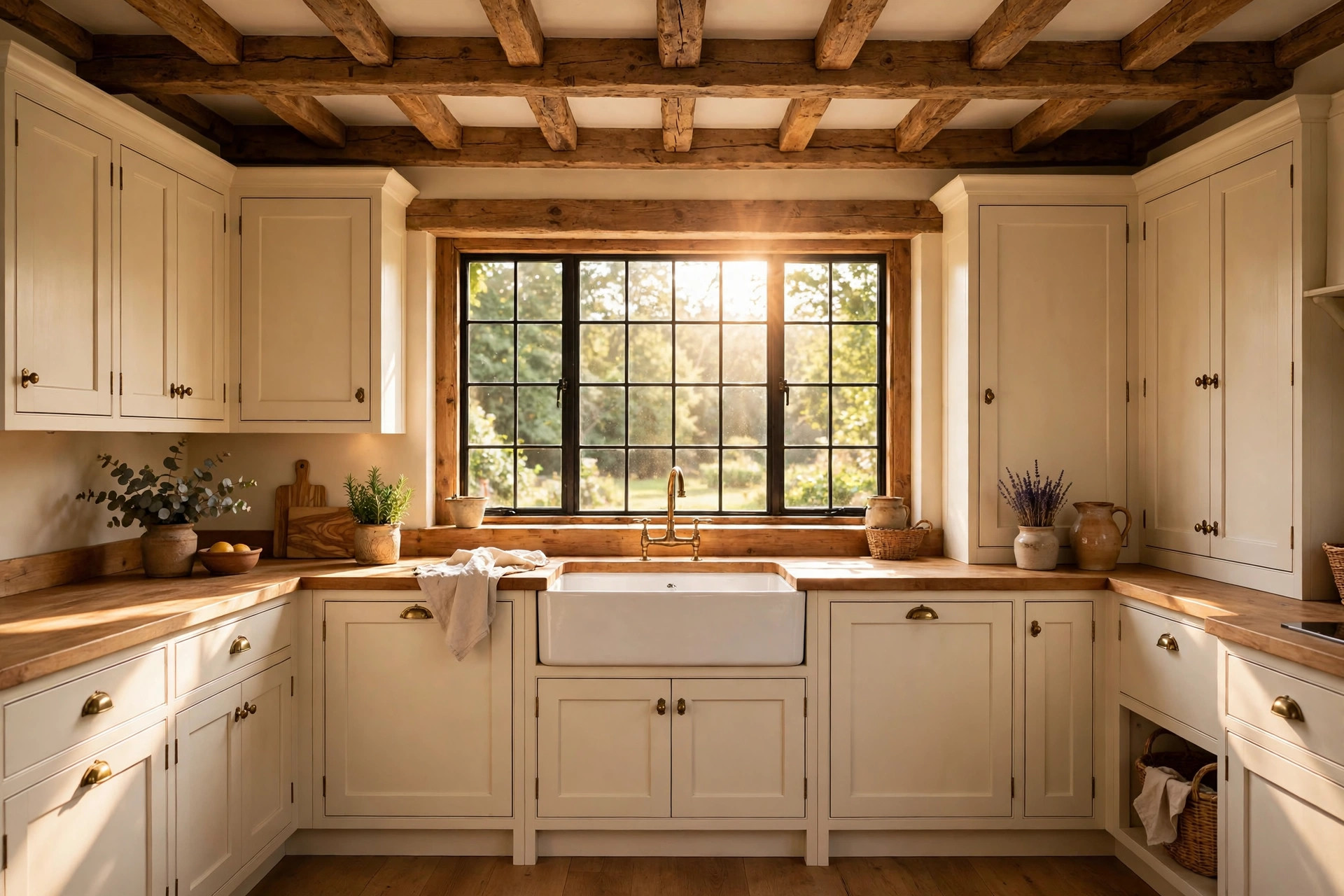
Look, we get it. You want a kitchen that feels warm and lived in, but you also want it to work hard on a busy Tuesday night. Farmhouse style usually gets that balance right, because it mixes sturdy, simple pieces with soft touches that make everyday cooking feel a little calmer.
The good news is that you don’t need a full remodel to get there. A deep sink, a few wooden boards, some woven texture, and honest, everyday crockery can change the whole mood of a room.
Below you’ll find eighteen ideas grouped by the parts of the kitchen they touch, from cabinets and lighting to linens and open shelves. We’ve also added a short section on what to skip, because modern comfort usually means knowing when to stop adding things.
Apron Sinks and Shaker Cabinets
These two classics usually do the heavy lifting in a farmhouse kitchen.
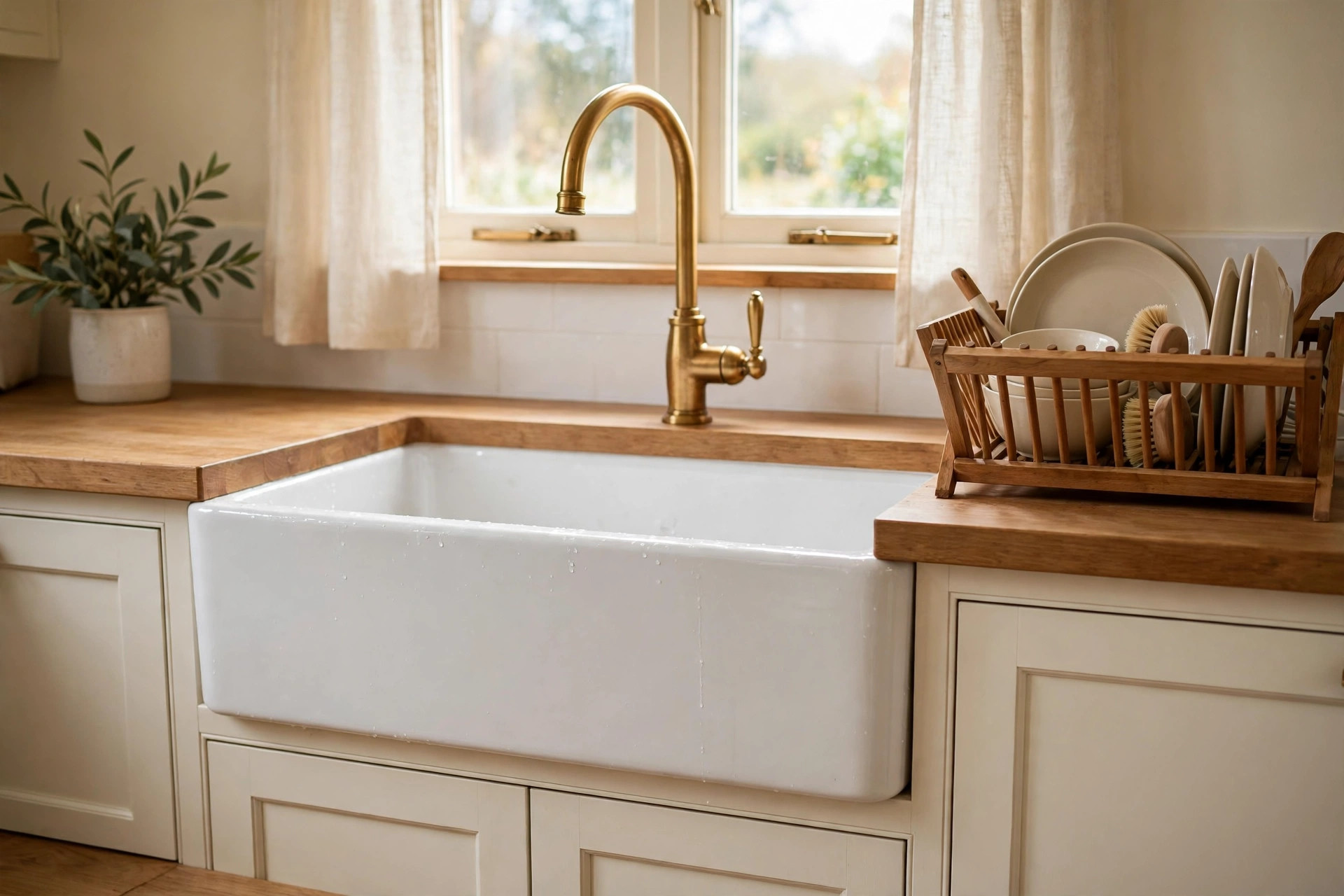
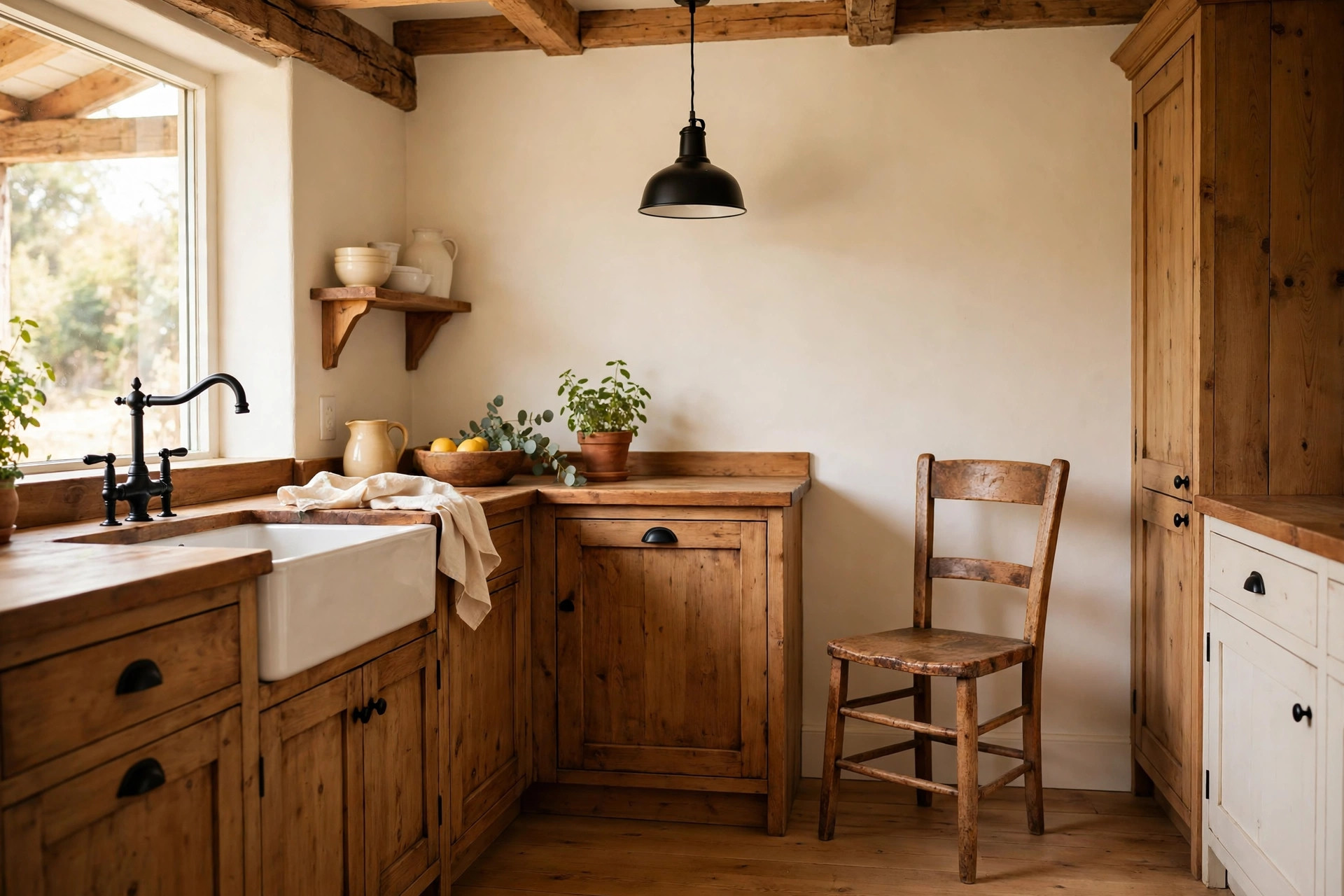
Start with a deep white apron sink. A front apron sink gives you room for big pots and baking trays, and the exposed front adds that sturdy farmhouse feel right away. It typically pairs well with a simple bridge style faucet or a tall gooseneck in a warm metal. If a full replacement isn’t in the plan, even a fresh bead of clean caulk and a wooden dish rack beside your current sink can hint at the same look.
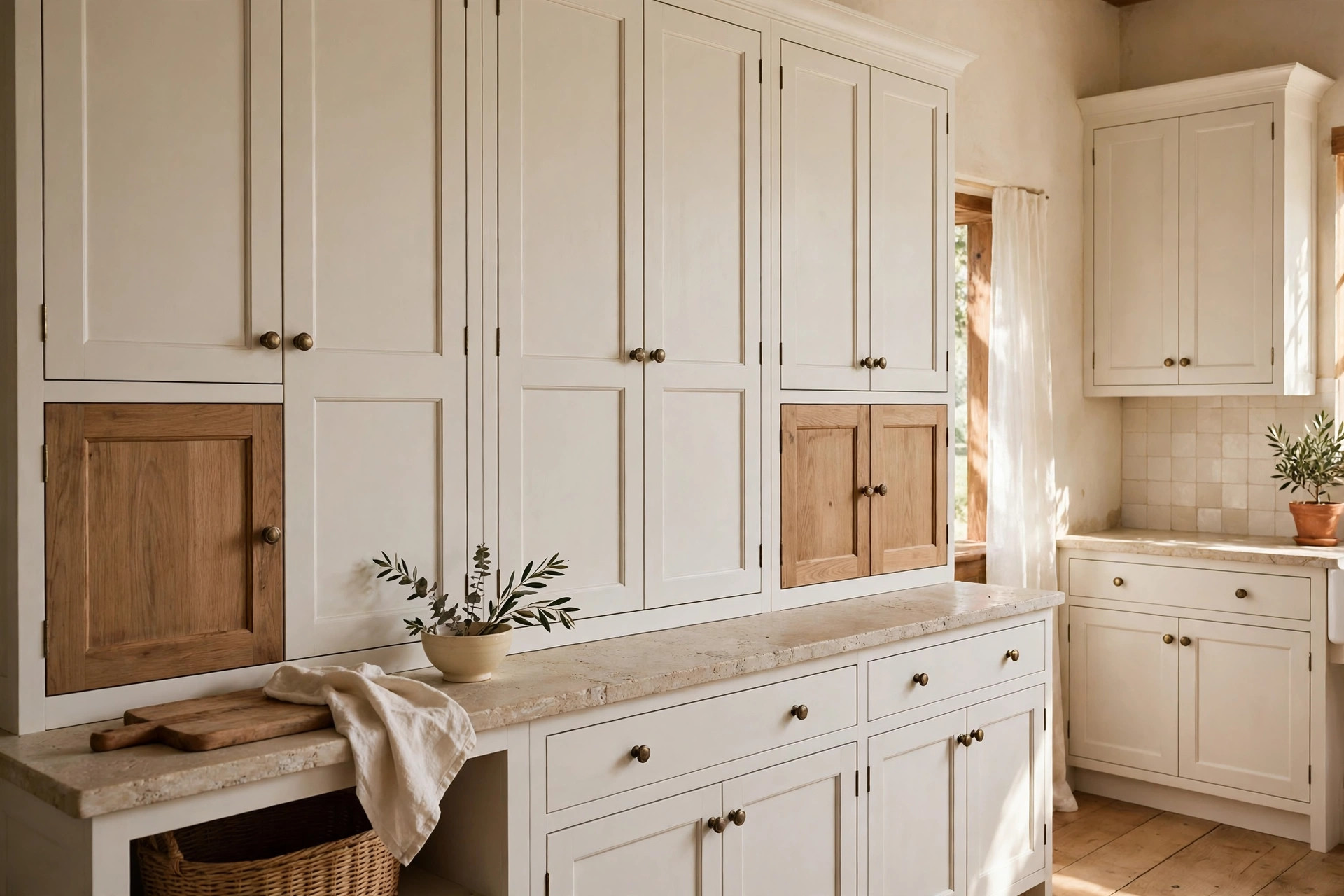
Choose shaker cabinets in a soft, warm white. Shaker doors have that simple framed panel that never really dates, and a creamy finish usually keeps the room feeling softer than a bright, stark white. You can paint what you have, since shaker style is more about the clean shape than about brand new cabinetry. Leave a few doors in a natural wood tone if you can, because that mix typically keeps the room from feeling too matched.
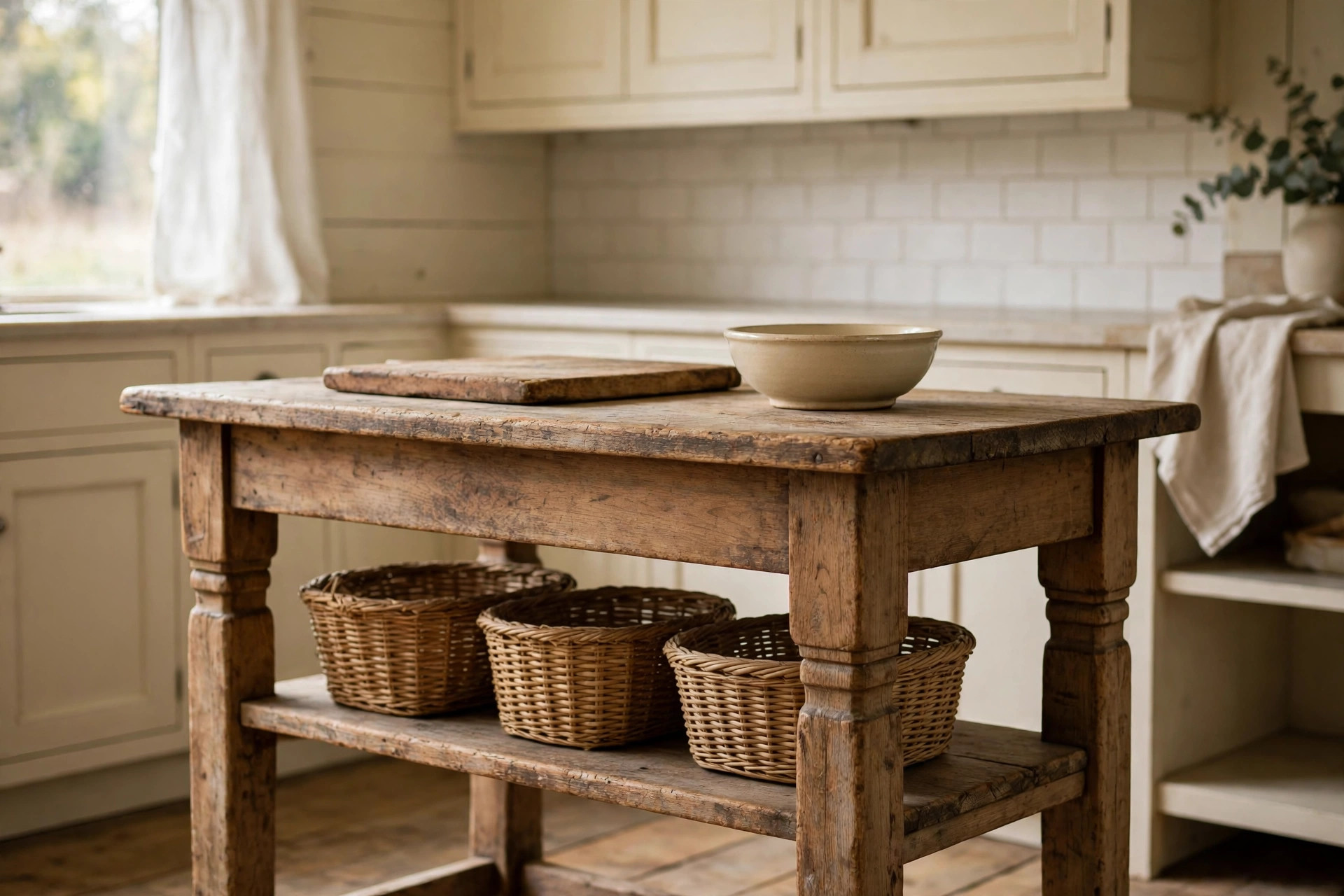
Add a small worktable or island in worn wood. A simple table style island gives you extra prep space without the heavy built in look, and it usually feels more like an old farm kitchen. Look for chunky legs, a lower shelf for baskets, and a top that can handle a few marks without worry. Pieces like this tend to look better with a little wear, so you don’t have to baby them.
Wood Boards, Beams and Baskets
Wood and woven texture are what keep a pale kitchen from feeling cold, and they’re usually the easiest layer to add.
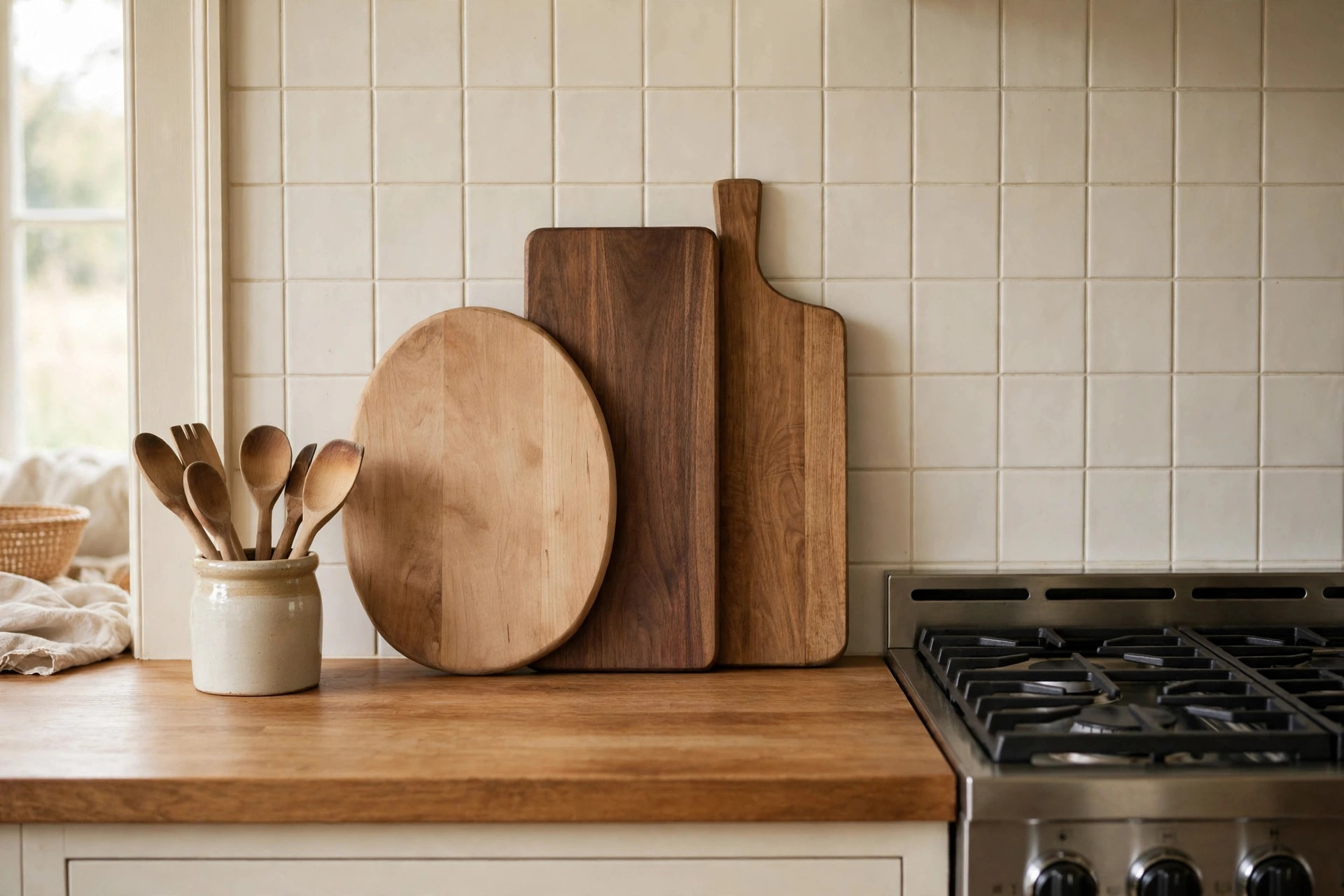
Lean a stack of wooden boards against the backsplash. Group two or three boards in different shapes near the stove or sink, where they’re easy to grab for chopping and serving. The mix of tones usually adds warmth to a plain counter, and it hides that awkward empty stretch of wall too. Just rotate them often so the ones at the back actually get used and washed.
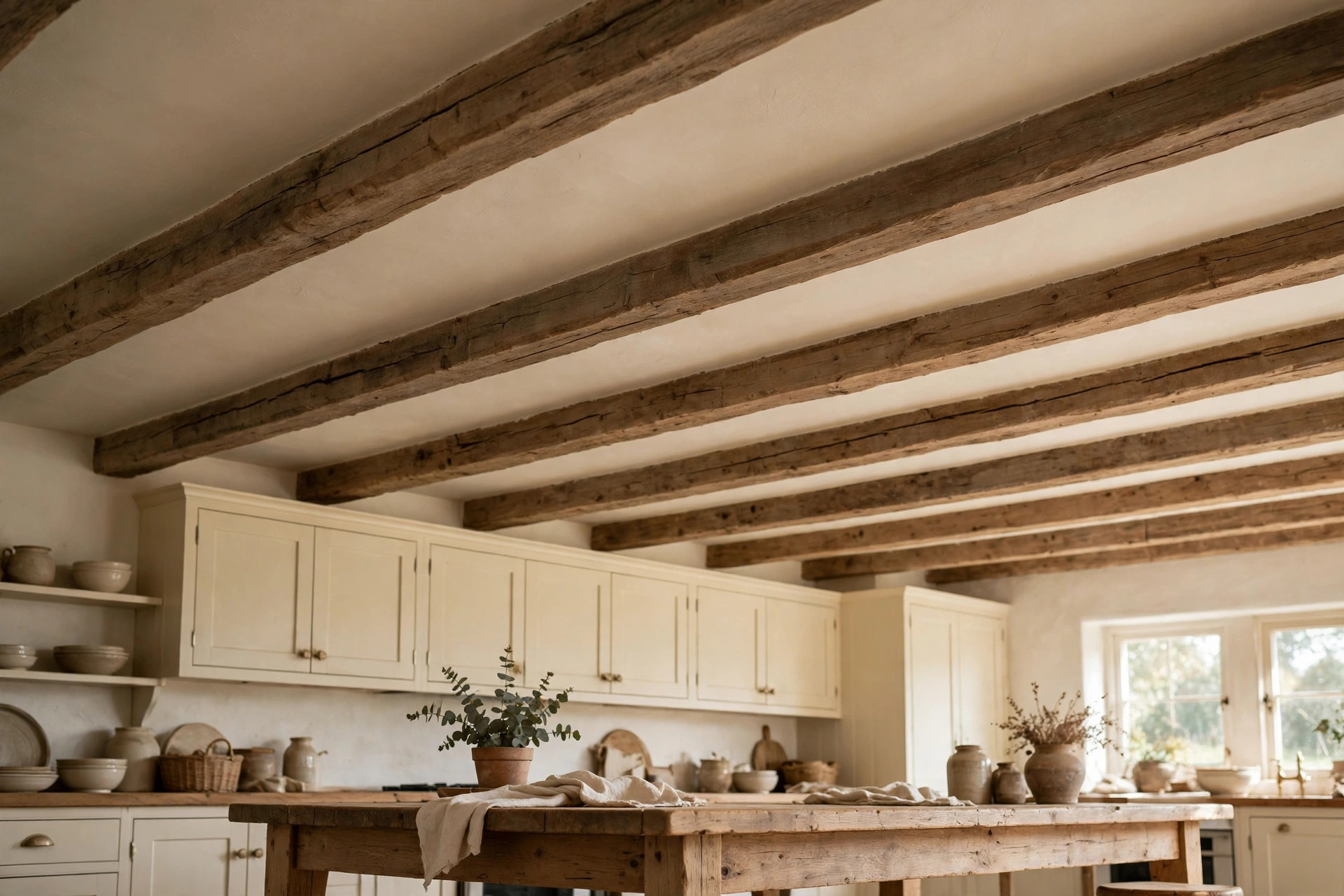
Bring in beams, even if they’re simple ones. Real or faux ceiling beams give a kitchen instant structure, and they typically draw the eye up so the room feels bigger. If beams feel like too much, a wood shelf, a chunky wood rail, or even a wooden range hood cover can give you a smaller dose of the same warmth. Keep the finish matte and a little rough, since shiny wood usually reads more polished than farmhouse.
Vintage Finds
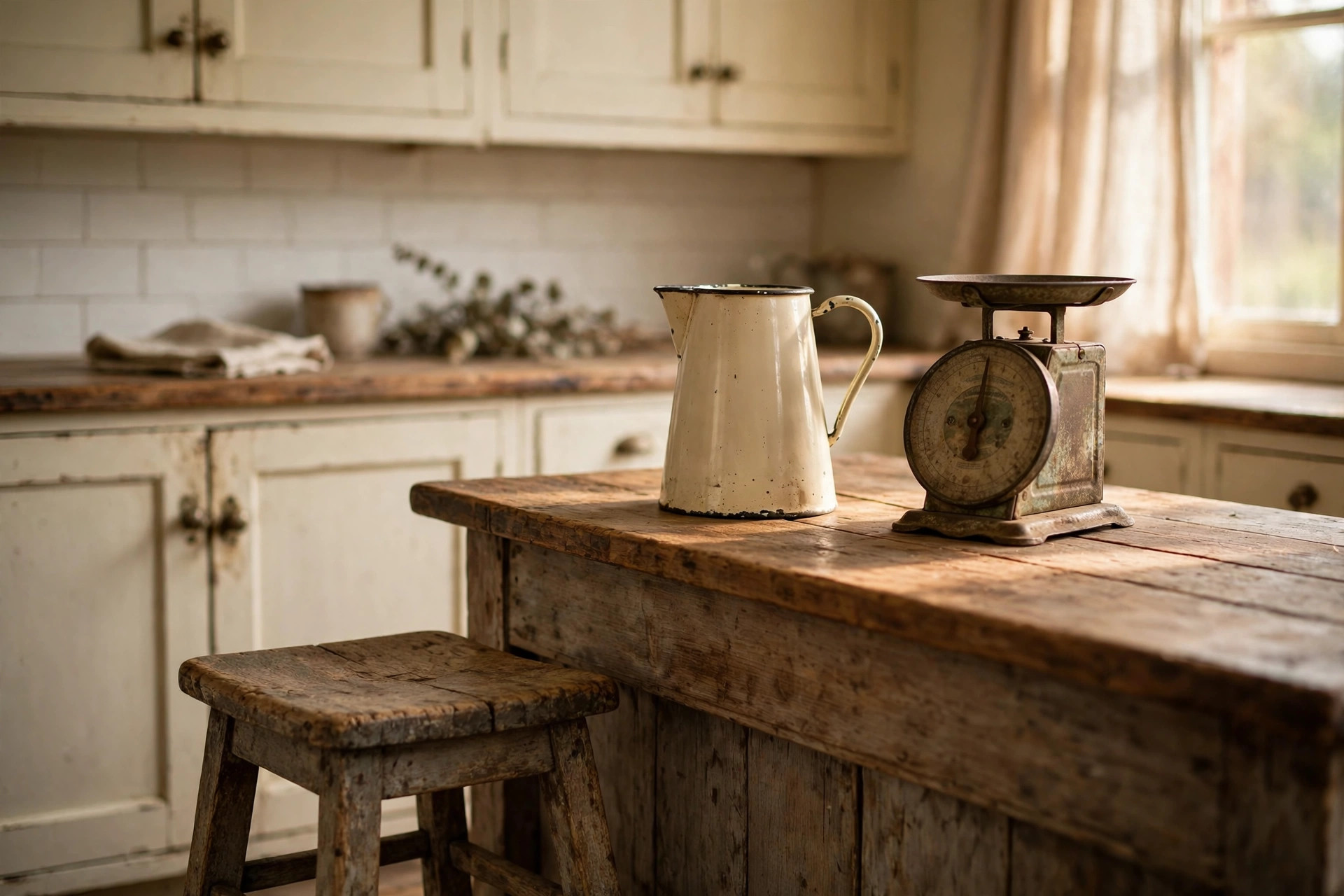
Hunt for one or two genuinely old pieces. A worn stool, an enamel pitcher, or an old scale with a soft patina usually brings more character than a cart full of new rustic signs. Flea markets and thrift shops tend to reward patience, so it’s fine to wait for pieces you actually love. Mix them in slowly, because a kitchen that grows over time typically feels more honest than one styled all at once.
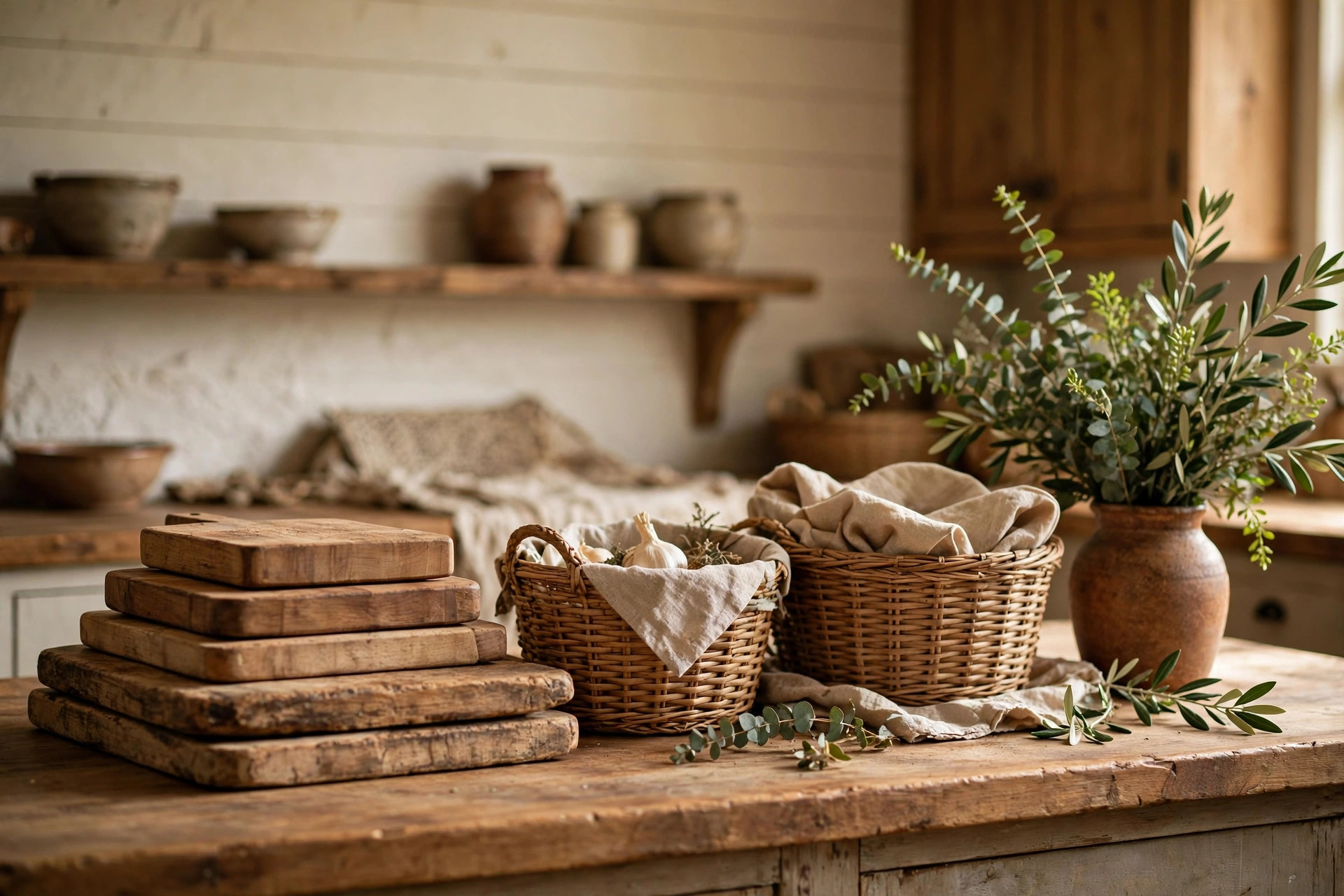
Use woven baskets for the everyday clutter. Baskets corral onions, linens, fruit, and mail, and they soften all the hard edges of appliances and stone counters. A low basket on the counter usually works for produce, while taller ones can sit on the floor beside the island. They are not precious, and that’s the point, since they can move from room to room as your needs change.
Farmhouse Lighting and Hardware
Lighting and hardware are small on paper, but they usually change how the whole room feels in the evening.
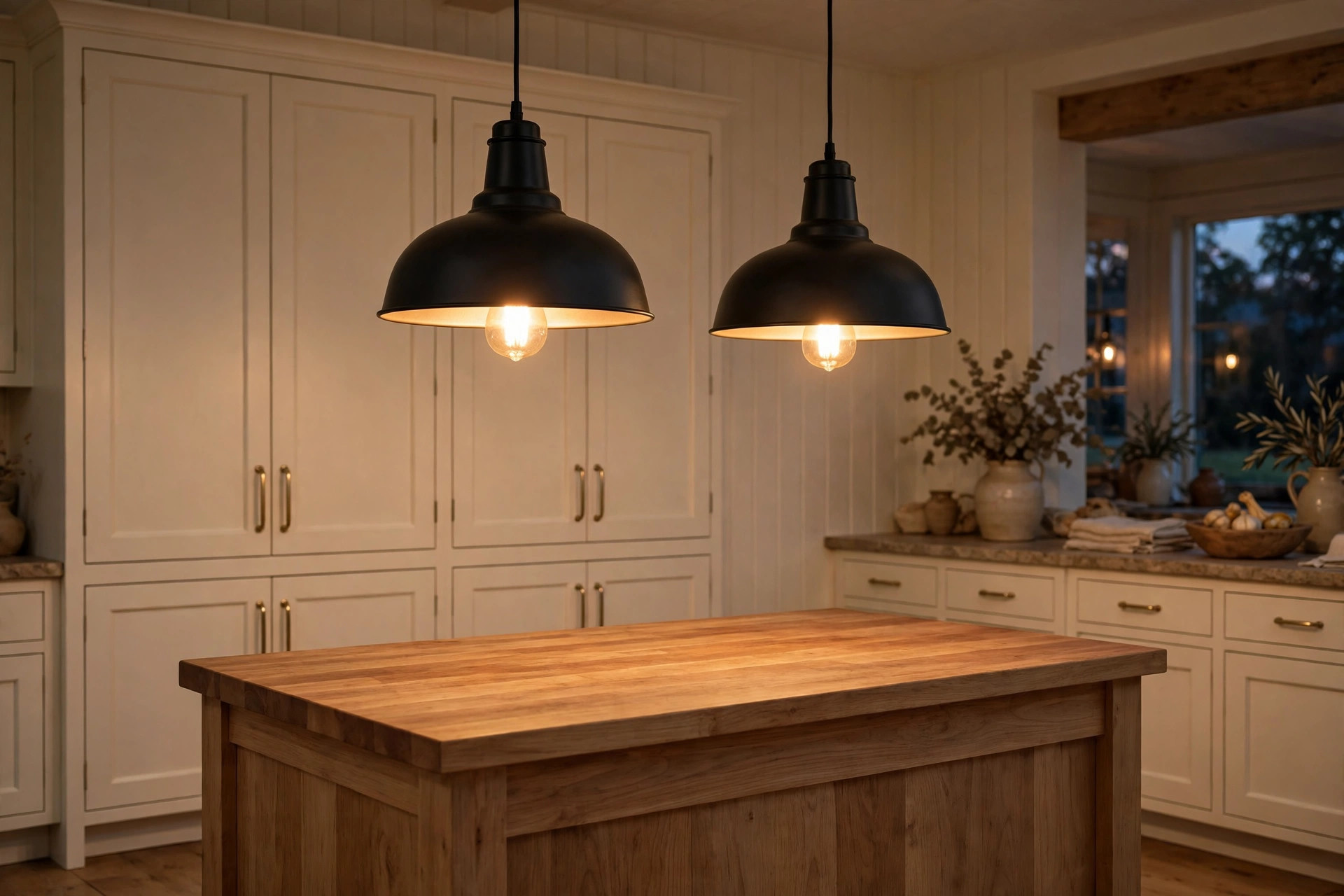
Hang pendants with simple metal or glass shades. A pair of pendants over the island gives you good task light and a clear focal point, especially in black, aged brass, or clear glass. Keep the shapes plain and a little oversized, because farmhouse lighting typically leans sturdy rather than delicate. Warm bulbs matter too, since cool light can make cream cabinets and wood tones look a bit grey.
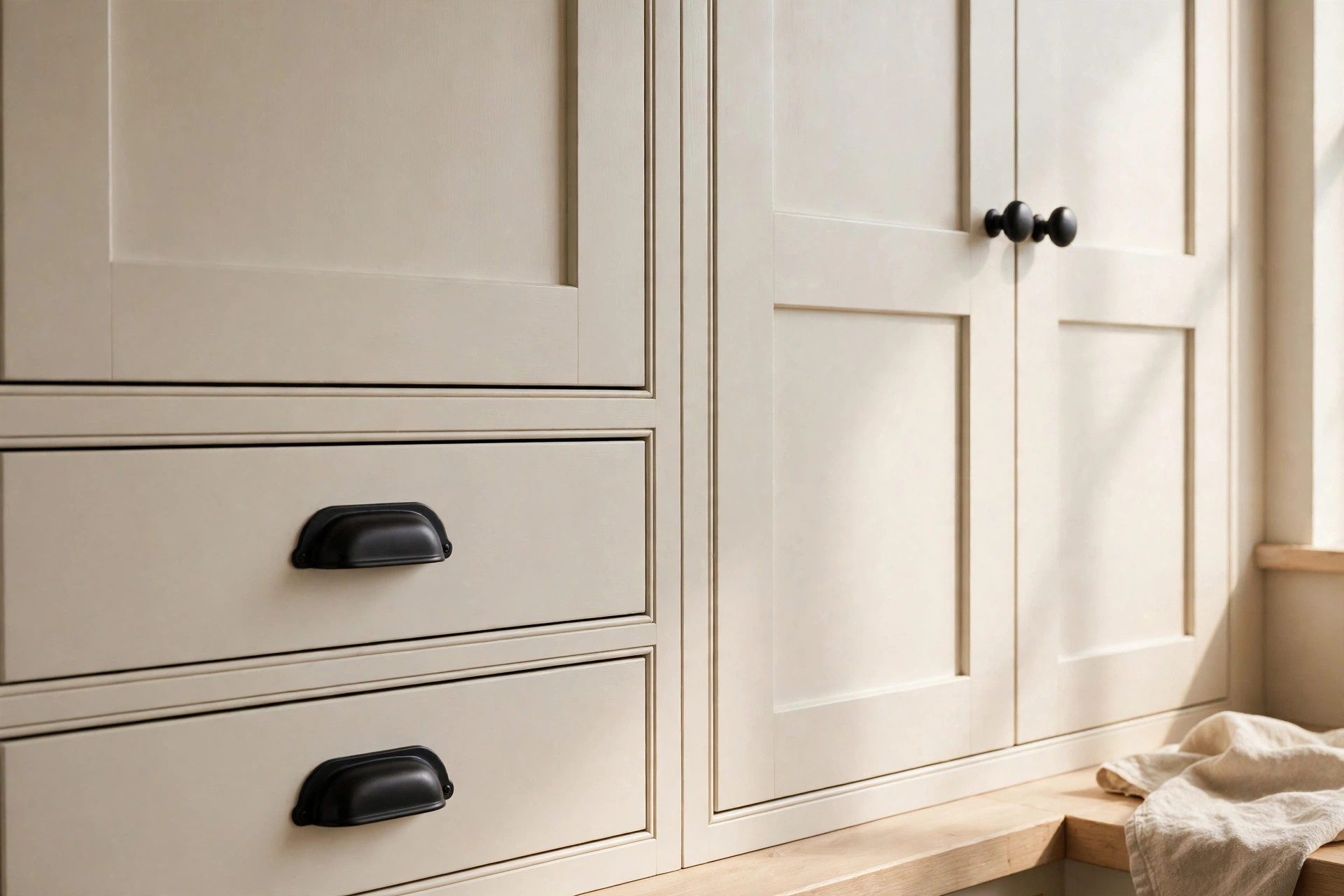
Swap in cup pulls and simple latches. Bin style cup pulls on drawers and plain knobs on doors are a small change that usually reads farmhouse right away. Matte black feels modern and tidy, while unlacquered or aged finishes tend to feel softer and older. Try to keep one finish family across the room so the mix looks thoughtful rather than random.
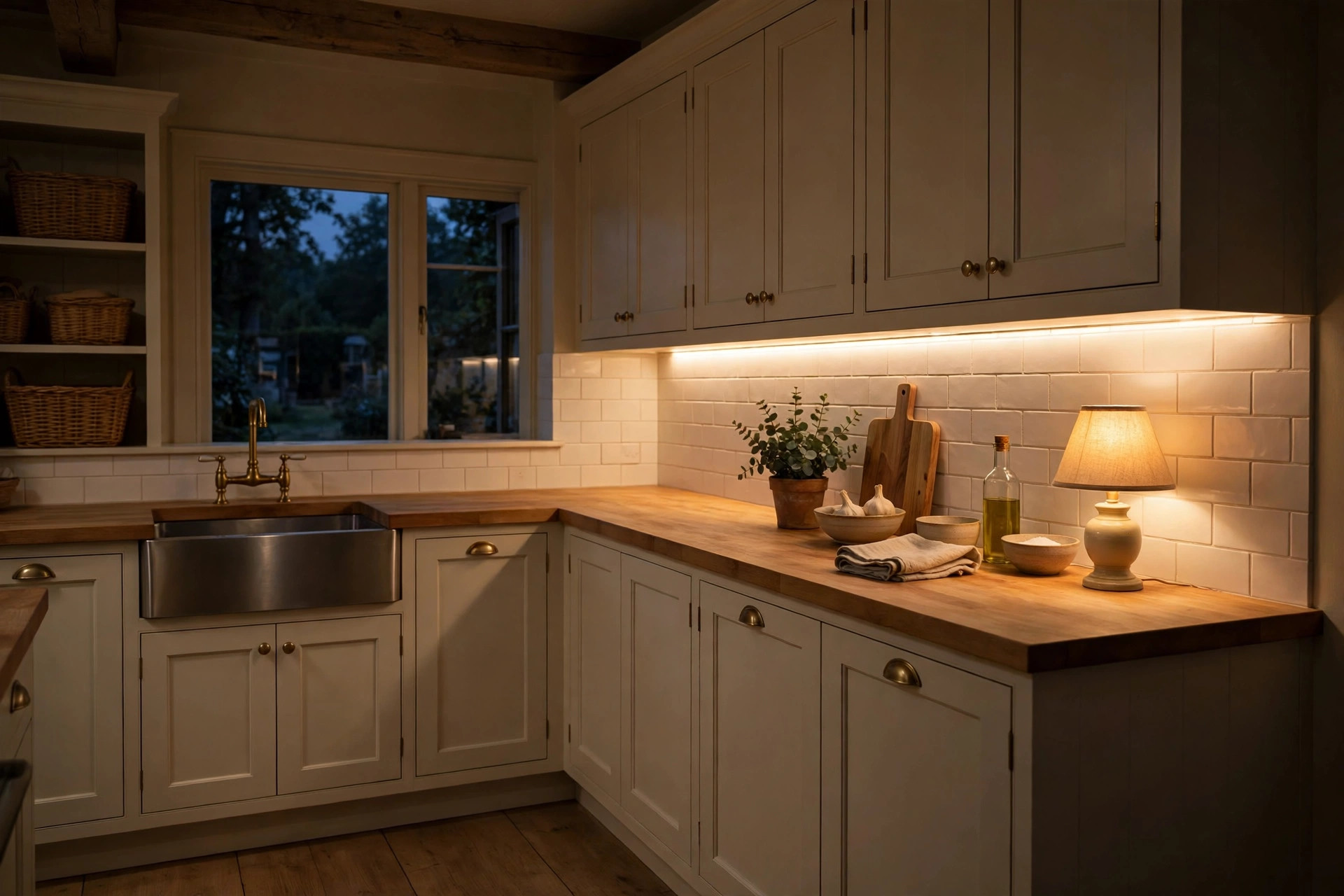
Layer in under cabinet and table light. Modern comfort often comes from light you don’t notice, like soft strips under cabinets that make chopping safer and counters prettier. A small lamp on a counter corner or a nearby dresser can also warm up the room after the overheads go off. Kitchens usually feel cozier when the light comes from a few places instead of one bright ceiling fixture.
Open Shelves Styled the Farmhouse Way
Open shelves work best when they hold the things you reach for every day.
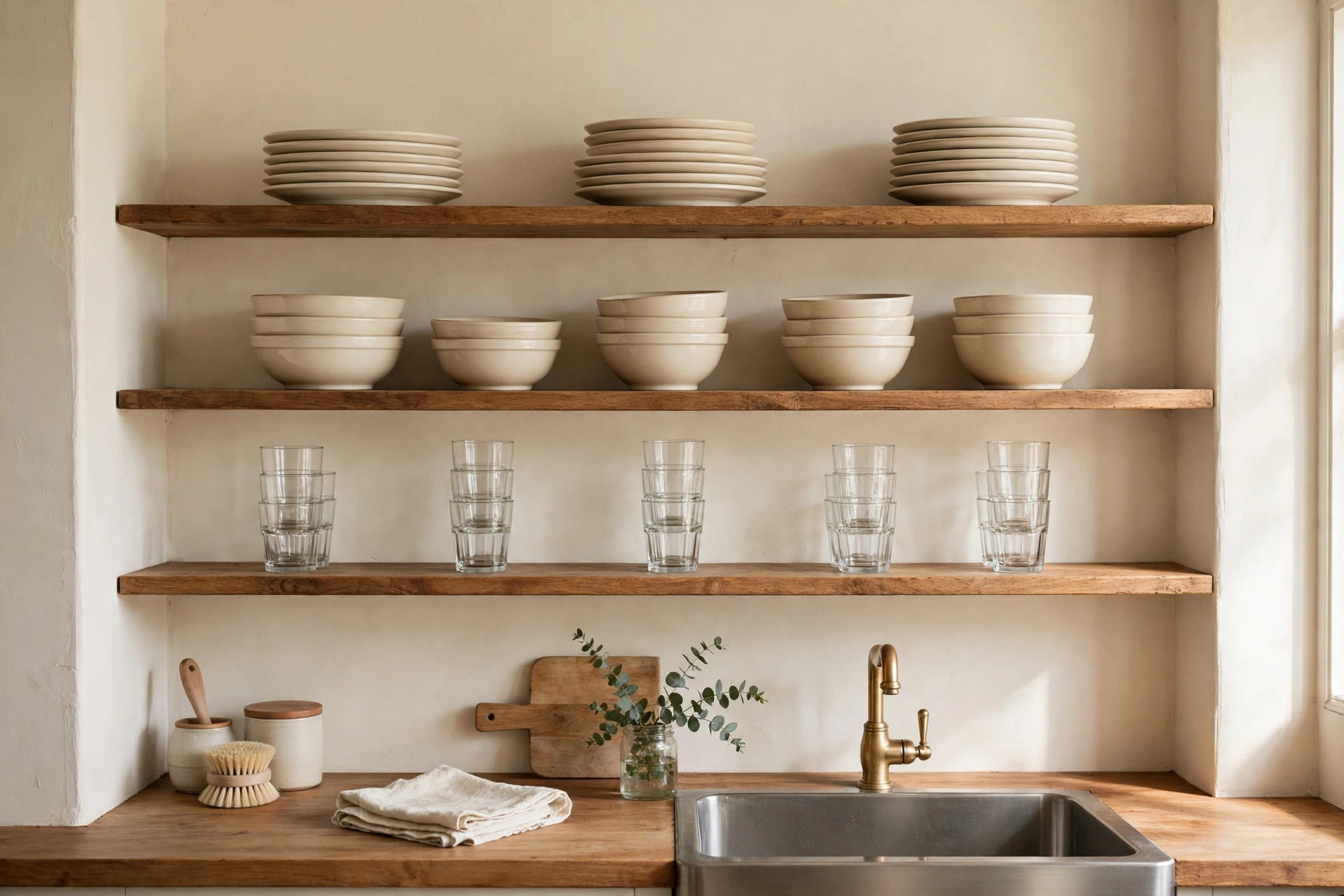
Keep shelves for daily dishes, not display only pieces. Stack your everyday plates, bowls, and glasses where you can grab them, because shelves that get used usually stay tidier than shelves styled once and forgotten. Leave a little breathing room between stacks so the shelf feels calm rather than crowded. If dust worries you, keep shelves away from the stove and choose items that rinse quickly.
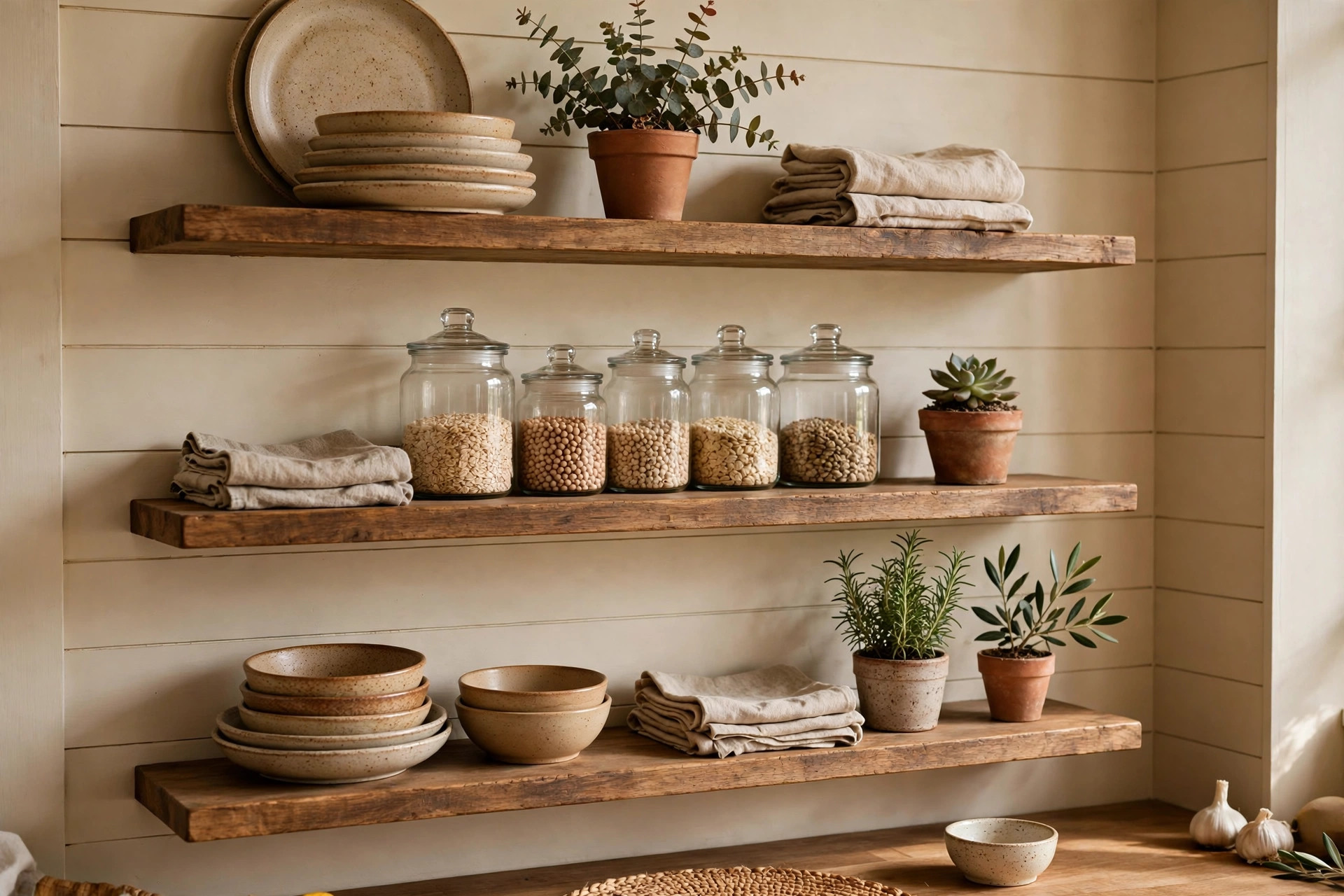
Mix stoneware, glass, and one green plant. A few stoneware crocks, clear jars for dry goods, and a small herb plant typically give you that layered farmhouse mix without much effort. Group things in small clusters of three or so, and repeat a color or material across the shelf so it feels connected. Plain jars without busy labels usually look cleaner and let the food itself add the color.
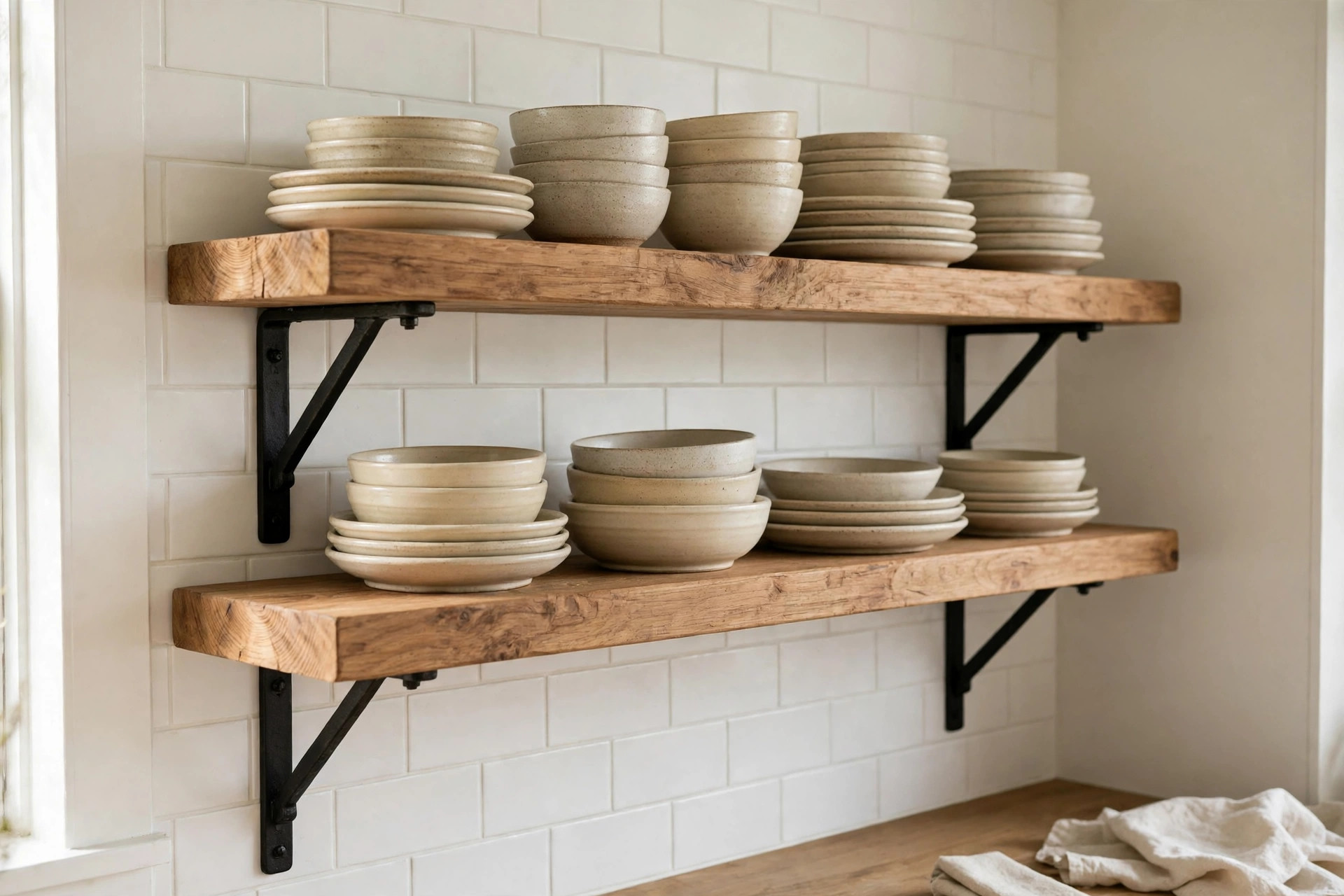
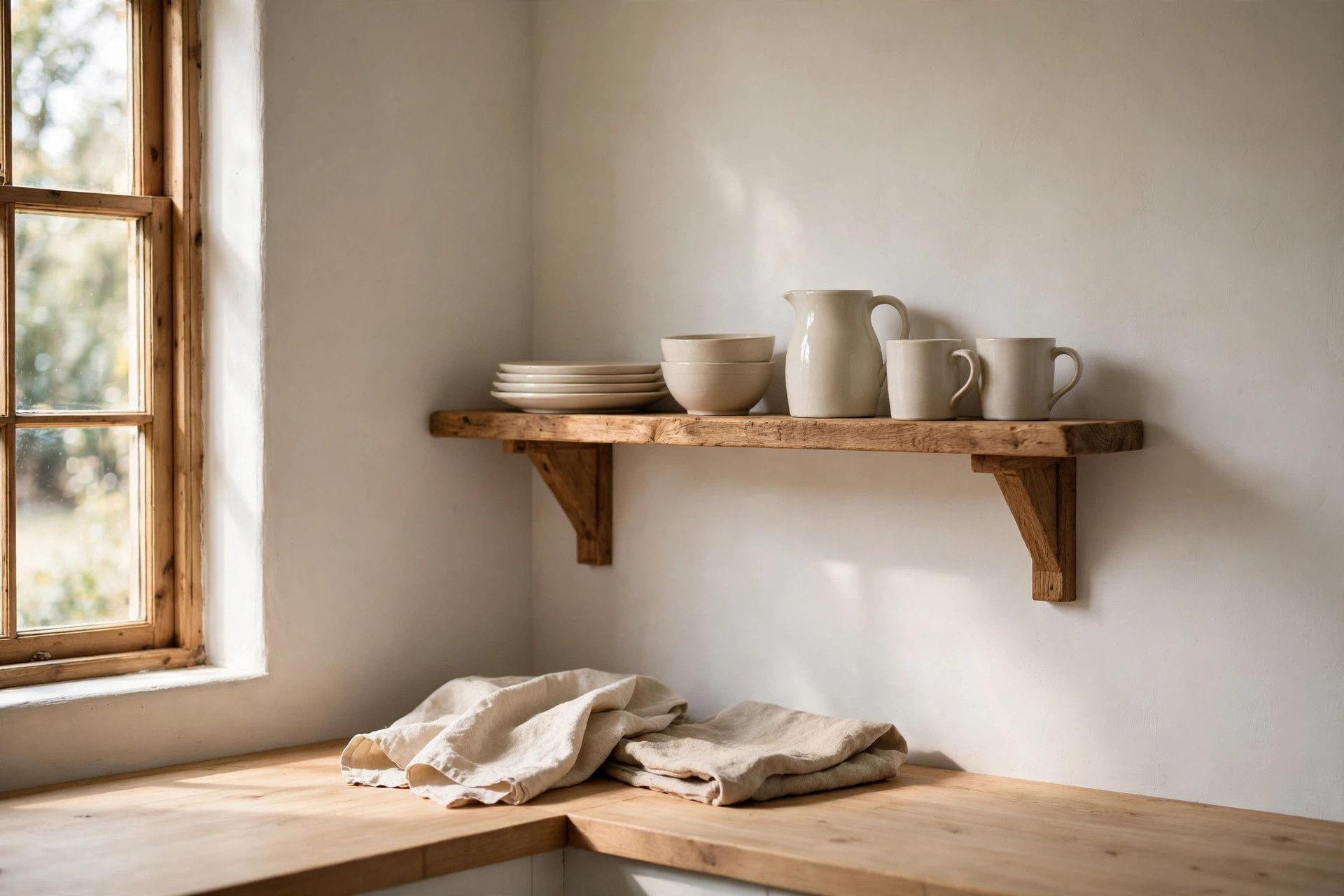
Use thick wood shelves with simple brackets. A chunky wood shelf warms up white tile or painted walls, and plain black or iron look brackets keep the focus on what’s displayed. Make sure the brackets are properly anchored, because dishes are heavier than they look when they’re stacked. One or two shelves are usually plenty, since too many can make a small kitchen feel busy.
Soft Linens and Crockery Displays
This is the soft layer, the one that usually makes a farm kitchen feel welcoming the moment you walk in.
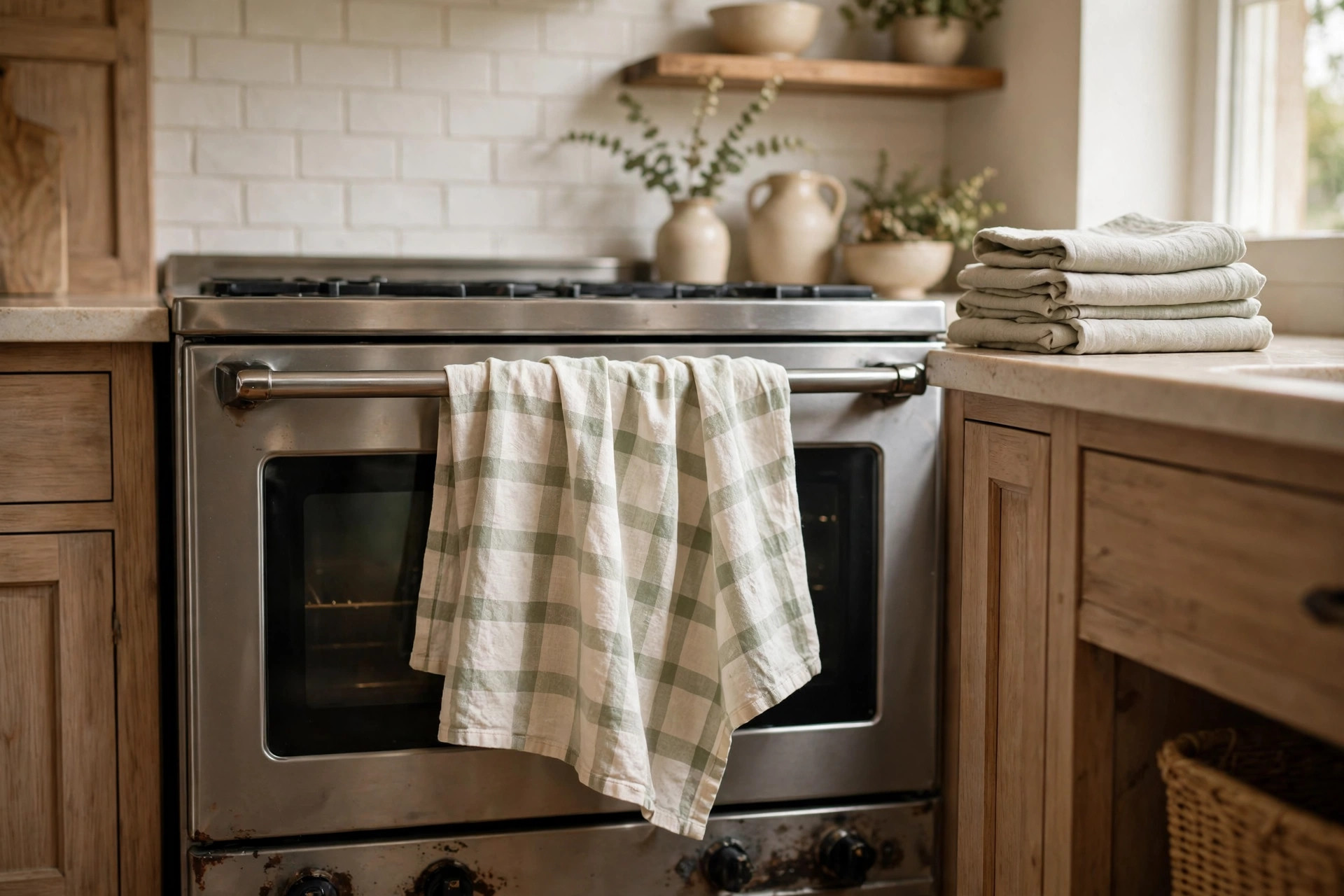
Drape checked or striped linen over the oven rail. A soft tea towel in a faded check or grain stripe adds pattern without paint or wallpaper, and you can swap it with the seasons. Linen and cotton typically soften in the wash, so they get better with use rather than worse. Keep a small stack folded on the counter too, because a neat pile of cloth usually reads as decor all on its own.
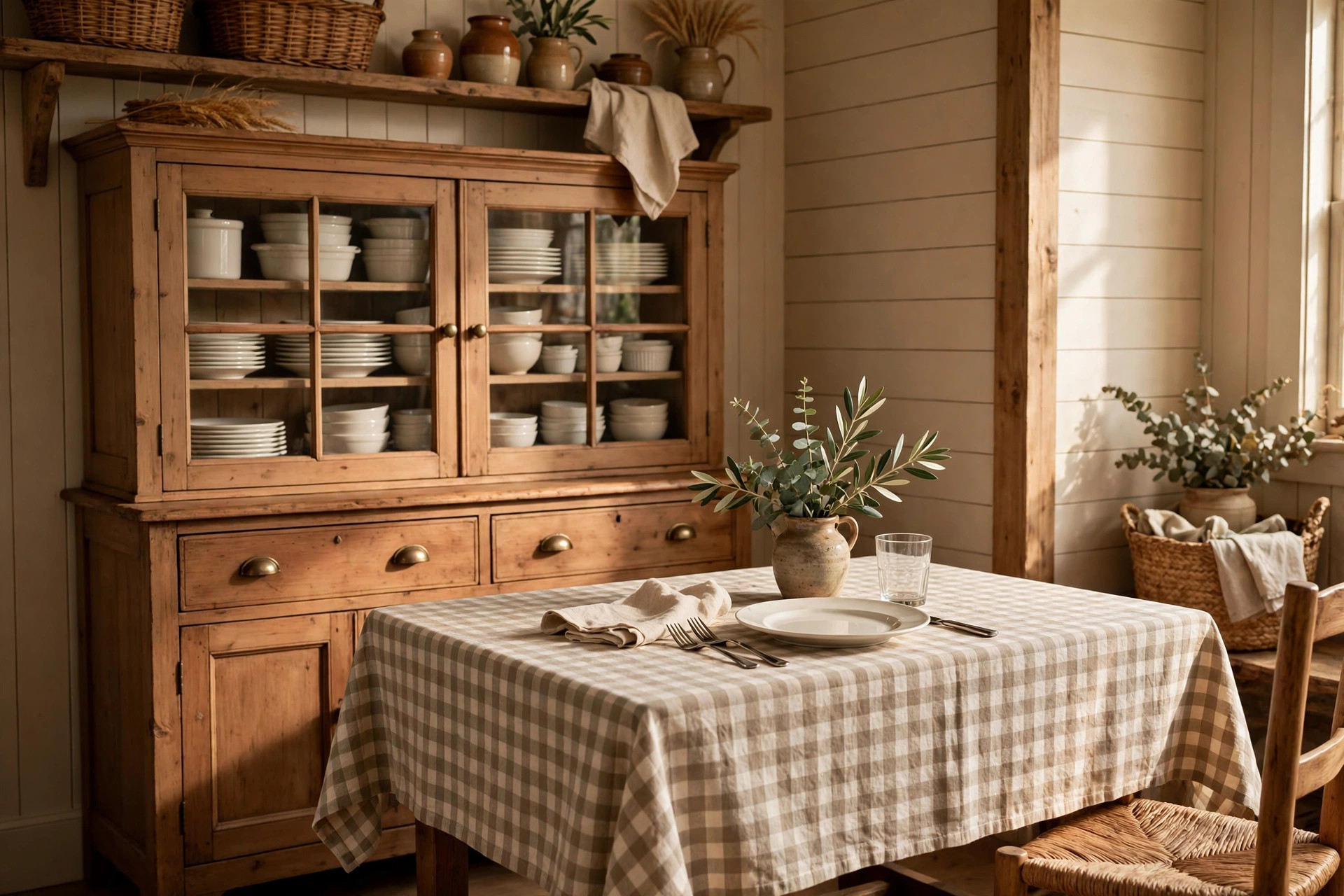
Show your crockery on a dresser or plate rack. White and cream dishes displayed upright on a simple dresser or wall rack give you storage and decoration in one go. It doesn’t need to be a full matching set, since a mix of similar tones usually looks more collected and relaxed. Add a few wooden spoons in a crock nearby and the whole corner starts to feel like a working farm kitchen.
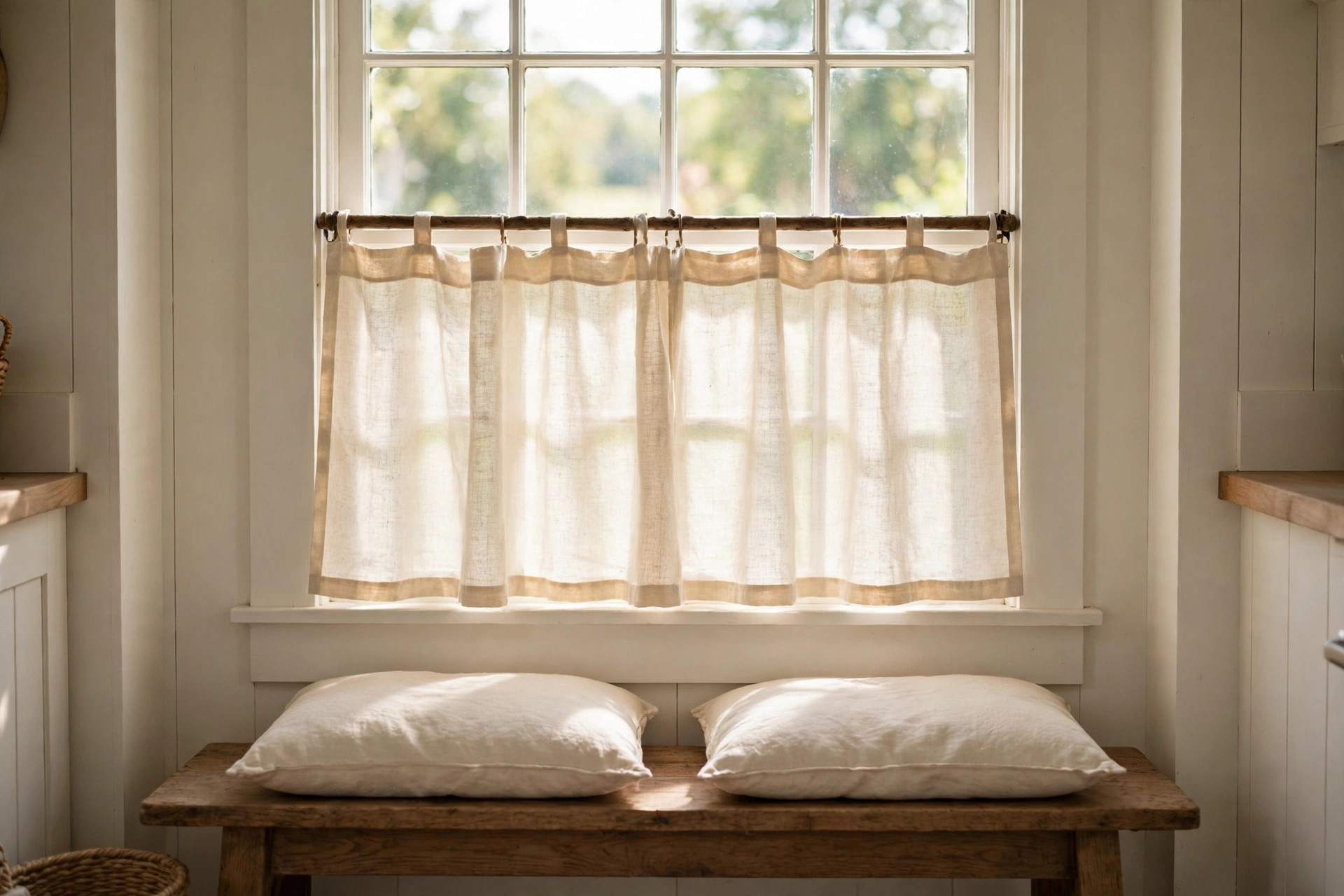
Soften windows and seats with simple fabric. A short cafe curtain in plain linen lets light in while adding privacy, and it typically feels softer than blinds alone. Cushions on wooden chairs or a bench make long breakfasts more comfortable, which is the modern comfort part of the equation. Choose fabrics you can toss in the wash, because a farmhouse kitchen is meant to be used, not tiptoed around.
Modern Farmhouse: What to Skip
A few popular touches can tip a kitchen from cozy into themed, so here’s what we would usually leave out.
Skip the word art and overly themed signs. A kitchen full of printed sayings and faux rustic labels can start to feel like a shop display rather than a home. One meaningful piece is fine, but the room usually feels calmer when the wood, dishes, and linens do the talking. If you love a sign, hang it where you will actually enjoy it, and let the rest of the walls breathe.
Don’t overdo the distressing or the grey. Furniture that’s heavily sanded on every edge can look tired fast, and cool grey tones often fight with the warm wood that farmhouse style needs. A little wear on one or two pieces typically feels real, while a whole room of it can feel staged. Warm whites, natural wood, and a few black accents usually hold up better over the years.
At the end of the day, a farmhouse kitchen isn’t really about buying a look. It’s about a room that welcomes people in, holds up to real cooking, and keeps the things you love within easy reach. Start with one idea that makes you smile, live with it for a bit, and let the rest follow in its own time.

Leave a Reply